Solving The Problem With Electric Bus Design
The title of this post, is the same as that of this article on Electric & Hybrid Vehicle Technology International.
The article opens with this paragraph.
A number of European cities have committed to securing only zero-emission buses by 2025. However, to achieve this objective, manufacturers must make bold design choices, radically changing bus componentry, systems, and bodywork. Here, it looks at the debate for greater electric bus design standardization.
Standardisation is one thing, but the article doesn’t talk about the major problem with electric bus design – For many countries like the UK, Hong Kong, Singapore and Germany, where there are lots of double-decker or articulated high-capacity buses, battery electric buses are just not big enough.
Battery-electric buses are also generally not big enough to compete with the latest designs of tram and metro systems.
These pictures show the Chinese double-deck electric double-deck buses, that ran in London.



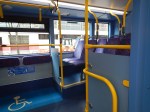


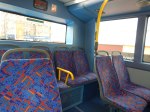
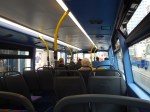
Half of the downstairs was take up by batteries.
Where are they now?
The Belgian firm; Van Hool have a product called Exquicity. This video shows them working in Pau in France.
But these buses are powered by hydrogen.
Similar buses running in Belfast are diesel-electric.
In both the Pau and Belfast applications, I wonderwhy they didn’t use trolley-bus versions of the WxquiCity or conventional trams.
Conclusion
Until we get more efficient battery storage, electric buses will have difficulty competing economically in the high-capacity bus sector.
New Energy Storage “Water Battery” Breakthrough: Look Ma, No Underground Powerhouse
The title of this post, is the same as that of this article on CleenTechnoca.
Pumped hydro storage as used at Dinorwig power station or Electric Mountain in the UK is a good way to store electricity.
But it is expensive to build and one of the major costs is building a large underground powerhouse. This is Wikipedia’s description of the construction of the powerhouse at Dinorwig.
Twelve million tonnes (12,000,000 long tons; 13,000,000 short tons) of rock had to be moved from inside the mountain, creating tunnels wide enough for two lorries to pass comfortably and an enormous cavern 51 metres (167 ft) tall, 180 metres (590 ft) long, and 23 metres (75 ft) wide[10] known as “the concert hall”. The power station comprises 16 kilometres (9.9 mi) of tunnels, one million tons of concrete, 200,000 tons of cement and 4,500 tons of steel.
That is big, but on the other hand, it reportedly paid for itself in two years.
According to the article, a company called Obermeyer Hydro Inc has come up with a new design of pumped storage turbine., which eliminated the need for an underground powerhouse.
- Cost savings of 45 % are claimed.
- Reading the full article, I get the impression, that a radical redesign of the reversible turbine will be a game-changer.
- I suspect, it could be of benefit in small countries like the UK, where pumped storage is expensive and faces strong opposition in certain areas.
It is also significant, that this appears to be successful innovation in an area, where it was thought we had reached the ultimate design.
Eurostar Plans To Start Direct Amsterdam – London Trains In October
The title of this post, is the same as that of this article on Railway Gazette International.
This is the introductory paragraph.
Cross-Channel high speed operator Eurostar has confirmed its intention to launch direct Amsterdam – London St Pancras services from October 26, complementing the London – Amsterdam trains which have run since April 2018.
The article then goes on to give more details of the service.
- Security checks will be undertaken at Amsterdam CS and Rotterdam Centraal stations.
- Amsterdam to London will be nine minutes over four hours.
- There will initially be two trains per day.
- There was a hint of more next year.
- It will carry Shengen area passengers between Amsterdam and Brussels.
Eurostar says it will offer flexible booking options to help, if the Government changes COVID-19 quarantine regulations.
Conclusion
It looks a sensible offering and as I’ve used it between London and Amsterdam three times, I will be trying to fit in a trip before the end of the year.
Nightjet Depot Investment To Support Sleeper Train Network Expansion
The title of this post is the same as that of this article on Railway Gazette International.
This is the introductory paragraph.
Austrian Federal Railways held a groundbreaking ceremony on August 21 to launch the construction of a €40m facility at its Wien Simmering depot for the maintenance of its Nightjet overnight train fleet.
The article then goes on to give more details of Nightjet‘s expansion.
- A service between Vienna and Brussels was introduced earlier this year.
- The Nightjet network currently has nineteen routes.
- A service from Amsterdam to München, Innsbruck and Vienna, will be introduced in December.
- Vienna is the EU city with the most night train services.
- In August 2018, Nightjet ordered thirteen new seven-car trains from Siemens.
- Another twenty seven-car trains were ordered this month.
It does look like Nightjet is linking up with Eurostar to take people far into Europe.
Bletchley Viaduct – 24th August 2020
The Bletchley Viaduct is falling down, as these pictures show.
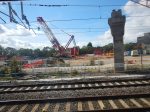
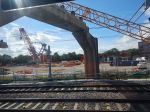
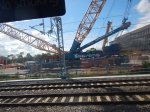
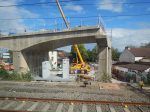
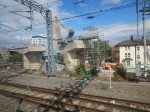
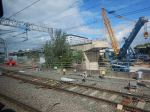
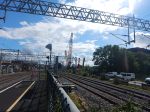
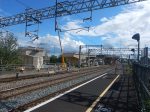
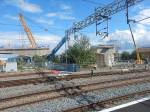
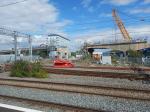
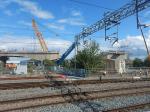
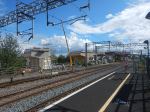
Considering, that Lord Beeching said that the Varsity Line between Oxford and Cambridge shouldn’t be closed, I wonder how much money has been wasted over the years, by questionable engineering and Government decisions on this viaduct.
A First Visualisation Of Headbolt Lane Station
This visualisation of the proposed Headbolt Lane station in Kirkby has appeared on several web sites.
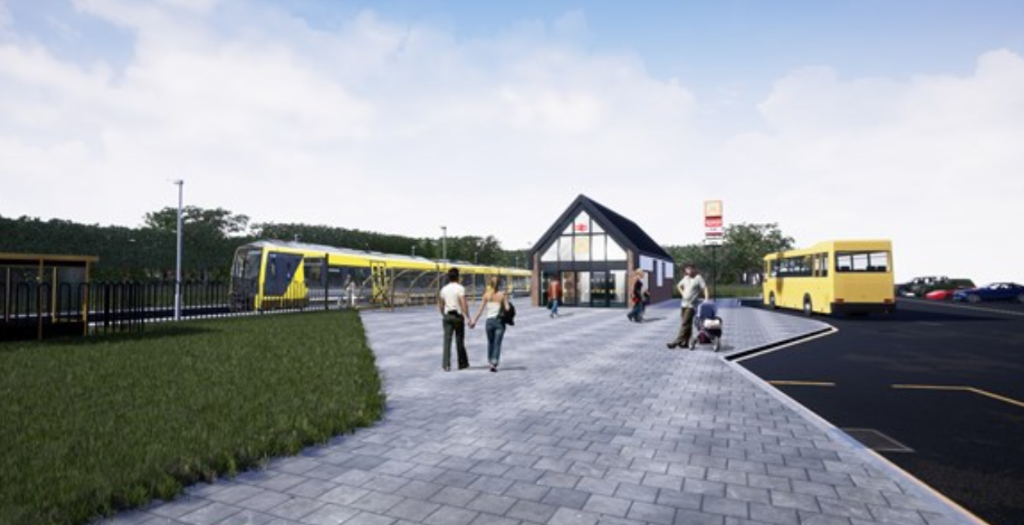
Wikipedia also says that the station will have one platform and as there is a Class 777 train on the left hand side of what I take to be the station building, I would assume that is the platform.
It looks an interesting station layout with a wide concourse with trains on one side and buses on the other.
I can’t work out from the image, if there is a long shelter alongside the train, as one sees on some tram stops. But if it was felt necessary one could surely be fitted to give passengers some covering in inclement weather.
As the station also features five-hundred parking spaces, these must be arranged around the station on this side of the railway, which is currently just a single track.
The Plans On Rail Future
This page on the Rail Future web site is entitled A Station Back In Skelmersdale and it indicates the following.
- A map shows a spur, which is connected to the Kirkby and Wigan Line, by a large triangular junction between Rainford and Upholland stations, running North to Skelmersdale.
- Services of two tph between Liverpool and Skelmersdale and an hourly service between Manchester and Skelmersdale are proposed.
- Rainford station would appear to exchange a direct link to Manchester for a direct link to Liverpool. But then Rainford is in Merseyside and Upholland and Skelmersdale are in Lancashire.
With these proposals the junction and the spur would only need to be single-track, with Skelmersdale station only needing a single-platform.
Could the following simplifications also be done?
- Upholland and Rainford stations become single platform stations
- The track between the two stations is mothballed or even removed.
- There would only be a single track between both stations and Skelmersdale station.
There’s certainly scope to save money on construction and maintenance.
Could this single track and platform design be the reason, why Headbolt Lane station only has a single platform?
Consider.
- The current Kirkby station, handles four tph to and from Liverpool City Centre on a single platform.
- The line becomes double-track to the East of Fazakerley station.
- I suspect double-track is needed to allow 4 tph
I suspect Headbolt Lane station could handle four tph to and from Liverpool, but there may need to be some double-track between Kirkby and Headbolt Lane stations.
I also estimate that to travel the return journey on the approximately eight miles between Headbolt Land and Skelmersdale station will take about thirty minutes.
Would this mean that it were possible to create a timetable, which allowed four tph between Liverpool and Headbolt Lane stations and two tph between Headbolt Lane and Skelmersdale stations?
- The single platform would be bi-directional.
- Two tph out of four arriving at Headbolt Lane station would reverse and go back to Liverpool.
- The other two tph would continue to Skelmersdale.
- The two tph returning from Skelmersdale would continue to Liverpool.
It would be one for the Busby Berkeley of train time-tabling.
The alternative of running four tph between Liverpool and Skelmersdale would need the following.
- Full double-tracking between Fazakerley and Skelmersdale stations.
- Two platform stations at Kirkby, Headbolt Lane and Rainford, which would need step-free bridges.
It would be a much more expensive scheme.
How Much New Electrification Would Be Needed?
Given the politics of third-rail electrification, I suspect the scheme will use as little as possible.
If the battery-equipped Class 777 trains can run the return journey between Kirkby and Skelmersdale stations, then all track to the East of Kirkby station could be without electrification.
This would probably also mean that the current power supply wouldn’t need to be upgraded to cope with additional electrification.
Could There Be A Two tph Service Between Skelmersdale And Manchester?
I don’t think a single-track line between Upholland and Skelmersdale would rule this out, but having two two tph services might need a second platform at Skelmersdale station.
On the other hand, the Manchester and Liverpool services could be timed to allow a cross-platform interchange at Skelmersdale.
This would mean that someone wanting to go between say Sandhills and Bolton would go direct with a quick change at Skelmersdale.
Could There Be Through Running Between Manchester And Kirkby?
Four tph between Liverpool and Headbolt Lane station with two tph extending to Skelmersdale, running through the single-platform stations at Kirkby, Headbolt Lane and Rainford, would probably make the current Manchester and Kirkby service difficult, if not impossible.
But as the change at Kirkby will be replaced with one at Skelmersdale, it would be more of an inconvenience than a disaster.
In addition, if two tph were to be run between Manchester and Skelmersdale and the trains were timetabled to meet at Skelmersdale, this would effectively be a pseudo-through service.
A single track could be left between Upholland and Rainford for engineering trains and possibly the occasional freight train.
Strategic Car Parking
Consider.
- The new Headbolt Lane station, is going to be provided with five hundred car-parking spaces.
- The new Skelmersdale station will probably have adequate provision.
- At the present time, Rainford and Upholland stations don’t appear to have any parking.
I would suggest, that a good look is taken at car and bicycle parking at all stations to the East of Headbolt Lane station.
Conclusion
It appears to be a scheme, that has been designed to keep costs to a minimum.
But that probably means, it is more likely to get built!
I also like the concept of a large station concourse alongside a single platform and track, which will probably be without electrification. It should be very safe too!
It is strange, that I’ve not seen that layout before either in the UK or on the many railways, that I’ve used abroad.
New MerseyRail ‘Connected’ Trains
The title of this post, is the same as that of this article on Rail Engineer.
It is an article that should be read, by anybody with an interest in either Merseyrail’s trains or modern urban rail networks in general. As Stadler, will be providing a fleet of trains for the Tyne and Wear Metro, I suspect a lot of the points made in the article can be expected to have parallels on that network as well.
What About The Signalling?
The article talks about the management of the signalling, but it says little about signalling in the future, although it does say that Merseyrail will be covered by a very high capacity digital network.
London’s Digital Signalling Revolution
In London, there are four tunnelled routes, that in a few years time will be running under full digital signalling.
- Crossrail
- East London Line
- Northern and City Line
- Thameslink
Note.
- Thameslink is already running upwards of twenty trains per hour (tph) using digital ERTMS signalling.
- Crossrail will be running 24 tph using digital ERTMS signalling.
- The East London Line currently handles 16 tph and will soon be handling 20 tph.
- The Northern and City Line will be going to digital ERTMS signalling, when it is applied to the Southern end of the East Coast Main Line.
- , In addition to the Circle, District, Jubilee, Metropolitan, Northern and Victoria Lines of the London Underground have digital signalling.
- Dear old Vicky is actually running 36 tph between two-platform stations at Brixton and Walthamstow Central.
- I wouldn’t bet against Vicky running the magic 40 tph, to become the most frequency line in the world.
All of these London systems, have one great advantage. In the tunnelled sections of the routes, there is generally only one class of fully digitally-equipped train, which must make system design and implementation easier.
Liverpool’s Digital Signalling Revolution
Consider.
- As the article says, Merseyrail now has a world-class high-capacity digital network, that is accessible by all of its trains.
- It has ordered 52 new Class 777 trains and has options for another sixty.
- There are proposals to extend the Merseyrail network to Manchester, Preston, Skelmersdale, Warrington, Wigan and Wrexham.
- The Northern Line runs at a frequency of 12 tph.
- The Wirral Line runs at a frequency of 14 tph.
- The loop Line has recently been relaid, so is probably high-quality track.
Compared to London’s tunnelled routes, the Northern and Wirral Lines are not handling a large number of trains.
But Liverpool now has a digital network to support the signalling and trains that could be upgraded to use it are arriving.
I wouldn’t be surprised to find that the maximum train frequency on Merseyrail is at least twenty tph or one train every three minutes.
What Would Twenty tph Do For The Wirral Line?
Currently, the following destinations are served by the Wirral Line and the services use the Loop under Liverpool City Centre.
- Chester – Four tph
- Ellesmere Port – Two tph
- New Brighton – Four tph
- West Kirby – Four tph
Note.
- The current frequency around the Loop is 14 tph.
- Merseyrail is proposing to extend the Ellesmere Port service to Helsby, using battery-equipped Class 777 trains
- There is also an hourly service from Bidston to Wrexham Central in the Borderlands Line.
- I can see no technical reason why, the Bidston and Wrexham service could not be run using battery-equipped Class 777 trains and terminating in the Loop.
Surely, the ultimate twenty tph service on the Wirral Line would be as follows.
- Chester – Four tph
- Helsby via Ellesmere Port – Four tph
- New Brighton – Four tph
- West Kirby – Four tph
- Wrexham Central – Four tph
All twenty tph would terminate in the Loop under Liverpool City Centre.
What Would Twenty tph Do For The Northern Line?
Currently, the following Northern destinations are served by the Northern Line.
And these Southern destinations are served.
- Liverpool Central – Eight tph
- Hunts Cross – Four tph
Note.
- The current frequency, through the central section is 12 tph.
- There is a proposal, that I wrote about in Liverpool’s Forgotten Tunnel for the trains terminating at Liverpool Central station to use the Wapping Tunnel to connect to the City Line.
- There is a proposal to extend the Ormskirk service to Preston, using battery-equipped Class 777 trains.
- There is a proposal to extend the Kirkby service to Headbolt Lane and Skelmersdale, using battery-equipped Class 777 trains.
- There must also be a possibility of a service that extends the Kirkby service to Wigan Wallgate, using battery-equipped Class 777 trains.
The service des appear to be biased towards the Northern end, with more possibilities there for extra trains than in the South.
This is why the plan to expand to the East through the Wapping Tunnel has evolved, as it gives the following possible destinations.
- Manchester Oxford Road
- Warrington Bank Quay
- Warrington Central
- Wigan North Western
Note.
- All destinations are currently served from Liverpool Lime Street by Northern.
- There must also be the possibility of a direct service to Liverpool Airport.
- There must also be the possibility of a service on the Canada Dock Branch to Bootle.
I can envisage between 12 and 16 tph through the Wapping Tunnel, which with the four tph to Hunts Cross could mean 16 to 20 tph on the Northern Line.
Conclusion
It would appear that a very frequent system can be developed on Merseyside, if frequencies common in London can be achieved.
Beeching Reversal – Increased Services To Nottingham And Leicester, via Syston And Loughborough From Melton Mowbray
This is one of the Beeching Reversal projects that the Government and Network Rail are proposing to reverse some of the Beeching cuts.
It is one of a pair of submissions from the local MP; Alicia Kearns. The other is More Stopping Services At Radcliffe-on-Trent And Bottesford Stations On The Poacher Line Between Grantham And Nottingham.
When I heard of the MP’s submissions, I wrote MP Campaigns To Extend Train Services For Melton Borough and the following uses that post as a starting point.
Wikipedia says this about services at Melton Mowbray station.
- There is an hourly off-peak service in both directions between Stansted Airport and Birmingham, that calls at Cambridge, Peterborough, Oakham and Leicester.
- East Midlands Railway and their predescessor have added services to London via Corby and to Derby and East Midlands Parkway.
When you consider, that both Bottesford and Melton Mowbray are the same Council and Parliamentary constituency, it does seem that a more direct train service is needed between Bottesford and Melton Mowbray stations.
It does seem to me that some innovative thinking is needed.
If the current plans to fulfil British Rail’s ambition of an Ivanhoe Line running from Lincoln to Burton-on-Trent via Nottingham, East Midlands Parkway, Loughborough and Leicester, are carried out, that will give important towns to the West of Leicester much better rail connections.
Given that High Speed Two is coming to East Midlands Hub station at Toton and there will be a Bedford and Leeds service run by Midlands Connect using High Speed Two classic-compatible trains, that I wrote about in Classic-Compatible High Speed Two Trains At East Midlands Hub Station, I wonder if in the interim, there should be more trains between Derby and Melton.
- Intermediate stations would be Syston, Sileby, Barrow-upon-Soar, Loughborough, East Midlands Parkway Long Eaton and Spondon.
- An hourly frequency would double the service frequency at smaller stations like Sileby and Barrow-upon-Soar.
- The Southern terminal could be Melton station, but I feel Corby or Peterborough stations would be better, as this would improve services at Oakham station. We should not forget Rutland!
- As Corby will be an electrified two-platform station with a two trains per hour (tph) service to London, this could work quite well as a Southern terminus.
- Peterborough would have advantages and give a good connection to Cambridge, London and Scotland, but improvements to the current Birmingham and Stansted Airport service would have similar effects.
This route would be just as valuable after High Speed Two opens through the East Midlands Hub station, as it will give fast ongoing connections to Birmingham, Leeds, Newcastle and York.
Electrification Of The Midland Main Line
I feel strongly, that full electrification of the Midland Main Line could be a step to far.
- Electrification, through Leicester station will mean a complete closure of the station for a couple of years.
- Electrification of the route North of Derby, through the Derwent Valley Mills, which is a World Heritage Site, will be opposed by the Heritage Taliban with all their might.
But.
- Electrification of the route between Clay Cross North Junction and Sheffield via Chesterfield will take place in conjunction with High Speed Two
- Electrification to Market Harborough, which is sixteen miles South of Leicester will happen.
- East Midlands Railway’s new Class 810 trains could be fitted with a battery option giving a range of between 55 and 65 miles.
- Pantographs on these trains can go up and down with all the alacrity of a whore’s drawers.
If the easier section of electrification between Leicester and Derby stations, were to be installed, this would enable the following routes to be run using battery-equipped Class 810 trains.
- London and Derby, where battery power would be used through Leicester.
- London and Nottingham, where battery power would be used through Leicester and between East Midlands Parkway and Nottingham.
- London and Sheffield, where battery power would be used through Leicester and between Derby and Clay Cross Junction.
- Lincoln and Burton-on-Trent, where battery power would be used South of Leicester and North of East Midlands Parkway.
- Derby and Corby, where battery power would be used between Syston and Corby.
There would also be the service between Derby and Norwich, which might be able to be run by a similar train.
Conclusion
I think the ideal way to achieve the MP’s objective would be to extend a proportion of London St. Pancras and Corby services to the Midland Main Line.
But the problem with this, is that the Corby trains will be Class 360 trains, which are electric, so the thirty-six mile route between Corby and the Midland Main Line would need to be electrified.
On the other hand, a shuttle train could be used between Corby and Leicester.
They would call at Oakham, Melton Mowbray and Syston stations.
If the Midland Main Line to the North of Leicester were to be electrified, Battery electric trains could be used on the route, with charging at Leicester and Corby.
Beeching Reversal – More Stopping Services At Radcliffe-on-Trent And Bottesford Stations On The Poacher Line Between Grantham And Nottingham
This is one of the Beeching Reversal projects that the Government and Network Rail are proposing to reverse some of the Beeching cuts.
It is one of a pair of submissions from the local MP; Alicia Kearns. The other is Increased Services To Nottingham And Leicester, via Syston And Loughborough From Melton Mowbray.
When I heard of the MP’s submissions, I wrote MP Campaigns To Extend Train Services For Melton Borough and the following uses that post as a starting point.
Wikipedia says this about services at Bottesford station on the Poacher Line.
- The service is generally every two hours to Nottingham in the West and Skegness in the East.
- Some trains call at Grantham and have a connection to the East Coast Main Line.
- LNER services at Grantham connect to Doncaster, King’s Cross, Leeds, Lincoln, Peterborough, Stevenage, Wakefield and York.
- Bottesford is in the Borough of Melton and their is no direct rail service between Bottesford and Melton. A typical journey takes over two-and-a-half hours with two changes, that can include a wait of an hour at Leicester station.
- Bottesford is in the County of Leicester. There is no direct rail service between Bottesford and Leicester.
I think the MP has a point and an improved and more frequent service at Bottesford could be very beneficial.
- Many routes like this in the UK have a regular hourly service. Coastal stations with a regular hourly or better service include Blackpool South, Cleethorpes, Cromer, Exmouth, Felixstowe, Kings Lynn, Paignton, Scarborough and Sheringham
- I suspect many communities along the Poacher Line would benefit from a regular hourly service.
- All services calling at Grantham for East Coast Main Line services would be useful.
- Do services have a good interchange at Nottingham for Midland Main Line services?
Replacing 75 mph Class 153 and Class 156 trains with 100 mph Class 170 trains would probably be a big help.
Conclusion
It looks like improvements at Bottesford would not require any new expensive infrastructure.
But East Midlands Railway would need more trains and they would probably need to be faster too!
Beeching Reversal – Reconnecting Ashfield Communities Through The Maid Marian Line
This is one of the Beeching Reversal projects that the Government and Network Rail are proposing to reverse some of the Beeching cuts.
Around the turn of the Century, I started to use the Robin Hood Line fairly regularly, as I had clients in both Nottingham and Mansfield and found it easier to drive up from Suffolk and park in Nottingham and get the train to Mansfield. When the Nottingham Express Transit opened in 2004 to Hucknall station, I would change there for Mansfield.
I can remember thinking at the time and discussing it with my client, that British Rail had certainly been mistaken to close the rail line between Hucknall and Worksop via Mansfield.
I first talked about the Maid Marian Line in Expanding The Robin Hood Line, which I wrote in 2015, although, it hadn’t been named at the time.
In 2015, there was talk of two extensions.
A Proposed Branch To Ollerton
In my investigations into Ilkeston station, the Robin Hood Line kept cropping up and especially talk of a branch from the line to Ollerton.
Search Google News for Robin Hood Line and articles with titles like Chancellor backs Robin Hood line passenger plans are found in the Mansfield and Ashfield Chad. This is the start to the article.
The Chancellor George Osborne, has confirmed his backing for plans to open a passenger service on the Robin Hood line, from Shirebrook to Ollerton, including passenger stations at Ollerton and Edwinstowe.
Other Government figures like David Cameron and Patrick McLoughlin and important local councillors are also quoted saying similar things.
What is not said is that the line will serve the CentreParcs Sherwood Forest and that the rail line needed is currently fully maintained for driver training.
This Google Map shows the area.
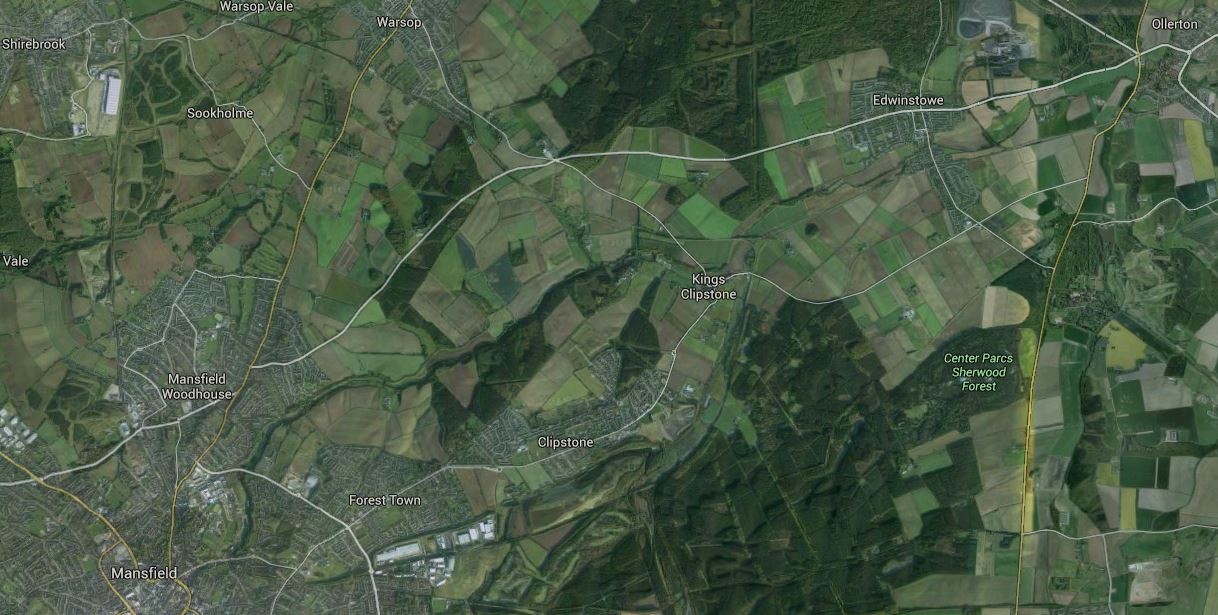
The Ollerton branch turns off from the Robin Hood Line just North of Shirebrook station in the top left hand corner of the map and then makes it way to Ollerton by way of the South of Warsop and Edwinstowe and North of the CentreParcs Sherwood Forest.
The line probably illustrates the only environmentally-friendly use for coal, which is to keep rail lines open and in good condition, until we can find a better use for them.
There is an interesting section called Branch Lines in the Wikipedia entry for Shirebrook station. This is said.
Two branch lines are plainly visible veering off north of the bridge at the north end of Shirebrook station.
The double tracks branching off eastwards (i.e. to the right as viewed from the station) to the side of the signalbox joined the LD&ECR’s one-time main line to Lincoln, next stop Warsop. The branch only ever carried a regular passenger service for a few years in Edwardian times. It did, however, carry Summer holiday trains such as the Summer Saturdays Radford to Skegness in at least 1963. The branch’s main purpose was always freight traffic, with coal being overwhelmingly dominant.
In 2013 the line gives access to Thoresby Colliery and to the High Marnham Test Track.
There is some hope of reopening the line as a branch off the Robin Hood Line and reopening Warsop, Edwinstowe and Ollerton stations, providing an hourly service to Mansfield and Nottingham.
This Google Map shows Shirebrook station and the railway lines around it.
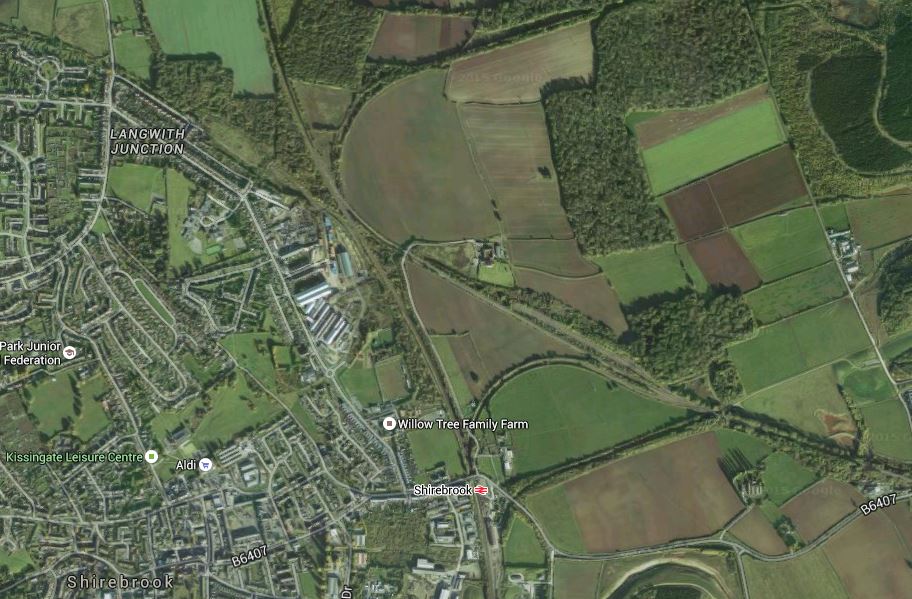
The junction of the Ollerton branch would appear to allow access to trains from or to either Nottingham and Mansfield in the South and Worksop in the North
It appears that there could be three stations; Warsop, Edwinstowe and Ollerton on a double-track branch.
Services To Derby
The area between Chesterfield, Mansfield and Nottingham is not very well connected to Derby.
If you want to go from Mansfield or Kirkby-in-Ashfield on the Robin Hood Line to Derby, you always have to change at Nottingham, with sometimes an extra change at East Midlands Parkway.
The Erewash Valley Line runs North-South a few miles to the West of the Robin Hood Line.
Despite being partially in Derbyshire, getting from stations like Alfreton, Langley Mill and the soon-to-be-opened Ilkeston stations to Derby, you have to change at either Nottingham or Chesterfield.
Look at this Google Map of the area
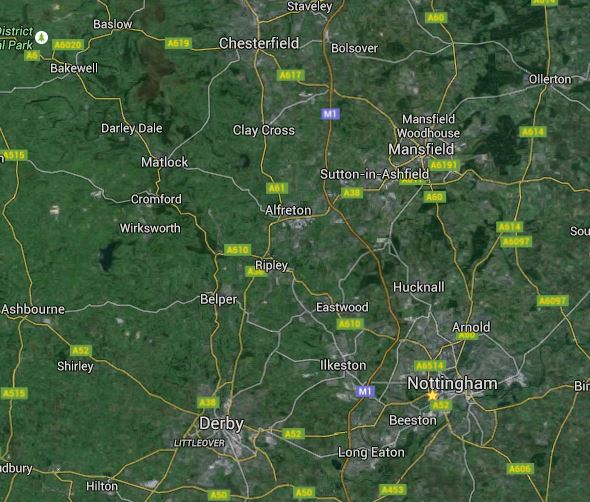
There must be a better way of getting to Derby, than by changing trains in Nottingham or Chesterfield.
But what?
There are four main North-South routes in the area.
- The Robin Hood Line between Nottingham and Worksop
- The Erewash Valley Line between Long Eaton and Chesterfield
- The Midland Main Line between Derby and Chesterfield
- The M1 Motorway
What seems to be missing is high-capacity East-West routes for both rail and road.
The Erewash Valley Line goes South to Long Eaton, which has several trains per hour direct to Derby, so this could be the key to getting to Derby.
In a Notes on Current Station section on the Wikipedia entry for Long Eaton station, this is said.
It is planned that both platforms will be extended by up to 10 metres by no later than 2012.
It is anticipated that developments along the Erewash line will result in changes for Long Eaton station. A plan drawn up in 2011 recommended a new Derby to Mansfield service via new stations at Breaston & Draycott, Long Eaton West (renamed from Long Eaton), Long Eaton Central, Stapleford & Sandiacre, Ilkeston, Eastwood & Langley Mill (renamed from Langley Mill), Selston & Somercotes and then to Pinxton via new trackbed connecting with the Mansfield line from Nottingham at Kirkby in Ashfield.
It strikes me that work at Long Eaton, the several new stations and improvements North of Langley Mill would enable direct services from Alfreton, Ilkeston and Langley Mill to both Derby and Mansfield. This service would also improve services from stations stations North of Mansfield to Derby.
A trackbed from Langley Mill to Kirkby in Ashfield is shown on Google Maps.

Alfreton is the station at the top left and Kirkby-in-Ashfield is at the top right. The Erewash Valley Line from Langley Mill, enters at the bottom and splits with one branch going to Alfreton and the other going East to cross the M1 and join the Robin Hood Line south of Kirkby-in-Ashfield.
On an Ordnance Survey map, dated 2009, the railway is shown as a multiple track line, probably serving collieries and open cast coalfields.
It all sounds very feasible too! Especially, as the Erewash Valley is an area of high unemployment, low car ownership and a dependence on public transport.
Would Both Branches Of the Robin Hood Line Form The Maid Marian Line?
Consider.
- The Ollerton Branch joins the Robin Hood Line to the North of Shirebrook station.
- The Pye Bridge Branch joins the Robin Hood Line to the South of Kirkby-in-Ashfield station.
- There are three statations between Shirebrook and Kirkby-in-Ashfield stations; Mansfield Woodhouse, Mansfield and Sutton Parkway.
- The Pye Bridge Branch joins the Erewash Valley Line to the North of Langley Mill station.
- From Langley Mill station, there are direct services to Nottingham station.
- I am also fairly certain that a passenger train can travel between Langley Mill and Derby via Ilkeston and Long Eaton.
It would certainly be possible for a passenger service to run between Ollerton and Ilkeston.
- It could terminate at either Derby or Nottingham.
- When High Speed Two is built, it could call at East Midlands Hub station.
As Shirebrook, Mansfield Woodhouse, Mansfield, Sutton Parkway, Kirkby-in-Ashfield, Langley Mill, Ilkeston and Long Eaton, all have connections to Nottingham, I suspect the core service would terminate at Derby.
One MP Is Not Happy
This article on NottinghamshireLive is entitled Leaders In Row Over Plans To Reopen Maid Marian Line.
This is said.
A row has erupted over proposals to reopen the disused Maid Marian Line in Nottinghamshire.
Lee Anderson, MP for Ashfield, has hit out at Ashfield District Council saying residents in areas like Selston will be “left behind” under plans to reopen the line.
From reading the article, it looks like an extra station at Selston might defuse the row.
Conclusion
Consider.
- This is a sound plan, that has been talked about for some years.
- Except for three or four stations, there is little serious construction needed.
- The line connects a large area to High Speed Two.
I feel that this could be one of the first schemes to be given the go-ahead to be built.
 The Anonymous Widower