Natron Energy, Developer Of Sodium-Ion Batteries, Raises $35M As Investment In Storage Surges
The title of this post, is the same as that of this article on pv Magazine.
This is the introductory paragraph.
The startup is building a battery using Prussian blue analogue electrodes and a sodium-ion electrolyte. Investors include ABB Technology Ventures, NanoDimension Capital, Volta Energy Technologies, Chevron, Khosla Ventures, and Prelude Ventures.
But what are Prussian Blue analogue electrodes?
Looking up Prussian Blue, it is more than just an colour used by artists, with some interesting chemistry.
Natron Energy have this mission statement on their web site.
Natron Energy (formerly Alveo Energy) is an energy storage company that is developing a new high power, long cycle life, low-cost battery technology for industrial applications. Natron’s batteries offer higher power density, faster recharge, and longer cycle life than incumbent technologies. They can be economically produced from commodity materials on existing cell manufacturing lines. Natron is backed by leading venture capital investors and has received support from ARPA-E.
Digging further, the company appears to be a spin-off from Stanford University.
Conclusion
It does appear, that if you have a feasible idea in energy storage, that you can get backing from names that people have heard of.
Hyundai Delivers World’s First Hydrogen-Powered Trucks
The title of this post, is the same as this article on Car Advice.
The trucks llok impressive and they are going to Switzerland.
Could ERTMS And ETCS Solve The Newark Crossing Problem?
This is an updated version of what, I originally published the following in Will The East Coast Main Line Give High Speed Two A Run For Its Money To The North East Of England?
The Newark Crossing is the railway equivalent of a light-controlled pedestrian crossing in the middle of a motorway.
This Google Map shows the crossing.
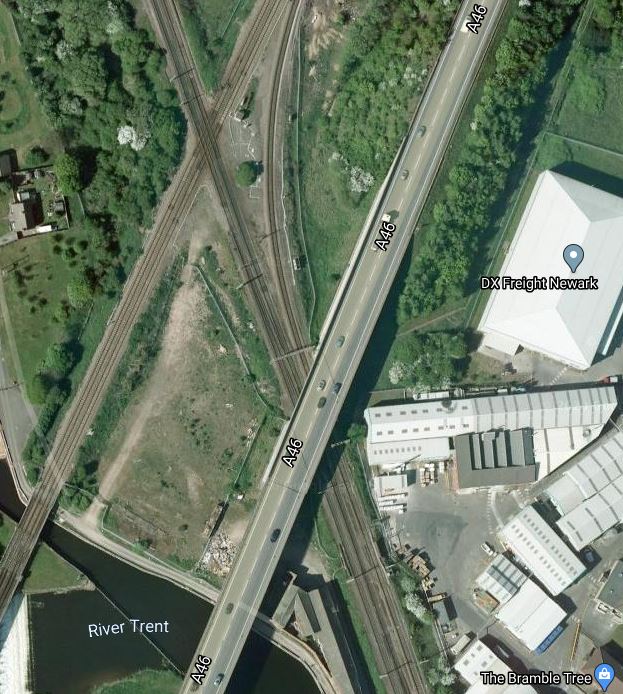
Note.
- The East Coast Main Line (ECML) running roughly North-South
- The A 46 road crossing the line.
- The Nottingham-Lincoln Line running parallel to the road.
- A chord allowing trains to go between the Nottingham-Lincoln Line and Newark North Gate station, which is to the South.
- The River Trent.
Complicated it certainly is!
I wrote about the problems in The Newark Crossing and felt something radical needed to be done.
Looking at the numbers of trains at the Newark Crossing.
- The number of trains crossing the ECML is typically about three trains per hour (tph) and they block the ECML for about two minutes.
- But then there could be a fast train around every four minutes on the ECML, with eight tph in both directions.
Would a Control Engineer’s solution, where all trains are computer controlled through the junction, be possible?
ERTMS, which is digital in-cab signalling is being installed on the ECML and will allow the following.
- Trains to be able to run at up to 140 mph.
- Trains to be precisely controlled from a central signalling system called ETCS.
ERTMS and ETCS are already working successfully on Thameslink.
Suppose all trains going through the Junction on both the ECML or the Nottingham-Lincoln Line, were running using ERTMS and ETCS.
- Currently, there are three tph crossing from East to West and three tph crossing from West to East. Which means that the junction is blocked six times per hour for say two minutes.
- Suppose the signalling could control the crossing trains, so that an East to West and a West to East train crossed at the same time.
- To cater for contingencies like late and diverted trains, you might allow the trains to cross at up to four tph.
Instead of six tph, the frequency across the junction would be no more than four tph.
A similar paired crossing procedure can be applied to trains on the ECML.
The outcome is that you are scheduling a smaller number of double events, which must be easier.
I suspect there are other tricks they can do to increase capacity.
There’s also the problem of what happens if a crossing train fails, as it goes over the East Coast Main Line. But that must be a problem now!
Whatever happens here will be a well-thought through solution and it will add to the capacity of the East Coast Main Line and increase the line-speed from the current 100 mph.
BNSF And Wabtec Prepare To Test Battery-Electric Locomotive
The title of this post, is the same as that of this article on Railway Gazette.
Some points from the article.
- It is a 4,400 hp or 3.3 MW locomotive.
- The battery is formed from 20,000 cells.
- The locomotive uses regenerative braking.
- Testing will be on a 560 km route in California.
But what I find interesting, is that the locomotive is designed to work commonly with a diesel locomotive and this is discussed in detail.
I have this feeling, that running two different locomotives as a pair might be more efficient and I wrote Could A Battery- Or Hydrogen-Powered Freight Locomotive Borrow A Feature Of A Steam Locomotive?, where I examined the concept.
In the article, they say that when a train hauled by a diesel and a battery locomotive, slows, the batteries are recharged. This would seem to make the combination more efficient.
I’ll be interested to see the results of the tests performed by BNSF and Wabtec.
Vivarail And Hitachi Seem To Be Following Similar Philosophies
This press release on the Vivarail web site, is entitled Battery Trains And Decarbonisation Of The National Network.
This is the two paragraphs.
Vivarail welcomes the recent announcements regarding new technologies for rail, and the growing understanding that battery trains will be a key part of the decarbonisation agenda.
Battery trains have been much misunderstood until now – the assumption has been that they can’t run very far and take ages to recharge. Neither of these are true! Vivarail’s trains:
To disprove the assumptions, they then make these points.
- Have a range of up to 100 miles between charges
- Recharge in only 10 minutes
They also make this mission statement.
Vivarail’s battery train, Fast Charge and power storage system is a complete package that can drop into place with minimal cost and effort to deliver a totally emission-free independently powered train, ideally designed for metro shuttles, branch lines and discrete routes across the country.
They add these points.
- Batteries can be charged from 750 VDC third-rail or 25 KVAC overhead electrification or hydrogen fuel cells.
- A daily range of 650 miles can be achieved on hydrogen.
- Vivarail seem very positive about hydrogen.
- The company uses modern high-performance lithium Ion pouch batteries from Intilion.
- It also appears that Vivarail are happy to install their traction package on other trains.
The press release finishes with this paragraph.
The rail industry needs to move now to hit its own decarbonisation targets and assist with the national effort. Battery trains are the quick win to achieve that.
Following on from Hitachi’s announcement on Monday, that I wrote about in Hyperdrive Innovation And Hitachi Rail To Develop Battery Tech For Trains, it does appear that battery trains will be arriving soon in a station near you!
Eurostar Amsterdam To London Treaty Formally Signed
The title of this post, is the same as that of this article on Railnews.
The first paragraph says it all.
The treaty allowing full customs and security procedures for Eurostar passengers at Amsterdam and Rotterdam has been formally signed, said the Department for Transport.
Perhaps, next time I go to Amsterdam, I’ll come back by train.
Proposal To Reopen Camberwell Railway Station
The title of this post, is the same as that of this article on Ian Visits.
It is an excellent article on the pros and cons of the station, with a good picture and a map from TfL.
Ian says, that there are worries, that the station would slow trains for commuters further out.
HS2 Trials UK’s First Electric Forklift
The title of this post, is the same as that of this article on Rail Technology Magazine.
This is the introductory paragraph.
In their efforts to lessen their carbon footprint and support the country’s green economic recovery, HS2 are trailing the UK’s first electric forklift on one of its major construction sites in London.
The construction industry is certainly thinking about cutting its emissions.
Should The NHS Adopt A Whack-A-Coeliac Policy?
The Wikipedia entry for Whac-a-Mole, says this about the colloquial use of the name of an arcade game.
In late June 2020, Boris Johnson based the UK’s COVID-19 strategy on the game.
Because of the high number of diagnosed coeliacs in the Cambridge area, I believe that I was diagnosed to be coeliac, by possible use of a Whack-a-Coeliac policy at Addenbrookes Hospital in Cambridge, in the last years of the Twentieth Century.
- I was suffering from low B12 levels and my GP sent me to the hospital to see a consultant.
- It was only a quick visit and all I remember, is the speed with which the nurse took my blood.
- A couple of days later, I received a letter from the hospital, saying it was likely I was a coeliac and it would be confirmed by an endoscopy.
- A point to note, is that I had my endoscopy with just a throat spray and this must have increased the efficiency and throughput and reduced the cost of the procedure.
The only way, I could have been diagnosed so quickly would have been through an analysis of my genes and blood. But I was never told, what method was used.
I have a few further thoughts.
My Health Since Diagnosis
It has undoubtedly improved.
Cancer And Diagnosed Coeliacs On A Gluten-Free Diet
Joe West of Nottingham University has shown, that diagnosed coeliacs on a gluten-free diet have a 25% lower risk of cancer compared to the general population.
That is certainly a collateral benefit of being a coeliac. But is it being a coeliac or the diet?
I’m no medic, but could the reason be, that diagnosed coeliacs on a gluten-free diet have a strong immune system?
Coeliac Disease Is A Many-Headed Hydra
I have heard a doctor describe coeliac disease or gluten-sensitivity as a many-headed hydra, as it can turn up in so many other illnesses.
Type “coeliac disease many-headed hydra” into Google and this article on the NCBI , which is entitled Gluten Sensitivity: A Many Headed Hydra, is the first of many.
This is the sub-title of the article.
Heightened responsiveness to gluten is not confined to the gut
My son; George was an undiagnosed coeliac, who had a poor diet consisting mostly of Subways, cigarettes and high-strength cannabis. He died at just thirty-seven of pancreatic cancer.
Did George have a poor immune system, which was useless at fighting the cancer?
Undiagnosed Coeliac Disease In The Over-Sixty-Fives
In A Thought On Deaths Of The Elderly From Covid-19, I used data from Age UK and Coeliac UK to estimate the number of coeliacs in the UK over the age of sixty-five. I said this.
Age UK has a figure of twelve million who are over 65 in the UK. If 1-in-100 in the UK are coeliac, that is 120,000 coeliacs over 65.
But some research shows that the number of coeliacs can be as high as 1-in-50.
If that 120,000 were all diagnosed, I would have several coeliacs amongst my over-65 friends. I have just one and she is self-diagnosed.
Are all these undiagnosed coeliacs out there, easy targets for diseases like cancer and COVID-19?
The Ease Of Testing For Coeliac Disease
I was worried that my granddaughter was coeliac and I asked my GP, how difficult a test is to perform.
He said, that a genetic test is usually quick and correct and only a few borderline cases need to be referred to a consultant.
Diagnosis has moved on a lot in twenty years.
Cambridge, Oxford and Covid-19
Six weeks ago I wrote Oxford And Cambridge Compared On COVID-19, to try to find out why the number of Covid-19 cases are so much lower in Cambridge than Oxford.
Checking today, the rate of lab-confirmed cases of COVID-19 per 100,000 residents is as follows.
- Cambridge 336.6
- Oxford 449
So why the difference?
In the related post, this was my explanation.
Is the large number of diagnosed coeliacs around Cambridge, the reason the area has a lower COVID-19 rate than Oxford?
It sounds a long shot, but it could be a vindication of a possible Whack-a-Coeliac policy at Addenbrooke’s in the last years of the Twentieth Century.
Or were the hospital testing the genetic test for coeliac disease? Perhaps, in conjunction with Cambridge University and/or the Sanger Centre.
Conclusion
I believe the NHS should seriously look at a Whack-a-Coeliac policy!
- The health of a large number of people would improve.
- There would be less cancer in the UK.
- A better combined National Immune System might help in our fight against the next virus to follow COVID-19.
It would be a very simple testing program, that would be mainly in the hands of the GPs, their nurses and the testing laboratories.
Hyperdrive Innovation And Hitachi Rail To Develop Battery Tech For Trains
The title of this post, is the same as that of this article on The Engineer.
This is the introductory sub-title.
Hyperdrive Innovation and Hitachi Rail are to develop battery packs to power trains and create a battery hub in the North East of England.
The article gives this information.
- Trains can have a range of ninety kilometres, which fits well with Hitachi’s quoted battery range of 55-65 miles.
- Hitachi has identified its fleets of 275 trains as potential early recipients.
Hitachi have also provided an informative video.
At one point, the video shows a visualisation of swapping a diesel-engine for a battery pack.
As a world-class computer programmer in a previous life, I believe that it is possible to create a battery pack, that to the train’s extremely comprehensive computer, looks like a diesel-engine.
So by modifying the train’s software accordingly, the various power sources of electrification, diesel power-packs and battery packs can be used in an optimum manner.
This would enable one of East Midlands Railway’s Class 810 trains, to be fitted with a mix of diesel and battery packs in their four positions under the train.
Imagine going between London and Sheffield, after the High Speed Two electrification between Clay Cross North Junction and Sheffield has been erected.
- Between St. Pancras and Market Harborough power would come from the electrification.
- The train would leave the electrified section with full batteries
- At all stations on the route, hotel power would come from the batteries.
- Diesel power and some battery power would be used between stations. Using them together may give better performance.
- At Clay Cross North Junction, the electrification would be used to Sheffield.
For efficient operation, there would need to be electrification or some form of charging at the Sheffield end of the route. This is why, I am keen that when High Speed Two is built in the North, that the shsared section with the Midland Main Line between Clay Cross North Junction and Sheffield station, should be built early.
Hitachi have said that these trains will have four diesel engines. I think it will more likely be two diesel engines and two batteries.
The World’s First Battery-Electric Main Line
I suspect with electrification between Sheffield and Clay Cross North Junction, that a train fitted with four batteries, might even be able to run on electric power only on the whole route.
In addition, if electrification were to be erected between Leicester and East Midlands Parkway stations, all three Northern destinations would become electric power only.
The Midland Main Line would be the first battery electric high speed line in the world!
Hitachi On Hydrogen Trains
The press release about the partnership between Hitachi and Hyperdrive Innovation is on this page on the Hitachi web site.
This is a paragraph.
Regional battery trains produce zero tailpipe emission and compatible with existing rail infrastructure so they can complement future electrification. At the moment, battery trains have approximately 50% lower lifecycle costs than hydrogen trains, making battery the cheapest and cleanest alternative zero-emission traction solution for trains.
I have ridden in two battery-electric trains and one hydrogen-powered train.
I would rate them out of ten as follows.
- Class 230 train – 6 – Battery
- Class 379 train – 8 – Battery
- Coradia iLint – 4 – Hydrogen
It’s not that the iLint is a bad train, as the power system seems to work well, but the passenger experience is nowhere near the quality of the two battery trains.
In my view, battery vehicles are exceedingly quiet, so is this the reason?
On the other hand, it could just be poor engineering on the iLint.
Conclusion
This is as very big day in the development of zero- and low-carbon trains in the UK.
 The Anonymous Widower