Very Light Rail Research On Track
The title of this post is the same as that of this article on Railway Gazette International.
It details the progress on very light rail, which is defined as a vehicle with a weight of less than one tonne per linear metre.
It is a thorough article and very much a must-read.
It also details thirty-five rail routes in the UK and several cities, where the technology could be employed.
Some of the routes mentioned include, ones that I’ve covered on this blog, including.
- Cromer – Sheringham – Part of Greater Anglia
- Saxmundham – Aldeburgh – Part of Greater Anglia
- Coventry – Nuneaton – Part of West Midlands
- Liskeard – Looe – Part of Great Western
- Plymouth – Tavistock – Part of Great Western
- St Erth – St Ives – Part of Great Western
- Henley-on-Thames – Twyford – Part of Great Western
- Maidenhead – Marlow – Part of Great Western
- Slough – Windsor & Eton Central – Part of Great Western
- Truro – Falmouth- Part of Great Western
- Watford – St Albans Abbey – Part of London Midland
- Ashington – Blyth
- Fleetwood – Poulton-le-Fylde
Note.
- On reading the full list, I wondered why Greenfood – West Ealing and Southall – Brentford weren’t included, but it’s probably because freight uses the lines.
- I particularly like the inclusion of Saxmundham – Aldeburgh and Watford Junction – St. Albans Abbey.
You can understand why the rail leasing company; Eversholt, has got involved, as they must see quite a few possible sales.
There is more information on the concept call Revolution on this page on the Transport Design International web site.
Some points that can be gleaned from this page.
- One picture shows a coupler on the front of the vehicle. So can they work in multiple?
- Vehicles will have low axle weights (around 4 tonnes),
- Self-powered vehicles, with energy recovery and storage systems as standard,
- Reduced infrastructure costs for installation, operation and maintenance.
The consortium is also aiming for a sub million pound price tag.
Conclusion
It is a bold plan, which is backed by some large companies and organisations with deep pockets.
Digital Displacement Project On Track To Reduce Rail Emissions
The title of this post is the same as that of this article on Rail Technology Magazine.
This is the introduction paragraph.
With challenging targets to radically reduce railway CO2 emissions, Artemis Intelligent Power is looking at the potential of Digital Displacement® hydraulics as a novel route to lower emissions for freight locomotives, shunters and on-track plant.
Artemis Intelligent Power are an Edinburgh-based company, who are owned by Misubishi and claim they are global leaders in digital displacement technology.
The company has a section on their technology on their web site.
Effectively, they have designed a very efficient computer controlled hydraulic pump. When used in an application, there is often a fuel saving of several percent.
Tyne And Wear Metro: Swiss Firm Stadler To Build New Fleet
The title of this post is the same as that of this article on the BBC.
This is the introductory paragraph.
Swiss firm Stadler has won a £362m contract to build a new fleet of trains for the Tyne and Wear Metro.
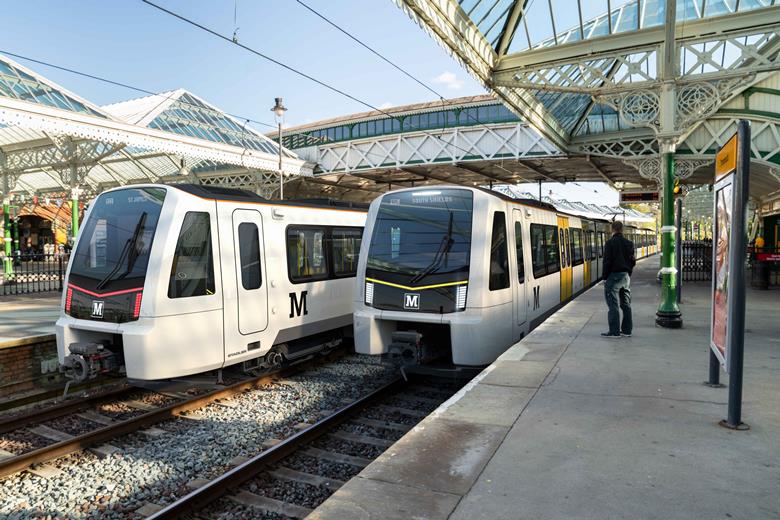
And this is one of Stadler’s visualisations of the trains for the Tyne and Wear Metro (T & W).
Compare this with a Stadler picture of a Class 777 train, that will soon be appearing on Merseyrail in Liverpool.
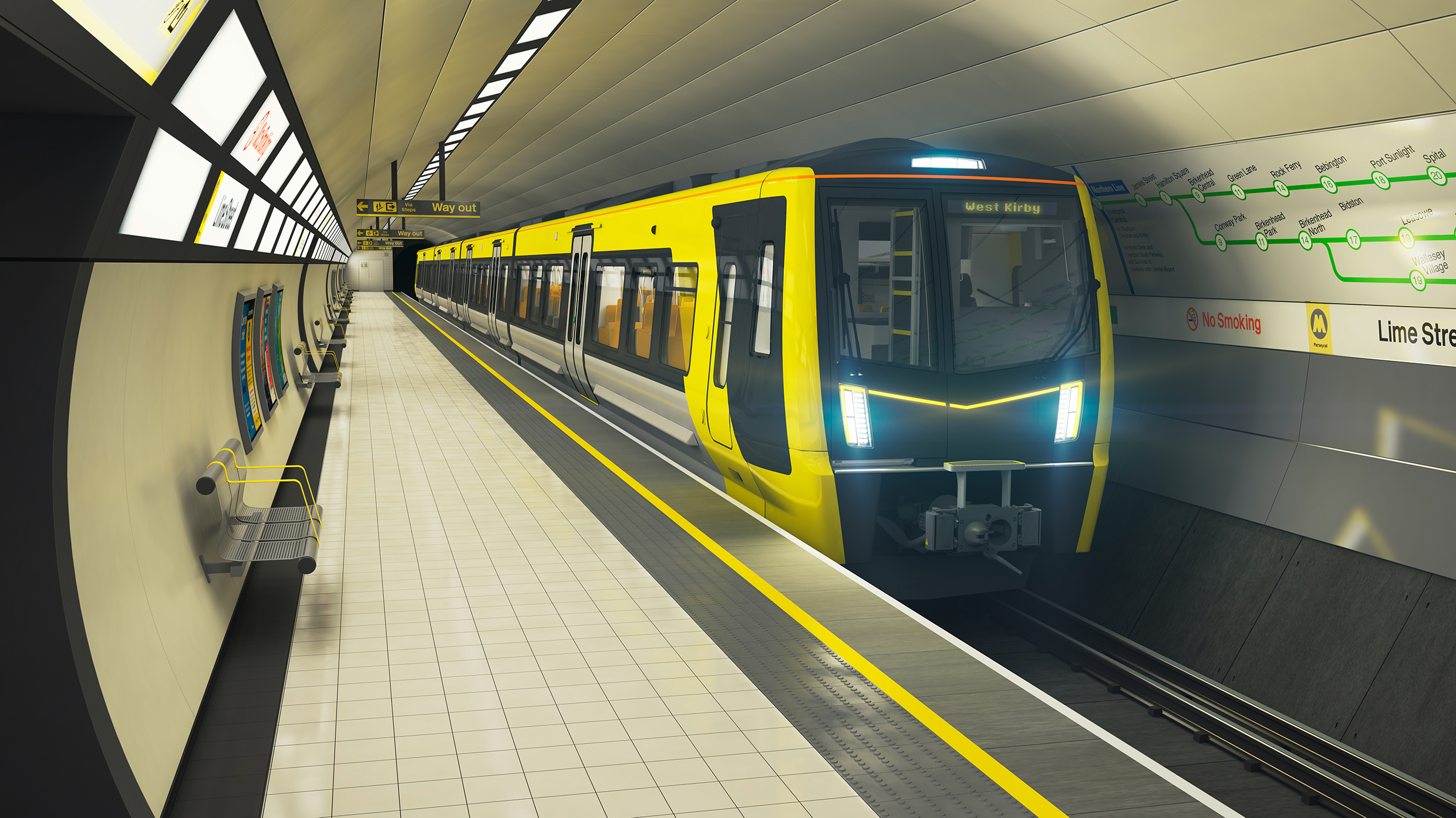
They would appear to be two very similar trains.
- The same headlights and stylised M on the front.
- One pair of double passenger doors in the first car.
- Both new trains are articulated with four sections.
- Train widths are Merseyrail Old – 2.82 metres, T & W Old – 2.65 metres and Merseyrail New – 2.82 metres.
- The Merseyrail trains have a 75 mph operating speed and the T & W trains have one of only 50 mph.
The T & W trains have a pantograph and overhead electrification and the Merseyrail trains use third-rail electrification.
More Details On The Tyne And Wear Trains
This page on the NEXUS web site is entitled Nexus Unveils £362m New Tyne And Wear Metro Trains.
This is two paragraphs.
The new trains will cut Metro’s high voltage power consumption by 30% while providing 15 times better reliability than the current fleet. Metro’s 36 million passengers will benefit from modern features including wifi, charging points, air conditioning and a step-change in accessibility.
Among new features will be an automatic sliding step at every door of the new trains, making travel easier for Metro’s 50,000 wheelchair passengers as well as people with children’s buggies, luggage or bicycles.
The size of the energy saving, indicates that the trains will probably be using regenerative braking.
As it has been disclosed that the new Merseyrail trains will have a small battery for depot movements, will this also be used to handle the regenerative braking.
More details of the trains will be disclosed in the coming months.
Merseyrail And The Tyne And Wear Metro Are Similar
I have ridden Merseyrail many times and the Tyne and Wear Metro perhaps five times and it is surprising how similar the two systems are.
- They are partly in tunnel.
- There are a range of stations, including both ancient and modern, simple and complex.
- Merseyrail is powered by 750 VDC third rail electrification and T & W by 1500 VDC overhead electrification. The power electronics on the two fleets, won’t be that different.
- Both operators have ambitions to use 25 KVAC overhead electrification to extend services.
- Both operators have ambitions to extend services on lines, that currently have no electrification. Merseyrail want to go to Preston, Skelmersdale, Warrington and Wrexham and T & W want to go to Blyth and Ashington along the Northumberland Line.
It is no surprise to me, that Merseyrail and T & W have chosen to use two versions of the same Stadler train.
Expansion Of The Networks
Both networks are ambitious and it appears to me, that they have ordered a train, that could be used to expand their networks.
Merseyrail
Merseyrail have proposed these expansions at various times.
- Extension of the Northern Line from Ormskirk to Preston
- Extension of the Northern Line from Hunts Cross to Warrington
- Incorporation of the Borderlands Line from Bidston to Wrexham into the Wirral Line as a new branch.
- A new branch of the Northern Line to Skelmersdale via the new station at Headbolt Lane.
- Passenger services on the Canada Dock Branch.
Merseyrail now have the trains to handle this expansion.
- They may need to purchase a few extra trains.
- Some charging points or electrification may be needed.
Note that Bidston and Wrexham is less than thirty miles of unelectrified line, so I suspect that the new trains can handle this range.
Other places within a similar range include.
- Preston from Ormskirk
- Wigan Wallgate from Kirkby
- Manchester Oxford Road from Hunts Cross, via Warrington Central.
- Chester from Liverpool Lime Street via Runcorn, Frodsham and Helsby.
The four terminal stations all have existing bay platforms.
Tyne And Wear Metro
The Tyne And Wear Metro have proposed these expansions at various times.
- Sunderland city centre to Doxford Park
- South Shields to Sunderland
- Washington, either via the disused Leamside line or a new route
But as the Government is funding a study into linking Blyth and Ashington to Newcastle, which I wrote about in £500m Fund To Restore Beeching Rail Cuts Goes Ahead Amid Criticism, I wouldn’t be surprised that this route is developed.
A lot of my comments about expanding the Merseyrail network, can be applied to the T & W.
- They may need to purchase a few extra trains.
- Some charging points or electrification may be needed.
None of the proposed extensions seem particularly long and places like Blyth, Ashington and Washington should be able to be reached on battery power.
Tram-Train Operation
The Wikipedia entry for Merseyrail has a section called tram-trains.
Two possible routes are indicated.
- Liverpool Lime Street to John Lennon Airport, using street-running from Liverpool South Parkway.
- Kings Dock to Edge Hill
I have heard others mentioned.
The Wikipedia entry for the Tyne and Wear Metro also mentions street-running.
Stadler have extensive experience of trams and tram-trains and built the Class 399 tram-trains for the Sheffield Supertram.
Stadler also provided the trains for the unique tram-train system in the German town of Zwickau, where diesel multiples units share the tram tracks to access the town centre.
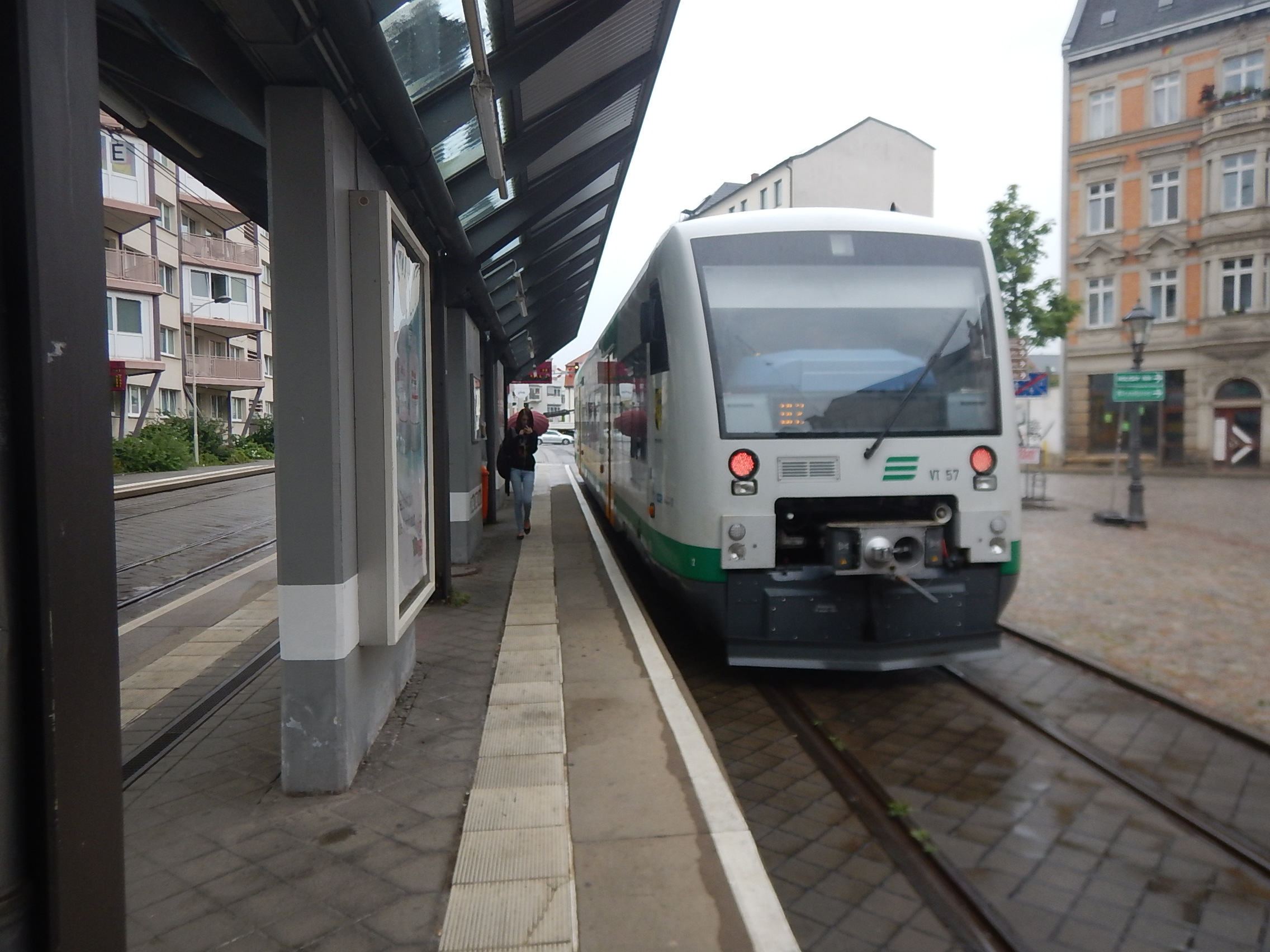
The picture shows the train at its stop in the centre.
I’m sure Stadler know how to enable street-running with the UK’s smaller trains.
Stadler’s trains, trams and tram trains also seem to have a high degree of articulation and seem to be able to take tight corners with ease.
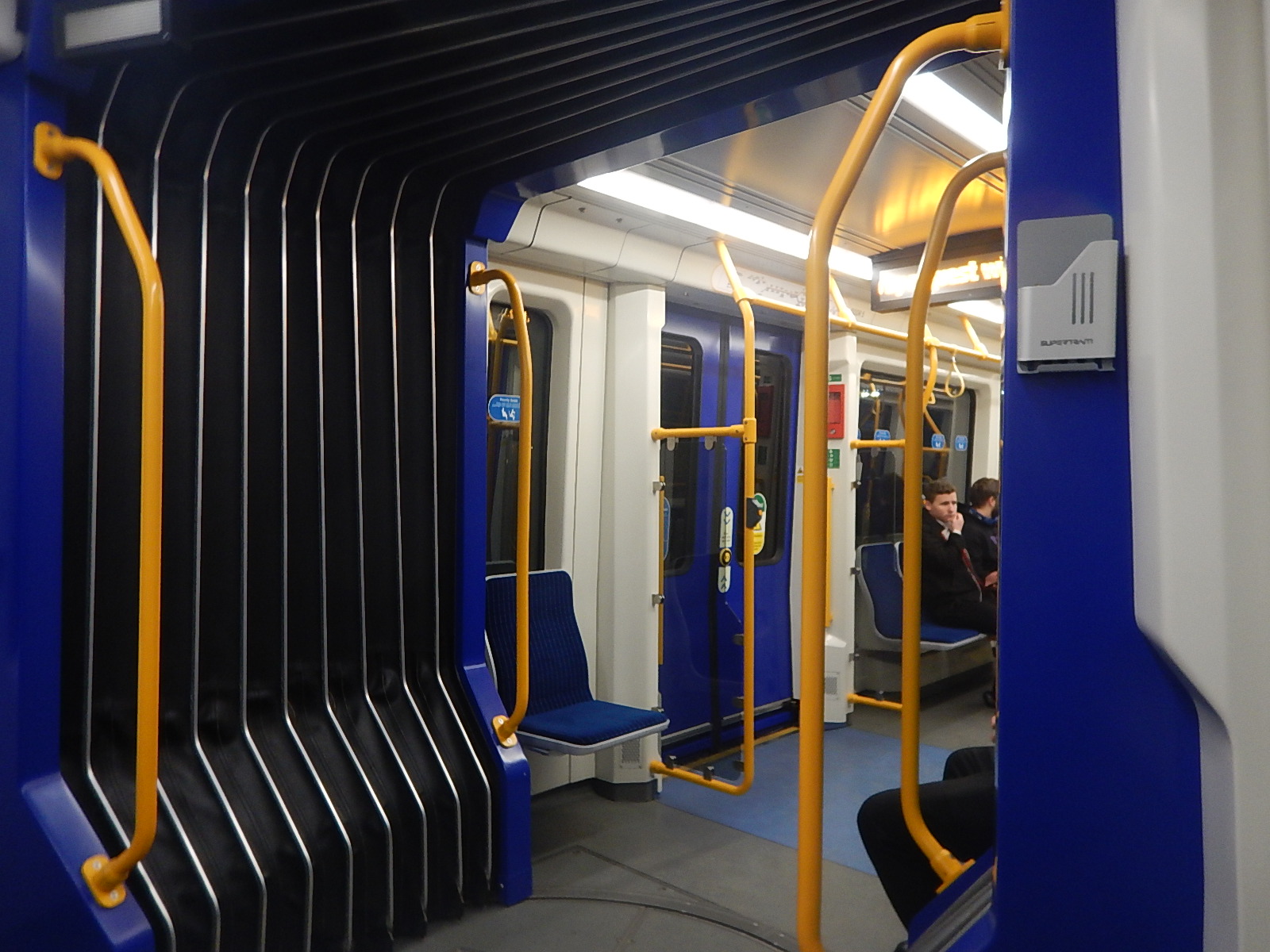
The picture was taken inside a Class 399 tram-train, as it traversed the tight curve under the M1 motorway, where the tram and the train sections of the route to Rotherham join.
Looking at the pictures of the Class 777 trains, I feel they could be able to take tighter curves than most trains.
The Dead Elephant In The Room
Several local services on Merseyside and in the North East are run by Northern, which is now being taken over the Government.
The Department for Transport, hasn’t disclosed any plans yet, but it is likely that some routes could be handed to Merseyrail and the T & W.
There is a loose precedent for this happening. In North-East London the poorly performing Lea Valley Lines from Liverpool Street to Chingford, Cheshunt and Enfield Town were moved from Greater Anglia to London Overground in 2015. No-one feels they should be returned and there are rumours that more services in the area will move to the London Overground.
So what services could be moved?
Merseyrail
These diesel services could surely be moved to Merseyrail.
- Omrskirk and Preston – 16 miles
- Liverpool Lime Street and Manchester Oxford Road via Warrington Central – 27 miles
The distances are the length of track without electrification.
It could also be argued that Greater Manchester would get its share of the Northern routes, but I can envisage Class 777 trains or similar running the following routes.
- Southport and Manchester Victoria – 27 miles
- Kirkby and Manchester Victoria – 28 miles
As before, the distances are the length of track without electrification, but these could be reduced considerably with electrification from Salford Crescent to Wigan Wallgate.
It should be noted that Greater Manchester has ambitions to run tram-trains to Wigan Wallgate via various routes.
The demise of Northern probably allows these routes to be taken over by Greater Manchester.
- Manchester Piccadilly and Buxton – 16 miles
- Manchester Piccadilly and Hadfield/Glossop – Electrified
- Manchester Victoria and Blackburn – 14 miles
- Manchester Victoria and Clitheroe – 24 miles
- Manchester Victoria and Rochdale – 11 miles
- Manchester Victoria and Stalybridge – 8 miles
- Manchester Victoria and Wigan Wallgate – 10 miles
Again, the distances are the length of track without electrification.
Buxton and Clitheroe could be difficult because of the gradients involved, but as in South Wales, bi-modes might be the solution if the routes were run back-to-back.
This simple analysis shows how Northern’s demise will ask questions all over the North.
Tyne And Wear Metro
These diesel services could surely be moved to the T & W.
- Newcastle and Morpeth – Electrified
- Newcastle and Chathill- Electrified
I also think, that these services could be restructured, if the Blyth and Ashington routes are developed for the T & W.
The trains could also reach to Hexham, which is just 22 miles from electrification.
Middlesbrough is probably too far, as the station is thirty five miles from the electrification at Sunderland.
But electrification of the Durham Coast Line would allow the T & W Metro to serve the new station at Howden and reach Middlesbrough and possibly Nunthorpe.
Conclusion
I can see both Merseyrail and the Tyne and Wear Metro significantly extending their networks in the next few years.
The new trains, with their batteries and dual-voltage capability are built for expansion.
Tram-train or street running will help.
Several important new areas are within battery range.
I can also see other cities using similar Stadler technology to create local Metros.
Manchester, Middlesbrough, Preston and Sheffield come to mind.
Using similar technology would surely allow joint services and sharing of knowledge and designs to enable cost savings.
UK Electric Van Maker Arrival Secures £340m Order From UPS
The title of this post is the same as that of this article in the Guardian.
Arrival seem to be doing things differently, so read the Gaurdian article and their entry on Wikipedia.
This is their mission statement from the web site.
Arrival is a technology company, we create Generation 2 Electric Vehicles. Devices on wheels — they outperform legacy technology to deliver an experience like no other, but are priced the same as fossil fuel equivalents.
They must be doing something right, UPS, Hyundai and Kia have all invested in the company.
Here’s a picture from the Arrival web site.
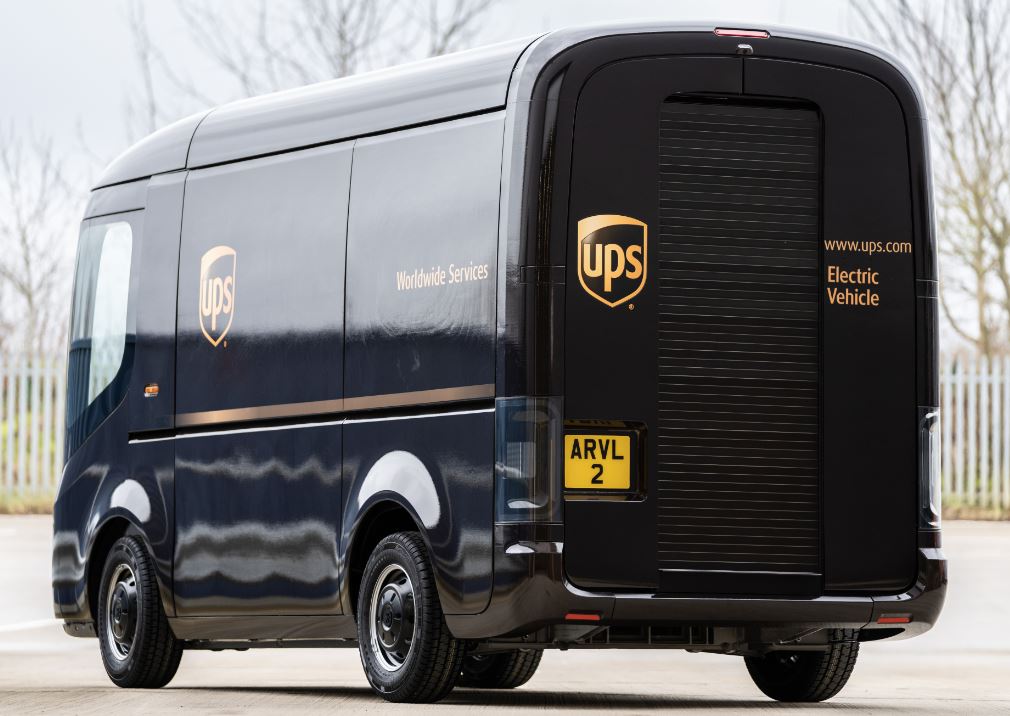
Arrival is one of those companies, that will either make a fortune and annoy a lot of established companies in the field or end up in serious trouble, as the rivals gang up on them.
Mule Trains Between Liverpool And Norwich
I have done two trips to Liverpool in the last week.
On Saturday, I saw this collection of one-car Class 153 trains with a two-car Class 156 train thrown in.

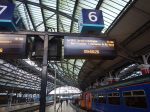
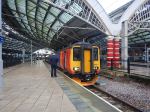


They were forming one of East Midlands Railway‘s Liverpool and Norwich services.
And then yesterday, I had to travel between Liverpool and Sheffield and this was the collection of trains that took me.
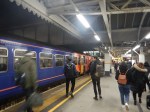
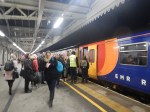


So what was it like?
It started badly, with the driver announcing that because of the late arrival due to an undisclosed problem with the incoming train, that we would be leaving ten minutes after the planned departure time of 1551. He also indicated that our late departure meant that we would be stuck behind one of Northern’s services.
In the end, despite the gloomy faces of passengers we left twelve minutes late at 1603.
It was a bit like one of those classic films, where an ancient train escapes in the nick of time, with a lot of important and assorted passengers.
The asthmatic Cummins diesels under the train could be heard straining.
- But the driver was at the top of his game and the train was running smoothly towards Manchester at close to 75 mph, which is the maximum speed of a Class 153 train.
- At Manchester Piccadilly, the driver had pulled back two minutes.
- There were obviously, no problems on the Dove Valley Line and the driver pulled back another minute before Sheffield, to arrive nine minutes late.
Looking at Real Time Trains, the train ran well until March (The place, not the month!), but there was some form of delay there and sadly it was thirty-four minutes late into Norwich.
The Train Was Clean
I should say there was nothing wrong with the train except for its design and age. It was also as clean as you can get one of these trains. The toilet, that I used was better than many I’ve used on trains and worked as it should.
Customer Service
East Midlands Railway had loaded a trolley and a steward and in the two hours I was on the train, he came through twice. The only problem for me, that he had no card machine, but I did find a fiver in my briefcase.
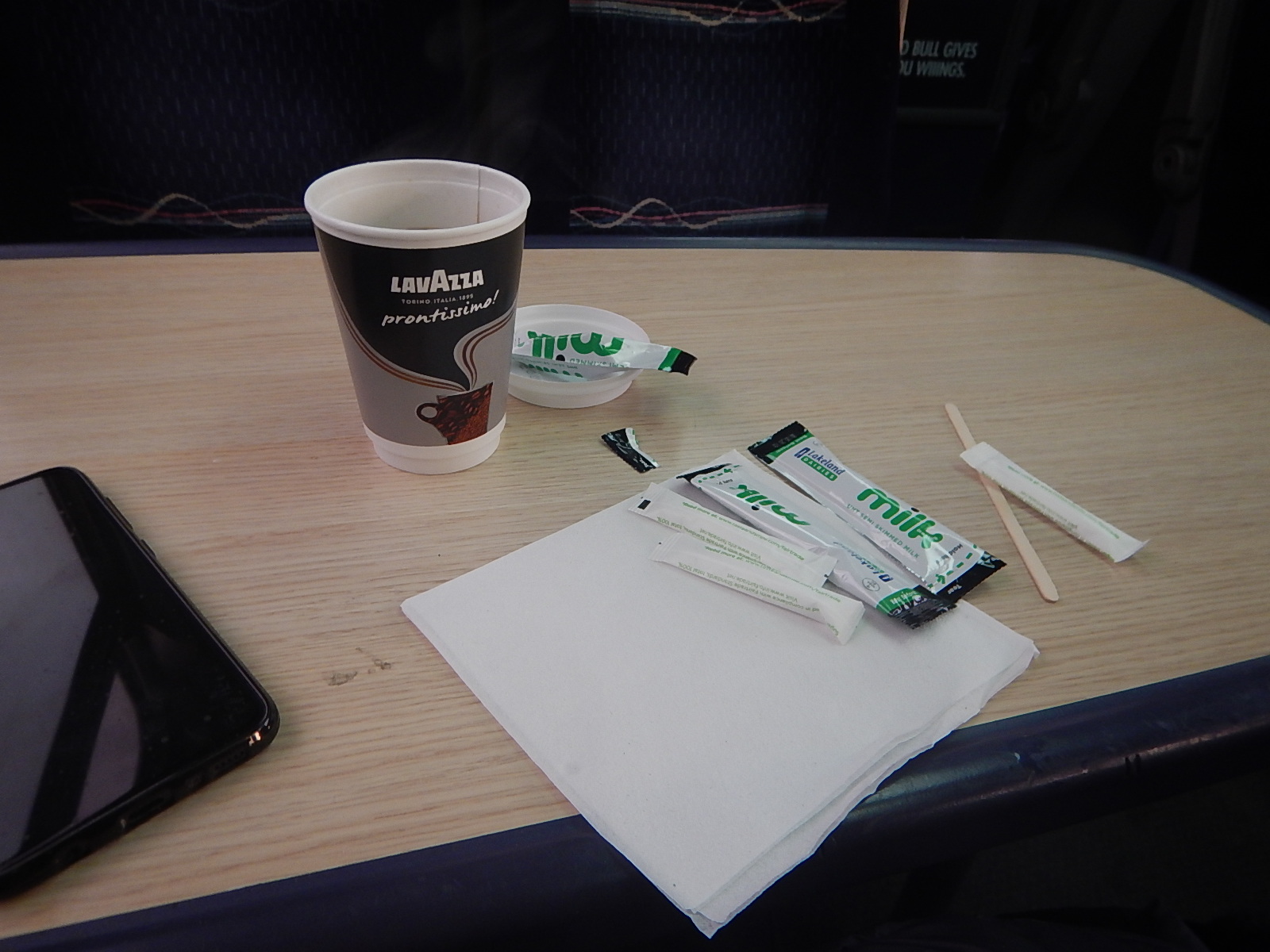
At least it was very drinkable. Even, if I hate those plastic tubs of milk, as they are difficult to open with one good hand.
Where Did Two Cars Go?
I had been fairly certain, that we had started with six cars, but we only arrived in Sheffield with four Class 153 trains.
I suspect that the trouble that delayed the train, concerned two cars and these were left on the naughty step or the end of Platform 6 in Liverpool Lime Street station.
Being Fair To East Midlands Railway
This service used to be run by a four-car formation of two-car Class 158 trains, but these have been causing trouble lately and they will be replaced by Class 170 trains cascaded from other operators.
But because of late arrivals of new trains the much better Class 170 trains haven’t arrived yet.
The driver, steward and other staff did a good job and I feel that the steward enjoyed it. No-one was abusive and stories were just exchanged, as we climbed across the Pennines in what by Sheffield was a very crowded train.
Class 153 trains may have been built as a stop-gap for short branch lines, but you couldn’t fault their performance.
Unless of course, one caused the delay at March, by expiring in a cloud of blue smoke.
Other Observations
These are other observations.
Scheduled Journey Times
On my journey the scheduled times were
- Liverpool and Manchester Oxford Road – forty-seven minutes.
- Liverpool and Sheffield – one hour and forty-eight minutes.
- Liverpool and Nottingham – two hour and forty minutes.
- Liverpool and Norwich – Five hours and twenty-seven minutes
The train considering the configuration, nearly achieved them.
It’s probably the motoring equivalent of doing the journey in a Morris Minor!
The Nine Stops Were Executed Perfectly
There were nine stops on my journey and eight took less than a minute, with Sheffield taking four, as the driver and crew changed.
A modern train like a Class 755 train, with fast acceleration and level boarding could probably save up to three minutes a time on each stop.
The Route Is A Genuine 75 mph Railway In Good Condition
I was checking the speed of the train on parts of the route and the driver had his motley crew at a steady 75 mph for long periods.
- The train was riding well, indicating to me, that both trains and track were in reasonably good condition.
- Note that 75 mph is the maximum speed of a Class 153 train.
- The train recovered three minutes on the late departure from Liverpool.
I can see a faster train and improvements to the route, some of which are underway, could reduce the journey time by a few minutes.
Could Merseyrail’s New Class 777 Trains Work To The Bay Platform At Oxford Road?
Merseyrail’s new Class 777 trains will have the following performance.
- A possible range of perhaps 40-50 miles on battery power.
- An operating speed of 75 mph.
- An acceleration rate of 1.1 m/sec², which is faster than a Class 153 or Class 170 train.
- Fast stops due to regenerative braking, fast acceleration and level boarding.
As Liverpool Lime Street to Oxford Road is thirty four miles of which nine is electrified, I suspect that these new trains could extend Merseyrail’s Northern Line service from Hunts Cross to Manchester Oxford Road.
- Two trains per hour (tph), but I’m sure four tph would transform the area.
- I doubt any track modifications would be needed.
But would Liverpool and Manchester be able to sort out the local politics?
The Future Of The Liverpool And Norwich Service
This service will probably be spilt into two services.
- Liverpool Lime Street and Derby, which could be run by TransPennine Express or Northern Trains.
- Derby and Norwich, which would be run by East Midlands Railway.
As to the trains to be used, consider the following.
The Liverpool and Derby leg would probably need six trains, with the same number needed for Derby and Norwich, or twelve in total.
Currently, eleven or twelve is needed for the longer service.
Sections of the route like through Manchester and between Grantham and Peterborough are electrified.
There are even sections of route, where 125 mph running is possible.
Run reliably to an hourly frequency, I think that this service could attract passengers, especially, as it would serve Derby and extra stops like Ilkeston and Warrington West could be added.
This leads to the following trains being possibilities.
Class 802 trains – 125 mph bi-mode train of which TransPennine Express have 19 trains.
Class 185 trains – 100 mph diesel train of which TransPennine Express have 51 trains.
Class 810 trains – 125 mph bi-mode train of which East Midlands Railway have ordered 33 trains.
Class 755 trains – 100 mph diesel train of which Greater Anglia have 38 trains, which are based at Norwich.
Alstom Breeze hydrogen trains could be ideal for Liverpool and Derby.
Note.
- Greater Anglia and East Midlands Railway are both subsidiaries of Abellio.
- Developments of Class 755 trains could include battery and hydrogen versions.
- I suspect that 125 mph trains may be required for both legs, to maximise capacity on the East Coast Main Line and Midland Main Line.
The trains will certainly get better.
£500m Fund To Restore Beeching Rail Cuts Goes Ahead Amid Criticism
The title of this post is the same as that of this article on the BBC.
This is the introductory paragraph.
A government fund is to be launched later to restore historic railway lines closed more than 50 years ago under the so-called Beeching cuts.
The two initial grants are for studies about reopening the Northumberland Line to Blyth and Ashington in the North East and to Fleetwood to the North of Blackpool.
Blyth And Ashington
Consider.
- The tracks already exist.
- There may still be some freight traffic on the route.
- Connections to the Tyne and Wear Metro appear possible.
- The Tyne and Wear Metro already shares tracks with other freight and passenger services.
- New stations and probably new signalling will be needed.
- The distance between the proposed Northern terminals and the connections with the Tyne and Wear Metro are under twenty miles, which could make battery operation easily possible.
- The Tyne and Wear Metro is currently procuring a new fleet of trains.
I believe that these branches could be integrated into the Tyne and Wear Metro, providing that the new trains have the right specification.
Light rail vehicles like the Class 398 tram-trains being procured for the South Wales Metro should be able to run these services.
But other manufacturers might have better solutions!
Fleetwood Branch
This extension would need the following.
- Restoration of the existing track between Poulton-le-Fylde and Fleetwood.
- One or more new stations.
- Probable resignalling.
In a simple installation, there is probably space to put a bay platform in Poulton-le-Fylde station, so that a shuttle service could be run to Fleetwood.
But services could also be extended to Preston.
Blackpool though has other rail problems like what are they going to do with the Blackpool South Line.
I believe Blackpool could use similar solutions on both the Blackpool South and Fleetwood Lines to create a bigger solution for the whole of the area.
Conclusion
It looks to me that the government has started with two schemes that are possible and where the track still exists.
It is to be hoped that the two studies come up with easy-to-build and fundable schemes, which are the first of many.
Raw Material For Southern’s Battery Trains
Porterbrook and Southern are proposing to convert a number of Class 377/3 trains to battery operation for the Uckfield Branch and the Marshlink Line, as I wrote about in Electroflex Battery EMU Plan To End Southern Diesel Operation.
This morning I took a ride in a ten-car Class 377 train formed by two three-car Class 377/3 units and one Class 377/4.
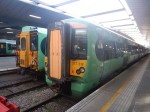
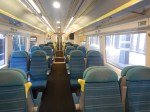
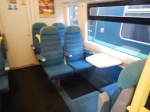
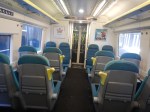
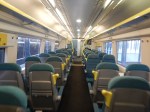
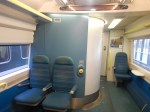
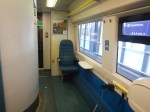
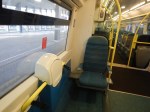
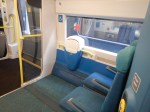
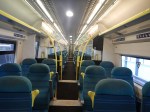
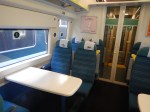
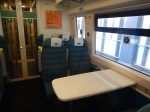
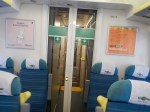
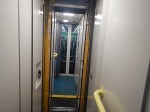
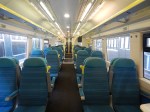
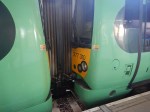
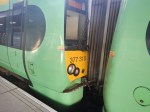
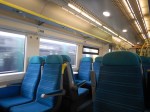
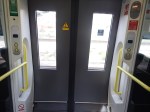
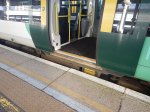
I will split my observations into various sections.
First Class
There is a small First Class section.
Is this really needed in a three-car train, considering that some franchises are going for one-class trains?
Gangways
On the Uckfield Branch and the Marshlink Line, I suspect that trains will work in multiple formations, so the gangway will be useful to allow passengers to pass between individual trains.
Interior
The interior is reasonably modern, as the trains were originally built in 2001-2002 and they meet all of the persons of reduced mobility legislation.
Multiple Working
The train I rode on consisted of three Class 377 Trains working together, so it would appear that six, nine and twelve car trains may be possible.
Tables And Cup-Holders
I would prefer full-size tables and perhaps these could be fitted, during the conversion, like they are in some Class 377 trains.
If not tables, then how about some cup-holders?
Universal Access Toilet
A universal-access toilet is fitted in the middle car.
Wi-Fi
Wi-fi appears to be fitted.
25 KVAC Operation
Although the trains are currently configured for operation on 750 VDC trird-rail electrification, these trains can be converted to run on 25 KVAC overhead electrification.
This would obviously mean that if the trains were no longer needed in Sussex, they could run anywhere else, where there is electrification.
Conclusion
They are a well-equipped train.
It would appear that very little will need to be done to the interior of the train in the conversion.
First may be downgraded to standard and I would fit full tables.
The operator would do what they wanted.
An Open Letter To Jamie Burles Of Greater Anglia
I will open by saying that this letter is not a complaint about your company, as you, like all your passengers and staff are just suffering collateral damage from the overwhelming incompetence of the real culprit.
I have been supporting Ipswich Town, off and on, since my parents retired to Felixstowe around 1960, when the next door neighbour used to take me to Portman Road.
In 2007, after living together in Suffolk for nearly forty years, my wife died of a squamous cell carcinoma of the heart, followed in 2010, by our son, who died at just thirty-seven of pancreatic cancer. I am coeliac and because of all this grief, I neglected my health, which caused me to have a serious stroke. Luckily, the only lasting problem, I suffered was a partial loss of vision, which meant I was unable to drive.
So I sold up in Suffolk and moved back to London, where I had been born in 1947.
For a couple of years, things went well coming out to Ipswich for matches by train. Typically, on a match day I would have a gluten-free lunch in London and catch the reliable 12:30 Norwich express and just arrive in my seat a few minutes before kick-off.
I should note, that there is only one reliable place for a coeliac like myself, who needs gluten-free food to eat in Ipswich and that is Pizza Express. But you can only eat so much pizza! I can get gluten-free sandwiches in Marks and Spencer, but as with the pizza, it means walking to the centre of town and at seventy-two now, that is not such an easy proposition, as it once was.
Over the last six years, the journey has got worse. The much longer journey time on replacement buses, means I can’t eat properly or do any of the other things , I need to do in life on an average Saturday.
Consider.
- Football may be important to me, but it is not that important.
- I should say, that sometimes, I go via Cambridge, when replacement buses are in operation for a change, as I can have a meal in the city with friends or buy sandwiches in the Marks & Spencer in the station.
- In all these years of disruption, it always seems that if Ipswich are at home on the Saturday, there would be a busification of the service, whereas on other Saturdays a full service operated.
When I first started coming out from London to see matches, there were quite a few supporters on the trains from London, including one guy in a wheel-chair. Over the years many seem to have fallen by the wayside, because of the constant disruption.
I had hoped that this season, Network Rail’s deplorable project management of the Great Eastern Main line, which often results in surprise closures, would have been consigned to history.
But if ever, there have been more closures this season and the latest batch of nine closures starting on Saturday, are the last straw as far as I am concerned.
Saturday’s closure was particularly inconvenient, as Kings Cross was closed and the West Anglia Main Line was running a reduced service, so in the end, I had a late breakfast at St. Pancras and took Southeastern Highspeed to Ebbsfleet where a friend and fellow Ipswich season ticket holder, who lives nearby, gave me a lift to the match. The home-to-home round trip , was actually almost as long, as that on the previous Saturday’s trip to Tranmere.
Looking at the next few Saturday Ipswich home games, I see the following.
- Peterborough – 1st February – Normal service (?)
- Burton Albion – 15th February – Buses
- Oxford United – 22nd February – Buses
- Coventry – 7th March – Buses
- Portsmouth- 21th March – Buses
- Rochdale – 18th April – Buses
I probably speak with more authority, than most, as the company I started in Ipswich; Metier Management Systems, is recognised as one of the companies, that changed project management completely, in the last three decades of the twentieth century. At times, half the major projects in the world were being planned and managed by software I wrote in a Suffolk attic.
I rate, Network Rail’s performance over the last few years in the wider UK, as one of the worst project management disasters I have known, alongside Berlin’s Brandenburg Airport, the legendary hospital built the wrong way round, and the Boeing 737 MAX.
Could High Speed Two Trains Serve Stoke-on-Trent?
The city of Stoke-on-Trent lobbied hard for High Speed Two to call, but it is going through closer to the West Coast Main Line, which is a few miles to the West.
Current Services
Stoke-on-Trent station is on the Stafford to Manchester branch of the West Coast Main Line.
It is served by two trains per hour (tph) between Euston and Manchester Piccadilly via Milton Keynes Central (1tph), Stoke-on-Trent, Macclesfield (1tph) and Stockport. The fastest journey time is one hour and 24 minutes.
Possible Routes Using High Speed Two
It should be noted that to serve Stafford on the West Coast Main Line, High Speed Two trains will use the West Coast Main Line, rather than High Speed Two between Lichfield and Crewe.
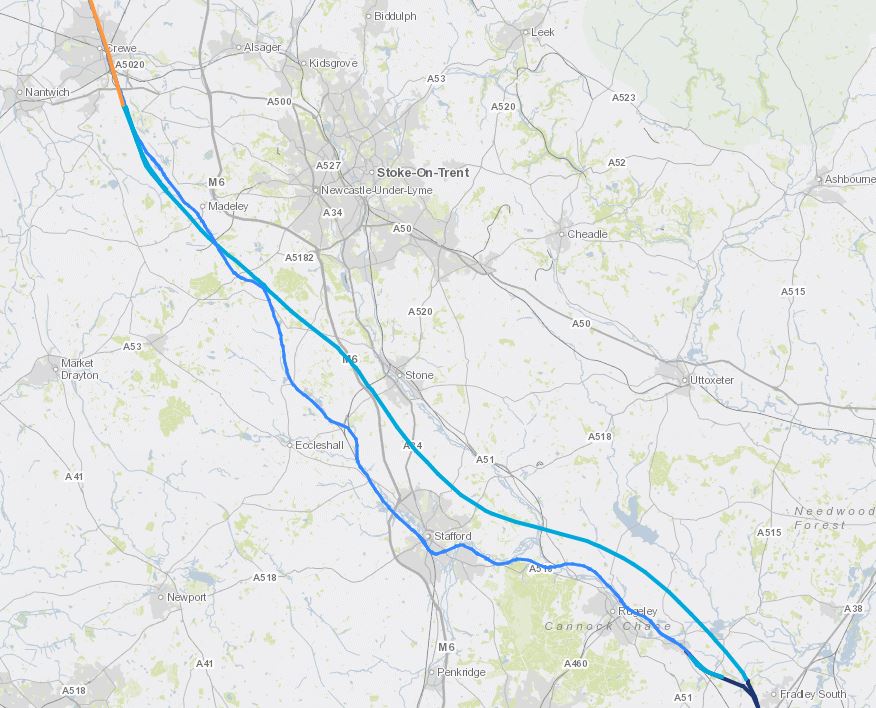
This map clipped from the High Speed Two web site, shows the two routes between Lichfield and Crewe.
Note.
- The straighter route is the new High Speed Two route.
- The bendy route is the West Coast Main Line.
- The two routes split to the North of the city of Lichfield in the South-East corner of the map.
- Stafford can be seen between the two routes.
- Stoke-on-Trent can be seen to the North-East of the routes.
- The new route through Crewe station is shown in orange.
To give an idea of scale, the West Coast Main Line is about forty miles long between the two junctions at Lichfield and Crewe.
Possible Ways High Speed Two Could Serve Stoke-on-Trent Station
There are several ways that High Speed Two trains can serve Stoke-on-Trent station.
London Euston And Stoke-on-Trent Direct
The simplest way is to run a direct service between London Euston and Stoke-on-Trent
- It would use High Speed Two from Euston to Lichfield, where it would take the Trent Valley Line.
- It would proceed to Stoke-on-Trent via Rugeley Trent Valley and Stone.
I estimate that the service would take one hour and two minutes.
The service could either turnback at Stoke-on-Trent or go on to Crewe, Manchester or some other convenient terminus.
Manchester services might even call at Macclesfield and Stockport, as the current services do now!
Times between London and Manchester by various routes could be.
- Current via Stoke-on-Trent, Macclesfield and Stockport – Two hours and seven minutes.
- Planned using High Speed Two – One hour and seven minutes.
- High Speed Two and current route to Manchester – One hour and forty-one minutes
Manchester will get three tph from London and one from Birmingham, so perhaps one of the four services should go via Stoke-in-Trent.
 The Anonymous Widower