Now That’s What I Call A Growing Green Business!
I took this picture as I walked back from the bus stop to my house, this morning.
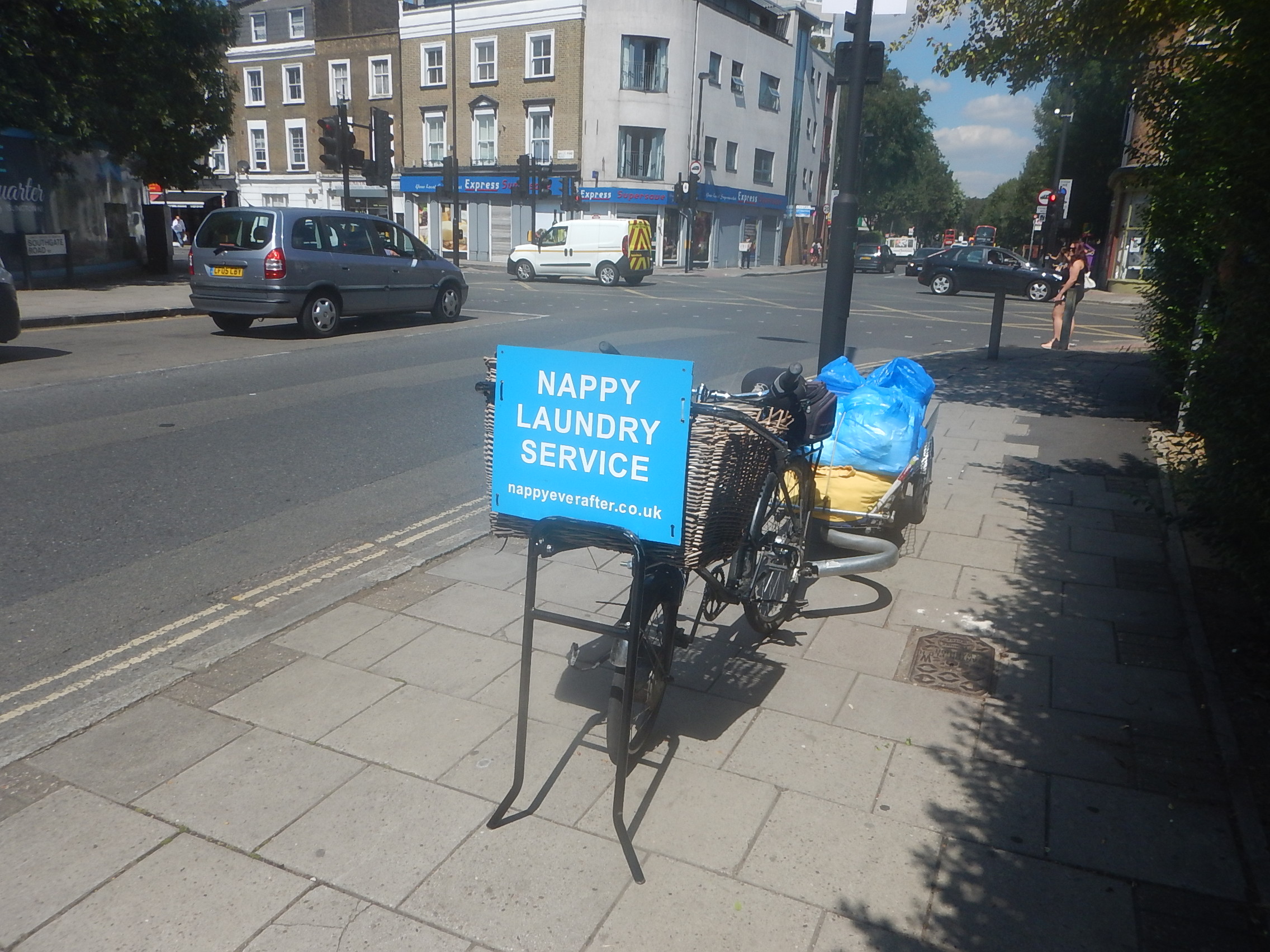
For the third of our three children, we used a nappy service, where every day or so, a guy would collect a bucket of soiled cotton nappies and return a pile of clean ones.
I have images in my mind of C unwrapping them and burying her face in the pile, as it was just one of those experiences she liked. Later in life, I saw her do it with towels in a five-star hotel in Hong Kong.
Our service was provided by a guy with a van, but surely a bicycle takes a nappy service to a new level.
So many of my generation, who used real nappies on their children, swear that the children preferred them.
Certainly, with a nappy service, they were a lot easier.
I have explored the sewers of London, which I wrote about in We’re Really In It Now. The flushers told me, that disposable nappies along with wet wipes and fat from fast food eateries, are the three major problems in the sewers
So disposable nappies might be convenient, but they have to be filtered out and go into landfill.
My best wishes for Nappy Ever After in the future!
My First Chicken Nuggets
I am seventy and I’d never eaten chicken nuggets, until yesterday.
They didn’t really exist before I was diagnosed as a coeliac twenty years ago and I would now never buy anything like that from a fast-food shop, as I don’t want to be glutened.
However, yesterday, I received an e-mail from Leon to say they had finally cracked gl;uten-free chicken nuggets.
So I just had to go and try a few.



They were delicious!
First Designs For A New Railway Station In Oxford Revealed
The title of this post is the same as that of this article on the Oxford Mail.
The article talks about opening a new station at Oxford Science Park on the freight line that is used to access the Mini factory at Cowley.
There is also this map in the article.
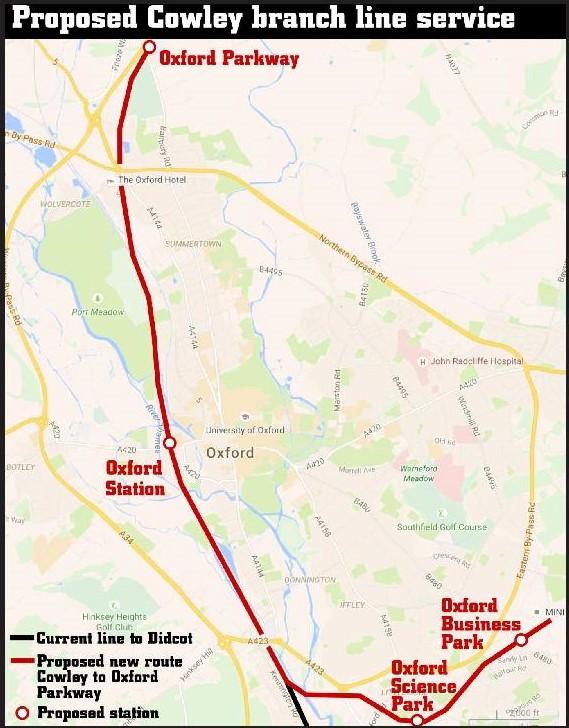
The service would be run by Chiltern Railways, so will it be a shuttle to Oxford Parkway station or a full service to Marylebone?
Northern’s Latest Class 319 Trains
I took these pictures of the interior of a couple of Northern’s latest Class 319 trains.
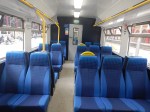
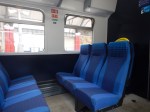
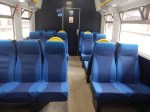

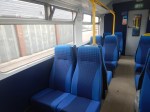
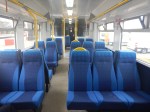
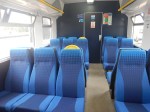

The train companies certainly seem to be improving their refurbishments, as these posts show.
- A Class 321 Renatus
- A Very Smart Class 319 Train
- Is This Really A Pacer In A New Outfit?
- It’s Not A New Train
- What Train Is This?
Personally, I hope I stick around long enough to get a ride in the following trains, that are in the line for substantial rebuilding.
- Alstom/Eversholt’s hydrogen-powered Class 321 train
- South Western Railway’s Class 442 train
- Porterbrook’s Class 769 train
- Vivarail’s Class 230 train
And of course, I want a ride in one of Great Western Railway or ScotRail’s short-formation InterCity 125.
Will We See Any Other Substantial Rebuilds?
It would be unfair not to ask this question.
I think it would be reasonable to say that if refurbishment of the quality that has been applied to Class 319 and Class 321 trains, then train owners and their engineers could probably bring the Networkers and Voyagers, up to scratch.
If nothing else, batteries could be fitted to harness the braking energy and use if for hotel power on the train.
Bombardier have hinted, they will be doing this to Voyagers and I wrote about it in Have Bombardier Got A Cunning Plan For Voyagers?
Windsor Link Railway Becomes Serious
I’ve always thought that the thinking behind the Windsor Link Railway was something of which I could approve.
It is a simple idea to connect Windsor’s two rail links and in a second phase provide Western rail access to Heathrow Airport.
This article on Global Rail News is entitled Consortium Submits Proposal For Windsor Link Railway In The UK.
This is the first two paragraphs of the article.
A consortium including global investor Meridiam has submitted a market-led proposal to the UK government to build the Windsor Link Railway.
Phase 1 of the project will cost £370 million and will see a new rail tunnel constructed in Windsor – as well as new houses – to connect the South Western and Great Western main lines. Phase 2 will connect Heathrow to the west.
I detailed the route in Walking The Proposed Route Of The Windsor Link Railway.
But what impressed me about the proposal, was the opportunities that it gives for new housing.
New housing is mentioned in my extract from the Global Rail News article and I put forward my thoughts in Is This One Of The Most Valuable Sites For New Development In The UK?.
This was my conclusion two years ago, when I wrote that post.
The Windsor Link Railway, is a project that must be judged as a whole.
But do that and there is a lot of money to be made from property development, which would more than pay for the railway.
If anything, after the wedding of the Duke and Duchess of Sussex, there is more money to be made from the Windsor Link Railway.
I am not surprised,, Meridiam have backed the project.
Liverpool Lime Street Station Has Been Remodelled
I went to Liverpool Lime Street station today and it has been extensively remodelled, as these pictures show.
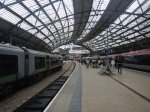
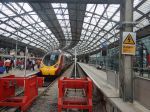
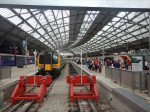
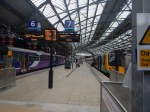
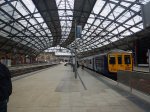
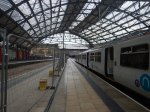
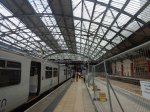
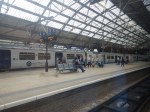
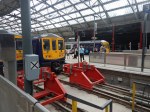

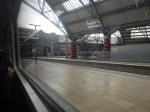
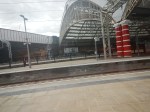
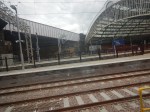
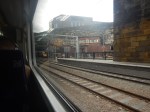
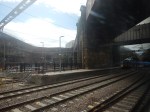
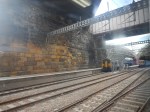
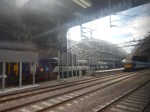
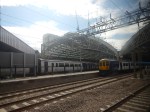
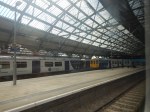
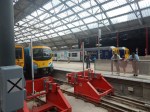

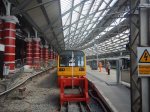
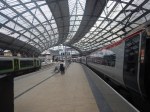
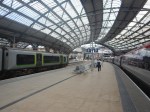
There are several changes.
Virgins Were Using Platform 9
The most obvious difference on arrival was that the Virgin services from London were using Platform 9, which is on the Southern side of the station, close to the taxi rank.
Taxi Access
So elderly Aunt Esmeralda coming from London to see her Liverpudlian family doesn’t have to go far for a cab.
I also noticed that Norwich services were using Platform 10 and there was a Birmingham New Street service in Platform 7.
So it would appear that longer distance services use the higher numbered platforms.
Not that it matters, as there’s a cab rank on the other side of the station.
Two Stations In One
I have read somewhere, that Liverpool Lime Street station with its pair of Victorian roofs, has been arranged so that the two sides can work independently.
The main reason, is that if engineering work is needed on one side, the other can remain open.
Each half-station utilises.
- A Victorian roof.
- A set of approach tracks.
- Five platforms
- A large clock
- A taxi rank.
They also have easy access to the shops and the Underground platform of Merseyrail’s Wirral Line.
Long Platforms
Virgin’s Pendelinos or Class 390 trains come in two lengths; nine and eleven cars.
It looks like some platforms can accommodate, the eleven-car trains, which are over two hundred and sixty metres long.
Note in the pictures how long platforms have been threaded through the bridge at the station throat.
Wide Platforms
The platforms would appear to be wider to allow better circulation of passengers.
Platform 1
The pictures show a wide space to the North of the new Platform 2.
It looks like Platform 2 will share an island with a still to be completed Platform 1.
Platform 0
Is there a space on the far side of Platform 1 for a new Platform 0?
Extra Capacity
Although there is at least one extra platform, the better track layout and signalling will allow more trains to use the station.
Already planned extra services include.
- TransPennine Express services to Scotland.
- Transport for Wales services to Cardiff, Chester, Llandudno and Shrewsbury.
- London Northwestern Railway services to Crewe and London Euston
In addition High Speed Two will add services and some reports say CrossCountry will add more.
Typically, one of Virgin’s Class 390 trains takes about thirty minutes to turn back, whereas East Midlands Trains turn a smaller train in ten minutes less.
Both these trains would need to take on supplies of food and drink, but others probably don’t.
I would expect each platform could handle two long-distance trains per hour (tph).
So could we be looking at ten tph in the five long distance platforms?
I suspect in a few years time, this will be possible, as everybody works out how to use the new station layout.
Long distance trains in a few years time could be.
- 1 tph – East Midlands Trains to Nottingham/Norwich via Liverpool South Parkway, Warrington and Manchester Piccadilly.
- 1 tph -London NorthWestern Railway to London via Runcorn and Crewe
- 2 tph -London NorthWestern Railway to Birmingham via Liverpool South Parkway, Runcorn and Crewe
- 1 tph – TransPennine Express to Newcastle and Edinburgh via Newton-le-Willows and Manchester Victoria
- 1 tph – TransPennine Express to Scarborough via Newton-le-Willows and Manchester Victoria
- 1 tph – TransPennine Express to Scotland via Wigan and Preston.
- 1 tph – Transport for Wales to Chester and Llandudno via Liverpool South Parkway andRuncorn
- 1 tph – Transport for Wales to Chester and Shrewsbury via Liverpool South Parkway and Runcorn, which could be extended to Cardiff
- 1 tph – West Coast (currently Virgin) to London via Runcorn
Note.
- This totals up to seven tph via Runcorn or Liverpool South Parkway, which will probably have to terminate in platforms 6-10.
- East Midlands Trains, London NorthWestern Railway and Virgin appear to use Platforms 6-10.
- TransPennine Express appears to be using Platform 3 or 4 at the present time.
- At present, Northern services via Liverpool South Parkway and Warrington, seem to be using Platform 6.
It would appear that there could be enough space for High Speed Two services in a dedicated platform in the Platform 6-10 section.
Signalling Issues
The only problem seemed to be a few small signalling issues as platform allocation and information seemed to be suffering a few bugs.
There’s Still Work To Do
Obviously, there is still more work to do to finish off the station.
- Platform 1 hasn’t been finished.
- Retail units need to be updated.
- Bessie Braddock needs to be positioned close to Ken Dodd.
I also think that the station needs a quality hotel and restaurant complex.
Liverpool Lime Street Station Is High Speed Two-Ready
Wikipedia has a section on High Speed Two Rolling Stock, where this is said.
Trains would have a maximum speed of at least 350 km/h (220 mph) and length of 200 metres (660 ft). Two units could be joined together for a 400-metre (1,300 ft) train.
Trains will be of two types.
- Standard European-sized trains, that will run between new High Speed Two stations like Euston, Old Oak Common and Birmingham Curzon Street.
- Classic-Compatible trains, built to a British loading gauge, that can use existing tracks and platforms.
It should be noted that an individual High Speed Two train will be shorter than the eleven-car Class 390 trains.
This means that Liverpool Lime Street and Birmingham New Street, Carlisle, Crewe, Glasgow Central, Manchester Piccadilly, Preston and others will be able to accommodate the new Classic-Compatible trains.
According to the section called Proposed Service Pattern in the Wikipedia entry for High Speed Two, Liverpool Lime Street station will get two tph, when Phase One of High Speed Two opens
- I would expect that High Speed Two will have the luxury of a dedicated platform.
- On the other hand, Manchester Piccadilly station is getting four high speed platforms and three tph
- When Phase Two opens most services will probably call at Birmingham Interchange.
So is Liverpool getting a worse deal compared to its arch-rival?
- For a start a single platform could probably handle three tph, which is one train every twenty minutes.
- An eleven-car Class 390 train has 589 seats.
- Wikipedia says that a full-length High Speed Two train has 1,100 seats, so each Classic-Compatible train will have 550 seats.
- Manchester Piccadilly has space to expand the station, whereas Liverpool Lime Street is hemmed in.
- Liverpool Lime Street is solely a terminal station, whereas Manchester Piccadilly has both through and terminal platforms.
- A large number of Liverpool’s local services are handled on a platform, that is deep below the station.
I would say that Liverpool Lime Street station’s handling of High Speed Two, will be a classic case of Liverpool doing what the City does best – making the most of limited resources.
After all Liverpool’s national dish is scouse, which is a stew often made from leftovers.
To summarise platform use after High Speed Two arrives in Liverpool, it could be something like this.
Platforms 1 to 5 – Northern with one or two platforms for TransPennine Express.
Platforms 6 to 10 – One each for High Speed Two and West Coast, with the others shared by the other operators.
Liverpool is lucky in that it has three routes out of the City to the East and now Lime Street station has been remodelled, they can be used efficiently.
More Use Of Merseyrail
Merseyrail could be key to getting even more capacity out of Lime Street station.
Some Northern services via Warrington have to leave from Platform 6 at present to go via Liverpool South Parkway.
But Merseyrail have ambitions to use their new Class 777 trains to extend from Hunts Cross station to Warrington Central station.
The one problem with accessing Merseyrail at Liverpool Lime Street, is that there is no direct connection to the Northern Line, which goes between Hunts Cross and Liverpool South Parkway in the South and Kirkby, Omskirk and Southport in the North. I usually walk two hundred metres to Liverpool Central, but a better connection needs to be provided. Perhaps a subway with a travelator is needed.
Alternatively, as all High Speed Two and West Coast services will stop at Runcorn, would it be sensible to add another stop at Liverpool South Parkway to change for the Northern Line and Warrington?
Conclusion
I have come to some conclusions.
Architecture And Design
This is said in the Wikipedia entry for Liverpool Lime Street station.
Opened in August 1836, it is the oldest grand terminus mainline station still in use in the world.
Manchester Piccadilly opened in 1842 and Euston opened in 1837, but both have been extensively rebuilt, whereas the architect of Lime Street would probably recognise his creation.
The design of Liverpool Lime Street station seems to have enabled this sympathetic remodelling, that will allow more services to the City.
Didn’t the Victorian architect do well!
Liverpool Connectivity
Liverpool is getting a station with increased capacity, that will enable new routes to the city from Wales and the Welsh Borders, Scotland and more places in England.
The only minor problem is the poor connection between Liverpool Lime Street station and Merseyrail’s Northern Line, which I think could be improved by stopping more trains at Liverpool South Parkway station.
Liverpool And Manchester To Scotland
In the 1960s, these services were organised in the following way.
- Separate trains ran from Liverpool and Manchester to Preston.
- At Preston, the two trains joined and ran to Carstairs.
- At Carstairs, the trains split and one went to Edinburgh and the other to Glasgow.
It wasw an efficient way to provide the service.
With modern trains, that can couple and uncouple automatically and where passengers can walk through the train, there may be scope for doing similar in the future.
Liverpool As A Major Tourist Hub
The new services will improve Liverpool’s profile as a major tourist hub.
The new services will put Liverpool in the middle of an area with lots of attractions, that can be reached by train.
- North Wales
- The Lakes
- The Pennines
- The Golf Coast, with three Open Championship courses.
- Blackpool
And then there’s Liverpool itself!
I was talking to a station guy in Liverpool yesterday and we both felt with connections to Scotland, more tourists would use Liverpool for a stopover on the trip between London and Scotland.
The new services will certainly increase the number of visitors to Liverpool
Merseyside’s Prosperity
I believe that the improved services will increase the prosperity of the whole region and in a few years time, the pain of this summer’s closure of the station will be well and truly forgotten.
Tailpiece
Ever since, I first came to Liverpool in 1965, the train services and Lime Street station in particular has needed improvement.
The creation of the Wirral Line loop and the Northern Line were a good start, but only now after my visit, is it apparent that there was more improvement to come.
Why wasn’t the track and platform layout at Liverpool Lime Street station sorted out decades ago?
Did The Mounted Met Get Their Man?
Yesterday, around three in the afternoon, I went out to get three bottles of water for my Dyson Humidifier from the corner shop about a two hundred metres away at the junction of Southgate Road and the Balls Pond Road, which has a very advanced traffic-light system
I crossed Southgate Road on the zebra and all seemed quite, as I started to walk up towards the junction.
I then heard a lot of blue lights coming, so myself and a very tall and large black couple, stood back from the road to see what was up. As everybody does!
A scruffy individual with a backpack about thirty riding a high-powered motor-bike doing about sixty towards the lights, in a road, where the speed limit is twenty. He was followed by three Police motorcycles.
All four motor-cycles turned right at the lights and disappeared towards Dalston Junction.
Perhaps twenty second later, they all returned, as obviously the scruffy ride had done a U-turn. I last saw them disappearing towards Highbury & Islington station.
Afterwards, a couple of Police cars came through and then it all calmed down.
Did the Met got their man, in the traffic congestion at the station?
HS4Air’s Heathrow and Gatwick Tunnels And Stations
One of the details I like about the HS4Air proposal is that the HS4Air tracks cross both Heathrow and Gatwick Airports at right-angles to the existing rail routes through the airports.
In my experience, stations with this layout, make for an easy interchange.
I suspect, the Heathrow and Gatwick Tunnels will be very deep under the airports, which will mean the following.
- They won’t disturb the existing airport.
- All the existing Crossrail design and construction expertise will be useful.
- The station could be as large as needed, with through and terminal platforms.
The stations will have lifts, escalators and travelators all over the place to connect to the existing airport terminals.
Heathrow
The Heathrow HS4Air station could have direct services all over the place.
For many getting to Euston or Paddington to perhaps take a train to Swansea can be a pain, but if Heathrow develops a proper local transport network based on Crossrail and proposals like Heathrow Southern Railway, this will be much easier.
Heathrow Airport could become a massive High Speed Rail Hub buried under the existing Airport.
Gatwick
Gatwick Airport is already an excellent Rail-Hub between London and the South Coast.
HS4Air would mainly add fast connections to Heathrow and HS1.
I suspect that Gatwick would have a smaller number of terminal platforms than Heathrow.
Conclusion
These two stations will be massive building projects, which using the expertise gained from other similar projects, will not disrupt anything on the surface.
Latest On The New London Overground Class 710 Trains
The August 2018 Edition of Modern Railways has a two-page article on the latest on the new Class 710 trains for the London Overground.
Seating Arrangement
Wikipedia says this about the seating.under Background And Specifications.
The units will be delivered in two sub-classes; an AC-only version with longitudinal and transverse seating (very similar to the S8 units on the Metropolitan line of the London Underground) for use on the West Anglia and Romford-Upminster services, and a dual-voltage version with longitudinal seating for the Watford DC and GOBLIN services.
But it now appears that all the seats on the trains will be longitudinal ones.
I use the current trains a lot to go to Walthamstow and I also use the Class 378 trains, which have longitudinal seats, frequently on the North and East London Lines of the Overground.
I probably aren’t bothered too much about longitudinal seats, but I suspect there will be others who will complain.
This discussion of RailForums is entitled Annoying Things About The Class 378. Search for “seat” and you don’t find many complaints about the longitudinal seating, which is also used on much of the Underground.
On the other hand, if all the trains have identical interiors, this must save on construction and maintenance costs.
If the interiors are basically similar to the Class 378 trains, it must also save on staff training costs.
I actually think, that the biggest complaint will not be about the new trains, but why don’t the older Class 378 trains have wi-fi and USB charging points!
Eight-Car Trains On West Anglia Routes
The article also states that services on West Anglia routes to Cheshunt, Chingford and Enfield Town stations will work as eight-car trains or a pair of four-car trains.
If they are always working in pairs, why not build them as eight-car trains in the first place?
In A Detailed Layout Drawing For A Class 345 Train, I said that the formation of a Class 345 train for Crossrail is as follows.
DMS+PMS+MS1+MS3+TS(W)+MS3+MS2+PMS+DMS
Note.that the train is composed of two identical half-trains, which are separated by the TS(W) car.
As the Modern Railways article says that these trains are to be the last to be delivered, would it not be sensible to fully understand the four-car units and then decide if instead of pairs of four-car units, they were built as eight-cars.
Consider.
- Trains would be formed of identical four-car half-trains.
- An eight-car Class 710 train would be nearly fifty metres shorter than a nine-car Class 345 train.
- Passengers would be able to walk through the whole train.
- Passengers can position themselves for their best exit at their destination station.
- Would passenger security be better on a train, where passengers could walk all the way through?
- I have seen drivers on Class 345 trains change ends inside the train
- Aventras and other modern trains are fitted with intelligent control systems, that determine the number and type of the intermediate cars in the train.
- Two Driving Motor Standard Cars (DMS) would be replaced with simpler Trailer Standard (TS) or Motor Standard (MS) cars.
- The choice of a TS or MS car would depend partly on performance issues, which could be tested with the earlier four-car trains.
- Building and maintenance cost savings by reducing the number of driving cars, must be possible.
- Capacity could be increased by adding cars in the middle, if platforms were long enough!
- Would providing overnight stabling for fifteen eight-car trains be easier than for thirty four-car trains?
It should also be noted, Cheshunt station has a very long platform without a roof. Passengers could walk to the front of the train inside a warm dry train. This already happens with the Class 378 trains at Highbury & Islington station.
Romford-Upminster Shuttle
The Modern Railways article says this about the service on the Romford-Upminster Line.
TfL is still considering whether to utilise a ‘710’ on the Romford to Upminster shuttle or to retain an older unit for the line.
I wrote about this in A Heritage Class 315 Train For The Romford-Upminster Line, after this article in London Reconnections, which is entitled More Trains for London Overground: A Bargain Never to be Repeated, said that it is possible that this line could be served by a Class 315 train, held back from the scrapyard.
I came to this conclusion.
If it is decided that a Class 315 train is to be used on the Romford to Upminster Line, I believe that the service could be marketed as a quirky heritage unit, that in conjunction with its main purpose of providing a public service, could also be used for other education, training, marketing, innovation and research purposes.
Eversholt Rail Group might even shift a few redundant Class 315 trains!
Why not?
Chingford Upgrades
The Modern Railways article says this.
A £7million investment has seen the stabling facility at Chingford upgraded, including the addition of an AVIS-scanner here as well.
These pictures show the investment.
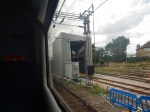



With the Automatic Vehicle Inspection System (AVIS), Chingford is becoming more than a stabling facility.
Note the large maintenance structure, so that trains can be worked on in the dry.
A Few Questions Of My Own
I have a few of my own questions.
If The Thirty Four-Car Trains For West Anglia Routes Are Converted To Eight-Cars, What Happens To The Spare Driving Motor Cars?
If the thirty four-car trains are converted to fifteen eight-car trains, it appears to me that Bombardier could have at best many of the long-lead components for thirty Driving Motor Standard (DMS) cars. At worst, they would have thirty DMS cars for Class 710 trains.
But London Overground will have need for a few more trains in a few years.
In Increased Frequencies On The East London Line, I showed this London Overground table of improvements.
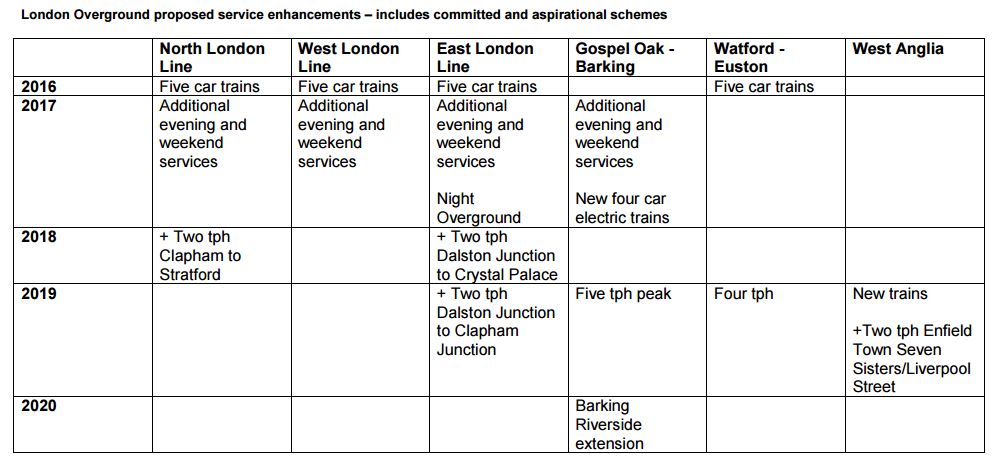
LO Improvements
Note that two extra tph are proposed on the Liverpool Street to Enfield Town service. I calculate, that this would need another two Class 710 Trains.
Similarly, to add two tph to the Liverpool Street to Cheshunt service, would appear to need another three trains.
The Mayor is also looking favourably at creating the West London Orbital Railway.
I estimate that the two proposed routes would need around four trains each to provide a four tph service, if they could be run using dual-voltage Class 710 trains with a range of perhaps ten miles on battery power.
What Is Happening About The Hall Farm Curve?
I heard from someone, who should know, that the Hall Farm Curve and the Coppermill Curve will be reinstated.
These curves would allow the following.
- A direct service between Chingford/Walthamstow and Stratford.
- Better access to the upgraded stabling at Chingford.
But I think these curves would be invaluable in maintaining services, during the construction of Crossrail 2.
Will A Bay Platform Be Developed At Lea Bridge Station?
I also wonder if a bay platform will be developed at Lea Bridge station, which would enable a four tph service to be run between Lea Bridge and Chingford stations, if Chingford Branch trains couldn’t get into Liverpool Street station, because of construction works.
I certainly feel that the curves connecting the lines at Coppermill Junction will have a major part to play in the development of East London’s railways.
HS4Air Between Gatwick Airport And Ashford
This map clipped from the Expedition Engineering web site, shows the route of HS4Air between Gatwick Airport and Ashford International station.
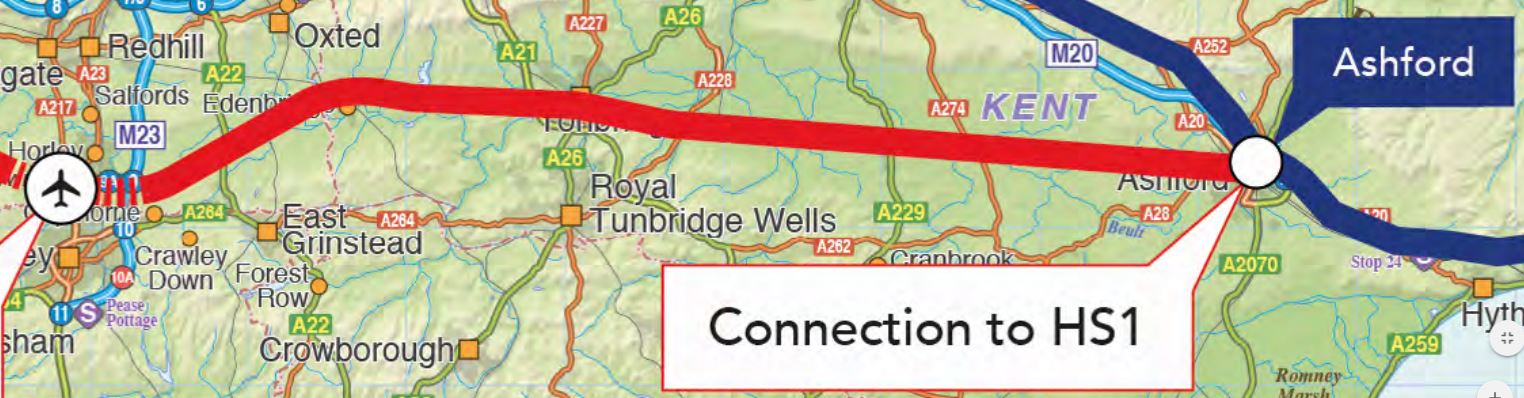
The route reuses the existing railway between Ashford International and Edenbridge (Kent) stations.
From Gatwick Airport To Edenbridge
This Google Map shows the countryside between Gatwick and Edenbridge.
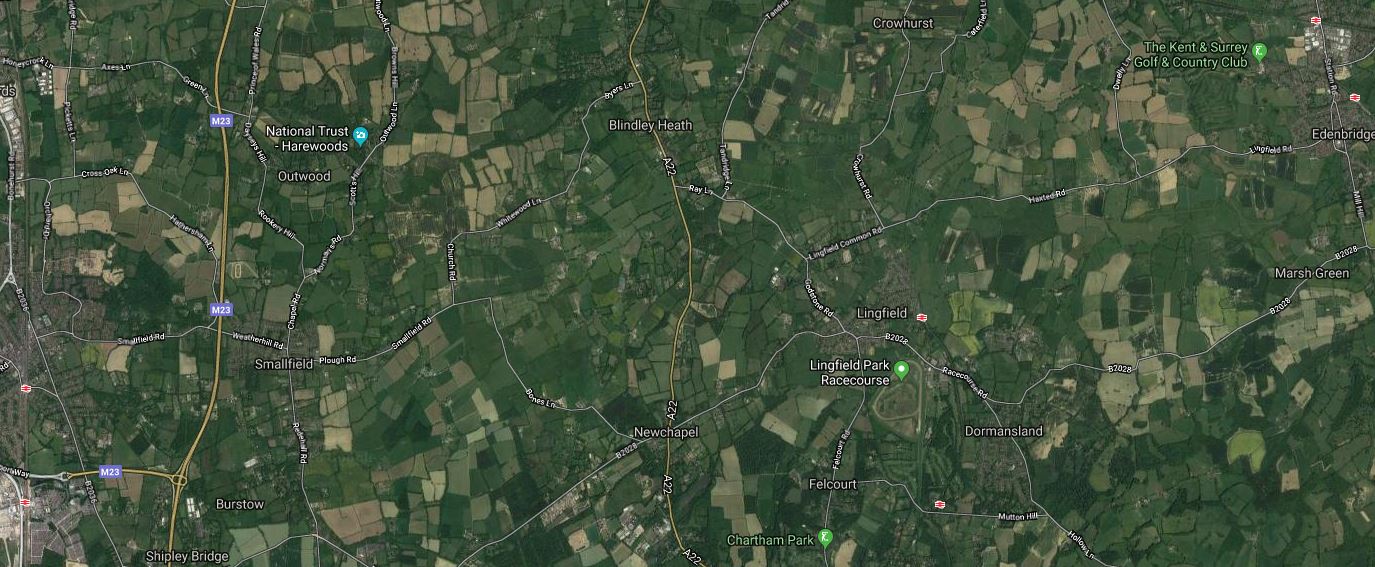
According to the first map, the Gatwick Tunnel emerges to the East of the M23 Motorway, which runs North-South down the left side of the map.
It probably emerges South of the Airport spur from the M23 and then it would travel on the surface to Edenbridge (Kent) station, which is in the North East corner of the map.
It looks to be a very challenging route, although there are several industrial sites scattered between the M23 and Lingfield, which is perhaps halfway between the motorway and Edenbridge.
This Google Map shows Edenbridge (Kent) station with the Redhill-Tonbridge Line passing through.
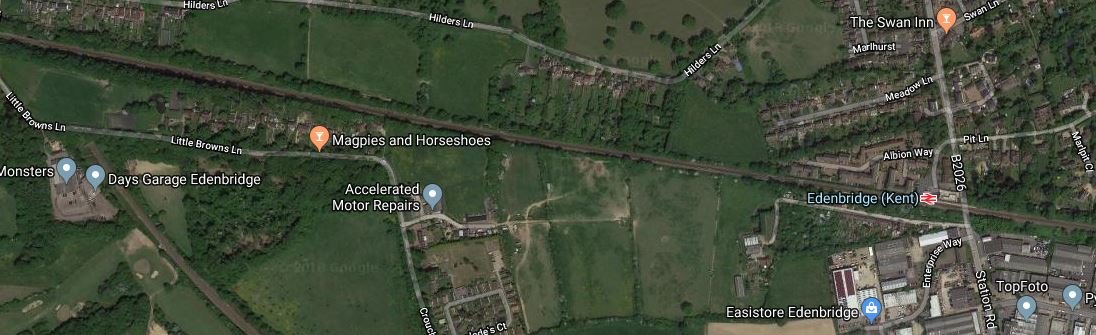
It would appear that the engineering could be reasonably attainable, but getting the natives on-side might not be so easy.
It’s not as though the residents between Edenbridge and Gatwick will get much benefit from HS4Air.
From Edenbridge To Ashford
This line has the following characteristics.
- It is around forty miles long.
- It is almost straight.
- It is double track.
- There are several stops.
- There is a maximum speed of 100 mph
It doesn’t appear to have many more than about four trains per hour (tph) in both directions.
Very little has been said about how HS4Air will transform the line, except that it will be upgraded to a high speed line.
The only information of value is that Ashford to Gatwick will take 25 minutes.
How far would a train go in that time at various speeds?
- 100 mph – 42 miles
- 125 mph – 52 miles
- 140 mph – 58 miles
As the route between Edenbridge and Gatwick is probably around a dozen miles, it would appear that a well-designed 125 mph route could enable the time quoted by HS4Air.
Local Stations On The High Speed Line
I’ll take Penshurst station as an example.
This Google Map shows the station.

Note that it is very simple with a platform on each line.
Currently, it gets a single tph in both directions.
HS4Air would probably mean that at least another four tph, passed through the station at 125 mph.
It could be argued that this could cause safety problems.
On the other hand, there are many stations in the UK, where local trains stop and expresses go through at 125 mph.
Platform-edge doors would be a difficult and expensive solution, but why not make access to the platform only possible, when a train is stopping?
Looking at Penshurst station, this station also needs some more facilities, like a fully accessible footbridge.
Conclusion
The Gatwick to Ashford section can be converted into a 125 mph route, which would give a time of 25 minutes between the two stations.
However, I do think there will have to be a lot of political leverage to get it built.
 The Anonymous Widower