Planning Approval Granted For Network Rail’s Transformation Of Liverpool Street — Britain’s Busiest Station
The title of this post is the same as that of this article in Rail Technology Magazine.
This is the sub-heading.
Network Rail has secured a major milestone in the redevelopment of Liverpool Street station, following the City of London Planning Committee’s resolution on 10 February to grant full planning permission for the long‑awaited transformation of the UK’s busiest rail hub.
These two paragraphs adds some more detail.
The Eastern Region’s Anglia Route will oversee the upgrade, which aims to futureproof the station for decades as passenger numbers continue to grow sharply. Liverpool Street, last redeveloped in 1991, now handles 118 million passenger movements each year, and demand is projected to rise by 35%, reaching 158 million by 2041.
Looking further ahead, planners expect the station will need to accommodate over 200 million annual journeys, making capacity enhancement essential for maintaining operational performance and customer experience across London, East Anglia and the wider east of England.
To say this is a large project would be a massive understatement and I wish, that this could have been the last project planned and built by the Artemis project management system, that I wrote in a Suffolk attic fifty years ago.
This list summarises the work that will be done.
- 76% increase in overall concourse capacity
- 23% expansion of the lower concourse to smooth passenger flow
- Step‑free access from street to all platforms, including every Underground line for the first time
- Eight new large lifts, replacing the existing four‑person unit
- Escalators increased from four to ten
- New accessible entrances and intuitive wayfinding from Broadgate, Exchange Square, and key interchange points
- Toilets on all levels, including Changing Places facilities and family amenities
Respecting Heritage While Creating New Spaces
The project safeguards the station’s Victorian character, with the iconic trainshed fully preserved. The redevelopment will also create new vantage points overlooking the heritage structures, bringing passengers visually closer to the original architecture.
Above the concourse, a new office building featuring a publicly accessible roof garden will provide one of London’s most sustainably connected workplaces, directly supporting the City Corporation’s long‑term growth and employment aspirations.
Around twenty major contractors and professional firms will be handling the transformation.
Hopefully, I will be able to watch this project as it grows to occupy its place in the City of London.
‘Mobilising EUR 1 Trillion in Investments’ | North Sea Countries, Industry, TSOs to Ink Offshore Wind Pact
The title of this post, is the same as that of this article on offshoreWIND.biz.
This is the sub-heading.
Government officials from Belgium, Denmark, France, Germany, Ireland, Luxembourg, the Netherlands, Norway and the UK are set to sign a declaration confirming the ambition to build 300 GW of offshore wind in the North Seas by 2050, and an investment pact with the offshore wind industry and transmission system operators (TSOs) that is said to mobilise EUR 1 trillion in economic activity.
These three paragraphs add a lot of powerful detail.
Under the Offshore Wind Investment Pact for the North Seas, to be signed today (26 January) at the North Sea Summit in Hamburg, governments of the nine North Sea countries will commit to building 15 GW of offshore wind per year from 2031 to 2040.
The heads of state and energy ministers will also vow to de-risk offshore wind investments through a commitment to provide two-sided Contracts for Difference (CfDs) as the standard for offshore wind auction design. The pact also commits governments to remove any regulatory obstacles to power purchase agreements (PPAs), according to WindEurope, which will sign the pact on behalf of the industry.
On the industry’s side, the commitment is to drive down the costs of offshore wind by 30 per cent towards 2040, mobilise EUR 1 trillion of economic activity for Europe, create 91,000 additional jobs and invest EUR 9.5 billion in manufacturing, port infrastructure and vessels.
These two paragraphs say something about cost reductions.
The cost reduction of offshore wind is planned to be achieved through scale effects, lower costs of capital and further industrialisation supported by clarity and visibility on the project pipeline.
The transmission system operators (TSOs) will identify cost-effective cooperation projects in the North Sea, including 20 GW of promising cross-border projects by 2027 for deployment in the 2030s.
I hope there is a project management system, that can step into this frenzy, just as Artemis did in the 1970s with North Sea Oil and Gas.
The BBC has reported the story under a title of UK To Join Major Wind Farm Project With Nine European Countries.
this is the sub-title.
The UK is set to back a vast new fleet of offshore wind projects in the North Sea alongside nine other European countries including Norway, Germany and the Netherlands.
These six paragraphs add more detail.
The government says the deal will strengthen energy security by offering an escape from what it calls the “fossil fuel rollercoaster”.
For the first time, some of the new wind farms will be linked to multiple countries through undersea cables known as interconnectors, which supporters say should lower prices across the region.
But it could prove controversial as wind farm operators would be able to shop around between countries to sell power to the highest bidder – potentially driving up electricity prices when supply is tight.
Energy Secretary Ed Miliband will sign a declaration on Monday at a meeting on the future of the North Sea in the German city of Hamburg, committing to complete the scheme by 2050.
Jane Cooper, deputy CEO of industry body RenewableUK, said the deal would “drive down costs for billpayers” as well as increasing “the energy security of the UK and the whole of the North Sea region significantly”.
But Claire Countinho, shadow energy secretary, warned “we cannot escape the fact that the rush to build wind farms at breakneck speed is pushing up everybody’s energy bills.”
Claire Coutinho, as an outsider at present and a member of a party out of Government had to say something negative, but her negotiations when she was UK Energy Minister with her German opposite number, which I wrote about in UK And Germany Boost Offshore Renewables Ties, seem very much a precursor to today’s agreement.
Could Doncaster Sheffield Airport Become A Hydrogen Airport?
I asked Google AI, what is the current status of Doncaster Sheffield Airport and received this reply.
Doncaster Sheffield Airport (DSA) is currently in a state of active, public-funded redevelopment after closing in late 2022 due to financial issues, with plans to reopen for passenger flights by late 2027 or 2028, following significant funding (around £160m) secured by the South Yorkshire Mayoral Combined Authority (SYMCA) for the City of Doncaster Council to take over operations and rebuild commercial viability, with freight and general aviation potentially returning sooner.
This Google Map shows the location of the airport.
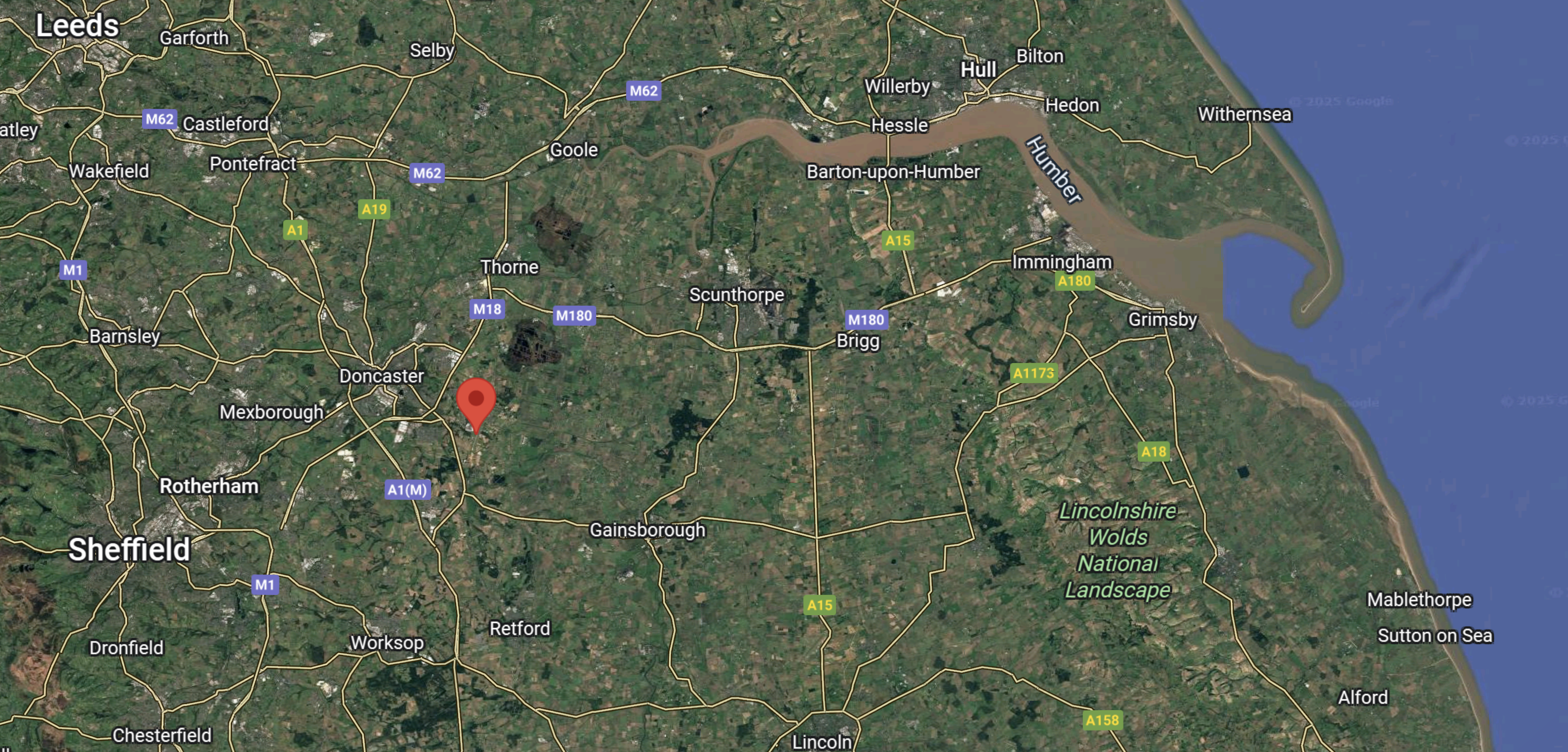
Note.
- The distinctive mouth of the River Humber can be picked out towards the North-East corner of the map.
- Hull and Grimsby sit in the mouth of the Humber.
- The red arrow indicates Doncaster Sheffield Airport.
- Leeds is in the North-West corner of the map.
- The towns and city of Doncaster, Rotherham and Sheffield can be picked out to the West of the airport.
This second Google Map shows a close-up of the airport.

On my visit to NASA in the 1980s, where an Artemis system was used to project manage the turnround of the Space Shuttle, I was asked questions by one of NASA’s support people about RAF Finningley. Nothing too technical, but things like what is Doncaster like.
When I asked why, they said there’s a high chance that a Space Shuttle could land at RAF Finningley, as it has one of the best runways for a very heavy aircraft in Europe.
Looking at the runway, it is a long and wide runway that was built for heavy RAF nuclear bombers like Valiants, Victors and Vulcans.
I believe that we will eventually see hydrogen- and/or nuclear-powered airliners flying very long routes across the globe, just as a nuclear-powered example, attempted to do in the first episode of the TV series Thunderbirds, which was called Trapped in the Sky and has this Wikipedia entry.
Just as the Space Shuttle did, these airliners and their air-cargo siblings will need a large runway.
Doncaster Sheffield Airport already has such a runway.
These hydrogen- and nuclear-powered aircraft will make Airbus A 380s look small and will need runways like the one at Finningley.
But I don’t think we’ll ever see nuclear-powered aircraft in the near future, so the aircraft will likely be hydrogen.
Other things in favour of making Doncaster Sheffield Airport, an airport for long range hydrogen aircraft include.
- The airport is close to the massive hydrogen production and storage facilities being developed on Humberside at Aldbrough and Rough.
- The airport could be connected to the Sheffield Supertram.
- The airport could be connected to the trains at Doncaster station, which has 173 express trains per day to all over the country.
- The airport would fit well with my thoughts on hydrogen-powered coaches, that I wrote about inFirstGroup Adds Leeds-based J&B Travel To Growing Coach Portfolio
- The airport might even be able to accept the next generation of supersonic aircraft.
- The airport could certainly accept the largest hydrogen-powered cargo aircraft.
- The Airport isn’t far from Doncaster iPort railfreight terminal.
Did I read too much science fiction?
I have some further thoughts.
Do Electric Aircraft Have A Future?
I asked Google AI this question and received this answer.
Yes, electric aircraft absolutely have a future, especially for short-haul, regional, and urban air mobility (UAM), promising quieter, zero-emission flights, but battery limitations mean long-haul flights will rely more on hydrogen-electric or Sustainable Aviation Fuels (SAF) for the foreseeable future. Expect to see battery-electric planes for shorter trips by the late 2020s, while hybrid or hydrogen solutions tackle longer distances, with a significant shift towards alternative propulsion by 2050.
That doesn’t seem very promising, so I asked Google AI what range can be elected from electric aircraft by 2035 and received this answer.
By 2035, fully electric aircraft ranges are expected to be around 200-400 km (125-250 miles) for small commuter planes, while hybrid-electric models could reach 800-1,000 km (500-620 miles), focusing on short-haul routes due to battery limitations; larger, long-range electric flight remains decades away, with hydrogen propulsion targeting 1,000-2,000 km ranges for that timeframe.
Note.
- I doubt that many prospective passengers would want to use small commuter planes for up to 250 miles from Doncaster Sheffield airport with hundreds of express trains per day going all over the UK mainland from Doncaster station.
- But Belfast City (212 miles), Dublin (215 miles) and Ostend (227 miles), Ronaldsway on the Isle of Man (154 miles) and Rotterdam(251 miles) and Schipol 340 miles) may be another matter, as there is water to cross.
It looks like it will be after 2035 before zero-carbon aircraft will be travelling further than 620 miles.
My bets would be on these aircraft being hydrogen hybrid aircraft.
What Will The Range Of Hydrogen-Powered Aircraft In 2040?
I asked Google AI this question and received this answer.
By 2040, hydrogen-powered commercial aircraft are projected to have a range that covers short- to medium-haul flights, likely up to 7,000 kilometers (approximately 3,780 nautical miles), with some models potentially achieving longer ranges as technology and infrastructure mature.
The range of these aircraft will vary depending on the specific technology used (hydrogen fuel cells versus hydrogen combustion in modified gas turbines) and aircraft size.
It looks like we’ll be getting there.
This Wikipedia entry is a list of large aircraft and there are some very large aircraft, like the Antonov An-225, which was destroyed in the Ukraine War.
A future long-range hydrogen-powered airline must be able to match the range of current aircraft that will need to be replaced.
I asked Google AI what airliner has the longest range and received this reply.
The longest-range airliner in service is the Airbus A350-900ULR (Ultra Long Range), specifically configured for airlines like Singapore Airlines to fly extremely long distances, reaching around 9,700 nautical miles (18,000 km) for routes like Singapore to New York. While the A350-900ULR holds records for current operations, the upcoming Boeing 777-8X aims to compete, and the Boeing 777-200LR was previously known for its exceptional range.
I believe that based on the technology of current successful aircraft, that an aircraft could be built, that would be able to have the required range and payload to be economic, with the first version probably being a high-capacity cargo version.
What Would An Ultra Long Range Hydrogen-Powered Airliner Look Like?
Whatever the aircraft looks like it will need to be powered. Rolls-Royce, appear to be destining a future turbofan for aircraft called the Ultrafan, which has this Wikipedia entry.
I asked Google AI, if Rolls-Royce will produce an Ultrafan for hydrogen and received this answer.
Rolls-Royce is actively developing the UltraFan architecture to be compatible with hydrogen fuel in the future, but the current UltraFan demonstrator runs on Sustainable Aviation Fuel (SAF). The company has a research program dedicated to developing hydrogen-powered engines for future aircraft, aiming for entry into service in the mid-2030s.
I asked Google AI, if Rolls-Royce have had major difficulties converting engines to hydrogen and received this answer.
Rolls-Royce has not encountered insurmountable difficulties but faces significant engineering and logistical challenges in converting engines to run on hydrogen. The company has made substantial progress in testing both stationary and aero engines using pure hydrogen, confirming its technical feasibility.
Given the company’s success in developing engines in the past, like the R Type, Merlin, RB 211, Pegasus, Trent, mtu 4000 and others, I suspect there’s a high chance of a successful hydrogen-powered Ultrafan.
If you look at a history of large passenger and cargo aircraft over the last sixty years, there has been a lot of the following.
- Conversion of one type of aircraft to a totally different type.
- Fitting new engines to a particular type.
- Fitting new avionics to a particular type.
Examples include.
- Fitting new CFM-56 engines to DC-8s.
- The first two Nimrods were converted from unsold Comet 4Cs.
- Converting Victor bombers to RAF tanker aircraft.
- Converting BA Tristars to RAF tanker aircraft.
- Converting DC-8s to cargo aircraft.
- Airbus converted five Airbus A 300-600 into Belugas, which have this Wikipedia entry.
- Airbus converted six Airbus A 330-200F into BelugaXLs, which have this Wikipedia entry.
- Converting two Boeing-747s to carry Space Shuttles ; one from American Airlines and one from Japan Airlines, which have this Wikipedia entry.
Note.
- Most of these examples have been successful.
- The last three examples have been very successful.
- Most of these applications do not have a human cargo.
This picture shows an Emirates Air Lines’s Airbus A 380 on finals at Heathrow.
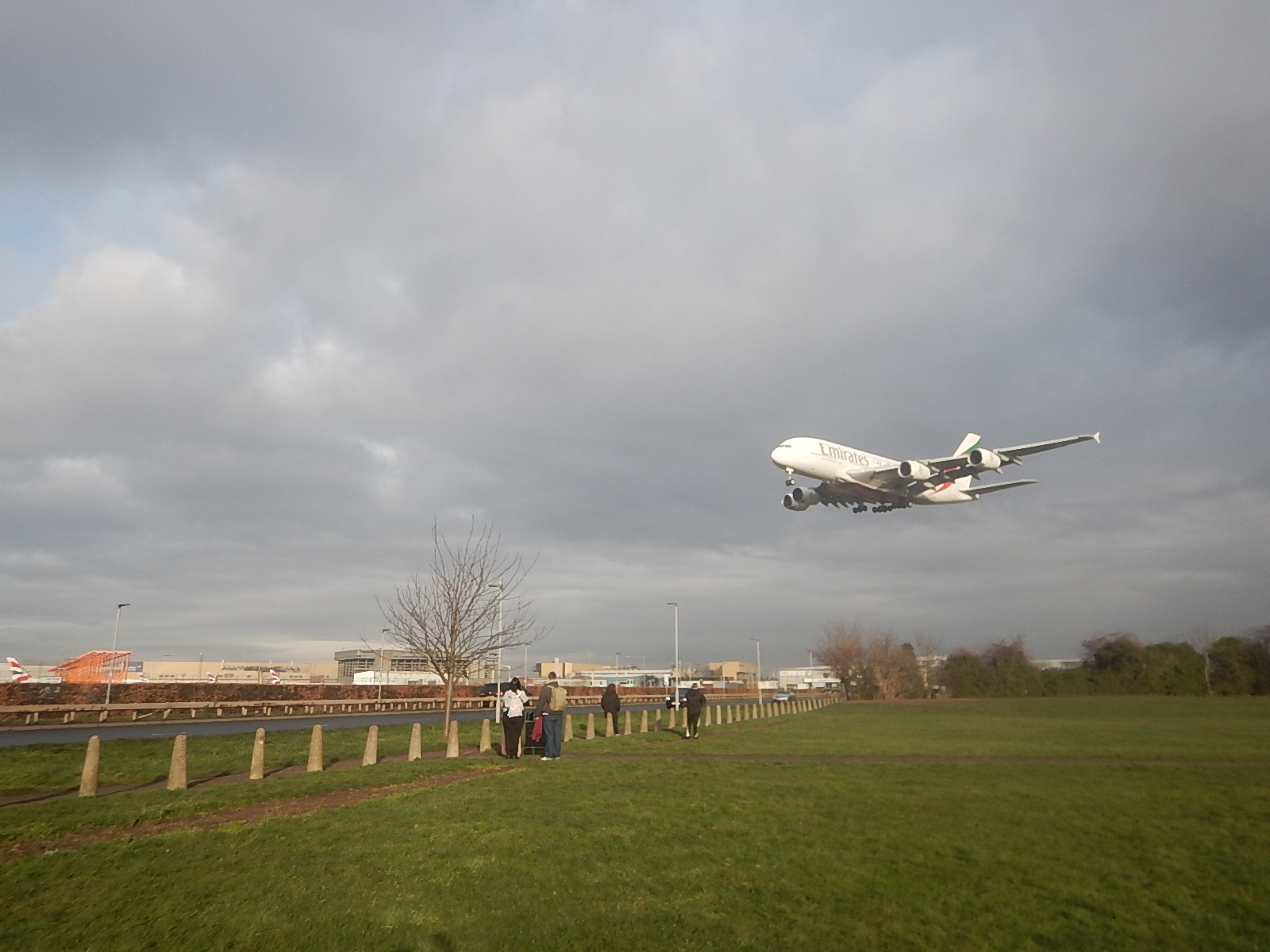
Note.
- The aircraft was landing on Runway 27 L.
- The four engines and the vertical oval cross-section of the fuselage are clearly visible.
- The Wikipedia entry for the Airbus A 380 shows two floors across the fuselage; the upper floor with eight seats in 2-4-2 and the lower floor with ten seats in 3-4-3, and a pair of LD3 cargo containers in the basement.
I’d be interested to know, how much hydrogen could be put in the basement and how far it could take the plane with a full load of passengers!
This link to the Wikipedia entry, shows the cross section in detail.
Note
I wouldn’t be surprised that the first application of large hydrogen aircraft will be for cargo and it could be an Airbus Beluga or perhaps an Airbus A 380 freighter?
What Caused The Amazon Web Services Failure?
This article on Reuters is entitled Amazon’s AWS Struggles To Recover After Major Outage Disrupts Apps, Services Worldwide, sums up today’s big news story.
But what went wrong?
I asked Google AI, where BT have their data servers and received this reply.
BT hosts its data servers in various locations across the UK, including London, Birmingham, and Dublin, Ireland, as well as in mainland Europe such as Frankfurt, Germany, and Amsterdam and Nieuwegein, Netherlands. They also have a presence in the United States, with facilities in locations like New Jersey.
Note.
- Nieuwegein is South of Amsterdam.
- There’s almost a direct straight-line route between Dublin and Frantfurt.
- Cambridge would lie on that straight-line route.
- BT’s Research at Martlesham in Suffolk would lie on that straight-line route.
- Is BT’s worldwide network closely monitored from BT Research?
- For more about BT Research read their Wikipedia entry.
- The straight-line route by-passes London.
The network seems comprehensive and well spread-out.
These are my thoughts.
The Value Of Research
I asked Google AI, if there were any spin-out companies from BT Martlesham and received this reply.
Yes, spin-out companies have been formed from BT’s Adastral Park research facility, including Real Time Content (RTC) and iome. Both companies were supported by BT and developed technologies based on research from the Martlesham site, with RTC focusing on personalized video services and iome providing location-based services through mobile internet.
I used to live near to BT’s Research Centre until 1990.
At the time, I was writing Artemis, the project management system and the multi-user version of that software and a BT research computer system used the same Hewlett-Packard hardware and an operating system written by BT at Martlesham.
Because of this connection, I learned a lot about their methods and the breadth of the research being carried out in Suffolk and was generally impressed.
I would suspect that legacy telecom companies like BT, France Telecom and Deutsche Telecom spend a lot of money on research. Do newer companies spend similar amounts?
Having a good research department behind you is an excellent form of insurance!
Will BT Research Have A Reliable 24/7 Power Supply?
Consider.
- By 2030, there will be upwards of 4 GW of offshore wind power along the Suffolk coast.
- Sizewell B will be 22 miles away, pumping out 1.2 GW until at least 2035.
- Sizewell C could be pumping out 3.3 GW from the mid-2030s.
- The 1.8 GW LionLink between Walberswick in Suffolk and The Netherlands could be in operation by 2030.
I am fairly sure that BT Research will have enough power, even if several data centres are built on the Martlesham site.
The Domain Name Res0lution Problem
Consider.
- The root causeof Amazon’s disaster appeared to be problems with its domain name resolution system.
- Executing fast lookup of domain names is critical.
I had a similar problem with the project management system ; Artemis, when I extended it to be one of the first relational databases in the 1980s. So I went to IBM’s library on the South Bank and dug out all their 1950s papers on looking up keys in tables.
In those days, with slower computers, which had smaller amounts of memory, the efficiency of the algorithm was very important and I got a significant improvement in look-up speed, by digging up ideas from the past.
If anybody wants to check out their algorithm with me, I’m always happy to oblige, but at 78 with poor eye-sight I’m probably past coding anything myself.
When I was dealing with BT Research, they would have made sure that something like domain name resolution was given the full research treatment.
My Conclusion
As I don’t have all the data, I will not speculate, but will await Amazon’s conclusion with interest.
Gatwick Second Runway Plan Approved By Transport Secretary
The title of this post is the same as that of this article on the BBC.
This is the sub-heading.
Transport Secretary Heidi Alexander has approved plans for a second runway at London Gatwick Airport, as the government looks for economic growth opportunities.
These four introductory paragraphs add some detail.
The £2.2bn privately-financed project involves in effect moving the current Northern Runway 12 metres to bring it into regular use, as well as other developments, including extending the size of terminals.
The airport says its plans will bring jobs and boost the local economy. But there has long been opposition from campaigners and groups worried about the impact on the surrounding area.
Gatwick currently handles about 280,000 flights a year. It says the plan would enable that number to rise to around 389,000 by the late 2030s.
A government source has described the plans as a “no-brainer for growth,” adding that “it is possible that planes could be taking off from a new full runway at Gatwick before the next general election.”
Over the last fifty years, I’ve been involved in many large projects, as I used to write project management software and at one period in the 1980s, half of all the world’s major projects, were being managed by the Artemis software, that I wrote in a Suffolk attic.
I am starting this post by asking Google AI, when Gatwick’s Northern Runway was built. This was the answer I received.
Gatwick’s Northern Runway was built in 1979 by widening an existing taxiway to serve as an emergency runway. While the main runway is known as 08R/26L, the standby or emergency runway is designated as 08L/26R and is located just to the north of the main runway.
Note.
- 08 means that the runway is aligned at 080 degrees, which is almost due East.
- 26 means that the runway is aligned at 260 degrees, which is almost due West.
- Normally, when landing and taking off at Gatwick, your aircraft will use the Southern runway, which points to the West or Runway 26L.
This Google Map shows the layout of the airport.

Note.
- The longer Southern 08R/26L runway.
- The shorter Northern 08L/26R runway.
- The station in the North-East corner of the map is Horley.
- The station to the East of the runways is Gatwick Airport station.
- Both stations are on the Brighton Main Line, which runs North-South past the Airport.
- As when it was built, the Airport envisaged that the Northern runway would be turned into a runway that would meet all standards, I doubt there will be any problems rebuilding the Northern Runway, the required twelve metres to the North.
It was a cunning plan, when it was executed in the late 1970s and worthy of Baldrick at his best.
I do wonder, if it had been developed using Artemis!
Is Last Energy The Artemis Of Energy?
In Raft Of US-UK Nuclear Deals Ahead Of Trump Visit, I quoted from this article on World Nuclear News.
The article also contains, these two paragraphs, with talk about an MoU between Last Energy and DP World.
An MoU has also been signed between US-based micro-nuclear technology developer Last Energy and DP World, a global leader in logistics and trade, to establish the world’s first port-centric micro nuclear power plant at London Gateway. A proposed PWR-20 microreactor – to begin operations in 2030 – would supply London Gateway with 20 MWe of electricity to power the logistics hub, with additional capacity exported to the grid.
“The initiative represents a GBP80 million (USD109 million), subsidy-free investment for the development of Last Energy’s first unit, unlocking clean power supply for DP World’s ongoing GBP1 billion expansion of London Gateway,” Last Energy said. “The partnership is closely aligned with both UK and US ambitions to increase nuclear capacity and strengthen long-term energy security.”
Note.
- Last Energy are proposing a micro-reactor of just 20 MW.
- DP World own and/or operate sixty ports in over forty countries, so should know their energy requirements well.
- It appears that DP World are investing £80 million in Last Energy’s first unit.
- Thurrock Storage is a 300 MW/600 MWh battery close to London Gateway and the Port of Tilbury.
This Google Map shows London Gateway and the Port of Tilbury.
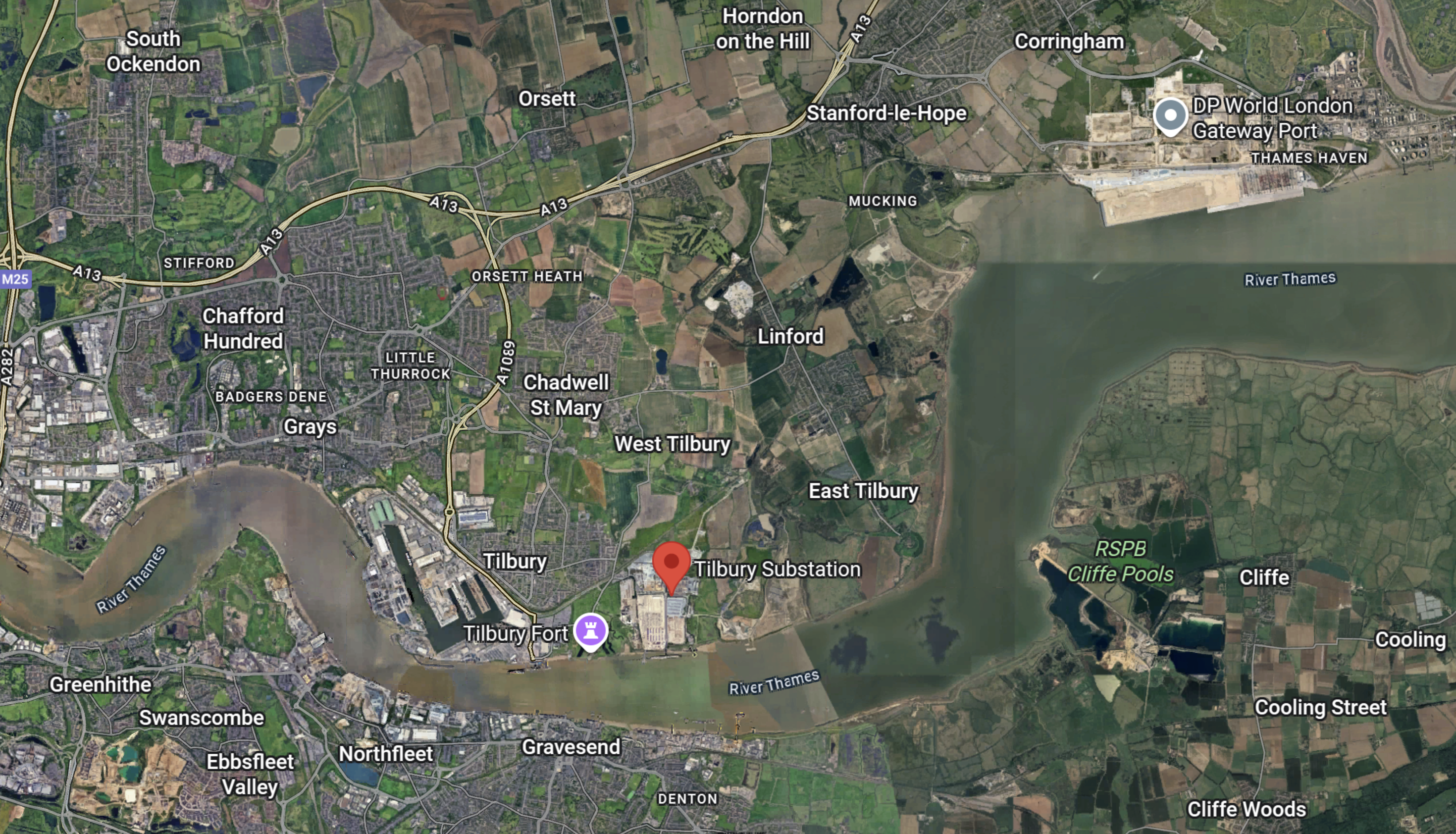
Note.
- DP World London Gateway is in the North-East corner of the map.
- The A13 road runs across the North-West corner of the map and links the area to London and the M25.
- Thurrock Storage is next to the Tilbury substation, which is marked by the red arrow.
- The Port of Tilbury is to the West of the substation.
I wonder if DP World London Gateway have had power supply problems.
The Design Of The First Artemis Project Management Software System
Before Artemis, project management was usually done on a large mainframe computer like an IBM-360-50, that I’d used extensively for solving simultaneous differential equations in a previous job at ICI.
Mainframe computers worked on complex problems, but to put it mildly, they were slow and needed a team to operate them and a big air-conditioned room to keep them happy.
When the four of us decided to create Artemis, our vision was something simpler.
- A processor – something like a PDP-11, which I judged would be big-enough for the computing.
- A visual display unit.
- A printer.
- A standard-size desk to hold the hardware.
- Ability to run from a 13-amp socket.
When it came to writing the software, I took few risks.
- Much of the data decoding software, I’d developed when I left ICI to write a program to solve up to a thousand simultaneous differential equations.
- The scheduling software was generic and I’d first used it for different purposes in two programs at ICI.
- The aggregation software had been devised, whilst I was a consultant at Lloyds Bank over several bottles of wine with their Chief Management Accountant, who was a wizard with numbers. I suspect, but can’t prove it, that if the idiots that programmed the Horizon system for the Post Office had used that algorithm, the problems there would have been much smaller.
- I also spent a lot of time reading old papers from the 1950s in IBM’s library on the South Bank, looking for better algorithms.
- I also made sure, I chose the best hardware and I believe HP did us proud.
- I used HP’s operating system and proprietary database to cut down, what could go wrong.
- Almost all of the first system was written by one person – me!
But we also put the right features into how we supported, delivered and trained users of the system.
I certainly, think we made few mistakes in the design of that first system.
Have Last Energy Used A Similar Cut Back Approach?
Reading their web site, I think they have.
They have obviously chosen, the 20 MW unit size with care.
But from worldwide experience with wind turbines, linking smaller power sources together, is not as difficult as it once was.
These are some of the statements on their web site’s introductory screens.
- Fully Modular, Factory Made
- A Scalable Solution
- <24 Month Delivery
- 100+ Supply Chain Partners
- 300+ Pressurised Water Reactors Operating Globally
- 0.3 acre – Plant Footprint Fits Within A Football Field
But a chain is only as strong as its weakest link.
It should be noted, that I have been over several nuclear power stations.
Three were a tour to show me how Artemis was being used to track and sign off, the problems identified after the Three Mile Island incident.
The other was a trip over Sizewell A, a couple of years before it was decommissioned.
Comparing these experiences with some of the chemical plants, that I’ve worked on, I would prefer to be close to a nuclear power plant.
Forty Years On
Tuesday was almost exactly forty years to the day since we sold Artemis.

Remarkably, as my son observed, we’re all still here. Perhaps, a bit battered maybe!
Appeasement 2.0
The low point of Russia’s war in Ukraine is that Trummkopf, has repeated Chamberlain’s mistake at Munich and presented Putin with Appeasement 2.0.
I wasn’t around in the days of Munich and Chamberlain, but my father was well-informed, as he was in Geneva doing something possibly at the League of Nations and heard a lot of the truth about what was going on in Czechoslovakia and Ukraine at first hand. He believed there was little to choose between Hitler and Stalin on the scale of evil.
In the 1970s, I worked with an Jewish Austrian engineer, who was called Samuels, at the GLC, who had escaped from Austria just before WW2 and then spent the war in the Royal Engineers in bomb disposal. After the war, he was an observer at Nuremberg.
He was one of the most amazing people, I’ve ever met and he taught me a lot about project management.
Aggregation In Artemis
One of the features of Artemis was aggregation, which enabled the project manager to total up the resources they’d need for a project.
I might have programmed the original aggregation for Mr. Samuels, but I can certainly remember discussing it with him. He needed it to check that particular sub-contractors weren’t overstreching themselves.
I lost contact with Mr. Samuels, when his wife died and he moved to CERN in Geneva. But he’s one of several people, who helped frame the design of Artemis.
Soviet War Crimes
This Wikipedia entry is entitled Soviet War Crimes.
This is the first paragraph.
From 1917 to 1991, a multitude of war crimes and crimes against humanity were carried out by the Soviet Union or any of its Soviet republics, including the Russian Soviet Federative Socialist Republic and its armed forces. They include acts which were committed by the Red Army (later called the Soviet Army) as well as acts which were committed by the country’s secret police, NKVD, including its Internal Troops. In many cases, these acts were committed upon the direct orders of Soviet leaders Vladimir Lenin and Joseph Stalin in pursuance of the early Soviet policy of Red Terror as a means to justify executions and political repression. In other instances they were committed without orders by Soviet troops against prisoners of war or civilians of countries that had been in armed conflict with the USSR, or they were committed during partisan warfare.
As a teenager, my father used to tell me stories of atrocities by the Soviet Union and told me, he believed Stalin was on a level with Hitler.
One of the worst atrocities was the Katyn massacre in 1940, which is described in this Wikipedia entry and starts with this paragraph.
The Katyn massacre was a series of mass executions of nearly 22,000 Polish military and police officers, border guards, and intelligentsia prisoners of war carried out by the Soviet Union, specifically the NKVD (the Soviet secret police), at Joseph Stalin’s order in April and May 1940. Though the killings also occurred in the Kalinin and Kharkiv NKVD prisons and elsewhere, the massacre is named after the Katyn forest, where some of the mass graves were first discovered by Nazi German forces in 1943.
I haven’t found out, what my father was doing in 1940, but I am fairly sure he knew of the Katyn and other massacres, as he occasionally commented.
Note.
- The involvement of the NKVD.
- The Katyn massacre is a sub-plot in the film Enigma, which has this Wikipedia entry.
I took this picture of a memorial to Katyn in the centre of Birmingham.
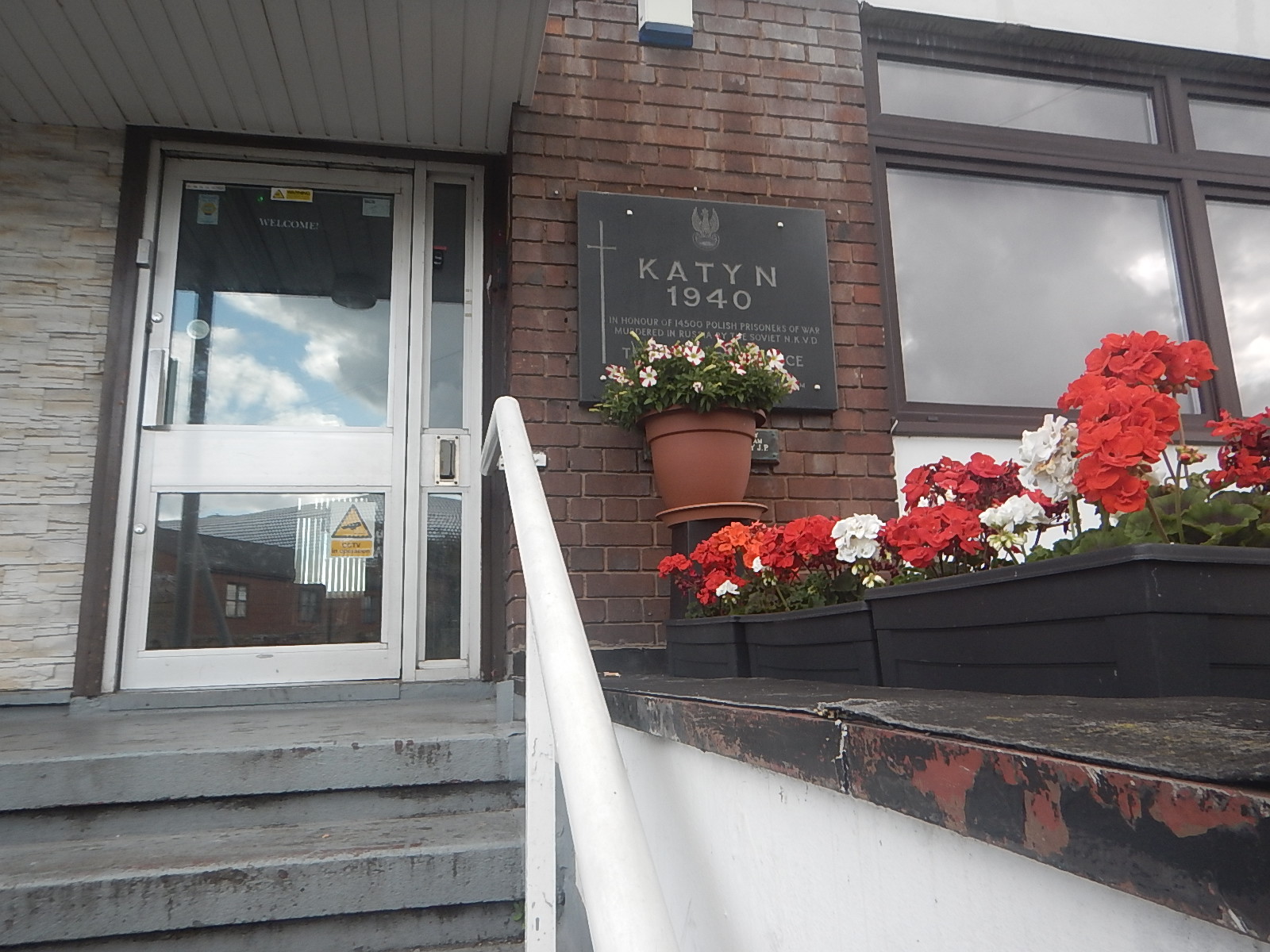
I believe that we ignore the lessons of Soviet behaviour at Katyn, at our peril.
In Vladimir Putin’s Wikipedia entry, there is this paragraph about his parents.
Putin’s mother was a factory worker, and his father was a conscript in the Soviet Navy, serving in the submarine fleet in the early 1930s. During the early stage of the Nazi invasion of the Soviet Union, his father served in the destruction battalion of the NKVD. Later, he was transferred to the regular army and was severely wounded in 1942. Putin’s maternal grandmother was killed by the German occupiers of Tver region in 1941, and his maternal uncles disappeared on the Eastern Front during World War II.
It appears that Putin Senior left the NKVD destruction battalion before 1942. Does that mean he could have been at Katyn?
I do suspect, that Putin Senior told some interesting stories to his son, about the correct ways to deal with your opponents and wage a war.
Conclusion
We are treading a very similar path over eighty years later.
Why Do Major Rail Projects Go Over Budget?
The title of this post, is the same as that of this article on Rail Technology Magazine.
This is the sub-heading.
Experts from the National Infrastructure Commission (NIC) will be questioned by the Transport Committee on their work advising the Government on planning major transport projects this week.
This is the introductory paragraph.
The cross-party Committee will ask witnesses, including NIC Chair Sir John Armitt, why infrastructure projects such as HS2 go over budget, how the Department for Transport can manage them more successfully, and the Government’s ability to learn from mistakes or from positive examples in other countries.
In my time, I have written a lot of project management software and it has generally sold well, especially in the fields of aerospace, construction, defence, oil & gas and vehicles. It has also sold well in Australia, France, Korea, Norway, The Netherlands and the United States.
In the UK, two major areas of Government ; rail and the NHS did not use any of my software, despite having large numbers of suitable projects, whereas nationalised companies like British Aerospace, British Leyland and Ferranti were big users. The Chevaline project, which was the refurbishment of the UK’s nuclear deterrent by the Callaghan Government also used my software.
I do find this split strange. A retired MP once told me, that it is traditional.
But Rail and the NHS always seem to get it wrong! Is it because, they are two government departments that deal a lot with the General Public?
On the other hand, the Inland Revenue seem to do better. But my planning software was used to plan the move to Telford!
Perhaps, there is a lot less traditional thinking in the Inland Revenue.
A New Metier
This article in The Times today is entitled Too many Sir Humpreys are stopping London from taking a punt.
The article is about one of Britain’s most successful private investors ; John Gunn.
The article also introduces a new company to me, with this paragraph.
His latest enthusiasm is for Metier, a company that aims to leapfrog electric vehicle power to convert buses and heavy trucks to hydrogen fuel cells. Several big firms such as Volvo are making new hydrogen-powered vehicles, but Gunn and his partners reckon there is more money in reconfiguring existing ones.
It was Metier, that caught my eye.
In the 1970s, with three others, I started a company called Metier Management Systems, which developed a project management system called Artemis.
We were very successful, in that we sold the company for a nine figure sum and won two Queen’s Awards for Exports.
Since then, there have been several successful companies named Artemis, but we haven’t seen a Metier.
Until now that is and I hope that the hydrogen vehicle company is as successful worldwide as we were.
Strangely, my first job on leaving Liverpool University was in a hydrogen factory and I am a great believer in using the gas as a source of energy.
Metier have a web site, if you want to find out more about the company.
 The Anonymous Widower
