Wrightbus Goes Back To The Future As It Relaunches The Contour Coach
The title of this post, is the same as that of this press release from Wrightbus.
This is the detail of the press release.
Wrightbus is entering the coach market for the first time in more than 30 years with the launch of two new vehicles in the next 18 months.
The first vehicle to hit the market is the Contour, a low-emission 55-seater coach that was launched at a customer showcase event today (March 5).
It’s a case of back to the future for Wrightbus, which last produced a Contour coach in 1987 before retiring the vehicle.
The second vehicle, a zero-emission hydrogen coach – which is under development in Ballymena, Northern Ireland – will be added to the Wrightbus coach range within the next 18 months to help drive decarbonisation of the sector.
The low emission Contour has a lead time of just six months from order, which is considerably faster than the current one-to-two-year average wait customers have come to expect from the sector. Featuring a Cummins Euro 6 400BHP X11 engine and a ZF automatic gearbox, the modern-day Contour has been built with comfort in mind, with up to 55 reclining seats – each with its own USB port – alongside other modern safety features. Competitively priced and available with or without PSVAR compliance, there is also the option of the vehicle being ‘pre-prepared’, protecting the vehicle’s ‘second life’ and flexibility.
The coach has a range of bespoke options for customers to choose from and is designed to maximise luggage space and functionality.
It will be supported by a full Wrightbus warranty, alongside an unparalleled service and maintenance package from AllServiceOne, the Wrightbus repair and maintenance arm.
With the largest fleet of mobile technicians throughout the UK and Northern Ireland, AllServiceOne is the ultimate one-stop-shop for fleet support and service.
Wrightbus CEO, Jean-Marc Gales, said bringing the Contour to market was a pivotal move.
“The coach market has changed over the last few years and it’s the right time for a new player to come to the market.
We have long spoken about broadening our portfolio to offer customers an even greater range of Wrightbus vehicles.
Our first entry into the coach sector after an absence of more than three decades is another significant step in our expansion plans,” said Mr Gales.
“We know there are gaps in the market and the demand for coaches is growing.
This partnership allows us to bring high-quality low-emission vehicles to market almost immediately.
Throughout the process of readying the vehicle for our UK market, we have worked alongside our partner closely to ensure the Contour meets the exacting Wrightbus high quality standards that customers have come to expect.
Our AllServiceOne technicians have embarked on an extensive training programme and have a full working knowledge of the coach to ensure excellent fleet support. “At the same time as the launch of the Contour, our world-leading engineers are continuing to develop our own zero-emission hydrogen coach from our factory in Northern Ireland. We expect the hydrogen coach to be ready for launch in the next 18 months, which is a hugely exciting prospect.” The hydrogen coach concept was first revealed in 2024 as a prototype vehicle.
When launched, it will be a tri-axle hydrogen fuel cell electric coach capable of a 1,000km range, putting it on a par with traditional diesel-fuelled coaches.
These are my thoughts.
The Coach Has A Cummins Engine
Cummins will probably build the engines in their UK factory in Darlington.
Thirty years ago, I did a small data analysis consultancy for Cummins in Darlington and I was impressed by the operation and the company’s attitude.
One of their policies was that if the customer wants a special engine, then the company, is prepared to give the customer what they need.
So you can be sure, that the Cummins X11 engine to be supplied for the Contour coach, will be exactly what Wrightbus want.
The Cummins X15 Engine Is Convertible To A X15 Hydrogen Engine
Some of Cummins diesel engines are convertible to hydrogenfuel, by changing the cylinder head and the fuel system.
This can be done with a Cummins X15 engine and I wouldn’t be surprised if the X11 engine fitted to the Contour coach can be converted to hydrogen.
So an operator can buy a diesel coach and if they need, they could convert it to hydrogen.
USB Ports
This is stated in the press release.
Contour has been built with comfort in mind, with up to 55 reclining seats – each with its own USB port.
When I rode recently in a Irizar coach, there were no USB ports.
There Is A Promised Delivery Time Of Six Months
In the 1990s, I used to part-own a finance company, that leased vehicles.
One of the vehicles we used to loan money for was upmarket coaches like the Wrightbus Contour.
- They were a relatively large loan of about £50,000.
- The borrower was often very reputable with a good credit history.
- The repossession rate was very low.
The press release says, that a two-year delivery time is normal for coaches and, I can remember that we could have financed more coaches, if they had been available.
So it would appear to me, that if Wrightbus can deliver a new coach in six months, they will sell a lot of coaches and I believe from past experience, that finance will be available from trusted sources.
The Hydrogen Coach Will Be A Hydrogen Fuel Cell Electric Tri-Axle Coach
This is stated in the press release.
When launched, it will be a tri-axle hydrogen fuel cell electric coach capable of a 1,000km range, putting it on a par with traditional diesel-fuelled coaches.
I suspect to get the 1,000 km range of the diesel coach and to protect the hydrogen tank, means some extra weight and an extra axle.
But I wouldn’t be surprised to see a reduced range hydrogen coach without the third axle.
Wrightbus Are The Company Who Launched Ballard Hydrogen Fuel Cells In London
I wrote London’s Hydrogen Buses in July 2013 and all Wrightbus buses hydrogen buses have used hydrogen full cells from Ballard Power Systems in Canada.
But there could be a complication in that Cummins make fuel cells in Germany and we are approaching Trumpian Tariff War Territory.
On the other hand in Australian Volgren Rolls Out First Hydrogen Bus Based On Wrightbus Chassis Technology, it shows how Wrightbus are prepared to licence their technology to reputable companies.
So any country, like Australia, Brazil, Canada, India, Mexico, Singapore or the United States, who can build coaches, can licence Wrightbus’s designs and fit the appropriate components to make a complete coach.
Note.
- Wrightbus is owned by the Bamford family, who own JCB.
- Wrightbus have licenced designs to Australia, Hong Kong and Singapore in the past.
- JCB have large manufacturing facilities in India.
I’m certain that the Bamfords and their advisors can work it out!
Polish Hydrogen Locomotive Becomes First In World To Get Approval
The title of this post is the same as that of this article on TVP World.
This is the sub-heading.
The Polish company PESA has received approval to operate its first hydrogen locomotive. As the company boasts, this is the first such approval in the world.
These three paragraphs describe the design and performance of the locomotive.
The approved locomotive is equipped with a zero-emission hydrogen drive. PESA Bydgoszcz SA has been working on such a vehicle for a few recent years.
It is powered by four engines with a power of 180 kW each. Energy for them is provided by two hydrogen cells, with a power of 85 kW, manufactured by Ballard.This is a system that generates electrical voltage through a chemical reaction between hydrogen and oxygen from the atmosphere.
The hydrogen itself is drawn from tanks with a total capacity of 175kg. One refueling is sufficient for 24 hours of continuous operation.
It sounds a very useful locomotive.
Late Great Engineers: Geoffrey Ballard – Fuel Cell Visionary
If you’ve ever wondered, where the name Ballard came from for the hydrogen fuel cell company, then this article from The Engineer gives a detailed explanation.
Caterpillar To Launch Demonstration Project Using Hydrogen Fuel Cell Technology For Backup Power At Microsoft Data Center
The title of this post, is the same as that of this press release on the Caterpillar web site.
This is the first two paragraphs.
Caterpillar Inc. today announced a three-year project through a collaboration with Microsoft and Ballard Power Systems to demonstrate a power system incorporating large-format hydrogen fuel cells to produce reliable and sustainable backup power for Microsoft data centers. The project is supported and partially funded by the U.S. Department of Energy (DOE) under the H2@Scale initiative and backed by the National Renewable Energy Lab (NREL).
“At Caterpillar, we focus on supporting our customers with reliable, resilient and economical power solutions while achieving their climate-related goals,” said Jason Kaiser, vice president for Caterpillar’s Electric Power Division. “This hydrogen fuel cell demonstration project enables us to collaborate with industry leaders to take a large step toward commercially viable power solutions that also support our customers in making their operations more sustainable.”
It certainly looks like Caterpillar are turning to the use of hydrogen to keep their existing markets.
This press release explains the cooperation in a paragraph.
Caterpillar experts in advanced power technologies, controls and system integration are working alongside Microsoft experts in data center design and Ballard experts in fuel cell design to demonstrate a 1.5 MW backup power delivery and control system that would meet or exceed the expectations set by current diesel engine systems.
Elsewhere the press release says that Caterpillar aims to be carbon negative by 2030.
Conclusion
We will see lots of systems like this providing reliable and sustainable power systems for entities like airports, city centres, data centres, hospitals, ports, shopping malls and other large users of electricity.
Ballard Buys UK Fuel Cell Specialist Arcola
The title of this post, is the same as that of this article on Electrive.
This is the first paragraph.
The Canadian fuel cell manufacturer Ballard Power Systems acquires Arcola Energy, a British specialist for the integration of fuel cell systems in heavy commercial vehicles such as buses, trucks and trains. Both sides had previously worked together for years.
The price is stated as around forty million dollars in cash and shares.
As Arcola started just round the corner from where I live in Dalston, I wish them well!
Alstom And Eversholt Rail Sign An Agreement For The UK’s First Ever Brand-New Hydrogen Train Fleet
The title of this post, is the same as that of this press release from Alstom.
This is the first two paragraphs.
Alstom, Britain’s leading train manufacturer and maintenance provider, and Eversholt Rail, leading British train owner and financier, have today announced a Memorandum of Understanding aimed at delivering the UK’s first ever brand-new hydrogen train fleet.
The two companies have agreed to work together, sharing technical and commercial information necessary for Alstom to design, build, commission and support a fleet of ten three-car hydrogen multiple units (HMUs). These will be built by Alstom in Britain. The new HMU fleet will be based on the latest evolution of the Alstom Aventra platform and the intention is that final contracts for the fleet will be signed in early 2022.
This is an Alstom visualisation of the train.
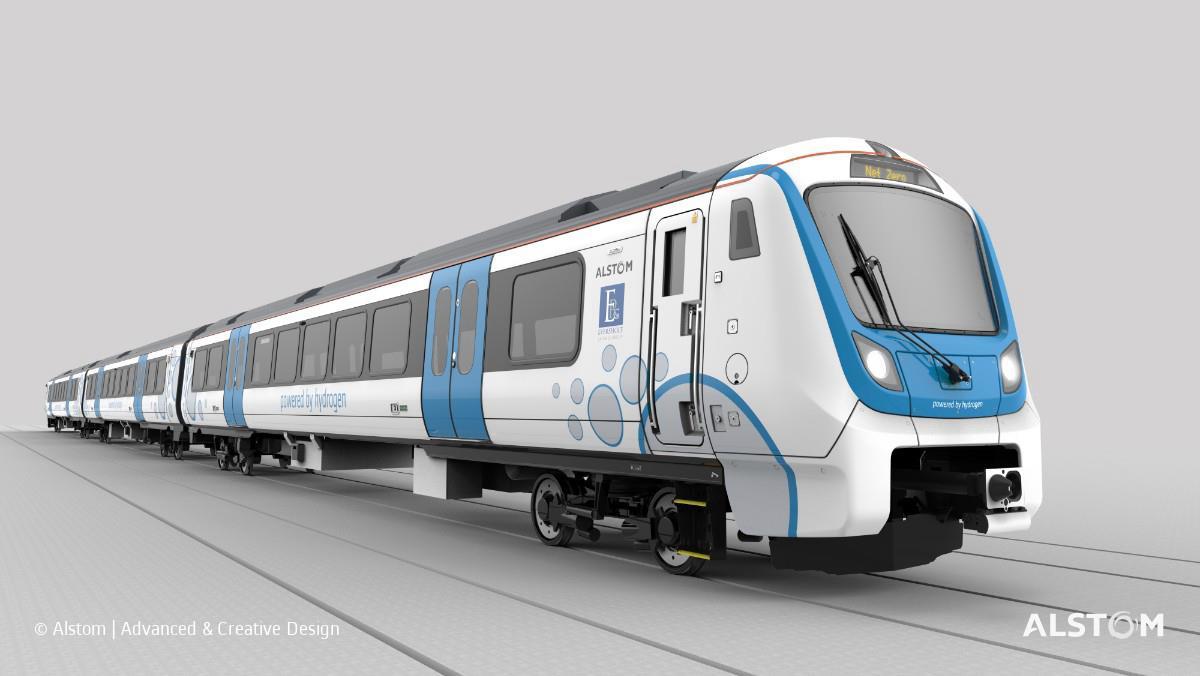
The first thing I notice is that the train doesn’t have the same aerodynamic nose as this current Class 710 train, which is one of the London Overground’s Aventras.
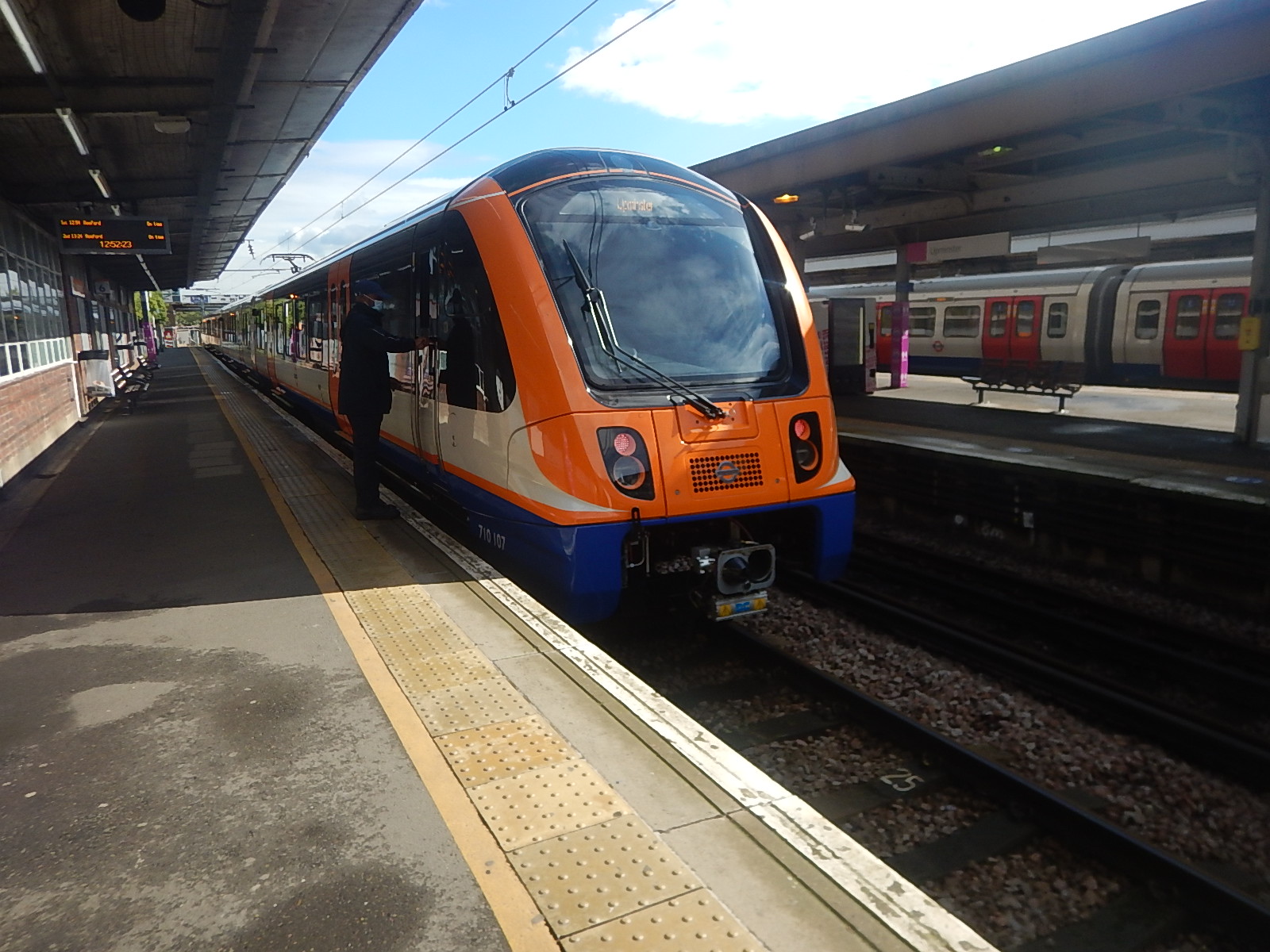
Note how the lights, coupler position and the front-end structure are all different.
These are my further thoughts on the design.
The Aventra’s Traction System
In this article in Global Rail News from 2011, which is entitled Bombardier’s AVENTRA – A new era in train performance, gives some details of the Aventra’s electrical systems. This is said.
AVENTRA can run on both 25kV AC and 750V DC power – the high-efficiency transformers being another area where a heavier component was chosen because, in the long term, it’s cheaper to run. Pairs of cars will run off a common power bus with a converter on one car powering both. The other car can be fitted with power storage devices such as super-capacitors or Lithium-ion batteries if required. The intention is that every car will be powered although trailer cars will be available.
Unlike today’s commuter trains, AVENTRA will also shut down fully at night. It will be ‘woken up’ by remote control before the driver arrives for the first shift
This was published over ten years ago, so I suspect Bombardier (or now Alstom) have refined the concept.
Bombardier have not announced that any of their trains have energy storage, but I have my suspicions, that both the Class 345 and Class 710 Aventra trains use super-capacitors or lithium-ion batteries, as part of their traction system design.
- I was told by a Bombardier driver-trainer that the Class 345 trains have an emergency power supply. When I said “Batteries?”, He gave a knowing smile.
- From the feel of riding on Class 710 trains, as a Control Engineer, I suspect there is a battery or supercapacitor in the drive system to give a smoother ride.
I also feel that the Aventra has been designed, so that it can accept power from a large variety of sources, which charge the battery, that ultimately drives the train.
The Formation Of A Three-Car Aventra
The only three-car Aventra is the Class 730/0 train.
I have not seen one of one of these trains in the metal and the formation can’t be found on the Internet. But Wikipedia does show the pantograph on the middle car.
In The Formation Of A Class 710 Train, I said this.
Here is the formation of the train.
DMS+PMS(W)+MS1+DMS
The plates on the individual cars are as follows.
DMS – Driving Motored Standard
-
- Weight – 43.5 tonnes
- Length – 21.45 metres
- Width 2.78 metres
- Seats – 43
The two DMS cars would appear to be identical.
PMS  -Pantograph Motored Standard
-
- Weight – 38.5 tonnes
- Length – 19.99 metres
- Width 2.78 metres
- Seats – 51
The signifies a wheelchair space.
MS1 – Motored Standard
-
- Weight – 32.3 tonnes
- Length – 19.99 metres
- Width 2.78 metres
- Seats – 52
It is similar in size to the PMS car, but has an extra seat.
So could the formation of a three-car Aventra be?
DMS+PMS(W)+DMS
I have just removed the MS1 car.
This would mean that a three-car Aventra has the following dimensions and capacity.
- Weight – 125.5 tonnes
- Length – 62.89 metres
- Seats – 137
There will probably be a difference between these figures and those of a three-car Class 730 train, as those trains have end-gangways.
Could All The Hydrogen Gubbins Fit Underneath The Train?
These pictures show the space underneath a Class 710 train.
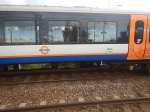
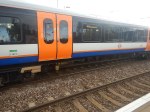
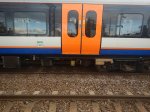
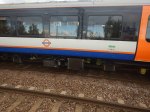
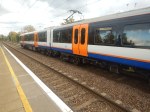
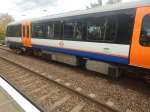
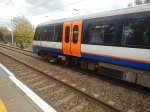
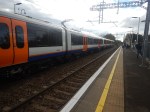
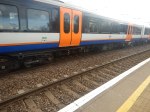
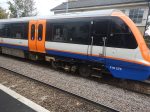
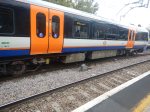
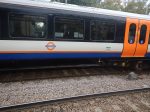

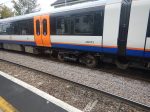
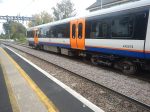
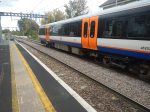
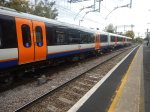
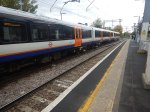
If you also look at Alstom’s visualisation of their Hydrogen Aventra on this post, there would appear to be lots of space under the train.
It should also be noted that Birmingham University’s engineers have managed to put all of the hydrogen gubbins underneath the floor of Porterbrook’s Class 799 train.
Looking at my pictures, you can see the following.
- The two DMS (Driving Motored Standard) cars have large boxes underneath
- The MS1(Motored Standard) car is fairly clear underneath. But this will probably not be there in a three-car train.
- The PMS (Pantograph Motored Standard) car has some space underneath.
If more space needs to be created, I suspect that the cars can be lengthened, between the bogies. The Class 710 trains have twenty metre intermediate cars, whereas some versions have twenty-four metre cars.
I believe that Aventras have been designed, so that various power sources could be installed under the floor.
When the Aventra was designed, over ten years ago, these could have included.
- A diesel generator and all the fuel tanks and cooling systems.
- A battery or other energy storage system.
Since then two other suitable power sources have been developed.
- Rolls-Royce, Honeywell and others have developed small and powerful gas-turbine generators.
- Ballard Power Systems and others have developed hydrogen fuel cell generators.
If you look at the proportions of the Alstom hydrogen train and the pictures of Class 710 trains, I feel that the Alstom train could have the longer twenty-four metre cars.
It may be a tight fit compared to creating the Alstom Coradia iLint hydrogen train, but I would feel it is possible to install a fuel cell or cells, the required cooling and the hydrogen tanks, having seen cutaway drawings of hydrogen-powered double-deck buses on the Wrightbus web site.
Interestingly, the Alstom press release doesn’t mention fuel cells, so could the train be powered by a small gas turbine?
I think it is unlikely, but it is technically feasible.
Does The Alstom Hydrogen Aventra Have Longer Cars?
I have been looking at pictures of Aventras on Wikipedia and in my own archive.
It appears that only Aventras with twenty-four metre carriages have five windows between the pair of double-doors in the intermediate carriages.
This picture shows the PMS car from a Class 710 train.
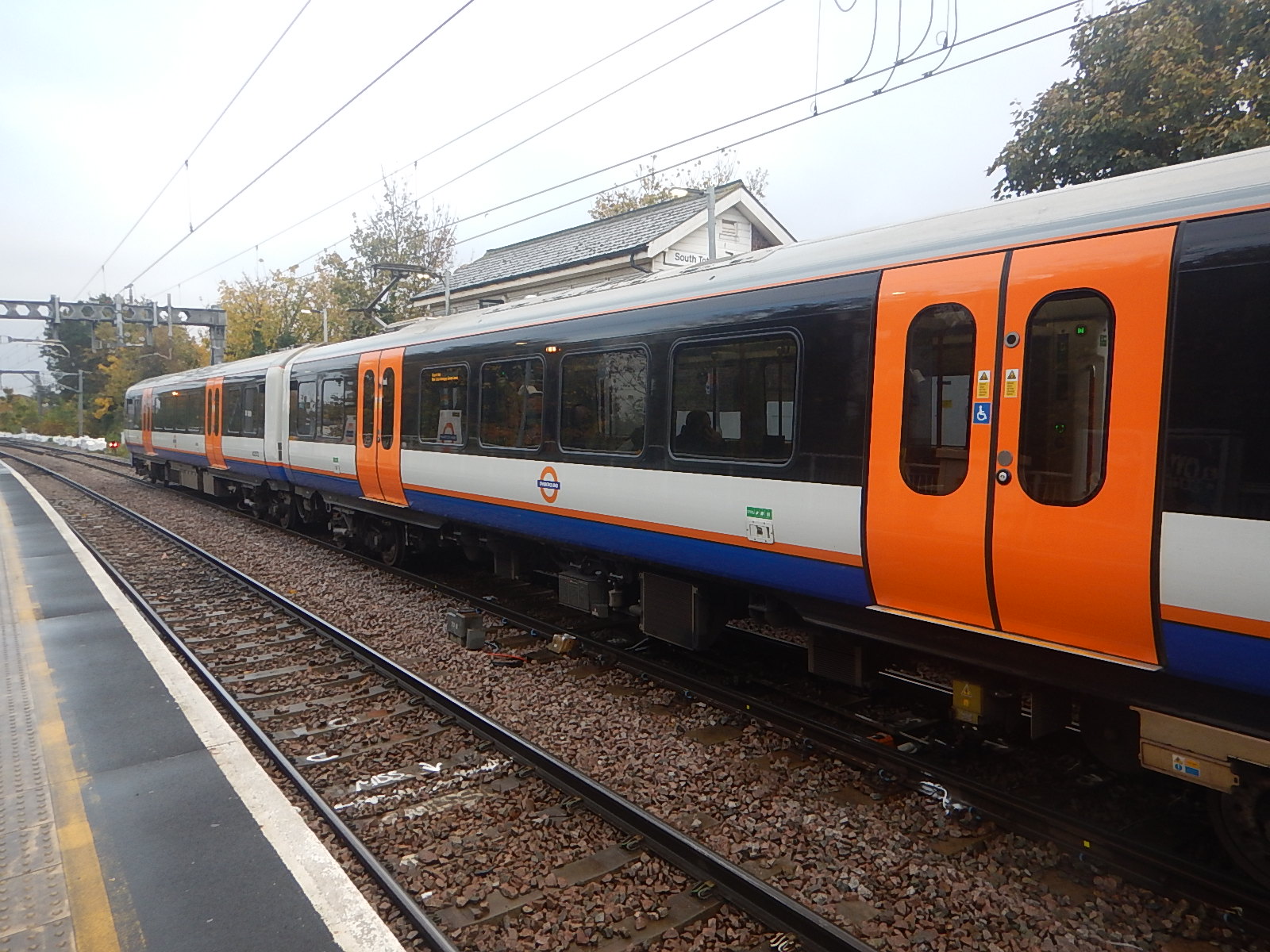
The PMS car is to the right and has four windows between the doors.
This is the side view of one of Greater Anglia’s Class 720 trains.
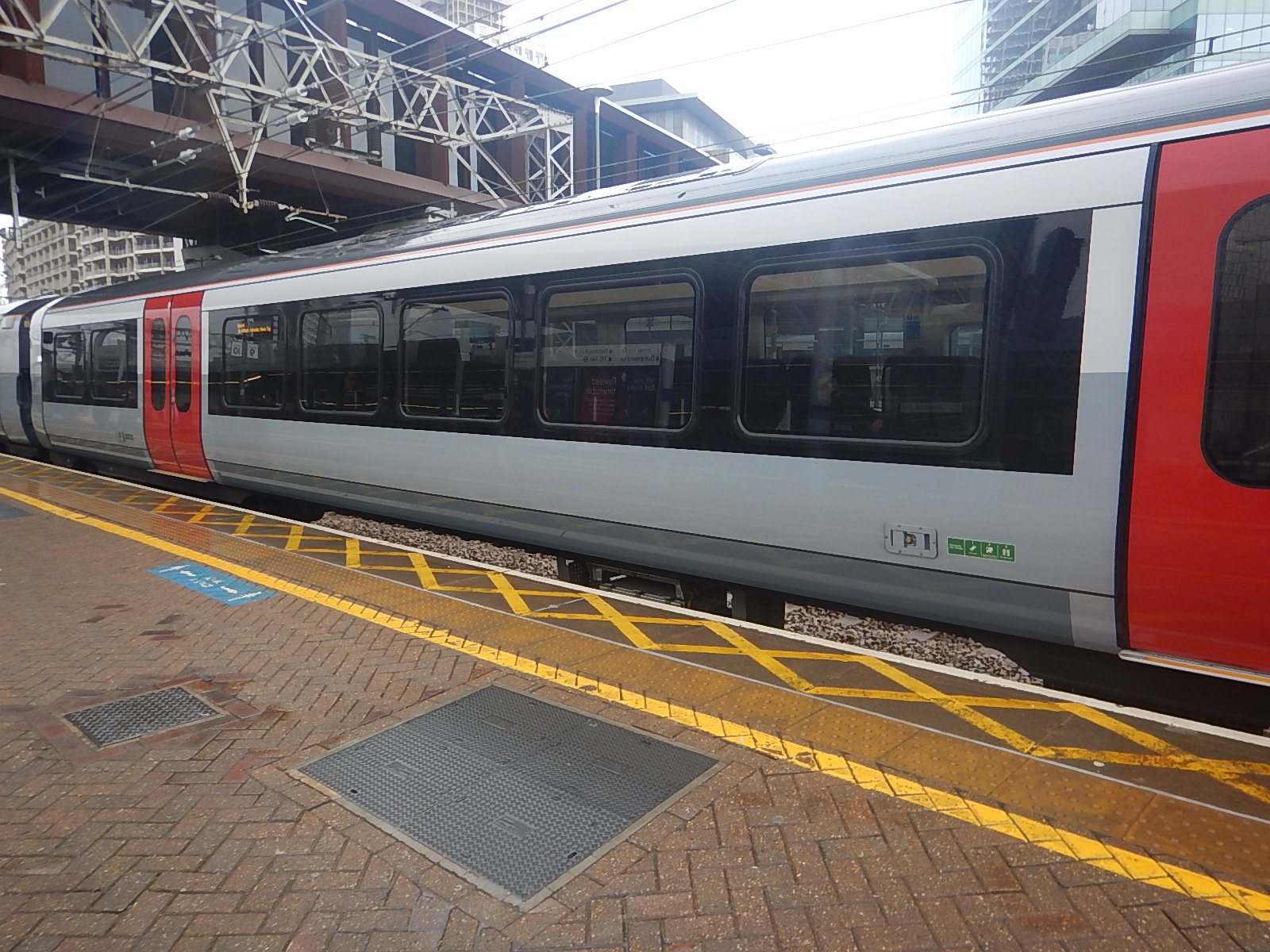
It has twenty-four metre intermediate cars and five windows.
It looks to me that the Alstom Hydrogen Aventra will have twenty-four metre cars.
This will give an extra four x 2.78 metres space under the train compared to a Class 710 train.
It would also appear that the Aventras with twenty-four metre cars also have an extra window in the driving cars, between the doors.
Does the four metre stretch make it possible to position tubular hydrogen tanks across the train to store a practical amount of hydrogen?
Is The Alstom Hydrogen Train Based On A Three-Car Class 730/0 Train?
I have just found this video of a three-car Class 730/0 under test.
And guess what! It has five windows between the doors.
But then it is a train with twenty-four metre cars.
It looks to me, that Alstom have looked at the current Aventra range and decided that the three-car Class 730/0 could be the one to convert into a useful train powered by hydrogen.
So if it is a Class 730/0 train with hydrogen gubbins under the floor, what other characteristics would carry over.
- I suspect Aventras are agnostic about power and so long as they get the right quantity of volts, amps and watts, the train will roll along happily.
- But it means that the train can probably use 25 KVAC overhead electrification, 750 VDC third-rail electrification, hydrogen or battery power.
- I wouldn’t be surprised if if could use 15 KVAC and 3KVDC overhead electrification for operation in other countries, with perhaps a change of power electronics or transformer.
- The interior layout of the trains can probably be the same as that of the Class 730/0 trains.
- The Class 730/0 trains have an operating speed of 90 mph and this could be good enough for hydrogen.
This could be a very capable train, that could find a lot of applications.
Could The Proposed Alstom Hydrogen Aventra Be Considered To Be A Class 730/0 Train With A Hydrogen Extender?
It appears that the only difference between the two trains is that the proposed Alstom Hydrogen Aventra has a hydrogen propulsion system, that can be used when the electrification runs out.
The hydrogen fuel cell will convert hydrogen into electricity, which will either be used immediately or stored in a battery on the train.
The Class 730/0 trains have already been ordered to run services on Birmingham’s electrified Cross-City Line.
There are plans to expand the line in the future and I do wonder if the proposed Alstom Hydrogen Aventras could be the ideal trains for extending the network.
How Does The Alstom Hydrogen Aventra Compare With The Class 600 Breeze Train?
The Class 600 train, which is based on the British Rail-era Class 321 train seems to have gone cold.
If it was a boxing match, it would have been stopped after the fourth round, if not before.
This Alstom visualisation shows the Class 600 train, which is also known as the Breeze.
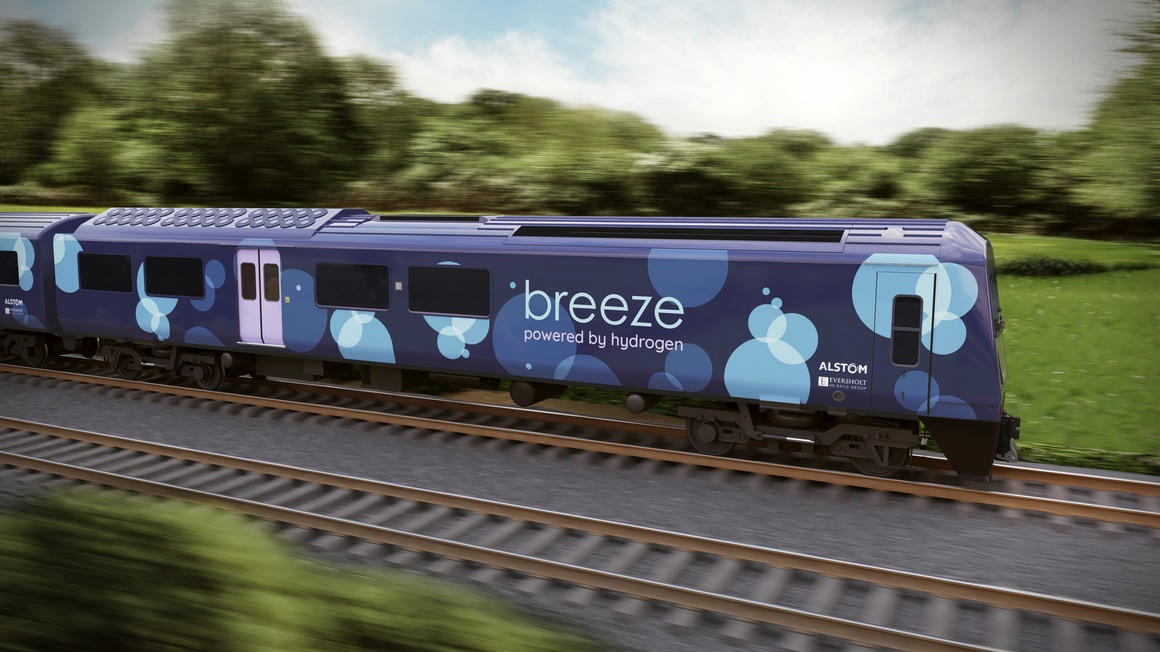
I have a feeling that Alstom have done their marketing and everybody has said that the Class 600 train wouldn’t stand up to a modern train.
- When you consider that each end of the train is a hydrogen tank, I wonder if possible passenger and driver reaction has not been overwhelmingly positive.
- The project was announced in January 2021 and in the intervening time, hydrogen technology has improved at a fast pace.
- There could even be a battery-electric version of the proposed Alstom Hydrogen Aventra.
- The modern train could possibly be lengthened to a four or five car train.
It does strike me, that if Alstom are going to succeed with hydrogen trains, that to carry on with the Class 600 train without an order into the future is not a good idea.
How Does The Alstom Hydrogen Aventra Compare With The Alstom Coradia iLint?
The Alstom Coradia iLint is the world’s first hydrogen train.

It is successfully in service in Germany.
These are some characteristics of the Coradia iLint from the Internet.
- Seats – 180
- Length – 54.27 metres
- Width – 2.75 metres
- Height – 4.31 metres
- Operating Speed – 87 mph
- Range – 370-500 miles
- Electrification Use – No
The same figures for the Alstom Hydrogen Aventra are as follows.
- Seats – 164
- Length – 72 metres
- Width – 2.78 metres
- Height – 3.76 metres
- Operating Speed – 90 mph
- Range – Unknown
- Electrification Use – Unknown, but I would expect it is possible.
Note.
- I have taken figures for the Alstom Hydrogen Aventra from the Class 730/0 train and other Aventras.
- The number of seats is my best estimate from using the seat density of a Class 710 train in a 24 metre long car.
- The width and height seem to be standard for most Aventras.
- Alstom have said nothing about the range on hydrogen.
- I am surprised that the Aventra is the wider train.
But what surprises me most, is how similar the two specifications are. Had the designer of the original Lint hoped to sell some in the UK?
What Is The Range Of The Alstom Hydrogen Aventra?
When they launched the Breeze, Alstom were talking about a range of a thousand kilometres or just over 620 miles.
I have talked to someone, who manages a large bus fleet and they feel with a hydrogen bus, you need a long range, as you might have to position the bus before it does a full day’s work.
Would similar positioning mean a hydrogen train needs a long range?
I suspect it would in some applications, but if the train could use electrification, as I suspect the Alstom Hydrogen Aventra can, this must help with positioning and reduce the range needed and the amount of hydrogen used.
Would Alstom aim to make the range similar to the Coradia iLint? It’s probably a fair assumption.
Could the Alstom Hydrogen Aventra Be Extended To Four Or Five Cars?
I don’t see why not, as Aventras are designed to be lengthened or shortened, by just adding or removing cars, just like their predecessors the Electrostars were.
I can certainly see routes, where a longer Alstom Hydrogen Aventra could be needed and if Alstom have also decided that such a train could be needed, they will surely have investigated how to lengthen the train.
Applications In The UK
These are links to a few thoughts on applications of the trains in the UK.
- Alstom Hydrogen Aventras And Extension Of The Birmingham Cross-City Line
- Alstom Hydrogen Aventras And The Reopened Northumberland Line
- Alstom Hydrogen Aventras And Great Western Branch Lines Between Paddington And Oxford
- Alstom Hydrogen Aventras And The Uckfield Branch
There are probably a lot more and I will add to this list.
Applications Elsewhere
If the Coradia iLint has problems, they are these.
- It can’t use overhead electrification, where it exists
- It has a noisy mechanical transmission, as it is a converted diesel multiple unit design.
The Alstom Hydrogen Aventra can probably be modified to use electrification of any flavour and I can’t see why the train would be more noisy that say a Class 710 train.
I suspect Alstom will be putting the train forward for partially-electrified networks in countries other than the UK.
Conclusion
This modern hydrogen train from Alstom is what is needed.
It might also gain an initial order for Birmingham’s Cross-City Line, as it is a hydrogen version of the line’s Class 730/0 trains.
But having a hydrogen and an electric version, that are identical except for the hydrogen extender, could mean that the trains would be ideal for a partially-electrified network.
There could even be a compatible battery-electric version.
All trains would be identical to the passenger and probably the driver too. This would mean that mixed fleets could be run by an operator, with hydrogen or battery versions used on lines without electrification as appropriate.
Wrightbus Presents Electric & Fuel Cell Single-Decker Buses
The title of this post, is the same as that as this article on Electrive.
This is the first paragraph.
The Northern Irish bus manufacturer Wrightbus is introducing a new single-deck bus with battery and fuel cell propulsion. The new models of the GB Kite series in the Hydroliner FCEV and Electroliner BEV variants can each accommodate up to 90 passengers and are scheduled to go into series production in 2022.
This means that Wrightbus now have single and double-deck zero emission buses with both battery and fuel cell propulsion.
These are my thoughts.
High Commonality
There may be four different buses, but they have a surprising amount in common.
In this press release on the Wrightbus web site, which is entitled Wrightbus To Showcase Two New Zero-Emission Buses, there is this paragraph.
Both buses share an 86% parts commonality with their Double Deck sisters which delivers significant benefits to operators in terms of reducing complexity and costs for fleet maintenance.
Vehicle manufacturers have been looking for high commonality for many decades and it is amazing that Wrightbus have achieved such a figure.
We mustn’t forget the advantages, Wrightbus will get from such commonality in terms of production, product support and the supply of parts and sub assemblies.
Passenger Capacity
The passenger capacity of the four buses are as follows.
- Double-decker – Hydrogen – 86
- Double-decker – Battery – 95
- Single-decker – Hydrogen – 90
- Single-decker – Battery – 90
Note.
- These figures come from the Wrightbus web site.
- The site says that the figures for the single-decker buses depend on bus length and specification.
Does the similar capacity of all the buses give operators more flexibility?
Range
The range of the four buses are as follows.
- Double-decker – Hydrogen – 350 miles
- Double-decker – Battery – 200 miles
- Single-decker – Hydrogen – 640 miles
- Single-decker – Battery – 300 miles
Note.
- These figures come from the Wrightbus web site or the press release for the new single-deck buses.
- These ranges are claimed by Wrightbus as best-in-class.
- But surely the range of 640 miles for a single-deck zero-carbon hydrogen bus opens up some interesting and unusual routes.
- Single-deck buses appear to have a longer range than their double-deck sisters.
There is also a degree of battery size flexibility in the battery-electric buses to suit an operator’s routes.
Single-deck battery-electric buses are available with these battery sizes and charging times.
- 340kWh – 2 ½ hours @ 150kW
- 454kWh – 3 hours @ 150kW
- 567kWh – 3 ½ hours @ 150kW
And these are the figures for the double-deck battery-electric buses.
- 340kWh – 2 ½ hours @ 150kW
- 454kWh – 3 hours @ 150kW
Note.
- Both single- and double-deck buses can use the two smaller batteries.
- I would assume that they are similar and it’s all part of the commonality.
- Both buses can also be fitted with a pantograph to charge the batteries, when the routes present an opportunity.
Could the largest battery be fitted to the double-deck bus? Perhaps at some point, but I suspect, that currently, a weight limitation applies.
The Fuel Cell
This sentence from the Electrive article, describes the fuel cell system of the hydrogen bus.
The fuel cell solo bus model is very similar in design. Instead of the pure BEV drive, the GB Kite Hydroliner FCEV has a Ballard FCmove fuel cell with 70 kW or 100 kW and a small supplementary battery with 30 or 45 kWh on board.
It appears, there is flexibility in the power.
Forsee Batteries From France
This paragraph from the Electrive article, talks about the batteries.
Incidentally, Forsee Power is acting as the supplier of the batteries for the BEV buses. The Bamford Group, new parent of Wrightbus, had extended the partnership with the French battery manufacturer in October 2020 with a new contract for several hundred battery systems per year. Forsee Power announced the introduction of extra-thin battery modules earlier this year and directly named Wrightbus as the launch customer for the modules of the new Slim series. Whether these batteries are now already being installed in the two Electroliners is not specified. However, the high storage capacity of the 567-kWh top battery leads us to assume this, at least for the solo bus model.
Forsee’s slimline batteries seem a major advance in the powering of vehicles like buses.
It certainly looks like extra-thin is beautiful, where batteries are concerned.
Conclusion
This is a formidable line-up of four zero-carbon buses, that can be tailored to an operator’s needs.
When linked tom Jo Bamford’s company; FUZE, which I wrote about in New Company Established To Help Transition Bus Fleets To Hydrogen, Bamford’s deck of cards look even stronger.
Will Jo Bamford do for the bus industry, what his grandfather did for diggers? I wouldn’t bet against it!
Zero Emission Refuse Trucks: Why Fuel Cell Power Just Makes Sense
The title of this post, is the same as this blog post on Ballard.
It is a must-read and illustrates how these prominent vehicles can go zero-carbon at a similar cost to diesel, without altering working practices.
They also talk about Glasgow’s roll-out of a fleet of 19 hydrogen-powered refuse trucks.
I can’t find out who are building these trucks, but the electrolyser to produce the hydrogen is from ITM Power.
CP Hydrogen Locomotive Pilot Powered By Ballard
The title of this post, is the same as that of this article on Railway Age.
This is the introductory paragraph.
Canadian Pacific (CP) will use fuel cell modules from Ballard Power Systems for its first hydrogen fuel cell (HFC)-powered linehaul freight locomotive.
I have said that someone will build a hydrogen powered freight locomotive for some time and it looks like Canada is first to show their hand.
The engine shown in the picture in the Railway Age article is 4107, which is an EMD FP9, which looks to be a typical North American diesel-electric locomotive.
- It has a power of 1300 kW.
- It can haul freight or passenger trains.
- Ninety were built in the 1950s.
- They have a maximum speed of between 65-105 mph.
The diesel engine and alternator will be swapped for six 200 kW fuel cells from Ballard and a battery.
This video shows 4107 leading the Royal Canadian Pacific, which is a luxury excursion passenger train.
Will this train be hydrogen powered in the future? It would be an interesting way to bring in the tourists.
H2OzBus Project: Deploying Hydrogen Fuel Cell Bus Fleets For Public Transport Across Australia
The title of the this post, is the same as that of this Press Release from ITM Power.
This is the introductory paragraph.
ITM Power, the energy storage and clean fuel company, is pleased to announce the formation of the H2OzBus Project (“the Project”) and the signing of a memorandum of understanding with strategic partners (“the Consortium”). The Consortium comprises Transit Systems, part of the SeaLink Travel Group, Ballard Power Systems, BOC Limited, Palisade Investment Partners and ITM Power. The Consortium partners have signed a memorandum of understanding as a further step in evaluating and demonstrating the concept of hydrogen fuel cell electric buses for use in public bus transport in Australia.
Some further points from the Press Release.
- Initially, a hundred buses will be deployed.
- The buses appear to be being built in Australia.
- Ten locations are being considered for the buses.
It looks to be a very sensible project.
 The Anonymous Widower