50,000 Journeys Made On Northumberland Line In First Month
The title of this post is the same as that of this press release on the Northumberland County County.
These are the first few paragraphs of the press release.
Passengers have made more than 50,000 journeys on Northumberland Line services in the first month after the opening.
The line reopened to passengers – for the first time in 60 years – in December, thanks to a £298.5m project involving the Department for Transport, Network Rail, Northumberland County Council and Northern.
Services now call at Newcastle, Manors, Seaton Delaval and Ashington, with a journey along the entire 18-mile route taking around 35 minutes and a single ticket costing no more than £3.
Tickets for more than 50,000 journeys have been bought since the opening and Saturdays have been particularly popular.
That includes more than 3,500 journeys made on the opening day (Sunday, 15 December), when the platform in Ashington was packed with people waiting to catch a glimpse of the first service.
That is what I would call a good start.
But after I wrote Dartmoor Line Passes 250,000 Journeys On Its First Anniversary, As Rail Minister Visits To Mark Official Opening Of The Station Building, a year after that line opened, I don’t think 50,000 for the Northumberland line is a high figure.
At 50,000 in the first month with only four stations, they must be on course for well over half a million passengers, when the line is fully open.
Figures like these show that enthusiasts for rail closures like Richard Beeching and Harold Wilson were so very wrong.
We need several reopened and new railway lines like this!
RWE Acquires 4.2-Gigawatt UK Offshore Wind Development Portfolio From Vattenfall
The title of this post, is the same as that of this press release from RWE.
These three bullet points, act as sub-headings.
- Highly attractive portfolio of three projects at a late stage of development, with grid connections and permits secured, as well as advanced procurement of key components
- Delivery of the three Norfolk Offshore Wind Zone projects off the UK’s East Anglia coast will be part of RWE’s Growing Green investment and growth plans
- Agreed purchase price corresponds to an enterprise value of £963 million
These two paragraphs outline the deal.
RWE, one of the world’s leading offshore wind companies, will acquire the UK Norfolk Offshore Wind Zone portfolio from Vattenfall. The portfolio comprises three offshore wind development projects off the east coast of England – Norfolk Vanguard West, Norfolk Vanguard East and Norfolk Boreas.
The three projects, each with a planned capacity of 1.4 gigawatts (GW), are located 50 to 80 kilometres off the coast of Norfolk in East Anglia. This area is one of the world’s largest and most attractive areas for offshore wind. After 13 years of development, the three development projects have already secured seabed rights, grid connections, Development Consent Orders and all other key permits. The Norfolk Vanguard West and Norfolk Vanguard East projects are most advanced, having secured the procurement of most key components. The next milestone in the development of these two projects is to secure a Contract for Difference (CfD) in one of the upcoming auction rounds. RWE will resume the development of the Norfolk Boreas project, which was previously halted. All three Norfolk projects are expected to be commissioned in this decade.
There is also this handy map, which shows the location of the wind farms.
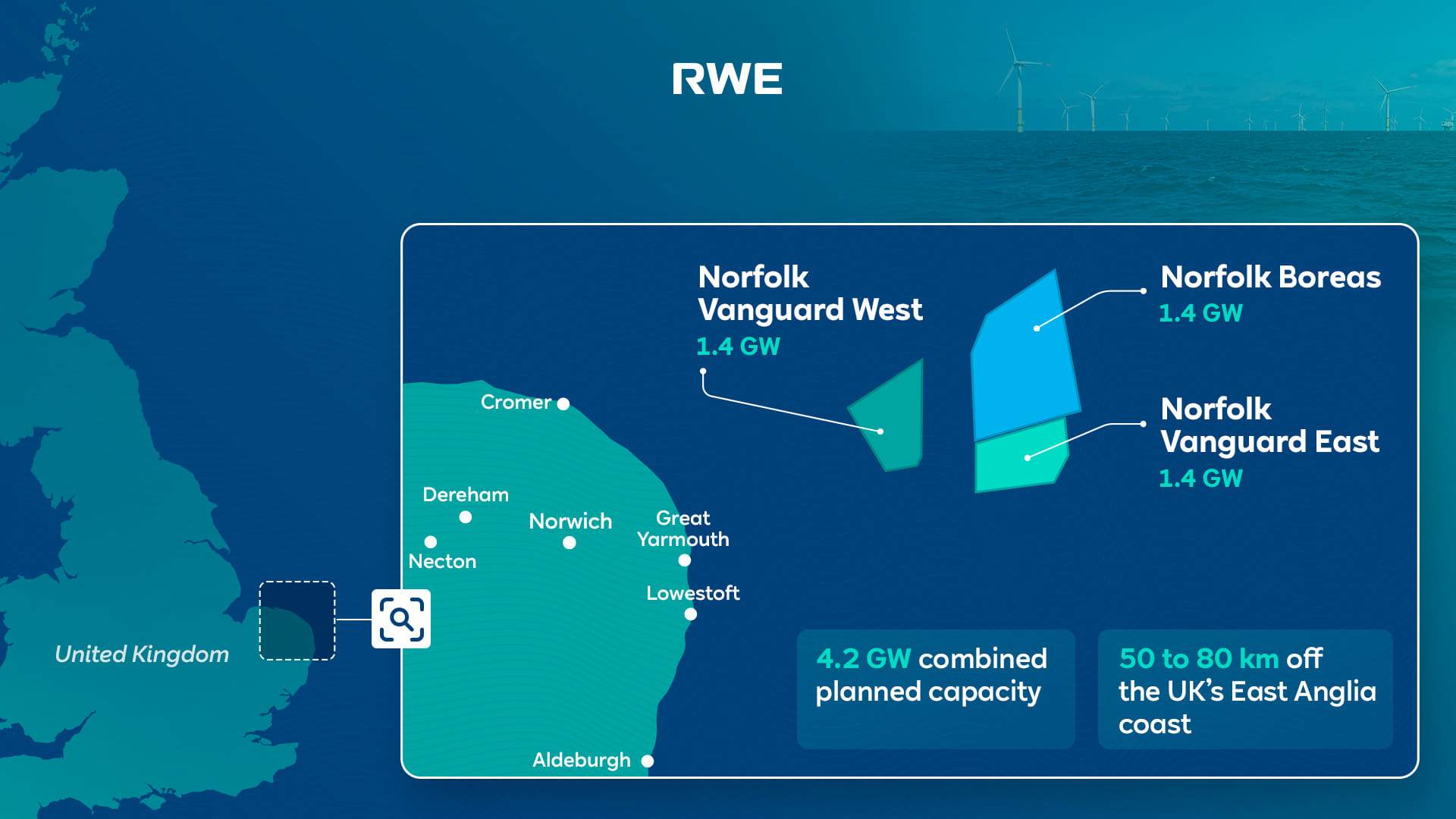
Note that there are a series of assets along the East Anglian coast, that will be useful to RWE’s Norfolk Zone development.
- In Vattenfall Selects Norfolk Offshore Wind Zone O&M Base, I talked about how the Port of Great Yarmouth will be the operational base for the Norfolk Zone wind farms.
- Bacton gas terminal has gas interconnectors to Belgium and the Netherlands lies between Cromer and Great Yarmouth.
- The cable to the Norfolk Zone wind farms is planned to make landfall between Bacton and Great Yarmouth.
- Sizewell is South of Lowestoft and has the 1.25 GW Sizewell B nuclear power station, with the 3.2 GW Sizewell C on its way, for more than adequate backup.
- Dotted around the Norfolk and Suffolk coast are 3.3 GW of earlier generations of wind farms, of which 1.2 GW have connections to RWE.
- The LionLink multipurpose 1.8 GW interconnector will make landfall to the North of Southwold
- There is also the East Anglian Array, which currently looks to be about 3.6 GW, that connects to the shore at Bawdsey to the South of Aldeburgh.
- For recreation, there’s Southwold.
- I can also see more wind farms squeezed in along the coast. For example, according to Wikipedia, the East Anglian Array could be increased in size to 7.2 GW.
It appears that a 15.5 GW hybrid wind/nuclear power station is being created on the North-Eastern coast of East Anglia.
The big problem is that East Anglia doesn’t really have any large use for electricity.
But the other large asset in the area is the sea.
- Undersea interconnectors can be built to other locations, like London or Europe, where there is a much greater need for electricity.
- In addition, the UK Government has backed a consortium, who have the idea of storing energy by using pressurised sea-water in 3D-printed concrete hemispheres under the sea. I wrote about this development in UK Cleantech Consortium Awarded Funding For Energy Storage Technology Integrated With Floating Wind.
A proportion of Russian gas in Europe, will have been replaced by Norfolk wind power and hydrogen, which will be given a high level of reliability from Suffolk nuclear power.
I have some other thoughts.
Would Hydrogen Be Easier To Distribute From Norfolk?
A GW-range electrolyser would be feasible but expensive and it would be a substantial piece of infrastructure.
I also feel, that placed next to Bacton or even offshore, there would not be too many objections from the Norfolk Nimbys.
Hydrogen could be distributed from the site in one of these ways.
- By road transport, as ICI did, when I worked in their hydrogen plant at Runcorn.
- I suspect, a rail link could be arranged, if there was a will.
- By tanker from the Port of Great Yarmouth.
- By existing gas interconnectors to Belgium and the Netherlands.
As a last resort it could be blended into the natural gas pipeline at Bacton.
In Major Boost For Hydrogen As UK Unlocks New Investment And Jobs, I talked about using the gas grid as an offtaker of last resort. Any spare hydrogen would be fed into the gas network, provided safety criteria weren’t breached.
I remember a tale from ICI, who from their refinery got a substantial amount of petrol, which was sold to independent petrol retailers around the North of England.
But sometimes they had a problem, in that the refinery produced a lot more 5-star petrol than 2-star. So sometimes if you bought 2-star, you were getting 5-star.
On occasions, it was rumoured that other legal hydrocarbons were disposed of in the petrol. I was once told that it was discussed that used diluent oil from polypropylene plants could be disposed of in this way. But in the end it wasn’t!
If hydrogen were to be used to distribute all or some of the energy, there would be less need for pylons to march across Norfolk.
Could A Rail Connection Be Built To The Bacton Gas Terminal
This Google Map shows the area between North Walsham and the coast.
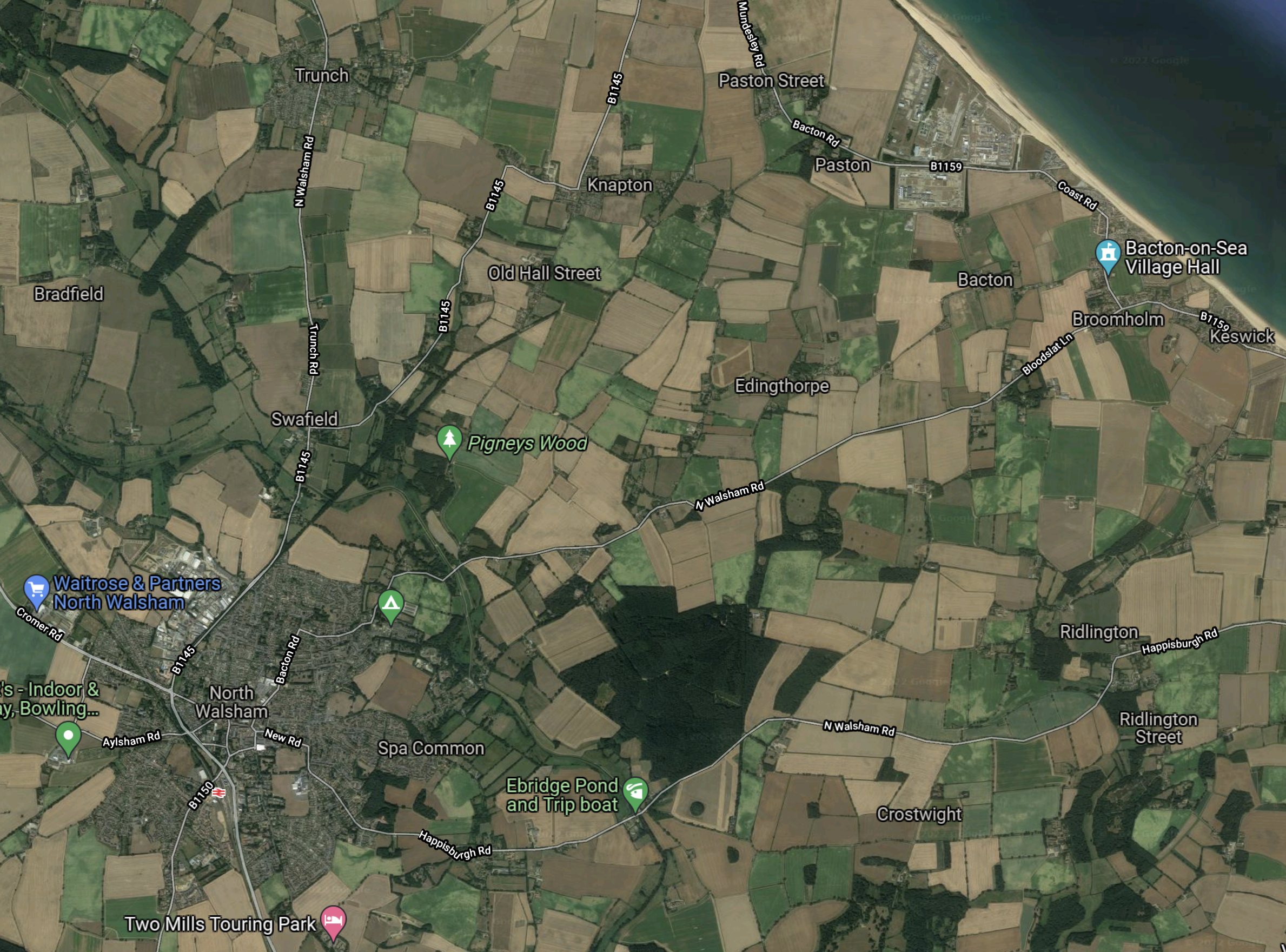
Note.
- North Walsham is in the South-Western corner of the map.
- North Walsham station on the Bittern Line is indicated by the red icon.
- The Bacton gas terminal is the trapezoidal-shaped area on the coast, at the top of the map.
ThisOpenRailwayMap shows the current and former rail lines in the same area as the previous Google Map.

Note.
- North Walsham station is in the South-West corner of the map.
- The yellow track going through North Walsham station is the Bittern Line to Cromer and Sheringham.
- The Bacton gas terminal is on the coast in the North-East corner of the map.
I believe it would be possible to build a small rail terminal in the area with a short pipeline connection to Bacton, so that hydrogen could be distributed by train.
There used to be a branch line from North Walsham station to Cromer Beach station, that closed in 1953.
Until 1964 it was possible to get trains to Mundesley-on-Sea station.
So would it be possible to build a rail spur to the Bacton gas terminal along the old branch line?
In the Wikipedia entry for the Bittern Line this is said.
The line is also used by freight trains which are operated by GB Railfreight. Some trains carry gas condensate from a terminal at North Walsham to Harwich International Port.
The rail spur could have four main uses.
- Taking passengers to and from Mundesley-on-Sea and Bacton.
- Collecting gas condensate from the Bacton gas terminal.
- Collecting hydrogen from the Bacton gas terminal.
- Bringing in heavy equipment for the Bacton gas terminal.
It looks like another case of one of Dr. Beeching’s closures coming back to take a large chunk out of rail efficiency.
Claire Coutinho And Robert Habeck’s Tete-a-Tete
I wrote about their meeting in Downing Street in UK And Germany Boost Offshore Renewables Ties.
- Did Habeck run the RWE/Vattenfall deal past Coutinho to see it was acceptable to the UK Government?
- Did Coutinho lobby for SeAH to get the contract for the monopile foundations for the Norfolk Zone wind farms?
- Did Coutinho have a word for other British suppliers like iTMPower.
Note.
- I think we’d have heard and/or the deal wouldn’t have happened, if there had been any objections to it from the UK Government.
- In SeAH To Deliver Monopiles For Vattenfall’s 2.8 GW Norfolk Vanguard Offshore Wind Project, I detailed how SeAH have got the important first contract they needed.
So it appears so far so good.
Rackheath Station And Eco-Town
According to the Wikipedia entry for the Bittern Line, there are also plans for a new station at Rackheath to serve a new eco-town.
This is said.
A new station is proposed as part of the Rackheath eco-town. The building of the town may also mean a short freight spur being built to transport fuel to fire an on-site power station. The plans for the settlement received approval from the government in 2009.
The eco-town has a Wikipedia entry, which has a large map and a lot of useful information.
But the development does seem to have been ensnared in the planning process by the Norfolk Nimbys.
The Wikipedia entry for the Rackheath eco-town says this about the rail arrangements for the new development.
The current rail service does not allow room for an extra station to be added to the line, due to the length of single track along the line and the current signalling network. The current service at Salhouse is only hourly during peak hours and two-hourly during off-peak hours, as not all trains are able to stop due to these problems. Fitting additional trains to this very tight network would not be possible without disrupting the entire network, as the length of the service would increase, missing the connections to the mainline services. This would mean that a new 15-minute shuttle service between Norwich and Rackheath would have to be created; however, this would interrupt the main service and cause additional platforming problems. Finding extra trains to run this service and finding extra space on the platforms at Norwich railway station to house these extra trains poses additional problems, as during peak hours all platforms are currently used.
In addition, the plans to the site show that both the existing and the new rail station, which is being built 300m away from the existing station, will remain open.
. As the trains cannot stop at both stations, changing between the two services would be difficult and confusing, as this would involve changing stations.
I feel that this eco-town is unlikely to go ahead.
Did RWE Buy Vattenfall’s Norfolk Zone To Create Green Hydrogen For Europe?
Consider.
- Vattenfall’s Norfolk Zone is a 4.2 GW group of wind farms, which have all the requisite permissions and are shovel ready.
- Bacton Gas terminal has gas pipelines to Europe.
- Sizewell’s nuclear power stations will add security of supply.
- Extra wind farms could be added to the Norfolk Zone.
- Europe and especially Germany has a massive need for zero-carbon energy.
The only extra infrastructure needing to be built is the giant electrolyser.
I wouldn’t be surprised if RWE built a large electrolyser to supply Europe with hydrogen.
The East Coast Main Line And The A14
I finally managed to get pictures of the new route of the A14 as it crosses over the East Coast Main Line.


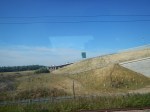
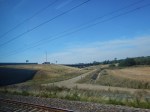
This Google Map shows the crossing from above.
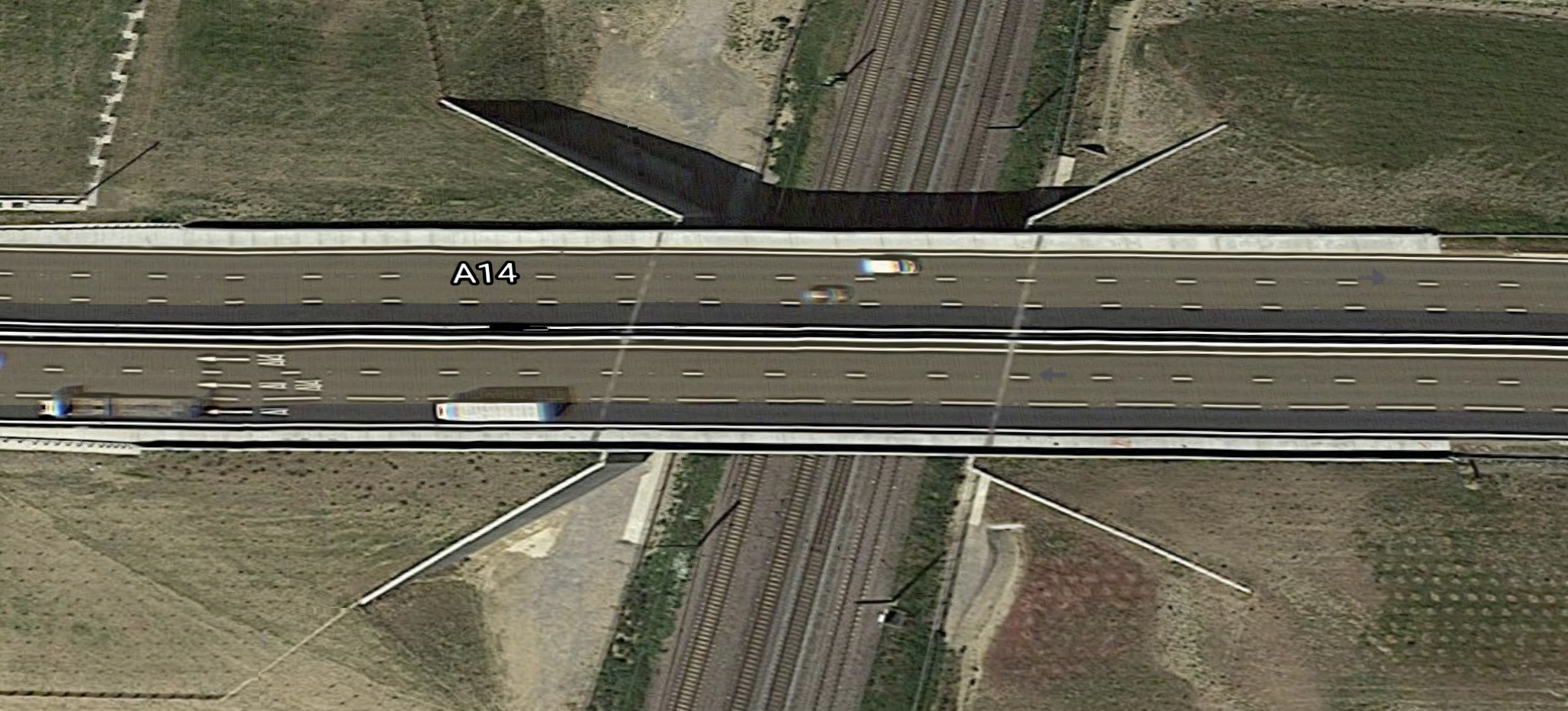
I do wonder, why in the 1990s, when they created the A14, they didn’t do a proper job?
But then history shows that Governments don’t seem to get East-West links in the UK right.
- Road and rail links across the Pennines are inadequate.
- Only recently have Edinburgh and Glasgow been properly connected by rail.
- The electrification of the Great Western Railway between London and Swansea has been an on-off project, that should have been done after electrification of the East Coast Main Line, before the team of engineers had been disbanded.
- Road and rail links to the port of Holyhead were ignored for years and could be improved again.
- The Varsity Line between Oxford and Cambridge was recommended by Beeching to be kept, but Harold Wilson closed it and now we are recreating it.
Is it because none of these routes are of much importance for politicians and civil servants living in London?
Wigan North Western Station Set For Platform Extension Work
The title of this post. is the same as that of this article on Rail Advent.
This is the first three paragraphs.
Wigan North Western is set to undergo a multi-million-pound platform extension to provide passengers between Manchester and Leeds with longer trains.
The work is part of the Great North Rail Project and will see Platform 3 made longer to allow four-carriage trains to call at the station.
Northern can then provide extra capacity for passengers and move trains in and out of its new £46m depot at Ince-in-Makerfield.
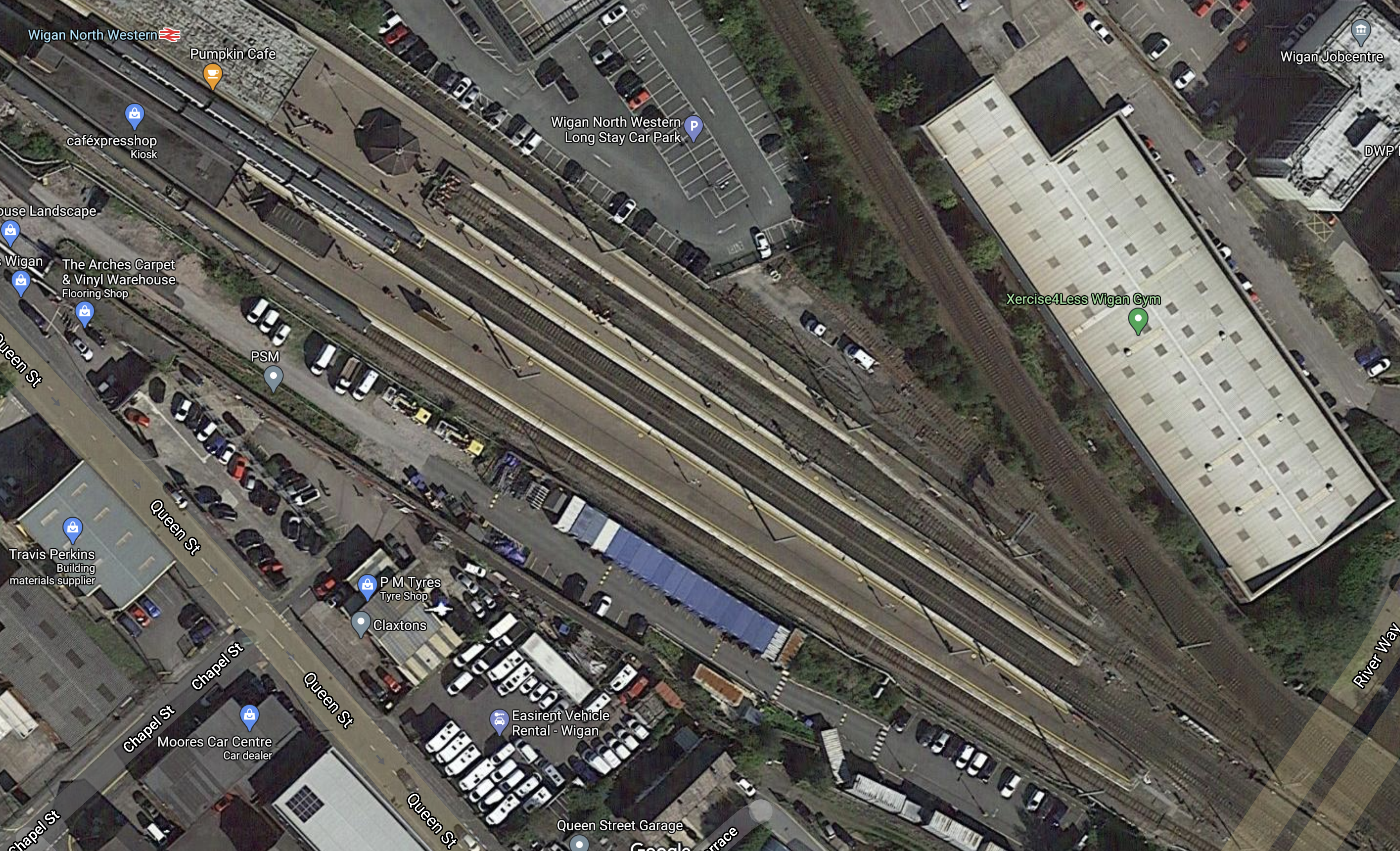
This Google Map shows Wigan North Western station.
Note.
- The six platforms are numbered 1-6 from North-East to South-West.
- Platforms 1, 2 and 3 are used for trains that start at the station and go to the Alderley Edge, Leeds, Manchester Piccadilly, Manchester Victoria and Stalybridge.
- Platform 1 is quite long and regularly handles two trains at the same time.
- Platforms 2 and 3 could probably be longer.
- Platforms 1, 2 and 3 appear to have their own private access track direct to Wigan Springs Branch TMD to the South, where multiple units can be serviced and washed.
- The access track sneaks down the East side of the West Coast Main Line, so that trains don’t block the track, when transferring to and from the depot.
- The double-track going North between the station and the large building leads to Wigan Wallgate station.
This picture shows the Platforms 1, 2 and 3 at the station.
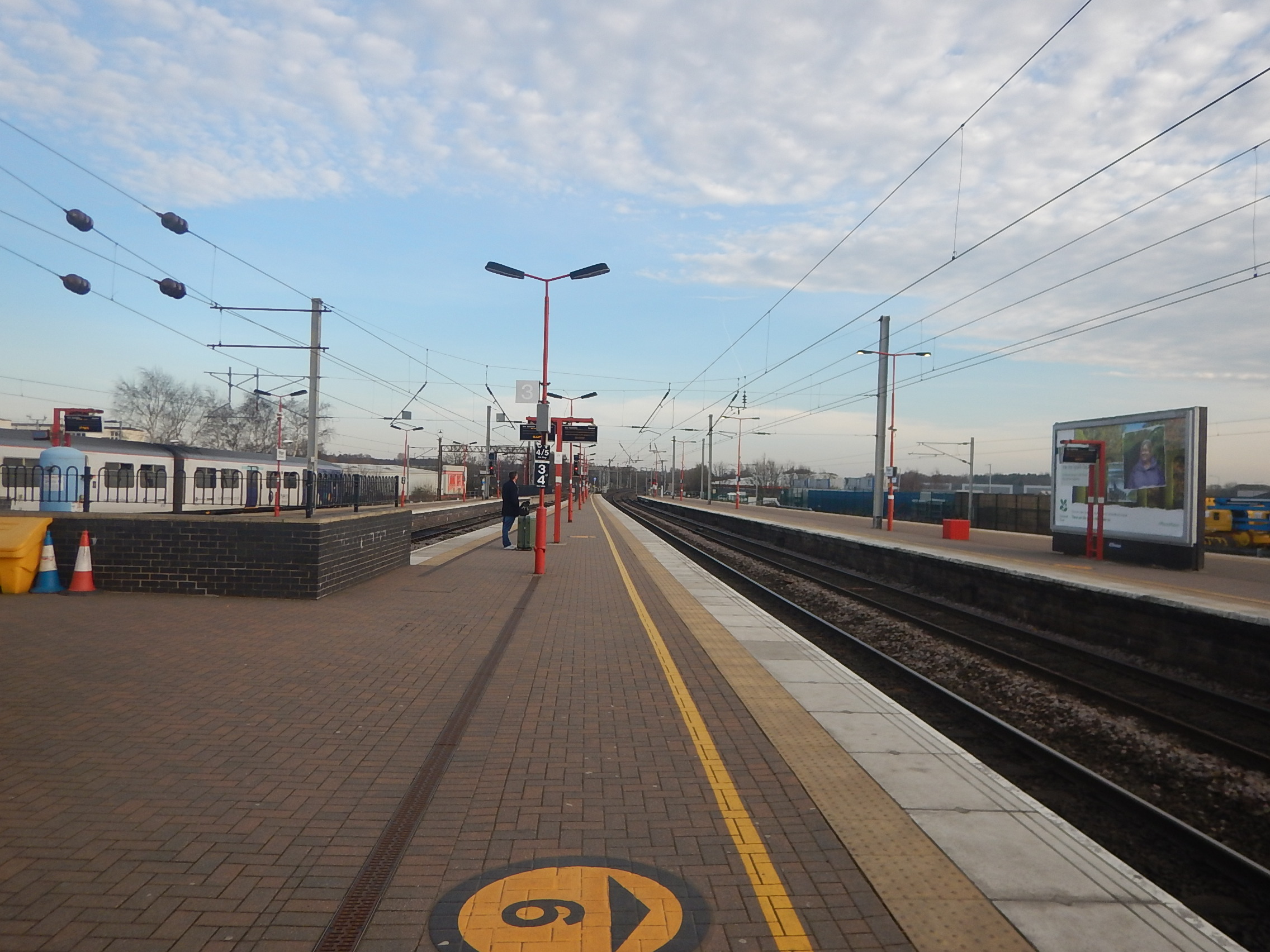
If you look at the train movements early in the morning, trains come out of the depot and start their first diagram from one of the three platforms on the left.
Lengthening Platform 3 will make this easier and more efficient.
Wigan North Western Station, West Coast Main Line And High Speed Two
Wigan North Western station is currently served by the following Avanti West Coast services on the West Coast Main Line.
- London Euston and Glasgow Central – Hourly
- London Euston and Glasgow Central or Edinburgh via Birmingham New Street – Hourly
- London Euston and Blackpool – Four trains per day
TransPennine Express also run four trains per day between Liverpool Lime Street and Glasgow Central.
The station is also planned to get two hourly High Speed Two services, which should be delivered in Phase 2a of the project.
- London Euston and Lancaster via Old Oak Common, Crewe, Warrington Bank Quay and Preston.
- Birmingham Curzon Street and Edinburgh or Glasgow via Preston, Lancaster, Carlisle and some other stations, depending on the Scottish destination.
It certainly looks like Wigan North Western station is being updated to have a comprehensive network of local electric services to give a large number of stations, good access to current West Coast Main Line and future High Speed Two services.
High Speed Two Through Lancashire Stations
The direct London and Scotland services are proposed to be as follows.
- They will run at a frequency of two trains per hour (tph)
- They will be formed of two classic-compatible 200 metre long trains.
- They will split and join at Carlisle, to give both Edinburgh and Glasgow a two tph service from London.
- One tph will stop at Old Oak Common, Preston and Carlisle in England.
- The second train will also stop at Birmingham Interchange in England.
Adding the services together, it would appear that the following services will run through Lancashire.
- One tph – London Euston and Lancaster – One 200 metre train
- Two tph – London Euston and Scotland – Two 200 metre trains.
- One tph – Birmingham and Scotland – One 200 metre train
This totals up to four tph.
I will now look, at the High Speed Two traffic through the various stations.
Warrington Bank Quay
I know Warrington Bank Quay is in Cheshire, these days, but High Speed Two trains will pass through.
Current plans include a by-pass round Warrington will be built for Phase 2b.
- Before by-pass four tph will pass through Warrington Bank Quay, with one stopping.
- After by-pass only one stopping train will pass.
If the High Speed Two service replaces the current Avanti West Coast service to Scotland, any problems at the station should be easy to solve.
Preston
Preston would appear to have three tph from High Speed Two passing through, with all stopping.
Phase 2b will add another tph.
Lancaster
Lancaster would appear to have two tph from High Speed Two passing through, with none stopping.
In addition, one service from Euston will terminate.
Phase 2b will add another tph, that passes thrugh.
Conclusion
It looks to me, that this relatively small project will be worthwhile.
How many other projects of this size need being added to the network urgently? I can think of possibly three within a dozen miles of my house, of which at least one is down to Beeching and/or British Rail’s cost cutting of the 1960s or 1970s.
Bletchley Viaduct – 24th August 2020
The Bletchley Viaduct is falling down, as these pictures show.
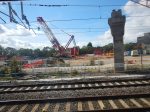

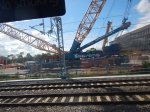
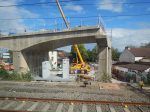

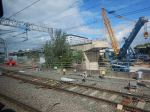
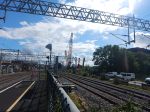
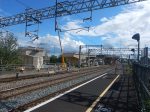
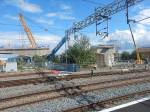
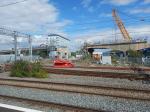
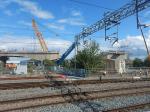
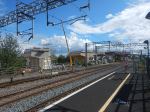
Considering, that Lord Beeching said that the Varsity Line between Oxford and Cambridge shouldn’t be closed, I wonder how much money has been wasted over the years, by questionable engineering and Government decisions on this viaduct.
Route Selected For Cambridge Metro Link Between New A1307 Travel Hub And Biomedical Campus
The title of this post is the same as that of this article on the Haverhill Echo.
This Google Map shows the Fourwentways intersection between the A1307 and A11 roads, where the travel hub will be created.
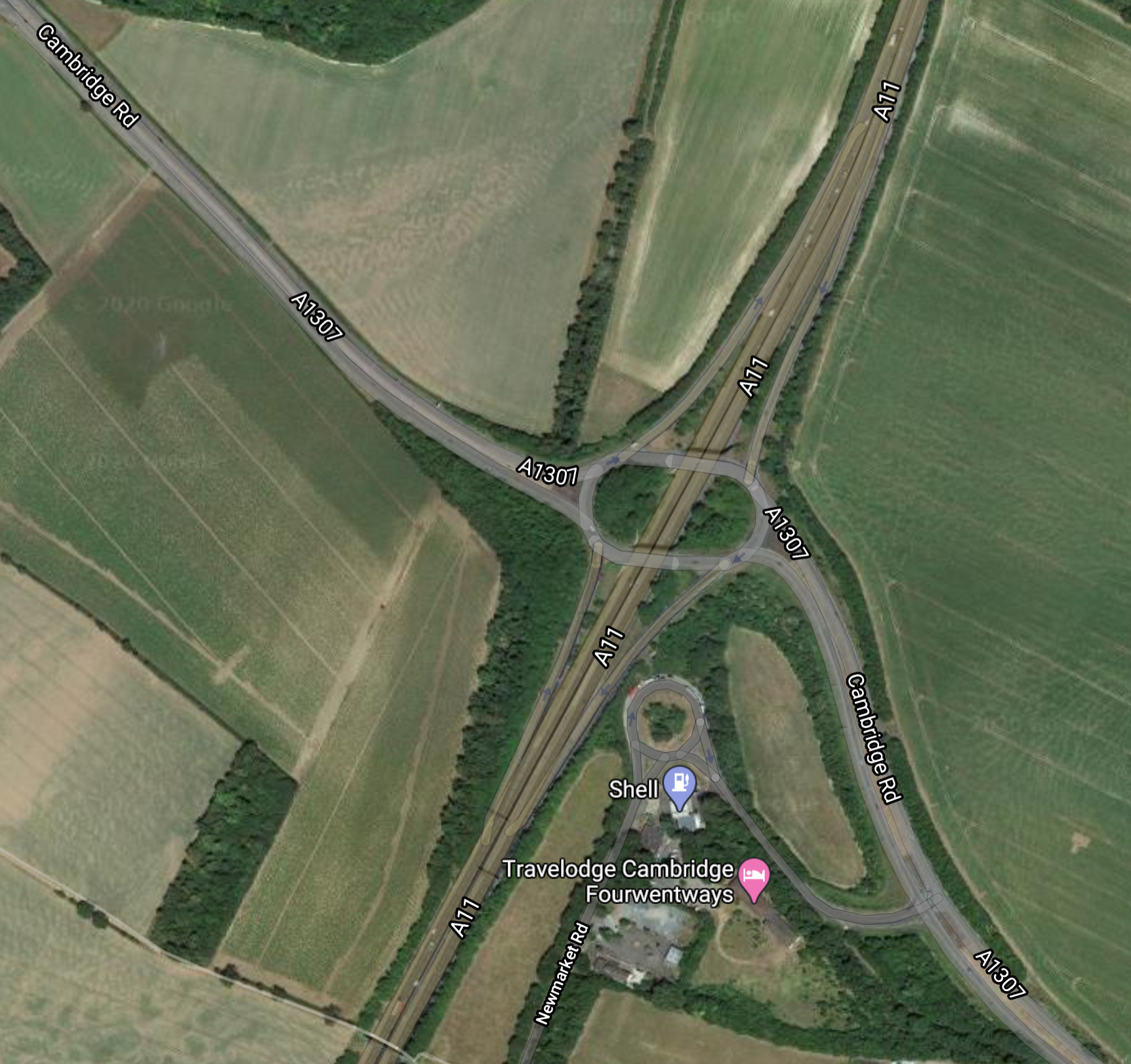
The travel hub will be South-West of the roundabout, which I know well, as it was only a few miles from where I lived.
It will improve the bus connection between Haverhill and the Biomedical Campus and the City of Cambridge.
It would appear that the Stour Valley Railway, is being recreated by extending the Cambridgeshire Busway.
The closure of the Stour Valley Railway in 1967, was one of the most ill-judged of the Beeching closures, that were solidly backed by the government of Harold Wilson, who believed that everyone should have their own car and that railways wouldn’t be needed. They also believed that all goods should go by truck. Is that what you get, when your Transport Secretary is an ex-lorry driver and a former boss of the lorry-drivers trade union?
We now have a Government backing these two projects.
- The rebuilding of the Varsity Line between Oxford and Cambridge, which Beeching recommended for retention, but Wilson still closed.
- The extension of the Cambridgeshire Busway to Haverhill.
As with so many projects around the country, all these totally unjustified cuts are being reversed.
But these railways should never been closed in the first place.
Reinstatement Of Rail Access To Devizes Via A New Station At Lydeway
This is one of the successful bids in the First Round of the Restoring Your Railway Fund.
Devizes is a growing town without a railway station.
The Wikipedia entry for the former Devizes station, says this about providing a new station.
Although Devizes was denied a railway station due to its stagnant population, as of 2017 the population had grown to 31,000, which could warrant its re-establishment. However, much of the vital land agreements and rights of way were sold off reducing the chances of reinstatement. An alternative plan has been proposed: to build Devizes Parkway Station at Clock Inn Park, three miles east of Devizes on the Reading–Taunton line, near to the site of the original junction for the branch at Etchilhampton.
It appears to have been taken from Baldrick’s book of cunning plans, where you create a virtual branch line using the A342, travellers’ personal transport and a shuttle bus service.
This Google Map shows the position of the station site at Clock Inn Park, with relation to Devizes.
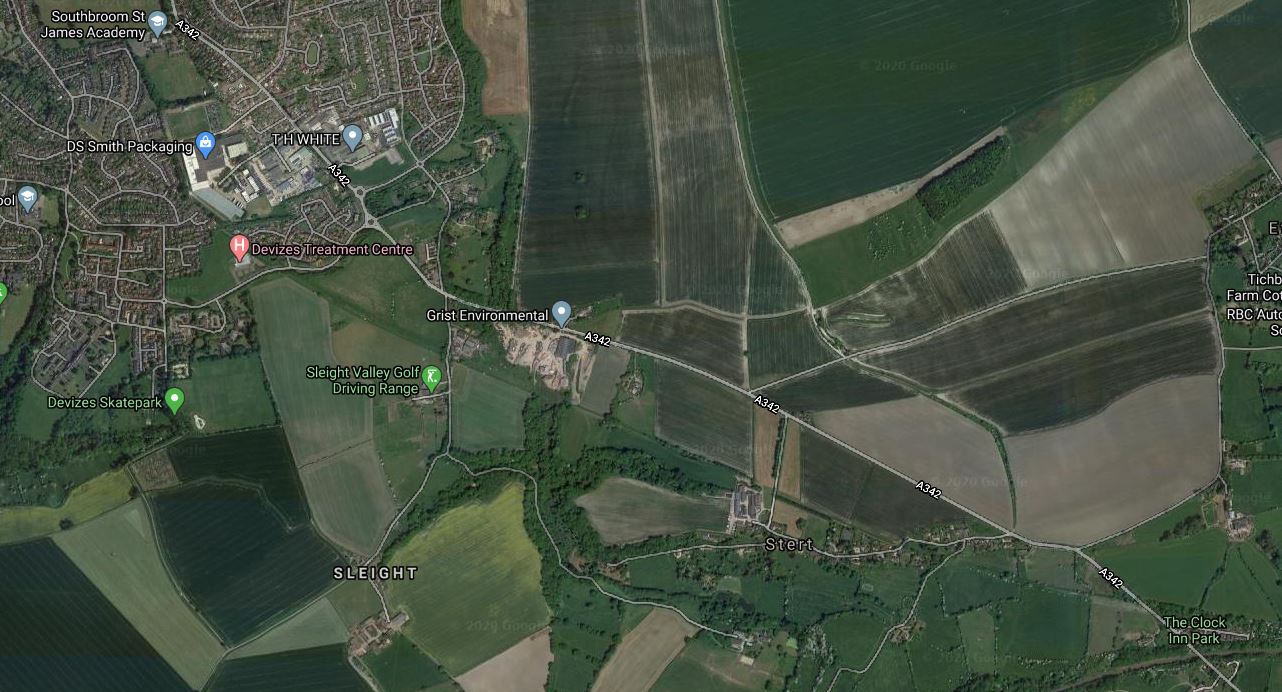
Note.
- Devizes in the North-West corner of the map.
- Clock Inn Park in the South-East corner of the map.
- The A342 road connecting the town with the station site.
This more detailed Google Map shows the station site.
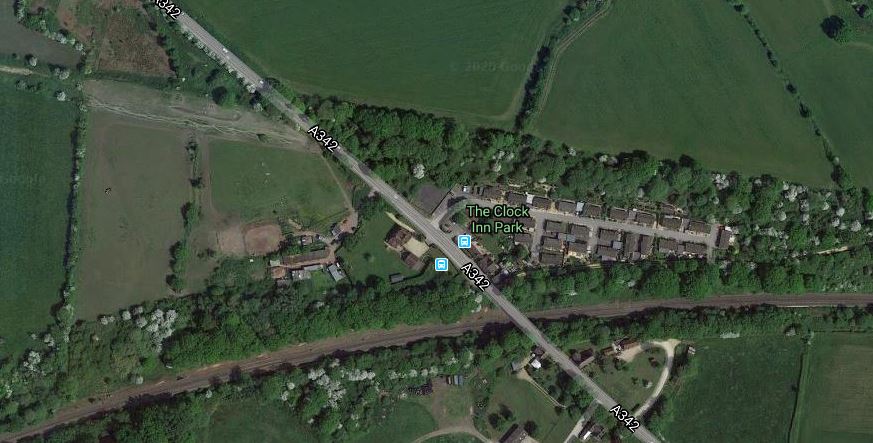
Note.
- The A342 going diagonally across the map.
- The Reading-Taunton Line going across the map.
- There’s even bus stops by the station site.
As the site could be fairly generous, I think a station with adequate parking could be created.
The Train Service
The train service is currently two hourly on this route between Paddington and Exeter St. David’s stations.
Perhaps, with an extra stop and more passengers, the service could be increased to hourly.
Another alternative would be to run battery-electric trains on the route between Paddington and Westbury, that called at all stations West of Newbury.
- Trains would use the electrification between Paddington and Newbury and would leave Newbury with a full battery.
- This service would be an extension of the current hourly service to Bedwyn station.
- Between Newbury and Westbury stations is forty-two miles of unelectrified lines, which should be possible with a battery electric version of the Class 802 train.
- Charging facilities would be needed at Westbury station.
- Between Paddington and Westbury stations takes one hour and thirteen minutes.
- Hitachi are quoting a ten minute charge time for one of their battery-electric trains.
- The trains would turn at Westbury station, which has refreshments and toilets for the crew.
- No extra electrification would be needed to run electric services to Westbury.
I think it could be feasible.
The Concept Of An Electrification Island
Westbury could be what I would call an electrification island.
Consider
- The Reading-Taunton Line passes through the station.
- The Wessex Main Line both passes through the station.
- The town of Westbury has a population of around 17,000 and some substantial heavy industries, so I suspect that it has a robust electricity supply.
- Taunton is 47 miles away.
- Newbury is 42 miles away.
- Weymouth is 59 miles away.
- Bristol Temple Meads is 40 miles away.
- Swindon is 32 miles away.
- Hitachi are claiming a range of between 55 and 65 miles for a battery-electric train.
Suppose the two routes through the station and perhaps for up to ten miles away from the town, were to be electrified.
- A battery-electric train turning back at Westbury would pan-up in the station and charge the battery. Leaving the station, the driver would leave the pantograph up for acceleration and then make sure pan-down was performed before the end of the electrification.
- A through battery-electric express between Paddington and Exeter would pan-up when under the electrification and pan down before it left the electrification.
- It might be prudent that all passing expresses stopped in Westbury station, to make sure, trains didn’t stop with a flat battery in the middle of nowhere, until procedures were seen to be totally reliable.
- A battery-electric train to and from Weymouth would probably need to run for about 45 miles between the electrification island at Westbury and the third-rail electrification at Dorchester Junction.
I believe that a well-designed electrification island at Westbury coupled with perhaps electrification between Exeter and Taunton, would enable battery-electric trains to work the following routes.
- Paddington and Exeter
- Westbury and Bristol
- Westbury and Weymouth
- Westbury and Swubdon
I suspect that Transwilts services could also be run by battery-electric trains, as they could charge at Westbury, Swindon and other electrified stations.
Conclusion
Devizes Parkway station would appear to be a simple way to provide a new station, at a town that has grown substantially since the days of Dr. Beeching.
Did Dr. Beeching and the Government of the day, have a view on population growth in the UK? They certainly didn’t take it into the account in their rail closure program. Or if they did, they got it spectacularly wrong!
Electrification Between Exeter And Plymouth
Eventually, there will be electric passenger trains between Exeter and Plymouth! Great Western Railway’s objective must be for passengers to board their Hitachi AT-300 train at Paddington and be powered all the way to Penzance by electricity, without using a drop of diesel. The added ingredient will be battery power.
In Sparking A Revolution, I gave Hitachi’s specification for a proposed battery-electric train.
- Range – 55-65 miles
- Performance – 90-100 mph
- Recharge – 10 minutes when static
- Routes – Suburban near electrified lines
- Battery Life – 8-10 years
As the distance between Exeter and Plymouth is 52 miles, the Hitachi specification could have been designed around this route, which as these pictures show is in places, very close to the sea, where the line runs along the South Devon Railway Sea Wall.


Global warming will probably mean, we’ll see a repeat of the major sea wall breach that happened at Dawlish in 2014.
I would suspect that the Network Rail’s solution to the problems of efficient low or zero-carbon traction between Exeter and Plymouth includes the following.
- A very robust railway.
- Extreme protection from almost everything the sea and the weather can produce.
- Could we see some concrete tunnels, like the Swiss and others use in mountainous areas to protect from snow? Rail Magazine says yes! At Horse Cove.
- No electrification as water and electricity are not a good mix, except in an electrolyser to produce hydrogen, oxygen and/or chlorine.
- Battery or hydrogen-powered passenger trains or freight locomotives.
- Digital in-cab signalling. Traditional signalling is even more expensive equipment to be swept away.
From media reports, this looks like the way Network Rail are thinking.
Charging The Trains
Battery-electric trains will need to be charged. There are three convenient stations; Exeter St. Davids, Newton Abbott and Plymouth.
- All have multiple platforms.
- The stations could be given the ability to charge battery-electric trains, either using 25 KVAC overhead electrification or a specialist charging system, like the one designed by Vivarail, that I wrote about in Vivarail Unveils Fast Charging System For Class 230 Battery Trains.
- Newton Abbot station would also charge any trains running on the eight mile branch to Paignton station.
As far as passenger services are concerned, it could be a very efficient zero-carbon railway.
Electrification At Exeter St. Davids
Exeter St. Davids is an important hub for services between Devon and Cornwall and the rest of Great Britain.
- GWR services run to London Paddington via Newbury.
- GWR services run to London Paddington via Bristol
- GWR services run to Plymouth and Penzance via Newton Abbott.
- GWR local services run to Barnstaple, Exmouth and Paignton.
- CrossCountry services run to the Midlands, North and Scotland via Bristol.
- South Western Railway services run to London Waterloo via Basingstoke.
In future, there could be services running to Plymouth on the reopened route via Okehampton and Tavistock.
All these services could be run by battery-electric trains for sixty miles from Exeter, if they could be fully-charged at the station.
Note.
- Trains to London Paddington and Bristol could easily reach Taunton, which is thirty miles away.
- Trains to London Waterloo could reach Yeovil Junction, which is fifty miles away.
- Trains to the West could reach Plymouth, which is fifty-two miles away.
- Barnstaple is forty miles away, so would probably need some help to get back.
- Exmouth is eleven miles away, so a return journey is probably possible.
- Paignton is twenty-eight miles away, so a return journey is probably possible, with a top-up at Newton Abbot if required.
Exeter is going to be very busy charging trains.
It should be noted, that trains to and from London Paddington and Bristol, all share the same route as far as Cogload Junction, where the London Paddington and Bristol routes divide.
- Cogload Junction is thirty-six miles from Exeter.
- Cogload Junction and Newbury, where the electrification to London Paddington starts are eighty-five miles apart.
- Cogload Junction and Bristol Temple Meads, where the electrification to London Paddington starts are forty miles apart.
I wonder if it would be sensible to electrify between Exeter St. David station and Cogload Junction.
- From my virtual helicopter, the line doesn’t look to be in the most difficult category to electrify.
- There is only one tunnel and a few old bridges and a couple of level crossings.
- Some of the route is alongside the M5.
- Trains would arrive in Exeter with full batteries and could do a quick stop before continuing their journeys.
- Trains would arrive at Cogload Junction and could reach Bristol Temple Meads without stopping for a recharge.
- Bristol services that are extended to Taunton and Exeter could be run by battery-electric trains.
I also feel, that with upwards of twenty-five miles of extra electrification between Cogload Junction and Newbury, that battery-electric trains could run between London Paddington and Exeter via the Reading-Taunton Line.
Electrification At Plymouth
As with Exeter St. Davis, Plymouth is an important hub for services between Devon and Cornwall and the rest of Great Britain.
- Most services run to Penzance in the West and Exeter in the East.
- There is a local service to Gunnislake, which is fifteen miles away.
Lots of charging capacity, will enable battery-electric trains to reach their destinations, except for Penzance
Trains Between Plymouth And Penzance
Hitachi must have despaired, when it was pointed out that the distance between Penzance and Plymouth is eighty miles! This is fifteen miles longer than the range of their proposed battery-electric train.
The simplest solution would be to build a battery-electric train with an eighty mile range, that could travel between Plymouth and Penzance on a single charge. With charging at Penzance it could return to Plymouth.
The longer range, would also mean that, with perhaps ten extra miles of electrification, that battery-electric trains could bridge the electrification gap between Cogload Junction and Newbury.
Other solutions range from selective electrification, all the way up to full electrification of the Cornish Main Line.
It should be noted that there are the following branches on the Cornish Main Line.
- The Looe Valley Line at Liskeard station – 8.75 miles – Uses a separate platform at Lskeard
- The Fowey Branch At Lostwithiel station – 4.75 miles – Possible reopening
- The Atlantic Coast Line at Par station – 20.75 miles – Uses a separate platform at Par
- The Maritime Line at Truro station – 11.75 miles – Uses a separate platform at Truro
- The St. Ives Bay Line at St. Erth station – 4.25 miles- Uses a separate platform at St. Erth
If these branches are going to be served by battery-electric trains, arrangements will have to be made for their charging. This could either be on the main line, at the remote terminal or at both.
Would it be easier to run the branches using battery-electric trains, if the Cornish Main Line was fully electrified?
The Cornish Main Line also carries a number of heavy freight trains, most of which seem to be going to or from Burngullow, so I suspect they are in connection with the movement of china clay.
Currently, these heavy freight trains appear to be hauled by diesel locomotives, but if the Cornish Main Line were to be fully electrified, could they be run by electric locomotives?
Electrification Of A Reopened Northern Route
In the May 2020 Edition of Modern Railways, there is an article, which is entitled Beeching Reversal Fund Bids.
This is the introductory paragraph.
Bids have been submitted to Government for a share of the £500 million ‘Restoring your railway’ fund launched by the Department for Transport in January. The fund is to be used to support proposals to reinstate axed local services, to accelerate schemes already being considered for restoration and also to promote new and restored stations.
One of the bids is for the Tavistock-Okrhampton Reopening scheme (TORs), which would reopen the former Exeter to Plymouth railway of the LSWR, as a new route between Exeter and Taunton in the East and Plymouth in the West.
- The original railway was double-track.
- Most of the infrastructure is intact.
- The route would totally avoid Dawlish.
This is also said in the Modern Railways article.
It proposes journey times could be as little as six minutes longer than via the existing route between Exeter and Plymouth and that there could be opportunities for freight trains to avoid the steep gradients over the Devon banks between Newton Abbott and Plymouth. Provision of electrification for TORs as part of a wider programme for main lines in the region is also advocated.
Could an electrified route via Tavistock and Okehampton be connected to an electrified Cornish Main Line, to create an electrified route across Devon and Cornwall?
Connecting At The Royal Albert Bridge
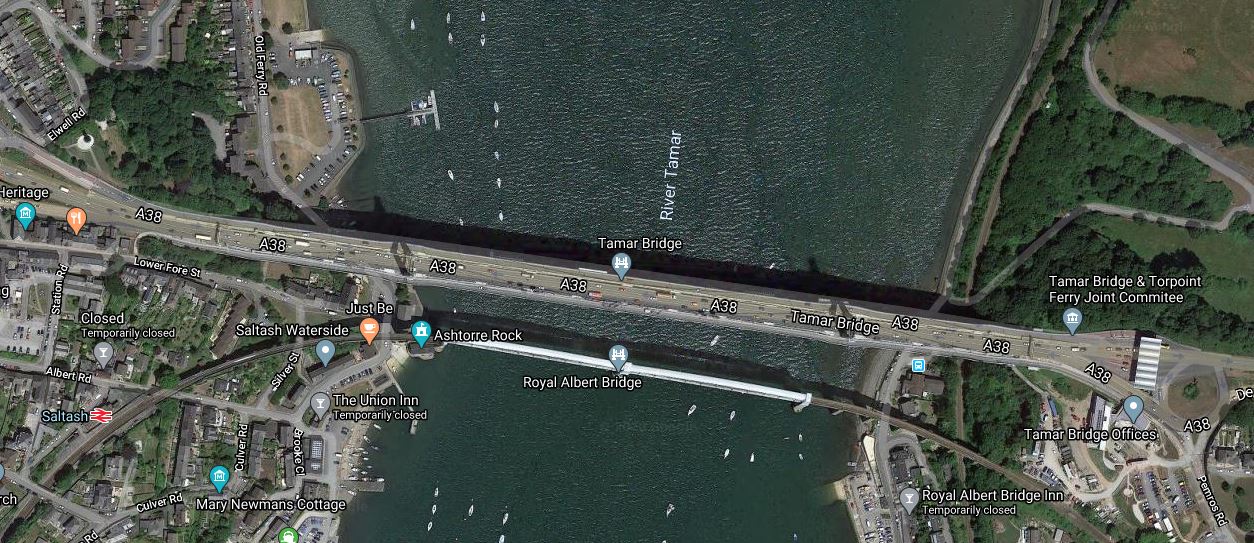
This Google Map shows the Royal Albert Bridge and the Tamar Bridge over the River Tamar.
Note.
- The Royal Albert Bridge to the South of the modern Tamar Bridge.
- The Great Western Main Line running East to Plymouth and West to Penzance.
- The Tamar Valley Line running up the Eastern bank of the River Tamar and under the Eastern approaches to both bridges.
- Going North on the Tamar Valley Line leads to the TORs and going South leads to Plymouth station.
I can see a difficult design problem at the Eastern end of the Royal Albert Bridge, as a very complicated junction will be needed to allow all trains go the way they need.
Trains wanting to call at Plymouth station and use TORs will need to reverse in the station.
Connecting At The East Of Exeter
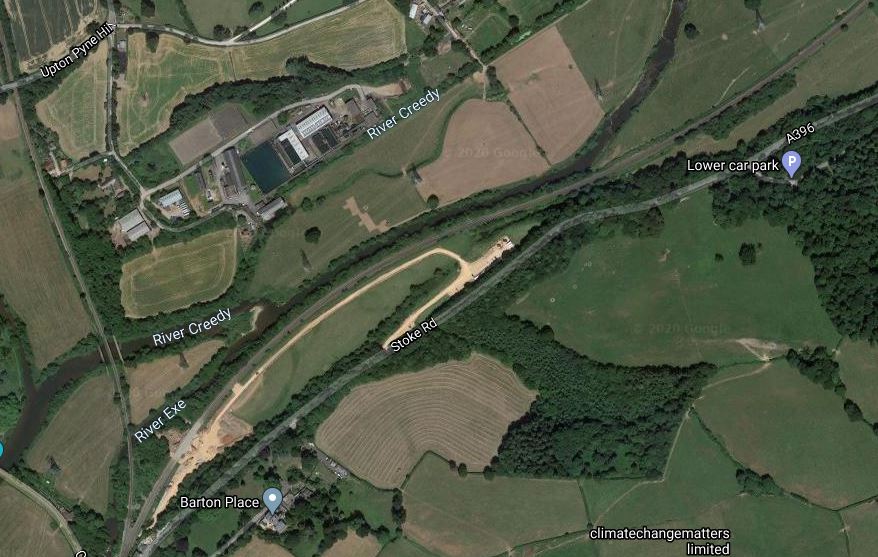
This Google Map shows The Tarka Line and the Bristol-Exeter Line join at Cowley Bridge Junction.
Note.
- The Tarka Line to Barnstaple and TORs leaves the map in the North West corner.
- The Bristol-Exeter Line to Taunton, Bristol and London Paddington leaves the map in the North East corner.
- Cowley Bridge Junction is in the South West corner of the map.
- Cntinuing South West leads to Exeter St. David’s station.
It looks to me, that Cowley Bridge Junction will need to be made into a full triangular junction, so that trains can go directly between the Bristol-Exeter Line and the Tarka Line.
Trains wanting to call at Exeter St. David’s station and use TORs will need to reverse in the station.
The Reversal Problem
If you wanted to run a passenger service between Taunton and Penzance using TORs with stops at Exeter, Okehampton, Tavistock, Plymouth and Truro, the train would need to reverse twice at Exeter and Plymouth.
These days with modern fast bi-mode multiple units, it’s not a problem, but in the days of Beeching, when the Tavistock and Okehampton route was originally closed in 1968, there probably wasn’t a suitable train other than a slow two-car diesel multiple unit.
I think, that fast expresses to and from Penzance will still take the current route.
- Battery-electric trains can handle the route at 100 mph.
- No reversals will be needed.
- There is a call at Newton Abbott for connections to Torquay and Paignton.
- Passengers wanting Okehampton, Tavistock and other stations on the TORs route can change at Exeter or Plymouth.
The Modern Railways article says this about services on the TORs route.
The case suggests that services could operate as an extension of the SWR Waterloo to Exeter service, or potentially as an extension of CrossCountry services beyond Exeter. During periods when the coastal route is blocked, additional services could use the TORs route, potentially running non-stop.
Note.
- As the extension of the SWR service would run the other way through Exeter St. David’s station, there would be no need to reverse.
- But I suspect the CrossCountry service would need the reverse.
- I feel for efficiency, that diverted freight services would need the efficient junctions at each end of TORs.
It probably would have helped if the Great Western and the London and South Western Railways had had a better crystal ball.
Fast Electric Freight Services To And From Devon And Cornwall
If the following lines are electrified.
- Cogload Junction and Exeter
- TORs
- Cornish Main Line
I feel that electric freight services will be able to run between Taunton and Penzance.
All it would need to complete the electrified route would be to electrify the following.
- Cogload Junction and Bristol
- Cogload Junction and Newbury
What would a high-speed freight route do for the economy of the two South Western counties?
Beeching Reversal Fund Bids
The title of this post, is the same as that of an article in the May 2020 Edition of Modern Railways.
This is the introductory paragraph.
Bids have been submitted to Government for a share of the £500 million ‘Restoring your railway’ fund launched by the Department for Transport in January. The fund is to be used to support proposals to reinstate axed local services, to accelerate schemes already being considered for restoration and also to promote new and restored stations.
Some of the bids are detailed.
Okehampton And Tavistock
If you were deciding what lines shouldn’t have been closed by British Rail in the 1960s, by hindsight, the Exeter to Plymouth railway of the LSWR, would be a railway that you wouldn’t close.
- The Northern route would be a valuable diversion, when the sea and the weather decide to attack Dawlish again. as they did in 2014.
- When COVID-19 is over, there will be more people going to Devon and Cornwall. A second rail route would be invaluable to get traffic off the roads.
- Attitudes are changing about zero-carbon travel and this will also nudge passengers towards rail.
- Four tracks between Exeter and Plymouth would allow more freight services to take trucks off the road.
- There may be new developments along the Northern route.
- It may be even be possible to electrify the Northern route.
At least, British Rail left the viaducts and bridges intact.
The Modern Railways article says this.
In the West Country, a new Northern Route Working Group has submitted a bid to the fund to develop a Strategic Outline Business Case for reopeing the former London and South Western Railway Main Line between Exeter and Plymouth via Okehampton and Tavistock. The proposal is backed by four local MPs and the working group of industry personnel.
These points are also made.
- The reopening is crucial to the resilience of the network.
- Reopening is complimentary to the ongoing work at Dawlish.
- Devon County Council is leading plans to reopen the 5.5 miles between Bere Alston and Tavistock.
- Devon County Council is pushing for a daily service between Exeter and Okehampton.
- The previous two developments, would leave the 16 miles between Tavistock and Okehampton to be restored.
- Much of the route is intact and structures survive, but some track has been sold off.
- The route will be useful during closure of the coastal route through Dawlish.
- Journey times might be only six minutes longer.
- It might be an easier route for freight trains.
As I said earlier, the proposers of the scheme think electrification could be possible.
Stratford And Honeybourne
The Modern Railways article says this.
A bid has been submitted for £75,000 to carry out an Economic Impact Assessment regarding reopening of the Stratford-upon-Avon to Honeybourne route.
These points are also made.
- The Honeybourne station and Long Marston section is in use to connect the Cotswold Line and the rail facility at Long Marston.
- The Long Marston and Stratford-upon-Avon station section has been safeguarded for reopening.
- Reopening is estimated at £110million.
- The assessment would enable benefits to be quantified.
Nothing is said about whether the route will be single or double track or what services will be run on the line.
There’s more on the Shakespeare Line web site.
This is said about train services.
- A reopened railway could provide the ability to operate orbital train services in both directions between Birmingham-Stratford-Evesham-Worcester-Birmingham providing connections for South Wales and South West at the new Worcestershire Parkway station.
- The reopened line would provide the ability to operate direct train services with a 12 mile shorter route between Stratford upon Avon, the Cotswolds, Oxford, Reading, Heathrow Airport and London Paddington.
I also think, I’ve read that the line could be used by freight services and heritage services on the Gloucestershire Warwickshire Railway, which could link Birmingham and Cheltenham.
It does appear to be a rail link with potential.
Rawtenstall Line
The Modern Railways article says this.
Meanwhile, Rossendale Council has submitted an application to the fund seeking to propose reinstatement of passenger services on the Rawstenstall Line, now part of the East Lancashire Railway.
A study published in 2018 determined that reinstating services along the ELR and then joining the Manchester to Rochdale Line would be feasible.
These points are also made.
- Rossendale is the only council in Lancashire without a rail link.
- 60 % of residents leave the borough each day for work.
Tram-trains have also been proposed for this route, as I wrote about in Could A Class 399 Tram-Train With Batteries Go Between Manchester Victoria And Rochdale/Bury Bolton Street/Rawtenstall Stations?
Conclusion
This is the closing paragraph of the article.
In addition to those mentioned, it is likely that other bids will have been submitted to the fund.
It certainly looks like the money in the fund, will be bid for, by worthwhile projects.
£500m Fund To Restore Beeching Rail Cuts Goes Ahead Amid Criticism
The title of this post is the same as that of this article on the BBC.
This is the introductory paragraph.
A government fund is to be launched later to restore historic railway lines closed more than 50 years ago under the so-called Beeching cuts.
The two initial grants are for studies about reopening the Northumberland Line to Blyth and Ashington in the North East and to Fleetwood to the North of Blackpool.
Blyth And Ashington
Consider.
- The tracks already exist.
- There may still be some freight traffic on the route.
- Connections to the Tyne and Wear Metro appear possible.
- The Tyne and Wear Metro already shares tracks with other freight and passenger services.
- New stations and probably new signalling will be needed.
- The distance between the proposed Northern terminals and the connections with the Tyne and Wear Metro are under twenty miles, which could make battery operation easily possible.
- The Tyne and Wear Metro is currently procuring a new fleet of trains.
I believe that these branches could be integrated into the Tyne and Wear Metro, providing that the new trains have the right specification.
Light rail vehicles like the Class 398 tram-trains being procured for the South Wales Metro should be able to run these services.
But other manufacturers might have better solutions!
Fleetwood Branch
This extension would need the following.
- Restoration of the existing track between Poulton-le-Fylde and Fleetwood.
- One or more new stations.
- Probable resignalling.
In a simple installation, there is probably space to put a bay platform in Poulton-le-Fylde station, so that a shuttle service could be run to Fleetwood.
But services could also be extended to Preston.
Blackpool though has other rail problems like what are they going to do with the Blackpool South Line.
I believe Blackpool could use similar solutions on both the Blackpool South and Fleetwood Lines to create a bigger solution for the whole of the area.
Conclusion
It looks to me that the government has started with two schemes that are possible and where the track still exists.
It is to be hoped that the two studies come up with easy-to-build and fundable schemes, which are the first of many.
 The Anonymous Widower