My First Ride In A Hydrogen-Powered Double-Deck Bus
Today, I had my first ride in a hydrogen double-deck bus.
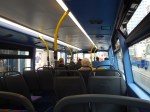
I took these pictures.
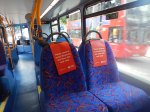
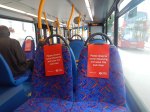
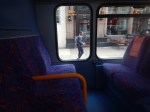
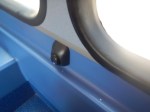
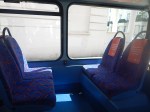
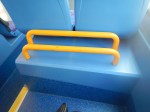
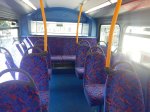
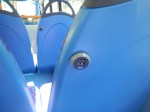
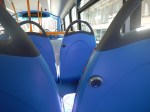
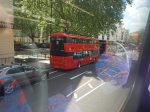
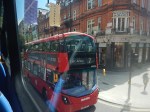


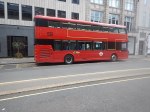

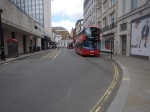
Note.
- I took the No 7 bus in London between Ladbroke Grove tube station and Oxford Circus.
- There were still some of the older Volvo hybrid buses on the route.
- The current fleet is around twenty buses.
This article on edie.net, is entitled England’s First Hydrogen Double-Decker Buses Hit The Road In London.
I note this paragraph in the article with interest.
Hydrogen used to fuel the new London buses is being produced at Air Liquide’s facility in Runcorn, Cheshire, which processes waste hydrogen from the industrial chemical industry. From 2023, the facility will be converted to produce only green hydrogen – a term used to describe hydrogen produced using electrolysis powered by renewable electricity.
It sounds, that at present the hydrogen could be coming from the old Castner-Kellner plant at ICI’s Runcorn complex. where I had my first job after leaving Liverpool University in the late 1960s.
These are my thoughts.
Refuelling
The edie article says the buses are refuelled once a day, at a facility at Perivale in Ealing.
Interior Design
Londoners will feel at home in these buses, as they have the same look and feel as London’s other double-deck buses.
But they do have some features, borrowed from other means of transport.
- They have a set of four family seats.
- Are those two yellow bars in front of where I sat a foot rest?
- There were a lot of USB- charger sockets.
It is certainly a well-designed interior.
Battery Or Hydrogen?
In A Trip On An Electric Double Deck Bus On Route 212 Between Chingford And St. James Street Stations, I described a trip on an electric double-deck bus.
I would go for the hydrogen, rather than electric.
A friend who runs a bus company in London, says fleets of battery buses are a nightmare to recharge.
The Edie article says once a day is fine.
The battery bus has a higher environmental footprint.
Hydrogen can fuel trucks, cars, vans and semblances, at the same charging station.
But the big problem is most battery buses are Chinese and Transport for London’s hydrogen buses have been built in Northern Ireland.
Performance
\\\thr performance of the bus was spritely!
Conclusion
This was a good bus!
Ryze Hydrogen’s Suffolk Freeport Hydrogen Vision Takes Shape
The title of this post, is the same as that of this article on S & P Global.
This is the introductory paragraph.
Ryze Hydrogen plans to install a 6 MW electrolyzer at the Sizewell nuclear site in Suffolk as a launchpad for mass production of low carbon hydrogen in and around the future freeport of Felixstowe, company founder Jo Bamford told S&P Global Platts March 3.
Ryze Hydrogen are building the Herne Bay electrolyser.
- It will consume 23 MW of solar and wind power.
- It will produce ten tonnes of hydrogen per day.
This would mean that Sizewell’s 6 MW electrolyser could be producing around a thousand tonnes of hydrogen per year or 2.6 tonnes per day.
Note that the port and the power station are only about thirty miles apart.
Suffolk is thinking big again!
The last part of the article is where Jo Bamford discusses the cost of hydrogen and hydrogen buses and how he intends to sell them to the UK and ultimately the world.
Suffolk and Jo Bamford appear to be made for each other, with complementary ambitions.
Buses Should Have Flat Floors
These pictures were taken inside the lower-deck of one of London’s New Routemaster buses.


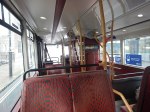

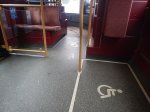
Now compare them with pictures taken on the lower deck of one of London’s other hybrid buses, similar to those you see all around the UK.
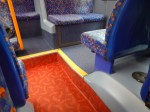

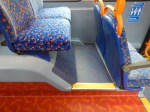
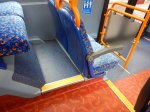

Note.
- The floor of the New Routemaster is continuous and flat. The only steps are the stairs and up into the sets of four seats.
- The floor of the hybrid bus, which was built on a standard Volvo chassis has several steps.
Recently, when carrying a full bag of shopping down the stairs on the hybrid bus, the driver accelerated away and I fell and banged my knee. Because of the flat floor, it is less likely, I’d have a similar problem on the New Routemaster.
Why Does The Routemaster Have A Flat Floor?
When Wrightbus designed the Routemaster, they had a clean sheet of paper and weren’t constrained to use a proprietary chassis.
- The 18 kWh traction battery is under the front stairs.
- The traction motor is under the floor, in the middle of the bus.
- The small diesel generator is mounted halfway up the back stairs.
- The bus has full regenerative braking to the battery.
Using a standard Volvo chassis might be cheaper, but there can’t be a flat floor.
Will The Wrightbus Hydrogen Bus Have A Flat Floor?
The Wrightbus StreetDeck FCEV is the Wrightbus hydrogen bus and it has entered service in Aberdeen.
It looks to be about half flat floor, but not as good as the Routemaster.
Hopefully, I’ll ride in one soon.
Chaos In The Balls Pond Road
This article in The Times is called High Court Deals Blow To Expansion Of Cycle Lanes And Wider Pavements.
This was the first paragraph.
Road closures designed to boost walking and cycling could face legal challenges after a judge declared that a big expansion of the plans was “unlawful”.
A challenge to the often ill-thought out improvements from black-cab drovers has been successful.
My experience, yesterday, summed up my inconvenience with such a scheme.
yaxiI actually, think that matters are being made worse by some of the designs and planning by the Council Clowns.
A big scheme is being undertaken around the Balls Pond Road to bring in a cycleway between Tottenham and the City. In Hackney, it looks like it will improve walking and calm the traffic in residential areas as well.
I had a serious stroke ten years and my eyesight was ruined enough, so that I couldn’t drive, so I rely heavily on buses to get around.
On Tuesday, I needed to go to the Angel to pick up a prescription. On arriving at the junction of Balls Pond Road and Southgate Road, I found that one of Islington’s Idiots had planned to dig up the junction and all four bus stops were closed. The traffic was so jammed as well, that there weren’t even any stray black cabs stoating about!
In the end, I walked to the next bus stop. This was not easy, as the lock-down has ruined my feet and they were painful.
But I got a bus to the Angel and after a bit of food shopping, I looked for a taxi to come home.
But another branch of Clowns and Idiots Ltd. has closed the taxi rank, so I had to resort to the bus, which got stuck in another set of jams caused by Thames Water at one of their well-used Party Places.
I did find a black cab, but he was unable to take me home, as the area was gridlocked. So he said give him a tenner and walk. As this was less than what was on the meter, I complied!
I laid down the principles of project planning using small computers in the 1970s.
Obviously, My ideas have fallen on deaf ears in Islington Council.
Hydrogen Fuel ‘In Time For COP26’ For Glasgow
The title of this post, is the same as that of this article on Brinkwire.
This is the introductory paragraph.
The companies behind the plans for a new £ 45 million hydrogen production facility in central Scotland have announced the site of the facility, which is planned to be partially operational prior to the delayed COP26 conference in Glasgow next year.
The article gives a lot of useful information including.
- The plant is at Lesmahagow as I reported in Plans For £45m Scottish Green Hydrogen Production Plant Revealed.
- It will initially have a 9 MW electrolyser, which could be upgraded to 20 MW.
- When fully-developed is could create a thousand tonnes of hydrogen per year.The hydrogen will be used to power buses in Aberdeen and Glasgow.
Construction could start this year.
All Aboard The Bamford Hydrogen Bus Revolution
The title of this post, is the same as that of this article on Air Quality News.
This is the introductory paragraph.
Air Quality News editor Jamie Hailstone talks to JCB heir and hydrogen advocate, Jo Bamford, about why it is the fuel of the future for buses.
It is a good read, as Jo Bamford details his vision to change public transport with thousands of hydrogen-powered buses.
He talks in a common-sense manner, about the economics and practicalities of zero emission buses, of which this paragraph is typical.
‘I have a bus manufacturing business,’ he adds. ‘We make a diesel bus, a battery double-decker and a hydrogen double-decker. A battery double-decker will do 60% of the distance of a diesel bus and take 4.5 hours to charge. A hydrogen bus will do the same distance as a diesel bus and take seven minutes to fill up. If you are running a bus for 22 hours a day, you can’t afford to charge them up for 4.5 hours a day.
Jo Bamford finishes with.
I think hydrogen is a sexy, cool thing to be looking at.
I agree with him and we should get started on lots of hydrogen buses and their hydrogen supply network.
As I wrote in Daimler Trucks Presents Technology Strategy For Electrification – World Premiere Of Mercedes-Benz Fuel-Cell Concept Truck, Mercedes are going the hydrogen route with big trucks and these trucks will need a hydrogen supply network to be built in the UK.
So surely, we should look at decarbonisation of buses and heavy trucks in an holistic way, by creating that hydrogen supply network in the UK.
Ryze have now obtained planning permission for their first big electrolyser at Herne Bay and it now has its own web site, which includes this video, explaining Ryze Hydrogen’s philosophy.
Let’s hope that this first electrolyser, grows into the network the country needs.
Social Distancing In An Empty Train
On Sunday morning, I went to Croydon to look at Windmill Bridge, in Croydon, which I wrote about in Croydon Area Remodelling Scheme – Lower Addiscombe Road / Windmill Bridge.
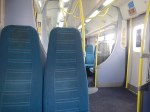
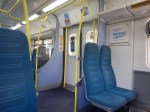
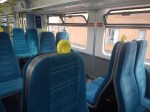
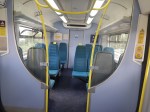
On the way, I found myself in a more or less empty carriage, as these pictures show.
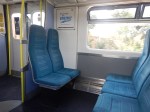
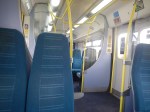

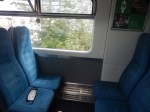
It all got me thinking.
- Generally, the rule in most of the world, is that you should keep a given number of metres apart.
- But supposing, that each public space were to be given a figure for the maximum number of people, who can occupy the space.
- I think, this has already happened in London, where thirty passengers seems to be the maximum number allowed on a double-deck bus.
- Buses and train carriages are public spaces.
But supposing each space was to be assigned a figure for the number of people present, below which the wearing of masks would be optional.
On a bus or train, the customer announcements would change appropriately.
Some might argue, it would be confusing, but it might nudge passenger behaviour in the right way.
- More might travel.
- More might travel at less busy times.
- I suspect that many on a long commute, take their masks off, as they get near home, as te train empties out anyway!
- It should be born in mind, that many modern trains, trams and buses, may know how many passengers are on board, as they can count passengers.
A Design Crime – Pedestrian Chaos At London Bridge
To get home from London Bridge station, I usually get the 141 bus in the station, or if I’m walking along the riverside, I get a 21 or 141 bus from the stop at the Southern side of the bridge.


There is now, no stop on the bridge, so it meant walking nearly to Bank station to get a bus. Not everybody of my age could manage that!
I hope the pea-brained idiot, who designed the current scheme at London Bridge, with no bus stops in either direction has been given his marching orders.
I know that for COVID-19 and wannabe terrorists something must be done, but surely one of the bus-stops in each direction should be working.
I suspect, it was designed by the same idiot, who decided to close the important Waterloo and City Line.
The Mayor won’t care, as he’s a South Londoner.
Solving The Problem With Electric Bus Design
The title of this post, is the same as that of this article on Electric & Hybrid Vehicle Technology International.
The article opens with this paragraph.
A number of European cities have committed to securing only zero-emission buses by 2025. However, to achieve this objective, manufacturers must make bold design choices, radically changing bus componentry, systems, and bodywork. Here, it looks at the debate for greater electric bus design standardization.
Standardisation is one thing, but the article doesn’t talk about the major problem with electric bus design – For many countries like the UK, Hong Kong, Singapore and Germany, where there are lots of double-decker or articulated high-capacity buses, battery electric buses are just not big enough.
Battery-electric buses are also generally not big enough to compete with the latest designs of tram and metro systems.
These pictures show the Chinese double-deck electric double-deck buses, that ran in London.

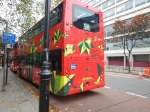

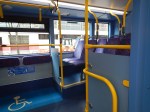


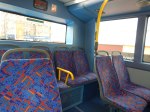
Half of the downstairs was take up by batteries.
Where are they now?
The Belgian firm; Van Hool have a product called Exquicity. This video shows them working in Pau in France.
But these buses are powered by hydrogen.
Similar buses running in Belfast are diesel-electric.
In both the Pau and Belfast applications, I wonderwhy they didn’t use trolley-bus versions of the WxquiCity or conventional trams.
Conclusion
Until we get more efficient battery storage, electric buses will have difficulty competing economically in the high-capacity bus sector.
Diesel Buses To Be Phased Out Within 15 Years To Cut Greenhouse Gas Emissions
The title of this post, is the same as that of this article in The Times.
Hallelujah!
Should be heavy trucks, next!

