Wrightbus Hydrogen Fleet Cover 1,5 Million Miles
The title of this post, is the same as that of this article on Hydrogen Central.
These are the first two paragraphs.
Leading bus manufacturer Wrightbus’s fleet of hydrogen fuel-cell buses have travelled a staggering 1.5 million miles since first entering service.
This latest milestone from the Ballymena-based firm means the hydrogen fuel-cell fleet has prevented 2,366 tonnes of harmful carbon dioxide (CO2) emissions entering the atmosphere compared to journeys made by an equivalent diesel bus.
It does appear that the company is on the road to a much needed recovery.
London Bus Cuts: Sadiq Khan Pulls Handbrake On Planned Changes
The title of this post, is the same as that of this article on the BBC.
In The Mayor Of London Is Pruning The North London Bus Network Again, I pointed out Sadiq Khan’s lopsided pruning of the London bus network.
Sadiq Khan has now changed his mind, as this paragraph indicates.
Transport for London (TfL) has announced it will only get rid of three bus routes following a consultation which saw more than 20,000 replies.
These paragraphs explain the changes in detail.
As a result of the consultation, 17 routes which had been proposed to be cut will be saved and kept as they currently operate. Another 40 services will also no longer be changed as initially planned.
Only three routes will be removed entirely – the 521 between Waterloo and London Bridge, the 507 between Victoria and Waterloo, and the 332 between Brent Park and Paddington – while alterations will be made to another 11 services.
Of the plans consulted on:
Routes 4, 12, 14, 24, 31, 45, 72, 74, 78, 242, 349, C3, D7, N31, N72, N74 and N242 will be saved and kept as they are
Planned tweaks to routes 15, 19, 27, 43, 47, 49, 53, 56, 88, 98, 100, 113, 135, 148, 171, 189, 205, 214, 236, 254, 259, 277, 279, 283, 328, 343, 388, 414, 430, 476, D3, D8, N15, N19, N27, N98, N133, N205, N414 and N430 will no longer happen
Proposed changes to routes 3, 6, 11, 23, 26, 59, 77, 133, 211, C10 and N26 will still go ahead
TfL said the consultation had raised issues with the plans and as a result the mayor of London had been able to find extra funding to ensure the cuts did not happen on such a large scale.
That is certainly a substantial U-turn!
Construction Has Started On The Silvertown Tunnel
These pictures show that construction has started on the Silverton Tunnel.




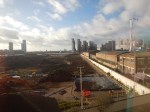
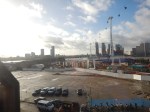

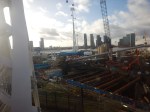
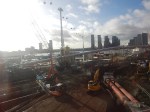
Note that New Civil Engineer is reporting that tunnelling has started.
My Current Thoughts On The Silvertown Tunnel
In 2015, I wrote No To Silvertown Tunnel, which I started with these two paragraphs.
My personal feelings about the Silvertown Tunnel are that it is irrelevant to me, except that it might help some trucks bring goods that I buy online or at a local shop. Although as a sixty-eight year-old-widower living alone, I don’t think my transport needs through the tunnel will be high.
I don’t drive after my stroke and I like that lifestyle, except when last night it took me three trains, a coach and a taxi to get back from watching football at Ipswich. But that tortuous late night journey was caused because NuLabor spent my tax money on pointless wars that will haunt us for generations, rather than in extending and renewing our rail system, that will nurture and enrich our future.
But my objections to the Silvertown Tunnel have changed and expanded.
New Transport Infrastructure Attracts Passengers
This may seem obvious, but there has been several cases recently in London to prove my point.
- The London Overground has been a success beyond Transport for London’s wildest dreams and as an example the North London Line, that started with three x three-car trains per hour (tph) is now running eight x five-car tph. This is a four time increase in capacity.
- New buses and contactless ticketing have encouraged more passengers to use the buses.
- Electrification and new trains has transformed the Gospel Oak to Barking Line.
- The expansion of Thameslink and new trains now carries a lot more North-South traffic through London.
- Every time, a new section of the Elizabeth Line opens more passengers are attracted to the new line.
- The remodelling of London Bridge station has increased passenger numbers. And shoppers!
On a personal note, I live on a bus corridor, that runs between North London and Moorgate for the Lizzie Line. Since the Lizzie Line has been fully connected, passenger numbers have risen by a big margin.
I don’t believe that the ability to attract more traffic of the Silvertown Tunnel will be any different.
More Traffic Means More Congestion And Pollution
I live close to the Balls Pond Road, which increasingly seems to be a truck route across North London.
The Silvertown Tunnel will be two lanes each way; one for trucks and buses, and one for smaller vehicles.
I can’t see that pollution and congestion around the Silvertown Tunnel and on the routes to the tunnel, will not increase.
There Is Little Or No Provision For Cyclists And Pedestrians
This will be a big problem. Especially, as the local traffic in the area will increase dramatically.
Does Central London Have Enough Parking For The Increased Traffic?
Parking in Central London is probably close to capacity now!
So What Would I Do?
Given that construction has already started, I feel it is too late to cancel.
Better Alternatives Than Driving
I feel measures should be adopted that provide better alternatives than driving.
Obviously, this won’t help with trucks, but it could reduce the total number of vehicles going through the tunnel.
These could include.
- Increase the frequency of trains on both the Lizzie Line and Thameslink.
- Increase the number of destinations on both the Lizzie Line and Thameslink.
- Add an extra car to Lizzie Line trains.
- Remove First Class on the shorter eight-car Thameslink trains.
- Add provision on some Lizzie Line and Thameslink routes for bicycles.
- Add a Silvertown station to the Elizabeth Line for London City Airport.
- Add one or more pedestrian and cycling bridges across the Thames.
- Expand of the Docklands Light Railway.
- Expand the Thames Clipper.
- Connect Barking Riverside station to Thamesmead and Abbey Wood station either by a rail or a fast ferry.
- Keep the cable-car.
I suspect there are other viable ideas.
Develop Incentives To Use Public Transport
Incentives could be in these areas.
- Better station and bus terminals encourage more to use trains and buses.
- Full free onboard wi-fi and phone charging.
- Special fares for some journeys.
An example of the latter could be a discount for certain cross-river journeys.
Make The Silvertown Tunnel Available For Zero Carbon Vehicles Only
This would surely cut pollution in London.
Conclusion
We should use the Silvertown Tunnel to improve London’s air quality.
Equipmake Hybrid To Battery Powered LT11
The bus in this video from Public Transport UK, may look like any of the thousand New Routemasters on the streets of London.
But it’s not, as it’s been given a transmission transplant by Equipmake of Snetterton in Norfolk.
The observant amongst you will notice, it has a refurbished interior, as I wrote about in My First Ride In A Refurbished New Routemaster.
There is also this press release from Equipmake, which is entitled Equipmake Showcases Sector-Leading Repower Technology With Fully-Electric New Routemaster Bus.
Some points from the press release.
- Equipmake’s cutting-edge Zero Emission Drivetrain (ZED), uses a 95% British-built component content.
- With pre-service trials already started in London, operated by Metroline, the electric version of the New Routemaster will continue to be assessed over the next six months.
- The repowered New Routemaster, developed by Equipmake at its base in Snetterton, Norfolk, features a 400kWh battery enabling an expected in-service range of 150 miles – more than enough for a day’s running.
- The development of the all-electric New Routemaster has come about thanks to a programme part funded by the UK Advanced Propulsion Centre (APC).
- Over the coming months, Equipmake will be trialling additional repowered buses with other bus operators across the UK.
- Featuring an advanced water-glycol cooling circuit, the system has the added benefit of providing interior heating during cold conditions with captured thermal energy.
- When the battery is depleted at the end of a complete duty cycle, it can be recharged at the depot overnight via a CSS DC charging point.
But this is the bit I really like.
Under the skin, the New Routemaster also features Equipmake’s HTM 3500 electric motor. Seamlessly integrated into the prop shaft without the need for a separate transmission, the motor is precisely engineered to meet the demanding requirements of a fully-laden double-decker bus by producing 3,500Nm torque at a motor speed of just 1,000rpm and delivering 400kW maximum power.
It sounds a bit like a modern reincarnation of a TASC unit (torque and speed control unit), which was an industrial drive from the 1960s, used to precisely control industrial machines. I never used one, but I worked in a section at Enfield Rolling Mills, that did.
One car manufacturer of the time, was using them as an automatic transmission for a small car. It might have been Hillman.
A Comparison With The Wrightbus Streetdeck Electroliner BEV
The Wrightbus Streetdeck Electroliner BEV is the company’s latest electric double decker bus and a comparison can be made.
Seats
Equipmake LT11 – 87
Electroliner BEV – 96
Battery Size
Equipmake LT11 – 400 kWh
Electroliner BEV – 340 or 454 kWh
Range
Equipmake LT11 – 150 miles
Electroliner BEV – 200 miles with 454 kWh battery.
Conclusion
This New Routemaster, is certainly no ordinary electric bus.
With the batteries on hybrid buses needing to be replaced regularly, Eqipmake’s transmission transplant could also be scheduled, when a bus needs a new battery.
With Lotus just up the road, the engineering is certainly Normal for Norfolk!
Homerton Hospital Is Bottom Of The List
In The Times today, there is an article, which is entitled Ambulance List Shows NHS Trust With The Worst Delays.
My local hospital is Homerton and it gets a very honourable mention.
At the other end of the scale, four trusts accepting patients by ambulance reported no delays of more than an hour, led by Homerton University Hospital in east London.
It is interesting that Homerton is down as one of the best.
My GP reckons it has improved greatly in the last few years. He also says, that they seem to have more spare capacity, than the other hospitals in the area.
The hospital removed my gallstones using endoscopy and I walked out to a waiting car. I could have taken the bus, if required.
I also had a knee X-rayed, where the GP gave me a chit and told me to just turn up unannounced in one of two specific three-hour periods. I was in and out in just over ten minutes.
Homerton seem to be thinking hard about their organisation and methods.
Could this be why they are the best on the list?
So what is our South London Mayor doing to improve transport to this much improved hospital?
He’s cutting out, one of the major bus routes to the hospital.
Government Boosts Hydrogen Buses With £26m
The title of this post, is the same as that of this article on Energy Live ~News.
These are the first two paragraphs.
A Northern Irish bus company is receiving £26 million in funding to build electric and hydrogen buses.
Wrightbus built the world’s first hydrogen double-decker bus in 2020 and is now looking to export its zero-emission buses worldwide to Australia, Germany, Italy, France and Spain.
Other points from the article include.
- Wrightbus are aiming to build 3,000 zero-emission buses.
- Jobs could increase by 300.
- They would like to increase exports by 40 %.
It looks like there’s a future in zero-emission buses.
Should Hospitals Be The Power Backup Locations?
I was reading an article in The Times about how protestors were blocking roads in Central London and they’re inadvertently stopped an ambulance.
So this question occurred to me. Why I don’t know, but my mind has always jumped about and put thoughts together?
Consider.
- The latest generation of energy storage that could be used to back up the grid are coming down in physical size.
- Hospitals have complex power systems, as they use a lot of electricity.
- Hospitals need emergency power backup.
- Because of their high electrical use, hospitals will have a high capacity connection to the National Grid.
- Some modern treatments need a lot of electricity.
- Will ambulances be battery-powered and will need to be charged up, whilst delivering patients?
- Many bus routes terminate at the local hospital, so if the buses are battery-powered, these could be charged as well.
As an Electrical and Control Engineer, I feel that to put a town, city or are’s back-up battery at the hospital would be a sensible idea.
Hospitals should be designed to be health, energy and transport hubs for their communities.
Marble Arch To Lambeth Palace – 16th September 2022
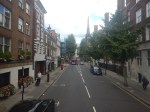
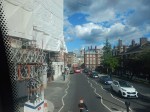
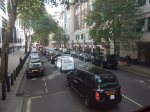
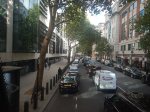
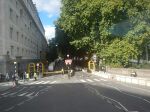
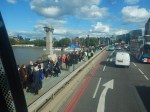
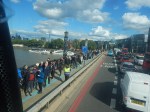
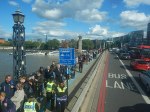
I took these pictures as I travelled from Marble Arch to Lambeth Palace on the top deck of a 148 bus.



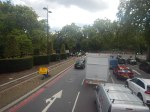


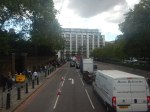
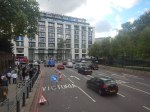
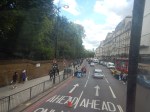
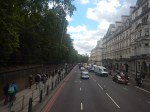
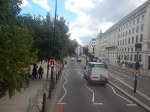



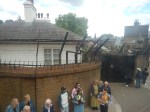

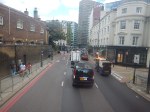
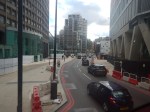

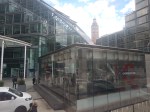
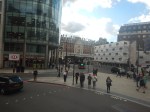
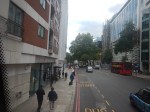










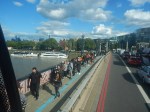
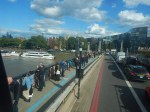

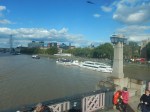


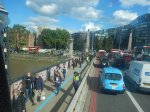


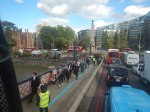

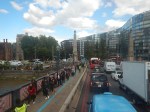
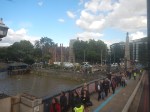
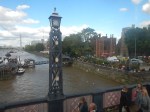
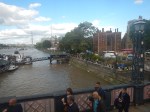
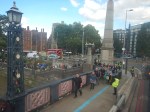
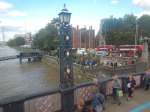

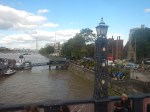

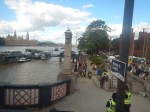
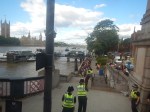





Note.
- This sequence starts at the London Hilton Park Lane Hotel, just to the North of Marble Arch.
- Constitution Hill was busy with visitors to Buckingham Palace
- The route goes past the long wall, that encircles the palace.
- The route meanders its way through Victoria to approach the river along Horseferry Road.
- The sequence ends after the bus has crossed Lambeth Bridge by Lambeth Palace.
To take these pictures, I had boarded the 148 bus at Lancaster Gate station and I got off at Lambeth North station.
Old Street Station – 9th September 2022
I took these pictures this morning, as my bus passed Old Street roundabout.
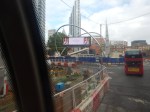
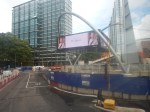


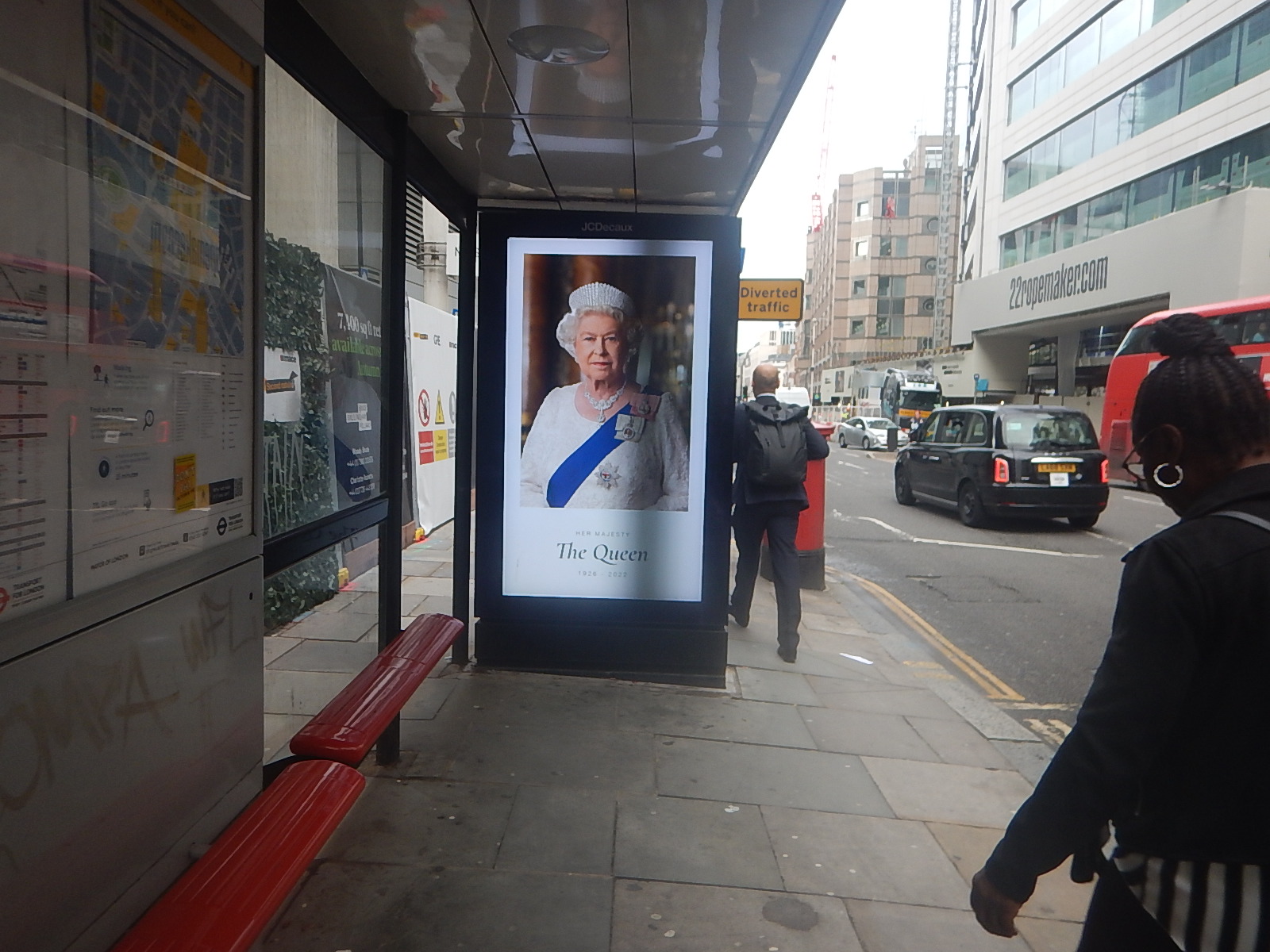
The Queen was also being shown on this bus-stop in Moorgate.
How many pictures like these are being displayed?

