The Mayor Rubs It In!
I took these pictures whilst waiting to get home this morning from Moorgate, whilst waiting for a 141 bus.
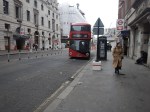
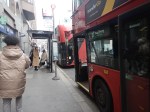
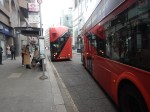
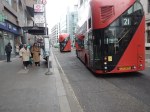
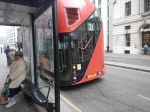
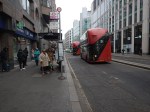
It’s one thing to reroute the buses, but quite another to send them up and down the old route, with plenty of space for passengers. Although, I don’t think this will help his reelection chances next year.
When the 141 bus did arrive, it was about ninety percent full.
I predicted in a letter to my MP. that this overcrowding would happen because the opening of the Elizabeth Line and the Bank Station Upgrade.
I also said similar things in Does London Need High Capacity Bus Routes To Extend Crossrail?, which I wrote in February 2022, before the Elizabeth Line opened in May.
But I didn’t get it all right, as it appeared the biggest increase in passenger numbers happened after the new escalators between the Docklands Light Railway and the Northern Line opened at Bank station. That puzzled me and I can only assume that there is a lot of traffic between the catchment area of the DLR and North East London.
Predicting the number of passengers, who will use a new railway, road or bus service is a difficult science, which very often results in a wrong answer.
In the Mysterious Case Of Rerouting The 21 Bus, it would have been better to have completed all the works at Bank, Moorgate and Old Street stations, before trying to solve the best way to deploy the buses.
- Bank and Moorgate stations are almost completed.
- The completion of Old Street station and the associated road works are still several months away, as I wrote in Is Old Street Roundabout A ‘Too Many Cooks’ Project?
In Does London Need High Capacity Bus Routes To Extend Crossrail?, I said this about the buses needed.
I suspect any route seen as an extension of Crossrail needs to have the following characteristics.
-
- High frequency of perhaps a bus every ten minutes.
- Interior finish on a par with the Class 345 trains.
- Wi-fi and phone charging.
I would also hope the buses were carbon-free. Given that some of these routes could be quite long, I would suspect hydrogen with its longer range could be better.
Get the design of these buses correct and they could attract a large number of passengers from their cars to public transport.
- Ten year old buses, as on the 141 bus are unacceptable.
- Before the 21 bus was withdrawn, you noticed that some passengers wait an extra minute to get a 21 bus with its greater space and comfort.
- Because of the better design of the stairs on modern buses and New Routemasters, I will go upstairs on these buses. But I don’t chance it on an older bus.
- Wi-fi and phone charging would make up for the fact that the Class 345 trains don’t have it.
From experience of the 141 bus in recent days, a frequency of a bus every five minutes is probably needed now.
Nightmare On The Buses
The title of this post, is not the title of a horror remake of the popular 1970s-sitcom’ On The Buses, but a description of my journeys on a 141 bus today.
Until, last Friday, I had two buses; the 21 and 141 to take between my house and Moorgate, which is an important destination for me.
- There is a large Marks and Spencer food store there, where I regularly buy the gluten-free food, I must have as a coeliac.
- There is a LEON there, where I regularly have my gluten-free breakfast.
- Moorgate station is a good transport interchange from which I regularly start journeys over London.
But now there is only one bus; the 141.
In November 2021, I wrote The Great Bus Robbery, where I said this.
What is TfL’s latest crime?
The 21 and 271 buses are going to be combined into a new route between Lewisham and Highgate, which will go nowhere near the Balls Pond Road.
So we’ll just have the one bus route to the City of London.
On past form, if TfL say they will increase the frequency, I wouldn’t believe them.
This was my conclusion.
We will need the 21 bus to provide us with a route to Crossrail, as the 141 buses will be full.
The 21 bus is needed where it is and mustn’t be stolen.
Note that Crossrail is now called the Elizabeth Line.
Today, I made three journeys between my house and Moorgate station and this is what happened.
Journey 1 – Southbound
I arrived at the bus stop and after five minutes a 141 bus arrived.
But it was full and didn’t open the door to let any of the waiting six passengers board.
After another three minutes, another 141 bus arrived and we squeezed on.
But there wasn’t any seats left and I stood all the way to Moorgate.
Journey 2 – Northbound
I only had my breakfast and as I had things to do at home, I returned fairly quickly after finishing my breakfast.
Partly, this was also because a 141 bus turned up with some seats available.
But it was a lot closer to capacity, than Northbound buses at about the same time last week.
Journey 3 – Northbound
My third journey started at about four in the afternoon, after I’d been out to take some pictures and buy a few food items in Marks and Spencer.
I had to wait seven minutes for a 141 bus and as there was a 76 bus a couple of minutes in front of it, I took that, with the intention of changing halfway.
I was able to get a seat.
In the end, the 76 bus got stuck in traffic and I walked to my intended change stop and waited there for the 141 bus, which was without a seat, so I stood for three stops to home.
It was one of the slowest journeys, I’d had between my house and Moorgate station.
Day 2 – February 7th – 2023
I arrived at the bus stop and found a lady, who had been waiting for an hour-and-a-quarter.
I had no problem coming home, as I went to Liverpool during the day and got a taxi back from Euston.
Day 3 – February 8th – 2023
Perhaps, they’d heard our pleas, but a bus turned up after a couple of minutes with plenty of spare space.
I even got a seat.
Going home, at about 10, there wasn’t a spare seat.
Revenue per bus, is certainly rising.
Conclusion
On the evidence of the first three day, it appears that there is not enough capacity without the 21 bus.
Could The Giant Station At Bank, Liverpool Street, Monument And Moorgate Be Considered A Superhub?
In Is The City Of London Moving Towards One Giant Station?, I showed how the four stations were being drawn together and developed as one large station that served the heart of the City of London.
London is also developing other large interchange stations that could claim because of their connectivity could be classed as London superhub stations.
- Canary Wharf stations, which connect the Elizabeth and Jubilee Lines, and the Docklands Light Railway.
- Old Oak Common station, which could bring together the Central, Chiltern and Elizabeth Lines, the London Overground and High Speed Two.
- Stratford station, which connects the Central, Elizabeth and Jubilee Lines, the Docklands Light Railway, the London Overground, High Speed One and the Great Eastern Main Line.
- Whitechapel station, which connects the Circle, District, Elizabeth and Hammersmith & City Lines, and the London Overground.
But what are the characteristics of a superhub station?
A Lot Of Lines And Services
Obviously, it must have a lot of lines and services, so perhaps Clapham Junction station is the original superhub station.
All Lines Should Have Step-Free Access
This surely, goes without saying.
There Should Be Lots of Information
If the station is large it needs a lot of information and there’s probably the space to put it.
Helpful Staff
Should we have a fully-staffed kiosk at superhub stations, as there are at some main line stations?
Good Bus Connections
Bus connections at a superhub station must be comprehensive and probably connect to other superhubs.
There Should Be A Selection Of Shops For Travellers
I do my daily food and other shopping, as I travel around London. I’ll often use a station like Paddington with a good selection of shops.
Toilets
There are not enough public toilets in London.
Cash Machines
I know we’re using less cash, but a large station is a secure place to put a cash-machine.
Works Of Art
I also believe that railway stations are a secure place to put some of those large bronze sculptures and other works of art, that are currently locked away in the storerooms of galleries.
New Express Bus Improves Links Between Skelmersdale And Liverpool
The title of this post, is the same as that of this news item from Lancashire County Council.
This is the sub-heading.
A new bus service launched this week makes it quicker and easier to travel between Skelmersdale and Liverpool using public transport.
And these are the first two paragraphs.
The 319 Trainlink service, operated by Stagecoach on behalf of Lancashire County Council, runs between Skelmersdale Concourse, Kirkby railway station and Kirkby bus station for onward transport links into Liverpool reducing the travel time between Skelmersdale and Liverpool Central Station to under 50 minutes.
The express service, which launched on Sunday 22 January, operates every 30 minutes throughout the day Monday to Saturday, and every hour in the evening. There is also an hourly service on Sundays. Buses are timed to connect with Merseyrail train services from early ’til late.
Note.
- Once the new Headbolt station opens, it will serve that station.
- The express bus service has started two days before Merseyrail introduce their new Class 777 trains.
- I hope the quality of the buses are up to that of the new trains.
- The service is probably the best that can be done, until a train service is built.
- There will be integrated fare options between Skelmersdale and Liverpool.
Transport planners need to do more to use buses to extend train services.
Bus Information In Shops And Cafes
Several years ago, I wrote to Transport for London and suggested that the 5- digit code that you text to get bus information, be displayed inside the bus shelter. So you could read it whilst staying in the dry in bad weather.
There is now a space for the code on the instructions inside the shelter, but it is never filled in.
This morning, I had breakfast in Leon and afterwards I did some food shopping in Marks & Spencer, before walking back to Leon to get the bus home from outside.
It was cold in London this morning, so as I had a few minutes to wait for a bus, I ducked back into the Leon, as it was warmer in there.
I know the 5-digit code, that I should use, so I only emerged, when the bus was close.
Perhaps Transport for London, should provide small information posters that can be downloaded, printed and displayed by cafes, shops and other businesses close to a bus stop.
Should There Be Limits To The Type Of Vehicles Allowed In The Blackwall And Silvertown Tunnels?
When the Silvertown Tunnel opens in 2025, the tunnel and the nearby Blackwall Tunnel will be tolled.
But will there be any restrictions on the vehicles that can use the tunnels, other than those that apply to the Blackwall Tunnel at the present time, which are detailed in Wikipedia.
The tunnels are no longer open to pedestrians, cyclists or other non-motorised traffic, and the northbound tunnel has a 4.0-metre (13.1 ft) height limit.
Note.
- I suspect that pedestrians, cyclists or other non-motorised traffic will also be banned from the Silverton Tunnel.
- But the height limit will be relaxed for the Silverton Tunnel to allow large trucks and double-deck buses to use the tunnel.
According to this web page, which is entitled the Silvertown Tunnel Bus Network Proposals, the planned buses through the tunnel include.
- 108 – As now, with a minor route change.
- 129 – As now, but extended from North Greenwich station to Great Eastern Quay.
- X329 – An express bus from Grove Park station to Canary Wharf, which runs non-stop through the Silvertown Tunnel.
Note.
- The 108 goes through Blackwall and is a single decker bus.
- The 129 and the X329 will go through Silvertown and could be double decker buses.
- There appears to be no mention of any provision for cycles.
- I would assume wheelchairs, buggies and cases will be accommodated as they are on current London buses.
I also think, that the buses must be zero-carbon, which would mean battery-electric or hydrogen.
In Hydrogen-Powered Vehicles And Trains In Tunnels, I looked at the feasibility of running hydrogen buses through the tunnel and came to this conclusion.
I am confident, that we will achieve a safety regime, that allows hydrogen-powered vehicles and trains to be certified to pass through tunnels.
The great advantage of hydrogen buses on the three routes would be that they would probably only need to be filled up once a day, but electric buses might need constant charging.
Provision For Cycles
I think it is essential to have provision for cycles across the river.
- Folded cycles can be taken almost anywhere on London’s transport system.
- Non-folding cycles can be taken most places on London’s transport system, but the hours are restricted.
- There’s always the Woolwich Ferry.
- Given that the 108 bus seems to weave its way through the East End, I suspect that this bus couldn’t be longer to carry cycles.
I have seen double-deck buses, with provision for cycles at the back of the lower deck in Europe.
- Perhaps buses like these, could be used on the 129 and X329 routes.
- A search of the Internet found some buses in East Yorkshire with provision for two standard cycles.
- The 129 bus could ferry bikes between North Greenwich station and a convenient stop on the North side of the river.
- The X329 bus could ferry bikes over the non-stop section of the route between the Sun in the Sands and Leamouth roundabouts.
There could be shorter routes adding extra capacity between the stops, where bikes are loaded and unloaded.
Large Trucks Through The Tunnel
If buses become zero-carbon through the Blackwall and Silverton Tunnels, then why shouldn’t large trucks be zero-carbon?
I think this could be the carrot combined with free passage for zero-carbon vehicles that could clean up Central London’s polluted air.
Smaller Vehicles
Why not gradually reduce the size of vehicles going through the tunnels that must be zero-carbon?
Conclusion
The Silvertown and Blackwall Tunnels can be used as the drivers to clean up Central London’s air.
Silvertown Tunnel Bus Network Proposals
This web page is the Silvertown Tunnel Bus Network Proposals.
These proposals are made.
- A new high frequency, limited stop service between Grove Park and Canary Wharf referred to in this consultation as route X239
- To extend route 129 (Lewisham – North Greenwich) north across the river to Great Eastern Quay via the Royal Docks development zone
- A minor change to route 108 so that it uses the new Millennium Way slip road to exit the Blackwall Tunnel southbound
- We are also seeking your views on route options for three sections of routes 129 and X239.
It looks like route 108 will continue to use the current stop.
The proposals include this map.
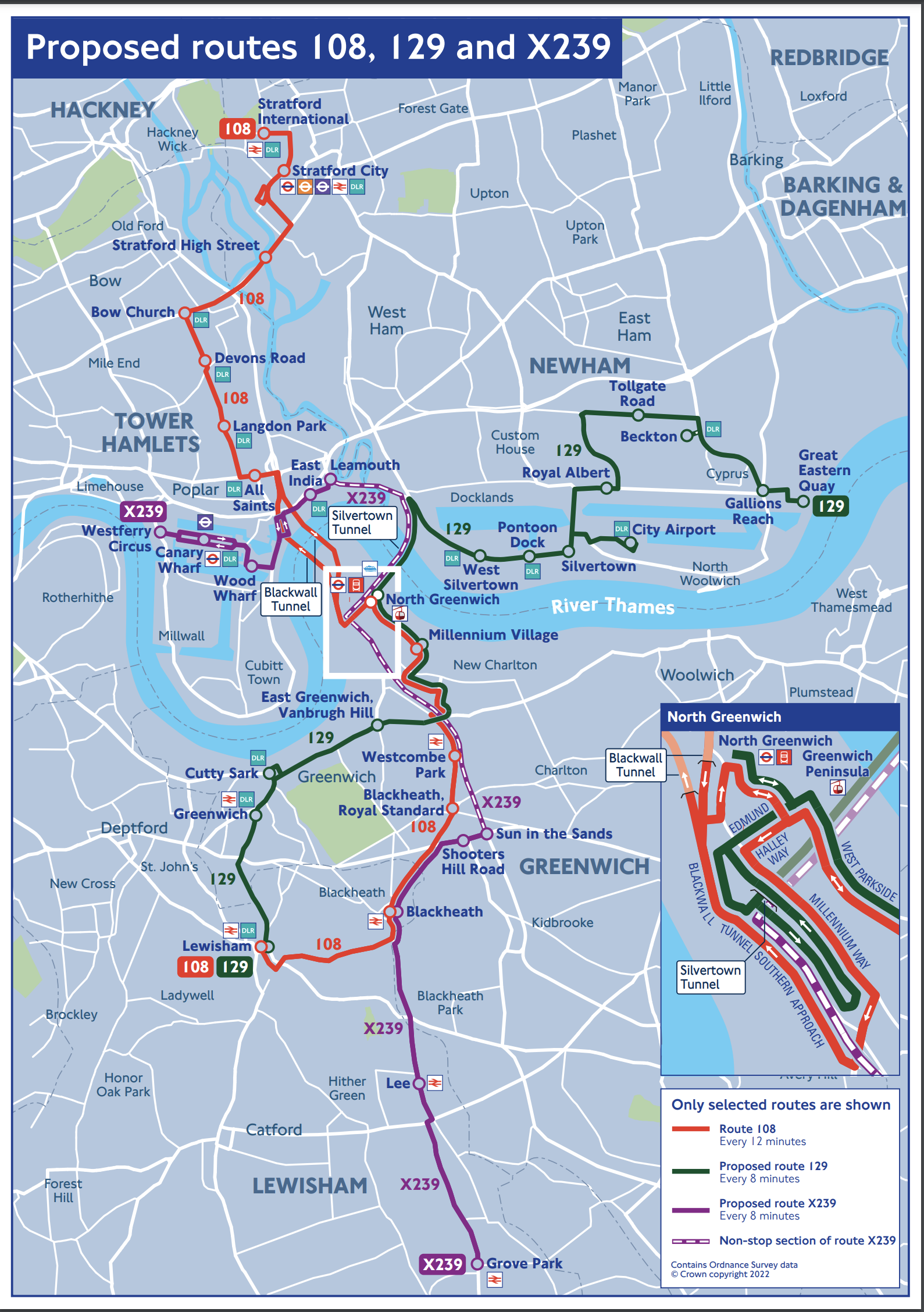
I copied this map from the TfL web site, as they don’t provide one for people who want or need to use it.
These are my observations.
The 108 Bus
The 108 seems to be more or less as now and will be continue to be run by a single-decker bus, as double-decker buses can’t use the Blackwall Tunnel.
North of the Thames, the 108 calls at these stations.
- Stratford International for DLR and National Rail.
- Stratford for DLR, Central, Elizabeth and Jubilee Lines, and National Rail.
- Bow Church for DLR
- Devons Road for DLR
- Langdon Park for the DLR
- Bazely Street (All Saints) for DLR
South of the Thames, the 108 calls at these stations.
- North Greenwich for the Jubilee Line.
- Westcombe Park for National Rail
- Blackheath for National Rail
- Lewisham for DLR and National Rail
Note.
- It is possible to go between Lewisham and Stratford on the DLR with a change at Canary Wharf.
- It is possible to go between North Greenwich and Stratford on the Jubilee Line.
- Westcombe Park station is on the Greenwich Line.
I would wonder, if many people use this bus route for long distances.
The 129 Bus
Note.
- The 129 appears to connect Lewisham and Greenwich to the City Airport and the Becton branch of the DLR.
- Many journeys on the 129 bus, might be easier using the DLR, with a change at Westferry or Poplar, which is probably what travellers do now.
- The 129 bus is shown on the map with a stop at Silvertown. Does that mean that it could connect with a Silvertown station on the Elizabeth Line?
- As the 129 bus will pass through the larger Silvertown Tunnel, it could be a double-decker route, instead of the current single-decker.
North of the Thames, the 129 calls at these stations.
- Gallions Reach for the DLR
- Beckton for the DLR
- Royal Albert for the DLR
- London City Airport for the DLR
- Silvertown
- Pontoon Dock for the DLR
- West Silvertown for the DLR
South of the Thames, the 129 calls at these stations.
- North Greenwich for the Jubilee Line.
- Cutty Sark for DLR
- Greenwich for DLR and National Rail
- Lewisham for DLR and National Rail
Would improvements and a frequency increase to the DLR and the building of Silvertown station, mean that changes to the 129 bus route, would not be so important?
The X329 Bus
Note.
- Canary Wharf must be served and starting at Westferry Circus is probably a good choice.
- But is Grove Park station, the ideal Southern terminal?
- Not stopping the X329 bus at North Greenwich is probably correct, as North Greenwich station is a large Jubilee Line and bus interchange close to the O2.
North of the Thames, the X329 calls at these stations.
- Canary Wharf for DLR and Elizabeth and Jubilee Lines
South of the Thames, the X329 calls at these stations.
- Blackheath for National Rail
- Lee for National Rail
- Grove Park for National Rail
Note.
- Blackheath station is on the Bexleyheath and North Kent Lines.
- Lee station is on the Dartford Loop Line.
- Grove Park station is on the South Eastern Man Line.
- Grove Park has a bus station, where there could be space for a battery charger for electric buses.
The X329 seems to have been partly designed on the premise, that an express bus should be run through the Silvertown Tunnel. But it does connect four of the rail lines going into London terminals to Canary Wharf.
Silvertown Station For London City Airport
Silvertown station would more than double the number of stations with easy routes to the London City Airport.
The Elizabeth Line would enable the direct connection that is needed to Canary Wharf, the City of London, Heathrow, Liverpool Street and Paddington stations and the West End.
- A single change at Abbey Wood, would give access to much of Kent.
- A single change at Farringdon, would give access to Thameslink services and Gatwick and Luton airports.
- Around 2030, a single change at Old Oak Common, would give access to High Speed Two services.
- A single change at Paddington, would give access to Wales and West services.
- A single change at Whitechapel, would give access to the great circle of the London Overground.
I believe the case for a Silvertown station with at least a good walking route to the London City Airport is strong, and the station would be a marvellous asset for Silvertown and the Airport.
Is This The Worst Bus Stop In London?
This article on MyLondon is entitled The ‘Creepiest’ London Bus Stop Hidden At The Bottom Of A Dark, Grimy Staircase In East London.
I just had to go and take a look at the bus stop.

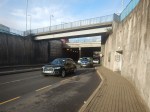
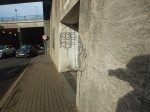
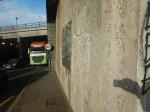

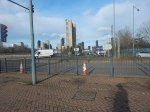
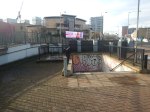
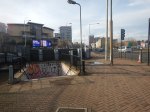
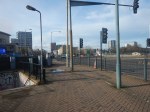
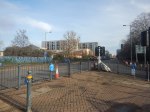
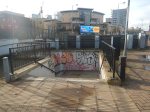
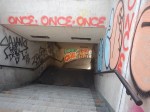
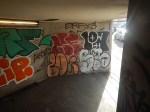
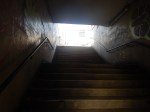
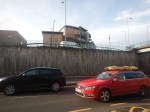

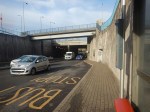
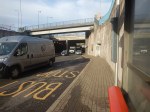
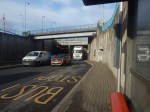

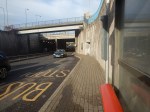
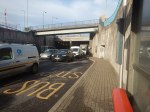
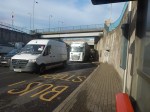
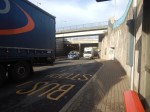
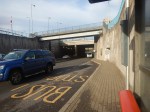
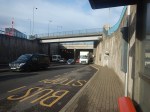
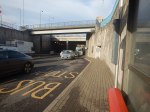

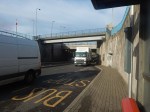
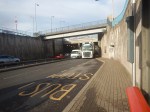
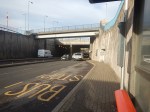
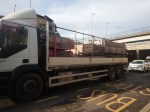
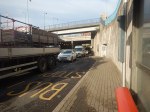
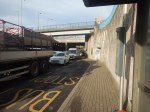
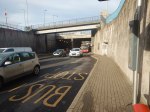
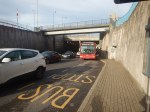
Note.
- The bus stop is on the road leading to the modern Southbound tunnel.
- There were a surprising number of full-size articulated trucks.
- The traffic was moving fairly slowly.
- The pollution was bad, but I’ve been in worse.
The stairs were covered in graffiti, but they appeared to have been swept recently, as there was only a small amount of litter and that was mainly a few leaves.
This Google Map shows the junction and the position of the bus stop.
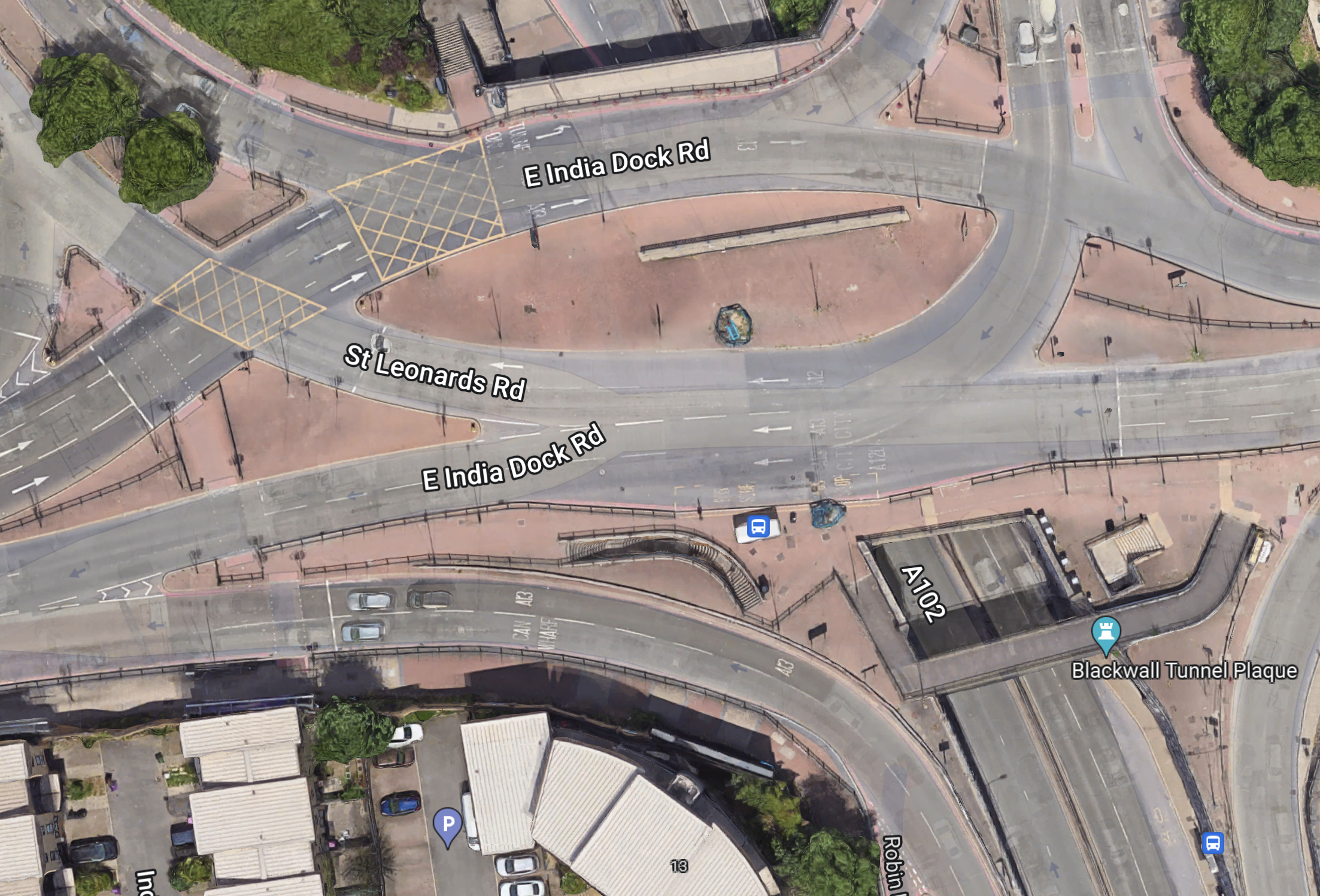
The bus stop is in the bottom-right corner of the map.
Through The Blackwall Tunnel In A 108 Bus
Around lunchtime today, I took a 108 bus from North Greenwich station on the Jubilee Line to Bow Church station on the DLR. It’s rather a roundabout way to get home from Bow Church station, so I walked to Bow Road station to get a train to Moorgate for a bus home.
I took these pictures of the journey.
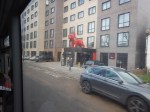
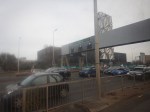
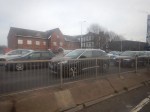
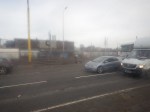

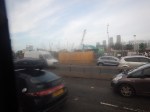

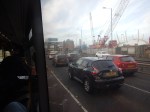
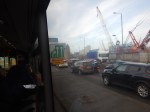
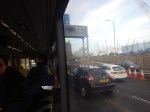
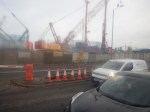
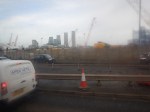
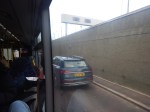
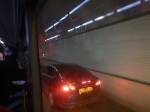
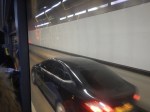
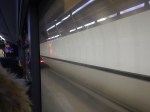
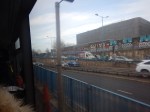
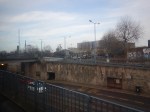
Note.
- The first picture shows the Radisson Red hotel on Tunnel Avenue.
- The Northbound bus travelled through the old tunnel, which was built in 1897.
- It looks in good condition for its age in my pictures.
- Even at lunchtime on Christmas Eve, there are queues of traffic waiting to go through the tunnel from both directions.
- The dog in the last picture is better and less-threatening street art, than you get in some parts of the UK
Taking good pictures from inside a dirty single-deck bus is not the easiest task.
This paragraph from the Wikipedia entry for the Blackwall Tunnel, gives a snapshot of the tunnel’s development.
The tunnel was originally opened as a single bore in 1897 by the Prince of Wales, as a major transport project to improve commerce and trade in London’s East End, and supported a mix of foot, cycle, horse-drawn and vehicular traffic. By the 1930s, capacity was becoming inadequate, and consequently a second bore opened in 1967, handling southbound traffic while the earlier 19th century tunnel handles northbound.
Note.
- Both tunnels are not open to pedestrians, cyclists or non-motorised traffic.
- There is a four metre height limit on the Northbound tunnel, which also has sharp bends.
- The Southbound tunnel is straight and has a height limit of 4.72 metres.
- London’s iconic Routemaster and New Routemaster buses are 4.38 and 4.39 metres high respectively.
- The tunnel will be tolled, when the Silvertown Tunnel opens in a few years time.
- It looks like both Blackwall and Silvertown tunnels will have the same charge as the Dartford Crossing, which is currently two pounds if you pre-pay for a car.
The pictures and words give clues to why the Mayor has decided to build the Silvertown Tunnel.
It is very rare to get through the tunnel without being delayed in a queue of traffic.
Double deck buses can’t go through the Northbound Tunnel.
As a non-driver, who doesn’t need to use the Blackwall Tunnel, I don’t listen to traffic reports, but perhaps once a week whilst waiting for the news on Radio 5, I hear of problems at the tunnel. Sometimes, these are caused by over-height or over-long vehicles, which have got stuck in the Northbound tunnel.
Incidentally, my earliest memory of the tunnel is probably from about 1953, when my family was stuck in the tunnel for several hours in my father’s Y-type MG.

, My father’s car had the registration BNH 368.
I doubt I’ve driven through the tunnel this century, as I have rarely driven to South and South-East London since the 1970s, as I’ve generally taken the train across London. I can remember one trip in about 2008 though, when I took the Woolwich Ferry for the Southbound crossing.
As I was living near the top of the M11 in Suffolk, I may have gone home via the Blackwall Tunnel.
 The Anonymous Widower