Evolyn To Launch Paris To London Route In Competition With Eurostar
The title of this post, is the same as that as this article on Rail Technology Magazine.
These first two paragraphs outline the plan.
A company aiming to operate services through the Channel Tunnel in competition with Eurostar has agreed to purchase 12 trains, it said.
Evolyn has stated that it is ready to invest £1 billion in its bid to start cross-Channel rail services in 2025.
It looks like the order will go to Alstom.
It will be interesting to see what sort of product is offered.
National Express Owner Plans To Launch Eurostar Rival
The title of this post, is the same as that of this article on the Financial Times.
I have documented a few attempts to start a competitor to Eurostar.
- Express London-Amsterdam Eurostar Service Being Explored
- Getlink Pushes Budget Train Service Between London And Paris To Rival Eurostar
- RENFE Aims To Compete With Eurostar On Paris – London Route
- Transmanche Metro
- The Wikipedia entry for Eurostar details German and Italian attempts to start a service.
Note.
- None of the proposals seem to have got past being announced.
- The only useful fact given in the article, is that the service will be called Evolyn.
Searches of the Internet reveal virtually no more facts, rehashes of the FT article and a lot of waffle.
These are my thoughts.
Would Eurostar Give Up And Slots At St. Pancras International?
I use slots deliberately, as British Airways don’t seem keen to ever give up slots at Heathrow or Gatwick.
And I suspect Eurostar would be the same!
St. Pancras International Doesn’t Have Enough Space
This article on Kent & Surrey Bylines, which is entitled Why Are There Such Queues At St Pancras For Eurostar?, is typical of many you can find on the Internet.
This is the sub-heading.
Eurostar no longer stops at Ebbsfleet or Ashford International, and the queues at St Pancras are becoming intolerable
This is the first paragraph.
Passengers are complaining. The queues at St Pancras are now intolerable. The lines stretch back into the main hall. It is like an airport with the slow shuffle towards the security kiosks. Then, once you are through that, you go to the departure lounge. However, there is not enough seating for the waiting passengers (see picture above taken this month). Because you have to check in 90 minutes before the train starts, one can be stuck standing in this waiting room for an hour. Unless, that is, one is white-haired and venerable, in which case one is usually offered a seat by someone younger and fitter.
It was written on the 9th of last month. But the problems have been bad for some years, as St. Pancras station is too small.
Could Ashford International Station Be Used As A Terminal?
The station has platforms on High Speed One, but the Financial Times says the service will be run between London and Paris.
I doubt even Ryanair would stretch it to say that Ashford was in London.
Could Ebbsfleet International Station Be Used As A Terminal?
It might be possible to say that Ebbsfleet was in London, but then it is not well-connected to Central London.
Does That leave Just Stratford International?
In Platforms 1 And 4 At Stratford International Station, I came to this conclusion.
I have come to these conclusions about Platforms 1 And 4 at Stratford International station.
- The platforms are designed to take the longest Eurostar trains.
- The access to Platforms 1 And 4, doesn’t appear to be designed for continuous heavy use.
- The diamond crossover at the Eastern end of the station would allow Stratford International station to be used as an emergency terminus.
The track layout at the London end of High Speed One appears to have been designed for all eventualities.
But I suspect that Stratford International station will need a lot of money spent to provide Customs and Immigration facilities.
Could Victoria Station Be Used As A Terminal?
National Express is primarily a coach company, so could they be planning a service to connect the long distance coach networks of London and Paris?
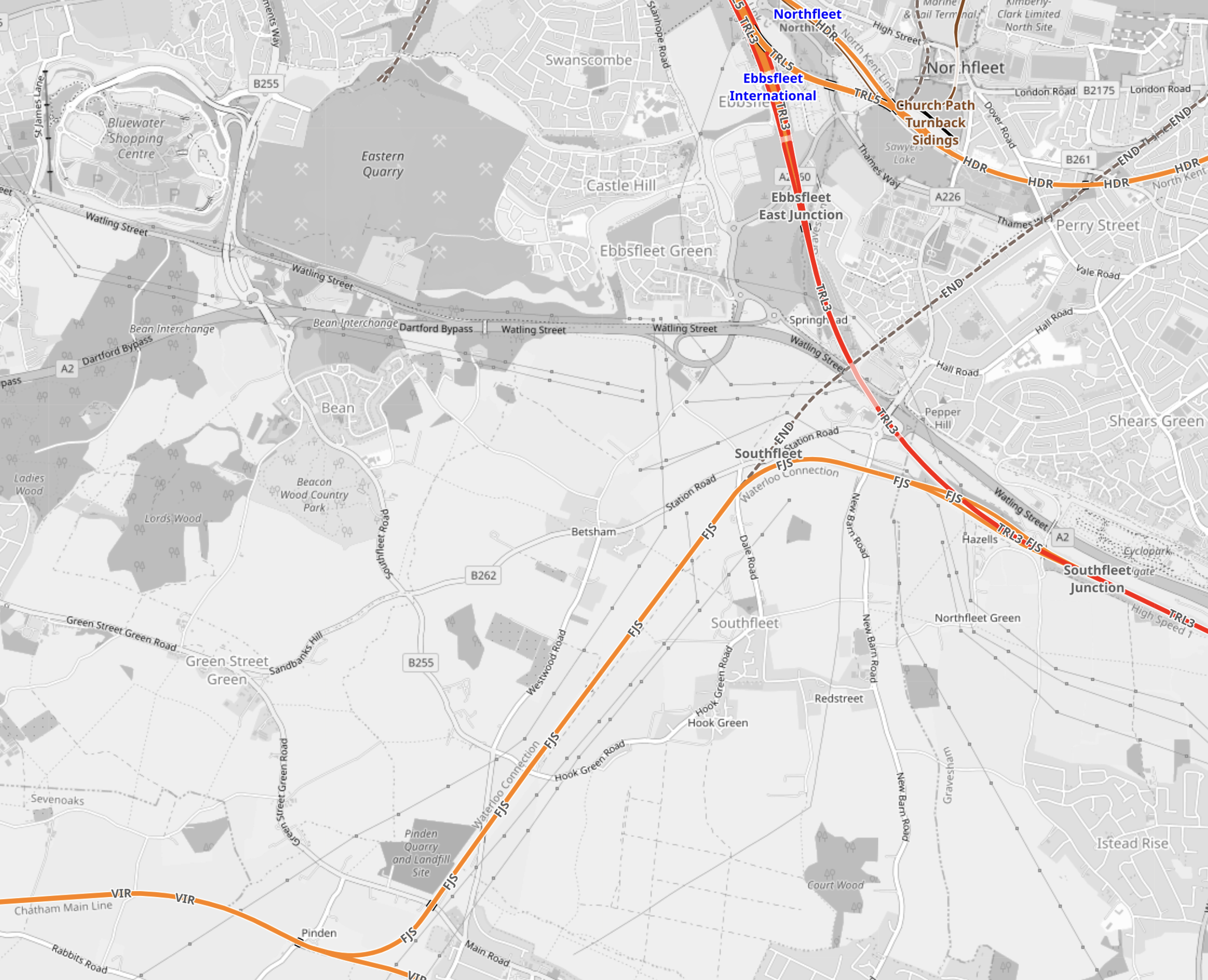
This OpenRailwayMap shows the link between High Speed One and the Chatham Main Line.
Note.
- Ebbsfleet International and Northfleet stations are at the top of the map.
- High Speed One is the red line going through Ebbsfleet International station.
- The orange line going across the South-West corner of the map is the Chatham Main Line between Victoria station and Chatham.
- The Chatham Main Line is connected to High Speed One, by the Waterloo Connection or the Fawkham Junction Link.
This route was the original route for Eurostar to Waterloo.
But it could just as easily go into Victoria.
- Southeastern’s Victoria and Dover service takes this route.
- The distance between Victoria and Fawkham junction is 22.6 miles.
- Trains take 28 minutes with a stop at Bromley.
- I wrote some more about the Fawkham Junction Link in Kent On The Cusp Of Change – Fawkham Junction Link.
- I also wrote some more about Victoria as a High Speed terminal in Kent On The Cusp Of Change – Victoria As A Highspeed Terminal.
Note that the two Kent On The Cusp Of Change posts were based on an article in the July 2017 Edition of Modern Railways.
I am convinced that Victoria could be used as a terminal for Continental trains.
Where Would The Service Terminate In France?
Everything I said about congestion also applies to Gare Du Nord, so would it be better to use Marne-la-Vallée–Chessy station that serves Disneyland Paris and Charles de Gaulle Airport, which used to be used by Eurostar.
There are certainly possibilities to do something different.
What Trains Would Be Needed?
The FT article says that the consortium have talked to Alstom, who build the Class 373 trains.
The trains would probably need a specification like this.
- Maximum speed of at least 200 mph, like Eurostar’s Class 374 trains.
- Ability to run on tracks with a UK loading gauge.
- Ability to use both 750 VDC third rail and 25 KVAC overhead electrification.
- Less than 240 metres long, which are the platform lengths at Victoria.
Would a High Speed Two Classic-Compatible Train be suitable?
- The trains will have a maximum speed of 224 mph.
- It has been designed for a UK loading gauge.
- The two partners in these trains; Alstom and Hitachi, have both built high speed trains capable of running at slower speeds using third rail electrification.
- The standard length of the trains are 200 metres.
I suspect they would do nicely.
Conclusion
I suspect that the National Express service could use High Speed Two Classic-Compatible Trains between Victoria and Marne-la-Vallée–Chessy stations.
- The trains would be standard with the ability to use third rail electrification
- They would use a single International platform at Victoria and Marne-la-Vallée–Chessy.
- Victoria station is well-connected to the Underground.
- Marne-la-Vallée–Chessy station is connected to Charles de Gaulle airport and Disneyland Paris.
I feel that there is a feasible service that can be designed.
The Channel Crossing Problem
My company provided the project management computer system; Artemis, that planned how both the tunnel and the rail link to London was built. So I heard numerous stories of inadequate infrastructure on both sides of the Channel.
I also for a time was a business partner of the man, who had been project manager on a previous attempt to build a Channel Tunnel, that was cancelled by Harold Wilson’s government in 1975, who had a lot of interesting input.
I have heard over the years of these inadequacies,
- The Dartford Crossing wouldn’t be able to handle the traffic generated at busy times.
- The Eurotunnel terminal in Folkestone wasn’t built large enough.
- The port of Dover is too small.
- The roads to the Port of Dover were inadequate.
- The rail terminal at St. Pancras doesn’t have the capacity to run services to the places that are better served by train.
The government only has one major improvement in place, which is a new Thames Crossing, but that will only make matters worse, as more traffic will be tempted to cross the Channel to get to Europe.
It is my belief, that we need more innovative services to provide more capacity.
- A German company called CargoBeamer, is developing a system, whereby unaccompanied freight trailers can be moved thousands of miles across Europe by rail. Their plans include services to Birmingham, Cardiff, Manchester and Scotland.
- I would also run a CargoBeamer service from Calais to Holyhead to create a direct freight service between Ireland and Europe.
- Ebbsfleet needs to be developed as a destination for the Elizabeth Line and an extra terminal for both daytime and sleeper trains to Europe.
- High speed freight trains, based on existing 160 mph EMUs could be used.
- Given the position of the new Thames Crossing on the Isle of Grain, perhaps a new ferry port could be built on the island to partially replace Dover.
- Could some Eurotunnel services start from Watford Gap?
We have to be bold.
ElecLink: A Wholly Successful First Week Of Operations
The title of this post, is the same as that of this press release from the Getlink Group.
These are the first three paragraphs.
Getlink is delighted with the good first week of commercial operations of its electrical interconnector, ElecLink, marked by the success of the initial auctions and the first transfers of energy through the cable.
The first auctions for short term capacity (day ahead) held since 24 May were met with great success. The entire capacity available was sold, confirming the interest of the sector for this new interconnection. The first monthly auctions will take place from 01 June, for the month of July and will be accessible via the JAO platform.
From an operational perspective, the go-live of the cable was also achieved successfully. For this world’s first, ElecLink delivered an excellent quality of service to its customers.
Note.
- Getlink is the manager and operator of the Channel Tunnel.
- ElecLink has a capacity of 1,000 MW.
- The interconnector was privately-funded.
I wouldn’t be surprised to see more privately-funded interconnectors like this, as they increase our energy security and can be a nice little earner for their owners.
GB Railfreight Plans Order For Future-Proofed Bi-Mode Locomotives
The title of this post, is the same as that of this article on Railway Gazette.
This is the introductory paragraph.
GB Railfreight is planning to order a fleet of main line electro-diesel locomotives with a modular design which would facilitate future replacement of the diesel engine with a battery or hydrogen fuel cell module.
The rest of the article gives clues to the deal and the specification of the locomotives.
- Negotiations appear to have started with Stadler for locomotives to be built at their Valencia plant.
- Twenty locomotives could be ordered initially, with options for thirty.
- The locomotive will be Co-Co bi-modes.
- The diesel engine will be for heavy main line freight and not just last-mile operations.
- They would be capable of hauling freight trains between Ipswich and Felixstowe, within two minutes of the times of a Class 66 locomotive.
- They will be of a modular design, so that in the future, the diesel engine might be replaced by a battery or fuel cells as required and possible.
They have provisionally been called Class 99 locomotives.
These are my thoughts.
EuroDual or UKLight?
Stadler make two types of bi-mode locomotives.
But the two types are closely related and open up other possibilities.
This paragraph from the Eurolight wikipedia entry, explains the various versions.
The type has been intentionally developed to support use on secondary lines without limiting power or speed performances, making it suitable for mixed traffic operations. Specific versions of the Eurolight have been developed for the United Kingdom market, and a 6-axle Co’Co’ machine for narrow gauge Asian markets, named UKLight and AsiaLight respectively. Furthermore, an electro-diesel locomotive derivative of the UKLight that shares much of its design, referred to as the Stadler Euro Dual, has also been developed and introduced during the late 2010s.
It looks like the customer can get the locomotive they want.
GB Railfreight would probably need locomotives to this specification.
- Slightly narrower than a EuroDual, to fit the UK loading gauge.
- Three-axle bogies to handle the weight of the larger locomotive.
- A body bigger than the UK Light to be large enough for the diesel engine.
- It would probably help if the locomotive could go anywhere that a Class 92 locomotive could go, so it could handle their duties if required.
This leads me to the conclusion that GB Railfreight will get a slightly narrower EuroDual.
Weight Issues
The weights of various locomotives are as follows.
- Class 66 Locomotive – 129.6 tonnes
- Euro Dual – 126 tonnes
- Class 90 Locomotive – 84.5 tonnes
- Class 92 Locomotive – 126 tonnes
All locomotives have six axles, except for the Class 90 Locomotive which has four.
I don’t think there will be any weight issues.
Power On Electricity
These are the power of the locomotives on electricity.
- Class 66 Locomotive – Not Applicable
- Euro Dual – Up to 7 MW
- Class 90 Locomotive – 3.7 MW
- Class 92 Locomotive – 5 MW
GB Railfreight can probably have what power is best for their routes.
Operating Speed On Electricity
These are the power of the locomotives on electricity.
- Class 66 Locomotive – Not Applicable
- Euro Dual – 100 mph
- Class 90 Locomotive – 110 mph
- Class 92 Locomotive – 87 mph
GB Railfreight can probably have what power is best for their routes, but I suspect they’d want it to be as fast as a Class 90 locomotive.
Power On Diesel
These are the power of the locomotives on diesel.
- Class 66 Locomotive – 2.5 MW
- Euro Dual – Up to 2.8 MW
- Class 90 Locomotive – Not Applicable
- Class 92 Locomotive – Not Applicable
To be able to handle trains, that a Class 66 locomotive is able to, 2.5 MW would probably suffice.
Could The Locomotives Use The Channel Tunnel?
I suspect that diesel locomotives are not liked in the Channel Tunnel because of all that flammable diesel.
But in the future, when there is a battery-electric variant, I would suspect that would be allowed.
In UK To France Automotive Train Service Launched, I talked about Toyota’s new service between Toton in England and Valenciennes in France via the Channel Tunnel. A locomotive with sufficient battery range might be ideal for this service, if it could handle the Market Harborough and Toton section, which is likely to be without electrification for some years.
Will The Locomotives Have Third Rail Shoes?
If their power on electricity is such that they can stand in for Class 92 locomotives, then there may be a need to fit all or some of the locomotives with third rail shoes.
As an example, they might be useful in taking freight trains to and from Southampton or the Channel Tunnel.
Conclusion
I feel that, as the locomotive must fit current routes and schedules, so I wouldn’t be surprised to see the following specification.
- UK loading gauge.
- Co-Co
- Class 90 locomotive power and operating speed on electricity of 3.7 MW and 110 mph.
- Class 66 locomotive power and operating speed on diesel of 2.5 MW and 75 mph.
- Ability to change between electric and diesel power at speed.
- Ability to haul a heavy freight train out of Felixstowe.
- Ability to haul passenger trains.
Stadler will have one eye on the fact, that if they get this design right, this order for up to fifty locomotives could be just the start.
It certainly seems a locomotive designed for the UK’s railway system.
Is A High Capacity Freight Route Being Created On The Midland Main Line?
In the January 2022 Edition of Modern Railways, there is a section, which is entitled Mixed Fortunes For Freight In IRP, where IRP is short for Integrated Rail Plan For The North And Midlands.
In the section, this is said about freight on the Midland Main Line.
Whilst HS2 does relieve the MML, electrification of the route north from Kettering via Derby to Sheffield is of relatively limited use to freight, which is generally routed via Corby and Toton to Chesterfield and Rotherham. That said, assuming electrification of the passenger route includes the slow lines from Leicester to Trent and through Chesterfield, it does provide a base on which freight electrification can be built.
This would involve wiring Corby to Syston Junction (north of Leicester), Trent Junction to Clay Cross (south of Chesterfield) and Tapton Junction (north of Chesterfield) to Rotherham Masborough and Doncaster.
As with the ECML, this ‘freight’ electrification would provide a diversionary route and thus greater resilience for East Midlands Railway services.
In addition, gauge clearance throughout from Corby as part of this package would also be highly beneficial in creating a direct route from the ‘Golden Triangle of Logistics’ in the East Midlands to the North East and Scotland for consumer goods supply chains, boosting modal shift to rail and decarbonisation.
It does seem to be a cunning plan worthy of Baldrick at his best.
So is it feasible?
Which Routes Do Freight Trains Use Now?
Christmas in a pandemic, is not a particularly good time to look at the routes freight trains take.
But by looking at Real Time Trains, I can say this.
- Many trains take the route via Corby and Syston Junction, rather than the direct route via Market Harborough and Leicester.
- Leicester is quite busy with freight as trains between Felixstowe and places on the West Coast Main Line, go through the station.
- Very few freight trains seem to take the route via Derby and the Derwent Valley Mills.
- Most freight trains between East Midlands Parkway and Chesterfield seem to take the Erewash Valley Line via Toton and Ilkeston.
I don’t think the pattern will change much, if I look at the trains around the end of January.
What Do I Mean By European-Size Freight Trains?
The Wikipedia entry for loading gauge says this about about the route through the Channel Tunnel and up the Midland Main Line.
UIC GC: Channel Tunnel and Channel Tunnel Rail Link to London; with proposals to enable GB+ northwards from London via an upgraded Midland Main Line.
Note.
- . GC is 3.15 metres wide by 4.65 metres high.
- GB+ is 3.15 metres wide by 4.32 metres high.
- GB+ is intended to be a pan-European standard, that allows piggy-back services.
- British gauging is so complicated, it isn’t specified in standard units. It must be a nightmare for rolling stock designers.
I’ll take an easy way out and assume that by European-Size Freight Trains, I mean that the route must be cleared for GB+ gauge.
Could Kettering and Syston Junction Via Corby Be Cleared For European-Size Freight Trains?
According to a Network Rail Map from February 2010, the current clearance is as follows.
- Kettering and Oakham – W7
- Oakham and Syston Junction – W8
Note.
- Oakham and Peterborough is also W8
- The main problem seems to be that between Corby and Oakham, there are five tunnels; Corby, Glaston, Manton, Seaton and Wing.
- There are also a few overbridges and several level crossings, but they don’t look too challenging.
- Between Corby and Oakham, there is the magnificent Welland viaduct, which has eighty-two arches and is Grade II Listed.
- Ideally, freight operators would like to run European gauge piggy-back services, with road trailers travelling on flat wagons, as they do in CargoBeamer services.
It would be a tough call to satisfy my last point, but if it can be done it would allow all Midland Main Line freight trains to take the Corby diversion and this would remove the problems of running European gauge trains through Leicester station.
This Google Map shows a section of the Welland viaduct.
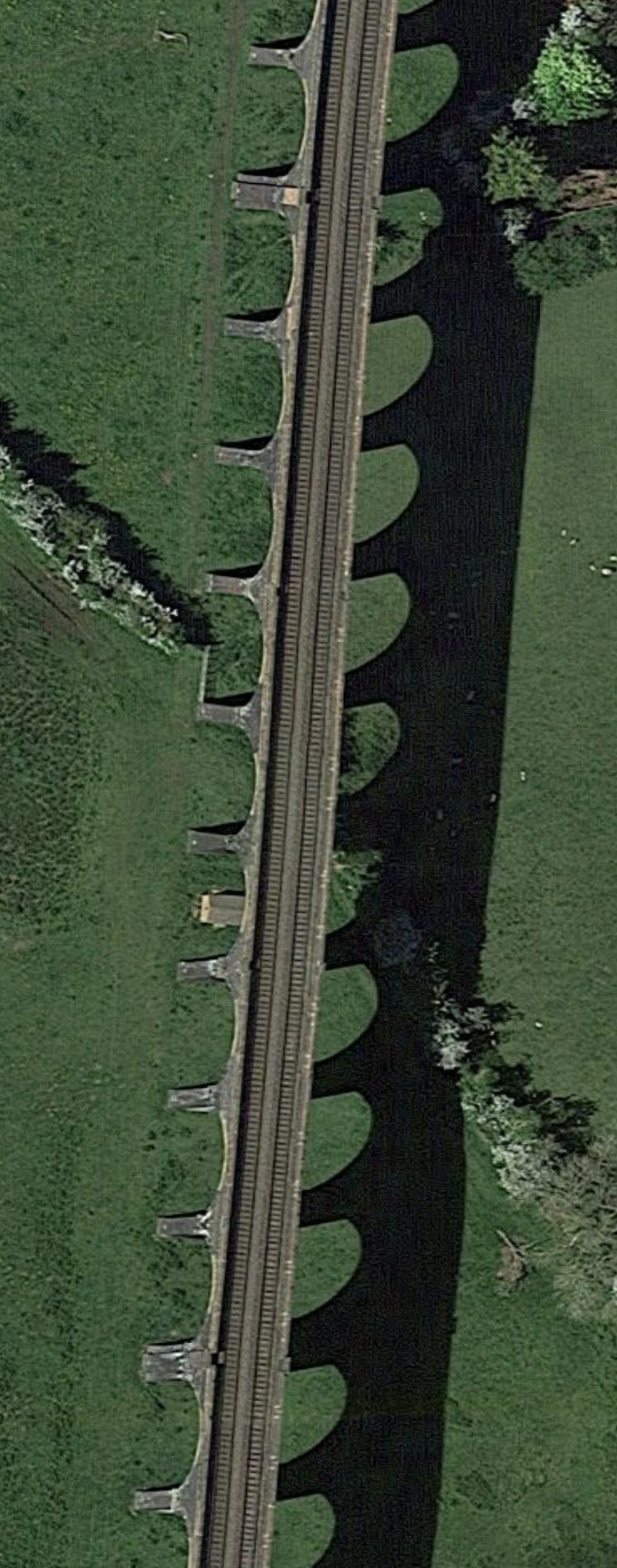
It could be key, as it is fully double-track.
But could it support two heavy freight trains at the same time?
But it would be some sight to see, long European-sized freight trains running over the viaduct.
Could The Midland Main Line Between Syston And Trent Junctions Be Cleared For European-Size Freight Trains?
The route is cleared to W7 or W8 between the two junctions and on inspection with my virtual helicopter, I suspect it wouldn’t be that challenging to upgrade.
It would also be sensible to clear the Castle Donnington Line for European-size freight trains, so that they could reach the East Midlands Gateway freight terminal.
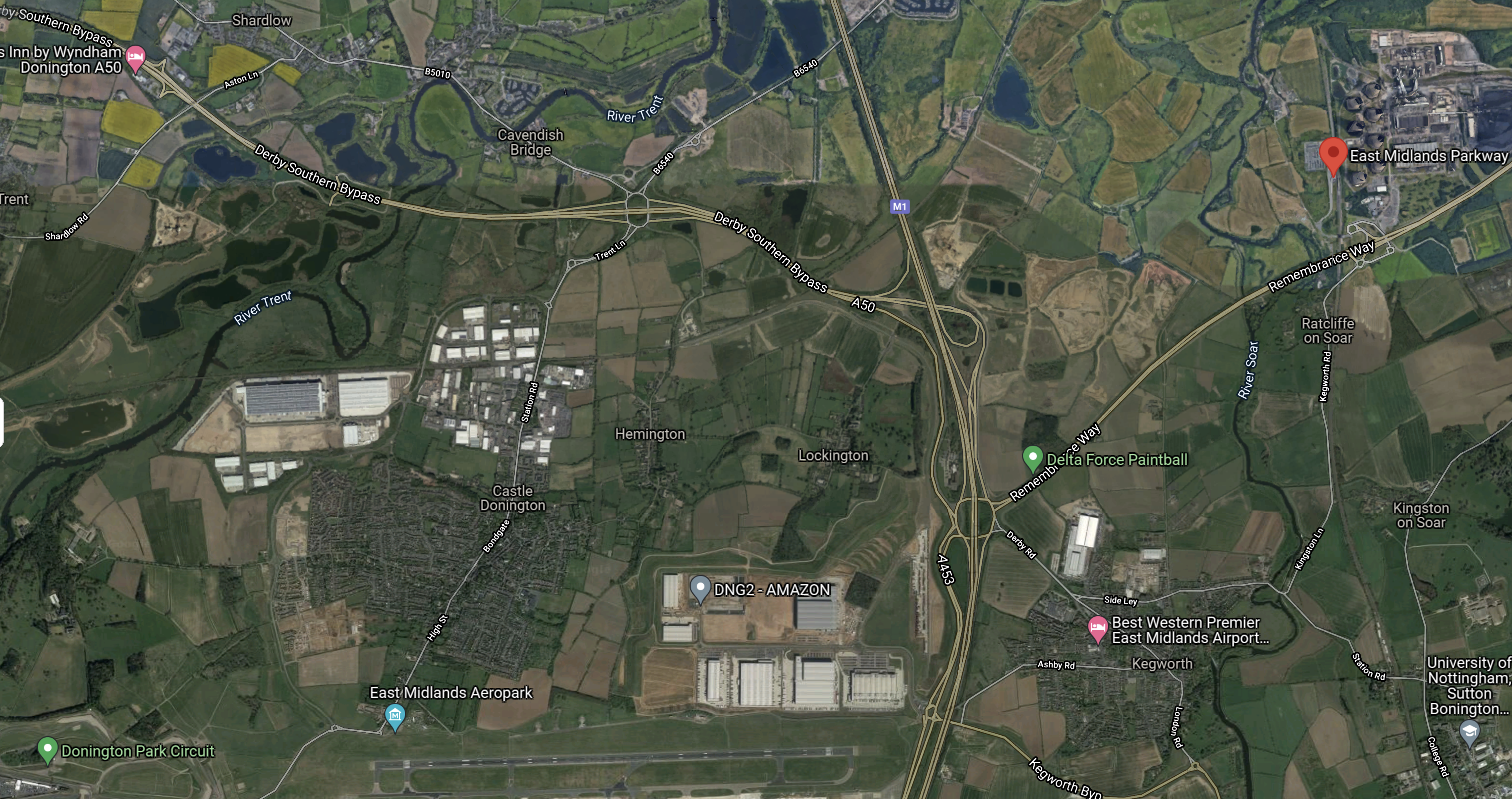
This Google Map shows the location of the East Midlands Gateway.
Note.
- East Midlands Parkway station is marked by the red arrow in the North-East corner of the map.
- Castle Donnington circuit is in the South West corner of the map.
- The long East-West runway of East Midlands Airport is clearly visible.
- East Midlands Gateway is to the North of the airport.
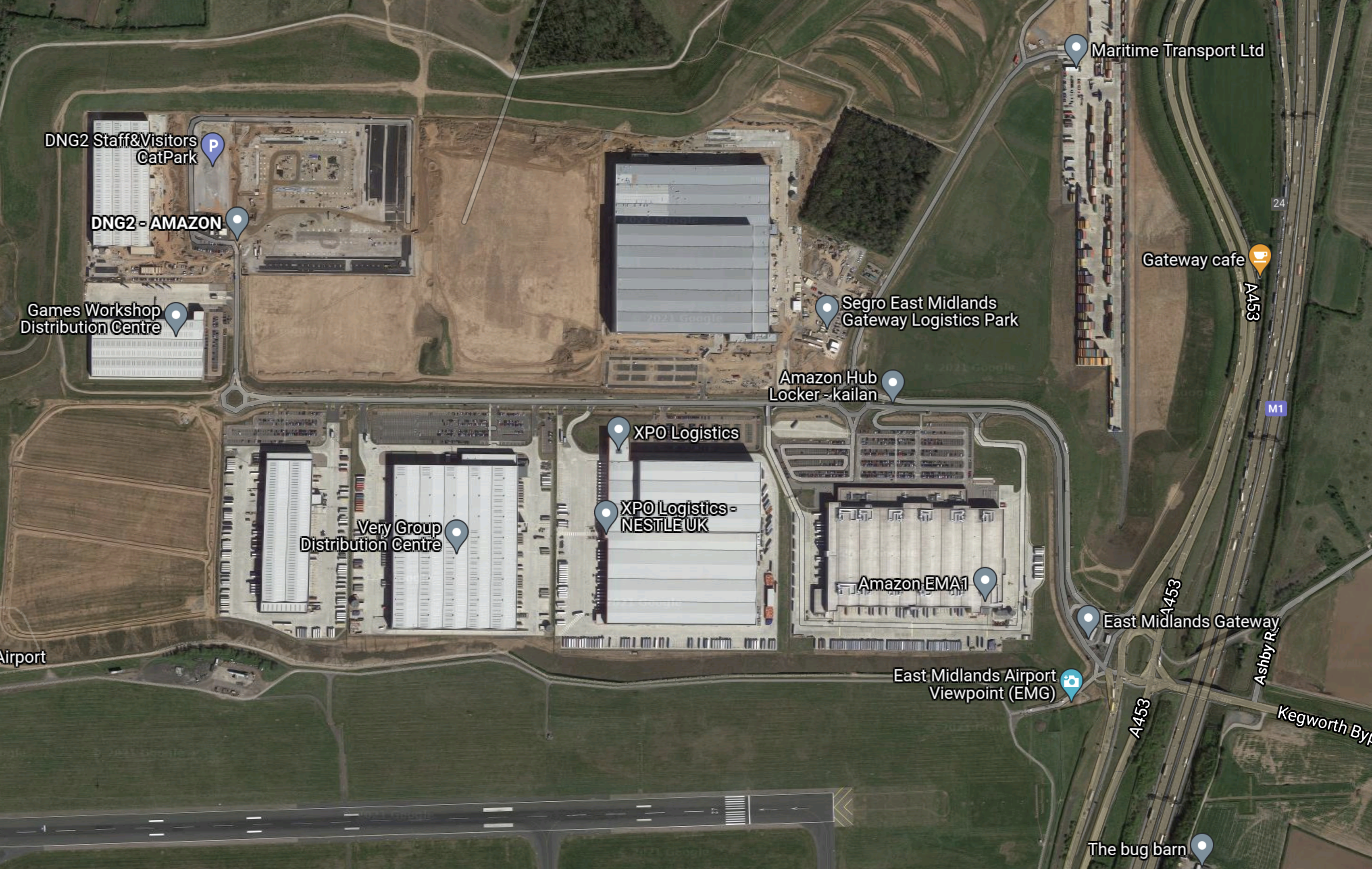
This second Google Map shows East Midlands Gateway in more detail.
Note.
- In the North-East corner is Maritime Transport’s rail freight terminal.
- The M1 runs North-South at the Eastern edge of the map.
- East Midlands Gateway Logistics Park with two Amazon sheds is in the middle.
- The runway at East Midlands Airport is clearly visible.
The Integrated Rail Plan for the North And Midlands has already announced that High Speed Two will join the Midland Main Line to the South of East Midlands Parkway station to serve Derby, Nottingham and Sheffield.
- This new line will have to go past the airport, either to the North of the Logistics Park or South of the Airport.
- Could there be a station here, both for passengers and the workers at a very busy freight airport and Logistics Park?
- Currently, trains between the rail terminal and London, London Gateway and the Port of Felixstowe have to reverse North of the rail terminal to access the terminal.
- All the rail links between the Midland Main Line and East Midlands Gateway would need to be built to accept European-size freight trains, to ensure maximum flexibility.
It strikes me, that there are a lot of extra features that could be added to the rail network between the Midland Main Line and East Midlands Gateway.
Could The Erewash Valley Line Via Ilkeston Be Cleared For European-Size Freight Trains?
Consider.
- According to a Network Rail Map from February 2010, the Erewash Valley Line is cleared to W8.
- According to Wikipedia, it is the second busiest freight route in the East Midlands.
- Network Rail have spent £250 million on the line in recent years to improve junctions and improve signalling.
- The route doesn’t have a large number of passenger services.
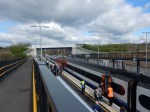
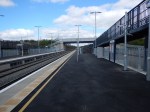
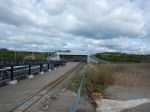
These pictures show Ilkeston station on the Erewash Valley Line.


Note.
- The recently rebuilt bridge and the separate avoiding line.
- The Class 158 train under the bridge is 3.81 metres high.
As the European gauge; GB+ is 4.32 metres high, I would feel that Ilkeston station can handle European-size freight trains.
I have flown my virtual helicopter all the way over the Erewash Valley Line from Toton to Clay Cross North junction.
- It looks as if most of the not many bridges are either recent or could be updated to handle the large European-sized freight trains.
- It should also be noted that in many places there is a third track or space for them.
- There are three stations and the Alfreton tunnel.
After this quick look, I feel that the Erewash Valley Line will be able to handle European-size freight trains.
Could Tapton Junction to Rotherham Masborough and Doncaster Be Cleared For European-Size Freight Trains?
This route has very few bridges and I doubt updating wouldn’t cause too many problems.
CargoBeamer
Would it be possible for one of CargoBeamer’s piggy-back trains carrying trailers to run between the Channel Tunnel and the rail terminal at East Midlands Gateway Logistics Park or perhaps another terminal further up the Midland Main Line?
If they could use the Gospel Oak and Barking Line to access the Midland Main Line, I don’t see why not!
Conclusion
It appears that it should be possible to allow European-size freight trains to run between the North of England and the Channel Tunnel.
Construction Ramps Up At £260 Million Mossend International Railfreight Park In Scotland
The title of this post, is the same as that of this article on Rail Engineer.
This is the first paragraph.
The development of a major new low carbon, multi-modal rail freight facility located in the heart of Scotland has taken a significant step forward with the laying of a private rail track to facilitate construction. Once complete, Mossend International Railfreight Park (MIRP) will provide 2.2 million sq ft of logistics space and Scotland’s first 775-metre electric rail terminal.
This looks to be all good stuff.
But Glasgow has needed the capability to handle 775-metre electric freight trains for some time.
- 775 metres is the length of the longest freight trains in use in the UK, after an increase in length, that I wrote about in New 775m-Long Freight Trains Begin Operating On UK’s Rail Network.
- Electric locomotives will cut carbon emissions.
- Mossend International Railfreight Park (MIRP) has a fully electrified connection to the West Coast Main Line (WCML).
- From the WCML routes are electrified most of the way to major freight destinations in England and to the Channel Tunnel.
So what took politicians so long to decide to upgrade the MIRP, as surely the ability to handle the longest electric freight trains will surely encourage the following?
- The movement of freight from road to rail.
- A reduction in freight traffic on the roads of Scotland and to a lesser extend England.
- The ability to run electric freight trains between Glasgow and Continental Europe.
If freight ramps up after the MIRP is completed, there’ll probably be a need for the following.
Some new highly capable locomotives like the Class 93 locomotive.
More than the proposed 16 trains per day (tpd).
They will certainly need the planned 24/7 operation.
This Google Map shows the site of the MIRP at the current time.
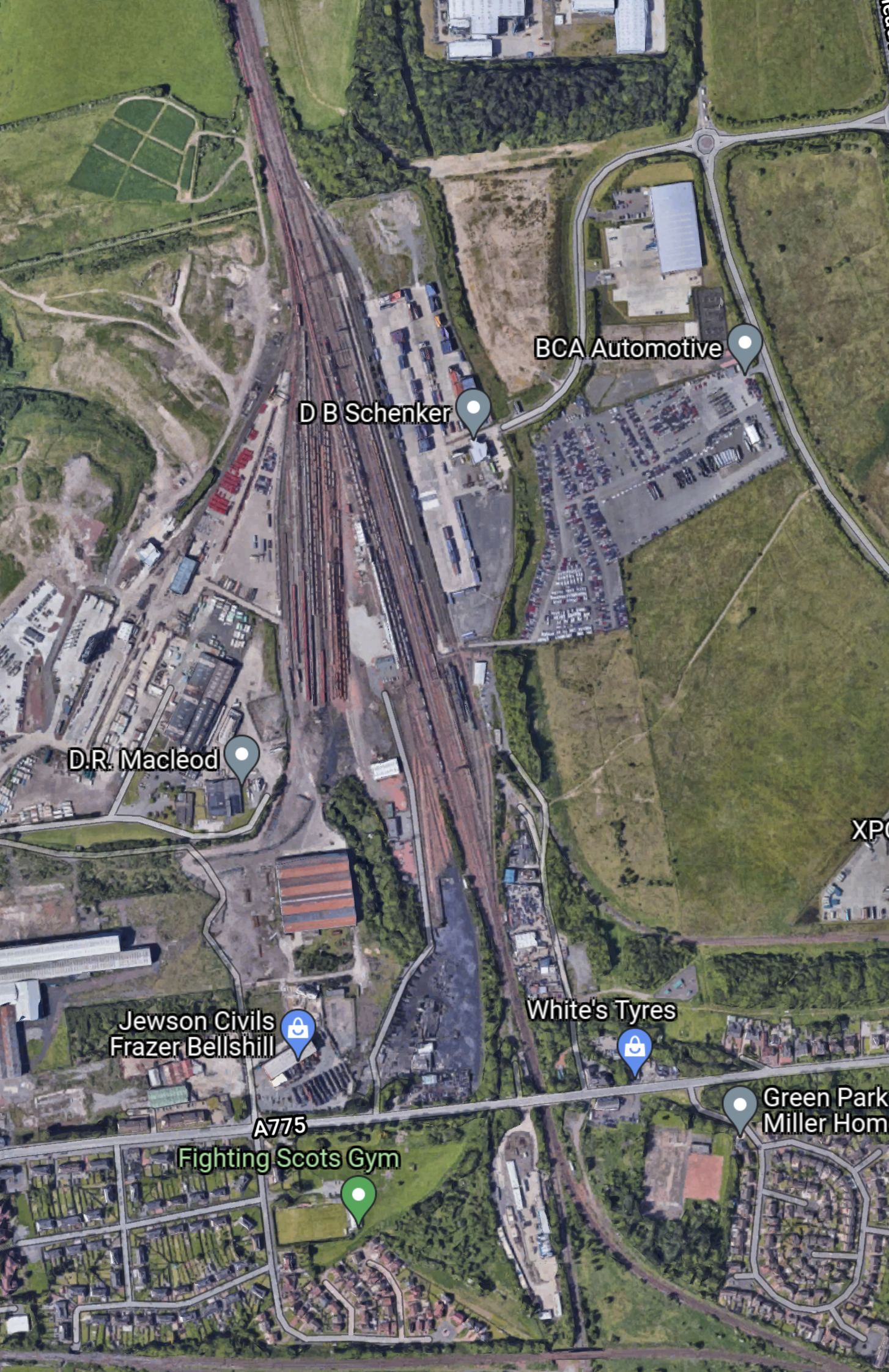
It will be interesting to see how the site grows.
Getlink Launches A New Innovative Unaccompanied Rail Freight Cross-Channel Service
The title of this post, is the same as that of this press release from Getlink.
This is the first two paragraphs.
From September 18, 2021, a new cross-Channel freight service will be open to all transporters, using an unaccompanied mode through the Channel Tunnel. The service will benefit of Getlink’s unique customs expertise for the passage through the border
The crossing will be managed by Eurotunnel Le Shuttle Freight and will operate 24 hours a day and six days per week. Departures will be from the Group’s two terminals in Calais or Folkestone. The capacity will be 8,300 trailers per year. The Eurotunnel Border Pass will allows transporters to speed up the border crossing by digitising their administrative exchanges with the border authorities.
The service is designed to compliment the decarbonisation plans of both the French and UK Governments.
It looks like this could be a sensible idea.
But 8,300 trailers per year only equates to around 26-27 trailers per day. So do they just fill up one train per day?
One article on the Getlink service says that DFDS have launched a rival service for unaccompanied trailers between Calais and Sheerness.
 The Anonymous Widower