Azuma Test Train Takes To The Tracks As LNER Trials Possible New Route
The title of this post, is the same as that of this article on Rail Technology Magazine.
This is the first paragraph.
London North Eastern Railway (LNER) completed a test run from Cleethorpes in Lincolnshire and London King’s Cross, with the view to operating a direct service in the future.
These two paragraphs describe how the tests were carried out.
A first test train travelled from Doncaster on 26 June which called at Grimsby Town, Cleethorpes, Barnetby and Market Rasen. At each station, a series of platform and train validations were performed to ensure that a service could be compatible in the future.
On the journey itself, a specialist team travelled onboard, carried out a number of checks and assessments which is required for any potential new route or extension. A detailed assessment was undertaken. The findings will now be reviewed by the stakeholders.
The test run was in four sections.
- 5Q80 – Departed Doncaster Carr Lane Depot at 0817 and arrived Cleethorpes Platform 4 at 1000.
- 5Q81 – Departed Cleethorpes Platform 3 at 1054 and arrived Lincoln Central Platform 5 at 1219.
- 5Q82 – Departed Lincoln Central Platform 5 at 1226 and arrived Cleethorpes Platform 2 at 1355.
- 5Q83 – Departed Cleethorpes Platform 2 at 1528 and arrived Doncaster Carr Lane Depot at 1654.
Note.
- These details came from Real Time Trains.
- It looks like three platforms 2, 3 and 4 at Cleethorpes station were checked.
- The route between Cleethorpes and Lincoln Central was checked both ways.
- The route between Doncaster Carr Lane Depot and Cleethorpes was checked both ways.
- Typically, each station stop took around 10-12 minutes, which probably gave adequate time for the specialist team to make their checks and assessments.
- Class 800 trains run six times a day between Lincoln Central and King’s Cross, so I must assume that section is well-checked and has the correct clearances.
- Lincoln Central station is 16.7 miles from the electrified East Coast Main Line at Newark Northgate station.
- Cleethorpes station is 52.1 miles from the electrified East Coast Main Line at Doncaster station.
- The distance between Lincoln Central and Cleethorpes stations is 47.2 miles.
- The timing between Lincoln Central and Cleethorpes appears to be just under one hour and thirty minutes.
It looks like a thorough test has been performed.
I have a few thoughts.
Platforms At Cleethorpes Station
According to the Wikipedia entry for Cleethorpes station, the station has three platforms, which are numbered 1, 2 and 3.
These three pictures show Cleethorpes station in 2020.

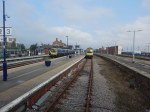
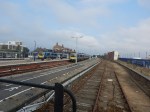
Note.
- The two trains are Class 185 trains of TransPennine Express.
- The train in the left is in Platform 1.
- Platform 2 appears to be empty.
- The train on the right is Platform 3.
I would assume Platform 4 could be the derelict platform shown in the third picture at the right. Or it might be a typo!
But if it is felt that LNER will need their own platform, it would surely be a good idea to do all testing at the same time.
Initial Service Pattern
I would expect that the initial service pattern would follow that used for many new services.
- There will be an early morning train up to London.
- There will be a late afternoon or early evening return train.
Journey time could be around three hours and twenty minutes.
Once the demand is proven, extra trains to and from London might be added in the middle of the day.
Could This Service Be Served By Battery-Electric Class 800 Trains?
From a picture on this article on the BBC, the test run appears to have been carried out by a bi-mode Class 800 train.
The full route from Doncaster to King’s Cross has four sections.
- Doncaster and Cleethorpes – 52.1 miles – Unelectrified
- Cleethorpes and Lincoln Central – 47.2 miles – Unelectrified
- Lincoln Central and Newark Northgate – 16.7 miles – Unelectrified
- Newark Northgate and King’s Cross – 120.1 – Electrified
To go between King’s Cross and Doncaster via Cleethorpes would need a battery-electric train with a range of 116 miles.
In What Will Be The Range Of A Hitachi Class 800 Battery Train?, I came to this conclusion about the battery range of a Class 800 train.
The first version of the battery-electric train will have a range of around a hundred miles, so that they can handle the Great Northern and Great Eastern Joint Line diversion on battery power.
But fairly soon after introduction into service, I will be very surprised if they don’t claim the Guinness world record by running farther than the Stadler FLIRT Akku’s 139 miles.
Note.
- Trains would be charged using the existing electrification of the East Coast Main Line.
- No new infrastructure would be required.
But for service recovery reasons, it could be prudent to add electrification to Platform 4 at Cleethorpes station.
Could TransPennine’s Service Between Doncaster and Cleethorpes Be Served By Battery-Electric Class 802 Trains?
As it is only a round trip of 104.2 miles, I don’t see why this couldn’t be done by say 2028.
Could LNER’s Service Between King’s Cross and Lincoln Be Served By Battery-Electric Class 800 Trains?
As it is only a round trip of only 33.4 miles, this is the easy trip to decarbonise.
Should The Great Northern And Great Eastern Joint Line Be Electrified?
The Great Northern And Great Eastern Joint Line was created in the Nineteenth Century by the Great Northern Railway and the Great Eastern Railway.
- The main purpose was to move freight like coal, agricultural products and manufactured goods between Yorkshire and Eastern England.
- It originally ran between Doncaster and Huntington via Gainsborough, Lincoln, Sleaford, Spalding and March.
- It had a full length of almost 123 miles.
- There was a large marshalling yard at Whitemoor near March.
Over the years the line has been pruned a bit and now effectively runs between Doncaster and Peterborough.
- Trains between Lincoln and March are now routed via Peterborough.
- It carries upwards of twenty freight trains per day in both directions through Lincoln Central station.
- Many of the freight trains are going to and from the East Coast ports.
- The distance between Doncaster and Peterborough is 93.7 miles, as opposed to the 79.6 miles on the East Coast Main Line.
- The line is not electrified, but it connects to the electrified East Coast Main Line at both ends.
There have been some important developments in recent years.
2015 Freight Upgrade
Wikipedia says this about the major 2015 freight upgrade.
In 2015 a £280 million upgrade of the Joint Line by Network Rail was substantially complete, enabling two freight trains per hour to be diverted from the congested East Coast Main Line; gauge enhancements to enable the passage of 9 ft 6 in (2.90 m) containers were included in the work.
The Sleaford avoiding line had been substantially downgraded since the 1980s and was reinstated to double track as part of the 2015 scheme. Resignalling and modernisation of level crossings was included.
This means that freight trains have an alternative route, that avoids the East Coast Main Line.
Doncaster iPort
Over the last few years the Doncaster iPort has been developed, which is an intermodal rail terminal.
- It has a size of around 800 acres.
- The site opened in early 2018.
- There is a daily train to the Port of Southampton and two daily trains to both Teesport and Felixstowe.
- The Felixstowe trains would appear to use the Joint Line.
I feel that as the site develops, the Doncaster iPort will generate more traffic on the Joint Line.
This Google Map shows the Doncaster iPort.

There would appear to be plenty of space for expansion.
The Werrington Dive Under
The Werrington Dive Under has been built at a cost of £ 200 million, to remove a bottleneck at the Southern end of the Joint Line, where it connects to the East Coast Main Line.
The Werrington Dive Under was built, so that it could be electrified in the future.
LNER To Lincolnshire
LNER appear to have made a success of a one train per two hours (tp2h) service between London King’s Cross and Lincoln station.
- LNER have stated, that they want to serve Grimsby and Cleethorpes in the North of the county.
- North Lincolnshire is becoming important in supporting the wind energy industry in the North Sea.
- Lincoln is becoming an important university city.
- Several towns in Lincolnshire probably need a service to Peterborough and London.
- In 2019, the Port of Grimsby & Immingham was the largest port in the United Kingdom by tonnage.
I can see an expanded Lincolnshire service from LNER.
Full Digital Signalling Of The East Coast Main Line To The South Of Doncaster
This is happening now and it will have a collateral benefits for the Joint Line.
Most passenger and freight trains will also use the East Coast Main Line, if only for a few miles, which will mean they will need to be fitted for the digital signalling.
This could mean that extending full digital signalling to Lincolnshire will not be a challenging project.
Arguments For Electrification
These are possible arguments for electrification.
Electric Freight Trains To And From The North
It would be another stretch of line, that could accommodate electric freight trains.
An Electrified Diversion Route For East Coast Main Line Expresses
Currently, when there is engineering blockades between Doncaster and Peterborough on the East Coast Main Line, the Hitachi Class 800 and Class 802 trains of Hull Trains and LNER are able to divert using their diesel power.
But the electric trains of LNER and Lumo have to be cancelled.
An electrified diversion route would be welcomed by passengers and train companies.
It would also mean that any trains running from King’s Cross to electrified destinations would not to have any diesel engines.
An Electrified Spine Through Lincolnshire
If there was an electrified spine between Doncaster and Peterborough via Gainsborough, Lincoln, Sleaford and Spalding, these stations would be these distances from the spine.
- Boston – 16.8 miles
- Cleethorpes – 47.2 miles
- Grimsby Town – 43.9 miles
- Market Rasen – 14.8 miles
- Skegness – 40.7 miles
Note.
- These distances are all possible with battery-electric trains.
- Charging would be on the electrified spine and at Skegness and Cleethorpes stations.
All of South Lincolnshire and services to Doncaster would use electric trains.
London Services
London services would be via Spalding and join the East Coast Main Line at Werrington.
- Boston and Skegness would be served from Sleaford, where the train would reverse.
- Market Rasen, Grimsby Town and Cleethorpes would be served from Lincoln, where the train would reverse.
This would enable Cleethorpes and Skegness to have at least four trains per day to and from London King’s Cross.
North Lincolnshire Services
There are two train services in North Lincolnshire.
Cleethorpes and Barton-on-Humber.
Cleethorpes and Manchester Airport via Grimsby Town, Scunthorpe, Doncaster, Sheffield and Manchester Piccadilly.
Note.
- Cleethorpes would need to have a charger or a few miles of electrification, to charge a train from London.
- Doncaster, which is fully electrified is 52.1 miles from Cleethorpes.
- Barton-on-Humber is 22.8 miles from Cleethorpes.
Battery-electric trains should be able to handle both services.
Arguments Against Electrification
The only possible arguments against electrification are the disruption that the installation might cause and the unsightly nature of overhead gantries.
Conclusion
The Great Northern and Great Eastern Joint Line should be electrified.
LNER To Serve Cleethorpes
Under the proposed new LNER timetable, which will start in May 2022, there will be a new train service between London Kings Cross and Cleethorpes.
According to this article on the Lincolnite, which is entitled Direct Cleethorpes To London Rail Link ‘Close’ To Getting Go Ahead, there will be one service per day.
It will leave Cleethorpes at 06:24 and Grimsby Town at 06:32 before arriving at King’s Cross at 09:25.
The return will leave King’s Cross at 16:10 and arrive in Grimsby Town at 19:05 and Cleethorpes at 19:20.
The August 2021 Edition of Modern Railways makes these points about the service.
- The larger Azuma fleet makes this extension possible.
- ,A more regular service would require additional trains.
- LNER is examining whether other intermediate stations east of Lincoln could be served.
I would have thought, that Market Rasen station could be a possibility for an intermediate stop.
I have a few thoughts.
Extra Services
This single service is ideal for though living in Lincolnshire, but it doesn’t suit those people, who perhaps need to go to the area from London for business or family reasons.
- Lincoln appears to get around five or six trains per day in each direction to and from King’s Cross.
- Services are roughly one train per two hours.
- I suspect the Lincoln service can be run by a single train, that shuttles between King’s Cross and Lincoln stations.
I believe, that Cleethorpes needs at least a pair of services to and from London, so that travellers can spend a day in North-East Lincolnshire.
- This would probably need more trains.
- Services would go via Lincoln and Lincoln may get extra services to London.
- Selected services could stop at intermediate stations, like Market Rasen.
There are surely possibilities for a integrated timetable between King’s Cross and Lincoln, Market Rasen, Grimsby Town and Cleethorpes.
Battery-Electric Operation
Consider.
- LNER’s Class 800 trains are prime candidates for conversion to Hitachi Intercity Tri-Mode Battery Trains, so they can run away from the overhead wires of the East Coast Main Line to places like Lincoln, by the use of battery power.
- These battery trains could charge using the electrification between King’s Cross and Newark North Gate stations.
- The distance between Lincoln Central station and the East Coast Main Line is 16.6 miles.
- In Plans To Introduce Battery Powered Trains In Scotland, I quote Hitachi, as saying they expect a sixty mile range for battery trains.
I am sure, that these trains would have sufficient range on battery to be able to work King’s Cross and Lincoln services without using diesel.
But could the Hitachi trains reach Cleethorpes with some well-positioned charging?
- The distance between Lincoln and Cleethorpes stations is 47.2 miles.
- In Solving The Electrification Conundrum, I describe Hitachi’s solution to running battery-electric trains, by using well-placed short lengths of 25 KVAC overhead electrification controlled by an intelligent power system.
With a range of sixty miles on batteries and charging at Lincoln and Cleethorpes stations, it would appear that battery electric operation of Class 800 trains between King’s Cross and Cleethorpes is a distinct possibility.
Lincoln Station
Lincoln station has three operational through platforms and I suspect all would need to be electrified, so that trains could be charged as they passed through.
These are distances from Lincoln station.
- Cleethorpes – 47.2 miles
- Doncaster – 36.9 miles
- Nottingham – 33.9 miles
- Peterborough – 56.9 miles
- Sheffield – 48.5 miles
It does appear that if Lincoln station were to be electrified, most services from the city could be run using battery-electric trains.
Cleethorpes Station
This picture shows Cleethorpes station with two TransPennine Express Class 185 trains in the station.
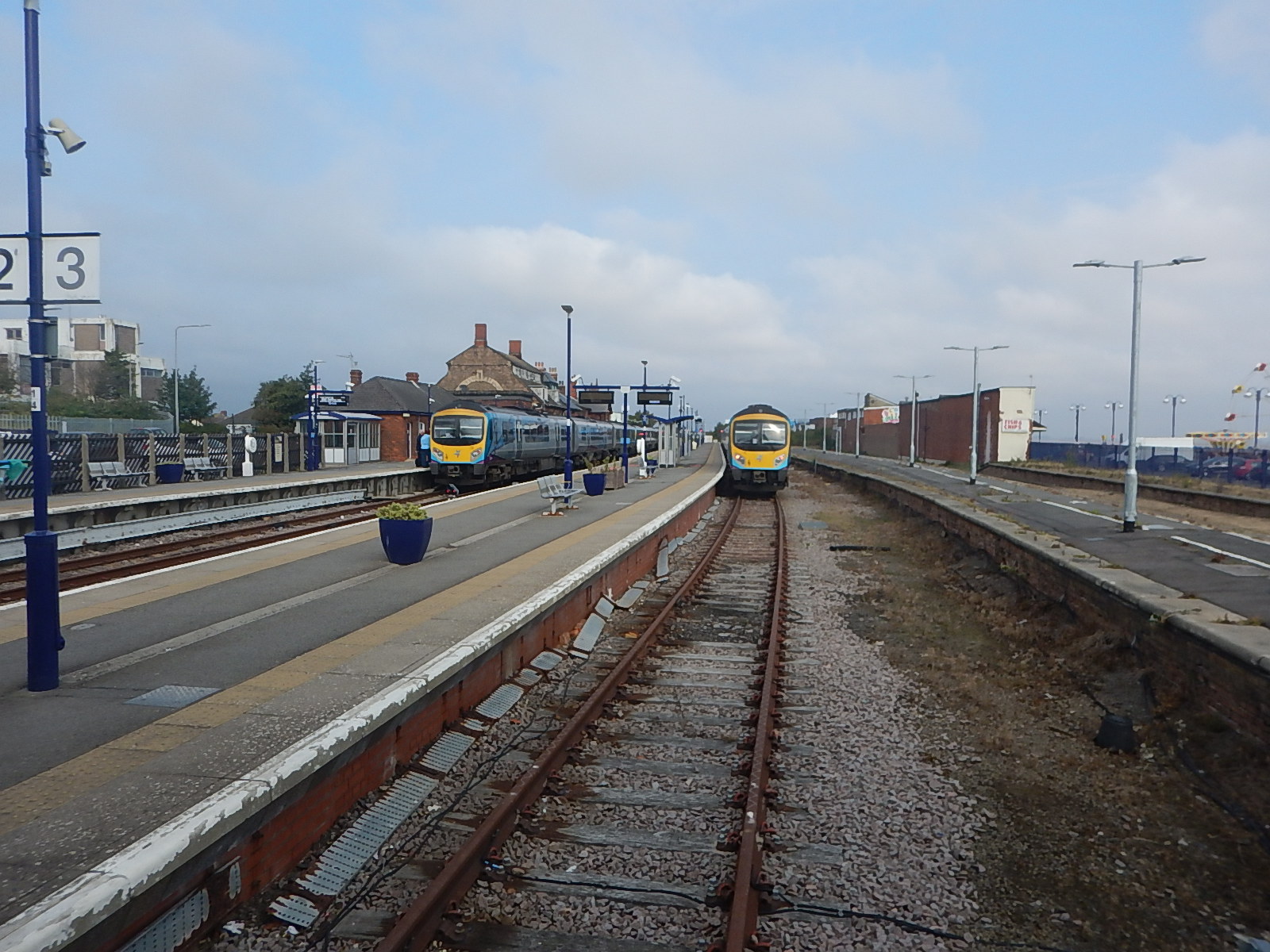
Note.
- The Class 185 trains are diesel, but could be replaced by Hitachi Class 802 trains, which could be converted to battery-electric operation.
- Cleethorpes and Doncaster are 52.1 miles apart, which could be in range of Hitachi’s battery-electric trains.
- It doesn’t look to be too challenging to electrify a couple of platforms to charge the battery-electric trains.
- Cleethorpes station could surely charge both the LNER and the TransPennine Express trains.
- The Cleethorpes and Barton-on-Humber service which is under fifty miles for a round trip could also be replaced with battery-electric trains.
Cleethorpes station could be totally served by battery-electric trains.
Battery-Electric Trains For Lincolnshire
At the present time, there is a surplus of good redundant electrical multiple units and the rolling stock leasing companies are looking for places where they can be used.
Porterbrook are already looking to convert their fleet of Class 350 trains to battery-electric operation and I am certain, that now that Hitachi and others have solved the charging problem, a lot more trains will be converted.
Most would appear to be four-car 100 mph trains, which will be very convenient and should fit most platforms.
Conclusion
Running battery-electric Class 800 trains to Lincoln, Grimsby Town and Cleethorpes could be the start of decarbonisation of Lincolnshire’s railways.
What would battery-electric trains do for the economy of Lincolnshire?
Beeching Reversal – Firsby And Louth
This is one of the Round 3 bids of Beeching Reversal projects that the Government and Network Rail are proposing to reverse some of the Beeching cuts.
The Proposed Route
This route was part of the historic East Lincolnshire Railway, which is shown in this diagram from Wikipedia.
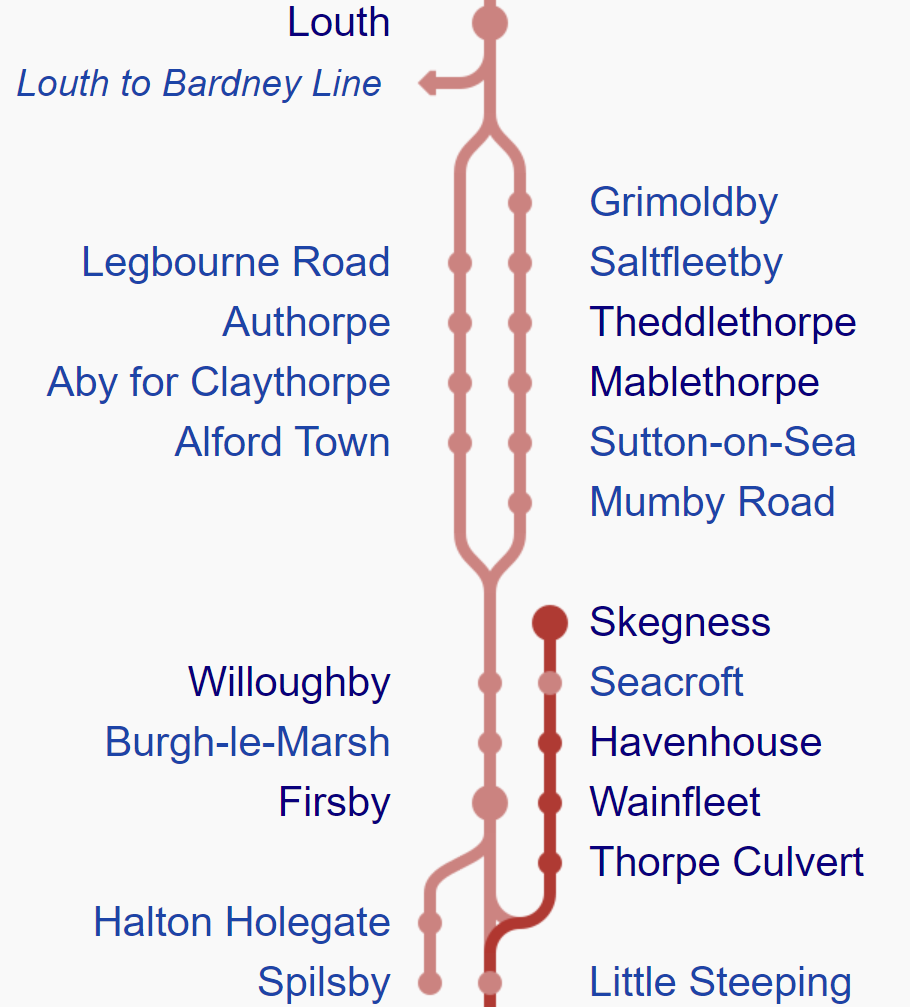
Note.
- North of Louth, the line used to connect to Grimsby Town, Immingham and Cleethorpes.
- The loop that goes through Mablethorpe.
- Boston is to the South.
- The Poacher Line between Boston and Skegness is the only section that is still open.
These Google Maps show sections and features of the route.
North From Spilsby Road Level Crossing
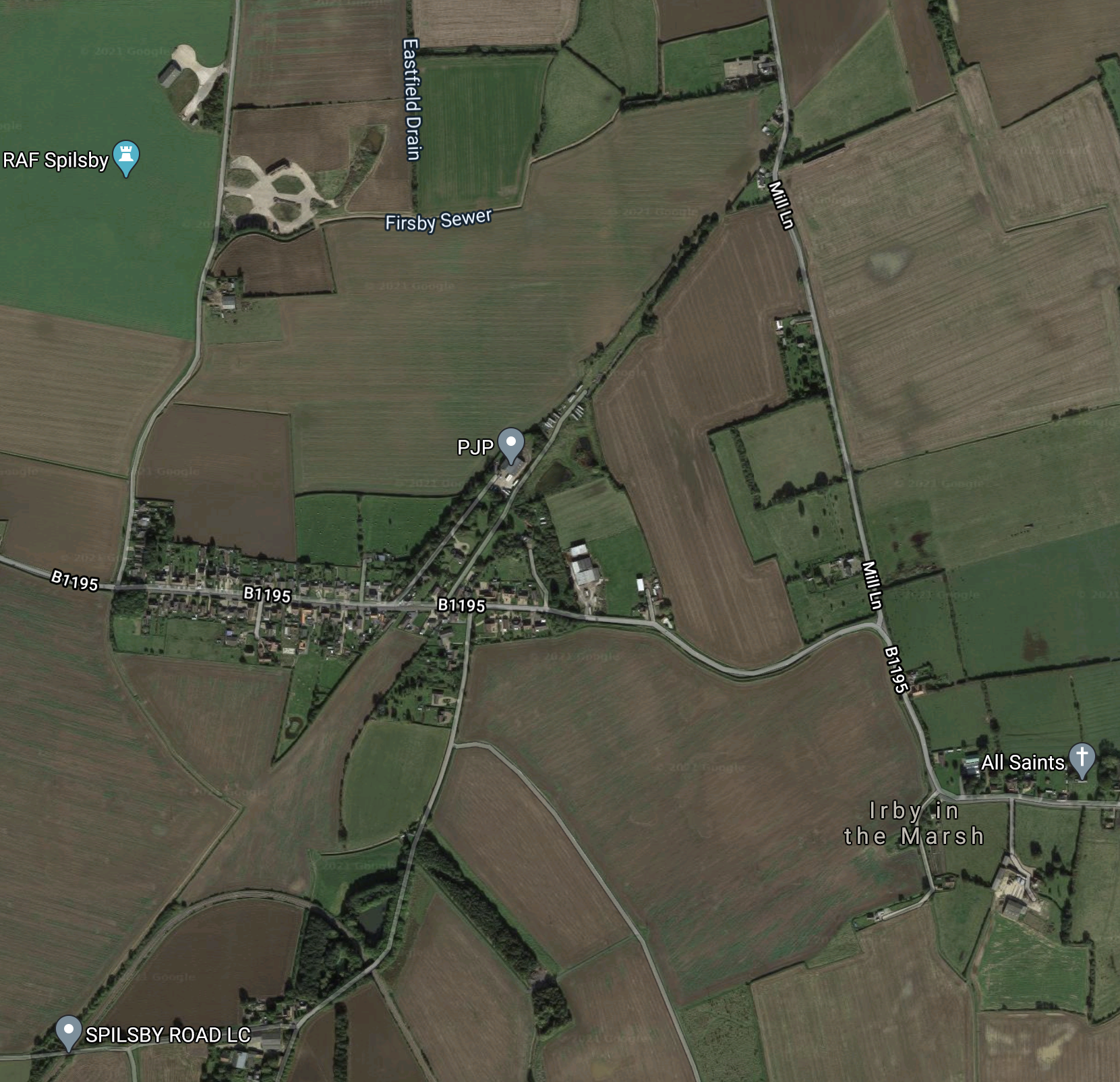
The Spilsby Road level crossing is in the South-West corner, with the track of the old railway between Firsby and Louth going to the North-East.
Junction With The Poacher Line
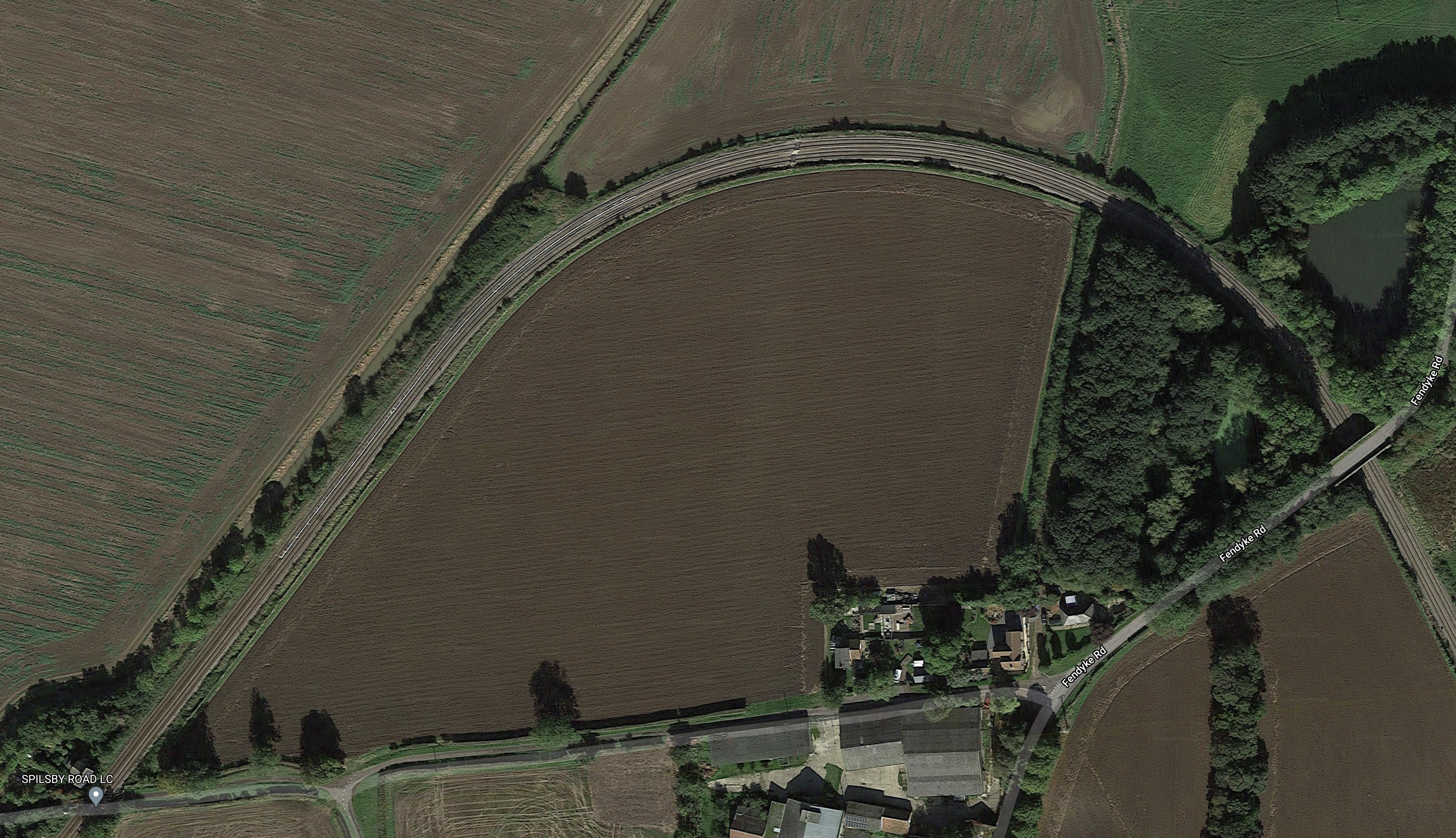
This is an enlargement of the South-West corner of the map.
- The Spilsby Road level crossing can be seen.
- The Poacher Line does a loop and goes South-East on its way to Skegness.
- It looks like Firsby station was quite important, with three platforms and lots of facilities.
A junction could be built here to connect the Firsby and Louth line to the Poacher Line.
Would a station built between the lines, be possible to provide interchange between the Louth and Skegness trains?
Willoughby Station
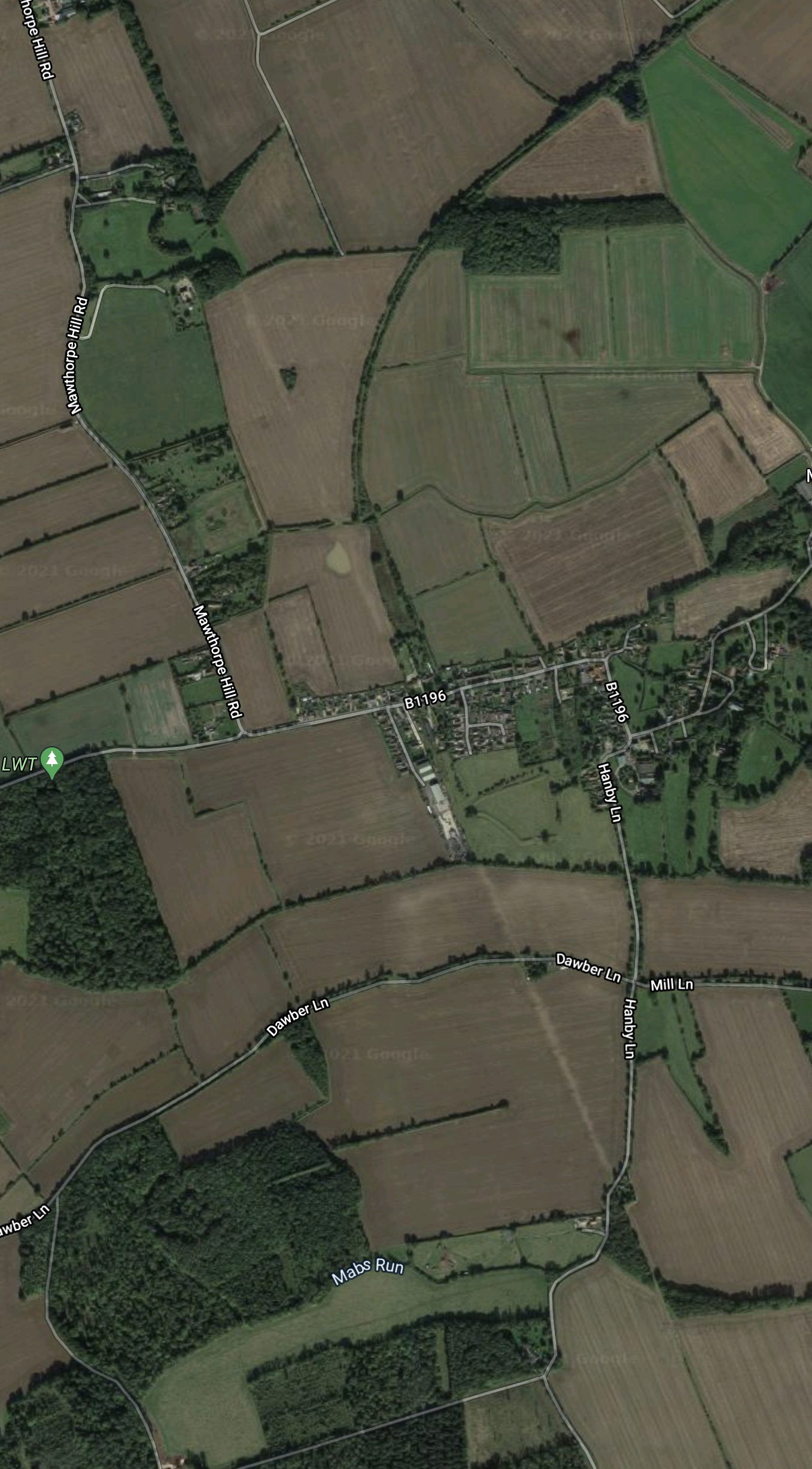
Note.
- The scar of the East Lincolnshire Railway can be followed from the South-East corner to the North-West corner of the map.
- The green scar of the Mablethorpe loop can be seen branching off from the East Lincolnshire Railway to the North-East corner of the map.
Could a station be rebuilt at Willoughby?
Alford And Alford Town Station

Note.
- The green scar of the East Lincolnshire Railway can be can be followed from the South-East corner to the North-West corner of the map.
- The town is Alford
- If you click on the map to enlarge it, you can see Station Road, which must have been the location of Alford Town station.
I would have thought a station would be needed.
Straight Between Alford And Louth
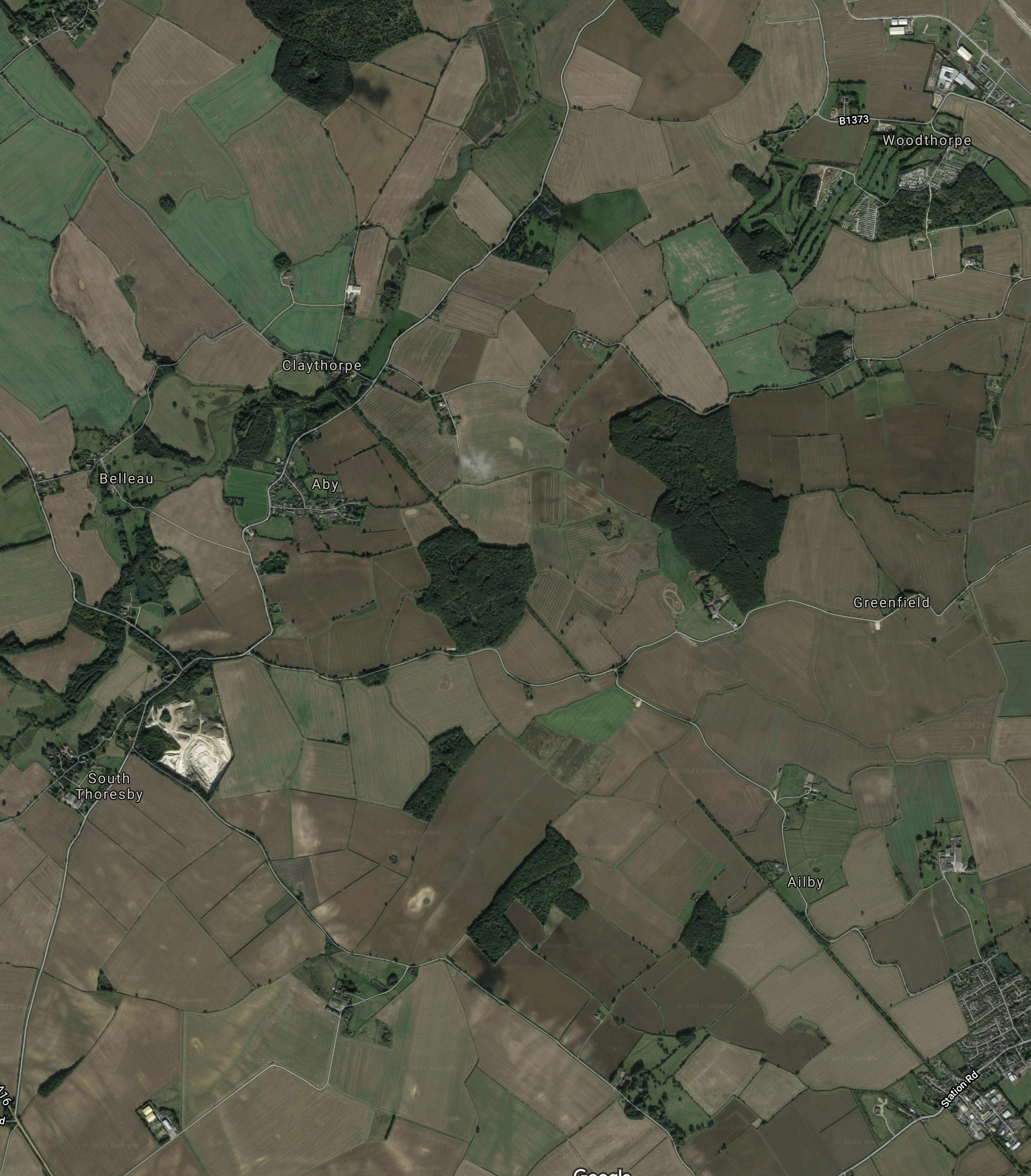
Note.
- The green scar of the East Lincolnshire Railway can be can be followed from the South-East corner to the North-West corner of the map.
- There are three stations on this section; Aby for Claythorpe, Authorpe and Legbourne Road.
This section would appear to be a rail engineer’s dream.
How many stations would be needed?
Louth

Note.
- The green scar of the East Lincolnshire Railway can be can be followed from the South-East corner to the North edge of the map.
- Louth is the largest town in Lincolnshire without a station.
It could be difficult to thread the line through the town.
Onward To Grimsby
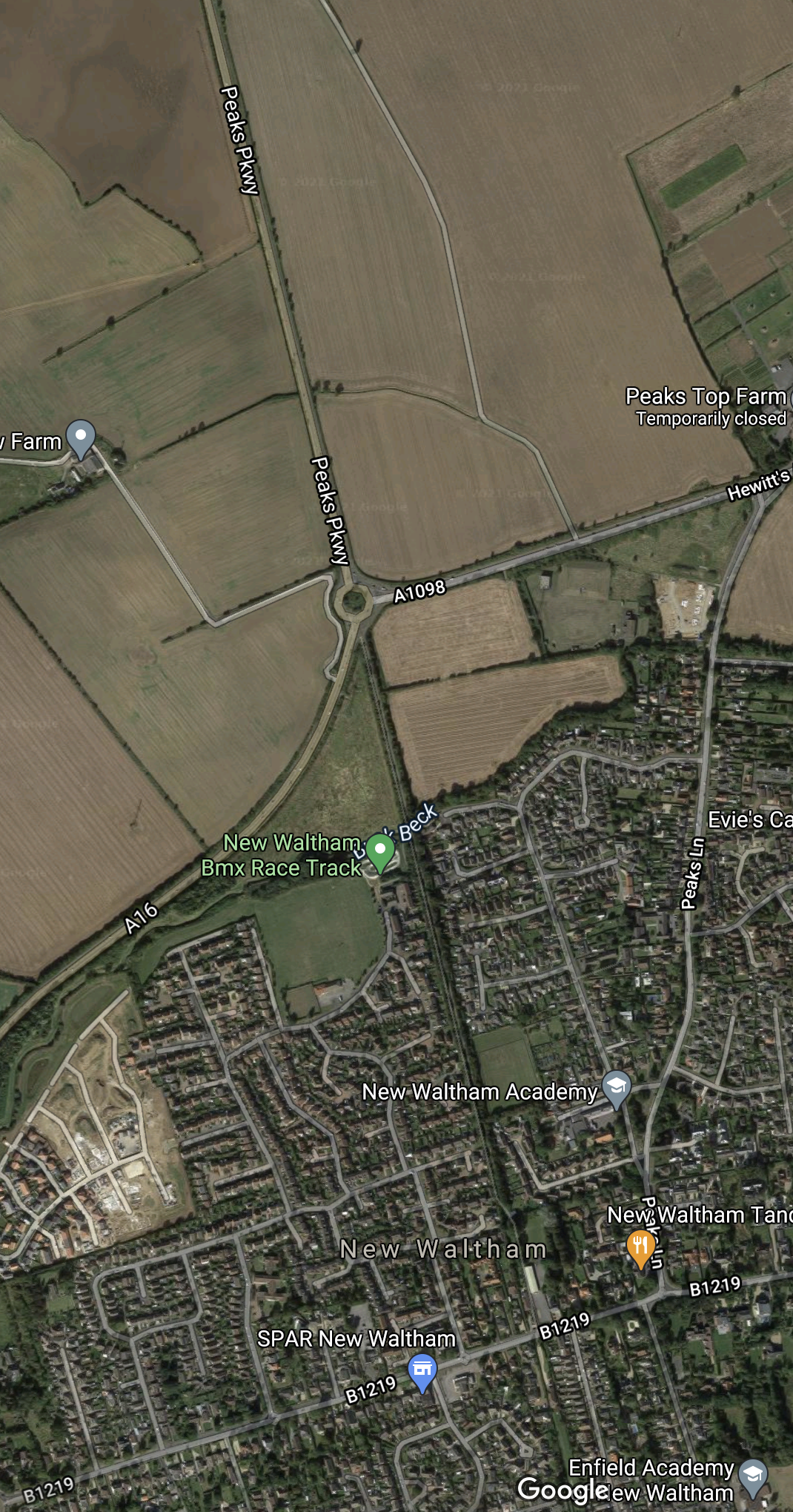
The map shows the final section of the route between Louth and Grimsby.
Note that from North of New Waltham, the track bed has been used for Peeks Parkway.
Does this mean that any reopened rail line between Firsby and Louth must end at New Waltham or Louth?
Grimsby Town Station And Centre
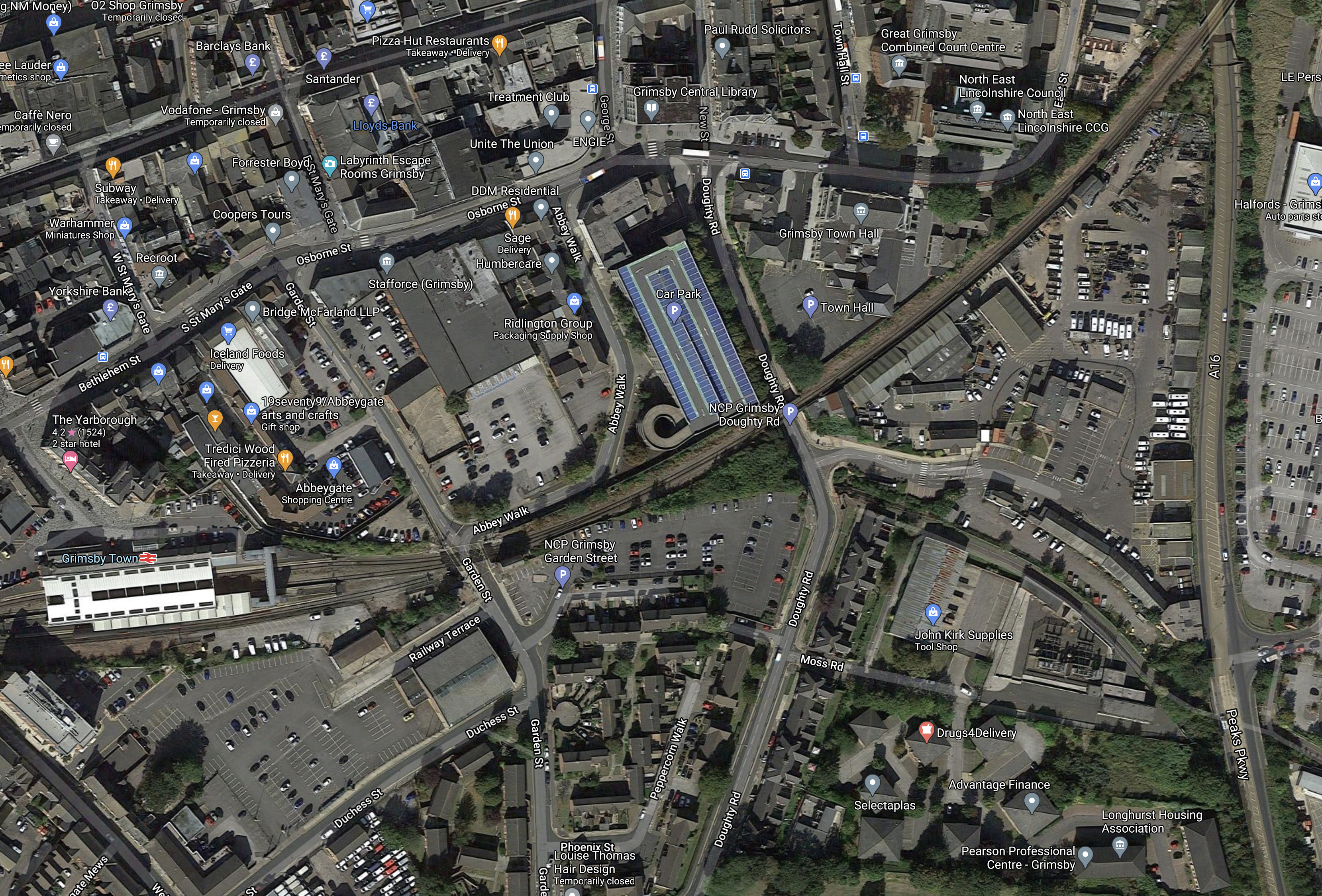
Note.
- Grimsby Town station is in the West.
- The rail line between Grimsby Town and Cleethorpes stations runs across the map.
- Peeks Parkway runs up the East side of the map.
- It looks to me, that this was once a large triangular junction, that also allowed trains to go between Grimsby Town an Louth stations.
Grimsby town centre seems to have been planned for cars and losers without cars can go elsewhere.
Thoughts On The Firsby And Louth Rail Link
I have a few thoughts on the possible design of a rail link between Firsby and Louth.
Should The Line Allow Freight Trains?
It might be a future need that freight trains will need to go between say Peterborough and Immingham, but I don’t think any use that route at present.
So other than the occasional maintenance train, I think the route could be freight-free at present.
Should The Line Terminate at Grimsby?
Consider.
- Grimsby is a town of 88,000
- It is a large centre for food processing, which needs large numbers of people.
- Grimsby is becoming an increasing important centre for the development of renewable energy.
- Grimsby and Boston are nearly fifty miles apart, which illustrates that Lincolnshire is not a small county.
I believe in a perfect world, Grimsby would have an hourly train service to Boston via Louth and several other stops.
Terminating at Louth rather than Grimsby would be like terminating all trans pennine services at Leeds.
So how would a line terminate at Grimsby?
- The missing side of the triangular junction could be rebuilt, so that traIns could run between Grimsby Town and Louth stations.
- Trains could terminate at a new Grimsby South station on the outskirts of the town.
- Trains could continue through Grimsby Docks station and terminate at Cleethorpes. with possibly an additional station in Grimsby town centre.
There is always an innovative tram-train solution, where with a small amount of street running, they sneaked into the town centre and called at Grimsby Town station and the major places people needed to visit.
This solution has been proposed for Ipswich and Felixstowe by East West Rail to increase the capacity on the Felixstowe Branch. I wrote about this scheme in Could There Be A Tram-Train Between Ipswich And Felixstowe?.
It would be challenging, but I think that it might be possible.
Failing that, I believe that a single-track could be sneaked along Peeks Parkway and go through the town centre to Grimsby Docks and Cleethorpes. stations.
The distance between Cleethorpes and New Waltham is about 7 miles.
A train would probably take about ten minutes.
Any town centre station could be a single platform.
Would An Hourly Service Be Enough?
An hourly service between Boston and Louth would probably be enough, but in an ideal world two trains per hour (tph) would probably be better.
- A single-track section between New Waltham and Cleethorpes could probably handle four tph working bi-directionally.
- Two tph is also regularly handled on single platform stations, like Galashiels and Newcourt.
- The long straight sections of the route offer lots of scope for loops.
My feeling, is the service should start hourly, but that it can be designed to be upgraded to two tph. Or it could even work at two tph at certain times of the day.
Could Boston and Cleethorpes Be Run In Fifty Minutes?
Consider.
- This time would be ideal for a service as it would give ten minutes to turn the trains at both ends.
- Boston and Cleethorpes would be the longest service that would be run and it is 50 miles.
- Fifty minutes would need an average speed including stops of 60 mph.
- Ipswich and Cambridge is run at an average of 43.2 mph with seven stops.
- The straight and flat Breckland Line has an operating speed of between 75 and 90 mph.
- Trains between Cambridge and Norwich average 53 mph with six stops.
I believe that the Firsby and Louth line could be built with an operating speed of up to 90 mph and fifty minutes between Boston and Cleethorpes could be possible.
Will Firsby And Louth Be Single Track?
I believe that the route can be single track with one platform stations.
This will save both space and costs and would probably allow two tph with careful design.
As there are long straight sections to the North of Alford, I suspect it wouldn’t be difficult to add passing loops, if they were required.
What Rolling Stock Would Be Used?
Lincolnshire is a renewable energy-rich county and because of offshore wind and the HumberZero project, Lincolnshire will probably have more wind power and green hydrogen per head of population, than any other area of the UK.
So undoubtedly, the trains will be zero carbon, which means, electrification, battery electric or hydrogen trains.
If new trains are in the budget, then the obvious candidate is the Hitachi Regional Battery Train.
The specification is given in this Hitachi infographic.

Note that it is a 100 mph train with a range of 56 miles.
It would need to be charged at both ends of the route.
In Cleethorpes Station – 16th September 2020, I suggested that electrification be added between Cleethorpes and Habrough stations should be electrified, so Cleethorpes and Manchester services could be run by Hitachi Regional Battery Trains.
This electrification could be used to charge the trains at Cleethorpes or a charging system could be installed.
This Google Map shows Boston station.
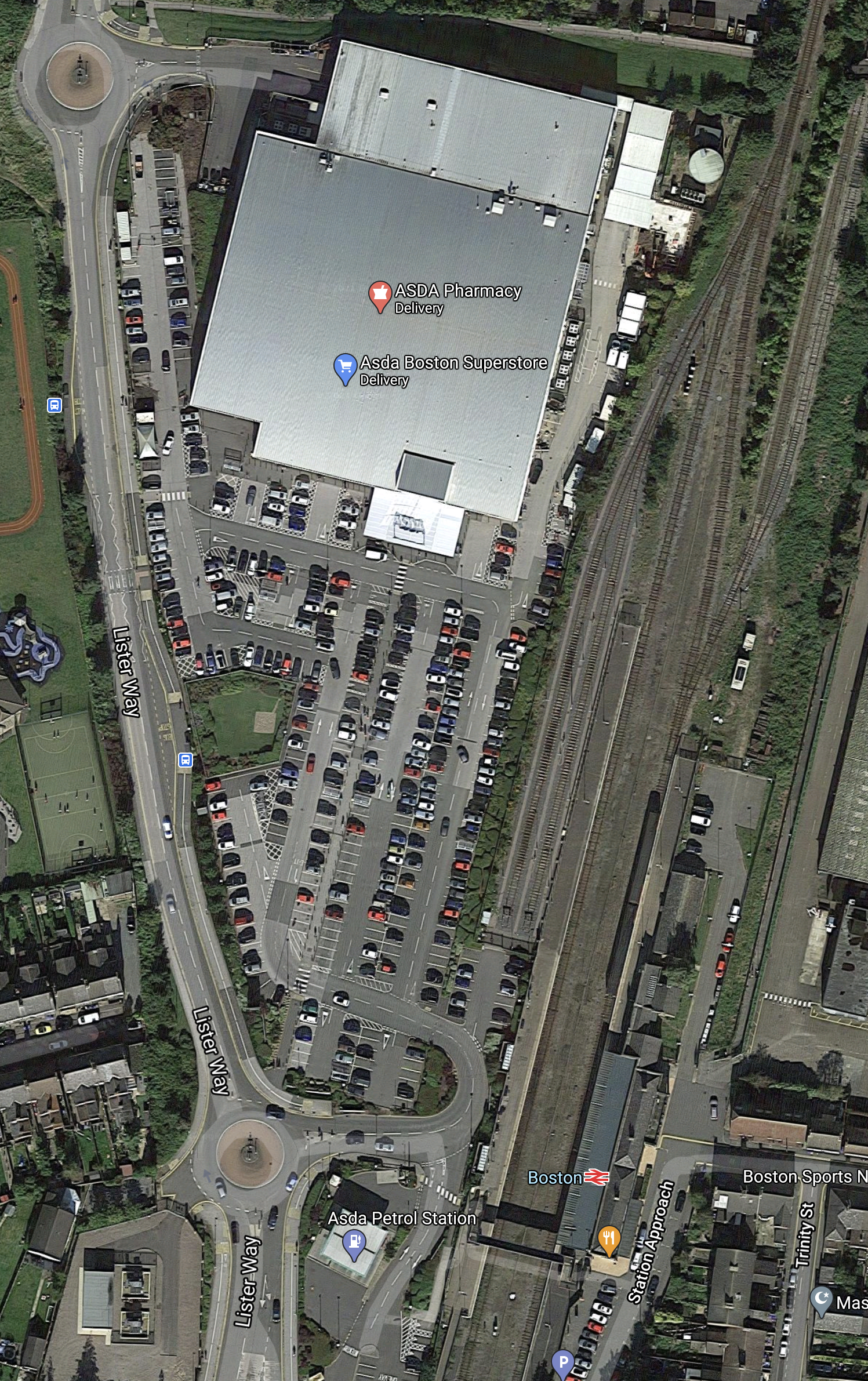
Note.
- The station has only two platforms.
- It looks like there were two North-facing bay platforms.
A charging system would be added to charge the trains.
The other obvious train for the route, would be Alstom’s Class 600 train, which is powered by hydrogen.
This is a visualisation of the train.
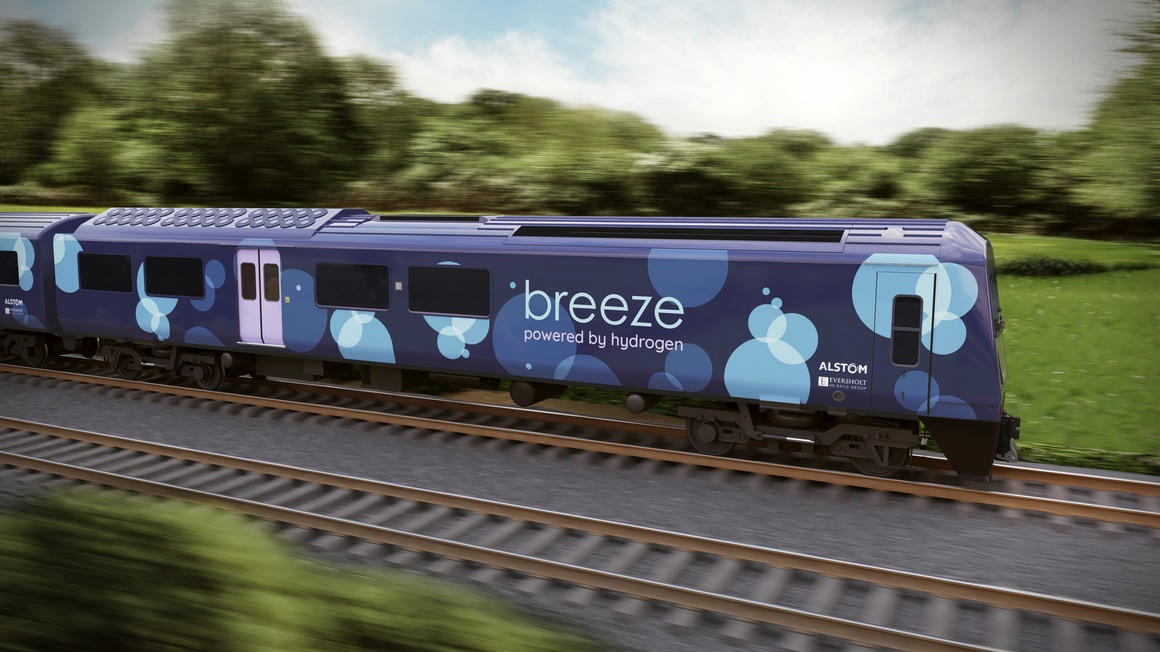
The specification has not been published yet, so there is no idea of the operating speed, although the range will be several hundred miles.
I speculated about the train in Breeze Hydrogen Multiple-Unit Order Expected Soon.
- There will be plenty of hydrogen available in Lincolnshire if the Humber Zero project goes to plan.
- Trains may be able to do several trips between refuelling.
- Trains will not need any infrastructure at Boston.
The forsby and Louth route would be an ideal route for both trains.
The Hitachi product will probably be slightly larger, faster and new!
Beeching Reversal – Mablethorpe
This is one of the Round 3 bids of Beeching Reversal projects that the Government and Network Rail are proposing to reverse some of the Beeching cuts.
Maplethorpe is an traditional seaside town between Skegness and Cleethorpes, which is shown in this Google Map.
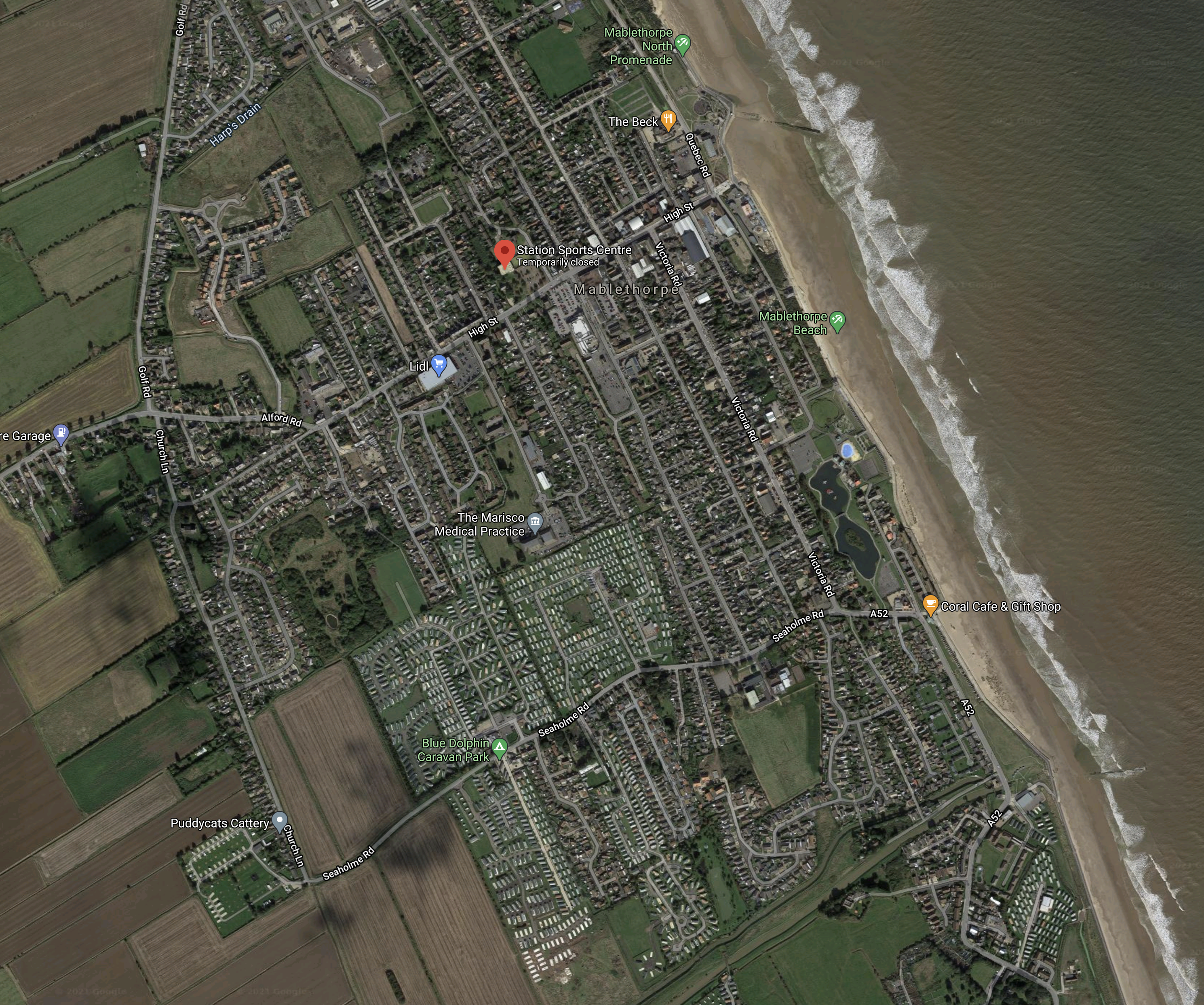
Note.
- The town has a population of around 12,000.
- The beach looks good.
- The red arrow shows the position of the former station, which is now a leisure centre.
It looks like building a railway to the original site would be very challenging.
The original railway through the town was the Mablethorpe Loop Line, which ran between Willoughby and Louth.
- Louth is the largest town in Lincolnshire without a rail connection.
- Willoughby and Louth stations were both on the East Lincolnshire Line, which connected Boston and Grimsby Town stations.
- Much of the original trackbeds can still be picked out on the map, but no rail lines exist.
It would be a very large enterprise to rebuild all the original lines.
I think there are two possible solutions to provide a rail link to Maplethorpe.
Boston and Maplethorpe
This Google Map shows the area between Boston and Maplethorpe.
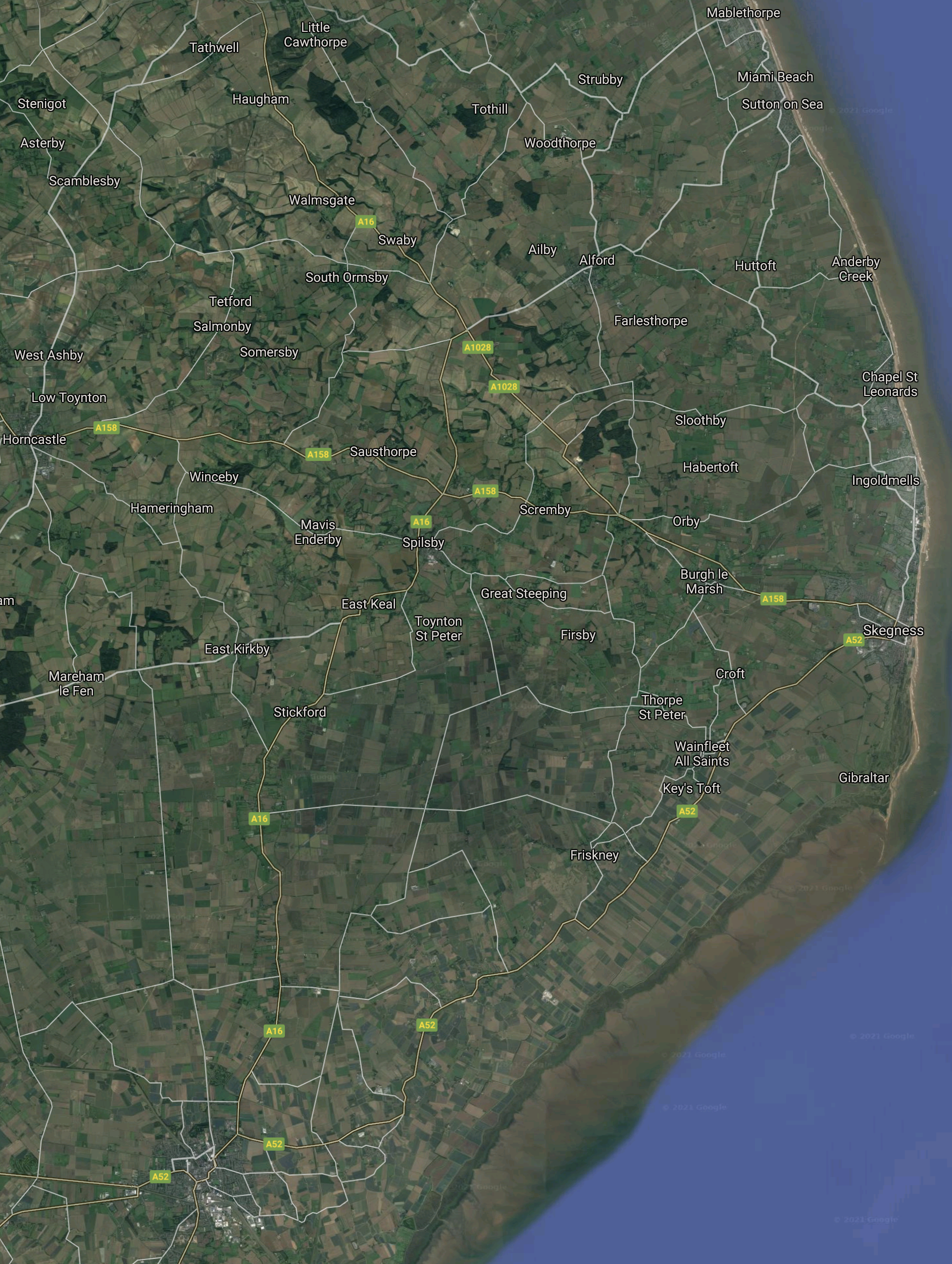
Note.
- Maplethorpe is in the North-East corner of the map.
- Boston is in the South-West corner of the map.
- Skegness is on the coast between the two.
It would probably be possible to build a single track railway on the old track bed between Boston and the Western side of of Maplethorpe.
Skegness and Maplethorpe
This Google Map shows Skegness station.
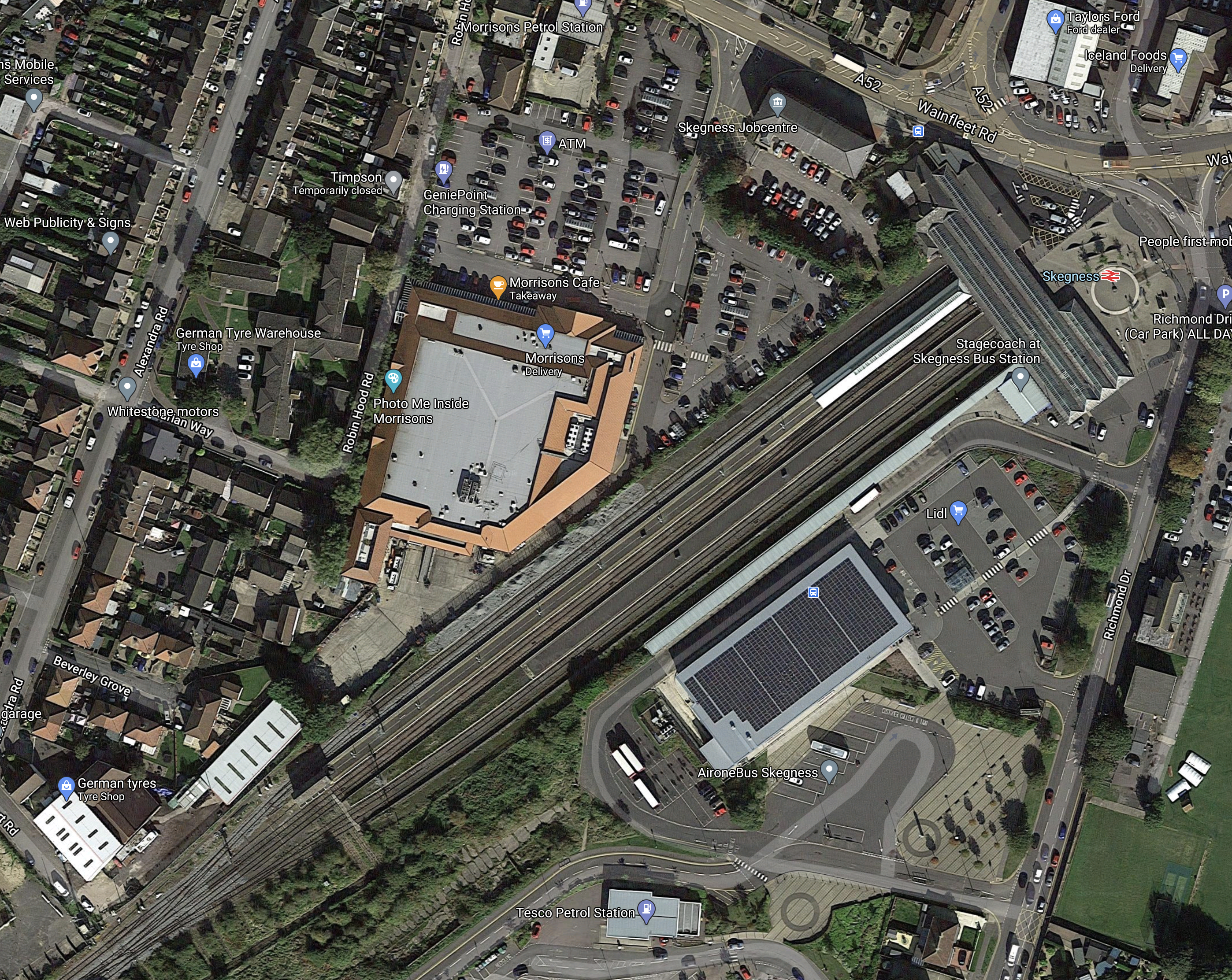
Note, that it is not a small station and it is in the town centre.
Ever since, I saw the coastal tram in Belgium, I have thought that they are a way of giving new life to traditional seaside resorts.
- Skegness and Mablethorpe are less than twenty miles apart.
- So could a tram start at Skegness station, work its way to the coast and then proceed along the coast all the way to Maplethorpe.
- It could even finish at Cleethorpes station.
I definitely think there are possibilities for a coastal tram.
Cleethorpes Station – 16th September 2020
On Wednesday, I took a trip on the South Humberside Main Line from Doncaster to Cleethorpes and back.
Cleethorpes station is a terminal station on the beach, with cafes not far away.


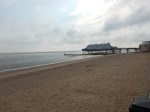
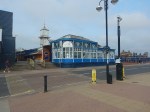
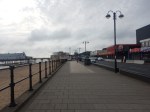

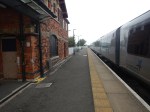
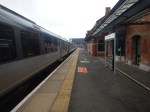
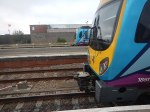
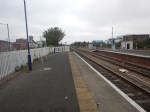
This Google Map shows the station and its position on the sea-front and the beach.
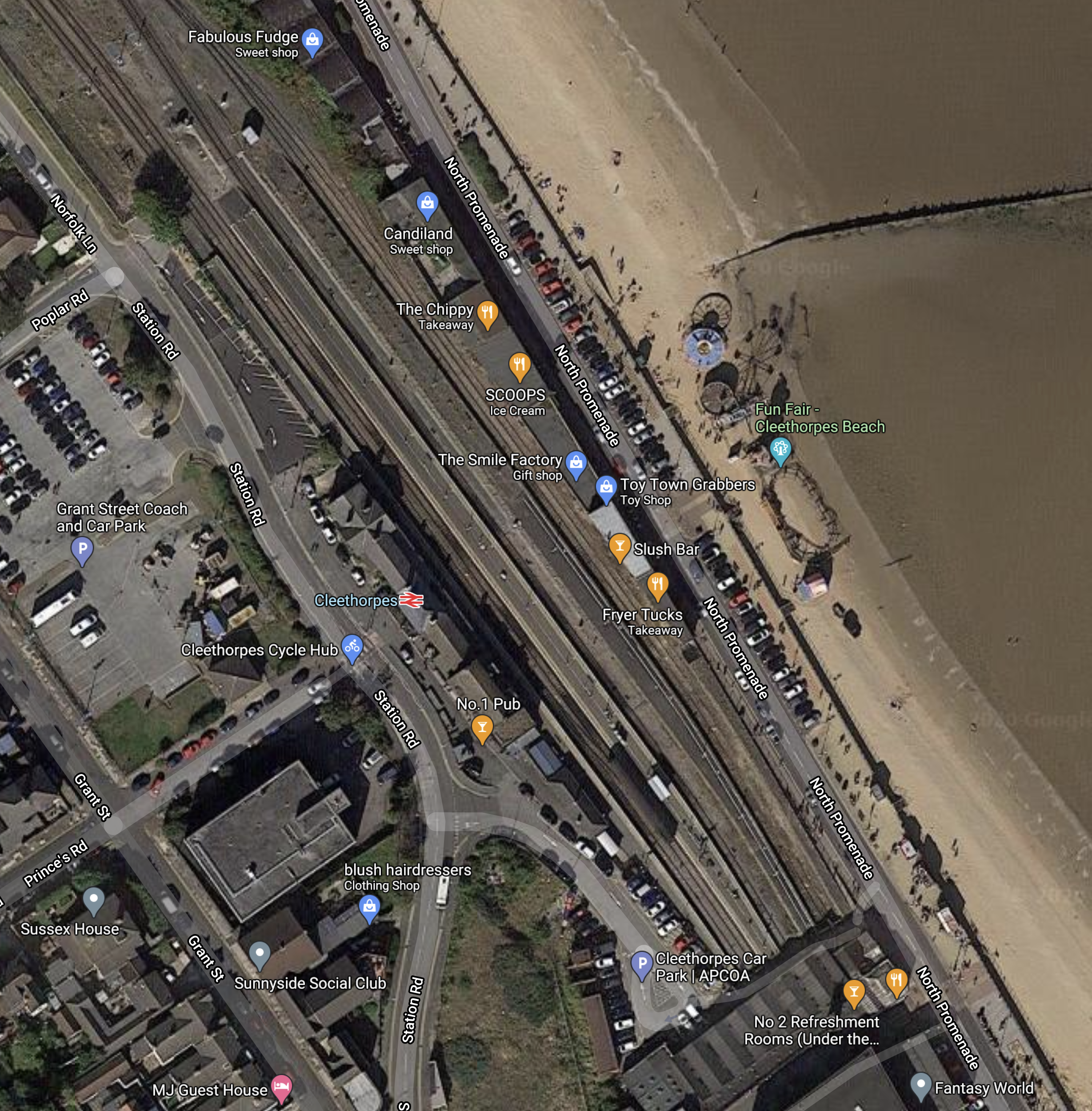
The station organisation was a bit shambolic at present, probably more to do with COVID-19 than anything else, but the station and the train services could be developed into something much better, when the good times return, as they surely will.
Improving The Station Facilities
The original station building is Grade II Listed and although it is only only a three-platform station, there used to be more platforms.
Five platforms or even six would be possible, if there were to be a need.
But as the station has wide platforms, is fully step-free and has most facilities passengers need, most of the improvements would involve restoring the original station building for a productive use.
The Current Train Service
The main train service is an hourly TransPennine Express service between Cleethorpes and Manchester Airport stations via Grimsby Town, Scunthorpe, Doncaster, Sheffield and Manchester Piccadilly.
The trains are Class 185 trains, which are modern diesel multiple units, which entered service in 2006.
There is also a two-hourly service along the Barton Line to Barton-upon-Humber station.
It should be noted that all services to and from Cleethorpes, call at Grimsby Town station.
Could The TransPennine Service Be Run By Battery Electric Trains?
The route between Cleethorpes and Manchester Airport can be split into the following legs.
- Cleethorpes and Grimsby Town – Not Electrified – 3,25 miles – 8 minutes
- Grimsby Town and Habrough – Not Electrified – 8 miles – 12 minutes
- Habrough and Doncaster – Not Electrified – 41 miles – 56 minutes
- Doncaster and Sheffield – Not Electrified – 19 miles – 29 minutes
- Sheffield and Stockport – Not Electrified – 37 miles – 41 minutes
- Stockport and Manchester Piccadilly – Electrified – 6 miles – 10 minutes
- Manchester Piccadilly and Manchester Airport – Electrified – 11 miles – 12 minutes
Note.
- At the Manchester end of the route, trains are connected to the electrification for at least 44 minutes.
- The longest non-electrified leg is the 52 miles between Cleethorpes and Doncaster stations.
- Doncaster is a fully-electrified station.
This infographic shows the specification of a Hitachi Regional Battery Train.
TransPennine Express has a fleet of nineteen Class 802 trains, which can have their diesel engines replaced with battery packs to have a train with the following performance.
- 125 mph operating speed, where electrification exists.
- 56 mile range at up to 100 mph on battery power.
- 15 minute battery charge time.
- Regenerative braking to battery.
- They are a true zero-carbon train.
What infrastructure would be needed, so they could travel between Cleethorpes and Manchester Airport stations?
- If between Cleethorpes and Habrough stations were to be electrified, this would give at least 20 minutes of charging time, plus the time taken to turn the train at Cleethorpes. This would surely mean that a train would leave for Manchester, with a full load of electricity on board and sufficient range to get to Doncaster and full electrification.
- If between Doncaster and Sheffield were to be electrified, this would give at least 25 minutes of charging time, which would be enough time to fully-charge the batteries, so that Grimsby Town in the East or Stockport in the West could be reached.
I suspect that Doncaster and Sheffield could be an early candidate for electrification for other reasons, like the extension of the Sheffield tram-train from Rotherham to Doncaster.
Could The Cleethorpes And Barton-on-Humber Service Be Run By Battery Electric Trains?
Cleethorpes And Barton-on-Humber stations are just 23 miles apart.
This is probably a short enough route to be handled on and out and back basis, with charging at one end by a battery electric train. Vivarail are claiming a sixty mile range for their battery electric Class 230 trains on this page of their web site.
If between Cleethorpes and Grimsby Town stations were to be electrified, this would mean that a range of only forty miles would be needed and the batteries would be charged by the electrification.
A full hourly service, which is surely needed, would need just two trains for the service and probably a spare.
Cleethorpes And London King’s Cross Via Grimsby Town, Market Rasen, Lincoln Central And Newark North Gate
The Wikipedia entry for Cleethorpes station has references to this service.
This is the historical perspective.
In the 1970s Cleethorpes had a twice daily return service to London King’s Cross, typically hauled by a Class 55 Deltic.
That must have been an impressive sight.
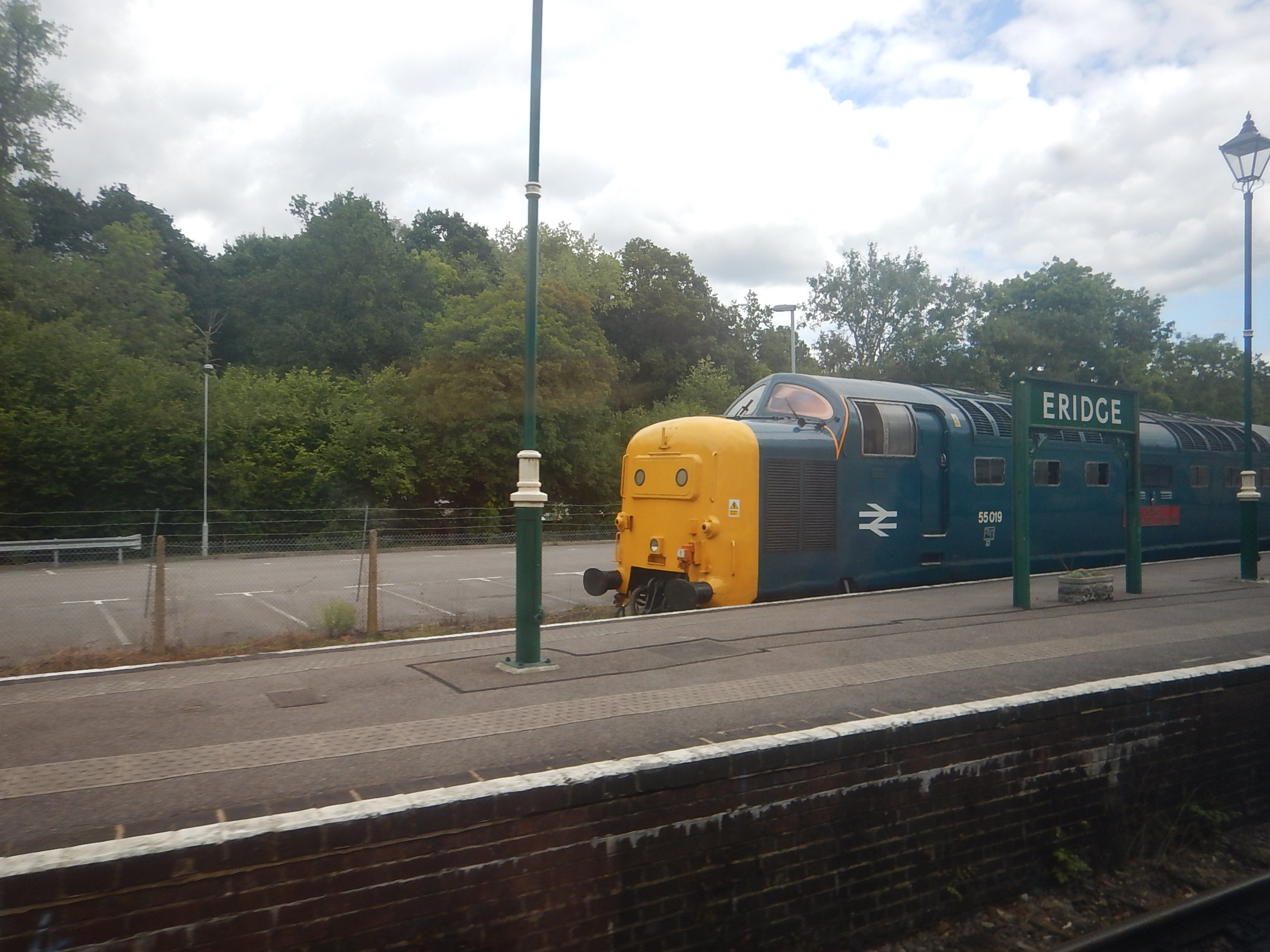
And this was National Express East Coast’s plan.
In August 2007, after National Express East Coast was awarded the InterCity East Coast franchise, it proposed to start services between Lincoln and London King’s Cross from December 2010 with one morning service and one evening service extending from Lincoln to Cleethorpes giving Cleethorpes a link to London and calling at Grimsby Town and Market Rasen. These services were to be operated using the Class 180s but was never introduced. These services were scrapped when East Coast took over the franchise.
It came to nothing, but LNER have been running up to five trains per day (tpd) between London King’s Cross and Lincoln.
I will split the route into legs.
- London King’s Cross and Newark North Gate- Electrified – 120 miles
- Newark North Gate and Lincoln Central – Not Electrified – 16,5 miles
- Lincoln Central and Market Rasen – Not Electrified – 15 miles
- Market Rasen and Habrough – Not Electrified – 21 miles
- Habrough and Grimsby Town – Not Electrified – 8 miles
- Grimsby Town and Cleethorpes – Not Electrified – 3.25 miles
Note that a round trip between Newark North Gate and Lincoln Central is thirty-three miles.
This means it would be possible for one of LNER’s Class 800 trains, that had been fitted with a battery pack and converted into one of Hitachi’s Regional Battery trains, would be able to run a London King’s Cross and Lincoln Central service without using a drop of diesel or needing a charge at Lincoln Central station.
Would it be possible to extend this service to Grimsby Town on battery power?
I suggested earlier that between Cleethorpes and Habrough should be electrified.
As Newark North Gate and Habrough stations are 52.5 miles apart, it would be rather tight for a battery electric train to cover the whole route without an extra charge somewhere.
Possible solutions could be.
- Fit a bigger battery in the trains.
- Extend the electrification at Newark North Gate station.
- Extend the electrification at Habrough station.
I;m sure that there is a solution, that is easy to install.
Conclusion
If between Habrough and Cleethorpes station were to be electrified, these services could be run by battery electric trains.
- Cleethorpes and Manchester Piccadilly
- Cleethorpes and Barton-on-Humber
- Cleethorpes and London King’s Cross
Note.
- The Manchester and London services would be run by Hitachi Regional Battery Trains converted from Class 800 and Class 802 trains.
- The Barton service could be run by a Vivarail Class 230 train or similar.
The first two services would be hourly, with the London service perhaps 1 or 2 tpd.
Cleethorpes would be well and truly on the rail network.
 The Anonymous Widower