Study Highlights Increased Risk Of Second Cancers Among Breast Cancer Survivors
The title of this post, is the same as that of this news story from the Cambridge University.
This is the sub-heading.
Survivors of breast cancer are at significantly higher risk of developing second cancers, including endometrial and ovarian cancer for women and prostate cancer for men, according to new research studying data from almost 600,000 patients in England.
These are the first three paragraphs of the story.
For the first time, the research has shown that this risk is higher in people living in areas of greater socioeconomic deprivation.
Breast cancer is the most commonly diagnosed cancer in the UK. Around 56,000 people in the UK are diagnosed each year, the vast majority (over 99%) of whom are women. Improvements in earlier diagnosis and in treatments mean that five year survival rates have been increasing over time, reaching 87% by 2017 in England.
People who survive breast cancer are at risk of second primary cancer, but until now the exact risk has been unclear. Previously published research suggested that women and men who survive breast cancer are at a 24% and 27% greater risk of a non-breast second primary cancer than the wider population respectively. There have been also suggestions that second primary cancer risks differ by the age at breast cancer diagnosis.
I have a few thoughts.
The Data
The story says this about the data.
To provide more accurate estimates, a team led by researchers at the University of Cambridge analysed data from over 580,000 female and over 3,500 male breast cancer survivors diagnosed between 1995 and 2019 using the National Cancer Registration Dataset. The results of their analysis are published today in Lancet Regional Health – Europe.
A large number of cases were analysed and with these types of analysis, more is definitely better.
I would hope that this study will be repeated in a few years, when more data is available.
The Death Of My Wife
This happened to my late wife.
At about 55 in 2004, my wife developed breast cancer. Strangely, it was in the same position, where a car air-bag had bruised her breast, when it went off in an accident, a few years before.
Chemotherapy was recommended and she tried one round at home, but she couldn’t get on with it.
So she eventually had a long course of radiotherapy in Harley Street going up every day on the train. She was also doing as many court cases as she could to pay for it all.
It appeared everything had worked well and in the Autumn of 2007, she was given the all clear for the breast cancer.
But in October 2007, she was diagnosed with a squamous cell carcinoma of the heart.
She died in December 2007 at just 59.
My wife’s second cancer and her death seems to fit the pattern of the patients in the news story.
My Wife’s Genetic Background
This is rather bare, as she was adopted. Although, I do have her plaits from, when the cut them off at 18, as she’d kept them and I found them after she died.
But she didn’t come from a deprived background.
I Am Coeliac
If I have one regret, it’s that I didn’t encourage her to go gluten-free after the first cancer.
It might have boosted her immune system to help.
Conclusion
Anybody, who has breast cancer must beware a second attack of cancer.
Uf it can kill my fit 59-year-old wife, it can kill anyone.
ICE Report Shows Majority Open To Net Zero Changes
The title of this post, is the same as that of this article on The Engineer.
This is the sub-heading.
A new report has found that a majority of the UK public is amenable to the behavioural changes needed to hit the country’s net zero targets.
These two paragraphs summarise the findings of the report.
Published by the Institution of Civil Engineers (ICE) and the All-Party Parliamentary Group on Infrastructure (APPGI), the report was based on a survey of 1,000 respondents. It found that 57 per cent were open to change, with 23 per cent described as net zero enthusiasts who were likely to have already altered their behaviours, and 34 per cent wanting change, but feeling they needed further empowerment to achieve it.
However, there is far from universal agreement when it comes to behavioural change around climate action. The report found that 30 per cent of people were ‘reluctant followers’, largely acknowledging that the UK must act on emissions, but not feeling personal responsibility for that action. This segment will likely only change their behaviours if forced to do so or seeing a majority of others doing it first. Finally, 13 per cent of those surveyed were classed as ‘net zero resistors’, people who don’t believe action is necessary and have no intention of doing so.
Summing the figures up gives us.
- Net-Zero Enthusiasts – 23 %
- Wanting Change – 34 %
- Reluctant Followers – 30 %
- Net-Zero Resistors – 13 %
All politicians should be forced to read the full report.
What Would I Need To Do To Achieve a Personal Net-Zero?
My circumstances probably cover a lot of people.
- I am a widow living alone.
- My house is well-insulated with solar-panels on the roof, but heated by gas.
- I don’t have or need a car.
- I do nearly all my shopping by public transport and carry it home.
- When I go away in the UK I use trains.
- If I go to Europe, I either go or come back by train.
- I am coeliac, which means I need to eat some meat to stay healthy.
My largest carbon-emitted is probably my house, but it would be unsuitable for most current solutions.
I would put myself in the Wanting Change group, but I could move to a Net-Zero Enthusiast, if the right technology came along.
- I have seen one bolt-in electric replacement for by boiler and when the right one arrives, I’ll probably fit one.
- An affordable battery to work to with my solar panels and also allow me to use Off Peak electricity would be nice.
- As I’m coeliac, I tend to buy in the same food each week from Marks and Spencer to eat in. I might be able to cut my carbon footprint by getting Ocado to deliver. Especially, as some deliveries seem to be bike.
- If TfL decarbonised the bus, that I use most days to and from Moorgate would that lower my carbon footprint?
I suspect the largest amount of carbon outside of my house’s heating, that I’ll emit, will be tomorrow, when I take a train to Newquay.
How Do We Convert The 13 % Net-Zero Resistors?
The recent protests by French and Belgian farmers indicate, that these farmers are probably in this group. And there are other forthright groups!
The only way, that they’ll be converted, is if technology allows them to earn the same amount of money and have the same outgoings, as they do now!
Binge Drinking And Obesity Behind Bowel Cancer Surge In Under-50s
The title of this post, is the same as that of this article in The Times.
This is the sub-heading.
Deaths this year are set to be a third higher than in 2018 with biggest increase among young women
These three paragraphs introduce the article.
Obesity and binge drinking are causing a surge in bowel cancer among young British adults, research shows.
Deaths in those aged under 50 are set to be about a third higher this year than in 2018, with the highest increase in young women.
Bowel cancer is the third most common cancer in the UK, after breast and prostate cancers, and there are 43,000 new cases and 16,000 deaths a year. More than nine in ten cases are in those over 50, but the disease is increasingly being diagnosed in those under 50, in whom it is more likely to be aggressive and deadly.
I am coeliac and whenever, I see some illness that is more common in females, I wonder, if this is down to the fact, that female coeliacs are more common than males. This page on the NHS web site flags it up with this sentence.
Reported cases of coeliac disease are higher in women than men.
This could be because coeliac disease can cause complications in pregnancy, so more women get tested.
The NHS web site also links coeliacs with bowel cancer, but it does say this.
Once you’ve been following a gluten-free diet for some time, your risk of developing these types of cancer is the same as that of the general population.
My son was an undiagnosed coeliac, who worked in the music business. He lived on a diet of ciggies, cannabis and Subways and contracted pancreatic cancer, which killed him at just 37.
He should have got himself tested, as the NHS says, that if you have a first degree relative (Me!), who has coeliac disease, then you should get tested.
So if you think, you have a problem with gluten, get yourself tested!
If not for yourself for your family!
I am surprised that the Italian lead researcher doesn’t mention coeliac disease as Italy has lots of it! All that pasta and pizza!
The Biggest Strawberry In The World
I eat a lot of strawberries, either as fruit or as jam on a scone or bread.
- I always have done since I left home to go to Liverpool University.
- I do wonder, if it was a subconscious decision on my part, as my body reacted to all the alternatives like puddings with all their gluten.
- Certainly, by the time, I was married, I know that I always annoyed my mother-in-law by never eating her gluten-rich puddings.
- Strawberries were also my wife’s passion, when she was pregnant.
Have other coeliacs avoided gluten before diagnosis. I certainly did.
Today, I bought a punnet of strawberries in Marks & Spencer.

Note.
- They were Spanish strawberries.
- To say they were large would be an understatement.
- One weighed in at a massive 64 grammes.
But they all tasted fine with a good texture!
An Excursion To Retford And Worksop
Today’s excursion was designed to be simple.
- Take an LNER train or a Hull Train to Retford station.
- Travel to Worksop station, have a look and take a few pictures.
- Travel back to Retford and take the first train back to London.
- In one if my two visits to Retford, have a look and take a few pictures.
- Talk to passengers and railway staff about what they felt about FirstGroup’s Proposed Sheffield Service, that I wrote about in FirstGroup Applies To Run New London To Sheffield Rail Service.
These were my thoughts and observations.
LNER’s Improved Ticketing
These pictures show the tickets that I bought.

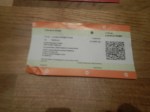

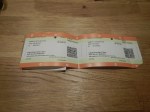
Note.
- I bought my ticket to Retford from the Ticket Office at King’s Cross station.
- The ticket seller gave me a well-designed folder for the tickets.
- I was also able to buy my return ticket between Retford and Worksop on the LNER train to Retford. I’ve tried doing that before and it wasn’t allowed.
Making ticketing easier must be a good thing for passengers, staff and LNER.
£24.75 With A Railcard From King’s Cross to Retford
- The second picture shows my ticket to Retford.
- It cost me just £24,75 with my Senior Railcard.
- I also bought it about half-an-hour before the train left.
- I bought the ticket in the Ticket Office.
- I got a forward-facing window seat with an unrestricted view.
How much would the 145 mile and nearly three-hour journey have cost in a car?
I Missed My Connection At Retford Station
These pictures show my train to Worksop station in Platform 3 at Retford station, as I approached from the South.





Note.
The Northern Trains’s Class 195 train arriving on Platform 3 on the Sheffield and Lincoln Line.
- I arrived in Platform 2 at Retford station at 12:50
- There were three lifts or sets of stairs to negotiate between Platform 2 and Platform 3.
- It must take at least five minutes between the two platforms.
- One of the lifts was out of order and was being serviced by an engineer.
- There was no way, I could have caught the connection, which left at 12:51.
- At least one other passenger, had to wait the one hour and fifteen minutes I waited for the next train, which arrived at 14:03.
I feel that there needs to be a timetable adjustment here, so that as many passengers as possible avoid the long wait.
Retford Station
At least the long wait allowed me to take a lot of pictures and have a cup of coffee in the Costa Coffee on Platform 1.


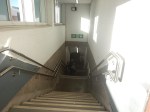




















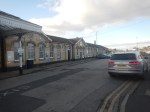








Note.
- The toilets were immaculate.
- The Costa Coffee had friendly and professional staff, but only rudimentary gluten-free options.
- The station is fully step-free with four lifts.
- Platforms 1 and 2 on the East Coast Main Line can take a pair of five-car Class 802 trains, as Hull Train demonstrated.
- The Hull Train in Platform 2 was using the electrification.
- The station is in very good condition.
- The station is Grade II Listed.
This Google Map shows the station.
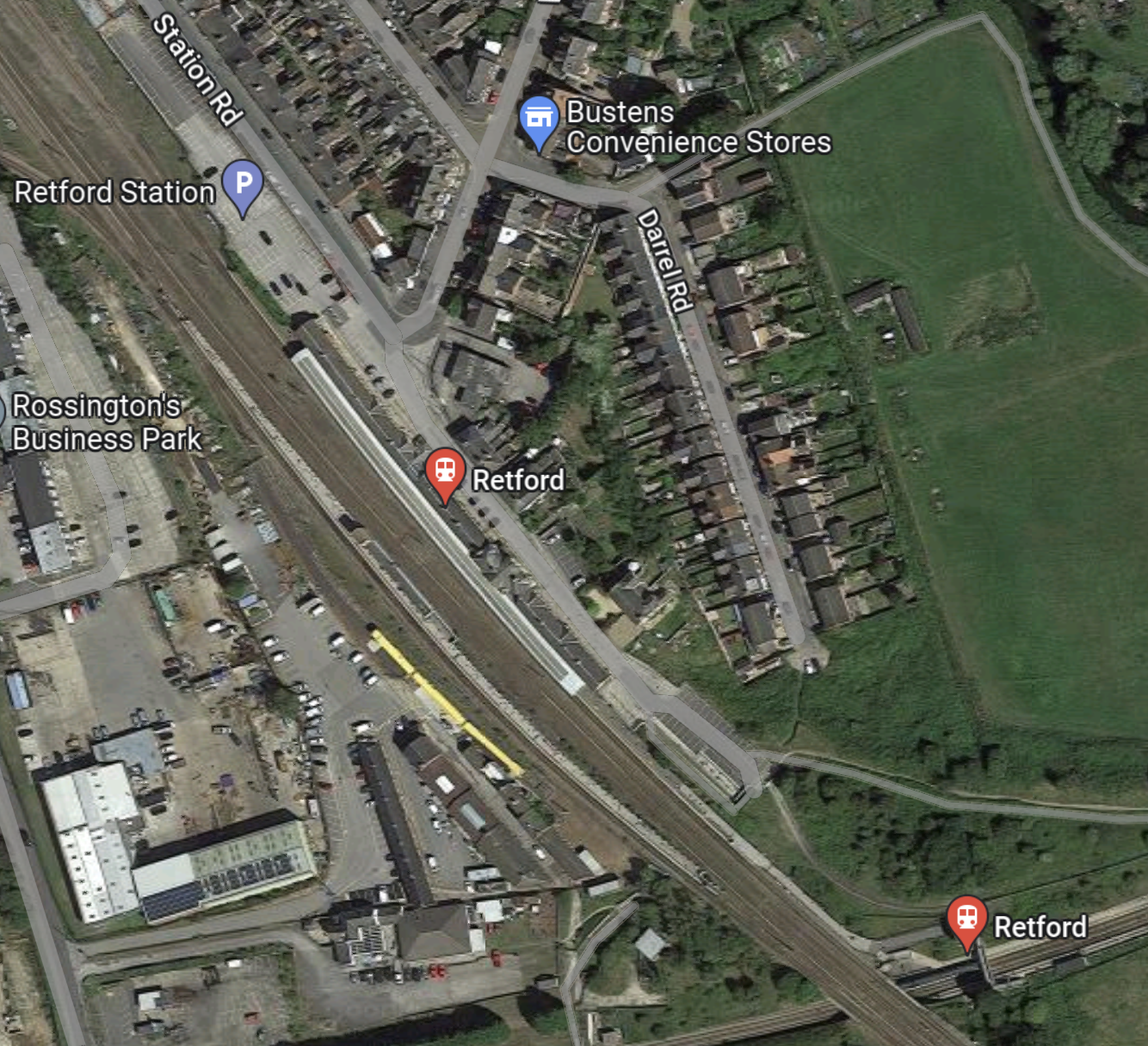
Note.
- The red arrow in the South-East corner are the low-level Platforms 3 and 4.
- The red arrow in the middle marks the low-level Platforms 1 and 2.
- Network Rail’s yellow Mobile Maintenance Train is visible in the siding opposite Platform 2.
- There is space around the platforms.
The station may have development possibilities. Especially, as there are signs of To Let over some of the buildings.
Ambitious Renewable Energy
Retford and Worksop are only eleven minutes away but there were a large wind farm and solar farms between the two stations.








Note.
- I was a bit slow on the uptake and missed the large wind farm.
- The strong sun was reflecting on the windows.
- They weren’t the best of photographs.
I had intended to take more and better pictures on the way back, but circumstances intervened.
This Google Map shows the wind and solar farms.

Note.
- The Sheffield and Lincoln Line going across the map.
- There are solar panels North and South of the railway.
- This is the Walkers Wood Solar Farm, which has a nameplate capacity of 27 MW.
- H M Prison Ranby is at the top of the map.
- The scars of the wind turbines are to the West of Babworth and the crematorium.
- At the moment, I can’t find any reference to the wind farm.
These wind and solar farms are probably a classic place to position a battery.
Prisons And Recycling
Worksop Station
I took these pictures during the time I spent at Worksop station.
























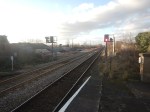








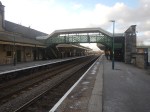






Note.
- The station is not step-free, although you can cross the tracks using the level-crossing.
- The station has a pub and a cafe.
- There are train services to Leeds, Lincoln, Nottingham and Sheffield.
- The station is in very good condition.
- The station is Grade II Listed.
- The platforms are long enough to handle a Class 802 train without any modification.
- Hull Trains could run their Sheffield service to Worksop station without any new infrastructure.
- Lidl are developing a site on the other side of the level crossing.
- There are 100 car parking spaces.
The station may have development possibilities.
Worksop Station Cafe
These pictures show the Worksop station cafe.







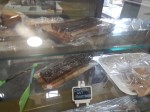




Note.
- It is run by two ladies; Jo and Lyndsey.
- As one is coeliac, there were lots of gluten-free cakes.
- It was cosy and warm on a cold day.
This is definitely one of the better station cafes.
A Double Incident
My journey back to the capital was I suspect untypical.
- I’d arrived at Worksop at 14:14 and finally left at 16:38 on a train for Retford and Lincoln.
- The delay was because someone had been hit by a train between Barnsley and Sheffield, which resulted in cancelled trains.
- When I arrived at Retford at 16:49, there was an LNER train in the platform.
- It was the 15:15 from Leeds and I was told by LNER staff to catch it and get my ticket on the train.
- The train finally left Retford for London 69 minutes late at 17:07.
- We arrived in Peterborough at 19:27, where the train was now 170 minutes late.
- The delay was because someone had been hit by a train at Newark, which results in delays everywhere.
- LNER decided to give up on the train and all passengers were put on other trains.
- I got on the 14:30 from Edinburgh, which arrived in King’s Cross at 20:22, which was 96 minutes late.
Worse things happen at sea.
I am adding this a day after my trip to the North.
This article on the BBC is entitled ‘Major Disruption’ After Person Hit By A Train.
These are the first three paragraphs.
Train services on the East Coast Main Line have been seriously disrupted after a person was hit by a train in North Yorkshire.
Network Rail said the incident happened just before 07:00 GMT between York and Thirsk, with emergency services attending the scene shortly afterwards.
The line was blocked, resulting in delays and cancellations.
Three in two days us three too many.
‘Breakthrough’ Blood Test For Sepsis To Save Lives
The title of this post, is the same as that of this article in the Sunday Times.
This is the sub-heading.
If the trial is a success it could allow speedy diagnosis for a condition that kills 48,000 people a year
These two paragraphs introduce the story.
A blood test is being trialled that can rapidly detect whether a patient has sepsis, in what could be a breakthrough for a condition that is notoriously difficult to diagnose.
Sepsis, which occurs when the immune system overreacts to an infection, kills about 48,000 people each year in the UK. More people die of it annually than of breast, prostate and bowel cancer put together. In severe cases, it can kill within hours.
A friend had sepsis and it nearly killed her. A test like this would probably have shortened her time in hospital.
I am coeliac and also a mathematical modeller and statistician.
- If you are coeliac and stick to your gluten-free diet, which now includes delicious real ale, you are 25 % less likely to suffer from cancer than the general population, according to research at Nottingham University.
- The reverse of this means that an undiagnosed coeliac living a rock ‘n’ roll lifestyle with lots of smoking, cannabis and a diet of gluten-rich junk food, you will have a higher chance of contracting cancer. Just as my undiagnosed coeliac son did, who died of pancreatic cancer at just 37.
- Coeliac testing was difficult until around 1960, when a method using endoscopy was developed. Then in the 1990s, a general test using blood was developed.
I have analysed NHS cancer statistics and there is a step-reduction in cancer rate for those born after 1960 and 1990.
A simple blood test for coeliac disease has found a lot more coeliacs and saved a lot of lives.
My analysis is shown in detail in Hospital Pioneers Cancer Service For Over 70s That Saves Lives And Money.
For that reason, I believe that this new sepsis test could also save a lot of lives.
Coeliac Disease And Risk Of Sepsis
The title of this section, is the same as that of this paper on the British Medical Journal.
This is the conclusion of the paper.
This study showed a modestly increased risk of sepsis in patients with coeliac disease with the highest risk for pneumococcal sepsis. This risk increase was limited to those with coeliac disease diagnosed in adulthood. Potential explanations include hyposplenism, increased mucosal permeability and an altered composition of the intestinal glycocalyx in individuals with coeliac disease.
Perhaps anyone, who goes into hospital, should also be tested for coeliac disease?
My Alcohol-Free And Gluten-Free Real Ale Has Arrived
I have been drinking Adnams Ghost Ship 0.5% beer for some years now.
It should be noted that as a coeliac, I have to drink gluten-free beer and because I am on Warfarin, I can’t drink much alcohol.
My body has certified the beer as gluten-free, ever since it was released a few years ago.
On Saturday, my first consignment of the new Ghost Ship 0.5% beer arrived, which is properly certified as gluten-free.
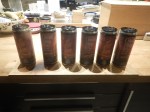
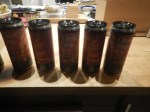
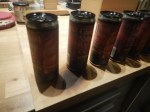


This paragraph from this page on Adnams web site describes what they mean by gluten-free.
Ghost Ship is inspired by tall tales of the ghostly ships that haunted the shores of Walberswick. The seeds of these stories were likely sown by smugglers in a plot to keep the Suffolk coast clear. In contrast, Ghost Ship 0.5%’s creative new look invites you in, flying the flag for low-alcohol beer. It has been painted by a talented local artist with a love of that very same coastline. Adnams invested in a de-alcoholiser specifically to craft Ghost Ship 0.5%. This reverse osmosis plant allows the team to brew and ferment Ghost Ship 0.5% like all our other beers and then, at cold temperatures, remove the alcohol. It leaves all the lovely flavours from a full fermentation in the beer, allowing it to sail away with those original characteristics. Our Ghost Ship 0.5% 330ml cans are validated as gluten free. When producing Ghost Ship 0.5%, we use an enzyme to help with filtration when using our de-alcoholiser. This breaks down gluten-type molecules which helps with the process, reducing gluten content to below 20 parts per million (ppm). Only foods that contain 20ppm or less can be labelled as ‘gluten-free.’
I’ll go along with that!
But then I’ve been drinking Adnams Ghost Ship 0.5% beer for at least five years and I’ve never had a reaction.
Nitrous Oxide–Induced Vitamin B12 Deficiency
The title of this post, is the same as that of this peer-reviewed paper on the National Library of Medicine.
This is the abstract.
Nitrous oxide is a gas that is odorless, colorless, and has a sweet taste at room temperature. Nitrous oxide has several uses, including in surgery and dentistry (referred to as “laughing gas”), in automotive racing, and in aerosol spray propellants. The aerosol spray propellants that typically use nitrous oxide are whipped cream canisters and cooking sprays. Unfortunately, these over-the-counter household items are a source of nitrous oxide that can be used for recreational use. The most popular is the use of industrial-grade canisters having the slang term “whippets.” The nitrous oxide can be extracted by pushing the nozzle down slightly to the side and catching the released gas with a balloon. The contents of the balloon can then be directly inhaled, giving an instant feeling of euphoria. This is not a benign means to achieve a euphoric state but can cause severe nitrous oxide–induced B12 deficiency, which is presented in this case report.
An estimated 800,000 young adults abuse inhalants every year, and almost 11% of high school seniors report using inhalants at least once in their lifetime . Heavy inhalant abuse can result in a variety of side effects, including cardiac arrhythmias, hypoxia, metabolic acidosis, and neurologic deficits. Of all inhalants, nitrous oxide is particularly toxic due to its conversion of the active monovalent form of vitamin B12 to its inactive bivalent form. We present a case of subacute combined degeneration of the spinal cord due to nitrous oxide–induced vitamin B12 deficiency.
Basically, don’t inhale nitrous oxide, unless it’s being administered by a anaesthetist or a dentist.
Interestingly, because I was an undiagnosed coeliac my vitamin B12 was running on empty for much of the first fifty years of my life.
As my B12 was so low and didn’t really respond to regular injections, I was sent off to Addenbrooke’s, where they quickly diagnosed coeliac disease.
I wonder what would happen to an undiagnosed coeliac, who was low in B12, who got addicted to nitrous oxide.
The abstract implies that inhalants can cause cardiac arrhythmias, which has this Wikipedia entry, where this section talks about atrial fibrillation.
Arrhythmia affects millions of people. In Europe and North America, as of 2014, atrial fibrillation affects about 2% to 3% of the population. Atrial fibrillation and atrial flutter resulted in 112,000 deaths in 2013, up from 29,000 in 1990. However, in most recent cases concerning the SARS-CoV‑2 pandemic, cardiac arrhythmias are commonly developed and associated with high morbidity and mortality among patients hospitalized with the COVID-19 infection, due to the infection’s ability to cause myocardial injury. Sudden cardiac death is the cause of about half of deaths due to cardiovascular disease and about 15% of all deaths globally. About 80% of sudden cardiac death is the result of ventricular arrhythmias. Arrhythmias may occur at any age but are more common among older people. Arrhythmias may also occur in children; however, the normal range for the heart rate varies with age.
Doctors tell me, that my stroke was caused by atrial fibrillation.
Hospital Pioneers Cancer Service For Over 70s That Saves Lives And Money
The title of this post, is the same as that of this article in The Times.
This is the sub-heading.
Treatment is adapted to take into account age-related illnesses, such as heart disease, diabetes and dementia.
These three paragraphs outline, what the Christie Hospital is doing.
The Christie Hospital in Manchester is pioneering a specialist cancer service for elderly patients under plans to tackle a “silver tsunami” of cases.
More than 200 patients have been treated by the new team, which was set up to meet the more complex care needs of an ageing population.
The service has nearly halved the number of unplanned hospital admissions among older cancer patients, improving survival and quality of life.
But it’s the graph that follows that I find interesting.
It shows the cancer incidence rate (per 100,000 population) in 2020 by gender and age at diagnosis.
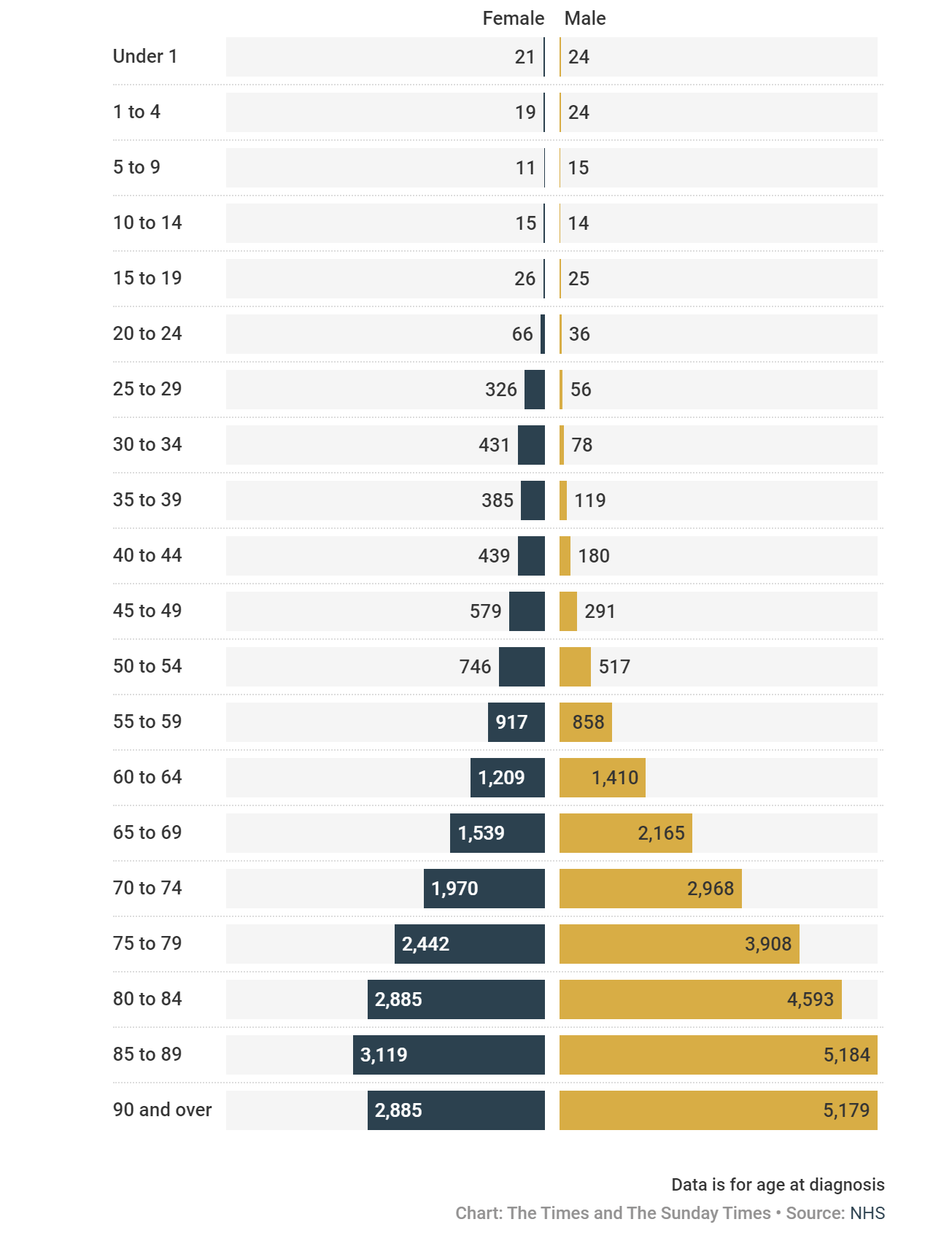
I am a control engineer and statistician and one of the most interesting things in a graph like this is the rate of increase or in this graph’s case the rate of decrease, as the graph effectively has the present at the top.
I have used an old trick and looked at the difference between the groups and the difference between the difference.
Note.
- It seems that the rate of increase of cancer diagnosis with age seems to increase with ages of 60-64 and 25-29.
- This would seem to correspond to those born before 1960 and those born before 1995.
- As a coeliac, I know that the first test for coeliac disease, which used endoscopy was introduced around 1960.
- The modern genetic test for coeliac disease was developed in the 1990s.
Is it coincidence, that the rate of increase of cancer diagnosis with age seems to increase, when a better diagnosis for coeliac disease was introduced?
These are my thoughts!
Coeliac Disease And Me
I am coeliac and I was born in 1947. I wasn’t diagnosed as coeliac until 1997.
I was an unhealthy child, with all sorts of avenues being chased, so in the end they just took my tonsils out.
- It should be remembered, that there was no test for coeliac disease in children until 1960.
- I’ve also only met one coeliac older than me and both her parents were GPs and she was diagnosed by food elimination.
- In fact, I never met a coeliac until I was about 25. He was the two-year-old son of one of C’s friends.
At fifty, an elderly locum gave me a present of a blood test to clear up my long-term health problems. The results showed that my body had very little Vitamin B12. Injections didn’t improve the level, so my GP sent me to Addenbrooke’s.
It was a Monday and all the consultant did was ask a nurse to take several vials of blood. He didn’t ask me any relevant questions or even touch me.
On the Wednesday morning, I got a letter from the hospital saying I was probably coeliac and it would be confirmed by endoscopy.
I must have been one of the first to have been diagnosed by a genetic test on a sample of blood.
Coeliac Disease And My Youngest Son
My youngest son was born in 1972 and after my diagnosis, my late wife felt he was coeliac, as physically he was so like me. But neither him nor our other two sons would get themselves tested.
I am now sure he was coeliac, as his daughter was born with a congenital hernia of the diaphragm and Swedish research says can happen with coeliac fathers. Luckily, she was born in the Royal London Hospital and thanks to heroic surgery at a few days old, she survived and is now in her first year at Southampton University.
Sadly my youngest son died of pancreatic cancer in 2011.
Coeliac Disease And Cancer
Nottingham University have shown that if you are coeliac and stick to a gluten-free diet, you are twenty-five percent less likely to suffer from cancer.
Cancer in the Over Sixties
The following is an extract from A Thought On Deaths Of The Elderly From Covid-19, which I wrote in April 2020.
How many undiagnosed coeliacs are there in those over seventy, who because they are coeliacs, have a compromised immune system?
I would be undiagnosed but for that elderly locum!
How many other coeliacs are there in the UK population?
- Age UK has a figure of twelve million who are over 65 in the UK.
- If 1-in-100, as stated by Coeliac UK, in the UK are coeliac, that is 120,000 coeliacs over 65, who are too old to have been diagnosed as a child, because no test existed.
Note that as of today 177,388 have been diagnosed with Covid-19.
Could the drop in the cancer rate of those born before 1960 be because of the availability of a test for coeliac disease, so that if they were a sickly child like me, they would be diagnosed? As I said earlier diagnosed coeliacs have a lower cancer rate than the general population.
Cancer in the Under Thirties
I was diagnosed in 1997 by a genetic blood test and there is no doubt that I have coeliac disease.
As the test is so simple, I wonder what proportion of coeliacs born since the Millennium have been diagnosed.
And how does this contribute to the drop in cancer cases?
More Research Needs To Be Done
It is obvious to me, that research needs to be done into the link between undiagnosed coeliacs and cancer.
It might be prudent to test every cancer patient for coeliac disease. My GP told me, that the test is not expensive and generally gives the right result.
 The Anonymous Widower