Siemens Mobility and Deutsche Bahn Present New Hydrogen Train
The title of this post, is the same as that of this article on Global Railway Review.
This is the sub-title.
Deutsche Bahn and Siemens Mobility have presented the newly developed Mireo Plus H and a newly designed mobile hydrogen storage trailer.
It seems that Deutsche Bahn and Siemens Mobility have put together a well-thought out plan to use hydrogen on a lot of unelectrified lines.
The Germans have given the project, the catchy name of H2goesRail.
How does that translate into German?
Eridge Station – 3rd May 2022
I documented the work at Eridge station in Eridge Station – 12th July 2021 and it was finished a few days ago.
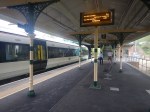
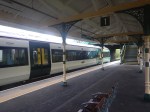
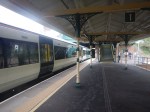
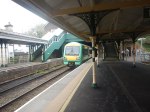
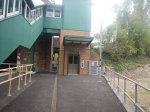
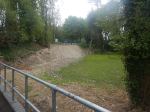
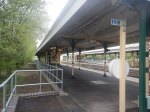
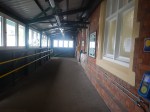
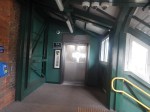
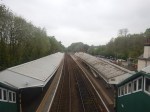
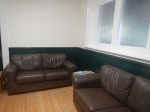
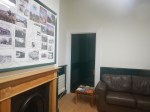
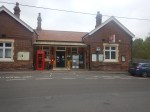
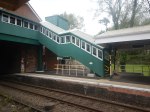
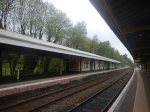
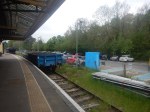
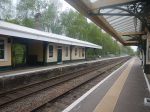
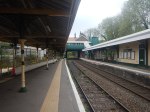
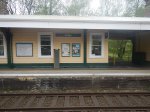
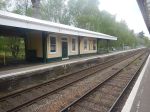
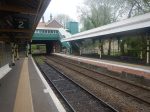
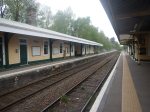
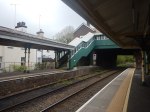


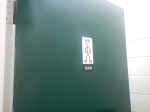

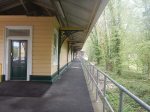
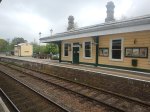
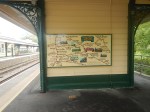
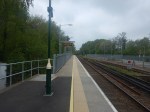
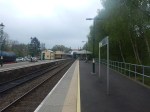
Note.
- The platforms can take ten-car trains.
- The lift on the National Rail side of the station.
- The restored iron supports for the roof.
- The two waiting rooms; one by the ticket hall and the other on the platform.
- The well-appointed toilets, with quirky signs and the all important coat hook.
- There’s even an Amazon Hub.
It certainly is a quality restoration and upgrading to step-free access.
Possible Future Electrification
In Uckfield Third Rail Is NR Priority, I discussed ways that the Uckfield Branch could be electrified.
This picture shows the platforms from the Spa Heritage Railway.
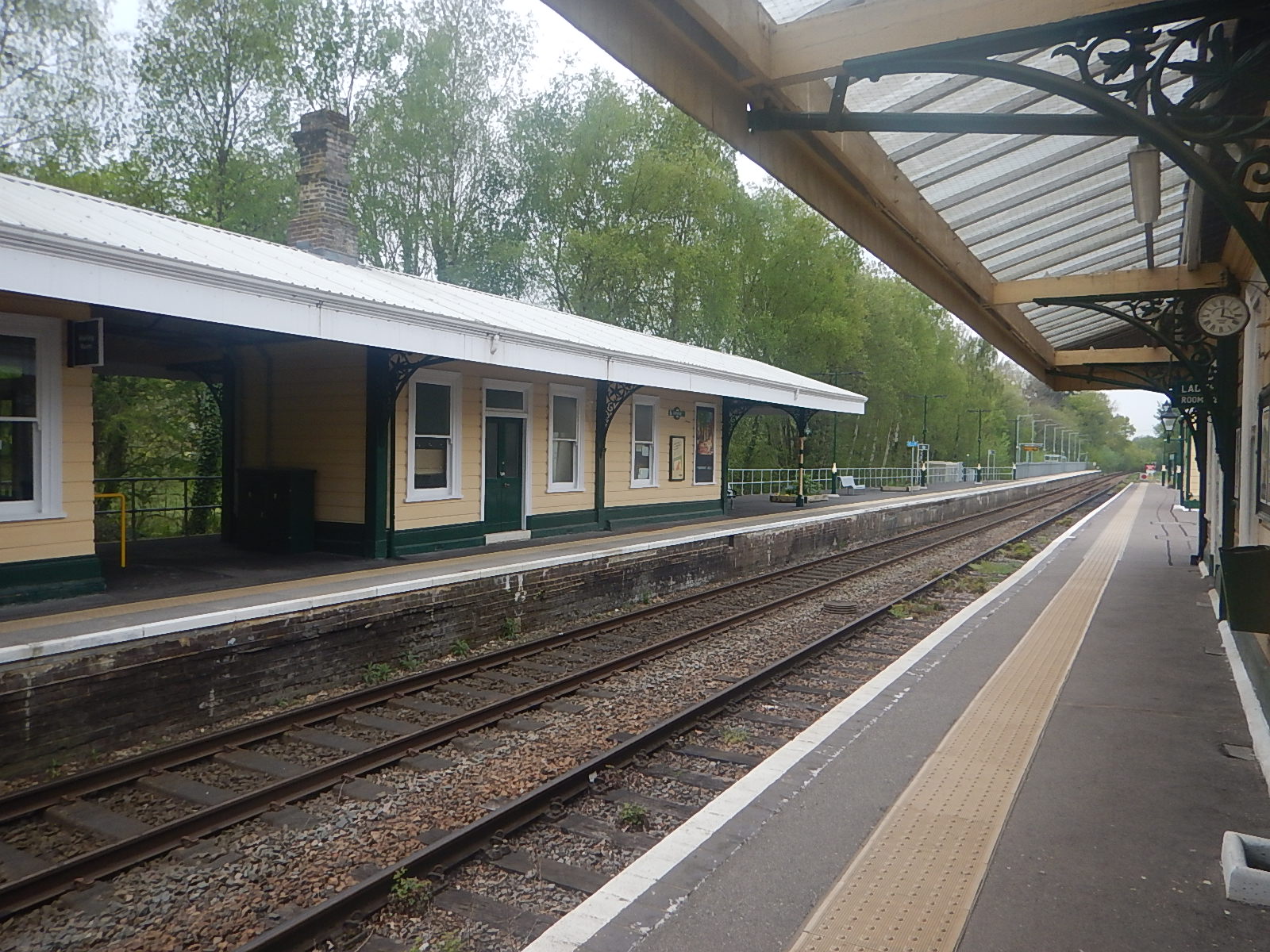
Note.
- All National Rail services call in the far platform.
- The platform will take a ten-car train.
- There is plenty of space for a single extra third-rail between the tracks.
If the power were only switched on whilst trains were in the platform, surely it would be safe.
Uckfield Third Rail Is NR Priority
The title of this post, is the same as that of an article in the April 2022 Edition of Modern Railways.
This is the first two paragraphs.
Electrification of the line between Hurst Green and Uckfield in East Sussex and the remodelling of East Croydon are the top Network Rail investment priorities south of the river, according to Southern Region Managing Director John Halsall. He told Modern Railways that third rail is now the preferred option for the Uckfield Line, as it would allow the route to use the pool of third-rail EMUs in the area. This is in preference to the plan involving overhead electrification and use of dual-voltage units put forward by then-Network Rail director Chris Gibb in his 2017 report (p66, September 2017 issue).
NR has put forward options for mitigating the safety risk involved with the third-rail system, including switching off the power in station areas when no trains are present and section isolation systems to protect track workers.
The Office of Road and Rail hasn’t given Network Rail’s scheme the OK yet, but as an Electrical Engineer, I believe that a safe system is possible.
Making Charging Safe At Greenford
This article on Ian Visits is entitled Ex-London Underground Trains To Be Tested On The Greenford Branch Line.
The article describes how despite using London Underground’s four-rail electrification, it will be possible with the right interlocks and systems to make such a system safe.
As Vivarail’s system is to be installed, it must already agree with all the Health and Safety rules.
A Safe System On The Uckfield Branch
Consider.
- The unelectrified section of the Uckfield Branch is twenty-five miles long.
- There are seven intermediate stations, with the longest section between any two stations under five miles.
- Trains stop in each station on the route.
- Trains appear to have a dwell time of about a minute in each station.
- A ten-car pair of Class 707 trains would be 203.2 metres long.
- All platforms have been lengthened for ten-car trains.
- A battery-electric train running along unelectrified track, is no more dangerous than a diesel train.
This picture shows some typical third-rail electrification at Kidbrooke station in South East London.
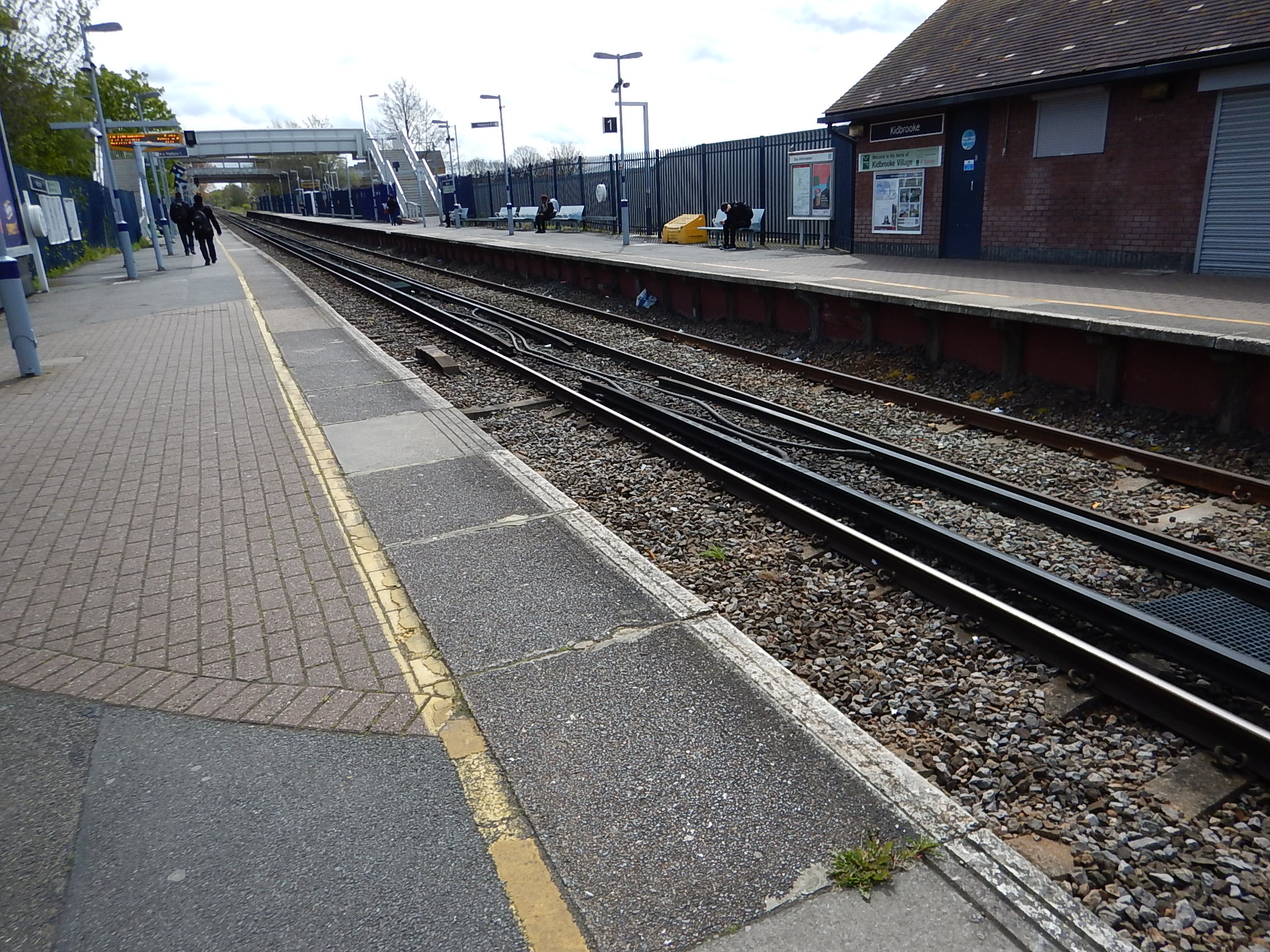
Note.
- The electrified rails are between the tracks.
- Gaps are possible to isolate sections of tracks.
- The third-rail is tapered, so that the third-rail shoes on the train can connect and disconnect easily.
Suppose you have a third-rail electric train with a range of say seven or eight miles on batteries.
Would it be possible to devise a safe electrified railway using this train and standard third-rail electrification with some safety modifications?
- The track in each station would be electrified in the normal way with the third-rail away from the platform.
- The length of electrification in each station would be a few metres shorter than the length of the ten-car pair of Class 707 trains.
- This would mean that the train would completely cover the electrification, when it stopped in the station.
- The third-rail electrification would only be switched on, when a train is stopped in the station and the right interlocks are engaged.
- Even if a passenger fell onto the tracks, they would probably be safe, unless they crawled through the wheels to the centre of the tracks.
- There would be no electrification between the stations, which would protect track workers and trespassers.
I believe that a safe system can be devised.
A train going through a station would do the following.
- Slowing down, the train would use regenerative braking, that helped to charge the batteries
- The train would stop in a station, so that it connected with and covered the third-rail.
- When the charging system recognised that a train was connected, it would start to charge the batteries.
- When all passengers had unloaded and loaded and the train was ready, the driver would stop the charging process.
- The train would move to the next station on battery power.
- Safety interlocks would stop the charging under various unsafe circumstances.
I believe that Siemens could have developed a charging system like this for their Class 707 trains, as some of their other trains of a similar vintage to the Class 707 trains already offer battery options.
A Stepping Stone Approach
On the unelectrified section between Hurst Green Junction and Uckfield, there are the following stations.
- Edenbridge Town – two platforms
- Hever – two platforms
- Cowden – single bi-directional platform – 7.9 miles South of Hurst Green Junction.
- Ashurst – two platforms
- Eridge – single bi-directional platform – 6.3 miles South of Cowden
- Crowborough – two platforms
- Buxted – single bi-directional platform – 4.7 miles South of Eridge
- Uckfield – single platform – 2.3 miles South of Buxted
Suppose the following were to be done.
- Do nothing at the two platform stations.
- Fit an intelligent fast charging system at Cowden, Eridge, Buxted and Uckfield.
- If it was felt to be needed to ensure reliable operation, the power supply to the Southbound platform could be boosted at Hurst Green station.
- Procure some ten-car battery-electric trains, which have regenerative braking and a range of perhaps ten-twelve miles on battery power.
Note.
- A pair of five-car trains could be used instead of ten-car trains.
- Some five-car Class 377 trains fitted with batteries might be ideal.
- This would mean only four platforms would need to be electrified with fast charging systems.
I am sure that Vivarail Fast Charge systems could be used, if they were modified to work with standard third-rail systems and for bi-directional use.
What size of battery would be needed for this approach?
In an article in the October 2017 Edition of Modern Railways, which is entitled Celling England By The Pound, Ian Walmsley says this in relation to trains running on the Uckfield Branch, which is not very challenging.
A modern EMU needs between 3 and 5 kWh per vehicle mile for this sort of service.
So for a ten-car train running for twelve miles, the train would need a battery capacity of between 360 and 600 kWh.
Or if it was two five-car trains between 180 and 300 kWh in each train.
Note that Vivarail find space for 424 kWh in the two-car Class 230 train, I wrote about in Battery Class 230 Train Demonstration At Bo’ness And Kinneil Railway.
I believe that a five-car Class 377 or 707 train could be fitted with a 300 kWh battery and this would give the train a range of 12 miles, which would enable it to provide a battery-electric service on the Uckfield Branch.
HS2 Reveals Dramatic Carbon Saving With Ambitious Modular Design For Thame Valley Viaduct
The title of this post, is the same as that of this press release on High Speed Two.
This is the first paragraph.
HS2 today revealed the final designs for the Thame Valley Viaduct and the pioneering pre-fabricated construction methods that will see the 880m long structure slotted together like a giant Lego set, cutting its carbon footprint by an estimated 66%.
This is one of the pictures released in this photoset.

This second picture shows a closer view of a pillar and the catenary.

It does appear in these two views that the catenary and the gantries that support it are more elegant than those that tend to be used on most electrification schemes at the present time.
These paragraphs describe how the design saved carbon emissions.
Applying lessons from recent high speed rail projects in Spain, the design team cut the amount of embedded carbon by simplifying the structure of the viaduct so that every major element can be made off site.
In a major step forward for viaduct design in the UK, the team opted for two wide ‘box girder’ beams per span instead of eight smaller beams – to simplify and speed up assembly.
The production of steel and concrete is a major contributor to carbon emissions, with the new lighter-weight structure expected to save 19,000 tonnes of embedded carbon in comparison to the previous design. That’s the same amount of carbon emitted by one person taking a flight from London to Edinburgh and back 70,000 times.
It would appear that saving weight and using less steel and concrete can save a lot of carbon emissions.
I once got a bonus at ICI because I saved ten metres on the height of a chemical plant. My boss said, I’d saved nearly a million. by using a mathematical model on an analogue computer to show that a vessel in the plant wasn’t needed and this eliminated a complete floor of the plant.
How much concrete and steel has been saved by High Speed Two on this viaduct, by making it more basset than Afghan hound?
Ever since I watched the building of Crossrail’s Custom House station, I have been in favour of off-site construction.
I wrote about it in An Express Station and am pleased to see it being used on High Speed Two.
Innovative Composite Masts Look To Reduce Cost And Increase Efficiency Of Rail Electrification
The title of this post is the same as that of this article on New Civil Engineer.
This is the sub-title.
Engineering consultancy Furrer+Frey will this week unveil its innovative composite masts for rail electrification, which could revolutionise the way that rail electrification is undertaken.
Other points from the article include.
- Development has been undertaken with Cranfield, Southampton and Newcastle Universities and Prodrive and TruckTrain.
- The project was part funded by the Department for Transport and Innovate UK through the First Of A Kind competition.
- The first composite masts have been created and tested at St Bride’s feeder station, just outside Newport in Wales.
This Google Map shows the area, where the test will take place.
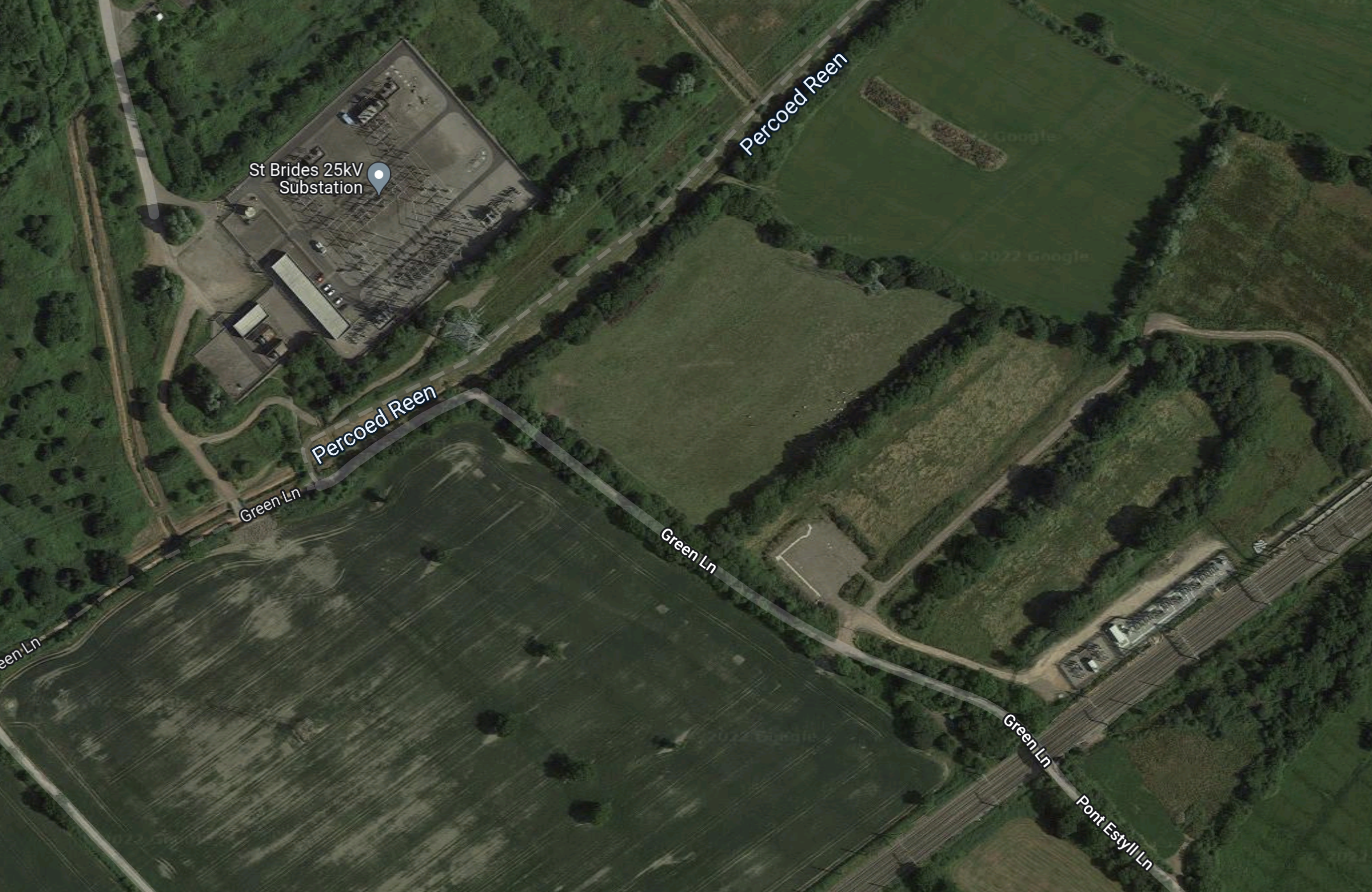
Note.
- The South Wales Main Line crossing the South-East corner of the map.
- Newport station is to the East and Cardiff station is to the West.
- The St. Brides feeder station alongside the railway, by the Green Lane bridge.
I would assume that the connection to the National Grid is via the St. Brides 25 kV Substation in the North-West corner of the map.
The article lists the features of the design.
- A typical steel mast weighs 750 Kg., whereas a composite mast weight just 80 Kg.
- I suspect that these masts can be lifted around by a couple of average workers.
- They have lower wind resistance.
- Piles can be less deep. The prototype piles are 1.25 m., as against many that are over four metres on recent schemes.
- The piles have sensors to detect, when they are out of kilter and need replacing.
- Currently, wonky masts need to be identified by hands-on measurement or observant drivers.
- Two masts have been tested to destruction, to see if they match the theory.
But this to me as an Electrical Engineer is the clincher.
Furrer+Frey GB head of UK projects Noel Dolphin says this about the new design.
When they do take it to a mass manufacturing stage, it will be without carbon fibre inside, which presents another opportunity. The other ultimate goal is that the structure is insulating in itself. It’s another big saving if you can remove the insulators on the electrification cantilevers, as they’re expensive in themselves.
It’s all going the way of much more affordable electrification.
I have a few further thoughts.
The Involvement Of Prodrive
Prodrive are best known for their involvement in motorsport, as the home page of their web site indicates.
But as their site also indicates they get involved in other forms of high-performance disruptive engineering, where their experience is relevant.
Prodrive build the prototypes, but won’t build the production masts, although I suspect, their expertise will be used.
The TruckTrain
TruckTrain is a concept with roots in Coventry University that could be off-beam enough to be the new normal.
I have updated my thoughts on the TruckTrain and it is now in a post called The TruckTrain.
My Conclusion About TruckTrains
I like the concept and I can’t see why it would not be successful worldwide.
The Involvement Of TruckTrain With Furrer+Frey
This puzzled me for a time, as undoubtedly, the TruckTrain will be able to use standard electrification.
But in the TruckTrain leaflet, they mention that the TruckTrain has been designed to use single-track short-terminals.
So did they approach Furrer+Frey to find out about electrifying short terminals and the Swiss company felt TruckTrain was a concept they could support?
Obviously, if the TruckTrain is developed to be a battery-electric train, some mini freight terminals will need the ability to charge the TruckTrain.
Could A TruckTrain Be Used to Support Electrification?
Would a TruckTrain be the ideal support vehicle to erect or repair electrification?
If you take the problem, when the wires have been damaged, a TruckTrain could get to the site at 100 mph, much faster than a truck on the road. It could also have a platform to lift the engineers for inspection and repair.
A TruckTrain could be more than just a transport system.
Conclusion
Furrer + Frey’s lightweight composite electrification masts are a good idea.
Teamed with TruckTrains, they could prove a very powerful freight concept, where new mini freight terminals are needed.
Movable Overhead Electrification To Decarbonise Freight
The title of this post is the same as that as this article on Railway Gazette.
This is the first paragraph.
The use of a moveable overhead conductor rail to eliminate the need to use diesel locomotives at freight terminals where traditional fixed electrification equipment would obstruct loading and unloading is being demonstrated in the UK, and a trial in India is planned.
The Railway Gazette article also has two pictures, which show the overhead conductor rail in two positions.
Ipswich And Wentloog
In A Class 93 Locomotive Hauling A Train Between The Port Of Felixstowe And Wentloog, I wrote about running freight trains between Felixstowe and Wentloog using a Class 93 locomotive.
Currently, there appear to be three services a day each way between Felixstowe and Wentloog.
- They are diesel hauled.
- The Class 66 locomotive can’t travel faster than 75 mph.
- The route between Ipswich and Wentloog is fully-electrified.
- Other services that go from Felixstowe to the rest of the UK via London, are sometimes hauled by a Class 90 locomotive from Ipswich.
- Class 90 electric locomotives can haul trains at up to 110 mph.
This Google Map shows the layout of Wentloog freight terminal.
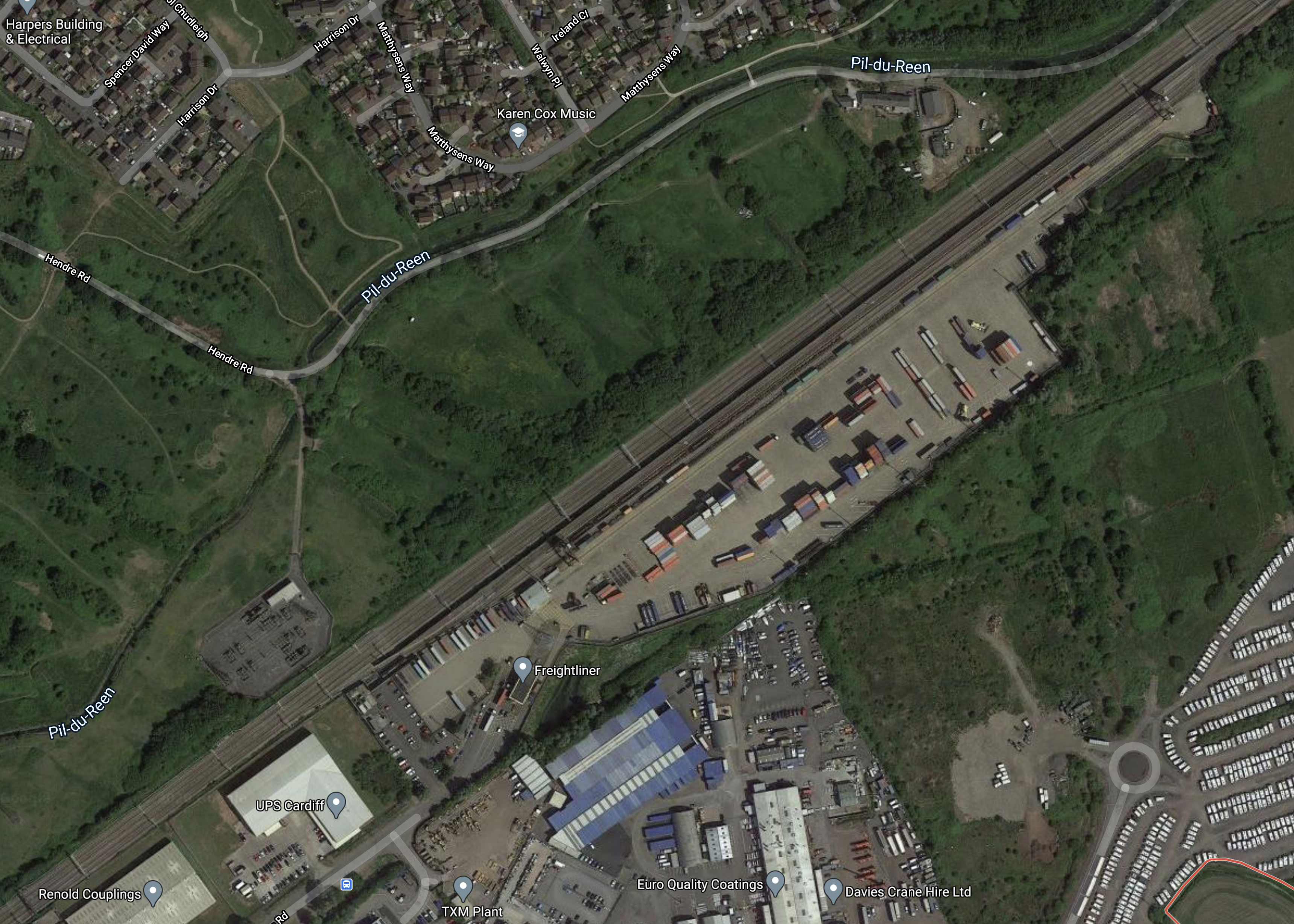
Fitting a moveable overhead conductor rail at Wentloog would surely allow carbon-cutting Class 90 locomotives to haul a train, between Ipswich and Wentloog.
How many other freight terminals can be electrified by installing a moveable overhead conductor rail?
Deutsche Bahn Is Building Overhead Line ‘Islands’ For Battery Trains
The title of this post, is the same as that of this article on Railway News.
This paragraph describes the concept.
This means, instead of electrifying a line in full, as is conventional for electric trains to draw traction power, these lines will feature intermittent electrification. The first of these lines to become operational will be in Schleswig-Holstein in December 2023. Deutsche Bahn says it will only electrify short stretches (a few hundred metres up to a few kilometres) or stations – enough to allow battery-powered trains to recharge on these lines. The state rail operator estimates that this move will mean that more than ten million train kilometres can be completed using electric rather than diesel traction in Schleswig-Holstein. The diesel trains currently in use will be decommissioned. DB estimates an annual diesel fuel saving of around ten million litres.
It looks like a simple concept will save a lot of diesel fuel.
I first talked about electrification islands to charge battery-electric trains in The Concept Of Electrification Islands, which I wrote in April 2020.
Should The Great Northern And Great Eastern Joint Line Be Electrified?
The Great Northern And Great Eastern Joint Line was created in the Nineteenth Century by the Great Northern Railway and the Great Eastern Railway.
- The main purpose was to move freight like coal, agricultural products and manufactured goods between Yorkshire and Eastern England.
- It originally ran between Doncaster and Huntington via Gainsborough, Lincoln, Sleaford, Spalding and March.
- It had a full length of almost 123 miles.
- There was a large marshalling yard at Whitemoor near March.
Over the years the line has been pruned a bit and now effectively runs between Doncaster and Peterborough.
- Trains between Lincoln and March are now routed via Peterborough.
- It carries upwards of twenty freight trains per day in both directions through Lincoln Central station.
- Many of the freight trains are going to and from the East Coast ports.
- The distance between Doncaster and Peterborough is 93.7 miles, as opposed to the 79.6 miles on the East Coast Main Line.
- The line is not electrified, but it connects to the electrified East Coast Main Line at both ends.
There have been some important developments in recent years.
2015 Freight Upgrade
Wikipedia says this about the major 2015 freight upgrade.
In 2015 a £280 million upgrade of the Joint Line by Network Rail was substantially complete, enabling two freight trains per hour to be diverted from the congested East Coast Main Line; gauge enhancements to enable the passage of 9 ft 6 in (2.90 m) containers were included in the work.
The Sleaford avoiding line had been substantially downgraded since the 1980s and was reinstated to double track as part of the 2015 scheme. Resignalling and modernisation of level crossings was included.
This means that freight trains have an alternative route, that avoids the East Coast Main Line.
Doncaster iPort
Over the last few years the Doncaster iPort has been developed, which is an intermodal rail terminal.
- It has a size of around 800 acres.
- The site opened in early 2018.
- There is a daily train to the Port of Southampton and two daily trains to both Teesport and Felixstowe.
- The Felixstowe trains would appear to use the Joint Line.
I feel that as the site develops, the Doncaster iPort will generate more traffic on the Joint Line.
This Google Map shows the Doncaster iPort.

There would appear to be plenty of space for expansion.
The Werrington Dive Under
The Werrington Dive Under has been built at a cost of £ 200 million, to remove a bottleneck at the Southern end of the Joint Line, where it connects to the East Coast Main Line.
The Werrington Dive Under was built, so that it could be electrified in the future.
LNER To Lincolnshire
LNER appear to have made a success of a one train per two hours (tp2h) service between London King’s Cross and Lincoln station.
- LNER have stated, that they want to serve Grimsby and Cleethorpes in the North of the county.
- North Lincolnshire is becoming important in supporting the wind energy industry in the North Sea.
- Lincoln is becoming an important university city.
- Several towns in Lincolnshire probably need a service to Peterborough and London.
- In 2019, the Port of Grimsby & Immingham was the largest port in the United Kingdom by tonnage.
I can see an expanded Lincolnshire service from LNER.
Full Digital Signalling Of The East Coast Main Line To The South Of Doncaster
This is happening now and it will have a collateral benefits for the Joint Line.
Most passenger and freight trains will also use the East Coast Main Line, if only for a few miles, which will mean they will need to be fitted for the digital signalling.
This could mean that extending full digital signalling to Lincolnshire will not be a challenging project.
Arguments For Electrification
These are possible arguments for electrification.
Electric Freight Trains To And From The North
It would be another stretch of line, that could accommodate electric freight trains.
An Electrified Diversion Route For East Coast Main Line Expresses
Currently, when there is engineering blockades between Doncaster and Peterborough on the East Coast Main Line, the Hitachi Class 800 and Class 802 trains of Hull Trains and LNER are able to divert using their diesel power.
But the electric trains of LNER and Lumo have to be cancelled.
An electrified diversion route would be welcomed by passengers and train companies.
It would also mean that any trains running from King’s Cross to electrified destinations would not to have any diesel engines.
An Electrified Spine Through Lincolnshire
If there was an electrified spine between Doncaster and Peterborough via Gainsborough, Lincoln, Sleaford and Spalding, these stations would be these distances from the spine.
- Boston – 16.8 miles
- Cleethorpes – 47.2 miles
- Grimsby Town – 43.9 miles
- Market Rasen – 14.8 miles
- Skegness – 40.7 miles
Note.
- These distances are all possible with battery-electric trains.
- Charging would be on the electrified spine and at Skegness and Cleethorpes stations.
All of South Lincolnshire and services to Doncaster would use electric trains.
London Services
London services would be via Spalding and join the East Coast Main Line at Werrington.
- Boston and Skegness would be served from Sleaford, where the train would reverse.
- Market Rasen, Grimsby Town and Cleethorpes would be served from Lincoln, where the train would reverse.
This would enable Cleethorpes and Skegness to have at least four trains per day to and from London King’s Cross.
North Lincolnshire Services
There are two train services in North Lincolnshire.
Cleethorpes and Barton-on-Humber.
Cleethorpes and Manchester Airport via Grimsby Town, Scunthorpe, Doncaster, Sheffield and Manchester Piccadilly.
Note.
- Cleethorpes would need to have a charger or a few miles of electrification, to charge a train from London.
- Doncaster, which is fully electrified is 52.1 miles from Cleethorpes.
- Barton-on-Humber is 22.8 miles from Cleethorpes.
Battery-electric trains should be able to handle both services.
Arguments Against Electrification
The only possible arguments against electrification are the disruption that the installation might cause and the unsightly nature of overhead gantries.
Conclusion
The Great Northern and Great Eastern Joint Line should be electrified.
Transformer Deliveries Mark Major Milestone For Braybrooke Substation Project And The Midland Main Line Upgrade
The title of this post, is the same as that of this press release from National Grid.
The press release says this.
Since early 2021 National Grid Electricity Transmission (NGET) has been building a new electricity substation near Braybrooke, on the outskirts of Market Harborough in Leicestershire.
The new substation, once complete, will form a vital part of electrical infrastructure to support Network Rail’s electrification of the Midland Main Line.
Following months of hard work, the project has reached a major milestone, as the engineering team have taken delivery of two new transformers.
The transformers arrived during November and were delivered via an access road off Kettering Road built to ensure construction traffic avoids the areas of Market Harborough and Braybrooke. Weighing an impressive 100 tonnes, they will now be installed at the substation over the coming months.
This Google Map shows the access road.

Note.
The main A6 road running across the top of the map.
Kettering road leads off it into Market Harborough.
The Midland Main Line running across the bottom of the map.
The access track runs between the two.
This enlargement of the South East corner of the map shows the 400 kV overhead transmission line.
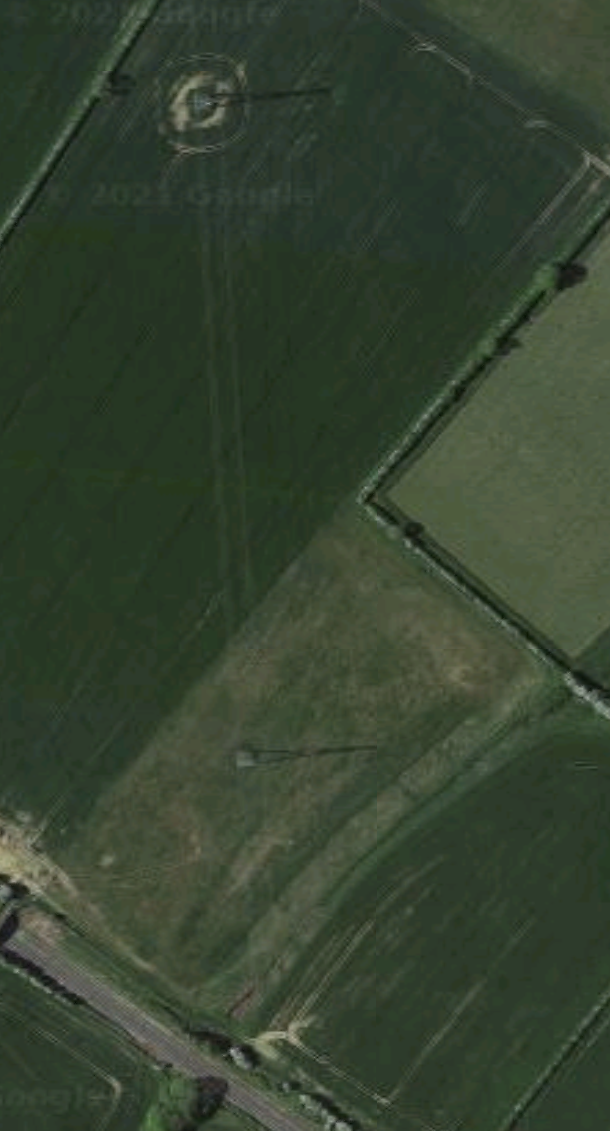
Note that the shadows give away two 400 kV pylons.
Will the sub-station be built in the smaller rectangular field?
How Many Sub-Stations Will Be Needed For The Midland Main Line Electrification?
I seem to remember that the Great Western Main Line to Cardiff was electrified with just three sub-stations, London, Cardiff and one in the middle and the London one is shared with Crossrail.
So I suspect that the feed of electricity may only need one further substation at the Northern end.
Conclusion
It does seem that National Grid have planned this well.
I suspect, bringing in the transformers didn’t cause too much disruption and the route gives good access to the overhead line.
Leicester Station – 4th Jan 2022
Leicester station has a Grade II Listed frontage.
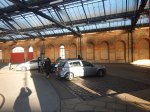





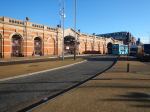
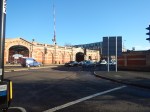
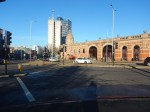
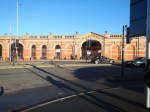
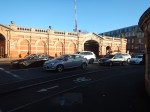



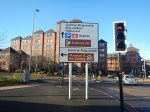

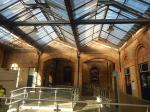

Note.
- It is an impressive Victorian station.
- The station building is on a bridge over the tracks.
- The station is also on one of the main roads through Leicester.
- The road layout is very complicated.
This 3D Google Map, shows an aerial view of the station.
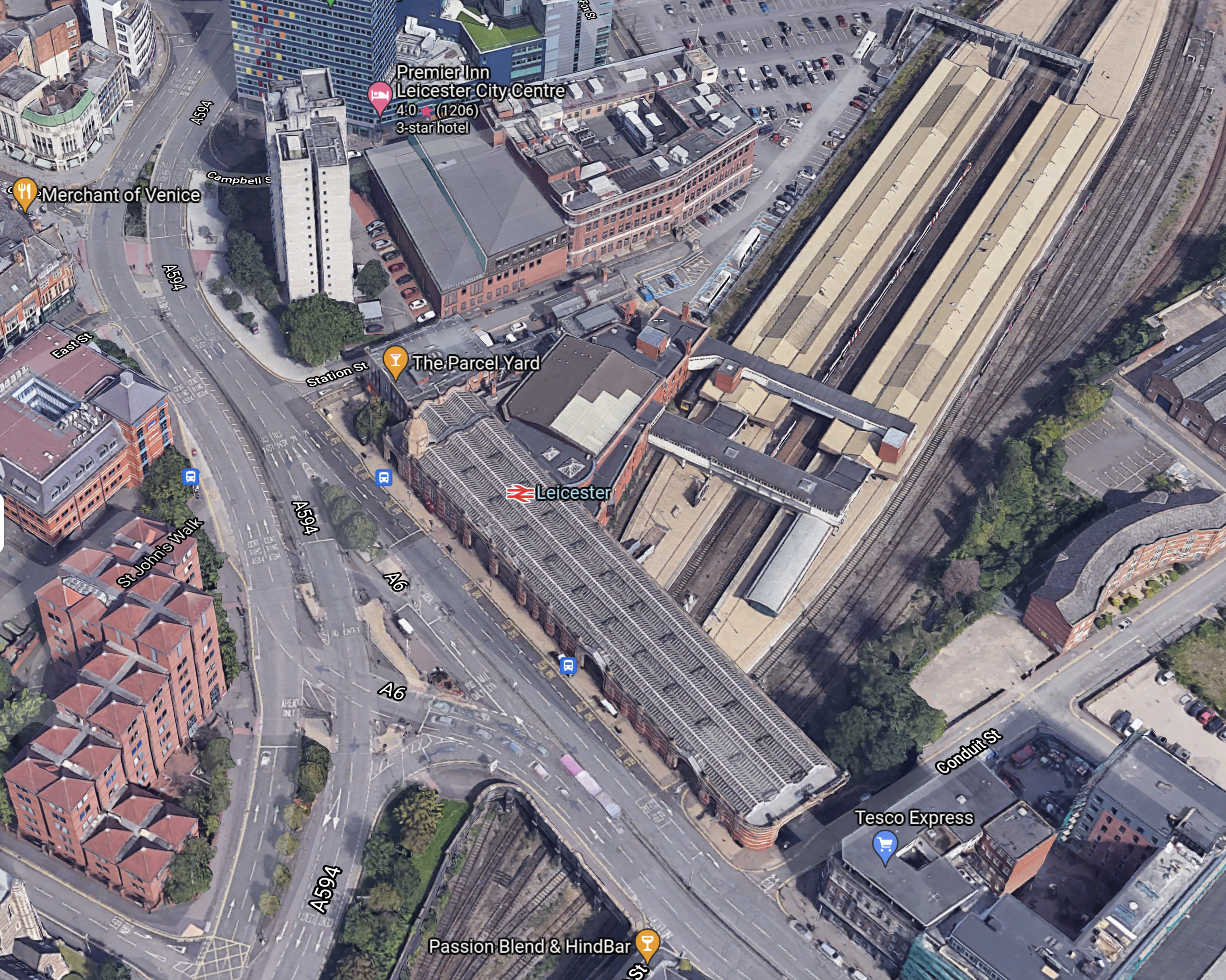
Note.
- There four platforms, which are numbered 1-4 from the left.
- The expresses between London and Derby, Nottingham and Sheffield use the two middle tracks.
- Other main line and East-West services use the outside platforms.
- There is an avoiding line for freight services.
This second 3D Google Map, shows an enlargement of the frontage of the station.
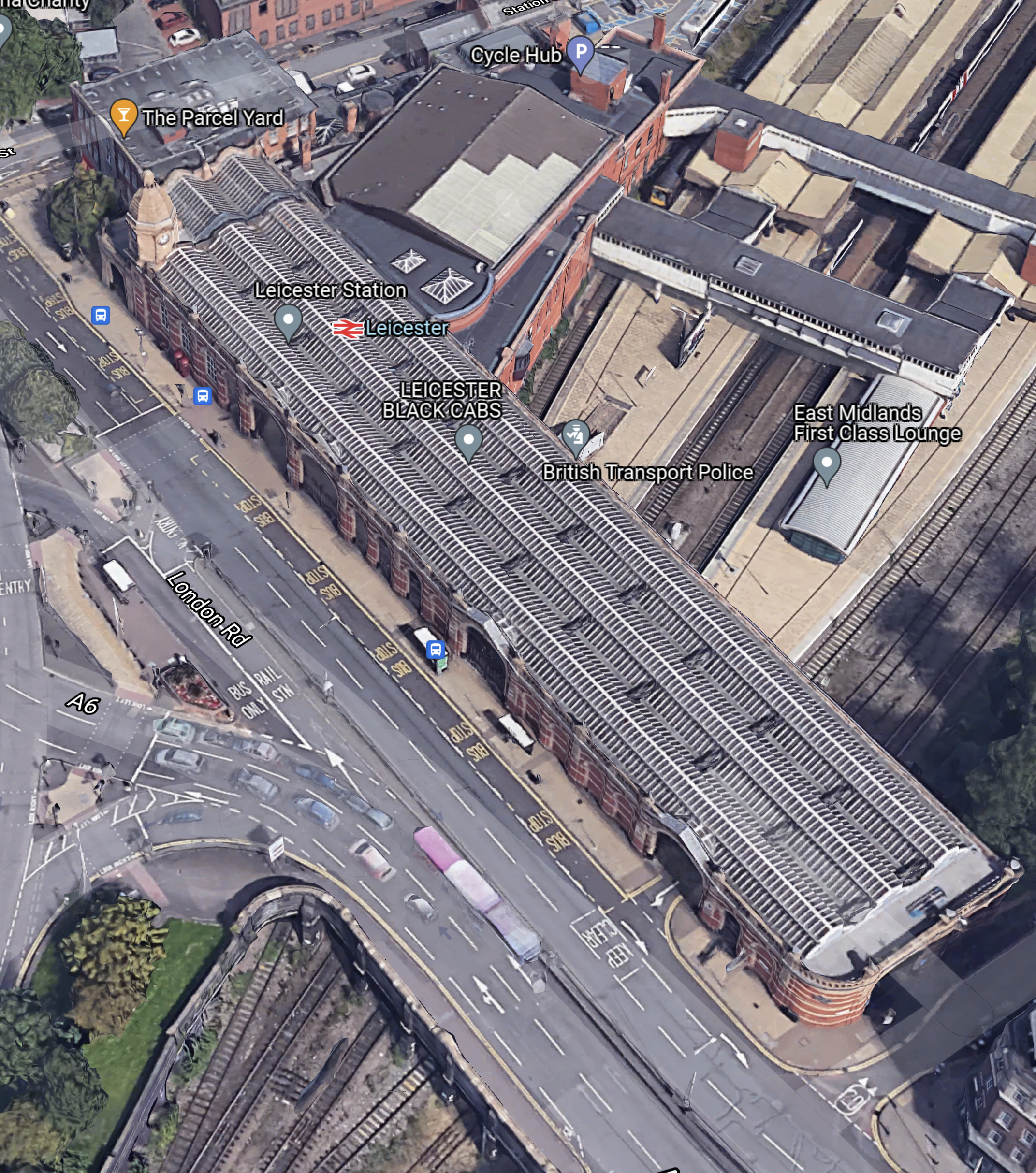
There are plans to increase the capacity of the station.
A fifth platform will be added.
Three miles of quadruple track will be be built South of the station.
The Midland Main Line is also to be electrified.
This second set of pictures shows the platforms at Leicester station.
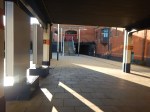
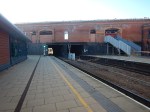
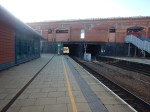
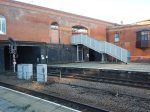
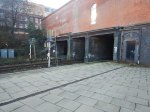
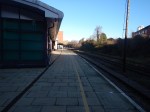
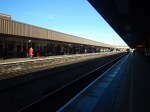
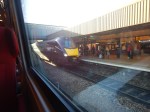
Note.
- The tunnels under the road and the station entrance.
- They are not very large.
- There are five tracks.
It is going to be a tight squeeze to electrify under the bridge.
 The Anonymous Widower