Velocys Welcomes US Government SAF Policy Support
The title of this post, is the same as that of this article on London South East.
This is the first paragraph.
Velocys plc – Oxford, England-based fuels technology company – Welcomes US government announcement last week of a set of comprehensive new policy actions in support for Sustainable Aviation Fuel production in the US. Notes Velocys is cited in a White House briefing paper setting out the Biden administration’s plans to incentivise commercial scale supply of SAF in the US to meet decarbonisation objectives while stimulating economic growth.
I hope that being cited by the White House is a good thing.
I do think though, that Velocys have the technology, that could help us to keep flying until hydrogen-powered aircraft are developed.
Velocys’ Fischer–Tropsch Tech Picked For E-fuels Project In Japan
The title of this post is the same as that of this article on Renewables Now.
Fischer–Tropsch technology has a chequered history, as it has been used by regimes like Nazi Germany and South Africa under apartheid to create the fuel they need.
But now Oxford University spin-out company; Velocys have improved the process, so that it can turn rubbish destined for landfill into sustainable aviation fuel.
This is the last paragraph from the article.
The developer says its FT reactor can enable the production of SAF from household waste and woody biomass. The end product is a high-quality version of existing fuels, requiring no changes to engines or infrastructure, Velocys says on its website.
This is surely a viable alternative to keep airlines flying, until hydrogen-powered planes are developed.
Are Disposable Nappies A Wasted Resource?
I stated my views on disposable nappies in this post called Disposable Nappies, where this was the first sentence.
From a scientifically green point of view, in many places I’m against using disposable nappies, as they clog sewers, end up in landfill and I’ve even seen them in litter bins in parks. We used real nappies for all our three children in the seventies, washing them ourselves in a machine for the first and then using a nappy service for the last two.
But dirty nappies contain a lot of the ingredients, that can be used to make hydrocarbons.
This article from the Sunday Times in 2018 is entitled Syngas, The New Jet Fuel — Stinky Nappies And Coffee Cups.
These are the first two paragraphs of The Times article.
With their packed cabins and recycled air, long-haul passenger jets are the last place where you would want to encounter the whiff of a dirty nappy.
However, old nappies are to be used — along with other non-recyclable waste such as meal packaging and takeaway coffee cups — to power British Airways planes.
Syngas is a mixture of hydrogen, carbon monoxide and some carbon dioxide. Some countries without access to petroleum or diesel created syngas and then used the Fischer–Tropsch process to create the fuels they needed. The process doesn’t have a good reputation as the two main countries to use the process were Germany under the Nazis and South Africa during apartheid.
Why is the use of this process being revived to produce aviation biofuel or sustainable aviation fuel for British Airways?
According to Wikipedia, it can save between 20 and 98 % of carbon emissions compared to conventional jet fuel.
The same process can also make biodiesel for buses, trains and trucks
It’s certainly an area, where a lot of research is going on! Just type “syngas nappies” or “syngas diapers” into Google and you’ll get a lot of serious hits.
By my front door I have a well-designed blue bin.
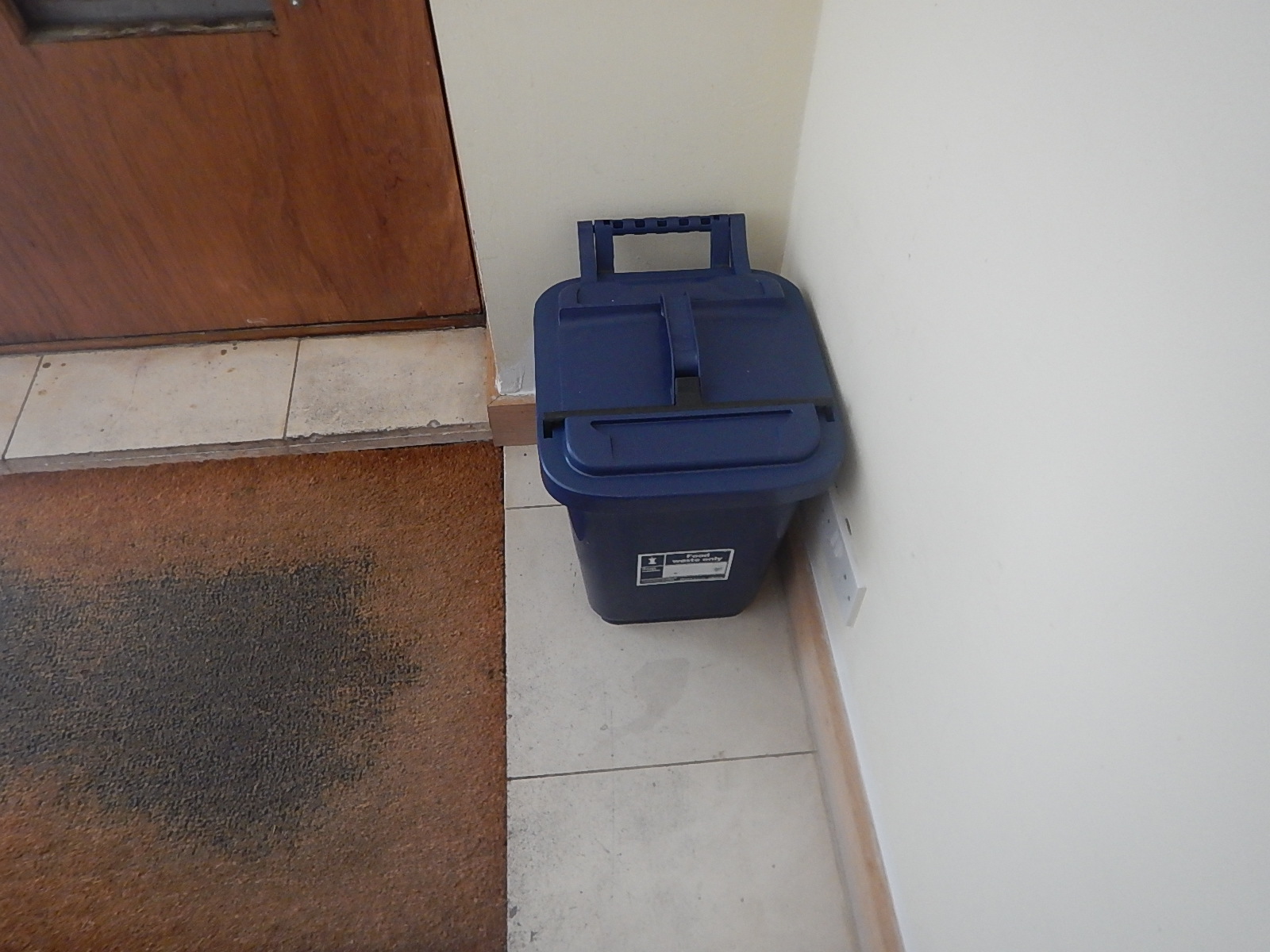
This is for my food waste bin, which is collected once a week.
This page on the Hackney web site is entitled Food Waste Recycling, and this is said about where the food waste goes.
Food waste from households in Hackney is sent to an anaerobic digestion facility in south east England, where it’s turned into renewable energy to power homes and biofertiliser to be spread on local farmland to grow crops.
A similar bin of an appropriate size could be used for nappies.
The nappies would go to an appropriate recycling site, instead of down the toilet or into landfill.
Technology Company Announces Deal That Could Produce Nearly 30 million Gallons Of Aviation Fuel In Mississippi
The title of this post, is the same as that of this article on magnoliastatelive.
This is the first two paragraphs.
A technology company that has developed technology to turn household waste and forest waste into aviation fuel says it has signed an agreement that will help it produce 30 million gallons of fuel in Mississippi every year.
Velocys officials announced this week that they have signed a framework agreement with Koch Project Solutions to develop their biorefinery project which produces standard aviation fuel, in Natchez.
That all sounds good for the spin-out of Oxford University,
Velocys Technology Powers First Commercial Flight
The title of this post, is the same as that of this article on Biomass Magazine.
This is the first two paragraphs.
Velocys plc, the sustainable fuels technology company, is pleased to announce that sustainable aviation fuel (SAF) produced by the company’s proprietary technology using woody biomass residue feedstock has been used in a commercial flight by Japan Airlines.
Japan Airlines flight (JAL #515) from Tokyo to Sapporo was completed on June 17.
Note.
- From the picture, the aircraft appears to be an Airbus A350.
- Velocys is a sign-out from Oxford University.
Sustainable Aviation Fuel is definitely on its way.
New Facility In Scotland To Turn Waste Plastic Into Hydrogen
The title of this post, is the same as that of this article on Hydrogen Fuel News.
This is the first paragraph.
Peel NRE, a part of Peel Land & Property, has unveiled its plans for a second waste plastic to hydrogen facility. This one will be installed on the River Clyde’s north bank at the Rothesay Dock in West Dunbartonshire.
A few relevant points from the article.
- The facility will cost £20 million.
- Input will be non-recyclable plastics, that otherwise would go to landfill.
- There will be a hydrogen filling station at the site.
- The facility can handle 13500 tonnes of plastic per year
- The facility will use technology developed by the Powerhouse Energy Group.
It sounds like, we need more of these plastic to hydrogen facilities!
The Edmonton Incinerator
Although it is officially known these days as the Edmonton EcoPark, as a North Londoner, I will always know it as the Edmonton Incinerator.
I took these pictures with my drone.









These are a few facts from Wikipedia about the waste-to-energy plant.
- It was commissioned by the Greater London Council in 1971.
- It burns waste from the seven North-East London boroughs.
- It generates 55 MW of electricity.
It certainly dominates the landscape alongside the North Circular Road.
But.
It is probably not amongst the greenest of incinerators.
It is probably very much a design of the 1960s.
It is approaching fifty years old.
But it appears that things could be improving.
- There is a large composting and recycling facility being built on the site on the site.
- Plans exist to bring in the rubbish by barge.
This Google Map shows the site.
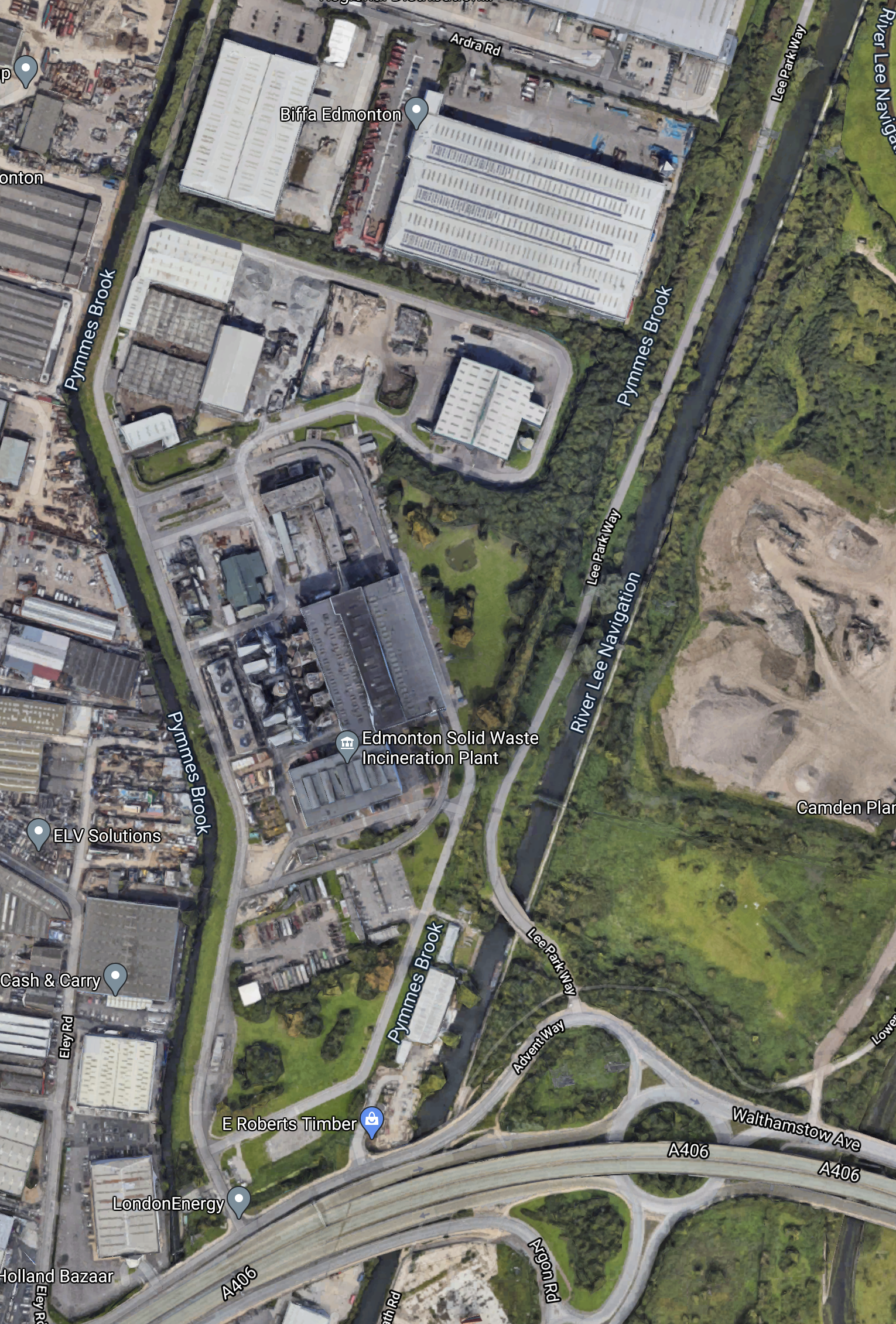
Note.
- The North Circular Road runs across the bottom of the map.
- All of the roads obliterated the famous Cooks Ferry Inn, where I saw the Animals play in the 1960s.
- The River Lee Navigation runs past the incinerator.
- Pymme’s Brook runs on the other side.
It looks from the map, that another reservoir is being built to the East of the canal.
The Guy Who Built The Edmonton Incinerator
I used to work with the guy, who was one of those in charge of the building of the incinerator, who when I met him, was head of the Greater London Council’s Construction Branch, who were using my project management software.
I can’t remember Mr. Samuels first name, even if I ever knew it.
- He was an Austrian Jew, who had trained as an engineer, who arrived in the UK sometime in the 1930s.
- He taught himself English in six weeks and got a job at Lucas.
- At the start of World War II, he volunteered and joined the Royal Engineers.
- He spent the whole war in bomb disposal.
- After the war he became an observer at the Nuremberg Trials.
After all he’d been through, he told me, the worst time of his life, was those years in the early seventies when I knew him, as his wife was dying of cancer.
But he taught me a lot about project management and the real horror of war.
He never told me, how many of his relatives survived the Nazis.
What Will Happen To The Edmonton Incinerator?
This year it will be fifty years since the Edmonton Incinerator was commissioned. It must be coming to the end of its life.
I can’t find any plans, but endless groups, who want it closed rather than rebuilt.
This article in the Hackney Gazette, which is entitled Campaigners Urge North London Incinerator Bidders To Pull Out, is typical.
I am very pro recycling, but then others aren’t as these pictures show.




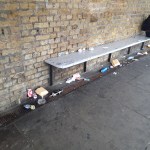
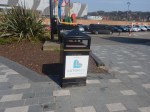


So if some won’t recycle properly, it will all have to go to landfill.
An Odd Tale About Recycling
I applied to be a member of the Independent Monitoring Board of a prison near, where I used to live.
I had a very interesting tour of the prison, where I met several of the inmates.
One thing surprised me.
The prison had a very comprehensive internal recycling system, whereby everything was fully sorted.
One course of training, that was offered to prisoners was how to sort and process all of the rubbish. According to the guy running the course, it was one of the most popular in the prison.
Possibly, because I was told, it prepared prisoners for a job, where there were lots of vacancies.
I wonder if the new £100million recycling centre at Edmonton will use labour trained in the Prison Service?
Velocys Signs Agreement For Commercial-Scale Biomass-To-Jet Fuel In Japan
The title of this post, is the same as that of this article on the Chemical Engineer.
I am very hopeful about Velocys, who are a UK public company, that were spun out of Oxford University and do clever things in the area of chemical catalysts.
Velocys’ Fischer-Tropsch technology does seem to be a good way of creating sustainable aviation fuel from household rubbish and biomass.
Shell Withdraws From Waste To Jet Fuel Plant Project
The title of this post, is the same as that, of this article on Insider Media.
This is the introductory paragraph.
Oil giant Shell has withdrawn from the joint development agreement for a proposed facility for the conversion of waste into aviation fuel.
It would appear that the Altalto project will continue and has no likelihood of folding in the near future.
I like the idea behind Altalto, which will take household and industrial waste and turn it into sustainable aviation fuel and biodiesel.
But I also like Shell’s Blue Hydrogen Process, which takes methane and effectively removes the carbon to create carbon-neutral hydrogen.
Conclusion
I feel the world is a big enough place for both technologies.
 The Anonymous Widower