Porterbrook Acquires ‘379s’ For Lease To GTR
The title of this post, is the same as that of a small article in the April 2024 Edition of Modern Railways.
This is the first paragraph.
Porterbrook has successfully bid to acquire the fleet of 30 Class 379 Electrostar EMUs from Akiem and will lease them to Govia Thameslink railway, which will use them on Great Northern services.
Note.
- Will the Class 379 trains replace all or some of the 39 Class 387 trains currently used by Great Northern?
- The Class 379 trains are 25 KVAC overhead only trains, whereas the Class 387 trains are dual-voltage.
- If the Class 379 trains are not modified to run on 750 VDC third rail, they will be restricted to Great Northern routes.
- It may be a problem, that the Class 379 trains are only 100 mph trains, whereas the Class 387 trains are capable of 110 mph, but I suspect that the Class 379 trains can be upgraded to 110 mph.
It looks to me that it is likely that Govia Thameslink Railway will end up with thirty spare Class 387 trains.
The Wikipedia entry for the Class 387 train, says this about the differences between the two classes of Electrostar.
The Class 387 is a variation of the Class 379 with dual-voltage capability which allows units to run on 750 V DC third rail, as well as use 25 kV AC OLE.
This surely has three main ramifications for Govia Thameslink Railway.
- Third rail equipment can probably be fitted to the Class 379 train, if required.
- The Class 379 train can probably be uprated to the 110 mph of the Class 387 train.
- Retraining the drivers to use the new Class 379 trains, will not be a major exercise.
Govia Thameslink Railway will have the luxury of configuring the trains to run, the services their passengers need and want.
But Govia Thameslink Railway may have a collateral benefit.
In 2015, a Class 379 train was modified to do a trial as a battery-electric multiple unit.
This section in the Wikipedia entry for the Class 379 train, describes the trial.
During 2013, the national infrastructure owning company Network Rail announced that unit 379013 would be used as a testbed for a future Battery-Electric Multiple Unit. Following several months of conversion work and non-service testing, the unit was used to carry passengers for the first time on a Manningtree–Harwich Town service on 12 January 2015. Throughout its five-week trial period, data was gathered to assess its performance; it could reportedly operate for up to an hour on battery power alone, while charging via the pantograph took two hours.
Note.
- I feel it would be reasonable to assume, that a Class 387 train could be easily converted to battery electric operation.
- I’ve met commuters, who used the prototype every day between Harwich and Manningtree and it gave a good service.
- In an hour with stops, a typical Southern commuter service does just 35 miles.
Southern have two routes, where Class 171 diesel trains are still used.
- Ashford International and Ore – 25.4 miles
- Hurst Green Junction and Uckfield – 24.7 miles.
A battery-electric train with a range of 30 miles would surely decarbonise these routes.
- Batteries would be charged, where 750 VDC third-rail electrification is installed.
- As the Class 387 trains are dual-voltage, a short length of 25 KVAC overhead electrification, could be used to charge the train at Uckfield, if that was to be needed.
- Alternatively, the Vivarail Fast Charge system could be fitted.
A rough estimate is that ten battery-electric Class 387 trains would be needed to make Govia Thameslink Railway an all-electric railway.
- The now redundant Class 171 trains could be cascaded to someone, who needs them.
- The remaining twenty Class 387 trains could be used to replace twenty Class 377 trains, or converted to battery-electric operation and be cascaded to another operator.
Hopefully though, after all of the musical trains, there will be a reliable procedure to convert late model Electrostars into battery-electric trains.
The Definitive Battery-Electric Electrostar
It could have this specification.
- Based on a Class 377, Class 379 or Class 387 train.
- Three, four or five cars.
- I suspect the batteries would be spread around the cars.
- Dual-voltage or 25 KVAC overhead electrification only.
- Charging by 25 KVAC overhead electrification or Vivarail/GWR Fast Charge system.
Note.
- Battery range appropriate for the route.
- In GTR And Porterbrook Unveil £55 million Fleet Modernisation, I talk about an internal refurbishment of GTR’s trains.
It looks to me, that, whatever route Govia Thameslink Railway takes, there could be another twenty refurbished Class 377 or Class 387 trains, that could be available for conversion to four-car battery-electric trains.
Great Western Routes That Could Be Run By Battery-Electric Electrostars
Great Western Railway have 30 Class 387 trains, which are used on Thames Valley services around the London end of the Great Western Main Line.
Routes that could be suitable for Battery-Electric Electrostars include.
- London Paddington and Didcot Parkway – two trains per hour (tph) – 10 trains
- London Paddington and Oxford – one tph – 5 trains – 10.5 miles x 2
- London Paddington and Newbury – one tph – 5 trains
- Reading and Newbury – one tph – 2 trains
- Newbury and Bedwyn – one tph – 1 train – 13.3 miles x 2
- Reading and Basingstoke – two tph – 2 trains – 13.6 miles x 2
- Reading and Gatwick – two tph – 7 trains – 18.6 miles
Note.
- The number of trains is my rough estimate of the number, that would be needed to run each route.
- The miles is how much running would be needed on batteries.
My estimated total is 32, but there might be savings from more efficient routes. It looks like a range of around thirty miles would be sufficient.
Conclusion
It looks like after decarbonising Govia Thameslink Railway and the Thames Valley Services of Great Western Railway, there will be twenty high quality Electrostars available to decarbonise other routes.
Could A Heathrow And City Line Be Created?
In The New Step-Free Entrance At Euston Square Station, the following comment was added by Martin.
As said cutting the two new pedestrian tunnels from the existing platforms outside the existing brickwork MAY be less demanding than extending the platform tunnel, however I feel that extending the rail platforms would be a more future proof solution as done on the Elizabeth Line, in addition to reducing walking time to the Main Line with Stuff. I would like to see this as a precursor to extending platforms 5 & 6 at Baker Street west to a new entrance at Glentworth Street. With other improvements along the line over time. Enabling a new “Heathrow & City Line” connection utilising the Elizabeth Line from a rebuilt platform at Westbourne Grove.
I will now look at Martin’s various suggestions.
A Connection Between Elizabeth Line And the Hammersmith & City Line At Westbourne Park Station
The last sentence of the comment is.
Enabling a new “Heathrow & City Line” connection utilising the Elizabeth Line from a rebuilt platform at Westbourne Grove.
Note.
- Martin means Westbourne Park not Westbourne Grove.
This OpenRailwayMap shows the lines through Westbourne Park station.
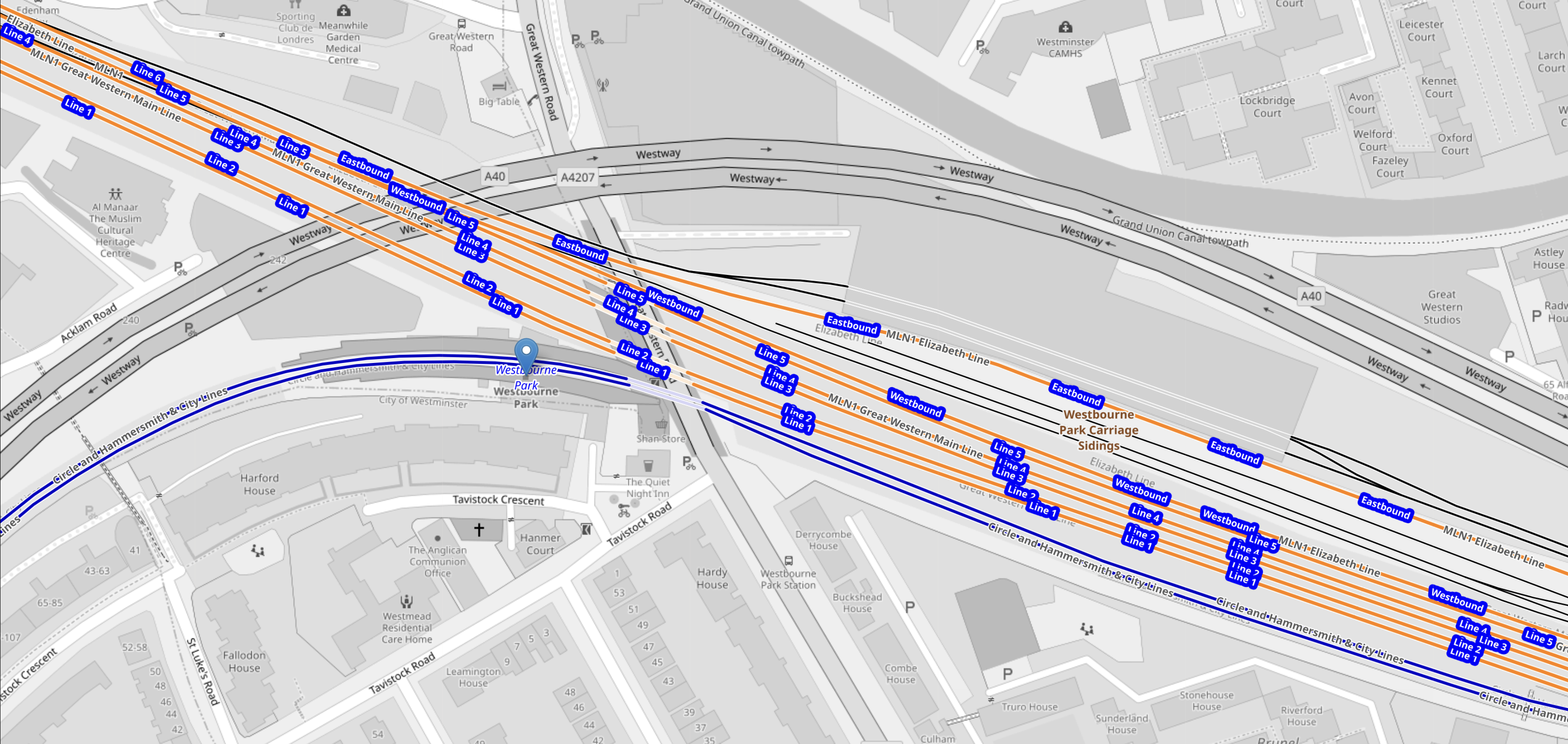
Note.
- The blue tracks are the Hammersmith & City Line.
- The blue arrow on the Hammersmith & City Line indicates Westbourne Park station.
- The orange tracks are the four tracks of the Great Western Main Line and the two tracks of the Elizabeth Line.
- To the East of this map, the Hammersmith & City Line crosses under the other tracks, so it can access platforms on the North side of Paddington station.
This second OpenRailwayMap is an enlargement of the lines through Westbourne Park station.
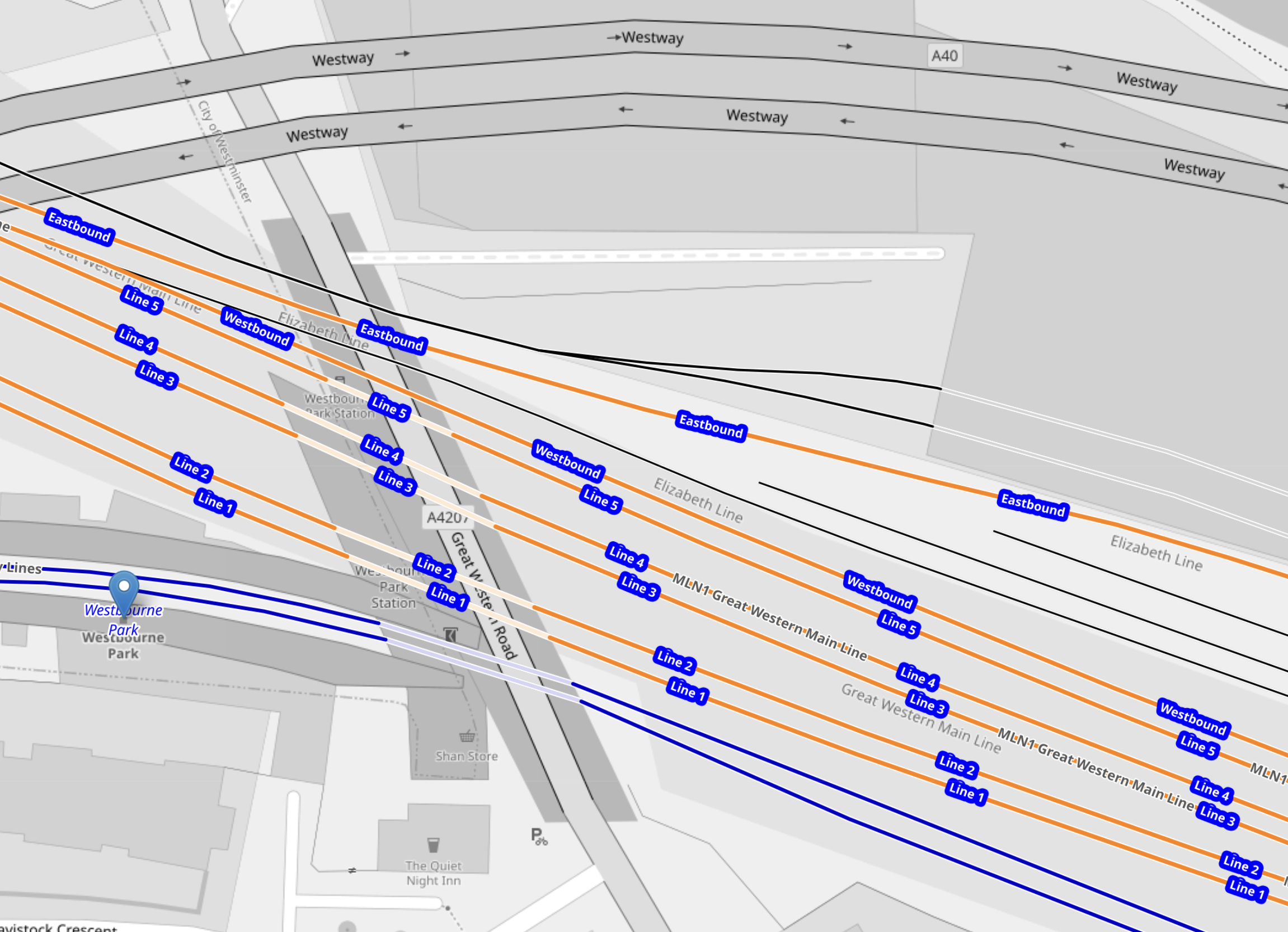
Note.
- As before the blue tracks and blue arrow indicate the Hammersmith & City Line and Westbourne Park station.
- Orange Lines 1 to 4, which are numbered from the South, are the four lines of the Great Western Main Line.
- The other three orange tracks are labelled Line 5, Westbound and Eastbound and handle GWR local services and the Elizabeth Line.
- I would assume that Eastbound and Westbound Elizabeth Line services use the appropriately named track.
This Google Map shows Westbourne Park station, Great Western Road, the rail tracks and the nearby Westbourne Park bus garage.
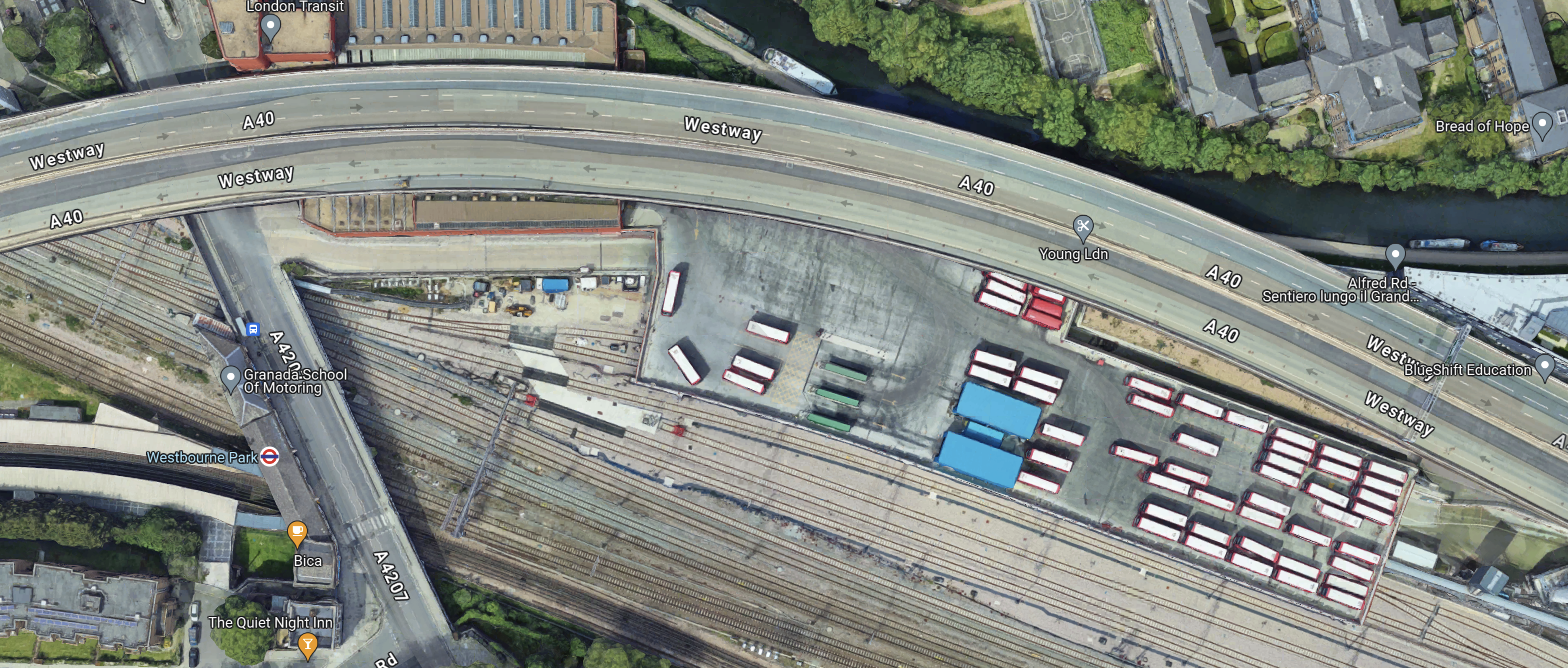
Note.
- The London Underground roundel indicates Westbourne Park station.
- The two Hammersmith & City Line platforms stretch to the West of the station entrance.
- Westbourne Park bus garage lies to the North of the Great Western Main Line and Elizabeth Line tracks.
- There are around fifty white-roofed buses parked on the roof of the bus garage.
- The Eastbound Elizabeth Line track runs along the South side of the bus garage.
Looking at the last two maps, I suspect that a two platform station serving the two Elizabeth line tracks under and to the East of Great Western Road.
- It would be connected to the Hammersmith & City Line by a walkway on the Western side of the Great Western Road.
- There would be step-free access to the Hammersmith & City and Elizabeth Lines.
I took these pictures from the platforms at the current Westbourne Park station and as I walked to and from Westbourne Park bus garage.
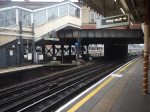
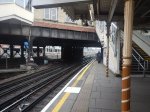
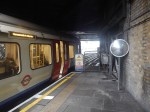
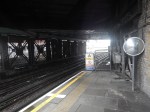
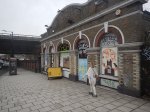
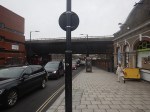
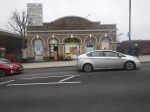

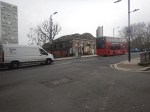


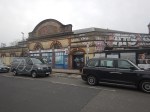
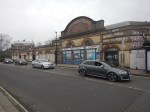
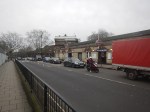

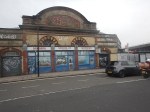


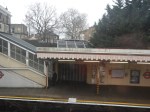
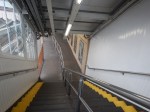
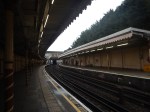
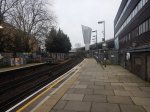
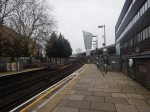
Note.
- The bus garage is recent and was built as part of the Elizabeth Line construction.
- There are two Westbourne Park station buildings.
- One building serves the Hammersmith & City Line and the other could have served the tracks now used by the Elizabeth Line.
- The Westbourne Park station buildings need a lot of restoration.
- Could a bus interchange be developed?
I believe that a station that connected the Hammersmith & City and Elizabeth Lines could be built.
Leisure Market Boom? GWR’s Vision For Direct Bristol-Oxford Services
The title of this post, is the same as that of this article on Rail Magazine.
This is the first paragraph.
Great Western Railway has hopes on running direct services between Bristol Temple Meads and Oxford from September 14, subject to approval of its new trial proposal by the Department for Transport and Network Rail. The move is a test of growth in demand for leisure travel by train.
It is an interesting idea.
These are some points about the service, given in the article.
- The route will be via Swindon, Chippenham and Bath Spa.
- Fastest journey time would be 71 minutes.
- The route will be aimed at the leisure market.
- There will be two trains per day (tpd) in each direction on Saturdays.
This is GWR’s handy route map.

These are my thoughts.
Will The Trains Call At Didcot Parkway?
This OpenRailwayMap shows Didcot Parkway station and the large triangular junction, that connects Oxford to the Great Western Main Line.
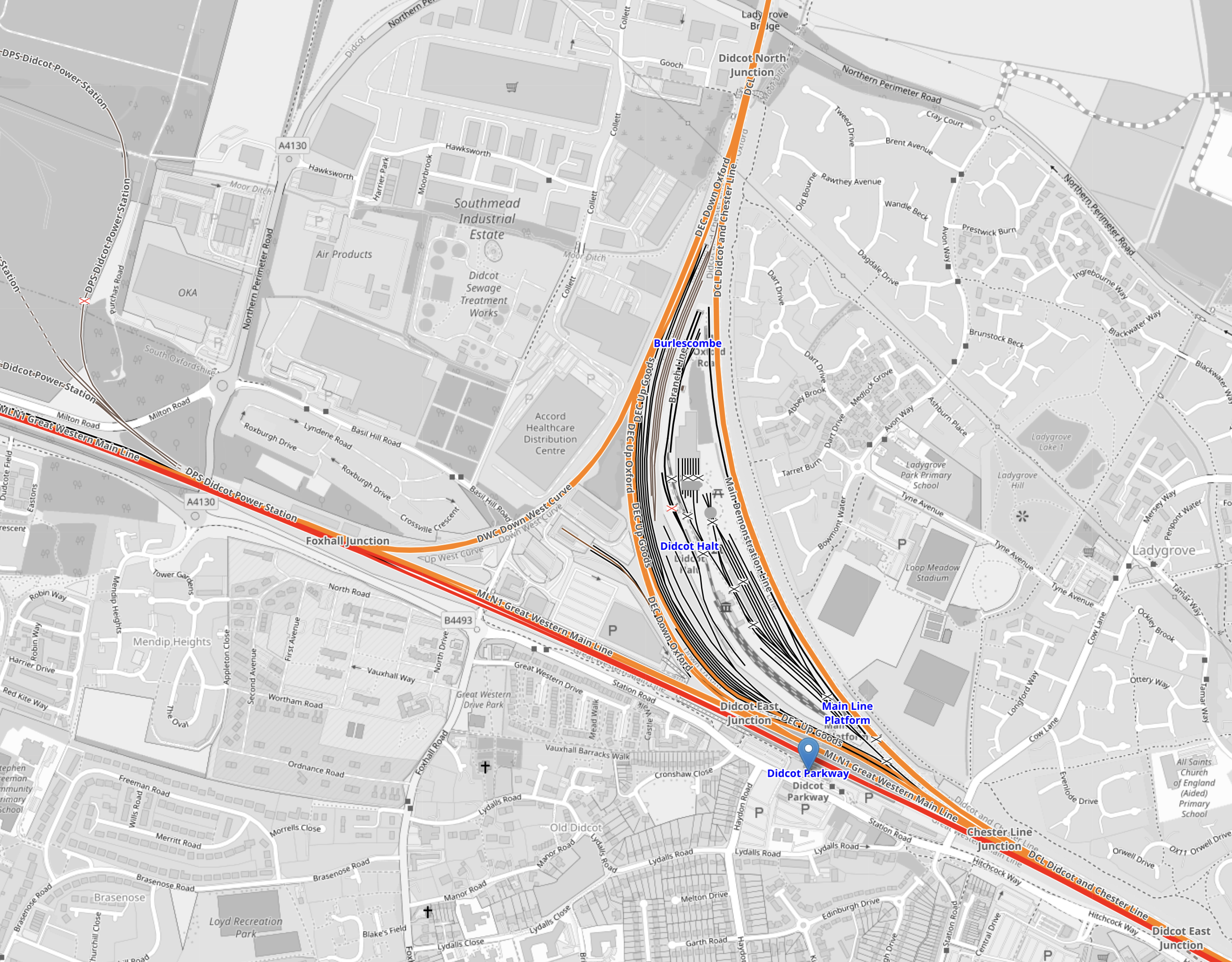
Note.
- The red tracks are the Great Western Main Line.
- The blue arrow indicates Didcot Parkway station.
- Oxford station is about ten miles to the North.
- Chords in the junction allow trains to go between Oxford and Paddington and Oxford and Swindon, with or without a stop at Didcot Parkway station.
The article says that GWR has asked to run the following services.
- 1018 Bristol Temple Meads-Oxford – Would arrive at Oxford at 1129.
- 1155 Oxford-Bristol Temple Meads (via Didcot) – Would arrive at Bristol Temple Meads at 1306.
- 1518 Bristol Temple Meads-Oxford – Would arrive at Oxford at 1629.
- 1712 Oxford-Bristol Temple Meads – Would arrive at Bristol Temple Meads at 1823.
Note.
- I suspect that the 1155 will reverse at Didcot Parkway station.
- There is a two train per hour (tph) service between Didcot Parkway and London Paddington stations.
- It looks like the four services could be run by a single train shuttling up the Great Western Main Line.
Would it be sensible if all Oxford and Bristol trains called at Didcot Parkway station, so that travellers could use the London service to their advantage?
But, calling at Didcot Parkway station would slow the service as there would need to be a reverse.
What Class Of Train Would Be Used?
Consider.
- A Bristol and Didcot Parkway via Bath Spa service takes 55 minutes.
- This is an average speed of 71.1 mph over a distance of 65.2 miles.
- 24.4 miles at the Bristol end of the route is not electrified.
- 10.3 miles at the Oxford end of the route is not electrified.
- The four services can be run by a single train shuttling up the Great Western Main Line.
It looks to me, that a bi-mode train with good performance is needed.
So I suspect that a five-car Class 800 or Class 802 train will be used.
Will The Train Be Battery-Electric Powered?
This is an interesting possibility.
- An ideal route for a battery electric train, is surely one with a long electrified section in the middle, which can be used to fully charge the train’s batteries.
- The train would have to run for 48.8 miles on its own power at the Bristol end of the route.
- The train would have to run for 20.6 miles on its own power at the Oxford end of the route.
The data sheet for a battery-electric Class 800/802 train can be downloaded from this page on the Hitachi web site.
In a section on the page, which is entitled Intercity Battery Trains, this is said.
A quick and easy application of battery technology is to install it on existing or future Hitachi intercity trains. Adding just one battery reduces emissions by more than 20% and offers cost savings of 20-30%.
Our intercity battery powered trains can cover 70km on non-electrified routes, operating at intercity speeds at the same or increased performance. Hitachi Rail’s modular design means this can be done without the need to re-engineer or rebuild the train and return them to service as quickly as possible for passengers.
The range of 70 km is 43.5 miles, which would appear to be a little bit short to go from the end of the electrification at Chippenham to Bristol Temple Meads and back.
But various measures could be taken to make sure the train can handle the route.
- The regenerative braking strategy could be used to conserve battery power.
- A second battery could be added to the train.
- Methods to charge the train at Bristol Temple Meads could be installed.
As London Paddington and Bristol Temple Meads is an important route, I suspect that Hitachi and Great Western Railway have a strategy to handle trains from Chippenham and sending them back.
Could This Route Be A Trial Route For Battery-Electric Trains?
Consider.
- Hitachi and Great Western Railway wouldn’t want to introduce an unreliable train without full full testing.
- Trains can probably limp to either Stoke Gifford or Reading depots, after a battery failure.
- Great Western Railway could test a new route.
- A full test only needs one train.
- Passenger reaction to a battery-electric train can be assessed.
- Staff need to be trained.
- The route can be run by a standard bi-mode if required.
- It could be the world’s first high-speed battery-electric train.
- Enthusiasts would flock to have a ride.
Could this be a trial service to make sure everything goes right?
Three New Battery-Only Revolution Very Light Rail Vehicles
This title of this post, is the same as that as this press release from Eversholt Rail Group.
These are the three bullet points.
- Eversholt Rail funding three brand-new Revolution Very Light Rail vehicles for passenger trials and ongoing operation.
- Manufactured in the UK by Transport Design International.
- Battery-only propulsion, providing zero-emissions operation.
These three paragraphs fill out the story.
Innovative new lightweight passenger trains that will help decarbonise Britain’s railways are to be trialled after a new deal was announced this week.
The new Revolution Very Light Rail vehicles will run entirely on battery power and could be carrying passengers within three years. A new system of lineside fast charging will mean the whole operation has zero emissions.
Some of Britain’s major rail operators are already showing interest in the RVLR vehicles as they seek to fulfil promises to make rail ‘cleaner’.
This is also said about looking for routes, to trial the new vehicles.
Eversholt Rail and TDI are working with key stakeholders across the UK rail industry to agree routes and services where operators can run passenger-carrying trials using these new vehicles. These trials will generate actual passenger demand data to support business cases for long-term deployment of RVLR vehicles as well as providing further passenger and operator feedback on their design and capabilities.
I have some thoughts and questions.
What Is The Top Speed?
A lot of questions like this are answered by this article on Rail Engineer, which is entitled Very Light Rail – A Revolution.
These can be ascertained from this comprehensive article.
- Top Speed – 65 mph
- Seats – 56
- Wheelchair space
- PRM TSI accessibility compatible
- Tare Weight – 24.8 tonnes
- USB Charging
For comparison these figures relate to a PRM-compliant Class 153 diesel train.
- Top Speed – 75 mph
- Seats – 59
- Tare Weight – 41.2 tonnes
This picture shows one of the Class 153 trains at Matlock Bath station.
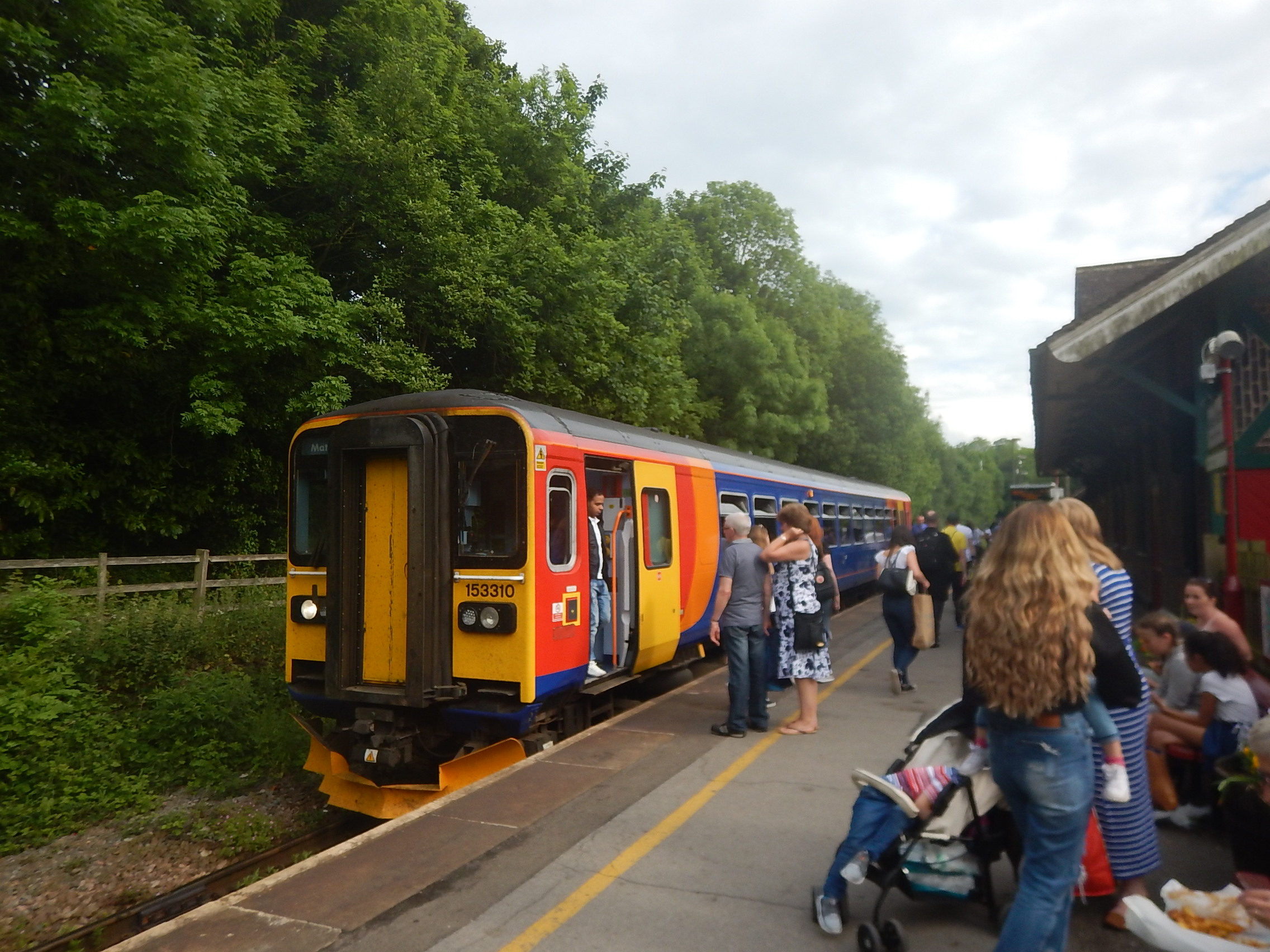
There are still around thirty in service in the UK.
Can Two Revolution VLRs Run As A Two-Car Train?
From the pictures on the web, the trains have buffers and space for a coupler, so until someone says they must always run as single units, I’ll assume they can at least run as a pair.
Can A Revolution VLR Recharge Its Batteries Using Conventional 25 KVAC Overhead Electrification?
One route, that is a possibility for running using Revolution VLR must surely be the Greenford Branch, which connects to the electrified Great Western Main Line at West Ealing station.
In this and at several other places on the network, it could be easier to charge the trains using the existing overhead electrification or an extension of it.
Another possibility; the Marston Vale Line is also electrified at both Bedford and Bletchley.
In New Mobile Rail Charging Facility For Long Marston, I talked about how Siemens are developing a mobile charger, which initially will be deployed at Long Marston.
It could be very useful for efficient operation, if the batteries on a Revolution VLR could be charged in a number of places, which included conventional electrification.
If charging only happened, whilst trains were stationary, a lightweight pantograph and appropriate electrical gubbins might be sufficient.
Can A Revolution VLR Replace A Class 153 Train?
I suspect on some routes this will be possible, but on others, the speed or hill-climbing requirements might be too stiff for the lightweight train.
But, if I was designing a train like the Revolution VLR, I’d make sure it fitted as many markets as possible.
The picture was taken at Matlock Bath station on the Derwent Valley Line, which is a single track with a fifty mph limit and an uphill climb. I suspect that the Revolution VLR would be designed to handle the uphill part of the route, but would the train be able to handle the speed of the Midland Main Line to Derby.
The Revolution VLR would probably attract more passengers, so it might be necessary to double up the service by running a pair.
Can A Pair Of Revolution VLRs Replace A Class 150 Train?
I don’t see why not!
Could The West London Orbital Use Revolution VLRs?
This might be a proposed route that could use Revolution VLRs.
The two routes would be.
- West Hampstead and Hounslow.
- Hendon and Kew Bridge.
Both services would use the Dudding Hill Line and serve Neasden, Harlesden, Old Oak Common and Acton, with a frequency of four trains per hour (tph).
Although this service could be run using conventional multiple units, it might be more affordable to use Revolution VLRs charged on sections of line that are already electrified.
Could the Greenford Branch Use Revolution VLRs?
The Greenford Branch would be a classic application and trains could be charged by fitting a charger in the bay platform at West Ealing station.
In An Automated Shuttle Train On The Greenford Branch Line, I did a rough calculation to see if an automated shuttle could achieve four tph.
Four tph might be too ambitious, but automatic trains shuttling along a branch line might be an affordable way to provide zero-carbon trains with an adequate capacity.
- The driver would drive the train using the sort of remote control used for drones.
- The driver would sit in a convenient place on the train, with CCTV to help them see everything.
- When the train was ready to leave, the driver would push a button to tell the train to move to the next station.
- On arrival at the next station, the doors will open.
- The process would repeat along the line.
If this method of operation sounds vaguely familiar, the Victoria Line has used it since 1067.
Although the Victoria Line drivers always sit in the front.
But on a line with no other trains running at the same time, all they need is a good view of the doors.
Branch lines that could be run in this way could include.
Bodmin Parkway and Bodmin General
Brockenhurst and Lymington Pier
Grove Park and Bromley North
Lancaster and Morecambe
Liskeard and Looe
Lostwithiel and Powey
Maidenhead and Marlow
March and Wisbech
Par and Newquay
Plymouth and Gunnislake
Romford and Upminster
Sittingbourne and Sheerness-on-Sea
Slough and Windsor Central
Southall and Brentford
St. Erth and St. Ives
Truro and Falmouth Docks
Twyford and Henley-on-Thames
Watford Junction and St. Albans Abbey
West Ealing and Greenford
Wickford and Southminster
Wymondham and Dereham
Thoughts About Electrification Through Devon And Cornwall
Distances
I’ll start by looking at a few distances.
- Penzance and Taunton – 162.3 miles
- Penzance and Exeter St. David’s – 131.5 miles
- Penzance and Plymouth – 79.5 miles
- Taunton and Exeter St. David’s – 30.7 miles
- Plymouth and Exeter St. David’s – 52 miles
- Taunton and Newbury – 89.6 miles
- Plymouth and Taunton – 82.8 miles
- Taunton and Paignton – 59 miles
- Taunton and Patchway – 51.7 miles
Note.
- Patchway and Newbury are already electrified to Cardiff Central and London Paddington respectively.
- Bombardier’s engineer told me eight years ago, that the battery-electric Class 379 had a range of sixty miles.
- Stadler’s FLIRT Akku has a Guinness world record of 139 miles on one battery charge. See this page on the Stadler web site.
- Even Stadler’s Class 777 trains for Merseyrail have a range of 84 miles on battery power. See New Merseyrail Train Runs 135km On Battery.
The rail distances in Devon and Cornwall are getting closer to being within the capability of trains fitted with batteries.
Station Stop Times
These are typical times that trains stop in the more important stations between Taunton and Penzance.
- Taunton – < 2 mins
- Tiverton Parkway – < 2 mins
- Exeter St. Davids – 2 mins
- Newton Abbot – < 2 mins
- Totnes – < 2 mins
- Plymouth – 11 minutes
- Devonport – < 2 mins
- Saltash – < 2 mins
- Menheniot – < 2 mins
- Liskeard – < 3 mins
- Bodmin Parkway – 2 mins
- Lostwithiel – 2 mins
- Par – 2 mins
- St. Austell – 2 mins.
- Truro – 2 mins
- Redruth – 2 mins
- Camborne – 2 mins
Note.
- The timings were for today.
- The Cardiff and Penzance services were being run by five-car Class 802 trains.
- Most station stops are around two minutes or less, but Plymouth on this train was eleven minutes.
I find it interesting that the Plymouth stop takes so much longer.
Train Stops At Plymouth
I looked at about twenty trains stopping at Plymouth, that included these services.
- London Paddington and Penzance
- Penzance and London Paddington
- Cardiff Central and Penzance
- Penzance and Cardiff Central
Note.
- I found an average time of eight minutes.
- Eleven minutes was a common stop.
- Eight minutes could be enough time for the rail equivalent of a Formula One splash and dash.
- CrossCountry services were going through the station in three minutes.
I am led to believe that the timetable used by the GWR trains would allow a quick battery charge at Plymouth station.
This OpenRailwayMap shows the platforms at Plymouth station.
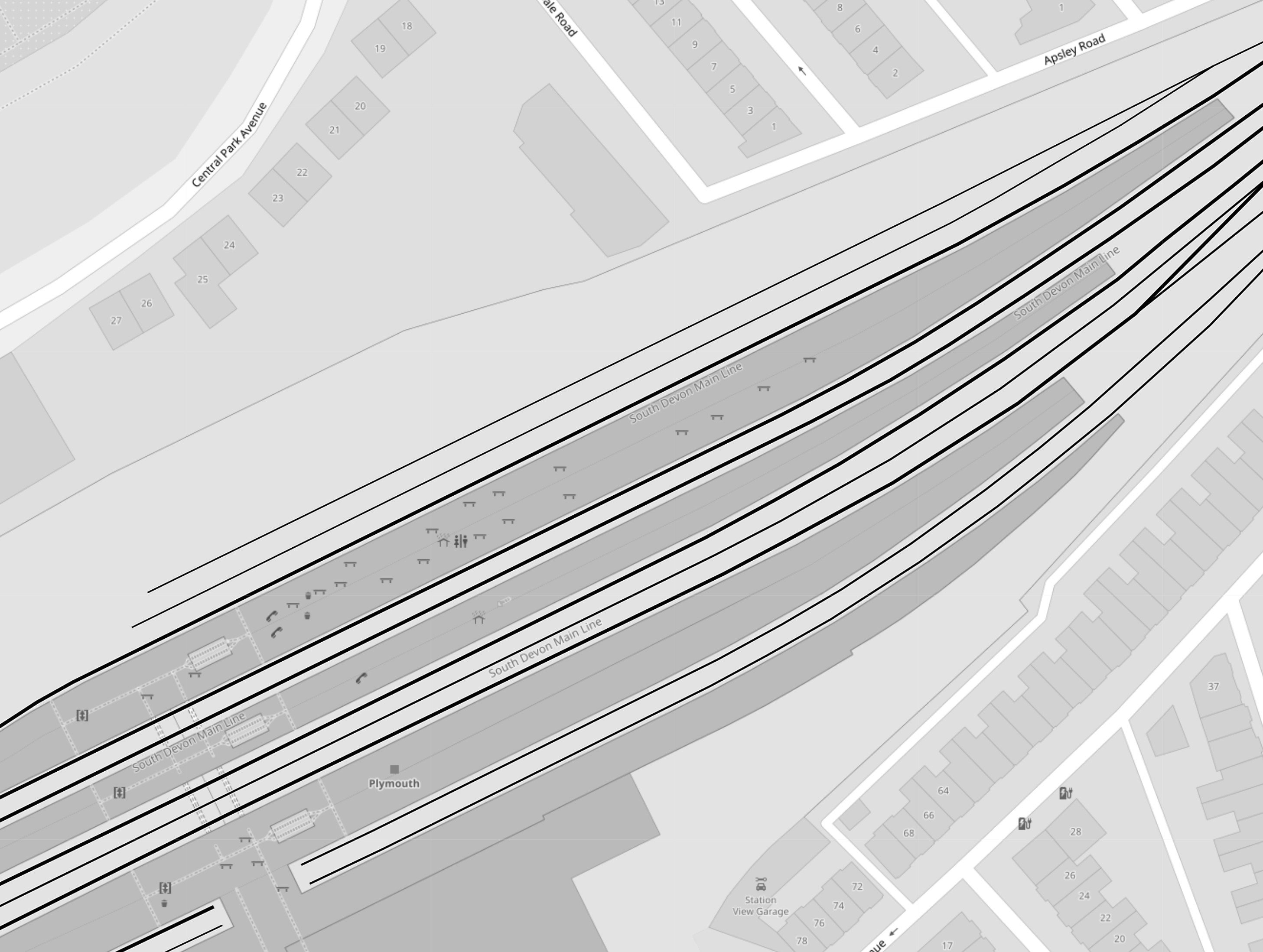
Note.
- London is to the East and Penzance is to the West.
- Platform numbers increase from South to North.
- The two East-facing bay platforms are Platforms 1 and 2.
- The West-facing bay platform in the South-West corner is Platform 3.
- Platform 4 shares the island with the bay platforms 1, 2 and 3.
- Most trains going to Penzance use Platform 4.
- Platforms 5 and 6 share the centre island platform.
- Platforms 7 and 8 share the Northernmost island platform.
- Most trains going towards London use Platform 7.
- Wikipedia indicates that the track layout is comprehensive and allows a lot of operational flexibility.
Although the station was completed around forty years ago, it could have been designed for handling modern battery-electric trains.
- There are three bay platforms numbered 1 to 3, to charge local services and send them on their way.
- Trains can arrive and depart in the five through platforms, numbered 4 to 8, from either direction.
- Two days ago, a nine-car London Paddington to Plymouth train terminated in Platform 7. After waiting an hour it returned to London. An hour would be enough time to fully-charge a train.
- As many platforms as needed could be electrified.
I am fairly sure, that most battery-electric trains could be timetabled to leave Plymouth station with full batteries.
Turnround At Penzance
I have found these turnrounds.
- 802113 arrived from Paddington at 1142 and left for London at 1215
- 802022 arrived from Paddington at 1307 and left for London at 1415
- 802103 arrived from Paddington at 1500 and left for London at 1615
This OpenRailwayMap shows the platforms at Penzance station.
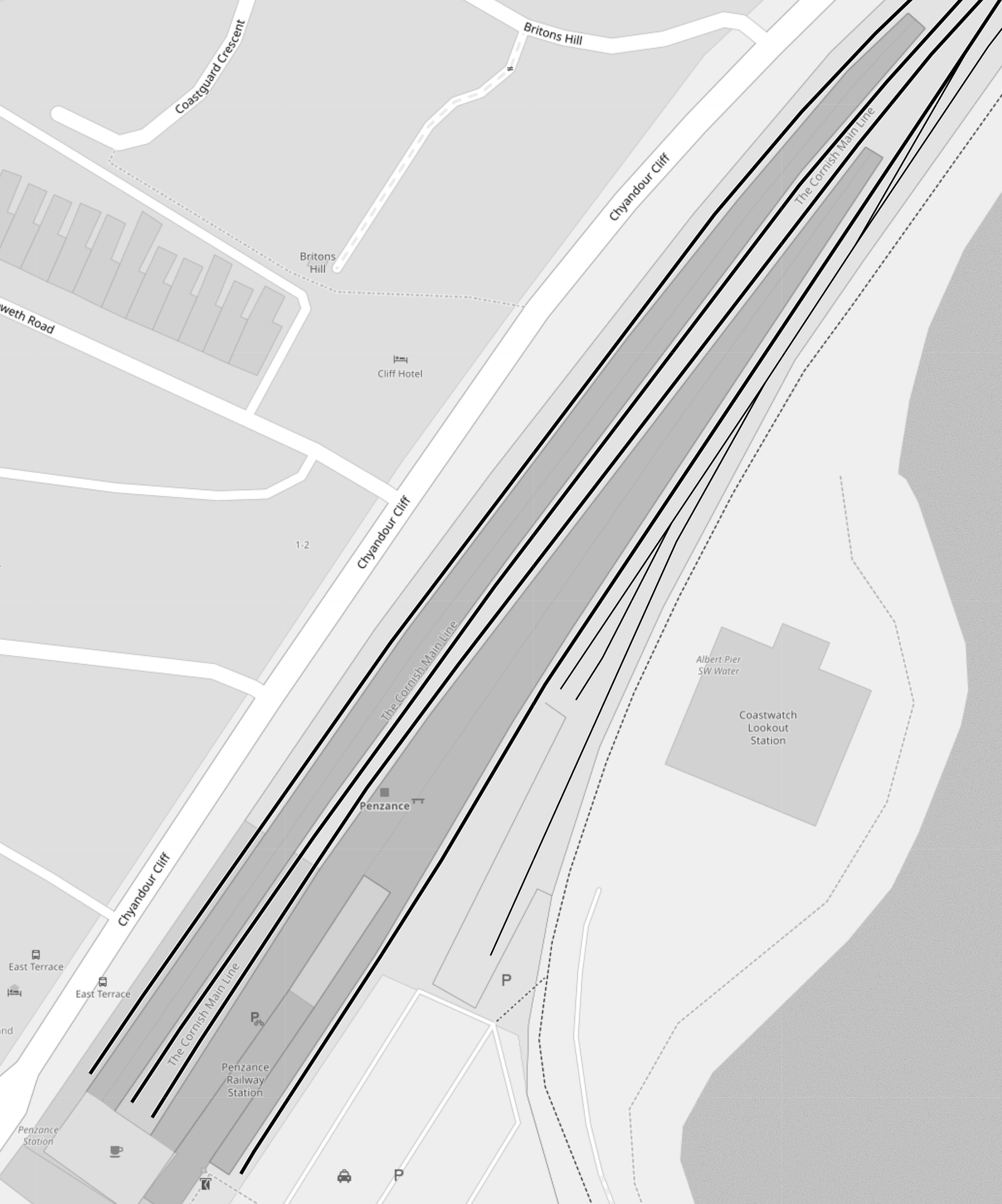
Note.
- The three example trains used Platform 1.
- Platform 1 is the long platform on the landward side of the station.
- Platforms are numbered 1 to 4 from left to right.
- An appropriate number of platforms would be electrified to charge trains terminating at Penzance.
Trains would appear to have plenty enough time to recharge, so they would start their return journey with full batteries.
Engineering Ambition
Several times in my life, I’ve got fired up about engineering or software projects and I like to think, I’ve produced the best and fastest solution.
For this reason, I believe that Hyperdrive Innovation, who are now part of Turntide Technologies, and Hitachi will set themselves three objectives with the design of the the battery packs for the Class 802 train.
- The battery-electric Class 802 will outperform the Stadler FLIRT Akku in terms of speed and distance.
- The battery packs will be plug-compatible with the diesel engines, so there will only be minor software modification to the trains.
- The train will be able to be handle all Great Western Railway’s routes without using diesel.
- I wouldn’t be surprised that on many routes the train will cruise at over 110 mph on batteries.
I also suspect they want the Akku’s Guinness world record, which will mean the range will be in excess of 139 miles.
Battery Range Needed For Routes
These are routes that need to be covered by battery-electric Class 802 trains or similar.
- Avanti West Coast – Crewe and Chester – 22.2 miles
- Avanti West Coast – Crewe and Holyhead – 105.5 miles
- Avanti West Coast – Crewe and Llandudno Junction – 65.5 miles
- Avanti West Coast – Crewe and Wrexham – 34.4 miles
- Avanti West Coast – Shrewsbury and Wolverhampton – 29.7 miles
- Great Western Railway – Penzance and Plymouth – 79.5 miles
- Great Western Railway – Plymouth and Taunton – 82.8 miles
- Great Western Railway – Taunton and Patchway – 51.7 miles
- Great Western Railway – Newbury and Taunton – 89.6 miles
- Great Western Railway – Taunton and Paignton – 59.0 miles
- Great Western Railway – Weston-super-Mare and Chippenham – 43.5 miles
- Great Western Railway – Oxford and Great Malvern – 65.6 miles
- Great Western Railway – Oxford and Hereford – 86.3 miles
- Great Western Railway – Oxford and Worcester Foregate Street – 57.6 miles
- Great Western Railway – Oxford and Worcester Shrub Hill – 57.2 miles
- Great Western Railway – Cheltenham Spa and Swindon – 43.2 miles
- Great Western Railway – Cardiff Central and Carmarthen – 77.4 miles
- Great Western Railway – Cardiff Central and Pembroke Dock – 118.9 miles
- Great Western Railway – Cardiff Central and Swansea – 45.7 miles
- Hull Trains – Beverley and Temple Hirst Junction – 44.3 miles
- Hull Trains – Hull and Temple Hirst Junction – 36.1 miles
- LNER – Hull and Temple Hirst Junction – 36.1 miles
- LNER – Middlesbrough and Longlands Junction – 22.2 miles
- LNER – Sunderland and Longlands Junction – 48.5 miles
- LNER – Lincoln Central and Newark Northgate – 16.6 miles
- LNER – Leeds and Bradford – 13 miles
- LNER – Leeds and Harrogate – 18 miles
- LNER – Leeds and Huddersfield – 17 miles
- LNER – Stirling and Inverness – 146 miles
- LNER – Edinburgh Haymarket and Aberdeen – 130 miles
- LNER – Peterborough and Doncaster via Great Northern and Great Eastern Joint Line – 93.7 miles
- South Western Railway – Basingstoke and Exeter St. David’s – 124.5 miles
- TransPennine – Hull and Micklefield – 42 miles
- TransPennine – Longlands Junction and Saltburn – 34.7 miles
- TransPennine – York and Scarborough – 42 miles
- TransPennine – Doncaster and Cleethorpes – 52.1 miles
- TransPennine – Stockport and Doncaster – 55.4 miles
- TransPennine – Stockport and Cleethorpes – 107.5 miles
Note.
- Stirling and Inverness and Edinburgh Haymarket and Aberdeen could be shortened by up to thirty miles, by planned electrification in Scotland.
- I have assumed that the TransPennine Upgrade has been completed.
- It looks like a battery-electric Class 802 train could use the Great Northern and Great Eastern Joint Line diversion via Lincoln.
- I am slightly surprised, that the longest stretch of line without electrification and with a passenger service is Basingstoke and Exeter St. David’s.
Charging will be needed at some places to charge the battery-electric trains. Stations fitted with chargers could include Aberdeen, Carmarthen, Cleethorpes, Exeter St. David’s, Hereford, Holyhead, Hull, Inverness, Paignton, Penzance, Pembroke Dock, Plymouth, Swansea, Taunton, Weston-super-Mare, Worcester.
Most chargers would be a length of electrification in the platform, where the battery-electric trains terminated or passed through.
More On LNER’s Ten New Bi-Modes
I wrote about these trains in LNER Seeks 10 More Bi-Modes.
This was my conclusion.
There is a lot of scope to develop LNER’s services.
I think it is likely that the order will go to Hitachi.
But as I indicated, I do believe that there is scope for a manufacturer to design a zero-carbon train, that was able to serve Aberdeen and Inverness.
-
- I suspect a fleet of ten trains would be sufficient.
- Trains would use the 25 KVAC overhead electrification, where it exists and hydrogen or battery power North of the wires.
The trains would also be capable of being upgraded to higher speeds, should the East Coast Main Line be turned into a High Speed Line.
I also think, that whatever trains are bought, there will be a large upgrading of the existing Hitachi fleet, which will add batteries to a lot of trains.
In the July 2023 Edition of Modern Railways, there is an article, which is entitled LNER Embraces Pioneering Spirit, which takes the form of an interview with LNER’s Managing Director; David Horne.
In a section, which is entitled ‘225’ Replacement, this is said.
Meanwhile, Mr Horne is looking to what might replace the InterCity 225 fleet, now smartly repainted in a scheme which pays homage to the original ‘Swallow’ livery. While there were fears this fleet may be withdrawn as an economy measure, the ‘225s’ are now on lease until at least next summer.
But Mr Horne says obsolescence issues are a real challenge and LNER will struggle to maintain the fleet beyond 2025, and from the May 2023 timetable change the number of daily diagrams was reduced from five to four to conserve the fleet’s mileage. Much of the heavy maintenance work had previously been carried out at Wabtec’s Doncaster site, but this facility is no longer available, and while a recent reliability improvement programme is bearing fruit, the challenges remain. The crunch point comes with the transition to ETCS at the southern end of the ECML as part of the East Coast Digital Programme – Mr Horne says LNER does not want to fit cab signalling on the ‘225s’.
The solution to this issue is to procure additional trains to run alongside the 65 Azumas, and LNER went out to tender in October 2020 for a fleet of 10 trains with self-power capability.
While a preferred bidder has been identified, the business case to proceed with the procurement is awaiting approval, but Mr Horne is still hopeful this project can be progressed.
The current plan envisages the new trains broadly replacing the ‘225s’ on Leeds and York diagrams, but a major benefit with the new fleet would be during engineering work – at present LNER has to withdraw services to places such as Harrogate and Hull to concentrate its bi-mode Azumas on services using non-electrified diversionary routes, and having more stock with self-power capability would ease the issue.
Currently, LNER has these Azumas and InterCity 225s in its fleet.
- Five-car bi-mode Class 800 trains – 10
- Nine-car bi-mode Class 800 trains – 13
- Five-car electric Class 801 trains – 12
- Nine-car electric Class 801 trains – 30
- Nine-car electric ImterCity 225 trains – 8
Note.
- There are 23 bi-mode trains and 50 electric trains.
- There are 167 bi-mode carriages and 302 electric carriages.
- Currently 31.5 % of the trains are bi-mode.
- With ten new bi-mode trains and no InterCity 225 trains, 44 % of the fleet will be bi-mode.
Is this increase in the percentage of the fleet, that are bi-mode acceptable?
I wonder, if there is a more affordable and flexible way to increase the fleet size.
In the Wikipedia entry for the Class 800 train, there is a section, which is entitled Traction And Generator Units, where this is said.
The Class 800 and Class 802 bi-mode are equipped with three GU per five-car set and five GU per nine-car set; a five-car set has a GU situated under vehicles 2/3/4 and a nine-car set has a GU situated under vehicles 2/3/5/7/8. In comparison, the electric-orientated Class 801 features a single GU for a five to nine-car set, which provides emergency power for limited traction and auxiliaries if the power supply from the overhead line fails. By adding or removing GUs, a Class 800 can be converted into a Class 801 and vice versa.
Let’s look at LNER’s needs, which are actually two separate sub-needs.
- There is a need for ten new trains to replace the InterCity 225 trains.
- There is a need to increase the size of the bi-mode fleet to be able to use the Great Northern and Great Eastern Joint Line and other non-electrified routes to by-pass engineering works.
Note.
- I suspect that as Mr Horne explained, there are only five or possibly four InterCity 225s diagrammed on a particular day, then perhaps ten five-car bi-mode Class 800 trains, might be able to cover for the retirement of the InterCity 225s.
- These trains would work as pairs to Leeds and York to replace the InterCity 225 capacity.
- If required they could split and join at Leeds and York to serve other destinations.
- The diversion route of the Great Eastern Joint Line has an unelectrified distance of 93.7 miles and the route is electrified at both ends.
- Would a battery-electric Class 800 train handle this distance? I suspect if Stadler can do it, then Hitachi and Turntide Technology will be able to do it too!
LNER will have replaced the InterCity 225s and acquired ten new five-car blockade runners.
As an order for ten new five-car battery-electric trains, is not to be sneezed at, I suspect Hitachi will make sure that their new battery-electric variants have enough range.
So this would mean that the range of a five cat battery-electric Class 800 train, should be in excess of 93.7 miles.
It should be noted that the five-car Class 800 and Class 802 trains have specific advantages when it comes to converting them to battery-electric trains.
- They are modern trains, that are still in production, every bit of information about the train is known down to the last nut, bolt and plastic clip.
- Like most modern trains, hey have a sophisticated computer system controlling the train.
- They have spaces for three, four or maybe even five diesel engines under the floor, which could be used for a battery-pack in every car designed to hold a diesel engine.
- The train has an electric bus between nose and tail.
- As is shown, when the trains change between diesel and electric, the pantograph can go up and down with all the alacrity of a whore’s drawers.
- The trains can be converted between bi-mode and electric, by adding or removing diesel packs. I doubt this feature will be removed, as batteries replace diesels.
With my Electrical and Control Engineer’s hard hat on, I doubt there is anything to stop a Class 800 or Class 802 train being fitted with three or more batteries to create a 125 mph train, with a range approaching two hundred miles on battery power.
The initial name of these Hitachi trains was the Hitachi Super Express. Is this train the Hitachi Super Battery Express?
But it would appear, that for their initial needs, LNER, just need a range to handle the near hundred miles of the Great Northern and Great Eastern Joint Line.
Inverness and Aberdeen will come later.
Hull Trains
This page on the Lumo web site is entitled Greener Travel Between Edinburgh And London.
These are the first three paragraphs.
A new, 100% electric rail service is to start running between London and Edinburgh with fares for as little as £14.90 in a bid to encourage greener and more affordable travel between the capitals.
Called Lumo, it will provide low-carbon, affordable long-distance travel for over 1 million passengers per year. Over 74,500 passengers currently fly between Edinburgh and London each month3.
And with single tickets between the capitals starting from just £14.90, Lumo will be a comfortable, convenient alternative to flying that is affordable for all. Some 60% of all single fares will be available at a cost of £30 or less.
I’m sure Hull Trains, who are owned by First Group like Lumo would like to position themselves in the 100 % electric low-carbon box too!
Currently, Hull Trains’s five-car Class 802 trains, run 88.6 and 72.2 miles using diesel on round-trips to Beverley and Hull respectively from London.
If batteries were fitted to their trains to give a battery range of around a hundred miles, Hull Trains could call themselves 100 % electric.
No new infrastructure would be required, but a short length of overhead electrification in a convenient platform at Hull station would ensure the train left for London and Beverley with a full battery.




The pictures show Hull Trains’s Class 802 train in Platform 7 at Hull station.
Penzance And Taunton
This to me is the key section as if you can run a battery-electric train between these two stations it allows so many of the services to be run using zero-carbon traction.
These are distances from Taunton.
- Exeter St. David’s – 30.7 miles
- Newbury – 89.6 miles
- Okehampton – 55.3 miles
- Paignton – 59.0 miles
- Patchway – 51.7 miles
- Plymouth – 82.8 miles
Note.
- I’ve added Okehampton, as I feel that if Dawlish had another encounter with Poseidon, Okehampton with its proposed Parkway station on the A30 could be the terminus for coaches to and from Cornwall.
- All would be possible with a battery-electric train, with a hundred-mile range, leaving Taunton with a full battery.
- Charging could be needed at Okehampton and Paignton.
What is needed is some form of charging in the Taunton area.
This OpenRailwayMap shows Taunton station.

Note.
- The station has four through platforms.
- All Great Western Railway services to and from Devon and Cornwall stop in the station.
- I feel it would be possible to electrify the station, so that all stopping trains could charge the batteries.
But the problem would be, that as typically trains only stop for a couple of minutes at Taunton, there may not be enough time to take enough charge on board.
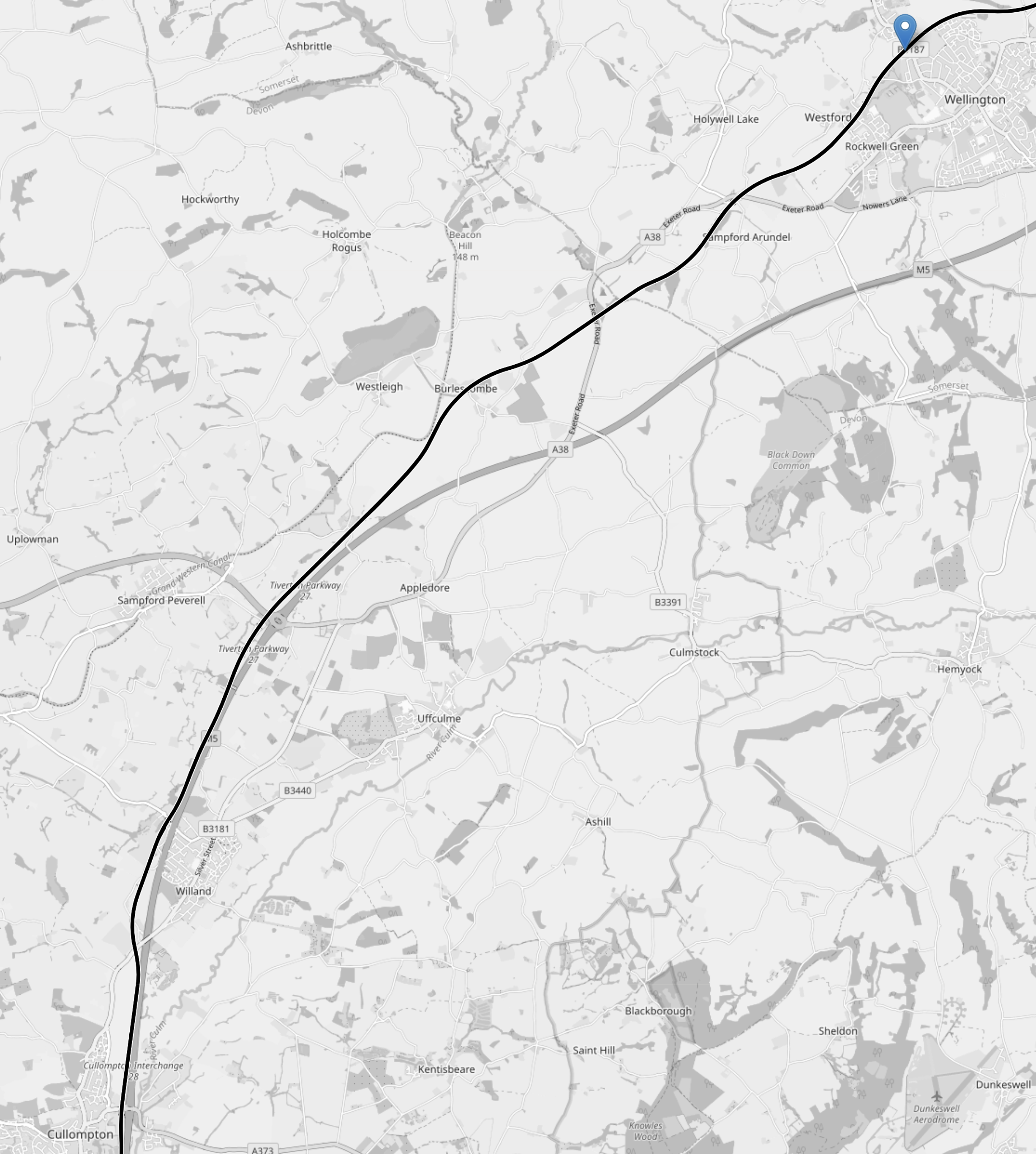
This OpenRailwayMap shows the track between Wellington and Collumpton, between Taunton and Exeter.
Note.
- The black line is the railway between Taunton and Exeter.
- The blue arrow in the North-East corner of the map indicates the position of the proposed Wellington station.
- Collumpton is in the South-West corner of the map and has also been put forward for a new Collumpton station.
- I talked about the reopening of these two stations in Reopening Of Wellington and Cullompton Stations.
- The M5 to the North of Collumpton runs closely alongside the railway.
- According to Real Time Trains, it takes just under ten minutes to go the thirteen miles between Wellington and Collumpton.
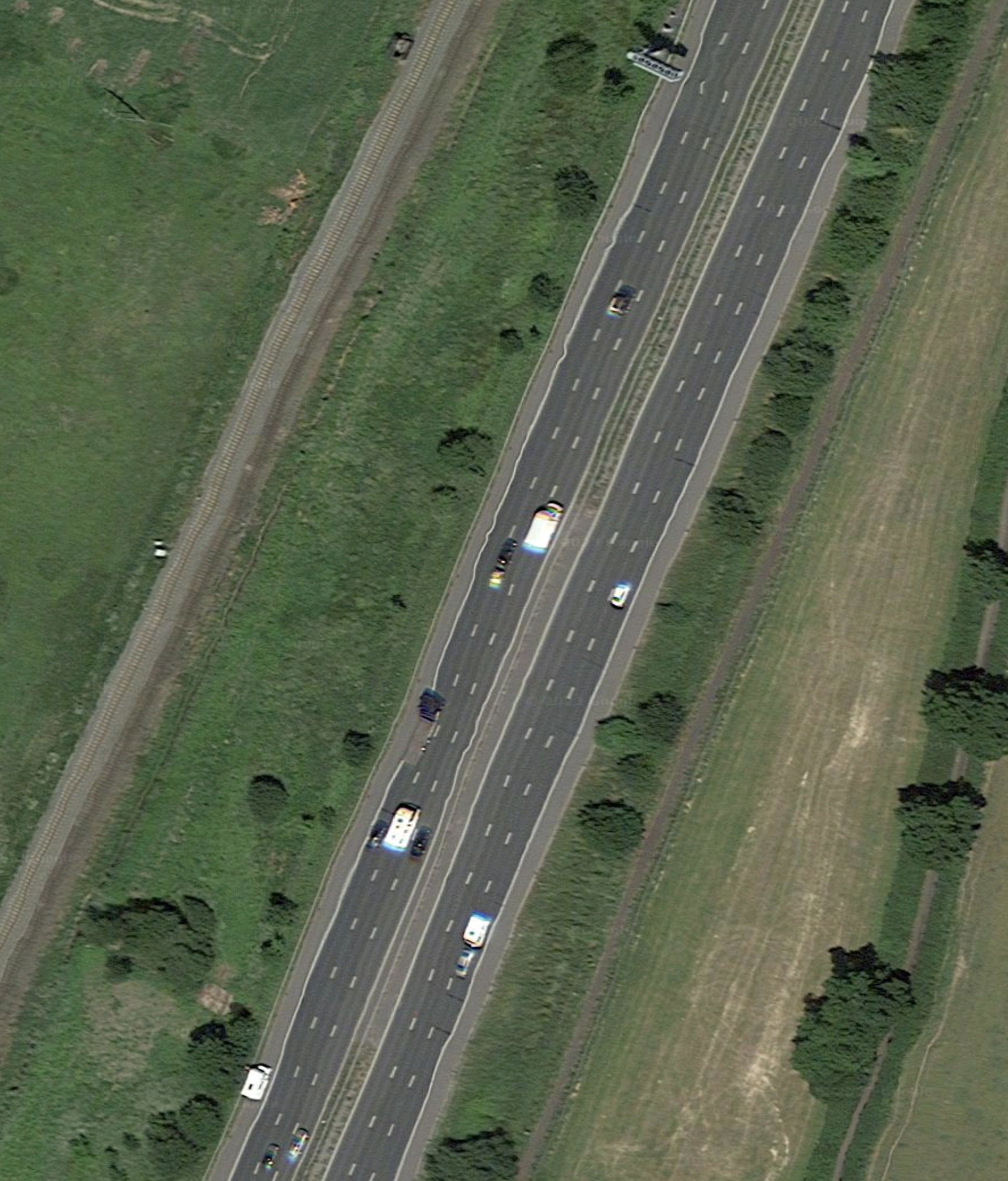
This Google Map shows a section of the M5 North of Collumpton.
And this Google Map shows Tiverton Parkway station.
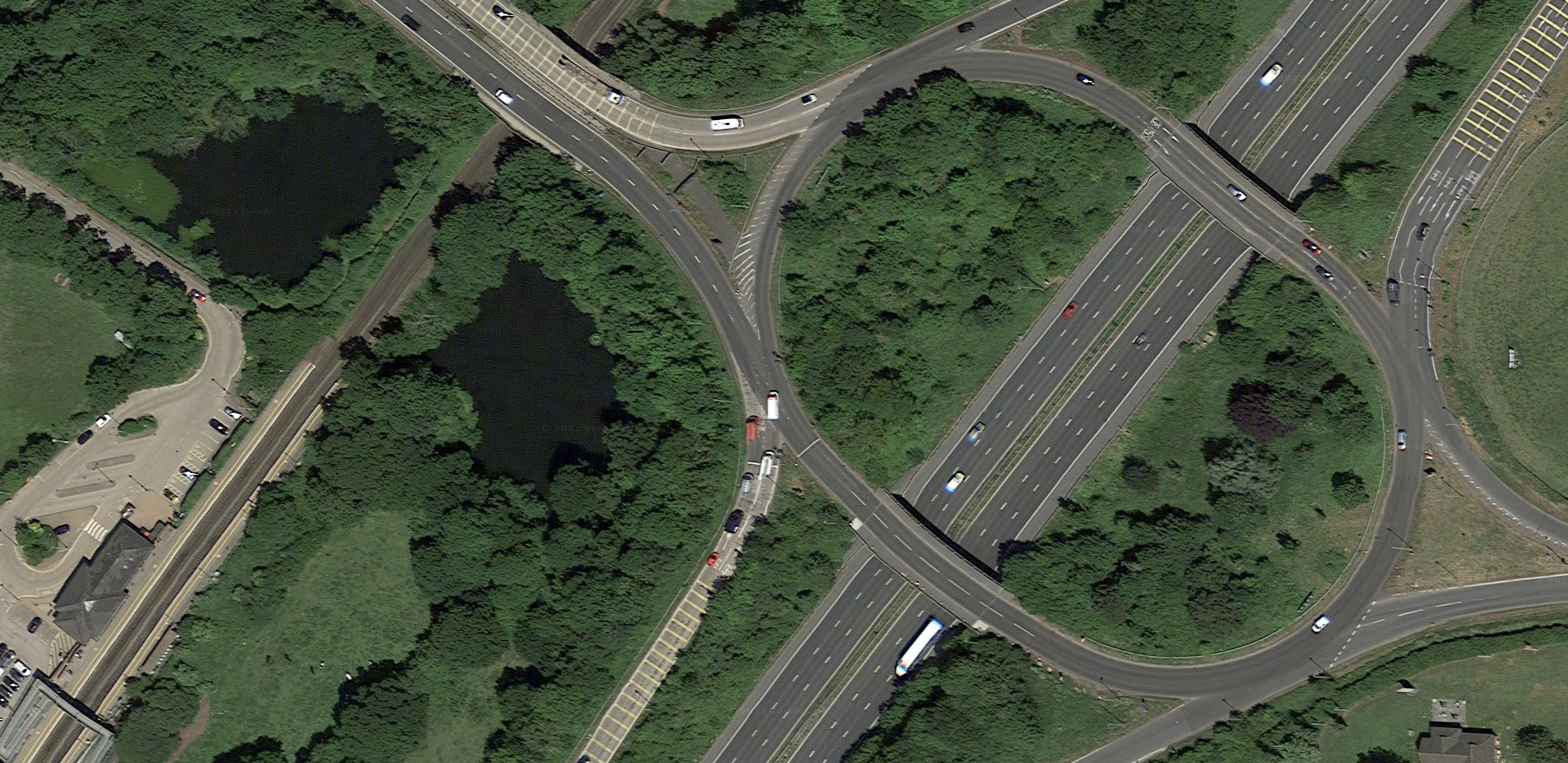
Note how the railway runs alongside the M5 to the West.
I feel that if the two new stations of Wellington and Collumpton are built between Taunton and Exeter St. David’s, then why not partially electrify the route, so that all trains would leave or pass through Taunton and Collumpton stations with full batteries.
- Going West the trains would reach Exeter St. David’s, Okehampton or Plymouth.
- Going East trains would reach Newbury for Reading and Paddington, and Patchway for Cardiff.
I believe that a battery-electric solution is possible, that would enable the decarbonisation of the Great Western Main Line all the way to Penzance.
More Trains To Carmarthen
The last time, I looked at the number of GWR trains to Carmarthen its Wikipedia entry, it was just a couple.
Today, one train per hour (tph) is shown between London Paddington and Swansea, with this supplementary information.
- 7 trains per day continue to Carmarthen, calling at Gowerton (limited), Llanelli, Pembrey & Burry Port, Kidwelly (limited) and Ferryside (limited)
- On Summer Saturdays, 2 trains per day run to Pembroke Dock, calling at all stations between Carmarthen and Pembroke Dock
In Regulator Approves New Grand Union Train Service From Carmarthen To London Paddington, I talked about the plans of Grand Union Trains to run five trains per day (tpd) between London Paddington and Carmarthen.
This would appear to give a total of twelve tpd between London Paddington and Carmarthen.
This page on the Crown Estate web site is entitled Celtic Sea Floating Offshore Wind, where this is said.
The Government has set an ambition to deliver up to 5GW of floating wind by 2030, with rapid expansion anticipated thereafter.
At The Crown Estate, we are committed to helping the UK achieve its net zero ambitions. To support this, we are excited to deliver a new leasing opportunity in the Celtic Sea for the first generation of commercial-scale floating offshore windfarms – unlocking up to 4GW of new clean energy capacity by 2035, kick-starting industry in the region, and providing power to almost four million homes.
We will be inviting full commercial scale projects up to 1GW, which may be developed in a phased or ‘stepping stone’ approach. Recognising the need to develop the UK supply chain and supporting infrastructure for this nascent technology, this approach is deliberately intended to provide opportunities for growth and investment. This will also facilitate the co-ordination of the necessary infrastructure, such as ports and grid connections, all of which are key to the sustainable development of the UK floating wind sector over the long term.
This leasing opportunity will provide the foundation for greater capacity in the future and help establish an exciting new industrial sector for the UK, creating opportunities for significant new investment in jobs, skills and infrastructure for the communities onshore.
It appears to me, that Great Western Railway and Grand Union Trains both believe that there will be large increase in demand for rail travel between London Paddington and Carmarthen and also along the South Wales Coast.
Grand Union Trains are also proposing the building of a new parkway station at Parc Felindre North of Swansea.
But then this area of South Wales and the Celtic Sea, has the four things needed for the development of up to 5 GW of offshore wind; a lot of wind, a large area of empty sea, steel and deep water ports to assemble all the floating wind turbines.
A Zero-Carbon High Speed Railway Between London Paddington And Carmarthen
Consider.
- The Great Western Railway between London Paddington and Carmarthen is 222.5 miles and trains take around three hours and fifty minutes, which is an average speed of 58 mph.
- Between Bristol Parkway and Reading stations, the operating speed is 125 mph.
- In South Wales, the operating speed is generally between 70 and 100 mph.
- Only the 77.4 miles between Cardiff Central and Carmarthen via Swansea is not electrified.
There is probably scope to increase the operating speed using digital signalling and by improving the track.
I would suspect that a time between London Paddington and Carmarthen of under three-and-a-half hours is possible.
The Range Of Battery-Electric Trains
Hitachi have not been specific about the zero-carbon range of their Intercity Tri-Mode Battery Train, which is described in this Hitachi infographic.

In Stadler FLIRT Akku Battery Train Demonstrates 185km Range, I talk about Stadler’s record-braking Battery-electric; Akku, which covered 185 km or 115 miles.
I suspect that Hitachi’s engineers and those at their battery suppliers; Turntide Technology will be ultra-competitive, so I wouldn’t be surprised that the zero-carbon range of the Hitachi train is very competitive to the Stadler FLIRT Akku.
A hundred mile range would allow electric services to be run on these routes.
- Cardiff and Carmarthen – 77.4 miles
- Chippenham and Bristol Temple Meads and return – 48.8 miles
- Chippenham and Bristol Western-super-Mare and return – 86.9 miles
- Swindon and Cheltenham Spa and return – 86.5 miles
- East Coast Main Line and Hull and return – 72.2 miles
- Plymouth and Penzance – 79.5 miles
- Taunton and Newbury – 89.6 miles
- York and Scarborough and return – 84.1 miles
I am fairly sure that Hitachi will aim for at least a hundred mile battery range for their Intercity Tri-Mode Battery Train.
- This would be competitive with other train manufacturers like Stadler and Siemens.
- They would handle a lot of important routes.
- With development they could probably handle Edinburgh and Inverness.
I can’t wait to have a ride.
Elizabeth Line Takes Fliers Away From Heathrow Express
The title of this post, is the same as that of this article on The Times.
These three paragraphs add details to the story.
The opening of the Elizabeth Line has eaten into the revenues of Heathrow Express, the country’s most expensive railway service per mile travelled.
Filings reveal that Heathrow Express, which offers a 15-minute service between London Paddington and Heathrow, has failed to recover to pre-pandemic levels despite flight volumes at the airport returning to near-normal. Heathrow said revenues from Heathrow Express in the first three months of the year were £22 million.
While that is 50 per cent more than in the same period last year, when Covid-19 travel restrictions were beginning to be relaxed, it is almost a third down on the £31 million of revenues in the first quarter of 2019.
Considering how air travel is on the upturn, Heathrow Express would not appear to be performing as the airport expects.
Remember, that First Group are paid by Heathrow Airport to run the service, which is owned by the airport.
In So Many Cases On A Train!, I wrote about a trip from West Ealing to Moorgate station. These were my opening sentences.
This afternoon about three, I went to West Ealing station to see what it was like to transfer between the Elizabeth Line Central Tunnel and the Western Branch at Paddington.
Coming back, I took an Elizabeth Line service that had started from Heathrow Airport and it was one of the busiest Lizzies, I’d ever ridden!
To get on the train at West Ealing station, I got in to probably coach 4 of 9, as that was in the dry and the back end of the train I needed for Moorgate station was certainly in the wet.
I then had to walk half the length of the train to get to the back of the train.
It was not easy, as the train was full of scores of passengers with large wheelie cases.
It certainly got me thinking about how passengers were getting to and from Heathrow and I came to this conclusion.
Lizzie will start a revolution in travel to and from Heathrow.
Judging by the title of the article in The Times, the revolution has already started.
Consider these reasons.
- Heathrow Express is overpriced.
- It doesn’t go where many passengers want to go.
- It’s not the best way to get workers to and from the airport.
- The ULEZ will discourage passengers and staff from driving to the airport.
In Effects Of The ULEZ In West London, I said this about journeys to and from the airport.
Heathrow Airport is one of the world’s busiest airports and 76,000 people work at the airport, with many more employed nearby.
The airport handled 61.6 million passengers in 2022, which is a few short of 170,000 per day.
If you consider that those that work at the airport do two trips per day and passengers generally do one, that means there are 322,000 trips per day to or from the airport.
But as it now so easy to get to the Airport using the Elizabeth Line will more people use the new line to meet and greet and say goodbye to loved ones or business associates. Since the Elizabeth Line opened, I’ve met a couple of friends at Heathrow, who were passing through.
I wonder, if that daily journey total of 322,000 could be nearer to 350,000 or even 400,000.
If the ULEZ charge makes some passengers and staff switch from their car to using a bus or train, this probably means that public transport to and from the airport, will need to be boosted by a substantial amount.
I can see airport workers lobbying for free tickets on Heathrow Express, but they probably live closer to the airport than Paddington or perhaps even in the Eastern areas of London served by the Elizabeth Line.
The Elizabeth Line Is Showing Signs Of Running Out Of Capacity
In the last few weeks, I’ve been on some very full Elizabeth Line trains.
Articles, like this one on Rail Advent, which is entitled Transport for London Looks Into Funding For Additional Elizabeth Line Trains, are also starting to appear.
These three paragraphs explain the problem.
Transport for London has announced that they are looking for confirmation from the Government regarding funding so that they can look into the possibility of purchasing additional Elizabeth Line trains.
The news from TfL comes after the recent announcement of delays to HS2 terminating at London Euston.
TfL says that without the extra trains, there is insufficient capacity on the Elizabeth Line (until HS2 is extended to Euston in the 2040s) for passengers looking to use HS2 and the Elizabeth Line to get into Central London.
Alstom also appear to want the space in the factory to build other trains.
So it appears that Transport for London must act soon.
Heathrow Express Needs To Be Repurposed
In Extending The Elizabeth Line – High Speed Trains On The Elizabeth Line, I talked about running faster trains through the Central Tunnel of the Elizabeth Line.
As any train would have to be compatible with the platform-edge doors in the central tunnel of the Elizabeth Line, the trains would have to be dimensionally identical to the current Class 345 trains.
- Nine cars
- Possibility of lengthening to ten cars.
- 204.73 metres long.
- 6 sets of doors per carriage
- Ability to run under full digital signalling.
- The trains would be designed for a higher speed of at least 110 or 125 mph, to enable running on the fast lines of the Great Western Main Line.
- The trains would have Heathrow Express branding and interior.
Services could be as follows.
- Heathrow Terminal 4 and Southend Victoria via Bond Street and Liverpool Street for the City and Stratford.
- Heathrow Terminal 5 and Ebbsfleet International via Bond Street and Liverpool Street for the City and Canary Wharf.
Note.
- Both services would be two trains per hour (tph)
- Traffic would determine, which Eastern terminal is paired with which Western terminal.
- Each route would also have two Elizabeth Line tph on the same route.
The Heathrow Express services would run as follows.
- Between Heathrow Airport and Paddington, they would run as now.
- I believe that by using the power of the digital signalling, they could be slotted into the queue of Elizabeth Line trains taking the Central Tunnel.
- They would run through the Central Tunnel, as just another Elizabeth Line train, stopping at all stations.
- Southend Victoria trains would stop at Stratford, take the fast lines to Shenfield, after which they would stop at all stations to Southend Victoria.
- Ebbsfleet International trains would stop at all stations from Abbey Wood to Ebbsfleet International.
Note.
- Trains would stop at Old Oak Common after it opened for High Speed Two and GWR.
- All ticketing would be contactless.
- Passengers using Heathrow Express to the West of Paddington, would pay an extra fee, but nothing like today’s price.
These Heathrow Express routes would have advantages.
- Southend Airport and Southend Victoria would get a direct fast train to Central London and High Speed Two.
- Heathrow would have a direct connection with Continental train services at Ebbsfleet International.
- Capacity could be increased by going to ten-car trains.
- Heathrow Express could release their platforms at Paddington.
- There would be two fast tph between Heathrow and Stratford.
- There would be two fast tph between Heathrow and Canary Wharf.
- There would be four fast tph between Heathrow and Bond Street for the shopping and Liverpool Street for the City of London.
- There would be four fast tph between Heathrow and Farringdon for Thameslink, Gatwick and Luton Airports.
Heathrow Express trains will be fifteen minutes faster to all destinations.
I don’t think there would be any major disadvantages.
Regulator Approves New Grand Union Train Service From Carmarthen To London Paddington
The title of this post, is the same as that of this press release from the Office of Rail and Road.
This is the sub-heading of the press release.
The Office of Rail and Road (ORR) has opened up the Great Western Main Line to competition and enabled a significant increase in rail services between London and South Wales.
These points are made in the press release.
- The rail regulator has approved the introduction of new train services between London, Cardiff and South West Wales from the end of 2024.
- The services will be operated by a new open access operator, Grand Union Trains, bringing competition to the Great Western route out of Paddington.
- Passengers travelling between London, Bristol Parkway, Severn Tunnel Junction, Newport, Cardiff, Gowerton, Llanelli and Carmarthen will benefit from an extra five daily return services and greater choice of operator.
- The decision opens up the Great Western Main Line to competition for the first time, with potential benefits in terms of lower fares, improved service quality and innovation for all passengers using the route.
- The application, submitted to ORR in June 2022, was disputed by Network Rail due to concerns about capacity on the network. But following careful consideration and analysis, ORR has directed Network Rail to enter into a contract with Grand Union.
- Grand Union has committed to significant investment in new trains.
- As an ‘open access’ train operator, however, it will not get paid subsidies from public funds, unlike current operators along the route.
ORR supports new open access where it delivers competition for the benefit of passengers. In making this decision, the regulator has weighed this up against the impact on Government funds and effect on other users of the railway, both passengers and freight customers.
These are my thoughts.
The Company
Grand Union Trains have certainly persevered to get this approval.
- The company was created by Ian Yeowart, who previously created open access operators; Alliance Rail Holdings and Grand Central before selling both to Arriva.
- After multiple negotiations with the Office of Road and Rail (ORR), Yeowart must know how to get an acceptable deal.
- Grand Union Trains have a similar application for a service between Euston and Stirling with the ORR.
Grand Union Trains also have a web site.
The home page has a mission statement of Railways To Our Core, with this statement underneath.
At Grand Union we are passionate about Britain’s railways. We are committed to the traditional values of providing a high-quality customer service and a comfortable journey experience at a fair price.
I’ll go with that.
The Financial Backing Of The Company
All the UK’s open access operators are well-financed either by Arriva or First Group.
The ORR would not receive any thanks, if they approved an operator, which duly went bust.
So what is the quality of the financing behind Grand Union Trains?
This article on Railway Gazette is entitled RENFE Looks At Entering UK Rail Market Through Open Access Partnership, which starts with this paragraph.
Open access passenger service developer Grand Union Trains is working with Spain’s national operator RENFE and private equity firm Serena Industrial Partners on a proposed service between London and Wales.
That is fairly clear and would surely help in the financing of Grand Union Trains.
The Route
Trains will run between Carmarthen and London Paddington, with stops at Llanelli, Gowerton, Cardiff, Newport, Severn Tunnel Junction and Bristol Parkway.
A new station at Felindre will replace Gowerton at some time in the future.
There will be five trains per day (tpd).
I have some thoughts and questions about the route
Felindre Station
Felindre station is named in Wikipedia as the West Wales Parkway station, where it is introduced like this.
West Wales Parkway is a proposed railway station north of Swansea, near to the boundaries of the neighbouring principal area of Carmarthenshire, and the villages of Felindre and Llangyfelach. The station is proposed to be situated at the former Felindre steelworks, near Junction 46 of the M4 and A48, and near Felindre Business Park and Penllergaer Business Park. The project is in the planning stages, as part of a wider Department for Transport proposal to re-open the Swansea District line to passenger traffic.
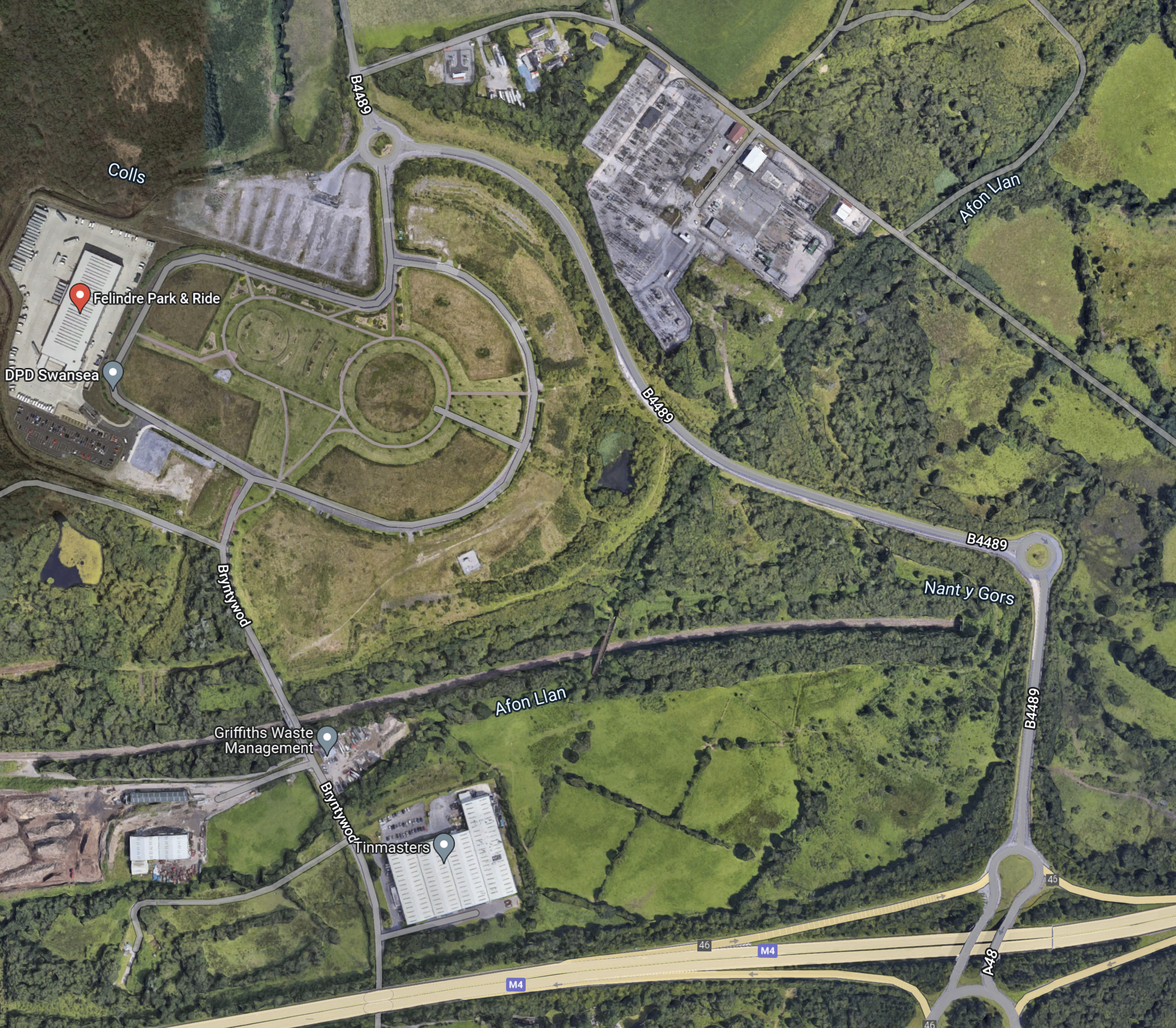
This Google Map shows where, it appears the Felindre station will be built.
Note.
- The Felindre Business Park in the North-West corner of the map, with a Park-and-Ride.
- The M4 running across the bottom of the map.
- The Swansea District Line runs East-West between the motorway and the Business Park.
It looks that the new station could be located on the South side of the Business Park.
When High Speed Two Opens Will Trains Call At Old Oak Common?
When High Speed Two opens, all GWR trains will stop at Old Oak Common station for these connections.
- Chiltern for for Banbury, Bicester, High Wycombe and the West Midlands
- Elizabeth Line for Central and East London and the Thames Valley
- Heathrow Airport
- High Speed Two for Birmingham and the North
- Overground for Outer London
As Old Oak Common will be such an important interchange, I think they should.
Will The Platforms At Carmarthen Station Need Lengthening?
This Google Map shows Carmarthen station.
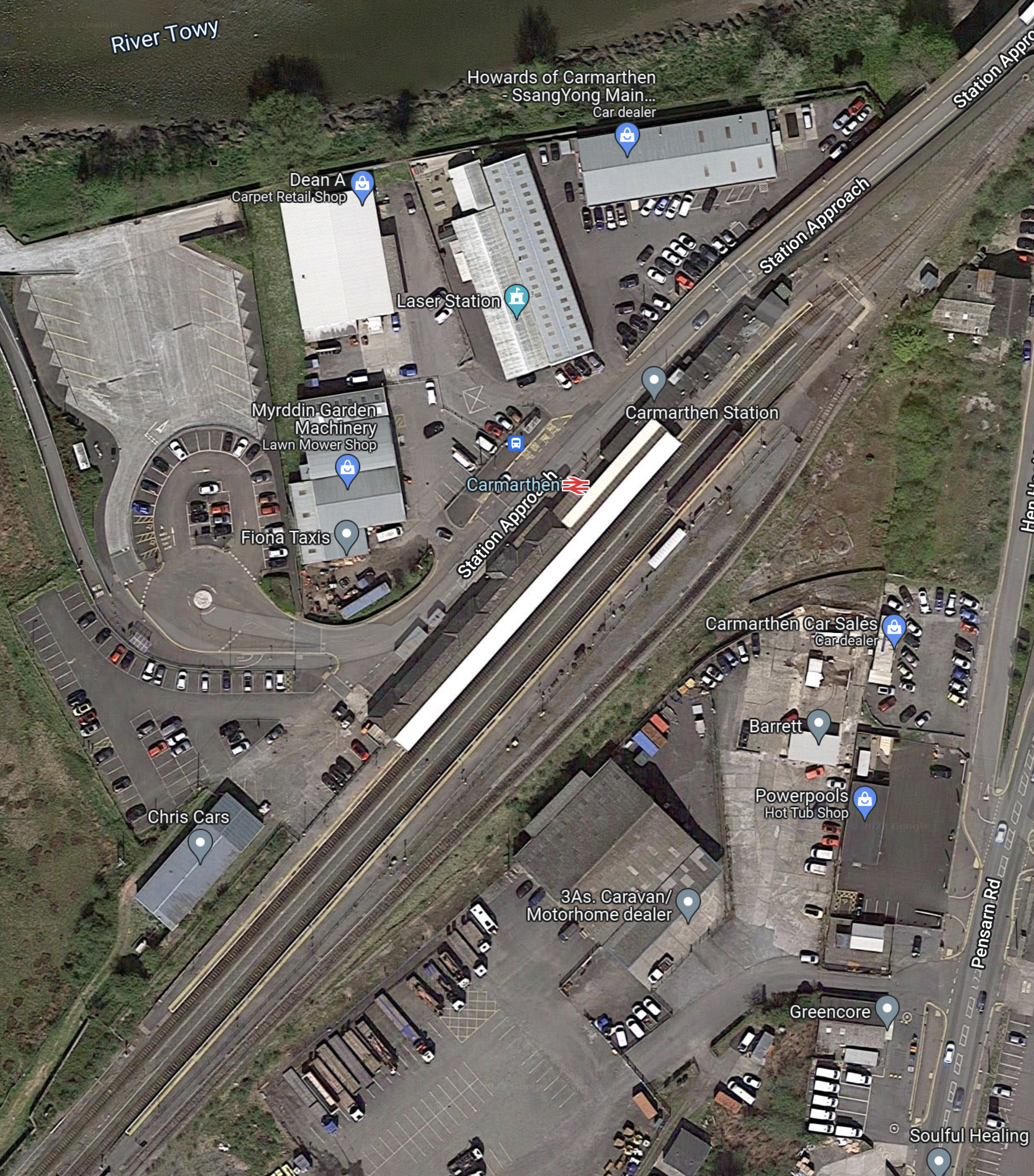
Note.
- The station has two platforms.
- There are certainly pictures of the station with an InterCity 125 in the station. There is a picture on the Wikipedia entry for Carmarthen station.
These pictures show the station.
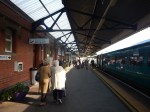
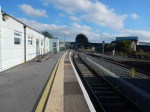

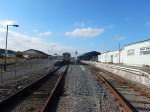


I suspect that the station will be upgraded to accommodate Grand Union Trains.
The Trains
An article in the June 2022 Edition of Modern Railways, which is entitled Grand Union Bids For London To Carmarthen, gives these details of the trains.
- Three classes.
- 2023 start for the service.
- Cycle provision.
- Vanload freight will be carried.
- Electric trains could start between London and Cardiff by 2023.
- In 2025, trains could be nine-car bi-modes.
- South Wales-based operation and maintenance.
- 125 full-time jobs created.
It certainly seems to be a comprehensive and well-thought out plan.
I have a few thoughts on the trains.
What Make Of Trains Will Be Procured?
Consider.
- Lumo’s Class 803 trains were ordered from Hitachi in March 2019 and entered service in October 2021.
- So if they ordered their version of the Hitachi trains by the end of 2022, the trains could be in service by July/August 2025.
- It would probably be easier, if the only fast trains on the Great Western Main Line between London and South Wales were all Hitachi trains with identical performance.
But the Spanish backers of Grand Union Trains may prefer Spanish-designed trains assembled in South Wales. So would a bi-mode version of CAF’s Class 397 trains be suitable?
On the other hand, the Carmarthen and Cardiff section of the route without a reverse at Swansea is only seventy-five miles.
This Hitachi infographic shows the Hitachi Intercity Tri-Mode Battery Train.
Consider.
- Charging could be provided at Carmarthen using a short length of electrification or one of Furrer + Frey standard chargers.
- Charging would also use the electrification between London Paddington and Cardiff.
- A nine-car Class 800 or Class 802 train has five engines and a five-car train has three engines.
- The Intercity Tri-Mode Battery Train was announced in December 2022.
- In the intervening two years how far has the project progressed?
- For the last twelve months, Lumo have been running trains with an emergency battery-pack for hotel power. How are the batteries doing, whilst being ferried up and down, the East Coast Main Line?
Can Hitachi configure a train with more than one battery-pack and a number of diesel engines, that has a range of seventy-five miles? I suspect they can.
I suspect that CAF also have similar technology.
There is also a benefit to Great Western Railway (GWR).
If GWR were able to fit out their Class 802 trains in the same way, they would be able to run between Cardiff and Swansea on battery power.
- It is only 45.7 miles.
- Charging would need to be provided at Swansea.
- GWR could still run their one tpd service to Carmarthen.
It looks like both train operating companies could be able to do as Lumo does and advertise all electric services.
What Could Be The Maxmum Range Of A Hitachi Train On Batteries?
This Hitachi infographic shows the Hitachi Regional Battery Train.

Consider.
- It has a battery range of 90 km or 56 miles on the single battery.
- I would expect that by a regional train, Hitachi mean a five car Class 800 or 802 train, like those that go to Cheltenham, Lincoln or Middlesbrough.
- A five-car Hitachi Regional Battery Train would have a battery that could contain power equivalent to 280 car-miles.
- Five-car Class 800 or 802 trains have three engine positions.
- These Hitachi trains have a very sophisticated control system, which I wrote about in Do Class 800/801/802 Trains Use Batteries For Regenerative Braking?
I believe the engineers at Hyperdrive Innovation have designed the battery-packs that replace the diesel engines as simulations of the diesel engines, so they can be a direct replacement.
This would mean that battery-packs could be additive, so the following could apply to a five-car train.
- Two battery packs could have a range of 112 miles.
- Three battery packs could have a range of 168 miles.
GWR generally runs pairs of five-car trains to Swansea, which would be 90 miles without electrification.
If five-car trains with two battery packs, could be given a range of 112 miles, GWR could run an electric service to Swansea.
They could also run to Carmarthen, if Grand Union Trains would share the charger.
What ranges could be possible with nine-car trains, if one battery pack is good for 280 car-miles?
- One battery-pack, gives a range of 280/9 = 31 miles
- Two battery-packs, give a range of 2*280/9 = 62 miles
- Three battery-packs, give a range of 3*280/9 = 93 miles
- Four battery-packs, give a range of 4*280/9 = 124 miles
- Five battery-packs, give a range of 5*280/9 = 155 miles
- Six battery-packs, give a range of 6*280/9 = 187 miles
- Seven battery-packs, give a range of 7*280/9 = 218 miles
Note.
- I have rounded figures to the nearest mile.
- There are five cars with diesel engines in a nine-car train, which are in cars 2,3,5, 7 and 8.
- Diesel engines are also placed under the driver cars in five-car Class 810 trains.
- For the previous two reasons, I feel that the maximum numbers of diesel engines in a nine-car train could be a maximum of seven.
- I have therefor assumed a maximum of seven battery packs.
These distances seem sensational, but when you consider that Stradler’s Flirt Akku has demonstrated a battery range of 243 kilometres or 150 miles, I don’t think they are out of order.
But, if they are correct, then the ramifications are enormous.
- Large numbers of routes could become electric without any infrastructure works.
- Grand Union Trains would be able to run to Carmarthen and back without a charger at Carmarthen.
- GWR would be able to run to Swansea and back without a charger at Swansea.
Prudence may mean strategic chargers are installed.
Rrenewable Energy Developments In South West Wales
In Enter The Dragon, I talked about renewable energy developments in South West Wales.
I used information from this article on the Engineer, which is entitled Unlocking The Renewables Potential Of The Celtic Sea.
The article on the Engineer finishes with this conclusion.
For now, Wales may be lagging slightly behind its Celtic cousin to the north, but if the true potential of the Celtic Sea can be unleashed – FLOW, tidal stream, lagoon and wave – it looks set to play an even more prominent role in the net zero pursuit.
The Red Dragon is entering the battle to replace Vlad the Mad’s tainted energy.
South West Wales could see a massive renewable energy boom.
Grand Union Trains will increase the capacity to bring in more workers to support the developments from South Wales and Bristol.
Extending The Elizabeth Line – Connecting Great Western Main Line Services To The Central Tunnel
If say it was ever needed to run a train between Oxford or Swindon stations and the Central Tunnel of the Elizabeth Line, three things must be possible.
Trains Would Have To Be Compatible With The Central Tunnel Of The Elizabeth Line
As any train would have to be compatible with the platform-edge doors in the central tunnel of the Elizabeth Line, the trains would have to be dimensionally identical to the current Class 345 trains.
- Nine cars
- Possibility of lengthening to ten cars.
- 204.73 metres long.
- 6 sets of doors per carriage
- Ability to run under full digital signalling.
I covered this in detail in Extending The Elizabeth Line – High Speed Trains On The Elizabeth Line.
Trains Would Need A 125 mph Capability To Travel On The Fast Lines Of The Great Western Main Line
They would be designed for a higher speed of at least 110 or 125 mph, to enable running on the fast lines.
The faster running would ease scheduling of the trains.
Effectively, the train would be a Class 345 train with more features and considerably more grunt.
Trains Must Be Able To Connect Between The Fast Lines And The Central Tunnel Of The Elizabeth Line At Royal Oak
This map from cartometro.com shows the track layout at Royal Oak.
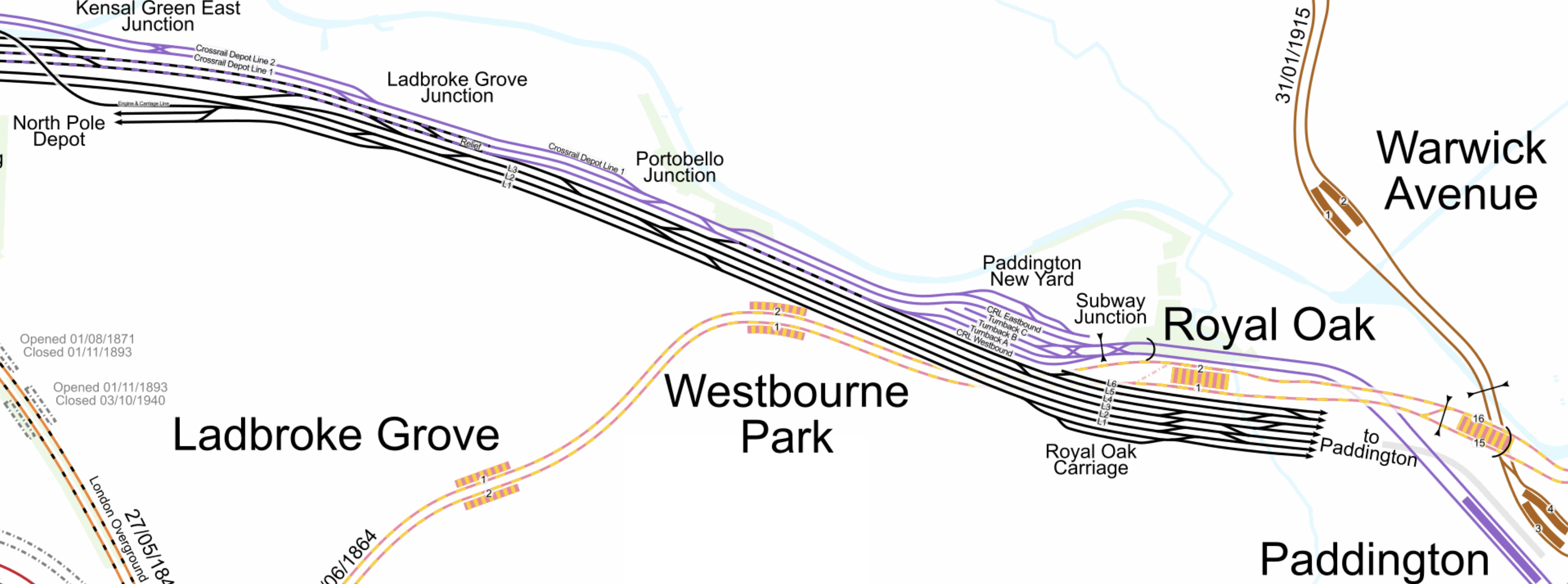
Note.
- The Elizabeth Line is shown in purple.
- Great Western Railway (GWR) tracks are shown in black.
- Where the Elizabeth Line shares the tracks with GWR services the tracks are shown in black and purple.
This map shows an enlargement of Kensal Green East Junction in the North-West corner of the previous map.
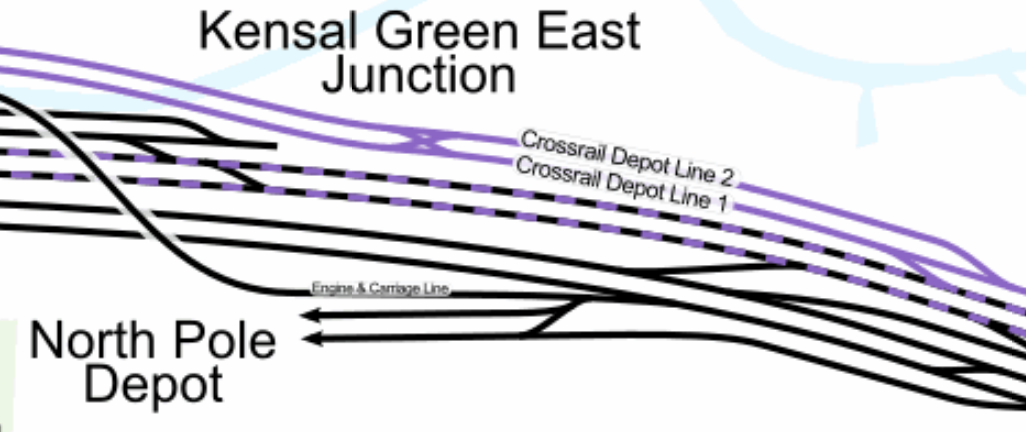
Note.
- The top pair of lines lead to the Elizabeth Line Depot at Old Oak Common.
- the pair of lines that are shown in black and purple handle Elizabeth Line and GWR local services.
- The pair of black lines are the Great Western Main Line.
- North Pole Depot is used by GWR for their Hitachi trains.
This map shows an enlargement between Ladbroke Grove Junction and Royal Oak.
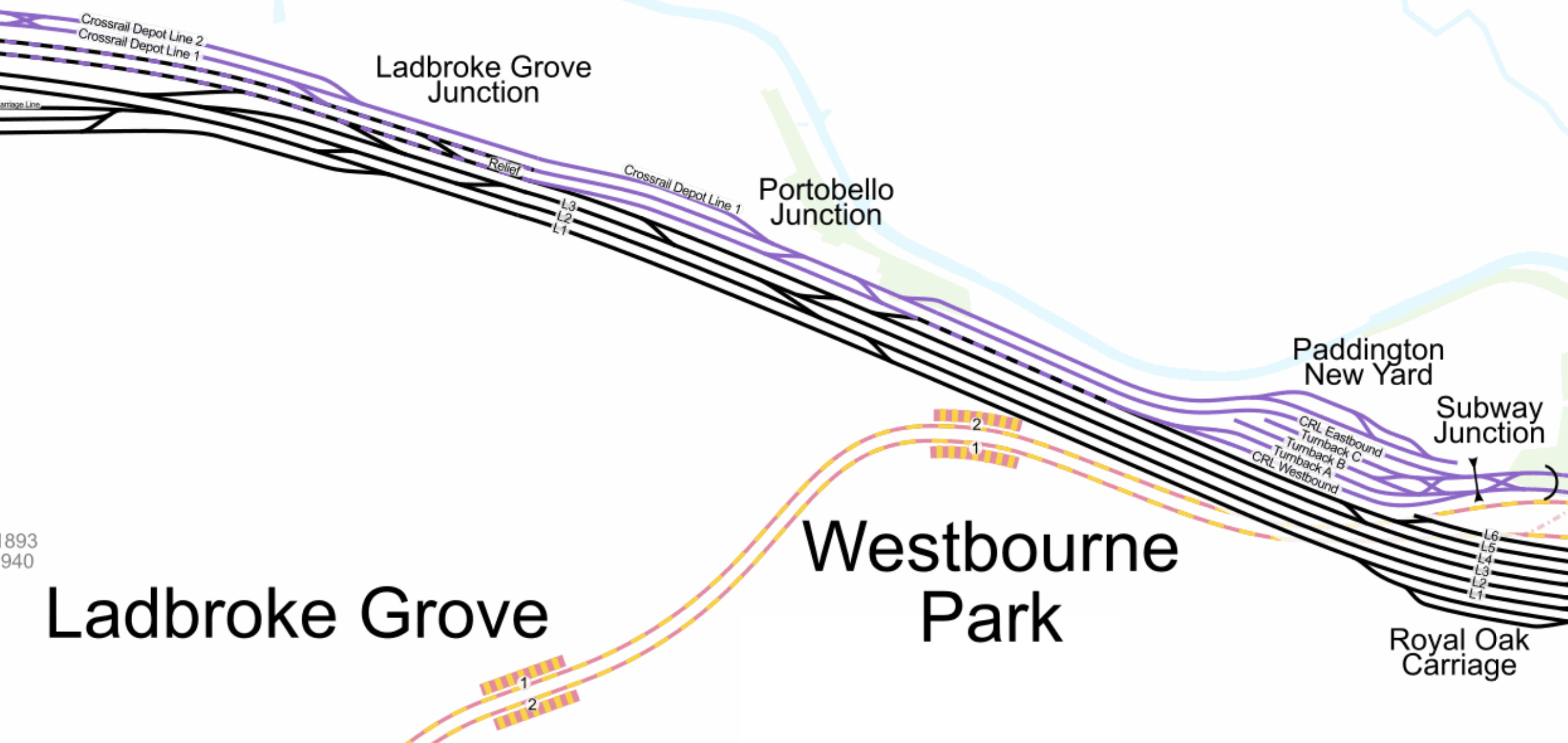
Note.
- In the South-East corner of the map is Subway junction, which appears to have two crossovers for maximum flexibility.
- To the East of Subway junction the curved line indicates the Royal Oak Portal of the Elizabeth Line Central Tunnel.
- To the West of Subway junction, there is Paddington New Yard, where there is five tracks labelled CRL Eastbound, Turnback C, Turnback B, Turnback A and CRL Westbound from North to South.
- Turnback C, Turnback B and Turnback A are the three turnback sidings, where trains are turned back East through the Elizabeth Line Central Tunnel.
- CRL Eastbound and CRL Westbound can be followed across the map to the black and purple lines of the Elizabeth Line to the West of Ladbroke Grove junction.
- At present the Western section of the Elizabeth Line terminates in Paddington station. Crossovers at Portobello junction appear to connect the Western section of the Elizabeth Line into Paddington station.
- More crossovers also appear to connect the Great Western Main Line to the CRL Eastbound and CRL Westbound through Paddington New Yard.
I am fairly sure that the track layout at Royal Oak allows trains to go both ways between Great Western Main Line and the Elizabeth Line Central Tunnel.
Extending The Elizabeth Line – High Speed Trains On The Elizabeth Line
This may seem rather fanciful, but could it be the way to maximise the use of the Elizabeth Line?
- I feel that the Elizabeth Line will eventually serve other destinations like Basingstoke, Beaulieu, Oxford, Southend and Swindon.
- The capacity of the Elizabeth Line will grow to over thirty trains per hour (tph) under control of digital signalling.
These are a few thoughts.
The Design Of The Trains
As any train would have to be compatible with the platform-edge doors in the central tunnel of the Elizabeth Line, the trains would have to be dimensionally identical to the current Class 345 trains.
- Nine cars
- Possibility of lengthening to ten cars.
- 204.73 metres long.
- 6 sets of doors per carriage
- Ability to run under full digital signalling.
They would be designed for a higher speed of at least 110 or 125 mph, to enable running on the fast lines of these routes.
- East Coast Main Line
- Great Western Main Line
- Midland Main Line
- West Coast Main Line
They would also be able to run at 100 mph on the Chiltern Main Line, the Great Eastern Main Line and the North Kent Line.
The faster running would ease scheduling of the trains.
Extra facilities could include.
- Toilets
- Tables
- A third-rail capability for running in Kent.
Effectively, it would be a Class 345 train with more features and considerably more grunt.
Note that in A High Speed Train With An IPEMU-Capability, I started the post with the following.
Bombardier were reported by Ian Walmsley in the April 2016 Edition of Modern Railways, to be developing Aventra, with a 125 mph capability.
Bombardier have also told me, that all Aventras will be wired so they could be fitted with on-board energy storage.
Could it be that the design of a Class 345 train could be modified to run at higher speeds? I wouldn’t be surprised.
Oxford To Southend Victoria
This could be a typical route.
- Between Oxford and Paddington, it would follow a route similar to the GWR’s Oxford service with stops at just Reading and Slough.
- At Paddington the train would take the Central Tunnel of the Elizabeth Line and travel under London, at the same speed as the other trains.
- It would emerge at Stratford and move to the Great Eastern Main Line.
- It would probably stop at Stratford, Romford, Shenfield and all stations to Southend Victoria.
Note.
- Digital signalling would enforce the precise timekeeping needed.
- Much of the Oxford and Paddington section would be up to speeds of at least 125 mph.
- Times in the Central Tunnel of the Elizabeth Line would be identical to the current Class 345 trains.
- Much of the Stratford and Southend section would be up to speeds of at least 100 mph.
I estimate that total time would be a few minutes under two hours.
Connecting To The Central Tunnel Of The Elizabeth Line At Royal Oak
I discuss this in Extending The Elizabeth Line – Connecting Great Western Main Line Services To The Central Tunnel.
Connecting To The Central Tunnel Of The Elizabeth Line At Stratford
I discuss this in Extending The Elizabeth Line – Connecting Great Eastern Main Line Services To The Central Tunnel.
Connecting To The Central Tunnel Of The Elizabeth Line At Abbey Wood
This map from cartometro.com shows the track layout at Abbey Wood.
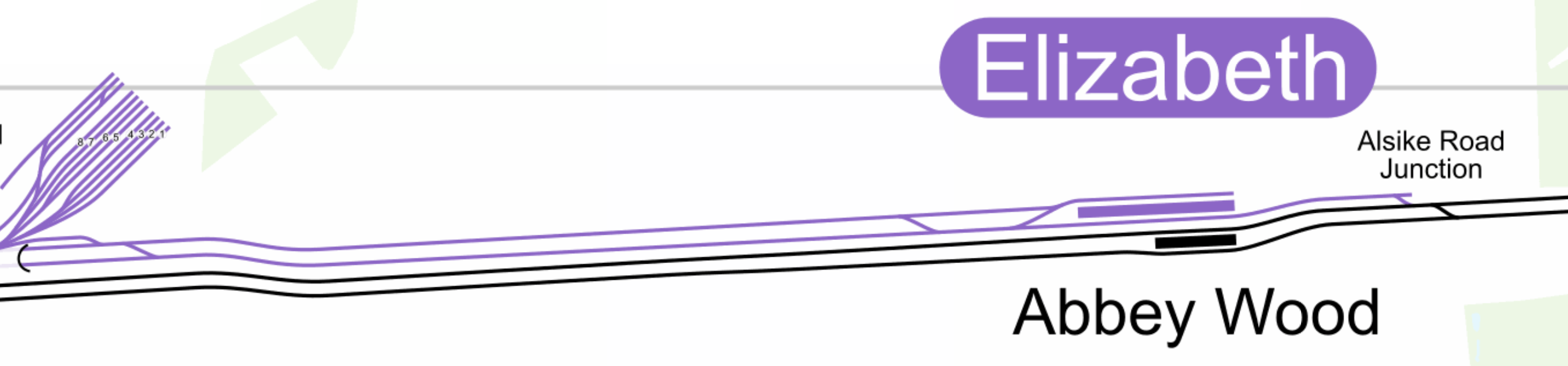
Note.
- The Elizabeth Line is shown in purple.
- The North Kent Line is shown in black.
- The North Kent Line platform to London is the Southernmost platform and is numbered 1.
- The North Kent Line platform from London is the other Southern platform and is numbered 2.
- The Elizabeth Line platforms are numbered 3 and 4.
- Platform 4 is the Northernmost platform.
At present the Elizabeth Line service to Abbey Wood station is twelve tph, with each platform handling six tph.
This picture shows trains in both Platform 3 and 4 looking towards the station buildings.

Note.
- Platform 3 is on the right.
- Platform 4 is on the left.
In Elizabeth Line To Ebbsfleet Extension Could Cost £3.2 Billion, I talk about this proposal as described in this article on Ian Visits.
One of the key features of Crossrail To Ebbsfleet (C2E) project is that instead of all trains terminating at Abbey Wood, trains will terminate as follows.
- Abbey Wood – 4 tph
- Northfleet – 4 tph
- Gravesend – 4 tph
This will mean that 8 tph would pass through Abbey Wood station.
- Platform 4 could certainly handle the four that terminated on the Elizabeth Line.
- Platform 3 would need to handle eight tph in both directions or sixteen tph to fulfil the proposed C2E service.
- This would be one train every 225 seconds.
I believe that digital signalling could handle this easily and safely.
I am fairly sure that the track layout at Abbey Wood allows eight tph to go both ways between the North Kent Line and the Elizabeth Line Central Tunnel.
The Maximum Capacity At Abbey Wood Station
Because of the current track layout at Abbey Wood, I believe that without track modifications, Abbey Wood station will not be able to handle more than 12 tph.
Thameslink
These proposed trains would also be compatible with Thameslink, as this route has no platform edge doors.
No platform extensions would be needed, as the Class 345 trains are shorter than the 12-car Class 700 trains.
If they were 125 mph trains, then this would ease timetabling on the East Coast Main Line, as the trains could mix it with the expresses on the fast lines.
Could These High Speed Trains For The Elizabeth Line Have A Cruising Speed Of 140 mph?
It is likely, when full authority digital ERTMS signalling is installed on main lines out of London, that 140 mph will be possible on some at least these routes.
- East Coast Main Line
- Great Western Main Line
- Midland Main Line
- West Coast Main Line
The extra speed would maximise capacity.
 The Anonymous Widower