Mid-Cornwall Metro Presentation – 9th February 2024
On Friday, I went to the Mid-Cornwall Metro presentation in the Victoria Hotel in Newquay.
These pictures give a flavour of the excellent presentation.
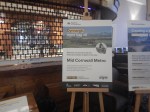
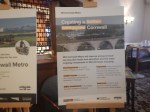

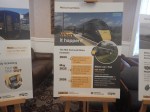

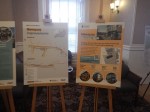
One thing that is difficult to put on paper is the overall enthusiasm for the project shown by representatives of Cornwall Council, Great Western Railway and Network Rail.
I believe that if this enthusiasm can be translated into action in the next couple of years, them this project can be delivered on time and on budget.
This link will show all my Mid-Cornwall Metro posts.
My Train To Wales Today Divided At Swansea
According to the Wikipedia entry for Great Western Railway, seven of their hourly services to Swansea now continue to Carmarthen station.
- My train was such a train, although I got off at Newport station.
- The service was formed of two five-car Class 800 trains; 800026 and 800027.
- I would assume that at Swansea, the trains will have split and the rear train will reverse and continue to Carmarthen.
- The lead train would stay in Swansea.
- I have traced the Carmarthen train on Real Time Trains and it clearly shows that the train picked up another train at Swansea as it came back to London.
All the trains involved in the splitting and joining were Class 800 trains.
The splitting and joining at Swansea means the following.
- There is a ten-car train between London and Swansea, which will give maximum capacity to and from the rugby at Cardiff.
- There is a five-car train between Swansea and Carmarthen, which doesn’t need the capacity of a ten-car train.
This is probably a more efficient use of trains and it maximises capacity to and from Cardiff, in both directions.
Is this splitting and joining at Swansea, the first regular use of the technique in service with Class 800 trains?
This YouTube video shows the station displays at Reding, when a Swansea/Carmarthen pair go through.
The Most Crowded Train I’ve Been On For Sixty-Plus Years
I started going to Tottenham Hotspur matches by myself somewhere between the age of fourteen and sixteen.
- I used to take the 107 bus from where we lived in Oakwood to Enfield Town station and then get the electric trains to White Hart Lane.
- I don’t remember much about the trains, but they were slam door stock.
- I remember this as we used to fold the doors back before the train entered the station and jump out when the train got to running speed.
- Coming back into Enfield Town station, this was essential, otherwise you wouldn’t be to the front of the queue for the 107 bus.
- Those trains returning from White Hart Lane were incredibly packed.
And I haven’t been on a train as crowded until today.
Today, I planned a simple mission to go to Ebbw Vale Town station and back to see the working of the new service between Newport and Ebbw Vale Town station.
- As I often do, I used my Freedom Pass on the Elizabeth Line to get to Reading.
- At Reading station, I bought a Super Off-Peak Return from Reading to Ebbw Vale Town for £47.05 with my Senior Railcard.
- By comparison, a Super Off-Peak Return from Paddington to Ebbw Vale Town is £57.55 with a Railcard.
The first train today, on which I could use my cheap ticket was the 11:13 from Reading.
- I had hoped, that there would still be a few seats left at Reading, as there are always a few, who use Great Western Railway’s fast trains between Paddington and Reading.
- I also expected, that many going to the Wales and Scotland match in Cardiff would take later trains.
- Unfortunately, quite a few Scots and Welsh supporters got on at Reading.
- It was a wrong decision, as there wasn’t a spare seat anywhere.
So in the end, I stood all the way from Reading to Newport.
I would hope that next time, that Scotland play Wales in Cardiff, that Great Western Railway add some more capacity.
Could A Heathrow And City Line Be Created?
In The New Step-Free Entrance At Euston Square Station, the following comment was added by Martin.
As said cutting the two new pedestrian tunnels from the existing platforms outside the existing brickwork MAY be less demanding than extending the platform tunnel, however I feel that extending the rail platforms would be a more future proof solution as done on the Elizabeth Line, in addition to reducing walking time to the Main Line with Stuff. I would like to see this as a precursor to extending platforms 5 & 6 at Baker Street west to a new entrance at Glentworth Street. With other improvements along the line over time. Enabling a new “Heathrow & City Line” connection utilising the Elizabeth Line from a rebuilt platform at Westbourne Grove.
I will now look at Martin’s various suggestions.
A Connection Between Elizabeth Line And the Hammersmith & City Line At Westbourne Park Station
The last sentence of the comment is.
Enabling a new “Heathrow & City Line” connection utilising the Elizabeth Line from a rebuilt platform at Westbourne Grove.
Note.
- Martin means Westbourne Park not Westbourne Grove.
This OpenRailwayMap shows the lines through Westbourne Park station.
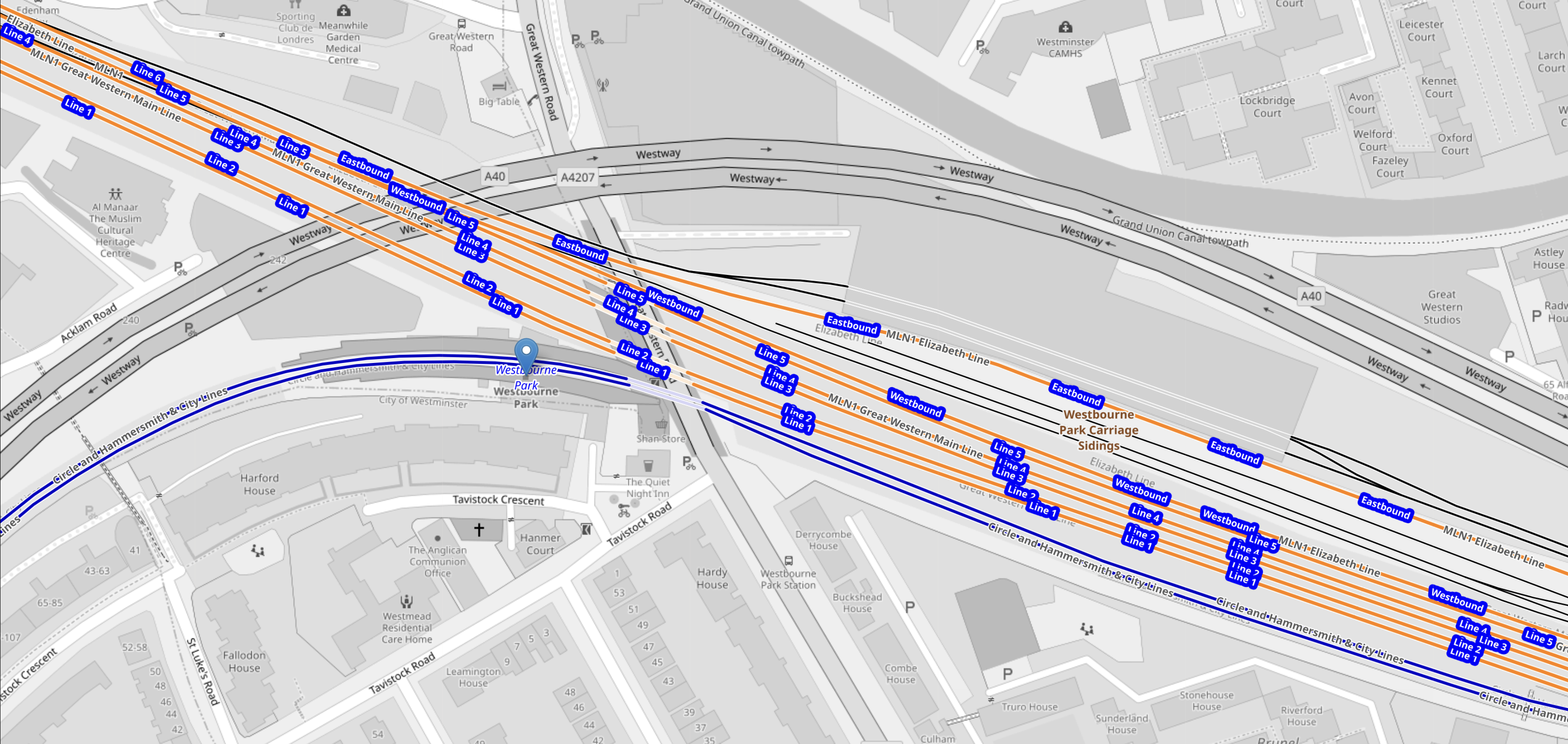
Note.
- The blue tracks are the Hammersmith & City Line.
- The blue arrow on the Hammersmith & City Line indicates Westbourne Park station.
- The orange tracks are the four tracks of the Great Western Main Line and the two tracks of the Elizabeth Line.
- To the East of this map, the Hammersmith & City Line crosses under the other tracks, so it can access platforms on the North side of Paddington station.
This second OpenRailwayMap is an enlargement of the lines through Westbourne Park station.
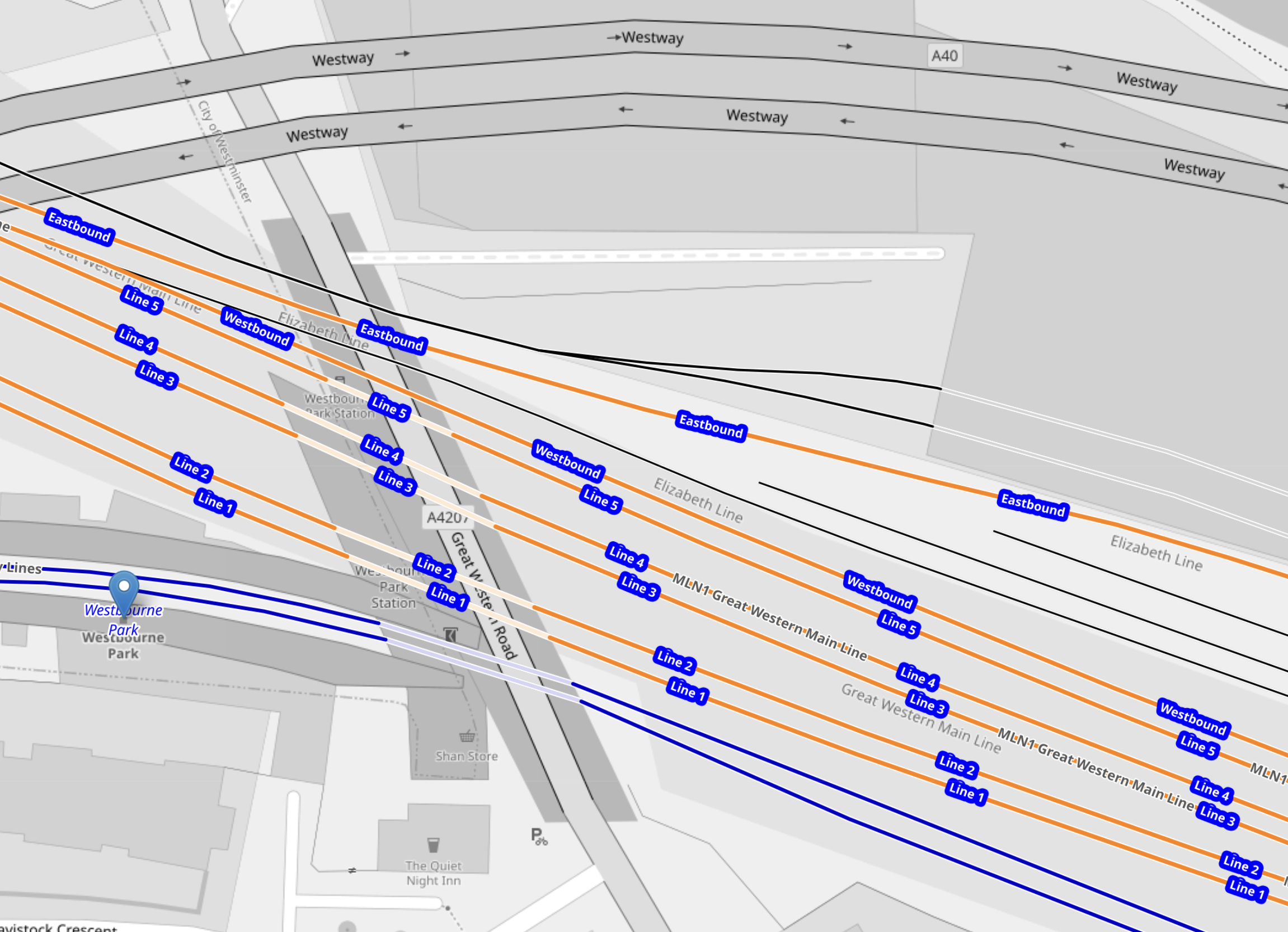
Note.
- As before the blue tracks and blue arrow indicate the Hammersmith & City Line and Westbourne Park station.
- Orange Lines 1 to 4, which are numbered from the South, are the four lines of the Great Western Main Line.
- The other three orange tracks are labelled Line 5, Westbound and Eastbound and handle GWR local services and the Elizabeth Line.
- I would assume that Eastbound and Westbound Elizabeth Line services use the appropriately named track.
This Google Map shows Westbourne Park station, Great Western Road, the rail tracks and the nearby Westbourne Park bus garage.
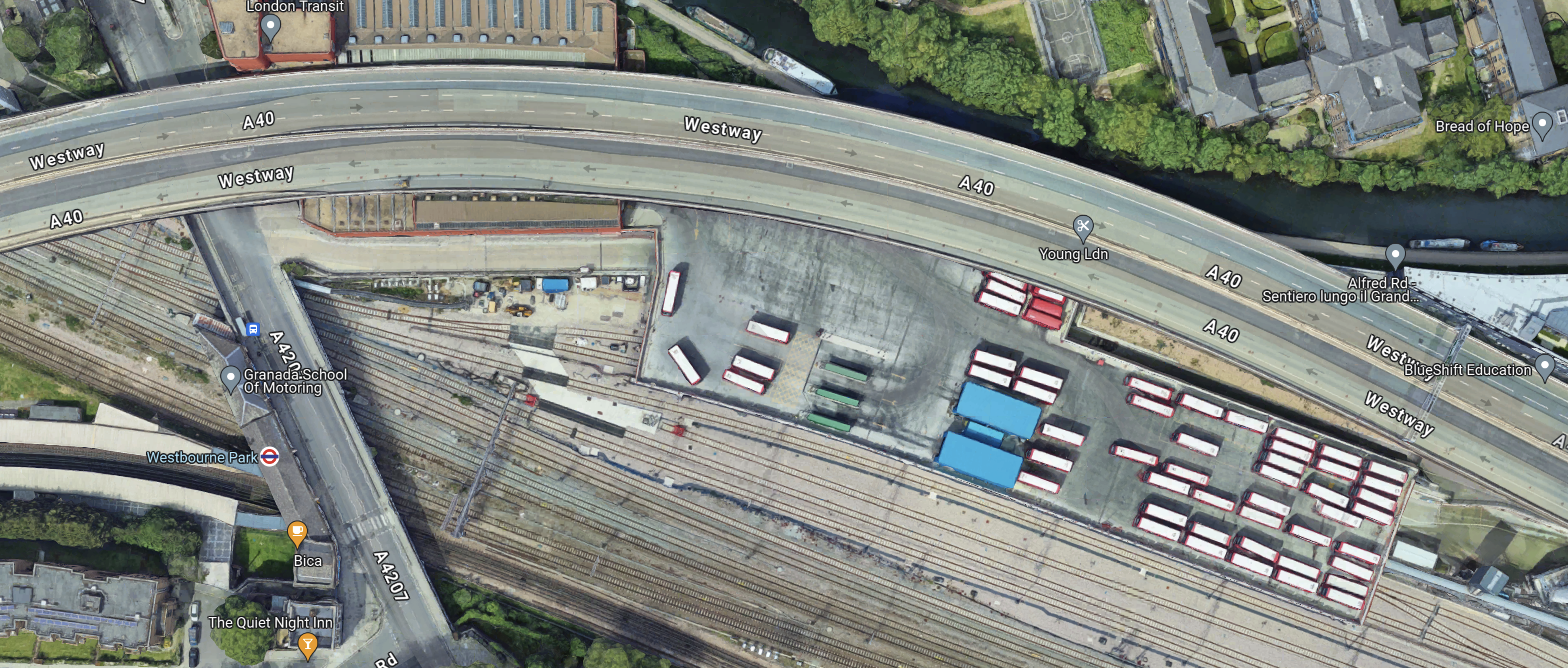
Note.
- The London Underground roundel indicates Westbourne Park station.
- The two Hammersmith & City Line platforms stretch to the West of the station entrance.
- Westbourne Park bus garage lies to the North of the Great Western Main Line and Elizabeth Line tracks.
- There are around fifty white-roofed buses parked on the roof of the bus garage.
- The Eastbound Elizabeth Line track runs along the South side of the bus garage.
Looking at the last two maps, I suspect that a two platform station serving the two Elizabeth line tracks under and to the East of Great Western Road.
- It would be connected to the Hammersmith & City Line by a walkway on the Western side of the Great Western Road.
- There would be step-free access to the Hammersmith & City and Elizabeth Lines.
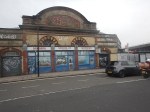
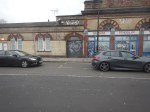
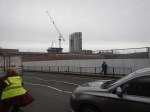
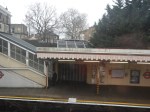
I took these pictures from the platforms at the current Westbourne Park station and as I walked to and from Westbourne Park bus garage.
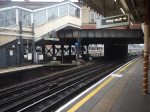
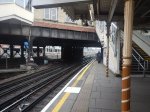
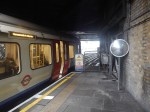
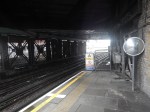
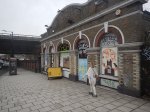
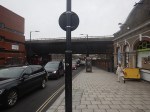
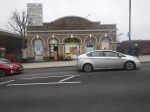

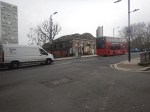


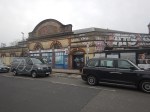
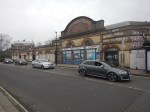
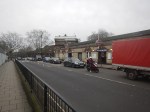
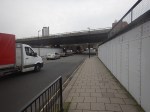
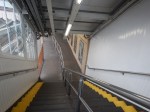
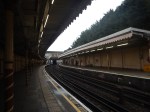
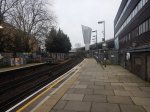
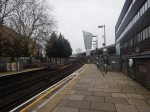
Note.
- The bus garage is recent and was built as part of the Elizabeth Line construction.
- There are two Westbourne Park station buildings.
- One building serves the Hammersmith & City Line and the other could have served the tracks now used by the Elizabeth Line.
- The Westbourne Park station buildings need a lot of restoration.
- Could a bus interchange be developed?
I believe that a station that connected the Hammersmith & City and Elizabeth Lines could be built.
Leisure Market Boom? GWR’s Vision For Direct Bristol-Oxford Services
The title of this post, is the same as that of this article on Rail Magazine.
This is the first paragraph.
Great Western Railway has hopes on running direct services between Bristol Temple Meads and Oxford from September 14, subject to approval of its new trial proposal by the Department for Transport and Network Rail. The move is a test of growth in demand for leisure travel by train.
It is an interesting idea.
These are some points about the service, given in the article.
- The route will be via Swindon, Chippenham and Bath Spa.
- Fastest journey time would be 71 minutes.
- The route will be aimed at the leisure market.
- There will be two trains per day (tpd) in each direction on Saturdays.
This is GWR’s handy route map.

These are my thoughts.
Will The Trains Call At Didcot Parkway?
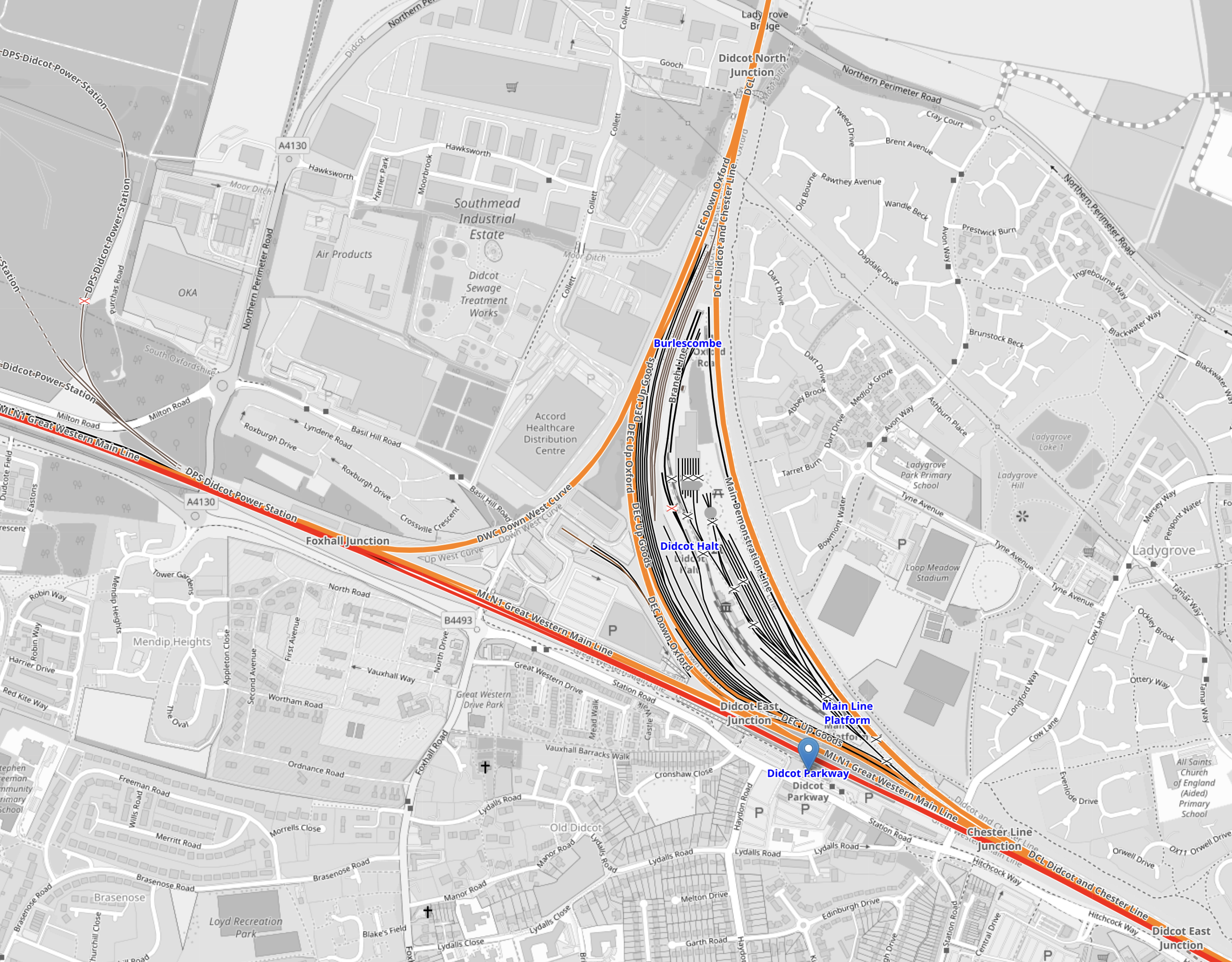
This OpenRailwayMap shows Didcot Parkway station and the large triangular junction, that connects Oxford to the Great Western Main Line.
Note.
- The red tracks are the Great Western Main Line.
- The blue arrow indicates Didcot Parkway station.
- Oxford station is about ten miles to the North.
- Chords in the junction allow trains to go between Oxford and Paddington and Oxford and Swindon, with or without a stop at Didcot Parkway station.
The article says that GWR has asked to run the following services.
- 1018 Bristol Temple Meads-Oxford – Would arrive at Oxford at 1129.
- 1155 Oxford-Bristol Temple Meads (via Didcot) – Would arrive at Bristol Temple Meads at 1306.
- 1518 Bristol Temple Meads-Oxford – Would arrive at Oxford at 1629.
- 1712 Oxford-Bristol Temple Meads – Would arrive at Bristol Temple Meads at 1823.
Note.
- I suspect that the 1155 will reverse at Didcot Parkway station.
- There is a two train per hour (tph) service between Didcot Parkway and London Paddington stations.
- It looks like the four services could be run by a single train shuttling up the Great Western Main Line.
Would it be sensible if all Oxford and Bristol trains called at Didcot Parkway station, so that travellers could use the London service to their advantage?
But, calling at Didcot Parkway station would slow the service as there would need to be a reverse.
What Class Of Train Would Be Used?
Consider.
- A Bristol and Didcot Parkway via Bath Spa service takes 55 minutes.
- This is an average speed of 71.1 mph over a distance of 65.2 miles.
- 24.4 miles at the Bristol end of the route is not electrified.
- 10.3 miles at the Oxford end of the route is not electrified.
- The four services can be run by a single train shuttling up the Great Western Main Line.
It looks to me, that a bi-mode train with good performance is needed.
So I suspect that a five-car Class 800 or Class 802 train will be used.
Will The Train Be Battery-Electric Powered?
This is an interesting possibility.
- An ideal route for a battery electric train, is surely one with a long electrified section in the middle, which can be used to fully charge the train’s batteries.
- The train would have to run for 48.8 miles on its own power at the Bristol end of the route.
- The train would have to run for 20.6 miles on its own power at the Oxford end of the route.
The data sheet for a battery-electric Class 800/802 train can be downloaded from this page on the Hitachi web site.
In a section on the page, which is entitled Intercity Battery Trains, this is said.
A quick and easy application of battery technology is to install it on existing or future Hitachi intercity trains. Adding just one battery reduces emissions by more than 20% and offers cost savings of 20-30%.
Our intercity battery powered trains can cover 70km on non-electrified routes, operating at intercity speeds at the same or increased performance. Hitachi Rail’s modular design means this can be done without the need to re-engineer or rebuild the train and return them to service as quickly as possible for passengers.
The range of 70 km is 43.5 miles, which would appear to be a little bit short to go from the end of the electrification at Chippenham to Bristol Temple Meads and back.
But various measures could be taken to make sure the train can handle the route.
- The regenerative braking strategy could be used to conserve battery power.
- A second battery could be added to the train.
- Methods to charge the train at Bristol Temple Meads could be installed.
As London Paddington and Bristol Temple Meads is an important route, I suspect that Hitachi and Great Western Railway have a strategy to handle trains from Chippenham and sending them back.
Could This Route Be A Trial Route For Battery-Electric Trains?
Consider.
- Hitachi and Great Western Railway wouldn’t want to introduce an unreliable train without full full testing.
- Trains can probably limp to either Stoke Gifford or Reading depots, after a battery failure.
- Great Western Railway could test a new route.
- A full test only needs one train.
- Passenger reaction to a battery-electric train can be assessed.
- Staff need to be trained.
- The route can be run by a standard bi-mode if required.
- It could be the world’s first high-speed battery-electric train.
- Enthusiasts would flock to have a ride.
Could this be a trial service to make sure everything goes right?
Great Western Railway Updates EHRT On Its Upcoming Operational Trial Of Fast Charge Tech
The title of this post, is the same as that of this article on Electric and Hybrid Rail Technology.
This is the sub-heading.
Great Western Railway’s senior program manager, Sonya Johns, speaks to Electric & Hybrid Rail Technology about the firm’s progress on developing ex-Vivarail Fast Charge technology for battery-powered trains, ahead of operational trials due to commence in 2024.
The article is a must-read as it describes the progress since First Group, acquired the assets and intellectual property of Vivarail and its Fast Charge battery train technology.
This paragraph describes the components of the Fast Charge technology.
The Fast Charge system consists of three key components: retractable charging shoe gear, which is mounted to the underframe of the train; short (4m) charging rails mounted between the underframe of the train; and the Fast Charge Battery Bank (FCBB) installed beside the track, acting as an energy buffer between the train and the grid.
This paragraph outlines the benefits of the system.
The Fast Charge system has several benefits, according to Johns, including high charging power, enabling the train to be recharged in around 10 minutes; a standard DNO connection, avoiding costly power supply upgrades; full automation, with no driver interaction required; low safety risk (the charging rails are never live unless fully covered by the train); and minimal disruption during installation, as the FCBB is manufactured offsite and the charging rails are attached to existing sleepers.
This sounds like a system, that has been designed by someone fed up with regulators saying no to innovative ideas.
Other points from the article include.
- The shoe gear has been designed to be easily installed on any rolling stock.
- The one-year trial of the Fast Charge technology and the Class 230 battery train on the West Ealing and Greenford line will commence in spring 2024.
- GWR will capture and analyze data during the trial to understand how the technology performs in different conditions.
The article finishes with this paragraph.
The work, according to GWR, is part of its commitment to reduce the carbon emissions of its train fleet with a view to removing all diesel-only traction from the network by 2040, in line with the Government’s Transport Decarbonisation Plan.
Adrian Shooter would have been pleased if he was here to see it.
Cardiff To Reading In A Class 387 Train
Returning from my trip to Cardiff yesterday, it wasn’t the normal Class 80x train, but a pair of Class 387 trains.
The timings from real time trains, weren’t as bad as some would have expected.
- Cardiff Central – 16.54 – 16:56
- Newport – 17:07 – 17:11
- Bristol Parkway – 17:29 – 17:32
- Swindon – 17:53 – 17:58
- Reading – 18:20 – 18:26
Note.
- The first time is the scheduled time and the second time is the actual time of the Class 387 trains.
- The schedule covers the 109.2 miles in 84 minutes, which is an average speed of 78 mph.
- The Class 387 trains covered the 109.2 miles in 90 minutes, which is an average speed of 72.8 mph.
I also arrived in Reading with three or so minutes to catch the Elizabeth Line train.
Are More Elizabeth Line Services Needed To Reading?
In a couple of instances, I’ve waited at Reading for nearly half-an-hour for an Elizabeth Line train.
Currently.
- The two Elizabeth Line trains take 53 minutes between Reading and Paddington.
- The two Great Western Main Line trains, that serve Didcot Parkway take 37 minutes between Reading and Paddington.
- The Great Western Main Line train, that serve Newbury take 25 minutes between Reading and Paddington.
Perhaps four trains per hour (tph) on the Elizabeth Line would be more convenient?
But services wouldn’t be as fast.
Electrification Between Newbury And East Somerset Junction
In the August 2023 Edition of Modern Railways, there is an article, which is entitled GWR Seeks Opportunities To Grow.
This is the sub-heading.
Managing Director Mark Hopwood tells Philip Sherratt there is plenty of potential to increase rail’s economic contribution.
This is two paragraphs.
The desire to provide electrification to support aggregates traffic from the Mendip quarries could also benefit GWR , says Mr. Hopwood. ‘Having an electric loco would massively help with pathing heavy freight trains through the Thames Valley. If you could electrify from Newbury to East Somerset Junction, a big chunk of the Berks and Hants route would be wired.
Then you can ask how much further you could get on battery power on an IET without running out of juice.’
I have some thoughts.
Where Is East Somerset Junction?
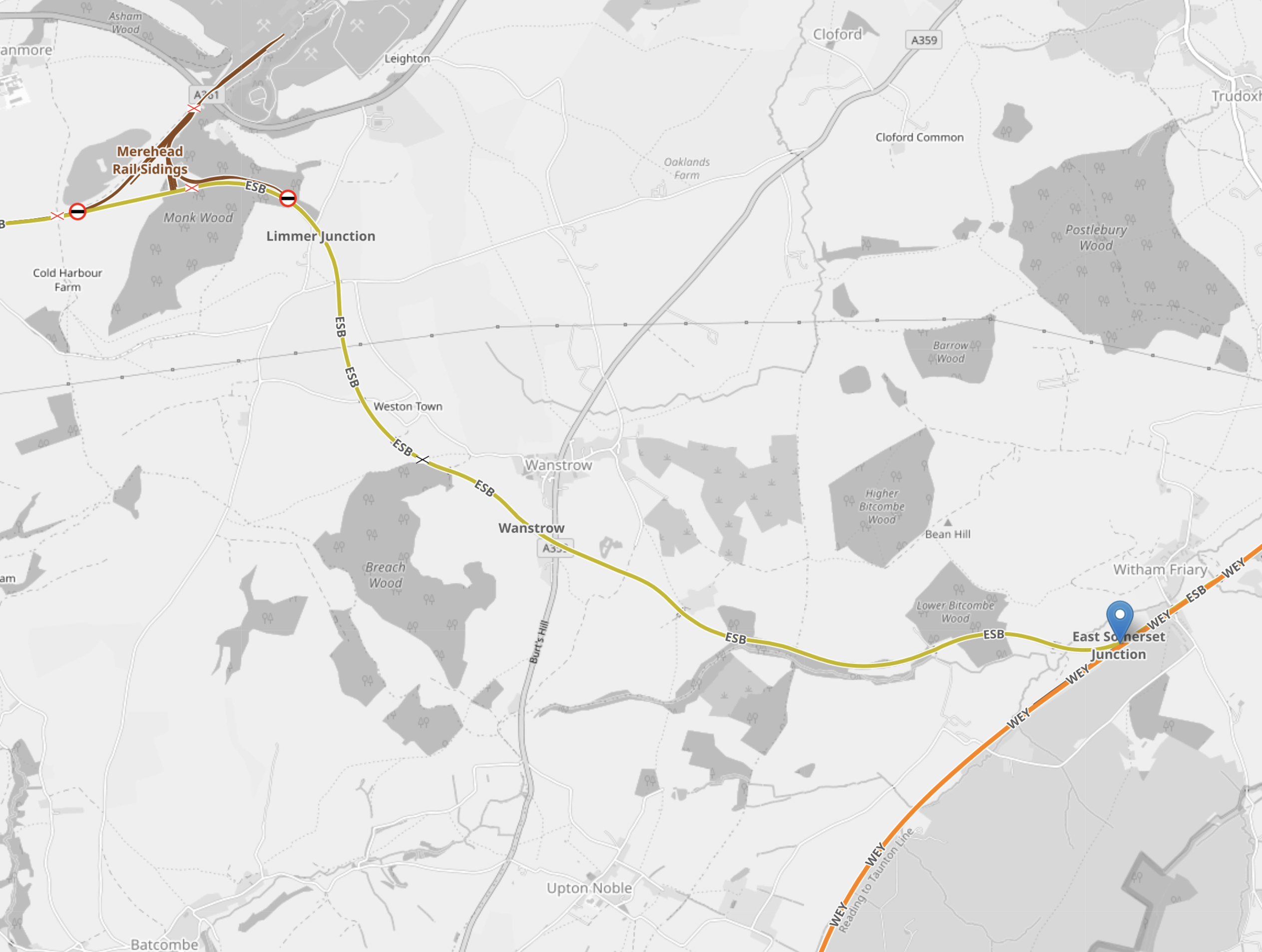
This OpenRailwayMap shows East Somerset junction.
Note.
- The East Somerset junction is marked with the blue arrow.
- East Somerset junction is 5.2 miles North of Bruton station and 5.4 miles South of Frome station on the Reading and Taunton Line.
As the map shows there is a branch to Merehead Rail Sidings, which is shown in yellow.
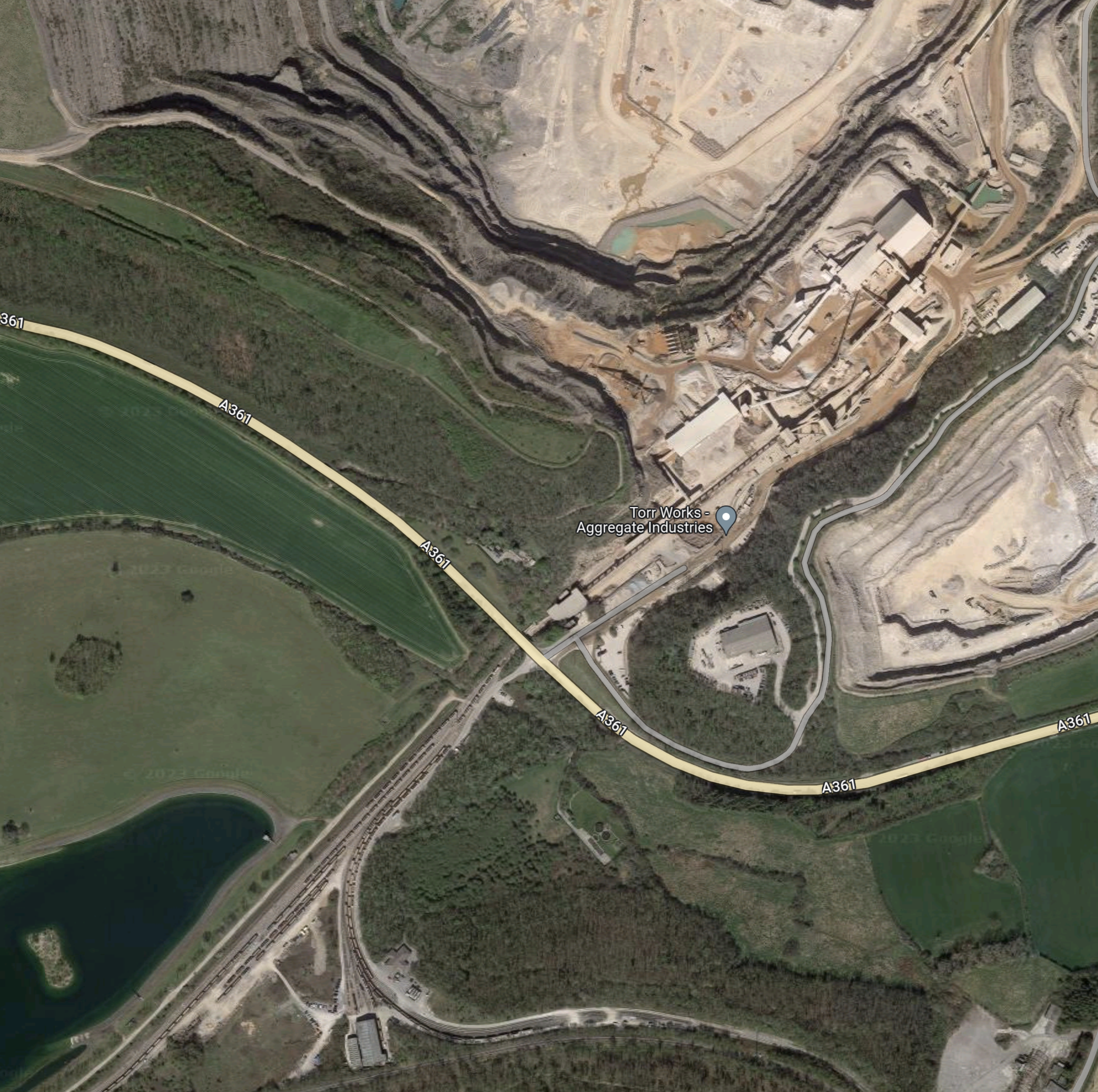
This Google Map shows Merehead Rail Sidings.
Note.
- It looks like there is a massive quarry to the North of the A361 road, which curves across the map.
- It is labelled Torr Works – Aggregate Industries.
- Torr Works has a Wikipedia entry.
- The rail sidings are South of the A361.
- Zooming in on the map, shows that the railway between East Somerset junction and Merehead is single-track and only a few miles long.
Distances from East Somerset junction are as follows.
- Dorchester junction – 41.2 miles
- Newbury – 53.4 miles
- Taunton – 37.2 miles
- Weymouth – 47.8 miles
Note that it is electrified with 750 VDC third-rail between Weymouth and Dorchester junction.
Range of Battery-Electric Trains
Consider.
- A Bombardier engineer told me eight years ago, that the battery-electric Class 379 train had a range of sixty miles.
- Stadler’s FLIRT Akku has a Guinness world record of 139 miles on one battery charge. See this page on the Stadler web site.
- Even Stadler’s Class 777 trains for Merseyrail have a range of 84 miles on battery power. See New Merseyrail Train Runs 135 km On Battery.
It does appear that five-car battery-electric trains will have ranges in excess of a hundred miles.
I believe that because Hitachi’s battery makers have a good record, they will probably be very ambitious and will want that Guinness record, that Hitachi’s Class 802 trains will have a battery range not far short of the 139 miles of the Stadler FLIRT Akku.
I will be very surprised if Hitachi’s battery-electric version of a Class 802 train, doesn’t have range of at least 125 miles.
But say if they could do say 140 miles, the battery-electric Class 802 train could cover every long-distance route in the UK, which would attract orders for trains to run on the following routes.
- Cardiff and Swansea
- Crewe and Holyhead
- Edinburgh and Aberdeen
- Edinburgh and Inverness
- Crewe and Holyhead
- London Waterloo and Exeter St. Davids
A substantial reward to the battery makers, would probably not be out of order.
Aggregate Trains From The Mendips
Consider.
- Mining and quarrying companies are under pressure from governments, shareholders and environmentalists to reduce their carbon footprints.
- Many are replacing diesel-powered mining excavators and trucks, with electric or hydrogen versions.
- In addition, those companies delivering building products to the construction industry are under pressure to provide low-carbon products.
- Using rail with electric traction to deliver products to market would cut carbon emissions and might even help sales.
These Mendip quarries appear to be connected to the Reading and Taunton Line.
- Torr Works – Connects 5.4 miles to the South of Frome.
- Whatley Quarry – Connects close to Frome.
There may be others.
But these rail-connected quarries, connect at or North of East Somerset junction, to where Mark Hopwood is proposing electrification.
Zero-carbon rail traction could even be possible, by electrifying the short single-track branch lines. or by using hydrogen-electric hybrid locomotives.
GWR’s London And South-West Services
These services use the Reading and Taunton Line to join the Bristol and Exeter Line at Taunton, before going on to Exeter, Plymouth and other destinations in the South-West of England.
These are distances from East Somerset Junction.
- Exeter – 67 miles
- Paignton 95.2 miles
- Penzance – 198.5 miles
- Plymouth – 119.0 miles
- Taunton – 37.2 miles
Note.
- Exeter, Paignton, Penzance and Plymouth stations would need short lengths of electrification to charge terminating trains or top-up passing trains.
- In Thoughts About Electrification Through Devon And Cornwall, I showed that the average stop time at Plymouth station was eight minutes, which could be enough for the rail equivalent of a Formula One splash and dash.
- A 125 mile battery range, not only enables London and Penzance, but also Cardiff and Swansea, and Edinburgh and Aberdeen, when the extra electrification is completed.
Could my estimate of a 125 mile battery range, be Hitachi’s objective for their battery-electric trains?
The Ultimate Battery-Electric Class 802 Train
Hitachi have been totally silent on how the fitting of batteries to Class 802 trains is going.
But Mark Hopwood is more forthcoming in the GWR Seeks Opportunities To Grow article. where this is said.
Meanwhile, GWR had announced plans with Eversholt Rail to trial the replacement of a diesel generator unit with batteries on a Class 802 IET. However, Mr. Hopwood says this would not be useful for GWR and so the trial is not proceeding; instead, a TransPennine Express Class 802 will be the subject of a battery trial.
It sounds to me that another solution is being developed to get trains to run on electric power between London and the South-West.
- I think we can rule out full electrification on the grounds of cost, disruption, time and the Nimbys and objectors will have a field day.
- Newbury and Penzance is a distance of 251.9 miles, which would surely need a lot of batteries.
Mark Hopwood’s idea to electrify the 53.4 miles between Newbury And East Somerset junction, is starting to look like a good compromise.
GWR’s Bristol/Gloucester And Weymouth Services
These stopping trains are run by diesel trains and take the following route between Bristol Temple Meads and Weymouth stations.
- Keynsham
- Oldfield Park
- Bath Spa
- Freshford
- Avoncliff
- Bradford-on-Avon
- Trowbridge
- Westbury
- Frome
- East Somerset junction
- Bruton
- Castle Cary
- Yeovil Pen Mill
- Thornford
- Yetminster
- Chetnole
- Maiden Newton
- Dorchester West
- Dorchester junction
- Upwey
Note.
- I would assume that there is enough electrification at Bristol Temple Meads and towards Gloucester to charge the trains.
- Trains would leave Bristol Temple Meads with a full battery.
- The eighteen stops mean that an electric train with regenerative braking will be more efficient.
- Bristol Temple Meads and Westbury is not electrified.
- Westbury and East Somerset junction will be electrified with 25 KVAC overhead electrification under Mark Hopwood’s proposal.
- Trains take sixteen minutes between Westbury and East Somerset junction.
- East Somerset junction and Dorchester junction is not electrified.
- Dorchester junction and Weymouth is electrified with 750 VDC third-rail electrification.
- Trains take ten minutes between Dorchester junction and Weymouth.
Distances of the various legs are as follows.
- Bristol Temple Meads and Westbury – 28.3 miles – Not Electrified
- Westbury and East Somerset junction – 11.4 miles – Electrified
- East Somerset junction and Dorchester junction – 41.4 miles – Not Electrified
- Dorchester junction and Weymouth – 6.6 miles – Electrified
The two sections without electrification, should be well within range of a dual-voltage battery-electric train, that has been designed for the route.
GWR’s Cardiff Central And Portsmouth Harbour Service
These stopping trains are run by diesel trains and take the following route between Bristol Temple Meads and Portsmouth Harbour stations.
- Keynsham
- Oldfield Park
- Bath Spa
- Freshford
- Avoncliff
- Bradford-on-Avon
- Trowbridge
- Westbury
- Warminster
- Salisbury
- Romsey
- Redbridge
- Southampton Central
- Fareham
- Cosham
- Fratton
- Portsmouth & Southsea
Note.
- I would assume that there is enough electrification at Bristol Temple Meads and towards Cardiff Central to charge the trains.
- Trains would leave Bristol Temple Meads with a full battery.
- The seventeen stops mean that an electric train with regenerative braking will be more efficient.
- Bristol Temple Meads and Westbury is not electrified.
- Westbury station will be electrified with 25 KVAC overhead electrification under Mark Hopwood’s proposal.
- Trains would leave Westbury with a full battery.
- Westbury and Redbridge is not electrified.
- Redbridge and Portsmouth Harbour is electrified with 750 VDC third-rail electrification.
Distances of the various legs are as follows.
- Bristol Temple Meads and Westbury – 28.3 miles – Not Electrified
- Westbury and Redbridge – 46.4 miles – Not Electrified
- Redbridge and Portsmouth Harbour – 28.5 miles – Electrified
The two sections without electrification, should be well within range of a dual-voltage battery-electric train, that has been designed for the route.
GWR’s Bristol Temple Meads And Salisbury Services
These stopping trains are run by diesel trains and take the following route between Bristol Temple Meads And Salisbury stations.
- Keynsham
- Oldfield Park
- Bath Spa
- Freshford
- Avoncliff
- Bradford-on-Avon
- Trowbridge
- Dilton Marsh
- Warminster
Note.
- I would assume that there is enough electrification at Bristol Temple Meads to charge the trains.
- Trains would leave Bristol Temple Meads with a full battery.
- An electric train with regenerative braking will be more efficient.
- Bristol Temple Meads and Westbury is not electrified.
- Westbury station will be electrified with 25 KVAC overhead electrification under Mark Hopwood’s proposal.
- Trains would leave Westbury with a full battery.
- Westbury and Salisbury is not electrified.
Distances of the various legs are as follows.
- Bristol Temple Meads and Westbury – 28.3 miles – Not Electrified
- Westbury and Salisbury – 24.4 miles – Not Electrified
The two sections without electrification, should be well within range of a battery-electric train, that has been designed for the route.
GWR’s Swindon And Westbury Services
These stopping trains are run by diesel trains and take the following route between Swindon and Westbury stations.
- Chippenham
- Melksham
- Trowbridge
Note.
- This is the Transwilts service.
- I would assume that there is enough electrification at Swindon to charge the trains.
- Trains would leave Swindon with a full battery.
- An electric train with regenerative braking will be more efficient.
- Chippenham and Westbury is not electrified.
- Westbury station will be electrified with 25 KVAC overhead electrification under Mark Hopwood’s proposal.
- Trains would leave Westbury with a full battery.
Distances of the various legs are as follows.
- Swindon and Chippenham – 16.9 miles – Electrified
- Chippenham and Westbury – 15.8 miles – Not Electrified
The section without electrification, should be well within range of a battery-electric train, that has been designed for the route.
What Can Be Done If The Electrification Is Not Long Enough?
Some of these routes battery-electric routes may need more electrification to work efficiently.
Despite some routes having both 25 KVAC overhead and 750 VDC third-rail electrification, any extension of the electrification would be overhead, as new third-rail electrification is effectively banned.
Conclusion
It looks like Mark Hopgood proposal is an excellent idea to enable the decarbonisation of GWR services in Wiltshire and Somerset.
- Express services would be run by battery-electric Class 802 trains.
- Local services would be run by battery-electric trains with perhaps three cars.
Some of the local trains would need to be dual-voltage to use both forms of electrification.
A Very Busy Paddington – 4th July 2023
On my trip to Marsh Barton station, Paddington was very busy, as these pictures show.




Note.
- Trains were leaving to Cheltenham Spa, Great Malvern. Newquay and Paignton, in addition to the more expected destinations of Bristol Temple Meads, Cardiff and Swansea.
- I took the Elizabeth Line to the station and it was very busy.
I feel, that action needs to be taken to increase the capacity of the station for both passengers and trains.
These are my thoughts.
Catching Trains From Reading
Recently, if I want to go somewhere, that is within an hour West of Reading station, I’ve started taking the Elizabeth Line to Reading using my Freedom Pass and then buying an Off Peak Day Return ticket from Reading.
- It saves a few pounds.
- I can catch the Elizabeth Line train at Moorgate direct to Reading, after having breakfast on Moorgate.
- Moorgate is an easy bus ride from outside my house.
I suspect some other Freedom Pass holders will start to use Reading station to go West.
The only disadvantages are that you miss the Reading train and have to wait half-an-hour for another and that buying tickets at Reading means leaving the station.
Improvements, I would make would include.
- Four trains per hour (tph) between Whitechapel and Reading.
- A ticket machine on the bridge at Reading station, so that those needing a ticket can buy one without leaving the station.
I suspect other improvements could also improve this option.
A Second Concourse At The Western End Of Paddington Station
If you go to Paddington station on the Hammersmith and City Line of the Underground, you can walk across the top of the main station and take stairs down to the platform for your departing train.
There has been talk of improving this area of the station, so that passengers using that route from the Underground have an easier route with more facilities like cafes, shops and toilets.
I’m all for this improvement.
What Is The Point Of Heathrow Express?
On my trip, I watched a Heathrow Express arrive in Paddington and just a few people got off.
I am utterly certain, that the Elizabeth Line is giving Heathrow Express a good kicking, as it is so much better connected to the important destinations within London, like Bond Street, Canary Wharf, Farringdon for Thameslink, Liverpool Street for The City, Stratford for events and Whitechapel for the East London Line.
Discussions of the future of Heathrow Express, must also include the Western Rail Link to Heathrow, which is currently being planned by Network Rail.
This page on the Network Rail web site gives more details, including these benefits for the link.
- Reduce rail journey times between Reading and Heathrow by delivering a new, faster, frequent, more reliable direct train service to Heathrow with four trains per hour in each direction. All trains would call at Reading and Slough and alternate trains at Twyford and Maidenhead. Journey times could be as short as 26 minutes from Reading and 6 to 7 minutes from Slough.
- Significantly improve rail connectivity to Heathrow from the Thames Valley, South Coast, South West, South Wales and West Midlands.
- Provide an alternative form of transport for passengers and the large number of people who work at the airport who are currently travelling by road.
- Ease congestion on some of the UK’s busiest roads, the M4, M3 and M25 resulting in lower CO2 emissions equivalent to approximately 30 million road miles per year, helping to deliver the UK’s climate change and carbon reduction targets.
- Generate economic growth and new jobs across the Thames Valley and surrounding areas.
- Reduce passenger congestion at London Paddington.
There is then the question of who should run the service; Heathrow Express, the Elizabeth Line or both.
At the present time, trains from London to Heathrow are.
- Elizabeth Line – 2 tph – Shenfield and Terminal 5
- Elizabeth Line – 4 tph – Abbey Wood and Terminal 4
- Heathrow Express – 4 tph – Paddington and Terminal 5
Note.
- All trains also serve Heathrow Terminals 2 and 3.
- The Piccadilly Line also serves all Heathrow Terminals.
- It appears that Terminal 4 is only served by the Elizabeth Line.
- Terminal 5 has 6 tph, but the Western Rail Link will be at a frequency of four tph.
Because of the mismatch at Terminal 5 and that two tph will stop at Slough, Maidenhead and Twyford, I suspect we might see the following services on the Western Rail Link
- Elizabeth Line – 2 tph – Terminal 5 and Reading via Slough, Maidenhead and Twyford
- Heathrow Express – 2 tph – Terminal 5 and Reading via Slough.
Note.
- This would give Reading and Central London, a much-needed four tph on the Elizabeth Line. Two tph would be direct and two tph would be via Heathrow.
- It would not require any more paths in the Elizabeth Line Central Tunnel, as the 2 tph between Shenfield and Terminal 5 will just be extended to Reading.
- Heathrow Express has Western access with a connection to Reading.
It looks like this service pattern could be a good compromise.
I also suspect that this would improve passenger numbers for Heathrow Express.
Could Heathrow Express Run Its Service Using One Platform At Paddington?
I am fairly certain that this would be possible, if passenger access to the platforms at Paddington station were to be improved, by the building of a second concourse at the Western end of the station.
It is also likely, that full digital signalling will be applied between Paddington and Reading and this will surely improve the ease of running four tph into one platform at London Paddington for Heathrow Express.
I can see, that a reorganisation of Heathrow Express after the building of a second Western concourse at Paddington and the Western Rail Link to Heathrow, that Heathrow Express could be able to release a platform.
Could Great Western Railway Reorganise Suburban Services?
These are Great Western Railway’s suburban services, that terminate at Paddington.
- 1 tph – London Paddington and Oxford via Reading and Didcot Parkway
- 2 tph – London Paddington and Didcot Parkway via Slough, Maidenhead, Twyford, Reading, Tilehurst, Pangbourne, Goring & Streatley and Cholsey
- 1 tph – London Paddington and Newbury via Reading, Theale and Thatcham
Note.
- The Oxford services, are run by Class 800 trains, running as either five-car, nine-car or ten-car trains.
- Oxford is also served by the hourly Paddington and Great Malvern service.
- All of the other services, are run by Class 387 trains, running as either four-car or eight-car trains.
- There doesn’t seem to be any pattern to the platforms used by these services.
I find the last point very surprising, as my extensive scheduling experience says that it is easier to schedule several similar processes, rather than a number of different ones.
This OpenRailwayMap shows the platforms at Paddington station.
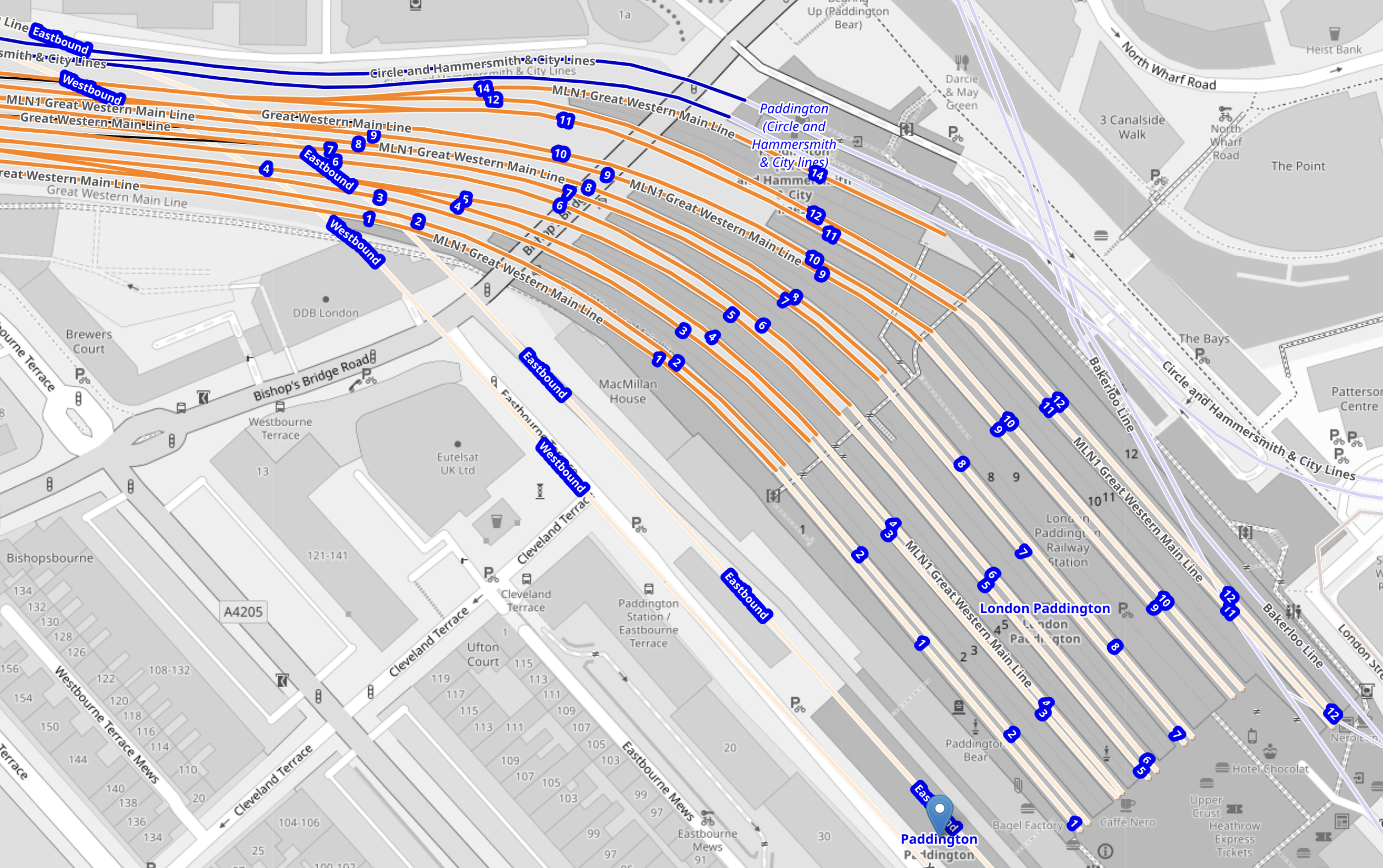
Note.
- The platforms are numbered 1 to 14 from South-West to North-East.
- Platforms 1 to 12 all appear to long platforms about the same length.
- As some platforms can take ten-car Class 800 trains, I wouldn’t be surprised to find out all platforms 1-12 can.
- The only short platform is platform 14, which can accommodate an eight-car Class 387 train, which is 163 metres long.
It looks to me, with twelve long similar platforms, they can schedule the platforms on the fly, so perhaps this explains, the randomness of platform allocations.
I think in an ideal world, I would try and organise these services as follows.
- The Oxford and Great Malvern services could share a platform at Paddington, which would help passengers to find the next Oxford train.
- The Didcot Parkway and Newbury services could also share a platform at Paddington, for the same reason.
- Unless Didcot Parkway and Newbury services are occasionally run by a twelve-car train, they could even use the short platform 14.
This would surely be a more efficient use of the platforms at Paddington station.
Could Didcot Parkway Services Become Another Elizabeth Line Destination?
Consider.
- Didcot Parkway to London Paddington services appear to use the same tracks as Elizabeth Line services between Reading and Southall West Junction, where they change to the main line for Paddington.
- London Paddington to Didcot Parkway services appear to use the main line from Paddington to Dolphin Junction, which is just to the East of Slough station, where it joins the same tracks as Elizabeth Line services to Reading.
- Nine-car Class 345 trains are forty metres longer than an eight-car Class 387 train.
- Class 345 trains are 90 mph trains.
- Class 387 trains are 110 mph trains.
- Class 387 trains wouldn’t fit the platform edge doors in the Elizabeth Line Central Tunnel.
It would appear that the Didcot Parkway and London Paddington services could be moved to the Elizabeth Line, by doing the following.
- The Class 387 trains would be replaced by Class 345 trains.
- Trains to London would go straight on at Southall West Junction and through the Elizabeth Line Central Tunnel.
- Trains from London would emerge from the Elizabeth Line Central Tunnel on the right track for Reading.
- There might be a need to lengthen a few platforms.
Note.
- The Didcot Parkway to London Paddington services would not need to use the main line.
- 2 tph would be removed from Paddington station.
As one electric train is being replaced by another, there would probably be no need for more electrification.
Could Newbury Services Become Another Elizabeth Line Destination?
Consider.
Freight trains appear to be able to go from Theale station to Platform 5 at Slough station, through Platform 15 at Reading station, which is a possible route that a Newbury to the Elizabeth Line Central Tunnel train would take.
Freight trains appear to be able to go from Platform 4 at Slough station to Theale station, through Platform 15 at Reading station, which is a possible route that an Elizabeth Line Central Tunnel to Newbury train would take.
It would appear that the Newbury and London Paddington services could be moved to the Elizabeth Line, by doing the following.
- The Class 387 trains would be replaced by Class 345 trains.
- Trains through Reading would follow the freight route.
- There might be a need to lengthen a few platforms.
Note.
- The Newbury to London Paddington services would not need to use the main line.
- 1 tph would be removed from Paddington station.
As one electric train is being replaced by another, there would probably be no need for more electrification.
Conclusion
It looks like the capacity of Paddington station can be increased by the following.
- Building a new second concourse at the Western end of the station.
- Heathrow Express releasing a platform.
- Oxford and Great Malvern services could share a platform at Paddington
- Moving Didcot Parkway and Newbury services to the Elizabeth Line.
No new electrification would be required.
Marsh Barton Station – 4th July 2023
The main purpose of my trip to Devon was to visit the new Marsh Barton station, on the Riviera Line.

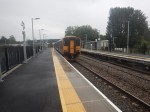
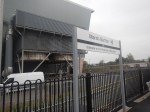
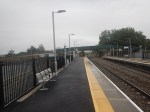
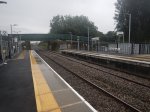
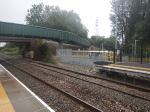
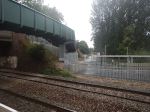
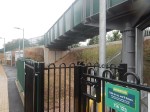
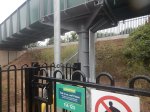
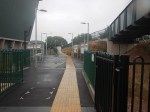
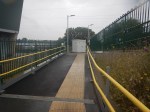
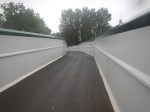
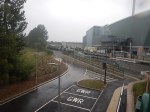
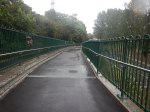
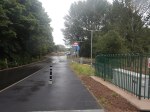
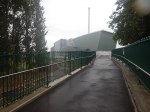
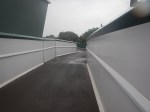
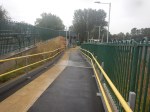
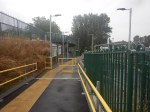
These are my thoughts about the station.
The Overall Design
This Google map shows Marsh Barton station under construction.
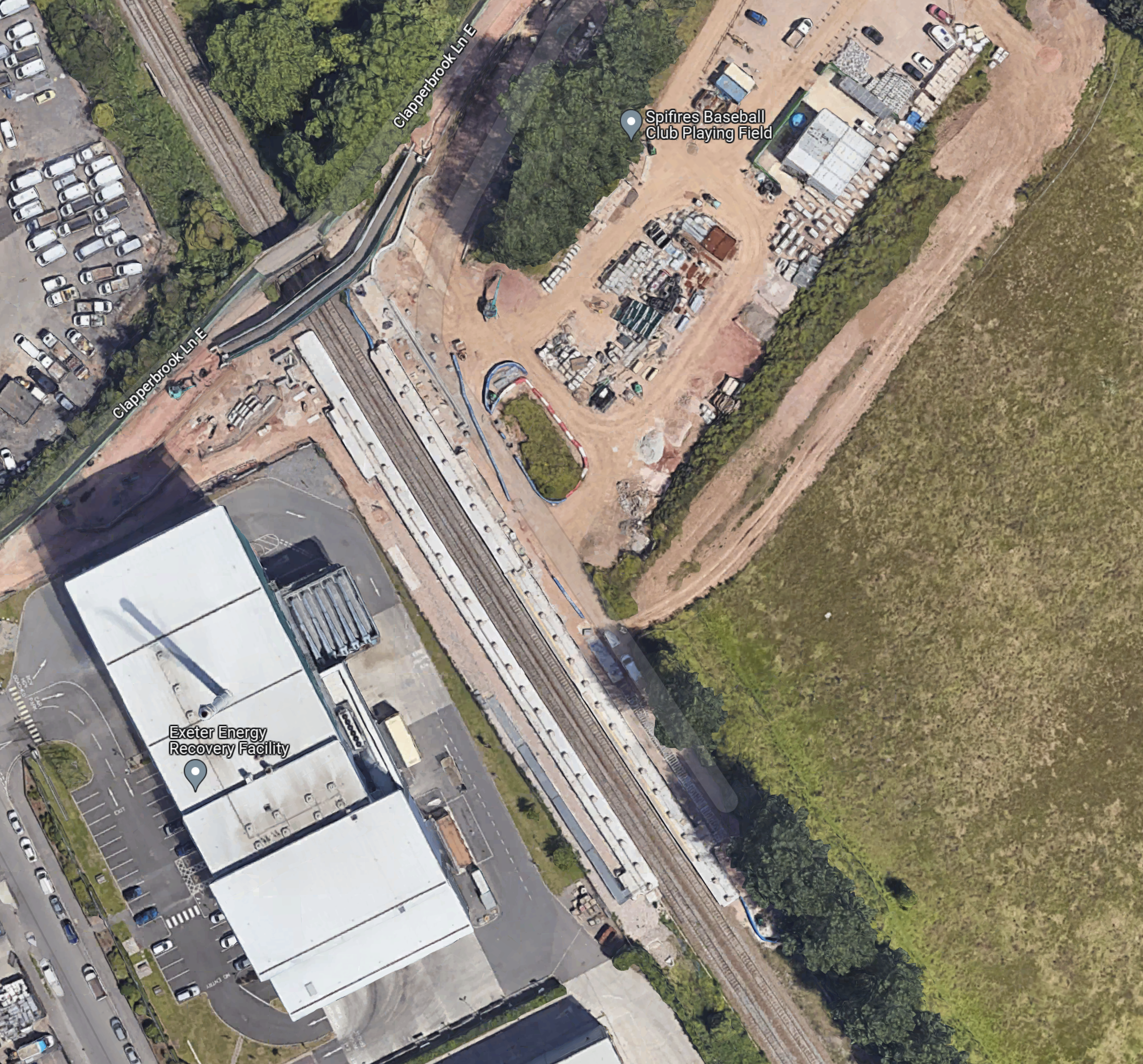
The station is built on a narrow lane by an industrial estate, which features a large waste-to-energy facility, which is in the South-West corner of the map.
The station is a basic two platform design with everything you need on the platforms and a gently sloping bridge over the top to give full step-free access.
I’ve never been to a station, which uses this form of step-free access, either in the UK or Europe.
I think it works because of the unusual site.
Car Parking
The station’s page on the GWR web site, says this about parking.
The station only has disabled parking bays for blue badge holders in order to encourage more sustainable transport use to and from the station.
Staff
The station is unstaffed.
Refreshments
When I arrived, I was hungry and needed a drink, so I asked a guy with a dog, if there was a cafe or pub nearby.
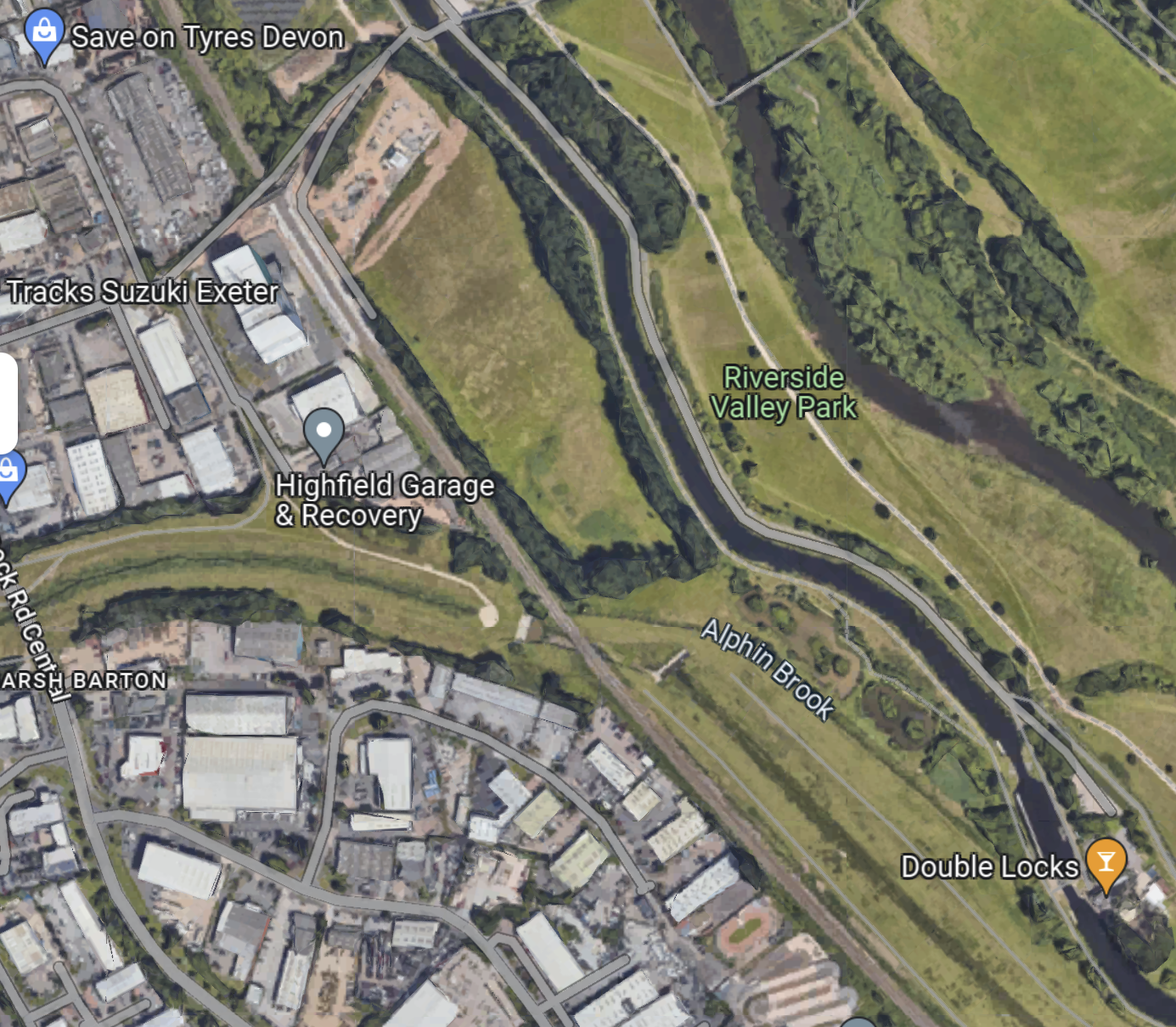
He said, the cafe shut the day before, but there was a pub called Double Locks about three or four minutes away on the canal.
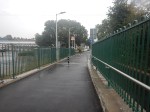
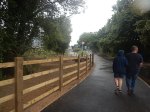
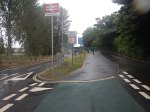
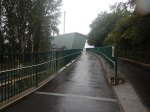
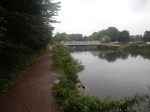
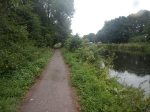
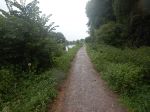
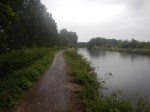
These pictures show the walk.
And this map shows the location of the pub and the station.
Are country minutes like country miles and a lot longer than those everybody else uses?
In the end, as I was getting soaked, I made a retreat back to the station.
Service Frequency
Currently, the trains are only hourly. Is that enough?
 The Anonymous Widower