‘Drone Boats Will Be The New Normal’
The title of this post is the same as this article on the BBC.
This is the sub-heading.
A remotely operated boat will survey an area hundreds of miles offshore – while being controlled from an inland airport.
These two paragraphs add more details to the story.
The Orsted Examiner is being launched this week from Grimsby by the renewable energy company, which is currently building the Hornsea 3 windfarm in the North Sea.
The vessel contains enough fuel to be at sea for several months, and an internet connection means it can be remotely controlled from anywhere.
Note.
- This would appear to be an elegant way to improve both productivity and safety.
- In RWE Opens ‘Grimsby Hub’ For Offshore Wind Operations And Maintenance, I indicated that RWE will have a Grimsby hub.
- Will the two companies have similar drone boats?
I certainly agree with the title of the post.
RWE Opens ‘Grimsby Hub’ For Offshore Wind Operations And Maintenance
The title of this post, is the same as that of this article on offshoreWIND.biz.
This is the sub-heading.
RWE officially opened its ‘Grimsby Hub’ offshore wind operations and maintenance (O&M) facility in the UK on 9 July. From the new O&M base, located at Associated British Ports’ (ABP) Port of Grimsby, RWE’s teams will maintain and operate the Triton Knoll and Sofia offshore wind farms.
These are the first two paragraphs.
The Grimsby Hub also houses RWE’s new UK Centralised Control Room (CCR), which has been set up to provide 24/7 monitoring of the company’s UK offshore wind farms and can provide services such as marine coordination, turbine operations, alarm management, high voltage monitoring and Emergency Response services with a team of twelve operatives, the developer says.
The O&M facility is already employing over 90 Full-Time Equivalents (FTEs), according to RWE, and is expected to employ around 140 RWE staff by 2027, as well as create approximately 60 new locally sourced jobs through the development of the CCR and ongoing offshore operations.
Note.
- Does RWE’s new UK Centralised Control Room control all their UK offshore wind farms?
- I have added them all up and there are almost 12 GW around our shores.
- I’ve read somewhere, that RWE are the UK’s largest power generator. From these figures, that would not surprise me.
This Google Map shows the location of RWE’s facilities in Grimsby.
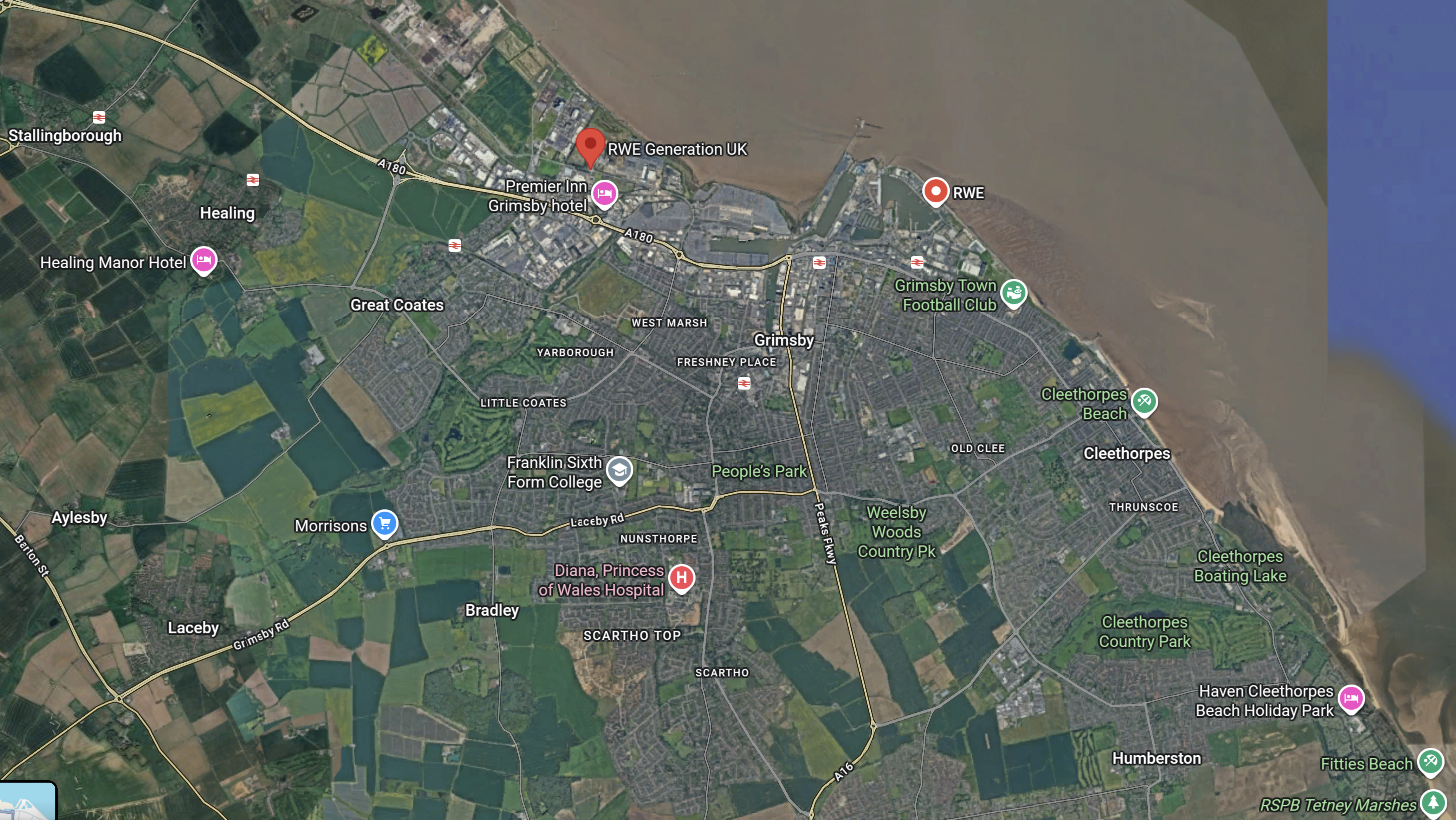
Note.
- The bright red arrow at the top of the map indicates RWE Generation UK in Grimsby Docks.
- There is another RWE location to the right of the bright red arrow.
- There is a line of stations along the coast, which from left-to-right are Stallingborough, Healing, Great Coates, Grimsby Town, Grimsby Docks, New Clee and Cleethorpes.
- Cleethorpes is not shown on the map.
- Doncaster and Cleethorpes are 52.1 mile apart, which is within the range of a battery-electric Hitachi and other trains.
- Charging would be at Doncaster, which is fully electrified and at Cleethorpes, by a short length of electrification.
This OpenRailwayMap shows the layout of and the railways around Grimsby Dock.

Note.
- Cleethorpes station is indicated by the blue arrow, in the South-East corner of the map.
- Cleethorpes station has four platforms, but no electrification.
- Grimsby Docks are to the North of the railway to Cleethorpes.
- This Wikipedia entry for Cleethorpes station, shows other railways and light railways served the area. Some were even electric.
These are a few of my thoughts on the development of railways between Sheffield and Cleethorpes.
RWE Will Be A Large Driver Of Employment In Grimsby
Earlier I wrote.
- Does RWE’s new UK Centralised Control Room control all their UK offshore wind farms?
- I have added them all up and there are almost 12 GW around our shores.
- I’ve read somewhere, that RWE are the UK’s largest power generator. From these figures, that would not surprise me.
It’s a long time, since I’ve added resources to a large project, so I asked Google AI, “How many people are needed to support a 1 GW offshore wind farm in the UK?”, and received this answer.
Direct & Indirect Support: For a large-scale project, this often breaks down into approximately 100–150 direct, permanent, high-skilled roles (technicians, engineers, management) and hundreds more in indirect, contracted, or supply chain roles (vessel crews, port operations, logistics).
Industry Average: Studies suggest that for operations and maintenance (O&M), around 50–100 full-time equivalent (FTE) jobs are generated per GW of installed capacity in terms of direct, permanent staff.
Key Takeaways for a 1 GW Farm:
- Direct Technicians/Operators: ~100–200+ (working on-site, turbines, or in control rooms).
- O&M Support Services: ~300–400+ (vessel operators, port logistics, supply chain).
- Total Operations Personnel: 300–600+ people.
Google AI appeared to have borrowed the figure from Ørsted and Hornsea 1 and 2.
So if it’s correct, there will be a total of 7,200 personnel supporting RWE’s wind farms in the UK. Even if only a third were employed in Grimsby, that is still a lot of people to accommodate and who will need to travel to work.
I also think a lot of personnel will come in by train, as the station is close to RWE’s locations.
Will Grimsby Have An Aberdeen-Sized Office-Shortage Problem?
One of the biggest problems, I was always hearing in the 1970s, was the shortage of offices in Aberdeen for the use of the oilmen.
In RWE Goes For An Additional 10 GW Of Offshore Wind In UK Waters In 2030, I talked about RWE’s plans for the future and published this table of new wind farms.
- Sofia – 1,400 MW
- Norfolk Boreas – 1380 MW
- Norfolk Vanguard East – 1380 MW
- Norfolk Vanguard West – 1380 MW
- Dogger Bank South – 3000 MW
- Awel y Môr – 500 MW
- Five Estuaries – 353 MW
- North Falls – 504 MW
Note.
- Sofia is nearly complete.
- Only the three Norfolk and the Dogger Bank South wind farms are on the East side of England and suitable to be serviced from Grimsby., but they still total 7,140 MW.
Has Grimsby got the office-space for all the people needed?
Could The Cleethorpes And Liverpool Lime Street Service Be Run By Battery-Electric Rolling Stock?
The various sections of this route are as follows.
- Cleethorpes and Doncaster – No Electrification – 52.1 miles
- Doncaster and Meadowhall – No Electrification – 15.2 miles
- Meadowhall and Sheffield – No Electrification – 3.4 miles
- Sheffield and Dore & Totley – No Electrification – 4.2 miles
- Dore & Totley and Hazel Grove – No Electrification – 29.2 miles
- Hazel Grove and Stockport – Electrification – 3.3 miles
- Stockport and Manchester Piccadilly – Electrification – 5.9 miles
- Manchester Piccadilly and Deansgate – Electrification – 0.8 miles
- Deansgate and Liverpool South Parkway -Not Electrified – 28.2 miles
- Liverpool South Parkway and Liverpool Lime Street – Electrified – 5.7 miles
Adding the sections together gives.
- Cleethorpes and Hazel Grove – No Electrification – 104.1 miles
- Hazel Grove and Deansgate – Electrification – 10 miles
- Deansgate and Liverpool South Parkway -Not Electrified – 28.2 miles
- Liverpool South Parkway and Liverpool Lime Street – Electrified – 5.7 miles
Note.
- To cover the 104.1 miles to Hazel Grove battery-electric trains would probably need to leave Cleethorpes with full batteries.
- Doncaster is a fully-electrified station and passing trains may be able to have a quick top-up.
- In South Yorkshire Now Has Better North-South Connections, I calculated that Doncaster is a very busy station with 173 express trains per day calling at the station or one every 8.5 minutes.
- Will trains be able to stop for a long period to charge batteries?
- It may be prudent to electrify between Meadowhall and Sheffield, under the Midland Mainline Electrification.
- Sheffield and Dore & Totley is shown that it will be electrified, under the Midland Mainline Electrification.
- Do we really want to have electrification marching along the Hope Valley Line?
- I believe that hydrogen-hybrid locomotives will be a better solution for freight trains on scenic lines like the Hope Valley, as they are zero-carbon, powerful and with a range comparable to diesel.
I believe CAF, Hitachi and Siemens have off the shelf rolling stock and factories in this country, who could build trains for the Cleethorpes and Liverpool Lime Street route.
How Would You Charge Battery-Electric Trains At Cleethorpes?
This picture shows Cleethorpes station
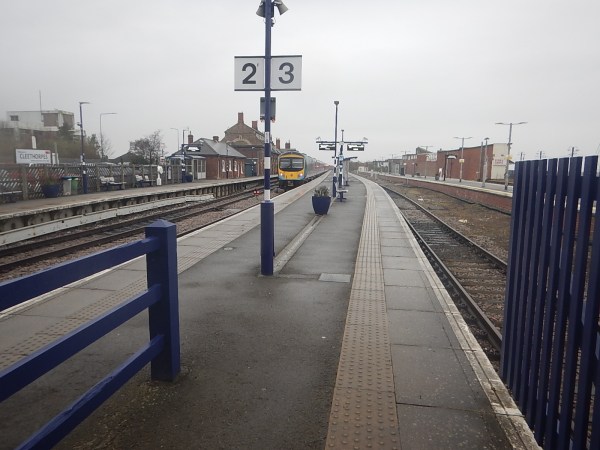
Note.
- The four long platforms without electrification.
- The platforms have recently been refurbished.
- The train in Platform 2 is a TransPennine Express Class 185 Siemens Desiro diesel train.
The simplest way to electrify the station would be to put up enough 25 KVAC overhead wires, so that battery-electric trains needing a charge could put up a pantograph and have a refreshing drink.
In Technology Behind Siemens Mobility’s British Battery Trains Hits The Tracks, I wrote about Siemens Rail Charging Converter.
This is a visualisation of a Siemens Rail Charging Converter in action.
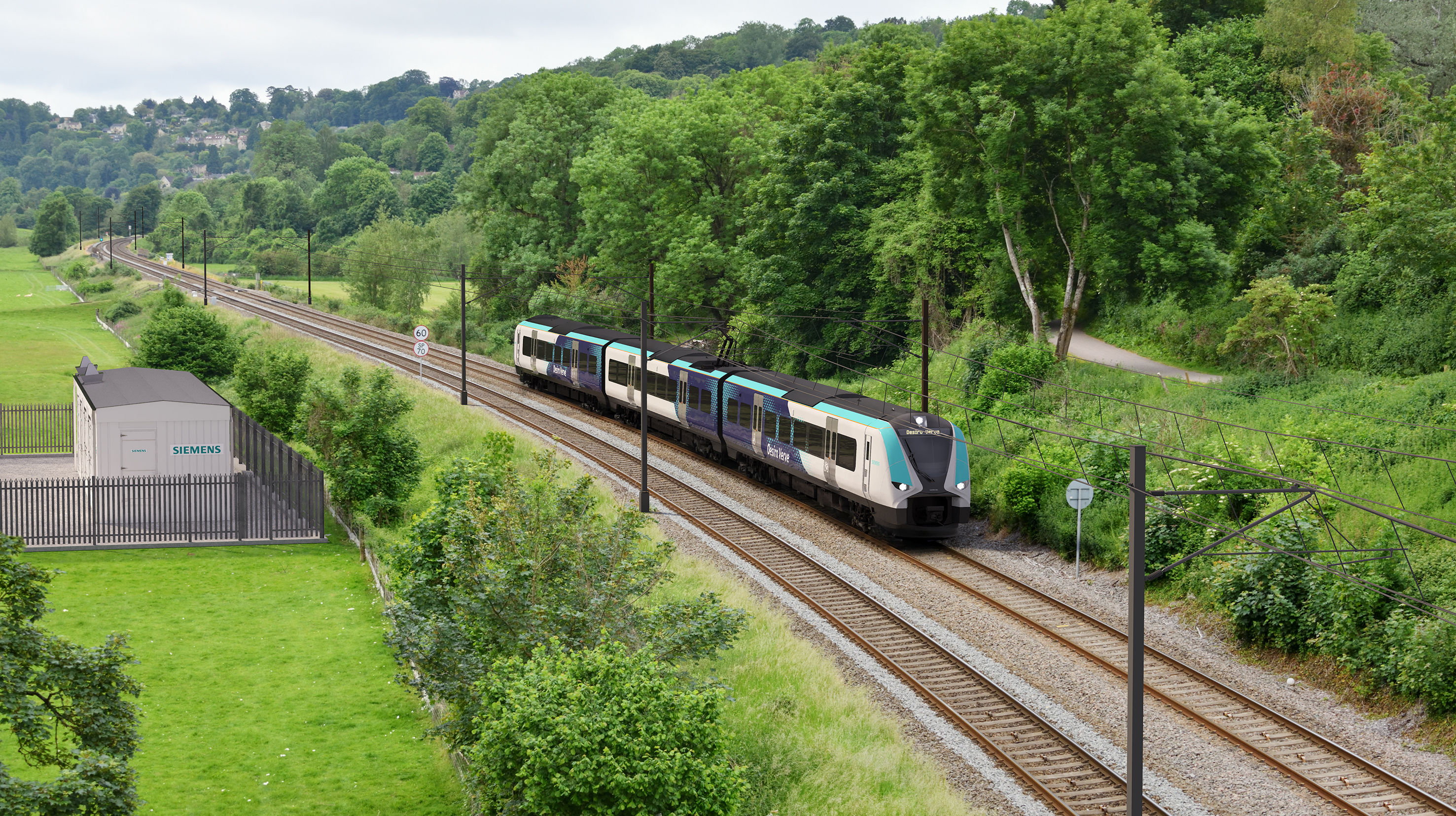
Note.
- The track is electrified with standard 25 KVAC overhead electrification.
- The train is a standard Siemens electric or battery-electric train.
- Siemens Rail Charging Converter, which is the shed in the compound on the left is providing the electricity to energise the catenary.
- I suspect, it could power third rail electrification, if the Office of Rail and Road ever allowed it to be still installed.
- The Siemens Rail Charging Converter does have one piece of magic in the shed. I suspect it uses a battery or a large capacitor to help power the electrification, as it can be powered from any typical domestic grid supply.
- I also wonder, if it has safety devices that cut the power outside the shed if track workers or intruders are detected, where they shouldn’t be?
- It could even cut the power, when trains are not running to save power and increase safety.
This looks to me, that a Siemens Rail Charging Converter could be a superb example of out-of-the-box thinking.
Could The Cleethorpes And Barton-on-Humber Service Be Run By Battery-Electric Rolling Stock?
This OpenRailwayMap shows the railways of North-East Lincolnshire.
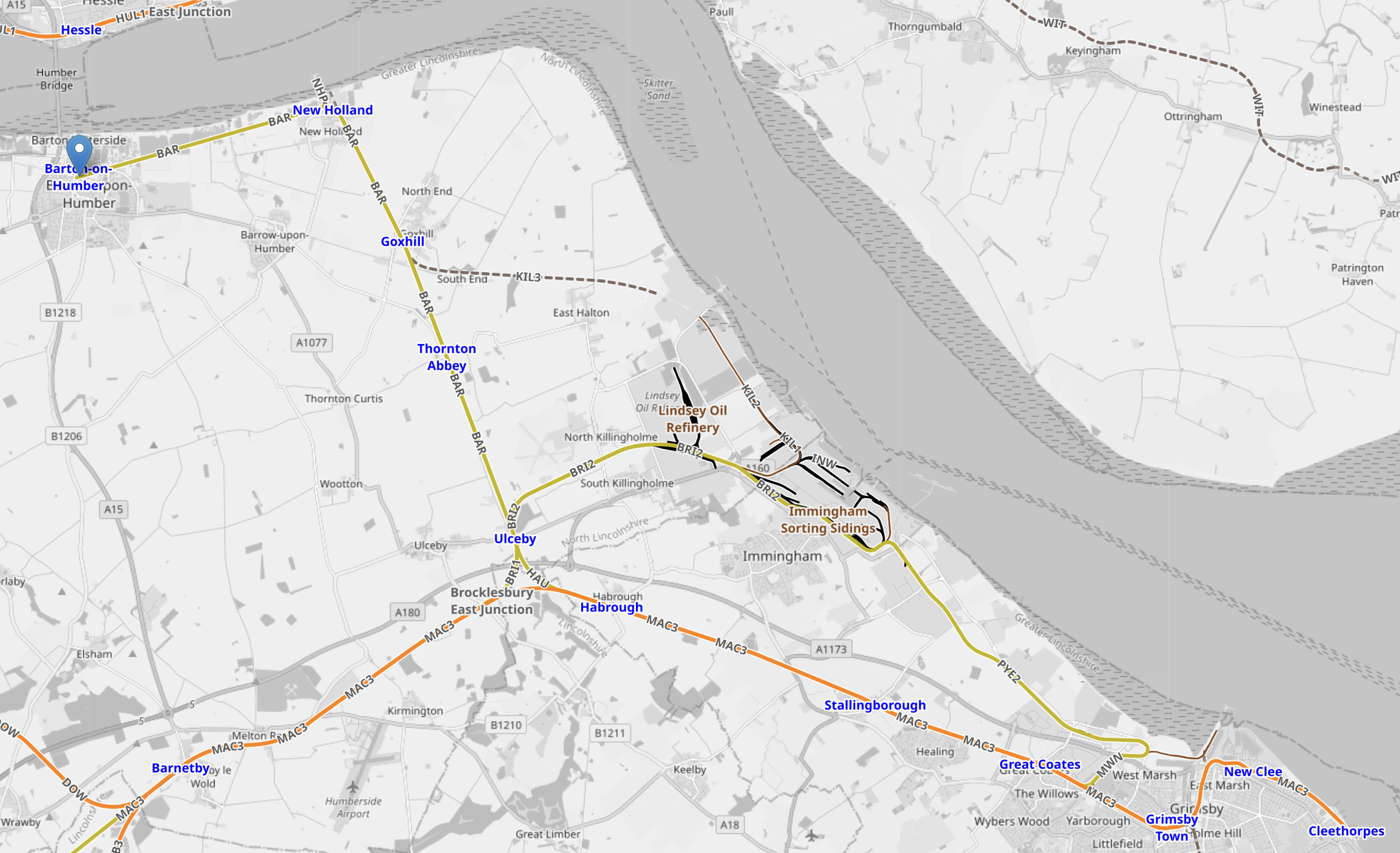
Note.
- Cleethorpes is in the South-East Corner of the map.
- Barton-on-Humber is in the North-West corner of the map and marked by a blue-arrow.
- Stations from South to North would be New Clee, Grimsby Docks, Grimsby Town, Great Coates, Healing, Stallingborough, Habrough, Ulceby, Thornton Abbey, Goxhill, New Holland and Barrow Haven.
- The line is double track.
- Cleethorpes and Barton-on-Humber is just 22.8 miles.
- A round trip would be under fifty miles, which would be well within range of a full-charge at one end.
- Service is one train per two hours (tp2h), which would only need a single train, shuttling between Cleethorpes and Barton-on-Humber.
- Two trains could provide an hourly service.
I would expect, that well-designed, solid and reliable German engineering could build a Siemens’ Rail Charging Connector that could charge four trains per hour (tph) at Cleethorpes station.
At present services are.
- TransPennineExpress – 1 tph to Liverpool Lime Street.
- East Midlands Railway – 1 tp2h to Barton-on-Humber
- East Midlands Railway – 1 tp2h to Matlock via Lincoln and Nottingham
- Northern Trains – 1 train per day (tpd) Sheffield via Brigg.
That is probably only about two tph.
Could The Cleethorpes And Sheffield Service Be Run By Battery-Electric Rolling Stock?
This is a description of the current Cleethorpes and Sheffield service.
- It is run by Northern Trains.
- The morning train leaves Sheffield at 09:54 and arrives in Cleethorpes at 11:40.
- The afternoon train leaves Cleethorpes at 13:20 and arrives in Sheffield at 15:10.
- The train is a Class 150 diesel train, which is a bit of a Joan Collins of a train – Of a certain age, but still scrubs up extremely well!
- Intermediate stations are Worksop, Retford, Gainsborough Central, Kirton Lindsey, Brigg, Barnetby and Grimsby Town
- The route length is 71.6 miles
- Trains take about 45-50 minutes.
It is also a parliamentary train.
The Wikipedia entry for parliamentary train gives this description of the Cleethorpes and Sheffield service.
Via Kirton Lindsey & Brigg. Became a parliamentary service when weekday services were withdrawn in 1993. Regular trains have operated between Gainsborough and Sheffield for most timetable periods since. Suspended January 2022 by Northern, who cited COVID-19 and staffing issues , but the service was reinstated in December 2022. Changed in May 2023 to be one return journey on weekdays only.
In the 1950s and 1960s I lived in Felixstowe part of the time and in the 1970s and 1980s I lived near Woodbridge and I observed first hand the development of the Port of Felixstowe and the effects it had on the surrounding countryside.
The development of the Port of Felixstowe, has brought the following.
- Improved roads and railways.
- Ipswich is now an hour from London by train.
- Ipswich is now a University town.
- New housing and other developments, both in Ipswich and Felixstowe and the surrounding countryside.
- Employment also has increased considerably, both in the Port and in surrounding towns.
- Ipswich’s football team is very much respected all over Europe and has won the English top division, the FA Cup and the UEFA Cup.
When you consider the jobs that RWE could create in the Port of Grimsby, I believe that this could have similar effects in Grimsby and Cleethorpes, as the Port of Felixstowe had in East Suffolk.
Already, the following are being talked about.
- A direct rail link between Cleethorpes and Grimsby to London.
- Battery-electric trains between Cleethorpes and Grimsby and Doncaster, Manchester and Liverpool Lime Street.
I believe that an improved rail link between Cleethorpes and Sheffield could be the catalyst for much needed housing along the route, which would be to the benefit of Cleethorpres, Grimsby, Sheffield and all the intermediate towns and villages on the route.
and the affects this will have on the countryside around the town, I believe that a strong case can be made out for a more frequent service between Cleethorpes and Sheffield.
ORE Catapult, ABP, Microsoft & Co To Create World’s Biggest Offshore Wind ‘Living Lab’ In UK
The title of this post, is the same as that of this article on offshoreWIND.biz.
This is the sub-heading.
A consortium led by the Offshore Renewable Energy (ORE) Catapult has launched a project that will create the biggest offshore wind “living lab” in the world in the UK through the development of a 5G Testbed that includes Grimsby Port and the Lynn and Inner Dowsing offshore wind farm.
These two paragraphs outline the project, its aims and partners.
The GBP 2.8 million (approximately EUR 3.2 million) project, which will run until March 2024, involves setting up a 5G Testbed to allow technology providers to test and demonstrate their equipment in real-world conditions, with access to reliable, high-speed communications.
The aim is to kickstart a digital revolution in offshore wind operations and maintenance (O&M) and accelerate the development of a new generation of digital technologies essential for the expansion of offshore wind generation, according to ORE Catapult, which partnered with Microsoft, Vilicom, JET Connectivity, XceCo, Associated British Ports (ABP), Acceleran and Satellite Applications Catapult to realise the project.
This seems to me to be a very good idea and it is certainly well-backed.
Beeching Reversal – Restoring A South Humber Link
This is one of the Beeching Reversal projects that the Government and Network Rail are proposing to reverse some of the Beeching cuts.
The project is described by these two paragraphs in this article in the Yorkshire Post, which is entitled Government Announce Yorkshire Rail Schemes That Could Receive ‘Reverse Beeching’ Funding.
North Lincolnshire Council have bid for funding to subsidise a new train service that would allow passengers from Barton-on-Humber to travel to Gainsborough, from where they would be able to catch direct services to Sheffield.
This would be achieved by diverting the existing Barton to Grimsby and Cleethorpes trains up a freight-only section used by traffic heading to Immingham docks. There have never been passenger trains using this path before.
This rail map clipped from Wikipedia shows the Barton Line to Barton-on-Humber station.
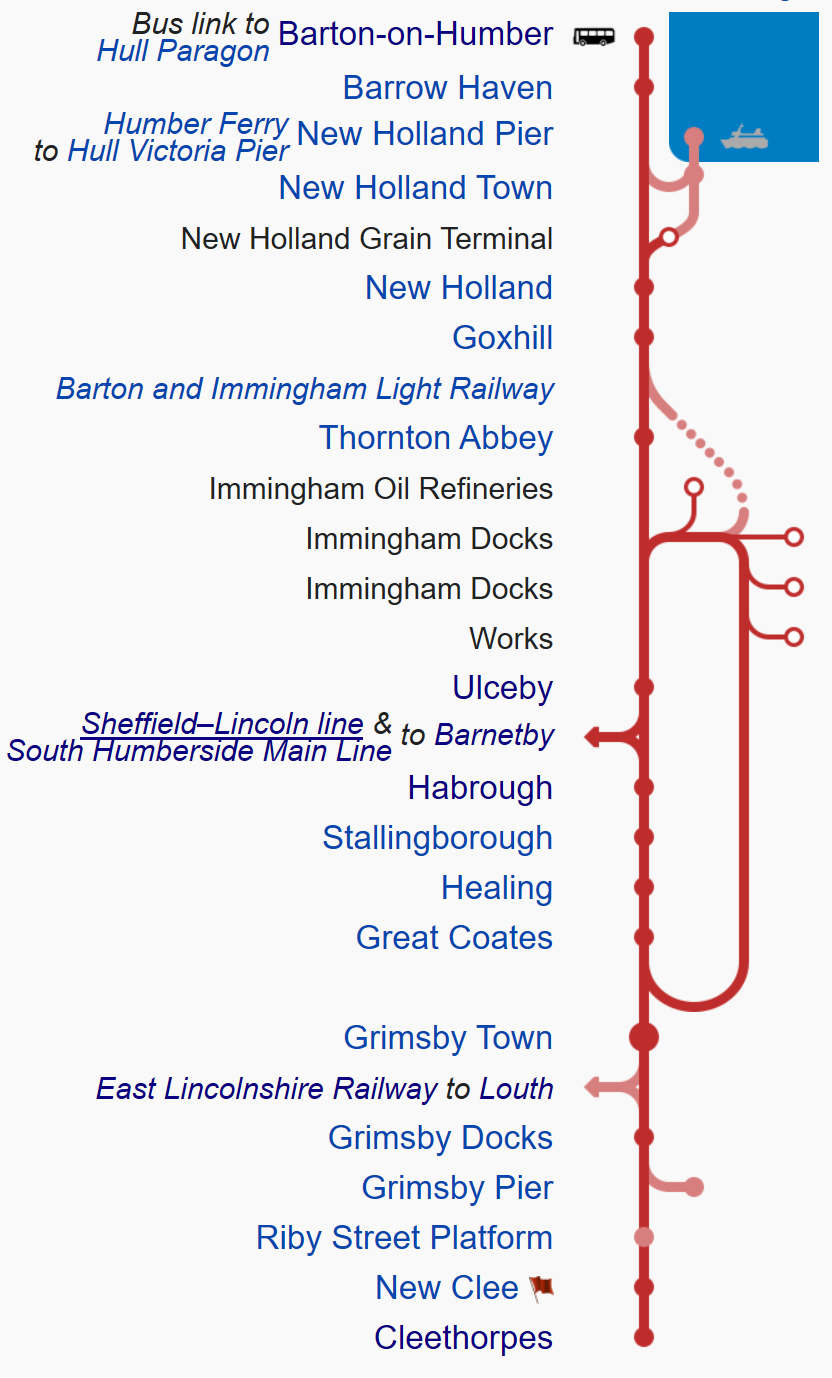
Note.
- Barton-on-Humber station has a bus link to Hull station.
- The loop gives a grand tour of the Port of Immingham on what is now a freight-only line.
- There is a lot of development going on in the area including the AltAlto aviation biofuel, that I wrote about in Grant Shapps Announcement On Friday.
Perhaps all this development is causing a lot of small problems.
- Is it causing congestion on the roads?
- Are workers difficult to find in the Immingham area?
- Is commuting over the Humber Bridge expensive?
- Is parking difficult in the Port?
North Lincolnshire Council could feel that a better rail connection serving the Port of Immingham, would be an asset, that reduces these problems.
I suspect the current two-hourly service between Barton-on-Humber and Cleethorpes stations, will be replaced by an hourly one, between Barton-on-Humber and Gainsborough Lea Road stations, that takes the following route.
- Barton-on-Humber to Ulceby
- At Ulceby station the train will reverse and go clockwise around the loop.
- After calling at Great Coates, Healing, Stallingborough and Habrough stations, the train would go West to Barnetby and Gainsborough Lea Road stations.
- Passengers wanting to go from Barton-on-Humber to Grimsby Town or Cleethorpes, would change at Great Coates station.
It may look a rather round-about route, but I suspect that the plan includes some stations to serve the Port of Immingham and the industrial development.
I suspect that some of these port, oil, chemical and energy companies can afford to pay a contribution.
Gainsborough Lea Road Station
Gainsborough Lea Road station is a mix of architectural styles.
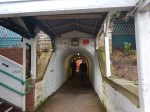
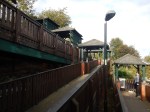
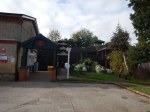
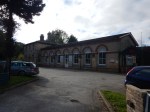
But with the addition of a friendly café and some other facilities, it would be a good interchange between the Immingham area and Sheffield and the county town of Lincoln.
Future Trains
Lincolnshire is an energy-rich county, which partly explains all the industrial development in the North-East of the county around Grimsby, Immingham and Scunthorpe.
- Immingham is a large importer of biomass for power generation.
- There are off-shore and on-shore gas fields connected to Theddlethorpe gas terminal.
- There is the large power station complex at Keadby.
But the energy mix is a-changing.
- Keadby now includes a solar farm.
- Wind turbines are springing up both on land and in the sea.
If I was to make a prediction, it would be that more and more large energy-related businesses will develop in the area.
- In recent months, Altalto’s waste-to-aviation biofuel plant has been given national and local government backing to be built at Immingham.
- ITM Power are involved in a hydrogen development project in the area.
- I wouldn’t be surprised to see hydrogen produced for transport from all this energy.
I think it will be inevitable, that zero-carbon battery electric or hydrogen-powered trains will run in the area.
- Cleethorpes and Doncaster via Scunthorpe 52 miles apart.
- Cleethorpes and Barton-on-Humber are 23 miles apart
- Lincoln and Newark are 16.5 miles apart.
- Lincoln and Doncaster are 37 miles apart.
- Lincoln and Sheffield are 48 miles apart
- Lincoln and the electrification at Peterborough are 54 miles apart.
- Skegness and Sleaford are 41 miles apart.
- Sleaford and Grantham are 18 miles apart.
With charging facilities at Barton-on-Humber, Lincoln, Skegness and Sleaford, the whole of Lincolnshire could be served by zero-carbon battery electric trains.
I suspect LNER could lead the way, as a five-car Class 800 train equipped with batteries, is predicted to have a 56 mile range away from the wires, which would easily handle a return trip between Newark and Lincoln.
There could be a small problem, in that the first train of the day, between Lincoln and London Kings Cross positions from Doncaster Carr IEP Depot, so running Doncaster to Newark via Lincoln might challenge the battery range of the train. I suspect, that the positioning could be performed via Newark with a reverse, prior to the installation of a charging facility at Lincoln Central station.
I estimate that Barton-on-Humber and Gainsborough Lea Road stations are about 35 miles apart, so with today’s battery technology, I suspect that a round trip in a battery electric train would be on the limit. But with charging facilities at Gainsborough, there would be no problems.
I suspect that East Midlands Railway would use several of their forty diesel Class 170 trains on this and other routes in Lincolnshire, so perhaps a good interim solution would be to run the Class 170 trains on Altalto’s biodiesel, that will be produced at Immingham.
There is also the possibility, that some or all of the Class 170 trains will be retrofitted with MTU Hybrid PowerPacks, which would cut their diesel consumption.
Surely, with all Lincolnshire’s energy, hydrogen-powered trains must be a possibility. But they seem to be stuck in a siding!
The MTU Hybrid PowerPack and Altalto’s bio-diesel seems a more affordable and less risky route.
A Direct Connection To London
In the Wikipedia entry for Gainsborough Lea Road station, there is a section called Future Services, where a direct connection to London is mentioned.
Conclusion
Given that the likes of East Midlands Railway, Hull Trains, LNER and TransPennine Express are improving their services to Hull, Lincoln, Cleethorpes and Grimsby, this local North Lincolnshire Metro serving the Port and the industrial development, could well be welcomed by those that live and work in the area.
I doubt that the infrastructure cost will be very high.
Welcome To The LNER Stadium… Train Operator Sponsors Lincoln City Football Club Stadium
The title of this post, is the same as that of this article on Rail Advent.
Sincil Bank willnow be the LNER Stadium.
In LNER To Put Lincoln On The Rail Map, I detailed LNER’s plans to run five trains per day in each direction and also to increase weekend services.
I also speculated that LNER might extend the service to Grimsby and Cleethorpes.
Conclusion
It does appear that the extra services between London and Lincoln and the sponsorship of the stadium are part of a larger plan.
This might fit in with an extension of the service to Grimsby and Cleethorpes.
LNER To Put Lincoln On The Rail Map
This article on Rail Magazine is entitled LNER To Run New Azumas To Lincoln.
The article says that from October 21st, 2019, the service between London and Lincoln would be.
Southbound
- HST – 0730
- Azuma – 1118
- Azuma – 1323
- Azuma – 1526
- Azuma – 1714
The only current service; the HST takes four minutes under two hours.
Northbound
- Azuma – 1006
- Azuma – 1206
- Azuma – 1406
- Azuma – 1606
- HST – 1906
The only current service; the HST takes three minutes under two hours.
In both directions Azumas appear to be a few minutes slower in the timetable.
But these improved services are not all, as this is a paragraph, which sums up further changes after December 2019.
A sixth daily weekday service will be introduced as part of the December timetable (leaving London at 0806 and returning at 2025), along with five additional Saturday services. Azumas will start serving Lincoln on weekends from December 7.
Lincoln will get a large increase in the number of direct services to and from London.
- The weekday service will be approximately one train every two hours.
- The weekday service will be boosted, by extra services which will require a change at Newark, Peterborough or Retford.
- Lincoln will be getting more weekend services.
There must be other large towns and cities served by LNER, who wish they could have a service as good as Lincoln’s.
Onwards To Grimsby And Cleethorpes
Under Proposed Services And Future Changes, in the Wikipedia entry for Cleethorpes station, this is said.
Informed sources close to LNER reported in June 2019, that LNER would like to extend a number of trains from Lincoln Central to Cleethorpes in the future, but it would take time to do this as the route will need to be checked to see whether the Azuma trains are cleared to use the route.
Consider.
- The distance between Lincoln and Cleethorpes is forty-seven miles.
- The trip takes five minutes over the hour, with four stops.
- I would feel that it is feasible that Kings Cross and Cleethorpes could be a few minutes under three hours using an Azuma.
TransPennine Express also has a stabling, cleaning and refuelling facility at Cleethorpes. Would they be able to accommodate an overnight Azuma?
As an example, the current HST service could become the following Azuma-operated service.
- Leave Cleethorpes around 0630.
- Call at Lincoln at 0730.
- Arrive in Kings Cross at 0926.
- Evening return from Kings Cross at 1906.
- Call at Lincoln at 2103.
- Arrive at Cleethorpes around 2200.
The train could be cleaned and refuelled at Cleethorpes or it could take a trip to and from the main Azuma base at Doncaster Carr, which is just over an hour away from Cleethorpes.
I could see LNER running a couple of services in each direction every day, if the demand is there.
Splitting And Joining
LNER seem to be proposing to increase services on the East Coast Main Line.
One problem will be the number of paths available to and from London.
Could this be solved by services splitting and joining trains en route, so that one service from Kings Cross serves two destinations?
As a simple example, Lincoln and Hull services could work together.
- Each city would get a five-car service to and from London.
- Services would run South of Newark as ten car trains.
- Services would split and join at Newark North Gate station.
- Services would run North of Newark as five car trains.
- Only the Hull service would need a path North of Newark on the East Coast Main Line.
- The Lincoln service would be on the Newark and Lincoln Line.
The number of paths needed between London and Newark would not be increased, from the current requirement.
I noted earlier that some Lincoln services run by Azumas will be a few minutes slower than those run by HSTs. Could this be because LNER are planning to run Lincoln services in conjunction with other services, by using splitting and joining at Newark?
As some Lincoln services have a longer stop than others at Newark, perhaps timings have been arranged for possible splitting and joining.
It should also be noted, that the design of Kings Cross station, has pedestrian access in the middle of a ten-car train, courtesy of a step-free footbridge. This makes joining the front train easier.
Surely, the ultimate service could be to combine Lincoln and Hull services, so that both cities got a two-hourly or even hourly London service, courtesy of a split and join at Newark.
Conclusion
Lincoln is getting an excellent, more frequent service to and from London.
Extending some services from Lincoln to Grimsby and Cleethorpes could be the icing on the cake!
C
 The Anonymous Widower