HiiROC And Agile Energy Unite To Advance Hydrogen Production In Scotland
The title of this post, is the same as that of this article on Offshore Energy.
This is sub-heading.
HiiROC, a UK hydrogen production company, and Agile Energy Recovery Limited, a compatriot developer of low-carbon energy parks, have partnered to evaluate the deployment of HiiROC’s proprietary process to produce low-carbon hydrogen at Agile’s Thainstone Energy Park in Inverurie, Scotland.
These three paragraphs add more detail.
It is understood that Agile is building a Swedish-style Integrated Resource Facility (IRF), which is expected to process up to 200,000 tonnes of municipal and industrial residual waste per year and produce power and heat for the surrounding area.
As for HiiROC, its Thermal Plasma Electrolysis (TPE) process reportedly requires less electricity than conventional water electrolysis and does not generate CO2 emissions, aligning with the UK’s Low Carbon Hydrogen Standard (LCHS). By leveraging the existing gas network and locating hydrogen production at the point of use, the company said it can avoid costly new infrastructure or waiting for new hydrogen pipelines or CCS clusters to come online. HiiROC’s first commercial units are planned for 2026.
The partners noted they will aim to maximize integration of their two plants, with the option to combine CO2 emissions from the IRF with HiiROC’s hydrogen to produce low-carbon e-methanol, an emerging alternative to diesel in maritime applications.
This plant would appear too be built around some impressive chemistry to process 200,000 tonnes of municipal and industrial waste per year.
Out of curiosity, I asked Google AI how much waste the London Borough of Hackney, where I live, collects per year and received this answer.
The London Borough of Hackney processed approximately 113,554 tonnes of total local authority collected waste in the 2021/22 financial year.
More recent, unaudited data for the 2023/24 financial year indicates that the total amount of household waste collected was around 313.6 kg per person. With an estimated population of nearly 280,000 people, this suggests roughly 87,800 tonnes of household waste were collected in 2023/24.
It looks to me, that a lot of councils could explore the HiiROC route to dispose of their waste.
Bristol May Be First English City To Face Monthly Black Bin Collection
The title of this post, is the same as that of this article in The Times.
This is the sub-heading.
More than 4,000 Bristolians are opposing the council’s plan to switch to a four-week cycle, which the city says would save money and be better for the environment
I live in Hackney and we still have two-weekly collections for recyclables and weekly for waste food.
These are my thoughts on Bristol.
As a widower, who lives alone , I don’t put much in my black bin, as I do recycle properly and use my waste food bin and green sack recycling fully.
I’ve also noticed, that a lot more items have been marked that they can go in the green sacks.
I am a coeliac and suffer from a vitamin B12 deficiency for which I get three-monthly injections at the GP. But that is not enough and I have found that one of M& S’s Liver and Bacon Ready Meals adds enough B12 to keep be going at full speed.
The trays of M & S’s Ready Meals are now recyclable and I suspect, they’re not the only packaging, that can now be recycled.
So as more and more packing is recycled, we can surely reduce the black bin frequency.
It would appear, that by making packaging more recyclable, we can make rubbish collection more efficient.
Struggling To Get Home From Moorgate Station
In most cases to get back to my house, I take a convenient 141 bus from Moorgate station.
- The bus stop at Moorgate is the same side of the road as the exit from Moorgate station.
- At the stop at my home, I just cross the not very busy road and there is a zebra crossing, if the road is busy.
- The walks at both ends are not more than fifty metres.
- The 141 bus, used to share the route with the 21 bus, which meant there was a bus every five minutes.
- The 21 buses are more comfortable New Routemasters.
Now, that the 21 bus no longer shares the route, timings of the 141 are much extended, with sometimes a wait of as long as 15 minutes.
This is because.
- The traffic has got a lot heavier.
- One fleet of buses, is taking both groups of passengers.
- Islington has laid out numerous Low Traffic Neighbourhoods.
Consequently, the remaining 141 buses have a much higher passenger density and I don’t always get a seat.
This Saturday and Sunday, the Elizabeth Line wasn’t running, so the buses were overcrowded.
On both days, I had to get a 76 bus from Moorgate to De Beauvoir Town, as I had waited for a long time and one had not been shown on the app.
Yesterday, I would have had to wait 26 minutes for the 141 bus to do the last mile to get home.
So I walked and took these pictures of Islington’s not so pretty pavements.

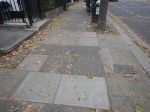


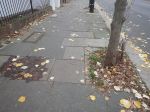
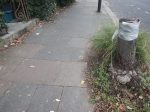
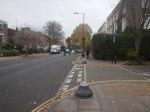
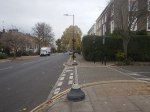
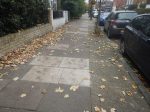


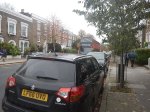
Compared to Hackney, they are not a pretty sight. And the pavements did make walking difficult.
As I did the last leg to my house, five 141 buses passed me, as Transport for London don’t believe in spreading them out, where there are punters.
Luckily, I wasn’t carrying anything heavy!
Today, I was even luckier in that a 141 bus stopped, soon after I got off the 76.
Silvertown Tunnel: Cracks In Mayoral Policies
The title of this post is the same as that of this article on the BBC.
This is the sub-heading.
It is an infrastructure project that is well-underway with the boring almost completed — but it has a very low profile.
These are the first three paragraphs.
Every step of the Crossrail tunnelling, the media were invited along. Not so with this project.
This is Silvertown Tunnel. It is more than 1km long and will be London’s first road tunnel in over 30 years.
Perhaps one of the reasons it isn’t being pushed publicity-wise, is it is very controversial.
Tom Edwards gives a detailed outline of why the tunnel is controversial.
Under a heading of HGVs Using Bus Lanes, this is said.
Instead of using the Dartford Crossing, larger HGVs will be able to use the tunnel — and its bus lane.
Campaigners said that will mean more HGVs going through Newham and Greenwich.
I’ve also never heard this before.
Sheila Keeble, of the Greenwich Society, said the tunnel “will be magnet for bigger traffic than we’ve got at the moment”.
“One of the issues we have is all the developers are now looking at building distribution centres,” she said.
“At the moment the Blackwall Tunnel protects us from bigger traffic… Silvertown won’t.”
That is all very logical and I suspect we’ll see larger trucks in Hackney and Waltham Forest too!
There was also this bit of nonsense from Transport for London.
TfL says the tunnel will lead to an overall improvement in air quality.
How will all those trucks through the two tunnels reduce pollution?
In 2024, London must vote for a Mayor, who understands hydrogen, mathematics and science!
Speed Limit To Be Lowered To 20mph In Wales
The title of this post, is the same as that of this article on the BBC.
These four paragraphs describe the policy.
Speed limits in built-up areas look set to be reduced from 30mph to 20mph in Wales from next year – a UK first that is controversial among some drivers.
Ministers say a 20mph speed limit will lower road collisions and traffic noise and encourage people to walk and cycle.
The slower limit has been divisive in areas where there have been trials with some motorists complaining of more congestion and journeys taking longer.
The proposed new law will be put before a Welsh Parliament vote on Tuesday.
I’m not sure that it will work.
I live in a 20 mph zone in Hackney.
But cars and motor bikes still speed through at up to 50 mph, as there is no visible enforcement.
The Old Hackney Town Hall
These pictures show the Old Hackney Town Hall.
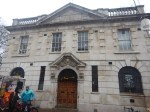
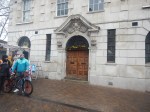



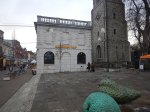
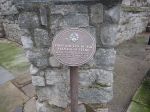
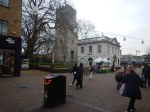
It is now a pub and Grade II Listed.
Behind the building is the Grade I Listed St.Augustine’s Tower, which is all that remains of the 16th Century parish church of St. Augustine.
Levelling Up – The Marks & Spencer Way
When I first moved to Dalston, there were three convenient Marks and Spencer stores within a few bus stops.
- Angel, which is a basically a food store with a floor of clothes above, where my grandmother used to shop before the First World and C and I used to shop in the 1970s, when we lived in the Barbican.
- Moorgate, which is a small department store, with a medium-sized food department in the basement, which I use regularly.
- Hackney, which was a very small department store with a poor food department, was convenient as on some of my journeys, I would get a bus home from outside the store.
Over the last ten years, more Marks and Spencer stores have sprung up, Archway, Camden Town, Dalston, Eastfield, Hampstead, Liverpool Street, Old Street and West Hampstead, which I use occasionally, as they are on routes home.
This morning I went to the eye hospital in Colindale and coming home, I got a 32 bus to Brondesbury for the Overground.
As I needed some food, I had various choices of journey home.
- Get off at West Hampstead and do my shopping there, and then get back on the train.
- Get off at Hampstead Heath and do my shopping there, with a light lunch in le Pain Quotidien.
- Get off at Dalston Kingsland and do my shopping there, with a bus home.
- Get off at Hackney Central and do my shopping there, with a bus home.
Unusually, I chose the last option and got a big surprise.








I had been worried that Marks and Spencer in Hackney would close, but now it has been turned into the most upmarket Marks and Spencer food store, I’ve ever seen.
- It’s more Knightsbridge. than Hackney
- It’s large and spacious.
- There are large ranges of tea and coffee, that you normally don’t see in the store.
- The decor is localised to the store.
- It is only about a hundred metres from Hackney Central station and fifty metres on the flat from my bus home.
- It’s even just called Marks & Spencer Food
Now that’s what I call levelling up!
The Great Bus Robbery
Transport for London (TfL) obviously don’t like people where I live in the Northern part of De Beauvoir Town in the London Borough of Hackney.
When I moved here, ten years ago there were six bus routes that passed through the traffic lights where the Balls Pond Road (It is not a made-up-name from Round The Horne) and Southgate Road/Mildmay Park meet.
- 21 – Newington Green and Lewisham Shopping Centre
- 30 – Marble Arch and Hackney Wick (From the sublime to the ridiculous?)
- 38 – Victoria station and the romantic Clapton Pond
- 56 – Bart’s Hospital and Whipps Cross (You’d be cross, if you’d been whipped!)
- 141 – London Bridge Station and Palmers Green North Circular Road (Surely, another romantic destination!)
- 277 – Highbury & Islington Station and Crossharbour
Note.
- We had two bus routes to and from Highbury & Islington station for Dear Old Vicky!
- We had two bus routes to and from Moorgate, Bank and the City of London.
- We had four bus routes to and from Dalston Junction station and the cultural attractions of Hackney Central.
- We had a direct bus to Canary Wharf.
TfL looked at the name of the district and thought the posh French name, meant we were all had expensive vehicles or Hackney carriages and said we had too many buses.
So in June 2018, the 277 bus was cut back to Dalston Junction station and TfL promised that the frequency of the 30 bus would be increased. We’re still waiting for extra services.
Now, if you want to go to Highbury & Islington station, according to TfL’s Journey Planner, it’s often quicker to take a 38 or 56 bus to Essex Road station and take a train.
To make matters worse the 30 bus route now has cheap and nasty Egyptian-built buses with more steps than Russia. All buses should have flat floors like the New Routemasters.
What is TfL’s latest crime?
The 21 and 271 buses are going to be combined into a new route between Lewisham and Highgate, which will go nowhere near the Balls Pond Road.
So we’ll just have the one bus route to the City of London.
On past form, if TfL say they will increase the frequency, I wouldn’t believe them.
I think that TfL have ignored some problems.
The Elderly And Disabled
Between Newington Green and Englefield Road, a higher proportion of the passengers getting on the 21 and 141 buses seem to be in these groups.
- As it’s a nice place to live, I suspect many elderly people have just stayed on.
- I believe that North of the Balls Pond Road, there are some care homes and sheltered housing.
Have TfL analysed their passengers?
Not Everybody Has Cars
There are several blocks of social housing on the Newington Green and Englefield Road stretch and you see a lot of passengers who don’t look like car owners.
The lack of parking and the Low Traffic Neighbourhoods don’t help.
Access To Waterloo
My quickest way to Waterloo, which is London’s busiest rail terminal, is to take a bus to Bank and then get the Drain.
A halved service to Bank station will probably force me to take longer routes.
Tradition
When I was a child in the 1950s, the 141 was the 641 trolley bus, which ran between Winchmore Hill and Moorgate.
People, who live in Wood Green, Turnpike Lane and Manor House still commute to the City by bus, as people have done for over a hundred years.
I suspect a lot of commuters change from the Piccadilly Line to the 141 bus at Manor House station. I certainly use that route if I’m going to Southgate or Cockfosters.
The 21 bus starts at Newington Green, which means if you want to go from Balls Pond Road to Bank, you’ll usually get on a 21 bus, as the 141 buses are full with passengers from further North.
So it looks like to get to Moorgate, we’ll need to get a bus to Angel and then get the Northern Line, after the rerouting of the 21 bus.
Crossrail
This will have a big effect.
Suppose you live in Wood Green and want to get to Crossrail.
There is no obvious connection, but tradition will mean your preferred route will be to take a 141 bus between Manor House and Moorgate.
There will also be a quick route between Moorgate and Liverpool Street station, that I wrote about in London’s First Underground Roller Coaster.
Conclusion
We will need the 21 bus to provide us with a route to Crossrail, as the 141 buses will be full.
The 21 bus is needed where it is and mustn’t be stolen.
Waterloo & City line To Operate All Day By The End Of November
The title of this post, is the same as this article on City AM.
Hallelujah!
Here in Hackney, it’s our best route to Waterloo, as we have several buses to Bank. I have two; the 21 and 141.
Let’s hope the Drain continues to work during the Great Blockade in the New Year, whilst the Northern Line is connected to the new tunnel at Bank.
When Will It Ever End?
They’re at it again digging up the pavement on Southgate Road in Hackney


Note.
- This time the bus-stop I regularly use is shut!
- There were no signs up, that this work would be going on.
- At least the guys seem to be doing a good job.
Over the last six months, we’ve had water, telecoms and pavement layers digging everything up. Sometimes, I feel trapped as all the bus stops are closed.
There hasn’t been as much work on the Islington side of the road, but then you can always tell when you cross the border between plebeian Hackney and posh Islington, as the pavements get worse.
I’ve only fallen over twice on the street since my stroke and both times it was in Islington.
 The Anonymous Widower