Extending The Elizabeth Line – Linking To The Chatham Main Line
Preamble
I believe that everybody in the South East of England needs the best access possible to the Elizabeth Line, by train from where they live.
- The Elizabeth Line serves the important places like Brick Lane, Canary Wharf, the City of London, Heathrow Airport, Liverpool Street station, the Olympic Park, Oxford Street and Paddington station directly.
- Because of its connection to Thameslink, the Elizabeth Line also serves important places like Bedford, Brighton, Cambridge, Gatwick Airport, Luton Airport and Tate Modern with a single change at Farringdon station.
- Using the Elizabeth Line, Thameslink and perhaps a bus, it is possible to get to most important places in Central London.
- The more passengers that use the Elizabeth Line and Thameslink, the more London’s businesses will thrive creating employment and tax revenues.
- It should also be remembered, that using a train to visit central London, probably cuts your carbon footprint.
- The Elizabeth Line also cost a fortune, so perhaps by using it, you will be getting some of your portion of what it cost you back.
This post is one of several, where I discuss how to bring more passengers into the Elizabeth Line network.
The Chatham Main Line
This is the introduction to the Wikipedia entry for the Chatham Main Line.
The Chatham Main Line is a railway line in England that links London Victoria and Dover Priory / Ramsgate, travelling via Medway (of which the town of Chatham is part, hence the name).
Services to Cannon Street follow the route as far as St Mary Cray Junction where they diverge onto the South Eastern Main Line near Chislehurst.
Thameslink services to Luton run in parallel from Rainham to Rochester, diverging once across the River Medway at Rochester Bridge Junction onto the North Kent Line via Gravesend and Dartford.
A shuttle service operates on the Sheerness Line which starts at Sittingbourne.
Note.
- The main London terminals for trains to London on the Chatham Main Line are Cannon Street (Peak only), St. Pancras and Victoria.
- Services stop at Rainham station, so passengers can change to the two trains per hour (tph) Thameslink service to Luton.
- St. Pancras has one tph from Strood, Rochester, Chatham, Gillingham, Rainham, Sittingbourne and Faversham stations.
- Victoria has two tph from Strood, Rochester, Chatham, Gillingham, Rainham, Sittingbourne and Faversham stations.
- Rochester, Gillingham, Rainham and Faversham can turnback trains to London.
The only connections to the Elizabeth Line are.
- The HighSpeed service to St. Pancras calls at Stratford International, where the connection is tortuous.
- The Thameslink service calls at Farringdon, where the connection is easy.
As an example say you were going from Chatham to Heathrow Terminal 4.
The National Rail timetable suggests this route.
- Southeastern HighSpeed – Chatham to St. Pancras
- Thameslink – St. Pancras to Farringdon
- Elizabeth Line – Farringdon to Heathrow
Note that the change at St. Pancras is not the easiest.
Extending The Elizabeth Line To The Chatham Main Line
In Elizabeth Line To Ebbsfleet Extension Could Cost £3.2 Billion, I talk about this proposal as described in this article on Ian Visits.
One of the key features of Crossrail To Ebbsfleet (C2E) project is that instead of all trains terminating at Abbey Wood, trains will terminate as follows.
- Abbey Wood – 4 tph
- Northfleet – 4 tph
- Gravesend – 4 tph
This will mean that 8 tph would pass through Abbey Wood station.
Gravesend is not the best place to turn trains, so why not turn two tph at somewhere like Rochester, Gillingham, Rainham or Faversham?
If two tph to Rainham is good enough for Thameslink, surely two tph to Faversham could be good enough?
Extending The Elizabeth Line To A New Hoo Station
In Effort To Contain Costs For Hoo Reopening, I discussed opening the new Hoo station.
Consider.
- Hoo junction to Hoo station is no more than five or six miles.
- Aventras have been designed to run on battery power, so I suspect Lizzie’s Class 345 trains could be so fitted.
- Range would be sufficient for one return trip from Hoo junction to Hoo station
- Two tph at Hoo station could be handled by a single platform.
It looks to me, that of the four tph to Gravesend if C2E is built, two tph could go to both of Hoo and Faversham.
This assumes of course that digital signalling can fit all the trains on the North Kent Line between Abbey Wood and Faversham.
Chatham And London Main Line Stations
In these routes, I am assuming that there are two tph on the Lizzie Line between Faversham and Heathrow.
- Chatham and Cannon Street – Lizzie Line to Whitechapel and then District Line
- Chatham and Charing Cross – Lizzie Line to Whitechapel and then District Line
- Chatham and Euston – Lizzie Line to Whitechapel and then Hammersmith & City Line
- Chatham and Farringdon – Lizzie Line direct – Thameslink direct
- Chatham and Fenchurch Street – Lizzie Line to Whitechapel and then District Line
- Chatham and Liverpool Street – Lizzie Line direct
- Chatham and Marylebone – Lizzie Line to Paddington and then Bakerloo Line
- Chatham and Paddington – Lizzie Line direct
- Chatham and Kings Cross – Thameslink direct – Lizzie Line to Whitechapel and then Hammersmith & City Line
- Chatham and St. Pancras – Thameslink direct – Southeastern HighSpeed direct
- Chatham and Victoria – Southeastern direct – Lizzie Line to Whitechapel and then District Line
- Chatham and Waterloo – Lizzie Line to Paddington and then Bakerloo Line
Note how Whitechapel is an important interchange, as I said in Whitechapel Station Is The Preferred Interchange.
Conclusion
I do believe that the Elizabeth Line could be successfully extended to Kent.
Regulator Approves New Grand Union Train Service From Carmarthen To London Paddington
The title of this post, is the same as that of this press release from the Office of Rail and Road.
This is the sub-heading of the press release.
The Office of Rail and Road (ORR) has opened up the Great Western Main Line to competition and enabled a significant increase in rail services between London and South Wales.
These points are made in the press release.
- The rail regulator has approved the introduction of new train services between London, Cardiff and South West Wales from the end of 2024.
- The services will be operated by a new open access operator, Grand Union Trains, bringing competition to the Great Western route out of Paddington.
- Passengers travelling between London, Bristol Parkway, Severn Tunnel Junction, Newport, Cardiff, Gowerton, Llanelli and Carmarthen will benefit from an extra five daily return services and greater choice of operator.
- The decision opens up the Great Western Main Line to competition for the first time, with potential benefits in terms of lower fares, improved service quality and innovation for all passengers using the route.
- The application, submitted to ORR in June 2022, was disputed by Network Rail due to concerns about capacity on the network. But following careful consideration and analysis, ORR has directed Network Rail to enter into a contract with Grand Union.
- Grand Union has committed to significant investment in new trains.
- As an ‘open access’ train operator, however, it will not get paid subsidies from public funds, unlike current operators along the route.
ORR supports new open access where it delivers competition for the benefit of passengers. In making this decision, the regulator has weighed this up against the impact on Government funds and effect on other users of the railway, both passengers and freight customers.
These are my thoughts.
The Company
Grand Union Trains have certainly persevered to get this approval.
- The company was created by Ian Yeowart, who previously created open access operators; Alliance Rail Holdings and Grand Central before selling both to Arriva.
- After multiple negotiations with the Office of Road and Rail (ORR), Yeowart must know how to get an acceptable deal.
- Grand Union Trains have a similar application for a service between Euston and Stirling with the ORR.
Grand Union Trains also have a web site.
The home page has a mission statement of Railways To Our Core, with this statement underneath.
At Grand Union we are passionate about Britain’s railways. We are committed to the traditional values of providing a high-quality customer service and a comfortable journey experience at a fair price.
I’ll go with that.
The Financial Backing Of The Company
All the UK’s open access operators are well-financed either by Arriva or First Group.
The ORR would not receive any thanks, if they approved an operator, which duly went bust.
So what is the quality of the financing behind Grand Union Trains?
This article on Railway Gazette is entitled RENFE Looks At Entering UK Rail Market Through Open Access Partnership, which starts with this paragraph.
Open access passenger service developer Grand Union Trains is working with Spain’s national operator RENFE and private equity firm Serena Industrial Partners on a proposed service between London and Wales.
That is fairly clear and would surely help in the financing of Grand Union Trains.
The Route
Trains will run between Carmarthen and London Paddington, with stops at Llanelli, Gowerton, Cardiff, Newport, Severn Tunnel Junction and Bristol Parkway.
A new station at Felindre will replace Gowerton at some time in the future.
There will be five trains per day (tpd).
I have some thoughts and questions about the route
Felindre Station
Felindre station is named in Wikipedia as the West Wales Parkway station, where it is introduced like this.
West Wales Parkway is a proposed railway station north of Swansea, near to the boundaries of the neighbouring principal area of Carmarthenshire, and the villages of Felindre and Llangyfelach. The station is proposed to be situated at the former Felindre steelworks, near Junction 46 of the M4 and A48, and near Felindre Business Park and Penllergaer Business Park. The project is in the planning stages, as part of a wider Department for Transport proposal to re-open the Swansea District line to passenger traffic.
This Google Map shows where, it appears the Felindre station will be built.
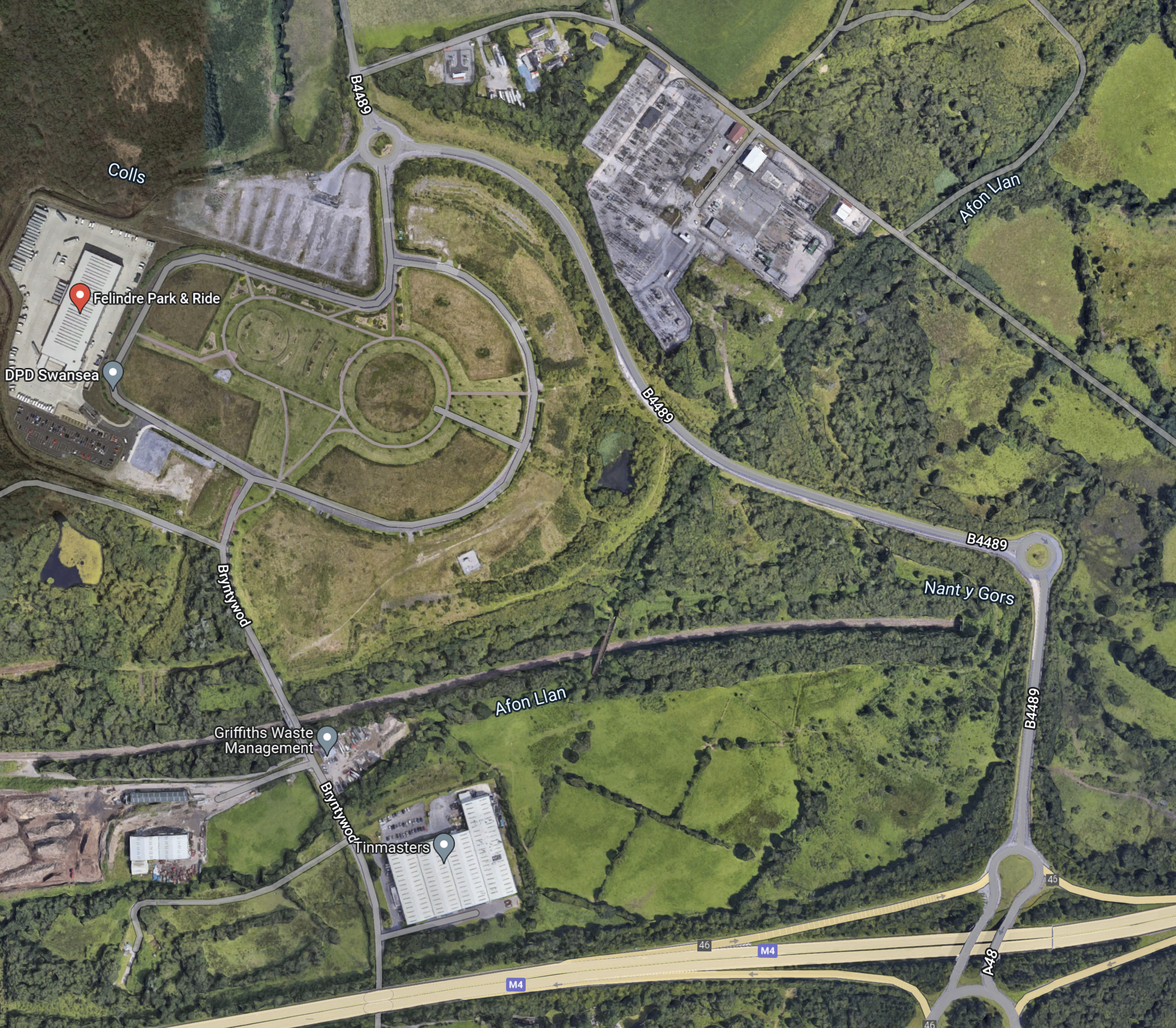
Note.
- The Felindre Business Park in the North-West corner of the map, with a Park-and-Ride.
- The M4 running across the bottom of the map.
- The Swansea District Line runs East-West between the motorway and the Business Park.
It looks that the new station could be located on the South side of the Business Park.
When High Speed Two Opens Will Trains Call At Old Oak Common?
When High Speed Two opens, all GWR trains will stop at Old Oak Common station for these connections.
- Chiltern for for Banbury, Bicester, High Wycombe and the West Midlands
- Elizabeth Line for Central and East London and the Thames Valley
- Heathrow Airport
- High Speed Two for Birmingham and the North
- Overground for Outer London
As Old Oak Common will be such an important interchange, I think they should.
Will The Platforms At Carmarthen Station Need Lengthening?
This Google Map shows Carmarthen station.
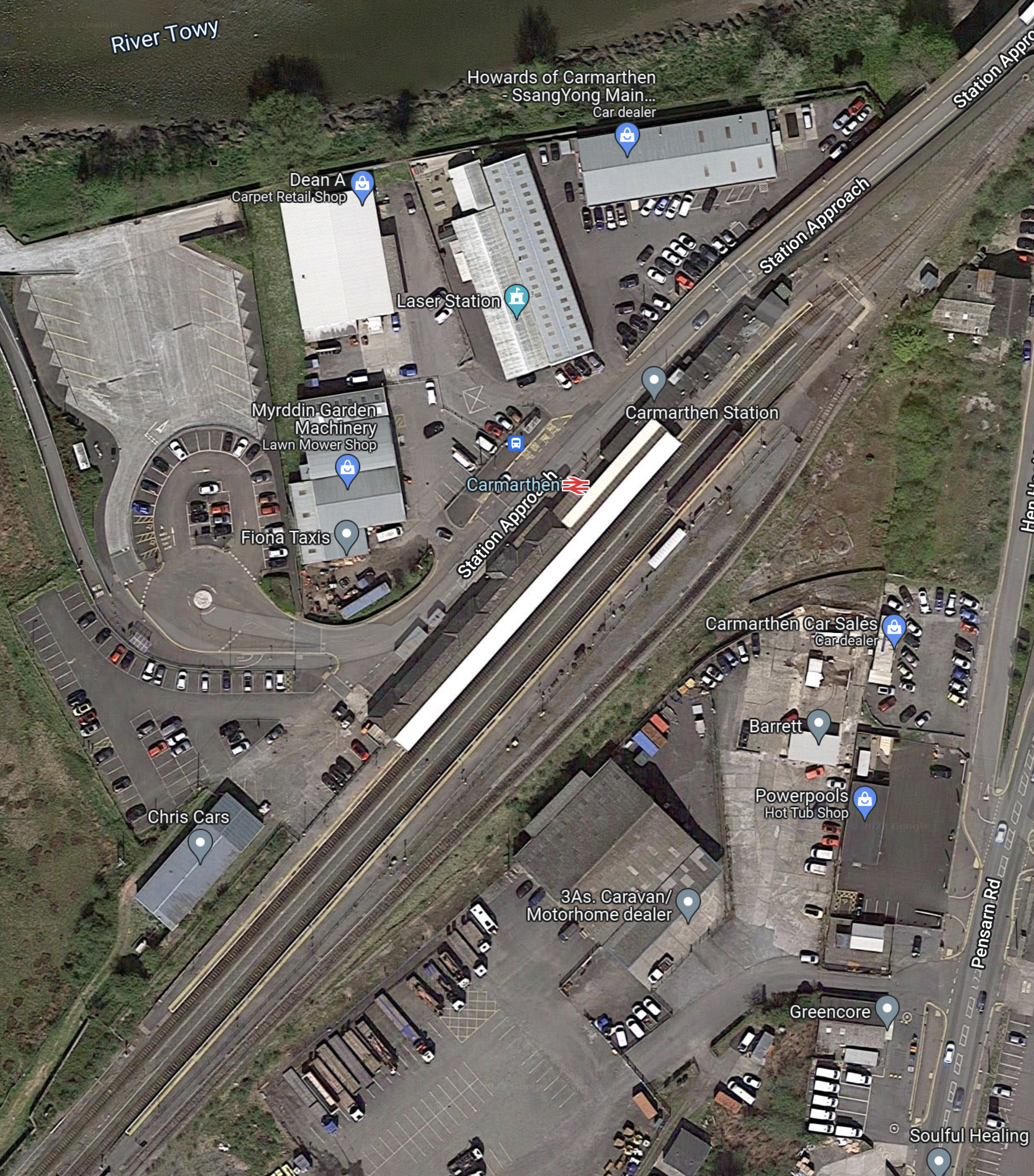
Note.
- The station has two platforms.
- There are certainly pictures of the station with an InterCity 125 in the station. There is a picture on the Wikipedia entry for Carmarthen station.
These pictures show the station.



I suspect that the station will be upgraded to accommodate Grand Union Trains.
The Trains
An article in the June 2022 Edition of Modern Railways, which is entitled Grand Union Bids For London To Carmarthen, gives these details of the trains.
- Three classes.
- 2023 start for the service.
- Cycle provision.
- Vanload freight will be carried.
- Electric trains could start between London and Cardiff by 2023.
- In 2025, trains could be nine-car bi-modes.
- South Wales-based operation and maintenance.
- 125 full-time jobs created.
It certainly seems to be a comprehensive and well-thought out plan.
I have a few thoughts on the trains.
What Make Of Trains Will Be Procured?
Consider.
- Lumo’s Class 803 trains were ordered from Hitachi in March 2019 and entered service in October 2021.
- So if they ordered their version of the Hitachi trains by the end of 2022, the trains could be in service by July/August 2025.
- It would probably be easier, if the only fast trains on the Great Western Main Line between London and South Wales were all Hitachi trains with identical performance.
But the Spanish backers of Grand Union Trains may prefer Spanish-designed trains assembled in South Wales. So would a bi-mode version of CAF’s Class 397 trains be suitable?
On the other hand, the Carmarthen and Cardiff section of the route without a reverse at Swansea is only seventy-five miles.
This Hitachi infographic shows the Hitachi Intercity Tri-Mode Battery Train.

Consider.
- Charging could be provided at Carmarthen using a short length of electrification or one of Furrer + Frey standard chargers.
- Charging would also use the electrification between London Paddington and Cardiff.
- A nine-car Class 800 or Class 802 train has five engines and a five-car train has three engines.
- The Intercity Tri-Mode Battery Train was announced in December 2022.
- In the intervening two years how far has the project progressed?
- For the last twelve months, Lumo have been running trains with an emergency battery-pack for hotel power. How are the batteries doing, whilst being ferried up and down, the East Coast Main Line?
Can Hitachi configure a train with more than one battery-pack and a number of diesel engines, that has a range of seventy-five miles? I suspect they can.
I suspect that CAF also have similar technology.
There is also a benefit to Great Western Railway (GWR).
If GWR were able to fit out their Class 802 trains in the same way, they would be able to run between Cardiff and Swansea on battery power.
- It is only 45.7 miles.
- Charging would need to be provided at Swansea.
- GWR could still run their one tpd service to Carmarthen.
It looks like both train operating companies could be able to do as Lumo does and advertise all electric services.
What Could Be The Maxmum Range Of A Hitachi Train On Batteries?
This Hitachi infographic shows the Hitachi Regional Battery Train.

Consider.
- It has a battery range of 90 km or 56 miles on the single battery.
- I would expect that by a regional train, Hitachi mean a five car Class 800 or 802 train, like those that go to Cheltenham, Lincoln or Middlesbrough.
- A five-car Hitachi Regional Battery Train would have a battery that could contain power equivalent to 280 car-miles.
- Five-car Class 800 or 802 trains have three engine positions.
- These Hitachi trains have a very sophisticated control system, which I wrote about in Do Class 800/801/802 Trains Use Batteries For Regenerative Braking?
I believe the engineers at Hyperdrive Innovation have designed the battery-packs that replace the diesel engines as simulations of the diesel engines, so they can be a direct replacement.
This would mean that battery-packs could be additive, so the following could apply to a five-car train.
- Two battery packs could have a range of 112 miles.
- Three battery packs could have a range of 168 miles.
GWR generally runs pairs of five-car trains to Swansea, which would be 90 miles without electrification.
If five-car trains with two battery packs, could be given a range of 112 miles, GWR could run an electric service to Swansea.
They could also run to Carmarthen, if Grand Union Trains would share the charger.
What ranges could be possible with nine-car trains, if one battery pack is good for 280 car-miles?
- One battery-pack, gives a range of 280/9 = 31 miles
- Two battery-packs, give a range of 2*280/9 = 62 miles
- Three battery-packs, give a range of 3*280/9 = 93 miles
- Four battery-packs, give a range of 4*280/9 = 124 miles
- Five battery-packs, give a range of 5*280/9 = 155 miles
- Six battery-packs, give a range of 6*280/9 = 187 miles
- Seven battery-packs, give a range of 7*280/9 = 218 miles
Note.
- I have rounded figures to the nearest mile.
- There are five cars with diesel engines in a nine-car train, which are in cars 2,3,5, 7 and 8.
- Diesel engines are also placed under the driver cars in five-car Class 810 trains.
- For the previous two reasons, I feel that the maximum numbers of diesel engines in a nine-car train could be a maximum of seven.
- I have therefor assumed a maximum of seven battery packs.
These distances seem sensational, but when you consider that Stradler’s Flirt Akku has demonstrated a battery range of 243 kilometres or 150 miles, I don’t think they are out of order.
But, if they are correct, then the ramifications are enormous.
- Large numbers of routes could become electric without any infrastructure works.
- Grand Union Trains would be able to run to Carmarthen and back without a charger at Carmarthen.
- GWR would be able to run to Swansea and back without a charger at Swansea.
Prudence may mean strategic chargers are installed.
Rrenewable Energy Developments In South West Wales
In Enter The Dragon, I talked about renewable energy developments in South West Wales.
I used information from this article on the Engineer, which is entitled Unlocking The Renewables Potential Of The Celtic Sea.
The article on the Engineer finishes with this conclusion.
For now, Wales may be lagging slightly behind its Celtic cousin to the north, but if the true potential of the Celtic Sea can be unleashed – FLOW, tidal stream, lagoon and wave – it looks set to play an even more prominent role in the net zero pursuit.
The Red Dragon is entering the battle to replace Vlad the Mad’s tainted energy.
South West Wales could see a massive renewable energy boom.
Grand Union Trains will increase the capacity to bring in more workers to support the developments from South Wales and Bristol.
Reading To Heathrow On The Lizzie Line
Last week, I took the Lizzie Line to Reading and came back with a diversion to Heathrow.
I took the train from Reading as far as Hayes and Harlington, where I crossed over the tracks on the footbridge to get the train to Heathrow.
There are two bridges at Hayes & Harlington station, as these pictures show.
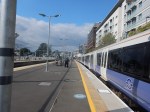
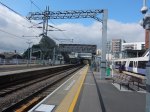

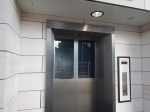



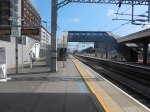
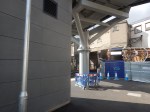
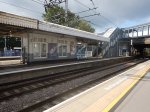
Note.
- Only the Western bridge has lifts.
- The Western bridge will be at the very back of the train from Reading.
- It is a long walk from the front of the train to the lifts.
This map from Cartometro shows the tracks through Hayes and Harlington station.

Note.
- The Great Western fast lines, which are shown in black on the South side going through platforms 1 & 2.
- The Elizabeth Line and the Great Western slow lines, which are shown in black and purple on the North side going through platforms 3 & 4.
- The Reading and Heathrow branches are to the West.
- London Paddington is to the East.
- Elizabeth Line Trains from the Reading or Heathrow branches to Paddington use Platform 4.
- Elizabeth Line Trains from Paddington to the Reading or Heathrow branches use Platform 3.
It should also be noted that if you are travelling between Heathrow Airport and any of the Elizabeth Line stations between Hayes and Harlington and Reading stations, you have to cross from Platform 4 to Platform 3 at Hayes and Harlington station.
All passengers will be travelling in the same direction at Hayes and Harlington station.
I feel it is absolutely essential, if you are travelling between Reading and Heathrow Airport using the Elizabeth Line, that you travel in the last carriage of the train from both Heathrow Airport or Reading.
When travelling to Heathrow in Where Should You Travel On An Elizabeth Line Train?, I said these were the positions to travel on the train.
- Heathrow Central – Eastern end
- Heathrow Terminal 4 – Western end
- Heathrow Terminal 5 – Eastern end
It looks like there could be some walking to do if you’re travelling between Reading and Heathrow Central or Heathrow Terminal 5.
I feel that Hayes and Harlington station could possibly have been better designed.
Would it have been better if Platforms 3 and 4 had been designed as an island platform, so that passengers going between the Reading and Heathrow branches would just walk across to the other side of the platform?
- The tracks would have had to be realigned.
- There would have been less lifts needed.
- The Eastern bridge might not have been needed.
I suspect, it would have been the more expensive option.
So Many Cases On A Train!
This afternoon about three, I went to West Ealing station to see what it was like to transfer between the Elizabeth Line Central Tunnel and the Western Branch at Paddington.
Coming back, I took an Elizabeth Line service that had started from Heathrow Airport and it was one of the busiest Lizzies, I’d ever ridden!
To get on the train at West Ealing station, I got in to probably coach 4 of 9, as that was in the dry and the back end of the train I needed for Moorgate station was certainly in the wet.
I then had to walk half the length of the train to get to the back of the train.
It was not easy, as the train was full of scores of passengers with large wheelie cases.
This got me thinking.
Are Passengers Transferring To The Lizzie Line?
And especially those with large cases. that are the sort you could use for bringing in a pair of folded-up contortionists.
- These cases don’t fit well on the Piccadilly Line, which has only a few step-free stations.
- From what I’ve seen cases are easily wheeled to Elizabeth Line platforms at Heathrow.
- Many of these cases won’t fit in the average family car.
- All parking is expensive at Heathrow, whether it is short, medium or long.
- Valet parking at Heathrow has been devalued by all the scam artists.
- Taxis are the province of those that own oil wells, hedge funds or belong to the highest wunch of bankers.
- Pick-up and drop-off is now very expensive.
- There were a good proportion of couples, who were both dragging or pushing a massive case.
- The Elizabeth Line is cheaper than the Heathrow Express.
- The Elizabeth Line like the Piccadilly Line allows the use of a bank card as a ticket.
- Only the Elizabeth and Piccadilly Lines take you direct to dozens of stations with only same-platform interchanges.
- The Elizabeth Line has step-free interchanges with the Bakerloo, Circle, District, Hammersmith and City, Jubilee, and Metropolitan Lines, the Docklands Light Railway and the London Overground.
- Whitechapel has been turned into a major transport hub for the Easternmost part of London.
There seems to be quite a few reasons why a traveller going to or from Heathrow might at least try the Elizabeth Line.
And travellers seemed to be doing it in droves today!
Were Upmarket Passengers Using The Lizzie Line?
Take the couple next to me on the train from West Ealing.
- Around sixty.
- Very well-dressed.
- Possibly Mediterranean or South American.
- Matching medium-size wheelie-cases.
- She was wearing expensive glasses.
A couple of years ago, they would have probably used the Heathrow Express.
They certainly weren’t the only passengers, who looked like archetypal Heathrow Express passengers.
Will The Lizzie Line Take Passengers From The Piccadilly Line?
As the cost will be the same, I suspect the answer will be yes.
Although, there will be groups of travellers, who will probably remain loyal to the Piccadilly Line.
- If you were going to or from the step-free Cockfosters or Oakwood, with a heavy case, all the way on the Piccadilly Line could be a simple sensible option. I used to live near Oakwood station and remember several long trips on the Piccadilly Line, but not too Heathrow.
- The step-free Kings Cross St. Pancras, Green Park, Knightsbridge and Earls Court may well have reasons to keep their regular passengers.
- Those only travelling a few stops to or from Heathrow will probably stay with the Piccadilly Line for convenience.
- Transport for London have been adding step-free access to the Heathrow Branch and this will surely promote use.
The Piccadilly Line is also getting new trains in a few years.
In Extending The Elizabeth Line – Piccadilly Line To Ealing Broadway, I talked about a proposal to turnback some Piccadilly Line trains at Ealing Broadway station.
I think it is a good idea, as it could make it simpler for Piccadilly Line passengers to access Heathrow and reduce congestion on the Piccadilly Line.
Will The Lizzie Line Take Passengers From The Heathrow Express?
This is an extract from Extending The Elizabeth Line – Piccadilly Line To Ealing Broadway
It will be difficult to predict what will happen to Heathrow Express, but I suspect several groups of passengers will desert it.
- Passengers wanting to go anywhere East of Paddington without changing trains.
- Passengers wanting any Elizabeth Line station.
- Passengers, who don’t like the prices of Heathrow Express.
- Passengers using Oyster or contactless cards.
- Passengers who want to ride on London’s spectacular new Elizabeth Line.
After Old Oak Common station is opened for High Speed Two, the numbers could further decrease.
Will Heathrow Express survive?
Will The Lizzie Line Attract Passengers Who Usually Drive?
Large swathes of the country already have single-change step-free access to the Elizabeth Line.
- All services out of Liverpool Street and/or Stratford.
- All services out of Moorgate.
- All Thameslink services through Farringdon.
- All services out of Paddington.
- All services through Abbey Wood.
- When Crossrail to Ebbsfleet (C2E) opens, this will add all services through Gravesend and Ebbsfleet.
- When High Speed Two opens, this will add all services through Old Oak Common.
- When the Western Rail Approach To Heathrow is completed, this will add all services through Reading.
If you can get a train direct to the Elizabeth Line network and then a train direct to your terminal, would you seriously want all the hassle of parking after a two hour drive?
I can see parking at Heathrow suffering a severe lack of demand.
Conclusion
Lizzie will start a revolution in travel to and from Heathrow.
Extending The Elizabeth Line – Piccadilly Line To Ealing Broadway
Transport for London have proposed a reorganisation of the Piccadilly and District Lines in the Ealing area.
I first wrote about this in Is There Going To Be More Change At Ealing Broadway Station?, but now the Elizabeth Line is on the verge of being connected across London, I feel that this post needs to be replaced.
A Possible Proposal
Ealing Broadway station is being upgraded for Crossrail.
In the November 2017 Edition of Modern Railways, there is a Capital Connection supplement, which discusses London’s railways.
On Page 7 in a section about the sub-surface lines, this is said.
One possibility being discussed is that the Piccadilly should take over the District’s Ealing Broadway service. This would free up space on the South side of the inner-London circle for more City trains off the Wimbledon branch, one of the sub-surface network’s most-crowded routes.
On Page 15 in a section about the Mayor’s plans, this is said.
It is suggested Piccadilly Line services run to Ealing Broadway instead of the District Line, enabling increased frequencies on the latter’s Richmond and Wimbledon branches.
As the plan is mentioned twice, certainly the proposal is being thought about.
The Lines At Ealing Broadway Station
This map from carto.metro.free.fr shows the lines at Ealing Broadway station.
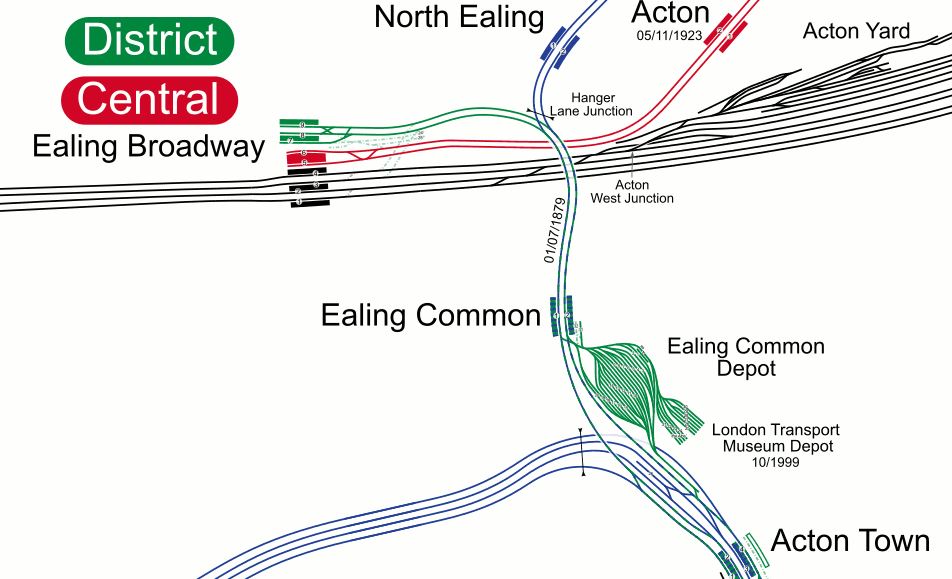
Note how the Piccadilly and District Lines share tracks from Ealing Common station, which then split with District Line trains going to Ealing Broadway station and Piccadilly Line trains going to Rayners Lane and Uxbridge stations.
If the change happened and Ealing Broadway station was only served by the Piccadilly and Central Lines of the Underground, then there might be opportunities to improve the efficiency of the Underground side of the station.
Capacities And Lengths Of London Underground Trains Serving Ealing Broadway Station
I’ll express these as a table.
- Central Line – 1992 Stock – 930 passengers – 130 metres – 7.15 pass/m.
- District Line – S7 Stock – 1209 passengers – 117.45 metres – 10.29 pass/m.
- Piccadilly Line – 1973 Stock – 684 passengers – 106.8 metres – 6.40 pass/m.
- New Tube for London – 1076 passengers – 113.7 metres – 9.46 pass/m.
Note.
- The New Tube for London is the shortest train, with the second highest capacity and the highest passenger density.
- The New Tube for London will be replacing the Piccadilly Line trains first.
- The New Tube for London will be replacing the Central Line trains second.
It looks like there will be no platform-length problems running the New Tube for London to Ealing Broadway station.
The District Line Platforms At Ealing Broadway Station
These pictures show the District Line at Ealing Broadway station.
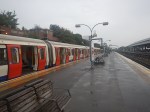
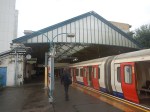
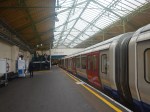

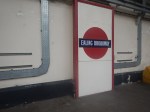
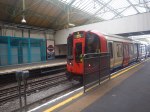
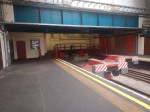
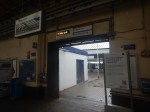
Note.
- There are three platforms for terminating District Line trains, which are numbered 7 to 9.
- The service frequency is six trains per hour (tph).
- The bridge to the far platform 9, is not step-free.
- It appears to be possible to walk between platforms 8 and 9 behind the buffer stops, but it wasn’t signed.
- As a comparison the Central Line runs 9 tph to East London from two platforms, that are numbered 5 and 6.
- There was also a 3 tph Night Tube service before the pandemic, which appears to be running again.
- Platforms 8 and 9 seem to be covered by a building of very little architectural merit.
This map from OpenRailwayMap shows the detailed platform layout.
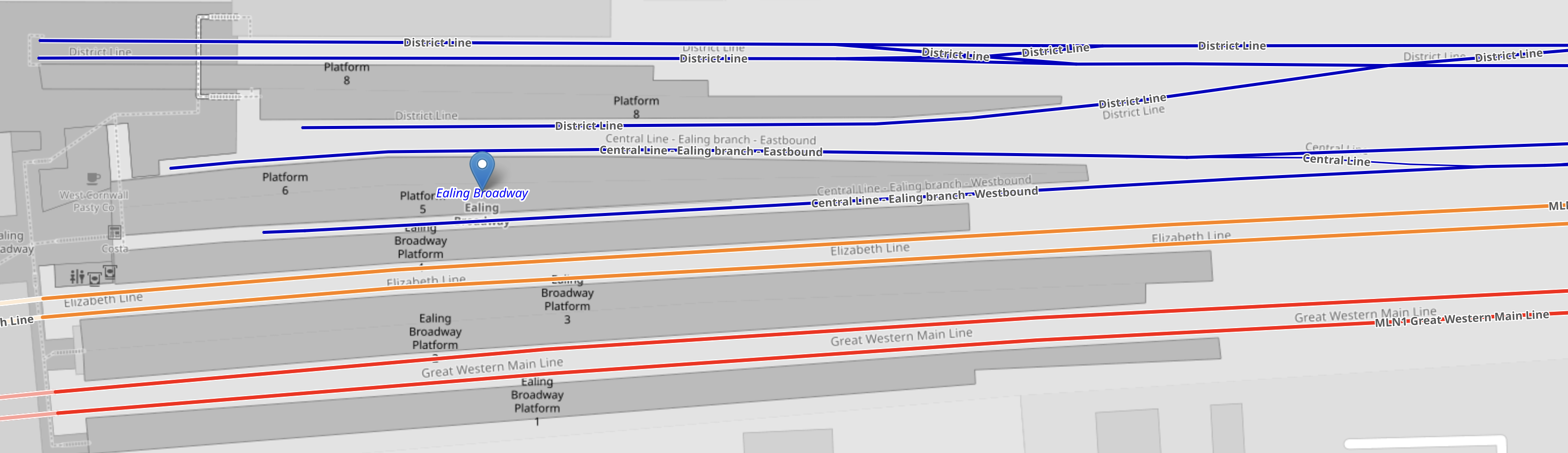
Note.
- Platforms are numbered from 1 to 9 from the South.
- Underground tracks are shown in blue.
- Elizabeth Line tracks are shown in orange.
- Great Western ~Main Line tracks are shown in red.
I believe that the three District Line platforms could be upgraded into an excellent terminus for another branch of the Piccadilly Line.
Consider.
- Two platforms would probably be enough, but a third would be useful for service recovery.
- As the Piccadilly and Central Line trains are the same size, could Platform 7 be a platform be available to both Underground services when needed?
- The New Tubes for London are a few metres shorter than the current District Line trains, so would this help in creating a step-free level walkway between Platforms 8 and 9, behind the buffer stops?
- Platforms 8 and 9 may need to be lengthened.
- Is there any scope for any appropriate oversite development?
I certainly believe that a much better replacement could be created.
Changing Between The Underground Lines And The Elizabeth Line At Ealing Broadway Station
Ealing Broadway station is now step-free and changes between the Eastbound Elizabeth Line and the Underground are a walk on the level.
Only when changing to or from the Westbound Elizabeth Line do you need to use stairs and/or a lift.
Elizabeth Line Effects On Access To Heathrow
The Elizabeth Line will change the way a lot of passengers go to and from Heathrow Airport.
Elizabeth Line To Heathrow
At present, the service will be.
- 4 trains per hour (tph) between Paddington and Heathrow Central and Heathrow Terminal 4 or Heathrow Terminal 5 via Ealing Broadway.
After November 6th, 2022, the service will be.
- 4 tph between Abbey Wood and Heathrow Central and Heathrow Terminal 4
- 2 tph between Abbey Wood and Heathrow Central and Heathrow Terminal 5
In addition these services will serve all station including Canary Wharf, Liverpool Street, Bond Street, Paddington and Ealing Broadway.
Effect On Heathrow Express
It will be difficult to predict what will happen to Heathrow Express, but I suspect several groups of passengers will desert it.
- Passengers wanting to go anywhere East of Paddington without changing trains.
- Passengers wanting any Elizabeth Line station.
- Passengers, who don’t like the prices of Heathrow Express.
- Passengers using Oyster or contactless cards.
- Passengers who want to ride on London’s spectacular new Elizabeth Line.
- After Old Oak Common station is opened for High Speed Two, the numbers could further decrease.
Will Heathrow Express survive?
Effect On Piccadilly Line
The current Piccadilly Line route to the Airport will not be closed, as for many it will still be a convenient route to the Airport
- Passengers who live on the Piccadilly Line and don’t want to change trains. Think Southgate, Knightsbridge, Hammersmith and Osterley!
- Passengers to the West of Acton Town station.
- Passengers, workers and others needing to go to Hatton Cross station.
If the Elizabeth Line connected with the Piccadilly Line at say Holborn, it would be all so different.
Effect On District Line
When Crossrail opens, the District Line will become a loop from Crossrail, between Ealing Broadway and Whitechapel running along the North Bank of the Thames via Earls Court, Victoria, Charing Cross and Monument.
The step-free interchange at Ealing Broadway could become busy with passengers travelling to and from the Airport.
Effect On Piccadilly Line Overcrowding
Heathrow trains on the Piccadilly Line can get very overcrowded with so many passengers with heavy cases.
It must sometimes be very difficult to get on a Piccadilly Line train between Heathrow and South Kensington stations.
The Elizabeth Line should take the pressure from these trains, by allowing passengers to use the District Line with a change at Ealing Broadway.
The New Tube for London will also help to reduce the overcrowding.
Effect On My Personal Route
My personal route to the airport is to take a 141 bus to Manor House station and then get the Piccadilly Line. It takes 94 minutes.
After the Elizabeth Line fully opens, if I take the East London Line from Dalston Junction to Whitechapel and then used Crossrail, I’d take 57 minutes.
Conclusion
The Elizabeth Line will affect the way many get to and from Heathrow Airport.
But there are large areas of London, who still will need to change trains twice to get to the airport. But for many, one of those changes will be a step-free one at Ealing Broadway, Paddington or Whitechapel stations.
Piccadilly Line To Ealing Broadway Effects
Adding Ealing Broadway station as a fourth Western terminus to the Piccadilly Line will have effects, but not as important as the opening of the Elizabeth Line.
Some Improved Journey Times To Heathrow
Some Piccadilly Line stations will see improved journey times to Heathrow.
Hammersmith to Heathrow currently takes 37 minutes by the Piccadilly Line.
Taking a Piccadilly Line train to Ealing Broadway and then using the Elizabeth Line could save a dozen minutes.
The District Line Connection To The Elizabeth Line At Ealing Broadway Is Lost
Passengers along the District Line from Monument to Hammersmith will lose their direct access to the Elizabeth Line at Ealing Broadway.
Cross-platform access to the Piccadilly Line at Hammersmith and other stations will probably be provided or improved, but it will be a second change.
Note that until the Piccadilly Line gets upgraded and new trains arrive around 2023, the District Line with new trains and the soon to be installed new signalling may well be a better passenger experience.
More Trains To Richmond
This will certainly be possible, if some Ealing Broadway trains are diverted to Richmond.
But the Elizabeth Line has another delight in its cupboard for Richmond.
Old Oak Common station is scheduled to open in 2026 and will offer an interchange between the Elizabeth Line and the North London Line.
Richmond will certainly be getting a better train service to Central and East London.
More Trains To Wimbledon
This will certainly be possible, if some Ealing Broadway trains are diverted to Wimbledon.
The Ealing Common Problem
At Ealing Common station, the Piccadilly and District Line share the same tracks and platforms.
Some commentators have suggested that the new trains on the Piccadilly Line will be designed to work with platform-edge doors for improved safety and dwell times.
So if platform-edge doors were to be fitted to all stations on the Piccadilly Line as has been suggested, there would be no way the doors would fit the new S7 Stock of the District Line.
Swapping Ealing Broadway from the District to Piccadilly Lines would solve this problem and give more flexibility, but it might give London Underground other problems with regard to access for District Line trains to Ealing Common depot.
These pictures show Ealing Common station.
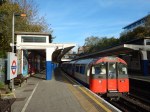


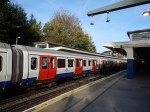
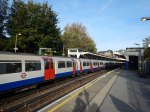
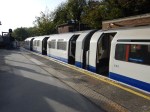
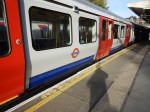
Note the difference in levels between the Piccadilly and District Line trains.
There would be no way to provide level access for both types of train using a Harrington Hump.
So is making a station that serves both deep-level and sub-surface lines, step-free, a problem that is still to be cracked?
This Google Map shows Ealing Common station.
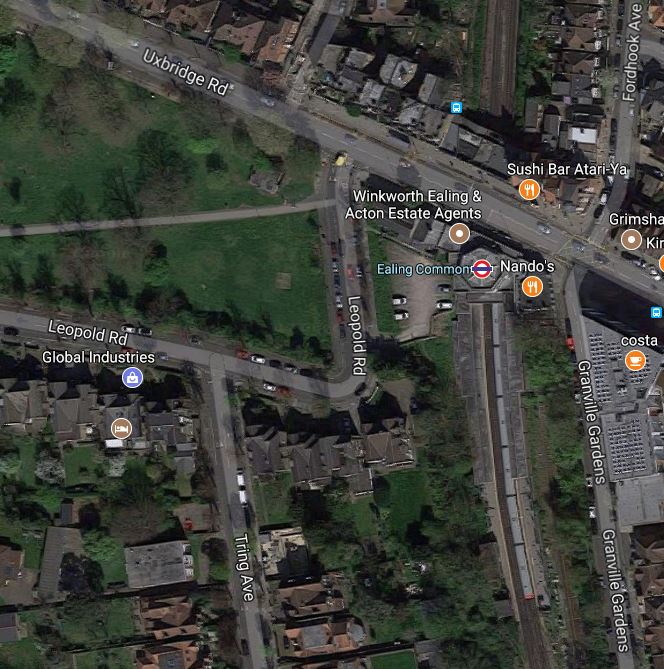
It doesn’t look that it is a station, where two extra platforms could be squeezed in, so both lines could have their own platforms.
Could Ealing Common station be one of the main reasons to serve Ealing Broadway station with the Piccadilly Line?
Acton Town Station
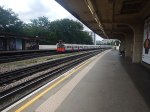
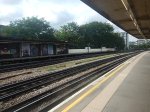
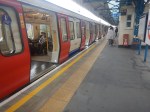
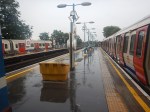
These pictures show Acton Town station.
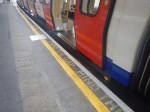
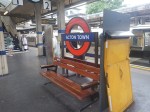
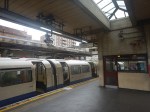
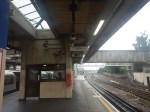
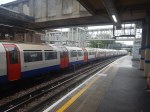
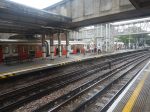

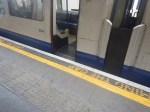
Note.
- The two central tracks appear to be Piccadilly Line trains only.
- The two outer tracks appear to be able to be used by both District and Piccadilly Line trains.
- There is quite a step-down to Piccadilly Line trains on some platforms.
Making Acton Town station, a Piccadilly Line-only station, would ease making the station step-free, as it would only be served by one type of train.
Chiswick Park And Ravenscourt Park
This section is shown in this map from cartmetro.com.
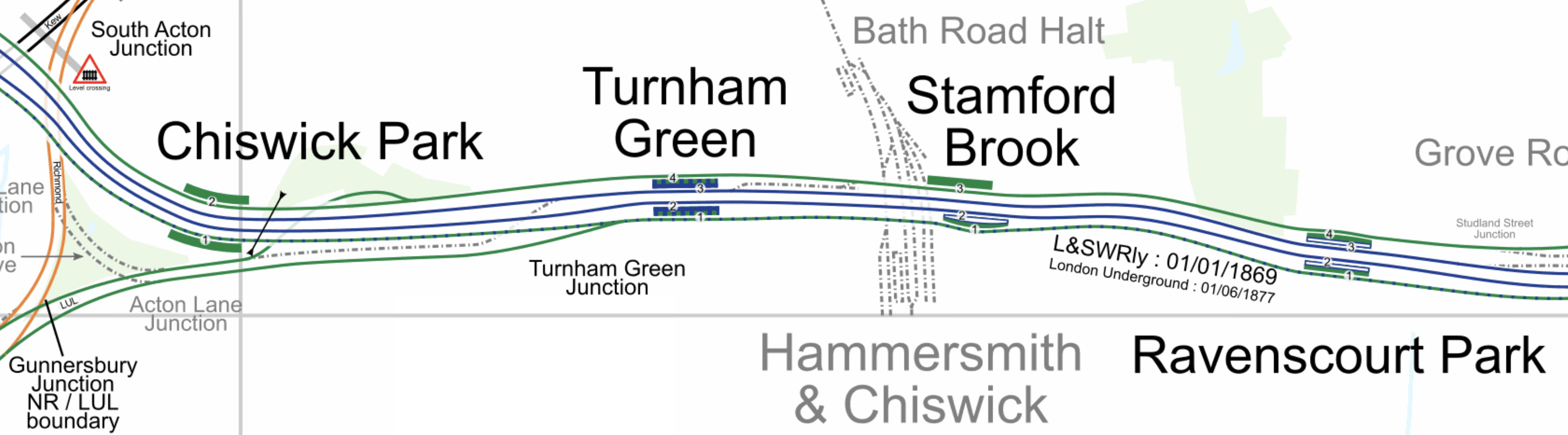
Note.
- The District Line is shown in green.
- The Piccadilly Line is shown in blue.
- The two Piccadilly Line tracks are in the middle and generally trains go straight through the four stations.
- The two District Line tracks are on the outside and trains stop at most stations.
It appears that the tracks have been laid out so that Piccadilly Line trains can get a real shift on between Acton Town and Hammersmith.
This could save a few minutes on some Piccadilly Line journeys.
But there is a problem!
- District Line trains serve all stations.
- Piccadilly Line trains serve none.
- How is Chiswick Park station going to be served, as there are no District Line trains passing?
- Passengers for intermediate stations, would need to get on the District Line trains before entering the Acton Town and Hammersmith section.
- Passengers may want to change between Ealing Broadway and Chiswick Park.
There will also be no trains running on the current District Line tracks between Acton Town and Turnham Green Junction. The only ones that do now, go to Ealing Broadway and they’re being changed to Piccadilly Line trains.
Serving Chiswick Park Station
Chiswick Park station only has platforms on the District Line, which will not see any passing trains if the District Line doesn’t go to Ealing Broadway.
One suggestion I found was to add two new District Line platforms to the Richmond branch.
This Google Map shows the station.
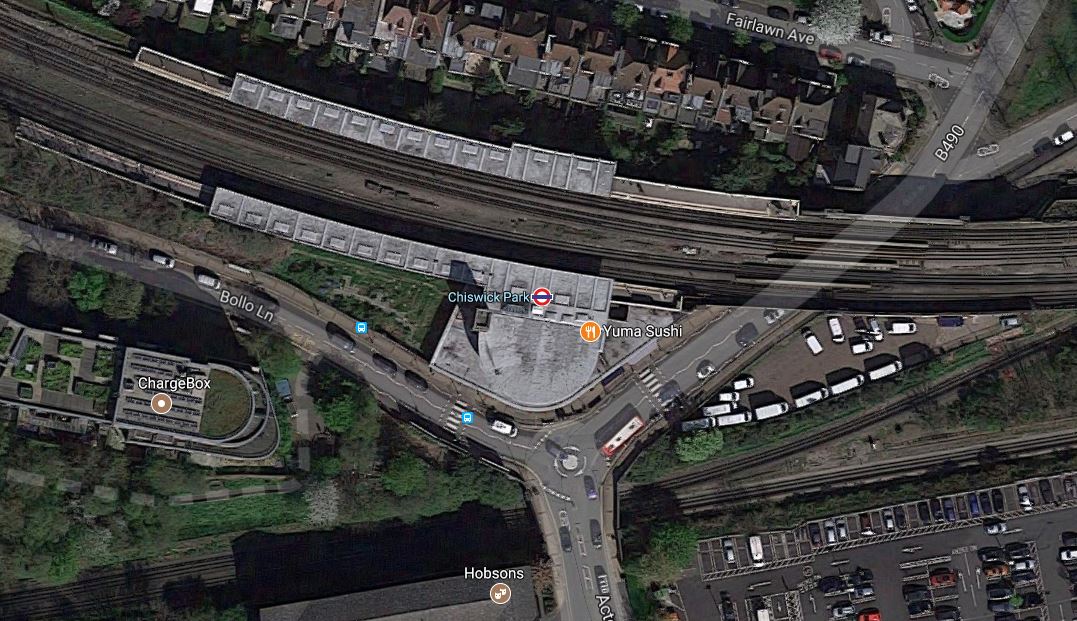
Note the Richmond branch passing South of the station.
This second Google Map shows the tracks between Chiswick Park station and Turnham Green junction.
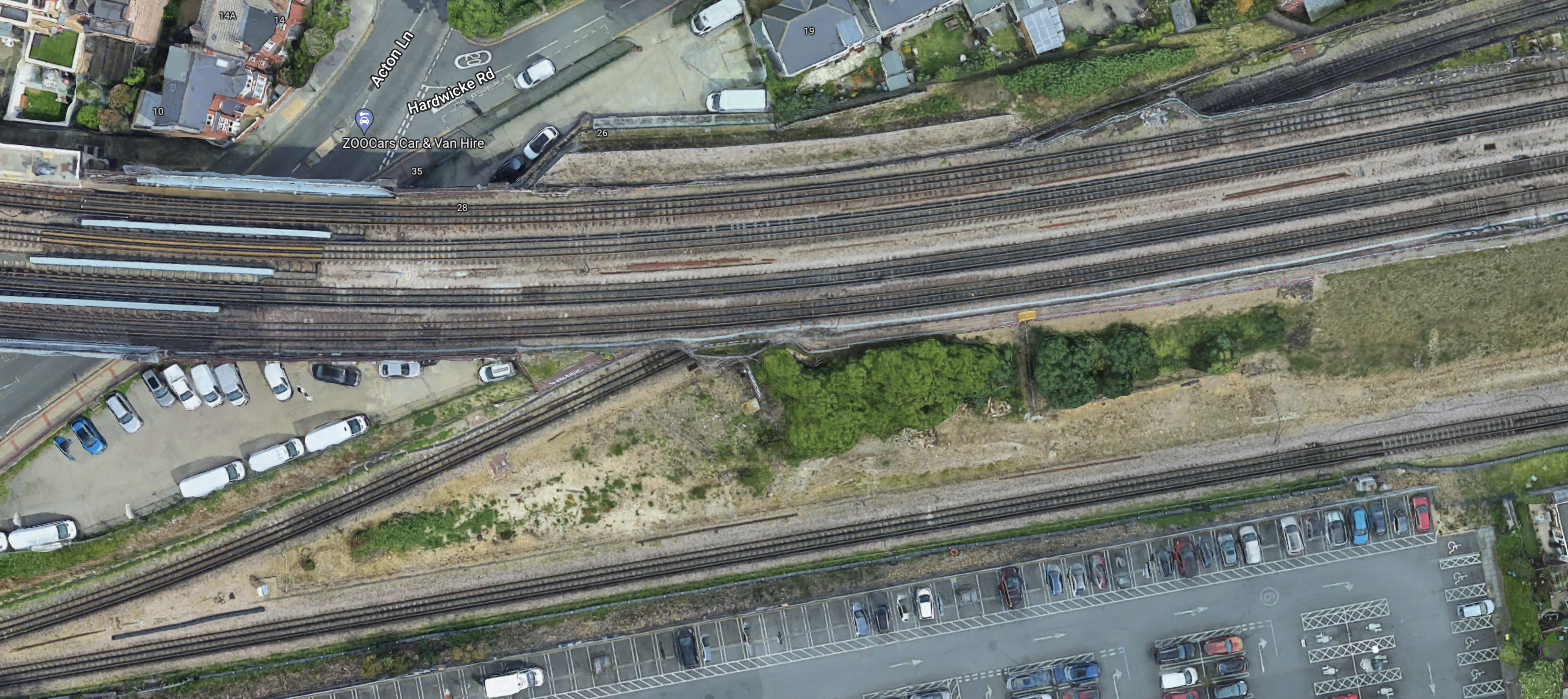
Note.
- The four tracks between Acton Town and Hammersmith stations.
- The current District Line tracks are the outside two of the four tracks.
- The Piccadilly Line tracks are the middle two.
- The two tracks at the South-West corner go to Richmond station.
- The Eastbound track from Richmond goes under the four-track railway, before joining the current Eastbound District Line track.
- The Westbound track to Richmond runs along the South side of the four-track railway, before joining the current Westbound District Line track.
These pictures were taken from a train approaching Chiswick Park station from the East.



Note, that there is enough space for a platform along the single track.
These pictures are of Chiswick Park station.








Note.
- The distinctive architecture of London Transport stations of the period.
- The two fast lines in the middle, with Piccadilly Line trains speeding through.
- The two District Line trains on the outside with platforms.
- The Richmond Branch passing to the South of the station and between the station and Sainsburys.
I would suspect that a pair of platforms could be built on the two tracks of the Richmond branch.
- District Line trains to and from Richmond would stop at the new platforms at Chiswick Park stations and Turnham Green, Stamford Brook, Ravenscroft Park, Hammersmith, Baron’s Court and Earl’s Court stations.
- Passengers between Ealing Broadway and Victoria stations would change at Hammersmith, Baron’s Court or Earl’s Court stations.
- The car park at the bottom of the map is for a large Sainsbury’s. Perhaps, they would like a station entrance?
- Chiswick Park station is Grade II Listed.
I’m sure that a good architect can find a more than acceptable solution.
Turnham Green Station
As I passed through Turnham Green station, I got off and took a few pictures, before catching the next train to Ealing Broadway.


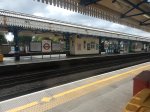
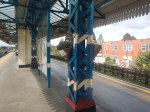
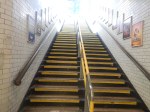

Note.
- Piccadilly Line trains don’t generally stop, although they do at times to provide a service when the District Line is not running.
- The station is not step-free, with stairs to the entrance.
- It has some nice features.
- Herbs are provided for passengers
If required a step-free interchange between District and Piccadilly Lines could be arranged.
Hammersmith Station
I arrived at Hammersmith station on a Piccadilly Line train and left on a District Line train, after taking these pictures.
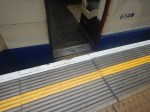
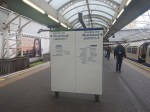

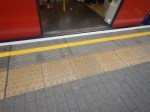
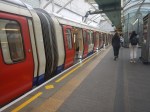
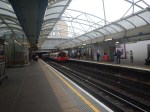
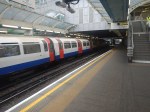

Note.
- The change is on the same island platform.
- There is plenty of space on the platform.
- The District Line trains are level with the platform.
- The Piccadilly Line trains require a step-down from the platform.
- The District Line trains run at a frequency of 12 tph.
- The Piccadilly Line trains run at a frequency of 21 tph.
- Hammersmith is also a big bus interchange and shopping centre.
There should be no problem changing between Piccadilly and District Lines at Hammersmith, with a wait of no more than five minutes.
Baron’s Court Station
In a brief stop at Baron’s Court station, I took these pictures.
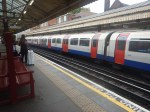
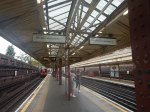
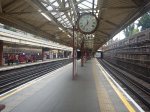
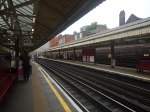
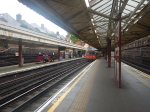
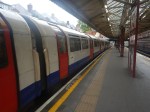
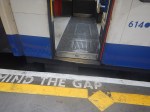
Note.
- The change is on the same island platform.
- There is less space on the platform, than at Hammersmith station.
- The District Line trains are a step-up from the platform.
- The Piccadilly Line trains require a step-up from the platform.
- The District Line trains run at a frequency of 12 tph.
- The Piccadilly Line trains run at a frequency of 21 tph.
There should be no problem changing between Piccadilly and District Lines at Baron’s Court, with a wait of no more than five minutes.
Earl’s Court Station
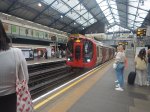
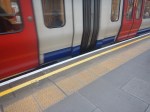
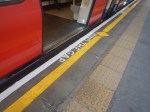
I arrived at Earl’s Court station on a Piccadilly Line train and left on a District Line train, after taking these pictures.

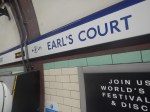
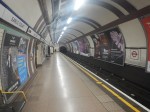

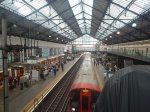
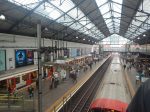
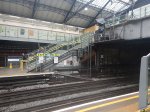
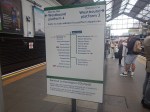
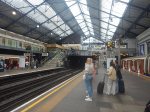
Note.
- The change means that platforms have to be changed
- The District Line trains are a step-up from the platform.
- The Piccadilly Line trains require a step-up from the platform.
- The District Line trains run at a frequency of 12 tph.
- The Piccadilly Line trains run at a frequency of 21 tph.
There should be no problem changing between Piccadilly and District Lines at Earl’s Court, but Hammersmith and Baron’Court don’t need a change of platform.
What Is The Best Station To Change Between Piccadilly And District Lines?
It appears that the best place to change would be Hammersmith, or failing that Baron’s Court.
- Earl’s Court requires a change of platform.
- Turnham Green requires a change of platform and two sets of steps.
- Hammersmith has a shopping centre and a lot of buses.
- I’ve used Hammersmith before to get home from Heathrow, with a change to a 141 bus at Monument station.
I would always for preference use Hammersmith.
Conclusion
It appears to me, there are three opposite forces on either side of a possible proposal to serve Ealing Broadway station with the Piccadilly Line, rather than the District Line.
- The District Line will form a loop South of Crossrail between Ealing Broadway and Whitechapel stations.
- The loop of the District Line serves Victoria, Embankment, Blackfriars, Cannon Street and Tower Hill stations for access to National Rail services.
- Making a station step-free that handles both deep-level and sub-surface lines, is not an easy undertaking.
Running the Piccadilly Line to Ealing Broadway means that a change is required at Hammersmith or Barons Court stations to use the loop described in point 1.
But this change would enable the step-free access to be created in all stations in the area.
I think that the change of terminus will go ahead, with the following additions.
- Improved access to Ealing Common depot.
- Improved cross-platform access at Hammersmith or Barons Court stations.
- Possibly two extra platforms on the District Line at Chiswick Park station.
What started out as a simple change could end up as a substantial project.
But overall, because it sorts out step-free access in the area, I think it is a good proposal.
Extending The Elizabeth Line – Toilets On A Service Between Heathrow And Southend Airports
The Wikipedia entry for Crossrail, has a section about an extension to Southend Airport, where this is said.
Stobart Aviation, the company that operates Southend Airport in Essex, has proposed that Crossrail should be extended beyond Shenfield along the Shenfield–Southend line to serve Southend Airport and Southend Victoria. The company has suggested that a direct Heathrow-Southend link could alleviate capacity problems at Heathrow. The extension proposal has been supported by Southend-on-Sea City Council.
I think there could be a big problem, in that I estimate the journey will take a few minutes short of two hours. Surely, this will mean toilets will need to be fitted.
Using The Elizabeth Line Between London City And Heathrow Airports
Today, I went from London City Airport to Heathrow using the Docklands Light Railway, the underground section of the Elizabeth Line and Heathrow Express.
London City Airport And Poplar Stations
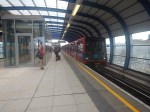
I took these pictures on this section of the route using the Docklands Light Railway.























Note.
- I started my journey at 13:15.
- I arrived at Poplar at 13:27.
- The journey took twelve minutes, which agrees with the timetable.
This is a route, that gives a view of London’s rebuilding in the East.
Poplar And Canary Wharf Stations
I walked this section.
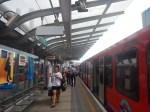
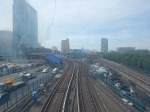
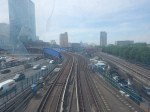


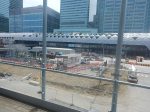



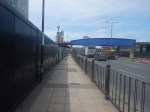
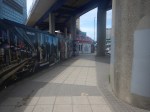

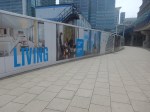

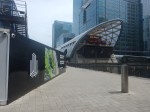

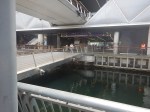

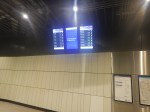
Note.
- I started my walk from Poplar station at 13:27.
- I was on the platform at Canary Wharf station at 13:39.
- I used a lift at Poplar station and the escalators at Canary Wharf station.
- The walk took twelve minutes, but it was a roundabout route.
- It looks like a level walkway is to be built between the two stations.
This Google Map shows the are between the two stations.
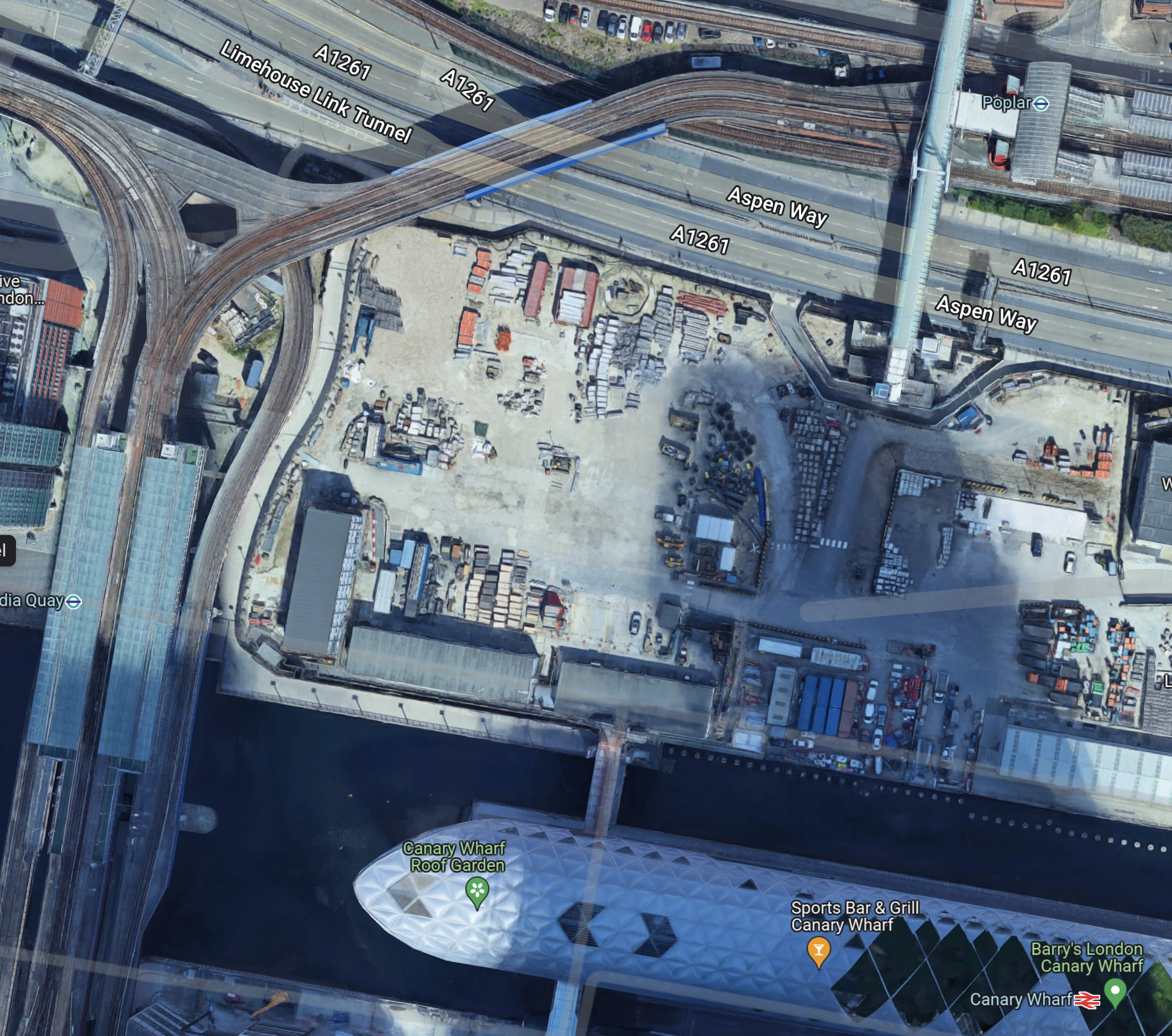
Note.
- Poplar station in the North-East of the map.
- The bridge at Poplar station, that provides the route I took over Aspen Way.
- After crossing the bridge and using the lift, I walked along the South side of Aspen Way.
- I then walked South down the path at the East side of the site, where it appears from the hoardings, flats will be built.
- Finally, I turned left to walk along the dock and then right to cross into Canary Wharf station.
Work appears to have started at Canary Wharf on the Southern end of an extended walkway, that will link to the bridge over Aspen Way.
This direct route could be nearly two hundred metres shorter and would shorten the connection by several minutes.
Canary Wharf And Paddington Stations
This section of the journey took nineteen minutes and I arrived at Paddington at 13:58, as this picture shows.
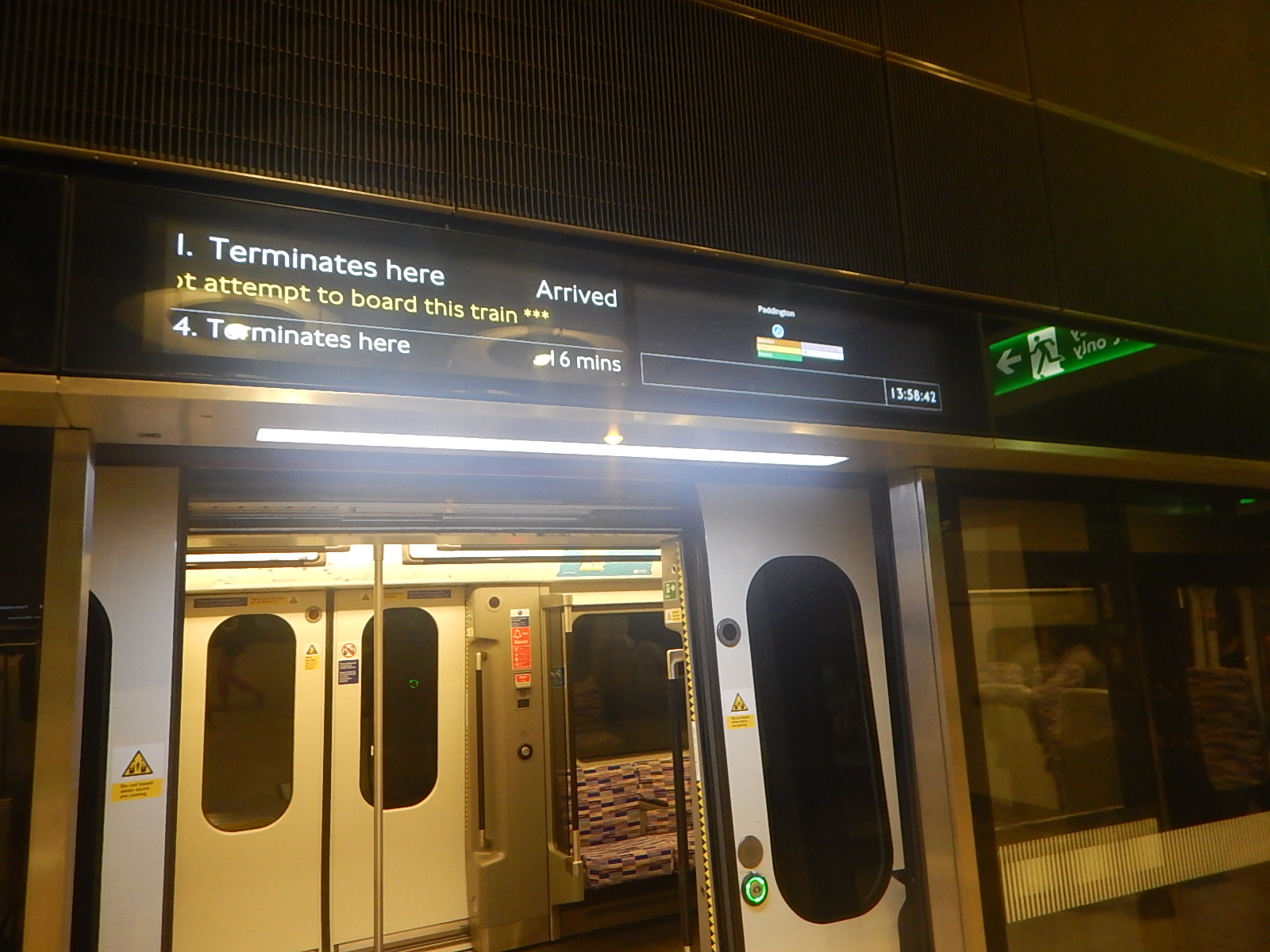
It had taken forty-three minutes between London City Airport and Paddington stations.
Paddington And Heathrow Airport By Heathrow Express
I took the 14:10 Heathrow Express to the Airport and took these pictures.


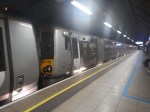
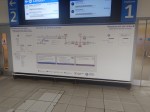
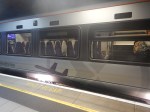
Note.
- It took about six minutes to walk between the Elizabeth Line and Heathrow Express.
- This was my first ride on Heathrow Express, since the service has started using Class 387 trains.
- The trains are fine, but where are the tables, that I like so much in the other Class 387 trains?
- The train arrived at Heathrow Central at 14:29.
This meant my journey between the two airports had taken an hour and fourteen minutes.
Canary Wharf to Heathrow using Heathrow Express and the Elizabeth Line had taken thirty-four minutes.
Return To Paddington On The Elizabeth Line
I came back from Heathrow on an Elizabeth Line train, which took 29 minutes.
That would mean that today using the Elizabeth Line to Heathrow.
- Heathrow and Canary Wharf will take 48 minutes.
- Heathrow and London City Airport will take one hour and twenty-nine minutes.
The difference in time between the two trains is solely down to the times of the Heathrow Express and the Elizabeth Line trains between Paddington and Heathrow.
What Difference Will A Direct Elizabeth Line Connection Make?
Canary Wharf are giving a figure of thirty-nine minutes between Canary Wharf and Heathrow, when the Elizabeth Line fully opens.
This would appear to indicate that fully opening the Elizabeth Line connection at Paddington will save nine minutes and the Elizabeth Line will only be a few minutes slower than Heathrow Express, if you can cut out the change at Paddington.
This table compares times between Canary Wharf and Heathrow.
- Elizabeth Line with a change at Paddington – 48 minutes
- Elizabeth Line and Heathrow Express with a change at Paddington – 34 minutes
- Elizabeth Line direct – 39 minutes
How many passengers will swap from Heathrow Express to a complete Elizabeth Line?
Is There Going To Be A Pedestrian Bridge Between Poplar And Canary Wharf Stations?
This Google Map shows the bridge that leads South from Canary Wharf station.
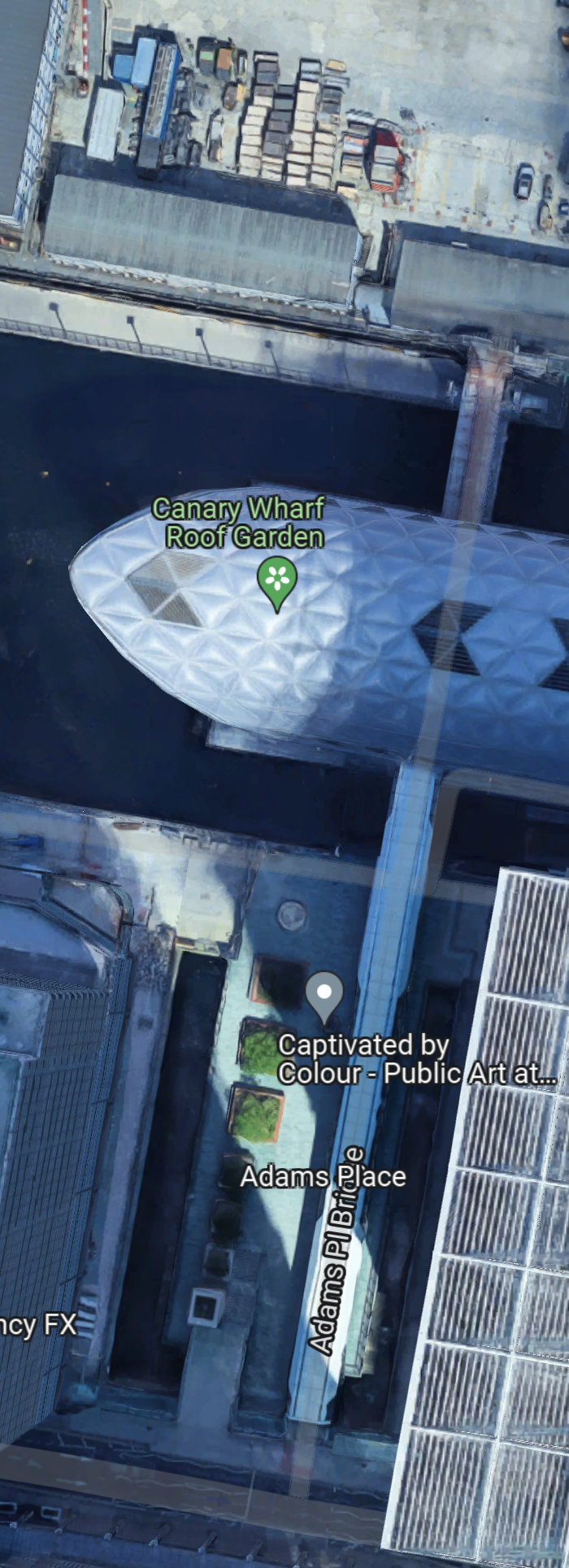
Note how the bridge could have been designed to go through the station to the housing to the North and perhaps ultimately to Poplar DLR station.
These pictures show the complete bridge on the South side and what could be the start of construction on the North side.
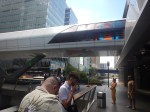



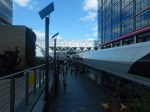


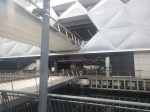

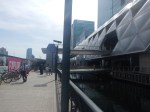


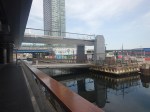
Note.
- This pictures were taken on two dates.
- A full bridge would connect the new housing to the shopping centre and the Jubilee Line station.
- Between Poplar and Canary Wharf stations would be around 120 metres.
- There would be a straight and level walking route between Poplar DLR station and the two Canary Wharf Jubilee and Elizabeth Line stations.
- A short branch would lead to Canary Wharf DLR station.
- Stairs would lead to the buses that run through Canary Wharf.
It does appear that the North and South bridges will form a continuous straight route.
The bridge would create a comprehensive transport interchange for East London.
Thoughts On London City Airport And The Elizabeth Line
One of the reasons for going to Woolwich today, which I wrote about in A Walk Around Woolwich – 15th June 2022, was to get a feel on what is the best way to go between London City and Heathrow airports.
There are three routes, where only a single change is needed.
- DLR – Change at Stratford – Elizabeth Line – Will be available later in 2022.
- DLR – Change at Woolwich Arsenal – Elizabeth Line
- DLR – Change at Poplar/Canary Wharf – Elizabeth Line – Will be improved.
Note.
- All are easy step-free interchanges, with the change at Stratford probably the easiest.
- The change at Woolwich is probably the longest walk.
All trains from London City Airport station, have a single change for Heathrow.
- Bank – Change at Poplar/Canary Wharf
- Stratford – Change at Stratford
- Woolwich Arsenal – Change at Woolwich Arsenal
It would appear that those not afraid of a moderate walk, should take the first train from London City Airport, if they want to go to Heathrow.
This table shows routes to common destinations from London City Airport.
- Bank – DLR
- Battersea Power Station – DLR – Change at Bank – Northern Line
- Canary Wharf – DLR – Change at Poplar – DLR
- Clapham Junction – DLR – Change at Shadwell – East London Line
- Croydon – DLR – Change at Shadwell – East London Line
- Crystal Palace – DLR – Change at Shadwell – East London Line
- Euston – DLR – Change at Bank – Northern Line
- Heathrow – DLR – Change at Custom House – Elizabeth Line
- King’s Cross – DLR – Change at Bank – Northern Line
- Liverpool Street – DLR – Change at Bank – Central Line
- London Bridge – DLR – Change at Bank – Northern Line
- Moorgate – DLR – Change at Bank – Northern Line
- Paddington – DLR – Change at Custom House – Elizabeth Line
- St. Pancras – DLR – Change at Bank – Northern Line
- Victoria – DLR – Change at Bank – District/Circle Line
- Waterloo – DLR – Change at Bank – Waterloo and City Line
Note.
- The interchange improvements at Bank station, will open up new routes to and from London City Airport.
- If the walking route from Poplar and Canary Wharf station is improved, this will be a valuable upgrade.
- The Elizabeth Line will run at frequencies of at least twelve trains per hour (tph) on all sections, so you won’t have to wait more than five minutes for a train.
With these upgrades London City Airport will be a more accessible airport.
Hayes & Harlington Station – 15th September 2021
Hayes & Harlington station is the latest Crossrail station to be more or less completed.




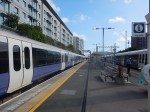






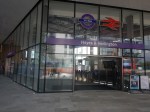
Note.
- The station is a big improvement on what was there previously.
- The building with the green stripes down the front used to be the offices of Metier Management Systems, of which I was a founder.
- A big development is being built to the South of the station, which is shown in the first to pictures.
There are still a few things to do, but it’s almost a complete station.
Services
It looks like Crossrail will run four trains per hour (tph) through the station all day.
Great Western Railway run two tph between Paddington and Didcot Parkway, that stop at the station.
West Drayton Station – 22nd July 2021
West Drayton station is now substantially complete, as these pictures show.

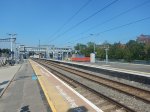
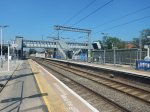

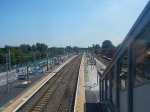

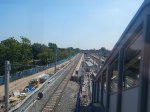

There is obviously work to do including.
- Finishing the station frontage.
- Completion of the building on Platform 4 and 5.
The map from carto metro shows the lines through the station.
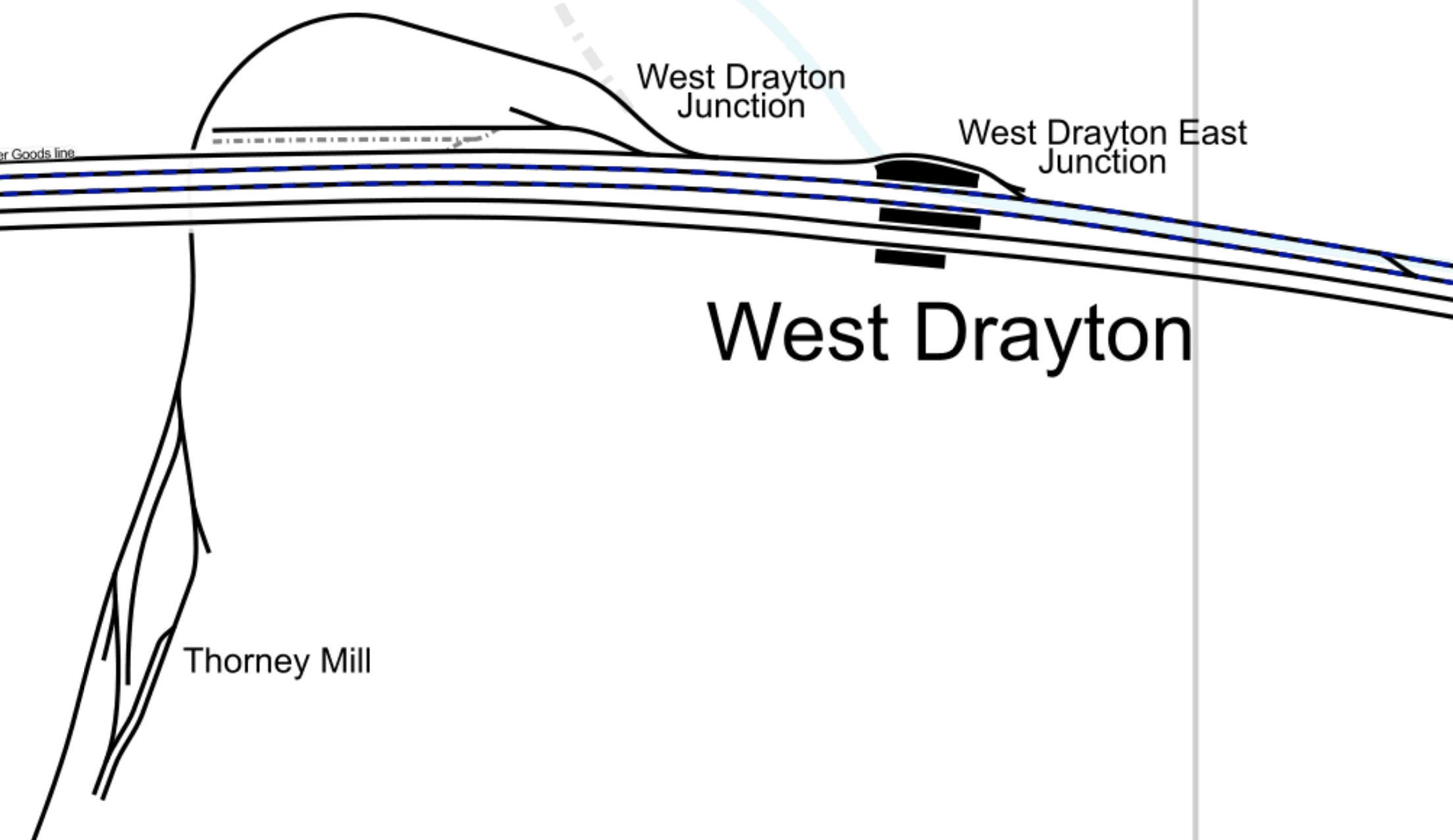
Thorney Mill is an aggregates depot on the former Staines and West Drayton Railway. There is also an aviation fuel terminal for Heathrow Airport at Colnbrook, which is further to the South.
I do wonder, if the former Staines and West Drayton Railway can be repurposed to improve the operation of Heathrow Airport.
 The Anonymous Widower