Is Last Energy The Artemis Of Energy?
In Raft Of US-UK Nuclear Deals Ahead Of Trump Visit, I quoted from this article on World Nuclear News.
The article also contains, these two paragraphs, with talk about an MoU between Last Energy and DP World.
An MoU has also been signed between US-based micro-nuclear technology developer Last Energy and DP World, a global leader in logistics and trade, to establish the world’s first port-centric micro nuclear power plant at London Gateway. A proposed PWR-20 microreactor – to begin operations in 2030 – would supply London Gateway with 20 MWe of electricity to power the logistics hub, with additional capacity exported to the grid.
“The initiative represents a GBP80 million (USD109 million), subsidy-free investment for the development of Last Energy’s first unit, unlocking clean power supply for DP World’s ongoing GBP1 billion expansion of London Gateway,” Last Energy said. “The partnership is closely aligned with both UK and US ambitions to increase nuclear capacity and strengthen long-term energy security.”
Note.
- Last Energy are proposing a micro-reactor of just 20 MW.
- DP World own and/or operate sixty ports in over forty countries, so should know their energy requirements well.
- It appears that DP World are investing £80 million in Last Energy’s first unit.
- Thurrock Storage is a 300 MW/600 MWh battery close to London Gateway and the Port of Tilbury.
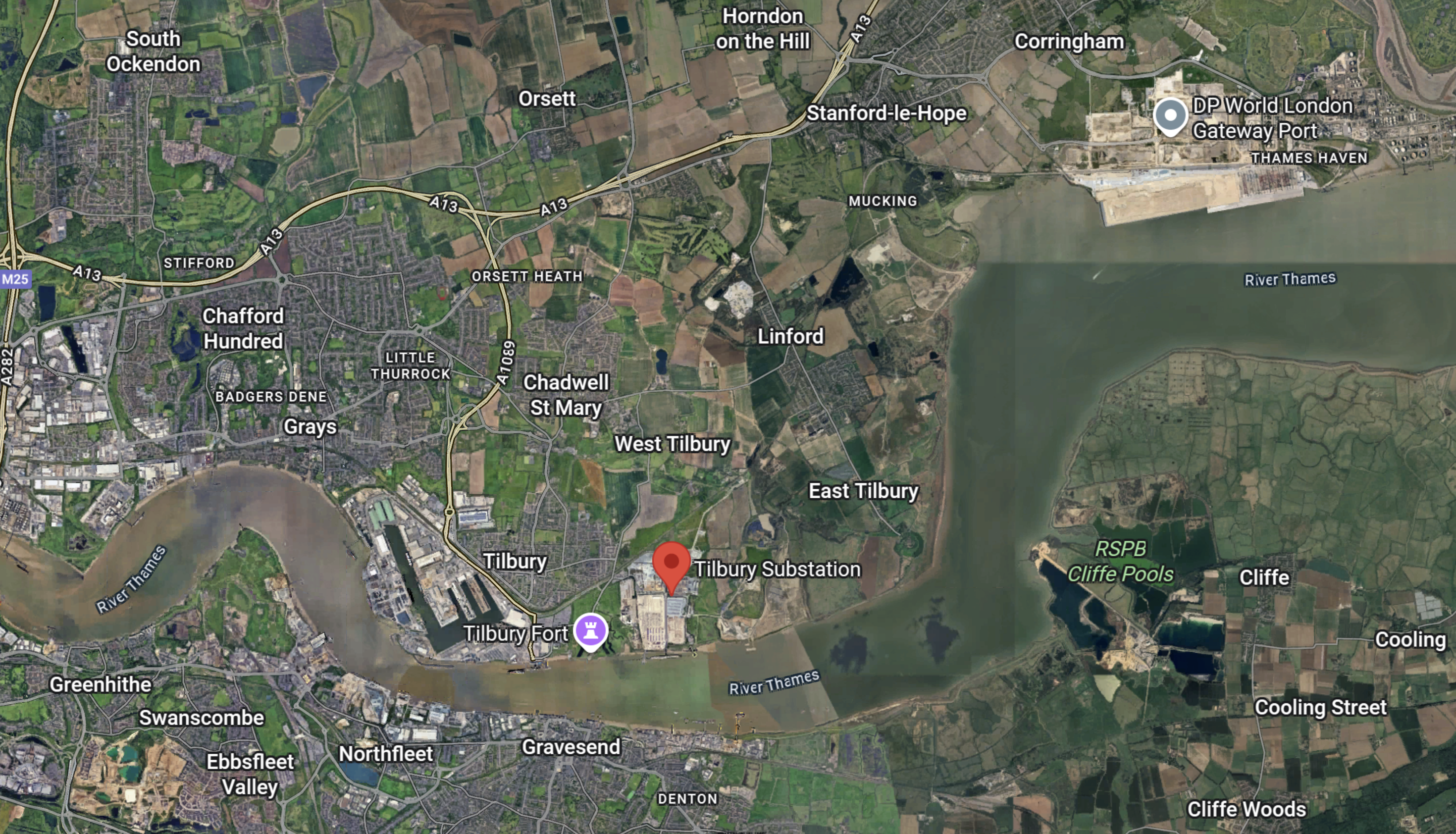
This Google Map shows London Gateway and the Port of Tilbury.
Note.
- DP World London Gateway is in the North-East corner of the map.
- The A13 road runs across the North-West corner of the map and links the area to London and the M25.
- Thurrock Storage is next to the Tilbury substation, which is marked by the red arrow.
- The Port of Tilbury is to the West of the substation.
I wonder if DP World London Gateway have had power supply problems.
The Design Of The First Artemis Project Management Software System
Before Artemis, project management was usually done on a large mainframe computer like an IBM-360-50, that I’d used extensively for solving simultaneous differential equations in a previous job at ICI.
Mainframe computers worked on complex problems, but to put it mildly, they were slow and needed a team to operate them and a big air-conditioned room to keep them happy.
When the four of us decided to create Artemis, our vision was something simpler.
- A processor – something like a PDP-11, which I judged would be big-enough for the computing.
- A visual display unit.
- A printer.
- A standard-size desk to hold the hardware.
- Ability to run from a 13-amp socket.
When it came to writing the software, I took few risks.
- Much of the data decoding software, I’d developed when I left ICI to write a program to solve up to a thousand simultaneous differential equations.
- The scheduling software was generic and I’d first used it for different purposes in two programs at ICI.
- The aggregation software had been devised, whilst I was a consultant at Lloyds Bank over several bottles of wine with their Chief Management Accountant, who was a wizard with numbers. I suspect, but can’t prove it, that if the idiots that programmed the Horizon system for the Post Office had used that algorithm, the problems there would have been much smaller.
- I also spent a lot of time reading old papers from the 1950s in IBM’s library on the South Bank, looking for better algorithms.
- I also made sure, I chose the best hardware and I believe HP did us proud.
- I used HP’s operating system and proprietary database to cut down, what could go wrong.
- Almost all of the first system was written by one person – me!
But we also put the right features into how we supported, delivered and trained users of the system.
I certainly, think we made few mistakes in the design of that first system.
Have Last Energy Used A Similar Cut Back Approach?
Reading their web site, I think they have.
They have obviously chosen, the 20 MW unit size with care.
But from worldwide experience with wind turbines, linking smaller power sources together, is not as difficult as it once was.
These are some of the statements on their web site’s introductory screens.
- Fully Modular, Factory Made
- A Scalable Solution
- <24 Month Delivery
- 100+ Supply Chain Partners
- 300+ Pressurised Water Reactors Operating Globally
- 0.3 acre – Plant Footprint Fits Within A Football Field
But a chain is only as strong as its weakest link.
It should be noted, that I have been over several nuclear power stations.
Three were a tour to show me how Artemis was being used to track and sign off, the problems identified after the Three Mile Island incident.
The other was a trip over Sizewell A, a couple of years before it was decommissioned.
Comparing these experiences with some of the chemical plants, that I’ve worked on, I would prefer to be close to a nuclear power plant.
Investment in Grain LNG
The title of this post, is the same as that of this press release from Centrica.
This sub-heading outlines the deal.
Centrica plc (the “Company”, “Centrica”) is pleased to announce the acquisition of the Isle of Grain liquified natural gas terminal (“Grain LNG”) in partnership1 with Energy Capital Partners LLP (“ECP”) from National Grid group (“National Grid”) for an enterprise value of £1.5 billion. After taking into account approximately £1.1 billion of new non-recourse project finance debt, Centrica’s 50% share of the equity investment is approximately £200 million.
The press release lists these key points.
- Grain LNG delivers vital energy security for the UK, providing critical LNG import/export, regasification and rapid response gas storage capacity to balance the energy system.
- Aligned with Centrica’s strategy of investing in regulated and contracted assets supporting the energy transition, delivering predictable long-term, inflation-linked cash flows, with 100% of capacity contracted until 2029, >70% until 2038 and >50% until 2045.
- Opportunities for efficiencies to create additional near-term value, and future development options including a combined heat and power plant, bunkering, hydrogen and ammonia.
- Highly efficient funding structure, with Centrica’s equity investment of approximately £200 million alongside non-recourse project financing.
- Strong life of asset returns aligned with Centrica’s financial framework, with an expected unlevered IRR2 of around 9% and an equity IRR2 of around 14%+
Underpins delivery of £1.6 billion end-2028 EBITDA target3 – Centrica’s share of EBITDA expected to be approximately £100 million per annum and cash distributions expected to be around £20 million on average per annum for 2026-2028, representing an attractive yield on Centrica’s equity investment - Partnership with ECP (part of Bridgepoint Group plc), one of the largest private owners of natural gas generation and infrastructure assets in the U.S. with direct experience in supporting grid reliability.
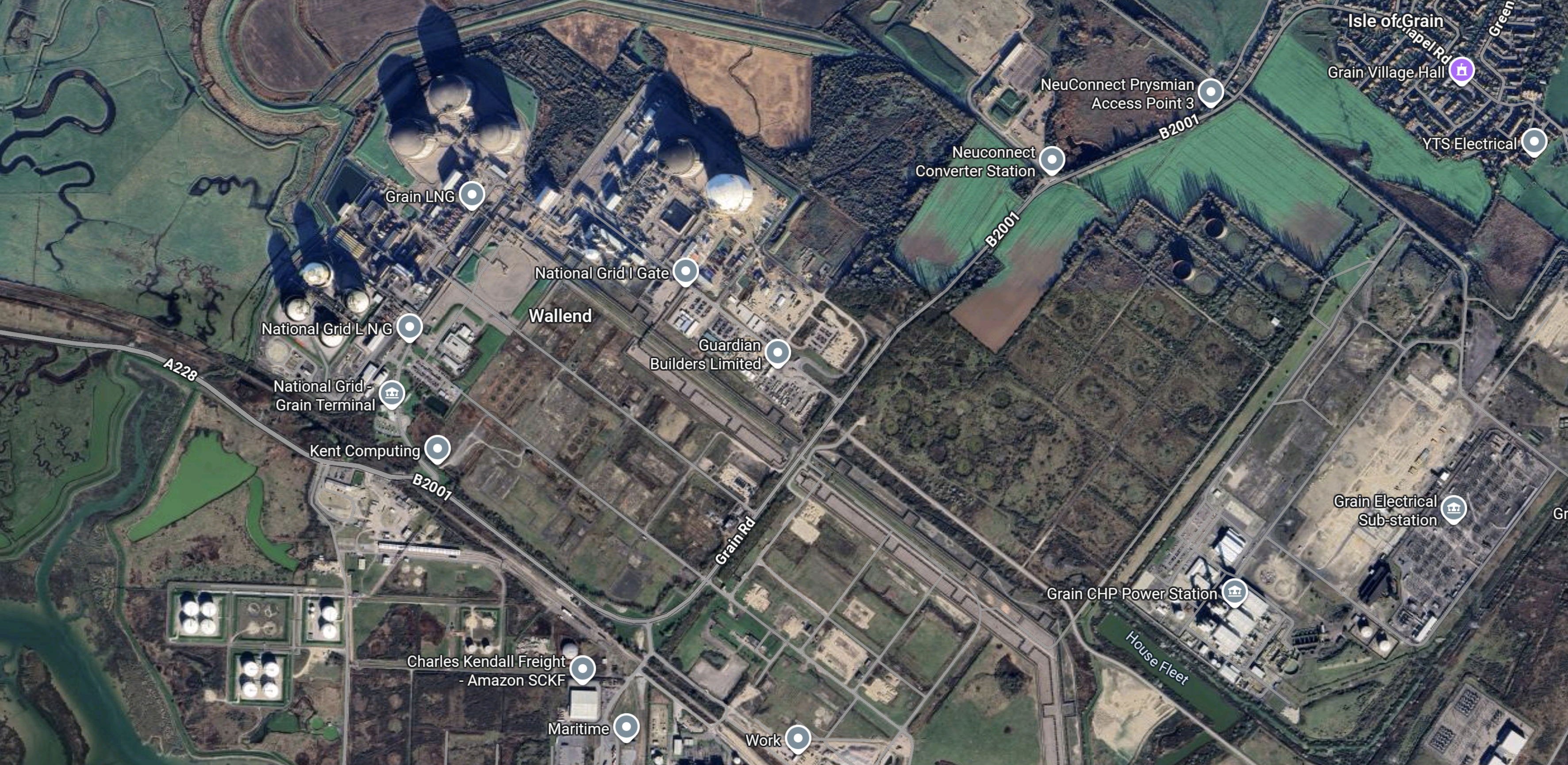
This Google Map shows the various energy assets on the Isle of Grain.
Note.
- It appears that works for the 1, 400 MW NeuConnect interconnector to Wilhelmshaven in Germany, are taking place in the North-East corner of the map.
- Grain CHP powerstation is a 1,275MW CCGT power station, which is owned by German company; Uniper, that is in the South-East corner of the map, which can also supply up to 340MW of heat energy recovered from the steam condensation to run the vapourisers in the nearby liquefied natural gas terminal.
- The Grain LNG terminal is at the Western side of the map.
- In the Thames Estuary to the East of the Isle of Grain, I estimate that there are about 1,500 MW of wind turbines.
I find it interesting that two of the assets are German owned.
I have some thoughts.
It Is A Large Site With Space For Expansion
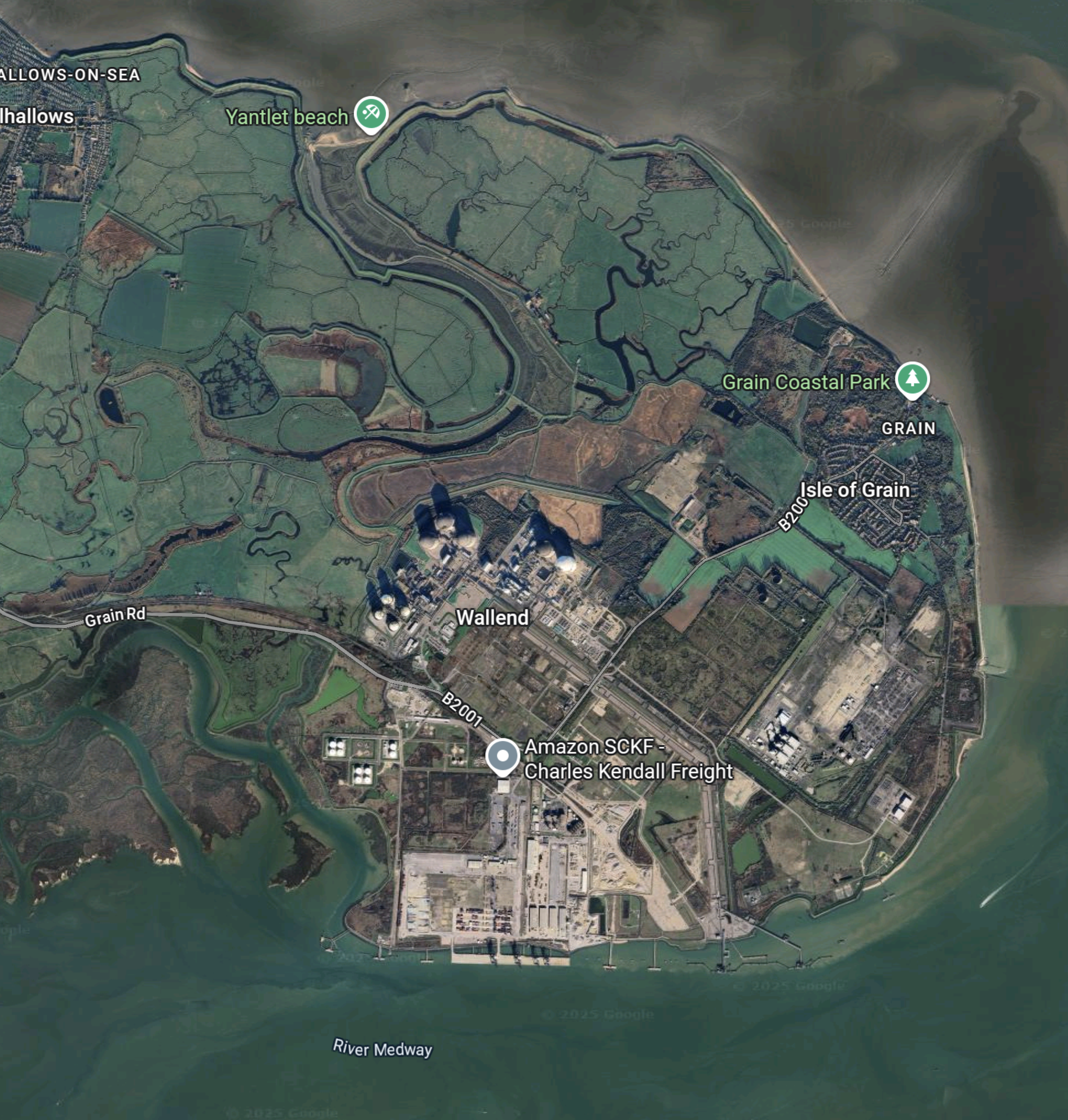
This Google Map shows the whole of the Isle of Grain.
Note.
- The Grain LNG terminal is around the label Wallend.
- The River Medway runs East-West at the bottom of the map.
- Gas tankers deliver and take on gas at jetties on the North Bank of the Medway.
There could be space to expand the terminal, if the RSPB would allow it.
As an example, I asked Google AI, if peregrine falcons nest on chemical plants and got this reply.
Yes, peregrine falcons do nest on chemical plants. They have adapted to using various urban and industrial structures, including chemical plants, for nesting. This is particularly true in areas where natural cliff habitats are scarce.
Peregrine falcons are known for their adaptability, and their population has seen a resurgence in recent decades, partly due to their ability to utilize man-made structures. These structures often mimic their natural cliffside nesting
Cliffs do seem scarce on the Isle of Grain. I also asked Google AI, if peregrine falcons ate small rodents, as several chemical and other plants, where I’ve worked, had a rodent problem. One plant had a cat problem, as there had been so many rats. This was the reply.
Yes, peregrine falcons do eat small rodents, though they primarily consume birds. While their diet mainly consists of other birds like pigeons, doves, and waterfowl, they will also hunt and eat small mammals, including rodents such as mice, rats, and voles. They are opportunistic hunters and will take advantage of readily available prey, including insects, amphibians, and even fish.
I’m sure if Centrica wanted to expand, they’d employ the best experts.
Who Are ECP?
One of the key points of the press release is that this deal is a partnership with ECP (part of Bridgepoint Group plc), one of the largest private owners of natural gas generation and infrastructure assets in the U.S. with direct experience in supporting grid reliability.
The Wikipedia entry for ECP or Energy Capital Partners has this first section.
Energy Capital Partners Management, LP (ECP) is an American investment firm headquartered in Summit, New Jersey. It focuses on investments in the energy sector. The firm has additional offices in New York City, Houston, San Diego, Fort Lauderdale and Seoul.
In August 2024, ECP merged with Bridgepoint Group to form a private assets investment platform.
The Wikipedia entry for the Bridgepoint Group has this first paragraph.
Bridgepoint Group plc is a British private investment company listed on the London Stock Exchange and is a constituent of the FTSE 250 Index.
The company had started as part of NatWest.
Are The Germans Going To Take Away Some Of Our Electricity?
Consider.
- Germany has a big need to replace Russian gas and indigenous coal, and to decarbonise.
- Neuconnect is a 1.4 GW interconnector between the Isle of Grain and Wilhelmshaven in Germany. It is scheduled to be completed in 2028.
- The Grain CHP powerstation is a 1,275MW CCGT power station, which is owned by German company; Uniper, could almost keep NeuConnect working at full power on its own.
- I said earlier, in the Thames Estuary to the East of the Isle of Grain, I estimate that there are about 1,500 MW of wind turbines. One of which is part German-owned.
The Germans are also building a large electrolyser at Wilhelshaven, which is described by Google AI like this.
The Wilhelmshaven Green Energy Hub will initially feature a 500MW electrolyzer, with plans to potentially expand to 1GW, according to Energy Monitor. The hub, a joint project between Tree Energy Solutions (TES) and EWE, aims to produce green hydrogen using renewable energy sources like offshore wind. The 500MW electrolyzer is scheduled to be operational by 2028.
I wouldn’t be surprised to see that the Wilhelmshaven electrolyser were to be powered by British-generated electricity flowing down NeuConnect.
Centrica Says Their Future Development Options Include A Combined Heat And Power Plant
This objective was set in one of the key points.
This is the first paragraph of the Wikipedia entry for the Grain LNG Terminal.
Grain LNG Terminal is a Liquefied Natural Gas (LNG) terminal on the Isle of Grain, 37 miles (60 km) east of London. It has facilities for the offloading and reloading of LNG from ships at two jetties on the River Medway; for storing and blending LNG; for truck loading; and regasifying and blending natural gas to meet UK specifications. The terminal can handle up to 15 million tonnes per annum of LNG, has a storage capacity for one million cubic metres of LNG, and is able to regasify up to 645 GWh per day (58 million cubic metres per day) for delivery into the high pressure gas National Transmission System (NTS). The facility is owned and operated by National Grid Grain LNG Ltd, a wholly owned subsidiary of National Grid.
Note.
- This paragraph was written before the Centrica takeover.
- The terminal also converts liquid natural gas into gas to be distributed around the UK.
The heat needed to convert the liquid natural gas to gas is provided by the Grain CHP power station.
- Currently 340 MW of heat is provided.
- If the Grain LNG terminal is expanded, it will probably need more heat.
I can see Centrica building a combined heat and power (CHP) power station, that can be expanded to meet the current and future needs of gasification at the Grain LNG terminal.
I wouldn’t be surprised to see the CHP power station fitted with carbon capture, as Kent is surely one county, where carbon dioxide can be used in food production, so we can generate our carbon dioxide and eat it.
Centrica Says Their Future Development Options Include Hydrogen
This objective was set in one of the key points.
Consider.
- Centrica are an investor in HiiROC, who have a unique method of generating affordable zero-carbon hydrogen called thermal plasma electrolysis, which uses a fifth of the electricity, that traditional electrolysis does.
- HiiROC can use natural gas as a feedstock. Centrica won’t be short of that at Grain.
- There is space to build a large HiiROC system at the Isle of Grain site.
- The hydrogen could be taken away by tanker ships.
Like the electricity , which will use the 450 mile NeuConnect interconnector, the hydrogen could even be exported to Wilhelmshaven in Germany by pipeline.
Wilhelmshaven is being setup to be a major German hub to both generate, import and distribute hydrogen.
I asked Google AI, how much hydrogen a GWh would produce and received this answer.
A GWh of electricity can produce approximately 20-22 tonnes of hydrogen through electrolysis, depending on the efficiency of the electrolyzer. Modern commercial electrolyzers operate at an efficiency of roughly 70-80%, meaning they require about 50-55 kWh of electricity to produce 1 kg of hydrogen. A GWh (1 gigawatt-hour) is equal to 1,000,000 kWh, and 1 tonne of hydrogen contains roughly 33.33 MWh of energy.
As it is claimed on the web that HiiROC is five times more efficient than traditional electrolysis, it could need around 10-11 kWh to produce one kg. of hydrogen.
1 GWh would produce between 90-100 tonnes of hydrogen.
Centrica Says Their Future Development Options Include Ammonia
This objective was set in one of the key points.
I asked Google AI if ammonia can be produced from hydrogen and received this answer.
Yes, ammonia (NH3) can be produced from hydrogen (H2) through a process called the Haber-Bosch process. This process involves combining hydrogen with nitrogen (N2) from the air, under high temperature and pressure, in the presence of a catalyst.
Ammonia has a large number of uses, including making fertiliser and the powering of large ships.
I asked Google AI, if there are small Haber-Bosch processes to make ammonia from hydrogen and nitrogen and received this answer.
Yes, there are efforts to develop smaller-scale Haber-Bosch processes for ammonia production. While the traditional Haber-Bosch process is typically associated with large industrial plants, research and development are exploring ways to adapt it for smaller, distributed production, particularly for localized fertilizer or fuel applications.
I wondered if Centrica are involved in the efforts to develop smaller-scale Haber-Bosch processes for ammonia production.
Google AI gave me this quick answer.
Centrica is involved in research related to the Haber-Bosch process, particularly in the context of transitioning to a low-carbon energy future. They are exploring how to adapt the Haber-Bosch process, which is crucial for fertilizer production but also a significant source of CO2 emissions, to utilize renewable energy sources. This includes investigating the use of green hydrogen produced from water electrolysis and renewable electricity. Centrica is also involved in research related to using ammonia as a fuel, including potentially for power generation
That looks to be a very positive answer. Especially, as local low-carbon fertiliser production could be a very powerful concept.
Centrica Says Their Future Development Options Include Bunkering
This objective was set in one of the key points.
Bunkering is the process of refuelling ships.
I didn’t know much about bunkering, when I started to read Centrica’s press release, but the Wikipedia entry, was a good way to get some information.
This section in the Wikipedia entry is entitled Two Types Of Bunkering, where this is said.
The two most common types of bunkering procedure at sea are “ship to ship bunkering” (STSB), in which one ship acts as a terminal, while the other moors. The second type is “stern line bunkering” (SLB), which is the easiest method of transferring oil but can be risky during bad weather.
Over the years, I have found, that two zero-carbon fuels are under development, for powering ships; hydrogen and ammonia. Others are developing ships powered by naturalo gas.
I asked Google AI if hydrogen can power ships and received this answer.
Yes, hydrogen can power ships. It can be used as a fuel for fuel cells, which generate electricity to power the ship’s propulsion and other systems, or it can be burned in modified combustion engines. Hydrogen offers a zero-emission solution for shipping, with water vapor being the only byproduct when used in fuel cells.
Google AI also told me this.
The world’s first hydrogen-powered cruise ship, the “Viking Libra”, is currently under construction and is scheduled for delivery in late 2026. This innovative vessel, a collaboration between Viking Cruises and Italian shipbuilder Fincantieri, will utilize hydrogen for both propulsion and electricity generation, aiming for zero-emission operation.
I also asked Google AI if ammonia can power ships and received this answer.
Yes, ammonia can be used to power ships and is considered a promising alternative fuel for the maritime industry. Several companies and organizations are actively developing ammonia-powered ship designs and technologies. While challenges remain, particularly around safety and infrastructure, ammonia is seen as a key potential fuel for decarbonizing shipping.
Finally, I asked I asked Google AI if natural gas can power ships and received this answer.
Yes, ships can be powered by natural gas, specifically in the form of liquefied natural gas (LNG). LNG is increasingly used as a marine fuel, offering environmental benefits over traditional fuels like diesel.
It would seem to be a case of you pays your money and makes a choice between one of four technologies; ammonia, hydrogen fuel-cell, hydrogen-ICE and LNG.
I looks to me, that if Centrica provide bunkering services for ships, they have the means to cover most of the market by providing hydrogen and ammonia, in addition to natural gas.
Although, I don’t know much about bunkering, I do feel that the two current methods, that work for oil, could be made to work for these fuels.
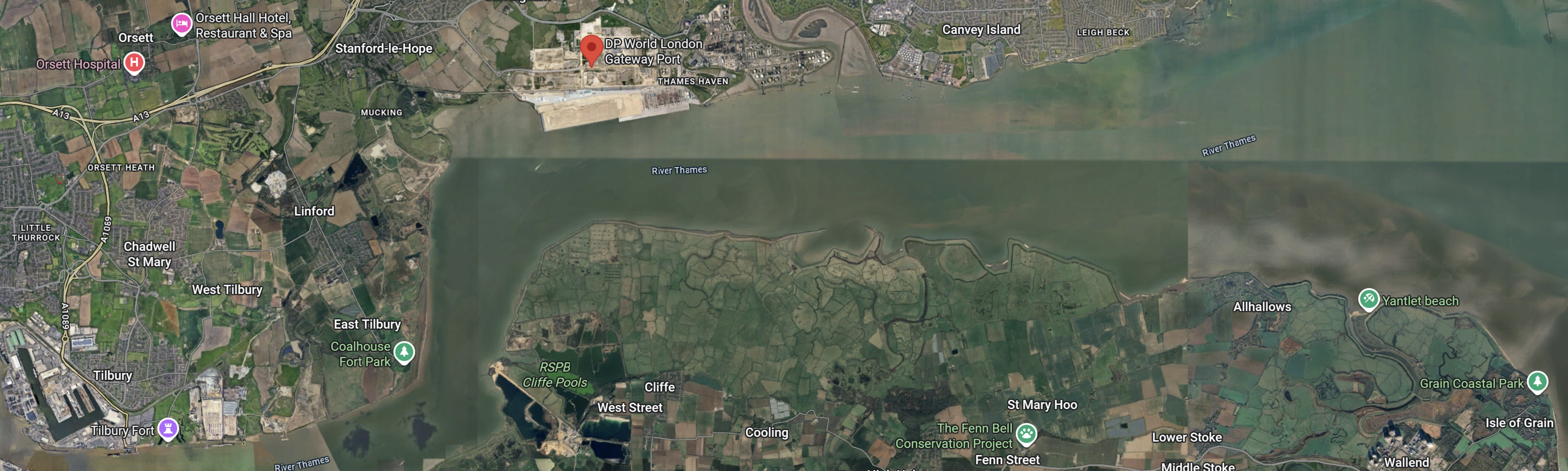
This Google Map shows the Thames Estuary.
Note.
- The Port of Tilbury is in the South-West corner of the map.
- London Gateway is indicated by the red arrow.
- The Isle of Grain is in the South-East corner of the map.
- Other ports between Tilbury and the Isle of Grain include Barking, Dagenham, Dartford, Erith, Greenwich, Northfleet, Purfleet, Silvertown and Thurrock.
There was never a more true phrase than – “Location, Location and Location”. And the Isle of Grain would appear to be in the right place to send out a bunkering tanker to a passing ship, that was calling at a port in London or just passing through the Strait of Dover.
This Google Map shows the Thames between London Gateway and the Isle of Grain.
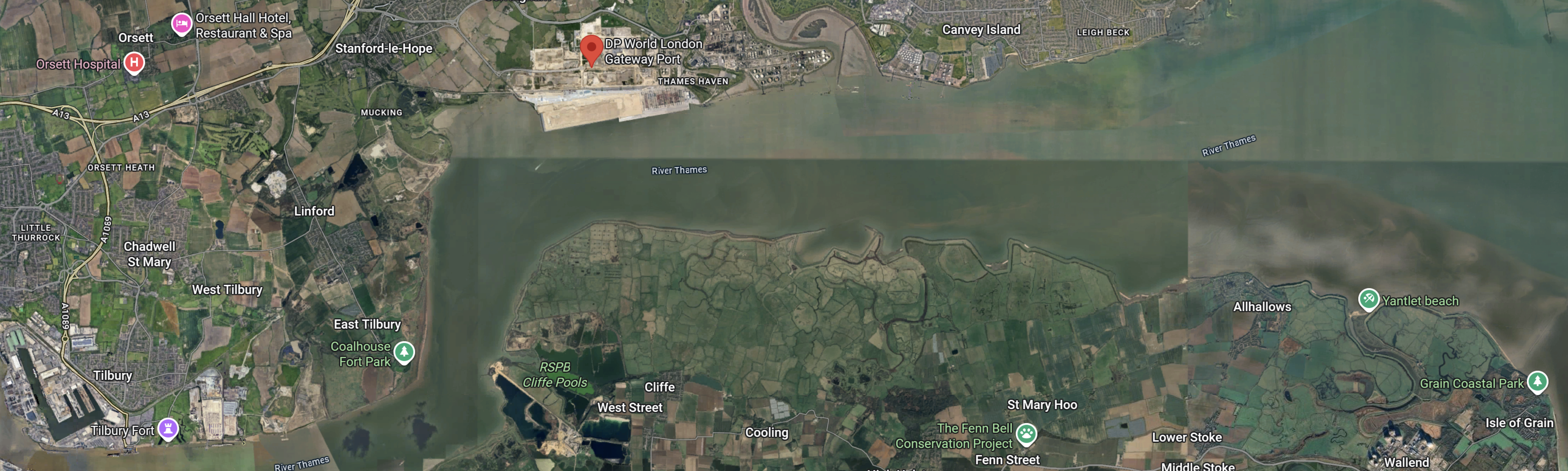
Note.
- London Gateway is indicated by the red arrow.
- The Isle of Grain is in the South-East corner of the map.
It seems to me, that a refuelling philosophy could easily be worked out.
How Large is The Bunkering Market?
I asked Google AI this question and received this answer.
The world bunker fuel market is a multi-billion dollar industry, with the market size valued at USD 150.93 billion in 2023. It is projected to reach USD 242.29 billion by 2032, growing at a CAGR of 5.4% according to SkyQuest Technology. In terms of volume, the global bunker demand was estimated at 233.1 million metric tons in 2023 according to the IMO.
The market is not small!
Council’s Concerns Over Suggested Tunnel Charges
The title of this post, is the same as that of this article on the BBC.
This is the sub-heading.
Concerns have been raised by a county council over suggested charges at the Silvertown and Blackwall tunnels in London.
These are the first two paragraphs.
Kent County Council (KCC) said the proposed charges could impact on the county’s traffic, including at the Dartford Crossing.
The council said although it supported TfL’s ambition to improve journey reliability and reduce air pollution, it believed the proposed changes could “significantly affect” drivers from Kent.
I can’t see that the charges on the two tunnels won’t affect drivers habits.
Thirty years ago, before satellite-navigation had been invented, when my family and myself lived in East Suffolk, if I was returning from Brighton or Gatwick, I would make a choice about, whether to use the Dartford Crossing or the Blackwall Tunnel. Sometimes traffic was so bad, that I had to take the longer Western route using the M11 and the A14.
I didn’t really bother about the toll on the Dartford Tunnel, as it was then, but often the free Blackwall route was quicker.
In those days, I was relying on radio reports, but now with satellite-navigation, drivers will be taking more intelligent decisions, that take account of tolls.
The BBC article also says this.
The council says Kent drivers make up 10% of the Blackwall Tunnel’s users.
So it looks like the drivers of Kent will be paying tolls to London.
These are my thoughts.
How Can The Tolls Be Avoided?
There will still be two free crossings, to the East of Tower Bridge; the Rotherhithe Tunnel and the Woolwich Ferry, but how long will they remain free, if they drain money from the tolled tunnels?
What About The Trains?
Trains from somewhere like Ebbsfleet international station can be used.
Ebbsfleet international station has a lot of parking, but at some stations parking is distinctly limited.
I doubt though, that Transport for London have done a professional survey of the amount of parking that is needed.
They tend to believe if people live out of London, that parking for trips to London is not a Transport for London problem.
Are there any plans to increase the train frequencies, if more people use them?
Note that Off Peak Day Return tickets can be purchased with a Railcard, from Dartford to London for under a tenner, and from Ebbsfleet international to London for under fifteen pounds.
If Built, Will The Lower Thames Crossing Help?
The first paragraph of the Wikipedia entry for the Lower Thames Crossing, describes it like this.
The Lower Thames Crossing is a proposed road crossing of the Thames estuary downstream of the Dartford Crossing that links the counties of Kent and Essex, and its proposed approaches. If built it would pass through the districts of Thurrock and Gravesham, supplementing the Dartford route. The approximately 14.3-mile (23.0 km) route is being assessed by the Planning Inspectorate.
As it is likely to cost nine billion pounds and take six years to build, I can’t see the current Government building it.
But it would certainly make it easier for traffic to go between the Channel Tunnel and North of London.
Conclusion
I can see the UK muddling through, when we should be bold and create the transport infrastructure for the Twenty-First Century.
For instance, I would extend the Elizabeth Line in the North-East to Southend and in the South-East to Ebbsfleet and Gravesend. With the existing cross-platform interchange at Whitechapel, I believe, it could pick up much of the cross-river passenger traffic close to London.
I also feel that there will need to be improved connections between the fast-expanding London Gateway freight port and the Channel Tunnel.
Norway’s Sovereign Wealth Fund Acquires Stake In 573 MW Race Bank Offshore Wind Farm
The title of this post, is the same as that of this article on offshoreWIND.biz.
This is the sub-heading.
A consortium made up of investment funds belonging to Australia-headquartered Macquarie Asset Management and Spring Infrastructure Capital has reached an agreement to divest a 37.5 per cent stake in the 573 MW Race Bank offshore wind farm in the UK to Norges Bank Investment Management.
These four paragraphs give more details of the deal.
The stake was sold to the Norwegian sovereign wealth fund for approximately GBP 330 million (about EUR 390.6 million).
According to Norges Bank Investment Management, the fund acquired Macquarie European Infrastructure Fund 5’s 25 per cent stake and Spring Infrastructure 1 Investment Limited Partnership’s 12.5 per cent interest in the Race Bank offshore wind farm.
A Macquarie Capital and Macquarie European Infrastructure Fund 5 consortium acquired a 50 per cent stake in Race Bank during the construction phase in 2016. Macquarie Capital divested its 25 per cent stake in the wind farm in 2017.
With the deal, Arjun Infrastructure Partners will remain co-investor for 12.5 per cent of the wind farm and Ørsted will remain a 50 per cent owner and operator of Race Bank.
These are my thoughts.
The Location of Race Bank Wind Farm
This map from the Outer Dowsing Web Site, shows Race Bank and all the other wind farms off the South Yorkshire, Lincolnshire and Norfolk coasts.
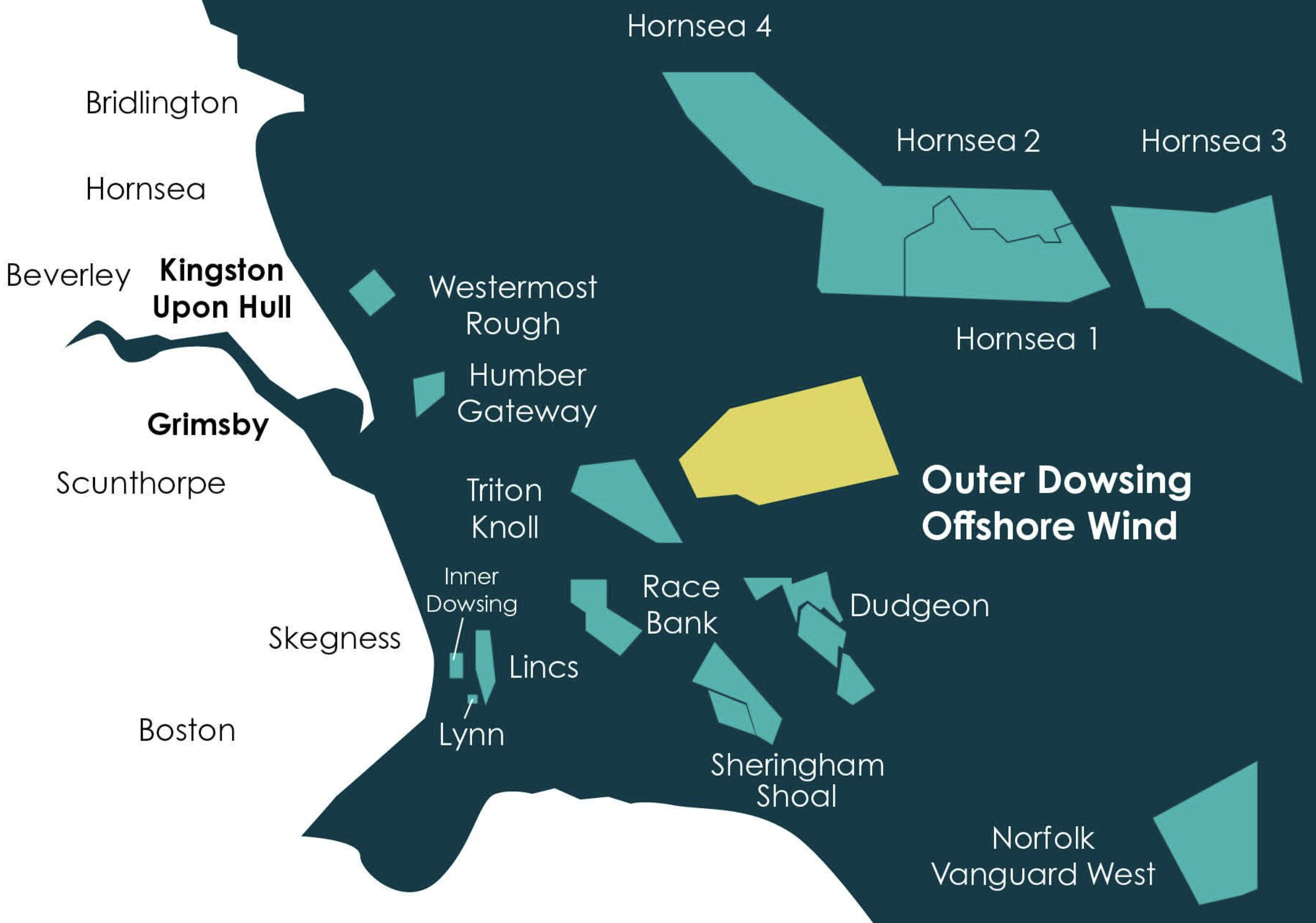
From North to South, wind farm sizes and owners are as follows.
- Hornsea 1 – 1218 MW – Ørsted, Global Infrastructure Partners
- Hornsea 2 – 1386 MW – Ørsted,Global Infrastructure Partners
- Hornsea 3 – 2852 MW – Ørsted
- Hornsea 4 – 2600 MW – Ørsted
- Westernmost Rough – 210 MW – Ørsted and Partners
- Humber Gateway – 219 MW – E.ON
- Triton Knoll – 857 MW – RWE
- Outer Dowsing – 1500 MW – Corio Generation, TotalEnergies
- Race Bank – 573 MW – Ørsted,
- Dudgeon – 402 MW – Equinor, Statkraft
- Lincs – 270 MW – Centrica, Siemens, Ørsted
- Lynn and Inner Dowsing – 194 MW – Centrica, TCW
- Sheringham Shoal – 317 MW – Equinor, Statkraft
- Norfolk Vanguard West – 1380 MW – RWE
Note.
- There is certainly a large amount of wind power on the map.
- Hornsea 1, 2 and 3 supply Humberside.
- Hornsea 4 will supply Norwich and North Norfolk.
- Norfolk Vanguard West would probably act with the other two wind farms in RWE’ Norfolk cluster.
- Ignoring Hornsea and Norfolk Vanguard West gives a total around 4.5 GW.
- There are also two 2 GW interconnectors to Scotland (Eastern Green Link 3 and Eastern Green Link 4) and the 1.4 GW Viking Link to Denmark.
I wouldn’t be surprised to see a large offshore electrolyser being built in the East Lincolnshire/West Norfolk area.
The primary purpose would be to mop up any spare wind electricity to avoid curtailing the wind turbines.
The hydrogen would have these uses.
- Provide hydrogen for small, backup and peaker power stations.
- Provide hydrogen for local industry, transport and agriculture,
- Provide hydrogen for off-gas-grid heating.
- Provide methanol for coastal shipping.
Any spare hydrogen would be exported by coastal tanker to Germany to feed H2ercules.
Do We Need Wind-Driven Hydrogen Electrolysers About Every Fifty Miles Or so Along The Coast?
I can certainly see a string along the East Coast between Humberside and Kent.
- Humberside – Being planned by SSE
- East Lincolnshire/West Norfolk – See above
- North-East Norfolk – See RWE Goes For An Additional 10 GW Of Offshore Wind In UK Waters In 2030.
- Dogger Bank – See RWE Goes For An Additional 10 GW Of Offshore Wind In UK Waters In 2030.
- Sizewell – See Sizewell C And Hydrogen.
- Herne Bay – Under construction
I can see others at possibly Freeport East and London Gateway.
InterGen’s Two Huge Batteries
InterGen are developing two huge lithium-ion batteries, which seem to be rather under the radar of the mainstream media.
InterGen are an energy company, of which few people have heard.
On the About InterGen page, this is the sub-heading of a section describing their business.
InterGen is a uniquely independent energy company. We support the journey to a stable, dependable, net zero energy system through delivering the flexible electricity solutions that underpin it.
These four paragraphs introduce the business.
Founded in 1995, we have decades of experience in the GB market.
Our power stations provide secure, flexible energy to consumers, and help the grid to take on more and more renewables.
Our expert trading team in Edinburgh sells electricity and services to help utilities, system operators and the wider energy market deliver secure power to homes and businesses across the country, whilst our pipeline of new developments includes some of the world’s largest battery storage assets, an essential component in the future energy system.
The world is changing, and we’re proud to be playing an active role in the unfolding energy story for generations to come.
Batteries are very much for generations to come.
These four paragraphs on this page says this about their batteries.
Developing a large-scale energy storage capability will help to resolve the challenge of the intermittency of renewable generation. At InterGen, we’re managing the delivery of one of Europe’s largest battery storage portfolios, with over 2GW of grid scale projects, having dedicated grid connections and proceeding through the permitting process.
The share of wind and solar power is increasing in the UK’s energy mix, but these sources only generate power when the wind blows or the sun shines. The use of batteries to store the excess power generated can help provide low carbon power to balance supply and demand with renewable power during periods of low output.
InterGen’s UK battery projects are world-leading in this kind of technology deployment. The facilities will use proven lithium-ion technology which has zero emissions, has superior flexibility, and will complement the increasing amounts of renewable energy generation in the UK.
In Essex, our project at London Gateway Port to create up to 900MWh of energy received planning permission in January 2023, and when complete will be large enough to provide power for up to 450,000 homes. At Spalding, we have consent to develop up to 1.1GWh of storage capability, adjacent to our existing operational CCGT and OCGT plants. Both of these developments are world-class in terms of size. It’s all part of our goal to support the transition to low carbon generation through the provision of flexible capacity.
Gateway Energy Centre
This page describes the Gateway Energy Centre, where this is said.
InterGen is in late stage development of a world leading battery storage project in the London Gateway Logistics Park, next to the DP World London Gateway Port on the north bank of the River Thames in Essex. InterGen built and continues to operate the existing 800 MW Coryton gas-fired combined cycle power station which is located approximately one kilometre from the proposed Gateway Energy Centre site.
The Gateway project will consist of a Battery Energy Storage System (BESS) with a rated electrical output of up to 900MWh (up to 450MW).
InterGen received Town and Country Planning Permission in January 2023, making the Gateway project the largest battery in the UK once operational. The £300m project will provide power for over 450,000 homes once fully complete.
Note.
- I assume they mean this battery is a 450 MW/900 MWh battery, that will provide 450 MW for two hours.
- It is close to the 732 MW Coryton gas-fired combined cycle power station.
I would assume that one of its tasks will be to make sure the London Gateway complex gets rnough reliable power.
Spalding Energy Park
This page describes the Spalding Energy Park, where this is said.
The Spalding Energy Park, adjacent to InterGen’s existing combined and open cycle gas plants at Spalding, has received Town and Country Planning Permission in June 2023 for one of Europe’s largest battery storage projects. The battery development could deliver up to 1,100MWh of electricity once operational, providing power for up to 500,000 homes.
Spalding Energy Park received planning consent in January 2018 from the Department of Business, Energy and Industrial Strategy. The project is carbon capture ready.
As at Gateway Energy Centre, the battery is located close to a large 860 MW gas-fired power station.
Co-location of a gas-fired power station and a battery must make the grid connection simpler.
Conclusion
A total of 2 GWh of storage is a good start and I’ll suspect we’ll hear more about these two batteries in the next couple of years.
Giant Batteries Will Provide Surge Of Electricity Storage
The title of this post, is the same as that of this article on The Times.
These are the first two paragraphs.
Britain’s capacity to store electricity in giant batteries is set to double after dozens of new projects won contracts through a government scheme to keep the lights on.
Developers of battery storage projects with a total output capacity of at least 3.3 gigawatts won contracts to operate from winter 2025-26 through the government’s “capacity market” auction, according to Cornwall Insight, the consultancy.
Note that Hinckley Point C is only 3.26 GW.
The biggest battery in these contracts is a giant that Intergen will be building at the London Gateway.
When the battery got planning permission in November 2020, Intergen published this press release, which is entitled InterGen Gains Consent To Build One Of The World’s Largest Battery Projects In Essex.
These are three bullet points at the head of the press release.
- Edinburgh-headquartered energy company InterGen has been granted planning consent to build the UK’s largest battery storage project at DP World London Gateway on the Thames Estuary.
- £200m project is set to provide at least 320MW/640MWh of capacity, with the potential to expand to 1.3GWh – more than ten times the size of the largest battery currently in operation in the UK and set to be one of the world’s largest.
- The battery will provide fast-reacting power and system balancing with an initial two-hour duration, and is a significant piece of infrastructure on the UK’s journey to net zero.
As Cilla might have said. “What a lorra lorra lot of lithium!”
But it’s not just lithium-ion batteries that are getting large.
In The Power Of Solar With A Large Battery, I talked about a Highview Power CRYOBattery with a capacity of 50MW/500MWh, that is being built in the Atacama desert in Chile.
The Essex battery is a giant battery and it’s bigger than the one in Chile, but I’m fairly sure Highview Power could build a battery bigger than the one InterGen are building. You just add more liquid air tanks and turbomachinery.
New 775m-Long Freight Trains Begin Operating On UK’s Rail Network
The title of this post, is the same as that as this article on Global Railway Review.
This is the first paragraph.
DP World have announced that its two deep-water ports at Southampton and London Gateway have become the first in the UK capable of handling Freightliner’s new 775m-long intermodal container trains.
It appears from the article that Birmingham, Manchester and Leeds can also handle these longer trains.
Eight New Freeports Set To Open In The UK
Today, in his 2021 Budget, Rishi Sunak announced eight new freeports.
This article on the BBC, which is entitled Freeports: What Are They And Where Will They Be?, gives a brief guide to the freeports.
This links link to the nearest I can find to an official web site for each of the freeports.
The Government has said that the freeports will start their operations late this year.
A Last Ride On A Class 315 Train Between Upminster And Romford?
This morning I went to Upminster and took the Class 315 train to Romford.






I added the question mark, as when I passed East Ham depot, there were two new Class 710 trains sitting there, covered in graffiti.
Could The Romford And Upminster Line Be Improved?
I see two possible simple improvements
Four Trains Per Hour
London Overground likes to run four trains per hour (tph).
Could this frequency be run on the Romford and Upminster Line?
Three years ago I wrote Could The Romford To Upminster Line Handle Four Trains Per Hour?, and came to this conclusion.
A seven minute trip would mean the train could perform the required four trips per hour.
It would still be tight.
I also investigated an automated shuttle train on the route in An Automated Shuttle Train Between Romford And Upminster, which I felt would be possible, to run a four tph service.
Extension Of The Service
There are various reasons, why the service could be extended from Upminster station, in the Grays direction.
- It would give travellers from South Essex much better access to Crossrail.
- It could give a shuttle between Romford and Grays via the Lakeside Shopping Centre
- Tilbury Riverside station could be a possibility.
- It could open up possibilities for more housing in the area.
- If the route were to be extended to a new station at London Gateway, it could make it easier for people to travel to work at the large port.
Obviously, it would have to be viable for the operator, but the big beasts of Crossrail, Lakeside Shopping Centre and London Gateway might make it possible.
Planning the route wouldn’t be that easy.
Consider.
- The connections to Romford and Grays are on different sides of the District Line, so a flyover or dive-under might be needed.
- Upminster and Grays is a single-track line with a passing loop at the two-platform Ockenden station.
- Upminster and Grays used to be worked by a shuttle service.
- The signalling appears to be able to handle four tph in both directions.
- The current service between Grays and Upminster is two tph in both directions.
- There is a bay platform 1A, at Upminster, which faces towards Grays.
It can certainly be said, that the extension of the service can’t be run at four tph.
I also think, that the current track layout at Upminster looks like one of British Rail efforts to stop any expansion of the railway.
This Google Map shows the layout of Upminster station.

Note.
- The platforms are numbered 1 to 6 from South to North.
- Platform 1A is the Southernmost platform, which is slightly at an angle.
- The main station footbridge is at the Western ends of the platforms.
- The station isn’t fully step-free.
Is an alternative approach possible?
Suppose the following were to be arranged.
- A four tph endless shuttle between Romford and Upminster stations.
- Full step-free access at Romford station is currently being installed.
- Full step-free access at Upminster station.
- A two tph shuttle between Platform 1a and Grays, London Gateway or wherever most passengers want. This service would be arranged to give four tph between Upminster and Grays, when combined with the current services.
- The two four tph services would be timed to give a convenient interchange at Upminster.
Could it be made to work?
It would only need improvements to Upminster station.
These pictures show Upminster station.





Note.
- Platform 1a is fully-electrified and long enough for a Class 710 train.
- The bridge at the Eastern end of the station is not step-free but could be updated.
- It might be possible to extend this bridge to Platform 6.
Platform 1a could certainly be used to operate a shuttle service to Grays to create a new service across South Essex.
Switching From Lorries To Freight Trains Could Cut Air Pollution By 10%
The title of this post is the same as this article on Rail Technology Magazine. This is the first paragraph.
Making the switch from HGVs to trains for freight travel could lead to 10% less air pollution from NOx across the country, says new research from the Campaign for Better Transport (CBT).
The major problem will be to get freight operators to switch from road to rail.
However, I do feel that this may be hastened by external factors and innovative methods and technology.
Shortages Of Train And Truck Drivers
There are regular news items about shortages of train and truck drivers.
I would think, that both careers will attract the same type of person.
Both careers will have their good and bad points.
But after a search of the Internet, it does appear that the train driver will earn more than the truck driver.
So will a shortage of truck drivers, nudge more freight operators to use rail?
Track Improvements For Rail Freight
Over the last decade or so, there have been several improvements in track layouts, that have been driven by the need to increase the amount of freigt carried by rail.
- The development of the Great Northern and Great Eastern Joint Line through Lincolnshire as a freight by-pass for the East Coast Main Line.
- The building of the Bacon Factory Chord to increase capacity to and from the Port of Felixstowe.
- Electrification of the Gospel Oak to Barking Line will create a second electrified freight route across London.
- Several passing loops have been lengthened to allow longer freight trains.
- The Ordsall Chord will help freight through Manchester.
Obviously any general improvements will help freight trains as well as passenger trains.
Air-Pollution Activitists And Politicians
Most long-distance rail-freight is diesel-hauled and increasingly it goes through areas of large cities, where there is electrification. These electrified lines all see diesel-hauled freight trains.
- The North London Line
- The West London Line
- The Gospel Oak to Barking Line
- The Ordsall Chord
- The Great Eastern Main Line
- The West Coast Main Line
- The East Coast Main Line
- The Great Western Main Line
It will not be long before air-quality activists set their sites on removing diesel haulage from lines like these.
Will a local politician in North London say, be more likely to get elected, if they say, they will push for a ban on noisy and polluting diesel-powered locomotives running through their constituency.
The Replacement Of Diesel Locomotives With Electro-Diesel Locomotives
If you take a freight route like say Felixstowe to Trafford Park in Manchester via the Great Eastern Main Line, the North London Line and the West Coast Main Line, all of the route except for the two ends is electrified.
Normally, freight on this route would be hauled by a Class 66 diesel-locomotive, which would probably score 2/10 as a friend of the environment.
A modern electro-diesel locomotive, like a Class 88 locomotive may be able to this and similar routes using electricity in the middle and its onboard diesel engine at both ends of the route.
The various locomotives, used on UK freight trains compare as follows.
- Class 66 – 65/75 mph – 2.4 MW on diesel
- Class 68 – Modern diesel to Stage II A emission standards – 100 mph – 2.8 MW on diesel
- Class 70 – 75 mph – 2.7 MW on diesel
- Class 86 – 75 mph – 0.7 MW on electricity
- Class 88 – 100 mph – 4 MW on electricity – 0.7 MW on diesel
- Class 90 – Electric locomotive – 100 mph – 0.9 MW on electricity
- Class 92 – Electric locomotive – 87 mph – 5 MW on electricity
As the table shows the Class 66 locomotives are slow and less powerful than both the more modern Class 68 or Class 88 locomotives.
Cynically, I would say that the only reason that Class 66 and Class 70 locomotives are still in service is that they are good for the bottom line.
Despite this, I feel we’ll see an increasing number of electro-diesel locomotives like the Class 88 arriving in the UK.
New Electric Locomotives
Judging by some of the strange combinations, I’ve seen on some freight trains, we are short of electric locomotives.
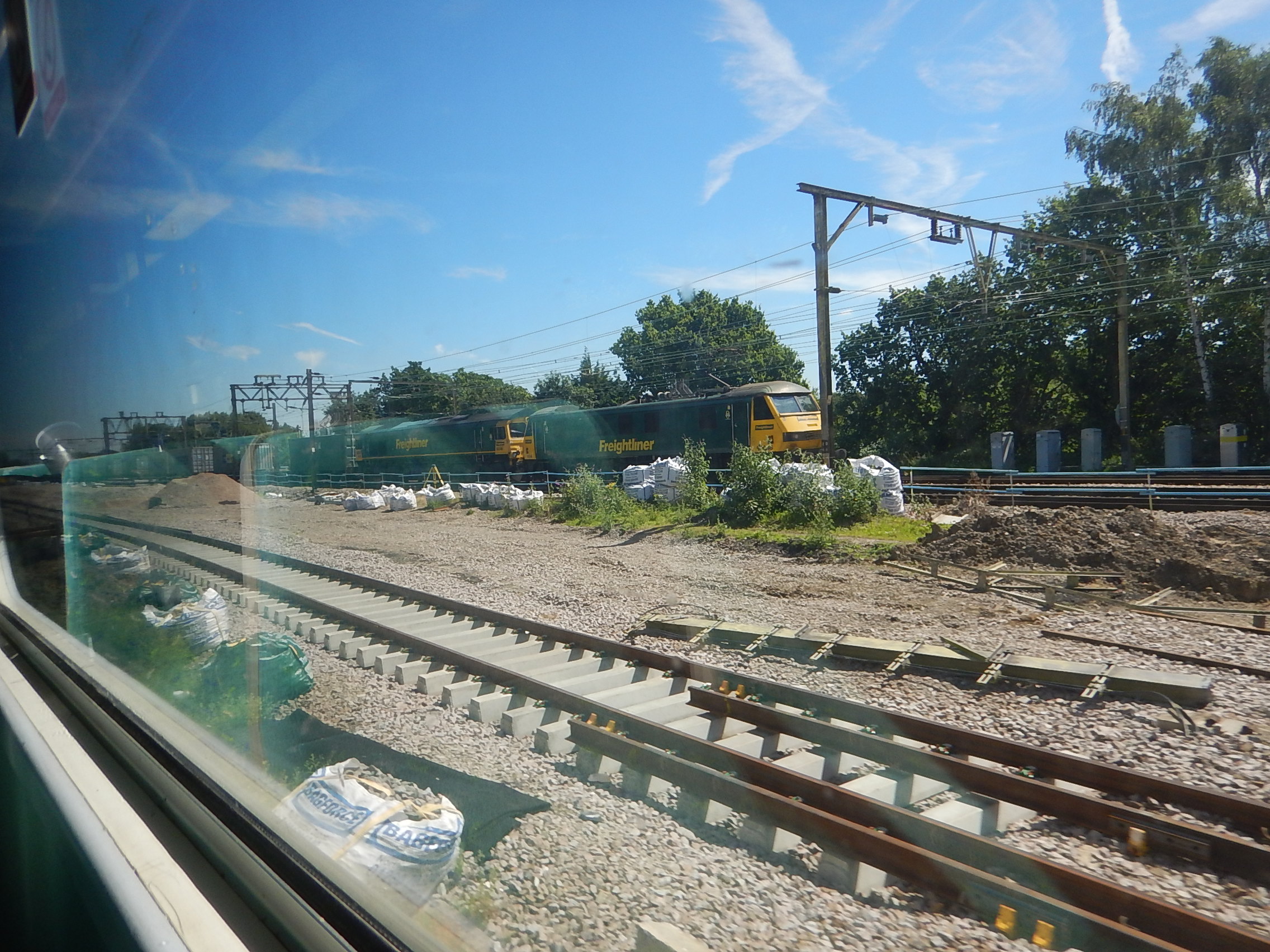
This double-headed train has a Class 90 electric locomotive and a Class 66 diesel locomotive at the front of a long freight train.
Even electric locomotives from the 1960s are being called up for service.
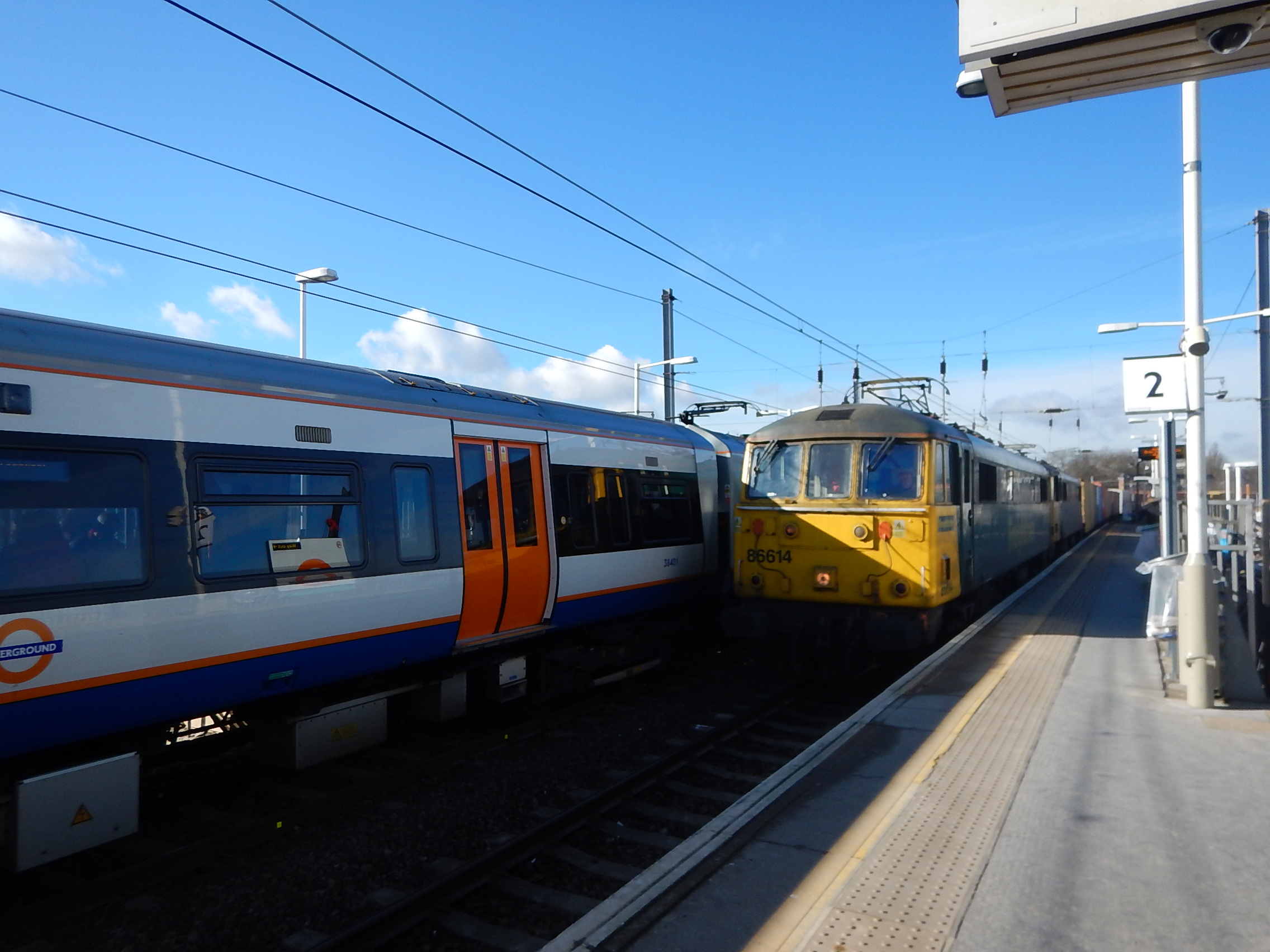
These two Class 86 locomotives were hauling a freight train through Hackney Wick station.
I think we’ll see small numbers of new electric locomotives arriving in the UK.
I suspect too, that freight operators are preparing their bids for the fifteen Class 90 locomotives, that will be released in the next few years by Greater Anglia.
More Electrification
In a couple of years, there will be full electrification from London to Bristol and Cardiff.
Although the Government has put a hold on a lot of electrification, current schemes like electrification of the Great Western Main Line will increase the use of electric or electro-diesel haulage.
Other smaller schemes might be added to increase the use of electric haulage for freight.
As an example, the lines into the important freight ports of London Gateway and Liverpool Two are not electrified. Electrifying both would probably increase the proportion of electrically-hauled freight.
 The Anonymous Widower