Freightliner Partners With Zero To Decarbonise Critical Transport Operations
The title of this post, is the same as that of this news item from Freightliner.
This is the sub-heading.
Today, Freightliner and Zero, a breakthrough energy company that develops and manufactures whole-blend synthetic, non-biological fuels, announced a partnership to achieve a fossil-free locomotive operation by 2040 and overall Net Zero by 2050, representing a major evolution for one of the world’s oldest, safest and most reliable forms of freight transport. To successfully meet these ambitious emissions targets, Freightliner is exploring alternatives to diesel, such as Zero’s carbon-neutral synthetic diesel, which will eliminate fossil-carbon emissions and improve air quality and environmental wellbeing.
These are my thoughts.
Freightliner
Freightliner is a rail-freight company, that you see regularly hauling freight trains all over the UK.

The picture shows two of their Class 90 electric locomotives in their latest livery.
These posts talk about the company and lower or zero carbon operation.
- Clean Air Power Adds Hydrogen To Class 66 Fuel Mix
- Freightliner Continue Trials On New Low Carbon Fuel
- Freightliner Secures Government Funding For Dual-Fuel Project
- The Ultimate Bi-Mode
The current post fits that pattern.
Zero Petroleum
Zero Petroleum is one of those companies that gives Elon Musk nightmares.
But when you have backers like Babcock, Boeing, Intertek, Rolls-Royce and the Royal Air Force, you must be doing something right.
The Wikipedia entry for the company has this first paragraph.
Zero is a manufacturer of non-biological carbon-neutral synthetic fuel (also known as e-fuel) co-founded by former Formula One engineer Paddy Lowe. Its product has been developed as an alternative to fossil-based fuels and a more scalable sustainable alternative to waste and bio-fuels. The Royal Air Force used its fuel in November 2021 to achieve a World Record first flight powered by synthetic fuel. In July 2022, Zero entered a new partnership with the Royal Air Force to move towards mass production of sustainable aviation fuel.
The company is often known as just Zero.
These two and a half paragraphs from the Wikipedia entry describe the technology.
Zero uses Direct FT (a proprietary and specialised version of Fischer-Tropsch) to directly manufacture target fuels (gasoline, kerosene and diesel) at high yield and with no need for refinery upgrading.
When manufactured using renewable energy, synthetic fuel can be used as a carbon neutral or carbon negative direct drop-in replacement for fossil fuels, particularly for operations that require high energy densities – such as air travel, shipping and farming – and to ensure the continued use of legacy vehicles. It can also be used as a raw material to produce various forms of plastic.
It is manufactured using a process known as petrosynthesis, in which carbon dioxide and hydrogen are combined to create hydrocarbons. The process involves direct air capture of carbon dioxide from the atmosphere and the electrolysis of water to obtain hydrogen.
The Fischer-Tropsch process, despite its association in the past with dodgy regimes, seems to be at the heart of things, as it is with Velocys.
I describe the Velocys process and its link to Fischer-Tropsch in Grant Shapps Announcement On Friday.
Surely, the carbon-neutral fuel produced by Zero, are the ideal stop-gap fuel until true full zero-carbon fuels are available.
But Zero’s fuels will always be available for heritage and legacy trains, planes and automobiles and for applications, where older technology must be used.
As an example of older technology still being used on UK’s railways, Network Rail operate, the New Measurement Train to check all tracks in Great Britain.

The train may have been manufactured in the 1970s, but it has modern engines and is the ideal train to carry the wide variety of sophisticated equipment to ensure the safety of Britain’s railways.
Synthetic diesel like that produced by Zero could keep the New Measurement Train running for some years yet.
Freightliner Have Made A Pragmatic Decision
I believe that Freightliner have made a pragmatic decision, that allows them to go carbon neutral without without taking risks or spending millions on new equipment, that is not fully-developed.
As new zero-carbon technology is developed, like say hydrogen-electric hybrid locomotives, these may take over certain tasks, which will reduce some of the need for synthetic diesel.
But synthetic diesel from Zero will always be there as a fuel of last resort.
‘Castle’ HSTs To Be Withdrawn By Great Western Railway
The title of this post, is the same as that of this article on Rail Advent.
This quote from a GWR spokesman, sums up the action that will be taken.
The Castles were always designed to be a temporary measure on the Cardiff to Penzance route. We expect to replace the Castle Class trains on a phased basis over the next couple of years, bringing customers the benefit of more modern trains that will reduce both cost and carbon emissions across the route.
These are my thoughts.
Could The Engines In The Power Cars Be Replaced With Modern Carbon-Neutral Engines?
This would be an alternative way to solve the decarbonisation problem.
It would also mean that other applications of the Class 43 power cars, like ScotRail’s Inter7City trains, Cross Country’s HSTs and Network Rail’s New Measurement Train would have a decarbonisation route,
In Rolls-Royce Releases mtu Rail Engines For Sustainable Fuels, Rolls-Royce mtu outline their route to decarbonise rail engines using sustainable fuels.
This was the first paragraph of my conclusion in the linked article.
Rolls-Royce and Cummins seem to be doing a thoroughly professional job in decarbonising the diesel engines they have made in recent years.
The Class 43 power cars have Rolls-Royce mtu Series 4000 engines, which will soon be available to run on sustainable fuel.
I think as a possible fall-back, one Class 43 power car should be converted to carbon neutral.
Could The Engines In The Power Cars Be Replaced With Modern Hydrogen Engines?
I looked at this in Will We See Class 43 Power Cars Converted To Hydrogen?.
I came to the conclusion, that this might be possible and said this.
It would be the ultimate Roller.
But then Rolls-Royce know about winning battles with large internal combustion engines.
The Option Of New Trains
This quote from a GWR spokesman was fairly definite about new trains, when they said.
The Castles were always designed to be a temporary measure on the Cardiff to Penzance route. We expect to replace the Castle Class trains on a phased basis over the next couple of years, bringing customers the benefit of more modern trains that will reduce both cost and carbon emissions across the route.
What trains could replace the Castles?
- The Cardiff and Penzance route is just short of 250 miles or roughly 400 kilometres.
- Only about 30 miles at the Cardiff end is electrified.
- Trains would need to be able to handle 25 KVAC overhead electrification.
- 125 mph trains will be needed at the Cardiff end.
- Four or five passenger cars will be needed.
- Currently, there are twelve Castles, so I will assume twelve new trains.
As these trains will be lasting up to forty years, they must be zero-carbon, which must mean battery-electric or hydrogen.
Charging Battery-Electric Trains
Consider
- Bristol Temple Meads, Exeter St. Davis and Plymouth are large stations with several platforms. I suspect that a number of Furrer + Frey’s charging stations can be installed along the route.
- The timetable would be adjusted to allow trains to be charged as they stopped to set down and pick up passengers.
- Trains would dwell in the station and then use their 125 mph performance to regain the time.
- I’ve also found a Penzance to Cardiff service, that stopped at Plymouth for fourteen minutes, which is more than enough to charge the batteries.
- Regenerative braking to the batteries would further eke out the range.
- There might also be some extra electrification around Bristol or Exeter.
- Some form of charging would be needed at Penzance.
Note.
- Putting up electrification may mean that it will delay the new trains for a few years.
- Charging stations along the route could probably be installed to a tight timetable.
I believe that with some top-class work, by battery and charger manufacturers, that a battery-electric train could be developed that could run between Cardiff and Penzance.
Thoughts On Hydrogen
Consider.
- The Alstom Coradia iLint train has a range of about 1,000 km. on hydrogen.
- Companies like Airbus, Boeing and a host of rocket makers will improve the storage and safety of hydrogen.
- A range of a 1,000 km. would allow refuelling at one end of the route.
- Trains could be multiple units or a hydrogen-electric locomotive pulling a rake of coaches with a driving van trailer.
I feel that hydrogen would be very feasible as a power source.
Alstom Could Offer A Hydrogen Aventra
Consider.
- Alstom are developing a hydrogen-powered Aventra.
- Bombardier were offering a 125 mph Aventra.
- A typical Aventra like a Class 720 train seats a hundred passengers a car.
A hydrogen Aventra would be feasible.
Hitachi Could Offer A Battery-Electric Or Hybrid AT-300
In 2021, in Hitachi And Eversholt Rail To Develop GWR Intercity Battery Hybrid Train – Offering Fuel Savings Of More Than 20%, I wrote about the announcement of the Hitachi Intercity Tri-Mode Battery Hybrid Train, which is shown in this Hitachi infographic.

Note.
- Batteries replacing an engine to cut fuel usage and reduce carbon emissions.
- First time a modern UK intercity train, in passenger service, will use alternative fuel.
- These Hitachi trains use mtu engines, so I suspect they will be switched to sustainable fuel like HVO.
- The trains are 125 mph and 140 mph with the latest digital signalling.
- Great Western Railway already have 58 five-car Class 800/802 trains and 35 nine-car 800/802 trains.
- They would not need any changing stations or other infrastructure changes.
- Staff retraining would be minimal.
Testing of the prototype of these trains must be getting very close or even underway.
Stadler Could Offer A Battery-Electric Flirt Akku
Consider
- Stadler have run a Flirt Akku on batteries for 243 km.
- Flirt Akkus will go into service soon.
- Flirts have been designed for 125 mph running.
With charging at Cardiff, Bristol, Exeter, Plymouth and Penzance, I believe a Flirt Akku could handle the route.
Are Hitachi Home And Hosed?
I have a feeling that the announcement has been made about retiring the Castles as the prototype Hitachi Intercity Tri-Mode Battery Hybrid Train is under test and is performing well.
So I wouldn’t be surprised to see an order for twelve more Class 802 trains soon.
Thales Supports Rollout Of UK Digital Railway Programme
The title of this post, is the same as that of this press release from Porterbrook.
The press release starts with these bullet points.
- Thales wins the fitment and supply of European Train Control System (ETCS) onboard units for Class 43 high-speed train retrofit.
- Implementation will benefit passengers and freight operators by delivering additional capacity, improving performance, enhancing safety and reducing the costs of operating the national railway.
Which is followed by this explanation.
As a key player in delivering this digital transformation, Thales has today been awarded the contract for the Class 43 First in Class (FiC) design and fitment project that will use Network Rail’s new measurement train power cars in the Infrastructure Measurement fleet. The FiC project will culminate in a Type approval from the Office of Road and Rail to enable subsequent Class 43 ETCS fleet fitments.
The new Thales onboard system will be integrated as part of the Digital Railway train control system, and will enable rolling stock to operate on ETCS-equipped infrastructure. The onboard equipment is an evolution of Thales’s level 1 ETCS system that has been successfully deployed worldwide.
This could be a smart move.
- Type Approval will mean that the Class 43 power cars of ScotRail’s Inter7Cities, Great Western Railway’s Castles and those of other operators can be retrofitted.
- Will the New Measurement Train also be used to test the digital signalling, as it covers all the tracks in Great Britain in a four-weekly cycle?
- Fitting of these iconic 1970’s designed power cars with the latest modern signalling could be a design exercise, that helps in the fitting of ETCS to other older and unusual locomotives.
I still think, that because of the iconic nature of the InterCity125, that we may see a conversion of Class 43 power cars to more sustainable operation.
- All power cars now have modern MTU diesel engines, which probably could be fuelled by hydrogen.
- The simplest way would be to run them on HVO, as I wrote about in Powered By HVO.
- Some operations like the short format trains in Scotland and South-West England might be more suitable for battery-electric operation.
- Given that there are 167 in operation or in store, it would be a good-sized order for the company converting the power cars.
I also believe that zero-carbon InterCity 125s could be an unusual tourist attraction.
Conclusion
The fitting of digital signalling to Class 43 power cars is a good move, but is it the start of a wider plan to bring these iconic trains up to modern standards.
Track Monitoring System To Be Tested On Chiltern Line
The title of this post, is the same as that of this article on Railway Gazette.
This is the first paragraph.
Network Rail is to undertake in-service trials with DB Systemtechnik’s CTM2·0 continuous track monitoring system on a Chiltern Railways MkIII driving van trailer operating in passenger service between London Marylebone and Birmingham.
This seems to me to be a good idea.
- The German system appears to be comprehensive and has been in service for seven years.
- There is a lot of space in the back of a driving van trailer.
- It probably can do much of the work of the New Measurement Train, but more often.
It could surely be applied to other routes.
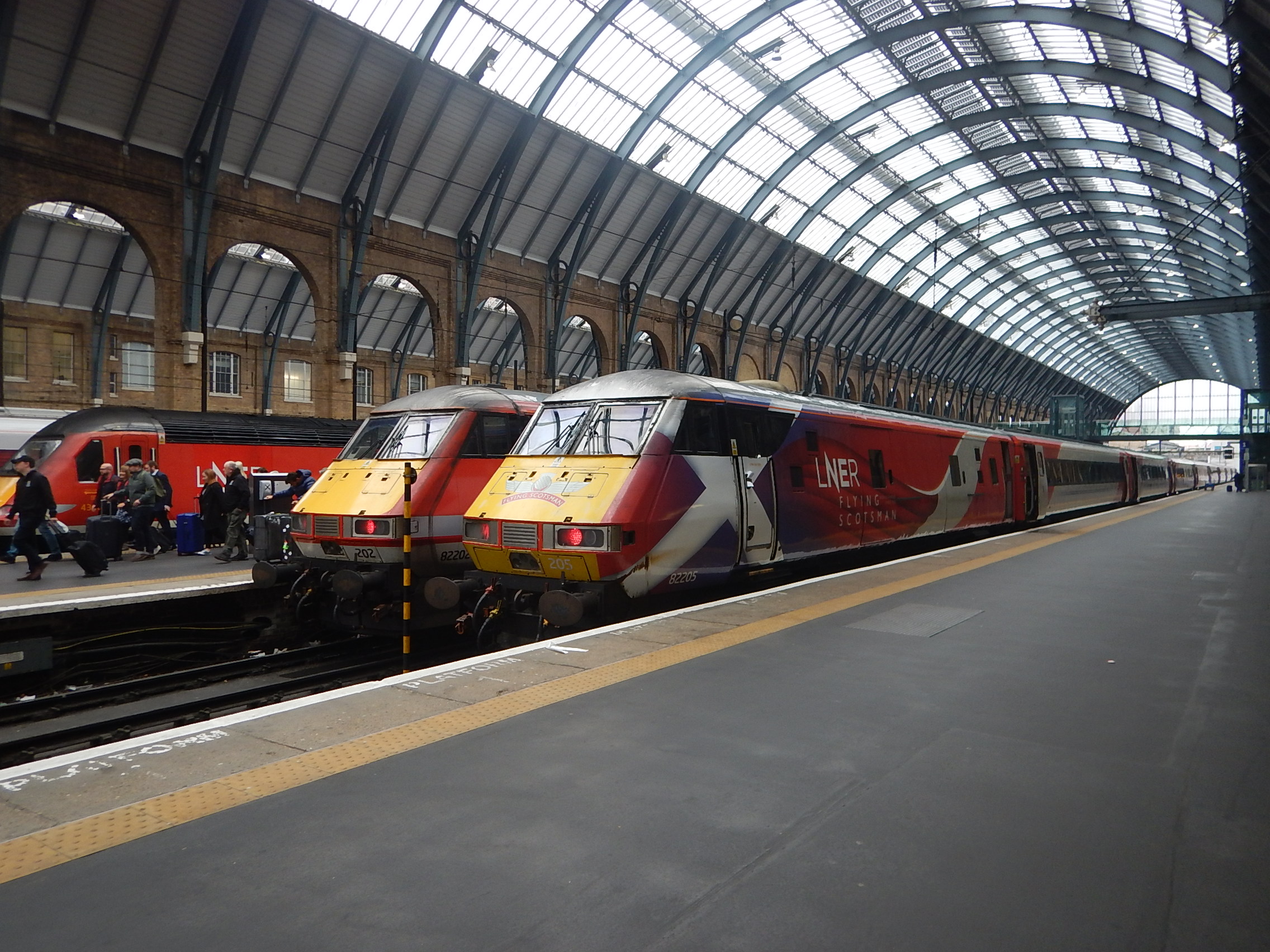
The picture shows the driving van trailers on the London-ends of a pair of InterCity 225s at King’s Cross.
Some Open Access Operators are also looking at the possibility of running short InterCity 225 sets.
It would also be possible to create extra Measurement Trains, by coupling an instrumented driving van trailer to an appropriate locomotive and a couple of coaches.
As a Control Engineer, who has analysed a lot of data in his working life, it could improve rail safety by testing rail lines more often.
Do We Need More New Measurement Trains?
In New Measurement Train – 30th July 2020, I said this.
With all the spare InterCity 125 trains at present, will Network Rail create a second train?
We have now had the tragic Stonehaven Derailment, where three have been sadly killed.
Increasingly, we seem to be getting weather-related problems on the UK’s railways.
I can remember several in the last few years.
So perhaps just as the Hatfield Crash led to the New Measurement Train, we should up our testing and the development of new tests.
Extra trains would increase the amount of testing, but also provide more laboratory space to test the testing systems in real railway conditions.
Perhaps, if a University or high-tech company has a feasible idea, there should be a mechanism, whereby they can rent space in the trains, just as they can on satellite launchers.
New Measurement Train – 30th July 2020
Whilst I was at Westbury station today, the New Measurement Train arrived.
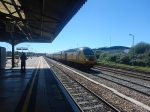
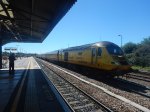
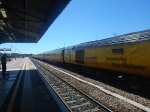
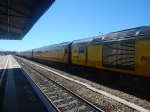
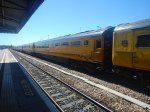
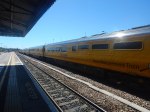

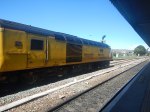
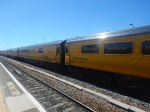


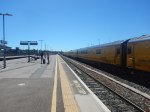
It is the first time, that I’ve been up close enough to take pictures.
With all the spare InterCity 125 trains at present, will Network Rail create a second train?
The Flying Banana
As I was waiting for my train, an unusual yellow one passed through.
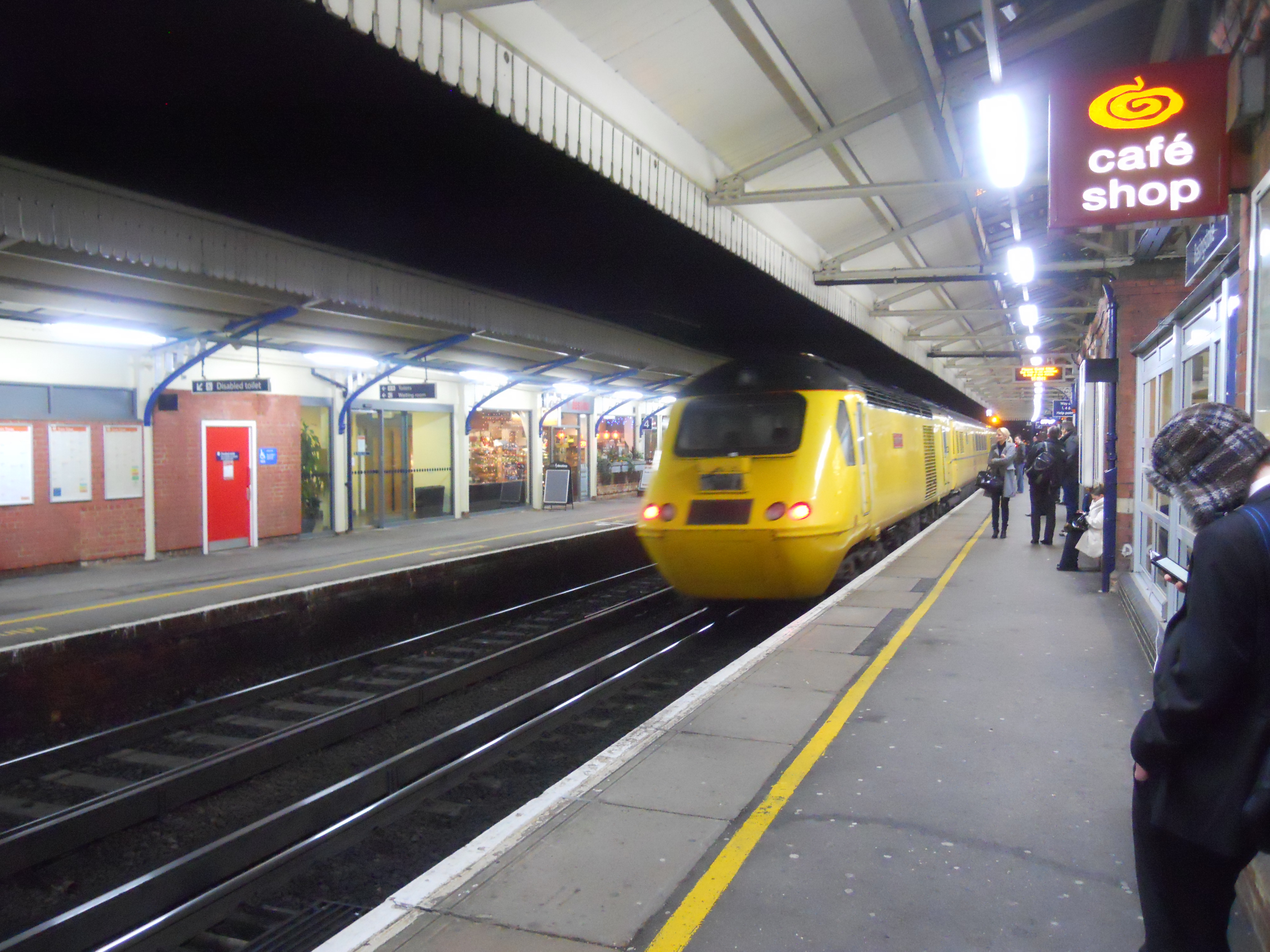
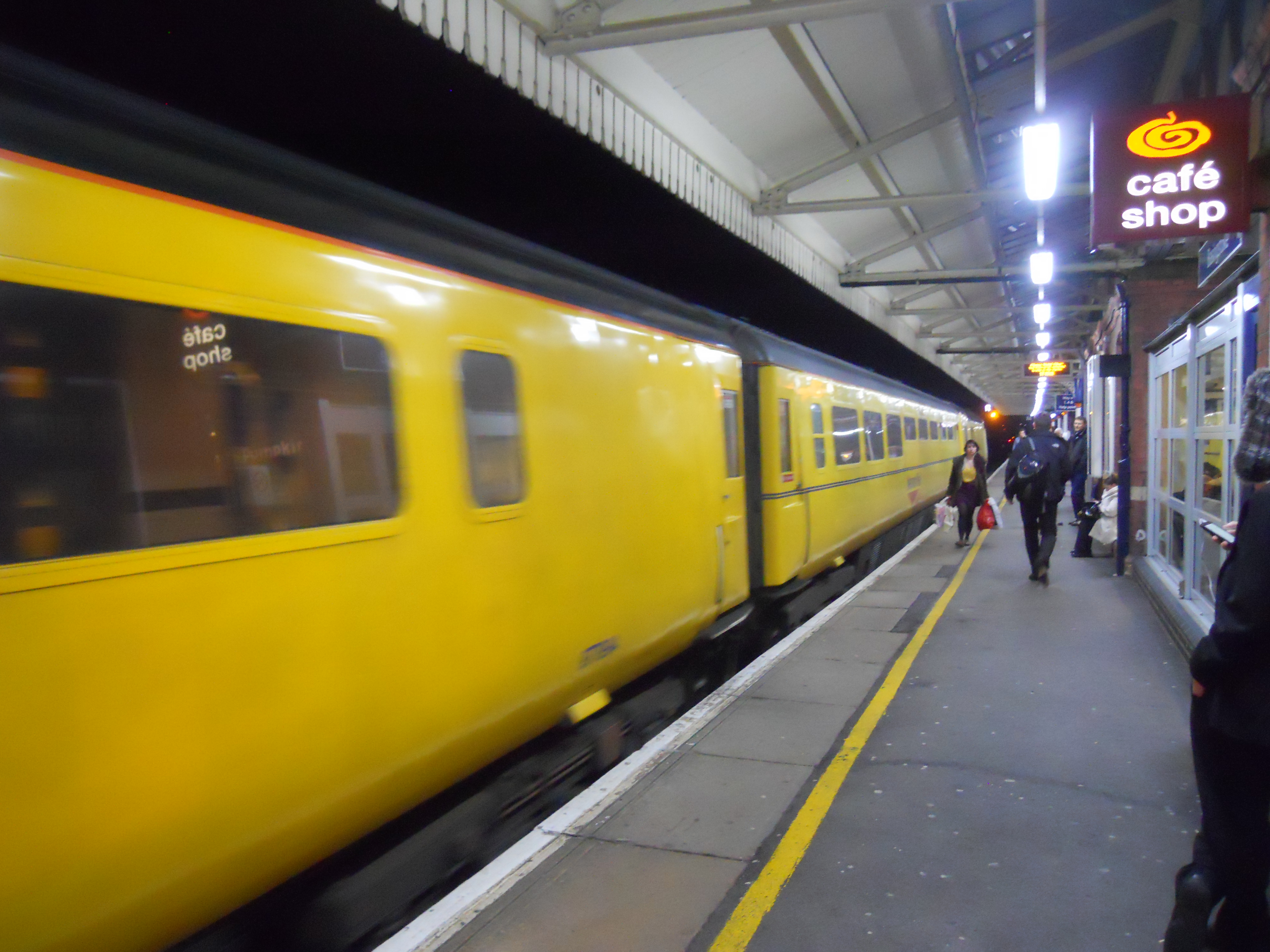
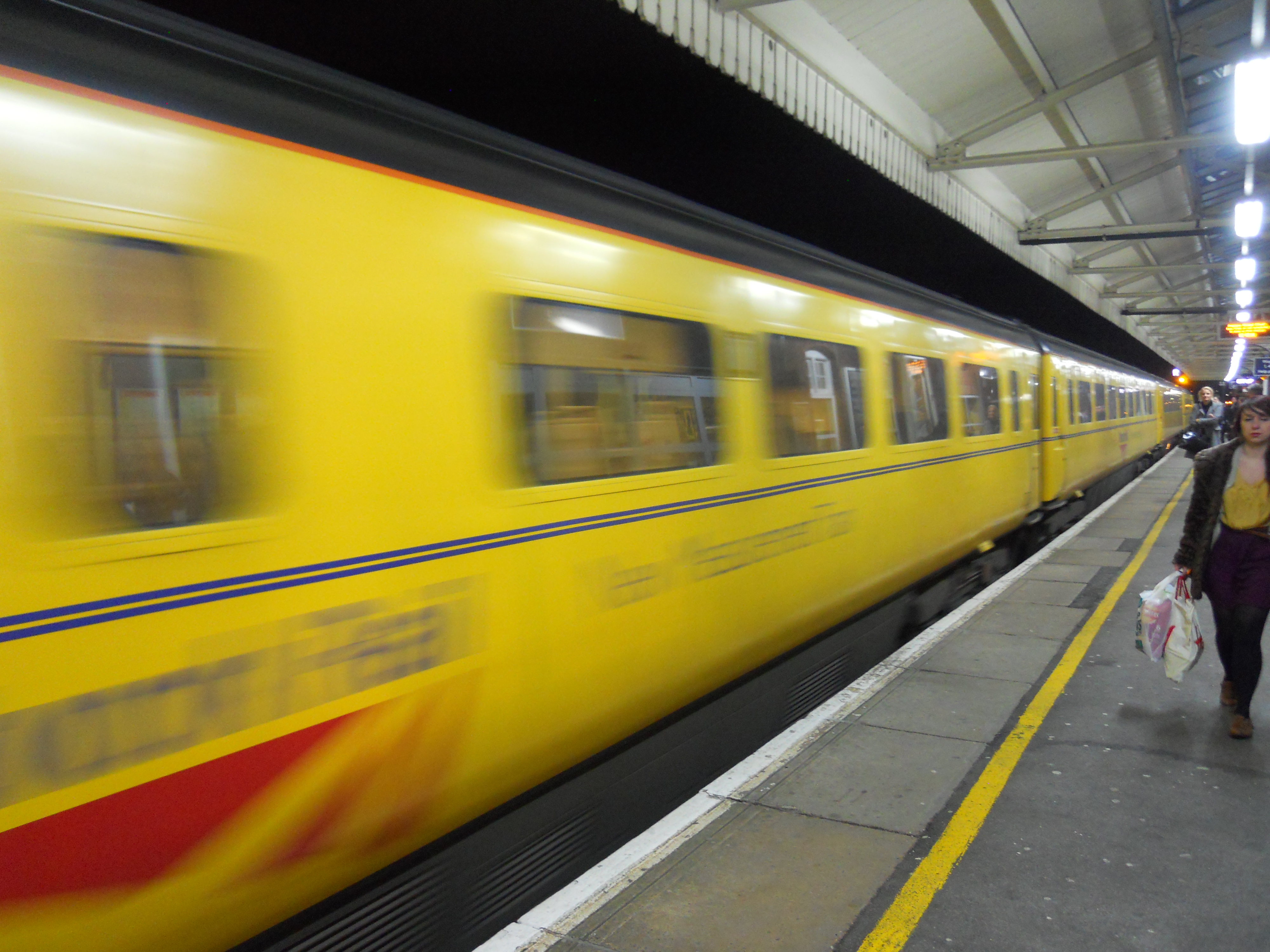
It looks like a High Speed Diesel Train, and it is actually a modified one called the New Measurement Train, which travels all over the network, checking track and electrification systems. Inspection is based on a thirteen week cycle. There is a detailed article on the train here in Construction News. And a video here.
You can see why it got its nickname.
In some ways it is a unique train, not only in the UK, but worldwide.
The Japanese and the French have similar trains for their high speed lines, but these are electrically powered, whereas the New Meaurement Train has two powerful diesel power cars. So as the British train is completely self contained, it can check any line in the UK, whether it is electrified or not. Where I saw it at Basingstoke, it was on a section of track, that uses third rail electrification.
As it is a High Speed Train, it can also be used at 200 kph on the East and West Coast Main Lines, thus testing them at their operational speeds.
Note that as the lines through the Channel Tunnel to London, are effectively built using French electrification standards, the French train is used to monitor those lines every two months. But it has to be diesel hauled through the tunnel.
It all goes to show that the High Speed Diesel Train will be laughing at us for a few decades yet.
 The Anonymous Widower