Europe’s Biggest Battery Storage Project Goes Live In Scotland
The title of this post, is the same, as this article in The Times.
This is the sub-heading.
Zenobe’s site at Blackhillock can store surplus generation for when the wind doesn’t blow and the sun doesn’t shine
These are the first two paragraphs.
Europe’s biggest battery storage project has entered commercial operation in Scotland, promising to soak up surplus wind power and prevent turbines being paid to switch off.
Zenobe said the first phase of its project at Blackhillock, between Inverness and Aberdeen, was now live with capacity to store enough power to supply 200 megawatts of electricity for two hours. It is due to be expanded to 300 megawatts by next year.
I believe we can do better, than install large lithium-ion batteries.
We need to get the pumped storage like Coire Glas, the liquid air like Highview Power and the gravity batteries like Gravitricity going as fast as we can.
They are more environmentally friendly than Tesla’s lithium ion tiddlers and a second generation liquid air battery appears to be 200 MW and 2.5 MWh, so they can supply 200 MW for 12.5 hours.
The Blackhillock battery can do just two hours.
Two of them working as a pair, with a 1 GW wind farm, are as big as a small modular nuclear reactor, so could do the same job, with respect to power supply, using machinery and tank designs, that have been used for decades.
I suspect, that like 1960s coal-fired power stations, they would keep running for fifty years and be simply recycled as steel, copper and other scrap.
Highview Power could make Bishops Stortford famous!
UK Government Sets 8-Hour Minimum For LDES Cap-And-Floor Sheme
The title of this post, is the sa,e as that of this article on Energy Storage News.
This is the sub-heading.
The UK government has published a Technical Decision Document confirming crucial aspects of its long duration electricity storage (LDES) cap-and-floor scheme, which includes increasing the minimum duration required from six hours to eight
These paragraphs give full details.
The document, released by regulator Ofgem on 11 March, details the final overarching rules and requirements for the scheme as well as how it will be implemented, though significant detail still remains to be worked out.
The scheme will provide a cap-and-floor revenue protection for 20-25 years that will allow all capital costs to be recoverable, and is effectively a subsidy for LDES projects that may not be commercially viable without it. Most energy storage projects being deployed in the UK today are lithium-ion battery energy storage systems (BESS) of somewhere between 1-hour and 3-hour in duration (very occasionally higher).
One of the most significant new details of the scheme is that, following industry feedback, the minimum duration for projects to qualify has been increased from six hours to eight hours of continuous rated power.
The ‘continuous rated power’ aspect prevents shorter duration projects from bidding in a smaller section of their MW capacity in order to act like an 8-hour system.
Another interesting detail pointed out by several commentators is that the cap is a ‘soft’ one, meaning it will allow extra revenue to be shared between developers and consumers. Exact details on the ratio are yet to be determined.
As a Graduate Control Engineer from Liverpool University in the 1960s, I hope that the move from a six to eight hours minimum duration is feasible.
I wasn’t dealing with power systems, but with multi-vessel chemical plants.
These are my thoughts.
The biggest project, I was dealing with a few years later in the 1970s, was the modeling of all the the reservoirs and pipelines by the Water Resoures Board.
As the supply side of the water industry hasn’t had too many issues with the volume of water supplied, I feel that the main modelers must have done a reasonable job.
Six To Eight Hours Of Continuous Operation
The article says this about uprating from six to eight hours of continuous operations.
All the systems that have been proposed for cap-and-floor operation, seem to have some form of physical storage.
- Energy Dome appears to have tents of carbon dioxide.
- Energy Vault uses stacks of heavy weights.
- Form Energy has tanks of rust.
- Gravitricity has huge weights in disued mine shafts.
- Highview Power has large tanks of liquid air.
- Pumped storage hydro has two lakes, that hold water.
- Rheenergise has two large tanks, of a water-based slurry.
So to go from six to eight hours will hopefully just need some more storage.
Highview Power appears to use similar gas tanks to those used to store natural gas or hydrogen.
This image clipped from Highview’s web site, shows large tanks for liquified gas storage.
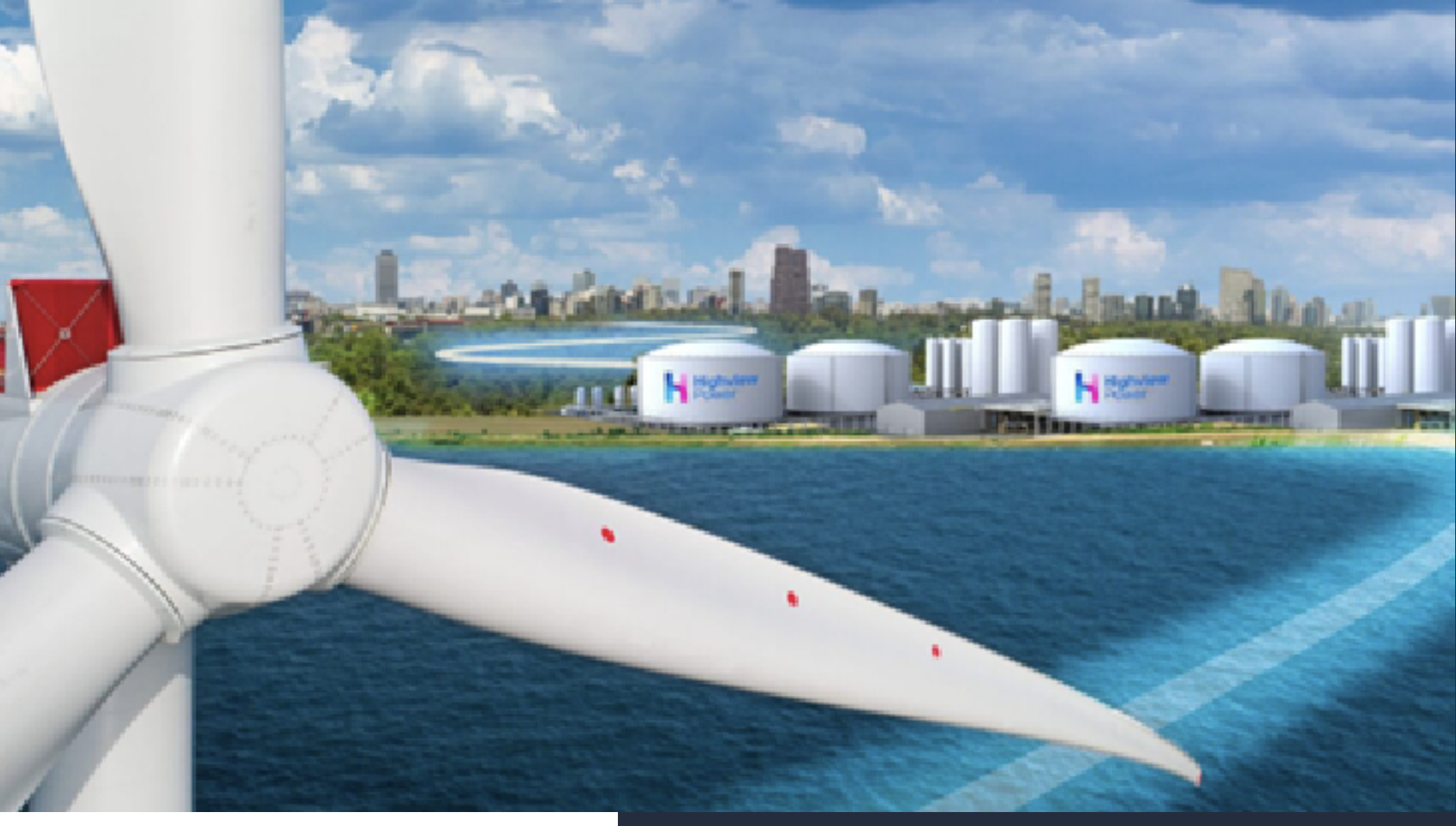
With tanks like these, which can hold GW-equivalents of liquid air, Highview could be building batteries with storage to rival the smaller pumped storage hydroelectric power stations. They are already talking of 200 MW/2.5 GWh systems, which would have a 12.5 hour continuous rating and would probably need two to three tanks.
Coire Glas Pumped Storage
I’ll use Coire Glas pumped storage hydro electric power station as an example.
As currently planned SSE’s Cioire Glas pumped storage hydroelectric power station is 1.5 GW/30 GWh, so it has a a 20 hour continuous rating.
In The UK’s Pumped Storage Hydroelectricity, I gave a rough estimate of the pumped storage hydroelectricity systems in operation or planed as nearly 11 GW/224GWh.
The Soft Cap
The article says this about a soft cap.
Another interesting detail pointed out by several commentators is that the cap is a ‘soft’ one, meaning it will allow extra revenue to be shared between developers and consumers. Exact details on the ratio are yet to be determined.
I seem to remember that when I was modeling a larger multi-vessel chemical plant at ICI, I was using sharing between vessels, to get the system to operate on a PACE-231R analog computer.
So I suspect a soft cap is possible.
Drax To Get £24m In Green Subsidies For Pumped Hydro
The title of this post is the same as that of this article in The Times.
These three paragraphs give details of the subsidy.
Drax will bank £24 million in green subsidies from energy bill-payers for its pumped hydro assets, ahead of a revival in the energy storage technology in Britain.
The FTSE 250 constituent, which also operates Britain’s largest power station in North Yorkshire, has secured contracts to provide 434 megawatts of capacity from its pumped storage and hydro assets, the largest of which is the Cruachan power station near Oban in Scotland.
The contracts cover energy to be delivered between October 2028 to September 2029, at a price of £60 a kilowatt a year.
This will arouse the anti-Drax lobby, but it should be born in mind, that according to Wikipedia, Cruachan can provide a black start capability to the UK’s electrical grid.
This is Wikipedia’s definition of a black start.
A black start is the process of restoring an electric power station, a part of an electric grid or an industrial plant, to operation without relying on the external electric power transmission network to recover from a total or partial shutdown.
After the Great Storm of 1987, we were without power in my part of Suffolk for two weeks and I suspect there were several black starts in the South of England.
I suspect that power from interconnectors could now be used.
Drax is expanding Cruachan from 440 MW to 1 GW, which will be a large investment and surely increase its black start capability.
So in this case the future subsidy could be considered something like an insurance policy to make sure black start capability is available.
How To Keep The Lights On When The Wind Doesn’t Blow
The title of this post, is the same as that of this article in The Times.
This is the sub-heading.
Britain came close to a blackout this month. Gas is being phased out and renewables are intermittent, so can energy storage stop us going dark?
These are the first two paragraphs.
It was 8.29pm on the first Tuesday in January when the alert was issued by the electricity control room. Freezing temperatures had coincided with unusually low wind speeds, and it was making the National Energy System Operator (Neso) jittery.
Engineers forecast a 1.6GW shortfall — the requirement for about 1.5 million homes — for a three-hour period from 4pm the following afternoon. “System operators are requested to notify Neso of any additional megawatt capacity,” the message said.
Luckily, the plea worked.
The article then goes on to describe the various technologies that are being deployed.
The article starts by talking about pumped storage hydroelectricity.
This paragraph gives a superb illustration about how things have changed in energy and energy storage in the UK in the last few decades.
In the past, when coal provided the bulk of British power, this system was used to meet fluctuating demand levels. But now it is also required to meet fluctuating supply levels from renewable sources. Martin Pibworth, chief commercial officer at SSE, started with the company as a trainee in 1998. “Back then, at our Foyers pumped storage plant [at Loch Ness] we would switch modes, from pumping to not pumping and back again, maybe 600 to 700 times a year. Last year we switched modes there 6,500 times. It’s an insight into how the market has changed and how much more flexibility is needed, and how responsive that has to be.”
We have to be more agile, with our handling of storage to back up the various methods of generation.
Pumped Storage Hydro In The Highlands – Is Anywhere Still Off Limits?
The title of this post, is the same as that of this article on UK Climbing.
This is the sub-heading.
Are the enormous Earba and Fearna hydro projects merely the thin end of an ever bigger wedge? Thanks to a relaxed developer-friendly planning regime, is anywhere in Highland Scotland now safe from energy projects designed to feed an insatiable demand down south? In pursuit of clean power, do we risk permitting huge and irreparable harm across our remaining wild habitats and scenic land? And if so, what (and who) is it all really in aid of? It’s not too late to shed light on the murky world of Highland mega-energy, says Jane Meek, but time is running out for our mountain heritage.
These are the first three paragraphs.
In case you haven’t heard, Earba is the codename for a massive pumped storage hydro scheme to be hosted by Ardverikie Estate of Monarch of the Glen fame on behalf of Gilkes Energy, a Lakes-based engineering firm hitherto better known as a developer of small-scale run-of-river hydro schemes on Scottish burns and rivers. Some of these may be familiar to you: they include Pattack on Ardverikie Estate, Ben Glas on Glen Falloch Estate near Crianlarich, and Neaty Burn in Glen Strathfarrar, to name just three.
Gilkes Energy has now moved up into the big league of pumped storage hydro (PSH). Visit their homepage to admire a brief slide show of projects past, present and in planning. It’s glossy professional stuff, just what you’d expect from the self-styled “leading independent developer” of conventional hydro and PSH in the UK.
The aerial shots are particularly fine but… hang on a minute… isn’t that Loch a’ Bhealaich Leamhain down there, gleaming like a pearl in the high pass between Munros Beinn a’ Chlachair and Mullach Coire an Iubhair (Geal Charn as was)? And … oh dear, isn’t that Loch Fearna, the glittering shelf lochan below Spidean Mialach, immortalised in countless photographs by walkers crossing the col between Spidean and neighbouring Gleouraich? From the slopes above Fearna, the views across Loch Quoich to Gairich and beyond are simply stunning. After watching the slide show, you may feel simply stunned.
The author of the article makes a statement and asks a question.
It’s industrialisation on a vast scale. Are these truly the right schemes in the right places?
The author may have a point, but environmentalists will argue that saving the planet is more important and that pumped storage hydroelectricity is one of the technologies, that will help us do that!
The MailOnline’s View Of Pumped Storage Hydroelectricity
The MailOnline gives their view on Pumped Storage Hydroelectricity on the front page of their web site today.
This is the bold title.
Scotland is littered with windfarms. Now the impact of billion-pound hydro projects to store energy they produce threatens our scenic landscapes… and led critics to brand the plans – The Loch Ness Monstrosity
To my mind, the site’s language leaves no doubt that they are not keen on either windfarms or the hydro projects to store energy.
Calling the plans the Loch Ness Monstrosity, is an insult to the engineers, who have devised the plans.
The journalist, who wrote the article has made the same mistake, that many do when they write about any form of energy storage – They only give the output of the battery and not the output and the storage capacity.
Thus Red John Pumped Hydro is described in the article like this.
The £550million Loch na Cathrach venture (formerly known as Red John, after a popular local lochan), is one of the biggest renewable energy projects in the North and was granted consent by the Scottish Government in June 2021 despite strong objections from campaigners and Highland Council but has yet to be built in the hills near Dores.
The 450MW project owned by Norwegian state firm Statkraft hopes to start construction next year and be operational by 2030.
Note.
- Red John is a 450 MW project with a storage capacity of 2,800 MWh, which is conventionally shown as a 450 MW/2,800 MWh battery.
- A battery of this size can supply 450 MW for 6.2 hours, which is more than a lithium-ion battery of the same cost could manage.
- 450 MW is about the average size of a gas-fired power station.
Where the geography is suitable, pumped storage hydroelectric stations may be able to replace gas-fired power stations.
- There would be no cooling towers.
- There would be no chimneys or associated pollution.
- The electrical gubbins to connect to the grid would be the same and could probably be refurbished.
The new lake could be used for water-based activities like fishing, sailing skiing and swimming.
Conclusion
Obviously, playing the Nimby-card sells newspapers.
UK To Fund Hydro Energy Storage Projects
The title of this post, is the same as that of this article on The Times.
This is the sub-heading.
New infrastructure aims to help balance the electricity system after the rapid growth in renewables
These three paragraphs infrastructure the article.
Projects that use water to store and release energy are to be given government support, in an attempt to help manage the volatility in supply and demand as more green power enters the grid.
From next year, pumped hydro storage projects will be able to apply for government subsidies, which will be provided via a “cap and floor” mechanism. These would guarantee revenues if prices drop below a certain floor but prevent providers from charging above a ceiling when power prices are high.
Like other government support schemes, any cost will be levied on energy bills, while consumers will be paid back any money generated above the cap. It is yet to be decided precisely how the cap and floor will be set.
I feel it is reasonable to expect the system to be a success, as a similar system is used for interconnectors and this article on Offshore Energy is entitled Over $86 million To Be Split Between UK and Belgium Consumers As 1 GW Subsea Interconnector’s ‘Remarkable’ Revenues Exceed Ofgem’s Cap.
It looks like Ofgem played this right for interconnectors and the Nemo Link is making a substantial payment.
It will be interesting to see what happens when “cap and floor” contracts are assigned.
This move by Ofgem will probably have effects in two areas.
- SSE, Statera and Statkraft, who are typically developing systems at the high end with a size of about 1.5 GW/25 GWh could find money is easier to come by.
- At the lower end, companies like Highview Power, who have systems of 50 MW/300 MWh and 200 MW/2.5 GWh under development, will also benefit.
My Control Engineering thoughts are leaning towards the 200 MW/2.5 GWh systems being the popular ones. Especially as they would appear to be close to the right size to support a 1 GW wind farm for two hours.
A Highview Power Two-Hour Liquid Air Battery could fit nearly with a fleet of Two-Hour BESS.
It should be noted that CAF use a little-and-large approach to theit battery-electric trams in the West Midlands.
A large lithium-ion battery is the main storage device.
A supercapacitor handles the high-frequency response and keeps the power steady.
Pairing a Highview Power Two-Hour Liquid Air Battery and a Two-Hour BESS could achieve the same performance and possibly result in some cost savings.
Global Offshore Wind To Top 520 GW By 2040, Floating Wind To Play Major Role – Rystad Energy
The title of this post, is the same as that of this article on offshoreWIND.biz.
This is the sub-heading.
According to Rystad Energy, global offshore wind capacity will surpass 520 GW by 2040, with floating wind installations nearing 90 GW by that time
These are the first three paragraphs.
In 2023, the offshore wind sector saw a seven per cent increase in new capacity additions compared to the previous year, said Rystad Energy. This momentum is expected to accelerate this year, with new capacity additions expected to grow by nine per cent to over 11 GW by the end of the year.
By 2040, Europe is expected to account for more than 70 per cent of global floating wind installations. Although some project delays beyond 2030 are anticipated, there will likely be a strong push to accelerate deployment, according to Rystad Energy.
As a result, floating wind capacity is projected to approach 90 GW by 2040, led by the UK, France, and Portugal, with Asia (excluding mainland China) expected to account for 20 per cent of global installations.
Note, that Rystad Energy is an independent energy research and business intelligence company headquartered in Oslo, Norway.
Implications For Energy Storage
In Grid Powers Up With One Of Europe’s Biggest Battery Storage Sites, I talk about how the 2.9 GW Hornsea Three wind farm will have a connection to the grid, that incorporates a 300 MW/600 MWh battery.
With 520 GW of offshore wind to be installed by 2040, I suspect that energy storage companies and funds will do well.
If the 520 GW of offshore wind were fitted with batteries like the 2.9 GW Hornsea Three wind farm, there would be a need for around 60 GW of battery output, with a capacity of around 120 GWh.
I doubt, there would be enough lithium for all those batteries.
Some countries like Norway, the United States, Australia, France, Spain, Japan, India, China and others will be able to develop large pumped storage hydroelectricity systems, but others will have to rely on newer, developing technologies.
The UK will be well-placed with around 80 GWh of pumped storage hydroelectricity under development and several promising developing storage technologies.
ILI Group Progresses Plans For 1.5GW Pumped Storage Hydro Project
The title of this post, is the same as that of this article on Power Technology.
This is the sub-heading.
The company has submitted a Section 36 planning application to the Scottish government.
These three paragraphs give more details.
The Intelligent Land Investments (ILI) Group has submitted a Section 36 planning application to the Scottish government for its 1.5GW Balliemeanoch pumped storage hydro project in Argyll and Bute.
The initiative will boost the UK’s renewable energy capacity and supply electricity to 4.5 million homes.
With an anticipated connection date of 2031, the project is strategically aligned with the UK’s long-term energy strategy.
Note.
- It will have a storage capacity of 45 GWh.
- It will be by far, the largest pumped storage hydroelectric power station in the UK. The under development Coire Glas pumped storage system is 24 GWh.
When the UK or Europe needs more power after completion of Balliemeanoch and Coire Glas, the Highlands of Scotland will provide the power.
Gresham House Energy Storage Reaches 1 Gigawatt Of Capacity
The title of this post, announcing a major milestone for Gresham House Energy Storage Fund appears on several web pages.
Many grid batteries are designed to give full power for two hours, so applying that rule to the Gresham House Energy Storage fleet, will mean that the total fleet would be a 1 GW/2 GWh battery.
Consider.
- In Centrica Business Solutions And Highview Power, I showed how Highview Power’s batteries could be used, instead of lithium-ion batteries.
- Highview Power’s largest battery is 200 MW/2.5 GWh, which compares well with the largest lithium-ion batteries, in the UK fleet.
- The Ffestiniog Power Station is a 360 MW/1.44 GWh pumped-storage hydroelectric power station in Wales. It is slightly smaller than Highview Power’s largest battery.
- Moss Landing Power Plant in California is proposing to have a 1,500 MW / 6,000 MWh lithium-ion battery.
- Other GWh-scale systems are under trial.
It would appear that battery systems are widening the sizes of where they can be employed.
This hopefully, will mean more competition and keener prices for battery systems.

