Our Sustainability Journey
The title of this post, is the same as that of this press release on the Rolls-Royce web site.
It is sub-titled.
Paul Stein’s Thoughts On Sustainability And Electrification
Paul Stein is Rolls-Royce’s Chief Technology Officer, so what he says is important.
This press release was the source of the information behind Distributed Propulsion ‘Maybe The Only Means’ For Small Electric Flight Progress, which I wrote about Rolls-Royce’s beer keg-sized 2.5 MW generator.
This is the third paragraph.
We’ve taken great steps at Rolls-Royce with our three-pillar sustainability approach of developing the gas turbine to even greater efficiency, supporting the introduction of Sustainable Aviation Fuel and creating new, disruptive technologies such as electrification.
These are definitely, the three pillars of wisdom, when it comes to sustainable aviation.
E-Fan X
This paragraph is Paul Stein’s view of the E-Fan X.
One of the great endeavours in the latter category has been our E-Fan X programme in partnership with Airbus. From our side, this has involved creating a hybrid-electric power generation system at a scale never previously seen in our industry, comprised of an embedded AE2100 gas turbine driving a 2.5MW generator and 3000V power electronics and an electric propulsion unit. What has been particularly encouraging has been the amount of industry interest and support for this programme, and I know everyone at Rolls-Royce and Airbus has been truly grateful for that.
He states that the E-Fan has now concluded, but a several valuable lessons have been learned.
2.5 MW Generator
He describes the generator like this.
Amongst the many great achievements from E-Fan X has been the generator – about the same size as a beer keg – but producing a staggering 2.5 MW. That’s enough power to supply 2,500 homes and fully represents the pioneering spirit on this project.
The press release discloses that the heart of this staggering generator is a Rolls-Royce AE2100 gas turbine, which powers the latest version of the legendary Lockheed Hercules; the C-130J Super Hercules.
Wikipedia gives this data for the AE2100D2 version of the engine.
- Length – three metres
- Diameter – 0.73 metres
- Weight – 783 kilograms
- Maximum Power Output – 3458 kW
- Fuel Consumption – 0.25/kW/h
It looks like in the E-Fan X application, the engine is not at full power.
Use With Aviation Biofuel
Aviation Biofuel is described like this in the first sentences of its Wikipedia entry.
Aviation biofuel is a biofuel used for aircraft. It is considered by some to be the primary means by which the aviation industry can reduce its carbon footprint. After a multi-year technical review from aircraft makers, engine manufacturers and oil companies, biofuels were approved for commercial use in July 2011.
But it doesn’t necessarily mean growing large amounts of crops and converting it to the fuel. Altalto, who are backed by British Airways, Shell, Oxford University and the British Government are building a plant at Immingham to convert household and industrial waste into aviation biofuel.
I would expect that Rolls-Royce have made sure that the generator will work with aviation biofuel.
A Memory Of Emergency Power Generation
About twenty-five years, there was a major power failure after a thunder storm, where I lived in Suffolk and C and myself went to bed in the dark. We awoke to full power in the morning, after a good night’s sleep with no disturbance.
Imagine my surprise, when I let the dogs out to find parked in the field in front of the house, a very large articulated truck.
I was greeted by an engineer, who asked if I minded, his generator in my field. I seem to remember my response was to offer him a cup of tea, which he refused, as he said he had everything he needed in the truck.
It turned out that the main sub-station for the area had received a direct lightning strike and had been destroyed. So to supply power to all the nearby villages, as my farm was at the end of the supply, it was the most convenient place to plug in a transportable gas-turbine generator. The generator was in the field for about ten days and the whole operation impressed me with its professionalism.
But with this new 2.5 MW generator from Rolls-Royce, there would only need to be a small 3.5 tonne four-wheeled truck, to include the generator, fuel and living quarters for the engineer
We have made a lot of progress in twenty-five years.
A Modern Railway Locomotive
The power of this new Class 68 diesel locomotive, that was built in Spain, by Swiss company Stadler is a very healthy 2,800 kW.
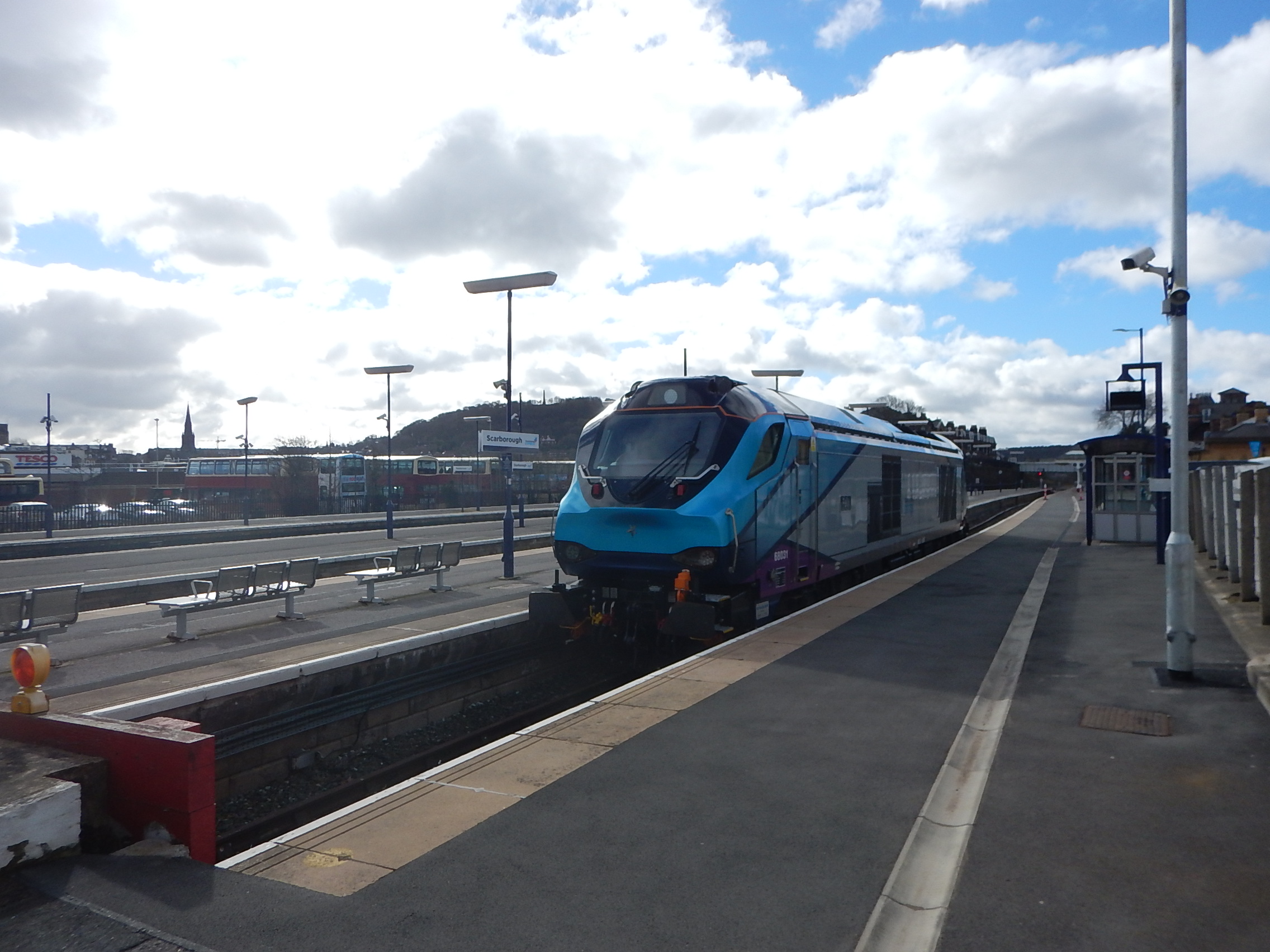
Consider these facts about a Class 68 locomotive.
- Thirty-four of these locomotives have been produced for the UK.
- They are powered by a Caterpillar C175-16 engine, which weighs thirteen tonnes.
- The transmission of these locomotives is electric, which means that the diesel engine drives a generator and the train is driven by electric traction motors.
- The locomotive is equally at home hauling intermodal freight trains and passenger trains for Chiltern Railways or TransPennine Express.
- According to Wikipedia, Class 68 locomotives comply with Stage III A of the European emission standards but not Stage III B. But that is much better than most of our noisy, smelly and polluting diesel locomotives.
Class 68 locomotives are members of the UKLight family of locomotives, which contains, these two other locomotives.
- Already in service is the Class 88 locomotive, which is a bi-mode locomotive, which is capable of running on electrification or the on-board 0.7 MW diesel engine.
- Under development is the Class 93 locomotive, which is a tri-mode 110 mph locomotive, which is capable of running on electrification, the on-board 0.7 MW diesel engine or battery power.
Stadler seem to be able to mix-and-match various power sources to provide versatile and highly-desirable locomotives.
I feel it would be feasible to design a railway locomotive with the following power sources.
- 25 KVAC overhead or 750 VDC third-rail electrification, providing up to perhaps the four MW of a Class 88 locomotive.
- A Rolls-Royce gas-turbine generator running on aviation biofuel, providing up to perhaps three MW.
- Batteries up to a weight of perhaps ten tonnes.
I am sure that it could handle many of the routes still run with diesel locomotives in the UK.
- It would handle all locomotive-hauled passenger services and would be electric-only in stations.
- It certainly solves the problem of hauling long intermodal freight trains between Felixstowe and the Midlands and the North.
- To handle the heaviest stone and aggregate trains, it might need a more powerful generator, but I’m sure Rolls-Royce would oblige.
In Thoughts On A Battery/Electric Replacement For A Class 66 Locomotive, I gave a list of routes, that would need to be handled by a battery electric locomotive.
- Didcot and Birmingham – Around two-and-a-half hours
- Didcot and Coventry – Just under two hours
- Felixstowe and Ipswich – Around an hour
- Haughley Junction and Peterborough – Around two hours
- Southampton and Reading – Around one-and-a-half hours
- Werrington Junction and Doncaster via Lincoln – Around two hours
- Werrington Junction and Nuneaton – Just under two hours
Will Rolls-Royce’s generator be able to supply 2.5 MW for up to four hours?
This would need two-and-a-half tonnes of aviation biofuel, which would be around 3,200 litres, which could be carried in the 5,000 litre tank of a Class 68 locomotive.
It certainly seems feasible to replace diesel locomotives with gas-turbine locomotives running on aviation biofuel, to reduce net carbon emissions and reduce noise and pollution.
But this is not just a UK problem and many countries, who rely on diesel-hauled rail freight, would look seriously at such a locomotive.
Underfloor Mounting In Passenger Trains
These pictures show the space underneath a Hitachi Class 800 train.
The red cap visible in some pictures is the filler for the oil or diesel for the MTU 12V 1600 R 80L diesel engine used to power the trains away from electrification.
This diesel engine has this specification.
- It produces 560 kW of power.
- It weighs around six tonnes.
- Its is about 4 x 2.5 x 1 metres in size.
The diesel engine produces about a fifth of the power as the gas-turbine generator, which is also smaller and very much lighter in weight.
It should also be noted, that a nine-car Class 800 train has five of these MTU diesel engines.
At a first glance, it would appear Hitachi could find one of Rolls-Royce’s gas-turbine generators very useful.
- It might even enable self-powered high speed trains to run on lines without electrification at speeds well in excess of 140 mph.
- I can certainly see, High Speed Two’s classic-compatible trains having one or possibly two of these generators, so they can extend services on lines without electrification.
We shouldn’t forget that one version of British Rail’s Advanced Passenger Train was to be gas-turbine powered.
A Class 43 Diesel Power-Car
Rolls-Royce would need a test-bed for a trial rail application of their 2.5 MW generator and there is probably no better trial vehicle, than one of the numerous Class 43 power-cars waiting to be scrapped. They could probably obtain a complete InterCity 125, if they wanted one for a realistic weight, test equipment and a second power-car for comparison and rescue.
But seriously, if we are going to remove diesel from UK railways by 2040, a solution needs to be found for the GWR Castles, ScotRail’s Inter7Citys and NetworkRail’s New Measurement Train.
One of the great advantages of these staggering (Rolls-Royce’s Chief Technology Officer’s word, not mine!) generators is that they are controlled by Full Authority Digital Engine Control or FADEC.
FADEC will give the pilots in a Hercules or other aircraft, all the precise control they need and I doubt Rolls-Royce will leave FADEC out of their gas turbine generator, as it would give the operator or driver extremely precise control.
A driver of a GWR Castle equipped with two gas-turbine power-cars, would be able to do the following.
- Adjust the power to the load and terrain, with much more accuracy, than at present.
- Shut the engines down and start them quickly, when passing through sensitive areas.
- Cut carbon-dioxide emissions, by simply using a minimum amount of fuel.
I would put a battery in the back of the Class 43, to provide hotel power for the passenger coaches.
Running current MTU engines in the Class 43s, on biodiesel is surely a possibility, but that not an elegant engineering solution. It also doesn’t cut carbon emissions.
As there are still over a hundred Class 43s in service, it could even be a substantial order.
It should also be noted, that more-efficient and less-polluting MTU engines were fitted in Class 43s from 2005, so as MTU is now part of Rolls-Royce, I suspect that Rolls-Royce have access to all the drawings and engineers notes, if not the engineers themselves
But it would be more about publicity for future sales around the world, with headlines like.
Iconic UK Diesel Passenger Trains To Receive Green Roll-Royce Jet Power!
COVID-19 has given Rolls-Royce’s aviation business a real hammering, so perhaps they can open up a new revenue stream by replacing the engines of diesel locomotives,
A Class 55 Locomotive
Why Not?
A Class 55 locomotive is diesel electric and there are thousands of diesel locomotives in the world, built to similar basic designs, that need a more-efficient and more environmentally-friendly replacement for a dirty, smelly, noisy and polluting diesel power-plant.
Marine Applications
The Wikipedia entry for the Cat C175, says this.
The Cat C175 is often used in locomotives and passenger-class ships.
I suspect there will be marine applications for the gas-turbine generator.
Conclusion
I’m very certain that Rolls-Royce’s pocket power station has a big future.
Who said that dynamite comes in small parcels?
Distributed Propulsion ‘Maybe The Only Means’ For Small Electric Flight Progress
The title of this post, is the same as that of this article on the Institute of Mechanical Engineers web site.
If you want to fly again, then this article offers pointers to how you might do it.
The E-Fan X Airliner
It gives this latest information on the E-Fa X airliner being tested by Rolls-Royce and Airbus.
Amid the strain of the Covid-19 pandemic, Rolls-Royce and Airbus cancelled flight tests of their E-Fan X airliner, a promising project that could have provided vital data on issues such as thrust management and electric systems at altitude.
Does that mean cancelled or scrapped?
2.5 MW From A Beer Keg-Sized Generator
This paragraph could be important.
“Among the many great achievements from E-Fan X has been the generator – about the same size as a beer keg – but producing a staggering 2.5MW,” said Vittadini’s Rolls-Royce counterpart Paul Stein. “That’s enough power to supply 2,500 homes and fully represents the pioneering spirit on this project.”
This picture shows a Class 66 locomotive.
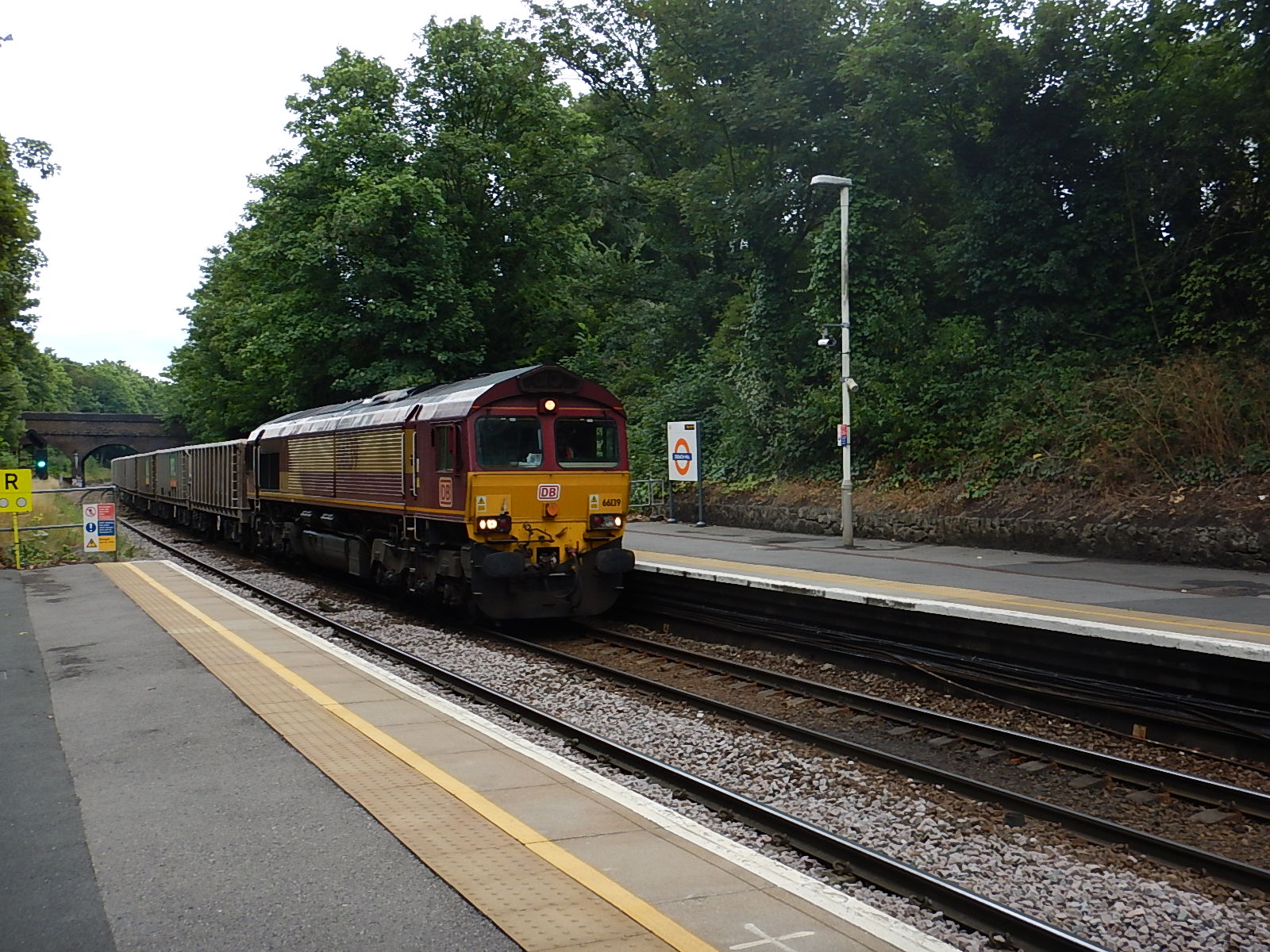
The locomotive has a 2,460 kW diesel engine and an electric transmission.
I just wonder, if Rolls Royce’s high-powered small generator could replace the large, noisy and smelly diesel engines in these locomotives.
- It will be a lot lighter in weight.
- Could some of the saved weight be used for a battery?
- It could run on aviation biofuel, rather than diesel.
- I wrote about aviation biofuel in Grant Shapps Announcement On Friday.
If the technology worked there are 455 of the noisy locomotives.
Snowballing Improvements
The article has a section with this title and it talks about how electric power may lead to other advantages.
Conclusion
Electric aircraft are more promising, than many think!
Zero Carbon? Not Here! Carbon-Fibre Bogie Frame
When I was at University in the 1960s, the big UK engineering project was the Rolls-Royce RB-211 turbofan engine.
One of the features of the engine was a carbon-fibre fan blade, which saved weight and thus made the engine lighter and more efficient.
However the blades were found to shatter with bird strikes and titanium had to be used instead.
At Liverpool University, we knew something was wrong, as a fellow student on our course was the son of the Manager of Tesco in Derby. What used to happen to Tesco’s out-of-date chickens? They ended up at Rolls-Royce, where they were used to test jet engines for bird-strikes. He told us the story of the failed testing one liquid lunch-time.
That was over fifty years ago and the RB-211 has morphed into the successful Rolls-Royce Trent engine, which first ran in 1990 and is still going strong.
Carbon-fibre has gone its own way and is used in many applications from cars to tennis rackets and golf clubs.
The title of this post is the same as that of this article on Rail Engineer.
The article describes work at Birmingham University to create a carbon-fibre bogie frame.
This paragraph from the article describes the outcome.
A major achievement is that the mass of the frame as built is 350kg, compared to the steel equivalent of 936kg. By the time the metal fittings were installed and paint applied, the mass had increased to 940kg compared with the steel equivalent of 1468kg, a reduction of over half a tonne per bogie.
Lighter bogies mean lower track-access charges.
I will be interesting to see how this project ends, when a prototype has been running in a real train.
Looking At The Mathematics Of A Class 170 Train With An MTU Hybrid PowerPack
From various sources like the Wikipedia entry for the Class 170 train and various datasheets and other Internet sources, I will try to get the feel of Class 170 train, that has been fitted with two MTU Hybrid PowerPacks.
Assumptions And Source Data
For the purpose of this post, I shall make the following assumptions about the Class 170 train.
- The train has two cars, each with their own engine.
- The train has a capacity of 150 passengers.
- The train weighs 90.41 tonnes.
- The train has an operating speed of 100 mph.
After conversion each car will have MTU Hybrid PowerPack with a 6H 1800 engine.
The data sheet for the MTU Hybrid PowerPack with a 6H 1800 engine, indicates the following.
- Up to four 30.6 kWh batteries can be added to each module.
- Each battery weighs 350 Kg.
- Various sizes of diesel engine can be specified.
- The smallest is a 315kW unit, which is the same size as in a current Class 170 train.
If I assume that the two diesel engines weigh about the same, then any increase in train weight will be down to the batteries, the mounting, the traction motor and the control systems.
But the hydraulic system will be removed.
Calculation Of The Maximum Kinetic Energy
I will now calculate the maximum kinetic energy of a fully-loaded train, that is travelling at maximum speed.
- Assuming the average weight of each passenger is 90 Kg with baggage, bikes and buggies, the weight nof a full train becomes 103.91 tonnes
- The train is travelling at 100 mph.
- Using the Omni Kinetic Energy Calculator gives a kinetic energy of 28.84 kWh.
So even if only one battery is fitted to each engine, there will be 61.2 kWh of energy storage per train, which will probably be more than enough to handle the regenerative braking.
The hybrid PowerPack will probably add some extra weight to the train.
Even if I up the total train weight to 120 tonnes, the kinetic energy is still only 33.33 kWh.
So half this amount of energy can easily be stored in a 30.6 kWh battery in each car.
I would be very surprised, if this train needed a larger engine than the smallest 315 kW unit and more than one battery module in each car.
Does The MTU Hybrid PowerPack Work As A Series Hybrid?
In a series hybrid, the operation is as follows.
- The diesel generator charges the battery.
- The battery drives the train using the traction motor.
- During braking, the electricity generated by the traction motor is returned to the battery.
- If the battery is full, the regenerative braking energy is passed through resistors on the train roof to heat the sky.
There will also be a well-programmed computer to manage the train’s energy in the most efficient manner.
For a full explatation and how to increase the efficiency read the section on series hybrid, in Wikipedia.
I’m fairly certain that the MTU Hybrid PowerPack works as a series hybrid.
Will The Train Performance Be Increased?
I suspect the following improvements will be achieved.
- Acceleration will be higher, as it seems to be in all battery road vehicles.
- Braking will be smother and the rate of deceleration will probably be higher.
- Station dwell times will be shorter.
- Noise levels will be reduced.
This video explains the thinking.behind the MTU Hybrid PowerPack.
These trains will be liked by passengers, train operators and rail staff, especially if they enable faster services.
Will The MTU Hybrid PowerPacks Be Difficult To Install?
MTU built the original engines in the Class 170 trains and their must be well over two hundred installations in this class of train alone.
So in designing the PowerPack, it would be a very poor team of engineers, who didn’t design the PowerPack as almost a direct replacement for the existing engine,.
Fitting the new PowerPacks then becomes a question for the accountants, rather than the engineers.
As both a UK and a German project have been announced in the last few days, it looks likely that MTU have come up with a one PowerPack fits all their old engine installations solution.
Conclusion
This project could be a really successful one for MTU and their owner; Rolls-Royce.
Alpha Trains Commits To Hybrid Retrofit For Diesel Fleet
The title of this post is the same as that on this article on Global Rail News.
This is the first paragraph.
Alpha Trains has signed a letter of intent with Rolls-Royce to retrofit its existing diesel train fleet with hybrid drive systems.
This involves using an MTU Hybrid PowerPack, from the same family as those, that will be used in the UK to upgrade the Class 170 trains. I talked about the latter project in Rolls-Royce And Porterbrook Launch First Hybrid Rail Project In The UK With MTU Hybrid PowerPacks.
It certainly looks like Rolls-Royce have created the MTU Hybrid PowerPack for a worthwhile market.
This video explains Rolls-Royce’s thinking.
Rolls-Royce And Porterbrook Launch First Hybrid Rail Project In The UK With MTU Hybrid PowerPacks
The title of this post is the same as that on this Press Release from Porterbrook.
Porterbrook, Eversholt and the other train leasing companies have a problem, that can be turned into an opportunity to make money in a way, few will find unacceptable.
There are several fleets of trains in the UK, that are reasonably new and have plenty of life left in their basic structure, running gear and traction equipment.
But compared to modern rolling stock, they are like a twenty-year-old BMW, Jaguar or Mercedes. Good runners and comfortable, but not up to the standards, passengers, rail operators, rail staff and environmentalists expect.
So the train leasing companies are looking for ways to update their fleets, so that they can continue to earn money and satisfy everybody’s needs and aspirations.
Class 769 Train
Porterbrook started this innovation by taking redundant Class 319 trains and converting them into Class 769 trains, so they could be used on lines without electrification.

The picture shows one of Northern’s Class 319 trains.
Thirty-five of these trains have been ordered. So far, due to design and testing issues none have been delivered. Hopefully, as testing has now started, some will be in traffic before the end of the year.
This project could create upwards of fifty much-needed four-car bi-mode trains for running on partially-electrified routes.
Class 321 Hydrogen Train
Eversholt have also teamed up with Alstom to create a hydrogen-powered version of their Class 321 train.
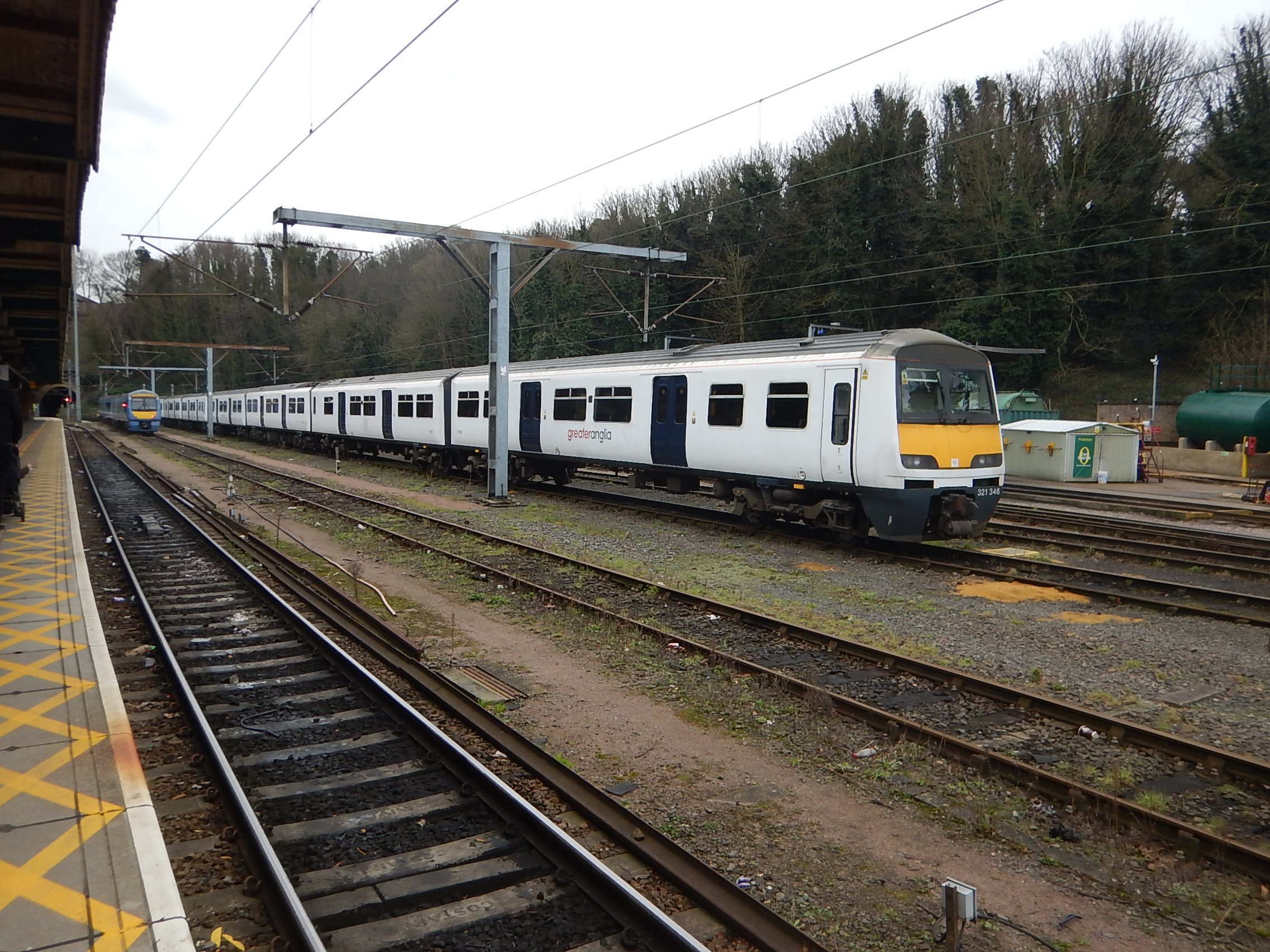
This project could create around a hundred four-car 100 mph, zero-emission electric trains, for running on routes with no or only partial electrification.electrification.
The Four-Car High Speed Train
Everybody loves High Speed Trains and Scotrail and Great Western Railway are taking a number of them and creating four-car quality trains to increase their rolling stock.
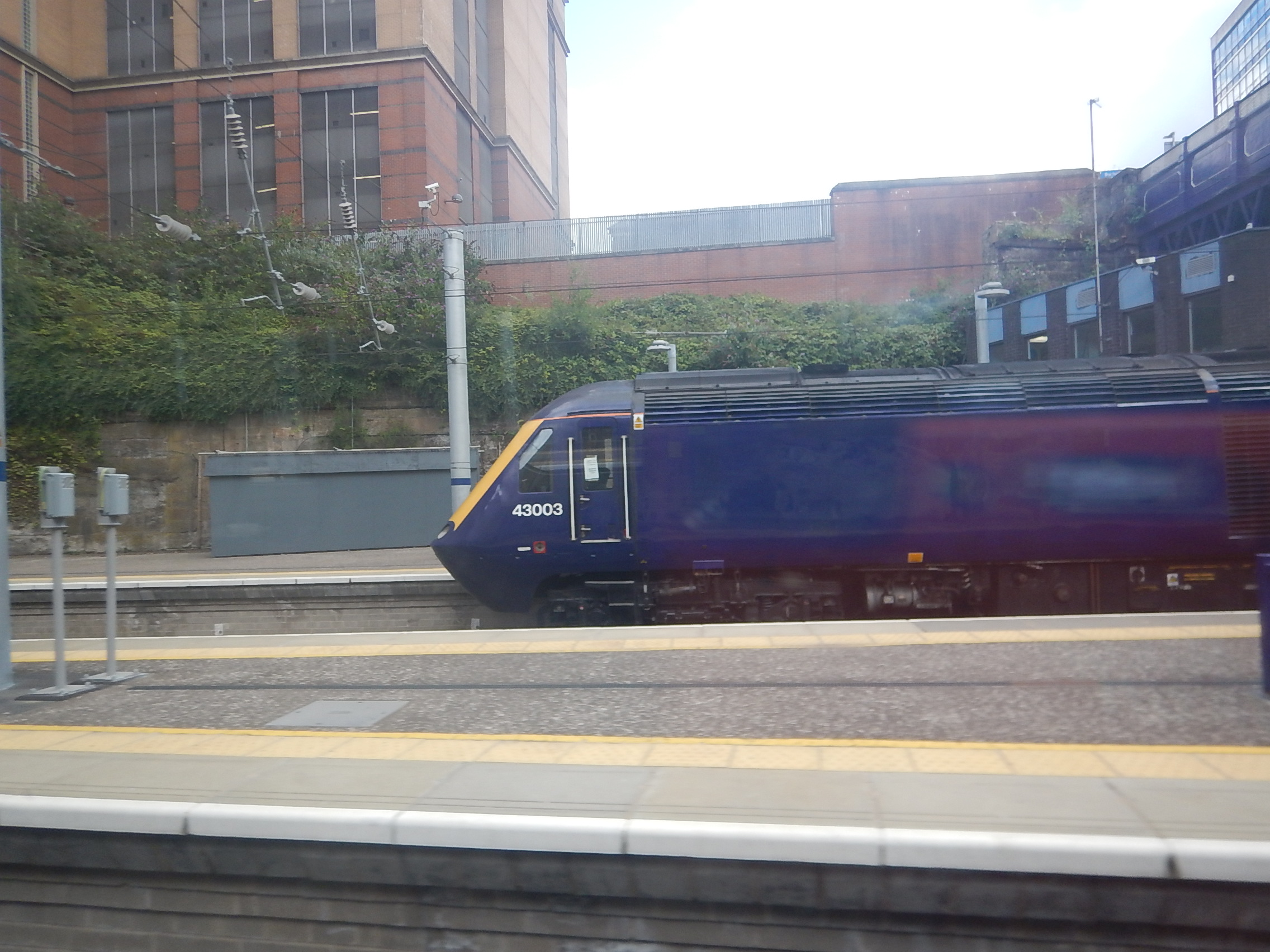
The picture shows a High Speed Train under test in Glasgow Queen Street station.
They are already running in Cornwall and they should be running in Scotland before the end of the year.
Updating The Class 170 Trains
The Press Release announces Porterbrook’s latest project and gives this picture.
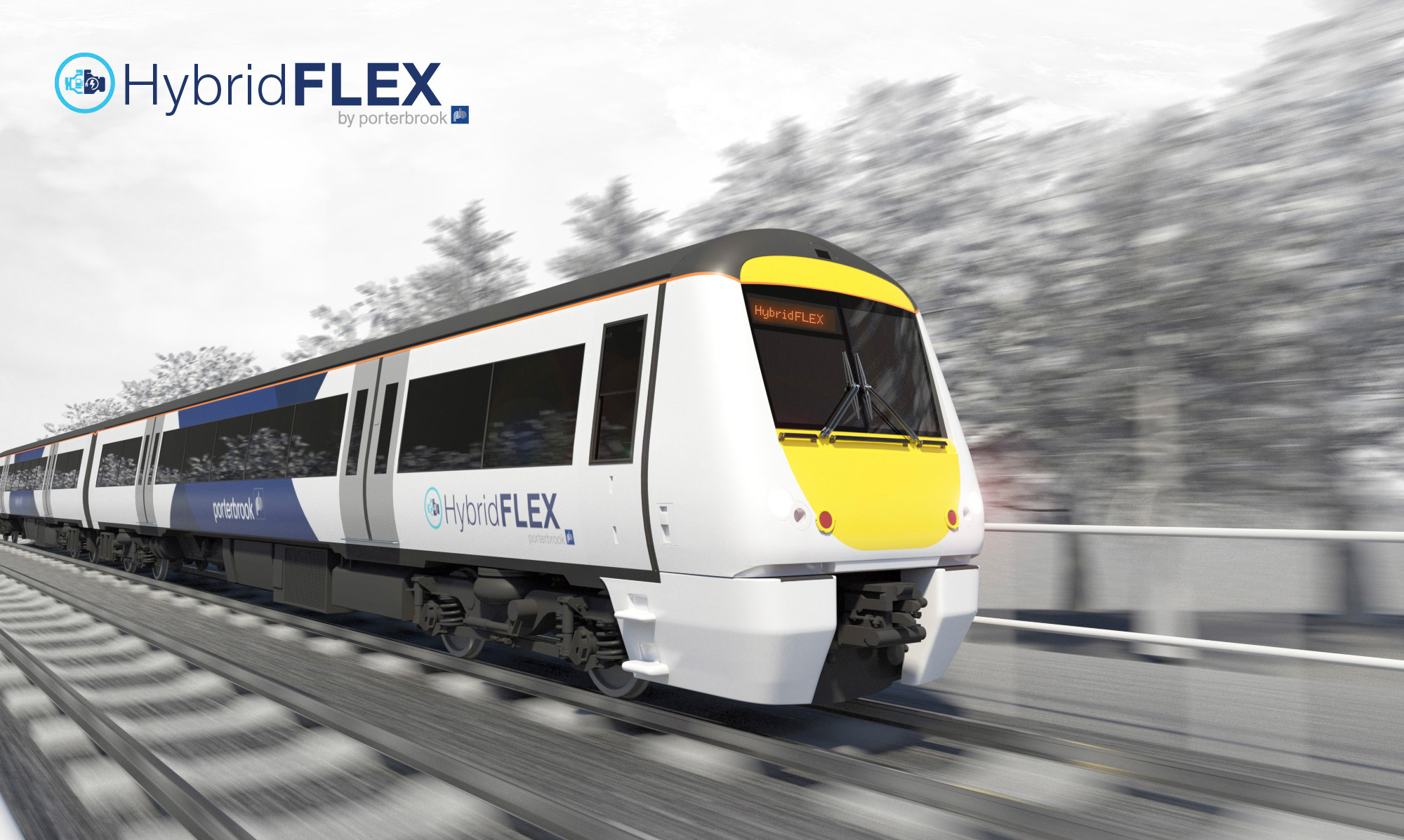
There are 122 Class 170 trains on the UK rail network, which were built around twenty years ago. There are also nearly a hundred other Class 168, 171 and 172 trains with a similar design.
They are 100 mph trains, that are diesel-powered and some are used on long distances.
As a passenger, they are not a bad train, but being diesel, they are not that environmentally friendly.
The Class 172 trains, which are currently running on the Gospel Oak to Barking Line, would surely be a much better train with a smoother electric transmission, that had regenerative braking. Although, as they have a mechanical transmission, rather than the hydraulic of the other Turbostars, this might not be possible.
On the other hand, West Midlands Trains will soon have a fleet of thirty-five Class 172 trains of various sub-types, so fuel savings could be significant.
This is from the Press Release.
Rolls-Royce and Porterbrook, the UK’s largest owner of passenger rolling stock, have agreed the delivery of MTU Hybrid PowerPacks that can convert Class 168 and Class 170 ‘Turbostar’ DMUs from diesel-only to hybrid-electric operation. Hybrid technology allows for the cleaner and quieter operation of trains in stations and through urban areas.
As I understand it, the current hydraulic traction system will be replaced by an electric one with a battery, that will enable.
- Regenerative braking using a battery.
- Battery electric power in urban areas, stations and depots.
- Lower noise levels
- Lower maintenance costs.
This should also reduce diesel fuel consumption and carbon emissions.
Conclusion
The good Class 170 trains, are being improved and should give another twenty years of service.
How many other projects like these will surface in the next few years?
The Great Electric Air Race Has Begun
The title of this post is the first sentence of this article in The Independent, which is entitled Electric Planes: Could You Be Flying On A Battery-Powered Aircraft By 2027?.
This is the full first paragraph in an article by respected travel writer; Simon Calder.
The great electric air race has begun. Three European industry heavyweights have teamed up against a US startup and Britain’s biggest budget airline to develop the first commercial electric aircraft.
So is such an aircraft feasible?
When you consider that the three European heavyweights are Airbus, Rolls-Royce and Siemens, I suspect that the proposed project is serious.
It should also be said that the companies are not aiming for an all-electric aircraft, but a hybrid plane with a very efficient on-board generator and a two-tonne battery.
The key to success will probably include.
- Batteries with a very high energy density.
- A highly-efficient and quiet gas turbine, that generates a lot of energy.
- Radical air-frame design to take advantage of the technology.
In my view, the batteries will be the key, but making more efficient batteries with high charge densities will also do the following.
- Improve the range and performance of battery and hybrid road vehicles like buses, cars and trucks.
- Improve the range and performance of trains and trams.
- Transform energy storage, so wind and solar power can be stored and used in times of high demand.
- Allow every house, apartment or office to have its own affordable energy storage.
In all of these applications, the weight of the battery will be less of a problem.
This leads me to the conclusion, that we may see smaller electric plasnes in a few years, but the technology that will make it possible, may well improve other modes of transport so much, that electric planes are never an economic proposition.
It’ll be interesting to see what happens!
I think most travellers and members of the oublic will benefit in some ways.
 The Anonymous Widower