Rolls-Royce To Re-Engine A Fleet Of Aircraft That Went Into Service In 1955 For $2.6 Billion
This sounds like good business if you can get it for Rolls-Royce.
It’s all described in this press release from Rolls-Royce, which is entitled Rolls-Royce North America Selected To Power The B-52 Commercial Engine Replacement Program.
These are the first two paragraphs.
Rolls-Royce North America has been selected to provide the powerplant for the B-52 Stratofortress under the Commercial Engine Replacement Program (CERP), further extending a long history of powering the United States Air Force.
The decision means the American-made Rolls-Royce F-130 engine will power the B-52 for the next 30 years. The Air Force made the announcement after a vigorous multi-year competition.
Note.
- It looks like the B-52s will stay in service until 2050.
- That is not bad for an aircraft that first flew in 1952, when I was five.
Wikipedia describes the deal like this.
The USAF intends to purchase 650 engines (608 direct replacements, 42 spare engines) for its fleet of 76 B-52H aircraft in a $2.6 billion deal.
I suspect the accountants are pleased at Rolls-Royce, as $2.6 million is good cash-flow.
- The F-130 engine is a military variant of the BR725 engine, which was developed by Rolls-Royce Deutschland, which although it started as a joint-venture between Rolls-Royce and BMW, is now part of Rolls-Royce.
- The engines will be built by Rolls-Royce North America in Indianapolis.
So I suspect development costs will not be too horrendous!
Rolls-Royce’s All-Electric ‘Spirit of Innovation’ Takes To The Skies For The First Time
The title of this post, is the same as that of this press release from Rolls-Royce.
This is the first paragraph.
We are pleased to announce the completion of the first flight of our all-electric ‘Spirit of Innovation’ aircraft. At 14:56 (BST) the plane took to the skies propelled by its powerful 400kW (500+hp) electric powertrain with the most power-dense battery pack ever assembled for an aircraft. This is another step towards the plane’s world-record attempt and another milestone on the aviation industry’s journey towards decarbonisation.
Rolls-Royce also published an album of photographs, of which this is one.
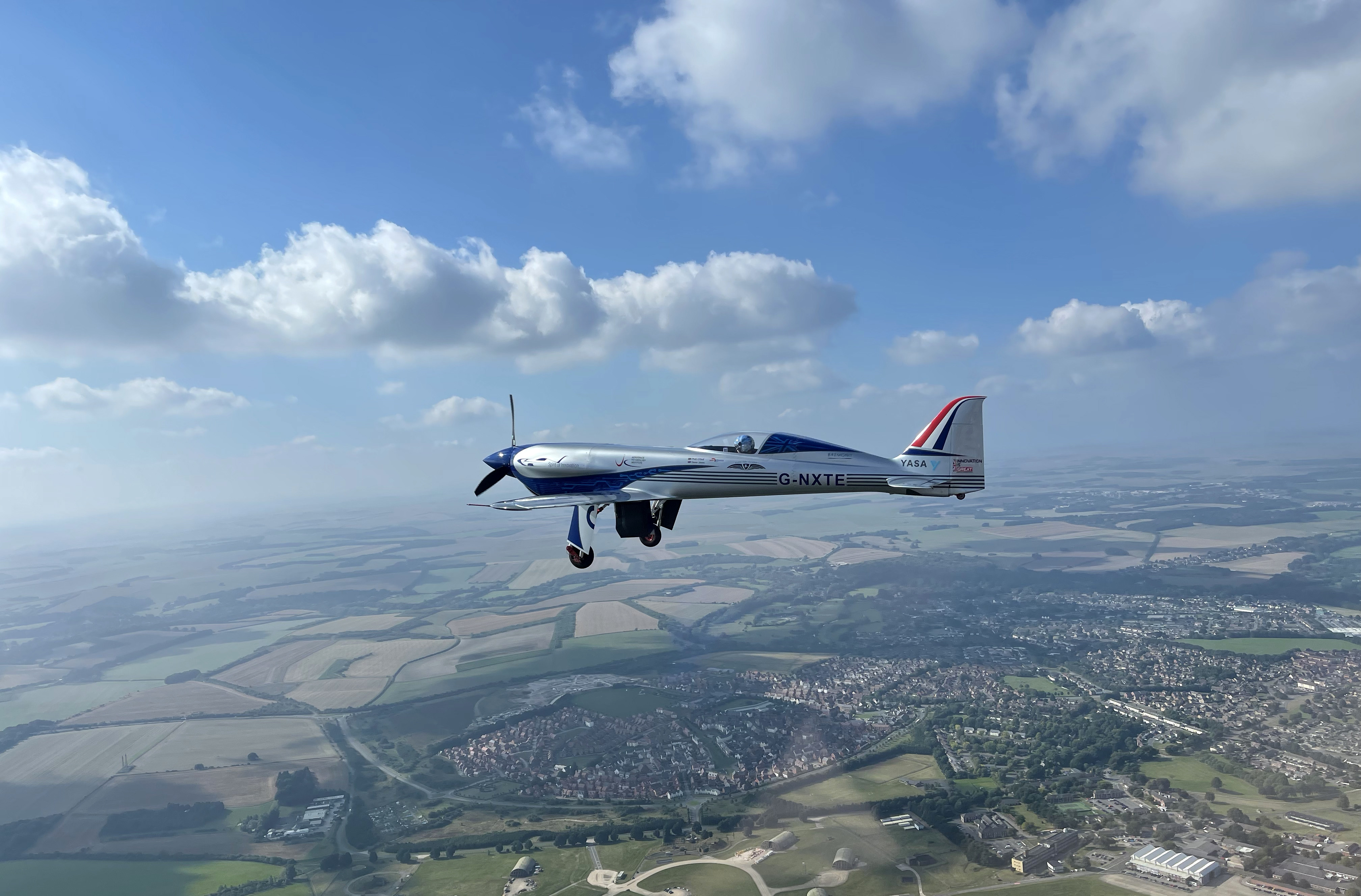
Note that the motor was designed and made by Yasa.
Rolls-Royce And Flanders Electric Plan To Develop Hybrid Retrofit Solution For Mining Trucks
The title of this post, is the same as that of this Press Release from Rolls-Royce.
This is the first paragraph.
Rolls-Royce and Flanders Electric have agreed to develop a retrofit solution for hybridizing mining trucks with mtu engines, batteries and hybrid control systems, and Flanders drive train solutions. The two companies have signed a Memorandum of Understanding enabling them to offer a scalable retrofit kit for hybridizing mining trucks in a wide range of mining applications.
This looks to be a promising application of a version of MTU Mybrid PowerPack technology, that is being trialled on a Class 168 train on Chiltern Railways.
They are claiming a CO2 reduction of twenty percent.
Distributed Power Supplies Key To Rolls’ Earnings
The title of this post, is the same as that of this article on Diesel and Gas Turbine Worldwide.
Rolls Royce Power Systems is a German company, that is wholly-owned by Rolls-Royce, that makes power units for trains, ships and power standby systems.
- Despite the pandemic they have not been doing badly.
- Orders appear to have grown 19 % in the last year.
- Climate-friendly products are noted in the article as important for the future.
The company has formed a Sustainable Power Solutions business unit to handle this area.
One of their products recently made its debut in the UK and I wrote about it in First Passenger Journey In The UK With mtu Hybrid PowerPack.
All seemed to go well.
It does appear that one part of Rolls-Royce is on the way to recovery.
What Does 2.5 MW Look Like?
This press release on the Rolls-Royce web site is entitled Rolls-Royce Generator Delivered For Most Powerful Hybrid-Electric Propulsion System In Aerospace.
This Rolls-Royce picture shows the generator installed on a test bed.
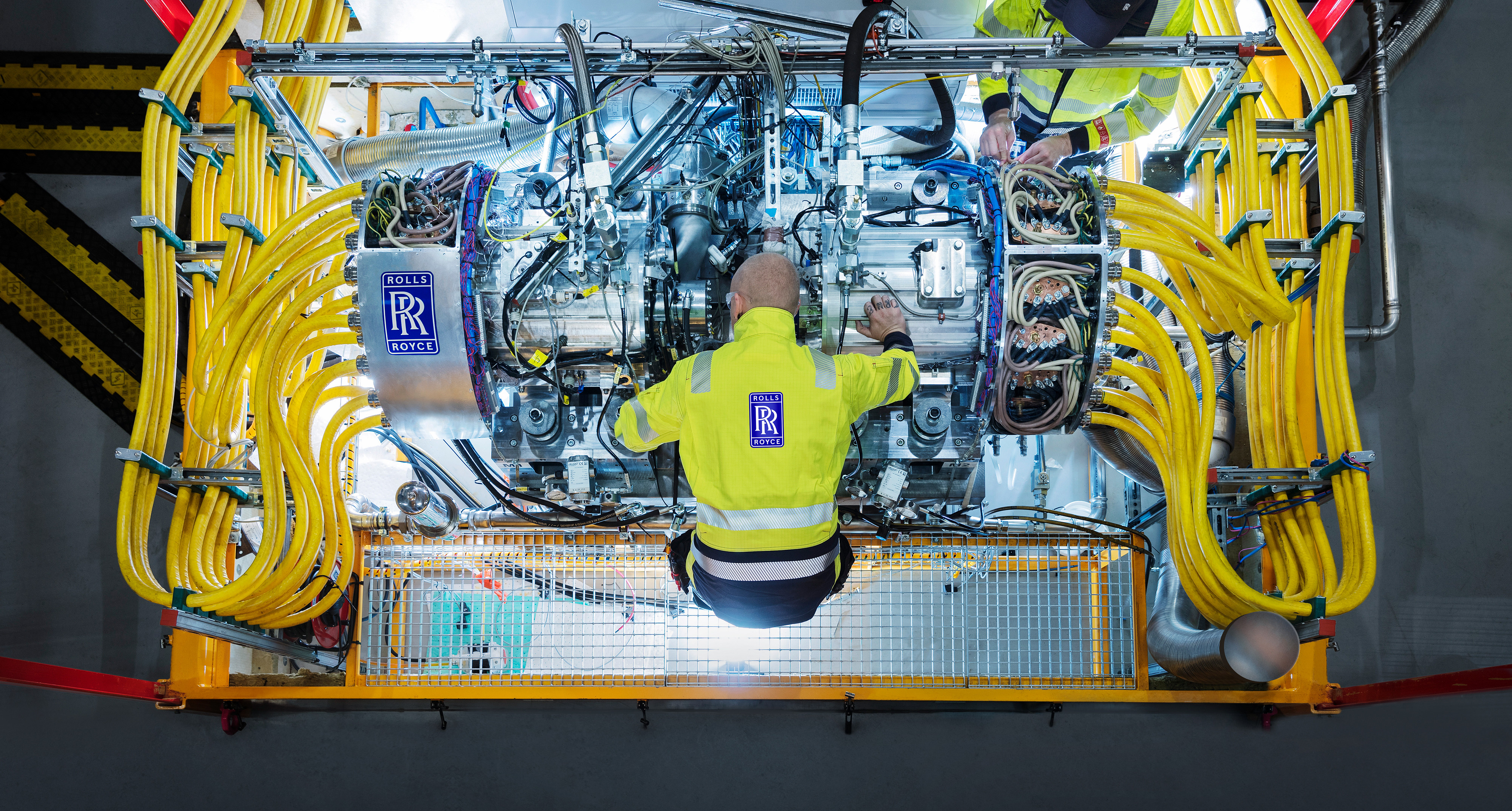
These are the first three paragraphs of the press release.
The generator that will be at the heart of the most powerful hybrid-electric aero power and propulsion system in aerospace has arrived for installation at our specialist testbed.
The generator, and related power electronics, was delivered to the newly-renovated Testbed 108 in Bristol, UK, from the Rolls-Royce facility in Trondheim, Norway, having completed an extensive development test programme. It will form part of the 2.5 megawatt (MW) Power Generation System 1 (PGS1) demonstrator programme, for future regional aircraft. In addition to hybrid-electric propulsion, the generator could also be used as part of a “more-electric” system for larger aircraft or within future ground or marine applications.
PGS1 forms an important element of our sustainability strategy, which includes developing innovative electrical power and propulsion systems.
I must say that as an engineer this 2.5 MW generator really excites me, as I see so many possibilities.
- I am fairly certain, that the generator can be powered by hydrogen, to create a true zero-carbon power generator.
- Rolls-Royce mention aerospace, ground and marine applications.
- The physical size must be an advantage, when it comes to some applications.
- The gas-turbine technology at the heart of the generator has been well-proven in the Lockheed Super Hercules.
But I do note in the press release that there is no mention of hydrogen or rail for which the generator must be eminently suitable.
- Rolls-Royce subsidiary; mtu are one of the leading companies, who power large rail locomotives.
- 2.5 MW is ideal for many rail locomotives.
- The small size must help integration into a rail locomotive.
- My calculations show that the generator and a hydrogen tank could be fitted into a typical modern rail locomotive.
- As electric transmissions can be used, the locomotive could also use electrification.
A lot of these arguments would also apply to the very large trucks used in the mining industries and ships of various sizes.
Conclusion
This Rolls-Royce 2.5 MW Generator will have lots of applications.
First Passenger Journey In The UK With mtu Hybrid PowerPack
The title of this post, is the same as that of this press release from Rolls-Royce.
This is the first paragraph.
The mtu Hybrid-PowerPack has passed another milestone successfully: In the UK, a train with mtu hybrid drive carried passengers for the first time as part of a special journey.
So how did mtu, a German manufacturer of large diesel engines for trains and ships, end up in bed with Rolls-Royce?
Wikipedia says this.
MTU Friedrichshafen remained a subsidiary of DaimlerChrysler until 2006 when it was sold off to the EQT IV private equity fund, becoming a part of the Tognum Corporation.
Rolls-Royce Holdings and Daimler AG acquired Tognum in 2011. In 2014, Tognum was renamed Rolls-Royce Power Systems, having become a 100 per cent subsidiary of Rolls-Royce Holdings.
A bit tortuous, to say the least!
This paragraph from the press release describes the journey.
The journey of the train – called HybridFLEX – was part of celebrations to mark the 25th anniversary of UK rail operator Chiltern Railways, which will use the train on its routes. It is a converted Turbostar DMU, which was previously equipped with a conventional mtu drive system.
It doesn’t sound very special, but it’s the equivalent of taking your BMW, Jaguar or Mercedes from twenty years ago and converting it to a full hybrid car with batteries, to assist the diesel engine.
Fuel and emission savings of 25 per cent are claimed, with the additional benefit that the train will not use the diesel engines in stations or sensitive areas.
In HybridFLEX Battery-Diesel Train Continues Programme Of Testing, I said this.
In the UK, the following diesel multiple units are fitted with modern MTU engines and could be candidates from a replacement power pack.
-
- Class 168 train – 19 trains – 82 diesel engines
- Class 170 train – 136 trains – 350 diesel engines
- Class 171 train – 20 trains – 56 diesel engines
- Class 172 train – 39 trains – 93 diesel engines
- Class 195 train – 58 trains – 149 diesel engines
- Class 196 train – 26 trains – 80 diesel engines
- Class 197 train – 77 trains – 180 diesel engines
That is a total of 990 diesel engines.
As some of the Class 196 and Class 197 trains have yet to be delivered, I do wonder, if it would be sensible to deliver them as diesel-battery hybrid trains.
That is a lot of diesel engines, that could be replaced by MTU Hybrid Power Packs.
Conversions of other trains are also ongoing in Germany and Ireland.
This article from Rolls-Royce, is entitled Hybrid Train Trials and gives a lot more details.
This is a quote from the article on fuel savings.
A fuel saving of 15 per cent is a
fantastic result and means that under
optimum conditions, 20 to 25
per cent should be possible.
The savings certainly fit with Chiltern’s findings.
I have a few questions.
Can Locomotive Size PowerPacks Be Built?
As an engineer, I don’t see why not!
And there is certainly a need for them to cut diesel usage and carbon emissions with locomotives.
Conclusion
These conversions could be a very good interim solution.
Is This One Of The Most Significant Pages On The Internet?
The page is Rolls-Royce’s List Of Press Releases.
On July 8th, 2021, the company issued this press release, which is entitled Rolls-Royce Welcomes All-Electric Ground Support From Jaguar Land Rover For All-Electric Flight Speed World Record Attempt.
This is the opening paragraph.
Rolls-Royce’s all-electric aircraft the ‘Spirit of Innovation’ will take to the skies for the first time in the coming weeks as we work towards a world-record attempt with a target speed of 300+ MPH (480+ KMH). This exciting project will be carbon neutral and to support this ground-breaking innovation Jaguar Land Rover is loaning all-electric zero emission Jaguar I-PACE cars as towing and support vehicles.
This picture shows Spirit of Innovation and one the Jaguar I-PACE cars together in this Rolls-Royce picture
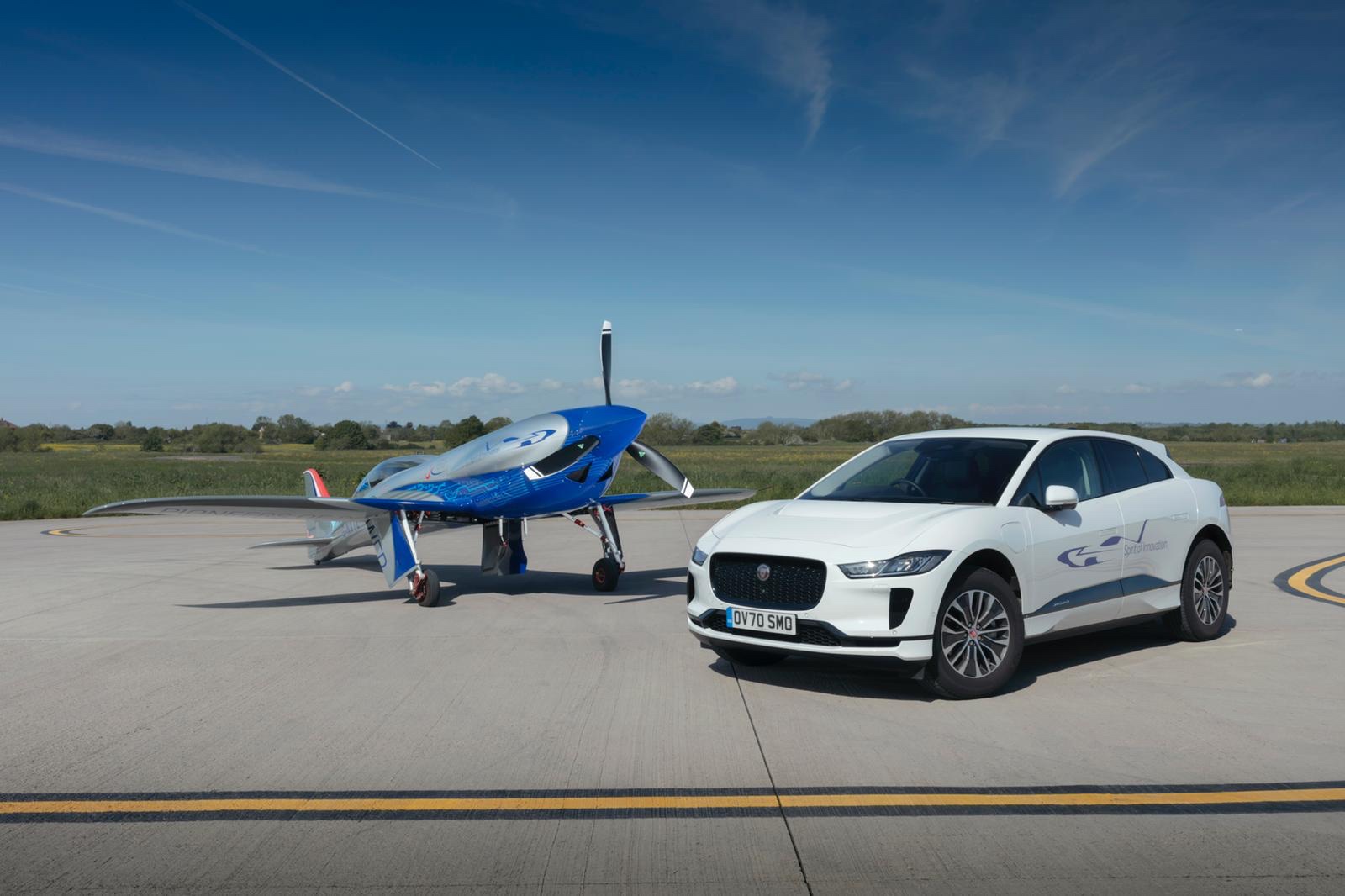
They make an interesting pair.
There is a full analysis of the plane in this article on CleanTechnica, which is entitled Rolls-Royce Attempting 100% Electric Aircraft Speed Record, Jaguar I-PACE Offering Ground Support.
The Jaguar can even tow the plane.
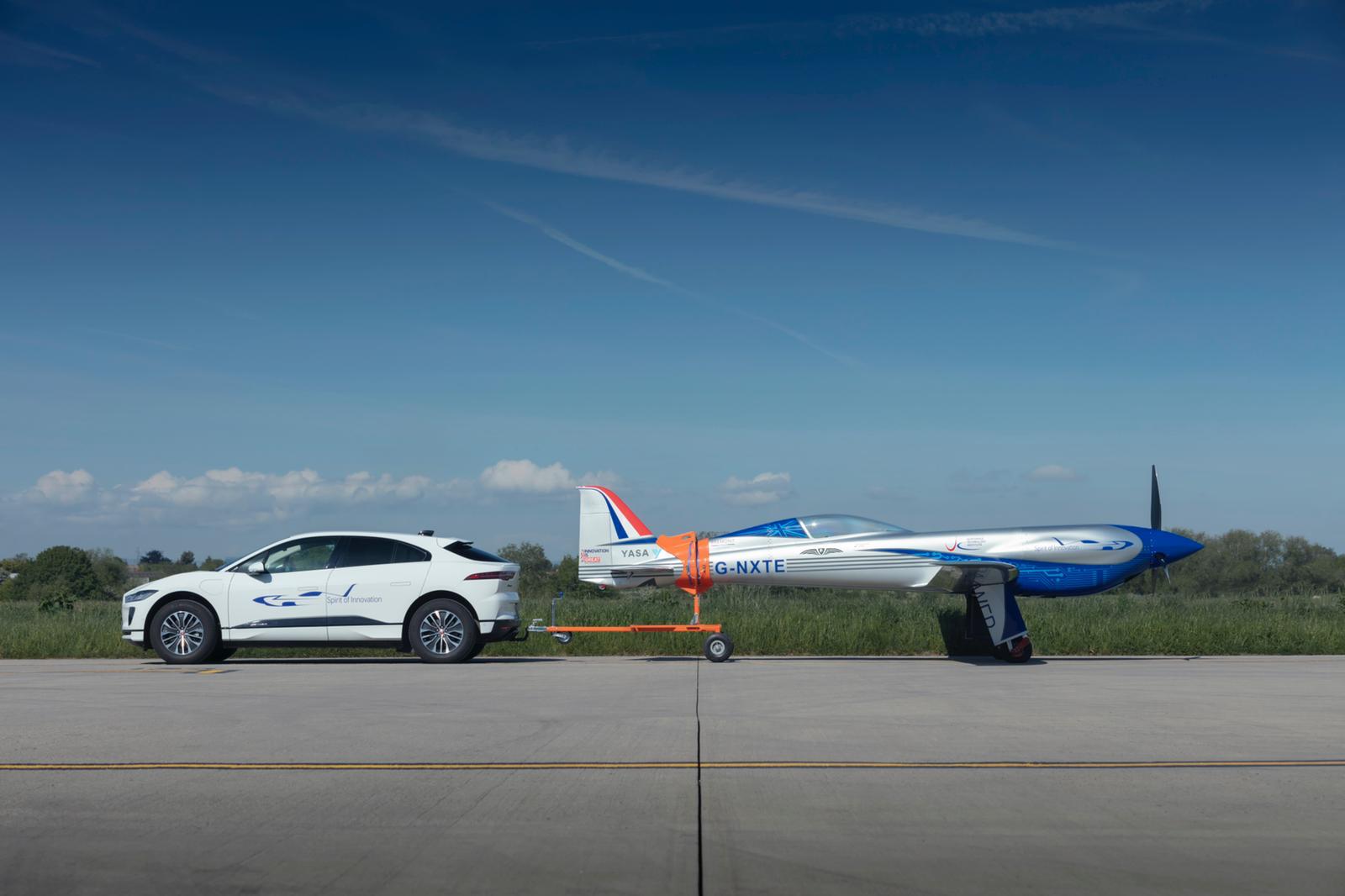
Unusual.
Also on On July 8th, 2021, the company issued this press release, which is entitled Rolls-Royce And Cavendish Nuclear Sign Delivery And Manufacturing Partnership Agreement For SMR Programme.
Another world-class company has joined the small modular nuclear reactor programme.
I have feelings, that this could be the start of something small and incredibly powerful!
Conclusion
I suspect Rolls-Royce have lots of useful research sitting in their archives. We should all follow, what they doing.
Will Zero-Carbon Freight Trains Be Powered By Battery, Electric Or Hydrogen Locomotives?
These are a few initial thoughts.
We Will Not Have A One-Size-Fits-All Solution
If you consider the various freight and other duties, where diesel locomotives are used, you get a long list.
- Light freight, where perhaps a Class 66 locomotive moves a few wagons full of stone to support track maintenance.
- Intermodal freight, where a Class 66 locomotive moves a long train of containers across the country.
- Stone trains, where a Class 59 or Class 70 locomotive moves a very heavy train of aggregate across the country.
- Empty stock movements, where a diesel locomotive moves an electrical multiple unit.
- Supporting Network Rail with trains like the New Measurement Train, which is hauled by two diesel Class 43 power cars.
- Passenger trains at up to and over 100 mph.
I can see a need for several types of zero-carbon locomotive.
- A light freight locomotive.
- A medium freight locomotive, that is capable of hauling many intermodal trains across the country and would also be capable of hauling passenger services.
- A heavy freight locomotive, capable of hauling the heaviest freight trains.
- A Class 43 power car replacement, which would probably be a conversion of the existing power cars. Everybody loves InterCity 125s and there are over a hundred power cars in regular service on railways in the UK.
There are probably others.
The UK Hydrogen Network Is Growing
Regularly, there are news items about companies in the UK, who will be providing green hydrogen to fuel cars, vans, buses, trucks and trains.
Hydrogen is becoming a fuel with a much higher availability.
The UK Electricity Network Is Growing And Getting More Resilient
We are seeing more wind and solar farms and energy storage being added to the UK electricity network.
The ability to support large numbers of battery-electric buses, cars, trucks and trains in a reliable manner, is getting more resilient and much more comprehensive.
There Will Be More Railway Electrification
This will happen and installation will be more innovative. But predicting where electrification will be installed, will be very difficult.
Hydrogen Fuel Cells Now Have Rivals
Hydrogen fuel cells are normally used to convert hydrogen gas to electricity.
But over the last few years, alternative technology has evolved, which may offer better methods of generating electricity from hydrogen.
- Rolls Royce have developed a beer keg-sized 2.5 MW generator, that could run on hydrogen, which I wrote about in Our Sustainability Journey.
- Honeywell are possibly going the same route, which I wrote about in Honeywell Introduces Power Source For Hybrid-Electric Aircraft.
- JCB have converted diesel engines to run on hydrogen, which I wrote about in JCB Finds Cheap Way To Run Digger Using Hydrogen.
- Caterpiller, Cummins and Rolls-Royce mtu are showing signs of taking a similar route to JCB.
Fuel cells will not be having it all their own way.
Batteries Are Improving Their Energy Density
This is inevitable. and you are starting to see improvements in the fabrication of the battery packs to get more kWh into the space available.
In Wrightbus Presents Their First Battery-Electric Bus, I said this about the Forsee batteries used in the new buses from Wrightbus.
The Forsee brochure for the ZEN SLIM batteries gives an energy density of 166 Wh per Kg. This means that the weight of the 454 kWh battery is around 3.7 tonnes.
A one-tonne battery would have a capacity of 166 kWh.
- It is the highest value I’ve so far found.
- Technology is likely to improve.
- Other battery manufacturers will be striving to match it.
For these reasons, in the rest of this post, I will use this figure.
Some Example Locomotives
In this section, I shall look at some possible locomotives.
Conversion Of A Class 43 Power Car
There are two Class 43 power cars in each InterCity 125 train.
- The diesel engine is rated at 1678 kW.
- The transmission is fully electric.
- These days, they generally don’t haul more than five or six intermediate Mark 3 coaches.
I would see that the biggest problem in converting to battery power being providing the means to charge the batteries.
I suspect that these power cars would be converted to hydrogen, if they are converted to zero-carbon.
- I would estimate that there is space for hydrogen tanks and a small gas-turbine generator in the back of the power car.
- Much of the existing transmission could be retained.
- A zero-carbon power car would certainly fit their main use in Scotland and the South-West of England.
- I doubt hydrogen refuelling would be a problem.
They may even attract other operators to use the locomotives.
A Battery-Electric Locomotive Based on A Stadler Class 88 Locomotive
I am using this Class 88 locomotive as a starting point, as the locomotive is powerful, reliable and was built specifically for UK railways. There are also ten already in service in the UK.
In Thoughts On A Battery Electric Class 88 Locomotive On TransPennine Routes, I started the article like this.
In Issue 864 of Rail Magazine, there is an article, which is entitled Johnson Targets A Bi-Mode Future.
As someone, who has examined the mathematics of battery-powered trains for several years, I wonder if the Age of the Hybrid Battery/Electric Locomotive is closer than we think.
A Battery/Electric Class 88 Locomotive
After reading Dual Mode Delight (RM Issue 863), it would appear that a Class 88 locomotive is a powerful and reliable locomotive.
-
- It is a Bo-Bo locomotive with a weight of 86.1 tonnes and an axle load of 21.5 tonnes.
- It has a rating on electricity of 4,000 kW.
- It is a genuine 100 mph locomotive when working from 25 KVAC overhead electrification.
- The locomotive has regenerative braking, when working using electrification.
- It would appear the weight of the diesel engine is around seven tonnes
- The closely-related Class 68 locomotive has a 5,600 litre fuel tank and full of diesel would weight nearly five tonnes.
The locomotive would appear to be carrying between 7 and 12 tonnes of diesel-related gubbins.
Suppose that the diesel-related gubbins of the Class 88 locomotive were to be replaced with a ten tonne battery.
Using the Forsee figures, that I quoted earlier, this battery would hold 1660 kWh.
At the power level of the 700 kW of the Caterpillar C27 diesel engine in the Class 88 locomotive, that would give more than two hours power.
It looks to me, that a battery-electric Class 88 locomotive could be a very useful locomotive.
It might even be able to haul freight trains in and out of the Port of Felixstowe, which would be a big advantage in decarbonising the port.
Certainly, methods to charge battery trains on the move, are being developed like the system from Hitachi ABB Power Grids, that put up short sections of 25 KVAC overhead electrification, which would be driven by a containerised power system.
These systems and others like them, may enable some battery-electric freight trains to work routes like.
- Felixstowe and Ipswich.
- Ipswich and Peterborough
- Peterborough and Nuneaton.
- Peterborough and Doncaster via Lincoln
- Birmingham and Oxford
None of these routes are fully-electrified.
But because of the power limit imposed by the batteries, these locomotives will need to be recharged at points on the route.
This Google Map shows the Ipswich and Peterborough route crossing the Fen Line at Ely station.
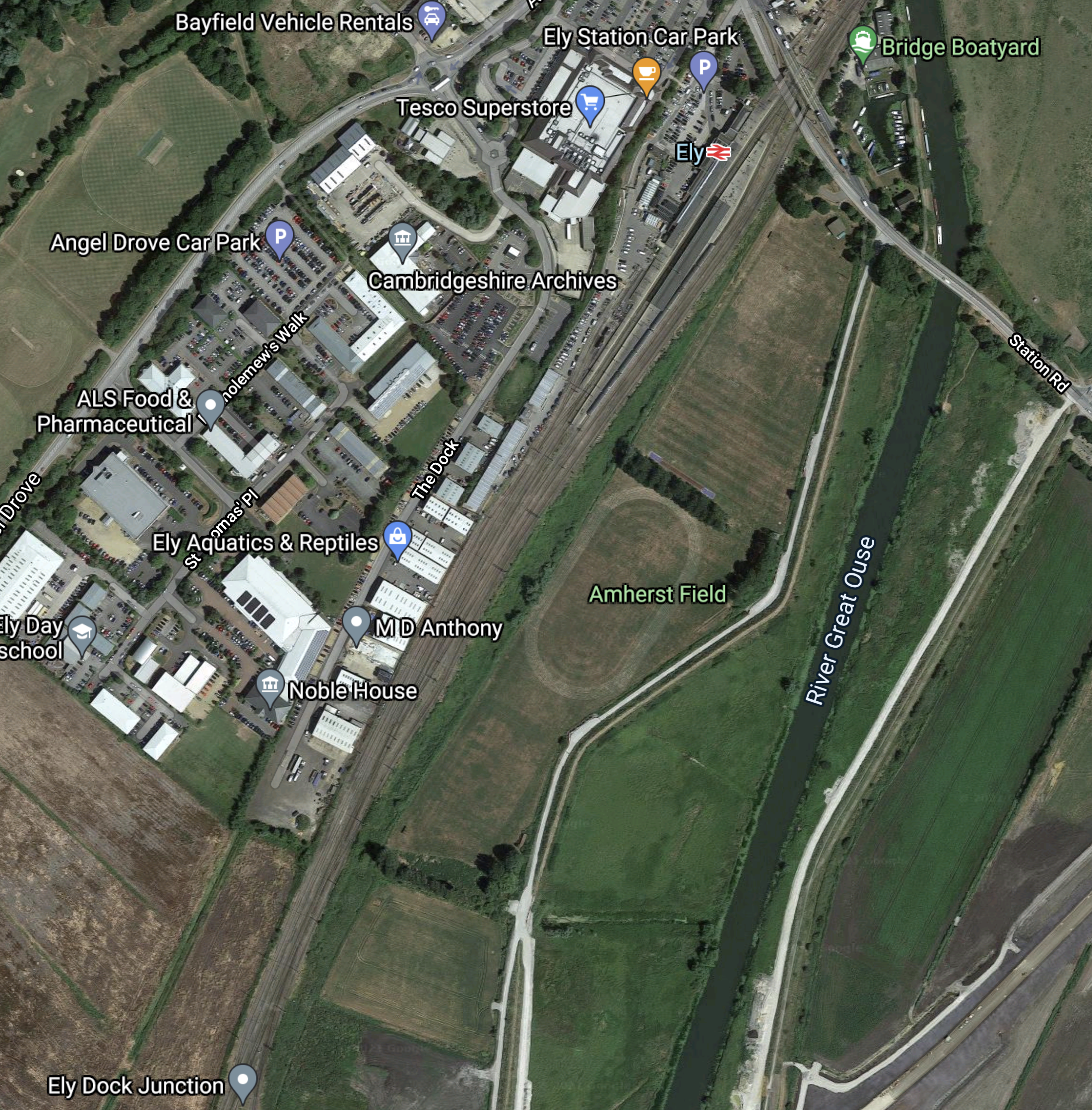
Note.
- Ely Dock junction in the South-West corner, where the line from Ipswich and Bury St. Edmunds joins the lines through Ely.
- Ely station towards the North-East corner of the map.
- Passenger trains run through the station.
But freight trains can take a route on the Eastern side of the station, which is not electrified.
At Ely station, a loop like this can be electrified using the existing electrification power supply, but at other places, systems like that from Hitachi ABB Power Grids can be used to electrify the loop or an appropriate section of the route.
These short sections of electrification will allow the train to progress on either electric or battery power.
A Hydrogen-Electric Locomotive Based on A Stadler Class 88 Locomotive
In The Mathematics Of A Hydrogen-Powered Freight Locomotive, I looked at creating a hydrogen-powered locomotive from a Class 68 locomotive.
I decided it was totally feasible to use readily available technology from companies like Rolls-Royce and Cummins to create a powerful hydrogen-powered locomotive.
The Class 68 locomotive is the diesel-only cousin of the electro-diesel Class 88 locomotive and they share a lot of components including the body-shell, the bogies and the traction system.
I suspect Stadler could create a Class 88 locomotive with these characteristics.
- 4 MW using electric power
- At least 2.5 MW using hydrogen power.
- Hydrogen power could come from Rolls-Royce’s 2.5 MW generator based on a small gas-turbine engine.
- 100 mph on both electricity and hydrogen.
- It would have power output on hydrogen roughly equal to a Class 66 locomotive on diesel.
- It would have a range comparable to a Class 68 locomotive on diesel.
This locomotive would be a zero-carbon Class 66 locomotive replacement for all duties.
A Larger And More Powerful Hydrogen-Electric Locomotive
I feel that for the largest intermodal and stone trains, that a larger hydrogen-electric locomotive will be needed.
With the way Wabtec are going in the United States, I wouldn’t be surprised to see a suitable locomotive cross the pond.
Conclusion
In the title of this post, I asked if freight locomotives of the future would be battery, electric or hydrogen.
I am sure of one thing, which is that all freight locomotives must be able to use electrification and if possible, that means both 25 KVAC overhead and 750 VDC third rail. Electrification will only increase in the future, making it necessary for most if not all locomotives in the future to be able to use it.
I feel there will be both battery-electric and hydrogen-electric locomotives, with the battery-electric locomotives towards the less powerful end.
Hydrogen-electric will certainly dominate at the heavy end.
Was This The Most Significant Statement On Freight Locomotives Last Week?
This press release from Freightliner, is entitled Freightliner Secures Government Funding For Dual-Fuel Project.
The dual-fuel project is important and will cut carbon emissions in the short term.
But it is only a quick fix, made possible by good technology.
It is also not zero-carbon.
This sixth paragraph from the press release is very significant.
This sustainable solution will support a programme to decarbonise freight operating companies’ diesel fleets in a cost-efficient manner that does not require significant short-term investment and facilitates operational learning in support of a longer-term fleet replacement programme, potentially using 100% hydrogen fuel.
I believe the paragraph indicates, that Freightliner and possibly the other companies involved in the building and operation of heavy freight locomotives have concluded, that the technology is now such, that a zero-carbon rail locomotive powered by 100 % hydrogen is now possible.
- Rolls-Royce and possibly other gas-turbine companies have the technology to build small gas-turbine powered generators that can produce several megawatts of reliable electrical zero-carbon power, when fuelled by hydrogen.
- We are seeing companies developing strategies for the safe supply of hydrogen in large industrial quantities.
- Hydrogen has been successfully deployed on buses, trains and other large vehicles.
- The technology has been proven that will allow dual-mode hydrogen-electric locomotives, that can use electrification, where it exists.
- Some big companies like Cummins, JCB and Shell are backing hydrogen.
There are thousands of large diesel-powered locomotives all over the world and locomotive builders that can successfully replace these with hydrogen-powered locomotives will not go financially unrewarded!
 The Anonymous Widower