WSMR Plans Alstom-Built Bi-Mode Sets If Open Access Bid Approved
The title of this post, is the same as that of this article on Rail magazine.
This is the sub-heading.
Wrexham, Shropshire & Midlands Railway (WSMR) has said it will invest in new Alstom battery-electric bi-mode trains if its open access application is successful.
These three paragraphs add some more details.
In December the Alstom-backed operation resubmitted its application to run between the North Wales city and London Euston via Shrewsbury and Walsall after its initial bid was rejected by the Office of Rail and Road (ORR) last year.
In a letter to the regulator and Network Rail, Mobilisation Director Darren Horley said: “Should our application be successful, WSMR will work alongside its parent company, Alstom, and will commit to invest in a new bi-mode battery-electric fleet based on the Adessia platform – Alstom’s new generation passenger train designed specifically for the UK market.
“Initial discussions regarding the procurement of a small new fleet have already commenced with Alstom and a financier.”
The Adessia will be a high speed version, with a maximum speed of 125 mph or 200 kph.
I have some thoughts.
How Much Of The Route Is Without Electrification?
In Alstom Plans To Operate Its Own Passenger Train Service In The UK For The First Time, I gave these distances of the sections of the route.
- Euston and Nuneaton – 96.7 miles – electrified
- Nuneaton and Walsall – 26.7 miles – electrified
- Walsall and Wolverhampton – 6.7 miles – electrified
- Wolverhampton and Shrewsbury – 29.7 miles
- Shrewsbury and Wrexham General – 30.3 miles
That looks like there are sixty miles in each direction without electrification.
Either the trains would have a battery range of 120 miles or a battery range of over 60 miles with charging at Wrexham General station, which is shown in these pictures.

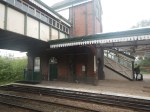
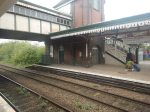
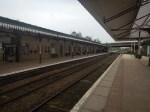
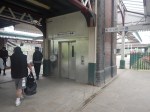
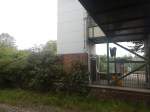
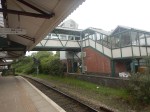
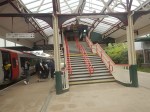
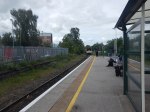
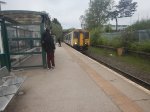
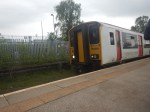
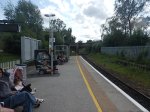
Note.
- Wrexham General station has four platforms. Two are a pair of long through platforms and there are also a separate long and a short through platform.
- The station is step-free.
- The last four pictures are Platform 4.
This OpenRailwayMap shows the platform layout at Wrexham General station.
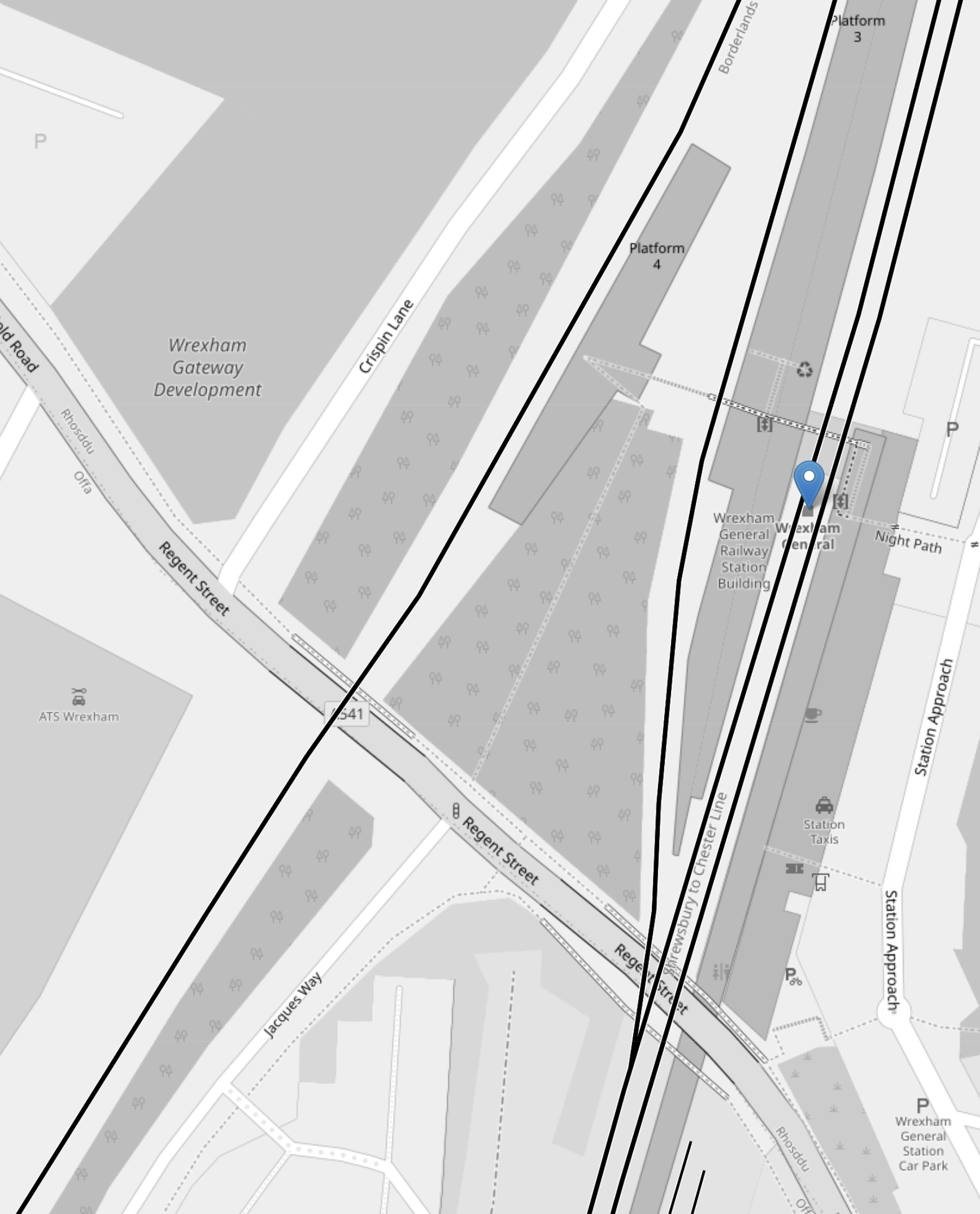
Note.
- The blue arrow is between the two through Platforms 1 and 2.
- Platform 3 is the platform in the middle.
- Platform 4 is the platform on the left.
An overhead charging rail could be used on Platforms 3 and/or 4, as has been used at Caerphilly station.
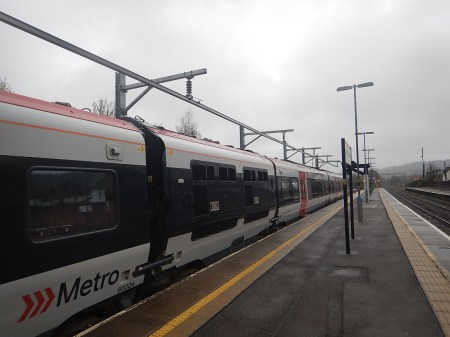
The overhead charging rail could also charge other Wrexham General services.
Prospective Routes
I would expect that there would be a need for such a train on the following UK routes.
- CrossCountry – Class 221 train replacement.
- East-West Rail – New fleet.
- Southeastern – London and Hastings.
- ScotRail – Inter7City replacement.
- South Western Railway – Class 158 and Class 159 train replacement.
- Transport for Wales – Some diesel services.
There would be probably be other services too!
Will The Service Call At Willenhall, Darlaston And Walsall?
This OpenRailwayMap shows the three stations.
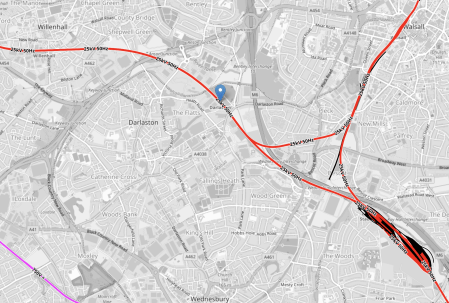
Note.
- Willenhall station is in the North-West corner of the map.
- Darlaston station is marked by the blue arrow.
- Walsall station is in the North-East corner of the map.
- Tame Valley Parkway station is in the South-East corner of the map.
- It might also be a good idea to call at the Parkway station.
- Red tracks are electrified.
- To call at all four stations will need a reverse at Walsall.
There may be some thinking to do, on the best calling pattern in Walsall.
Just Attempted To Book King’s Cross To Glasgow On Lumo
Lumo starts their King’s Cross and Glasgow service on the 14th December 2025, which is the day the timetable changes.
- All the tickets for the first few days have gone.
- But tickets can be booked into February.
- It also appears that most of the offered direct services have sold out already.
- Are Scots showing their frugal side?
This was a typical ticket, I could have booked using my Senior Railcard for the 7th January 2026.
- Leave King’s Cross at 05:45.
- Arrive Glasgow Central at 11:22.
- Journey Time is 5:37.
- Cost £23.10
Note.
- There was a change of train to ScotRail at Edinburgh Waverley.
- The price included a ticket on the shuttle bus between Glasgow Queen Street and Glasgow Central.
- Serving both main Glasgow stations with one ticket is probably what ScotRail offer.
The service looks convenient and well-priced.
Will Trains Be Faster After The Timetable Change On 14th December 2025?
These are times for two early morning trains, between King’s Cross and Edinburgh, where the first is before the timetable change and the second is after.
- 23rd October 2025 – 05:48 – 10:09 – 04:19
- 17th December 2025 – 05:45 – 09:57 – 04:12
Seven minutes is only the first saving of what I believe will be several.
A Day Trip To Leven From London
On Thursday, the 15th of May, I shall be taking a day trip by train from London King’s Cross to Leven in Fife.
I shall be doing it for the following reasons.
- To see the new Levenmouth Rail Link and its two new stations : Cameron Bridge and Leven.
- To prove that it is possible to do trips like these.
- To prove that it is still possible for me to do trips like these.
- To see a couple of old friends, who live North of the Border.
- I shall probably also ride the new section of the Edinburgh Tram.
I shall be leaving London on the Lumo service at 05:48 and returning on the 16:13, which gives me around six hours in Scotland.
More Trains For Fife As ScotRail Enhance Leven Services In May 2025 Timetable
The title of this post, is the same as that of this press release from ScotRail.
This is the sub-heading.
ScotRail is set to introduce significant timetable improvements from Sunday, 18 May 2025, with a major focus on enhancing rail connections for Fife.
This first paragraph gives more details of the improvements to services.
The new timetable will include more frequent services to and from Leven, improving access to and from Edinburgh, and better connecting communities throughout Fife. Additional carriages are also being added to some trains at the busiest times to provide more seats for customers.
It sounds to me, that services to Leven have got a bad case of London Overground Syndrome, which I define in this post, which unsurprisingly is called London Overground Syndrome. I define it like this.
This benign disease, which is probably a modern version of the Victorian railway mania, was first identified in East London in 2011, when it was found that the newly-refurbished East London Line and North London Line were inadequate due to high passenger satisfaction and much increased usage. It has now spread across other parts of the capital, despite various eradication programs.
It keeps appearing across the UK and I suspect it happens in other countries too!
As ScotRail had a severe dose of London Overground Syndrome, when they reopened the Borders Railway, you’d have think that they’d have been prepared this time.
Scotland To Get New Intercity Fleet
The title of this post is the same as that of this press release from Transport Scotland.
These eight paragraphs make up the body of the press release.
The Scottish Government announced today that procurement will begin to replace the trains in its Intercity fleet.
The procurement will seek a replacement for the High Speed Train (HST) fleet of 25 trains which operates on its InterCity routes between Glasgow, Edinburgh, Aberdeen, and Inverness.
Cabinet Secretary for Transport, Fiona Hyslop said:
“Resilient, reliable ScotRail services are key to encouraging more people to choose to travel by train for work, leisure and learning.
“Over 4 million passengers travelled on InterCity trains between our key cities in the last year – we want to encourage even more people to do so. This procurement will enable us to replace the current Intercity fleet with trains which provide improved facilities and accessibility.
“Any replacement fleet is expected to be more energy efficient and therefore will significantly reduce emissions, reduce operating costs and be more in line with current passenger expectations, including for accessibility. The procurement process ensures Scottish suppliers will be able to offer to provide their services to potential bidders.
“This latest milestone in our rolling programme of decarbonisation will ensure the reliability of our Intercity routes for the long-term, making Scotland’s railway a more attractive and greener travel choice.”
Further details on this announcement will be shared when the contract is awarded in 2025. It is also expected that the refreshed Decarbonisation Action Plan will be published in Spring 2025, and this will detail updated targets for replacing ScotRail’s existing diesel fleets.
It is a press release full of good intentions, but very few facts.
Is this what Scots get from their political party?
I have a few questions.
Will The Trains Be Built In The UK?
This must surely give some advantages, but will it get the best trains at the best price?
What Will Be The Number And Capacity Of The Trains?
Transport Scotland could go for a like for like number and capacity replacement.
- But there have been capacity problems in Scotland, which have meant using diesel Class 153 trains as baggage cars.
- They might also want to add extra services.
- Will they replace the train lost at Stonehaven?
They could add a few options.
Other Companies May Need Similar Trains
Consider.
- GWR will need to replace their similar Castles.
- CrossCountry will need new trains.
- Grand Central will need new trains.
- South Western Railway may need new trains for services between Cardiff and Devon.
- Transport for Wales may need new trains.
Hull Trains and Lumo have recently ordered a selection of new Hitachi Class 802 and 803 trains, which I wrote about in Fourteen New Trains To Drive First Rail Open Access Growth.
I can see an argument for buying more Hitachi Class 80x trains, as it will surely save Great British Railways costs in the long time.
Should The New Trains Be A Forever Solution?
When British Rail electrified to Brighton, Crewe, Edinburgh, Glasgow, Leeds, Liverpool, Manchester, Newcastle, Norwich, Portsmouth, Southampton, Weymouth and many other places from London, they saw it as a mode of traction, that would be used forever.
As the trains wore out or got outdated, they would be replaced with trains, which at least could run using the same mode of traction.
Generally, on electrified routes, when British Rail’s electric trains have been replaced, they have been replaced by more modern new electric trains.
The one major exception was on the East Coast Main Line where some InterCity 225 trains were replaced with Hitachi Class 800 and Class 802 diesel bi-mode trains.
But as the Class 800 and Class 802 diesel bi-mode trains were also replacing InterCity125 trains, they were a pragmatic replacement.
The Hitachi trains can be considered a Forever Solution, as bi-mode trains will always be able to work some routes that will never get electrified.
But Hitachi are developing the successor to their diesel bi-mode train, which is the tri-mode train, capable of running on electrification, diesel or battery power.
- Diesel power-packs can be swapped for battery packs.
- The battery packs have the same weight and power as a diesel power-pack.
- Existing diesel bi-mode trains can be converted to tri-mode or battery-electric bi-mode trains.
- A range of over forty miles on a single battery pack has been demonstrated.
Could Hitachi tri-mode trains be The replacements for the Inter7City trains?
Will Some Trains Have A Battery Electric Capability?
I very much believe so, as some routes in Scotland could be decarbonised by battery-electric trains.
What Top Speed Would The Trains Have?
Most of the routes in Scotland, where new modern quality rolling stock is needed, has a top speed of less than 100 mph, but in places the top speed is 125 mph.
I suspect, if trains can run at 125 mph in the places, where it is allowed, could probably save a few minutes on journey times.
Take the Borders Railway.
- The electrification runs out at Brunstane. Batteries would be charged between Edinburgh and Brunstane using the existing electrification.
- To go from Brunstane to Tweedbank and return to Brunstane is 63 miles.
- To work the Borders Railway would need a battery range of 63 miles.
I suspect every route in Scotland could have an electrification strategy for use with battery-electric trains. Some of which would have short lengths of extra electrification.
What Lengths Would The Trains Be?
In my example I used the Borders Railway.
A typical service is run by a three-car Class 170 train or two such trains running as a pair.
Perhaps, a single four- or five-car train could work the service all day and still provide enough capacity?
Conclusion
I believe, that Scotrail services could be electrified line-by-line.
Some lines would need more or longer trains and an update to the electrification.
Are Scotrail Going To Replace The Inter7City Trains With Hydrogen-Powered Trains?
This article in The Times is entitled The Caley Is Ready To Roll With New Venture Building Trains.
I feel that this is one of the most significant paragraphs in the article.
ScotRail has indicated that it wants to replace nearly two thirds of its fleet with new, low-carbon rolling stock between 2027 and 2035, comprising about 675 carriages in total, with an initial core order of 64 four and five-car units. A spokesman confirmed: “We are working on a business case that will go to the Scottish government for the procurement of a new suburban train fleet.”
The current Scotrail fleet includes.
- 25 Inter7City trains which comprise 52 Class 43 power cars and 120 Mark 3 carriages – Diesel – 120 cars – 1975
- 5 Class 153 trains – Diesel – 5 cars – 1987
- 42 Class 156 trains – Diesel – 84 cars – 1987
- 40 Class 158 trains – Diesel – 80 cars – 1987
- 30 Class 170 trains – Diesel – 90 cars – 1998
- 21 Class 318 trains – Electric – 63 cars – 1985
- 34 Class 320 trains – Electric – 66 cars – 1990
- 40 Class 334 trains – Electric – 120 cars – 1999
- 38 Class 380 trains – Electric – 140 cars – 2009
- 70 Class 385 trains – Electric – 234 cars – 2015
Note the last three fields are the traction type, total number of cars and the build year of the first train.
I will split these trains into four groups.
- Inter7City – Diesel – 25 trains – 120 cars
- BR Diesel – Diesel – 117 trains – 259 cars
- BR Electric – Electric – 55 trains – 129 cars
- Modern Electric – Electric – 148 trains – 494 cars
Note.
- This is a grand total of 345 trains and 1002 cars.
- Ignoring the modern electric trains and the total is 197 trains and 508 cars.
- The total for diesel trains is 142 trains and 359 cars.
- As Great Western Railway have withdrawn their similar GWR Castles, there must be reasons for Scotrail to do the same.
I will now look at replacement strategies, based on this statement from Scotrail.
ScotRail has indicated that it wants to replace nearly two thirds of its fleet with new, low-carbon rolling stock between 2027 and 2035, comprising about 675 carriages in total, with an initial core order of 64 four and five-car units.
I would expect 675 carriages would be about 232 trains, if the current average train length of just under three cars is carried over.
The Effect Of 675 New Carriages
Assuming that no modern electric trains were replaced, this would create a fleet size of at least 1169 carriages.
This would be a sixteen percent increase in carriages, which would be welcome news for some rail users.
The Initial Core Order Of 64 Four And Five-Car Units
All we know of this order, is the number of trains and that they will be new and low-carbon, according to indications from Scotrail.
Low-carbon would mean one of these traction options.
- Electric trains with full electrification.
- Battery-electric trains with partial-electrification.
- Hydrogen-powered trains.
Note.
- The heritage Taliban would object violently to full electrification of some historic routes.
- UNESCO would probably remove the World Heritable Site status to the Forth Bridge if it were to be electrified.
- Scotland is developing a hydrogen infrastructure.
- Hydrogen-powered trains have long ranges in the order of a thousand kilometres.
- Hydrogen-powered trains are essentially electric trains with a hydrogen fuel-cell to provide electricity as needed.
- Hydrogen-powered trains would need very little new infrastructure, except for a network of refuelling points across Scotland.
- Well-designed battery-electric and hydrogen-electric trains, should be very quiet and comfortable for passengers.
As an engineer, I would choose hydrogen-power for the initial core order.
Where would the initial core order be deployed?
Twenty-five would be used to replace the carbon-emitting elderly Inter7City trains.
These routes could probably handle the other forty.
- Aberdeen and Inverness
- Edinburgh/Glasgow and Aberdeen.
- Edinburgh/Glasgow and Inverness.
- Glasgow and South Western Line
- West Highland Line.
Note.
- A lot of diesel trains would be retired.
- Trains could be designed, for tourists with proper cycle spaces.
- The West Highland Line would get the five-car trains it needs.
This would be a good start.
Conclusion
It looks to me, that the Inter7City trains will be going and will be replaced by new trains.
But will Scotland take the great leap forward and power the new trains by Scottish hydrogen?
TransPennine Express To Stop Using Loco-Hauled Push-Pull Trains In December
The title of this post, is the same as that of this article on Railway Gazette.
This is the sub-heading.
TransPennine Express has confirmed that it will cease using its push-pull sets of Class 68 locomotives and MkVa coaches, previously designated Nova 3 sets, from the December 2023 timetable change.
These are my thoughts.
The Nova 3 Trains
Currently, the Nova 3 trains are made up from the following.
- 14 – Class 68 locomotives
- 52 – Mark 5a coaches
- 14 – Driving Van Trailers
Note.
- There have been complaints about the noise of the Class 68 locomotives at Scarborough and also at Marylebone with Chiltern Railways.
- The Class 68 locomotives could be switched to freight duties.
- The coaches are capable of 125 mph.
- A maximum of thirteen sets can be created.
- I suspect CAF wouldn’t object to being asked to build some more Mark 5a coaches and driving van trailers.
- The current fleet has a spare locomotive and a spare driving van trailer to allow for servicing.
All locomotives and coaches are a maximum of seven years old, so will have plenty of life left.
The Class 93 Locomotive
Rail Operations Group have ordered ten Class 93 locomotives, with twenty options, which have an impressive specification.
- Built by Stadler in Valencia.
- Same family as a Class 68 and 88 locomotive.
- Electric, diesel and battery power
- 110 mph operating speed
- Ability to pull passenger and freight trains.
- Delivery scheduled for 2023.
I believe that if the Class 68 diesel locomotive of a Nova 3 train, were to be replaced with a Class 93 locomotive, a very useful train would be created.
- It would be ten mph faster, than a Nova 3 train.
- It could use the diesel engine and the batteries to bridge gaps in electrification.
- By adding extra carriages it could be tailored to the needs of a route.
- In Vegetable Oil Fuelling Chiltern Railways Trains In UK First, I discuss how it might be possible to run all these locomotives on HVO to cut emissions.
- It could be quieter.
Could it be a simple way to reduce carbon emissions on a route?
The Successor To The Class 93 Locomotive
Stadler keep innovating in their designs for locomotives and are already building hydrogen-powered multiple units.
I can see Stadler coming up with a hydrogen-powered locomotive, with the following specification.
- In the same family as Class 68, 88 and 93 locomotives.
- Ability to do everything that Class 68, 88 and 93 locomotives can do.
- Ability to use 25 KVAC overhead electrification, where it exists.
- Ability to be able to be fitted with third-rail equipment, so it can use 750 VDC third-rail electrification, where it exists.
- At least a 110 mph operating speed.
- Range of at least 200 miles on hydrogen.
Stadler would sell a lot of these locomotives to decarbonise railways all over the world.
Possible Routes
These are possible routes for a rake of Mark 5a coaches hauled by a Class 93 locomotive or its zero-carbon successor.
Hull Trains
Consider.
- Hull Trains is an open access operator.
- Hull Trains currently have a fleet of five Class 802 trains, each of which have five-cars.
- A Class 93 locomotive has a power of 900 kW on diesel, whereas the Class 802 train has 2100 kW.
- The Class 802 train has nearly ten percent more capacity.
- In Ten-Car Hull Trains, I saw two Class 802 trains working as a pair. Does this indicate they have a capacity problem?
- Between Hull and the East Coast Main Line is only 36.1 miles and isn’t very challenging and I suspect could probably be easily handled by a Class 93-hauled rake of Mark 5a coaches.
- Adding extra coaches would not be difficult and would probably be less costly than with the more complex Class 802 trains.
- Hull Trains need to have a plan to decarbonise.
- HVO could be used to cut down emissions.
A Class 93-hauled rake of Mark 5a coaches could be an intermediate step to full decarbonisation with a hydrogen locomotive.
Would other operators of Class 802 trains like to increase their fleets, by adding Hull Trains’s five Class 802 trains?
TransPennine Express
Consider.
- TransPennine Express currently have four different fleets of trains, so it must cause problems with the allocation of drivers.
- The Class 397 trains are confined to the West Coast Main Line.
- So that leaves the bi-mode Class 802 trains and the diesel Class 185 trains to work the TransPennine routes.
The Wikipedia entry for the Class 802 train, gives more details of the plans for the Class 802 trains.
During October 2021, it was announced that TransPennine Express, Hitachi, and Angel Trains had agreed to convert one of the former’s Nova 1 trainsets into a battery hybrid train on a trial basis with the aim of supporting the technology’s further development. If successful, Hitachi and Angel Trains have proposed the retrofitting of the entire fleet. In January 2022, reports emerged that the Nova 1 fleet was operating under diesel power even when operating on entirely electrified sections of the East Coast Main Line on account of the insufficient power supplies present along the line; national railway infrastructure owner Network Rail is reportedly set to complete upgrades to the power supplies within two years.
The fleet is also set to benefit from the rollout of electrification under the Transpennine route upgrade scheme. The company’s management has noted that, in the event of largescale electrification being funded and implemented, the Class 802s could have some of their engines removed to reduce roughly 15% of their weight and thus raise their efficiency. Furthermore, Leo Goodwin, TPE’s managing director, has observed that while the Class 802s have an initial maximum speed of 125 mph (201 km/h), they have the capability of being modified for operating at 140 mph (230 km/h) if infrastructure upgrades were to permit such speeds at a future date.
Could an augmented fleet of battery-electric Class 802 trains handle the bulk of the TransPennine routes, with the shorter and unelectrified ones still being handled by the Class 185 trains?
These shorter routes are.
- Leeds and Huddersfield
- Manchester Piccadilly and Huddersfield
- York and Scarborough
Plans only exist to electrify Leeds and Huddersfield.
I suspect a few more battery-electric Class 802 trains would be needed.
Great Western Railway
Could a Class 93-hauled rake of Mark 5a coaches be used as a replacement for the GWR Castles or short-formation InterCity125s?
- They both have four passenger coaches.
- They are both 125 mph trains.
- A Class 68 locomotive could be used on routes without electrification.
- HVO could be used to cut down emissions.
- The Mark 5a coaches would probably be quieter, as they only have one diesel engine.
A Class 93-hauled rake of Mark 5a coaches could be an intermediate step to full decarbonisation with a hydrogen locomotive.
Alternatively, five-car Class 802 trains could be used as replacements for GWR Castles.
Great Western Railway also have the problem of decarbonising services between Bristol/Gloucester and Weymouth/Southampton/Portsmouth.
Great Western Railway look like they’re needing some innovative thinking.
I also suspect a few more battery-electric Class 802 trains would be needed for other routes.
Transport For Wales Rail
Transport for Wales Rail run a Premier Service between Holyhead and Cardiff using Class 67 locomotives and Mark 4 coaches.
According to the Wikipedia entry for Transport for Wales Rail, they have seven sets of 4/5 coaches to run this service.
If Transport for Wales Rail wanted to decarbonise this route, they would need to replace the locomotives for a zero-carbon unit.
Perhaps, their best solution, would be to wait until a suitable hydrogen-powered locomotive is available and buy seven rakes of new coaches with driving van trailers.
Grand Union
Grand Union has a detailed Wikipedia entry, where this is the first paragraph.
Grand Union is a prospective open access operator who are proposing to operate train services in the United Kingdom from England to Wales and Scotland. Grand Union is headed by Ian Yeowart, who founded previous open access operators Alliance Rail Holdings and Grand Central before selling both to Arriva.
That seems a sound foundation.
- They have permission to run trains between Paddington and Carmarthen starting in December 2024.
- They have also applied to run trains between Euston and Stirling.
- They are now backed by Spanish companies; Serena Industrial Partners and Renfe.
- They are proposing to use nine Mark 4 coaches hauled by Class 93 locomotives.
Consider.
- CAF has a factory in Wales.
- CAF has sold trains to Transport for Wales.
- The Mark 5a coaches will definitely be available by December 2024.
- Mark 5a coaches could easily be arranged as a rake of eight coaches and a driving van trailer.
- Grand Union is backed by Spanish companies.
I wouldn’t be surprised if Grand Union were to use sets of CAF-built Mark 5a coaches for their Carmarthen service. And later for their Stirling service.
A Class 93-hauled rake of Mark 5a coaches could be an intermediate step to full decarbonisation with a hydrogen locomotive.
Grand Central
Consider.
- Grand Central is another open access operator.
- Grand Central has a mixed fleet of twelve five-car diesel trains.
- These trains run under electrification on the East Coast Main Line.
- According to the Wikipedia entry for Grand Central trains, they have plans for expansion across the North and to and from London.
- Grand Central need to have a plan to decarbonise.
- HVO could be used to cut down emissions.
A Class 93-hauled rake of Mark 5a coaches could be an intermediate step to full decarbonisation with a hydrogen locomotive.
South Western Railway
South Western Railway have an excellent fleet of new or nearly new trains, with the exception of the diesel Class 158 and Class 159 trains, that work services between Waterloo and Exeter trains via Basingstoke and Salisbury.
- Waterloo and Exeter is 172 miles.
- Only the 47.7 miles between Waterloo and Basingstoke is electrified with 750 VDC third-rail electrification.
- Train lengths vary between five and eight cars.
- The current trains date from around 1990 and must need replacing soon.
I wouldn’t be surprised that if after a rebranding with new trains, this could be a popular route.
A version of Hitachi’s ubiquitous bi-mode Class 802 could be used.
But.
- They would need to be ordered and built.
- The third-rail gear, would need to be developed and tested.
- Passengers would be travelling for over two and a half hours with underfloor diesel engines.
An alternative could be a Class 68-hauled rake of Mark 5a coaches.
- These trains would be available after release from TransPennine Express.
- They would run in TransPennine Express formation.
- Length could be adjusted by adding or removing coaches, if required.
- The noise is all in the locomotive, which is isolated from the passengers.
At some point in the future, the route could be decarbonised by swapping the locomotive for a hydrogen-electric locomotive with the ability to handle third-rail electrification.
ScotRail
ScotRail have a similar problem to Great Western Railway with their short-formation InterCity125s.
- They have 52 Class 43 locomotives and 120 Mark 3 coaches, which is probably enough for 24 trains.
- Scotland has substantial amounts of electrification.
- I feel that a Class 68-hauled rake of Mark 5a coaches would be a more than adequate replacement.
- Class 93 locomotives could be used where routes are partially electrified.
- Scotland is not going to be short of green hydrogen.
When a suitable hydrogen-electric locomotive is available, these trains can be decarbonised.
CrossCountry
CrossCountry have a fleet consisting of the following trains.
- 5 – 2+7 InterCity125 trains
- 7 – two-car Class 170 trains
- 22 – three-car Class 170 trains
- 34 – four-car Class 220 trains
- 4 – four-car Class 221 trains
- 20 – five-car Class 221 trains
Note.
- The fleet is all diesel.
- I’ll ignore the Class 170 trains in this analysis.
- The Class 220 and 221 trains often work in pairs to provide the required capacity.
So how could these trains be decarbonised?
- The InterCity125s and the Class 220 and 221 trains could be replaced by a locomotive-hauled rake of Mark 5a coaches of an appropriate length.
- Motive power could be provided by an appropriate Class 68 or 93 locomotive.
When a suitable hydrogen-electric locomotive is available, these trains can be fully decarbonised.
Decarbonisation Of UK Main Line Services
It is generally assumed that the railways of the UK will need to fully decarbonise if the UK and the constituent nations are going to meet their decarbonisation targets.
I believe that my analysis shows that decarbonisation of main line passenger services can be achieved by the purchase of two types of trains.
- Five-car bi-mode Class 802 trains or similar.
- Locomotive-hauled rakes of Mark 5a coaches of an appropriate length.
Note.
- The Class 802 trains would be mainly to augment existing Hitachi fleets.
- Some Class 802 trains would be fitted with batteries instead of diesel generators to handle gaps in the electrification.
- The rakes of coaches would be powered by an appropriate locomotive.
- The lengths of the rakes of coaches would be adjusted to meet the demand of each service.
Initially, the following locomotives would be used.
- Class 68 locomotives would be used on unelectrified lines.
- Class 93 locomotives would be used on full or partially electrified lines.
When the hydrogen-electric locomotives become available, these would take over the routes, which couldn’t be decarbonised by full electrification or by using a Class 93 locomotive.
GWR And Vivarail
This is an attempt to make some sense about what is happening between GWR and the assets of Vivarail.
These are some random thoughts.
Ongoing Maintenance Of Existing Trains
Currently, there are four operators in the UK, with various types of Vivarail‘s Class 230 trains.
- Great Western Railway – 1 – Infrastructure under construction for trial on the Greenford Branch.
- Island Line – 5 – In operation.
- Transport for Wales – 5 – Undergoing testing prior to entering service.
- West Midlands Trains – 3 – Withdrawn from service indefinitely in December 2022.
Note.
- West Midlands Trains withdrew the trains because of uncertainty about the servicing of the trains.
- West Midlands Trains are getting complaints about the bus replacement service.
- All operators will probably need assistance to service the trains.
- Great Western Railway and Island Line are First Group companies.
Could First Group have got in first, so they can protect their interests with a professional Vivarail train maintenance organisation?
Mark Hopwood
In Special Train Offers A Strong Case For Reopening Fawley Line, I said this.
This is another quote from the Rail Magazine article.
However, SWR’s Mark Hopwood favours a much bolder plan. “We’d have to take a decision, once we knew the line was going ahead. But my personal belief is that we should be looking for a modern environmentally-friendly train that can use third-rail electricity between Southampton and Totton and maybe operate on batteries down the branch line.”
Pressed on whether that would mean Vivarail-converted former-London Underground stock, Hopwood adds. “It could be. Or it could be a conversion of our own Class 456, which will be replaced by new rolling stock very shortly. But I don’t think this is the time to use old diesels.
Mark Hopwood is now the Managing Director of Great Western Railway and he seems to be in favour of battery-electric trains. I agree totally with his statement about old diesels.
Mark Hopwood And The Cholsey And Wallingford Branch
According to LinkedIn, Mark Hopwood is also the President at the Cholsey and Wallingford Railway
- This is a two-and-a-half mile long standard gauge heritage railway.
- It used to be a branch line, that served the town of Wallingford.
- It connects to the Great Western Main Line in a bay platform at Cholsey station.
- Wallingford station has now been demolished.
- The heritage railway uses a new site on the south side of St. Johns Road.
This map from OpenRailwayMap shows the branch line.
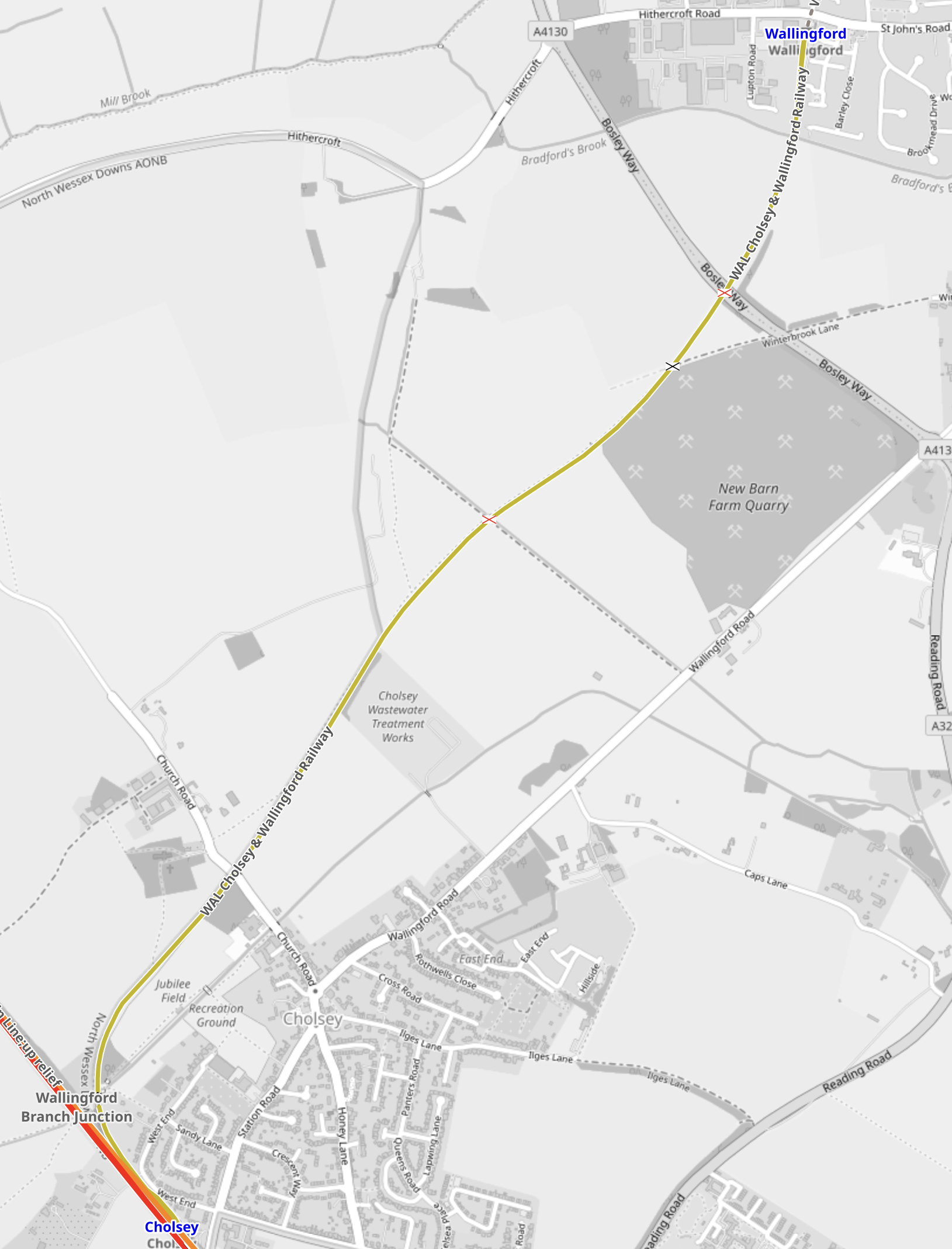
Note.
- Cholsey station and the Great Western Main Line is in the South-Western corner of the map.
- The current Wallingford station is in the North-Eastern corner.
- The Cholsey and Wallingford Railway is shown in yellow.
This Google Map shows Cholsey station.

Note.
- There are four through platforms for Great Western Railway services.
- Platforms 1 and 2 for the fast services are on the Western side.
- Platforms 3 and 4 for the slow services are on the Eastern side.
- Bay Platform 5 is tucked in the North-East corner of the station and is the terminus for services on the Cholsey and Wallingford Railway.
- There are only 55 parking spaces.
Is the number of parking spaces sufficient for the station, if a lot of passengers drive from Wallingford?
Could a commercial service run between Cholsey and Wallingford?
Consider.
- Wallingford is a town of nearly twelve thousand people.
- Cholsey station has two trains per hour (tph) between Paddington and Didcot Parkway stations, with extra services between Oxford and Reading stations in the Peaks.
- There is only limited parking at Cholsey station.
- Most GWR branch lines are run by an hourly service.
- I feel that two-car battery-electric train could provide one or two tph on the branch.
- Charging would probably be needed at only one end of the branch line.
- As all the through lines at Cholsey station are electrified with 25 KVAC overhead wires, I suspect that charging would be provided at that station.
A two-car battery-electric train could probably provide a commercial service on this branch, if the Cholsey and Wallingford Railway wanted a revenue stream.
First Group Services That Could Be Run By Battery-Electric Trains
These Great Western Railway and South Western Railway services might be suitable for battery-electric services.
- Newbury and Bedwyn – Newbury is electrified.
- West Ealing and Greenford – West Ealing is electrified.
- Slough and Windsor and Eton Central – Slough is electrified.
- Maidenhead and Marlow – Maidenhead is electrified.
- Twyford and Henley-on-Thames – Twyford is electrified.
- Reading and Gatwick Airport – Partially electrified.
- Reading and Redhill – Partially electrified.
- Reading and Basingstoke – Partially electrified.
- Didcot Parkway and Oxford – Didcot Parkway is electrified.
- Weston-super-Mare and Severn Beach – No electrification.
- Bristol Temple Meads and Avonmouth – No electrification.
- Bristol Temple Meads and Filton Abbey Wood – No electrification.
- Bristol Temple Meads and Portishead – Proposed – No electrification.
- Swindon and Westbury – Swindon is electrified.
- Exmouth and Paignton – No electrification.
- Exeter Central and Okehampton – No electrification.
- Exeter Central and Barnstaple – No electrification.
- Plymouth and Gunnislake – No electrification.
- Liskeard and Looe – No electrification.
- Par and Newquay – No electrification.
- Truro and Falmouth Docks – No electrification.
- St. Erth and St. Ives- No electrification.
- Romsey and Salisbury – Partially electrified.
- Southampton Central and Fawley – Proposed – Partially electrified.
Note.
- Most services are one or two tph or less.
- Reading and Basingstoke, Didcot Parkway and Oxford, Exmouth and Paignton, and Romsey and Salisbury are 2 tph.
- I have included the proposed Bristol Temple Meads and Portishead and Southampton Central and Fawley services.
- All electrification is 25 KVAC overhead except for the North Downs Line between Reading and Gatwick Airport via Redhill, and Romsey and Salisbury, which are 750 VDC third rail.
There are a total of 24 services. As each 2 tph service will need two trains and the North Downs services probably six, a rough calculation, indicates there would need to be a minimum of over thirty trains, to convert all these services to battery-electric operation.
This simple analysis makes Mark Hopwood’s enthusiasm, that I quoted earlier understandable.
The Requirement For First Group Battery-Electric Trains
Consider.
- Most of the services can accommodate three or four-car trains.
- A few services can only be run with two-car trains.
- Some services will need running with 25 KVAC overhead electrification for operation or deploying to and from the depot.
- Some services will need running with 750 VDC third-rail electrification for operation or deploying to and from the depot.
- A modern interior with or without a fully-accessible toilet is needed.
- Ability to recharge in a platform fitted with electrification or a charging system in under ten minutes.
- A reasonable cruising speed where electrification is needed for deployment.
This suggests to me, that two train types will be needed.
- A Vivarail-style two-car train for branches like West Ealing and Greenford and Southampton Central and Fawley.
- A three- or four-car dual-voltage electric multiple unit, based on something like an Alstom Aventra, a Bombardier Electrostar or a British Rail-era Class 321 train.
The Class 321 train could be ideal.
- It is a 100 mph train.
- It is a four-car train, that can be shortened to three-cars.
- Versions are available for both 25 KVAC overhead and 750 VDC third-rail electrification.
- Some have been converted to a modern Renatus interior, with a fully-accessible toilet.
- Greater Anglia have run Class 321 Renatus trains between London and Norwich.
- The Class 321 Renatus trains are fitted with a modern AC-based traction system.
- Eversholt Rail and Vivarail were working on a Class 321 BEMU, which I wrote about in Eversholt Rail And Vivarail To Develop Class 321 BEMU.
- Other operators like Northern, Scotrail and Transport for Wales might like a Class 321 BEMU.
Could First Group convert the Class 321 trains?
In What Train Is This?, I talk about a refurbishment of a GWR Class 150 train, that was one of the best I’ve seen.
I suspect that First Group could do the conversion, with a little help from their friends, like Wabtec and the ex-Vivarail employees, that they’ve hired.
Could The Class 387 Trains Be Converted To Battery-Electric Operation?
It was in February 2015, that I wrote Is The Battery Electric Multiple Unit (BEMU) A Big Innovation In Train Design?, after a ride in public service on Bombardier’s test battery-electric train based on a Class 379 train.

The Class 387 and Class 379 trains are very similar and with Vivarail’s battery and charging expertise, I believe that both Class 379 and Class 387 trains could be converted into modern four-car battery-electric trains.
- They would have a 100 mph or possibly a 110 mph operating speed, so could work routes like the Great Western Main Line amongst the thundering herds of Hitachis.
- The interiors would be suitable for longer routes like Cardiff Central and Exeter or Waterloo and Exeter via Salisbury.
- Great Western Railway have 33 Class 387 trains.
- Thirty Class 379 trains are wasting space in sidings.
I believe that with modern battery technology, these trains could have a battery range in excess of ninety miles.
This would enable services like Cardiff Central and Exeter St. Davids and Exeter St. Davids and Salisbury.
With judicious use of charging stations in stations like Bristol Temple Meads, Exeter St. Davids and Salisbury, all First Group main line services, that are not run by the Hitachi trains could be converted to battery-electric operation.
Conclusion
I believe a well-thought out plan is emerging.
Union Demands Withdrawal Of All HSTs After Carmont Report
The title of this post, is the same as that of this article on Railnews.
This is the first paragraph.
The TSSA union says it has written to the regulator demanding the immediate withdrawal of all surving HSTs, after new revelations in the Carmont derailment. report.
Manuel Cortes of the TSSA feels that the corrosion problem found in the train that crashed at Carmont, may be present in other trains.
He finishes with this this statement.
Frankly, it’s time to ban the HSTs. They were great in their day, but that day is nearly 50 years ago now and they simply aren’t up to modern safety standards.
I must admit, that I tend to agree with him, on this last point.
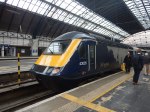
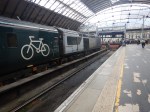

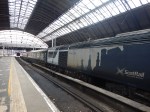
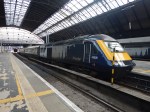




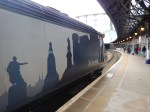

Scotrail have the following fleet of Inter7City trains.
- There are 52 Class 43 power cars and 120 Mark 3 coaches, which are arranged as nine four-car and seventeen five-car trains.
- The trains have sliding passenger doors.
- The trains meet all the regulations for Persons of Reduced Mobility.
- The trains have wi-fi and power points.
- They seem to run at up to 100 mph, as against the 125 mph for InterCity 125‘s in the past.
- The power cars have generally been reengined with modern MTU 16V4000 R41R diesel engines.
But they are now on average over forty years old.
In Battery And Hydrogen Trains For ScotRail ‘Could Make Scotland A Global Leader’ In Zero-Emission Transport, which is based on an article in the Scotsman with the same title, I said this.
Other points from the article.
- Talgo appear to have passed the story to Scotland on Sunday.
- Three routes are mentioned; Borders Railway, Fife Circle and Glasgow-East Kilbride.
- The new trains could help phase out diesel trains by 2035, which is Scottish Government policy.
- The Inter7City trains might be replaced by 2030.
- Talgo hopes to win an order for its factory in Fife.
Talgo’s Managing Director is quoted as saying, they are starting testing of a hydrogen and electric train with a range of 311 miles.
Consider.
- I wrote about this train in Talgo To Begin Fuel Cell Loco Trials.
- Talgo’s hydrogen and electric train would be ideal for Scotland’s railways of which only forty percent are electrified.
- A four or five-car high specification hydrogen and electric train would be ideal for the Inter7City routes, if it were built specifically for the routes.
- The range would cover all of Scotland.
- Hydrogen hubs are being planned all over Scotland.
- Scotland have 26 Inter7City trainsets.
This could be a rather nice order to fund the factory and test all the trains close to the factory.
- There could be as many as fifty trains.
- They would probably have an operating speed of 100 mph on electricity.
- Would the speed on hydrogen be 100 mph or perhaps a bit less?
- They would be able to use 25 KVAC overhead electrification, where it exists.
- They could have a length of three, four or five cars.
I wouldn’t be surprised to see three or four car trains for the suburban trains and four or five car trains for the Inter7City replacements.
RMT Calls New Strike Ballot On ScotRail
The title of this post, is the same as that of this article on RailNews.
This is the first paragraph.
The RMT has served notice of an industrial action ballot on ScotRail as the latest development in its long-running pay dispute. The union said that the schedule for the ballot would permit action to take place during COP26 if, as expected, its members voted yes. Over two thousand RMT members will be polled. A few days earlier nine out of 10 ScotRail ticket examiners had confirmed their backing for continued strikes. The law required another vote, because industrial action began six months ago.
Does the date of the strike, illustrate the RMT’s views on climate change and COP26.
 The Anonymous Widower