First In-flight 100% Sustainable-Fuels Emissions Study Of Passenger Jet Shows Early Promise
The title of this post, is the same as that of this press release from Rolls-Royce.
This is the introductory paragraph.
Initial findings from a world-first study of the impact of 100% sustainable aviation fuel (SAF) on both engines of a commercial jet have provided promising early results.
The study was performed using an Airbus A350, which is powered by Rolls-Royce Trent XWB engines.
This paragraph describes the tests.
In April, the A350 flew three flights over the Mediterranean Sea pursued by a DLR Falcon chaser plane to compare in-flight emissions of both kerosene and Neste’s hydro-processed esters and fatty acids (HEFA) sustainable fuel. The team also carried out compliance tests using 100% SAF and no operational issues were experienced.
I was surprised, when I first read this, that they used a chase plane to measure emissions, as I thought they’d simulate that in a test cell on the ground.
But this is probably, the best way to test the engines, whilst running on sustainable aviation fuel, in real-world conditions.
Conclusion
I believe that sustainable aviation fuel (SAF) will be the interim solution to flying until hydrogen-powered aircraft are developed.
Velocys Announces Long-Term Clean Avgas Deals With Airline Behemoths
The title of this post, is the same as that of this article on the Energyst.
This is the first paragraph.
Fuel-from-waste pioneer Velocys has made the world’s biggest sustainable aviation fuel (SAF) plant more investible, as it detailed massive likely long-term supply deals to two big airline groups.
The share price seemed to benefit from the announcement.
I’m not bothered, as I have a small investment.
Michael O’Leary On Sustainable Aviation Fuel And Food Prices
This article on Hydrogen Fuel News is entitled Ryanair CEO Predicts Cost Of Hydrogen Fuel Will Spike Food Prices.
Logically, this could happen to foods with a high quantity of food miles, such as peas and beans from Kenya.
But surely we can replace these with products grown in places like the Fens.
But still O’Leary got his name in a news article, which was the purpose.
He doesn’t bother me, as I don’t fly much and there are several airlines, I use in preference to Ryanair.
I also don’t fly in Boeing 737 MAX aircraft, in which O’Leary has made a large investment.
Rolls-Royce Joins Boeing And World Energy For Successful 100% Sustainable Aviation Fuel Flight
The title of this post, is the same as that of this Press Release from Rolls-Royce.
These are the first two paragraphs.
Rolls-Royce, working with Boeing and World Energy, has carried out a successful test flight of its 747 Flying Testbed aircraft using 100% Sustainable Aviation Fuel (SAF) on a Trent 1000 engine.
The aircraft flew from Tucson airport in Arizona, passing over New Mexico and Texas, with a Trent 1000 engine running solely on 100% SAF while the remaining three RB211 engines ran on standard jet fuel, arriving back at the airport three hours and 54 minutes later. Initial indications confirm there were no engineering issues, providing further proof of the fuel’s suitability for commercial use.
Until new zero-carbon technology is developed, which possibly uses hydrogen as a fuel, I believe that Sustainable Aviation Fuel is the best route that the world can take to cut the carbon emissions from flying.
Velocys Welcomes US Government SAF Policy Support
The title of this post, is the same as that of this article on London South East.
This is the first paragraph.
Velocys plc – Oxford, England-based fuels technology company – Welcomes US government announcement last week of a set of comprehensive new policy actions in support for Sustainable Aviation Fuel production in the US. Notes Velocys is cited in a White House briefing paper setting out the Biden administration’s plans to incentivise commercial scale supply of SAF in the US to meet decarbonisation objectives while stimulating economic growth.
I hope that being cited by the White House is a good thing.
I do think though, that Velocys have the technology, that could help us to keep flying until hydrogen-powered aircraft are developed.
Velocys’ Fischer–Tropsch Tech Picked For E-fuels Project In Japan
The title of this post is the same as that of this article on Renewables Now.
Fischer–Tropsch technology has a chequered history, as it has been used by regimes like Nazi Germany and South Africa under apartheid to create the fuel they need.
But now Oxford University spin-out company; Velocys have improved the process, so that it can turn rubbish destined for landfill into sustainable aviation fuel.
This is the last paragraph from the article.
The developer says its FT reactor can enable the production of SAF from household waste and woody biomass. The end product is a high-quality version of existing fuels, requiring no changes to engines or infrastructure, Velocys says on its website.
This is surely a viable alternative to keep airlines flying, until hydrogen-powered planes are developed.
Shell Starts Up Europe’s Largest PEM Green Hydrogen Electrolyser
The title of this post, is the same as that of this press release from Refhyne.
These are the first three paragraphs.
Europe’s largest PEM hydrogen electrolyser*, today began operations at Shell’s Energy and Chemicals Park Rheinland, producing green hydrogen.
As part of the Refhyne European consortium and with European Commission funding through the Fuel Cells and Hydrogen Joint Undertaking (FCH JU), the fully operational plant is the first to use this technology at such a large scale in a refinery.
Plans are under way to expand capacity of the electrolyser from 10 megawatts to 100 megawatts at the Rheinland site, near Cologne, where Shell also intends to produce sustainable aviation fuel (SAF) using renewable power and biomass in the future. A plant for liquefied renewable natural gas (bio-LNG) is also in development.
It certainly seems a comprehensive green development.
- It will be based on a massive 100 MW electrolyser.
- I estimate that the electrolyser will produce just under 45 tonnes of hydrogen per day.
As ITM Power is part of the Refhyne consortium, the electrolyser is being built in their factory in Sheffield.
This paragraph quotes Shell’s Downstream Director, Huibert Vigeveno .
“Shell wants to become a leading supplier of green hydrogen for industrial and transport customers in Germany,” he added. “We will be involved in the whole process — from power generation, using offshore wind, to hydrogen production and distribution across sectors. We want to be the partner of choice for our customers as we help them decarbonise.”
Shell certainly have green ambitions.
Are Disposable Nappies A Wasted Resource?
I stated my views on disposable nappies in this post called Disposable Nappies, where this was the first sentence.
From a scientifically green point of view, in many places I’m against using disposable nappies, as they clog sewers, end up in landfill and I’ve even seen them in litter bins in parks. We used real nappies for all our three children in the seventies, washing them ourselves in a machine for the first and then using a nappy service for the last two.
But dirty nappies contain a lot of the ingredients, that can be used to make hydrocarbons.
This article from the Sunday Times in 2018 is entitled Syngas, The New Jet Fuel — Stinky Nappies And Coffee Cups.
These are the first two paragraphs of The Times article.
With their packed cabins and recycled air, long-haul passenger jets are the last place where you would want to encounter the whiff of a dirty nappy.
However, old nappies are to be used — along with other non-recyclable waste such as meal packaging and takeaway coffee cups — to power British Airways planes.
Syngas is a mixture of hydrogen, carbon monoxide and some carbon dioxide. Some countries without access to petroleum or diesel created syngas and then used the Fischer–Tropsch process to create the fuels they needed. The process doesn’t have a good reputation as the two main countries to use the process were Germany under the Nazis and South Africa during apartheid.
Why is the use of this process being revived to produce aviation biofuel or sustainable aviation fuel for British Airways?
According to Wikipedia, it can save between 20 and 98 % of carbon emissions compared to conventional jet fuel.
The same process can also make biodiesel for buses, trains and trucks
It’s certainly an area, where a lot of research is going on! Just type “syngas nappies” or “syngas diapers” into Google and you’ll get a lot of serious hits.
By my front door I have a well-designed blue bin.
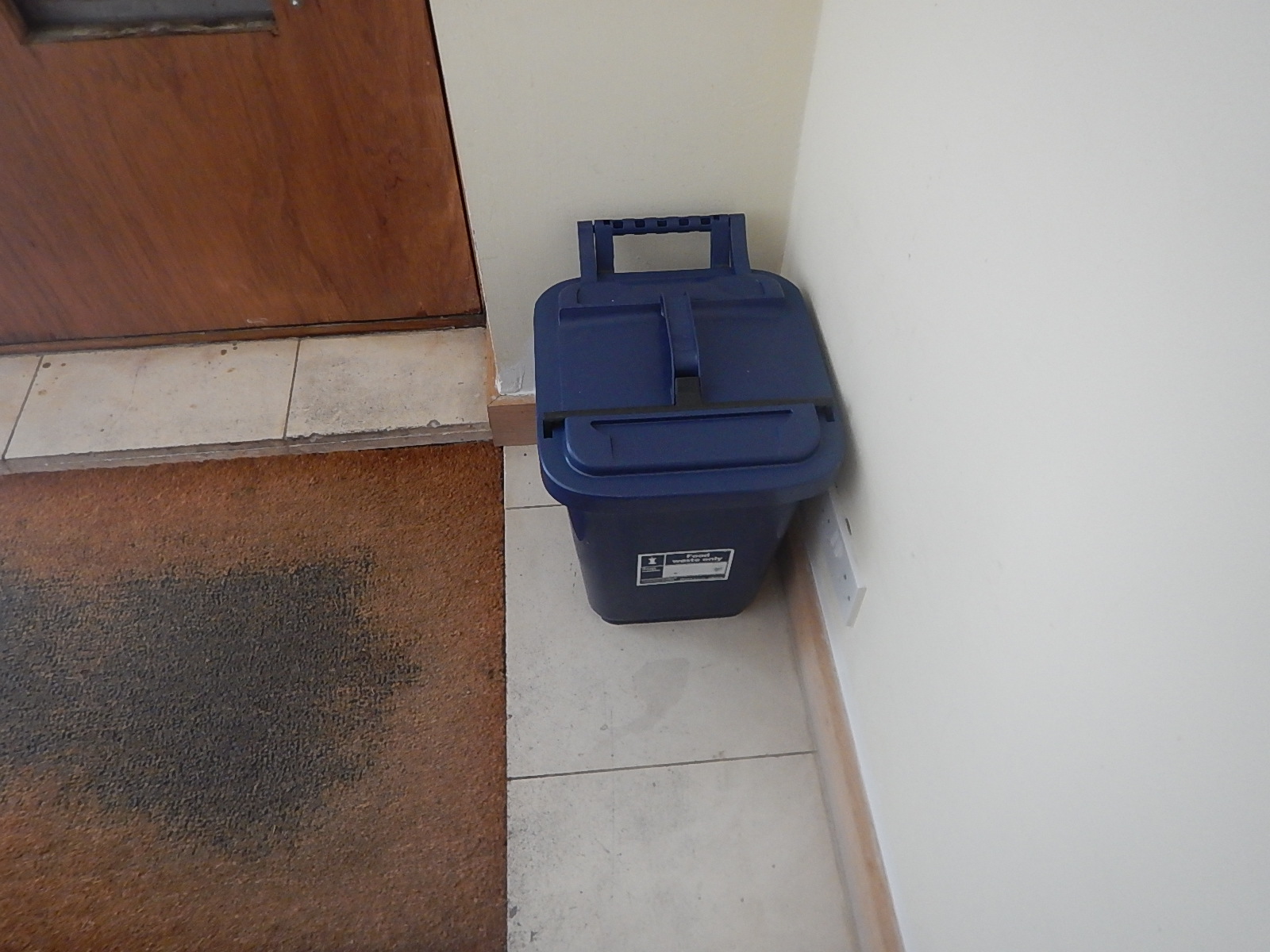
This is for my food waste bin, which is collected once a week.
This page on the Hackney web site is entitled Food Waste Recycling, and this is said about where the food waste goes.
Food waste from households in Hackney is sent to an anaerobic digestion facility in south east England, where it’s turned into renewable energy to power homes and biofertiliser to be spread on local farmland to grow crops.
A similar bin of an appropriate size could be used for nappies.
The nappies would go to an appropriate recycling site, instead of down the toilet or into landfill.
Technology Company Announces Deal That Could Produce Nearly 30 million Gallons Of Aviation Fuel In Mississippi
The title of this post, is the same as that of this article on magnoliastatelive.
This is the first two paragraphs.
A technology company that has developed technology to turn household waste and forest waste into aviation fuel says it has signed an agreement that will help it produce 30 million gallons of fuel in Mississippi every year.
Velocys officials announced this week that they have signed a framework agreement with Koch Project Solutions to develop their biorefinery project which produces standard aviation fuel, in Natchez.
That all sounds good for the spin-out of Oxford University,
Velocys Technology Powers First Commercial Flight
The title of this post, is the same as that of this article on Biomass Magazine.
This is the first two paragraphs.
Velocys plc, the sustainable fuels technology company, is pleased to announce that sustainable aviation fuel (SAF) produced by the company’s proprietary technology using woody biomass residue feedstock has been used in a commercial flight by Japan Airlines.
Japan Airlines flight (JAL #515) from Tokyo to Sapporo was completed on June 17.
Note.
- From the picture, the aircraft appears to be an Airbus A350.
- Velocys is a sign-out from Oxford University.
Sustainable Aviation Fuel is definitely on its way.
 The Anonymous Widower