Northern Powerhouse Rail – Significant Upgrades Of The East Coast Main Line From Leeds To Newcastle (Via York And Darlington) And Restoration Of The Leamside Line
In this article on Transport for the North, which is entitled Northern Powerhouse Rail Progress As Recommendations Made To Government, one of the recommendations proposed for Northern Powerhouse Rail is significant upgrades to the East Coast Main Line and reopening of the Leamside Line.
Northern Powerhouse Rail’s Objective For The Leeds and Newcastle Route
Wikipedia, other sources and my calculations say this about the trains between Leeds and Newcastle.
- The distance between the two stations is 106 miles
- The current service takes around 85 minutes and has a frequency of three trains per hour (tph)
- This gives an average speed of 75 mph for the fastest journey.
- The proposed service with Northern Powerhouse Rail will take 58 minutes and have a frequency of four tph.
- This gives an average speed of 110 mph for the journey.
This last figure of 110 mph, indicates to me that a faster route will be needed.
These are example average speeds on the East Coast Main Line.
- London Kings Cross and Doncaster – 156 miles – 98 minutes – 95.5 mph
- London Kings Cross and Leeds – 186 miles – 133 minutes – 84 mph
- London Kings Cross and York – 188.5 miles – 140 minutes – 81 mph
- London Kings Cross and Hull – 205.3 miles – 176 minutes – 70 mph
- York and Newcastle – 80 miles – 66 minutes – 73 mph
I also predicted in Thoughts On Digital Signalling On The East Coast Main Line, that with full digital in-cab ERTMS signalling and other improvements, that both London Kings Cross and Leeds and York would be two-hour services, with Hull a two-and-a-half service.
- London Kings Cross and Leeds in two hours would be an average speed of 93 mph.
- London Kings Cross and York in two hours would be an average speed of 94.2 mph.
- London Kings Cross and Hull in two-and-a-half hours would be an average speed of 94.2 mph.
I am fairly certain, that to achieve the required 110 mph average between Leeds and Newcastle to meet Northern Powerhouse Rail’s objective of four tph in under an hour will need, at least the following.
- Full digital in-cab ERTMS signalling
- Completion of the electrification between Leeds and York.
- Ability to run at up to 140 mph in places.
- Significant track upgrades.
It could also eliminate diesel traction on passenger services on the route.
High Speed Two’s Objective For The York and Newcastle Route
At the present time, High Speed Two is not planning to run any direct trains between Leeds and Newcastle, so I’ll look at its proposed service between York and Newcastle instead.
- Current Service – 80 miles – 66 minutes – 73 mph
- High Speed Two – 80 miles – 52 minutes – 92 mph
Note.
- High Speed Two will be running three tph between York and Newcastle.
- Northern Powerhouse Rail have an objective of 58 minutes for Leeds and Newcastle.
High Speed Two and Northern Powerhouse Rail do not not have incompatible ambitions.
Current Direct Leeds And Newcastle Services
These are the current direct Leeds and Newcastle services.
- TransPennine Express – 1 tph – Liverpool Lime Street and Edinburgh
- TransPennine Express – 1 tph – Manchester Airport and Newcastle.
- CrossCountry – 1 tph – Plymouth and Edinburgh
Timings appear to be between 81 and 91 minutes.
What Would A Leeds And Newcastle In Under An Hour Do For London Kings Cross And Edinburgh Timings?
This question has to be asked, as a 58 minute time between Leeds and Newcastle will mean that timings between York and Newcastle must reduce.
York And Newcastle at various average speeds give the following times.
- 73 mph (current average) – 66 minutes
- 80 mph – 60 minutes
- 90 mph – 53 minutes
- 92 mph – 52 minutes (High Speed Two promise)
- 100 mph – 48 minutes
- 110 mph – 44 minutes
If any speed over 90 mph can be averaged between York and Newcastle, this means that with a London and York time of under two hours the following times are possible.
- London Kings Cross and Newcastle in under three hours. – High Speed Two are promising two hours and seventeen minutes.
- London Kings Cross and Edinburgh in under four hours. – High Speed Two are promising three hours and forty minutes.
Consider.
- An InterCity 225 achieved a time of under three-and-a-half hours between London and Edinburgh. in 1991.
- That record journey was at an average speed of 112 mph.
- There must be opportunities for speed improvements North of Newcastle.
- Train and signalling technology is improving.
- High Speed Two is promising three hours and forty minutes between London and Edinburgh.
I can see a fascinating rivalry between trains on High Speed Two and the East Coast Main Line, developing, about who can be faster between London and Edinburgh.
Current Projects Between Leeds And Newcastle
These projects are in planning or under way on the section of the East Coast Main Line between Leeds and Newcastle.
Phase 2 Of The East Coast Main Line Power Supply Upgrade
Phase 1 between London and Doncaster should have been completed, if the covids allowed and now work can be concentrated on Phase 2 to the North of Doncaster.
This page on the Network Rail web site describes the project. These paragraphs are the introduction to Phase 2.
Phase 2 of the project will involve the installation of feeder and substations along the route, capacity upgrades, new 132kv connection at Hambleton junction and upgrades to existing power supply connections.
The second phase of the project is currently in design stages and dates for carrying out the work are still being finalised.
Phase 2 will be delivering upgraded power to the East Coast Mainline railway between Bawtry and Edinburgh.
This project may not improve speeds on the railway, but it will certainly improve reliability and reduce the use of diesel power.
I do wonder, that as the reliability of the East Coast Main Line increases, this will reduce the need for the electric Class 801 trains, to have diesel engines for when the power supply fails.
It is known, that the Class 803 trains, that are under construction for East Coast Trains, will have only a small battery for emergency use.
A sensible weight saving would surely improve the acceleration and deceleration of the trains.
York to Church Fenton Improvement Scheme
This page of the Network Rail web site, describes the project. These paragraphs introduce the project.
Our work between York and Church Fenton is in preparation for the Transpennine Upgrade, which will provide more capacity and faster journeys between Manchester Victoria and York, via Leeds and Huddersfield.
The five mile stretch between Church Fenton and Colton Junction – the major junction where trains from Leeds join the East Coast Main Line towards York – sees over 100 trains each day, with up to one freight or passenger train passing through every five minutes. This is one of the busiest stretches of railway in the North.
The work will include.
- Modernising the signalling.
- Replacing about five miles of track between Holgate (York) and Colton Junction.
- Completing the eleven miles of electrification between York and Church Fenton stations.
I estimate that when the project is completed, there will be only around thirteen miles of track without electrification between Church Fenton station and Neville Hill TMD in Leeds.
The route between Church Fenton and Garforth stations, is shown in this map clipped from High Speed Two.
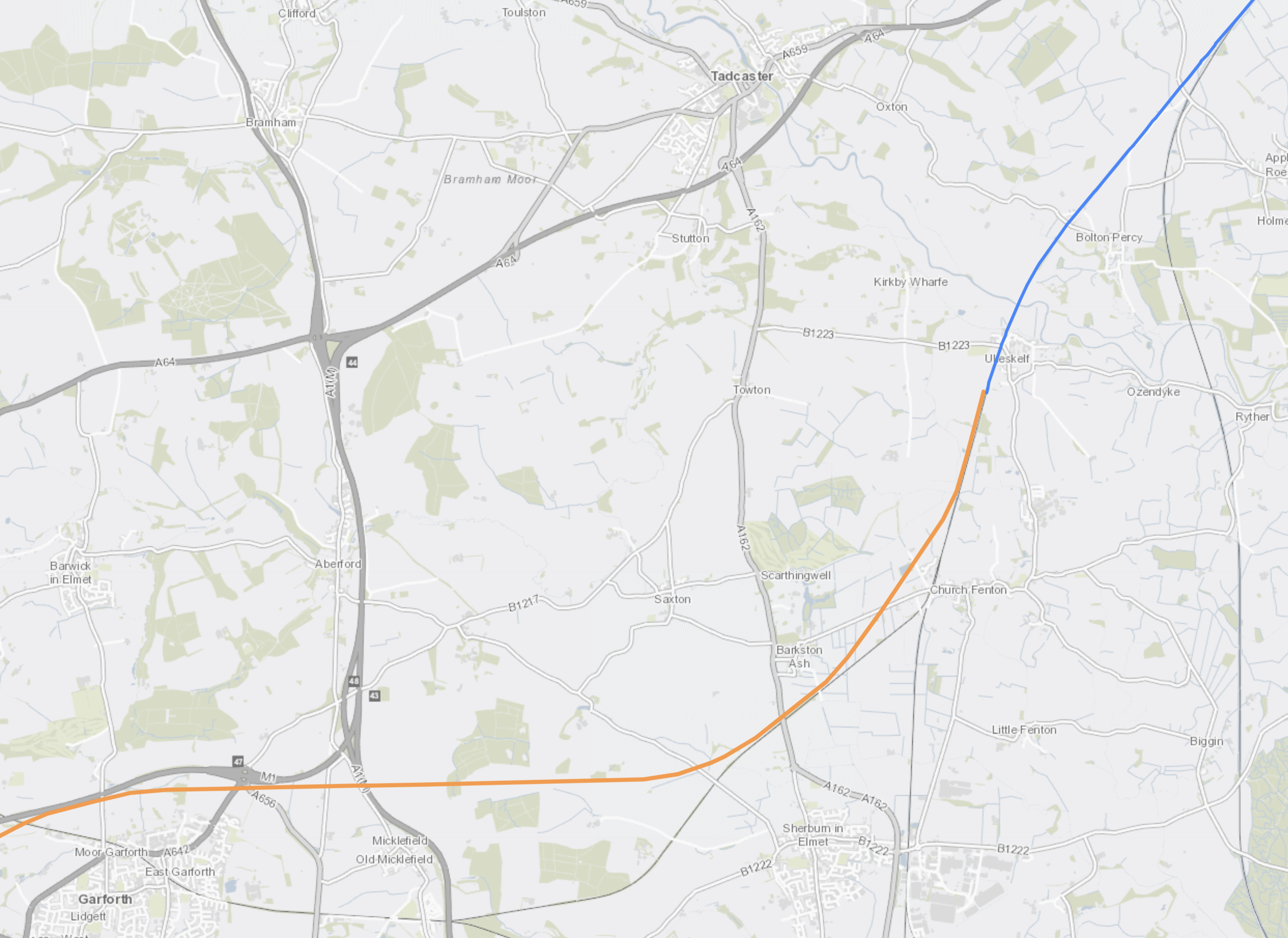
Note.
- York is just off the North-East corner of the map.
- Garforth is in the South-West corner of the map.
- Shown in orange is the new route of High Speed Two from East of Leeds towards York.
- Shown in blue is existing tracks, that will be used to take High Speed Two Trains to York and further North.
- The rail line running North-South on the edge of the map is the Selby Diversion, which opened in 1983 and was built to avoid possible subsidence from the Selby coalfield.
- The pre-Selby Diversion route of the East Coast Main Line goes South from the join of the blue and orange sections of High Speed Two.
- At Church Fenton station, this route splits, with one route going West through Micklefield, East Garforth and Garforth stations to Neville Hill TMD and Leeds.
- The main road going North-South is the A1 (M).
It seems to me, that High Speed Two’s and Northern Powerhouse Rail’s plans in this area, are still being developed.
- There has been no decision on the electrification between Church Fenton and Neville Hill TMD.
- How do Northern Powerhouse Rail trains go between Leeds and Hull?
- How do Northern Powerhouse Rail trains go between Leeds and York?
- How do High Speed Two trains go between Leeds and York?
I suspect, when the full plans are published, it will answer a lot of questions.
Darlington Station Remodelling
A remodelling of Darlington station is under consideration.
I outlined this in £100m Station Revamp Could Double Local Train Services.
This was my conclusion in the related article.
I think that this will happen.
-
- The Tees Valley Line trains will be greatly improved by this project.
- Trains will generally run at up to 140 mph on the East Coast Main Line, under full digital control, like a slower High Speed Two.
- There will be two high speed platforms to the East of the current station, where most if not all of the High Speed Two, LNER and other fast services will stop.
- There could be up to 15 tph on the high speed lines.
With full step-free access between the high speed and the local platforms in the current station, this will be a great improvement.
It will create a major interchange, where high speed trains from High Speed Two, LNER and Northern Powerhouse Rail will do the following.
- Approach at 140 mph or more.
- Perform a controlled stop in the station.
- Drop and pick-up passengers.
- Accelerate back up to linespeed.
The station stop will be highly-automated and monitored by the driver.
One of the objectives would be to save time for all fast trains.
Capacity And Other Problems Between Leeds And Newcastle Listed In Wikipedia
These problems are listed in a section called Capacity Problems in the Wikipedia entry for the East Coast Main Line.
The North Throat Of York Station Including Skelton Bridge Junction
I describe this problem and my solution in Improving The North Throat Of York Station Including Skelton Bridge Junction.
Use Of The Leamside Line
Wikipedia says this about capacity to the South of Newcastle.
South of Newcastle to Northallerton (which is also predominately double track), leading to proposals to reopen the Leamside line to passenger and freight traffic.
I could have included it in the previous section, but as it such a important topic, it probably deserves its own section.
Looking at maps, reopening is more than a a possibility. Especially, as reopening is proposed by Northern Powerhouse Rail and mentioned in the title of this post.
I discussed the Leamside Line in detail in Boris Johnson Backs Station Opening Which Could See Metro Link To County Durham, which I wrote in June this year.
These are some extra thoughts, that update the original post.
Ferryhill Station
I was prompted to write the related post, by something Boris Johnson said at PMQs and it was mainly about Ferryhill station.
In the latest copy of this document on the Government web site, which is entitled Restoring Your Railway: Successful Bids, a new station at Ferryhill has been successful. Another bid in the same area to restore rail services between Consett and Newcastle has also been successful.
This map shows the East Coast Main Line as it goes North South between Durham and Darlington.
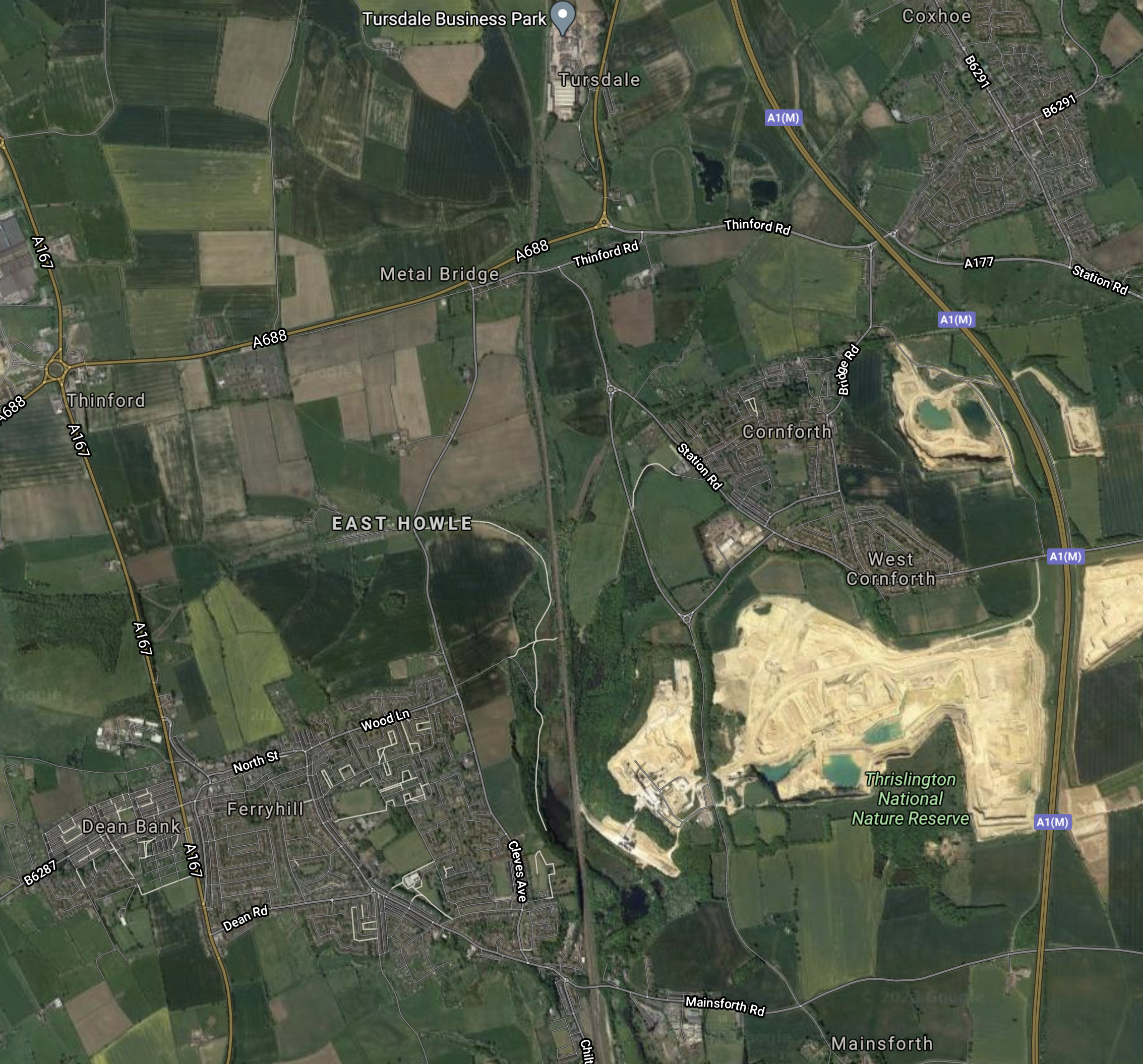
Note.
- Ferryhill is in the South-West of the map opposite the sand-pits in the South-East
- The East Coast Main Line runs North-South between the village an d the sand-pits.
- Follow the railway North and you come to Tursdale, where there is a junction between the East Coast Main Line and the Leamside Line.
- The East Coast Main Line goes North-Westerly towards Durham and Newcastle.
- The Leamside Line goes North to Washington and Newcastle.
- There is also the Stillington Freight Line going South-Easterly to Sedgefield and Stockton from Ferryhill.
Could Ferryhill be a useful interchange to local services connecting to Newcastle, Sunderland and Washington in the North and Hartlepool, Middlesbrough and Stockton in the South?
The Leamside Line As An East Coast Main Line Diversion
I didn’t discuss using the line as a diversion for the East Coast Main Line in my original post, but if the infrastructure is to the required standard, I don’t see why it can’t take diverted traffic, even if it is also used for the Tyne and Wear Metro.
It should be remembered, that to create extra capacity on the East Coast Main Line between Peterborough and Doncaster, the route of the Great Northern and Great Eastern Joint Railway, was upgraded. I first wrote about this line six years ago in Project Managers Having Fun In The East and the route seems to be working well. It is now being augmented by the addition of the £200 million Werrington Dive Under. See Werrington Dive-Under – 8th November 2018, for more details of this project, which will speed up all trains on the East Coast Main Line.
After the undoubted success of the upgrade of the Great Northern and Great Eastern Joint Railway, surely the team responsible for it, should be given the task of devising a similar plan for the Leamside Line, to take pressure off the East Coast Main Line between Newcastle and Northallerton.
Sharing The Leamside Line
The Tyne and Wear Metro also has its eyes on the Leamside Line for an extension.
It should be noted that the Extension To Wearside, uses the Karlsruhe Model to allow the Metro trains to share with freight and other passenger trains.
The new Stadler trains will probably make this even easier, so I wouldn’t be surprised to see a reopened Leamside Line handling a varied assortment of trains of all types.
The Sunderland Example
Sunderland station is a station, which has both Metro and mainline services from the same platforms.
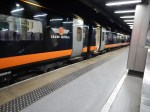
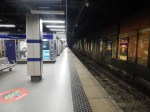
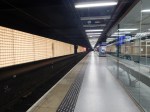
Could a station at Washington be built to similar principles, so that some long distance services to Newcastle used this station?
A Terminal Station On The Leamside Line
Newcastle station may be a Grade One Listed station, but it is built on a curve and would be a nightmare to expand with more platforms.
Sunderland station is already used as a terminal for London trains, so would it be sensible to provide a terminal at somewhere like Washington?
My Final Thought On The Leamside Line
Reopen it!
A Few Random Final Thoughts
This post has got me thinking.
Newcastle Station Capacity
I have seen reports over the years that Newcastle station, is lacking in capacity.
- There could be extra services, as High Speed Two is proposing two tph from London Euston stations and one tph from Birmingham Curzon Street station.
- There may be extra services because of Northern Powerhouse Rail, which has an objective of four tph from Leeds station.
- There may be extra services because of new services to Ashington and Blyth.
- There may be extra services because of new services to Consett.
Note.
- The first two services could use two hundred metre long trains.
- Some platforms can accept 234 metre long Class 800 trains.
- The last two services might use the Metro platforms.
As the station has twelve platforms, I feel with careful operation, that the station will have enough capacity.
This Google Map shows the station.
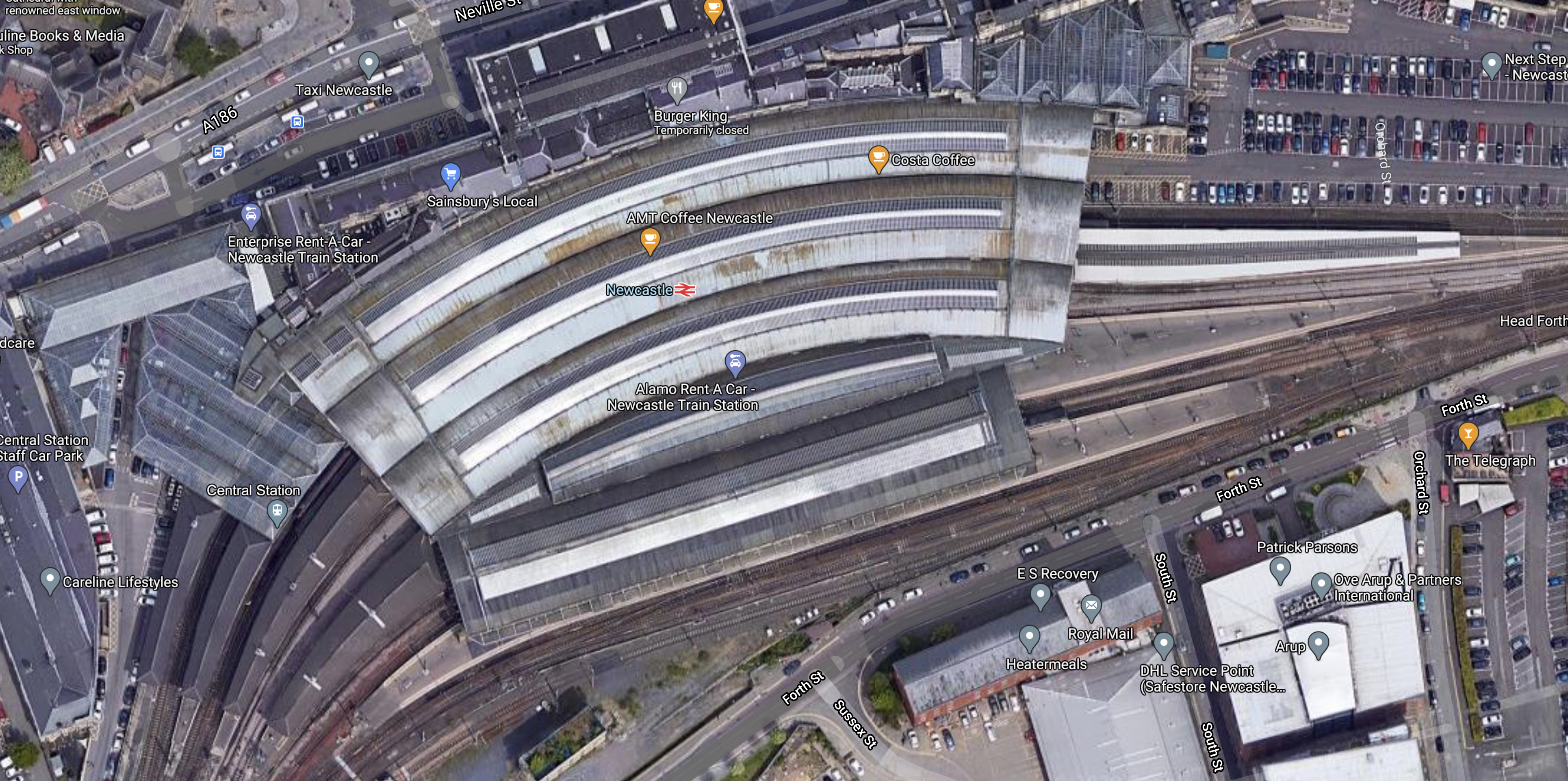
And this second Google Map shows the station, its position with relation to the Tyne and the lines rail routes to and from the station.

Note.
- Trains from the South arrive over the King Edward VII Bridge and enter Newcastle station from the West.
- Trains from England to Scotland go through the station from West to East and then go straight on and turn North for Berwick and Scotland.
- Next to the King Edward VII Bridge is the blue-coloured Queen Elizabeth II Bridge, which takes the Tyne and Wear Metro across the Tyne, where it uses two platforms underneath Newcastle station.
- The next bridge is the High Level Bridge, which connects the East end of the station to the rail network, South of the Tyne. It connects to the Durham Coast Line to Teeside and the Leamside Line.
History has delivered Newcastle a comprehensive track layout through and around Newcastle station.
- Services from the East can be run back-to-back with services from the West.
- The Metro and its two underground platforms removes a lot of traffic from the main station.
- There are seven through platforms, of which at least three are over two hundred metres long.
- There are four West-facing bay platforms and one facing East.
But most intriguingly, it looks like it will be possible for trains to loop through the station from the South, by perhaps arriving over the King Edward VII bridge and leaving over the High Level bridge. Or they could go the other way.
Could this be why reoopening the Leamside Line is important?
LNER’s Extra Paths
The sentence, from an article entitled LNER Seeks 10 More Bi-Modes, in the December 2020 Edition of Modern Railways indicates that more capacity will be available to LNER.
Infrastructure upgrades are due to prompt a timetable recast in May 2022 (delayed from December 2021) from which point LNER will operate 6.5 trains per hour, out of Kings Cross, compared to five today.
I suspect that LNER could use the half path to run a one train per two hour (tp2h) service to Hull.
- Currently, London Kings Cross and Hull takes a few minutes under three hours.
- Currently, Doncaster and Hull takes around 55 minutes.
- I have estimated that once full digital in-cab signalling is operational, that London Kings Cross and Hull could take a few minutes under two-and-a-half hours.
The full path to Hull could be shared with Hull Trains to provide an hourly service between London Kings Cross and Hull.
LNER could do something special with the full extra path.
Consider.
- Some train operating companies have said, that they’ll be looking to attract customers from the budget airlines.
- There could be a need for more capacity between London Kings Cross and all of Edinburgh, Leeds and Newcastle.
- Faster services would be attractive to passengers.
- York and Leeds will be fully electrified or trains could be fitted with batteries to bridge the thirteen mile gap in the electrification.
A limited-stop service between London Kings Cross and Edinburgh via Leeds could be an interesting addition.
- The train would only stop at Leeds and possibly Newcastle.
- One objective would be a time under three-and-a-half hours between London Kings Cross and Edinburgh.
- What time could be achieved between London Kings Cross and Leeds?
It would certainly give High Speed Two a run for its money!
A New Elizabethan
I can remember The Elizabethan, which was a steam-hauled non-stop express between London and Edinburgh between 1953 and 1961.
I have laid out my ideas for a modern express train of the same name in A New Elizabethan.
It could be an interesting concept, to increase capacity between London and Edinburgh.
As I indicated in the previous section, LNER certainly have a path, that could be used to their advantage.
High Speed Two
The East Coast Main Line and High Speed Two have a lot in common.
- The two routes will share tracks between a junction near Ulleskelf station and Newcastle station.
- High Speed Two Classic Compatible trains could be based on Hitachi AT-300 train technology.
- High Speed Two Classic Compatible trains would probably be able to run on the East Coast Main Line between London Kings Cross And Edinburgh.
- Trains from both routes will share platforms at York, Darlington, Durham and Newcastle stations.
- I would hope that the signalling systems on both routes are compatible.
From a project management point of view, this commonality means that in an ideal world the new route of both High Speed Two and Northern Powerhouse Rail, and the upgrades to the East Coast Main Line should be planned together.
I believe there are still details on the design of the joint route, that have not been disclosed, or perhaps not even decided.
- Will between Church Fenton station and Neville Hill depot be electrified?
- How will Northern Powerhouse Rail connect Leeds and Hull stations?
- How will Northern Powerhouse Rail connect Leeds and York stations?
- Will High Speed Two connect Leeds and York stations?
- What will be the operating speed of the joint section of the East Coast Main Line?
- What will be the capacity in trains per hour of the joint section of the East Coast Main Line?
- Will Newcastle station need an extra platform to handle three High Speed Two tph from London Euston
Two projects have been discussed in this post.
- The unlocking of the bottleneck at Skelton Bridge.
- The reopening of the Leamside Line.
I feel that these projects are important and will probably be needed for efficient operation of High Speed Two.
Other early projects could include.
- Upgrading and electrification of the chosen route between Leeds and Hull,
- Installation of the chosen system of in-cab ERTMS digital signalling on the route.
- Electrification between Church Fenton station and Neville Hill depot.
I would deliver these and other joint projects early, so that travellers see a positive benefit from High Speed Two before the main work has even started.
High Speed East Coast
I wonder what is the maximum speed of the Class 80x trains, that are the backbone of services on the East Coast Main Line.
Consider.
- It is known, that with in-cab digital ERTMS signalling, these trains will be capable of 140 mph, but could they go even faster.
- High Speed Two Classic Compatible trains will be capable of 225 mph.
- Will Hitachi’s offering for these trains, be based on the Class 80x trains?
I would think, that it is fairly likely, that the existing Class 80x trains could be updated to an operating speed in the range of 150-160 mph.
In Thoughts On Digital Signalling On The East Coast Main Line, I said this.
The combined affect of both track and signalling improvements is illustrated by this simple calculation.
-
- As Dalton-on-Tees is North of Doncaster, the route between Woolmer Green and Doncaster should be possible to be run at 140 mph
- Woolmer Green and Doncaster stations are 132.1 miles apart.
- Non-stop York and London Kings Cross trains are currently timed at 70 minutes between Doncaster and Woolmer Green stations.
- This is an average speed of 113.2 mph.
If 140 mph could be maintained between Doncaster and Woolmer Green, the section of the journey would take 56.6 minutes, which is a saving of 13.4 minutes.
I can do this calculation for higher speeds.
- 150 mph would take 52.8 minutes
- 160 mph would take 49.5 minutes
- 170 mph would take 46.6 minutes
- 180 mph would take 44 minutes
- 200 mph would take 39.6 minutes
Note.
- Eurostar’s latest Class 374 trains are capable of operating at 200 mph.
- A Class 395 train, which is closely related to the Class 80x trains, has attained a record speed of 157 mph.
There may be worthwhile time savings to be made, on some of the straighter sections of the East Coast Main Line.
Other improvements will also be needed.
- A solution to the Newark crossing problem, which could be solved by the use of in-cab ERTMS digital signalling. See Could ERTMS And ETCS Solve The Newark Crossing Problem?
- Some extra four-tracking of the route.
- Upgrading of Cambridge and Kings Lynn services for faster running. See Call For ETCS On King’s Lynn Route.
Note, that I am assuming, that the Digswell Viaduct section would not be updated, as it would cause too much disruption.
I also believe that by using selective joining and splitting at Edinburgh, Leeds and perhaps Doncaster, Grantham, Newark or York, that a very comprehensive network of direct trains to and from London can be built from Grantham Northwards.
Beverley, Bradford, Cleethorpes, Glasgow, Grimsby, Harrogate, Huddersfield, Hull, Lincoln, Middlesbrough, Nottingham, Perth, Redcar, Sheffield, Skipton, Sunderland and Washington could all be served at an appropriate frequency.
- Some like Bradford, Glasgow, Harrogate, Hull, Lincoln and Middlesbrough would have several trains per day.
- Others might have a much more limited service.
What sort of timings will be possible.
- London Kings Cross and Doncaster could be around an hour.
- London Kings Cross and Leeds could be around one hour and thirty minutes, using the current Doncaster and Leeds time, as against the one hour and twenty-one minutes for High Speed Two.
- London Kings Cross and York could be around one hour and twenty-three minutes, using the current Doncaster and York time, as against the one hour and twenty-four minutes for High Speed Two.
- Timings between York and Newcastle would be the same fifty-two minutes as High Speed Two, as the track will be the limitation for both services.
- High Speed Two’s timing for York and Newcastle is given as fifty-two minutes, with York and Darlington as twenty-five minutes.
- London Kings Cross and Darlington could be around one hour and forty-nine minutes
- London Kings Cross and Newcastle could be around two hours and sixteen minutes.
- London Kings Cross and Edinburgh would be under three-and-a-half hours, as against the proposed three hours and forty-eight minutes for High Speed Two.
High Speed East Coast would be a serious and viable alternative to High Speed Two for the Eastern side of England and Scotland.
Conclusion
This is an important joint project for Northern Powerhouse Rail, High Speed Two and the East Coast Main Line.
Project Management Recommendations
This project divides neatly into several smaller projects..
- Upgrade the power supply on the East Coast Main Line.
- Finish the York to Church Fenton Improvement Scheme
- Remodel Darlington station.
- Install of in-cab ERTMS digital signalling.
- Complete the electrification between Neville Hill TMD and York.
- Solve the problem of Skelton Bridge and its complicated track layout.
- Reopen the Leamside Line.
Most of these projects are independent of each other and all would give early benefits to the East Coast Main Line.
When complete, we’ll see the following timing improvements.
- Leeds and Newcastle will drop from 85 minutes to 56 minutes, with an increase in frequency from three to four tph.
- York and Newcastle will drop from 57-66 minutes to 52 minutes.
- There could be ten minutes savings on Edinburgh services.
Passengers and operators would welcome this group of projects being started early.
The Big Metro Fleet Upgrade That Could Make It ‘Easy’ To Finally Extend Train Services To New Areas
The title of this post, is the same as that of this article on the Newcastle Chronicle.
This is the first paragraph.
Every train in Metro’s new fleet will be capable of running via an on-board battery, reducing the chance of major shutdowns and making it much cheaper to extend the network.
The fact that it is technically possible, is not a surprise as Stadler’s Class 777 trains for Merseyrail will be using battery power to extend routes. I would be very surprised if the new Tyne and Wear Metro trains and those for Merseyrail, didn’t have a lot of design in common.
But what is surprising, is that the Tyne and Wear Metro’s whole fleet will be fitted with batteries. This must be the first time in the UK, that a whole fleet of trains has been said to have batteries.
The Merseyrail trains will also have a dual voltage capability and will be able to be modified for running on 25 KVAC overhead electrification, as well as 750 VDC third-rail electrification.
Will the Tyne and Wear trains be able to use 25 KVAC electrification? It could be useful in some places on the network and I’m sure, if there was a financial case for a service using existing 25 KVAC electrification, then some trains would be modified accordingly.
A Quick Comparison
This is a quick comparison between Merseyrail’s Class 777 trains and the Tyne and Wear Metro’s new trains.
- Cars – 777 – 4 – T&W – 5
- Operating Speed – 777 – 75 mph – T&W – 50 mph
- Capacity – 484 – T&W – 600
- Capacity Per Car – 121 – T&W – 125
- In Service – 2022 (?) – T&W – 2024
They are not that different and it looks like the Tyne and Wear trains will be built after the Merseyrail trains.
Battery Running
The article says this about running on battery power.
He said the 16km off-wire running would allow for a new loop extending out from South Hylton, through Washington, connecting back to Pelaw.
He added that it would be “easy” to create new connections between existing Metro lines – potentially allowing for a new route through Silverlink and the Cobalt business park in North Tyneside, or a link-up from South Shields towards Sunderland.
Battery power would also solve the problem of running Metro trains on Network Rail lines, which is currently impossible because they operate at different voltages.
Mr Blagburn said: “You could remove the electrification from the complex parts of the route, say over historic structures or through tunnels.
Note.
- The range of sixteen kilometres or ten miles could be very useful.
- The trains appear to be designed to run on Network Rail tracks, as the current trains already do.
- The current trains use the Karlsruhe model to effectively work as tram-trains on shared tracks.
I actually believe that the new Tyne and Wear trains could be modified to run on both 25 KVAC and 750 VDC overhead electrification, as Stadler’s Class 399 tram-trains do in Sheffield.
Conclusion
These trains are using all Stadler’s experience of trains and tram-trains from all over the world.
- They will normally operate using 750 VDC overhead electrification.
- But Stadler have the technology to enable the trains for 25 KVAC overhead electrification, if required.
- They have a range of ten miles on batteries.
- Are the batteries charged by using the energy created by the regenerative braking?
These are not bog-standard trains!
But then neither are the trains built for Greater Anglia by Stadler!
Boris Johnson Backs Station Opening Which Could See Metro Link To County Durham
The title of this post, is the same as that of this article on the Sunderland Echo.
The article has this sub-title.
The Prime Minister has backed calls for a new railway station in County Durham which could also be linked to the Tyne and Wear Metro.
This all came out in Prime Minister’s Questions on Wednesday, where Boris said it was his ambition to see a line opened to the former Ferryhill station, which is nine miles South of Durham.
There has been talk of reopening the Leamside Line, as both a route for the Tyne and Wear Metro and as a diversion for the East Coast Main Line (ECML).
New Rolling Stock For The Tyne And Wear Metro
Stadler are building new rolling stock for the Tyne and Wear Metro, which will be dual-voltage.
- Able to work on the Metro’s 1500 VDC.
- Able to work on the national 25 KVAC.
- In addition like Merseyrail’s closely-related Class 777 trains, they could have a battery capability.
Pelaw And The Leamside Line
The Leamside Line leaves the Durham Coast Line near to Pelaw station on the Metro.
This Google Map shows Pelaw station and the rail lines in the area.
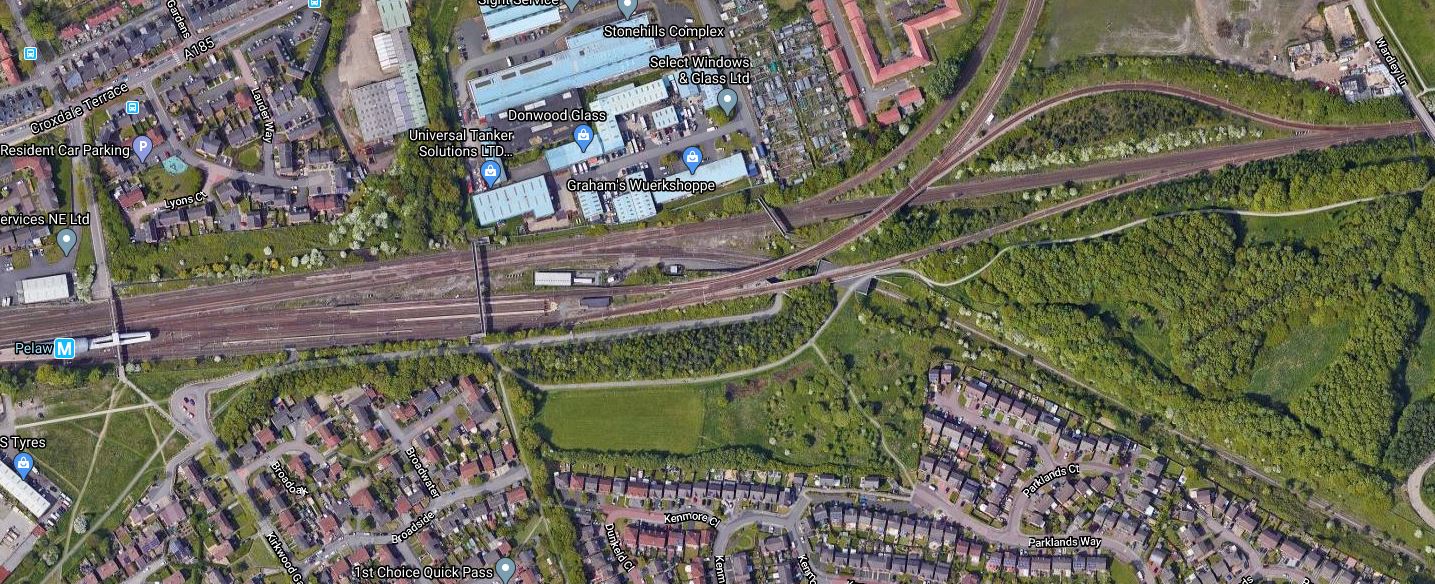
Note.
- Pelaw station on the Western edge of the map marked by a blue M.
- The Durham Coast Line running East-West across the map.
- The tracks going North from the junction in the middle of the map are the Tyne and Wear Metro to South Shields station and a freight line to Jarrow.
- At the Eastern edge of the map, Pelaw Metro Junction can be seen, where the Metro and the Durham Coast Line join to continue through Sunderland to their respective terminals.
- The Leamside Line can be picked out running from the major junction in the middle to the South East corner of the map.
This second Google Map shows an enlarged view of the Pelaw Metro Junction.
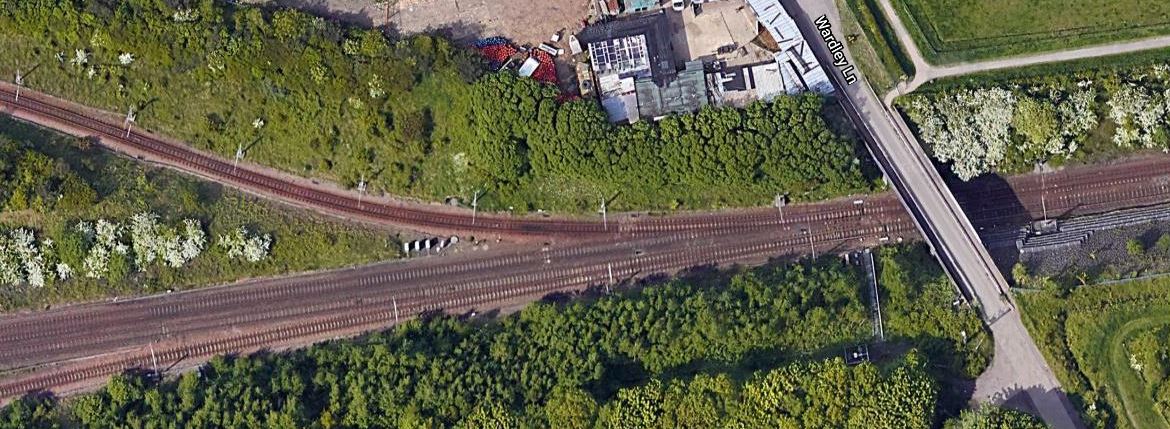
It appears to be a flying junction of the highest class, despite being built in the days of cash-strapped British Rail. Note the two outside Metro lines with their electrification merging with the central Durham Coast Lines, that have no electrification.
- The route is electrified using the Metro’s 1500 VDC overhead system from here until the Metro branches off to South Hylton station.
- The Metro and the other trains through the area, use a version of the Karlsruhe model for the signalling, so effectively, the Metro is running as a tram-train.
When the Metro has received the new Stadler trains, it will be possible to electrify the Durham Coast Line at 25 KVAC, which would allow the following.
- Metro trains could run all the way to Middlesbrough, using their dual-voltage capability.
- Metro trains could also run directly into Newcastle station, using the Durham Coast Line.
Voltage changeover would take place in Pelaw station.
Pelaw And Washington
The route of the Leamside Line South from Pelaw to Washington is more or less intact, although it does look in need of tender loving case.
This Google Map shows the section through Follingsby, where there used to be a Freightliner terminal.
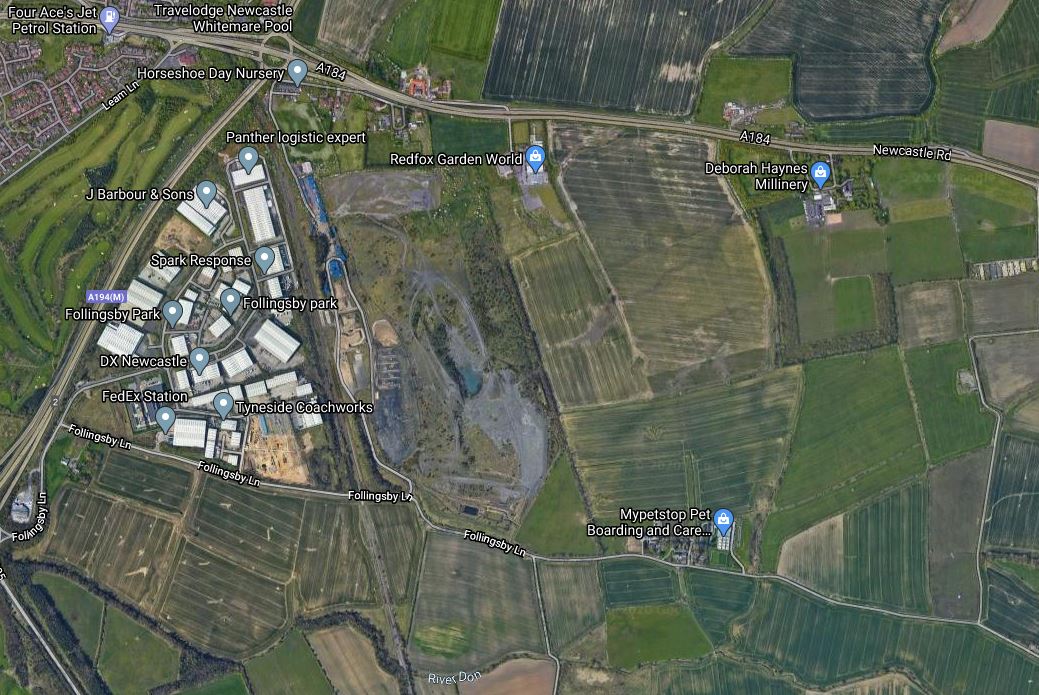
Note.
- The whole area, including a former opencast coal time, is being developed.
- Amazon are building a fulfilment centre on the site of the Freightliner terminal.
- The Leamside Line runs North-South through the complex road junction at the top of the map.
This second Google Map shows the area South of the previous one and shows the Leamside Line as it passes to the West of the Nissan plant at Sunderland.
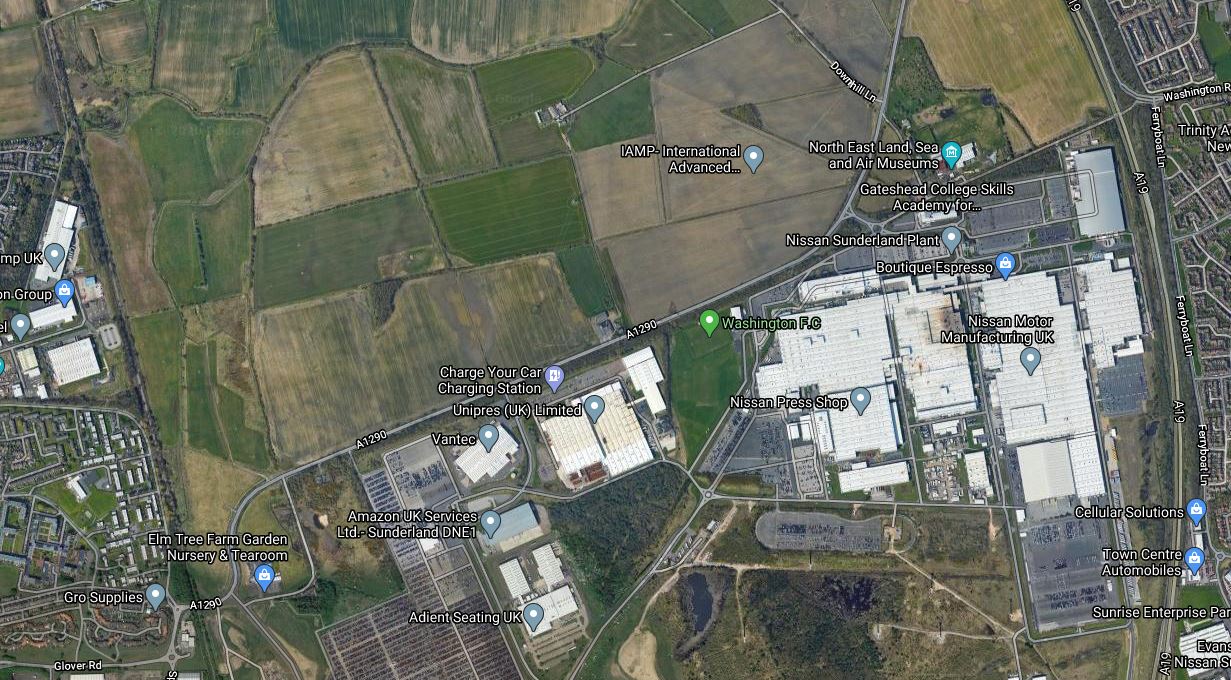
Note.
- The Leamside Line runs down the Western side of the map.
- The Nissan plant to the East, with a sausage =shaped feature in the South-West corner of the site.
- North of the Nissan plant an area has been earmarked for the International Advanced Manufacturing Park, which is currently the site of the NHS Nightingale Hospital NE.
It would appear discussions are underway to connect the Advanced Manufacturing Park to the Metro. But surely, with all the development alongside the line, there must be a need for perhaps three stations between Nissan and Prlaw.
This third Google Map shows Washington and its position with respect to the Nissan plant.
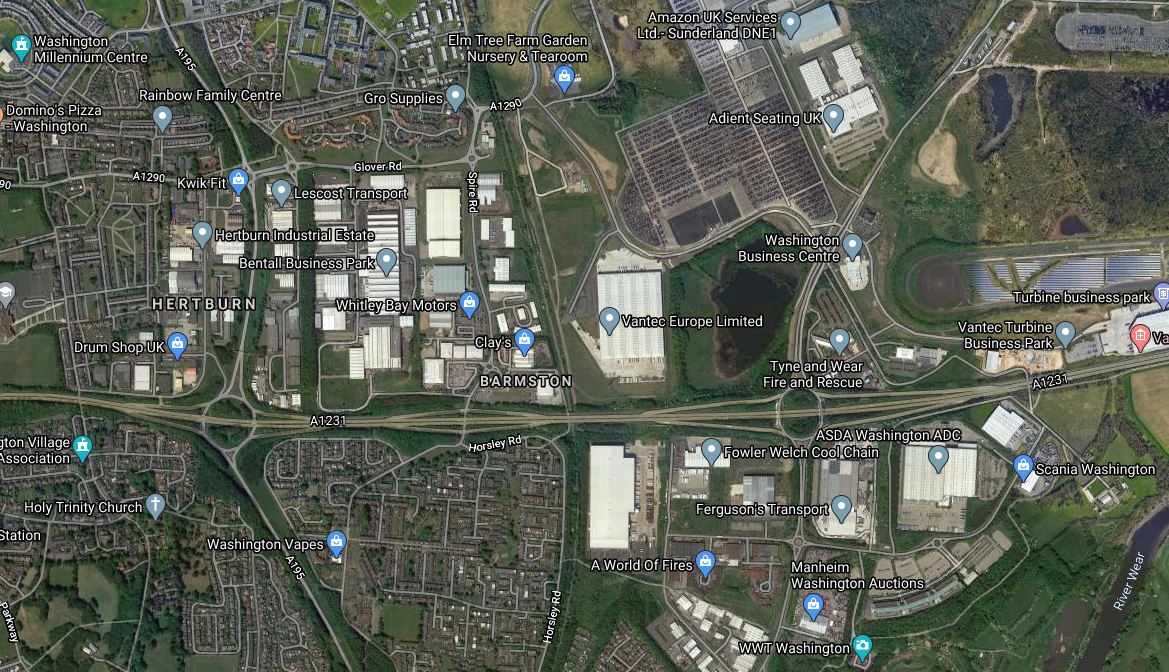
Note.
- The Nissan plant is to the North-East of this map and the sausage-shaped feature can just be seen.
- The Leamside Line goes North-South through the area and crosses the A1231 road, midway between the two complex junctions.
- The housing of the town of Washington in the South-West corner of the map.
There will surely be scope to put more than one station in the town of Washington, if the Leamside Line were to be reopened to passenger trains.
South From Washington
I will now continue South from Washington
The Victoria Viaduct
Going South from Washington, the Leamside Line has to cross the River Wear and it does that in spectacular fashion over the Grade II* Listed Victoria Viaduct.
This Google Map shows the crossing.
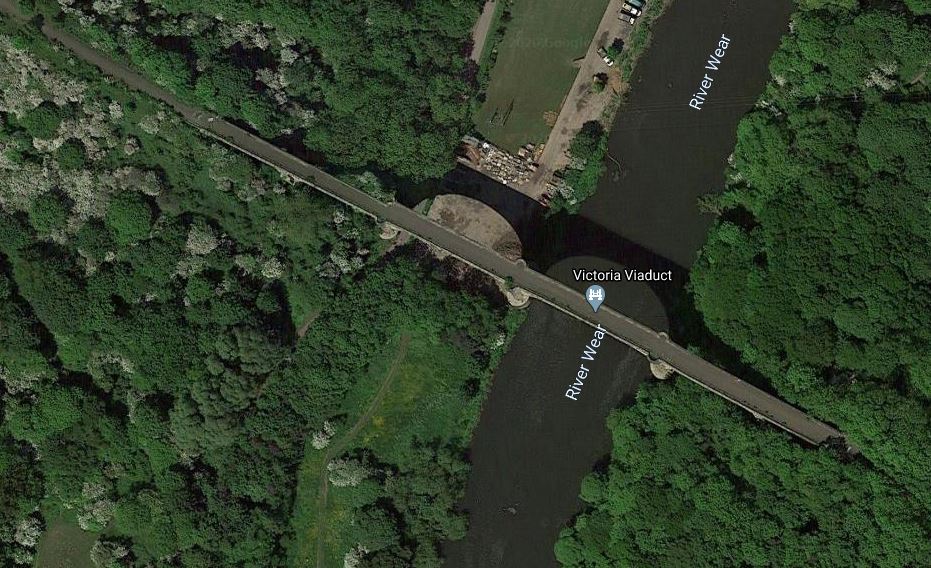
Note.
- Network Rail have maintained the viaduct since it was mothballed in 1991.
- It used to carry a double-track railway.
- The viaduct must have handled an occasional InterCity125.
I would be very surprised if a restored Victoria Viaduct couldn’t handle a five-car Class 800 train or similar.
Penshaw Station
The first station on the Leamside Line to the South of the viaduct, used to be Penshaw station.
This Google Map shows the village of Penshaw.
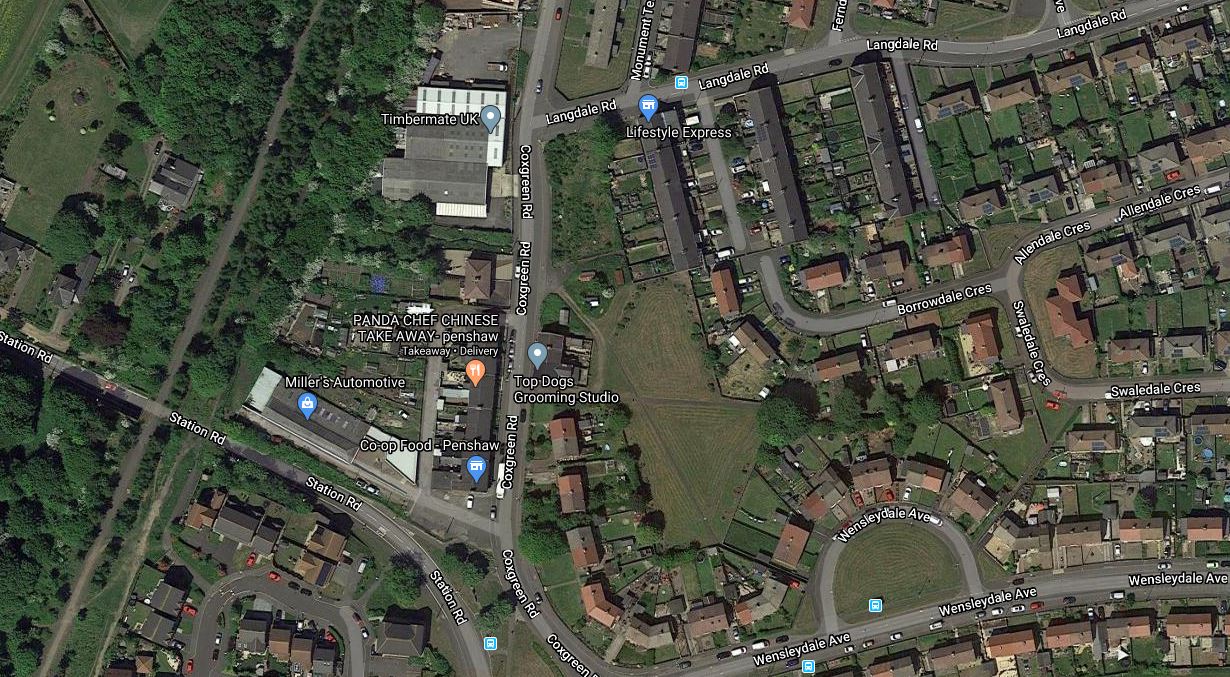
Note.
- Station Road curving around the South-West corner of the map.
- The Leamside Line crossing this road and running North-South.
I would expect a station could be built there, without too much difficulty.
Fencehouses Station
The next station to the South was Fencehouses station.
This Google Map shows the location of the station.
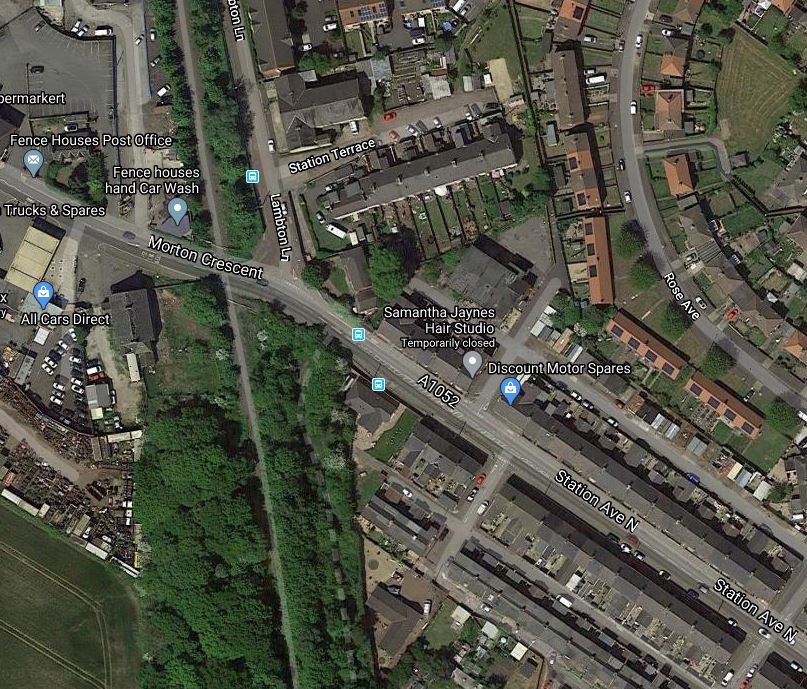
Note.
- The A1052 Road named Station Avenue North passing through the village.
- The former track of the railway passing North-South.
- According to Wikipedia, there used to be a level crossing at the station.
As with Penshaw station, I suspect a station could be built here fairly easily.
Leamside Station
The next station was Leamside station, which served the villages of Leamside and West Rainton.
This Google Map shows the station.
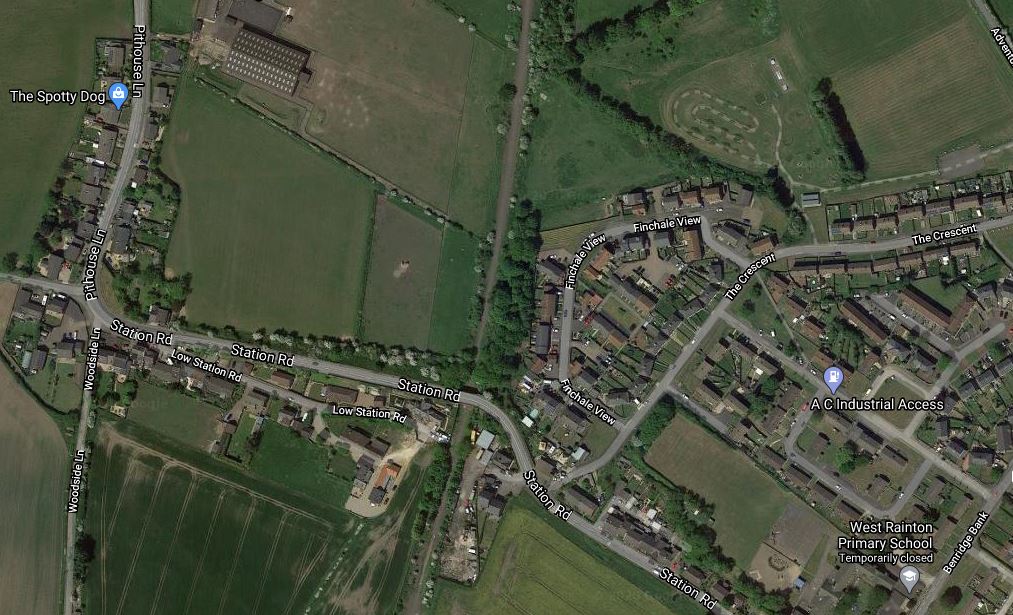
Note.
- The Leamside Line runs North-South in the middle of the map.
- Station Road can be picked out crossing the railway.
- Leamside is to the West of the Leamside Line.
- West Rainton is to the East of the Leamside Line.
It looks to be another station, that can be rebuilt without difficulty.
A Choice Of Routes At Belmont
The next station coming South on the Leamside Line used to be Belmont station.
This Google Map shows the site of the original station.
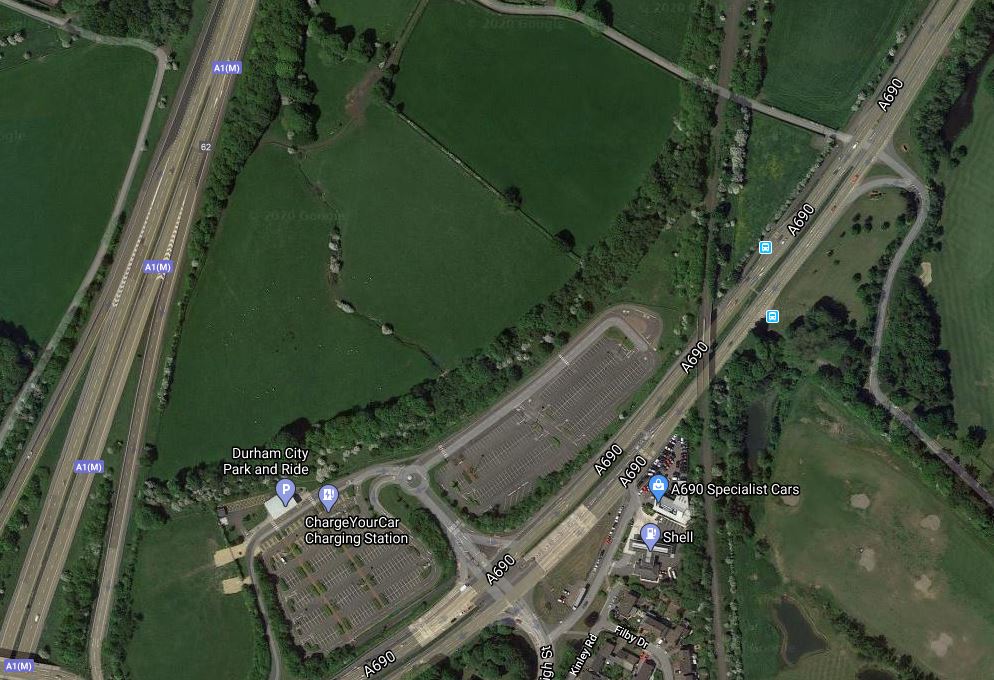
Note.
- The area is dominated by the two major roads; the A1(M) and the A690.
- In the vee of the roads, the Belmont Park-and-Ride site for Durham City is situated.
- The Leamside Line passes to the East of the Park-and-Ride.
- It appears that there is already a bridge to carry the Leamside Line over the A690.
There used to be a direct line between Belmont and Durham Gilesgate stations and the remains of the track-bed can be picked out, as it passes to the North of the Park-and-Ride.
There must surely be possibilities for some innovative thinking to connect Belmont, Durham, Newcastle and Washington.
But a simple station at the Park-And-Ride could be the best!
- Travellers living along the Leamside Line could use the buses at the Park-and-Ride to get to Durham City.
- The station would become a Parkway station for travellers going to Gateshead, Newcastle, Sunderland, Washington and anywhere on the Tyne and Wear Metro.
There would appear to be space for more parking, if that were to be needed.
An Alternative Direct Route Between the Leamside Line and the East Coast Main Line.
This Google Map shows the Leamside Line to the North of Belmont and the area to the West of the Line.
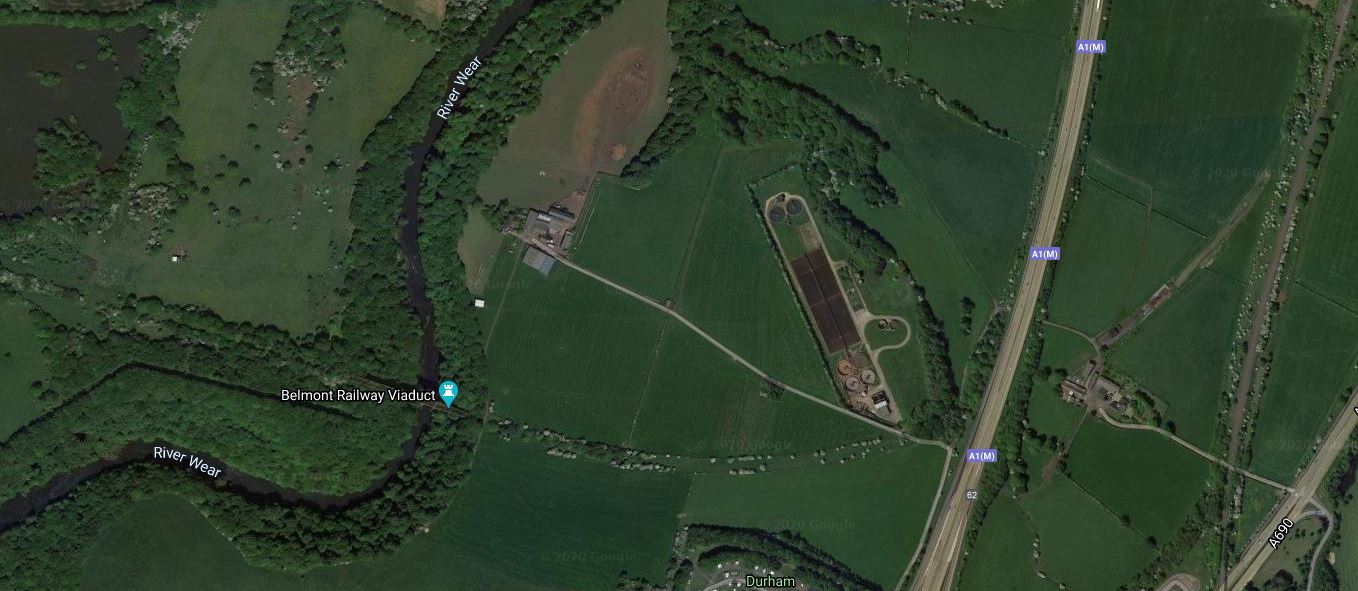
Note.
- The A1 (M) running North-South.
- The Leamside Line running North-South to the East of the motorway.
- The Grade II Listed Belmont Railway Viaduct marked by a blue arrow crossing the River Wear.
The remains of the trackbed of a railway can be picked out between the Leamside Line and the Belmont Railway Viaduct.
This second Google Map shows the area between the Belmont Railway Viaduct and the ECML.
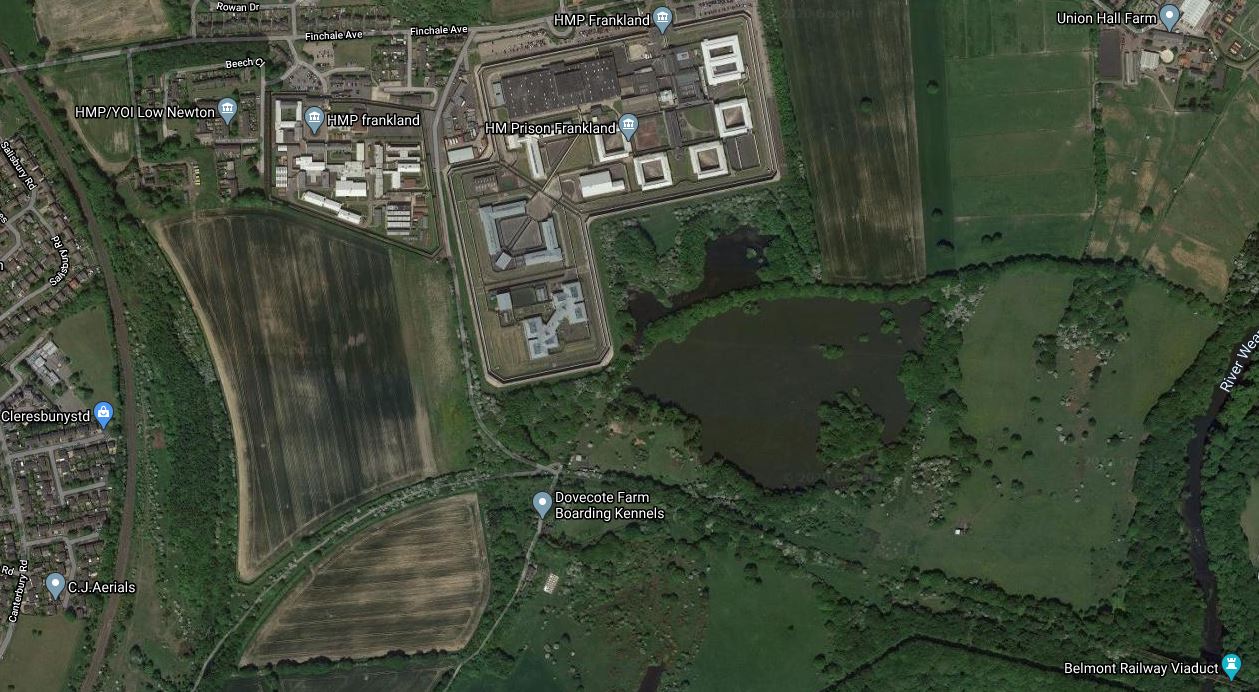
Note.
- HM Prison Frankland at the top of the map.
- The ECML running down the West side of the map.
- The Belmont Railway Viaduct in the South-East corner of the map.
The trackbed between the ECML and the railway viaduct can be picked out.
Could The Line Over The Belmont Railway Viaduct Be Rebuilt To Create A Route Between Durham And Newcastle?
- Looking, where the railway would need to cross the A1 (M), if appears that no provision was made for a underpass or bridge, when the motorway was built, so building one would be expensive and very disruptive.
- Creating a flying junction to connect the new line to the ECML would be another expensive and disruptive project.
- What is the condition of the Belmont Railway Viaduct?
- Would it be better to build an interchange station at the Belmont Park-And-Ride?
I feel that it would be unlikely that this route will be rebuilt.
South From Belmont
I will now continue South from Belmont station.
Shincliffe Station
The next station going South was Shincliffe station.
This Google Map shows the village of Shincliffe.

Note.
- The A177 road running NW-SE across the map.
- The Leamside Line running SW-NE across the map.
- The original station was where was road and railway crossed.
The Leamside Line continues South to Tursdale Junction, where it joins the ECML.
This Google Map shows Tursdale Junction.
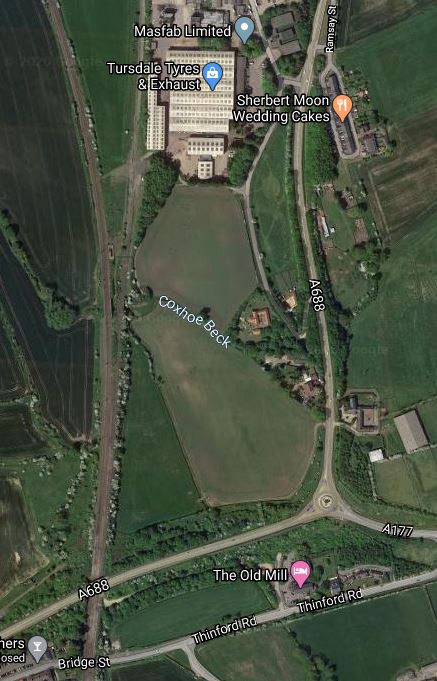
Note.
- Ferryhll is to the South.
- The ECML runs North to Durham and Newcastle in a slightly North-Westerly direction.
- The Leamside Line goes to Washington in a Northerly direction.
This second Google Map shows the ECML through Ferryhill.
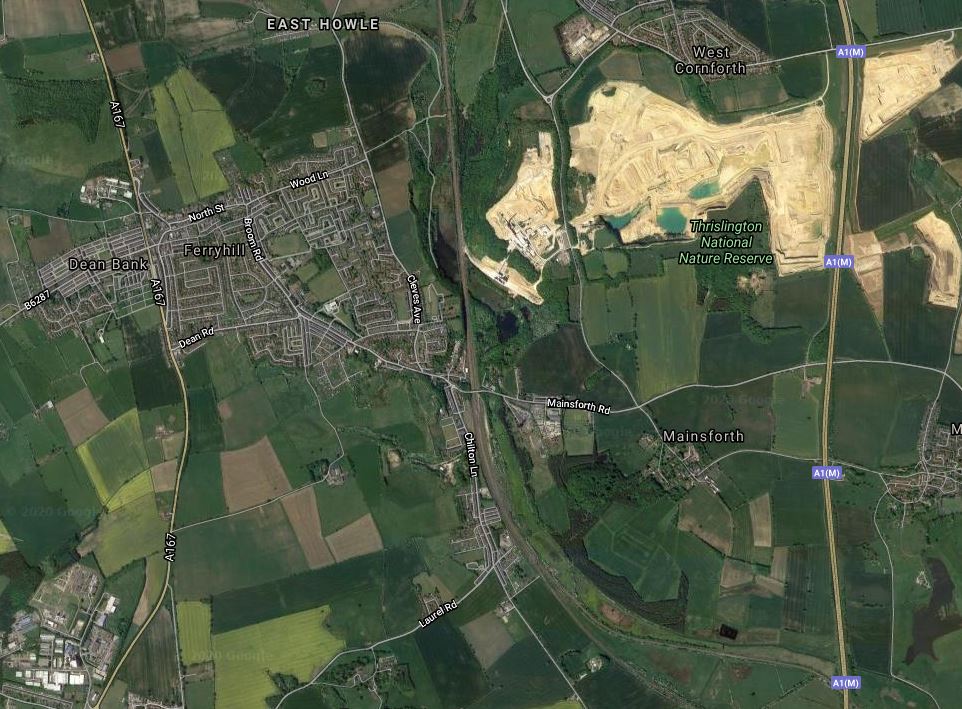
Note.
- The sand quarries opposite the village, that are planned to be used for landfill.
- The ECML runs North-South between the village and the quarries.
- There are two railways going South from Ferryhill.
- The ECML goes South to Darlington, York and beyond.
- The Stillington Railway goes South-East to Stockton and Hartlepool.
The Campaign for Better Transport have given a high priority for reopening passenger services between Ferryhill and Stockton.
Thoughts On The Reopening Of Ferryhill Station
The closing of routes linking to Ferryhill station seems to have been almost a continuous process.
- Coxhoe – 1902
- Byers Green Branch beyond Spennymoor – 1939
- Leamside Line – 1941
- Spennymoor – 1952
- Stockton – 1952
- Harlepool – 1952
Beeching finally put the station out of its misery in 1963
But things are different now!
- We need to build lots of new houses all over the country. And they need transport connections!
- We need to cut our carbon emissions.
- Roads are getting more crowded and we need to provide alternative reliable public transport.
- We need to load our weapons against COVID-19.
I feel with detailed planning, a well-designed station at Ferryhill could be an asset to the North East.
These are a few thoughts.
The Leamside Line Will Be An Important Route
The route between Pelaw and Ferryhill stations will be just over twenty miles long.
- It could be easily be run with the new Metro trains.
- Trains could stop at perhaps seven or eight intermediate stations.
- I estimate a journey could take about an hour.
- South Hylton station supports at least four trains per hour (tph)
- Four tph would need eight trains.
- Trains could stop at Belmont Park-and-Ride for a frequent bus service to Durham City.
- Washington might be able to support two stations.
It would certainly be a service that would fit in with the philosophy of the Metro.
Would The Leamside Line Be Electrified?
Unless the Metro trains were to be fitted with batteries, it would need to be electrified.
Either 1500 VDC or 25 KVAC could be used!
If the Durham Coast Line and the Leamside Line were to both be electrified with 25 KVAC, the following would be possible.
- Metro trains could go to Newcastle station.
- Other electric trains could use the Leamside Line as a diversion.
- Electric freight trains could use the Leamside Line.
On the other hand, the Leamside Line would be ideal for partial electrification.
- Merseyrail’s Class 777 trains are to be fitted with batteries and these trains are closely-related to the Tyne and Wear Metro’s new trains.
- Relaying new track on the existing track bed, is not going to be the expensive part of the project.
- Electrification between Pelaw and Washington would be easy, using the 1500 VDC overhead system of the Metro.
- There may be problems from the Heritage lobby, about electrification on the Victoria Viaduct.
- Ferryhill station would be electrified as it is on the ECML.
Trains could run the sixteen or so miles between Washington and Ferryhill stations on battery power.
The Ferryhill And Hartlepool Line Could Be A Useful Passenger Route
The route between Ferryhill and Hartlepool stations will be around twenty miles long.
- There could be new stations at Sedgefield, Stillington and Stockton.
- The route is double-track throughout.
- The route joins the Durham Coast Line at Billingham.
- It must open up possibilities for business and leisure travel.
The Government and local politicians must see a future for the railways in the area, as Horden station, which is next to Hartlepool station, is reopening.
Perhaps, there are plans for a train to leave Newcastle and take this route.
- Newcastle to Ferryhill via the Leamside Line.
- Ferryhill to Hartlepool.
- Hartlepool to Newcastle via the Durham Coast Line.
Running hourly, it would connect a lot of towns with unemployment to those, where jobs are being created.
Would The Ferryhill and Hartlepool Line Be Electrified?
This route would surely only be electrified, when other lines in the area were similarly enhanced.
Electrification would not be a bad idea.
- It would allow the new Tyne and Wear Metro trains to invade Teesside.
- A Teesside Metro could be developed, that was electric-hauled, which would use the same trains as the Tyne and Wear Metro.
- Some of the many freight trains starting or finishing in the area could be electric-hauled.
- LNER and TransPennine Express could use their bi-mode trains in electric mode to Teesside.
There could be a zero-carbon alternative, as plans for hydrogen trains on Teesside seem well advanced, as I wrote about in Fuelling The Change On Teesside Rails.
Also in Northern’s Hydrogen Plans, I published this extract from an article in the March 2020 Edition of Modern Railways.
Northern has submitted planning documents, with the preferred site for a maintenance and fuelling facility understood to be at Lackenby. As hydrogen units would have a more limited operating range than DMUs (around 600 miles), they would likely need to return to the depot every night. Northern believes the routes radiating from Middlesbrough to Nunthorpe, Bishop Auckland and Saltburn are ideal candidates for the operation, as they are unlikely to be electrified and can be operated as a self contained network using hydrogen trains. A fleet of around a dozen Breeze units is planned, with the possibility they could also operate services to Whitby and on the Durham Coast Line to Newcastle. Planning documentation suggested the first hydrogen train would be ready for testing in June 2021, but this was based on construction of the depot facility beginning in January this year.
If they were to use these trains to Ferryhill, some extra stations would be needed.
Will Trains On The East Coast Main Line Stop At Ferryhill Station?
I can’t see why not!
Services between York and Newcastle call at the following stations.
- CrossCountry – Plymouth and Edinburgh calls at York, Darlington, Durham and Newcastle
- CrossCountry – Reading and Newcastle calls at York, Darlington, Durham and Newcastle
- LNER – London and Edinburgh calls at York, Darlington and Newcastle
- LNER – London and Edinburgh calls at York, Northallerton, Darlington, Durham and Newcastle
- TransPennine Express – Liverpool and Edinburgh calls at York, Darlington, Durham and Newcastle
- TransPennine Express – Manchester Airport and Newcastle calls at York, Northallerton, Darlington, Durham, Chester-le-Street and Newcastle
I suspect that with a small amount of adjustment two tph could call at Ferryhill
- If train 3 stopped, this would give a connection to London and Edinburgh
- If train 6 stopped, this would give a connection to Manchester Airport
For many stations, which could connect to Ferryhill station in the future, the station might offer the quickest and most convenient route for travellers.
Could Some Of The Old Branches From Ferryhill Be Reopened?
There were a lot of branches from the Ferryhill area to neighbouring villages, because of all the coal mines in the area.
So could some of these branches be reopened, if say there were housing or commercial developments.
This Google Map shows the ECL about a mile North of the site of Ferryhill station.
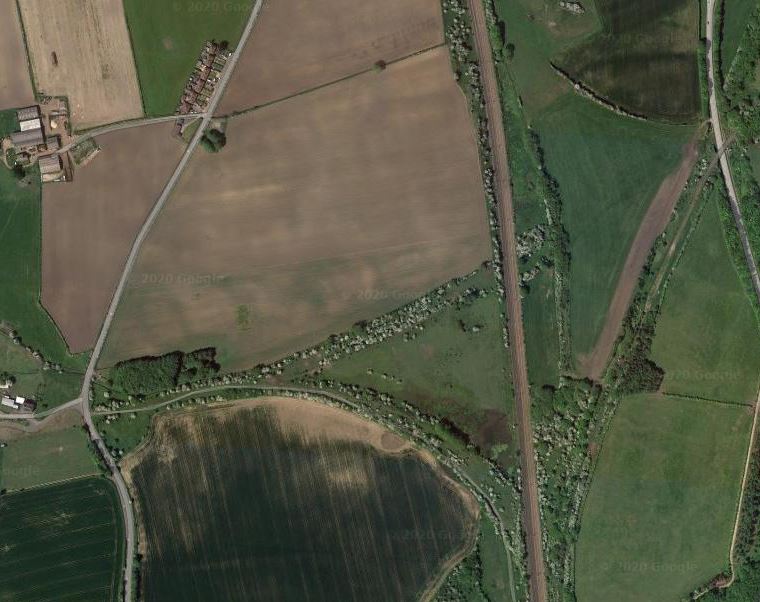
Note.
- The ECML going North-South just to the East of the centre of the map.
- Ferryhill station is to the South.
- On the Western side of the map, there is the remains of a triangular junction, which used to connect Byers Green and Spennymoor stations on the Byers Green Branch to Ferryhill.
- On the Eastern side of the map, there is a scar, which was the trackbed to Cuxhoe station.
Both branches can be picked out on Google Maps. As can roads like Railway Terrace and Station Road!
Whether any of these branches are worth reopening, is one for the planners armed with future knowledge of developments and various statistics.
Did Boris Know More Than He Said?
I have listened to Prime Ministers Questions off and on, since the time of Mrs. Thatcher.
Not often, does any Prime Minister make a substantial statement in PMQs, as they rarely have all the facts at their fingertips and don’t want to be called to account later.
In response to a direct question from a local MP, about the opening of Ferryhill station, Boris after usual PMQ waffle, said this.
I will make sure that I add to that an ambition to come and see Ferryhill station launched with him.
As decisions on the Leamside Line and hydrogen trains for Teesside have been delayed for months or possibly years, I wondered, if the decision has recently been made.
- If the plan had been discussed in Cabinet, Boris would surely have known more.
- A government minister was also seen on the BBC News at Horden station having a look, last week.
- The tone of the Sunderland Echo article is also very positive.
All that prompted me to write this post.
Conclusion
After looking at the Leamside Line and other railways in the North East, I think there is a lot that can be done to create a world-class local railway in the area.
Tyne And Wear Metro: Swiss Firm Stadler To Build New Fleet
The title of this post is the same as that of this article on the BBC.
This is the introductory paragraph.
Swiss firm Stadler has won a £362m contract to build a new fleet of trains for the Tyne and Wear Metro.
And this is one of Stadler’s visualisations of the trains for the Tyne and Wear Metro (T & W).
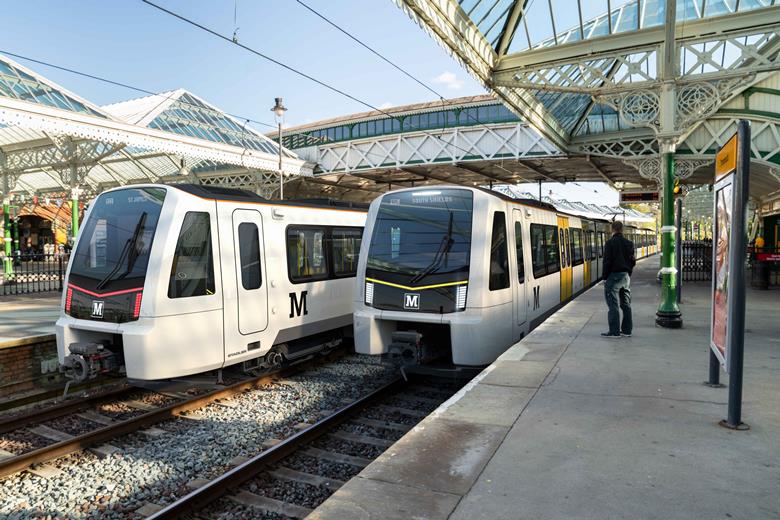
Compare this with a Stadler picture of a Class 777 train, that will soon be appearing on Merseyrail in Liverpool.
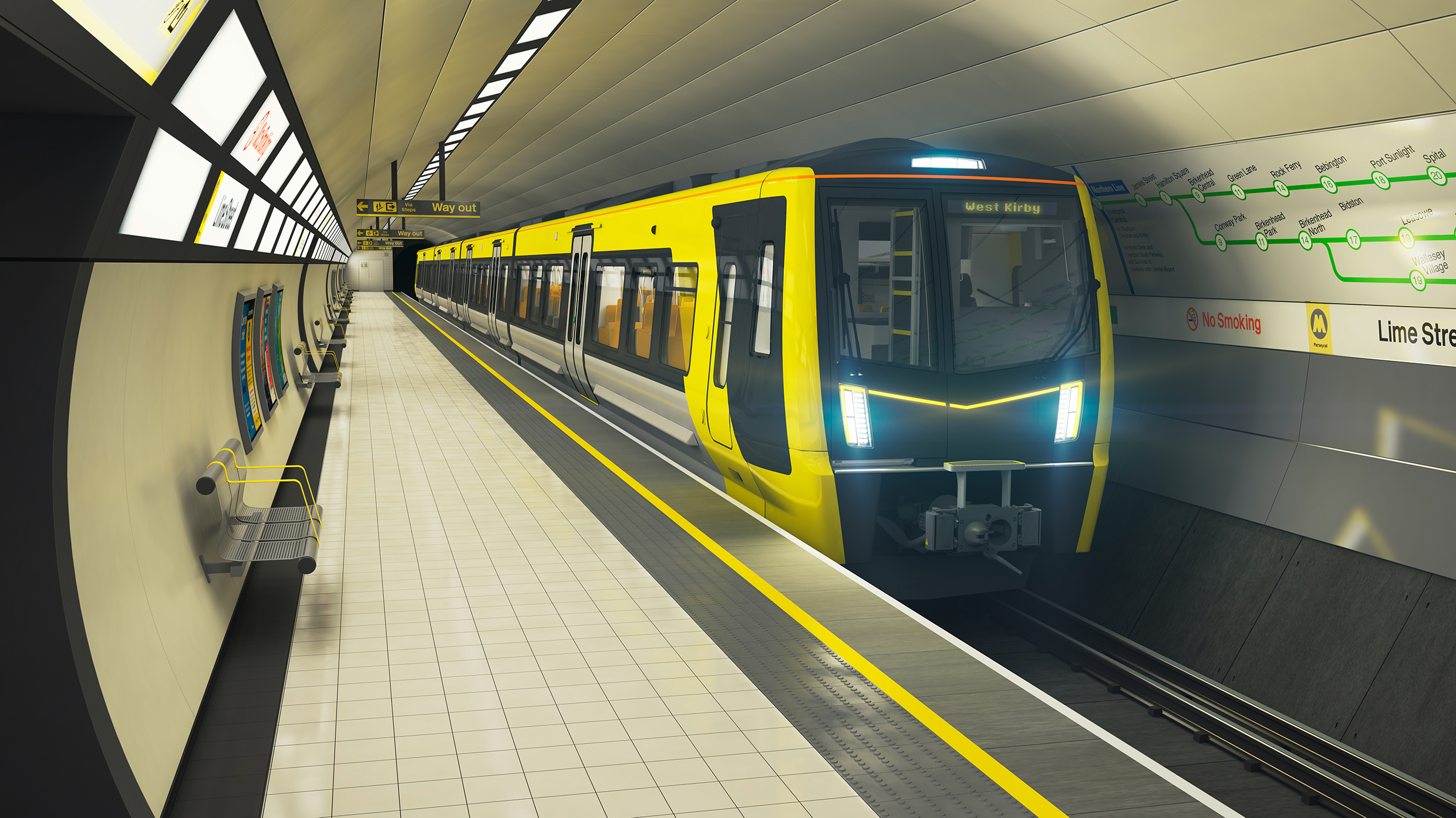
They would appear to be two very similar trains.
- The same headlights and stylised M on the front.
- One pair of double passenger doors in the first car.
- Both new trains are articulated with four sections.
- Train widths are Merseyrail Old – 2.82 metres, T & W Old – 2.65 metres and Merseyrail New – 2.82 metres.
- The Merseyrail trains have a 75 mph operating speed and the T & W trains have one of only 50 mph.
The T & W trains have a pantograph and overhead electrification and the Merseyrail trains use third-rail electrification.
More Details On The Tyne And Wear Trains
This page on the NEXUS web site is entitled Nexus Unveils £362m New Tyne And Wear Metro Trains.
This is two paragraphs.
The new trains will cut Metro’s high voltage power consumption by 30% while providing 15 times better reliability than the current fleet. Metro’s 36 million passengers will benefit from modern features including wifi, charging points, air conditioning and a step-change in accessibility.
Among new features will be an automatic sliding step at every door of the new trains, making travel easier for Metro’s 50,000 wheelchair passengers as well as people with children’s buggies, luggage or bicycles.
The size of the energy saving, indicates that the trains will probably be using regenerative braking.
As it has been disclosed that the new Merseyrail trains will have a small battery for depot movements, will this also be used to handle the regenerative braking.
More details of the trains will be disclosed in the coming months.
Merseyrail And The Tyne And Wear Metro Are Similar
I have ridden Merseyrail many times and the Tyne and Wear Metro perhaps five times and it is surprising how similar the two systems are.
- They are partly in tunnel.
- There are a range of stations, including both ancient and modern, simple and complex.
- Merseyrail is powered by 750 VDC third rail electrification and T & W by 1500 VDC overhead electrification. The power electronics on the two fleets, won’t be that different.
- Both operators have ambitions to use 25 KVAC overhead electrification to extend services.
- Both operators have ambitions to extend services on lines, that currently have no electrification. Merseyrail want to go to Preston, Skelmersdale, Warrington and Wrexham and T & W want to go to Blyth and Ashington along the Northumberland Line.
It is no surprise to me, that Merseyrail and T & W have chosen to use two versions of the same Stadler train.
Expansion Of The Networks
Both networks are ambitious and it appears to me, that they have ordered a train, that could be used to expand their networks.
Merseyrail
Merseyrail have proposed these expansions at various times.
- Extension of the Northern Line from Ormskirk to Preston
- Extension of the Northern Line from Hunts Cross to Warrington
- Incorporation of the Borderlands Line from Bidston to Wrexham into the Wirral Line as a new branch.
- A new branch of the Northern Line to Skelmersdale via the new station at Headbolt Lane.
- Passenger services on the Canada Dock Branch.
Merseyrail now have the trains to handle this expansion.
- They may need to purchase a few extra trains.
- Some charging points or electrification may be needed.
Note that Bidston and Wrexham is less than thirty miles of unelectrified line, so I suspect that the new trains can handle this range.
Other places within a similar range include.
- Preston from Ormskirk
- Wigan Wallgate from Kirkby
- Manchester Oxford Road from Hunts Cross, via Warrington Central.
- Chester from Liverpool Lime Street via Runcorn, Frodsham and Helsby.
The four terminal stations all have existing bay platforms.
Tyne And Wear Metro
The Tyne And Wear Metro have proposed these expansions at various times.
- Sunderland city centre to Doxford Park
- South Shields to Sunderland
- Washington, either via the disused Leamside line or a new route
But as the Government is funding a study into linking Blyth and Ashington to Newcastle, which I wrote about in £500m Fund To Restore Beeching Rail Cuts Goes Ahead Amid Criticism, I wouldn’t be surprised that this route is developed.
A lot of my comments about expanding the Merseyrail network, can be applied to the T & W.
- They may need to purchase a few extra trains.
- Some charging points or electrification may be needed.
None of the proposed extensions seem particularly long and places like Blyth, Ashington and Washington should be able to be reached on battery power.
Tram-Train Operation
The Wikipedia entry for Merseyrail has a section called tram-trains.
Two possible routes are indicated.
- Liverpool Lime Street to John Lennon Airport, using street-running from Liverpool South Parkway.
- Kings Dock to Edge Hill
I have heard others mentioned.
The Wikipedia entry for the Tyne and Wear Metro also mentions street-running.
Stadler have extensive experience of trams and tram-trains and built the Class 399 tram-trains for the Sheffield Supertram.
Stadler also provided the trains for the unique tram-train system in the German town of Zwickau, where diesel multiples units share the tram tracks to access the town centre.
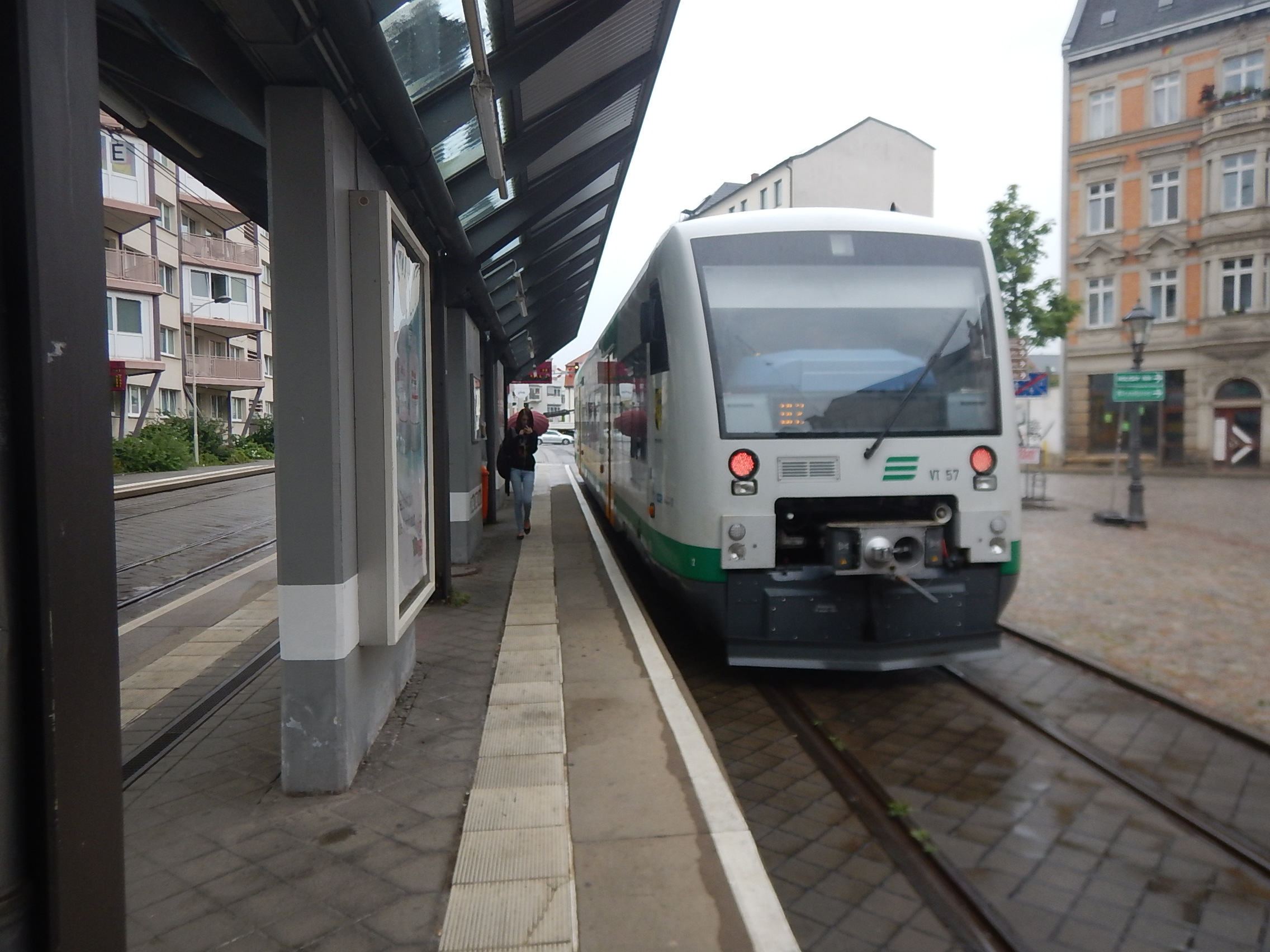
The picture shows the train at its stop in the centre.
I’m sure Stadler know how to enable street-running with the UK’s smaller trains.
Stadler’s trains, trams and tram trains also seem to have a high degree of articulation and seem to be able to take tight corners with ease.
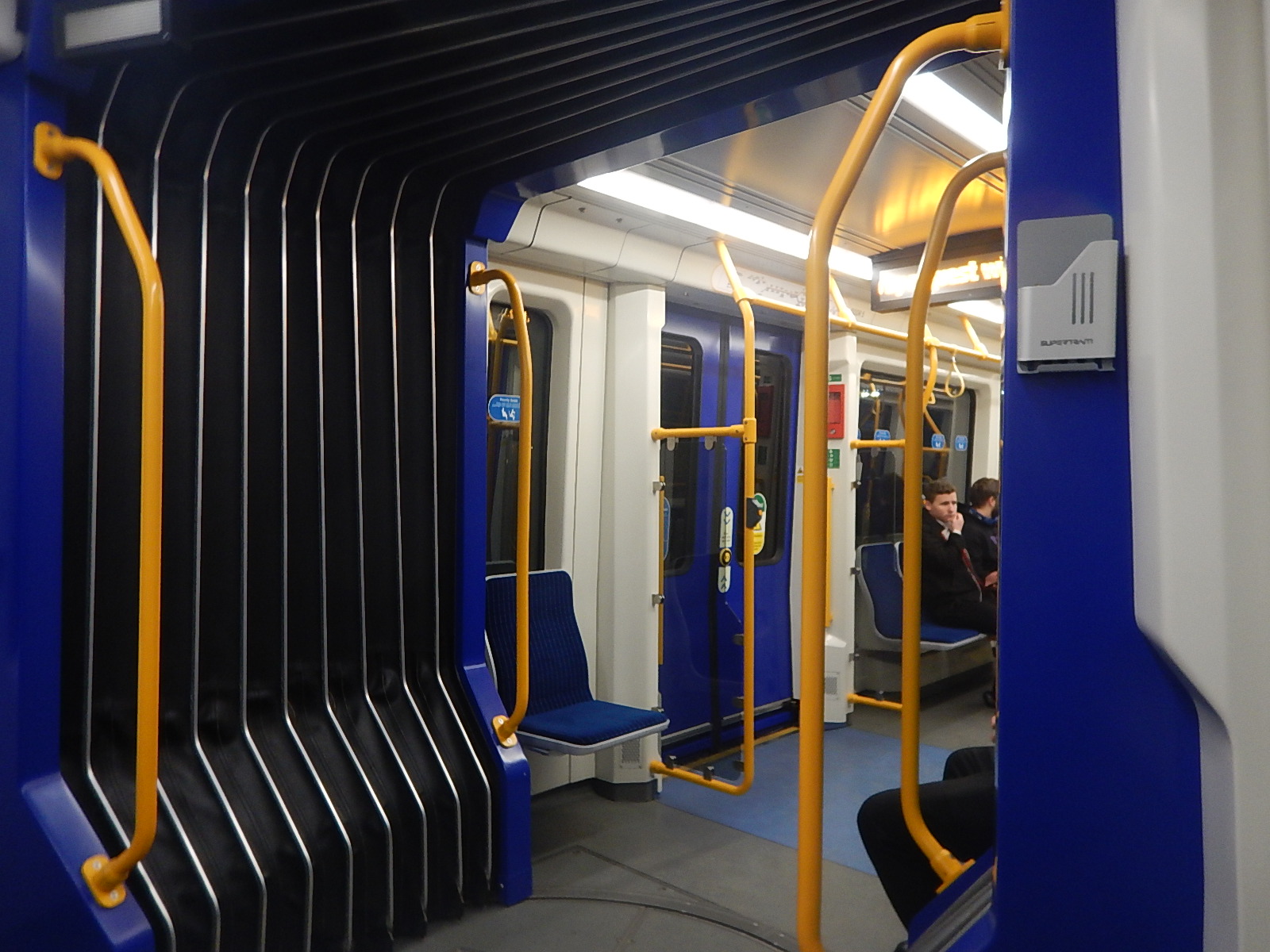
The picture was taken inside a Class 399 tram-train, as it traversed the tight curve under the M1 motorway, where the tram and the train sections of the route to Rotherham join.
Looking at the pictures of the Class 777 trains, I feel they could be able to take tighter curves than most trains.
The Dead Elephant In The Room
Several local services on Merseyside and in the North East are run by Northern, which is now being taken over the Government.
The Department for Transport, hasn’t disclosed any plans yet, but it is likely that some routes could be handed to Merseyrail and the T & W.
There is a loose precedent for this happening. In North-East London the poorly performing Lea Valley Lines from Liverpool Street to Chingford, Cheshunt and Enfield Town were moved from Greater Anglia to London Overground in 2015. No-one feels they should be returned and there are rumours that more services in the area will move to the London Overground.
So what services could be moved?
Merseyrail
These diesel services could surely be moved to Merseyrail.
- Omrskirk and Preston – 16 miles
- Liverpool Lime Street and Manchester Oxford Road via Warrington Central – 27 miles
The distances are the length of track without electrification.
It could also be argued that Greater Manchester would get its share of the Northern routes, but I can envisage Class 777 trains or similar running the following routes.
- Southport and Manchester Victoria – 27 miles
- Kirkby and Manchester Victoria – 28 miles
As before, the distances are the length of track without electrification, but these could be reduced considerably with electrification from Salford Crescent to Wigan Wallgate.
It should be noted that Greater Manchester has ambitions to run tram-trains to Wigan Wallgate via various routes.
The demise of Northern probably allows these routes to be taken over by Greater Manchester.
- Manchester Piccadilly and Buxton – 16 miles
- Manchester Piccadilly and Hadfield/Glossop – Electrified
- Manchester Victoria and Blackburn – 14 miles
- Manchester Victoria and Clitheroe – 24 miles
- Manchester Victoria and Rochdale – 11 miles
- Manchester Victoria and Stalybridge – 8 miles
- Manchester Victoria and Wigan Wallgate – 10 miles
Again, the distances are the length of track without electrification.
Buxton and Clitheroe could be difficult because of the gradients involved, but as in South Wales, bi-modes might be the solution if the routes were run back-to-back.
This simple analysis shows how Northern’s demise will ask questions all over the North.
Tyne And Wear Metro
These diesel services could surely be moved to the T & W.
- Newcastle and Morpeth – Electrified
- Newcastle and Chathill- Electrified
I also think, that these services could be restructured, if the Blyth and Ashington routes are developed for the T & W.
The trains could also reach to Hexham, which is just 22 miles from electrification.
Middlesbrough is probably too far, as the station is thirty five miles from the electrification at Sunderland.
But electrification of the Durham Coast Line would allow the T & W Metro to serve the new station at Howden and reach Middlesbrough and possibly Nunthorpe.
Conclusion
I can see both Merseyrail and the Tyne and Wear Metro significantly extending their networks in the next few years.
The new trains, with their batteries and dual-voltage capability are built for expansion.
Tram-train or street running will help.
Several important new areas are within battery range.
I can also see other cities using similar Stadler technology to create local Metros.
Manchester, Middlesbrough, Preston and Sheffield come to mind.
Using similar technology would surely allow joint services and sharing of knowledge and designs to enable cost savings.
£500m Fund To Restore Beeching Rail Cuts Goes Ahead Amid Criticism
The title of this post is the same as that of this article on the BBC.
This is the introductory paragraph.
A government fund is to be launched later to restore historic railway lines closed more than 50 years ago under the so-called Beeching cuts.
The two initial grants are for studies about reopening the Northumberland Line to Blyth and Ashington in the North East and to Fleetwood to the North of Blackpool.
Blyth And Ashington
Consider.
- The tracks already exist.
- There may still be some freight traffic on the route.
- Connections to the Tyne and Wear Metro appear possible.
- The Tyne and Wear Metro already shares tracks with other freight and passenger services.
- New stations and probably new signalling will be needed.
- The distance between the proposed Northern terminals and the connections with the Tyne and Wear Metro are under twenty miles, which could make battery operation easily possible.
- The Tyne and Wear Metro is currently procuring a new fleet of trains.
I believe that these branches could be integrated into the Tyne and Wear Metro, providing that the new trains have the right specification.
Light rail vehicles like the Class 398 tram-trains being procured for the South Wales Metro should be able to run these services.
But other manufacturers might have better solutions!
Fleetwood Branch
This extension would need the following.
- Restoration of the existing track between Poulton-le-Fylde and Fleetwood.
- One or more new stations.
- Probable resignalling.
In a simple installation, there is probably space to put a bay platform in Poulton-le-Fylde station, so that a shuttle service could be run to Fleetwood.
But services could also be extended to Preston.
Blackpool though has other rail problems like what are they going to do with the Blackpool South Line.
I believe Blackpool could use similar solutions on both the Blackpool South and Fleetwood Lines to create a bigger solution for the whole of the area.
Conclusion
It looks to me that the government has started with two schemes that are possible and where the track still exists.
It is to be hoped that the two studies come up with easy-to-build and fundable schemes, which are the first of many.
Protests After Claim That Hitachi Has Lost T&W Contract
The title of this post is the same as that of this article on Railnews.
This is the introductory paragraphs.
There have been protests in north east England after a report claimed that Hitachi has been ruled out of the three-way contest to build a £500 million fleet for Tyne & Wear Metro.
The other contenders are CAF and Stadler, and the source of the claims says ‘insiders’ at Nexus have been told that Hitachi will be ‘overlooked’.
It should be noted that the two other bidders have orders for similar trains in the pipeline.
CAF
In TfL Awards Contract For New DLR Fleet To Replace 30-year-old Trains , I wrote about how CAF had been awarded the contract for new trains for the Docklands Light Railway.
I also said this about the possibility of CAF being awarded the contract for the new trains for the Tyne and Wear Metro.
In Bombardier Transportation Consortium Preferred Bidder In $4.5B Cairo Monorail, I indicated that as the trains on the Tyne and Wear Metro and the trains on the Docklands Light Railway, are of a similar height and width, it might be possible to use the same same car bodies on both trains.
So now that CAF have got the first order for the Docklands Light Railway, they must be in prime position to obtain the Tyne and Wear Metro order!
A second order would fit well with the first and could probably be built substantially in their South Wales factory.
Stadler
Stadler seem to be targeting the North, with new Class 777 trains for Merseyrail and Class 399 tram-trains for Sheffield and bids in for tram-trains and and new trains for the Tyne and Wear Metro.
Their trains are both quirky, accessible and quality and built to fit niche markets like a glove.
Only Stadler would produce a replacement for a diesel multiple unit fleet with a bi-mode Class 755 train, with the engine in the middle, that is rumoured to be capable of running at 125 mph.

Note the full step-free access between train and platform, which is also a feature of the Merseyrail trains.
Does the Tyre and Wear Metro want to have access like this? It’s already got it with the existing trains, as this picture at South Shields station shows.
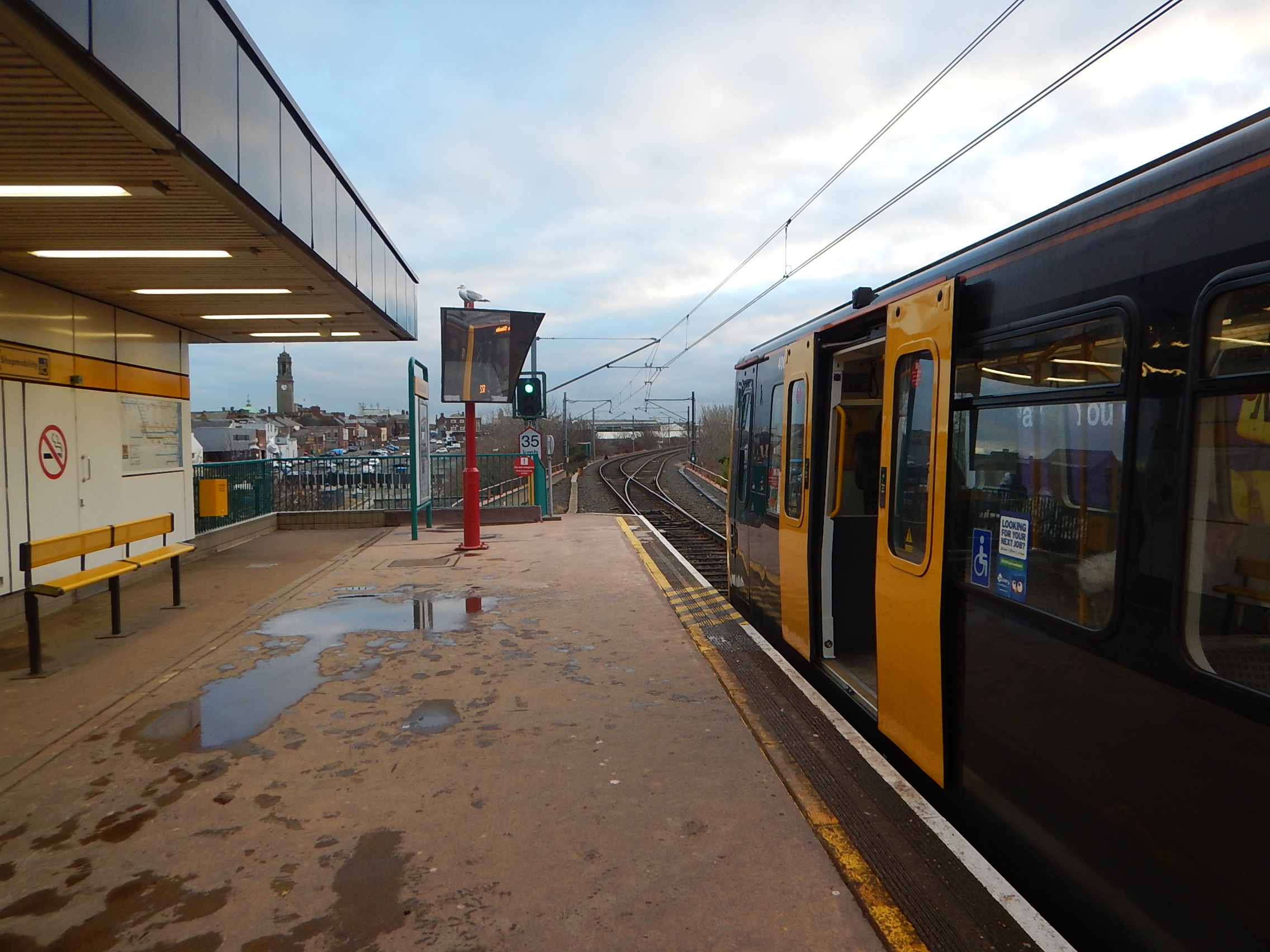
Stadler’s engineering in this area, would fit their philosophy
I first thought that Stadler would propose a version of their Class 399 tram-trains. for the Tyne and Wear Metro and wrote Comparing Stadler Citylink Metro Vehicles With Tyne And Wear Metro’s Class 994 Trains.
This was my conclusion.
I am led to the conclusion, that a version of the Stadler Citylink Metro Vehicle similar to those of the South Waes Metro, could be developed for the Tyne and Wear Metro.
My specification would include.
- Length of two current Class 994 trains, which would be around 111 metres.
- Walk through design with longitudinal seating.
- Level access between platform and train at all stations.
- A well-designed cab with large windows at each end.
- Ability to use overhead electrification at any voltage between 750 and 1500 VDC.
- Ability to use overhead electrification at 25 KVAC.
- Pantographs would handle all voltages.
- A second pantograph might be provided for reasons of reliable operation.
- Ability to use onboard battery power.
- Regenerative braking would use the batteries on the vehicle.
Note.
- Many of these features are already in service in Germany, Spain or Sheffield.
- The train would be designed, so that no unnecessary platform lengthening is required.
- As in Cardiff, the specification would allow street-running in the future.
- Could battery range be sufficient to allow new routes to be developed without electrification?
I also feel that the specification should allow the new trains to work on the current network, whilst the current trains are still running.
But since I wrote that comparison in June 2018, Merseyrail’s new trains have started to be delivered and Liverpudlians have started to do what they do best; imagine!
The Tyne and Wear Metro has similar ambitions to expand the network and would a version of the Class 777 train fit those ambitions better?
Conclusion
I wouldn’t be surprised if Hitachi misses out, as the experience of the Docklands Light Railway or Merseyrail fed into the expansion of the Tyne and Wear Metro could be the clincher of the deal.
They would also be the first UK customer for the Hitachi trains.
TfL Awards Contract For New DLR Fleet To Replace 30-year-old Trains
The title of this post, is the same as that of this article on Rail Technology Magazine.
I don’t think this is a surprise, as the winning design is based on CAF’s Metro train, which is in widespread use, in Europe and around the world.
The Trains
They would appear to be of a similar specification to most modern Metro trains, as would be expected.
The Possibility Of A Second Order
In Bombardier Transportation Consortium Preferred Bidder In $4.5B Cairo Monorail, I indicated that as the trains on the Tyne and Wear Metro and the trains on the Docklands Light Railway, are of a similar height and width, it might be possible to use the same same car bodies on both trains.
So now that CAF have got the first order for the Docklands Light Railway, they must be in prime position to obtain the Tyne and Wear Metro order!
Bombardier Transportation Consortium Preferred Bidder In $4.5B Cairo Monorail
The title of this post is the same as that of this article on the Toronto Star.
This the first three paragraphs of the article.
Bombardier Transportation says its consortium has been named preferred bidder in a C$4.5 billion contract to build and supply a new monorail system in Egypt’s capital.
The company’s potential share of the design and build contract for the system in Cairo is C$1.8 billion with an operations and maintenance deal valued at about C$1.67 billion over 30 years.
The 54-kilometre monorail will connect East Cairo with the New Administrative City and a second 42-km line will connect 6th October City with Giza.
The railway division of Bombardier Inc. will deliver the project in partnership with two Egyptian companies Orascom Construction and the Arab Contractors with the trains being developed and built in Derby, Britain.
The article then mentions the Bombardier Innovia monorail.
- The latest Innovia 300 monorail is automated and driverless.
- These trains can travel at 80 kph
- They can handle 48,000 passengers per hour in both directions.
- The latest versions are manufactured in Brazil, Canada and China
- The latest versions are installed or planned in Brazil, China, Saudi Arabia and Thailand.
I think there must be more to this project than the article in the Toronto Star.
What Are The Strengths Of The Innovia 300 Monorail?
This is Bombardier’s video of the monorail.
It looks to be a well-designed system, that has several strengths.
- It is automated and driverless.
- Cars are short and the trains can take quite curves, with as low as a 46 metre radius.
- Trains can have up to eight cars. The Cairo trains will be four cars.
- The latest cars look stylish, with cab design not unlike an Aventra.
- The cars appear to be walkthrough.
- The track is a slender concrete beam with walkways on either side for passenger evacuation and maintenance.
- The tracks wouldn’t necessarily have to be elevated.
- Construction could be quicker than a conventional railway.
- It could also be built to travel over roads, railways, water and building, by placing the beam at the right height.
I would like to see one in operation, but Brazil is a long way, so I’ll stick with the video for the moment.
Why Develop And Build In Derby?
Why would a big company like Bombardier, with already three production lines for the monorail, want to setup another production line in Derby?
Bombardier say that the trains will also be developed in Derby.
Perhaps, some or all of these reasons apply.
- The cross-section of an Innovia 300 monorail car looks to be about the size of a British train.
- Can Derby’s manufacturing technology that has been used successfully to build Electrostar and Aventra bodies be applied to the Innovia monorail.
- Derby has good relations with a large number of appropriate suppliers in the UK and Europe.
- The new version will use the Aventra parts bin to cut development and manufacturing costs.
- Supporting the Egyptian system from Derby will not be difficult.
- Canada has better relations with the UK, than Brazil or China.
But even so, development could surely have been continued in Canada.
So Bombardier must have very good reasons!
Are Bombardier Proposing A Closely-Related Design For The Tyne And Wear Metro?
The current Class 994 trains of the Tyne and Wear Metro have the following dimensions.
- Width – 2.65 metres
- Height – 3.45 metres
- Car Length – 27.8 metres
- Train Length – 55.6 metres
The Class 710 train, which is an Aventra has the following dimensions.
- Width – 2.77 metres
- Height – 3.76 metres
So it would appear that the standard Aventra might be too large to fit the Metro, where Bombardier are approved bidders.
It does appear that Bombardier have designed the Aventra’s body from three aluminium extrusions, so these could be resized to fit the smaller dimensions of the Metro.
But looking at the video of the Innovia 300 monorail, I get the impression, that above the floor, the body might be almost the same size as that needed for the trains for the Metro.
So Bombardier would need to design an appropriate chassis, to replace that used for the monorail.
This could mean that the bodies on both trains could be identical.
- Four fifteen metre cars, would give a length of sixty metres.
- If longer trains are needed, then extra cars could be inserted up to a length of eight cars.
- The trains would be walk-through with lots of doors for easy exit according to the video.
- The four-car design would enable tight curves could be negotiated.
- There would surely be advantages in support and maintenance.
- Cabs could be provide for the driver if required.
I also believe that any new trains must have step-free access between train and platform. This picture shows a current train at South Shields station.
That is not bad for a system that opened forty years ago.
I would think that Bombardier will make the access better, when designing a new chassis from scratch.
But the big advantages of commonality between the Innovia monorail and the Metro cars, would be in the areas of support and expansion or lengthening of the fleet in the future.
What About The Docklands Light Railway?
The Docklands Light Railway like the Tyne and Wear Metro, is another one-off system, that is incompatible with most other rail systems in the UK.
The DLR is intending to replace the rolling stock and Bombardier has been shortlisted.
The current trains of the DLR have the following dimensions.
- Width – 2.65 metres
- Height – 3.47 metres
- Car Length – 28 metres
- Train Length – 56 metres
Give or take a few millimetres, they are almost the same size as the trains on the Tyne and Wear Metro.
Could we see similar trains on the Tyne and Wear Metro and the Docklands Light Railway?
Wikipedia says that the new DLR fleet will be 87 metres long, so could that mean six 14.5 metre cars?
A Possible Tram-Train?
Bombardier build trams and have supplied them to the UK.
The UK has just started to develop tram-train systems, with the South Wales Metro being developed in the next few years with Class 399 tram-trains.
If Bombardier use the concept, I’ve outlined here for the Tyne and Wear Metro and the Docklands Light Railway, I believe it is only a short development to get a tram-train, that could run in the UK
I’m sure that they could get it to work in Blackpool, where the company supplied their trams for the Blackpool tramway.
Are Bombardier Expecting Orders From Europe?
It was only in 2014, that the first Innovia 300 monorail route, Line 15 (São Paulo Metro), opened in Brazil.
But since then, have several Transport Authorities, City Councils and Governments visited Brazil to have a look?
Do Bombardier feel that they will be selling other systems in Europe?
If so, then Derby will be an excellent sales, development, production and support base.
Could We See Some Monorails In The UK?
If you look at the list of Bombardier Innovia systems on Wikipedia, there are several short systems at places like airports and theme parks and a few longer systems of which the Cairo system will be the longest.
I can see opportunities for the shorter distance systems.
- As a part of developments of Heathrow Airport’s third runway.
- As a part of the development of Gatwick Airport’s second runway.
- Linking Ebbsfleet International and Northfleet stations.
- Linking East Midlands Airport to East Midlands Parkway station.
- Linking the proposed Eden Centre at Morecambe with Lancaster station.
- Linking Bristol Airport to the City Centre
- Greenhithe station to the Bluewater shopping Centre.
- It could be a modern replacement for the Liverpool Overhead Railway.
There are probably other locations at stations, airports and theme parts, where Innovia monorail systems could be installed.
As to a longer system in the UK, the only one I can think off would be to link High Speed Two at East Midlands Hub station to Derby and Nottingham and perhaps East Midlands Airport.
But then that would then be a system on Derby’s doorstep.
Conclusion
There are possibilities and with a billion pound-plus order, the project could be on its way!
But surely, the big advantage to Bombardier is if they get the orders for the new trains for the Tyne and Wear Metro and the Docklands Light Railway, they can create trains with a lot of shared components for all three applications.
The two UK systems would get trains that weren’t totally unique, which must ease maintenance and future expansions of the respective systems.
‘Washington Feels Like An Island’ – Minister Agrees To Consider Case For Bringing Metro To Town After MP Raises Issue In Parliament
The title of this post is the same as that of this article on the Sunderland Echo.
These are the first two paragraphs.
She asked: “What assessment he has made of the potential merits of extending the Tyne and Wear Metro to Washington?”
She added: “Residents of Washington often feel like the town is an island compared with neighbouring cities and towns. It contains 70,000 of my constituents, 70% of whom use their car to get to work.
The Minister thanked the MP for her comments and said they would be taken into consideration.
Washington station was on the Leamside Line. There have been plans for over ten years to reopen this line to passenger trains linked to the Tyne and Wear Metro.
Under Proposed Extensions And Suggested Improvements in the Wikipedia entry for the Tyne and Wear Metro this is said.
Washington, either via the disused Leamside line or a new route. Present planning may lead to the Leamside line being opened at least as far as Washington as a conventional rail line for passengers as well as freight, although this could be shared with Metro trains in the same way as the line from Pelaw Junction to Sunderland. In 2009 ATOC suggested reopening the Leamside line as far south as Washington.[70] On 12 July 2010 local MP Sharon Hodgson started an online petition on the website of local radio station Sun FM to get the Metro extended to Washington.
It is also intriguing to look at the specification for the new trains, where this is said.
During supplier engagement events in 2018, Nexus have now removed the provision for dual voltage operation from the specification, with preference for passive provision for future battery storage technology.
These are my thoughts.
- Battery technology is an interesting possibility for an extension of the Tyne and Wear Metro to Washington, as it’s only a few miles.
- The junction between the Leamside Line and the Tyne and Wear Metro would be easier to build, if trains only went North to Newcastle.
- Heavy rail could be used to Washington, but on balance it would probably be easier to use the Metro, as where would heavy rail trains turn?
- There is also a good suggestion to develop a South Shields to Sunderland service. This would balance services to Sunderland, if some Sunderland services were switched to Washington.
There certainly seems to be a lot of support for reopening railways in the North East!
Merseyrail’s Battery Intentions
In New Merseyrail Fleet A Platform For Future Innovations, I quoted from this article on the Rail Technology Magazine web site.
The article mainly is an interview with David Powell, who is programme director of rolling stock at Merseytravel.
This is a direct quote from the article.
We will be exploring, with Stadler, what the options are for having the trains becoming self-powered. This isn’t the bi-modes that lots of other people are talking about in the industry; this is on-board electrical storage.
The Wikipedia entry for Merseyrail links to this document, which puts a lot more flesh on Merseyrail’s intentions for battery trains.
It outlines strategies for the following routes.
Ellesmere Port And Helsby
The document says this.
There is a reasonable business case for extending the Merseyrail service through to Helsby.
However this is likely to be best served by the use of Merseyrail battery powered enabled
services. This will be tested on the new units in 2020.
According to Wikipedia, the sixth Class 777 train to be delivered will be fitted with batteries.
Currently, the service between Liverpool Central and Ellesmere Port stations is as follows.
- A train every thirty minutes.
- Trains take eighty-five minutes to do the round trip from Ellesmere Port round the Wirral Loop under Liverpool and back to Ellesmere Port.
- There are thirty-one stops on the route.
- There is a five minute turnround at Ellesmere Port station.
Two trains are needed to run the service.
The Current Class 507/508 trains and the future Class 777 trains both have the same operating speed, but there are performance differences.
The British Rail trains have 656 kW of power per train, whereas every new Stadler train will have 2,100 kW. The speed may be the same, but the acceleration will be much greater if needed and and the regenerative braking should be powerful and smoothly controlled.
- Figures for the Class 313 train, which is similar to the Class 507/508 trains show a top speed of 75 mph and an acceleration of 0.67 m/s².
- Figures for the Class 777 train show a top speed of 75 mph and an acceleration of 1.1 m/s².
These figures mean that a Class 507 train will get to 75 mph in 125 seconds, whereas the new Stadler trains will take just 76 seconds.
In addition, loading and unloading of passengers with their increasing levels of extras will be much faster due to the hollistic design of the trains and the platforms on the new Stadler trains.
It would not be unrealistic to see around a minute saved at every stop.
I think this level of improvement could be expected, with all the modern trains in the UK.
The extended service between Ellesmere Port and Helsby stations is not much extra distance and time.
- Just over five miles each way.
- About thirteen minutes each way , based on existing services on the route.
So if the terminus were to be moved to Helsby, when the new trains are in service, the time savings between Ellesmere Port and Liverpool should cover the extra distance.
It should also be noted about Helsby station.
- It has four platforms and could probably handle four trains per hour (tph).
- A platform with a charging station could be created.
- It has a wide selection of services including Chester, Llandudno, Manchester and Warrington.
To my mind, Liverpool to Helsby would be an ideal route for a battery electric train.
Ormskirk-Preston Enhancements
The document says this.
This incorporates both electrification from Ormskirk through to Preston and the potential
reintroduction one or both of the Burscough Curves. In view of the deferral of electrification
proposals, and the relative low ranking of the electrification proposal in the Northern Sparks
report, it is unlikely that the electrification proposal is expected to be taken forward in the
near future. In addition to this, the business case for extending electrification to Burscough,
and the introduction of the southern Burscough Curve, is poor. The potential use of battery
powered Merseyrail units may improve the business case for both proposals. This will be
reviewed after the Merseyrail units have been tested for battery operation in 2020.
Currently, the service between Ormskirk and Preston stations is as follows.
- A train every hour.
- Trains take around thirty minutes to go between the two terminal stations.
- The route is fifteen and a half miles long.
- There are three stops on the route.
- There is a long turnround in a bay platform at Preston station.
At the present time, the service seems rather erratic, with some services replaced by buses and long connection times at Ormskirk.
The service between Liverpool Central and Ormskirk stations takes thirty-five minutes with eleven stops and is generally every fifteen minutes, with a half-hourly service in the evening and at weekends.
If a Class 777 train could use battery power, I estimate it could run between Liverpool Central and Preston stations within an hour.
This would surely open up the possibility of a new service between Liverpool and Preston.
- It would take only a few minutes longer than the fifty-one minutes of a direct train between Liverpool Lime Street and Preston stations.
- It would connect a lot of stations to the West Coast Main Line at Preston.
- It would link the major sporting venues of Aintree, Anfield and Goodison or Everton’s new ground to the North.
- At the Southern end, it could connect to Liverpool Airport.
The Class 777 trains would need to be able to do about thirty miles on battery power and if required, the technology exists to either top up the batteries at Preston or use a pantograph to access the overhead wires of the West Coast Main Line.
At the present time, the Ormskirk Branch Line between Ormskirk and Preston stations is only single track and probably needs resignalling, but I suspect that a four tph service could be run between Liverpool and Ormskirk, with two tph extended to Preston.
Extra track work, North of Ormskirk and the reinstatement of the Burscough curves would allow.
- Four tph between Liverpool and Preston via Ormskirk.
- A service between Liverpool and Southport via Ormskirk.
- A service between Preston and Southport.
There is even the possibility of extending Liverpool and Preston services to Blackpool South station, if they used the overhead electrification through Preston to charge the batteries.
Borderlands Development
The document says this.
While the aspiration is to fully electrify the line, and incorporate it into the Merseyrail
network, this is very much a long term aspiration. In the interim period the aim is to develop
the line through the introduction of an improved diesel service. Merseytravel will work
closely with relevant cross-border organisations such as Growth Track 360 to bring this
about. There are a number of new station proposals for the line, the principal being a new
station close to the Deeside Industrial Park, which would improve the ability of the
workforce to access the site via public transport.
The Borderlands Line provides a service between Liverpool and Wrexham Central station with a change at Bidston station.
- The twenty-seven miles between Wrexham Central and Bidston are not electrified.
- The line is double-track throughout.
- There are twelve stations on the line.
- The service is hourly, but probably needs to be at least half-hourly.
- The service takes about an hour between Wrexham and Bidston stations.
Using Class 777 trains on the route, using battery power between Bidston and Wrexham Central stations would enable.
- A direct service, that terminated in the Wirral Loop under Liverpool.
- An increased capacity at Bidston station.
- A faster service.
I estimate that a time of perhaps seventy to eighty minutes between Liverpool Central and Wrexham Central stations will be possible.
There would be very little infrastructure work, except for new stations and the possible ability to top up batteries at Wrexham Central.
I suspect that political problems, rather than any railway ones will be larger.
Bootle Branch Electrification
The document says this.
A long term proposal which will need to be considered alongside the developing freight
strategy for the region and the expansion of the Port of Liverpool. The proposal envisages
the introduction of passenger services which will operate from the Bootle Branch into Lime
Street. An initial study is required to understand fully the freight requirements for the line
and what the realistic potential for operating passenger services over the line is.
The Bootle Branch is known as the Canada Dock Branch in Wikipedia.
Class 777 trains with a battery capability and the ability to use the overhead electrification into Liverpool Lime Street would be able to serve this route, without the need for electrification.
Obviously, if for freight efficiency, the route was electrified, the trains could use it as needed.
North Mersey Branch
The document says this.
A long term proposal; this envisages a new service operating from Ormskirk via Bootle into
Liverpool. It was reviewed as part of the Merseyrail Route Utilisation Strategy in 2009 which
identified a poor business case.
I can’t identify the actual route, but there are various rail alignments into and through the Docks.
Skelmersdale
The document says this.
Merseytravel is currently working with Lancashire County Council and Network Rail to
develop the Merseyrail network from Kirkby through to Skelmersdale. This work is expected
to be completed in 2019. Further development work will be required before this project is
implemented. While 3rd rail electrification is being considered currently, alternatives will be
considered later in the development process. A new station at Headbolt Lane to serve the
Northwood area of Kirkby is an integral part of this proposal. The potential to extend the
network further through to Wigan will need to be developed separately.
I wrote about this plan in Merseyrail To Skelmersdale – How To Plan A New Rail-Link.
Thoughts On Battery Size And Range
Thjis article on Railway Gazette is entitled Battery Trial Planned For New EMU Fleet.
This is the first paragraph.
The sixth of the 52 four-car 750 V DC third rail electric multiple-units which Stadler is to supply for Merseyrail services around Liverpool is to be fitted with a 5 tonne battery to test the business case for energy storage. While all the EMUs will be equipped for regenerative braking, this is not seen as optimal on the Merseyrail network.
I find the last part of this paragraph difficult.
Does it mean the trains can use regenerative braking, but that it is not worth using?
This media release on the Stadler web site is entitled Stadler Signs Contract To Build And Maintain 52 Metro Trains For
Liverpool City Region.
This is a sentence.
The units will also be equipped with batteries that allow independent movement of the units in the workshop and depot areas.
Out of curiosity, what will be the kinetic energy of the four-car trains at the full speed of 75 mph
- The train weight is given as 99 tonnes in Wikipedia.
- The passenger capacity is 484, with a weight of 90 Kg each.
- This gives a train weight of 142.56 tonnes.
Putting these figures into Omni’s Kinetic Energy Calculator gives a kinetic energy of 22.3 kWh.
I feel that this fairly low amount of energy could be held in a 60 kWh battery, that would probably come from a hybrid bus and weigh about 600 Kg.
I would be very surprised if Stadler are not using a smaller battery to do the following.
- Handle regenerative braking.
- Independent movement in the workshop and depot areas.
- Train power in sidings and platforms.
It could also handle, train rescue to a safe evacuation point, in the event of power failure. I suspect that like Crossrail in London, Merseyrail would be very happy to have an independent recovery system in the tunnels under Liverpool, Birkenhead and the River Mersey.
In How Much Power Is Needed To Run A Train At 125 mph?, I estimated that using 3 kWh per vehicle mile is not a bad estimate for the energy use of an electric train running at speeds in excess of 100 mph.
Using this figure would give a range on a 60 kWh battery of at least five miles, which would move the train out of the tunnels if the power failed.
But we’re talking about a modern lightweight train running on probably newly relaid track and my 3 kWh per vehicle mile could be a little on the high side.
Stadler are talking of fitting the sixth train with a fifty five battery, which would probably have a capacity of around 500 kWh.
Using various consumption figures, the range would be as follows.
- 3 kWh per vehicle mile – 42 miles
- 2 kWh per vehicle mile – 62 miles
- 1 kWh per vehicle mile – 125 miles
Stadler and their battery supplier are probably working on.
- A train that uses less electricity.
- More efficient regenerativer braking.
- A more intelligent train control system.
- Increased energy density in the battery.
- Efficient charging systems.
- A plug-in battery pack that can be added and removed in minutes.
As a Control and Electrical Engineer, I wouldn’t be surprised to see that the control, electrical and software system of trains with and without the five tonne battery are identical and some just have a larger amount of energy storage.
Range on battery power can only increase!
Consider the lengths of some of the routes discussed earlier.
- Ellesmere Port and Helsby – 5 miles
- Ormskirk and Preston – 16 miles
- Bidston and Wrexham Central – 27 miles
Only the last route might need a charging station at the remote terminal.
My Own Speculation On Routes
I think there could be other routes that could easily be run by Class 777 trains running on battery power.
Onward From Hunts Cross
The current service between Hunts Cross and Manchester Oxford Road stations is only two tph, using rather suspect rolling stock.
- Under Merseyrail and London Overground rules, it should be at least four tph to give travellers a Turn-Up-And-Go service.
- The stations are of variable quality, but are being improved and will soon be joined by a new station at Warrington Wrst.
- There is a lot of new developments along the route.
- The service terminates in a convenient bay-platform at Manchester Oxford Road station.
- The service calls at Deansgale station for the Manchester Metrolink.
The route could be developed into a City-Centre-to-City-Centre and commuter route for both Liverpool and Manchester.
So could this route be run by Class 777 trains using battery power?
Consider.
- Hunts Cross and Manchester Oxford Road are just twenty-seven miles apart.
- The last couple of miles to Oxford Road is electrified with 25 KVAC overhead wires.
- Hunts Cross is electrified with 750 VDC third-rail.
It will be a Liverpool and Manchester Railway for the Twenty-First Century
I think it is one of those problems, where the engineering is easy, but the politics will be very difficult.
Onward From Headbolt Lane
The current service between Liverpool and Kirkby, which will be extended to the new station at Headbolt Lane, is a a Turn-Up-And-Go service of four tph. But the onward service to Wigan and Manchester is just a very inadequate hourly-service.
Consider.
- Headbolt Lane and Wigan are just twelve miles apart.
- Plans are being developed to create a proper transport interchange at Wigan for the arrival of High Speed Two.
- Wigan North Western is electrified with 25 KVAC overhead wires.
- Kirkby is and Headbolt Lane will be electrified with 750 VDC third-rail.
It would appear to be very possible to extend Class 777 trains from Kirkby to Wigan using battery power.
More Trains For Merseyrail
This is a paragraph from the Stadler media release about Merseyrail’s new trains.
The new four-car trains will all be in service by 2021, with the first unit arriving for testing by the middle of 2019.
The value of the manufacture and maintenance contracts for the 52 trains is up to £700m and Merseytravel
also has the option to procure an additional 60 units of rolling stock.
If the options are taken up, this would more than double the size of the Merseyrail’s fleet.
But where will these trains connect to Liverpool City Centre?
Helsby, Preston, Skelmersdale, Wrexham Central and the other routes in Liverpool will all need more trains, but nothing like sixty trains.
So will we see Wigan and Warrington added to Merseyrail’s destinations? And what about Manchester?
Never say no to Liverpool and their Swiss co-conspirators!
Conclusion
It is a comprehensive expansion strategy, where much of the work to create the various extensions is performed by adding equipment to the trains in factories or depots, rather than by the disruptive installation of electrification.
It looks very much like a case of Have Swiss Train Will Travel.
But then, I think the London Overground is using a similar strategy to expand in partnership with Bombardier.
Other networks like the Tyne & Wear Metro and those in cities like Birmingham, Cardiff, Glasgow and Leeds will be using similar philosophies of battery trams, tram-trains and trains.
Cardiff has already disclosed their plans and Stadler are building the trains for the South Wales Metro.
 The Anonymous Widower