Riding The Bakerloop BL1 – 28th September 2025
The Bakerloop BL1 is a new express bus route in London, that runs between Waterloo station and Lewisham Town Centre.
This article on the BBC, which is entitled New Bus Route Launches With Free Fares In Week One, announced the route.
This is the sub heading.
A new bus route that links parts of south-east London has launched with free fares for its first week of operation
These two paragraphs describe the service in more detail.
The Bakerloop will run between Waterloo station and Lewisham every 12 minutes during the day from Monday to Saturday and every 15 minutes in the evenings and on Sundays.
Electric double-decker BL1 services will operate between 05:00 BST and 00:30 along the proposed Bakerloo Tube line extension route, stopping at Elephant and Castle, New Cross Gate and Lewisham stations.
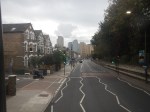
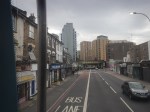
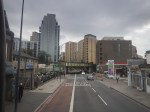
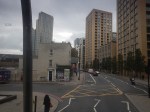
I took these pictures as I rode from Waterloo station to Lewisham Town Centre.

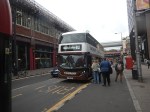
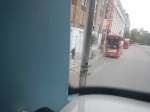
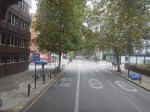
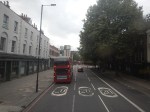

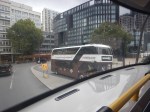
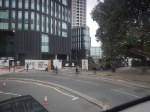
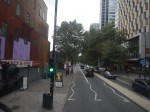
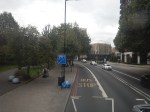
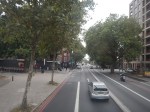
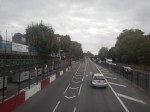
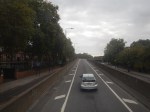
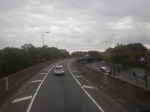
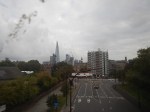
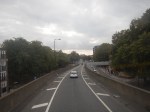
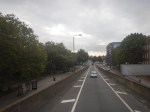
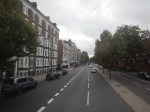
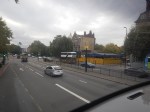
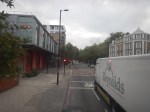
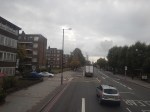
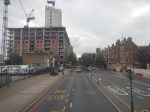
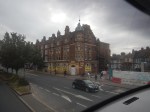
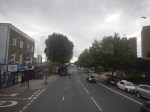
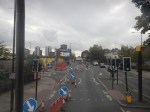
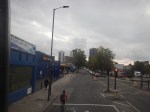
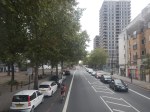
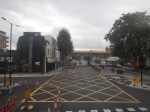
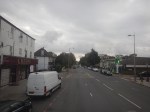
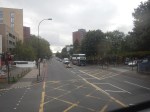
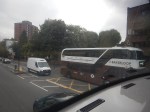
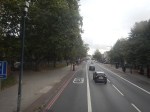
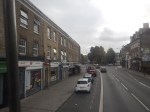
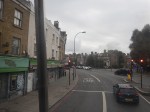
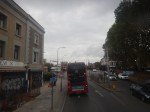
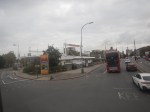
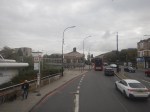
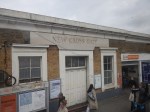
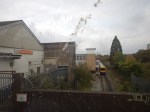

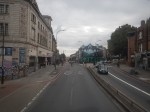
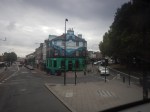
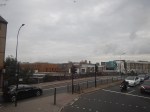
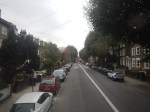
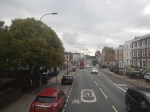
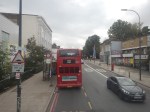
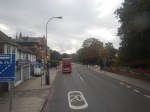
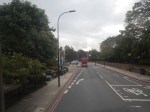
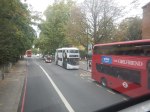
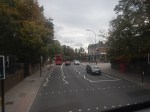
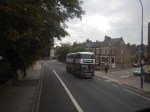
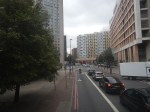
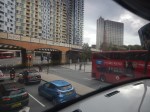
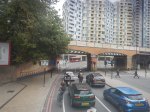
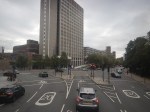
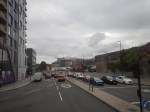
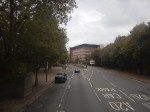
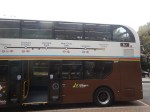
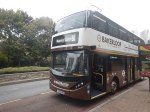
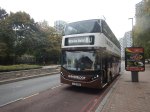


Note.
- The route starts at Stop D in Waterloo Road on the East side of Waterloo station.
- If you leave the station by Exit 2 and then cross Waterloo Road on the light-controlled crossing, then Stop D is less than thirty metres to your right.
- Pictures 15-24 were taken as the bus went over Bricklayers Arms flyover.
- Picture 23 is a close up of one of the trees along the route. Is it a London Plane.
- Despite the Summer, most trees seem to be in a reasonable condition.
- Crossing the roads and the information could be better in Lewisham Town Centre.
I have some further thoughts.
Trains And Bakerloop BL1 Compared
Consider.
- The bus takes a few minutes over half-an-hour.
- The train takes 19 minutes.
- The train runs twice an hour.
- The bus runs at least four times per hour.
The bus is probably the more affordable option, but the train is faster.
Is The Bakerloop BL1 Fast Enough?
Consider.
- The bus certainly takes almost twice as long as the trains.
- But then it is more frequent.
- The route doesn’t seem particularly hilly.
- The Alexander-Dennis bus didn’t seem slow.
- The bus would probably attract more passengers, if it was faster.
It will be interesting to see how this route develops.
Would Hydrogen Buses Help?
Two of the hydrogen buses, I have ridden have been on longer routes and they have used their undoubted extra power to accelerate and climb hills faster.
Their longer range probably allows them to work for much of a day, without refuelling.
So I wouldn’t rule out hydrogen buses on this route, at some point in the future, because of the route’s length.
Is Bakerloop The Right Name?
I don’t think so, as a certain class of tourist, will assume the bus goes to Baker Street and the Sherlock Holmes Museum.
Perhaps, it should have been called something descriptive like the Waterloo-Lewisham Express.
Is Bakerloop BL1 Being Used As A Pathfinder For The Bakerloo Line Extension To Lewisham?
I’ve read somewhere that it is.
It wouldn’t be a new idea and a properly structured trial could give valuable information about how many people would use the new rail route.
Surely, a similar approach could be taken to provide projections for passenger usage on the West London Orbital Railway.
Could Other Routes Use A Similar Philosophy?
In Riding Birmingham’s New Hydrogen-Powered Buses, I rode a route across Birmingham, that was run to a similar philosophy to the Bakerloop BL1 route, except thast it used hydrogen buses.
So I’m pretty sure the answer is in the affirmative.
Will Three-Axle Double-Deck Buses Be Useful For Routes Like BakerLoop BL1?
I asked Google AI, if three axle electric and hydrogen double-deck buses were being developed and received this reply.
Yes, Wrightbus and Wisdom Motor have developed and are producing three-axle zero-emission double-decker buses, including both battery-electric and hydrogen fuel-cell models. Wrightbus recently unveiled its 6×2 Streetdeck prototype, and Wisdom Motor partnered with Citybus to develop a three-axle hydrogen double-decker (DD12) for Hong Kong’s bus fleet.
I believe that a three-axle bus may have a greater payload, so for routes like Bakerloop BL1, they may be very useful, if only to carry bigger batteries.
‘Bakerloop’ Bus Route launches In Autumn, TfL Says
The title of this post, is the same as that as this article on the BBC.
This is the sub-heading.
A new bus route named the Bakerloop is set to launch in autumn to connect stations and areas in south-east London.
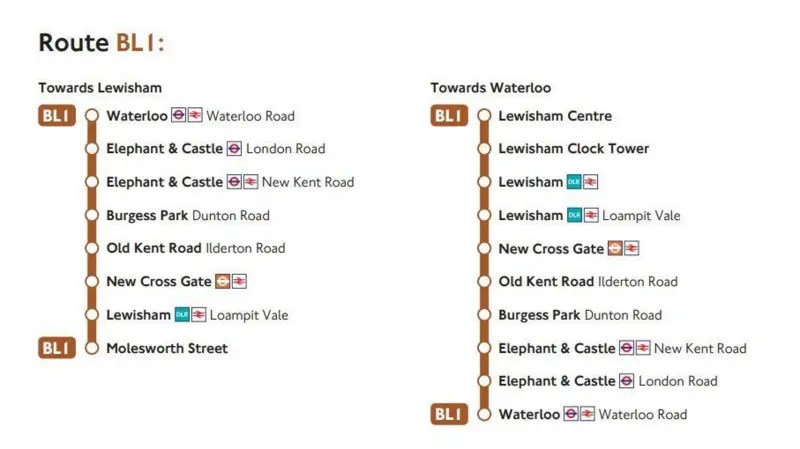
This graphic clipped from the BBC article shows the route.
I don’t deny that South London doesn’t need more buses, but I am getting rather fed up with SadIQ showing he is a South Londoner by putting on more and more buses for his friends.
My regular bus to Moorgate is the 141 bus, which must be the worst bus route in London on an overall basis.
Show Me The Way To Motspur Park
A few days ago, I saw on a web site, that Motspur Park station had been made step-free.
I tried to go yesterday, but I made a big mistake – I started from Moorgate station and intended to use the Waterloo and City Line to get to Waterloo station, from where I could get a direct train.


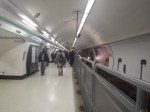
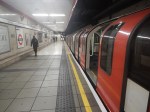
But after taking forever to walk between the Northern and Waterloo and City Line at Bank station, I arrived at Waterloo station, too late to get to Motspur Park station before dark.
Today, I looked up Transport for London’s Journey Planner and it told me to do the following.
- Walk to Newington Green Road, which is rather a long walk for my 77-year-old legs.
- Get a 341 bus to Manor House Station.
- Get a Piccadilly Line train to Finsbury Park station.
- Get a Victoria Line train to Vauxall station. This is a cross-platform interchange.
- Walk to Vauxall National Rail station.
- Get a South Western Railway train to Motspur Park station.
Note.
- Normally, I would use a variation of this route and take a 141 bus from the corner of my road to Manor House station.
- But due to road works, the 141 is not stopping near my house, so I have no easy way to get to Manor House station.
- But in some ways to start a journey to the South-West, by going North to Manor House station is a bit silly.
- This detour is caused because neither the Victoria or Piccadilly Lines have an exchange station with the Lizzie Line.
If the 141 bus were running, I’d take that to Moorgate, then take Lizzie to Bond Street and the Jubilee Line to Waterloo for a train to Motspur Park.
I would have taken this route yesterday from Moorgate, but I was advised otherwise by a station guy at Moorgate.
In the end today, I took a bus to King’s Cross and got the Victoria Line from there.
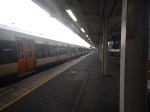
I took these pictures of the elderly Class 455 train en route.
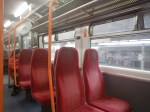
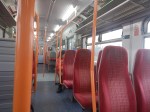
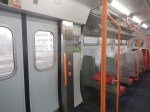
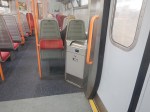
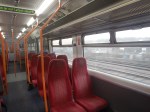
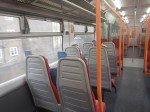
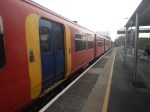
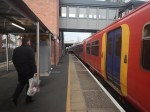
Although at forty, it was still in good condition.
I took these pictures of the new bridge at Motspur Park station.
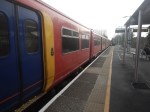
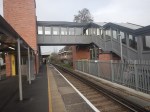
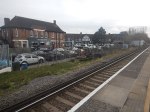
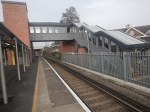
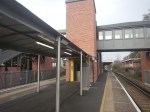
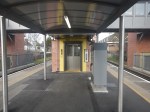
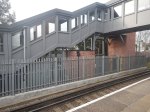
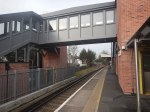
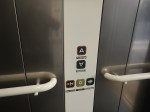
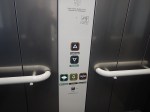
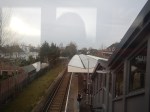
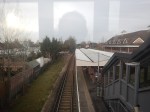
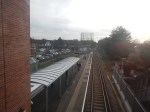
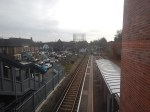
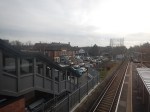
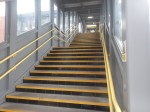
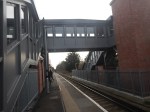
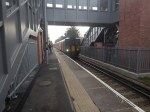
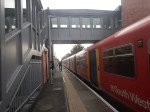
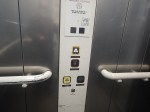
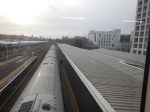
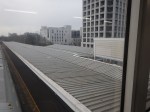
Note.
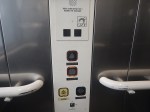
- The two-button lift controls. Would they be faster if single-button?
- I am surprised that solar roofs weren’t fitted as at Denmark Hill station.
- The station must be the only station in London with an island platform and three lifts. See Picture 6.
- PPicture 6 also clearly shows a ticket machine on the platform, which serves both entrances.
It certainly looks to be a comprehensive job well done.
‘No Constraints’ On Clapham Junction Tube Extension
The title of this post, is the same as that of this article on the BBC.
This is the sub-heading.
There are no physical restrictions to extending the Northern line to Clapham Junction, an investigation has found.
These are the first three introductory paragraphs.
In a new report, Wandsworth council said there were “no engineering or geological constraints” that would prevent an extension.
The council is now carrying out a public consultation to see whether there is strong local support for the extension.
Clapham Junction, one of London’s busiest stations, is home to the Overground and National Rail services.
The Current State According To Wikipedia
This Wikipedia section, says this about the current state of the extension to Clapham Junction station.
Provision has been made for a future extension of the Northern line to Clapham Junction station, with a reserved course underneath Battersea Park. During the public inquiry into the extension in 2014, the inspector noted that although an extension to Clapham Junction would be desirable, it was unnecessary to meet the needs of the Vauxhall Nine Elms Battersea regeneration area. Additionally, it was noted that an extension to Clapham Junction could overwhelm the extension, due to the high demand.
As part of consultations into Crossrail 2 in 2014, the developer of the Battersea Power Station site suggested that Battersea could be the location of a station instead of at King’s Road Chelsea. This would provide a link between the area and Clapham Junction station. Despite the proposal for the future Crossrail 2 project to serve the station, local residents and politicians have continued to request a future extension of the Northern line to Clapham Junction. In March 2023, Mayor of London Sadiq Khan stated that the “case for an extension is not readily apparent, given Clapham Junction’s existing high levels of connectivity”.
This map from OpenRailwayMap shows the railways that lie between Battersea Power Station and Clapham Junction stations going via Battersea Park.
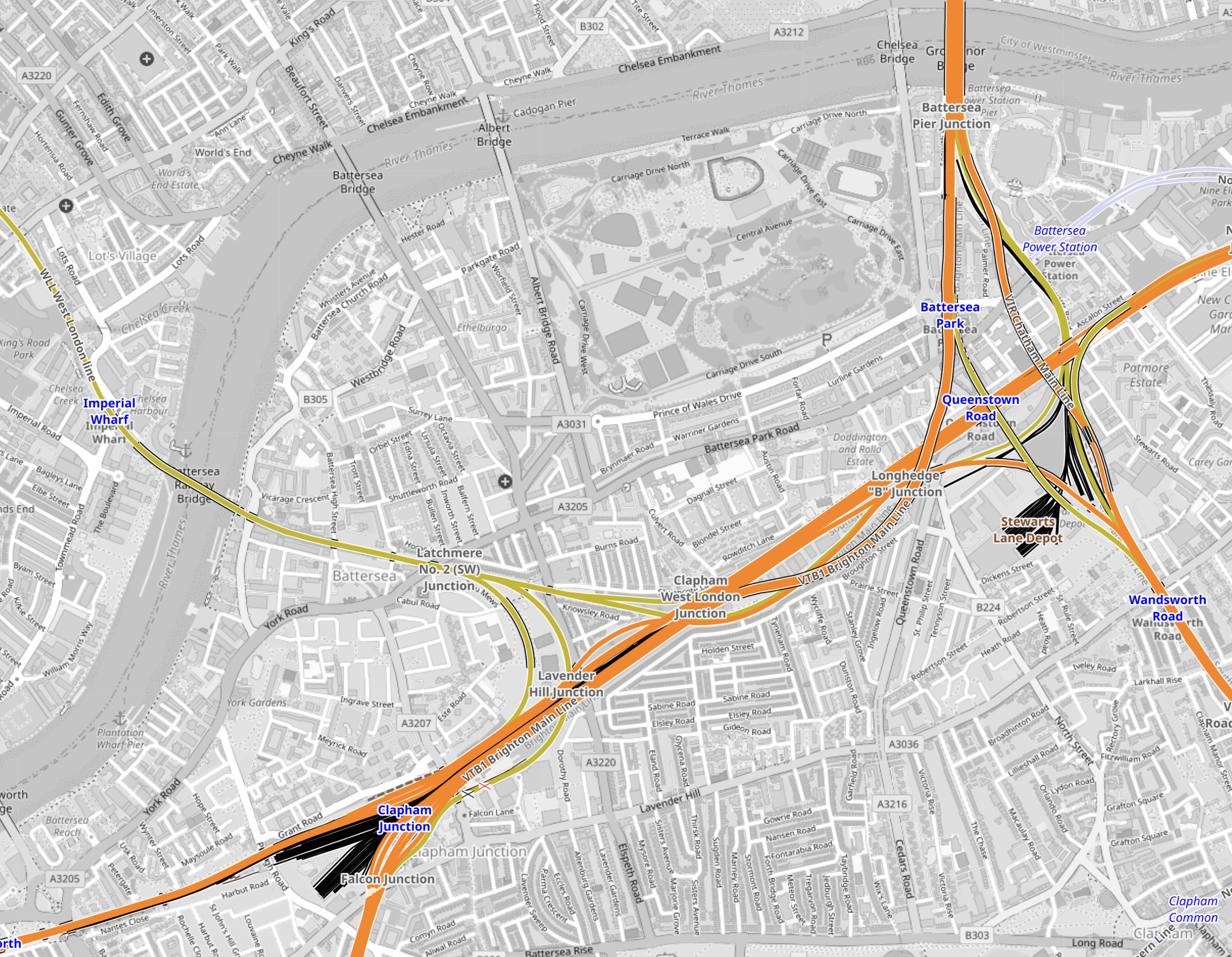
Note.
- Battersea Power Station station is in the North-East corner of the map.
- Clapham Junction station is in the South-West corner of the map.
- The rounded D-shape by the river is the Children’s Zoo in Battersea Park.
Going via Battersea Park is a rather roundabout and long route.
High Speed One and High Speed Two tunnels have and are being bored under existing railways.
This map from OpenRailwayMap shows the railways that lie between Battersea Power Station and Clapham Junction stations.
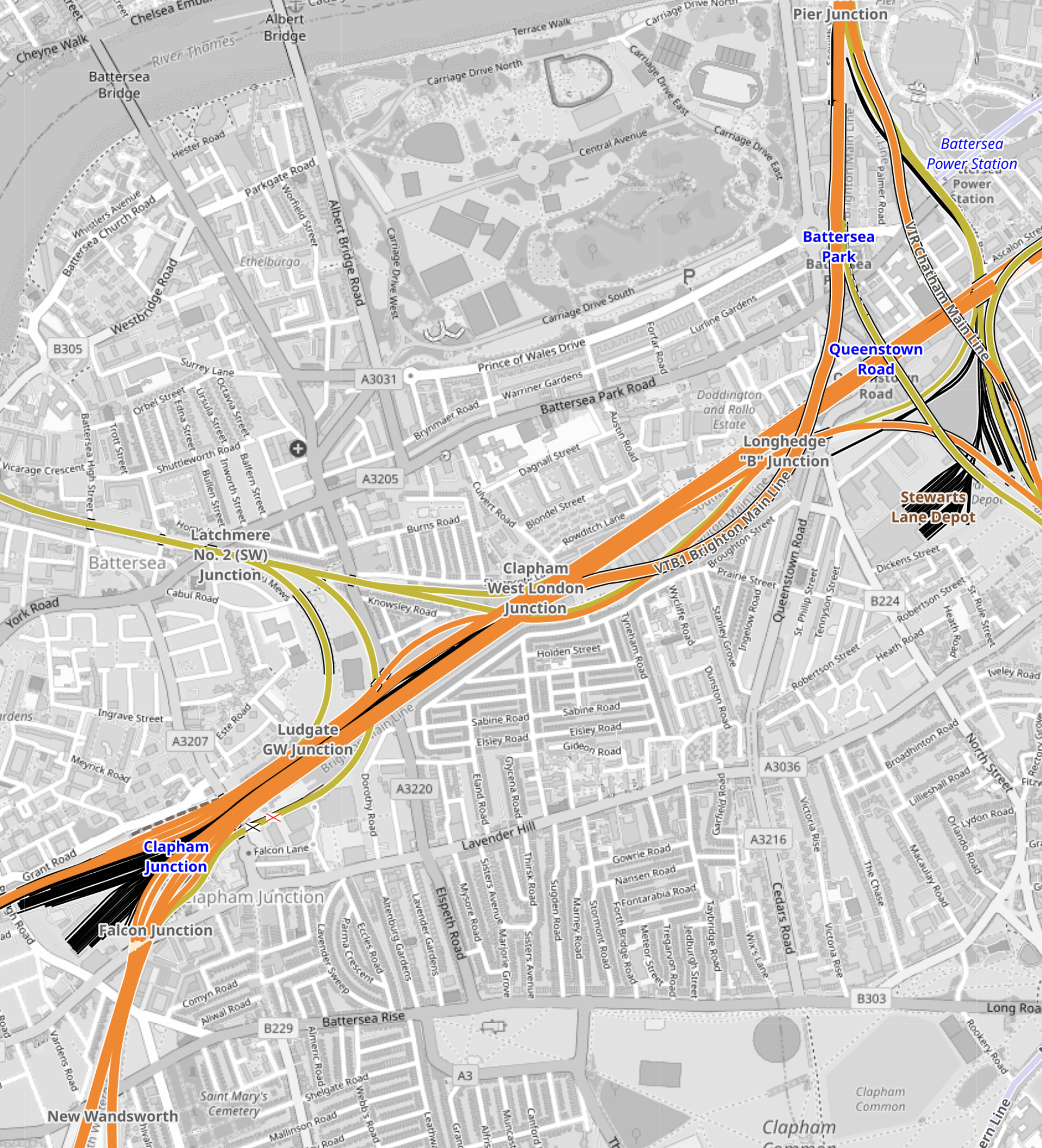
Note.
- Battersea Power Station station is in the North-East corner of the map.
- Clapham Junction station is in the South-West corner of the map.
- The main line between Waterloo and Clapham Junction stations runs diagonally across the map.
- Branching North from this line is the line between Victoria and Clapham Junction stations.
Could an Underground sized railway be bored between Battersea Power Station and Clapham Junction stations?
This map from OpenRailwayMap shows the railways around Battersea Power Station station.
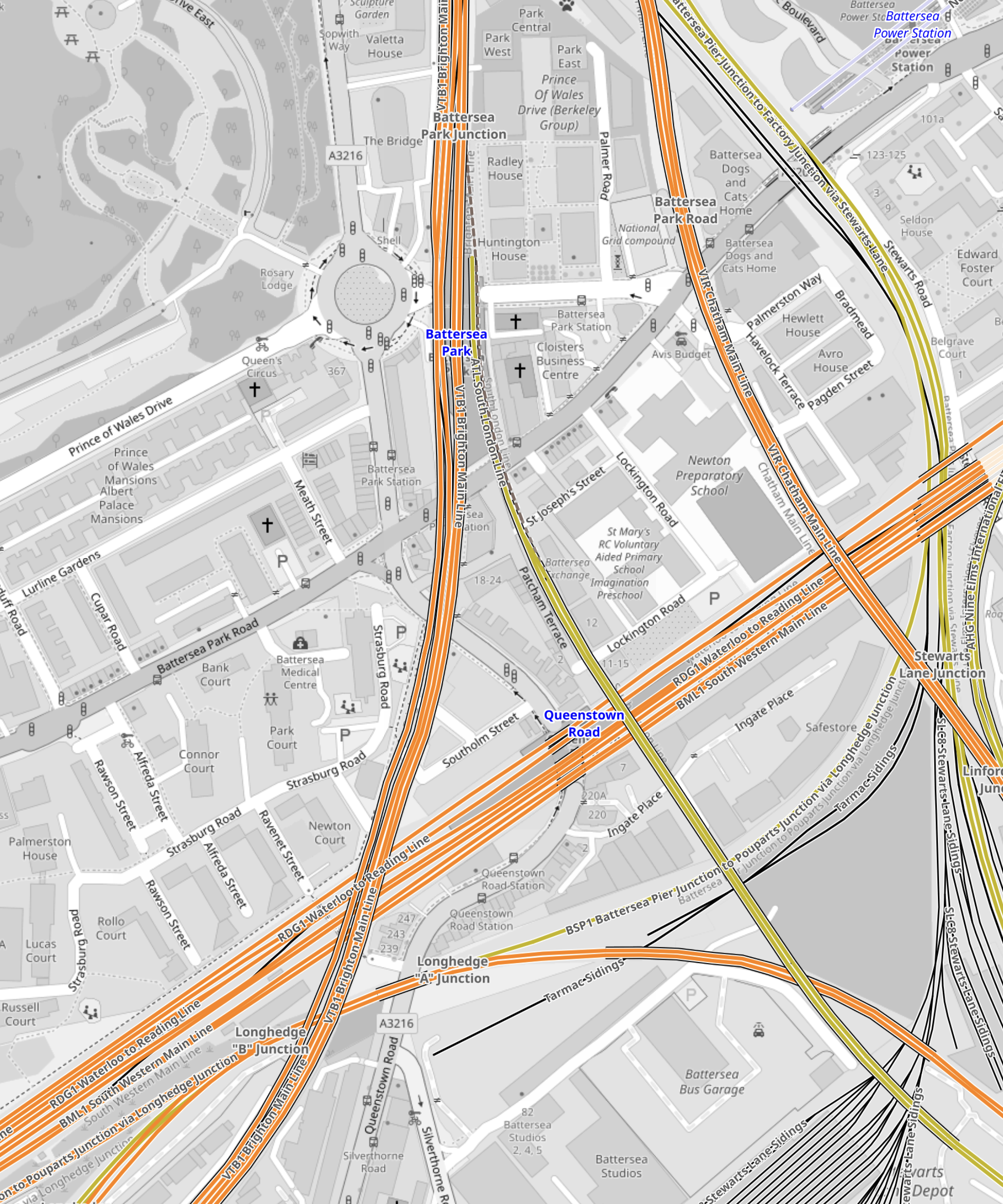
Note.
- Battersea Power Station station is in the North-East corner of the map.
- The orange line going North-South is the line between Victoria and Clapham Junction stations.
I suspect if they used the Irish Tunnelling Method or hand digging, as was used recently at Bank, twin tunnels could be dug from Battersea Power Station station to deep under the Waterloo and Clapham Junction line.
This map from OpenRailwayMap shows the railways around Clapham Junction station.
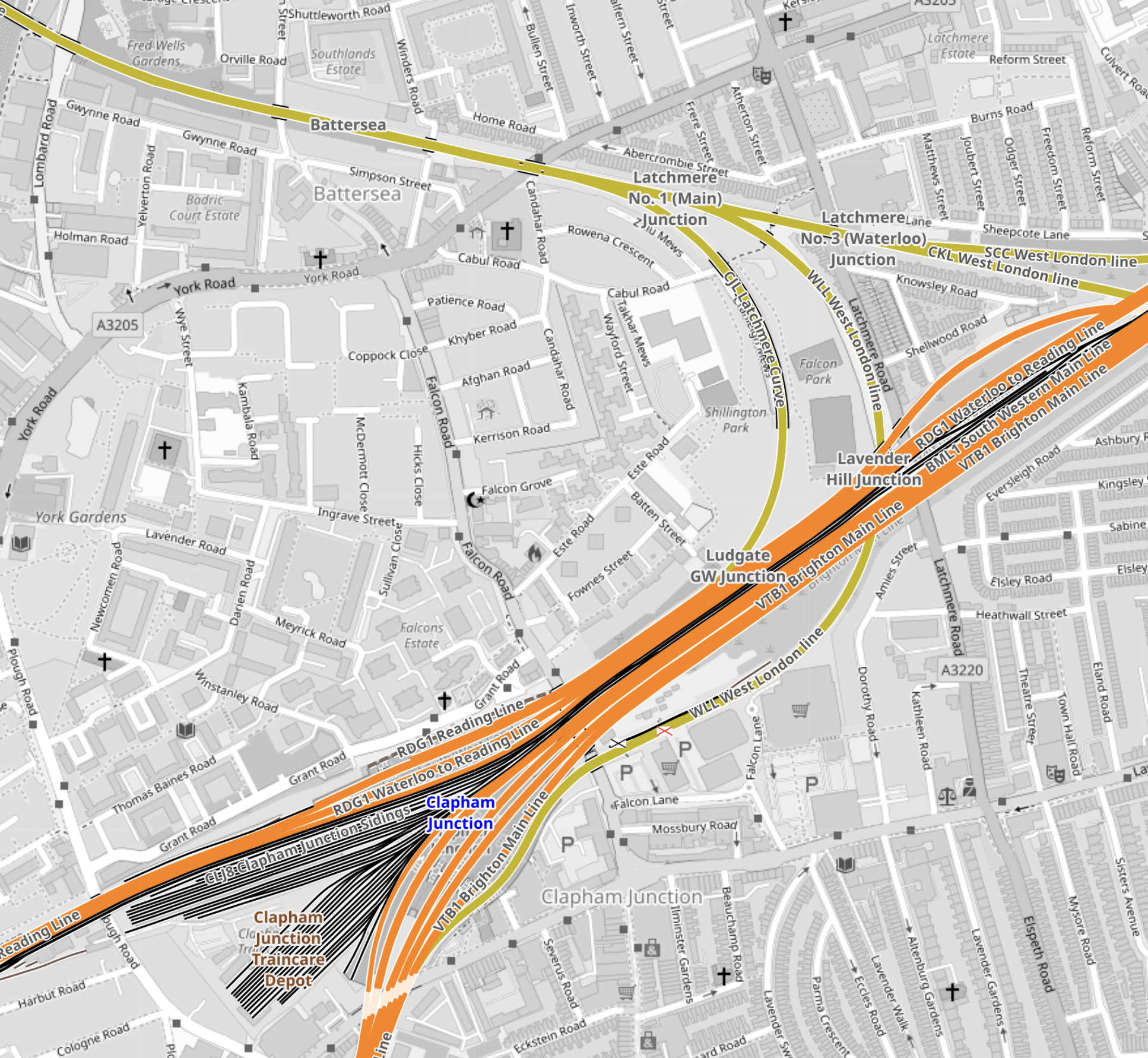
Note.
- Clapham Junction station is in the South-West corner of the map.
- Two deep underground platforms for the Northern Line would be built to the North-East of Clapham Junction station.
- Escalators and lifts would transfer passengers to and from the existing platforms.
- I suspect the Victorian infrastructure is fairly simple and elegant escalators can be threaded through, as they have been at London Bridge station.
I believe that a modern spectacular interchange can be built at Clapham Junction station to connect the National Rail lines with the Northern Line extension at Battersea Power Station station.
Thoughts On Extending The Northern Line To Clapham Junction
As I wrote in Northern Line Could Be Extended To Clapham Junction In Regeneration Plans, the extension of the newly-built extension to Battersea Power Station station could be further extended to Clapham Junction station.
Railways Between Battersea And Clapham
This map from OpenRailwayMap shows the tracks that run between the two stations.

Note.
- Battersea Power Station station is in the North-East corner of the map.
- The orange and yellow lines going North from that corner go to Victoria station.
- The orange and yellow lines going North-East from that corner go to Waterloo station.
- The yellow line going West is the West London Line to Shepherds Bush and Willesden Junction stations.
- Clapham Junction station is in the South-West corner of the map.
I estimate that the distance between Battersea Power Station and Clapham Junction stations is about three kilometres.
This map from OpenRailwayMap shows an enlargement of the tracks around Battersea.
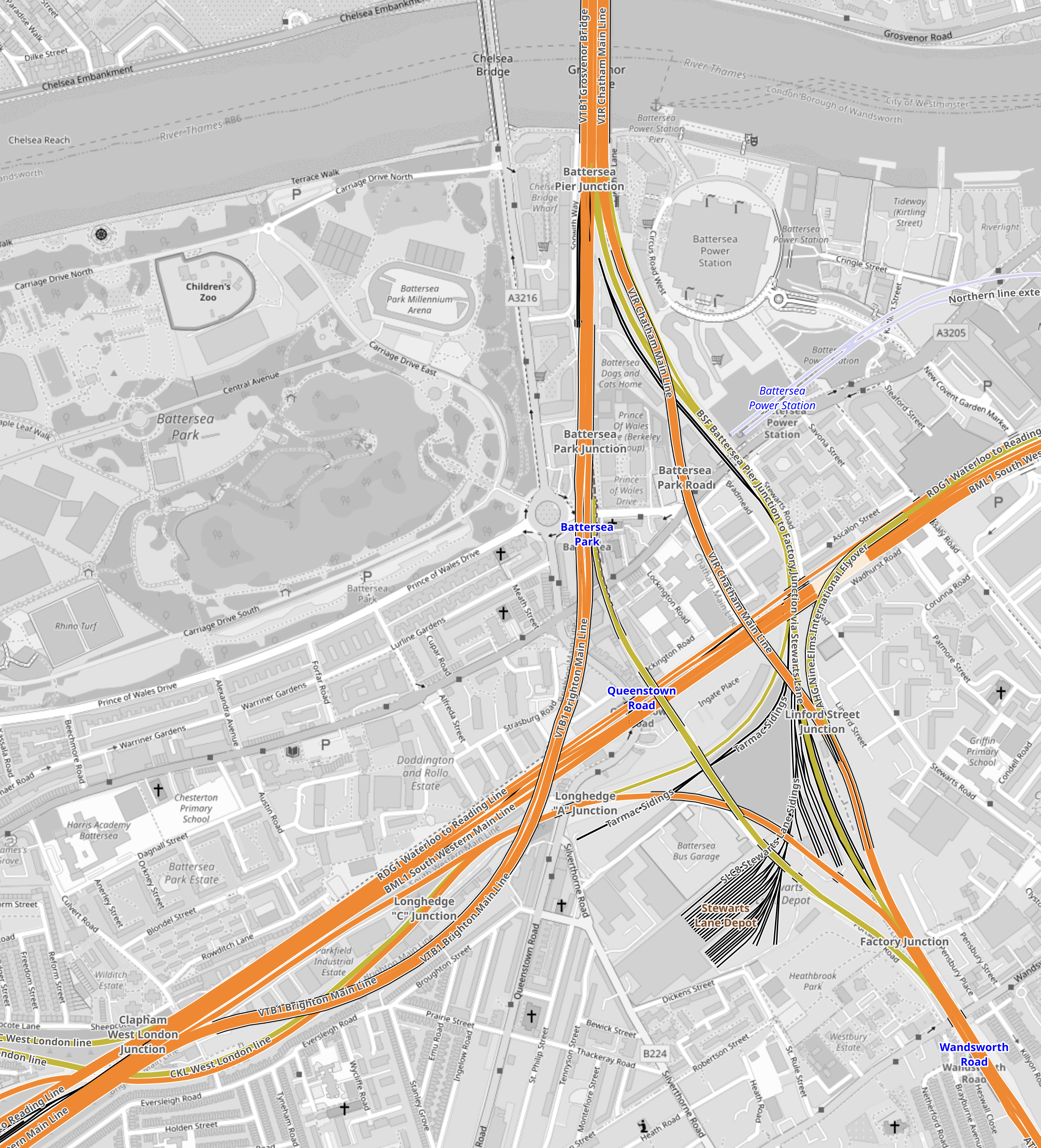
Note.
- The tracks going North over the River to Victoria station.
- The tracks going East to Waterloo station.
- The tracks going South West to Clapham Junction station.
- The tracks from Victoria pass over and then join the tracks from Waterloo to continue to Clapham Junction station.
Battersea Power Station station can be seen to the North-East of the junction.
This map from OpenRailwayMap shows an enlargement of the tracks around Battersea Power Station station.
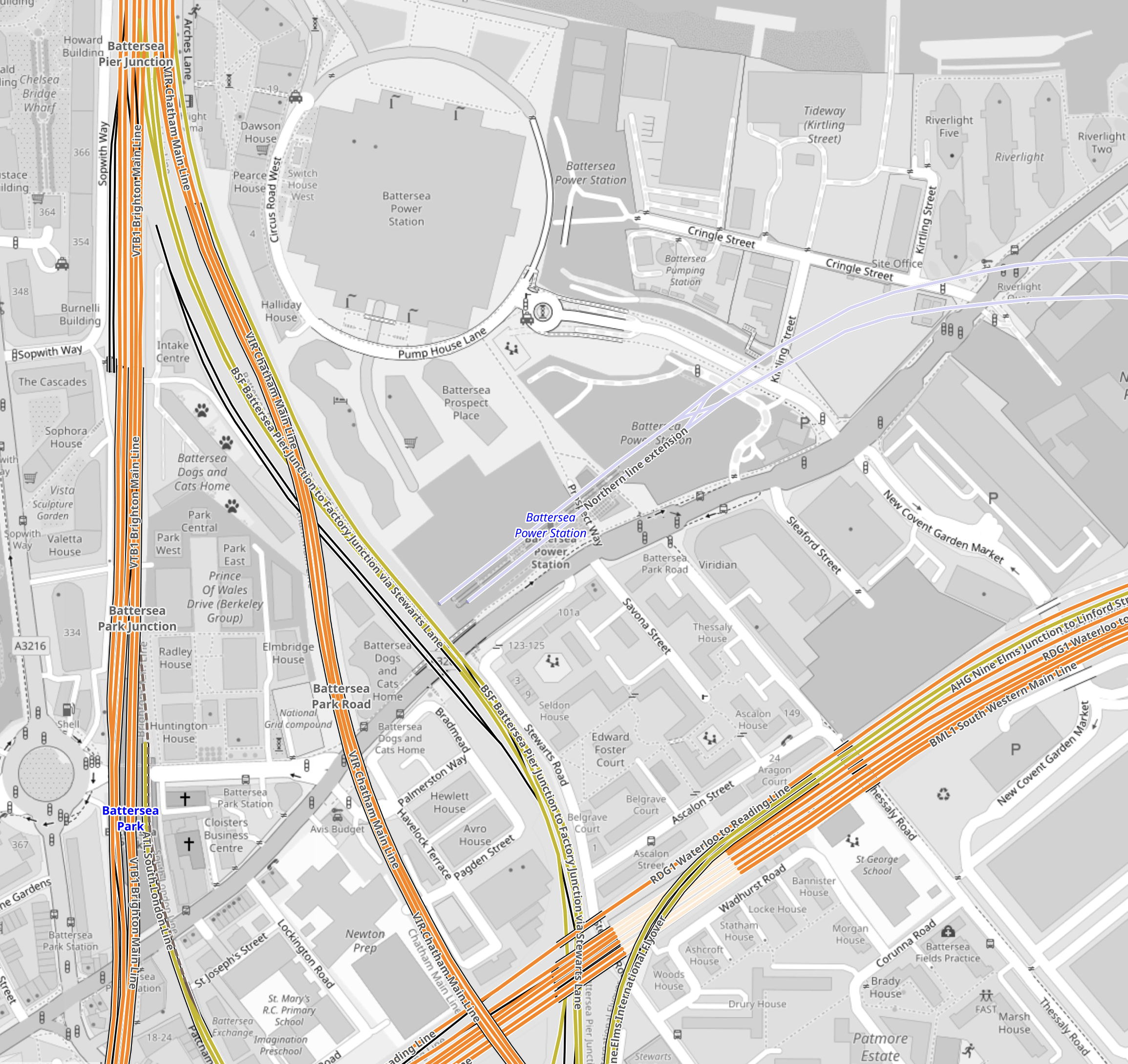
Note how the tracks go through Battersea Power Station station and terminate just before the lines into Victoria station.
It should also be noted that the platforms at Battersea Power Station station are reached using two sets of escalators, so they could be over forty metres below the surface. This would surely make the construction of tower blocks with deep foundations easier over the Northern Line.
But the depth would also enable an extended Northern Line to be below any existing or future construction.
This map from OpenRailwayMap shows the approaches to Clapham Junction station.
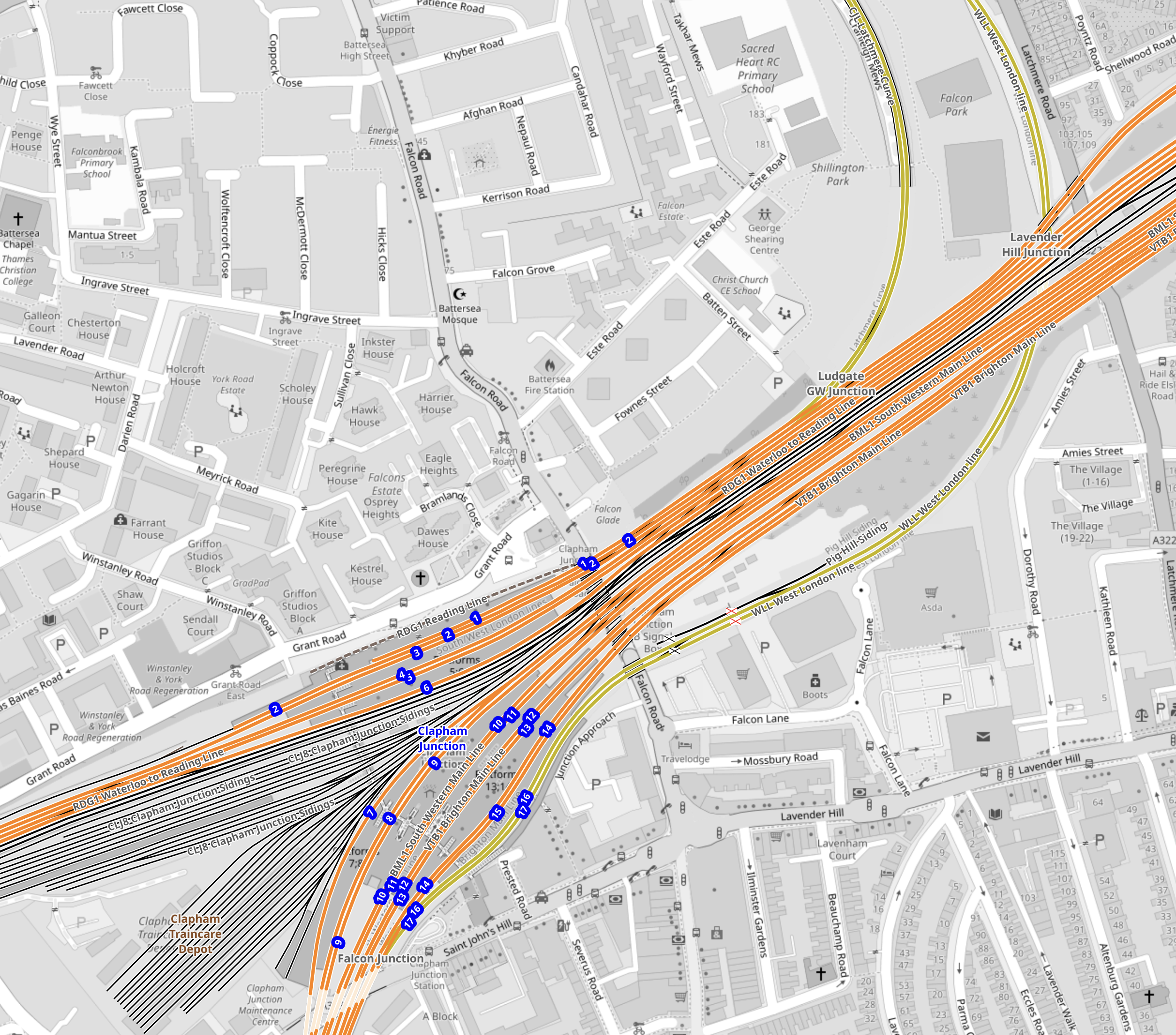
There are certainly a lot of tracks through Clapham Junction station.
Reasons For The Extension Of The Northern Line To Clapham Junction
These reasons come to mind.
To Enable Development In The Area
This is always a good reason.
In Network Rail To Outline Business Case For Clapham Junction Redevelopment, I said this.
The Rail Technology Magazine article talks of decking over the whole station and putting two million square feet of development on top. But it also cautions, it would be very expensive.
With that amount of development, there would be a need for as many transport links as possible.
To Improve Access To The Elizabeth Line For Passengers On Trains To And From Victoria
Victoria station does not have an Underground Line, that connects to easily the Elizabeth Line.
The best route to use is described in The Lizzie Line And Circle/District Line Interchange At Paddington – 1st July 2022, where you use the Circle to Paddington.
- To go to the West on the Elizabeth Line, take the Circle/District Line to Paddington.
- To go to the East on the Elizabeth Line, take the District Line to Whitechapel.
- To go to Liverpool Street take the Circle Line all the way.
Getting to the stations between Paddington and Liverpool Street means a change at either of those stations.
At Waterloo, you can use the Northern Line, which has a direct connection to Tottenham Court Road on the Elizabeth Line.
Connecting to the Northern Line at Clapham Junction will give Victoria-bound passengers, the advantages of those going to Waterloo.
An Alternative Way Of Connecting Victoria To The Elizabeth Line
The lack of an easy connection between the Victoria and the Elizabeth Line is a pain and I believe that it was a major omission in the design of the Elizabeth Line.
- Dear Old Vicky has a frequency of upwards of thirty trains per hour (tph)
- With some improvements at stations like Oxford Circus, Highbury & Islington and Walthamstow Central, the line could handle some more passengers.
- More step-free access would also help increase capacity.
- Engineers are a competitive bunch and I could see the day, when Vicky is running at 40 tph.
If Vicky was running at forty full tph, it would be moving 45120 passengers per hour.
This would mean that to match the passenger capacity of the older line, the Elizabeth Line would have to be running at a frequency of thirty tph.
As passengers at the ends of the line have difficulty getting to places like Paddington and Heathrow, a connection between the two Queens would really help.
Vicky was universe-class in the 1960s and now she needs updating to the 21st Century.
This map from cartometro shows the Lines through Bond Street and Oxford Circus stations.
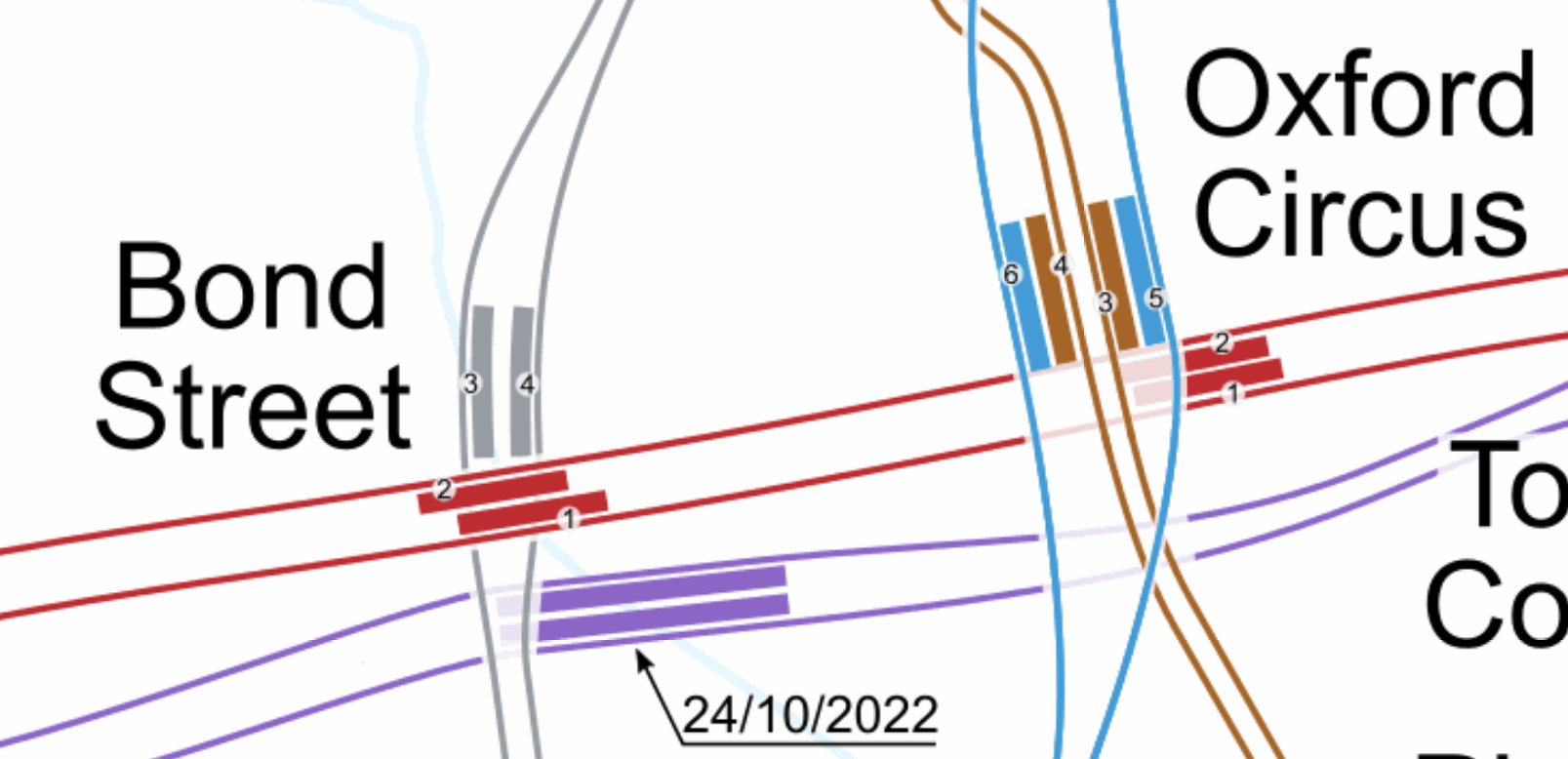
Note.
- The Bakerloo Line is shown in brown.
- The Central Line is shown in red.
- The Elizabeth Line is shown in purple.
- The Victoria Line is shown in light blue.
- The Elizabeth Line is the deepest line.
In addition, consider.
The Eastern exit of the Elizabeth Line at Bond Street station has three escalators and lifts. It also opens onto Hanover Square, so it won’t suffer from overcrowding problems outside.
- Hanover Square is just a garden, with no car park underneath, so pedestrian tunnels could pass under it
- I also suspect there are no existing or planned buildings between the two stations with deep foundations that would block a pedestrian tunnel.
- With the capability and ingenuity of three-D design software, I can see wide tunnels being created that would link Oxford Circus and the two Bond Street stations.
- The new wide tunnels at Bank station have opened up the station’s capacity and all the tunnels were dug traditionally.
- If it was felt to be needed, moving walkways could be added, just as they have been at Bank station.
I am absolutely sure, that by using the ideas and methods, that have worked so well in the upgrade of Bank station, that Oxford Circus and Bond Street stations could be turned into a London Superhub Station, that connects all the Underground lines together and has entrances all over the area.
The benefits of such a station would be.
- It would provide a high-capacity link between London’s two highest-capacity Underground Lines; Elizabeth and Victoria.
- It would provide a high-capacity link between the Elizabeth Line and Euston, St. Pancras and King’s Cross.
- It would provide a high-capacity link between the Elizabeth Line and Victoria.
- It would provide a high-capacity link between the Elizabeth Line and High Speed Two.
- Areas like Brixton, Haringey and Walthamstow would gain a much needed link to the Elizabeth Line for Heathrow and Paddington.
Wikipedia says this about the building of the Bank Station Upgrade.
As part of the development of the scheme, TfL worked with potential bidders to improve the design of the station from TfL’s original design. The design proposed in the winning bid by Dragados was 9.7% cheaper than the original design (saving TfL £60m), took 10 months less time to construct than the original design (the proposed closure of the Northern line was also 5 weeks shorter), and the layout of the station was more efficient. This substantially improved the benefit–cost ratio by 45% to 3.5:1.
The Mayor should be knocking on the door of Dragados and asking them for a price for a design and build for a West End Superhub station.
A Possible Route For The Extension Of The Northern Line To Clapham Junction
I suspect that the simplest route for the extension of the Northern Line would be to bore or dig a twin-track railway underneath the numerous other railways in the area.
It could terminate in two underground platforms at Clapham Junction station.
This is the first map of this post and it shows the tracks that run between the two stations.
Note.
- Battersea Power Station station is in the North-East corner of the map.
- Clapham Junction station is in the South-West corner of the map.
The Western of the pair of orange Lines going off the map in the North-East corner of the map is the Brighton Main Line.
It passes through Battersea Park station.
It passes over the South Western Main Line out of Waterloo.
It then loops to the West and joins the lines to Clapham Junction on the Southern side.
It serves four platforms at Clapham Junction; 12 and 14 are up platforms and 13 and 15 are down platforms.
This Google Map shows an overview of Clapham Junction station.
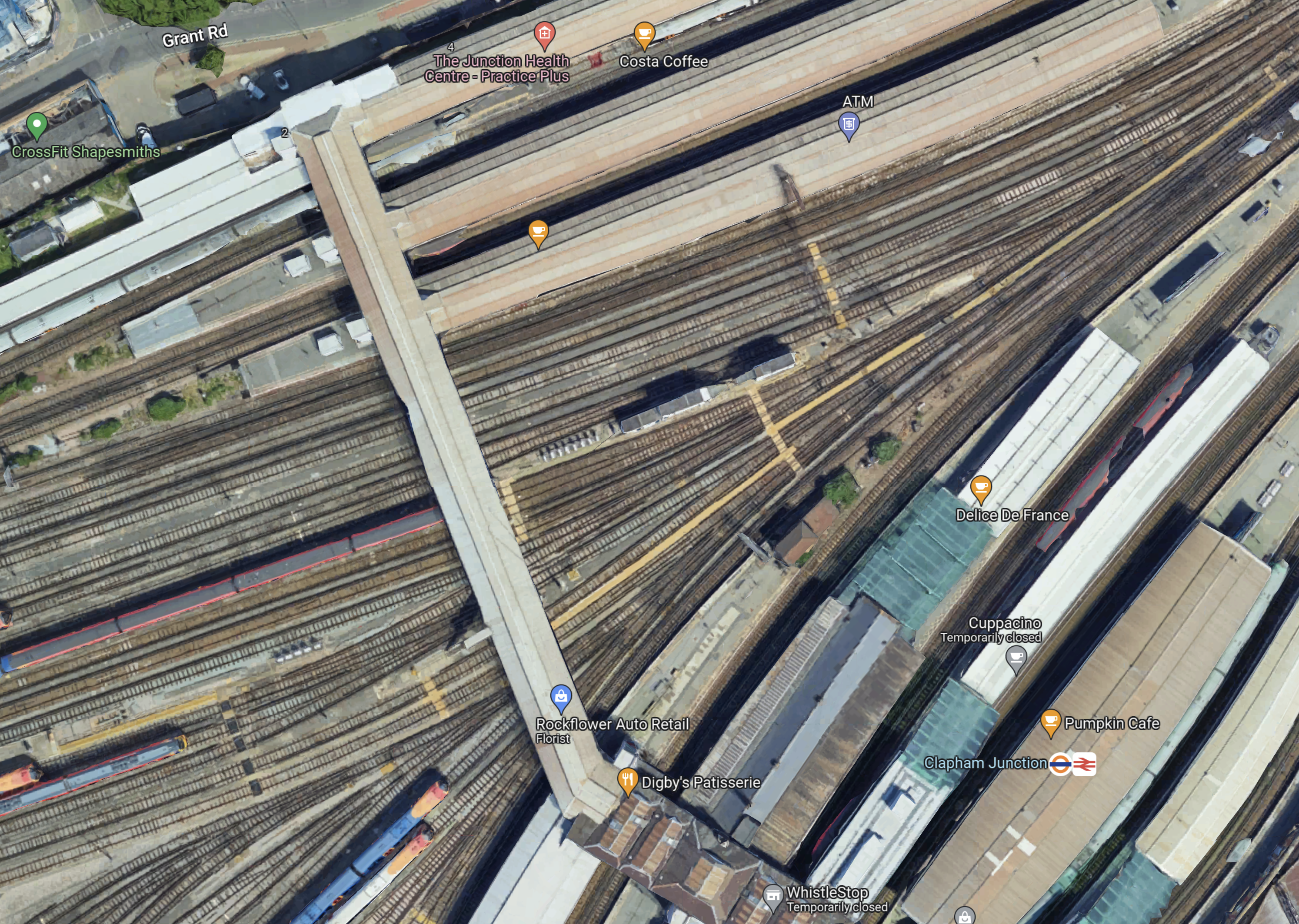
Note.
- Platforms 1 and 2 at the top of the map, handle London Overground services.
- Platforms 3 to 11 handle South Western Train services.
- Platforms 12 to 17 handle Southern services.
- Platforms 9 and 10 have a Delice de France cafe.
- Platforms 11 and 12 have a Cuppacino cafe.
- Platforms 13 and 14 have the logos.
- All platforms have full step-free access with lifts to the wide footbridge that connects all platforms.
The platforms don’t seem to be very wide and putting stairs and escalators down to underground platforms could be a difficult proposition.
This map from OpenRailwayMap shows shows the platforms at Clapham Junction station and the track layout to the West of the footbridge.
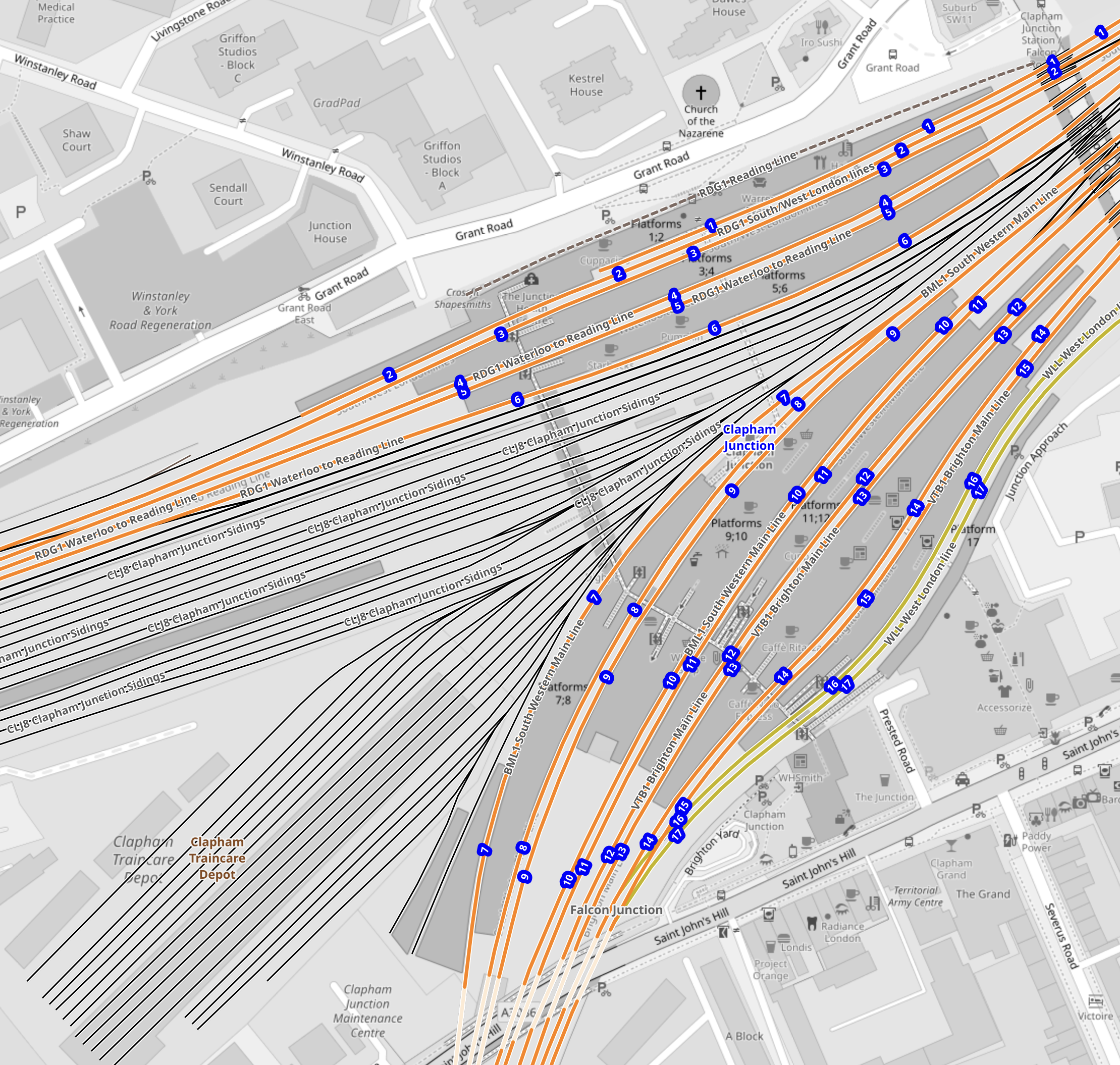
Note.
- The tracks through the platforms are shown in orange.
- The blue dots are platform numbers.
- The bridge connecting all the platforms is shown shaded in the middle of the map.
- To the West of the bridge are Clapham Junction Sidings and Clapham Traincare Depot.
These pictures were taken from the bridge.
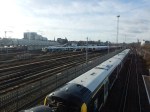
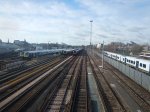
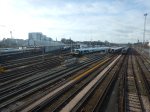
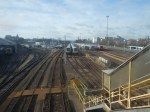
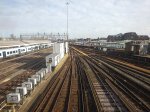
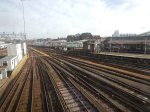
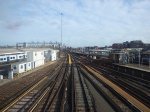
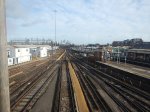
Note.
- The top row of pictures were taken looking West.
- The bottom row of pictures were taken looking East.
- Many of the tracks are electrified.
- There is a lot of space to park trains.
Will all the space be needed now, that a new depot has been built at Feltham.
Could Two New Surface Platforms Be Built For The Extension Of The Northern Line To Clapham Junction?
Consider.
- The step-free bridge across all the platforms at Clapham Junction station works well.
- It is connected to the streets around the station at both ends.
- Clapham Junction station will be redeveloped and surplus depot land could be used for housing.
- As the maps show, there is a large gap in the platforms between the South Western Railway and the Southern sides of the station.
- As Battersea Power Station station can turn services on the Northern Line with only two platforms, there would only need to be the same number of Northern Line platforms at Clapham Junction.
So could an extra pair of platforms be built under the bridge, with stairs and a lift similar to the existing platforms?
- The platform would have full step-free access.
- The platforms could be long enough for any future trains.
- There could be sidings for a few trains.
- The tunnels from Battersea Power Station would surface just outside the station.
- There would need to be a crossover or a turnback siding for operational reasons.
I also think, that once the depot and sidings at Clapham Junction have released the space, the new platforms and tracks could be installed without interrupting main line services through the station.
Would The Extension Of The Northern Line Be Electrified?
Consider.
- Merseyrail were not allowed to use third-rail electrification to Headbolt Lane station and had to use batteries.
- The Northern Line was extended to Battersea Power Station station using London’s four-rail electrified system.
- Clapham Junction station has third-rail electrification everywhere.
I think that the authorities would be very churlish not to allow electrification to Clapham Junction.
Conclusion
I believe it is possible to extend the Northern Line to two new surface platforms at Clapham Junction station.
But I also believe that using similar methods to those used in the Bank Station Upgrade, that a full interchange between the Elizabeth and Victoria Lines can be built at Oxford Circus and Bond Street.
.
Passenger Tunnel Linings At Waterloo Underground Station
This pictures show the cast-iron pedestrian tunnel linings at Waterloo tube station.
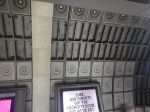
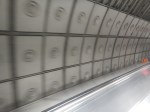
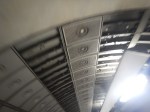


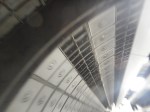
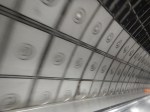
The Jubilee Line opened in 1999.
In the last few years, concrete has been able to be 3D-printed, so it can now be produced in different shapes.

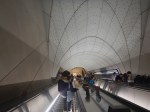

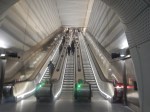
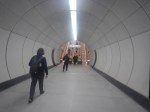
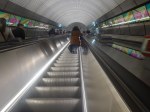
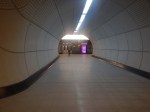
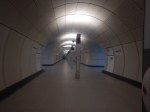
All these wall and roof panels on the Elizabeth Line were made by 3D-printing of concrete.
Conclusion
Design has progressed in 25 years.
Grab-Handles In London Underground Train Entrances
I have been taking pictures of the grab-handles in the doors of London Underground trains.
Bakerloo Line
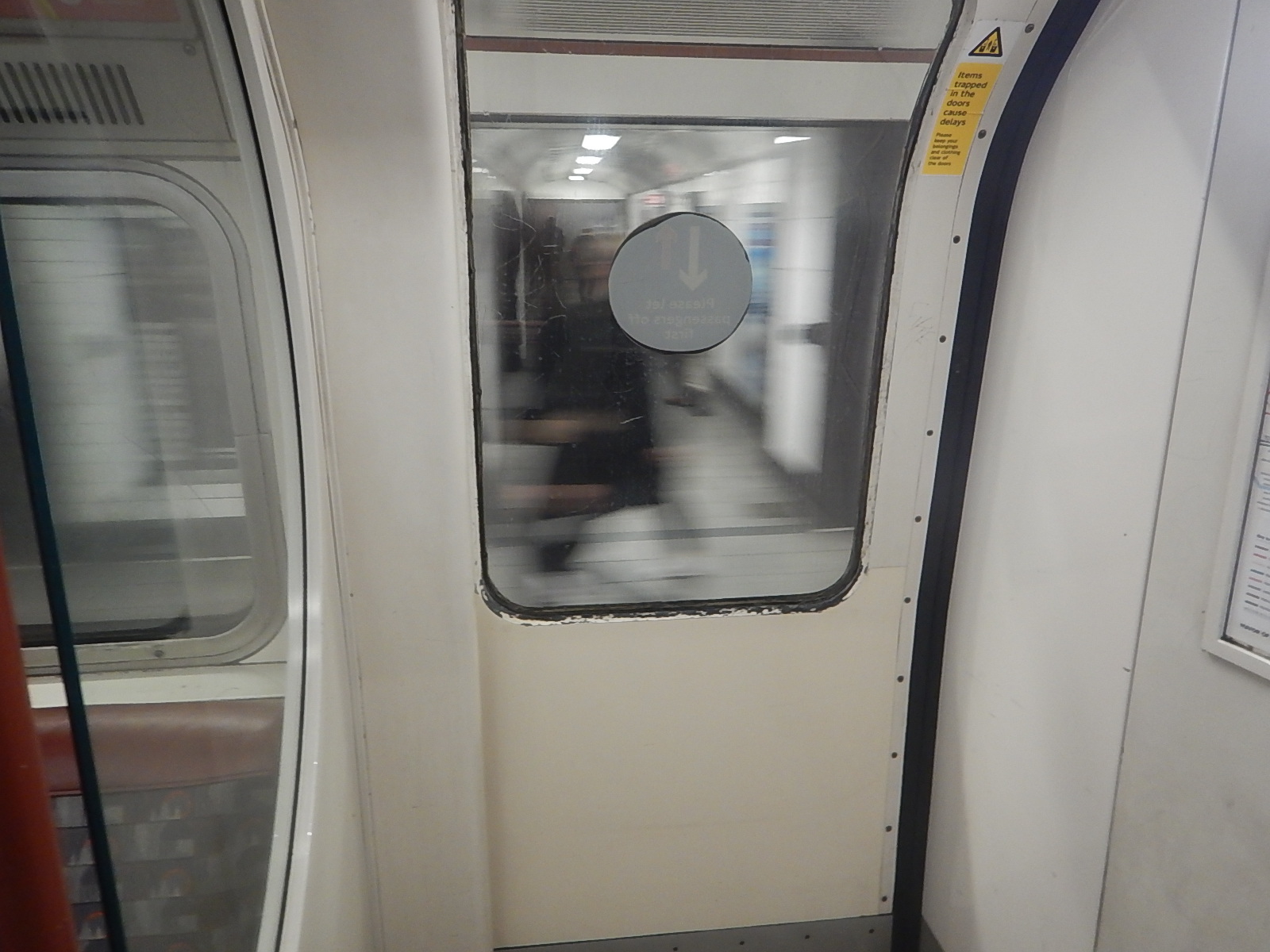
There are no grab-handles.
Central Line

The Central Line trains, which were built in 1991-4, probably set the original standard.
Hammersmith & City Line
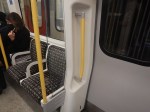
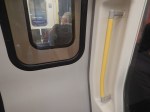

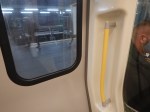
These are probably similar to Circle, District and Metropolitan Line trains.
Jubilee Line
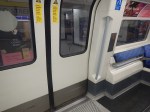
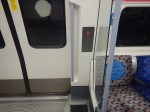
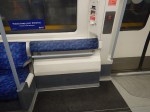
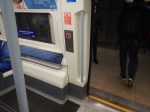
Note the long grab-handles tucked behind the doors.
Northern Line
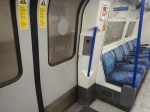
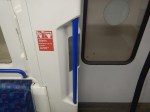

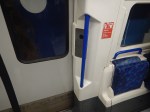
Note the long grab-handles tucked behind the doors.
There is also a cheeky one behind the wheelchair space. Although you would get into a Northern Line train in a wheelchair is another matter.
Piccadilly Line
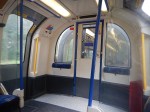


Despite their age, there is a full set of grab-handles.
Victoria Line

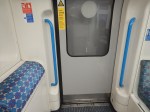
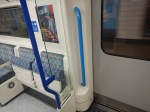
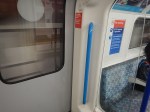
Note the long grab-handles tucked behind the doors.
Conclusion
I do find it strange that all the other Underground trains have vertical handles just inside the door, but the Bakerloo Line trains don’t have this valuable safety feature.
I think this could be dangerous.
I have a damaged left arm because the school bully broke my humerus. It can do most things, but some things are painful.
So when I get on a train, in case there is a step-up into the train, I position myself towards the right of the door. Then if there is a step-up, I reach forward and grab the handle and pull myself into the train.
Recently, I boarded a train on the Bakerloo Line platform at Waterloo. On finding there was no grab-handle I slipped slightly as I pulled back.
In the end I climbed into the train by holding on to the rubber edge of the door and got a very dirty hand.
Could this lack of grab-handles have contributed to a recent death at the station, that I wrote about in Death Of A Commuter At Waterloo?
I very much feel that grab-handles should be fitted to the doors on Bakerloo Line trains.
Northern Line Extension ‘On Track’ For 2021 Opening
The title of this post, is the same as that of this article on Transport Network.
I’m looking forward to using the line in the Autumn.
This map from cartometro.com, shows the track layout of the extension.

Note.
- The extension starts from the existing Kennington Loop at Kenning station.
- There is an intermediate station at Nine Elms.
- As with many two-platform stations, there is a cross-over in the approach. It is shown in a picture in the article.
Hopefully, the extension will eventually be extended to Clapham Junction.
Step-Free Interchange At Kennington Station
I have been worried about this and from the comment of others like Melvyn, I am not alone.
This map from cartometro.com, shows the track layout at Kennington station.
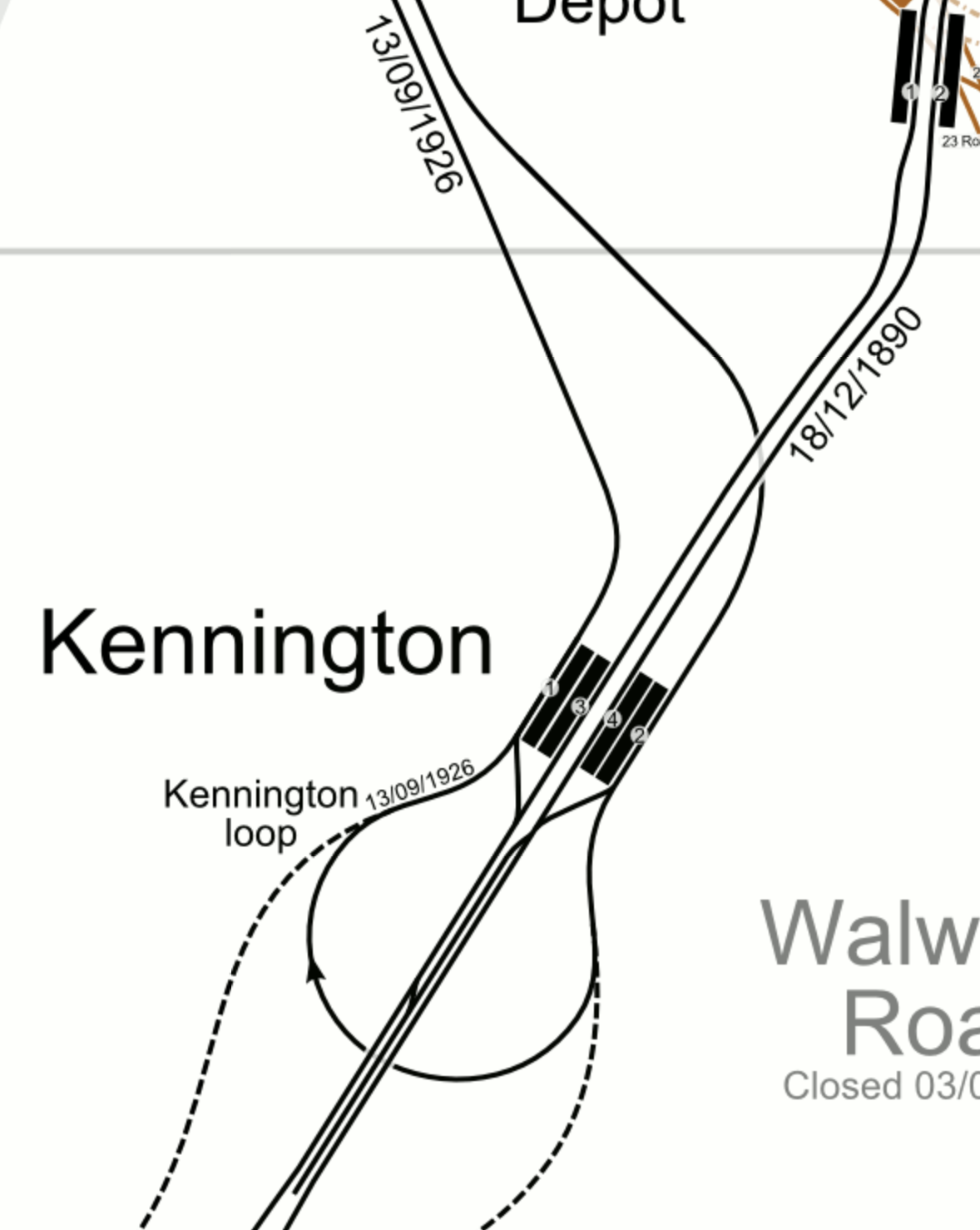
Note.
- Elephant and Castle station is at the North-East corner of the map and is on the Bank branch of the Northern Line.
- The pair of tracks going North-West are the Charing Cross branch of the Northern Line.
- The pair of tracks going South-West are the Morden branch of the Northern Line.
- Trains going South to Morden can use either Platform 2 or 4, depending, whether they have come Charing Cross or Bank.
- Trains going North from Morden can use either Platform 1 or 3, depending, whether they are going to Charing Cross or Bank.
- The Kennington Loop allows trains from Charing Cross that arrive in Platform 2 to go direct to Platform 1 to return to the North.
- There appears to be a revering siding, which can also reverse trains from either Platform 2 or 4 and send them North from Platform 1 or 3.
- Chords South of the platforms allow trains to and from Charing Cross to access the tracks to Morder and the reversing siding.
- The Battersea Power Station branch, is shown in dotted lines and connects to the Kennington Loop.
I took these pictures at Kennington station today.

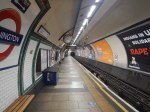
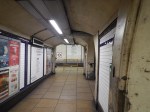
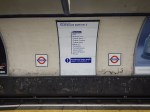
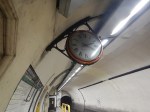
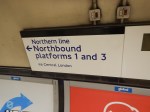

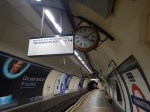
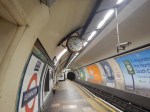
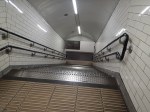
Note.
The platforms are in two pairs, which are connected by walk-through passages, with Platforms 2 and 4 for Southbound trains and Platforms 1 and 3 for Northbound trains.
- Each platform has a proper clock.
- The only access to the pair of platforms is by steep long stairs.
- The stairs need to be rebuilt with proper handrails on both sides.
- The last picture shows the handrails at Moorgate station.
Currently, the system allows journeys between the North and Morden, either directly or with a walk-across change at Kennington station.
- Going South to Morden, if you get a train, that reverses at Kennington, you would wait for a train to turn up on either Platform 2 or 4, that is going the whole way.
- Going North from Morden, if you get a train going to the wrong Northern destination, you would get off at Kennington and wait for a train to turn up on either Platform 1 or 3, that is going to the destination you desire.
What is needed on all platforms, is more comprehensive information displays.
- Displays on Platforms 2 and 4, would show details of all Southbound trains. whether they terminated at Kennington or went to Morden, or in future went to Battersea Power Station station.
- Displays on Platforms 1 and 3, would show details of all Northbound trains.
Displays would indicate destination and time as now, but with the addition of platform, where you catch the train.
If there is one problem it is taking a train between Battersea Power Station and Morden stations.
This public domain drawing from the Internet shows the station, after the Kennington Loop had been built in the 1920s and 1930s.
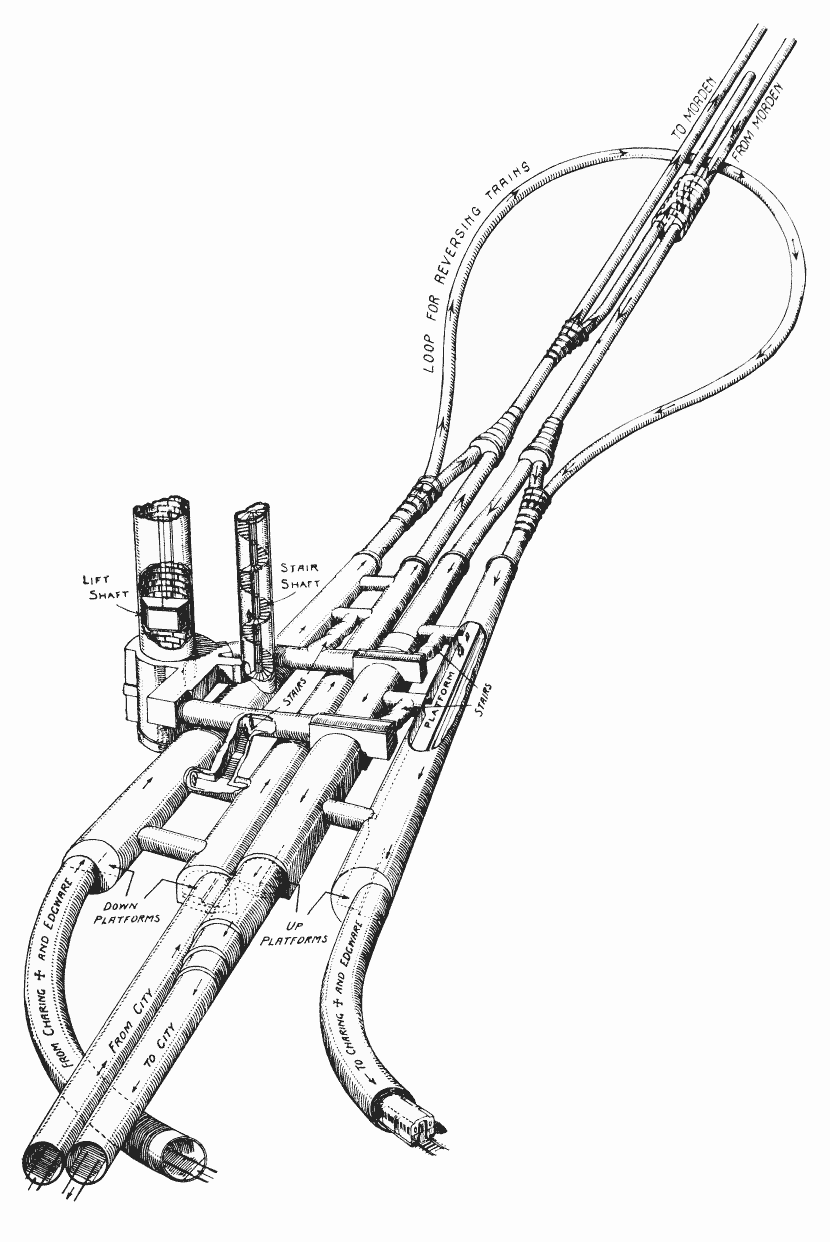
Note.
- We are looking from the North.
- The Kennington Loop at the far end of the station.
- The four platforms of the station numbered 2, 4, 3 and 1 from left to right.
- The stairs between the two pairs of platforms, leading to overbridges.
- The lift tower and a spiral staircase leading to and from the surface.
I can now sum up the step-free status of the station.
- Passengers entering or leaving the station, must walk up or down a staircase like that shown in the first picture.
- Passengers needing to change to another train going in the same direction, just walk across to the other platform in the pair.
- Passengers needing to change to another train going in the opposite direction, as they would going between Battersea Power Station and Morden stations, will need to climb one set of stairs and descend another.
It does appear that in an ideal world lifts will need to be added.
Thoughts On Future Step-Free Access At Kennington Station
In the future, it is planned that the Northern Line will be split into two lines.
- Battersea Power Station and Edgware
- Morden and High Barnet
Will this increase the number of passengers, who need to do the opposite direction change, as there will just be more trains running on all branches?
Alternative Step-Free Access
But, there may be another way to go between Battersea Power Station and Morden stations.
- Take a train from Battersea Power Station to Waterloo.
- Walk across the platform at Waterloo to the Southbound platform.
- Take a train from Waterloo back to Kennington.
- Walk across from Platform 2 at Kennington to Platform 4.
- Take the first train from Platform 4 to Morden.
The reverse journey between Morden and Battersea Power Station stations would be.
- Take a train from Morden to Kennington.
- Walk across from Platform 3 at Kennington to Platform 1
- Take a train from Platform 1 to Waterloo.
- Walk across the platform at Waterloo to the Southbound platform.
- Take the first train from Waterloo to Battersea Power Station.
Note,
- Both routes have two changes; one at Kennington and one at Waterloo,
- All changes are step-free.
- All changes are very simple
It should also be noted that Battersea Power Station, Nine Elms and Waterloo are all or will be fully step-free stations.
The two routes I have outlined have one big advantage. They already exist and the only costs would be training of staff and indicating the routes to passengers.
Bi-Modes Offered To Solve Waterloo-Exeter Constraints
The title of this post is the same as an article by Richard Clinnick in Issue 912 of Rail Magazine.
The article is in turn based on this Continuous Modular Strategic Planning document from Network Rail, which is entitled West of England Line Study 2020.
The document is probably best described, as a document, that will need a lot of digestion for a full reading, but it does provide the reasons for what is said by Richard Clinnick.
The Need For Bi-Mode Trains
This is the a slightly edited version of the start of the Rail Magazine article.
Bi-mode trains should be ordered as part of a scheme to improve the service offered on the West of England route between London Waterloo and Exeter St, Davids, according to Network Rail.
In their extensive study, NR explains that additional capacity could be achieved on the route not only through infrastructure improvements, but also through lengthening some services.
The Network Rail report says.
This cannot be achieved using the current rolling stock fleet currently in operation; which are coming to end of life. Therefore, in the medium term, the opportunity to introduce new,
potentially bi-mode, rolling stock capable of achieving faster journey times and providing more capacity should be considered.
The report also suggests that electric, battery and hydrogen are mentioned as possible power.
South Western Railway’s Short Term Solution
In the short term, South Western Railway (SWR) have reorganised the service to meet short term objectives, which are described fully in the Network Rail report, but can be summed up as follows.
- There is a need for a capacity increase between London Waterloo and Basingstoke and Salisbury.
- There is a need for a capacity increase between Axminster and Exeter St. Davids.
SWR’s solution has probably been strongly driven by the needs of COVID-19, which means that a greater amount of space must be provided for each occupied seat. In the last couple of weeks, I’ve made six journeys in SWR’s Class 159 trains and like most other travellers, I’ve had four seats to myself. The trains may be thirty years old, but like most British Rail trains of that era, they keep giving valuable service.
For most of the day, SWR seem to offer the following solution.
- Nine-car formations of Class 159 trains work between London Waterloo and Salisbury stations at a frequency of two trains per hour (tph)
- Six-car formations of Class 159 trains work between Salisbury and Exeter St. Davids stations, at a frequency of one train per two hours (tp2h)
- Passengers use a one-way system at Salisbury to walk between the two trains.
Yesterday, I took SWR’s trains between Clapham Junction and Yeovil Junction stations to observe the working of the route and take a few pictures.
My Observations
These are my observations.
Salisbury Station
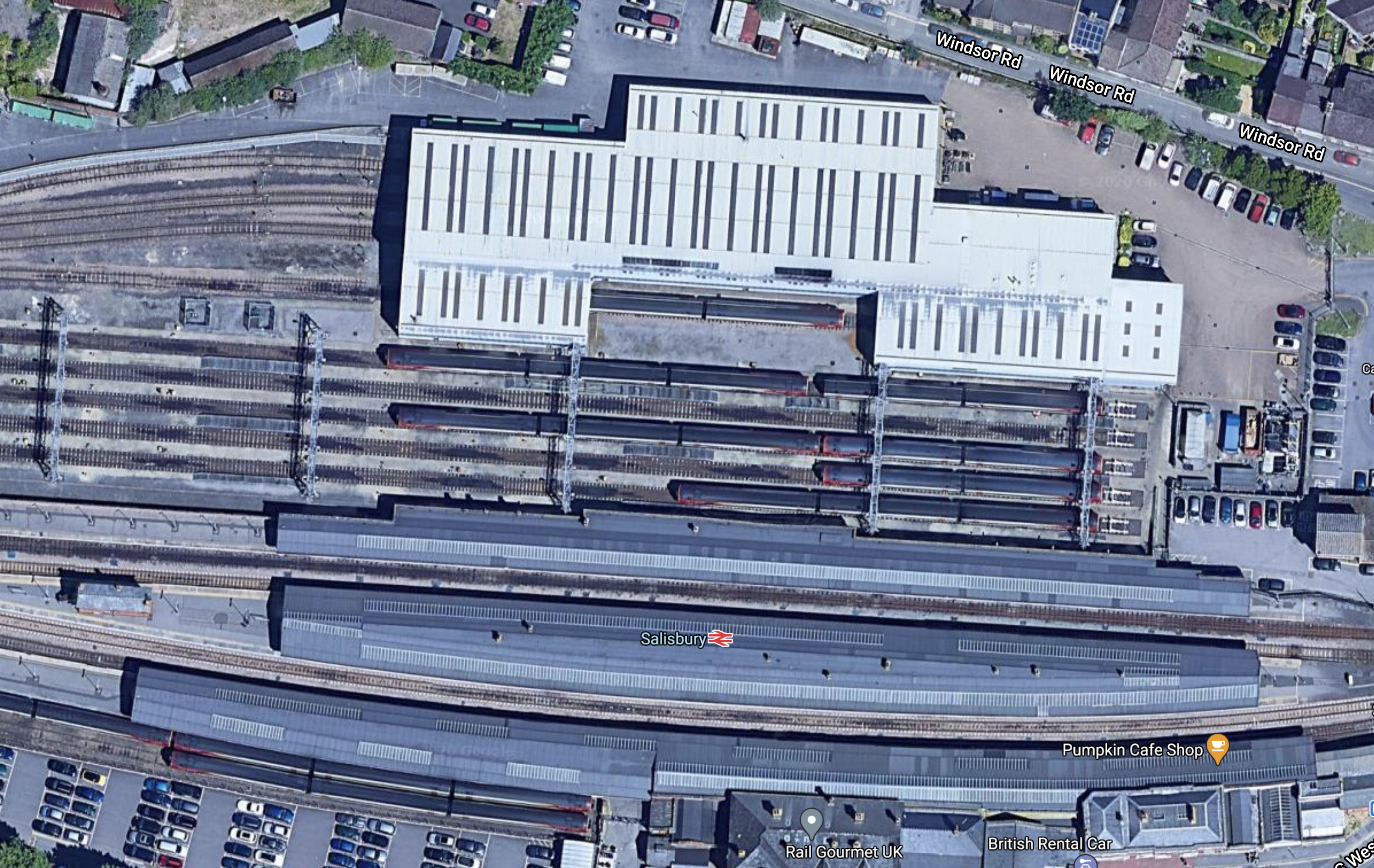
This Google Map shows Salisbury station and the nearby Salisbury Depot.
These are some pictures I took at the station.

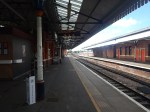
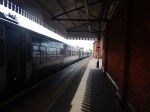
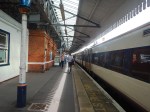
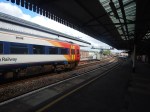

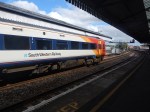
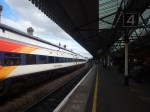
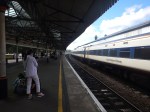
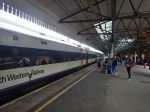
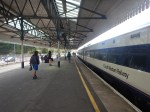
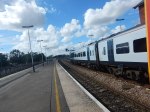
Note that the train in the platform is a nine-car formation which is 207 metres long. I would estimate that the platforms are around 220-240 metres long.
Yeovil Junction Station
This Google Map shows Yeovil Junction station.

These are some pictures I took at the station.

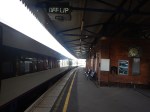
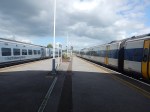
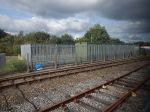
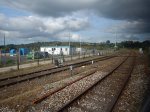

Note that the two trains in the platforms are six-car formations which are 138 metres long. I would estimate that the platforms are around 140-50 metres long.
Replacement Of The Current Class 159 Trains With Bi-Mode Trains
Consider the following train lengths and capacities.
- A nine-car formation of Class 159 trains – 207 metres – 588 seats
- A six-car formation of Class 159 trains – 138 metres – 392 seats
- A nine-car Class 802 train – 234 metres – 647 seats
- A five-car Class 802 train – 130 metres – 326 seats
- A pair of five-car Class 802 trains – 260 metres – 652 seats
The figures for Class 802 trains are taken from the trains that are in service for Great Western Railway (GWR).
The following timings should also be noted.
- London Waterloo and Salisbury – One hour and thirty minutes
- Turnback time at Salisbury – Up to thirty minutes
- Salisbury and Exeter St. Davids – Two hours and six minutes
- Turnback time at Exeter St. Davids – Trains appear to go to Exeter New Yard for refuelling.
- Wait at Yeovil Junction – Fourteen minutes
Note.
- The wait at Yeovil Junction station is so that trains can fit in with the large lengths of single-track on the West of England Main Line.
- The need to refuel the diesel trains would appear to be a major constraint on running more services on the route.
- Both legs of the journey have convenient times of one-and-a-half and two hours respectively.
Overall, I think the timings are helpful.
Hitachi’s Regional Battery Train
Hitachi have recently released details of their new Battery Regional train, which are summarised in this Hitachi infographic.

They have also signed an agreement with Hyperdrive Innovation to develop battery packs for their Class 80x trains, as I wrote about in Hyperdrive Innovation And Hitachi Rail To Develop Battery Tech For Trains.
Looking at the length and capacity table, I displayed earlier, it would appear there are several ways to run the service between London Waterloo and Exeter St. Davids using Regional Battery Trains.
- Run nine-car trains between London Waterloo and Exeter St. Davids
- Run five-car trains between London Waterloo and Exeter St. Davids
- Run nine-car trains between London Waterloo and Salisbury and five-car trains between Salisbury and Exeter St. Davids
- Run a pair of five-car trains between London Waterloo and Salisbury and a single five-car train between Salisbury and Exeter St. Davids, with selective splitting and joining at Salisbury.
Alternatively, the route could be electrified. But that has a few obstacles and disadvantages.
- Would the various jobsworths allow this substantial length of third-rail electrification?
- Would there be serious objections to using overhead electrification?
- Would the travellers on the route, be prepared for all the disruption?
- There is also the excessive cost of electrification.
I also believe, that only limited small infrastructure improvements would be needed to replace the current diesel trains with battery electric bi-mode trains like the Regional Battery Trains.
Regional Battery Trains Between London Waterloo And Salisbury
Consider.
- London Waterloo and Salisbury stations are 83.5 miles apart.
- The fifty miles between London Waterloo and Worting Junction is fully electrified.
- Only the 33.5 miles between Salisbury and Worting Junction are not electrified.
- In the infographic, Hitachi are claiming a 90 kilometre or 56 mile battery range and a static charging time of between 10-15 minutes.
It would certainly appear, that if a train from London passed Worting Junction with full batteries, it would reach Salisbury. Also a train leaving Salisbury with full batteries would certainly reach Worting Junction and the electrification.
There would be three ways of charging the Regional Battery Trains at Salisbury.
- Fit a number of charging stations on the platforms.
- Install 25 KVAC overhead electrification.
- Install 750 VDC third-rail electrification.
I prefer Option 3 in a station like Salisbury.
- It would be easy to install and British Rail probably drew up detailed plans several times, when full third-rail electrification was under consideration.
- The trains will be fitted with third-rail shoes to access the third-rail electrification on the way to London.
- Because of the depot, there’s probably a good power supply.
- For increased safety, modern electrical design, could mean that power was only switched on when a train is connected.
As trains currently wait for some time in Salisbury, it would be likely, that trains would leave the station with a full battery.
Regional Battery Trains Between London Salisbury And Exeter St Davids
Consider.
- Salisbury and Exeter St. Davids stations are 88.5 miles apart.
- There is no electrification.
- Yeovil Junction station is approximately half way and is 49.5 miles from Exeter St. Davids and 39 miles from Salisbury.
- Typically, trains wait at Yeovil Junction station for up to fourteen minutes, to get through the single-track sections.
I believe that a similar method of charging to that at Salisbury could be used at Yeovil Junction.
There would also need to be charging at Exeter St. Davids station.
This Google Map shows Exeter St. Davids station.
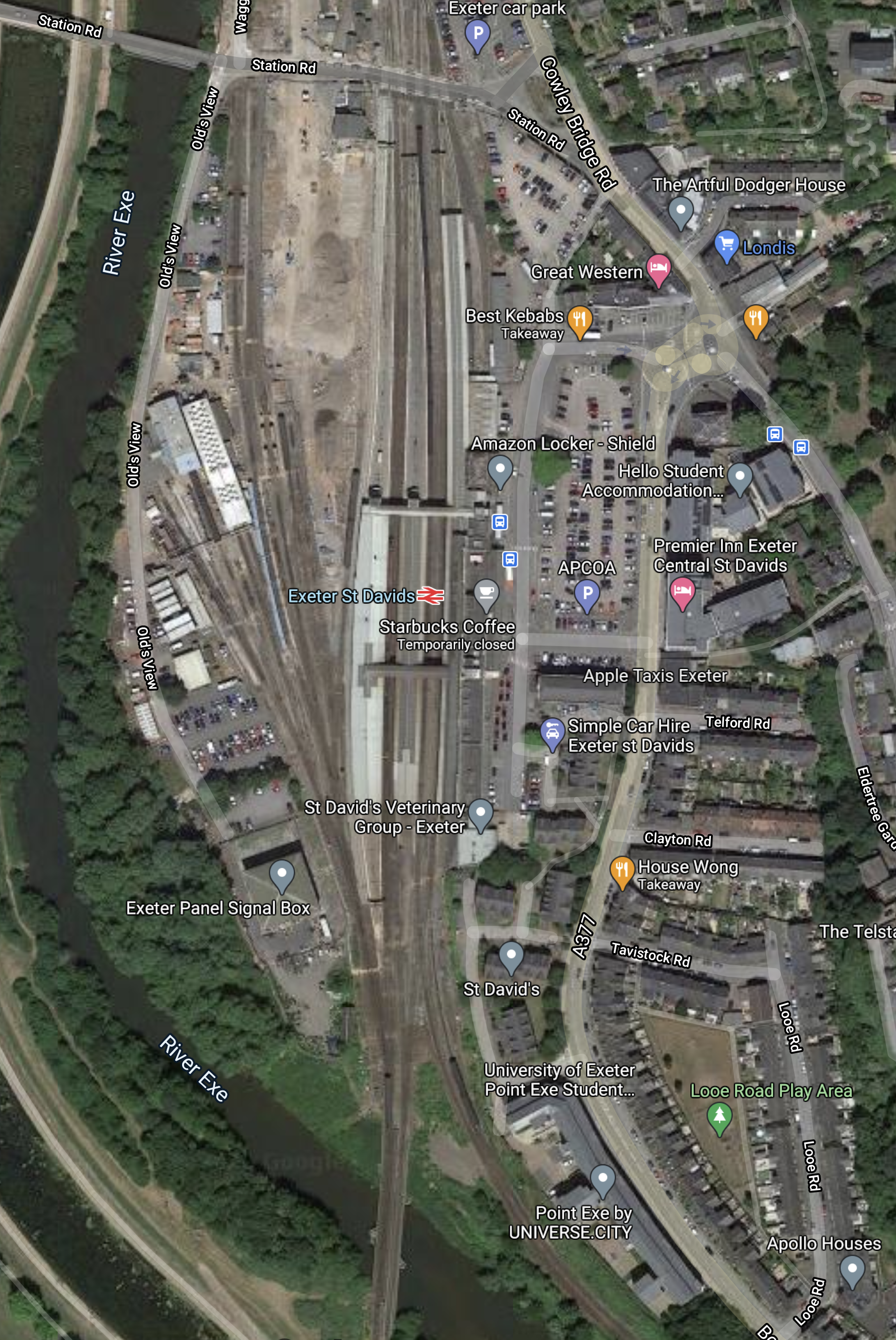
Services from London Waterloo and Salisbury currently turnback at Exeter St. Davids station in the following manner.
- They arrive from the track running to the station from the South East.
- They unload passengers in Platform 1 which is the long platform on the East side of the station.
- It seems that they then continue through the station to New Yard, where they refuel and do other things, that Class 159 trains do after a long journey.
- At the appropriate time, they return to Platform 1, where they load up with passengers and leave by the way they arrived.
If a charging system or electrification, were to be added to Platform 1, the trains would be able to fill up in the station.
- Currently, it appears that the Class 159 trains take over an our to do this complicated manoeuvre.
- Hitachi are quoting a charging time of 10-15 minutes for their Regional Battery Train.
Could valuable minutes be saved, that would enable a more passenger-friendly timetable?
Charging Regional Battery Trains At Yeovil Junction Station
Currently, the timetable is arranged like this.
- The Salisbury to Exeter St. Davids train and the Exeter St. Davids to Salisbury trains pass at Yeovil Junction station.
- Both trains wait in the station for nearly fifteen minutes, which is an adequate time to fully-charge the batteries.
The picture shows the two trains in the platform together.
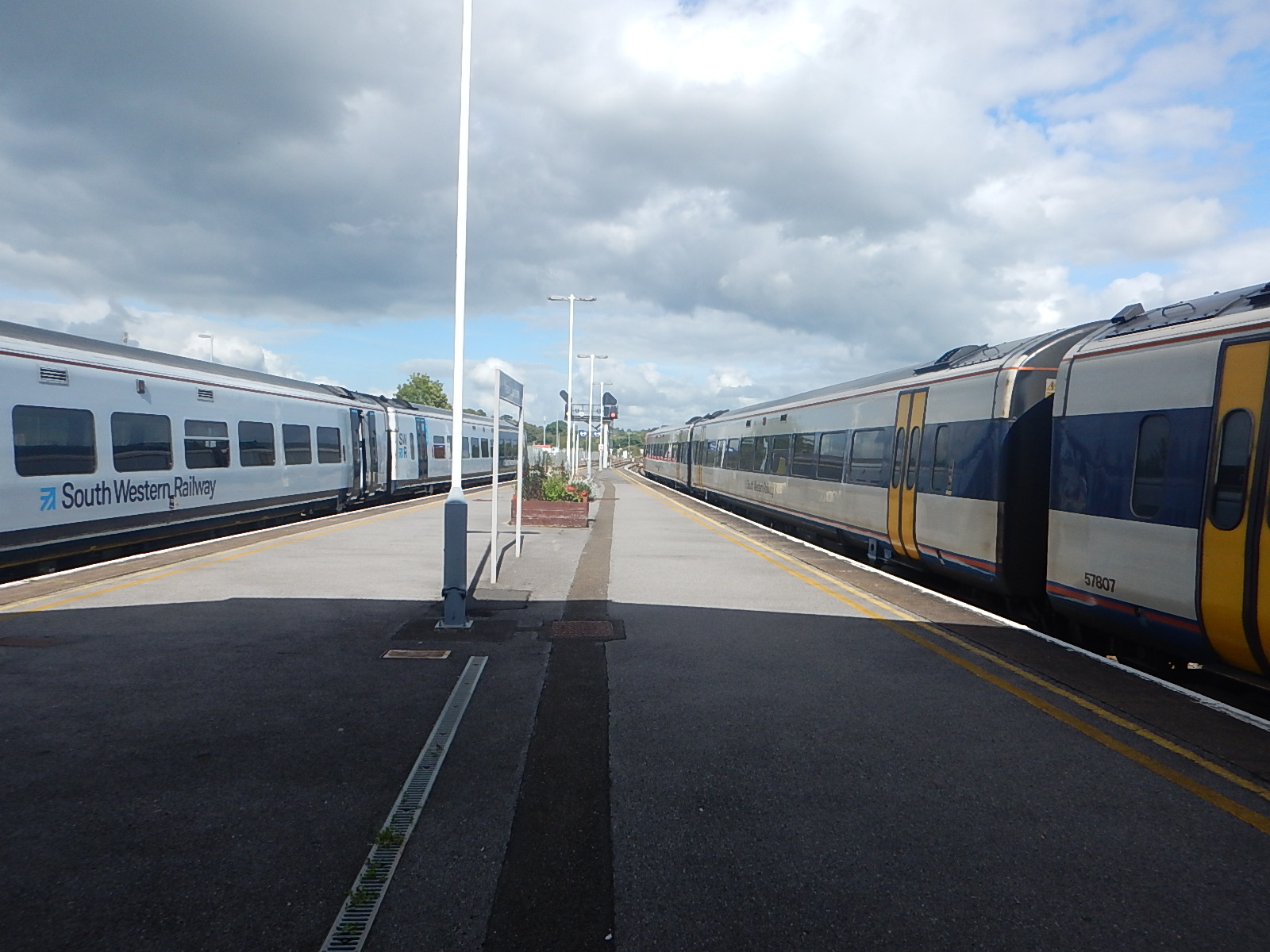
Currently, the timetable would seem to be ideal for battery electric train operation between Salisbury and Exeter St. Davids stations.
A Possible Timetable Between London Waterloo And Exeter St. Davids
It did occur to me, that South Western Railway might be running a timetable, that could possibly be designed for Regional Battery Trains.
- A nine-car formation between London Waterloo and Salisbury could be replaced with a nine-car or a pair of five-car Regional Battery Trains.
- A six-car Salisbury and Exeter St. Davids could be replaced by a five-car Regional Battery Train.
- Trains could pass at Gillingham station between Salisbury and Yeovil Junction, as it is a two-platform station about half-way.
- Trains could pass at Honiton station between Yeovil Junction and Exeter St. Davids, as it is a two-platform station about half-way.
I think if it was needed, that two tph would be possible not only between London Waterloo and Salisbury, but also between London Waterloo and Exeter St. Davids.
I also think that the following detailed service pattern would be possible.
- A pair of five-car Regional Battery Trains would leave London Waterloo at a frequency of two tph.
- The front train would be for passengers for all stations between London Waterloo and Exeter St. Davids.
- The rear train would only be for passengers for all stations between London Waterloo and Salisbury.
- On arrival at Salisbury, both trains would charge their batteries.
- When the batteries were fully-charged, the two trains would split.
- The front train would continue on its journey to Exeter St. Davids, leaving the rear train in the platform.
- The Exeter St. Davids to London Waterloo service would arrive at Salisbury and join to the train in the platform.
- The pair of trains would then run to London Waterloo.
This service pattern has the big advantage that passengers travelling between a station East of Salisbury and one to the West of Salisbury, will not have to change trains
- All stations on the line also get a two tph service.
- Services would be the same or better on the whole route, to the pre-COVID-19 timetable.
- There would be extra capacity between London and Basingstoke.
Akiem Acquires Macquarie European Rail Fleet
The title of this post is the same as that of this article on Railway Gazette.
This is the introductory paragraph.
Leasing company Akiem Group has signed a definitive agreement to acquire Macquarie European Rail’s rolling stock leasing business, subject to regulatory approval.
Included in the deal are thirty Class 379 trains, currently used on the Stansted Express and soon to be replaced by new Class 745 trains.
Because of the lack of any published plans about where the Class 379 trains will be cascaded, I have been wondering if there is something wrong with the trains or perhaps their owner.
As the latter looks now to be changing from Macquarie to Akiem, perhaps we’ll hear some news on what is happening to the Class 379 trains.
I still feel the Class 379 trains would make excellent battery-electric trains, possibly for an airport service.
But which train operating company would need a fleet of thirty four-car electric trains?
Most have now sorted their fleet requirements and when Bombardier get their production working smoothly, perhaps with Alstom’s backing, there will be more trains being delivered to train operating companies.
But there is one fleet replacement, where battery-electric Class 379 trains may be ideal; the replacement of South Western Railway (SWR)‘s fleet of Class 158 and Class 159 trains.
Consider.
- 10 x two-car Class 158 trains and 30 x three-car Class 159 trains could be replaced by 30 x four-car Class 379 trains, which would be a near ten percent increase in carriages.
- 90 mph diesel trains, that were built in the 1990s, will be replaced by 100 mph battery-electric trains, that are not yet ten years old.
- The Class 379 trains are Electrostars and fitting third-rail shoes, will be straight out of Bombardier’s parts bins.
- Waterloo station will become another diesel-free London terminus.
- Fellow French company; Alstom could step in to the picture with their battery knowledge from other products like the iLint hydrogen train and convert the trains at Widnes or one of their other maintenance depots.
- South Western Railway and Akiem would need to procure a charging system and could probably do worse than see what Vivarail or Furrer + Frey can supply!
How would the Class 379 battery-electric trains handle various services?
London Waterloo To Salisbury And Exeter St. Davids
The most difficult service to run, would be the London Waterloo and Exeter St. Davids service via Salisbury.
Note that when SWR bid for the franchise, they promised to knock ten minutes off the time to Exeter and they will need 100 mph trains for that!
With climate change in the news, only a hardline climate-change denier would buy 100 mph diesel trains.
In Are Hitachi Designing the Ultimate Battery Train?, I suggested how Waterloo and Exeter could be run with a battery-electric train, with a range of around sixty miles on battery power.
- Use existing electrification, as far as Basingstoke – 48 miles
- Use battery power to Salisbury – 83 miles
- Trains can take several minutes at Salisbury as they often split and join and change train crew, so the train could be fast-charged, at the same time.
- Use battery power to the Tisbury/Gillingham/Yeovil/Crewkerne area, where trains would be charged – 130 miles
- Use battery power to Exeter- 172 miles
Note.
- The miles are the distance from London.
- The charging at Salisbury could be based on Vivarail’s Fast-Charging or traditional third-rail technology.
- The charging around Yeovil could be based on perhaps twenty miles of third-rail electrification, that would only be switched on, when a train is present.
- Charging would also be needed at Exeter for the return journey.
I estimate that there could be time savings of up to fifteen minutes on the route.
London Waterloo To Salisbury And Bristol Temple Meads
This service in run in conjunction with the Exeter St. Davids service, with the two trains joining and splitting at Salisbury.
As Salisbury and Bristol Temple Meads is 53 miles, it looks like this service is possible, providing the following conditions are met.
- The Class 379 train has a sixty mile range on battery power.
- The train can charge at Bristol Temple Meads, perhaps by using the 25 KVAC overhead electrification.
- The Class 379 trains can join and split with the with amount of alacrity.
Note that there may be other places, where a tri-mode capability might be useful.
Exeter And Axminster
This shorter trip is thirty miles and if the battery range is sufficient, it could probably be run by a Class 379 train, charged at Exeter.
If necessary, a method of charging could be provided at Axminster.
Romsey And Salisbury Via Southampton Central
This route is partially electrified and it looks like a battery-electric train with a sixty mile range could run the service without any extra infrastructure.
If Salisbury, gets a charging system, then this service might be used to ensure a reliable or extended service.
Portsmouth Harbour And Basingstoke And Portsmouth Harbour and Southampton Central
These two services could be run by Class 379 trains running using the electrification.
London Or Wareham and Corfe Castle
This Summer Saturday-only service is an ideal one for a battery-electric train.
New Services
There are also other branches that could be reopened, like those to Ringwood and Hythe, that could be worked by battery-electric trains.
Conclusion
It will be very interesting to see where the Class 379 trains end up.
But my money’s on them replacing South Western Railways, diesel trains, after conversion to battery-electric trains.
- Only limited infrastructure works will need to be done.
- South Western Railway will have more capacity.
- Passengers will get a faster service in a modern train.
- Waterloo will become a diesel-free station.
But most importantly, South Western Railway will have an all-electric fleet.
 The Anonymous Widower