WSMR Plans Alstom-Built Bi-Mode Sets If Open Access Bid Approved
The title of this post, is the same as that of this article on Rail magazine.
This is the sub-heading.
Wrexham, Shropshire & Midlands Railway (WSMR) has said it will invest in new Alstom battery-electric bi-mode trains if its open access application is successful.
These three paragraphs add some more details.
In December the Alstom-backed operation resubmitted its application to run between the North Wales city and London Euston via Shrewsbury and Walsall after its initial bid was rejected by the Office of Rail and Road (ORR) last year.
In a letter to the regulator and Network Rail, Mobilisation Director Darren Horley said: “Should our application be successful, WSMR will work alongside its parent company, Alstom, and will commit to invest in a new bi-mode battery-electric fleet based on the Adessia platform – Alstom’s new generation passenger train designed specifically for the UK market.
“Initial discussions regarding the procurement of a small new fleet have already commenced with Alstom and a financier.”
The Adessia will be a high speed version, with a maximum speed of 125 mph or 200 kph.
I have some thoughts.
How Much Of The Route Is Without Electrification?
In Alstom Plans To Operate Its Own Passenger Train Service In The UK For The First Time, I gave these distances of the sections of the route.
- Euston and Nuneaton – 96.7 miles – electrified
- Nuneaton and Walsall – 26.7 miles – electrified
- Walsall and Wolverhampton – 6.7 miles – electrified
- Wolverhampton and Shrewsbury – 29.7 miles
- Shrewsbury and Wrexham General – 30.3 miles
That looks like there are sixty miles in each direction without electrification.
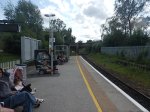
Either the trains would have a battery range of 120 miles or a battery range of over 60 miles with charging at Wrexham General station, which is shown in these pictures.


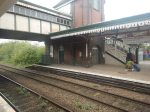
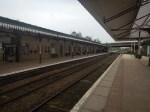
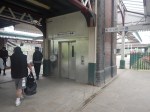
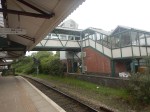

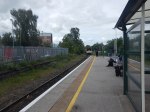
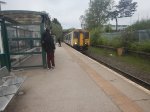
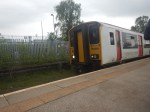
Note.
- Wrexham General station has four platforms. Two are a pair of long through platforms and there are also a separate long and a short through platform.
- The station is step-free.
- The last four pictures are Platform 4.
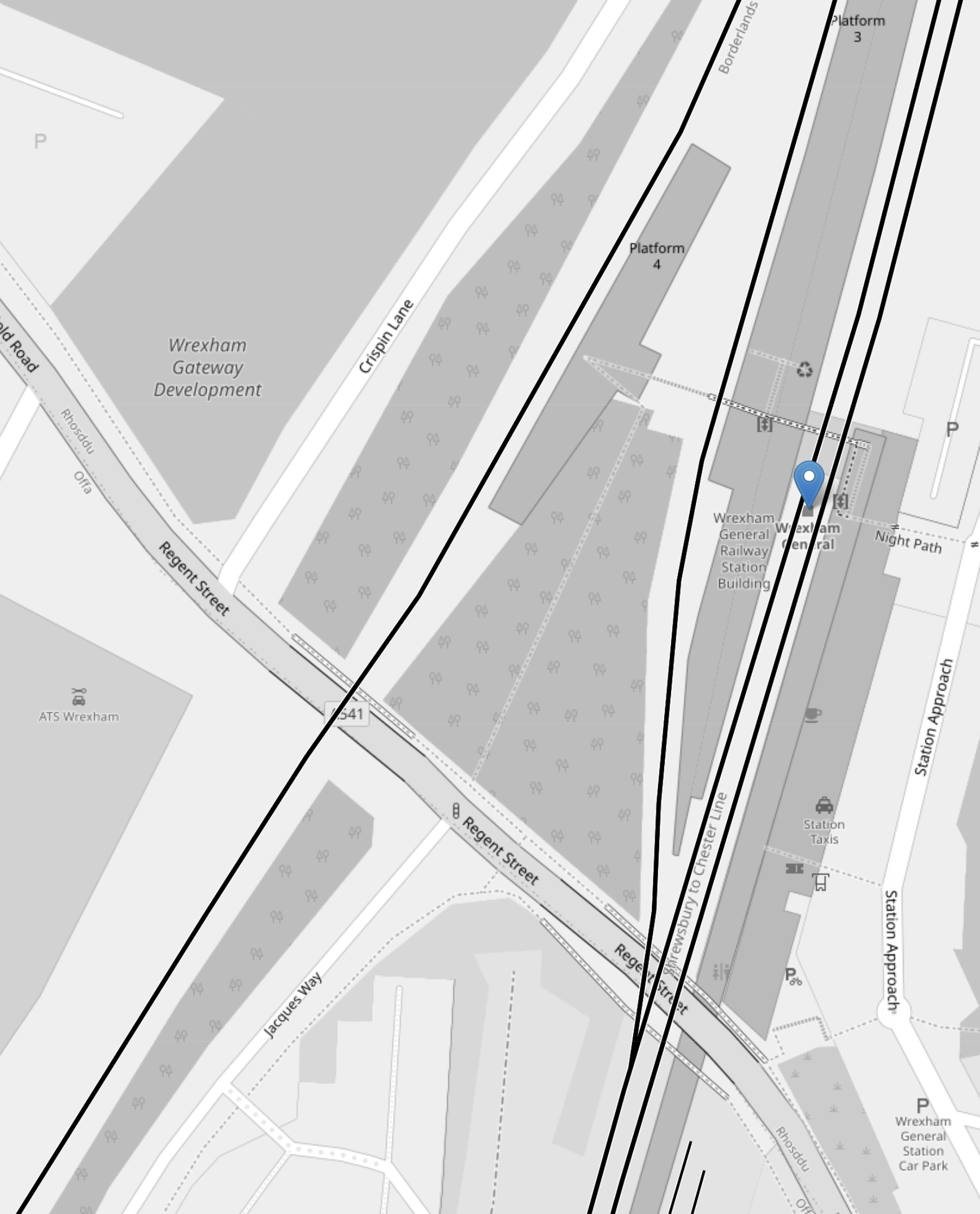
This OpenRailwayMap shows the platform layout at Wrexham General station.
Note.
- The blue arrow is between the two through Platforms 1 and 2.
- Platform 3 is the platform in the middle.
- Platform 4 is the platform on the left.
An overhead charging rail could be used on Platforms 3 and/or 4, as has been used at Caerphilly station.
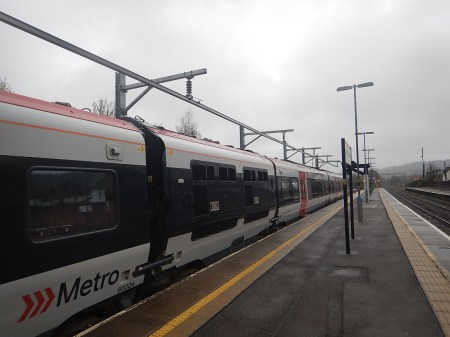
The overhead charging rail could also charge other Wrexham General services.
Prospective Routes
I would expect that there would be a need for such a train on the following UK routes.
- CrossCountry – Class 221 train replacement.
- East-West Rail – New fleet.
- Southeastern – London and Hastings.
- ScotRail – Inter7City replacement.
- South Western Railway – Class 158 and Class 159 train replacement.
- Transport for Wales – Some diesel services.
There would be probably be other services too!
Will The Service Call At Willenhall, Darlaston And Walsall?
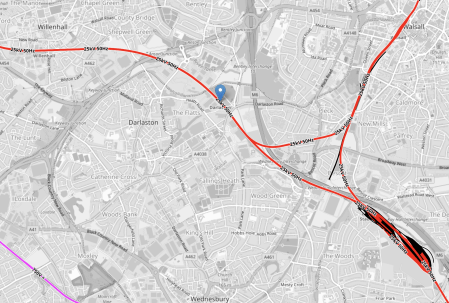
This OpenRailwayMap shows the three stations.
Note.
- Willenhall station is in the North-West corner of the map.
- Darlaston station is marked by the blue arrow.
- Walsall station is in the North-East corner of the map.
- Tame Valley Parkway station is in the South-East corner of the map.
- It might also be a good idea to call at the Parkway station.
- Red tracks are electrified.
- To call at all four stations will need a reverse at Walsall.
There may be some thinking to do, on the best calling pattern in Walsall.
WSMR Resubmits Formal Application To The ORR
The title of this post, is the same as that of this press release from Wrexham, Shropshire and Midlands Railway.
These three paragraphs give full details of the application.
Wrexham, Shropshire and Midlands Railway is committed to delivering the connectivity that communities across Wales and England need and deserve. Our resubmitted application reflects stakeholder feedback and demonstrates how we’ve listened to MPs and regional partners who urged us to reapply.
This application differs from our previous submission, which includes us requesting fewer train paths and offering an additional stop at Wellington, enhancing connectivity for people in Shropshire. Furthermore, by making better use of available capacity – including paths that have been released and remain unused – we aim to strengthen regional links and support economic growth.
WSMR’s new open access service will provide faster, more convenient travel options for passengers in Wrexham, Shrewsbury, Wellington, Telford, Walsall and beyond, improving access to jobs, education and leisure opportunities. We remain committed to introducing this service for the regions we serve and delivering benefits for communities along the route.
Note.
New Chiltern Railways Trains Set To Unlock 10,000 More Seats A Day
The title of this post is the same as that of this press release from Chiltern Railways.
This picture from Chiltern Railways shows the train at Marylebone.
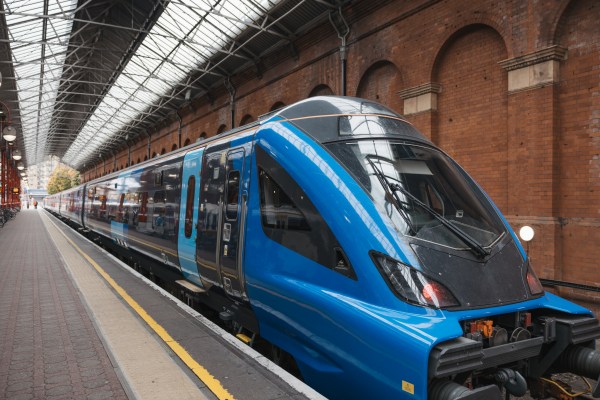
These three paragraphs are from the press release and add more details.
Chiltern Railways today (Tuesday 14 October) showcased for the first time its newest (Mark 5A) trains, set to add 10,000 more seats for customers each weekday from December 2026.
The trains, to be introduced between London to West Midlands from early 2026, will enable Chiltern to deliver more capacity across each of its West Midlands, Aylesbury, and Oxford routes as part of the operator’s efforts to deliver better journeys for customers.
The newest fleet will consist of 13 modern trains set to transform customer journeys during 2026. The trains will replace Chiltern’s oldest carriages, which are nearly 50 years old, with state-of-the-art equivalents, and provide a significant improvement to the on-board experience.
Today, I also received an update from Modern Railways, which was entitled Chiltern Railways Mk 5As To Enter Traffic Early Next Year, and included this delivery schedule.
From December 2026 there will be ten Mk 5A sets in traffic each day, with one ‘hot spare’ and one undergoing maintenance. That leaves one extra set which, CR has suggested, could eventually be pressed into traffic.
I have a few thoughts.
How Do The Trains Compare Physically?
These are basic figures for the two different types of train sets.
- The current Mark 3 are five-car sets of 23 metres coaches, that weigh about 36 tonnes. The driving van trailer is 18.83 metres and 43.7 tonnes
- The future Mark 5A are four-car sets of 22.2 metres coaches, that weigh about 43 tonnes. The driving trailer is 22.37 metres and 43 tonnes.
Lengths and weights of various sets will be as follows.
- Mark 3 – five-car and driving van trailer – 133.83 metres and 223.7 tonnes.
- Mark 5A – four-car and driving trailer – 111.17 metres and 215 tonnes
- Mark 5A – five-car and driving trailer – 155.57 metres and 258 tonnes
Note.
- Chiltern Railways and TransPennine Express use the same Class 68 locomotives.
- The five-car Mark 3 and the four-car Mark 5A sets are quite similar in length and weight
- This could mean that both sets would perform similarly with the same locomotives on the same route.
- I wouldn’t be surprised that the new Platform 4 at Birmingham |Snow Hill station will be able to handle all configurations.
I almost feel that when CAF designed the Mark 5A sets for TransPennine Express, they also had Chiltern in mind as another possible sale.
How Many Trains Would Be Needed To Run Between London Marylebone And Birmingham?
Consider.
- Trains currently run half-hourly on the route between 06:00 to 23:30, which is up to 36 services per day.
- When Platform 4 is operational at Birmingham Snow Hill station, all services could probably stop at both Birmingham Moor Street and Birmingham Snow Hill stations.
- A round trip between London Marylebone and Birmingham Snow Hill stations currently takes about five hours.
I’m fairly certain that to run a half-hourly core service would need ten trains.
Could Chiltern Develop Another Network On The Other Side Of Birmingham?
Consider.
- Trains could run twice an hour from 06:00 to 23:30, which is up to 36 services per day.
- When Platform 4 is operational at Birmingham Snow Hill station, all services could probably stop at both Birmingham Moor Street and Birmingham Snow Hill stations.
- Chiltern Railways already run several services a day to Stourbridge Junction.
- Chiltern Railways have run services to Kidderminster station in the past.
- Wrexham & Shropshire used to run locomotive-hauled Mark 3 four-car sets with driving van trailers, as far as Wrexham via Shrewsbury.
It looks to me, that with the right rolling stock configurations, Chiltern’s network can be developed on the other side of Birmingham.
- Destinations could include Stourbridge Junction, Kidderminster, Shrewsbury, Wolverhampton, Chirk, Ruabon and Wrexham General.
- Some services would need longer trains.
Obviously services would only be run if they were viable.
Would It Help Growth In A Town Or Area, If It Had A Rail Connection To London And/Or The Nearest Major City?
I know Lincoln is on the other side of the country, but I asked Google AI if Lincoln’s rail link to London has brought growth to the city and received this answer.
Yes, Lincoln’s rail link to London has brought significant growth by improving tourism, business travel, and student mobility, and is expected to spur further economic benefits through faster journey times and increased services. The direct link has made Lincoln more accessible for visitors and is a key part of the city’s long-term strategy for economic growth and development.
That was fairly definite.
How would that apply to an extended Chiltern Main Line.
- Politicians are always saying growth is important.
- An extended Chiltern Main Line servicewould improve connections of a lot of places to London and Birmingham.
- Shrewsbury is the easiest connection for West Wales.
- Surely a rail connection to a major city, might tempt someone to open a branch or a new factory.
Would a rail service make people feel more included?
Heads Of The Valleys Road Upgrade Officially Opens
The title of this post, is the same as that of this article on BusinessNewsWales.
This is the sub-heading.
The final phase of the £2 billion Heads of the Valleys Road upgrade programme has officially opened.
These first two paragraphs add detail to the project.
The Welsh Government said it marked the completion of “one of the UK’s largest and most technically challenging road projects”.
The £1.4 billion Section 5&6 Dowlais to Hirwaun final phase links the Valleys, South and West Wales to the English Midlands and beyond, together with ports serving Irish and other European destinations. As well as improving the resilience of the South Wales trunk road network, the road provides a vital link across the top of the South Wales valleys for the Metro project improving links to the Cardiff and Swansea Bay City Regions, the Welsh Government said.
From the statistics of work done and the money involved, it would appear that a comprehensive upgrade has fixed a big gap in the UK’s motorway network in South Wales.
This Google Map shows the locations of Dowlais and Hirwaun.
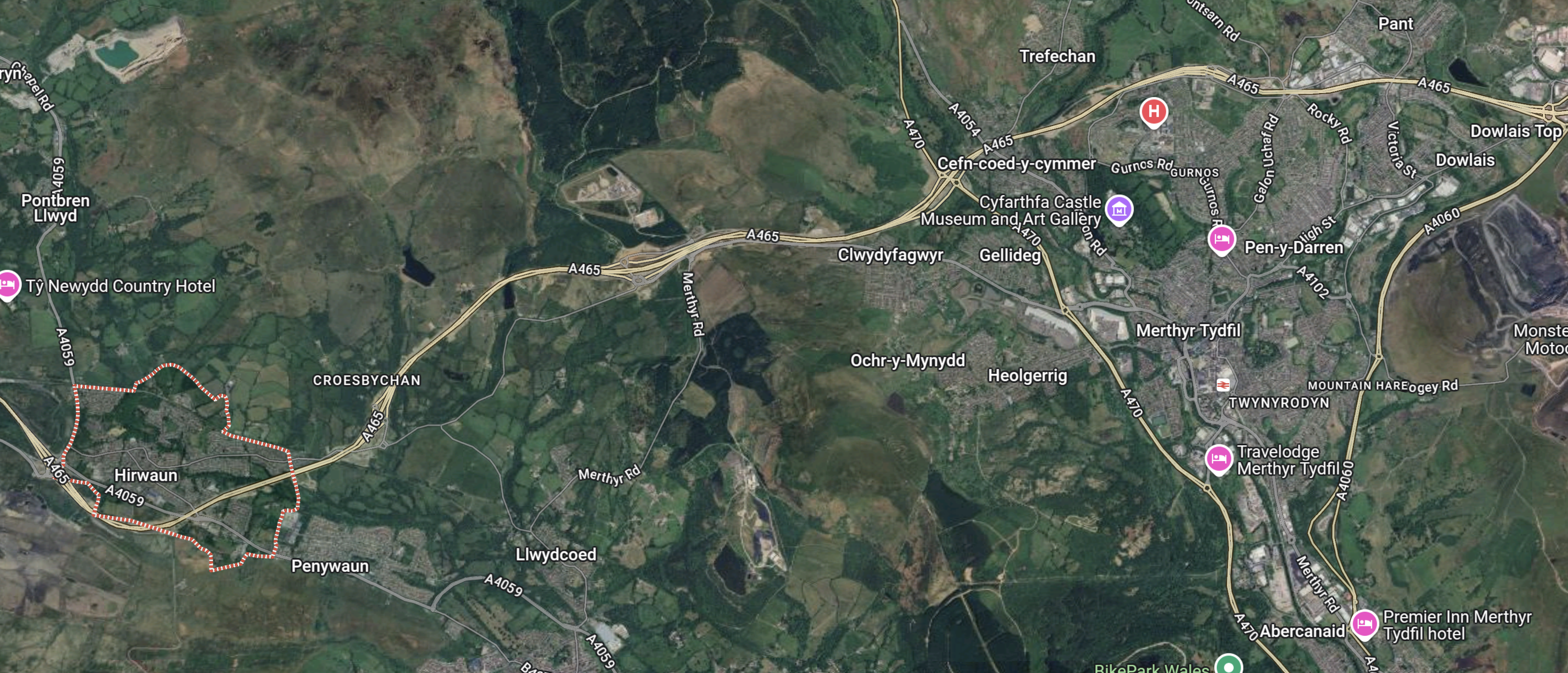
Note.
- Dowlais is in the North-East corner of the map.
- Hirwaun is in the South-West corner of the map and is outlined in red.
- The Heads of the Valleys Road links Dowlais and Hirwaun.
- Going East from Dowlais leads to Abergavenny, Monmouth, Raglan and the English Midlands.
- Abergavenny has a station, but Monmouth and Raglan don’t!
- Abergavenny station has comprehensive services to stations as far apart as Cardiff, Crewe, Holyhead, Manchester Piccadilly, Swansea and Wrexham General.
Abergavenny station could eventually turn out to be a parkway station for the South Wales Valleys.
I can certainly understand, why Lumo wants to run a service to Hereford.
I also feel that the Welsh government and Transport for Wales would be in favour of the service.
- Three towns in Wales; Cwmbran, Pontypool and Abergavenny get a direct service to Bristol Parkway and London Paddington stations.
- Hereford already has an hourly connection to Birmingham New Street via Worcester and University.
- If a coach were to be provided between Bristol Parkway and Bristol Airport, this could make getting to Bristol Airport easier.
I can see further improvements to services, that terminate at Abergavenny.
Vivarail Trains And Wrexham Central Station – 6th June 2025
From Chester, I took a train to Wrexham General station. From there I took a Vivarail Class 230 train to Wrexham Central station and then on to Shotton station.
These are some of the pictures I took.
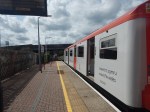
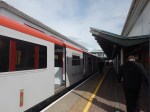
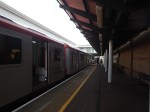





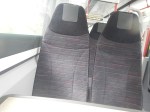
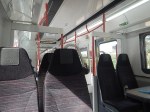
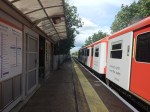
Note.
- Time was tight at Wrexham Central station.
- But Wrexham Central station looked to be a good example of a tidy one-platform station built into a shopping centre.
- The Vivaral Class 230 train appeared to have worn well.
- From what I saw, it would be fairly easy to put up a short length of overhead line to charge battery-electric trains.
I should have given myself more time.
Direct Rail Service Plan Supported By PM
The title of this post, is the same as that of this article on the BBC.
This is the sub-heading.
Plans for a new passenger rail service running direct trains between north Wales, the West Midlands and London have received support from the prime minister.
These three paragraphs add detail to the story.
A new open-access rail operator, external, called the Wrexham, Shropshire and Midlands Railway (WSMR), has been formed, offering passengers in Wrexham, as well as Gobowen, Shrewsbury, Walsall and Coleshill, a direct link with the capital.
Speaking in the Commons, Shrewsbury’s Labour MP Julia Buckley asked Sir Keir Starmer if he would support the provider’s application.
The prime minister responded, saying he would be “delighted to make sure the MP and other interested MPs meet with the rail minister to put their case forward”.
He didn’t actually say he supported the application, but then lawyers are careful with words, as every syllable costs money.
I have a few thoughts on this service.
The North Wales Metro
The North Wales Metro was announced today and I wrote about it in £2.1bn North Wales Rail Overhaul Plans Unveiled.
The Wrexham, Shropshire and Midlands Railway connects the North Wales Metro to Gobowen, Shrewsbury, Wolverhampton, Coleshill and London Euston.
Will The Trains Be Hydrogen Powered
In Alstom And Eversholt Rail Sign An Agreement For The UK’s First Ever Brand-New Hydrogen Train Fleet, I reported how Alstom could be going to build a fleet of hydrogen trains in Derby.
I just wonder, if Alstom are going to create a hydrogen train with this specification.
- Five cars
- 125 mph top speed
- Ability to use electrification, where it exists.
- Sufficient range on hydrogen to cover the non-electrified section of the route between Wrexham General and Wolverhampton.
- Wrexham General and Wolverhampton is just under sixty miles and takes an hour and six minutes.
As the fastest trains between London Euston and Walverhampton take one hour and forty-nine minutes, trains would take just under three hours between London Euston and Wrexham General.
I rode an Alstom hydrogen-powered train in Germany in March 2019 and wrote My First Ride In An Alstom Coradia iLint.
I took this picture at the time.

Alstom certainly have all the technology to build a 125 mph hydrogen-powered train, that can use electrification.
Where Would A Hydrogen Train Be Refuelled?
I suspect, that as the train would probably have a range of around a thousand kilometres, it could fill up overnight at Wrexham.
The hydrogen could be sourced from Runcorn or it might even be generated at the depot.
Would A Hydrogen Train Attract Passengers?
If the hydrogen-powered train were to be mouse-quiet like Wrightbus’s hydrogen buses, I believe it would.
Is Alstom’s Proposal For A Service Between London Euston And Wrexham Part Of A Cunning Plan?
Alstom have built and introduced into service between Buxtehude and Cuxhaven in Germany, the Coradia iLint hydrogen-powered train. The prototype has performed demonstrations in Austria, Canada, The Netherlands and Saudi Arabia.
This picture shows a Coradia iLint in Germany.
In the UK, Alstom had a plan to convert redundant Class 321 trains into a fleet of hydrogen-powered trains called Breeze, which I wrote about in Hydrogen Trains Ready To Steam Ahead, in January 2019.
This visualisation is from Alstom.
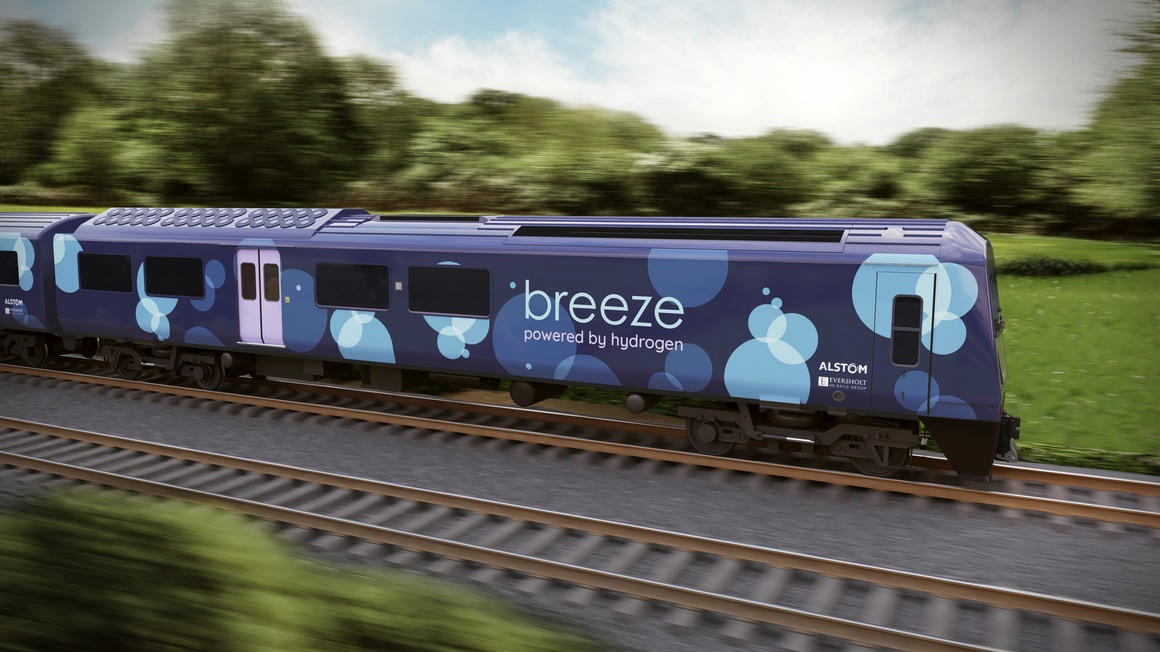
I suspect it didn’t appeal to train companies, as no orders appear to have been received.
But you can’t criticise Alstom for not trying, as in November 2021, they signed an agreement with Eversholt Rail Group to develop a hydrogen-powered Aventra, which I wrote about in Alstom And Eversholt Rail Sign An Agreement For The UK’s First Ever Brand-New Hydrogen Train Fleet.
This visualisation is from Alstom.
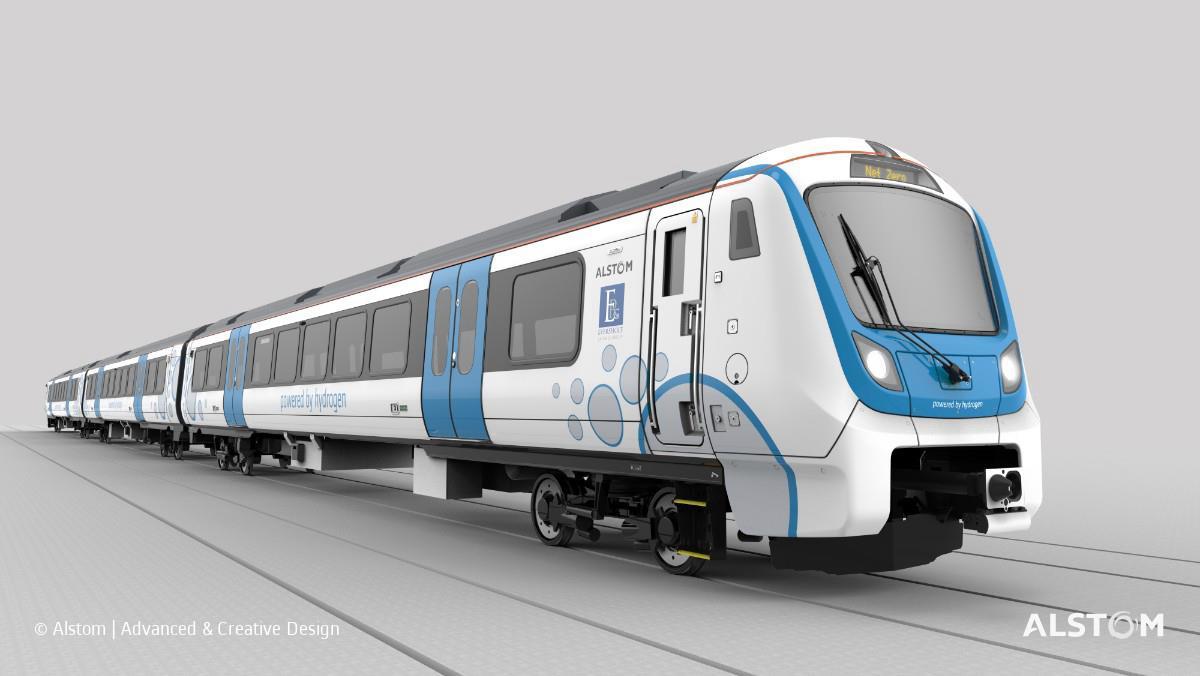
Visually, it looks just like any other Aventra and much better than the previous Breeze design.
In March 2018, I wrote Bombardier Bi-Mode Aventra To Feature Battery Power, which was based on this article in Rail Magazine.
These are a few points from the article.
- Development has already started.
- Battery power could be used for Last-Mile applications.
- The bi-mode would have a maximum speed of 125 mph under both electric and diesel power.
- The trains will be built at Derby.
- Bombardier’s spokesman said that the ambience will be better, than other bi-modes.
- Export of trains is a possibility.
- Bombardier’s spokesman also said, that they have offered the train to three new franchises. East Midlands, West Coast Partnership and CrossCountry.
Have Alstom looked at what they bought from Bombardier and decided the following train is possible, if they add some of their technology?
- A train the size needed by the customer, up to a length of at least ten cars.
- 125 mph under 25 KVAC overhead electrification.
- 100 mph with 750 VDC third rail electrification.
- Running on hydrogen away from electrification.
- 100 mph maximum speed running on hydrogen.
- A range of perhaps 500 miles, if it can emulate the hydrogen-powered Coradia iLint.
A train with this specification would have several applications in the UK.
- Fully-electric routes.
- Electric routes with perhaps a hundred miles of unelectrified track.
- Scenic routes, where the Nimbies wouldn’t like electrification.
These points should also be born in mind.
- There are now 110 mph Aventras in service with West Midland Trains on the West Coast Main Line.
- I recently came back from Cardiff to London in a twelve-car Class 387 train and there wasn’t too many unhappy passengers. It was certainly better than a rail replacement bus. I wrote about the trip in Cardiff To Reading In A Class 387 Train.
- Alstom believe you can certainly fit their hydrogen gubbins in an Aventra.
- The hydrogen gubbins appear to be from Cummins, who have a worldwide support network.
- Cummins can also supply complete hydrogen support systems. A truck can refuel the train, at one end of the route?
- Alstom have been doing the market research with the hydrogen-powered Coradia iLint, so I suppose they know what the market needs.
Could Alstom, with help from Cummins, have a zero-carbon 200 kph train and support systems, which has a hydrogen range of up to a thousand kms for export markets like the United States, Africa, Australia, India and South America?
Two big world-leading companies are surely better than one!
But Alstom has one big problem!
How do you fully test a 125 mph hydrogen-powered train?
- I know with aircraft, if you change the engine type on an existing aircraft, you only have to certify the engine and this is done on a Supplementary Type Certificate.
- Is it the same with trains, so a 110 mph Class 730 train, which is in service with West Midlands Trains, could be the basis of certifying a hydrogen-powered Aventra?
- The Coradia iLint was only a change from diesel to a hybrid hydrogen-electric engine, so was it certified this way?
- With the Coradia iLint, it seemed to go into service quite quickly, so did it do much of the testing in service?
I looks to me, that London Euston and Wrexham is an ideal route for a hydrogen bi-mode 125 mph train.
- The route has electrified sections, some of which have high operating speeds.
- The route has a convenient hydrogen supply from INEOS at Runcorn at the Northern end.
- Change between hydrogen and electric power would always take place in a station.
- A round trip needs less than 200 miles of running on hydrogen.
- South of Nuneaton, no hydrogen is used, so the train will be like a Class 730 train, that already uses the route.
- There are depots that can service Aventras on the route.
It is certainly a possibility, that the London Euston and Wrexham service will be used to test and showcase Alstom’s new Hydrogen Aventra.
Alstom Plans To Operate Its Own Passenger Train Service In The UK For The First Time
The title of this post, is the same as that of this press release from Alstom.
These two bullet points, act as sub-headings.
- Alstom is partnering with SLC Rail to form a new open access rail operation between North Wales, Shropshire, the Midlands and London
- Formal application now being submitted to the Office of Rail and Road (ORR) with passenger service sought from 2025
These are the first three paragraphs.
Alstom, global leader in smart and sustainable mobility, plans to operate a new passenger rail service across England and Wales. Working in partnership with consultancy SLC Rail, the open access operation will be known as Wrexham, Shropshire and Midlands Railway (WSMR).
As the country’s foremost supplier of new trains and train services, and a leading signalling and infrastructure provider, Alstom will operate its own rail service in the UK for the first time.
WSMR is seeking to introduce direct connectivity to and from North Wales, Shropshire, the Midlands and London that doesn’t exist today, linking growing communities and businesses, and making rail travel more convenient, enjoyable and affordable.
I can’t remember a service proposal being put forward by a train manufacturer since the privatisation of UK’s railways in the 1990s.
This is some more information and my thoughts.
The Route
This paragraph from the press release, describes the route.
The proposal envisages a service of five trains per day in each direction Monday to Saturday, with four travelling both ways on Sundays. Trains will stop at Gobowen, Shrewsbury, Telford Central, Wolverhampton, Darlaston, Walsall, Coleshill Parkway, Nuneaton and Milton Keynes on their journey between Wrexham General and London Euston.
Note.
- The proposed call at the new Darlaston station.
- The route is electrified between Euston and Nuneaton and Walsall and Wolverhampton.
- Much of the route North of Nuneaton is on tracks with a maximum speed of 70-80 mph.
The route is in these sections.
- Euston and Nuneaton – 96.7 miles – electrified
- Nuneaton and Walsall – 26.7 miles
- Walsall and Wolverhampton – 6.7 miles – electrified
- Wolverhampton and Shrewsbury – 29.7 miles
- Shrewsbury and Wrexham General – 30.3 miles
That is a total of 190.1 miles or 380.2 miles round trip.
I suspect that the service will need bi-mode trains.
Should The Service Call At Wellington?
This article on the BBC is entitled Rail Company Urged Not To Forget Wellington.
This is the sub-heading.
A rail company which is bidding to bring back a direct service between Shropshire and London has been urged not to forget a town.
These are the first three paragraphs.
Wrexham, Shropshire and Midlands Railway said it was preparing to apply to the government to run the service.
Trains would stop at Gobowen, Shrewsbury, Telford, Wolverhampton, Walsall, Coleshill and Nuneaton.
But Telford and Wrekin Council said the omission of Wellington as a stop was “short-sighted”.
Although Wellington is smaller than than Shrewsbury and Telford, it looks like a bit of analysis would provide a solution, that would be acceptable for all parties.
The Trains
In the press release, this phrase is used.
positive impact to both communities and the environment.
I can’t see any more electrification being erected on the route, so the trains will need to be bi-mode.
- Bi-mode diesel trains won’t have a positive impact on the environment.
- As the route between Wolverhampton and Wrexham General is not electrified, a battery-electric train would need a range of at least 60 miles or 120 miles for the round trip, if there were no charging at Wrexham General.
- But Alston are developing a Hydrogen Aventra, which I wrote about in Alstom And Eversholt Rail Sign An Agreement For The UK’s First Ever Brand-New Hydrogen Train Fleet.
So could Alstom be using this route to trial and showcase their new Hydrogen Aventra?
I believe that the route will be very suitable for a hydrogen train.
- Changeover between electric and hydrogen power can always take place in a station.
- All hydrogen refuelling could be performed at one end of the route.
- A large proportion of the UK’s green hydrogen is produced by INEOS at Runcorn, which is less than fifty miles from Wrexham. A refuelling tanker could supply the train, as they do on some hydrogen routes in Germany.
- London has only small amounts of hydrogen infrastructure.
I suspect that refuelling will be done at the Wrexham end of the route.
This Alstom visualisation shows the train.
But it is only a three-car train.
- That is not a problem, as Aventras can be lengthened as required to the length required for the number of passengers.
- Some Aventras, like the Class 701 trains for South Western Railway, have even been ordered as ten-car trains.
- Two three-car trains may also be the ideal capacity, running as a six-car train.
So capacity will not be a problem.
If it is assumed that Alstom’s trains for the WSMR route, can use the overhead wires, where they exist, each trip between Wrexham General and London will require a total of 86.7 miles or 140 kilometres of running on hydrogen.
- A round trip will therefor require 280 kilometres of running on hydrogen.
- But between London Euston and Nuneaton, it will just be another electric train.
- I suspect that like the similar Class 730 train, it will be capable of 110 mph on the West Coast Main Line.
- Alstom’s Coradia iLint hydrogen train has a range of around a 500-800 kilometres on hydrogen.
- The WSMR trains will probably be 100 mph trains using hydrogen on a route, where that speed is possible.
So if a Hydrogen Aventra has a similar range to the Coradia iLint, it will be able to do two round trips before refuelling.
How Long Will The Service Take?
West Midlands Trains, who use the similar Class 730 trains take one hour and eleven minutes between London Euston and Nuneaton with a single stop at Milton Keynes Central.
As the WSMR trains will use the same route, I suspect the same time can be used.
As Nuneaton and Wrexham General are 93.4 miles apart a table can be created showing the time for the rest of the journey for different average speeds
- 50 mph – 1 hour 52 minutes – 3 hours 3 minutes.
- 60 mph – 1 hour 33 minutes – 2 hours 44 minutes.
- 70 mph – 1 hour 20 minutes – 2 hours 31 minutes.
- 80 mph – 1 hour 10 minutes – 2 hours 21 minutes.
Note.
- The first time is the Nuneaton and Wrexham General time and the second time is the overall journey time.
- Typical Avanti West Coast services via Crewe and a change at Chester, take between two-and-a-half and three hours.
I suspect, if the WSMR trains can keep the speed up through the Midlands, that two hours and 30 minutes could be possible.
Could The Hydrogen Aventra Run At 125 mph Under The Wires?
In March 2018, I wrote Bombardier Bi-Mode Aventra To Feature Battery Power, which was based on this article in Rail Magazine.
These are a few points from the article.
- Development has already started.
- Battery power could be used for Last-Mile applications.
- The bi-mode would have a maximum speed of 125 mph under both electric and diesel power.
- The trains will be built at Derby.
- Bombardier’s spokesman said that the ambience will be better, than other bi-modes.
- Export of trains is a possibility.
- Bombardier’s spokesman also said, that they have offered the train to three new franchises. East Midlands, West Coast Partnership and CrossCountry.
Have Alstom looked at what they bought from Bombardier and decided the following train is possible?
- Five-cars or what the customer needs.
- 125 mph under the wires.
- Running on hydrogen away from the wires.
- 100 mph on tracks without electrification.
Obviously, maximum speeds would depend on track limits.
Looking at 125 mph Avanti West Coast trains that have a Milton Keynes stop between London Euston and Nuneaton, they can reach Nuneaton ten minutes quicker than West Midlands Trains 110 mph Class 730 trains.
Two hours and 30 minutes between London Euston and Wrexham is looking increasingly possible.
Are we seeing an audacious proposal from Alston to sell new trains to CrossCountry and a host of other franchises?
Conclusion
London Euston and Wrexham would appear to be an excellent route for an Aventra-based hydrogen train.
- It can probably cruise at 110 mph on the West Coast Main Line between London Euston and Nuneaton.
- All switchovers between electrification and hydrogen can be performed in electrified stations.
- Hydrogen would only be used North of Nuneaton.
- The train can be refuelled at Wrexham General, with fuel supplied from INEOS at Runcorn.
- Given the typical 1000 km. range of hydrogen trains, a train can probably do three round trips without refuelling.
I can see this being a service with an excellent operational record.
Will Hollywood Celebrity Involvement Be The Catalyst To Spark Development Of the Borderlands Line?
In Wrexham General Station – 4th May 2023, I showed this map, of Wrexham General station and the Racecourse Ground.

Consider.
- Wrexham A. F. C. are certainly a club, whose fans won’t need much encouragement to go to matches by train.
- I also feel that given the celebrity ownership, it will be one of those grounds where away supporters will want go.
- Its ground and Wrexham General station is well-served by direct trains from Birmingham, Cardiff, Liverpool and London.
- Interesting matches next year could be against Crewe, Newport and Tranmere.
I’m sure that because of the location of the ground and the celebrity owners, there will be pressure to improve the Borderlands Line to Liverpool.
The Wikipedia entry for the Borderlands Line has a section called Development, where this is said.
The doubling of the journey frequency on the line is one of the aims of the Growth Track 360 group, a consortium of business, politicians and public sector leaders. The group aims to improve transport and create jobs in the North Wales, Merseyside and Cheshire area over the next 20 years. During the 2017 Autumn budget, Chancellor Philip Hammond stated that part of the additional £1.2 billion funding Wales was receiving would be used to look into proposals to improve journey times on the line and developing a business case.
In October 2019, Transport for Wales announced £280,000 have been allocated to revamp stations along the line in north Wales and Merseyside, as part of TfW’s £194 million station improvement programme.
In a section called Proposed New Stations, these improvements have been proposed.
- Build a new station at Deeside Industrial Park.
- Build a new station at Woodchurch.
- Build a new station at Beechwood.
- Incorporate the line into the Merseyrail Wirral line to provide direct connectivity with Liverpool city centre.
- Replace the High and Low levels at Shotton station with a dedicated interchange station, improving connectivity between the North Wales Coast Main Line & the Borderlands line.
- Remove level crossings to improve line speed.
All these proposals seem reasonable.
There is also a section called Proposed Electrification, where this is said.
There have been proposals for the full or partial electrification of the line since 1999 with participation of Merseytravel and the devolved institutions in Wales. Such electrification is usually intertwined with proposals for the full incorporation of the line into the electrified Merseyrail network, allowing for services from either Wrexham Central or partway along the line to travel all the way to Birkenhead and Liverpool Central.
In 2008, a Network Rail study estimated the cost for third-rail electrification of the entire line to be £207 million. To lower costs, Merseytravel suggested overhead-wire electrification as an alternative, bringing estimates down to £66 million. However, this would mean trains running between Wrexham and Liverpool would have to be compatible with both electric systems, therefore incompatible with the third-rail only trains in use at the time.
There is political support to electrify the line from both Welsh and Merseyside authorities, however the responsibility of rail infrastructure lies with the UK Government’s Department for Transport. The Welsh Government aims to increase services between North Wales and Merseyside, in particular Wrexham and Deeside with Liverpool and Liverpool John Lennon Airport. Whereas Merseyside authorities would like to increase services to stations on the line on the Wirral Peninsula in particular, as well as the rest of the line.
In 2016, a working group had been set up to examine improving the line, including proposals to increase the frequency of trains on the line. It is hoped that an increase in the number of passengers would improve the case for electrification.
It seems that various solutions have been proposed.
Consider what will be available to Merseyrail and Transport for Wales within a year or so.
- Merseyrail will be running a new fleet of electric Class 777 trains.
- These new trains will be running from Bidston station and under Liverpool City Centre using the Wirral Line.
- Merseytravel has an option for a further 60 units.
- Class 777 trains are designed for running with 25 KVAC overhead electrification, should this be required in the future.
- Merseyrail and Transport for Wales will be working with Stadler on the use of battery-electric trains.
- Bidston and Wrexham Central are only 27.5 miles apart.
- The Borderlands Line is not the most challenging of rail lines to improve, as it is fairly straight and level.
- It is unlikely that Health and Safety would allow any more third rail electrification. But would this ban also apply in Wales?
- West Kirby trains run for 10.4 miles in 34 minutes to perform their loop under from Bidston under Liverpool City Centre.
- If Wrexham trains could turn under Liverpool City Centre, this would improve shopping, business and educational opportunities for those living along the Borderlands Line.
This section of the Wikipedia entry for the Borderlands Line says this about the range of the Class 777 trains on battery power.
The Liverpool City Region Combined Authority announced that trials of the seven battery electric multiple unit (BEMU) versions of their new Class 777 had shown that they were capable of travelling up to 20 miles (32 km) without a charge. Further trials by Stadler reached a range of 84 miles (135 km). This would allow the line to be served without the full electrification.
In Battery Answer To Schleswig-Holstein’s Diesel Replacement Question, I talked about how Stadler were using battery-electric trains to replace diesels in Schleswig-Holstein.
It seems obvious to me, that Stadler would have experience of a suitable battery-electric train and charging system, that could be applied to the Borderlands Line.
- I would suspect that the 34 minutes that the train would take to go from Bidston to Liverpool and back to Bidston would be more than adequate to fully charge the batteries on a train.
- This would be enough to get a full train to Wrexham, even when Liverpool or Everton were playing an FA Cup match against Wrexham A. F. C.
But how would trains recharge at Wrexham? This map from OpenRailwayMap shows the track layout at Wrexham.

Note.
- Wrexham Central station is in the South-East corner of the map.
- Wrexham General station is towards the top of the map marked by blue letters.
- A single track connects Platform 4 at Wrexham General station to the single platform at Wrexham Central station.
It looks like space could be a bit limited at Wrexham Central station, so would it be an idea to electrify between the two stations?
A train takes typically about seven minutes from arrival at Wrexham General station from Bidston until it leaves the station to return to Bidston.
- This should be enough to charge the train fully.
- Theoretically, it would allow Wrexham to have a four trains per hour (tph) service to Liverpool.
- Electrifying between the two stations would be about 0.6 miles of single-track electrification.
- Connection and disconnection to the electrification would be in Wrexham General station.
- The electrification would only be switched on, when there is a train using it. This could be arranged using simple automation or by employing another signaller.
I do wonder if Welsh Health and Safety would allow third-rail electrification? If it’s a UK matter, then give it to the Welsh Government. But it would be the only third-rail electrification in the Principality.
Conclusion
I believe that if the Welsh Government would allow third-rail electrification, the service could start as soon as Merseyrail has enough battery trains.
Wrexham General Station – 4th May 2023
I took these pictures on my trip to Wrexham General station, yesterday.


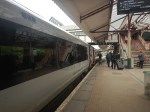
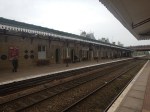



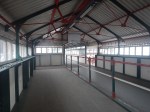
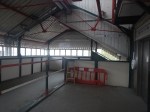




Note.
- The station is next to the Racecourse Ground, which is the home of Wrexham A.F. C.
- I didn’t walk to the ground, but there can be few league grounds, in England, Scotland or Wales, that are closer to a station.
- There is a one train per hour (tph) service along the Borderlands Line to Bidston station on the Wirral Line.
- It is a well-equipped station with lifts, toilets and a cafe.
It was tastefully refurbished in the 1990s.
This Google Map shows the relationship between the Racecourse Ground and Wrexham General station.
It can’t be much for than about two hundred metres between the station and the ground.
 The Anonymous Widower