Government Probe Into How Derailed Freight Train Travelled 2.5 miles Along Overground Line
The title of this post is the same as rgis article on the Ham and High.
This is the introductory paragraph.
The government has launched an investigation into how a derailed freight train travelled 2.5 miles before the problem was flagged up to the driver.
The article gives some more details.
- The accident happened on Thursday 23rd of January.
- The train derailed near Wanstead Park station.
- The train finally stopped between Leyton Midland Road and Walthamstow Queens Road.
- The train was carrying construction from Barkingspoil to the landfill site at Calvert in Buckinghamshire.
The derailment caused a lot of damage as pictures and this paragraph in the article show.
Across the two and a half mile stretch, there are 39 new pieces of rail – each 216m long – that require replacing, as well as 5,300 concrete sleepers and 900 wooden sleepers.
Work to replace 10,000 tonnes of ballast will need to take place, as well as putting replacement timber into 10 bridges.
At least, as they have just relaid this section of railway for the Gospel Oak to Barking electrification, there will hopefully be no nasty surprises in the rebuilding process.
This map from carto.metro.free,fr shows the track layout between South Tottenham station in the West and Blackhorse Road station in the East.

Note the two crossovers either side of South Tottenham station, which are used to reverse the train between the two platforms.
I suspect that London Overground, wish there are crossovers at Blackhorse Road station, so that passengers could use the interchange with the Victoria Line.
But crossovers are expensive can cause operational problems.
At least, there are no crossovers in the section of track destroyed by the freight train.
Eurostar Confirms Start Date For Amsterdam – London Through Services
The title of this post is the same as that of this article on Railway Gazette.
Points made in the article include.
- A preview service ran on February 4th.
- Two services a day will run from Amsterdam Centraal to London from April 30th.
- Journey times will be around four hours.
- Through journeys from Rotterdam to London will be possible from May 18th.
- Tickets will be available from February 11th.
I’m fairly sure that after the success of the London to Amsterdam Centraal service, which will be four trains per day (tpd), by the end of this year and five tpd by the end of 2021, that this could be the start of something similar.
- Five tpd would mean a capacity of 4,500 passengers or about the same as eleven Ryanair 737 Max 8 aircraft.
- Four hours between city centres.
- Current prices for a trip this month are under fifty pounds or under ninety for Premium Economy.
As Paris has sixteen tpd and Brussels has seven tpd, I could see that five tpd will be increased.
- All London to Amsterdam Centraal services stop at Brussels to pick up passengers.
- I’m sure that a method will be found to allow Amsterdam Centraal to London trains to drop passengers at Brussels.
- If Rotterdam will get direct services, surely Antwerp and Schipol Airport should as well.
- Thalys between Paris and Amsterdam Centraal runs at 10 tpd.
- Thalys and Eurostar are merging and surely Eurostar between London and Amsterdam Centraal and Thalys between Paris and Amsterdam Centraal should be combined between the Belgian and Dutch capitals.
Get the Brussels and Amsterdam Centraal route right, after the merger of Thalys and Eurostar and I can see the following.
- Two trains per hour (tph) between Amsterdam Centraal and Brussels.
- One tph starting in London and the other in Paris.
- Ability to pick up and set down International and domestic passengers at the intermediate stations; Antwerp, Rotterdam and Schipol Airport.
Surely, if a two tph service works between London and Edinburgh is highly successful, two tph between Brussels and Amsterdam Centraal would be the same.
The same philosophy could then be applied to the London/Paris routes via Brussels to Cologne/Frankfurt.
- Eurostar has stated it wants to serve the two German cities.
- Thalys runs services between Paris and Dortmund via Brussels, Liege, Cologne and Essen.
- The Thalys frequency between Paris and Cologne is five tpd.
The London and Paris services could combine to run a joint service into Germany.
- Destinations could be Cologne, Dortmund and Frankfurt with stops at Liege and Aachen.
- London and Germany could probably sustain the currently proposed Amsterdam frequency of five tpd.
I’m looking forward to taking a direct train from London to Cologne.
Investors Hit The Gas On Hydrogen Producers
The title of this post is the same as that of this article on the FT.
The sub headline is.
Hydrogen producers leap on hopes of fossil fuel death.
The article then shows three share price graphs for ITM Power, PowerCell and Ballard Power Systems.
All prices are rising steeply.
A a small investor in the first company, I am pleased and I certainly got that call right!
Note that, the companies are British, Swedish and Canadian respectively.
Batteries On Class 777 Trains
In this article on Railway Gazette, which is entitled Merseyrail Class 777 arrives in Liverpool, there is this sentence.
There is space under one vehicle to house a battery weighing up to 5 tonnes within the axleload limit.
This matter-of-fact sentence, draws me to the conclusion, that these trains have been designed from the start to allow future battery operation.
Batteries are not an add-on squeezed into a design with great difficulty.
Battery Capacity
Energy densities of 60 Wh/Kg or 135 Wh/litre are claimed by Swiss battery manufacturer; Leclanche.
This means that a five tonne battery would hold 300 kWh.
Note that Vivarail find space for 424 kWh in the two-car Class 230 train, I wrote about in Battery Class 230 Train Demonstration At Bo’ness And Kinneil Railway, so it would appear that Stadler aren’t being over ambitious.
Kinetic Energy Of A Full Class 777 Train
The weight of a full Class 777 train is calculated as follows.
- Basic empty weight – 99 tonnes
- Battery weight – 5 tonnes
- 484 passengers at 80 Kg – 38.72 tonnes
Which gives a total weight of 143.72 tonnes.
Intriguingly, the weight of a current Class 507 train is 104.5 tonnes, which is 500 Kg more than an empty Class 777 train with a battery!
If these weights are correct, I suspect Stadler have used some very clever lightweight design techniques.
For various speeds, using Omni’s Kinetic Energy Calculator, this weight gives.
- 30 mph – 3.6 kWh
- 40 mph – 6.4 kWh
- 50 mph – 10.0 kWh
- 60 mph – 14.4 kWh
- 70 mph – 19.5 kWh
- 75 mph – 22.4 kWh
Note.
- The average speed between Bidston and Wrexham General stations on the Borderlands Line is under 30 mph
- The operating speed on the Wirral Line is 70 mph
- The operating speed on the Northern Line is 60 mph
- The maximum speed of the trains is 75 mph.
Every time I do these calculations, I’m surprised at how low the kinetic energy of a train seems to be.
How Small Is A Small Battery?
One battery doesn’t seem enough, for a train designed with all the ingenuity of a product with quality and precision, that is designed to out-perform all other trains.
This is another paragraph from the Railway Gazette article.
According to Merseytravel, ‘we want to be able to prove the concept that we could run beyond the third rail’. By storing recovered braking energy, the batteries would help to reduce power demand and the resulting greenhouse gas emissions. All of the Class 777s will be fitted with small batteries to allow independent movement around workshop and maintenance facilities.
I am not quite sure what this means.
It would seem strange to have two independent battery systems in one train.
I think it is more likely, that the smaller battery can be considered the primary battery of the train.
- After all in the depot, it looks after the train’s power requirement.
- Does it also handle all the regenerative braking energy?
- Is it used as a secondary power supply, if say the power is low from the electrification?
- Could it be used to move the train to the next station for passenger evacuation in the event of a power failure?
I wonder if the power system is a bit like the average battery-powered device like a lap-top computer, smart phone or hybrid car.
- The electrification and the regenerative braking charges the battery.
- The battery provides the traction and hotel power for the train.
When the five tonne battery is fitted, does the train’s control system move power between the two batteries to drive the train in the most efficient manner?
I’ll return to factors that define the size of the small battery.
The small battery must be big enough for these purposes.
- Handling regenerative braking at the operating speed.
- Recovering a full train to the next station.
- Keeping a train’s systems running, during power supply problems.
- Moving a train around a depot
As the lines leading to depots are electrified, the train can probably enter a depot with a battery fairly well-charged.
As the new Class 777 trains have a maximum operating speed of 75 mph, I would suspect that the small battery must be able to handle the regenerative braking from 75 mph, which my calculations show is 22.4 kWh with a full train. Let’s call it 30 kWh to have a reserve.
Using Leclanche’s figures, a 30 kWh battery would weigh 500 Kg and have a volume of just under a quarter of a cubic metre (0.222 cubic metre to be exact!)
I suspect the operation of the small battery through a station would be something like this.
- As the train runs from the previous station, the power from the battery will be used by the train, to make sure that there is enough spare capacity in the battery to accommodate the predicted amount of energy generated by regenerative braking.
- Under braking, the regenerative braking energy will be stored in the battery.
- Not all of the kinetic energy of the train will be regenerated, as the process is typically around eighty percent efficient.
- Whilst in the station, the train’s hotel services like air-conditioning, lights and doors, will be run by either the electrification if available or the battery.
- When the train accelerates away, the train’s computer will use the optimal energy source.
The process will repeat, with the battery constantly being charged under braking and discharged under acceleration.
Lithium-ion batteries don’t like this cycling, so I wouldn’t be surprised to see dome other battery or even supercapacitors.
A Trip Between Liverpool and Wrexham Central in A Class 777 Train With A Battery
The train will arrive at Bidston station with 300 kWh in the battery, that has been charged on the loop line under the city.
I will assume that the train is cruising at 50 mph between the twelve stops along the twenty-seven and a half miles to Wrexham Central station.
At each of the twelve stops, the train will use regenerative braking, but it will lose perhaps twenty percent of the kinetic energy. This will be two kWh per stop or 24 kWh in total.
I usually assume that energy usage for hotel functions on the train are calculated using a figure of around three kWh per vehicle mile.
This gives an energy usage of 330 kWh.
But the Class 777 trains have been designed to be very electrically efficient and the train is equivalent in length to a three-car Class 507 train.
So perhaps a the calculation should assume three vehicles not four.
Various usage figures give.
- 3 kWh per vehicle-mile – 247.5 kWh
- 2.5 kWh per vehicle-mile – 206 kWh
- 2 kWh per vehicle-mile – 165 kWh
- 1.5 kWh per vehicle-mile – 123.8 kWh
- 1 kWh per vehicle-mile – 82.5 kWh
Given that station losses between Bidston and Wrexham Central could be around 24 kWh, it looks like the following could be possible.
- With a consumption of 3 kWh per vehicle-mile, a Class 777 train could handle the route, but would need a charging station at Wrexham Central.
- If energy consumption on the train could be cut to 1.5 kWh per vehicle-mile, then a round trip would be possible.
It should also be noted that trains seem to do a very quick stop at Wrexham Central station of just a couple of minutes.
So if charging were to be introduced, there would need to be a longer stop of perhaps eight to ten minutes.
But the mathematics are telling me the following.
- The Class 777 train has been designed to weigh the same empty as a current Class 507 train, despite carrying a five tonne battery.
- If power consumption can be kept low, a Class 777 train with a battery can perform a round trip from Liverpool to Wrexham Central, without charging except on the electrified section of line between Liverpool and Bidston.
- Extra stops would probably be possible, as each would consume about 2 kWh
I feel that these trains have been designed around Liverpool to Wrexham Central.
Conclusion
Wrexham Central here we come!
Other routes are possible.
- Hunts Cross and Manchester Oxford Road – 27 miles
- Ormskirk and Preston – 15 miles
- Headbolt Lane and Skelmersdale – 6 miles
- Ellesmere Port and Helsby – 5 miles
- Kirkby and Wigan Wallgate – 12 miles
Chargers will not be needed at the far terminals.
Thoughts On Very Light Rail
The article on Railway Gazette International, which is entitled Very Light Rail Research On Track, a list of thirty-five rail lines, that could use the technology are given.
These are some of my thoughts.
Multiple Working
These are some examples of branch lines, where very light rail my be used.
- Cromer to Sheringham – 226,000
- Liskeard to Looe – 118,000
- St Erth to St Ives – 750,000
- Twyford to Henley-on-Thames – 771,000
- Maidenhead to Marlow – 300,000
- Slough to Windsor & Eton Central – 2,024,000
- Watford to St Albans Abbey – 167,000
Note.
- The first station is on the main line and the second is the terminus of the branch line.
- The figure is the number of passengers, who used the terminal station in 2018-2019
The numbers have quite a range and I’m sure that a single eighteen metre vehicle carrying 56 seated and 60 standing passengers, will not be big enough, even if it runs at a frequency of four trains per hour (tph) on some routes.
So I am convinced that the vehicles must be able to work in multiple.
One picture on this page on the Transport Design International web site, shows the vehicle with a coupler.
Increasing Passenger Numbers, Festivals And Sporting Events
Forecasting passenger numbers on a new rail service, is a very inexact science. I talk about London Overground Syndrome, which seems to occur regularly.
There are also the problems of festivals and sporting events of various kinds, where perhaps for a week or so traffic is much higher.
Extra very light rail vehicles can be added to the trains as required or even drafted in at times of high demand.
Automatic Coupling And Uncoupling
They must also be able to couple and uncouple quickly and automatically, as needs vary throughout the day and to rescue a stranded unit.
Transit Mode
Suppose a large event, like say the Open Golf was taking place near a station with an inadequate train service and for the duration of the event, a dozen very light rail vehicles were to be running a shuttle to the nearest major rail hub.
A method must be developed to bring the vehicles to the event. I suspect Rail Operations Group, who are the experts in rolling stock movements would have a simple solution, perhaps by using a diesel locomotive to tow them to and from central warm storage.
It could probably be argued, that a capability to build temporary stations is needed.
Automation
These very light rail vehicles are prime candidates for automation.
I can envisage a lot of routes being run automatically, with the driver in a supervisory role, very much as the Victoria Line has been run since it opened in 1968.
- At each station, when they had ascertained that the passengers had all left and boarded the train safely, they would close the doors and activate a control to start the vehicle.
- It would then move to the next station and stop in the right place.
- The doors would then be opened automatically or by action of the crew.
Dear old Vicky has been doing this for over fifty years!
I also think, that with automation and CCTV, a system could be devised, where the driver stays in one cab all the time.
This would speed up operations.
Procedures For Running On Shared Tracks With Freight, Private And Heritage Railways
These suggested routes for very light rail are either freight, private or heritage railways.
- Bodmin Parkway to Bodmin General
- Kidderminster to Stourport
- Ashington to Blyth
- Sheffield to Stocksbridge
- Paignton to Brixham
- Totton to Hythe
I’m sure procedures can be devised, so that all traffic can run safely.
Old And New At Ipswich
I took these pictures at Ipswich, yesterday.



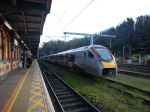


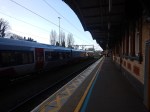


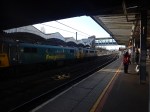
There seemed to be a lot of old Class 86 locomotives and new Class 755 trains around.
First Time On A Saturday
Yesterday, after a dreadful match at Ipswich, I came back to London in a new Class 745 train.
I have a feeling, this was the first time that the trains have been running with passengers on a Saturday.
They really are seriously good trains!
I shall be interested to see how the number of passengers increase between London and Norwich via Chelmsford, Colchester and Ipswich.
Economics Of Very Light Rail Between Cromer And Sheringham
In Very Light Rail Research On Track, I reviewed an article of the same name on Railway Gazzette International.
The article ,mentioned that the route between Cromer and Sheringham stations could be run by very light rail vehicles.
Very Light Rail Vehicles
Very Light Rail vehicles are defined as weighing less than a tonne per linear metre.
- Warwick Manufacturing Group (WMG) found the most efficient propulsion system, was diesel-electric hybrid with battery storage. Was it nicked from an LEVC taxi?
- An eighteen metre long vehicle will hold 56 seating and 60 standing passengers.
- Will turn round times at the end of a shuttle route be reduced to perhaps two minutes as the driver only has to walk eighteen metres?
- The article doesn’t give any speed estimates for very light rail vehicles. But I suspect 50-60 mph would be possible, as this is the operating speed of a Class 399 tram-train and very much the speed of typical single-decker buses.
If seated passengers weigh 90 kilograms with baggage, bikes and buggies and standing passengers perhaps 75 kilograms, this gives a vehicle weight of around 27.5 tonnes.
I estimate that a three-car Class 755 train, with the same passenger load would weigh around 108 tonnes or about 98 tonnes empty, which is about a tonne and a half per linear metre. A single-car Class 153 train is about 1.8 tonnes per linear metre.
Very light rail vehicles appear to be considerably lighter.
Cromer And Sheringham Line
This section of the Bittern Line can be considered a branch of the main section of the line, which links Norwich and Cromer stations.
- It is single-track.
- There is a simple cross-over outside Cromer station
- It is just over 3.5 miles long.
- Sheringham station is a single platform, that has recently been extended to take four-car Class 755 trains.
- The only intermediate station is West Runton, which is a single platform.
- Cromer station has two platforms.
- Trains take eight minutes to go between Sheringham and Cromer stations.
- The average speed of the train between Sheringham and Cromer is just 26 mph.
- The maximum speed of the route is given in Wikipedia as 75 mph. As it is fairly straight it could probably be improved.
As four trains per hour (tph) between Cromer and Sheringham would take a total of 64 minutes, it would seem to be impossible to run such a schedule with current trains, given that the driver would have to change ends eight times in an hour.
Cromer Station
This Google Map shows the two-platform Cromer station.

Note the Northern platform, which is directly connected to the route to Sheringham.
A Split Service
Operation of a split service could be as follows.
- A shuttle using the Northern platform 2 to Sheringham via West Runton.
- A service to Norwich using the Southern platform 1.
I suspect to save signalling costs, that the Sheringham service could be run for most of the time under the principle of one-train on the line.
Could Four tph Run Between Cromer And Sheringham?
I suspect that a driver in running shoes could squeeze four tph out of a three-car Class 755 train.
Consider.
- Three-car trains would save 160 metres of walking over four-car trains.
- The Class 755 trains are designed for quick stops and have fast acceleration.
- Versions of the trains are to be fitted with batteries.
- Two crew working together with some automation might mean that the driver doesn’t have to change ends.
- Three tph would be easier, as it would give more time for the driver to change ends.
- Automation with the crew having an override could surely be used.
I don’t believe it would be impossible for a system of operation for this shuttle to be run using a Class 755 train.
Certainly, three tph is easier, but four tph is much more passenger friendly.
Could Two tph Run Between Cromer And Norwich?
Currently, trains take fifty-seven minutes between Norwich and Sheringham, which means that two tph would be very complicated, but not impossible.
Running the Cromer and Sheringham section independently, would mean that the time between Cromer and Norwich could be as low as forty-six minutes.
For a start, this means that a single train could work an hourly service between Cromer and Norwich.
It probable means that two trains could run a two tph service, provided that they could pass at a suitable place, where there are two tracks, as at North Walsham or to the South of Hoverton & Wroxham station.
Possible Service Patterns
I think the ideal service pattern would be something like this.
- Two tph between Cromer and Norwich.
- Three or four tph between Cromer and Sheringhan.
Currently, there is an hourly service along the whole route, which needs two trains to operate.
Two tph to and from Norwich and a shuttle would only need one extra train.
Savings With Very Light Rail
There are various ways cost savings can be made.
Cost Of The Vehicle
Leasing a single very light rail vehicle will be much less than leasing even an ancient one-car Class 153 train.
Obviously, for a reliable service, a spare will be needed, if a company had several routes that could be developed using very light rail, then the spare could be shared.
It looks like Greater Anglia are also thinking about other routes, so this may be an economic proposition.
One Train On Line Operation
Cromer and Sheringham could be run with a single train shuttling between the two stations and the points set, so that no other train could use the track.
This must surely reduce signalling costs.
Track Access Charges
Lighter trains have lower track access charges.
This could be a substantial saving, especially if there were four tph in both directions.
Cost Of New Infrastructure
Some routes that will be proposed for very light rail operation will need bridges and embankments to be built.
If the maximum weight of the vehicle is lower, this must surely reduce costs, as lighter structures could be used.
Fast Turnround Times
One of the limiting factors in providing frequent services over a short branch line is the time it takes to turn the train at each end of the route.
But in a very light rail vehicle, which is only eighteen metres long, the driver can probably change cabs in under two minutes, which is of the order of the time it takes to load and unload the train with passengers.
The only high frequency shuttle service over a short route in the UK is the one between Stourbridge Junction and Stourbridge Town stations.
- The route is just 0.8 of a mile long.
- It is served by Class 139 trains, which are just 8.7 metres long and can carry 20–25 seated, 30–35 standing passengers.
- Trains run every ten minutes
- The turnround time appears to be about two minutes
It is reputed to be the shortest operational branch line in Europe.
I can’t see why, that in a well-designed very light rail vehicle that is only twice the length of a Class 139 train, that the turnround time could not be the same time of two minutes.
It probably can’t be any shorter, in case several people turn up in wheel-chairs at the same time.
If we look at the Cromer and Sheringham route, I can see the following timing being possible for a well-designed shuttle train on the route.
- Cromer to West Runton – two minutes
- Stop at West Runton – one minute
- West Runton to Sheringham – two minutes
- Turnround at Sheringham – two minutes
- Sherington to West Runton – two minutes
- Stop at West Runton – one minute
- West Runton to Cromer – – two minutes
- Turnround at Cromer – two minutes
Note.
- The round trip would take fourteen minutes.
- I have assumed that the train is running at around 50-60 mph.
- The West Runton stop could be by request.
- There is only one train on the route at all times.
The round trip could be scheduled at four tph.
It must surely be an affordable way to provide a service.
I would also do the following.
- As at Stourbridge have a second train on standby, to guarantee a reliable service, rescue a failed train and perhaps double the capacity at busy times.
- Services between Cromer and Sheringham would be free.
- Cromer, West Runton and Sheringham would be part of a group called Cromer stations, like Birmingham stations and Manchester station. So to book to any of the stations, you’d buy a ticket to Cromer stations.
If the latter ideas didn’t attract passengers then nothing would.
Greater Anglia would get their revenue on the onward services from Cromer.
Could The Cromer And Sheringham Shuttle Be Extended To Holt?
If the train crosses the level crossing at Sheringham station, the track extends all the way to Holt on the North Norfolk Railway.
This Google Map shows the two stations at Sheringham on either side of the level crossing.
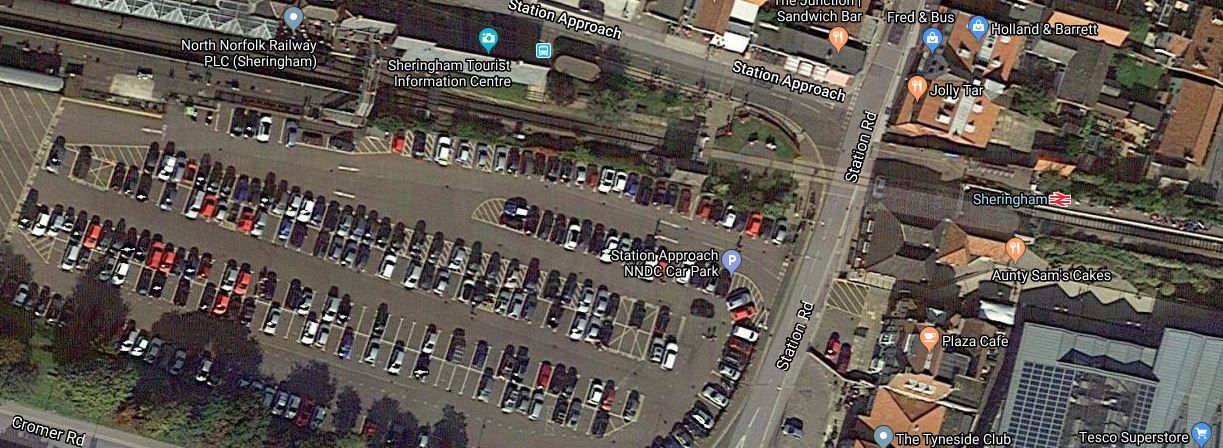
The National Rail station is on the East side, with the heritage railway on the West.
Some heritage railways are certified to be able to run scheduled services to and from the main rail network.
This may even be possible here, to allow a service between Cromer and Holt.
Although the North Norfolk Railway seem to run a frequent timetable, I’m sure if there was the necessary coming together, that a service that was beneficial to all parties could be arranged.
Conclusion
Very light rail could be very exciting!
World’s Largest Green Hydrogen Plant Begins Operation In Austria
The title of this post is the same as that of this article on Recharge.
This is the subtitle, which says it all.
The 6MW facility in Linz, running Siemens electrolysers, will provide clean H2 for steel production.
Steel-making is a large source of carbon-dioxide emissions and this is said about how hydrogen can be used in the process.
In light of global climate targets, Voestalpine is currently investigating the practicality of a hybrid technology to bridge between the existing coke/coal-based blast furnace route and electric arc furnaces powered with green electricity partly generated using green hydrogen,” says Voestalpine. “If economically feasible, from today’s perspective this option would reduce the group’s CO2 emissions by around a third sometime between 2030 and 2035.
I wouldn’t be surprised to see steel-makers beat that target, especially as renewable energy production and hydrogen electrolyser capacity increases.
The article also details two other large green hydrogen production electrolysers.
A 10MW PEM electrolysis plant, REFHYNE, is under construction at Shell’s Rheinland refinery in Wesseling, Germany, and is due to be completed in the second half of 2020, while a 30MW pilot — part of a 700MW project — is expected to be up and running in northwest Germany by 2025.
There’s more about REFHYNE on their web site.
This is the introduction on the web site.
The REFHYNE project is at the forefront of the effort to supply Clean Refinery Hydrogen for Europe. The project is funded by the European Commission’s Fuel Cells and Hydrogen Joint Undertaking (FCH JU) and will install and operate the world’s largest hydrogen electrolyser the Shell Rhineland Refinery in Wesseling, Germany.
The plant will be operated by Shell and manufactured by ITM Power. The electrolyser has a peak capacity of 10 MW (megawatts) and will be able to produce approximately 1,300 tonnes of hydrogen per year. This decarbonised hydrogen can be fully integrated into refinery processes including the desulphurisation of conventional fuels
Hydrogen is coming.
It could be coming in a big way to the UK, as we have the capability to generate gigawatts of off-shore wind power and ITM Power have the world’s largest PEM electrolyser factory in Rotherham.
 The Anonymous Widower