Werrington Dive-Under – 8th September 2021
I had gone to Peterborough to take pictures of the Werrington Dive Under, from a train between Peterborough and Spalding.
I took these pictures going Peterborough and Spalding.



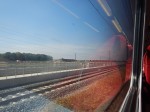
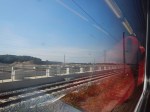
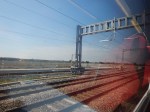







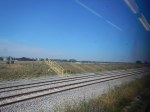

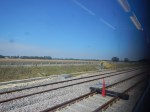
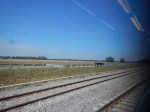

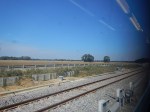
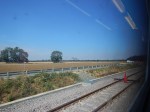
My train between Peterborough and Spalding stations took the following route.
- The Class 158 train was a great improvement on the Class 153 train, I took in From Peterborough To Lincoln in 2015.
- It started in Platform 1b at Peterborough station.
- It then crossed over to the Down Fast line to go North.
- Finally, it slowed to cross the Up Fast and Up Slow lines to go towards Spalding.
- It is surely not an efficient and the safest way to run a railway.
Think about turning right on a busy dual carriageway, by going through a gap in the central reservation.
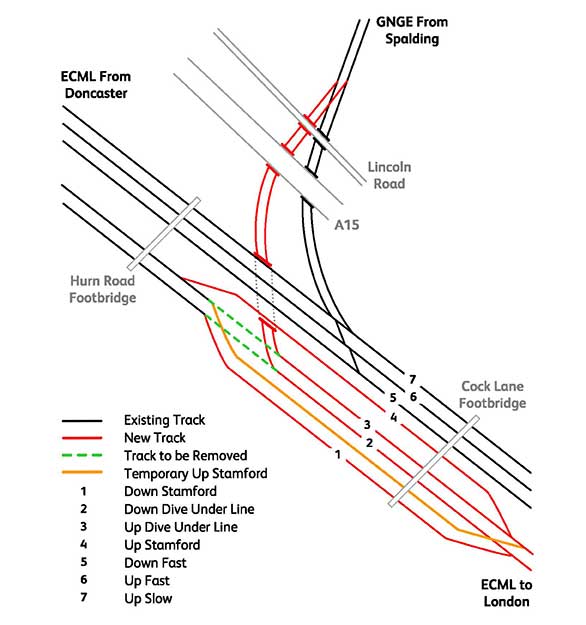
This diagram shows the new track layout of Werrington Junction.
Note.
- My train was going North on Line 5, so it had to use the two crossovers to get to the lines to Spalding.
- The Up Stamford (Line 4) can be seen in the pictures after the two lines have disappeared into the dive-under.
It’s a pity the first of my pictures aren’t better, but the sun was in the wrong direction.
I took these pictures going Spalding and Peterborough.


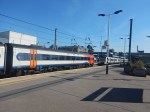
Note.
- The train used the Up Slow (line 7) to go between Werrington Junction and Peterborough station.
- The last two pictures show the Class 158 train in Platform 1b at Peterborough station.
At least this time, the train didn’t cross the Fast lines.
Will Passenger Trains Use The Werrington Dive-Under?
I’m very sure they will!
- On the Western side of Peterborough station, there are four platforms 4 to 7 and an avoiding line for freight trains going North.
- It appears that all of these lines can access the Down Stamford (Line 1) and Up Stamford (Line 4) to go to Werrington Junction.
- At Werrington Junction, trains either take the route to Stamford or use the dive-under for Spalding.
It looks to me, that if the trains to and from Spalding terminated in one of the Western platforms, then they could use the Stamford Lines to access the dive-under and they wouldn’t cross the Fast Lines of the East Coast Main Line on the flat.
Greengauge 21’s Suggestion, That Thameslink Be Extended To Spalding
In the study by Greengauge 21, which is entitled Connecting East Lincolnshire, this is said.
As noted the Spalding-Peterborough line should be a strong candidate for electrification because of its freight potential, and if so it could also accommodate an extension of Thameslink services from London and the South East to Spalding where interchange would be made with a Spalding–Boston–Louth–Grimsby express bus using the A16.
This proposal may be possible, if instead of using the dive-under, the Thameslink trains were able to use the Up Slow (line 7) to go both ways between Werrington Junction and Peterborough station.
As in the near future, full digital signalling will apply through Peterborough, this shouldn’t be a problem.
Electrification Of The Werrington Dive-Under?
Consider.
- There is a gap of around ninety miles in the freight route between the comprehensive electrification at Peterborough and Doncaster stations on the Great Northern and Great Eastern Joint Line (GNGE).
- There are dozens of level crossings.
- The route goes through the centre of Lincoln, where there are two level crossings.
There are two ways of decarbonising the route.
- Full electrification
- Using hydrogen-powered freight locomotives.
Both solutions have their proposers and opponents.
I favour hydrogen-electric hybrid locomotives, that can use electrification where it exists, as it reduces the infrastructure cost on overbridges and in freight depots.
- Hydrogen-powered locomotives have a go-anywhere capability.
- There are also a lot of routes in the UK, where freight trains currently run and it would take a long time to electrify all of them.
- As rail freight companies would have to purchase a lot of new locomotives, I can see them opting for hydrogen-electric hybrid locomotives.
But there are others, who think the only way is full electrification.
London And Lincolnshire By Electric Train
Passenger trains are not a problem, as Alstom, CAF, Hitachi, Stadler and others have demonstrated battery ranges of over fifty miles.
LNER are currently serving Lincoln from London using Hitachi bi-mode Class 800 trains, which use diesel for the 16.5 miles between Newark and Lincoln.
Hitachi’s proposed Intercity Tri-Mode Battery Train, is described in this Hitachi infographic.

I believe it would be possible to handle London and Lincoln via Newark without using diesel.
It also looks like it will be possible to convert the LNER’s current Class 800 trains into Intercity Tri-Mode Battery Trains.
But I doubt their range would sufficient to go between London and Lincoln via Peterborough, Spalding and Sleaford, unless there were to be a charging system at Lincoln.
But surely though, the ideal train for Lincolnshire would be a train that ran between London and Cleethorpes via Peterborough, Spalding, Sleaford, Lincoln, Market Rasen and Grimsby Town.
- Peterborough and Lincoln is 56.9 miles.
- Lincoln and Cleethorpes is 47.2 miles.
- The service could be timed for a convenient interchange with the other Lincolnshire train services.
- The service could run perhaps a few times per day.
With charging systems at Lincoln and Cleethorpes, similar to the Hitachi ABB Power Grids system that I described in Solving The Electrification Conundrum, this service could be run by an Intercity Tri-Mode Battery Train.
Peterborough And Lincolnshire By Electric Train
If you could run between Peterborough and major places in Lincolnshire, as part of a London service, I also suspect that a well-designed Peterborough and Lincolnshire service could serve Lincolnshire almost equally well.
It might use Platform 5 to terminate at Peterborough.
- This is paired with Platform 4, which is the platform generally used by LNER trains from London, so there would be a cross-platform interchange going North.
- Going South, there would be a need to use the footbridge.
How many people would use an hourly cross-TransLincs service?
The East Coast Main Line And The A14
I finally managed to get pictures of the new route of the A14 as it crosses over the East Coast Main Line.

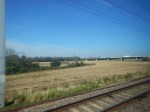

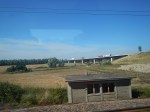
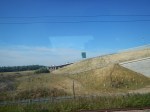
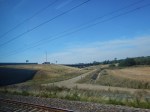
This Google Map shows the crossing from above.
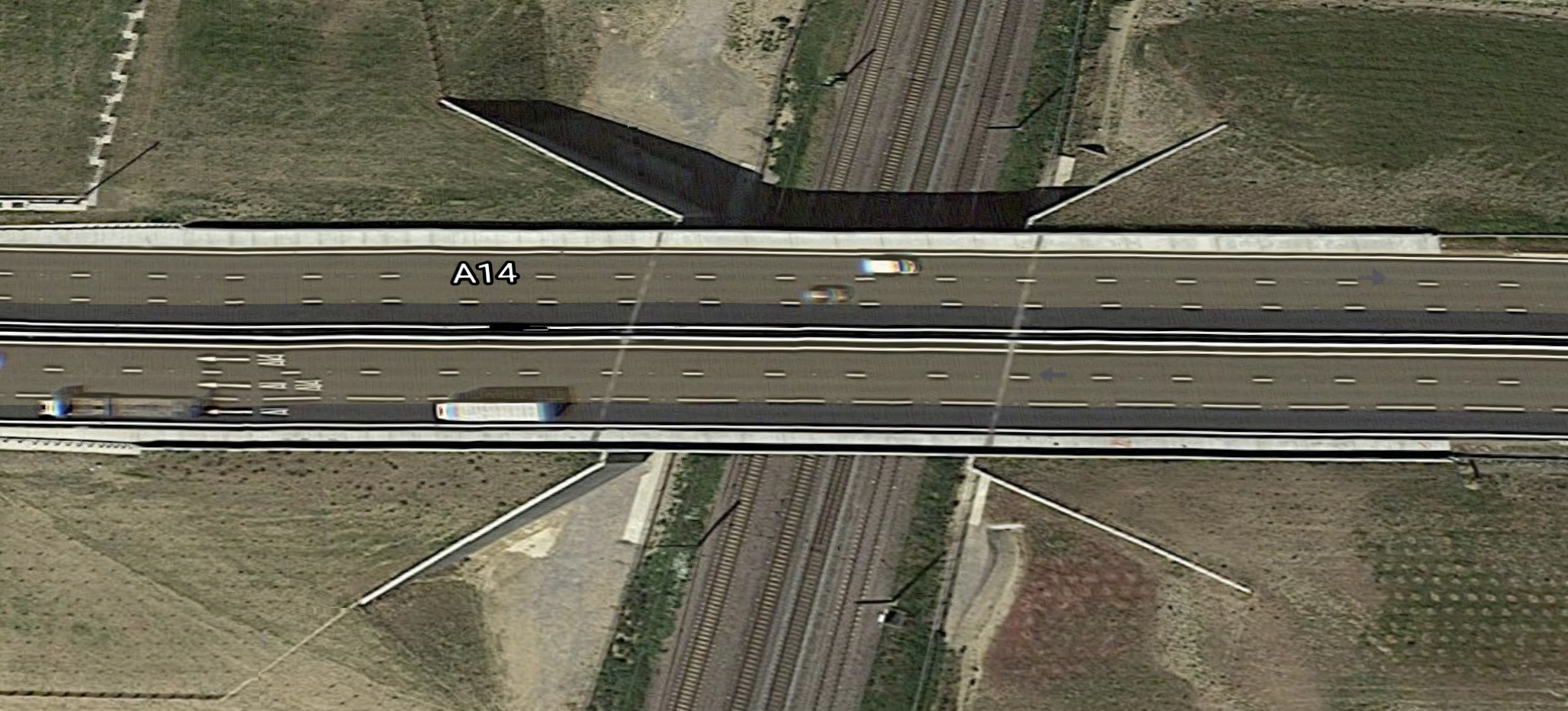
I do wonder, why in the 1990s, when they created the A14, they didn’t do a proper job?
But then history shows that Governments don’t seem to get East-West links in the UK right.
- Road and rail links across the Pennines are inadequate.
- Only recently have Edinburgh and Glasgow been properly connected by rail.
- The electrification of the Great Western Railway between London and Swansea has been an on-off project, that should have been done after electrification of the East Coast Main Line, before the team of engineers had been disbanded.
- Road and rail links to the port of Holyhead were ignored for years and could be improved again.
- The Varsity Line between Oxford and Cambridge was recommended by Beeching to be kept, but Harold Wilson closed it and now we are recreating it.
Is it because none of these routes are of much importance for politicians and civil servants living in London?
Azumas Everywhere!
I arrived in Peterborough twenty-five minutes late to the site of Azumas everywhere.



Something had obviously gone very wrong. Passengers for Inverness were even being moved from one train in Platform 2 to another in Platform 4.
Was this chaos and my post called Was The Queen’s Locomotive Acting As A Thunderbird? connected?
With hindsight and a bit of help from Real Time Trains, I think they probably were?
Spalding Station – 8th September 2021
I’d only ever been through Spalding station a couple of times, but I’d never seen the station, so because I wanted to take some pictures of the completed Werrington Dive Under, I decided to take a train to the station today.
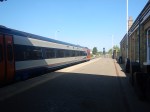
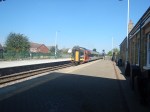
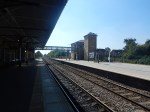
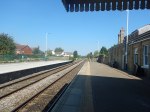
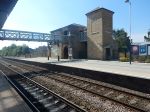
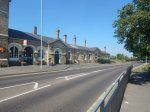


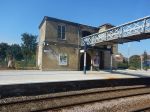
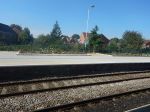

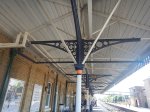
The quality of the station was a welcome surprise.
- It was opened in 1848.
- But it is a Grade II Listed Building.
- It has a very tasteful step-free footbridge totally in-keeping with the rest of the station.
- The Entrance Hall, which I didn’t photograph, was excellent.
I can only fault the station in that it lacks a café or better still a real ale pub. But there is a Sainsbury’s outside the door.
Greengauge 21’s Suggestion, That Thameslink Be Extended To Spalding
In the study by Greengauge 21, which is entitled Connecting East Lincolnshire, this is said.
As noted the Spalding-Peterborough line should be a strong candidate for electrification because of its freight potential, and if so it could also accommodate an extension of Thameslink services from London and the South East to Spalding where interchange would be made with a Spalding–Boston–Louth–Grimsby express bus using the A16.
This Google Map shows the station.
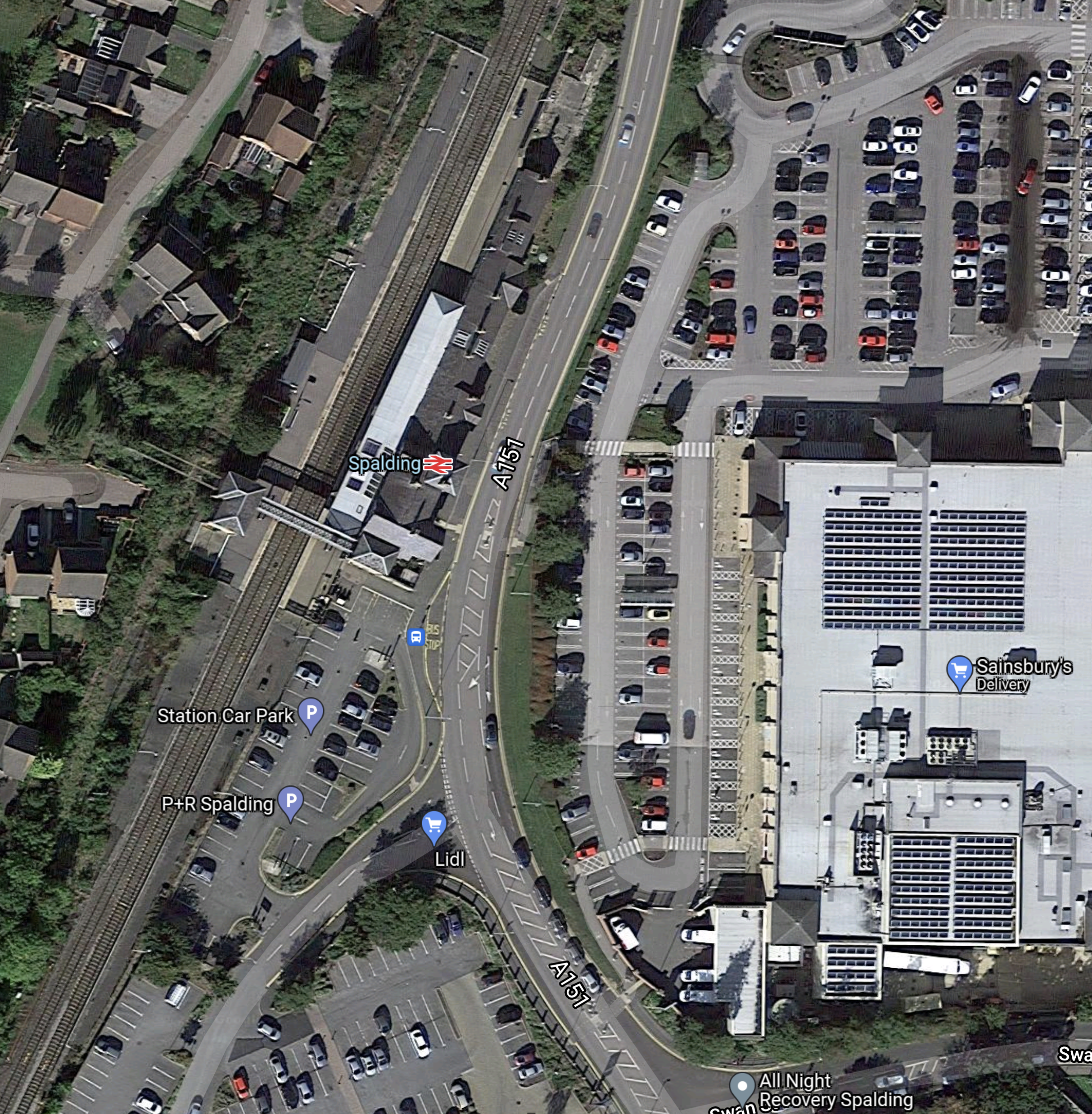
Note.
- The station only has forty-five parking spaces.
- I suspect the express bus could park outside the station.
- There is probably space to the North of the station for a turnback siding.
- Trains seem to take about 21 minutes to cover the 16.6 miles from Peterborough.
There certainly doesn’t seem to be anything that gives a great big No!
Arriving In Platform 0 At Kings Cross
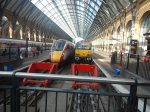
I’ve arrived in Kings Cross station hundreds of times, but today, when i came back from Spalding via Peterborough, it could have been the first time, that I arrived in Platform 0.
I took these pictures of the island between Platform 0 and Platform 1, which contains the InterCity 225.
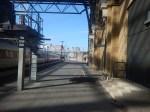
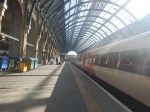
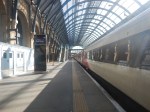



Note that it is a very long and wide platform.
I am getting more convinced that the answer to the question I asked in Is King’s Cross Station Ready For Parcel Trains?, is in the affirmative.
Was The Queen’s Locomotive Acting As A Thunderbird?
I took these pictures of 67006 Royal Sovereign at Kings Cross when I arrived in Platform 0 from Peterborough today at 15:45.
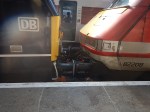
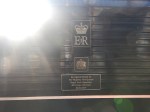


Note.
- Normally, 67006 is assigned to the Royal Train.
- The locomotive is in Platform 1.
- The Class 67 Locomotive was definitely coupled to the InterCity 225.
- It does appear that the next movement out of Platform 1 was a diesel-hauled empty coaching stock movement to Neville Hill Depot in Leeds at 19:40.
- It looks like the train arrived in Kings Cross at 12:55 from Skipton, nearly three hours late.
It does look as though the train was towed to London by the Queen’s Locomotive and then pushed all the way back to Leeds.
Connecting East Lincolnshire
The title of this post, is the same as that of this study by Greengauge 21.
The study goes through all the transport options in East Lincolnshire, comes to some interesting general conclusions, in addition to those specific to East Lincolnshire and then makes this recommendation.
We recommend putting in hand the studies to compare and select the best of the two ways identified here to use electrified net zero carbon public transport to meet East Lincolnshire’s future connectivity needs.
The two ways are.
Reopening the East Lincolnshire Railway
Reopening the East Lincolnshire Railway between Louth and Firsby and running these services.
- Skegness–Wainfleet–Boston–Sleaford–Grantham–Nottingham
- Louth–Wlloughby–Alford–Firsby–Boston–Donington–Spalding–Peterborough (and
thence potentially, London KX).
Note.
- There would be a mini-hub at Boston.
- There would be good connections to Lincolnshire’s InterConnect bus links.
I wrote about reinstating the East Lincolnshire Railway inBeeching Reversal – Firsby And Louth.
An Express Interurban Bus Alternative
The study describes this option like this.
A Louth–Boston–Spalding express bus, interchanging with the east west Nottingham–Skegness trains with timed
connections at a multi-modal hub at Boston and an improved hourly interval rail service onwards
from Spalding southwards.
One of their suggestions is to extend Thameslink to Spalding.
Russian Convoys
This article on Railway Gazette is entitled Five-Train Platoons To Operate With Virtual Coupling.
This is the first paragraph.
Russian Railways is planning to use platooning technology to operate flights of up to five freight trains next year using radio data exchange between locomotives to create a virtual coupling. The aims to reduce headways from 12 to 6 to 8 min, increasing capacity on congested sections of the Trans-Siberian main line.
As a Control Engineer, I must believe that if the Russians get the programming right, then it should work.
Similar techniques will probably be used with digital signalling in the UK and Europe, where each train is controlled by the signalling. But each train will probably have a driver.
The problem in Russia could also be the large number of ungated level crossings, which according to some I’ve met are prone to a lot of accidents, as drivers regularly chance it after too much vodka.
Ryanair Backs Away From Boeing Jet Order
The title of this post, is the same as that of this article on The Times.
These are the first two paragraphs.
Ryanair has ended talks to purchase tens of billions of dollars of Boeing jets amid a stand-off over the price.
The Irish budget airline had been in talks to buy as many as 250 planes of the 737 Max 10 model but said yesterday that the talks had collapsed.
But have Michael O’Leary and Boeing fallen out over hydrogen?
Consider.
- Many countries in Ryanair’s largest markets are aiming to go net carbon-free by 2050 or even earlier. Scotland is aiming for 2045.
- An airliner delivered today will still be flying twenty or even thirty years later.
- I believe that by 2030, small airliners up to thirty passengers will be zero-carbon.
In Could An A320 neo Be Rebuilt As A ZEROe Turbofan?, I came to this conclusion.
I very much feel that there will be a route to convert some or all of the A 320 neo aircraft to hydrogen power.
If Airbus can offer an airliner, that can be rebuilt as a hydrogen-powered plane that must change the economics of purchasing a fleet of airliners, which could be made worthless by worldwide carbon emission legislation.
Because the Boeing aircraft is a 1960s design with an aluminium airframe, I would doubt it is designed to be converted to hydrogen power.
All Change As First Class Ditched By New Intercity Rail Service
The title of this post, is the same as that of this article on The Times.
These are the first two paragraphs.
Rail bosses signalled the end of the first-class carriage today with plans for a new all-standard intercity train service between London and Edinburgh.
The new budget service will operate on the east coast mainline from October 25, with one-way fares starting from £14.90. In all, 60 per cent of single tickets will be below £30.
I find it interesting that The Times is making the lack of First Class, the most important point in the story.
In Thoughts On Seating In East Coast Trains’ New Class 803 trains, I looked at what the seats could be like and decided they could be generous with lots of tables given the number of seats and the size of the train.
The Times article confirms my analysis.
Having travelled to Liverpool a couple of years ago in Standard Class with two senior guys from Legal and General, I suspect that many business travellers who want to read and chat could turn to East Coast Trains from the airlines.
The article does give some previously-unknown information.
The Service Will Be Called Lumo
The name is unusual, but it is short, memorable and lumo.co.uk was available and is now up and under development as the East Coast Trains web site.
Lumo has also been used for an energy provider, which has now been merged into OVO Energy and is also a video game.
The Service Starts On October 25th
The times are still as I said in Thoughts On Seating In East Coast Trains’ New Class 803 trains, with London and Edinburgh services as follows.
King’s Cross and Edinburgh
- 05:45 – Arrives 10:10 – 4 hours 25 minutes – Stops at Stevenage
- 10:45 – Arrives 15:17 – 4 hours 32 minutes
- 12:18 – Arrives 16:41 – 4 hours 23 minutes – Stops at Stevenage
- 14:36 – Arrives 19:15 – 4 hours 39 minutes
- 20:18 – Arrives 00:46 – 4 hours 28 minutes
Edinburgh and King’s Cross
- 06:14 – Arrives 10:51 – 4 hours 37 minutes
- 09:11 – Arrives 13:48 – 4 hours 37 minutes
- 11:14 – Arrives 15:46 – 4 hours 32 minutes
- 16:12 – Arrives 20:47 – 4 hours 35 minutes – Stops at Stevenage
- 19:58 – Arrives 01:05 – 5 hours 7 minutes – Stops at Stevenage
Note.
- Times appear to be in-line with those of LNER.
- East Coast Trains’ objective of arriving by 10:00 is not met.
- Paths exist for East Coast Trains from the 7th June.
I got these times from Real Time Trains.
The Lumo Web Site
I have also tried to book a ticket on their web site.
They accept Railcards and I was able to get a one-way ticket for £13.30. But as the site doesn’t appear to be complete, I didn’t buy the ticket.
But if you can go between London and Edinburgh for £13.30, that is certainly good value.
The First Group Press Release
This Press Release from First Group gives more details and was the source of The Times article.
 The Anonymous Widower