BW Ideol, ABP To Explore Serial Production Of Floating Wind Foundations At Port Talbot
The title of this post, is the same as that of this article on offshoreWIND.biz.
This is the sub-heading.
BW Ideol and Associated British Ports (ABP) have signed a memorandum of understanding (MOU) that will see the manufacturer of concrete floating wind foundations and ABP investigating the feasibility of serial production at Port Talbot. The MOU has been signed in preparation for the Celtic Sea leasing round, BW Ideol said on Monday (11 December).
These two paragraphs outline the plans of BW Ideol and ABP have for Port Talbot.
According to the company, Port Talbot is the only Celtic Sea port with the scale and technical capabilities to fully maximise the Celtic Sea supply chain opportunity and is ideally located as a manufacturing base since it lies 120-140 kilometres from the floating offshore wind areas outlined by The Crown Estate for the upcoming leasing round.
The news on the MOU between ABP and BW Ideol comes shortly after ABP announced plans to invest around GBP 500 million (approximately EUR 573 million) to upgrade a site in Port Talbot and turn it into a major floating offshore wind hub.
This Google Map shows Port Talbot Port.

Note.
- It also looks like there is a Heidelberg Cement facility at the South side of the port.
- Port Talbot also has a Tata steelworks.
- The railway and the M4 Motorway are nearby.
- There’s certainly a lot of water.
The port appears well-placed for raw materials and there is quite a bit of free space to build and launch the concrete floaters.
This page on the BW Ideol web site describes their Floatgen demonstrator.
The first section is headed by BW Ideol’s First Floater In Operation, where this is said.
Built around a European consortium of 7 partners, Floatgen is a 2MW floating wind turbine demonstrator installed off the coast of Le Croisic on the offshore experimentation site of the Ecole Centrale de Nantes (SEM-REV). This project is being supported by the European Union as part of the FP7 programme. Floatgen is France’s first offshore wind turbine. 5 000 inhabitants are supplied with its electricity.
It looks like it is or almost is a proven system.
The page talks of two large benefits.
- Innovation at all levels.
- The highest local content of any floating wind turbine.
For the second, the following is said
In comparison to other steel floating foundations, which are imported from abroad, the use of concrete for BW Ideol’s floating foundation allows the construction to be located as close as possible to the deployment site. Construction at the Saint-Nazaire port was therefore a natural and optimal solution and has created a lot of local content. Additionally, the mooring system was manufactured by LeBéon Manufacturing in Brittany. For the majority of all other components or logistical activities, the Floatgen partners have also opted for suppliers within the Saint-Nazaire region.
Note.
- Will ABP and BW Ideol use a similar philosophy at Port Talbot?
- Will low-carbon concrete be used to construct the floaters?
I can certainly see the logic of BW Ideol and ABP getting together at Port Talbot.
A December Treat For £3.70
T am not a great person for sugary treats. But I do like strawberries and regularly buy a punnet, when they are in season, cut the green off and eat them one after another.
But in my seventy-six years, I’ve never eaten English strawberries in England in December, although I must have eaten strawberries in December in warmer climes, like Australia, Gambia or South Africa
Until today, when I bought this punnet in Marks and Spencer on Moorgate in the City of London.





Note.
- The strawberries are from Dyson Farming in Lincolnshire.
- The strawberries are the fourth item in the bill in the first picture.
- The label says that they are grown by innovative methods for outstanding depth of flavour.
- They look as if they’ve been individually vacuumed.
I’ll post again when I’ve eaten them!
Energy Storage Outranks Solar In Company Investment Plans
The title of this post, is the same as that of this article on Reuters.
These two paragraphs outline the findings of a survey.
Rising renewable energy capacity and the deployment of electric vehicles will make energy storage the priority technology for energy transition investments in the coming years, according to the 2023 Reuters Events Energy Transition Insights report.
Batteries are spearheading growth in energy storage but a wider range of technology types will be deployed commercially in the coming years.
580 energy professionals were surveyed in Q1 2023.
I am not surprised at these findings, as storing surplus renewable energy must be beneficial.
My Alcohol-Free And Gluten-Free Real Ale Has Arrived
I have been drinking Adnams Ghost Ship 0.5% beer for some years now.
It should be noted that as a coeliac, I have to drink gluten-free beer and because I am on Warfarin, I can’t drink much alcohol.
My body has certified the beer as gluten-free, ever since it was released a few years ago.
On Saturday, my first consignment of the new Ghost Ship 0.5% beer arrived, which is properly certified as gluten-free.
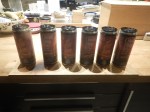
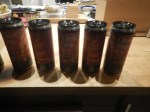
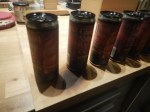


This paragraph from this page on Adnams web site describes what they mean by gluten-free.
Ghost Ship is inspired by tall tales of the ghostly ships that haunted the shores of Walberswick. The seeds of these stories were likely sown by smugglers in a plot to keep the Suffolk coast clear. In contrast, Ghost Ship 0.5%’s creative new look invites you in, flying the flag for low-alcohol beer. It has been painted by a talented local artist with a love of that very same coastline. Adnams invested in a de-alcoholiser specifically to craft Ghost Ship 0.5%. This reverse osmosis plant allows the team to brew and ferment Ghost Ship 0.5% like all our other beers and then, at cold temperatures, remove the alcohol. It leaves all the lovely flavours from a full fermentation in the beer, allowing it to sail away with those original characteristics. Our Ghost Ship 0.5% 330ml cans are validated as gluten free. When producing Ghost Ship 0.5%, we use an enzyme to help with filtration when using our de-alcoholiser. This breaks down gluten-type molecules which helps with the process, reducing gluten content to below 20 parts per million (ppm). Only foods that contain 20ppm or less can be labelled as ‘gluten-free.’
I’ll go along with that!
But then I’ve been drinking Adnams Ghost Ship 0.5% beer for at least five years and I’ve never had a reaction.
Will 22 Ropemaker Street Have Shops?
As I walked past 22 Ropemaker Street on Sunday, the builders appeared to be finishing off the Ground Floor.





Looking at the building’s web site, there is no mention of retail.
- But the web site does show off the transport and walking connections.
- It also has its own entrance for cyclists.
- Car parking is not mentioned on the web site.
- The web site also details the building.
It’s certainly a well-designed office building.
UK Sees Cleanest Power Grid In Q3 As Renewables Grow, Drax Report Says
The title of this post, is the same as that of this article on Renewables Now.
These are the first two paragraphs.
Renewables supplied over 40% of Britain’s electricity demand, the highest ever for the third quarter, helping the country achieve its cleanest power grid on record, according to the Drax Electric Insights report.
In the third quarter carbon dioxide (CO2) emissions from the generation mix were an average of 143 grams per kWh, for the first time below 150 g per kWh over the quarter, says the report, which is commissioned by biomass power generator Drax and prepared by a team from Imperial College London.
We’re certainly getting somewhere!
Building Inside Mountains: Global Demand For Pumped Hydroelectric Storage Soars
The title of this post, is the same as that of this article on Construction-Europe.
This is the sub-heading.
Pumped hydroelectric storage plants around the world have been secretly storing electricity in remote mountain lakes for the last century. But the switch to renewable energy sources is prompting a surge in new construction.
These two paragraphs introduce the article.
Looking out over the ragged beauty of the Scottish Highlands, Coire Glas, a horseshoe-shaped valley holding a clear mountain lake above the shores of Loch Lochy, seems like an unlikely spot to build a megaproject.
In this remote location, surrounded by clumps of pine trees, a team of construction workers from contractor Strabag are tunnelling their way through the rock which they hope will form part of a vast new power storage facility.
The article is a must-read that talks about pumped storage hydroelectricity in general and SSE Renewables’s 1500MW/30 GWh Coire Glas power station in particular.
The Future Of Pumped Hydroelectric Storage
These two paragraphs from the article give a glimpse into the future.
According to the International Energy Agency, global pumped storage capacity is set to expand by 56% to reach more than 270 GW by 2026, with the biggest growth in India and China.
Current pumped storage megaprojects currently in construction include the Kannagawa Hydropower Plant near Minamiaki in Japan which when fully completed in 2032 is expected to have a total installed capacity of 2,820MW; and Snowy Hydro 2.0 in New South Wales, Australia, which is currently expected to complete in 2028.
Note.
- I can count two Indian and ninety Chinese systems under construction. All have a capacity of upwards of one GW.
- The Kannagawa Hydropower Plant appears to be the largest with a capacity of 2.82 GW. The Japanese are keeping quiet about the storage capacity.
- The Snowy Hydro 2.0 has a capacity of 2 GW and a storage capacity of 350 GWh.
- The Wikipedia entry for Snowy Hydro 2.0 states that it is the largest renewable energy project under construction in Australia.
Against this onslaught of massive systems, SSE Renewables are pitching the 1500MW/30 GWh Coire Glas and the 252MW/25 GWh Loch Sloy systems.
Pumped hydroelectric storage will have a big part to play in decarbonising the world. Even in little old and relatively flat UK.
Brent Cross West Station – 10th December 2023
The new Brent Cross West station opened today, so I went to have a look.








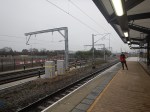




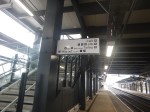
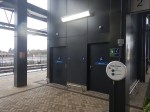

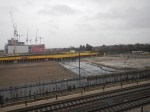


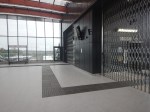
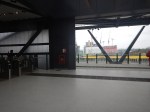

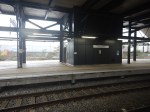

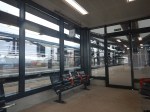



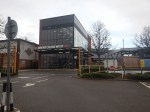



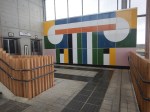

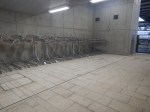





Note.
- There are two island platforms.
- The platforms can handl2 12-car Class 700 trains.
- The Eastern island, which is Platforms 1 and 2, is for Thameslink and has two escalators, two lifts, two sets of stairs and two toilets.
- The toilets on the Eastern platforms are an identical pair to cater for everyone.
- The Western island, which is Platforms 3 and 4, is for the main lines and has one lift and two sets of stairs.
- The arriving Thameslink Class 700 train is stopping in Platform 1 on the way to London.
- Signs indicate a cafe, but I couldn’t find it, so I assume that is for the future.
- The shelters on the platforms are heated.
- Both entrances have two lifts, at least one or two escalators and stairs.
The outside photos were taken two days later.
I have some other thoughts.
The Station Layout
The station has a slightly unusual and very practical layout.
- There is a longish and high bridge over the multiple tracks through the station.
- It is step-free with lifts and escalators at each end to give step-free access across the railway.
- The bridge is wide and is built for cycles.
- The trains are accessed from a spacious lobby, which is separated from the bridge by a long gate-line.
- The lifts, stairs and escalators all lead down from the spacious lobby.
The station must have a very high passenger capacity.
The Track Layout
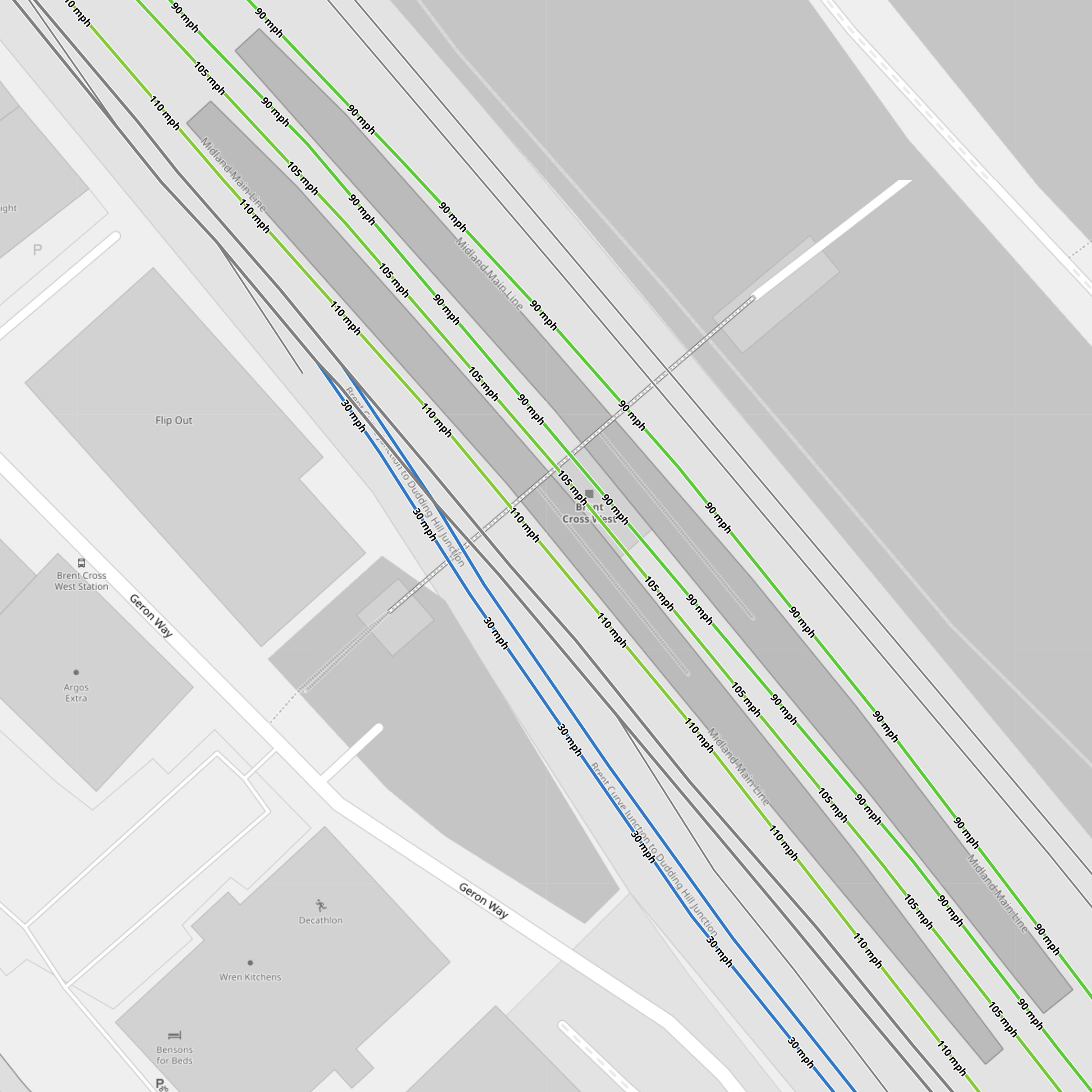
This OpenRailwayMap shows the track layout at the station.
Note.
- The Eastern island platform between the 90 mph Thameslink tracks.
- The Western island platform between the 100-105 mph main line tracks.
- The two most-Easterly tracks give access to the Cricklewood Depot.
- The two black tracks
- The blue tracks connect to the Dudding Hill Line.
- The two black tracks between the blue tracks and the main line tracks are the Up and Down Hendon tracks, which run between Hendon and West Hampstead Thameslink stations, which seem to allow trains to cross over from one side of the tracks to the other.
The large number of tracks must make operation easier.
The West London Orbital Railway
The Hendon and Kew Bridge route of the West London Orbital Railway is planned to call at Brent Cross West station.
It looks like it will use the two Hendon tracks through Brent Cross West and Hendon stations and trains will take the Dudding Hill Line to Neasden to the South of Brent Cross West station.
The West London Orbital Railway will connect Hendon and Brent Cross West station to High Speed Two and the Elizabeth Line, so it will be a very important connection for the residents of the area.
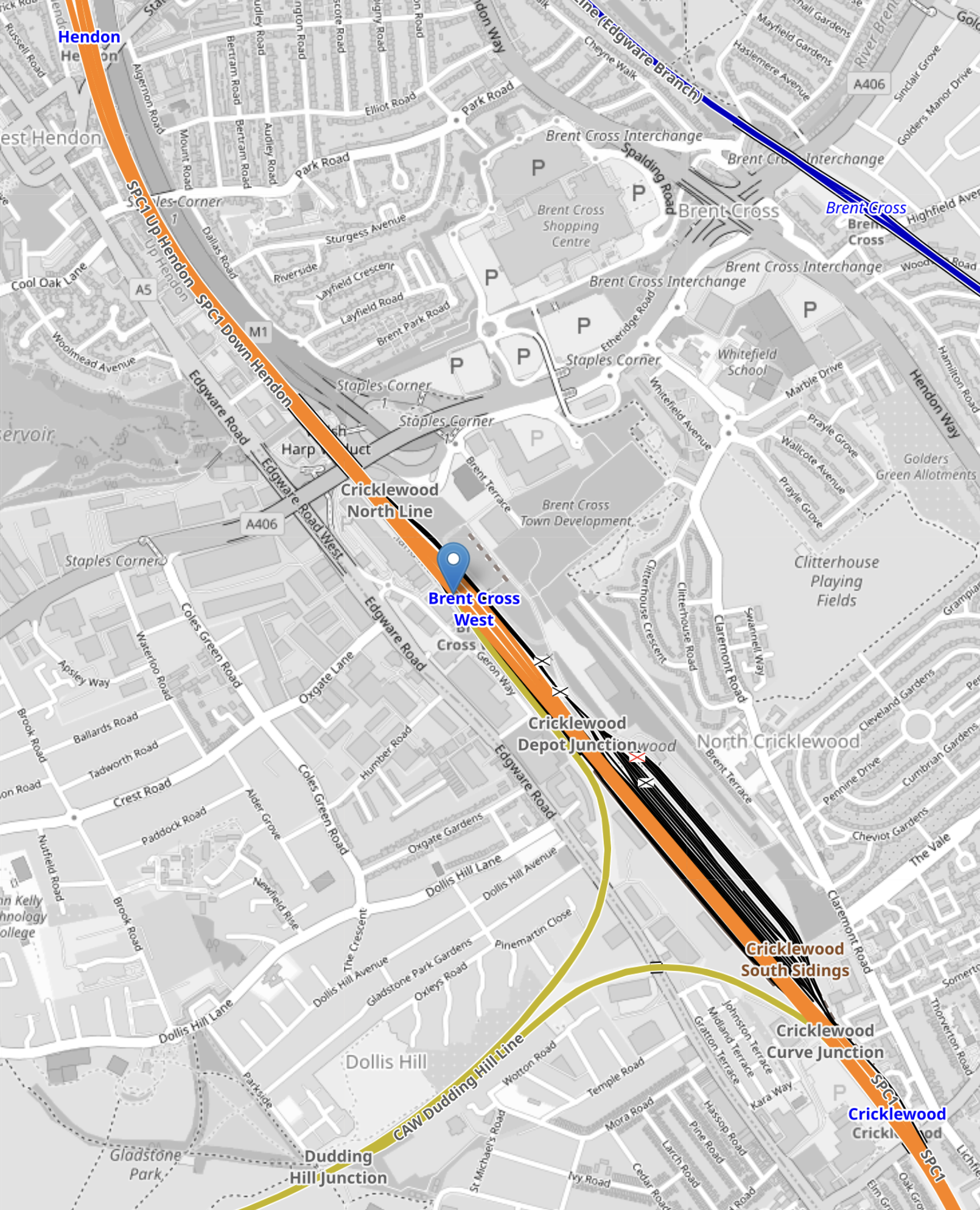
This OpenRailwayMap shows the track layout between the Dudding Hill Line and Hendon.
Note.
- Hendon station is in the North-West corner of the map.
- The orange tracks are the Midland Main Line
- Brent Cross West station is marked by the blue arrow.
- The yellow tracks going towards the South-West are the Dudding Hill Line.
The Hendon route will need new platforms at Hendon and Brent Cross West station.
Conclusion
I like the station and I think others will be built on similar principles.
Three New Battery-Only Revolution Very Light Rail Vehicles
This title of this post, is the same as that as this press release from Eversholt Rail Group.
These are the three bullet points.
- Eversholt Rail funding three brand-new Revolution Very Light Rail vehicles for passenger trials and ongoing operation.
- Manufactured in the UK by Transport Design International.
- Battery-only propulsion, providing zero-emissions operation.
These three paragraphs fill out the story.
Innovative new lightweight passenger trains that will help decarbonise Britain’s railways are to be trialled after a new deal was announced this week.
The new Revolution Very Light Rail vehicles will run entirely on battery power and could be carrying passengers within three years. A new system of lineside fast charging will mean the whole operation has zero emissions.
Some of Britain’s major rail operators are already showing interest in the RVLR vehicles as they seek to fulfil promises to make rail ‘cleaner’.
This is also said about looking for routes, to trial the new vehicles.
Eversholt Rail and TDI are working with key stakeholders across the UK rail industry to agree routes and services where operators can run passenger-carrying trials using these new vehicles. These trials will generate actual passenger demand data to support business cases for long-term deployment of RVLR vehicles as well as providing further passenger and operator feedback on their design and capabilities.
I have some thoughts and questions.
What Is The Top Speed?
A lot of questions like this are answered by this article on Rail Engineer, which is entitled Very Light Rail – A Revolution.
These can be ascertained from this comprehensive article.
- Top Speed – 65 mph
- Seats – 56
- Wheelchair space
- PRM TSI accessibility compatible
- Tare Weight – 24.8 tonnes
- USB Charging
For comparison these figures relate to a PRM-compliant Class 153 diesel train.
- Top Speed – 75 mph
- Seats – 59
- Tare Weight – 41.2 tonnes
This picture shows one of the Class 153 trains at Matlock Bath station.
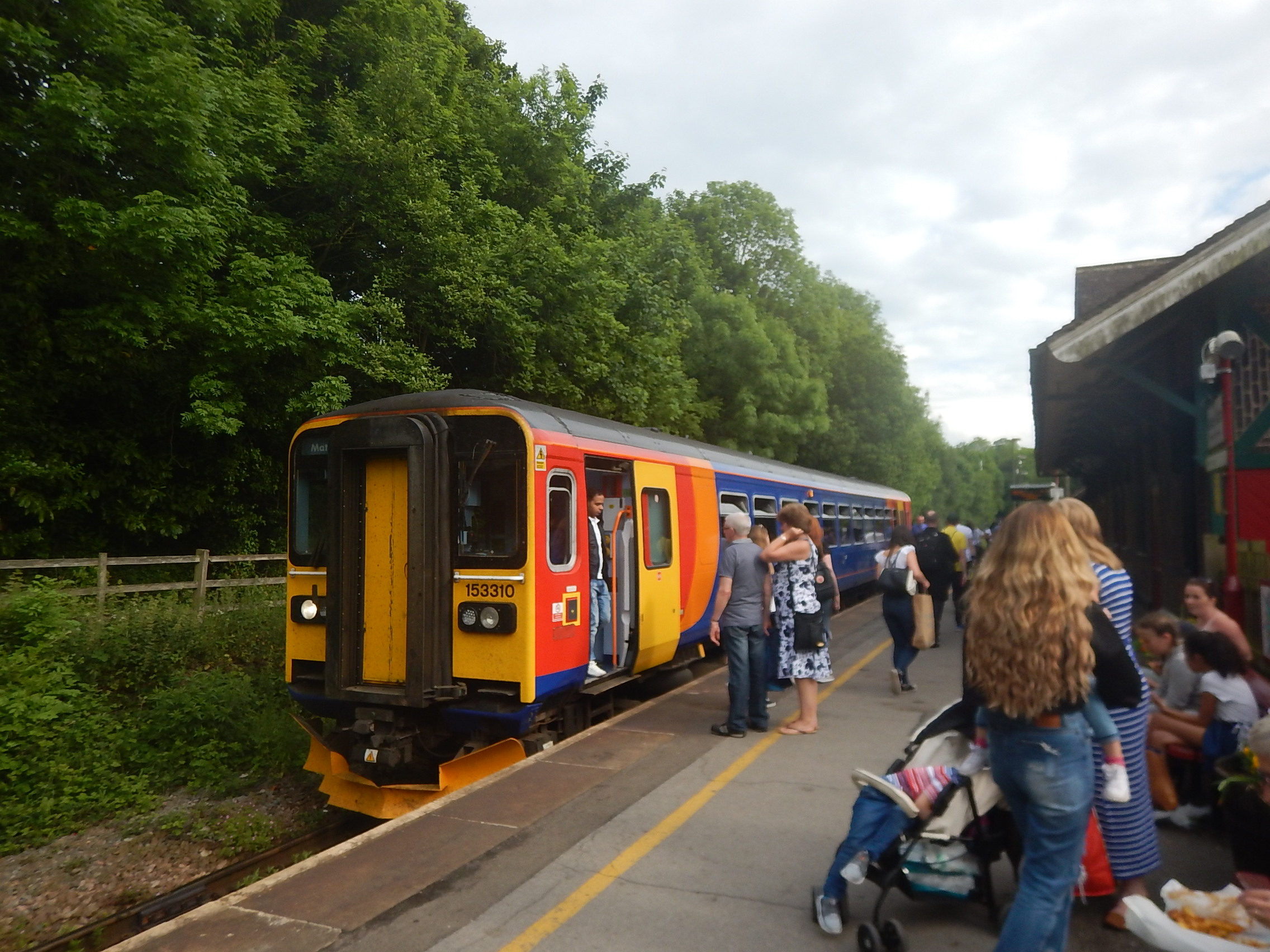
There are still around thirty in service in the UK.
Can Two Revolution VLRs Run As A Two-Car Train?
From the pictures on the web, the trains have buffers and space for a coupler, so until someone says they must always run as single units, I’ll assume they can at least run as a pair.
Can A Revolution VLR Recharge Its Batteries Using Conventional 25 KVAC Overhead Electrification?
One route, that is a possibility for running using Revolution VLR must surely be the Greenford Branch, which connects to the electrified Great Western Main Line at West Ealing station.
In this and at several other places on the network, it could be easier to charge the trains using the existing overhead electrification or an extension of it.
Another possibility; the Marston Vale Line is also electrified at both Bedford and Bletchley.
In New Mobile Rail Charging Facility For Long Marston, I talked about how Siemens are developing a mobile charger, which initially will be deployed at Long Marston.
It could be very useful for efficient operation, if the batteries on a Revolution VLR could be charged in a number of places, which included conventional electrification.
If charging only happened, whilst trains were stationary, a lightweight pantograph and appropriate electrical gubbins might be sufficient.
Can A Revolution VLR Replace A Class 153 Train?
I suspect on some routes this will be possible, but on others, the speed or hill-climbing requirements might be too stiff for the lightweight train.
But, if I was designing a train like the Revolution VLR, I’d make sure it fitted as many markets as possible.
The picture was taken at Matlock Bath station on the Derwent Valley Line, which is a single track with a fifty mph limit and an uphill climb. I suspect that the Revolution VLR would be designed to handle the uphill part of the route, but would the train be able to handle the speed of the Midland Main Line to Derby.
The Revolution VLR would probably attract more passengers, so it might be necessary to double up the service by running a pair.
Can A Pair Of Revolution VLRs Replace A Class 150 Train?
I don’t see why not!
Could The West London Orbital Use Revolution VLRs?
This might be a proposed route that could use Revolution VLRs.
The two routes would be.
- West Hampstead and Hounslow.
- Hendon and Kew Bridge.
Both services would use the Dudding Hill Line and serve Neasden, Harlesden, Old Oak Common and Acton, with a frequency of four trains per hour (tph).
Although this service could be run using conventional multiple units, it might be more affordable to use Revolution VLRs charged on sections of line that are already electrified.
Could the Greenford Branch Use Revolution VLRs?
The Greenford Branch would be a classic application and trains could be charged by fitting a charger in the bay platform at West Ealing station.
In An Automated Shuttle Train On The Greenford Branch Line, I did a rough calculation to see if an automated shuttle could achieve four tph.
Four tph might be too ambitious, but automatic trains shuttling along a branch line might be an affordable way to provide zero-carbon trains with an adequate capacity.
- The driver would drive the train using the sort of remote control used for drones.
- The driver would sit in a convenient place on the train, with CCTV to help them see everything.
- When the train was ready to leave, the driver would push a button to tell the train to move to the next station.
- On arrival at the next station, the doors will open.
- The process would repeat along the line.
If this method of operation sounds vaguely familiar, the Victoria Line has used it since 1067.
Although the Victoria Line drivers always sit in the front.
But on a line with no other trains running at the same time, all they need is a good view of the doors.
Branch lines that could be run in this way could include.
Bodmin Parkway and Bodmin General
Brockenhurst and Lymington Pier
Grove Park and Bromley North
Lancaster and Morecambe
Liskeard and Looe
Lostwithiel and Powey
Maidenhead and Marlow
March and Wisbech
Par and Newquay
Plymouth and Gunnislake
Romford and Upminster
Sittingbourne and Sheerness-on-Sea
Slough and Windsor Central
Southall and Brentford
St. Erth and St. Ives
Truro and Falmouth Docks
Twyford and Henley-on-Thames
Watford Junction and St. Albans Abbey
West Ealing and Greenford
Wickford and Southminster
Wymondham and Dereham
Copenhagen Infrastructure Partners Takes FID On 1,000 MWh Battery Energy Storage Project
The title of this post, is the same as that of this press release from Copenhagen Infrastructure Partners.
This is the sub-heading.
The battery energy storage system Coalburn 1 will be one of the largest battery storage projects in Europe. Construction has commenced in November 2023 and the project will be 500 MW / 1,000 MWh once complete.
These two paragraphs outline the project.
Copenhagen Infrastructure Partners (CIP) through its Flagship Funds has taken final investment decision and commenced construction on a 500 MW / 1,000 MWh energy storage system in Coalburn, Scotland, which will be one of the largest of its kind in Europe.
The facility is the first project to be developed from the partnership between CIP and Alcemi to deploy 4 GW of energy storage assets across the UK. CIP aims to take final investment decision on two other projects next year with a combined capacity above 1 GW. The portfolio will provide vital support to the UK’s energy network, accelerating the integration of renewable energy and the transition to net zero by 2050.
Note.
- FID means final investment decision.
- 500 MW / 1,000 MWh could become a common size as it is two hours of power and easy for politicians to add up.
- CIP and Alcemi seem to be planning a total amount of energy storage, eight times bigger than Coalburn 1.
This battery could be the largest in the UK, when it is commissioned.
Who Are Copenhagen Infrastructure Partners (CIP)?
Their About CIP web page gives a lot of details.
Who Are Alcemi?
Their Who We Are web page gives a lot of details.
Environmental Considerations
The press release says this about environmental considerations.
The Coalburn 1 facility has been developed with extensive landscaping and ecological mitigation measures, including the maintenance of peat reserves, tree and wildflower planting, and new habitats, promoting biodiversity across the site.
I’ll agree with that, but add that I hope that they look after the hares. It will be interesting to see how big batteries and big bunnies co-exist. As co-exist they will!
Operation
The press release says this about operation.
The scheme will reduce the need for fossil fuel power generation during periods of peak demand leading to a decrease in CO2 emissions but also provide balancing services to help lower the costs for end consumers to manage the UK Power system.
As a Control Engineer, I suspect, it will act in a little-and-large mode with Scotland’s pumped storage.
Location
This page on the SP Energy Networks web site is entitled Coalburn Connection – South Lanarkshire.
There is this introductory paragraph.
SP Energy Networks own and maintain the electricity network in central and southern Scotland. As part of our infrastructure, Coalburn Grid Substation is a key installation in the transmission network situated to the south of Lesmahagow in South Lanarkshire.
Underneath is this map.
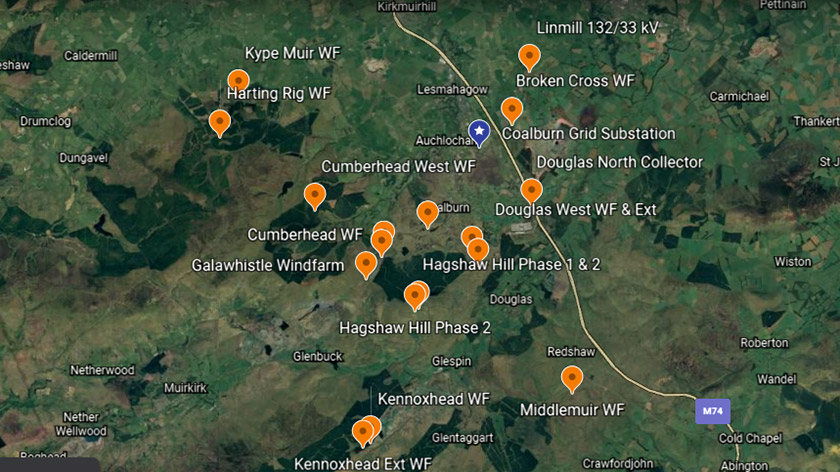
Note.
- The orange arrows are wind farms and there appear to be around a dozen of them.
- The blue arrow is Coalburn Grid Substation.
- Running through the area is the M74 between Glasgow and Carlisle.
- There are some remains of opencast coal-mines in the area, which have been restored and turned into wind farms.
- I have found the capacity of fourteen of the existing wind farms and it totals 946 MW, which is an average capacity for each wind farm of 67 MW.
- During my search for capacity, I found a couple of wind farms that were being upgraded with larger turbines.
- The SP Energy Networks page gives a date of Q3 2025 for connection of the Coalburn battery to the sub-station.
With the 500 MW/1000 MWh Coalburn 1 battery, I wouldn’t be surprised that this massive onshore wind farm complex has been designed to provide a guaranteed 1000 MW to the grid.
 The Anonymous Widower