Ocado’s Computing Has Been Spot On So Far
I first used Ocado for my weekly shop in June last year and have used them about 30 times since.
There have been no computing mistakes.
Only a couple of substitutions have been made and they have caused me no trouble.
All orders have been delivered within the delivery window and nothing seems to have been damaged in transit.
I shall continue to keep using them.
London’s Elizabeth Line: Business Pays, Drivers Strike
The title of this post, is the same as that of this article on RailTech.com.
This is the sub-heading.
London’s Elizabeth Line is hugely popular with passengers. Maybe not so popular with the businesses who have to pay a premium for the privilege of sitting above it – and will soon have to pay more. Also maybe not so popular with the drivers who want more pay for sitting in the front seat.
Enough Said!
DfT Objects To Eight Open Access Applications
The title of this post is the same as that of an article in the March 2025 Edition of Modern Railways.
Surprise! Suprise! There are no prizes for innovation and risk, to be given out by Starmer’s Government Of All The Lawyers.
- Alliance Rail – Cardiff and Edinburgh – opposed
- Grand Central – London and York – opposed
- Hull Trains – London and Hull – opposed
- Hull Trains – London and Sheffield – opposed
- Lumo – London and Glasgow – opposed
- Lumo – London and Rochdale – opposed
- Virgin Trains – London and Liverpool – opposed
- Virgin Trains – London and Glasgow – opposed
Wrexham, Shropshire and Midlands Railway – London and Wrexham – supported.
Splitting And Joining Of Trains
Several of the objections, seem to be on grounds of capacity.
So why not pair up some services and split and join at a convenient station?
Hull Trains – A Hull and a Sheffield service could start together in London and split in Retford.
Lumo – A Newcastle and an Edinburgh service could start together in London and split in Newcastle.
Lumo – An Edinburgh and a Glasgow service could start together in London and split in Edinburgh.
Virgin Trains – A Liverpool and a Glasgow service would start together in London and split in Crewe.
A Bad Decision
I believe the Government’s decision is a very bad one.
At the weekend I wrote Sutton Station To Gatwick Airport By Hydrogen-Powered Bus, about my trip in a hydrogen-powered bus to Gatwick-Airport.
- The quality, performance and roadholding of this new zero-carbon bus was superb.
- I can’t wait to try out Wrightbus’s new hydrogen-powered coach in the next twelve months.
- In the future, I can see high speed hydrogen coaches steaming along the motorways of the UK and Ireland.
Hydrogen-powered coaches will do for cheap travel on the roads of these islands, what Ryanair and easyJet for did above our heads.
Tea Removes Toxic Heavy Metals From Water, Study Suggests
The title of this post, is the same as that of this article on The Times.
This is the sub-heading.
The longer tea is steeped, the more contaminants are removed
These are the first three paragraphs, which give a flavour of the research.
A daily cup of tea may do more than just perk you up — it can also purge the water of toxic heavy metals, a study suggests.
Researchers found that tea leaves will trap lead, cadmium, and other unwanted contaminants during the brewing process. These metals bind to the leaves and remain there until they are thrown away.
Benjamin Shindel of Northwestern University, Illinois, who led the research, said that while other materials might achieve a similar effect, tea’s popularity made it unique. “What is special about tea is that it’s the most consumed beverage in the world,” he explained.
My late wife was a coffee drinker and I only have the odd cup of cappuccino, although, I do drink lots of zero-alcohol beer, hot chocolate and decaffeinated tea.
I would assume that from his name Professor Benjamin Shindel is quite likely to be Jewish.
So did he ask all his friends and relatives round for a tea party?
The Professor certainly wouldn’t have had to have stinted on the cakes, as they wouldn’t have got near the water, which was the real subject of the research.
But he wouldn’t have been short of volunteers to brew their favourite tea!
Eyes Full Of Sleep
I can remember my mother telling my wife a; C, about myself, when I was a baby. She said that my eyes got terribly bunged up with muck, what she called sleep. She also said she’d spend time cleaning out my eyes and ears.
Last night, I was finding, that my eyes were so full of muck, that I couldn’t type, with one in about five letters wrong.
I thought it just could be be my eyes full of sleep, so I ran a deep bath and gave my eyes a thorough flush.
After that I could see and type properly.
I slept well.
In fact I slept so well, that I overslept until nine. Which is very unlike me.
I also wasn’t sure of the day, when I woke up. But at least, I got my drugs right.
An Incident As A Child
In one incident as a child, when I was about five, I can remember my mother picking me up, taking me upstairs, running a bath and then undressing me quickly and putting me in it. I also remember that I was very red.
Any ideas about what she was doing?
Never Mind Heathrow: Gatwick Airport Is Close To Getting A New Runway
The title of this post, is the same as that of this article on The Times.
A friend passed through at Gatwick Airport yesterday, so I went to wish him well. For a change , I took a Metrobus from Sutton station to the South terminal – This route is free and doesn’t need a ticket with a Freedom Pass!
The bus was no ordinary bus, but a brand new Wrightbus hydrogen double decker from Ballymena.
It took a round-about route, as its main function is to bring local workers and passengers into the airport and handle traffic to Redhilll, Reigate and East Surrey Hospital.
But if this is the shape of buses to come, then I’m for it. Quality was more coach than bus and performance was sparkling with little or no noise and vibration.
Gatwick and Metrobus are building a network of local hydrogen buses to bring workers and passengers into the airport and I suspect, if the Airport has the fuel, they’ll use it for other purposes, like air-side vehicles, aircraft tow-trucks and car park buses.
Gatwick unlike Heathrow has a close-by source of electricity to produce hydrogen in the soon-to-be-extended 1.6 GW Ramplion offshore wind farm, just off Brighton.
Airbus are talking about bringing hydrogen aircraft into service by 2035 and I believe that by this date we’ll be regularly seeing hydrogen-turboprops on short routes.
As someone, whose software planned the Channel Tunnel, I think it reasonable by 2035, the following projects will be completed.
- Zeroavia are talking of converting aircraft to hydrogen in the next few years.
- A number of short-haul hydrogen aircraft are in service.
- Gatwick’s new runway and terminals are built.
- Ramplion is pumping hydrogen to the airport.
- The station has been updated.
- The Thameslink frequency of trains will have been increased.
Gatwick could be the first major airport to use large amounts of hydrogen, to cut emissions.
Will Hydrogen Buses and Coaches Make Good Rail Replacement Buses?
My near-twenty-mile-ride in a Wrightbus hydrogen-powered bus yesterday, got me thinking.
I believe they would make excellent Rail Replacement Buses.
- The 280 mile range would allow them to both deploy over a l long distance to an incident or cover over a hundred miles or more.
- The quality of the interior is more main line train, than suburban bus.
- Every seat has a charging point.
- The performance of the hydrogen-powered bus, should mean that less time is lost and less compensation will be paid.
- This performance could be used to advantage if the rail line being replaced is alongside a motorway.
I feel it could be good PR for train companies, that they are using quality, fast Rail Replacement Buses.
Sutton Station To Gatwick Airport By Hydrogen-Powered Bus
In Central London and Gatwick Airport For Free On A Freedom Pass, I indicated it was possible to go to Gatwick Airport for nothing, if you had a Freedom Pass, which is also a free bus pass for England.
This morning I took public transport to Gatwick Airport by this route.
- I took a 43 bus to London Bridge station.
- This bus terminates in the bus station in front of the train station, so it was a simple step-free entry into the part of the station, where Southern Trains terminate.
- I took a Southern Train to Sutton station.
- I then took a Metrobus 420 bus from Sutton station to Gatwick Airport.
These pictures show the journey.

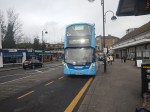













































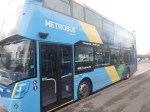
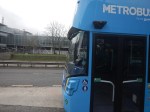
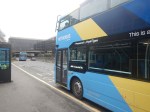


Note.
- The bus stop is directly outside the entrance to Sutton station.
- Sutton station is step-free.
- The information on the Metrobus’s buses at Sutton station is poor.
- The bus had a 74 number plate, so was registered after September 1st, 2024.
- The bus said it was a hydrogen bus.
- The seats were comfortable with leather facings.
- The route was mainly through rural Surrey.
- There were sections of dual-carriageway road with continuous 40 mph running.
- There were a number of steep hills.
- Previously, I have been told by a Bradford Councillor, that the City of Bradford is going for hydrogen-powered buses , as the city has lots of steep hills.
- The unusual Reigate and Redhill War Memorial on the A25.
- The route goes past Hadworth, Reigate and Redhill stations.
- Just before Gatwick Airport, the bus called at East Surrey Hospital.
I have some thoughts.
Does This Hydrogen Bus Have Almost The Quality Passengers Would Expect From A Coach?
Consider.
- I was very impressed with the quality of the bus and its fittings.
- But its biggest assets were the ride and mouse-quiet noise and being vibration-free.
- It was certainly up there, with the best British buses on UK roads.
- Strangely, I never rode in any of London’s Green Line coaches of the 1950s and 1960s.
But as Wrightbus are selling hydrogen-powered single-decker buses to the Germans, the quality must be of a certain standard.
The Performance Of The Bus
I would sum up the bus as follows.
- The bus didn’t hang around and it was well-driven.
- On much of the dual-carriageway, the bus appeared to be at the maximum speed limit of 40 mph
- Ride and seats were comfortable.
- There was virtually no vibration.
- At times, you almost felt you were in a top-of-the-range coach.
- The running gear is from German company ZF, which certainly doesn’t hinder the ride.
- The journey from Sutton to Gatwick Airport is twenty miles and took about ninety minutes.
I would feel that if Wrightbus design their CoachH2 chassis to the same standard of this bus, they’ll have a difficulty to meet sales demand.
Wrightbus Hydrogen Buses For My Local Bus Route 141
Consider.
- The 141 bus route is my local bus, which gets me to Moorgate, Bank, London Bridge and Manor House.
- The length of the full route is twenty miles and it takes about an hour to go from London Bridge station to Palmers Green.
- The route is currently run by older Wrightbus hybrid diesel-electric buses.
- I suspect that modern hydrogen buses could last almost all day on one fill of hydrogen, with perhaps a top-up at lunchtime.
They would have no difficulty handling the route and would greatly increase the customers current rock-bottom satisfaction.
Hydrogen Buses In Leafy Suburbs
- Where I live, is not particularly leafy or a suburb.
- But I seems to remember, when I moved here, that some of my neighbours complained about the noise of the 76 bus route.
- So Transport for London put on some quieter buses.
I would expect, that Metrobus might use the mouse quieter hydrogen buses in post areas, to avoid annoyance.
Hydrogen Buses As Route Extenders
Effectively, the Metrobus route 420 is acting as a route extender for Southern and Thameslink services coming South from London.
As it is a quality bus, that gets a move on, I suspect that some travellers, who previously took a train to Sutton, Tadworth, Reigate, Redhill or other stations and were then picked up, may take a hydrogen bus to a more convenient bus stop.
Because of the long range of a hydrogen bus or coach, zero-carbon performance, should be achieved without any range anxiety for passengers, driver or bus company.
Onward From Oakhampton Parkway Station
Consider.
- In 2014, storms destroyed the railway at Dawlish in Devon.
- As there was no alternative route, the storms cut everything west of Dawlish off from the rest of the UK.
- It is now likely, that a Park-and-Ride station will be built close to Okehanpton, which commuters would use for travel to Exeter.
- The main road to the South-West ; the A 30 will pass nearby.
It would appear, that Okehampton Interchange station could be used, if Nepture decided to show his power again.
Hopefully, the emergency plan will scare Nepture away.
Lumo To The Scottish Borders
Consider.
- Lumo have applied to extend some of their Edinburgh services to Glasgow.
- Talking to a friend in the Scottish Borders, they said, that travelers drive to Newcastle or Morpeth to catch Lumo for London.
- Four or five Lumo services every day stop in each direction at Morpeth station.
- So would it be sensible to run a bus or coach through the Scottish Borders to connect with the Lumo services?
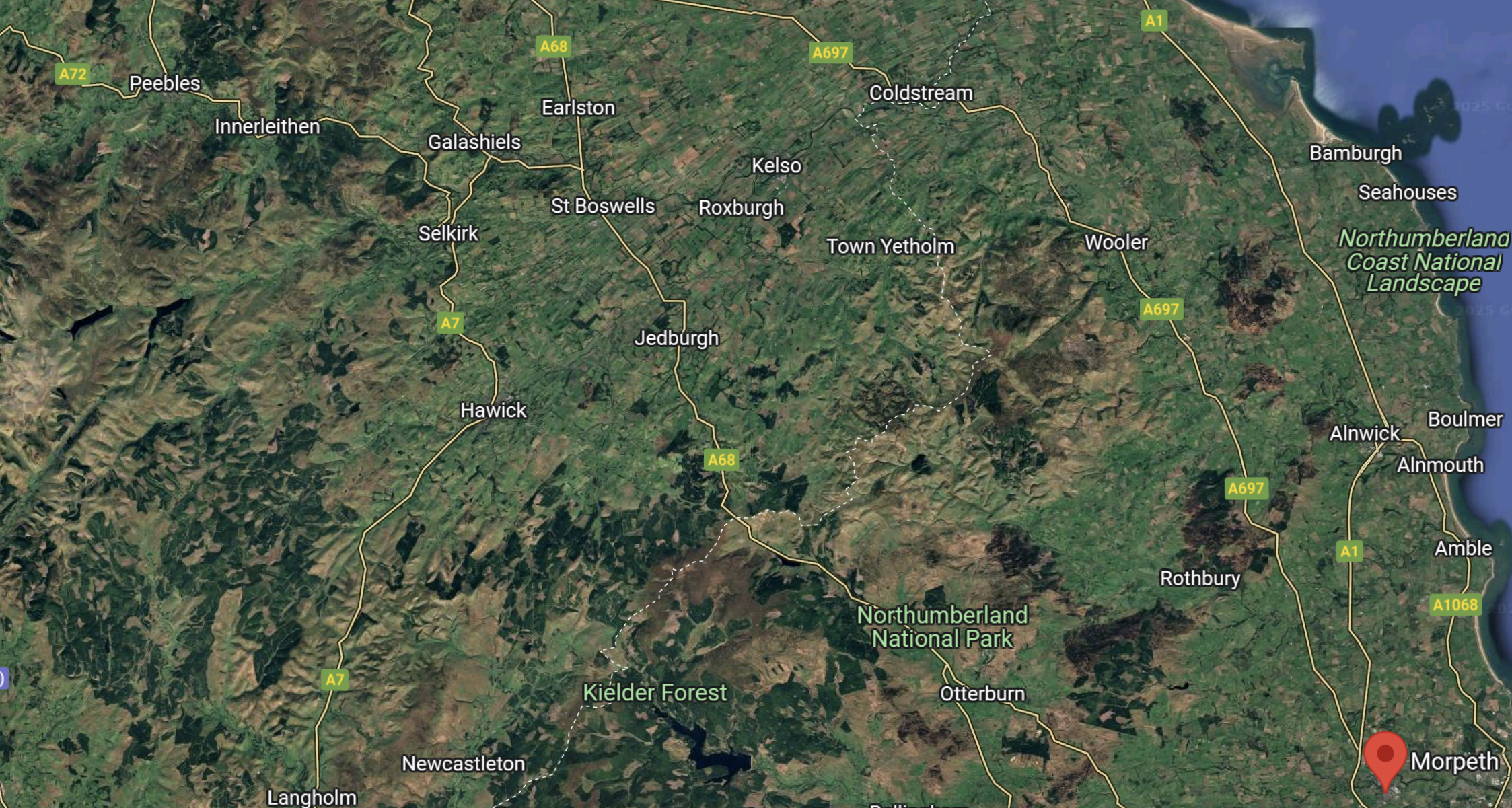
This Google Map shows Morpeth in relation to the Border towns.
Note.
- Morpeth is marked by the red arrow in the South-East corner of the map.
- Galashiels, Galashiels, Hawick, Jedburgh, Peebles, Saint Boswells and Selkirk can be picked out on the map.
- The coach service would probably terminate at Galashiels, as it has a large bus terminal and and a railway station.
- Click the map to show it to a larger scale.
Morpeth to Galashiels is 69 miles and it should take about an hour and a half.
Hydrogen Buses As Rail Replacement Buses
Consider.
- I have had Rail Replacement Coaches as opposed to buses a few times in the UK.
- Once on the East Coast Main Line but usually on the Great Eastern Main Line to Ipswich or Norwich.
- They are generally more suited to their task. as they are faster and more luxurious.
- Many of our major rail lines run alongside trunk roads or motorways or fast dual carriageways.
So because hydrogen buses and coaches a have superior performance, than their diesel cousins, will hydrogen be the better fuel for a Rail Replacement Bus.
Metrobus’s Hydrogen Buses
This press release on the Metrobus web site is entitled Hydrogen Buses.
This is the sub-heading.
Our commitment to Zero Emissions
As part of our commitment to reducing emissions, twenty new hydrogen fuelled buses will operate on Fastway routes 10 & 20. These new buses demonstrate an ongoing commitment to reducing our local emissions. They deliver against science-based targets set by Metrobus and its parent company, The Go-Ahead Group, of becoming a net zero business by 2045 and decarbonising our bus fleet by 2035.
Conclusion
This bus is the best I’ve ridden in.
The End Of EVs Has Come, And It’s Toyota’s Fault – They’re Going To Change Everything, And It’s Going To Be Hydrogen
The title of this post, is the same as that of this article on El Diario 24.
These are the first two paragraphs.
The future of environmentally sustainable vehicles appears to be hydrogen based and Toyota is the frontrunner in developing this new technology.
The development of electric battery powered vehicles was a gamechanger for the industry and signified the first big shift since the introduction of fossil fuel powered vehicles all those years back. The current downside to electric vehicle, is of course, charging times as well as infrastructure to support charging stations. Japanese automaker, Toyota, has decided to switch lanes on the road to sustainability by investing research and funds into the development of a hydrogen powered system. This model has great potential in terms of environmental sustainability and user-friendliness but are the initial roll outs proving to be a success?
The article is from Argentina, which is a big country and range and charging could be a bigger factor, than in some countries.
But then Ricardo take a similar view to Toyota on hydrogen.
I also believe that hydrogen internal combustion engines will provide an alternative route to affordable zero-carbon vehicles, that are of all sizes.
I’m with Toyota on this one and the article is a must read.
Onward To Newbiggin-by-the-Sea For The Northumberland Line?
This is the headline on the Chronicle Live.
Plans Underway To Extend Northumberland Line To Newbiggin-by-the-Sea
And this is the heading on the Northumberland Gazette.
Plans Underway To Extend Northumberland Line To Newbiggin
Both articles say council officers have been asked to look at extending the line from its current terminus at Ashington.
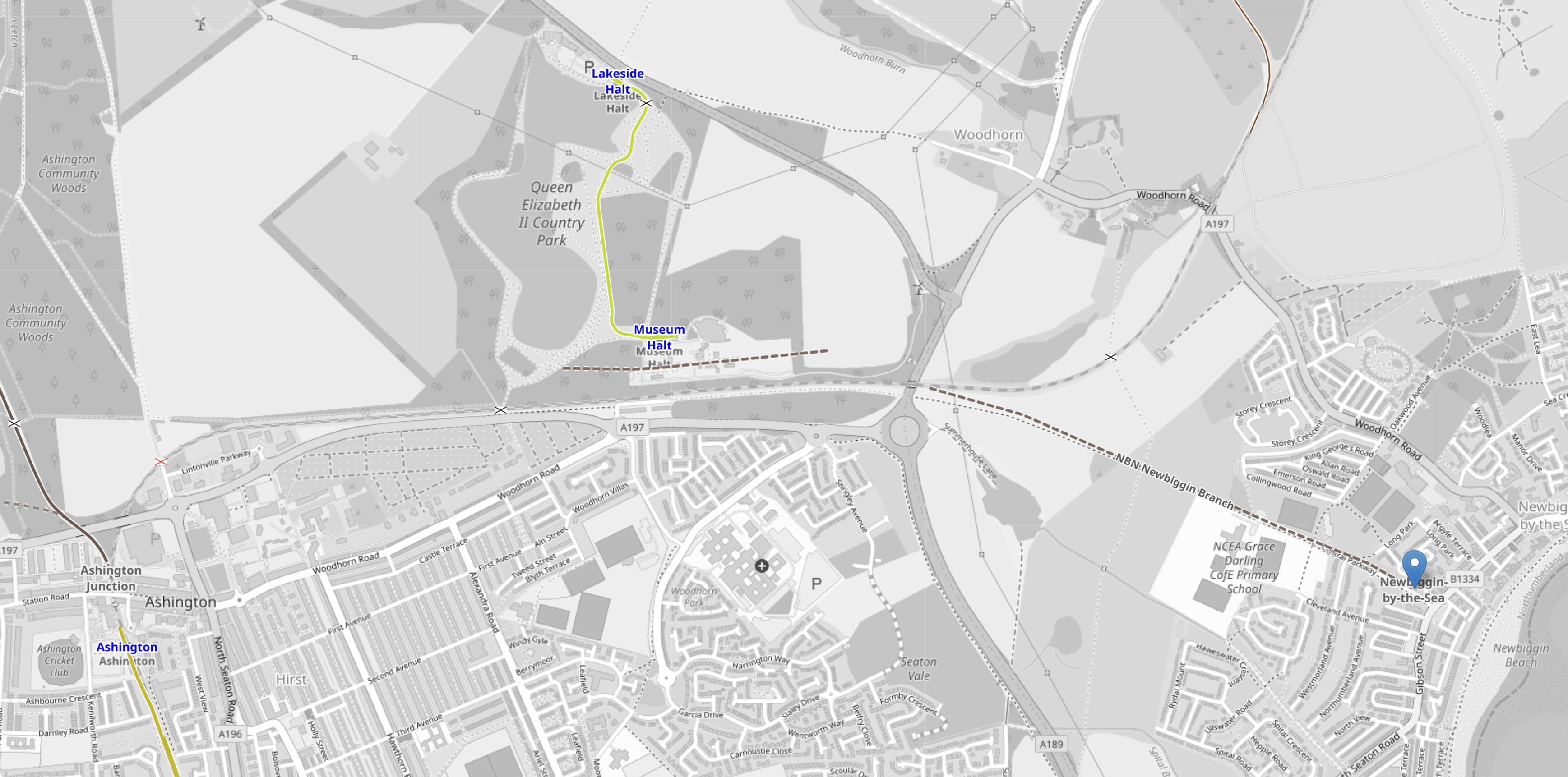
This OpenRailwayMap shows the route onwards from Ashington to Newbiggin-by-the-Sea.
Note.
- Ashington station is in the South-West corner of the map.
- The yellow track is the route of the new Northumberland Line to Newcastle.
- The possible site of the proposed Newbiggin-by-the-Sea station is marked by the blue arrow.
- The route of the railway between Ashington and Newbiggin-by-the-Sea is marked by a dotted line on the map.
- There appears to be a country park and a museum complex with a railway about halfway between Ashington and Newbiggin-by-the-Sea.
There also appears to be other disused colliery rail lines going to other closed collieries, that may be worth developing.
At a first look, it doesn’t appear that extending the Northumberland Line to a new station at Newbiggin-by-the-Sea would be the most difficult of railway projects.
Woodhorn Museum, Woodhorn Colliery And The Queen Elizabeth II Country Park
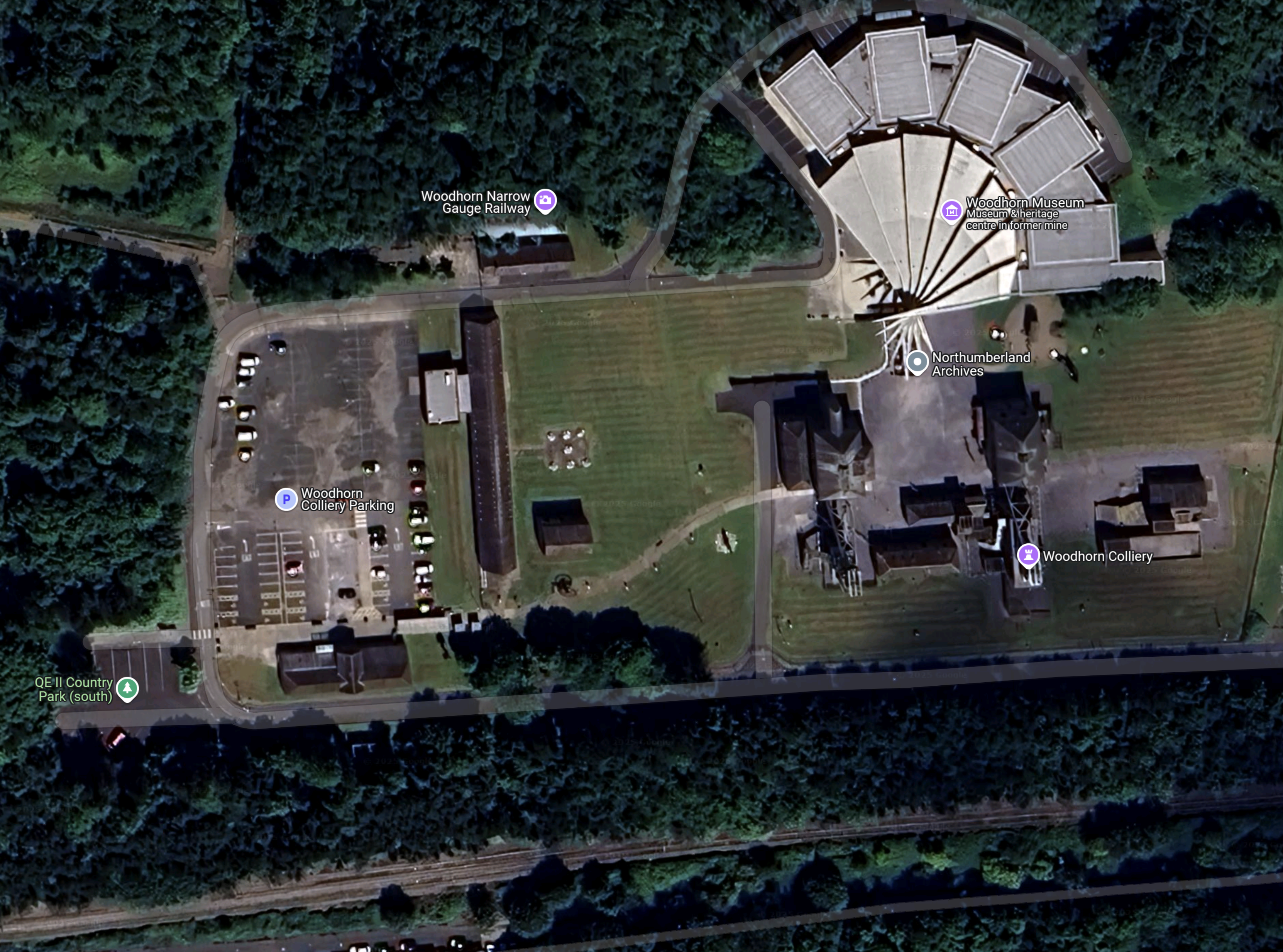
This Google Map shows this attraction in detail.
Note.
- Woodhorn Museum is the fan-shaped building in the North-East of the map.
- Woodhorn Colliery is part of the museum and is to the South of the main museum building.
- The Northumbrian Archives are also on the Woodhorn site.
- The Woodhorn Narrow Gauge Railway is indicated by the lilac arrow in the North of the map.
- The Queen Elizabeth II Country Park is indicated by the green arrow in the West of the map.
- Across the bottom of the map, there appears to be a double-track railway, which appears to connect to the new Ashington station.
This is the sort of attraction, that is crying out to have its own railway station.
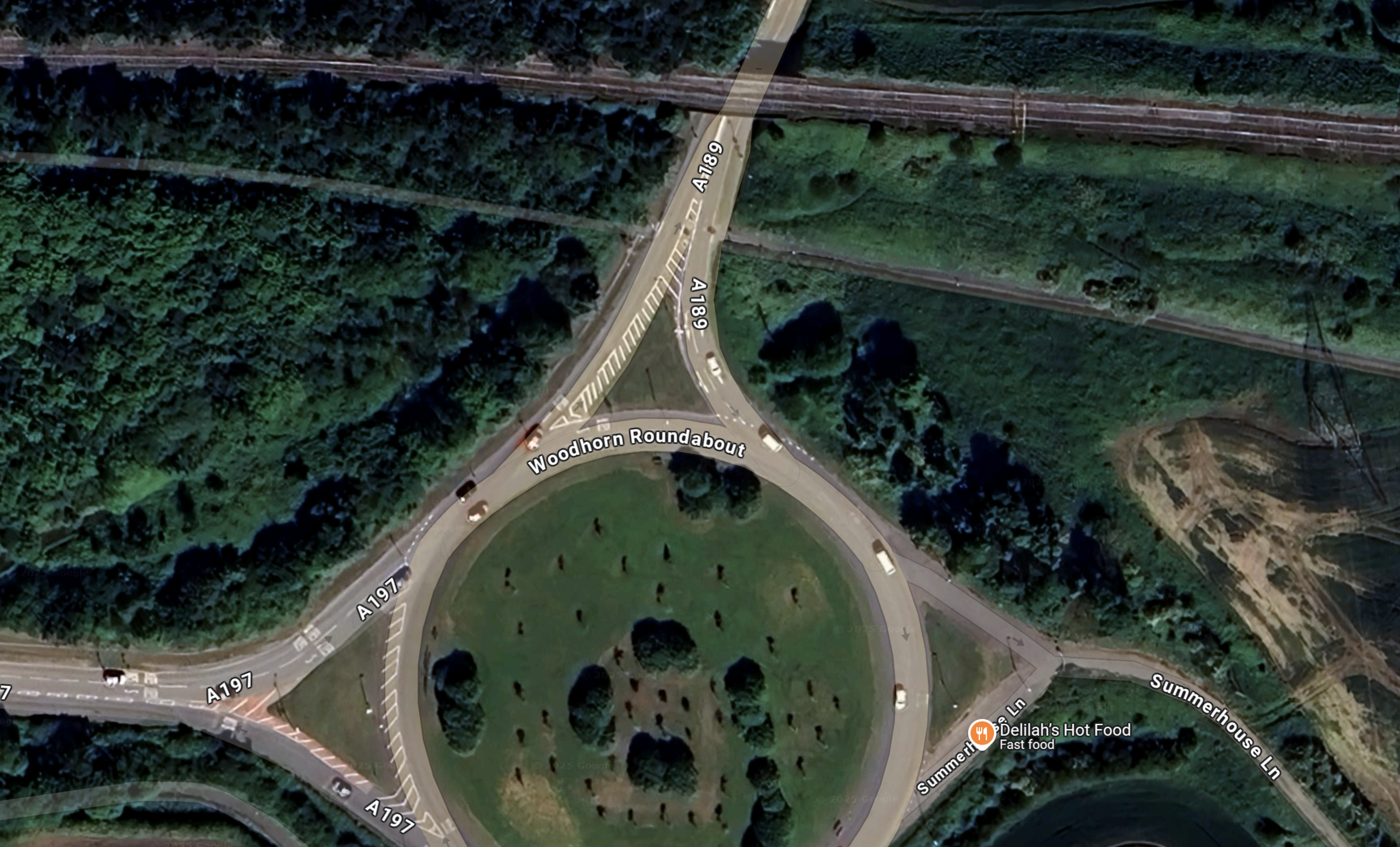
This Google Map shows the Woodhorn Roundabout on the A 189 to the South-East of the Woodhorn Museum
Note.
- The road to the North is the A 189 which leads to Lynemouth power station, which is fueled by biomass.
- The double-track railway across the top of the map, also goes to Lynemouth power station. Note it has a bridge over the A 189.
- The single-track railway to the South of the double-track can be followed almost to the centre of Newbiggin-by-the-Sea. It looks like it goes under the A 189.
It looks to me, that a single-track could easily handle two trains per hour to a single-platform at Newbiggin-by-the-Sea station.
 The Anonymous Widower