First Order In For Revolutionary Modular Railway Footbridge
The title of this post, is the same as that of this article on New Civil Engineer.
Greater Anglia seem to have ordered the footbridge for Stowmarket station, without seeing a real one.
A prototype is also being installed at the former Widmerspool station on the Old Dalby Test Track.
I wrote about the proposed footbridge at Stowmarket in Stowmarket Station To Go Step-Free.
How Not To Sell Flatpack Furniture
I recently bought a Teknik Kneeling Stool from Ryman.
As is shown by these pictures, I was able to put it together and the product looks the business.
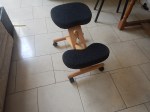
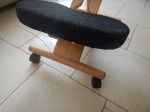

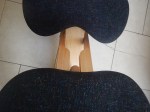

But the pictures hide the big fault of the stool!
It has the worst set of instructions, I’ve ever seen for flat-pack, which are shown in this image.
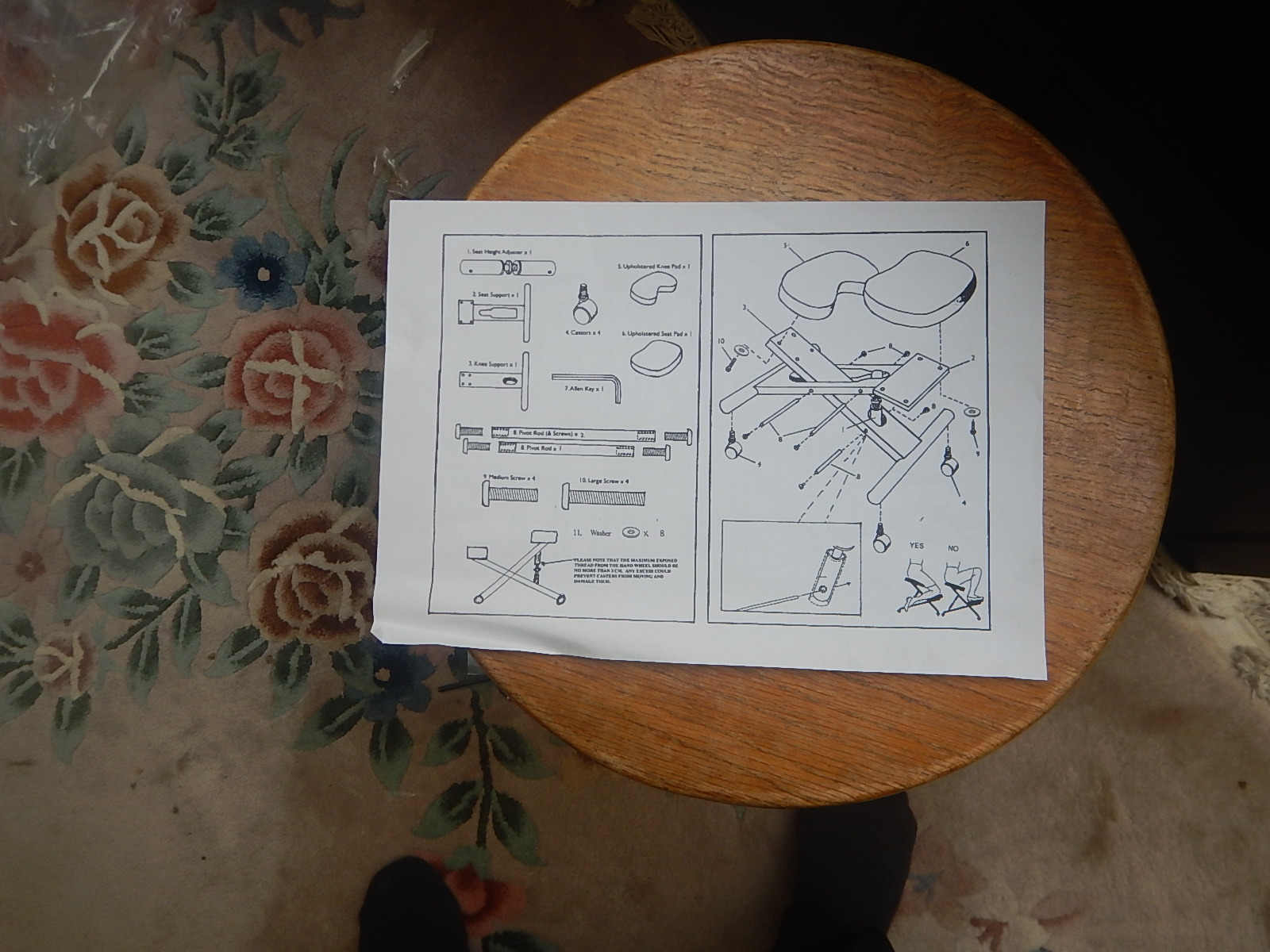
Basically, it’s just a parts list and a vague layout.
- I had to have several goes to assemble it.
- Assembly is job for at least three hands.
- Some parts must be assembled before others and this is not indicated.
- A colour photograph of the finished product would have helped.
- I did catch my finger badly at one point.
But then I like puzzles and eventually solved it.
I shan’t be buying any more Teknik products.
Elizabeth Line – Moorgate Station – 27th May 2022
I took these pictures as I walked between the Northern Line and the Moorgate entrance to the Liverpool Street station on the Elizabeth Line.
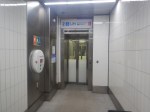

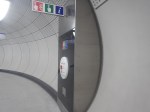

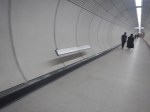
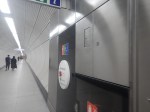
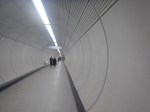
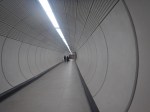


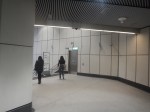

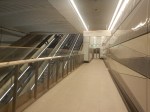

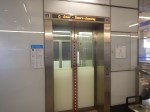

Note.
- There is a lift and stairs at the Northern Line end.
- I would estimate that the tunnel is about two hundred metres long.
- There are resting bars at intervals.
- There are two help points along the tunnel.
- There are two lifts to get to the Elizabeth Line ticket hall, at the other end.
I was able to walk it today, but when my damaged knee is playing up, I will not use this route.
However, the rat-up-the-drainpipe route to the surface, that I described in Up From The Depths At Moorgate Station is still available.
But this route is not wheel-chair and buggy friendly.
In this route, a single escalator is taken from the Northern Line platforms to the National Rail platforms, from where there is a double escalator to the ticket hall level.
Conclusion
The rat-up-the-drainpipe route is acceptable to me, but I don’t feel the step-free route via the long tunnel will be acceptable for all those, who need to use it.
It’s just too long to walk for many!
Perhaps the addition of seats for a rest would help.
Step-Free Access Between Train And Platform On The Elizabeth Line
Any new railway with new trains, should have step-free access train and platform.
I know that this has not always happened in the last few years, but how does the Elizabeth Line match up.
I’ve taken these pictures in the last couple of days.


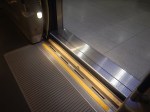
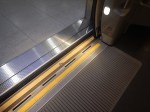
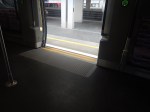


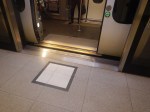
On this evidence, it certainly seems that the access between train and platform is step-free, between at least Woolwich and Paddington stations.
The Story Behind The Concrete Panels On The Elizabeth Line
These are a selection of the pictures I took yesterday inside Elizabeth Line stations.
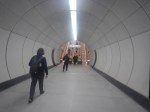
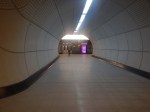
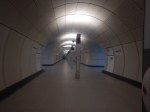
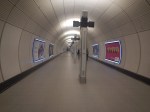



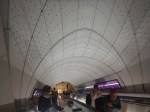

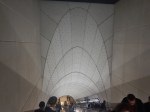
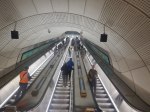




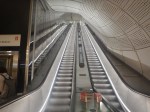




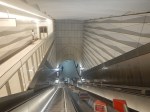
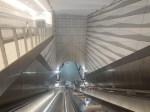


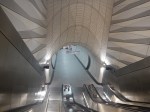








Note.
- The walls and ceilings appear to be covered in light grey panels with holes.
- The material appears to look like concrete.
- Every one is a totally different shape, so how were they manufactured?
This article on Ian Visits is entitled How Crossrail Is Using 3D-Printing To Build Its Stations.
This is the two opening paragraphs.
When you start to use the new Elizabeth line stations, among its many achievements will be the first large scale use of 3D-printing in concrete.
The use of 3D printing has made possible one of the more distinctive features of the future Elizabeth line stations — the curved concrete panels that will line the inside of the passenger tunnels and some stations, and sinuously glide around corners in a way never seen before in a tube station.
There will be a total of something like 36,000 of these panels and although printing each in concrete is possible, Crossrail would probably have been delivered in the 2040s or 2050s.
The contractors used an innovative process called FreeFAB, which had been invented by an Australian architect.
- The process creates a wax mould for each panel using 3D printing.
- This mould is then used to create the actual panel.
- After each panel is cast, the wax is melted off and recycled.
- The panels are made in a factory in Doncaster.
We will see a lot more of this technique used in the construction industry.
Elizabeth Line – Custom House Station – 24th May 2022
I took these pictures at Custom House station on the Elizabeth Line.
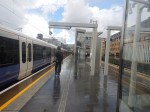





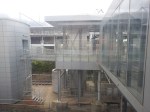


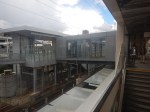
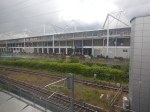
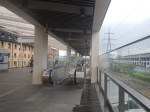


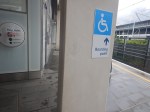
Note.
- The station was built in a factory and the concrete beams were assembled on-site. Traditionally, the concrete structure would have been poured on site.
- The quality of the columns is excellent and an engineer I spoke to a few years ago, said that the methods used at Custom House station ensure a high quality building. Look at the last two pictures.
- The two escalators are in-line, rather than side-by-side and it looks like this was done to squeeze in the station.
- There were signs up for toilets, that are visible in picture 4. Are they going to be installed?
The ideas used to create Custom House station, will be borrowed by architects and builders all over the world.
Elizabeth Line – Paddington Bakerloo Line Link – 24th May 2022
These pictures show the Elizabeth Line end of the Paddington Bakerloo Line Link.
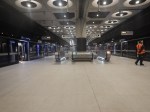







Note.
- This pedestrian tunnel connects the Elizabeth Line platforms and the Bakerloo Line platforms at Paddington station.
- The tunnel runs under the main pedestrian concourse of Paddington station from one side to the other.
- At the start of construction, I wrote about this tunnel in Paddington Bakerloo Line Link Project, London.
In Paddington Is Operational Again, I showed this image, that I found on the web.
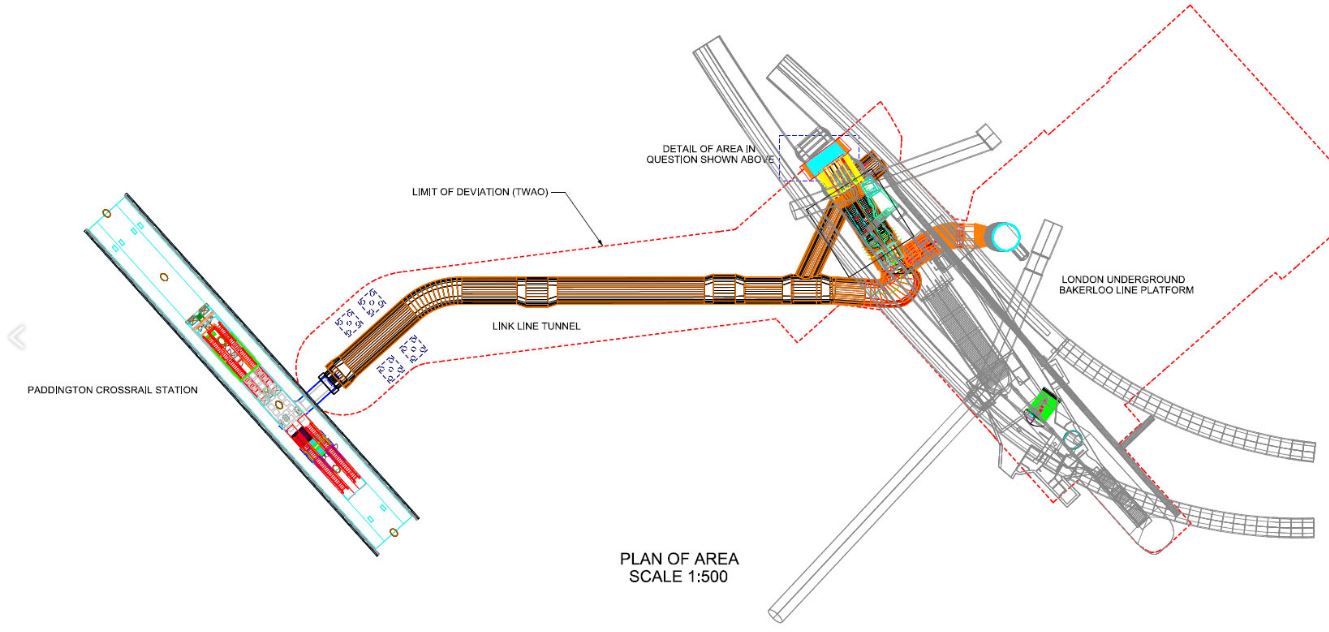
I also said this.
It looks to be a very well thought out link.
- It is connected to the Crossrail station by escalators and lifts in the middle of the island platform at that station.
- The connection at the Bakerloo Line end, would appear to have lifts, stairs and escalators.
- Wll the lifts go direct to the surface as well?
- All routes seem to be direct to the central landing in the Bakerloo Line platforms.
- It may be a hundred and sixty five metres, but the design probably means most passengers will do it fairly fast.But I’m only speculating.
It will certainly be a very powerful interchange, as it will give a much needed connection to London’s least-developed Underground Line.
Having seen one end today, I agree with my statement in the previous post.
Walking The Paddington Bakerloo Line Link
On the 26th May, I walked the Paddington Bakerloo Line Link from the Elizabeth Line to the Bakerloo Line platforms.
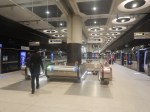


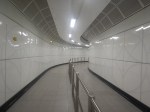
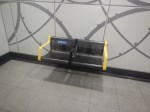
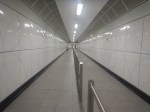

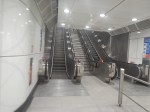

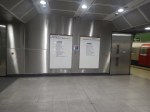
Note.
- There are two escalators and a lift at both ends.
- It appears to be a level walk. Walking the contours around a hill is always easier.
- There are two seats at one third and two thirds distance. Do the seats have a mobile phone hotspot?
- The seats make each section fifty-five metres, as the tunnel is 165 metres long.
- According to this page on the BRE Group web site, it cost just £40 million.
- There is a handrail all the way in the middle of the link.
- Each direction, is wide enough for the largest pram, wheelchair or stretcher.
The Paddington Bakerloo Line Link has set a high gold standard for below ground pedestrian links.
- Both ends have escalators and lifts to provide step-free access between platforms and the tunnel.
- The tunnel is level.
- There is a handrail.
- The tunnel is wide.
- The tunnel has seats for those who need a rest.
- There are help points.
- Most importantly, at only £40 million it was not expensive.
Several other long pedestrian links in London, the UK, Europe and the world could borrow ideas from this link, which I would rate as the best I’ve ever seen.
Does The Paddington Bakerloo Line Link Make The Bakerloo Line A North-South Cross-Branch Of The Elizabeth Line?
The Elizabeth Line has these major North-South cross-branches.
- Jubilee Line at Bond Street station.
- Charing Cross Branch of the Northern Line at Tottenham Court Road station.
- Thameslink at Farringdon station.
- Bank Branch of the Northern Line at Moorgate station.
- East London Line of the Overground at Whitechapel station.
With the opening of the Paddington Bakerloo Line Link, another North-South cross-branch of the Elizabeth Line been added.
It could be argued that London has a new NW-SE high frequency link between Harrow & Wealdstone and Abbey Wood stations.
- Bakerloo Line – Harrow & Wealdstone and Paddington
- Paddington Bakerloo Line Link – 165 metre level step-free walk
- Elizabeth Line – Paddington and Abbey Wood via Whitechapel and Canary Wharf
The journey would appear to take 73 minutes from the National Rail journey planner, which allows fifteen minutes for the change at Paddington.
Is The Bakerloo Line Extension Still Needed?
So how long would it take for journeys from Harrow & Wealdstone to selected stations, that could be served by the Bakerloo Line Extension.
- New Cross Gate – 82 minutes – Change at Paddington and Whitechapel
- Lewisham – 93 minutes – Change at Paddington and Canary Wharf
- Hayes – 98 minutes – Change at Paddington, Whitechapel and New Cross
Note.
- Going South the Hayes train arrives at New Cross, just after the train from Dalston Junction has arrived.
- I also feel with some Northbound improvements on the Overground service times could be shortened.
- Locations on the Old Kent Road might be better served by frequent buses between Elephant & Castle and New Cross stations.
Improving the Overground and the fast link between Whitechapel and Paddington may allow the Bakerloo Line Extension to be kicked into the long grass.
Wi-Fi And 4G
This page on the TfL web site is entitled Everything You Need To Know About The Elizabeth Line, where this is said about Wi-Fi and 4G.
WiFi access within the tunnels will be introduced later in 2022. Customers on both trains and platforms will have access to 4G connectivity this year too.
Will passengers be more likely to take a route through London with Wi-Fi and 4G?
I very much feel they will and that this will draw more passengers to use the Elizabeth Line.
And once, they start to use it, they’ll keep with it, so long as they’re happy.
Conclusion
The Bakerloo Line Extension can be kicked into the long grass.
Effort To Contain Costs For Hoo Reopening
The title of this post, is the same as that of an article in the April 2022 Edition of Modern Railways.
This is the first paragraph.
Medway Council is working with Network Rail and other industry players in an effort to make restoration of a passenger service to Hoo on the Isle of Grain branch feasible. The Council was awarded £170 million from the Housing Infrastructure Fund in 2020 to support schemes to facilitate building of 12,000 new houses in the area, with £63 million of the HIF money for reinstatement of services on the Hoo Branch.
The article mentions, this new infrastructure.
- A new station South of the former Sharnal Street station.
- Works to level crossings, of which there are six between Gravesend station and proposed site of the new Hoo station.
- A passing place at Hoo Junction, where the branch joins the North Kent Line.
- A passing place at Cooling Street.
Note.
- The single-platform Bow Street station cost £8 million.
- The single-platform Soham station cost nearly £22 million, but it has a bridge.
- Reopening the Okehampton branch and refurbishing Okehampton station cost £40 million.
I think costs will be very tight.
Possible Train Services
This is said in the article about the train service on the branch.
While third rail electrification was originally proposed, this idea has been discarded in favour of self-powered trains on the branch, such as battery-operated trains. Possible destinations include Gravesend, Northfleet or Ebbsfleet for interchange with trains going to London, or extension of London to Dartford or Gravesend services over the branch, using hybrid third-rail/battery trains.
Consider.
- Merseyrail will be using battery-electric trains to provide services to the new Headbolt Lane station, as permission was not available for extending the existing third-rail track.
- Electrification would probably cost more than providing a charging system at Hoo station.
- Turning the trains at Gravesend, Northfleet or Ebbsfleet could be difficult and a new bay platform would probably break the budget.
- Both Dartford and Gravesend have two trains per hour (tph), that could be extended to the new Hoo station.
- Hoo junction to Hoo station is no more than five or six miles.
- There are also half-a-dozen level crossings on the route, which I doubt the anti-thord rail brigade would not want to be electrified.
- The Dartford services have a possible advantage in that they stop at Abbey Wood station for Crossrail.
- It may be easier to run services through Gravesend station, if the terminating service from Charing Cross were to be extended to Hoo station.
- A two tph service between London Charing Cross and Hoo stations, with intermediate stops at at least London Bridge, Lewisham, Abbey Wood and Dartford would probably be desirable.
I feel that the most affordable way to run trains to Hoo station will probably be to use battery-electric trains, which are extended from Gravesend.
It may even be possible to run trains to Hoo station without the need of a charging system at the station, which would further reduce the cost of infrastructure.
Possible Trains
Consider.
- According to Wikipedia, stopping Gravesend services are now run by Class 376, Class 465, Class 466 and Class 707 trains.
- Real Time Trains indicate that Gravesend services are run by pathed for 90 mph trains.
- Class 376, Class 465 and Class 466 trains are only 75 mph trains.
- Class 707 trains are 100 mph trains and only entered service in 2017.
I wonder, if Siemens designed these trains to be able to run on battery power, as several of their other trains can use batteries, as can their New Tube for London.
In Thoughts On The Power System For The New Tube for London, I said this.
This article on Rail Engineer is entitled London Underground Deep Tube Upgrade.
This is an extract.
More speculatively, there might be a means to independently power a train to the next station, possibly using the auxiliary battery, in the event of traction power loss.
Batteries in the New Tube for London would have other applications.
- Handling regenerative braking.
- Moving trains in sidings and depots with no electrification.
It should be born in mind, that battery capacity for a given weight of battery will increase before the first New Tube for London runs on the Piccadilly line around 2023.
A battery-electric train with a range of fifteen miles and regenerative braking to battery would probably be able to handle a return trip to Hoo station.
An Update In The July 2022 Edition Of Modern Railways
This is said on page 75.
More positive is the outlook for restoration of passenger services on the Hoo branch, where 12,000 new houses are proposed and Medway Council is looking to build a new station halfway down the branch to serve them. As the branch is unelectrified, one idea that has been looked at is a shuttle with a Vivarail battery train or similar, turning round at Gravesend or another station on the main line.
Steve White worries that this could mean spending a lot of money on infrastructure work and ending up with what would be a sub-optimal solution. ‘Do people really want to sit on a train for 10 minutes before having to get out and change onto another train? I don’t think so. Ideally what you want is through trains to London, by extending the Gravesend terminators to Hoo.’
That would require a battery/third rail hybrid unit, but Mr. White thinks that is far from an outlandish proposal; with Networker replacement on the horizon, a small bi-mode sub-fleet could dovetail neatly with a stock renewal programme. Medway Council and rail industry representatives are working on coming up with a solution for Hoo that could do what it does best; facilitating economic regeneration in a local area.
Note that Steve White is Managing Director of Southeastern.
I’ll go along with what he says!
Conclusion
I believe that a well-designed simple station and branch line could be possible within the budget.
A battery-electric upgrade to Class 707 trains could be a solution.
But the trains could be very similar to those needed for Uckfield and to extend electric services in Scotland.
Class 99 Electro-Diesel Locomotive Order Confirmed
The title of this post, is the same as that of this article on Railway Gazette.
This first paragraph gives details of the order.
GB Railfreight, leasing company Beacon Rail and Stadler have signed an agreement for the supply of 30 Class 99 six-axle electro-diesel locomotives for entry into service from 2025. The operator said they would the first electro-diesel locomotives capable of hauling heavy freight at main line speeds on the UK network.
The article also gives these technical details of the Class 99 locomotives.
- Ability to operate under 25 KVAC overhead electrification.
- Up to 6,000 kW under electrification.
- Maximum speed of 120 km/h (75 mph)
- ‘high-power low-emissions’ Stage V diesel engine.
- Tractive effort of up to 500 kN
- The locomotives will be compatible with UK loading gauge and specifications.
This document on the Stadler web site is the specification for the Stadler Euro Dual locomotives, that have been sold to German operator; HVLE.
These are some technical details.
- Ability to operate under 25 KVAC overhead electrification or 15 KVAC German overhead electrification.
- Up to 6,000 kW under electrification.
- Maximum speed of 120 km/h
- Caterpillar C175-16 Stage IIIB diesel engine.
- Engine output of 2,800 kW
- Tractive effort of up to 500 kN
- A Euro Dual locomotive has a length of 23 metres
- A Euro Dual locomotive has a 3,500 litre fuel tank.
Wikipedia gives details of a Stadler Class 68 locomotive, which is shown in this picture.
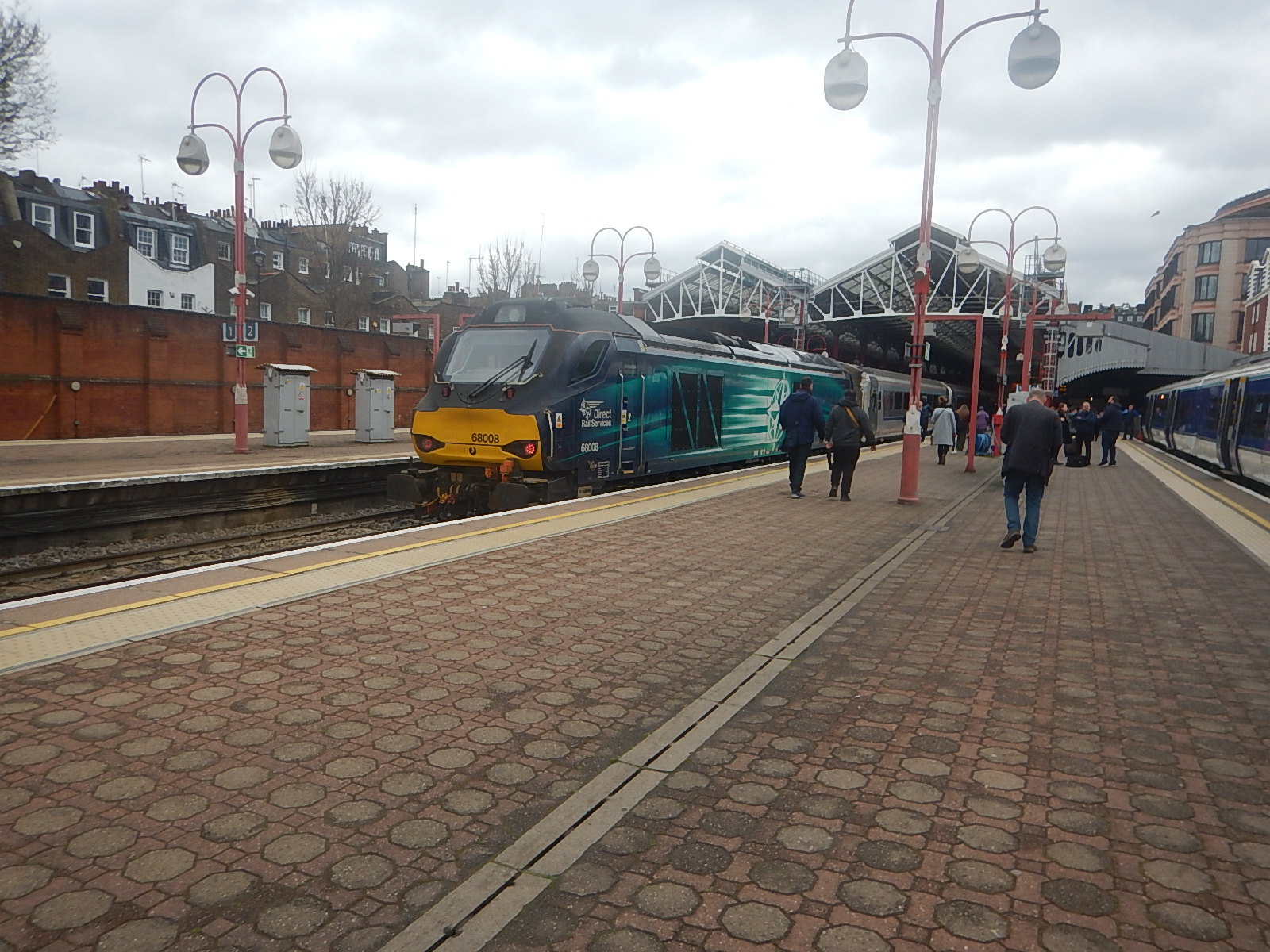
These are some details.
- There are 34 Class 68 locomotives in service in the UK.
- Caterpillar C175-16 Stage IIIB diesel engine.
- Engine output of 2,800 kW
- A Class 68 locomotive has a 5,000 litre fuel tank.
- A Class 68 locomotive has a length of 20.5 metres.
- It should be noted, that a Class 66 locomotive has an engine output of 2,500 kW.
These are my thoughts on the design and specification of the Class 99 locomotive.
The Diesel Engine
The Class 68 and the Euro Dual appear to have a diesel engine, with these specifications.
- Caterpillar C175-16 Stage IIIB diesel engine.
- Engine output of 2,800 kW
Whereas the Class 99 locomotive is stated as having a ‘high-power low-emissions’ Stage V diesel engine.
So have Stadler fitted the latest Caterpillar C175-16 Stage V diesel engine into a Class 99 locomotive?
This would surely be likely, as any reputable diesel engine company would strive to reduce the emissions of their engines and make them compatible with the latest regulations.
Will 2,800 kW Be Enough Power On Diesel?
If the Class 99 locomotive has 2,800 kW from the latest Caterpillar diesel engine, this is the same as for a Class 68 and the Euro Dual, so it is likely to be enough power.
It is also more power, than is available from a Class 66 locomotive.
What Will Be The Length Of The Class 99 Locomotive?
It does appear that the Class 68 locomotive is 20.5 metres long and the Euro Dual is 23 metres long.
But this is not really unexpected as the Euro Dual has two larger three-axle bogies.
I suspect to use the equipment layout of the Euro Dual, that the Class 99 locomotive could be 23 metres long.
What About The UK Loading Gauge?
When it came to designing the Class 68, 88 and 93 locomotives, Stadler had no difficulty fitting all the gubbins in a 20.5 metre package.
If I am right in surmising that a Class 99 locomotive will be longer because of its larger bogies, I suspect that modern computer-aided design will enable Stadler to create a locomotive, that will fit the UK loading gauge.
Conclusion
It does appear that a design based around the latest version of a Caterpillar C175-16 will be possible.
Two More Floating Wind Projects In The Celtic Sea
In Two Celtic Sea Floating Wind Projects Could Be Delivered By 2028, I said this.
There now appears to be four floating wind farms under development in the Celtic Sea between the South-West corner of Wales and the Devon and Cornwall Peninsular.
- Blue Gem Wind – Erebus – 100 MW Demonstration project – 27 miles offshore
- Blue Gem Wind – Valorus – 300 MW Early-Commercial project – 31 miles offshore
- Falck Renewables and BlueFloat Energy – Petroc – 300 MW project – 37 miles offshore
- Falck Renewables and BlueFloat Energy Llywelyn – 300 MW project – 40 miles offshore
But they do create a starter for a GW.
Last night, I found two other projects being developed in the Celtic Sea, under the collective name of the Llŷr Project.
The sponsoring company, which appears to be called Llŷr Wind has a web site, with a title of Harnessing Welsh Energy, which has this outline description underneath.
Situated off the Pembrokeshire coast, in southwest Wales, is a flagship project that could transform the world’s ability to generate renewable electricity from wind. The Llŷr projects are exploring the potential of two innovative floating offshore wind technologies.
The next statement is key.
Combined, the two 100MW projects will generate enough renewable electricity to power around 250,000 homes. If successful, we will be able to offer highly cost-effective, floating offshore wind farms to the rest of the world by 2030.
The Llŷr Project would appear to be a research project to find the best way to generate electricity using floating wind turbines in deep water.
- It appears that the two wind farms will use different floats for the turbines.
- The Llŷr projects are located in the approaches to the Bristol Channel in the Celtic Sea approximately 40 kilometres offshore at depths averaging 60-70 metres.
- These offshore sites enjoy high average windspeeds which are, typically, in excess of 10 metres per second. That is over twenty miles per hour.
- Each 100MW project will comprise 6 to 8 next-generation turbines which are too large to be deployed on land.
- 6 x 20 MW turbines will be 120 MW.
- 8 x 12 MW turbines will be 96 MW.
- Each project will have an offshore substation.
- There will be up to two connections for each substation.
- Will the Llŷr Projects test manufacturers’ new turbine designs?
- It is hoped that installation of the turbines will start in 2025/26, with power being delivered in 2026/7.
- The project is being developed by Floventis Energy, which is a joint venture of SBM Offshore and Cierco.
It does look to me that SBM Offshore, who are a Dutch company, are using their extensive oil and gas experience to develop floating offshore wind.
This appears to be a very well-thought out research project in a location, where there is everything needed.
- Lots of wind, which can be boosted by dragons if needed.
- Deep water.
- Ports for assembly of turbines onto floats.
- Steelworks and fabrication.
- Good electrical connections to the National Grid.
- Excellent universities.
- Good transport connections.
- An experienced engineering workforce.
There is also the ultimate potential of 50 GW of floating offshore wind in the Celtic Sea.
Conclusion
The Llŷr Project could have a very positive input into the worldwide development of floating offshore wind.
I have read the web sites of Floventis, SBM Offshore and Cierco and these companies appear to be aiming to dominate the floating offshore wind industry.
Their strategy is stated on the Floventis web site.
Our strategy is simple. We plan to maximize the local benefits of our projects and minimize their impact. Our technologies are far more benign than conventional offshore wind and more suited for deployment in remote and sensitive environments.
Already driving demonstration projects in California and the UK, Floventis is building a portfolio of projects to take floating offshore wind, through a stepwise process – increasing project size, to full scale commercial development proposals by 2030.
We believe that the floating offshore wind industry is a model for a “just transition” to clean energy, at scale, which will reward communities, in the broadest sense, with skilled jobs and enhanced social equity.
I can certainly live with that! And I’m certain the world can too!
 The Anonymous Widower