Deadly ‘Climate Change’ Fungus Targeted In Drug Project
The title of this post, is the same as that of this article in The Times.
This is the sub-heading.
Dundee University team leading fight against Candida auris, a type of yeast that causes severe illness and spreads easily among hospital and care home patients.
These are the first two paragraphs.
A rapidly growing deadly fungus, thought to have emerged in humans due to climate change, is one of the targets of a £17.9 million drug project.
Candida auris is a type of yeast that can cause severe illness and spreads easily among patients in healthcare facilities. It was first seen in Japan in 2009 and has spread worldwide, with outbreaks in hospitals in the UK, South Africa, India and parts of North and South America.
These are points from the rest of a must-read article.
- The first cases in the UK were recorded in 2014 and numbers have been rising yearly since 2020.
- Found particularly in hospitals and care homes.
- Many infections occur when medical devices such as catheters or ventilators are fitted to patients.
- I’ve had my fill of catheters, when I had my stroke in Hong Kong.
- Immunocompromised people are most at risk.
I may be coeliac, but I tend to believe my immune system is like a platoon of SAS soldiers on steroids. It certainly gave the AstraZeneca viral vector Covid-19 vaccine a good kicking. But it welcomed the second dose, like a long-lost friend.
I asked Google if there was any interaction and got this reply.
While Candida auris is a serious fungal infection, it is not directly linked to celiac disease. However, Candida albicans, another type of yeast, has been implicated in the development or exacerbation of celiac disease through mechanisms like cross-reactivity and molecular mimicry.
I shall act responsibly and hope for the best.
But.
- Research at the University of Padua has shown, that diagnosed coeliacs sticking to their gluten-free diet, don’t get serious doses of Covid-19.
- Research at the University of Nottingham has shown, that diagnosed coeliacs sticking to their gluten-free diet, have a lower cancer rate, than the general population.
- I’ve very rarely had colds, flu and other infection, since my diagnosis as a coeliac and going gluten-free in 1997.
- I’ve never had Covid-19.
A Floridian restauranteur once called me one of the Devil’s children, as I was a coeliac. If that is true, she certainly looks after her own!
Centrica And PTT Sign Heads Of Agreement For Long-Term LNG Supply
The title of this post, is the same as that as this press release from Centrica.
These two paragraphs add details to the deal.
Under the agreement, PTT will supply LNG to Centrica for a 10-year period across a range of destinations in Asia, with deliveries expected to begin in 2028.
This agreement marks a significant step forward in Centrica’s strategic efforts to grow its LNG portfolio. The agreement provides access to diverse markets in Asia, whilst deepening Centrica’s relationship with PTT, an important partner in Asia. For PTT, this deal represents its first, long-term, international LNG sale.
I wonder if this is a much wider deal than it first appears.
There are a lot of small nations in Asia and it looks as the press release talks about a range of destinations in Asia, that Centrica are setting themselves up as a major supplier of LNG to the smaller nations in Asia.
Centrica are also building up a portfolio of products, that they could offer to these small nations.
- LNG terminals from their own engineering resources.
- Domestic client management software.
- Hydrogen production from HiiROC, which they have backed.
- Carbon black for soil improvement from HiiROC.
- Liquid Air energy storage from Highview Power, which they have backed.
- Gas-fired power stations perhaps based on Rolls-Royce mtu diesel engines running on natural gas or hydrogen.
Countries could get these products and services from China, but at what price?
Brain 1 – AI 0
Ocado left me with a bit of a problem this morning, in that they delivered a Marks and Spencer’s Chilli Con Carne without the packaging sleeve, which contains all the cooking instructions.
I decided, I should eat it tonight, whilst I was still sure, it was within its sell-by date.
But after about twenty minutes searching the Internet, I still hadn’t found the instructions.
But my brain was shouting at me, from the depths of its memory.
- Take away the sleeve. – No need for that!
- Piece the film.
- Microwave for two mins thirty seconds.
- Stir the meat.
- Microwave for two mins twenty seconds.
- Wait for a minute.
- Serve and eat.
It certainly tasted as normal!
My brain certainly came out on top in that skirmish!
Are Zero- And Low-Alcohol Beers Cutting Road Accidents?
In The Times today, there is an article, which is entitled Drink-Driving ‘Effectively Legalised’ As Number Of Breath Tests Falls, where these are the first three paragraphs.
Drink-driving has effectively been legalised due to plummeting rates of breathalyser tests and light punishments for offenders, campaigners have warned.
The number of breath tests conducted by police has fallen by more than 62 per cent over the past decade as dangerously inebriated drivers receive short bans.
In 2009, police carried out 647,380 breath tests, but by 2023, that figure had fallen to just 240,322.
This later paragraph, adds a few more statistics.
In 2002, 18 per cent of breath tests were positive, compared to 16 per cent in 2023, while the number of drivers prosecuted for drink-driving offences has significantly decreased. Convictions for drink-driving fell from 55,300 in 2012 to 40,292 in 2023, coinciding with the sharp decline in breath testing.
Note, that in both extracts the latest comparison date is 2023, whereas the earliest date is 2009 and 2002.
This analysis is not the full picture, as there are two big differences between drinking in 2002 or 2009 and 2023.
The first difference is that 2002 and 2009 are pre-Covid, but 2023 is post-Covid.
So did Covid alter our drinking habits, which could have perhaps meant more people drank at home?
The second difference is that in 2023, zero and low alcohol beer was readily available.
I don’t drive, after a stroke ruined my eyesight, but I do drink up to four bottles a day of 0.5 % real ale. The beer I drink has been regularly available since 2017.
I wonder how many nominated drivers are now drinking these beers?
A serious survey and analysis needs to be done.
I’ve Just Finished My Second Bottle Of Beer Today
And It’s not yet noon!
I felt dehydrated when I got up and started a bottle of Adnams Ghost Ship 0.5 % Beer.
I do find on a hot day, it’s a good thirst-quencher.
Perhaps, hot weather and beer, got my grandfather on the way to being an alcoholic and an early death before forty.
I may already be twice the age at which he died.
I do wonder sometimes, that low and zero-alcohol beer could be used to wean people off the demon drink.
In my case though my father had his own psychological ways, that taught me to be responsible with alcohol.
Walking Between Moorgate and Liverpool Street – 30th May 2025
The BBC were saying this morning, that Finsbury Circus Gardens would be reopened today.
So after having my usual full-English gluten-free breakfast in Leon on Moorgate, I walked through Finsbury Circus to Liverpool Street.





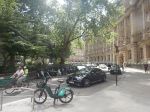
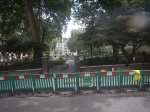



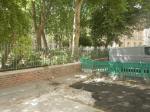
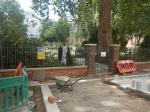

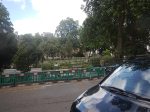
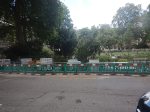
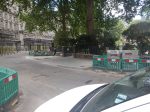
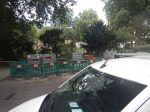

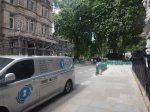
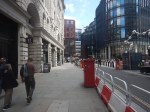




Note.
- The gardens aren’t quite finished and some of the gates aren’t open yet.
- There are some magnificent specimen trees.
- Finsbury Circus Gardens can be approached from Moorgate between the buildings, after Crossing Moorgate on the light-controlled crossing, I wrote about in Moorgate Has Now Got A New Light-Controlled Crossing.
- I think I should have walked around the other side of the circus.
Hopefully, it’ll all be finished in a few days.
An Extreme Day Out – Bradford Forster Square Station
It seems to be the fashion to go and visit somewhere far away in a day. So why not?
For my first trip in this vein, I decided on the spur of the moment to go to Bradford Forster Square station.
Why Did I Choose Bradford Forster Square Station?
There are three main reasons.
- A new platform has just opened at the station to handle the longest LNER trains.
- LNER are now running a seven trains per day (tpd) service via Leeds.
- I wanted to see how LNER’s walk-up ticketing performed on the route.
In addition, I wanted to see how the service performed, now that Bradford is this year’s UK City of Culture.
King’s Cross To Bradford Forster Square Station For £43.00 With A Railcard
I just missed the 11:03, so I booked the 13:03 for £43.00 with my Senior Railcard, from one of the numerous ticket machines in King’s Cross.
The train arrived on time in two hours 47 minutes for the 199.4 miles, which was an average speed of 72 mph.
In What Will Be The Fastest Times Possible Between London King’s Cross And Leeds?, I predicted this.
I wouldn’t be surprised to see with full digital signalling and a 125 mph average between London King’s Cross and Leeds.
- 125 mph Base Time – 89 minutes.
- Four Acceleration/Deceleration sections at 6 minutes each – 24 minutes.
- Three Dwell Times at 2 minutes each – 6 minutes
This would mean a total time of one hour and 59 minutes.
As my Bradford service took two hours and 28 minutes between London King’s Cross And Leeds, that would mean, that a time close to two hours and fifteen minutes could be possible between London King’s Cross and Bradford Forster Square stations.
There Weren’t Many Passengers Between Leeds And Bradford Forster Square Stations
These pictures show the nearly empty train and the small numbers, who alighted at Bradford Forster Square station.
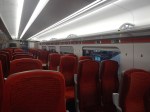
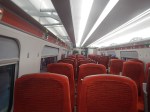
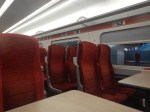
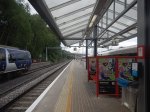
But I don’t think three in the afternoon is a time, when many passengers will need to go between Leeds and Bradford Forster Square stations.
Bradford Forster Square Station
I described that station, with its new Platform 0 in Bradford Forster Square Station – 20th May 2025, where I said the station needed these additions.
The station needs a few additions, like a proper coffee shop, a better shop, ticket machines and toilets.
But it’s not been open very long.
Bradford Forster Square Station To King’s Cross For £25.70 With A Railcard
I bought this ticket from a Yorkshire Lass in the Ticket Office.
There Weren’t Many Passengers Between Bradford Forster Square And King’s Cross Stations
Only about a dozen passengers boarded the train at Bradford Forster Square and some got out at Leeds.
In fact the train wasn’t very busy all the way to London with perhaps twenty passengers in my carriage, when we arrived in King’s Cross.
Will This Service Develop Into A Two-Hourly London King’s Cross And Leeds Or Bradford Forster Square Service With A Trans-Yorkshire Service Tacked On?
Currently, it is the following.
- An express service between King’s Cross and Leeds with stops at Peterborough, Doncaster and Wakefield Westgate.
- An express service between King’s Cross and Bradford Forster Square with stops at Peterborough, Doncaster, Wakefield Westgate and Leeds.
- A local service between Doncaster and Bradford Forster Square with stops at Wakefield Westgate and Leeds.
- Additional calls on some services are at Stevenage, Grantham, Retford and Shipley.
In addition the following would be possible.
- Pairs of trains could split at Leeds, with one train going to Bradford Forster Square and the other train to somewhere like Harrogate, Huddersfield or Skipton.
- Additional stops could be added between Leeds and Bradford Forster Square without slowing services between Leeds and King’s Cross.
But then where does this fit with LNER buying ten CAF tri-mode trains?
Surely they would get better flexibility, if they’d bought more Azumas, which could run on the electrification all the way to Bradford Forster Square, Huddersfield and Skipton. If some had batteries, they could run all the way to Harrogate.
LNER’s Disabled-Unfriendly Refreshments System
I am not disabled, but I only have one fully-working hand, as the school bully broke my left humerus and I have difficulty doing certain things with my left hand, due to the quality of the care I received in Highlands Hospital in Winchmore Hill.
Having a left-sided stroke didn’t help either.
One of the things, I can’t do is take pictures on my mobile phone, so I always carry a proper camera. Because of the injury, I have also never read a QR code with my phone.
On LNER’s trains to get a drink, you either have to order it by reading a QR code or walking to the buffet.
As on the train going North, the buffet was closed, I went thirsty.
In future, if I have a choice of trains, I’ll choose one with a trolly service.
Are The CAF Tri-Mode Trains Part Of A Plan To Drive Open Access Operators Out Of Yorkshire?
This is possibly the only scenario that makes sense.
The ten-car tri-mode trains would be used to take over Grand Central’s services to Bradford Interchange and Sunderland, and Hull Trains services to Hull.
After Monday, LNER are now running more daily services to Bradford Forster Square, than Grand Central are to Bradford Interchange.
If like my return to London on Tuesday, you can buy a walk-up ticket on LNER, then why would you travel on Grand Central.
Conclusion
£68.70 is not a bad price for what is in effect a walk-up day return to Bradford Forster Square.
I’ve just looked how much, I would be charged for an advance ticket on Friday, using the trains I used on Tuesday.
I could get a ticket for £25.70 going North and £28.95 going South or a total of £54.65. All are with my Senior Railcard.
But it does look to me, that LNER and the Government are trying to drive Grand Central off the Bradford route.
If I am right and Hull Trains and Lumo will be next in LNER’s sights, then what was Starmer and other Government ministers doing at the launch of orders for new trains for Grand Central, Hull Trains and Lumo?
Where Have All The M & S Gluten Free Ginger Snaps Gone?
I eat a lot of Marks & Spencer’s gluten-free ginger snap biscuits.
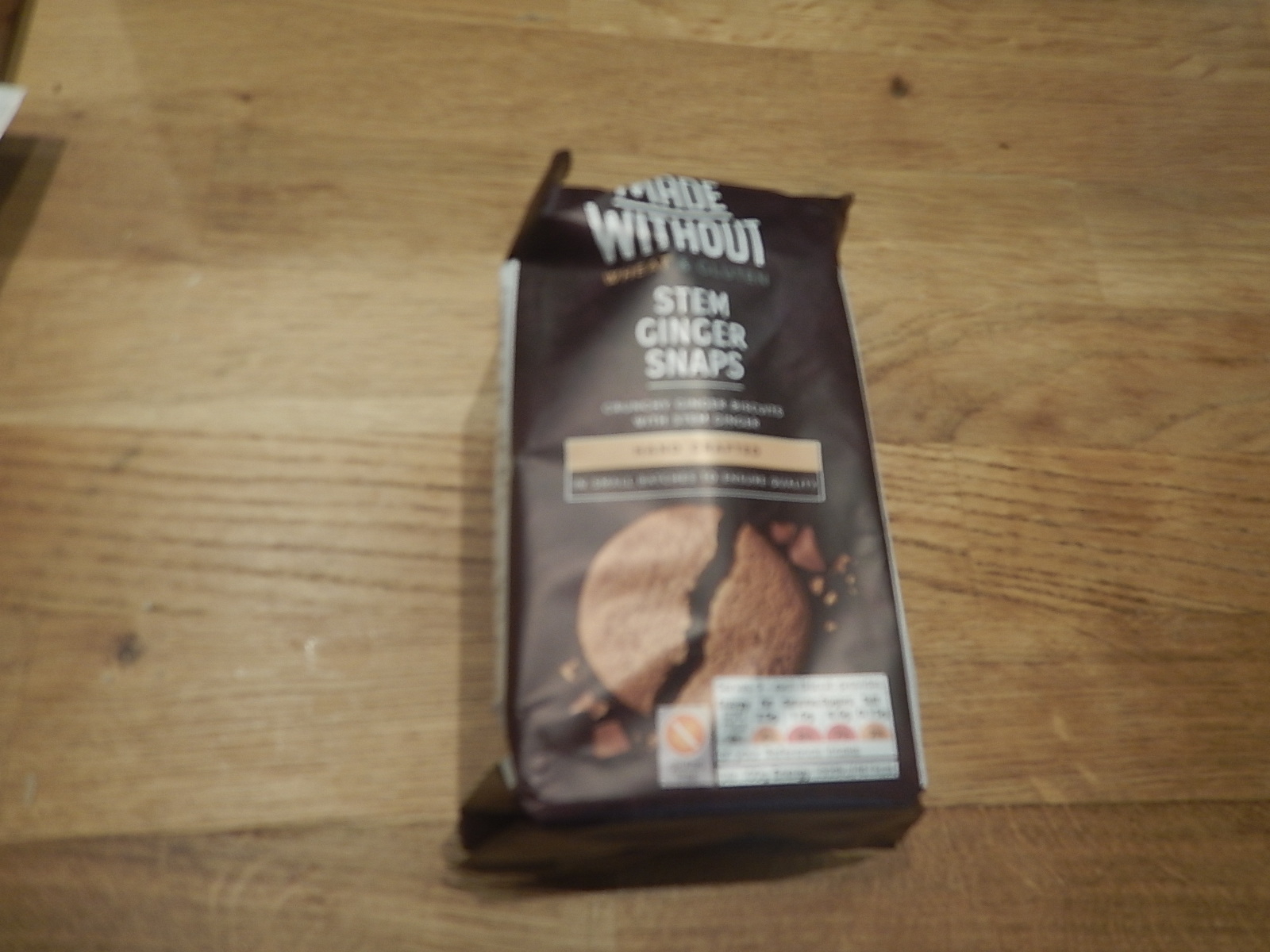
Note.
- Three make a good snack.
- I find ginger is good for me.
- They are the best biscuits for dunking I’ve ever found.
But I’ve only found one lonely packet in the last two weeks.
And that was in Marks & Spencer’s Islington store, hidden away on the wrong shelf, all by itself.
Relief At Last
I was able to buy three packets in the Marks and Spencer Food Hall today, which is the 21st of May.
Name Your Poison!
The weather is hot and my cardiologist, GP and physiotherapist are advising me to keep hydrated.
This picture shows what I’m drinking.
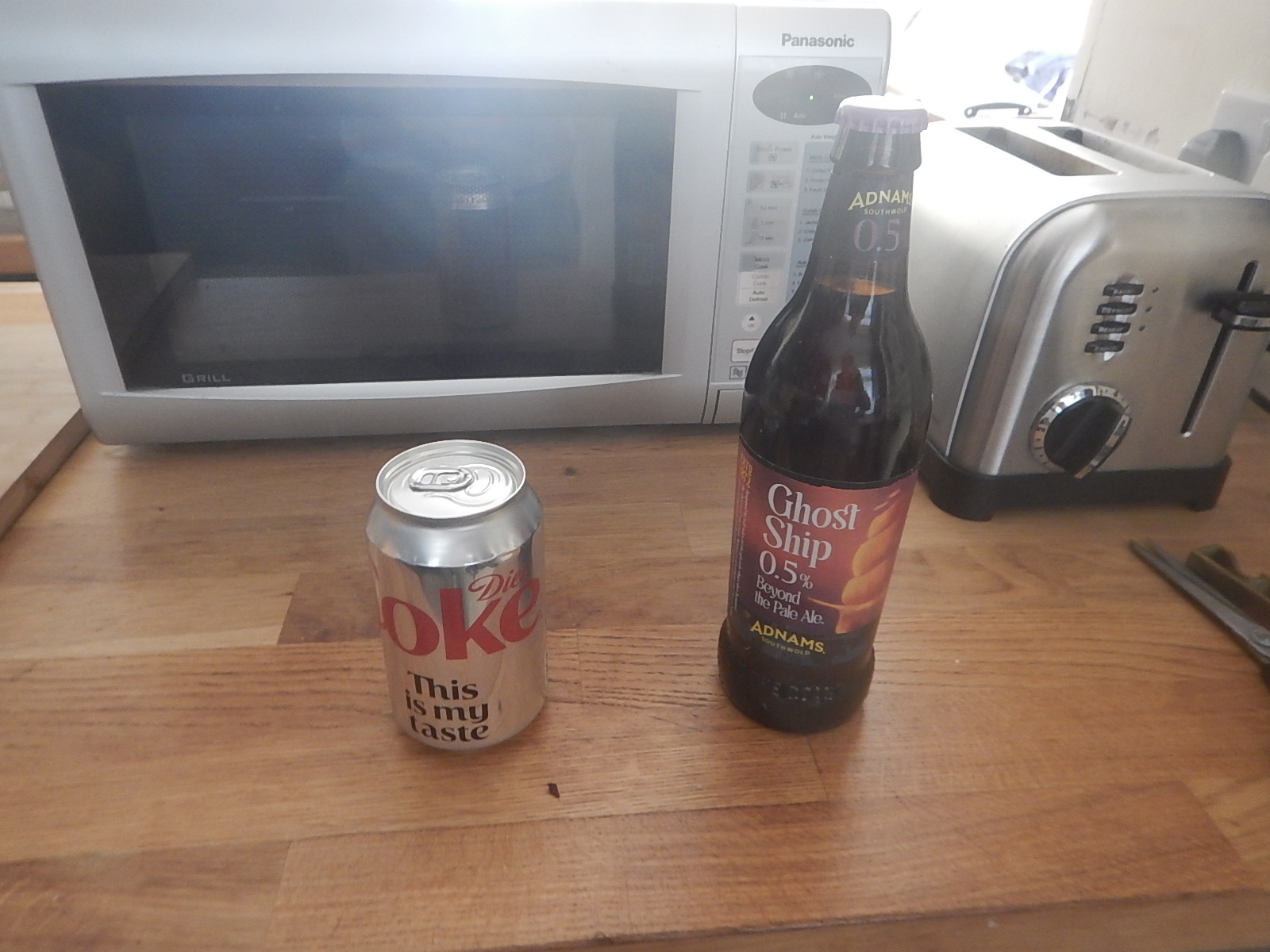
Note.
- The 500 ml. bottle of beer costs £1.25 or £0.0025 per ml.
- The 330 ml. can of Diet Coke costs £4.75 for 8 or £0.0018 per ml.
The prices are from Ocado.
Tapwater is not much cheaper.
Forty Years On
Tuesday was almost exactly forty years to the day since we sold Artemis.
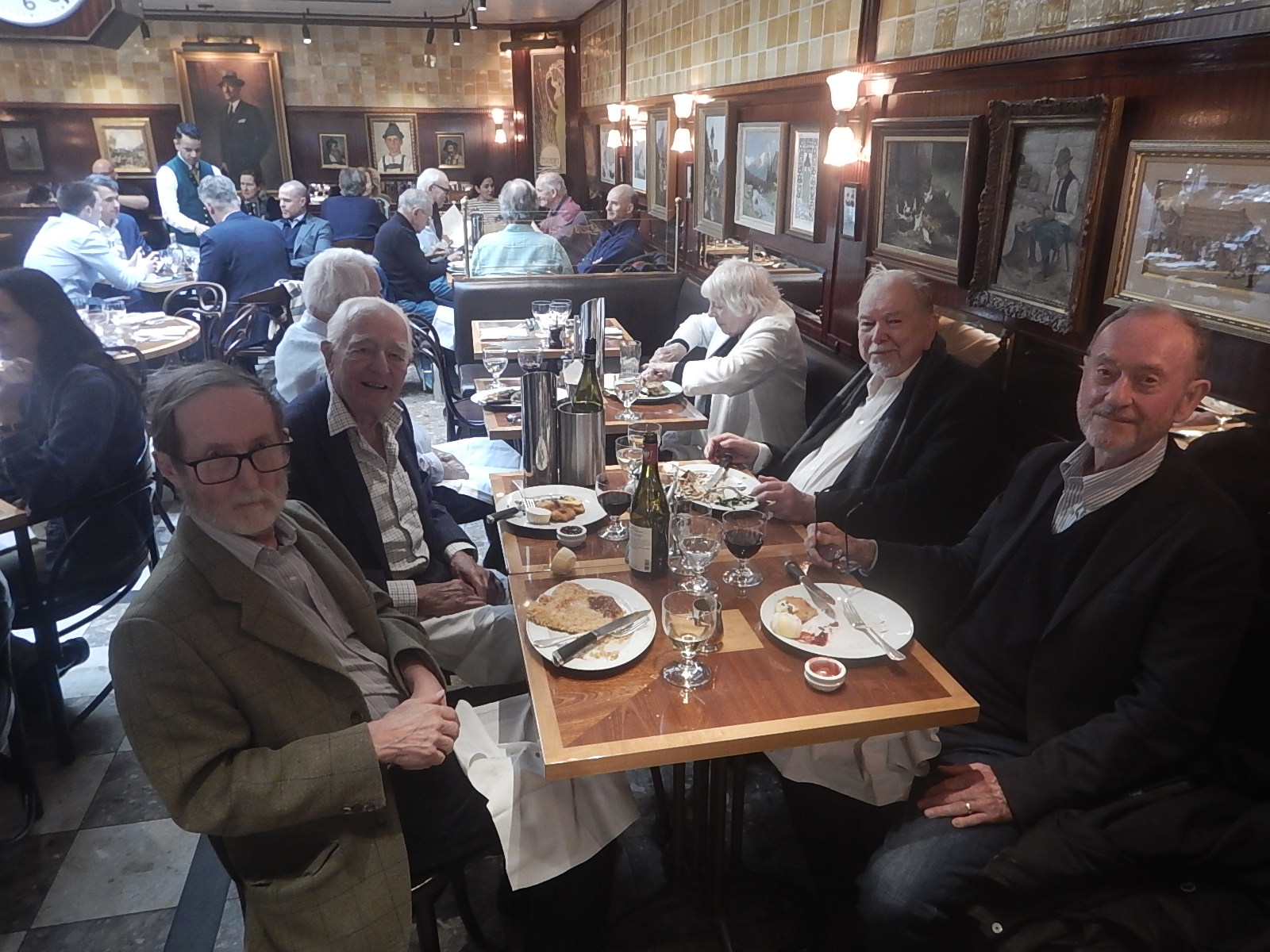
Remarkably, as my son observed, we’re all still here. Perhaps, a bit battered maybe!

