What Percentage Of Government Finance Is Fuel Duties?
I typed the title of this post into Google.
Google found this page from the Office of Budget Responsibility.
This was the first paragraph.
Fuel duties are levied on purchases of petrol, diesel and a variety of other fuels. They represent a significant source of revenue for government. In 2023-24, we expect fuel duties to raise £24.3 billion. That would represent 2.3 per cent of all receipts and is equivalent to £867 per household and 0.9 per cent of national income.
I don’t drive after a stroke ruined my eyesight, so I pay nothing directly.
But when everybody is in electric vehicles, how is the £24.3 billion hole in the government’s finances caused by no-one paying duty on petrol and diesel to be filled?
I would assume that everyone will have a black box in their vehicle and they’ll pay according to the miles they drive, their speed, the congestion and the vehicle type.
And of course if a driver exceeds the speed limit, they’ll be automatically sent a ticket.
I can understand why Labour politicians like Mark Drakeford and Sadiq Khan are so keen on 20 mph limits.
Has that nice Rachel Reeves told them what she has planned for motorists?
Their eyes must be rolling like cash registers.
UK Consortium To Develop Mobile Hydrogen Refuelling For Construction Sites
The title of this post, is the same as that of this article on H2 View.
These first two paragraphs outline the project.
A UK consortium has secured over £3m ($3.7m) in government funding to develop mobile hydrogen refuelling for construction sites.
The Ryze-led consortium, made up of iGAS, Wrightbus, Skanska, Mace Dragados and Sizewell C, has been awarded £3.2m ($3.99m) from the Department of Energy Security and Net Zero’s Red Diesel Replacement Programme to develop and demonstrate a new suite of production-ready hydrogen refuelling equipment suitable for construction sites.
It appears to be a very comprehensive project and everything will be tested in a working quarry.
Having recently had a diesel-powered truck outside my house, that was clearing up the mess left by a dead tree, I feel that the health benefits of zero-carbon construction sites could be immense.
Sizewell C
I find it interesting that Sizewell C is part of the consortium.
Does this mean, that all construction on Suffolk’s new nuclear power station will use hydrogen and electric power, to lower the carbon footprint?
In Ryze Hydrogen’s Suffolk Freeport Hydrogen Vision Takes Shape, I gave this quote from this article on S & P Global.
Ryze Hydrogen plans to install a 6 MW electrolyzer at the Sizewell nuclear site in Suffolk as a launchpad for mass production of low carbon hydrogen in and around the future freeport of Felixstowe, company founder Jo Bamford told S&P Global Platts March 3.
As Sizewell C is to be built by a consortium led by EDF Energy and the French company operates Sizewell B, will the Sizewell electrolyser be built first and powered by Sizewell B, so that the hydrogen can be used to lower the carbon footprint of Sizewell C?
The Zero-Carbon Toilet
In Cadent’s Hydrogen-Hybrid Solar Toilet, I describe how Cadent are looking after their workers on a site in London.
These ideas will inspire a lot more.
Cadent’s Hydrogen-Hybrid Solar Toilet
You see some strange sites on the streets of London, but this is one of the strangest I’ve seen for some years.
It describes itself as a Zero-Emission Support Unit, which is solar-powered with hydrogen back-up.
I suspect some of the conversation and banter amongst users is priceless to say the least.


But at least it doesn’t hide its achievement of a zero-carbon toilet under a bushel.
Canary Wharf Move Means Expansion For Drug Trials Operator
The title of this post, is the same as that of this article on The Times.
These three paragraphs outline the story.
An Aim-listed company that tests infectious and respiratory disease products on volunteers is preparing to move its operations to Canary Wharf.
Amid booming demand for its services, hVIVO, which infects volunteers with safe doses of virus agents, then quarantines them before testing the efficacy of vaccines and antivirals — in so-called human challenge trials — will move from its clinics in Whitechapel, east London, to a new larger facility near by owned by Canary Wharf Group early next year.
Canary Wharf is aiming to attract businesses from the life sciences and health sectors in a drive to become a sciences hub and less reliant on the financial services industry.
This is the second story about life science companies moving to Canary Wharf after Canary Wharf Boosts Its Science Ambitions.
I have my thoughts.
Canary Wharf Is A Transport Hub
Canary Wharf is served by the following transport links.
- Buses
- Docklands Light Railway
- Elizabeth Line
- Jubilee Line
- Thames Clipper
It is very well-connected, which means that staff and volunteers can get there easily.
Canary Wharf Is A Leisure Destination
Canary Wharf is very much more than a collection of expensive offices.
There are shops, bars, restaurants, a museum and a cinema complex.
There Is A Shortage Of Lab-Rats
I volunteer for medical research and regularly, I’m called in to help with the recruitment of more volunteers.
I suspect, that many would prefer to volunteer at Canary Wharf, rather than some parts of London.
Conclusion
I suspect that we’ll see an expansion of medical research of all kinds at Canary Wharf.
Biarritz And My Family
I am coeliac and I am fairly sure, my father was too, as he had all the wind, I had at fifty, which was something that led to my being diagnosed as coeliac.
But as my father was born in 1904, there was not really any tests for the disease.
I was one of many, who were diagnosed at Addenbrooke’s Hospital in the 1990s, where I am certain, they were testing out, the genetic test for the disease.
How else could I go in on a Monday and have a very short chat and give some blood for testing and then get a letter on the Wednesday saying I was probably coeliac and it would be confirmed by endoscopy.
I never met my paternal grandfather, as he died in 1929 at around fifty.
My father told me a lot about his father. He had been very affected by his father’s heavy drinking and alcoholism. I suspect, it was part of his plan to make sure, that I didn’t go the way of his father.
In fact now at 76, I am virtually teetotal, although I do drink a lot of bottles of 0.5 % alcohol real ale. But this doesn’t affect my gut or my INR.
I know little about my grandfather’s health, but he did suffer from asthma and that was what killed him.
Was he coeliac? From my father’s descriptions of his father, it was highly likely.
My grandfather had a profitable printing business, which even in the 1920s had around a hundred employees according to what my father told me.
My father also remembered going to see Spurs at White Hart Lane in a pony and trap. That at least showed a certain status.
My paternal grandparents also used to go to Biarritz for at least part of the winter.
My father did say a couple of times, that it did improve my grandfather’s health.
But when I went to Biarritz ten years ago, it certainly made me feel better.
I wrote Would I Go Back To Biarritz Again?.
Thoughts On The Lucy Letby Case
I was 76 last week and I can recall few cases as horrific as the Lucy Letby case.
In East Kent Maternity Deaths: Babies Might Have Survived With Better Care, I put forward my views about how we can identify systematic problems in healthcare, whether it is down to serious malpractice or just incompetence.
A Funny Turn On Friday
Thursday, 3rd August
I’d slept with the window open, as I often do and woke up to a very damp bedroom. I suspect, that I’d had a similar incident to the one in My Strange Skin.
I measured my INR at 0800 and it was 2.4.
I had my usual bath and breakfast in Leon on Moorgate.
Afterwards, I just went home and added to this blog.
One thing I noticed was that my left leg was going dead, as I sat on the chair typing. but then that happens regularly. It was similarly to the incident in Saved By A Beer?.
Later I had a tremendous itch in my left foot which I treated with copious amounts of the Body Shop’s Hemp Foot Protector.
Friday, 4th August
I had intended to go to the section of the city wall, that has been put on display at City Wall At Vine Street.
But as I was bumping into people and street furniture, I thought there might be something wrong, so I diverted to the A & E at the Royal London Hospital. I was also dropping my brief-case, when I held it in my left hand.
After various tests, including a CT-Scan, I finally left at 21:30, after they’d found nothing serious.
They measured by INR and they said it was 1.9. As I’d not eaten or drunk, large amounts of food and drink, that would drop my INR, how did it drop by 0.5 in 24 hours?
I went home on the Overground and a bus.
Saturday, 5th August
I wasn’t feeling unwell at all.
I was in all day watching the sport.
I was drinking a lot. Perhaps it was 4-5 mugs of tea and a 500 ml. bottle of Adnams 0.5 % Ghost Ship.
Sunday, 6th August
Very much like Saturday, except that I had lunch with my granddaughter.
I had two bottles of 0.5 % beer.
Monday, 7th August
I measured my INR at 0800 and it was 2.8.
Saved By A Beer?
Last night, I was feeling distinctly unwell. My left foot was itching like mad and I couldn’t walk without hanging onto the furniture.
I decided to take serious action.
- I took off my left sock and plastered it with Body Shop Hemp foot protector, which usually stops the itch.
- I also drunk a bottle of 0.5 %-alcohol Ghost Ship from Adnams.
- The beer went down quickly and cured the unsteadiness.
Twenty minutes later my foot was back to normal.
I really should get hold of this unsteadiness, as I’m sure it’s caused a couple of falls and visits to hospital.
It should be noted that yesterday, I’d been drinking tea all day, as I often do.
Is it just that I get dehydrated very quickly?
Asbestos In M&S Killed My Wife — Gove’s Ruling Is A Disgrace
The title of this post, is the same as that of this article in The Sunday Times.
It is in a section of the paper, which is entitled Act Now In Asbestos, where the paper has a campaign.
These are the first three paragraphs.
Janice Allen met and fell in love with her husband, Stuart, when they worked together at Marks & Spencer’s flagship store in London’s Marble Arch.
The shop would end up killing her.
Janice died of mesothelioma, a cancer she got from exposure to asbestos. The M&S store was constructed using the toxic building material and it was found in several locations where she worked. The department store would award her substantial damages before she died at a hospice in Kent in June 2018.
I have only worked with asbestos once.
This picture shows my father’s printing works in Station Road, Wood Green.
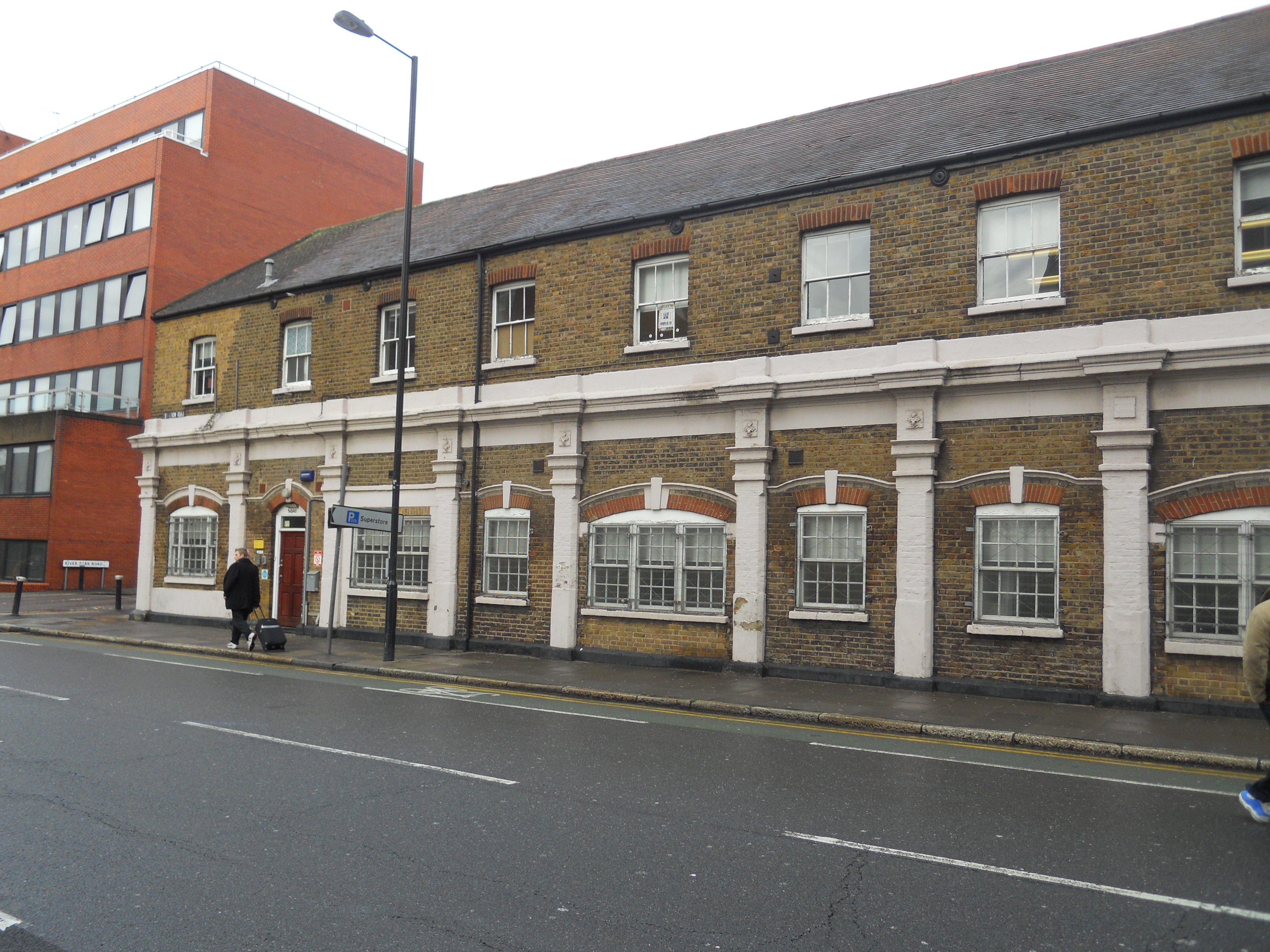
They were not the most salubrious of premises and my father was always making improvements.
My father was a very good practical carpenter and an accomplished painter and decorator.
The back wall of the building was covered on the inside with damp and mould, which even in the 1950s, he thought could be a health hazard, so he decided to do something about it.
- Above a certain height he cleaned the wall and painted it with a standard magnolia paint.
- About two metres above the ground, he fixed a two-by-two batten piece of wood to the wall.
- He also fixed another one to the wall, perhaps halfway up.
- To cover all the damp and mould, he then fixed corrugated asbestos cement sheeting to the two battens with galvanised roofing nails.
- To finish it off he screwed a piece of slatting to the top batten, which he painted a fetching blue colour.
The damp and mould was now out of sight and out of mind.
I remember how this construction was done, as I was my father’s ten-year-old assistant.
Although we’d used asbestos cement sheeting, I don’t think either my father or myself inhaled any asbestos dust, although we weren’t wearing masks, as no-one did in those days.
ICI And Asbestos
My next encounter with asbestos was at ICI in the late 1960s.
- A lot of chemical plants, built before the Second World War were riddled with it.
- But ICI, knew of the problems, and I was given strong warnings about asbestos.
- As I was only putting instruments on plants, with experienced plant fitters, I didn’t have an real encounters with it.
But why if ICI were so anti, were builders still using it and otherwise sensible companies not removing it from their buildings?
This is the large paragraph in The Times article.
An M&S spokesman said: “Like many older buildings, Marble Arch dates back to the interwar era when asbestos was commonly used in construction, and sadly our former colleague Janice Allen worked in the store over 40 years ago, before the consequences of asbestos use were known. Today we rigorously manage asbestos where it is present and ensure the store is safe for every colleague and customer.”
If ICI were worried about asbestos in the late 1960s, why weren’t Marks & Spencer worried about asbestos in the late 1970s.
A Barn In Suffolk
In the 1980s, I put up a new barn, where we lived.
Often, in those days, asbestos was still used for roofing, but I was recommended to use a new British Steel product, where steel was covered in a coloured weatherproof coating.
I Sneeze A Lot
These days, I sneeze a lot, but I didn’t sneeze this much before I was diagnosed as coeliac and went gluten-free.
Could it be that my immune system is so much stronger and when there is something in the air, it is only giving it a good kicking?
I’ve been sneezing a lot for the past few days, as the Council removed a dead tree from outside my house.
But we do know, that Nottingham University have shown, coeliacs on a gluten-free diet have a 25 % lower cancer rate than the general population.
Could this be due to a stronger immune system?
My Coeliac Son Died From Cancer
I believe my youngest son was an undiagnosed coeliac and he lived the rock-n-roll lifestyle on a diet of ciggies, cannabis and Subways, as he was a sound engineer in the music business. He died virtually out of the blue of pancreatic cancer at just thirty-seven.
So on the one hand being a diagnosed coeliac on a gluten-free diet gives you a certain immunity to cancer and other diseases and on the other hand undiagnosed coeliacs are prey to all the nasties we have to live with.
To return to the tragic story in The Times, which gives Stuart’s age as 62, so that places him as being born around 1960 and his late wife; Janice looks about the same age.
I think it is true to say, that in the 1960s, medicine started to change dramatically.
- Serious heart operations and kidney transplants became commonplace.
- The first heart transplant was performed in 1967.
- Drugs were improving.
- Vaccination was stopping polio and other diseases.
- The first test for coeliac disease in children was developed. Sadly, it wasn’t used on me.
But we had little inkling of the role of genes in diseases.
Incidentally, I didn’t come across my first coeliac, until 1972, when a neighbour had a coeliac baby son called Nicholas.
So was the poor lady in The Times story, in some ways a victim of her time?
- Asbestos was wrongly ignored by Marks & Spencer.
- Medicine hadn’t advanced enough to be able to identify, those susceptible to cancer.
- I have heard so many stories of bad use of asbestos.
Sadly, the dangers of asbestos are still ignored by many companies and organisations today and that includes the NHS.
One of my colleagues at ICI in 1968 will be livid at how we are ignoring asbestos.
Is This A Possible Scenario?
Consider.
- Someone is born coeliac and they are not diagnosed.
- If they were born before 1960, there was no test for coeliac disease in children.
- The simple genetic blood test came in around the turn of the century.
- They work with asbestos in their twenties.
- Their immune system is not good enough to protect them.
Just like my son, will they get a serious cancer?
Coeliac Disease And Covid-19
In Risk Of COVID-19 In Celiac Disease Patients, I look at a pier-reviewed paper from the University of Padua.
This sentence, sums up the study.
In this analysis we report a real life “snapshot” of a cohort of CeD patients during the SARS-CoV-2 outbreak in Italy, all followed in one tertiary centre in a red area of Northern Italy. Our data show, in accordance with Emmi et al., the absolute absence of COVID-19 diagnosis in our population, although 18 subjects experienced flu-like symptoms with only one having undergone naso-pharyngeal swab.
There were 138 coeliac disease subjects in the study and they had been gluten-free for an average of 6.6 years.
The downside of this, is how many undiagnosed coeliacs, suffered a severe dose of Covid-19.
Conclusion
Given the pain coeliac disease has inflicted on my family over the years, I believe that all children should be tested for coeliac disease.
I would also recommend, that anybody thinking of working with asbestos or taking a job with a high cancer risk, should get themselves tested for coeliac disease.
Being found to suffer from coeliac disease will not in itself kill you, and with the right diet, it might even prolong your life.
 The Anonymous Widower