A Chiltern Class 68 Locomotive At Marylebone Station
As I was passing through Marylebone station, I took these pictures of a very clean Class 68 locomotive.

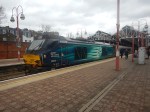
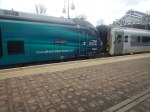

If I’m going to Birmingham, I generally use Chiltern, as often you get to travel in one of these well-restored Mark 3 coaches hauled by a Class 68 locomotive.
With the Mark 3 coach, you get a full size table and a large window to enjoy the countryside.
- The Class 68 locomotives were all built by Stadler in Spain, within the last ten years.
- The UK has a fleet of 34 Class 68 locomotives.
- They are powered by a Caterpillar diesel engine.
- The only problem with the trains is that the Class 68 locomotives are diesel.
But is Caterpillar working on a simple solution?
Search the Internet for “Caterpillar Hydrogen” and you find press releases and other items, like this press release, which is entitled Caterpillar to Expand Hydrogen-Powered Solutions to Customers.
I wouldn’t be surprised to find out, that Stadler and Caterpillar were working on a program to provide a solution to convert Class 68 locomotives to hydrogen.
The ZEROe Demonstrator Has Arrived
The title of this post, is the same as that of this press release from Airbus.
This is the introductory paragraph.
2022 marks a new and exciting phase for ZEROe – Airbus’ ambition to develop the world’s first zero-emission commercial aircraft by 2035. The multi-year demonstrator programme has officially been launched with the objective to test a variety of hydrogen technologies both on the ground and in the air.
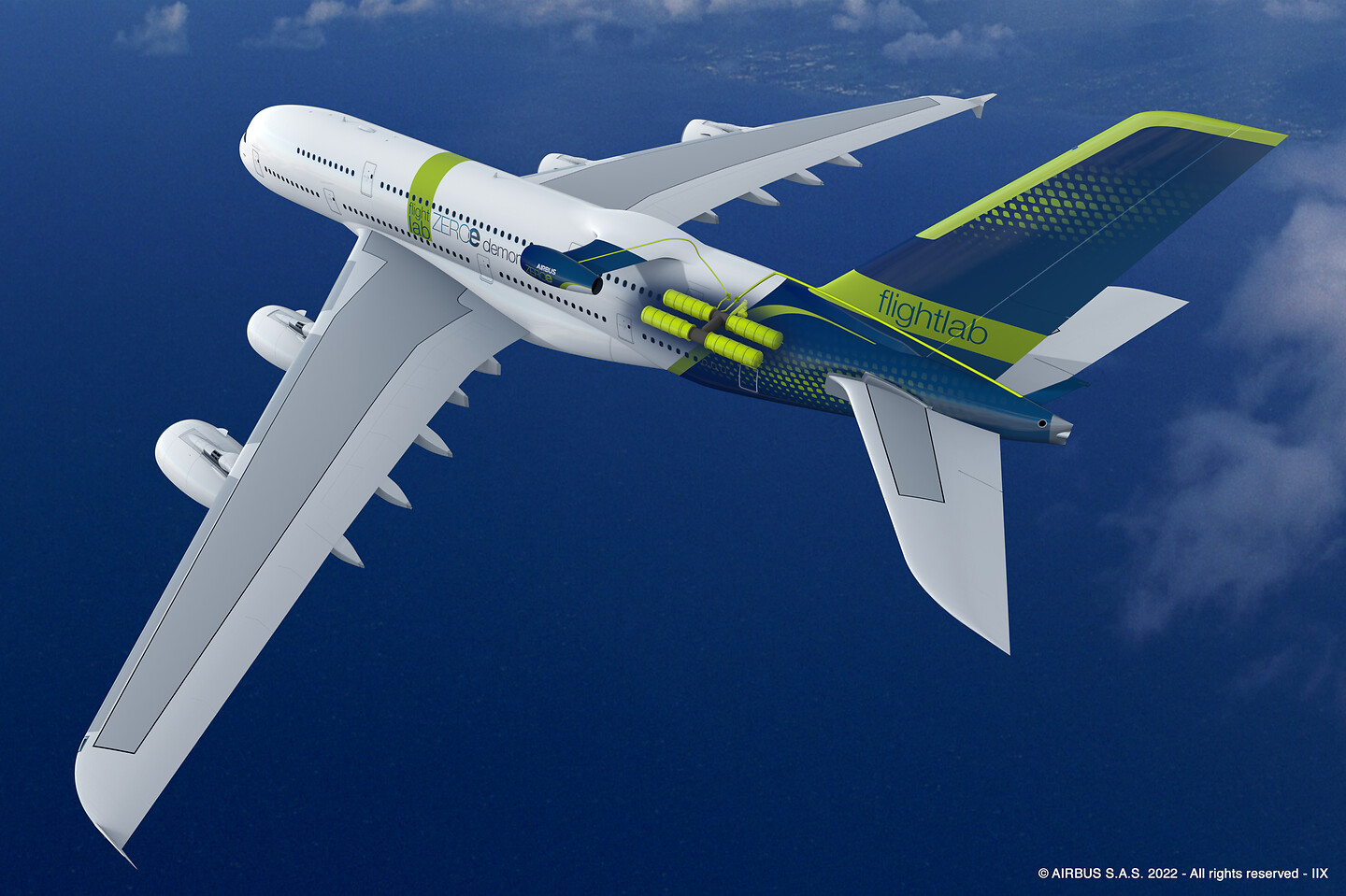
The ZEROe demonstrator will be the first Airbus A 380 aircraft and it is shown in this Airbus visualisation.
Note.
- The four hydrogen tanks in the fuselage.
- The fifth engine mounted in a pod on the fuselage.
- There’s certainly lots of space inside the fuselage for more hydrogen tanks and test and monitoring equipment.
I have a few thoughts.
This Aircraft Will Be A Superb Demonstrator
The press release says this about the use of an A 380 as a demonstrator.
The A380 is the world’s largest and most spacious passenger jet ever built – a size that makes it ideally suited to the role of test platform.
Today, the A380 MSN1 test aircraft is earmarked for a new role: to take the lead on testing the technologies that will be vital to bringing the world’s first zero-emission aircraft to market by 2035.
“The A380 MSN1 is an excellent flight laboratory platform for new hydrogen technologies,” says Mathias Andriamisaina, Airbus ZEROe Demonstrator Leader. “It’s a safe and reliable platform that is highly versatile to test a wide range of zero-emission technologies. In addition, the platform can comfortably accommodate the large flight test instrumentation that will be needed to analyse the performance of the hydrogen in the hydrogen-propulsion system.”
Initially, I suspect the aircraft will fly as a four-engined turbofan aircraft running on standard or sustainable aviation fuel.
The performance of the hydrogen engine will be tested in all phases of operation and at different altitudes.
What Size Is The Fifth Engine?
This layout is clever.
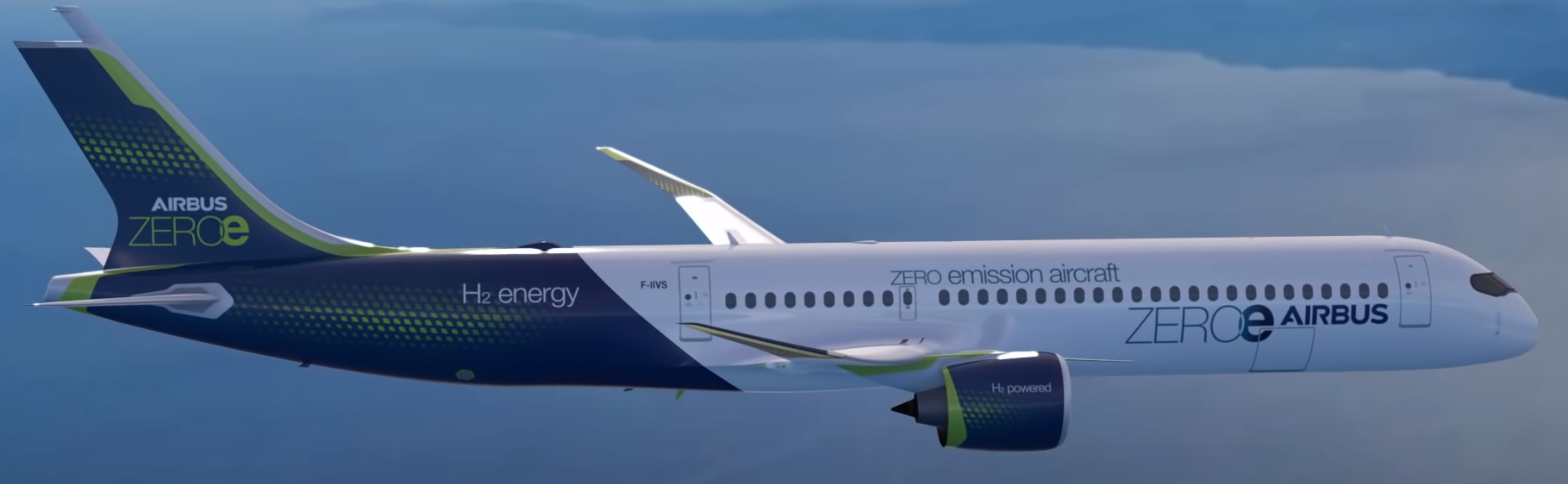
If Airbus want to test a smaller hydrogen engine for say an Airbus A 320-sized hydrogen aircraft like the ZEROe Turbofan shown in this Airbus visualisation, they fit it to the fifth pylon.
Note.
- The fifth pylon on the ZEROe Demonstrator could be the proposed pylon for the ZEROe Turbofan.
- The ZEROe Demonstrator could probably carry a lot of hydrogen to test out the hydrogen engine over a long duration.
- The hydrogen engine could be tested out over the full flight envelop of an Airbus A 380.
I would suspect that the tests on the hydrogen engine would be some of the most comprehensive ever carried out on a new engine.
If Airbus want to test a larger hydrogen engine for say an Airbus A 350-sized hydrogen aircraft, they would probably replace one of the four main engines with the hydrogen engine.
It looks like Airbus will be able to test hydrogen engines for all sizes of plane in their current range.
What Will Happen To Current A 380s?
Consider.
- The production of the A 380 has been stopped.
- There are 251 aircraft in service.
- They appear to be a reliable and safe aircraft.
- The aircraft can run on sustainable aviation fuel.
- The oldest aircraft are only thirteen years old.
- They are still reasonably modern aircraft, that if they needed to be updated to the latest standards could probably be easily done so.
- The aircraft have a lot of volume, which can hold over 500 passengers in a typical configuration.
- The flying characteristics and structure of the aircraft is well known.
I suspect there are a lot of aircraft leasing companies, who feel these aircraft are too good to scrap, just because they are not zero-carbon.
Could Hydrogen Be Stored In The Wing Of An A 380?
Hydrogen storage will get more capable in the next few years and we will see hydrogen stored in strange places in vehicles and aircraft using the gas as a fuel.
The A 380 may well have an advantage in that its wing is relatively thick compared to that of other airliners.
- The A 380 has a wing aspect ratio of 7.53.
- The Boeing 787 has a wing aspect ratio of 11.
- Gliders have wing aspect ratios as upwards of 30.
High aspect ratios are generally more economical on fuel.
But this relatively thick wing, may make it possible to store hydrogen in the wing of an A 380.
Could There Be A Hydrogen-Powered A 380?
I suspect part of the Airbus ZEROe progam will be to investigate the possibility of converting existing A 380 aircraft into a capable hydrogen-powered aircraft.
In Could An A320 neo Be Rebuilt As A ZEROe Turbofan?, I looked at the possibility of turning an existing Airbus A 320 neo into a ZEROe Turbofan running on hydrogen.
This was my conclusion.
I very much feel that there will be a route to convert some or all of the A 320 neo aircraft to hydrogen power.
So what will a ZEROe A 380 look like if it follows the same design route as an A 320 neo to a ZEROe Turbofan?
- There would be a large hydrogen tank in the rear fuselage.
- As I explained earlier, there may be a possibility for some hydrogen to be stored in the wing.
- Both passenger decks would be shortened and perhaps be able to hold the 350-410 passengers of the Airbus A350-1000.
- The cockpit, front part of the fuselage, wings, tailplane and landing gear would be unchanged.
- The aircraft would fit existing jetways at any airport, that can handle an existing A 380.
I believe that converting an existing Airbus A380 to a hydrogen-powered aircraft is possible and the conversion falls within Barnes Wallis‘s rule of problem solving.
There is no greater thrill in life, that proving something is impossible and then showing how it can be done.
The quote comes from a BBC program, where he was interviewed by Chris Brasher, who was another for whom impossible was just a minor hurdle in the way of meeting objectives.
Could There Be A Hydrogen-Powered A 380 Freighter?
Consider.
- I think it is likely, that companies like Amazon will come under pressure over their carbon footprint, as they transport increasing numbers of packages around the world.
- In DHL Express Shapes Future For Sustainable Aviation With First Order Of All-Electric Cargo Planes From Eviation, I talk about how DHL Express have ordered twelve Eviation Alice aircraft to create a zero-carbon service. DHL must feel this would be good for their image. So would they like an intercontinental zero-carbon freighter?
- Some people worry about the air-miles on their food!
There could be a worthwhile niche market for a high capacity intercontinental zero-carbon freighter.
Because it has such a large internal volume, an Airbus A 380 might make an ideal aircraft to convert.
Conclusion
Airbus will learn a lot from the ZEROe Demonstrator.
They may even learn how to develop, a long-range hydrogen-powered zero-carbon A 380 variant that could carry four hundred passengers between Europe and Australia.
Lidl Supermarket Chain Dumps Battery Electrics For Hydrogen Fuel Cell Fleet
The title of this post, is the same as that of this article on Hydrogen Fuel News.
These are a few points from the article.
- Lidl Germany is replacing electric vehicles with hydrogen fuel cell vehicles.
- They are the first retailer to do this in Europe.
- They are also replacing electric fork-lifts in a major depot in France with hydrogen-powered ones.
- The green hydrogen for the depot will be produced by Lhyfe 75 kilometres away from wind energy.
- Lidl is also considering converting some of its delivery trucks to hydrogen.
With respect to the forklifts the article lists the advantages of hydrogen forklifts over electric.
- Hydrogen forklifts have a 97 % availability, as opposed to 50 % for battery ones.
- Refuelling a hydrogen forklift takes 2 to 3 minutes, whereas recharging a battery forklift can take several hours.
- Hydrogen forklifts allow a smaller fleet.
- Hydrogen forklifts need less refuelling bays.
The article shows some of the advantages of using hydrogen.
Conclusion
How many other supermarket groups will switch to hydrogen?
Fortescue And E.ON To Supply Europe With Green Hydrogen
The title of this post, is the same as that of this article on Hydrogen Fuel News.
This is the introductory paragraph.
Fortescue Future Industries Pty Ltd. of Australia and E.ON SE, energy giant from Germany, have teamed up to supply green hydrogen to Europe. This strategy is meant to help the EU to reduce its reliance on Russian energy.
These are other points from the article.
- FFI intends to supply five million tonnes of hydrogen per year by 2030.
- The hydrogen will be produced by renewable hydrogen in Australia.
- E.ON will handle the distribution.
- Five million tonnes is about a third of Germany’s energy imports.
I have some further thoughts.
How Much Energy Is Needed to Produce Five Million Tonnes Per Year Of Hydrogen?
In Can The UK Have A Capacity To Create Five GW Of Green Hydrogen?, I said the following.
Ryze Hydrogen are building the Herne Bay electrolyser.
- It will consume 23 MW of solar and wind power.
- It will produce ten tonnes of hydrogen per day.
The electrolyser will consume 552 MWh to produce ten tonnes of hydrogen, so creating one tonne of hydrogen needs 55.2 MWh of electricity.
55.2 MWh/tonne is 55.2 kWh/kg.
To produce five million tonnes of hydrogen will need 55.2 * 5.000,000 / 10 MWh.
- This is 27,600,000 MWh or 27,600 GWh.
- It works out at an average of 75.6 GWh per day or 3.15 GWh per hour.
This article on vox is entitled The Economic Limitations Of Wind And Solar Power, where this is said.
“Capacity factor” refers to how often a power plant runs and thus how much power it produces relative to its total potential (capacity). Nuclear power plants in the US run around 90 percent of the time, so they have a 90 percent capacity factor. On average, the capacity factor of solar ranges anywhere from 10 to just over 30 percent. For wind, it ranges from 20 to just over 50 percent, averaging around 34 percent in the US.
If FFI is using solar to generate electricity in Australia, I suspect that the capacity factor will be around twenty percent at best.
So will FFI need around 16 GW of solar power to satisfy the supply to Germany?
The Wikipedia entry for Solar Power In Australia gives a good insight into its capability of providing the 16 GW of energy needed. This statement is key.
Using solar to supply all the energy needed would use less than 0.1% of land.
It does look that Australia could provide Germany with some of the hydrogen it needs.
Would It Be Cheaper To Produce The Hydrogen In The North Sea?
This is probably heresy to Andrew Forrest, who is the Australian billionaire behind Fortescue Future Industries.
Consider.
- North Sea Hydrogen could be piped to Germany.
- Australia and Germany would probably need transfer by liquid hydrogen tanker.
- Electrolysers would need to be used to create hydrogen from renewable energy in both Australia and the North Sea.
- Floating wind farms in the North Sea could be more efficient than solar in Australia, as the capacity factor is higher.
We obviously won’t know until both wind and solar technologies are fully developed.
Will There Be Price Competition Between Australian And North Sea Hydrogen?
It does appear that Andrew Forrest believes in research and I wouldn’t be surprised to see his company developing ideas that drop the price of solar-produced hydrogen.
Research and good engineering on both sides will also drop prices, so I suspect price competition will occur.
Will Fortescue Future Industries Develop North Sea Hydrogen?
Given the ambition being shown by Andrew Forrest to be the Hydrogen King, I wouldn’t be surprised if he joined the streams of international investors in the North Sea, who are developing wind farms.
Conclusion
Go! Aussie! Go!
Dual-Fuel Class 37 And 66 Locomotive Concepts Unveiled
The title of this post, is the same as that of this article on Railway Gazette.
This is the first paragraph.
G-volution and SBL-Rail have produced design concepts for dual-fuel versions of Class 37 and 66 locomotives, which would be able to run on diesel with biomethane, biopropane or hydrogen.
Note.
- There are about sixty Class 37 locomotives in service or stored.
- 480 Class 66 locomotives were originally produced and over 300 must still be in service.
- Both locomotives have electric transmissions.
- G-volution are developing a dual-fuel Class 180 train, that I wrote about in Grand Central DMU To Be Used For Dual-Fuel Trial.
- Two of the design concepts involve replacing the current diesel engines with modern Cummins engines, that meet current emission regulations.
- Fuel savings of ten percent are mentioned for one engine conversion.
This is said about the dual-fuel conversions.
Biomethane and biopropane dual fuel engines would offer significant carbon and cost savings verses diesel. Hydrogen has the potential to do so if produced from renewable sources, but would need to be ‘much cheaper’ than it is today.
The article then gives a table, which shows the various savings.
The article comes to these conclusions.
- Biomethane and biopropane prices are expected to fall, as production increases.
- Green hydrogen is too expensive, but costs will come down.
- More rises in the price of diesel, will tilt costs towards alternative fuels.
I feel that to get the emissions and costs down, there would need to be a bit of cheating.
Look at this picture of a Class 66 locomotive under 25 KVAC electrification.

I wonder, if a pantograph and all the electrical gubbins could be fitted to a Class 66 locomotive to create a genuine electro-diesel locomotive.
- It would use electrification, where it exists.
- It would use the existing electric transmission.
- I do suspect though that the Class 37 locomotive may be more difficult to convert because of its age.
It should be noted that in GB Railfreight Plans Order For Future-Proofed Bi-Mode Locomotives, I talk about how GB Railfreight are proposing to purchase a fleet of new electro-diesel freight locomotives, that appears will have Class 66 locomotive performance on both electrification and diesel.
The Involvement Of Cummins
Cummins, who are one of the world’s largest manufacturers of diesel engines, could have a lot to lose from the move to zero-carbon.
- But they have adopted an if-you-can’t-them-join-them philosophy to hydrogen.
- They have bought up hydrogen companies like Hydrogenics.
- They are developing internal combustion engines that can run on hydrogen.
- Cummins have claimed to me, that they will try to fill any niche market with their engines, so it would be likely, they would apply that philosohy to hydrogen.
I believe that Cummins will not give up their market share without a fight.
I would expect, Cummins will actively support G-volution’s plans, if it would sell upwards of fifty large engines.
Conclusion
I have four main conclusions.
- I believe that this study could lead to a very significant and worthwhile updating of a Class 66 locomotive.
- The locomotive would need to be modified so it could use electrification.
- But I am more dubious, that this could be done with the Class 37 locomotive.
- I also believe that Cummins will be part of the solution.
In the wider world, I also believe that to retain their turnover and market share, Cummins and the other big diesel engine manufacturers will come up with increasingly innovative solutions.
Caterpillar, Cummins, Deutz, JCB, MTU and others will not give up multi-billion businesses without a fight.
West Midlands To Run ‘Largest Hydrogen Bus Fleet’ Due To New Funding
The title of this post, is the same as that of this article on the BBC.
These are a few points from the article.
- The region is set to get 124 new hydrogen vehicles.
- The West Midlands is set to run the UK’s largest hydrogen bus fleet after securing new funding.
- The region will get 124 new buses after it won £30m from the Department for Transport to fund a switchover.
- Twenty four of the new vehicles will be articulated tram-style buses set to run on a new bus priority route between Walsall, Birmingham and Solihull.
Does the last statement mean, that they will buying a hundred double-decker hydrogen buses?
A few thoughts.
Riding Birmingham’s New Hydrogen-Powered Buses
These are a few pictures from Riding Birmingham’s New Hydrogen-Powered Buses.





They were excellent buses from Wrightbus.
The Tram Style Buses
The Belgian firm; Van Hool have a product called Exquicity. This video shows them working in Pau in France.
These tram buses run on rubber types and are powered by hydrogen.
Similar buses running in Belfast are diesel-electric.
Could these be what the article refers to as tram-style buses?
It should be noted, that the West Midlands and Pau have bought their hydrogen filling stations from ITM Power in Sheffield.
So has there has been a spot of the Entente Cordiale between Pau and the West Midlands?
Will The West Midlands Buy The Other Hundred Buses From Wrightbus?
There doesn’t seem to be any problems on the web about the initial fleet, so I suspect they will.
It should also be noted that Wrightbus make the following types of zero-emission buses.
- StreetDeck – Hydroliner FCEV – Double-deck hydrogen bus
- StreetDeck – Electroliner BEV – Double-deck battery bus
- GB Kite – Hydroliner FCEV – Single-deck hydrogen bus
- GB Kite – Electroliner BEV – Single-deck battery bus
These would surely enable the West Midlands to mic-and-match according to their needs.
Hysata – Electrolyser Breaks Efficiency Records, Enabling World-Beating Green Hydrogen Cost
The title of this post, is the same as that of this article on Hydrogen Central.
These three paragraphs explain what Hysata have achieved.
Hysata – electrolyser breaks efficiency records, enabling world-beating green hydrogen cost.
Hysata’s world-leading hydrogen electrolyser technology has been recognised on the global stage with ground-breaking research published in top tier peer-reviewed scientific journal Nature Communications.
The research confirms Hysata’s ‘capillary-fed electrolysis cell’ can produce green hydrogen from water at 98% cell energy efficiency, well above International Renewable Energy Agency’s (IRENA) 2050 target and significantly better than existing electrolyser technologies, enabling a hydrogen production cost well below A$2/kg (US$1.50/kg).
Note.
- Hysata are an Australian company.
- The research and its results have have met the gold standard of pier review in a respected journal.
Their efficiency levels would appear to be breathtaking.
I have some more information and a couple of thoughts.
The Technology
This article on New Atlas is entitled Record-Breaking Hydrogen Electrolyzer Claims 95% Efficiency, gives a full overview of the technology.
It does appear that Hysata have shown tremendous attention to detail to raise the efficiency.
The Efficiency
In Can The UK Have A Capacity To Create Five GW Of Green Hydrogen?, I said the following.
Ryze Hydrogen are building the Herne Bay electrolyser.
- It will consume 23 MW of solar and wind power.
- It will produce ten tonnes of hydrogen per day.
The electrolyser will consume 552 MWh to produce ten tonnes of hydrogen, so creating one tonne of hydrogen needs 55.2 MWh of electricity.
55.2 MWh/tonne is 55.2 kWh/kg.
Hysata are claiming on their web site, that their electrolysers have 95% efficiency, which is 41.5 kWh/kg.
- A megawatt of electricity at Herne Bay will produce 18.1 Kg of hydrogen.
- A megawatt of electricity in a Hysata electrolyser will produce 24.1 Kg of hydrogen.
That is 33 % more.
UK On Track To Reach 4,000 Zero Emission Bus Pledge With £200 Million Boost
The title of this post, is the same as that of this press release from the Government.
These are the main points of the press release.
- Nearly 1,000 more zero-emission buses to be funded in towns and cities across the country, bringing the total funded in England to 2000 so far under this government.
- A further 600 zero-emission buses have been funded in Scotland, Wales and Northern Ireland.
- Comes as consultation launched on ending sale of all new non-zero emission buses from 2025 to 2032.
- Government continues taking unprecedented action to hit net zero and level up transport across the country.
Areas to get the new buses include.
- Blackpool
- Greater Manchester
- Hertfordshire
- Norfolk
- North Yorkshire
- Nottingham
- Oxfordshire
- Portsmouth
- South Yorkshire
- West Midlands
- West Yorkshire
- York
I would also like to see the government fund trials for the conversion of suitable buses to zero carbon. I certainly believe that London’s New Routemaster buses could be converted to hydrogen.
ScotWind N3 Offshore Wind Farm
I introduced this wind farm in ScotWind Offshore Wind Leasing Delivers Major Boost To Scotland’s Net Zero Aspirations as Lease 15 – The Odd Bid Out.
I said this.
In any design competition, there is usually at least one design, that is not look like any of the others.
In the successful bids for the ScotWind leases, the bid from Magnora ASA stands out.
- The company has an unusual home page on its offshore wind web site.
- This page on their web site outlines their project.
- It will be technology agnostic, with 15MW turbines and a total capacity of 500MW
- It will use floating offshore wind with a concrete floater
- It is estimated, that it will have a capacity factor of 56 %.
- The water depth will be an astonishing 106-125m
- The construction and operation will use local facilities at Stornoway and Kishorn Ports.
- The floater will have local and Scottish content.
- The project will use UK operated vessels.
- Hydrogen is mentioned.
- Consent is planned for 2026, with construction starting in 2028 and completion in 2030.
This project could serve as a model for wind farms all round the world with a 500 MW power station, hydrogen production and local involvement and construction.
I have some thoughts.
The Location Of The Windfarm
This Google Map shows the area between Stornaway and Kishorn.
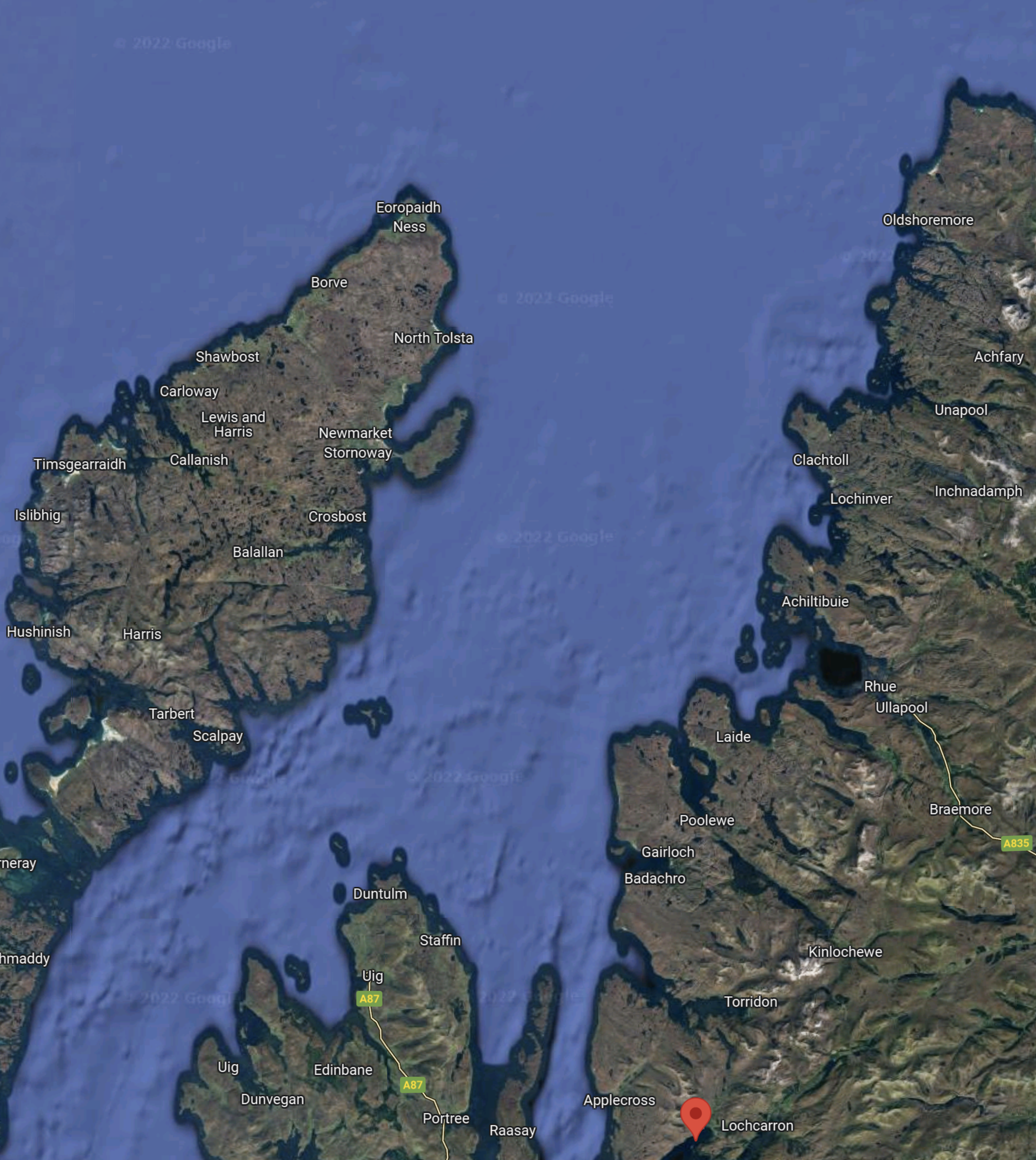
Note.
- The island in the North-West of the map is Lewis and Harris.
- The windfarm will be to the North-West of the island.
- Stornaway is on the isthmus, that connects the small peninsular on the East of the island.
- The port of Stornaway is on the South side of the isthmus.
- The port of Kishorn is shown by the red arrow.
This second Google Map shows the town of Stornaway.
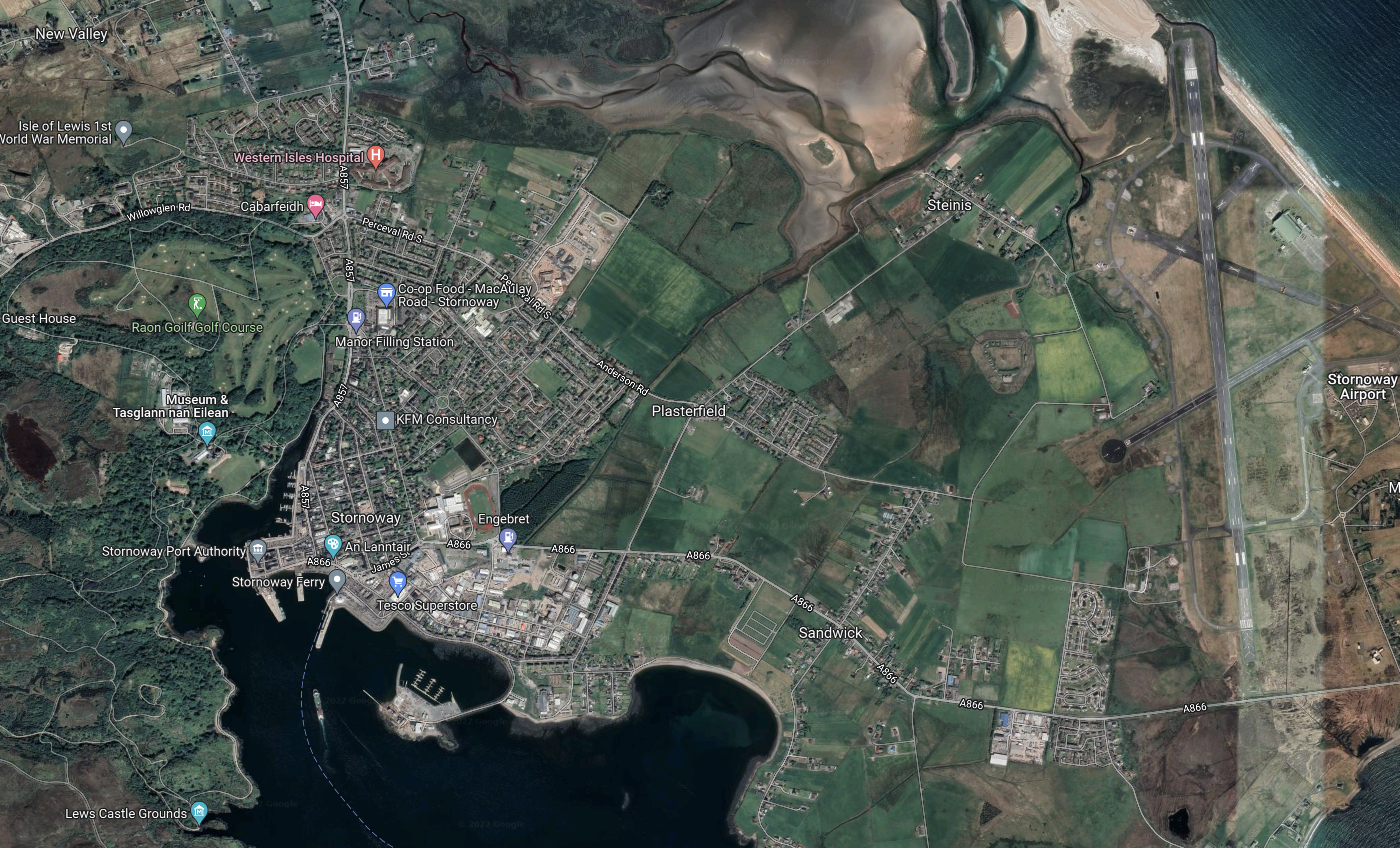
Note that Stornaway has a substantial airport in the East and a large port.
This third Google Map shows Loch Kishorn in more detail.
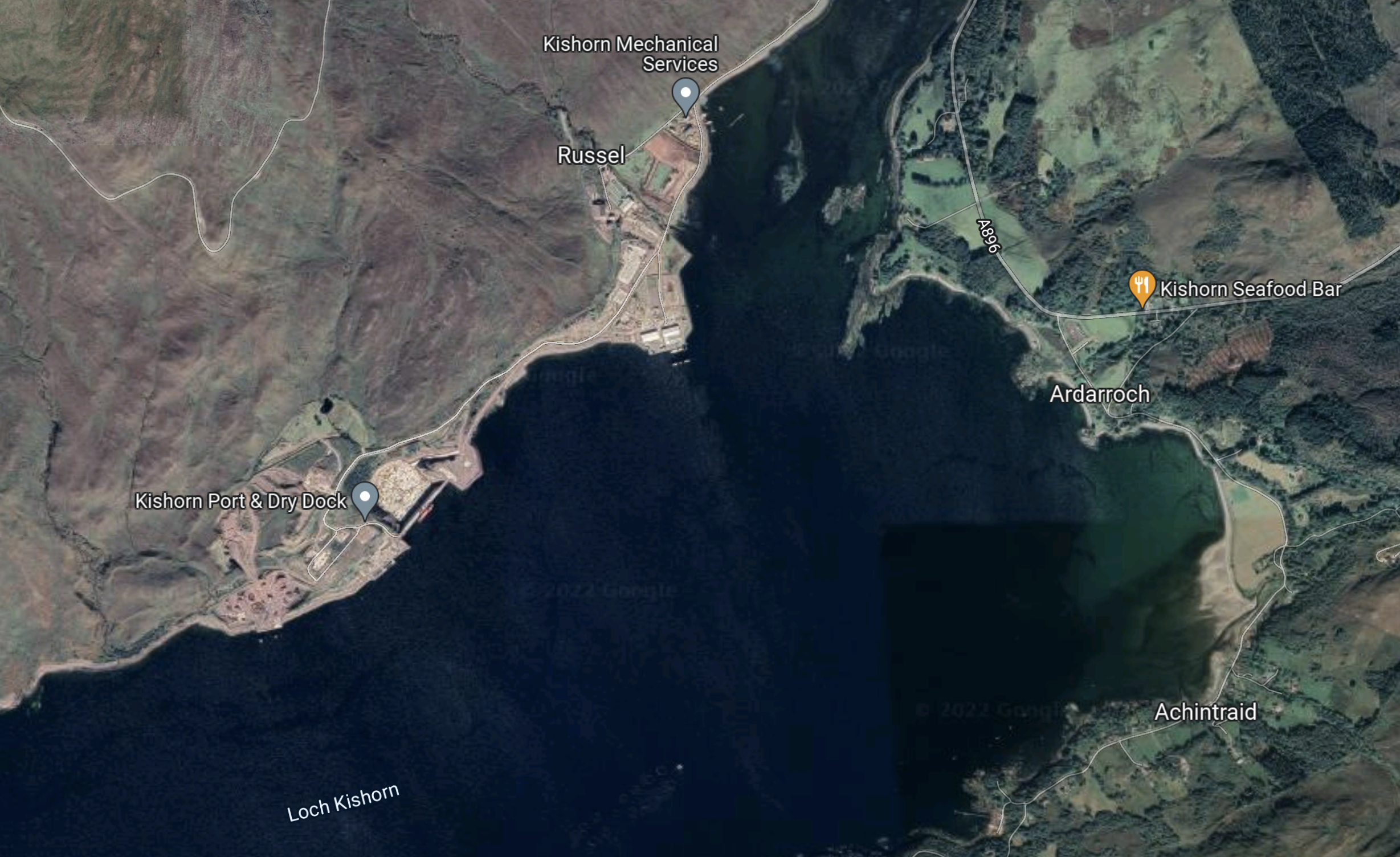
Kishorn Yard at the Kishorn Port was originally built to create the large structures in steel and concrete for the development of North Sea Oil. This is an extract from the Wikipedia entry.
The yard was therefore well suited to build the 600,000-tonne concrete Ninian Central Platform, which was built in 1978. Material was supplied by sea and when complete the platform needed seven tugs to tow it to its operating position in the North Sea. The Ninian Central Platform still holds the record as the largest movable object ever created by man.
If the yard could build the Ninian Central Platform, I’m sure that Magnora ASA intend to build the concrete floater in Loch Kishorn.
The Floating Wind Turbines
In visualisations on the site, the floating wind turbines are shown as sitting on floating three-pointed star structures.
As Technip UK are partners in the project and I suspect they are a subsidiary of TechnipFMC, who are a well-known company described like this in Wikipedia.
TechnipFMC plc is a French-American, UK-domiciled global oil and gas company that provides complete project life cycle services for the energy industry.
The company would certainly have the expertise to design a floating platform for a wind farm.
Like the WindFloat, it could be based on semi-submersible offshore platform technology.
The Magnora web site, say that 15 MW wind turbines will be used, so these will probably be some of the largest wind turbines in the world.
Currently, the largest floating wind turbines are the 9.5 MW units at the Kincardine Wind Farm in Scotland.
33 x 15 MW wind turbines would give a capacity of 495 MW.
I suspect the turbines would be towed to Stornaway or Kishorn for major servicing.
What Will The Concrete Floater Do?
There are a variety of tasks that the concrete floater could handle.
- It could collect the electricity from the wind turbines. I suspect this would give advantages in the connection and disconnection of individual turbines into the windfarm.
- Any electricity conversion necessary would be handled on the floater.
- The floater would handle the seaward end of the connection to the shore.
- There could be a battery or energy storage device on the floater.
- Could a Gravitricity battery or something similar be built into the floater?
- Magnora mention hydrogen on their web site. Could an electrolyser be built on the floater and the hydrogen distributed to Lewis and Harris by pipeline?
Some oil and gas platforms are very comprehensive and there is no reason why there can’t be substantial processing done on the floater.
The Concrete Floater
According to Wikipedia, offshore concrete structures have been in use successfully for about 50 years. Nearly fifty are in use in the oil and gas industry.
Wikipedia introduces its section on floating concrete structures like this.
Since concrete is quite resistant to corrosion from salt water and keeps maintenance costs low, floating concrete structures have become increasingly attractive to the oil and gas industry in the last two decades.
I also wonder if a floating concrete structure would make a good hydrogen storage tank, if there is electrolysis on the floater on the to turn electricity into hydrogen.
Conclusion
My original conclusion after reading about this wind farm was.
This project could serve as a model for wind farms all round the world with a 500 MW power station, hydrogen production and local involvement and construction.
I have no reason to change my mind and feel that the concept may have even more possibilities.
Hydrogen Fuel Cell Trucks And H2 Infrastructure Could Benefit From New Legislation
The title of this post, is the same as that of this article on Hydrogen Fuel News.
Politicians from both main parties in the United States are promoting a Hydrogen for Trucks Act, to support the conversion of domestic trucking from diesel to hydrogen.
These are the three main parts of the Act
- Provide incentives for adopting hydrogen fuel cell trucks by covering the difference in cost between them and conventional diesel-powered vehicles.
- Encourage tandem fueling station and vehicle deployment, to ensure that one doesn’t need to exist before the other is in place, solidifying the overall fueling infrastructure.
- Collect data and establish benchmarks for various forms of fleet operation, helping to accelerate deployment by incentivizing private investment.
We could do with an Act like this in the UK.
But whereas the United States would start with hydrogen for trucks, we would probably start with hydrogen for buses.
 The Anonymous Widower