Platform Canopies To Be Renovated For Passengers At Lancaster Station
The title of this post is the same as that of this press release from Network Rail.
These are the first two paragraphs.
Station platform canopies are being renovated at Lancaster to improve passenger journeys on the West Coast Main Line.
Network Rail is investing £9.5m to restore and upgrade the station building for the future.
This picture from Network Rail shows an aerial view of the station.
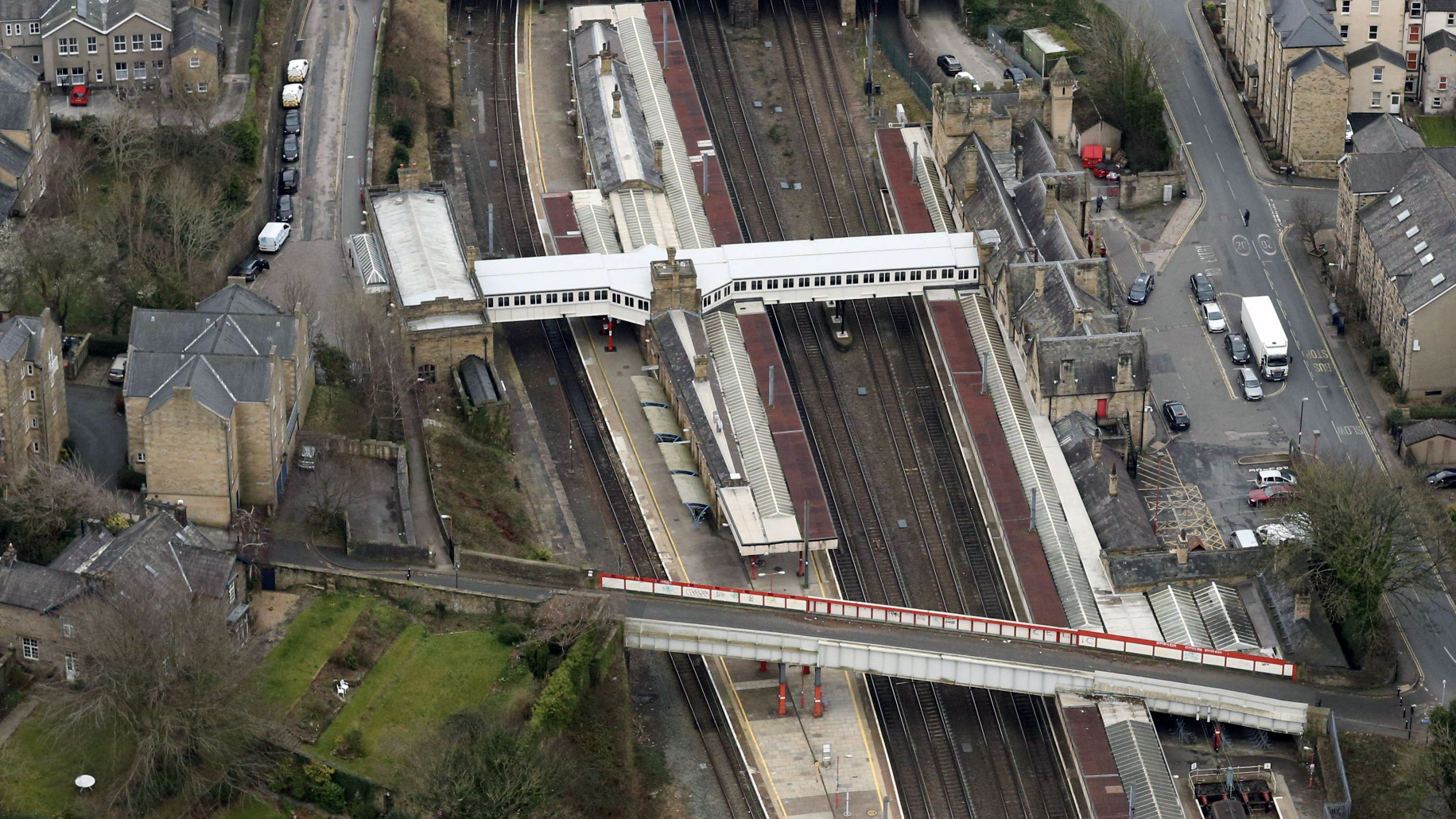
Note that the camera is looking South.
This picture shows the current canopies.
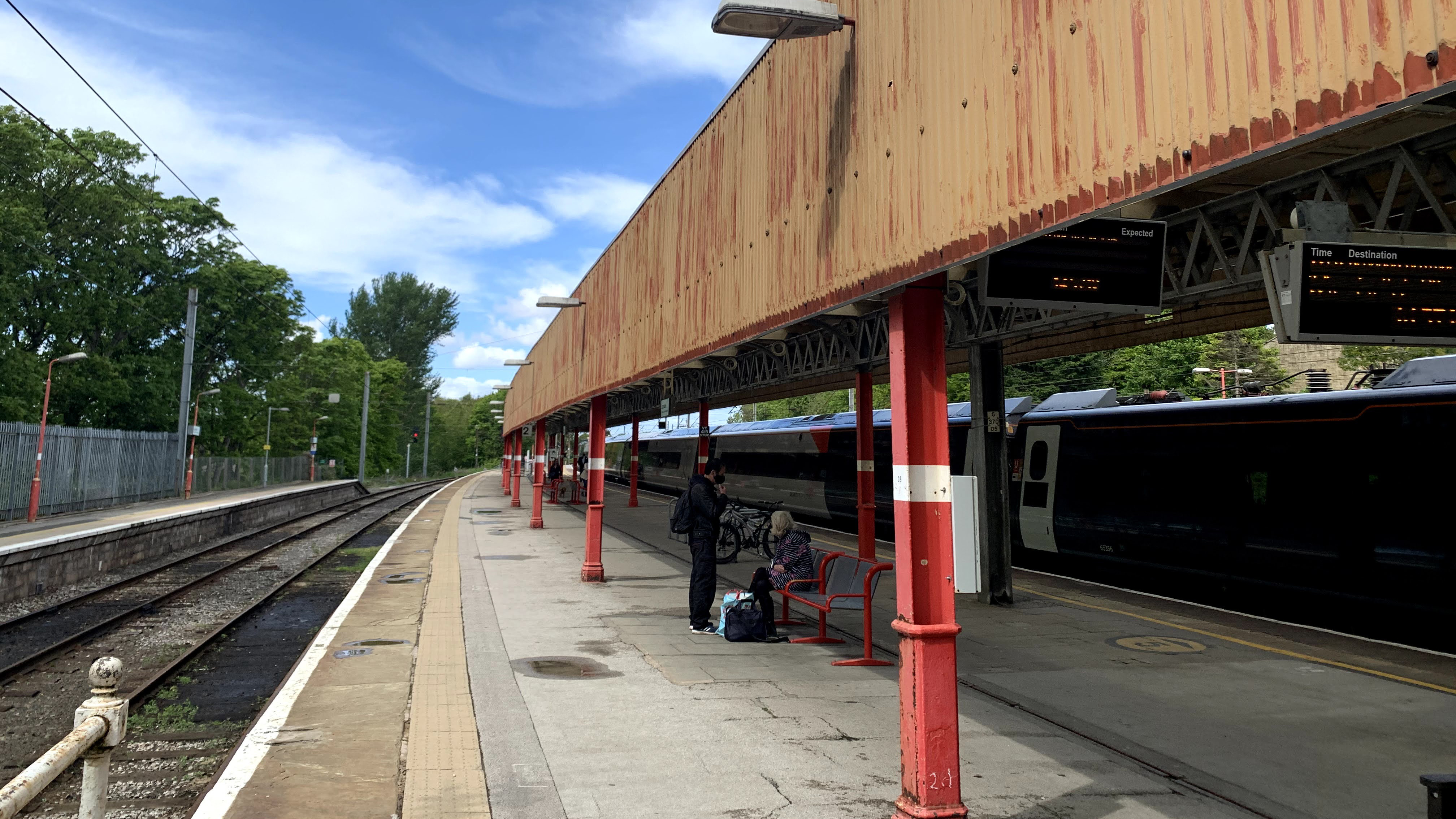
Network Rail can surely do better on a Grade II Listed Building.
The press release lists that this work will be done.
- Replacing all glazing in the platform canopies
- Repairing and strengthening the structure of the canopy structures
- Repainting across the station
The press release says the work won’t affect train services, but will be done when trains aren’t running.
These are my thoughts.
Lancaster Station and High Speed Two
Lancaster station will be a terminus on the High Speed Two Network.
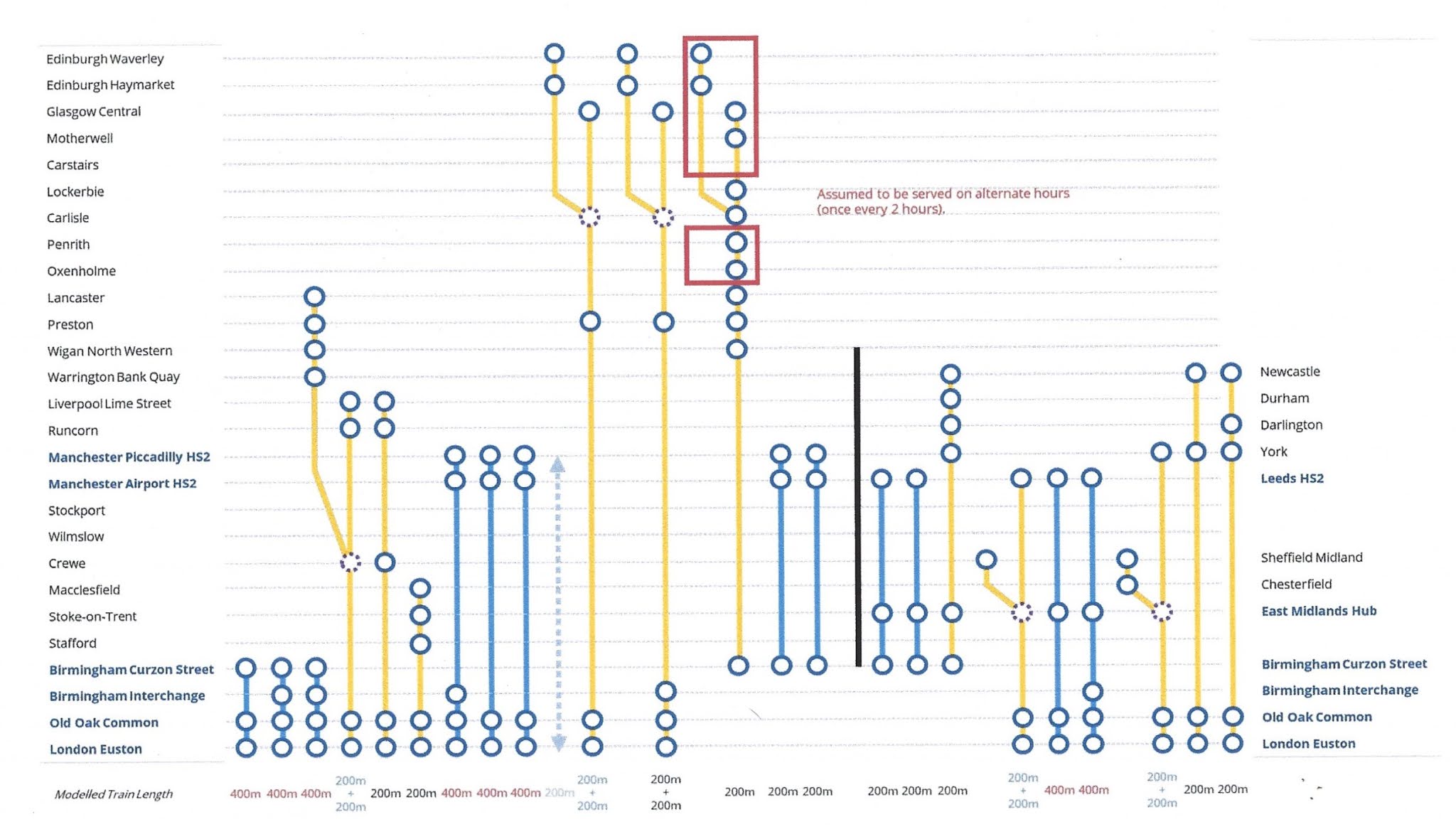
Note.
- Train 4 , which is a pair of 200 metre High Speed Classic Compatible trains, leaves London Euston and splits at Crewe, with one train going to Liverpool Lime Street and the other to Lancaster.
- Train 12, which runs between Birmingham Curzon Street and Scotland, also calls at Lancaster.
Both trains will be single 200 metre High Speed Classic Compatible trains at Lancaster station and platforms 3, 4 and 5 can handle them.
But how will the Lancaster train terminate?
This map from OpenRailwayMap shows the lines through Lancaster station.
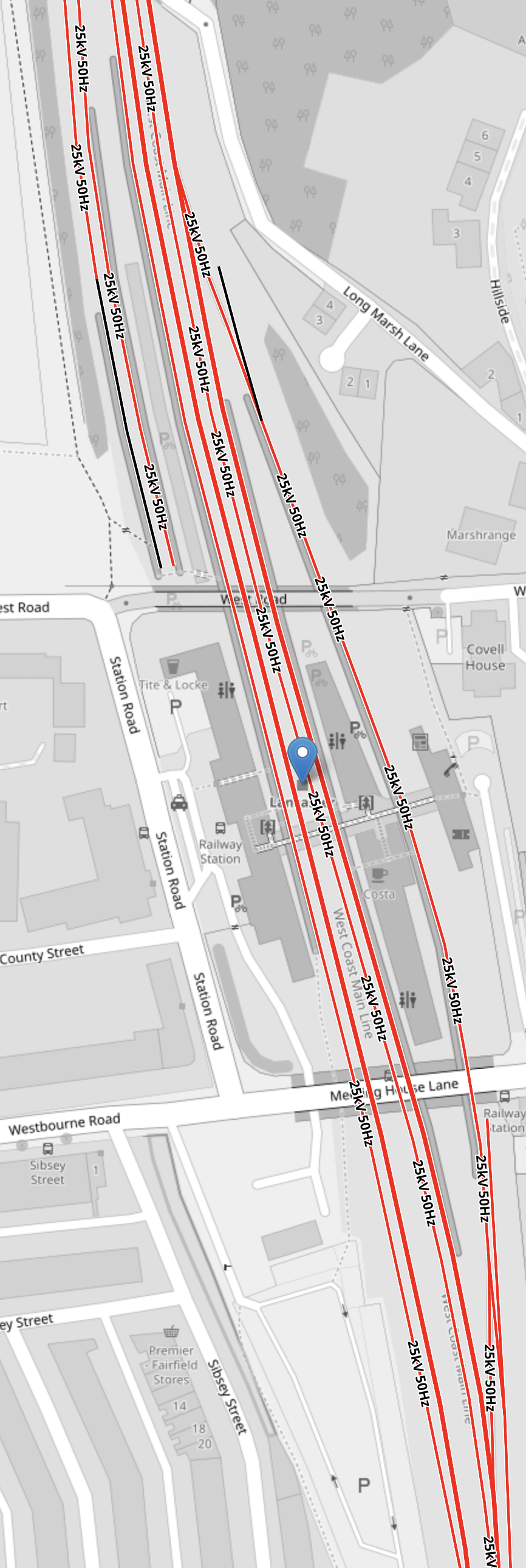
Note.
- The red lines are electrified with 25 KVAC overhead wires.
- In the North-West corner of the station are the bay platforms 1 and 2, which handle Morecambe services.
- West Coast Main Line services between London Euston and Scotland, go through platforms 3 and 4 in the middle of the station.
- On the East side of the station is platform 5 which is on a loop off the West Coast Main Line.
I would expect that the London Euston and Lancaster service will generally terminate in platform 5.
Wikipedia says this about platform 5 and the signalling.
Platform 5, which can be used by both northbound and southbound trains or by terminating services.
All platforms are signalled for arrivals and departures in either direction.
That all sounds very convenient.
There may be some minor changes for the longer High Speed Two trains, but I doubt it would be too challenging.
Onward To Morecambe
The Eden Project North at Morecambe could attract a lot of traffic.
- Lancaster will be just two hours and three minutes from London by High Speed Two.
- There are numerous rail connections from Lancaster to all over the North of England and Scotland.
- Would you drive for two hours to the Eden Project North, if there was a convenient and quicker train?
- Train companies may offer combined tickets for the attraction with rail tickets.
Wikipedia says this about the development and opening of the attraction.
Having been granted planning permission in January 2022 and with £50 million of levelling-up funding granted in January 2023, it is due to open in 2024 and predicted to benefit the North West economy by £200 million per year.
I’ve always wanted to go to the Eden Project in Cornwall, but it’s difficult if you don’t drive.
However, I might manage to get to Eden Project North.
Trains between Morecambe and Lancaster are at least hourly.
- I think they can use any platform at Lancaster.
- Morecambe station has two platforms.
- Morecambe and Lancaster stations are four miles apart, with probably half electrified.
- A battery-electric train could work between Morecambe and Lancaster.
I can envisage two main ways to arrange the connection between Morecambe and Lancaster.
- Trains arrive in Lancaster and passengers for Morecambe catch the next Morecambe train for two stops, that take ten minutes.
- When High Speed Two serves Lancaster from Euston, the shuttle train can wait in the Northern end of Platform 5 and when the High Speed Two train arrives passengers can just walk up the platform to the shuttle.
But if the Eden Project North is as successful as the Cornish original, there is going to be a need for more trains between Morecambe and Lancaster.
This Google Map shows Morecambe station.
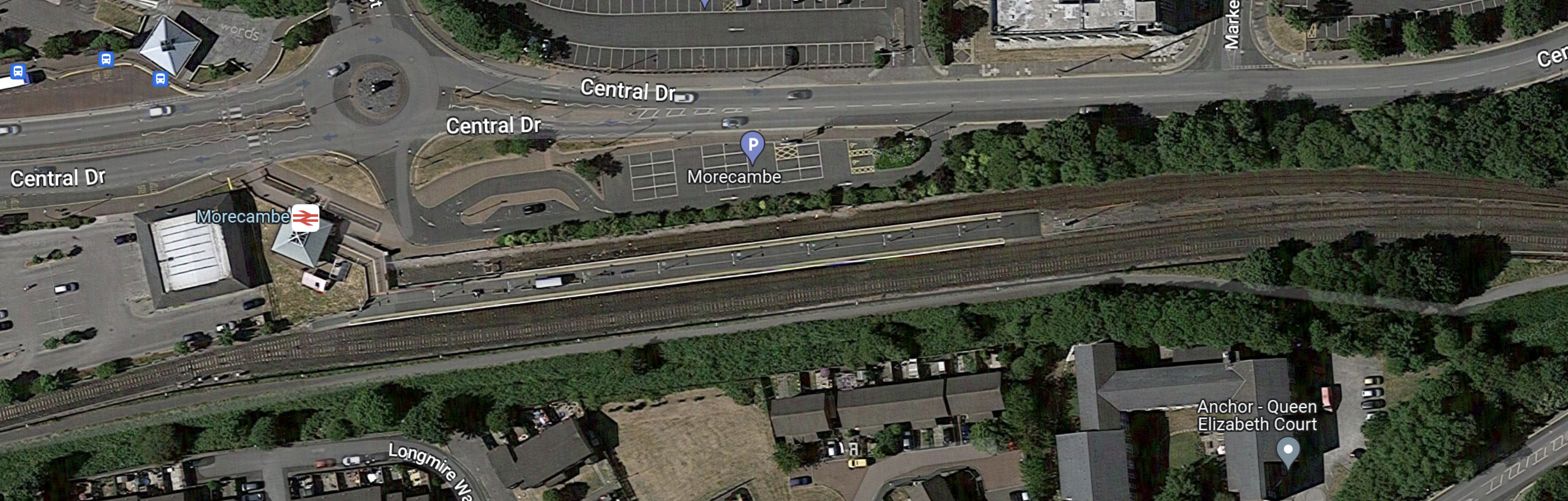
Note that the island platform is probably about 160 metres long.
This would accommodate.
- A five-car Class 802 or Class 805 train.
- A pair of four-car Class 319, Class 321 trains.
- A pair of three-car Class 331 trains.
But why not be bold and lengthen at least one platform to the full two hundred metres, so that it can accommodate a High Speed Classic Compatible train?
This would also accommodate.
- A seven-car Class 807 train.
- A pair of four-car Class 331 trains.
All of these electric trains would need the Morecambe branch line to be electrified to Morecambe station.
But the Eden Project North would get the public transport access it needs.
Electrifying To Morecambe
This map from OpenRailwayMap, shows the Morecambe Branch Line between the West Coast Main Line and Morecambe station.

Note.
- The tracks shown in red on the Eastern side of the map are the West Coast Main Line.
- The black lines are the unelectrified tracks of the Morecambe branch line.
- Morecambe station is marked by the blue arrow.
- Much of the Morecambe branch line is single track, with some sections of double track.
- The distance between the West Coast Main Line and Morecambe station is around 2.1 miles.
I don’t think it would be the most challenging of electrifications.
A Green Route To The Isle Of Man And Ireland
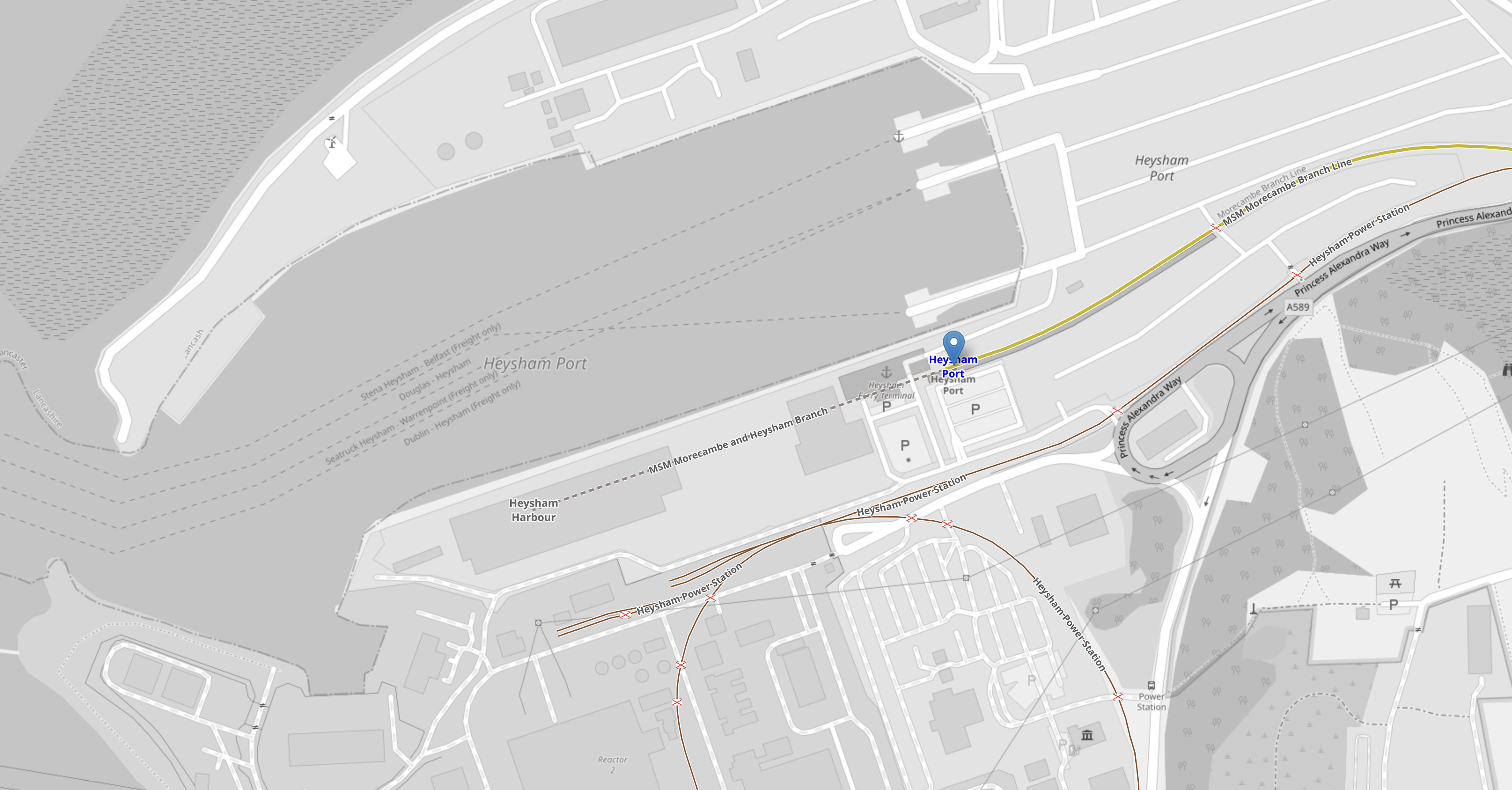
This map from OpenRailwayMap, shows the terminal of the Morecambe Branch Line at Heysham Port.
Note.
- There is a rail connection to the West Coast Main Line via Morecambe, which is shown in yellow.
- The port appears to have three berths for ferries.
- There are only a couple of train services per day.
- South of the port is the Heysham nuclear power station, which has a capacity of 2.5 GW.
At a first glance, it would appear, that a rail-served passenger terminal could be built close to the port.
I suspect most passengers using Heysham are travelling with a vehicle.
The problem is also that the ferry crossing to Belfast takes around eight hours and there are faster and more convenient routes.
The ferries could be decarbonised by using ammonia or hydrogen fuel, but I doubt that they would be any faster.
I suspect that getting more passengers to use Heysham for the Isle of Man or Ireland will be a difficult proposition to sell to passengers.
And it is made even more difficult with such an infrequent train service.
Before High Speed Two
Avanti West Coast might like to run a train between Euston and Morecambe for the Eden Project North.
Are National Rail Promoting Theme Parks?
I found this page on the National Rail web site, which is entitled Theme Parks.
It gives a list of most theme parks and their nearest stations.
Does such a page exist for hospitals, cathedrals and other similar groups.
The Ways First Group, Hitachi, Hyperdrive Innovation and Turntide Technologies Can Enable Electric Trains To Run Between Basingstoke And Exeter
Who Are Turntide Technologies?
The Wikipedia entry for the company starts with this paragraph.
Turntide Technologies is a US-based business that makes intelligent, sustainable motor systems. Turntide applies its Technology for Sustainable Operations across buildings, agriculture, and transportation segments. It maintains operations in the USA, Canada, the United Kingdom, and India.
These three paragraphs from the Technology section of the Wikipedia entry outline their technology.
Turntide’s core product is its Technology for Sustainable Operations, a cloud-based open platform that monitors and automates building and vehicle systems. The platform is powered by its Smart Motor System, a connected hardware-software machine built around a high rotor pole switched reluctance motor.
Southern California Edison utility certified in 2018 that the V01 Smart Motor System reduced energy consumption by 23%-57% compared with a standard AC induction motor, and 11% compared with an induction motor controlled by a variable frequency drive.
In 2019, National Renewable Energy Laboratory certified that Turntide’s motor reduced energy consumption in refrigerator condenser fans by 29%-71%.
Note.
- Turntide’s efficiencies, which appear to have been verified by reputable organisations, if they can be reproduced in traction systems for battery-powered transport could improve range substantially.
- There are also other more efficient electric motors being developed.
- I wrote about Norfolk-based advanced traction motor company; Equipmake in Equipmake Hybrid To Battery Powered LT11.
- Motors like these, are the engineer’s cure for range anxiety.
I have to ask, if Hitachi (, and Stadler) are using more efficient motors to stretch the range of their battery-electric trains.
Initially, Hitachi asked Hyperdrive Innovation to design battery packs for Class 802 and other similar trains.
These three posts give some details about the battery project involving the two companies.
- Hitachi And Eversholt Rail To Develop GWR Intercity Battery Hybrid Train – Offering Fuel Savings Of More Than 20%
- Hitachi Rail And Angel Trains To Create Intercity Battery Hybrid Train On TransPennine Express
- More On Batteries On Class 802 Trains
Consider.
- In June 2021, Turntide acquired Hyperdrive Innovation.
- So did this effectively invite Turntide to the project?
- According to the Internet, Hitachi are one of the largest manufacturers of electric motors.
- Turntide are very-well funded by the likes of Bill Gates, Robert Downey Junior and some big funds.
Has there been some intense design meetings, which have been beneficial to all parties?
In my experience, these groupings don’t often work out how they should!
But this relationship seems to be doing fine.
One of Hitachi’s managers from the battery-train project even appears in the video on Turntide’s home page.
Electrifying Basingstoke And Exeter
Consider these facts about the route.
- Basingstoke and Salisbury is 35.8 miles.
- Salisbury and Exeter is 88.5 miles.
- Basingstoke and Exeter is 124.3 miles.
- There is no electrification.
- There are 14 stops between Salisbury and Exeter.
- There are 4 stops between Basingstoke and Salisbury.
- Trains are up to nine car Class 159 trains.
- Average speeds are not much better than 50 mph.
- Maximum speeds vary between 75 and 90 mph.
To get an estimate of how much energy, a Basingstoke and Exeter train will use, I’ll start with a figure from How Much Power Is Needed To Run A Train At 125 Or 100 mph?.
At 125 mph, a Class 801 train has a usage figure of 3.42 kWh per vehicle mile.
As drag is proportional to the square of the speed, which gives
- At 100 mph, a Class 801 train has a usage figure of 2.19 kWh per vehicle mile.
- At 80 mph, a Class 801 train has a usage figure of 1.40 kWh per vehicle mile.
For this calculation I’ll take the 80 mph figure of 1.40 kWh per vehicle mile.
Assuming a five-car train travelling between Basingstoke and Exeter, which is 124.3 miles gives a figure of 870 kWh.
But this is only one use of energy on the train.
- Every time, the train accelerates it will need power, but it will charge itself using regenerative braking.
- An all-electric Class 803 train has a mass of 228.5 tonnes and carries 400 passengers.
- If I assume that each passenger is 80 Kg including baggage, bikes and buggies, that gives a mass of 32 tonnes or a total mass of 260.5 tonnes.
- Putting these figures into Omni’s Kinetic Energy calculator gives a figure of 46.3 kWh at 80 mph.
As there are eighteen stops along the route and at each stop it could lose up to twenty percent of its energy, this means that the eighteen stops will cost 166.7 KWh.
Adding this to the 870 KWh it takes to maintain speed, it looks like a trip between Basingstoke and Exeter will take 1036.7 kWh.
Could this be a 200 kWh battery in each coach?
Obviously, this is only a rough calculation and with the better figures Hitachi would have, I would suspect much better answers.
But I do believe that it would be possible to run between Basingstoke and Exeter on battery power, if the train was efficient.
Charging The Train
The train would be charged on the third-rail electrification between Waterloo and Basingstoke.
But what would happen at Exeter?
The trains could be bi-modes like Hitachi’s Class 395 trains for Southeastern,
One of Vivarail’s third-rail charging systems, that First Group, acquired from the Receiver of Vivarail could be used.
Getting The Order Right
Would between Basingstoke and Exeter, be a sensible route to convert to battery-electric trains early, as it would release a useful fleet of diesel trains, that might be able to fill in for a couple of years by replacing the Castles!
‘Lift-off’ – Project To Provide Step-Free Access At Bexley Station In Kent Kicked Off In February
The title of this post is the same as that of this press release from Network Rail.
This is the sub-heading.
Network Rail has kicked off construction of a new footbridge and lifts at Bexley station which will provide passengers with a fully accessible station.
These four paragraphs outline the scheme.
This project, which is funded through the Department of Transport’s (DfT) ‘Access for All’ scheme, is expected to be completed in late spring 2024 and will ensure there is step-free access to all of the station’s platforms.
Network Rail will be working with contractors BAM Nuttall to install two 16-person capacity lifts which will be located behind the existing subway and help passengers with impaired mobility or those travelling with luggage, children, or cycles to access the platforms.
Platform one will be widened to create space for the lifts and allow passengers to navigate through the station a lot easier.
Alongside this, a new footbridge will be built to allow passengers easily get from one side of the platform to the other.
I’m surprised that lifts are being added to the existing subway, rather than being added to the new footbridge.
Looking at the statistics for Bexley and nearby stations, I suspect that Bexley station has more traffic.
This Google Map shows Bexley station.
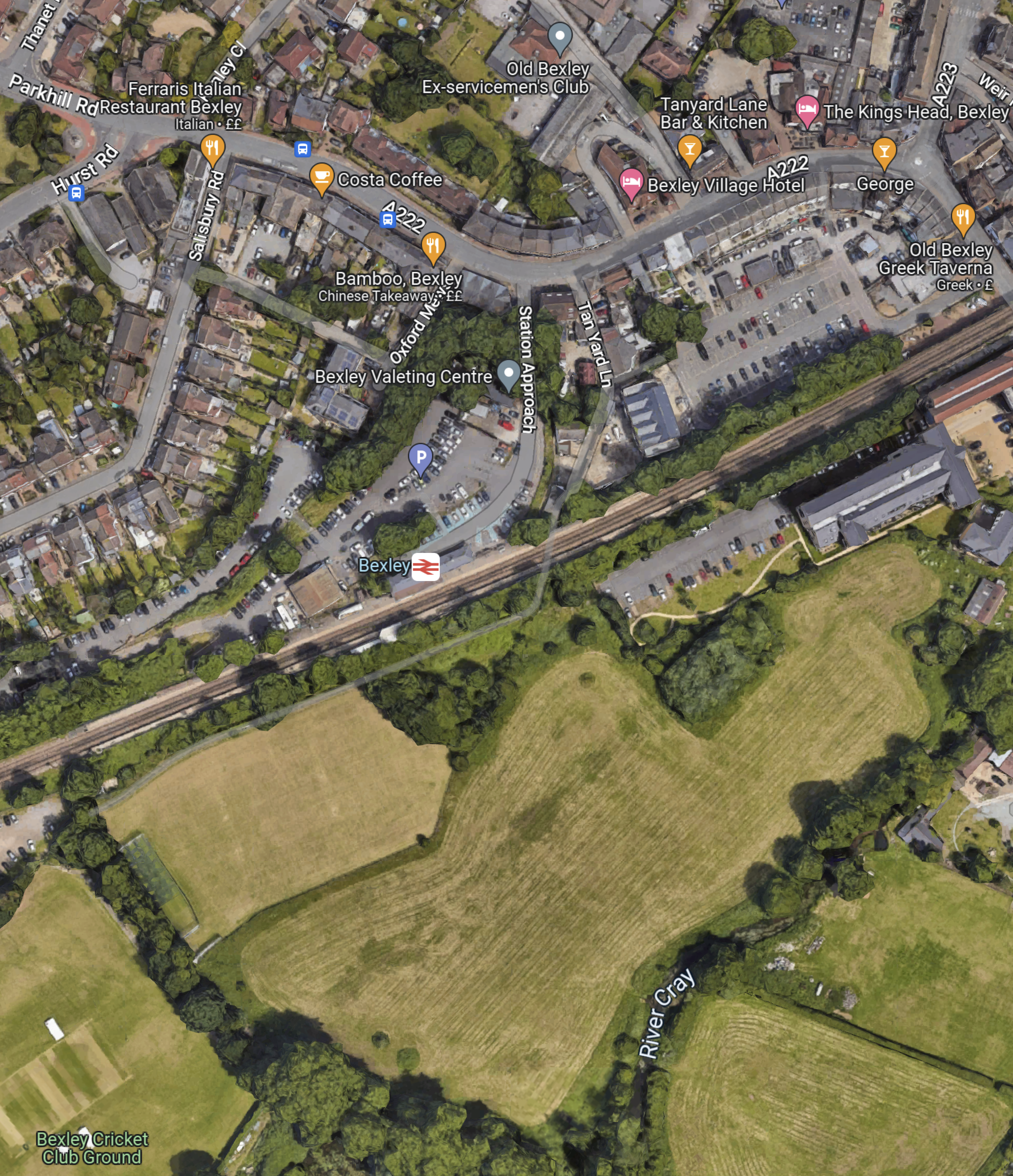
As there appears to be a lot more housing and the car park to the North of the railway, I suspect there’s a lot of crossing of the railway by passengers.
So it does seem that Network Rail have designed scheme for the number of passengers, which is something Transport for London haven’t done with the buses, where I live.
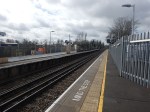
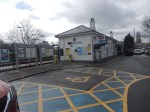
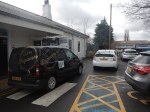
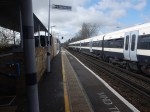
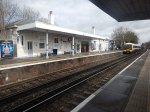
On a visit to the station on the 14th of March, I took these pictures.
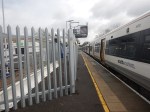
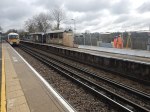
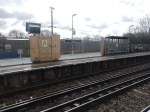
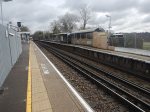






This is a Network Rail visualisation of how it will look.
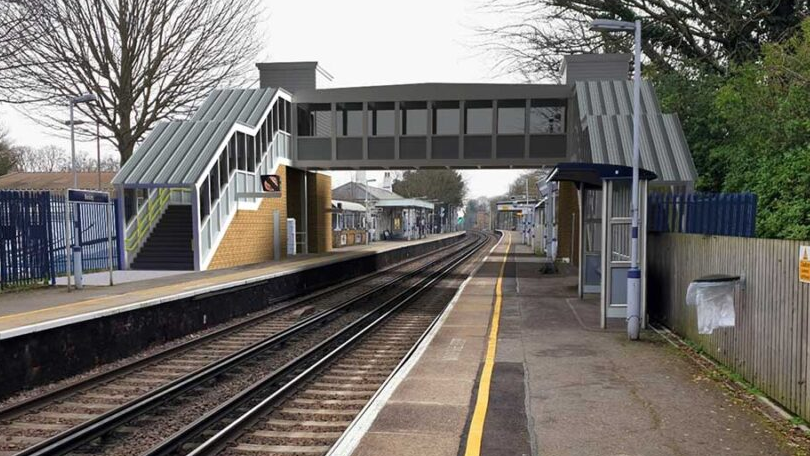
The visualisation is looking towards the East.
Ricardo – The Role Of Hydrogen In The Green Aviation Revolution
The title of this post, is the same as that of this article on Hydrogen Central.
This is the third paragraph.
The introduction of zero-emission aircraft will enable us to re-think our approach to regional connectivity and the way we currently fly. A recent report by Project NAPKIN stated that zero-carbon emission flight is entirely possible from the middle of this decade on sub-regional routes, on aircraft ranging in size from seven to 19 seats.
It makes a bold statement.
The article is a must read.
DHL Express Determinedly On Course To Achieve Net-Zero Emissions
The title if this post is the same as that of this article on The Lodestar.
This was the introductory paragraph.
DHL Express chief executive John Pearson came out with all guns firing when detailing the firm’s efforts to hit net-zero by 2050, during a press junket this week.
The rest of the article is basically in three sections.
The Use Of Sustainable Aviation Fuel (SAF)
Summed up by three sentences.
“When it comes to sustainable aviation fuel (SAF), we know this is expensive, but we have also put a big chunk of change into this,” he said.
By the end of the year, we want 2% of flights fuelled by SAF.
DHL has bought 15% of all globally available SAF
DHL seem to have a comprehensive policy on the use of SAF.
This reinforces my view that SAF will be important.
Alternative Approaches
This paragraph sums up some of the more alternative approaches DHL are looking at.
SAF use forms only one part of the migration to net-zero: fleet renewal; decarbonising ground handling; a fuel optimisation programme; and the use of electric aircraft, following the successful September trial over Seattle of the Alice e-cargo plane, are all critical.
I suspect there are other alternative approaches.
Fleet Renewal
The last two paragraphs talk about fleet renewal.
Fleet renewal comes after a particularly pronounced moment of growth for the company: it added 10 widebody and 70 small- and medium-body planes during the pandemic.
Described by Boeing as one of the most “fuel-efficient” aircraft on the market, thanks to its twin-engine design, the 777 freighter forms a central part of DHL Express’ renewal plans, said Mr Pearson, adding that 28 were on order.
With 28 777 freighters on order, DHL will need a lot of SAF.
A Last Thought
Given the size of DHL’s fleet, which in their Wikipedia entry is given as 197, seventy-three of which are narrow bodies, I am surprised that no dedicated zero-carbon small or medium-sized cargo aircraft, except for the Alice is under development.
Perhaps, in areas like Europe, this niche is being taken by rail or perhaps by Airbus’s proposed hydrogen-powered ZEROe Turbofan.
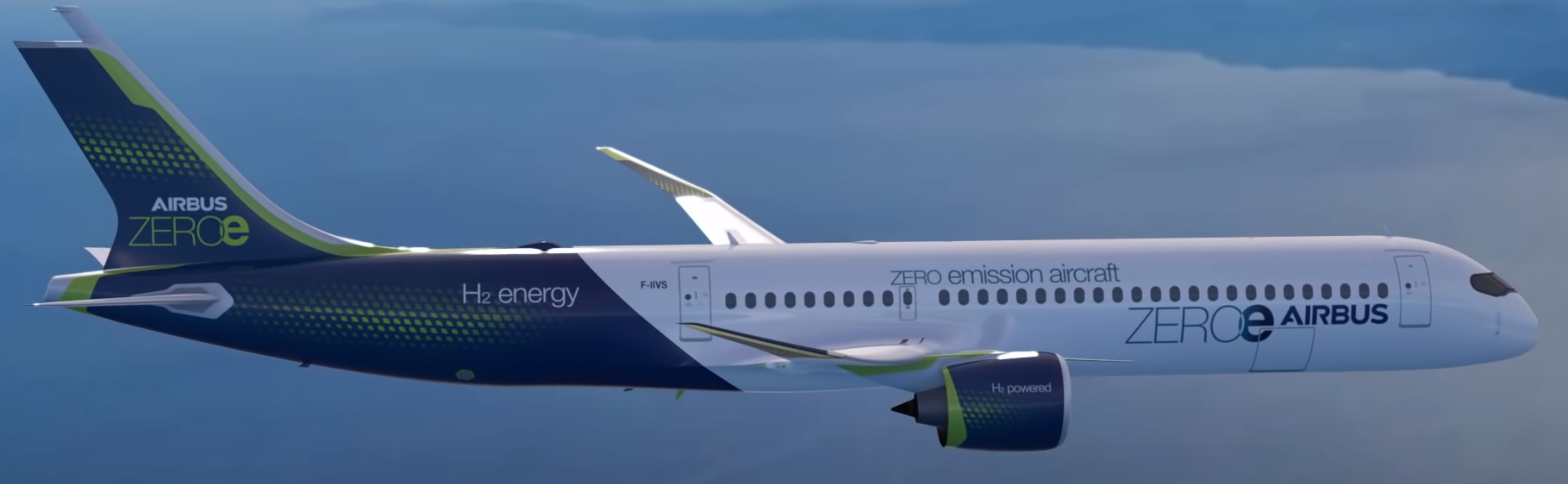
I wrote in detail about this hydrogen-powered aircraft in Could An A320 neo Be Rebuilt As A ZEROe Turbofan?.
Airbus say that the passenger version of the ZEROe Turbofan could handle up to 200 passengers, despite having a large hydrogen tank in the rear fuselage.
The cargo capacity of a ZEROe Turbofan would probably be a bit smaller than say the latest Airbus A321 or Boeing 737, but if the hydrogen-powered aircraft was built to accept a stretch, I wouldn’t be surprised to find it was a viable aircraft for DHL, with a fuselage stretch!
It would surely help passengers of future hydrogen-powered aircraft, overcome their fear of an aircraft fueled by hydrogen.
The ZEROe Turbofan is quoted as having a range in excess of two thousand nautical miles, so it would have Europe and North America fairly well covered.
I also wouldn’t rule out use of Airbus’s proposed hydrogen-powered ZEROe Turboprop for flying cargo.
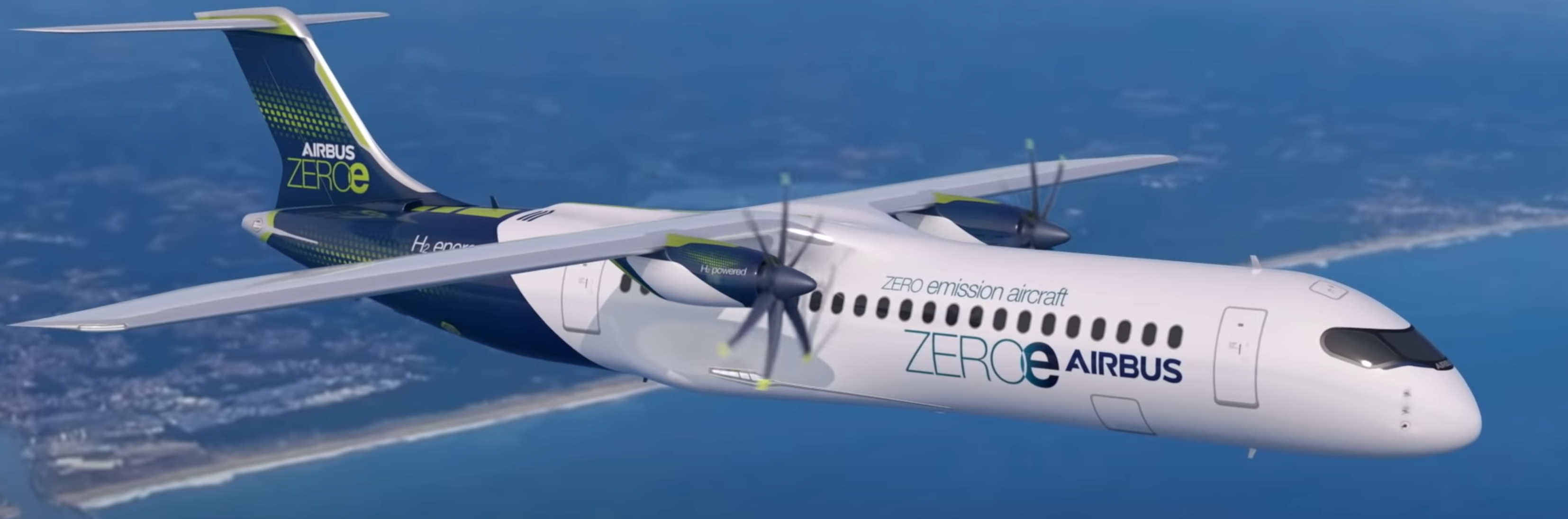
It would have a smaller capacity than the ZEROe Turbofan.
- It would have a useful range of over a thousand nautical miles.
- I feel that both ZEROe aircraft have the same fuselage cross-section, which could ease cargo handling, by using the same equipment for both aircraft.
- I also feel that both ZEROe aircraft will have the same cockpit, which should reduce crew costs.
I feel that smaller cargo aircraft will play a large part in the development of hydrogen-powered aircraft.
If the plans of some companies and individuals work out, hydrogen might be a better alternative financially to SAF.
Could A Battery-Electric High Speed Two Classic-Compatible Train Be Developed?
A Battery-Electric High Speed Two Classic-Compatible Train, would not be needed for High Speed Two, as it is currently envisaged, as all lines will be electrified.
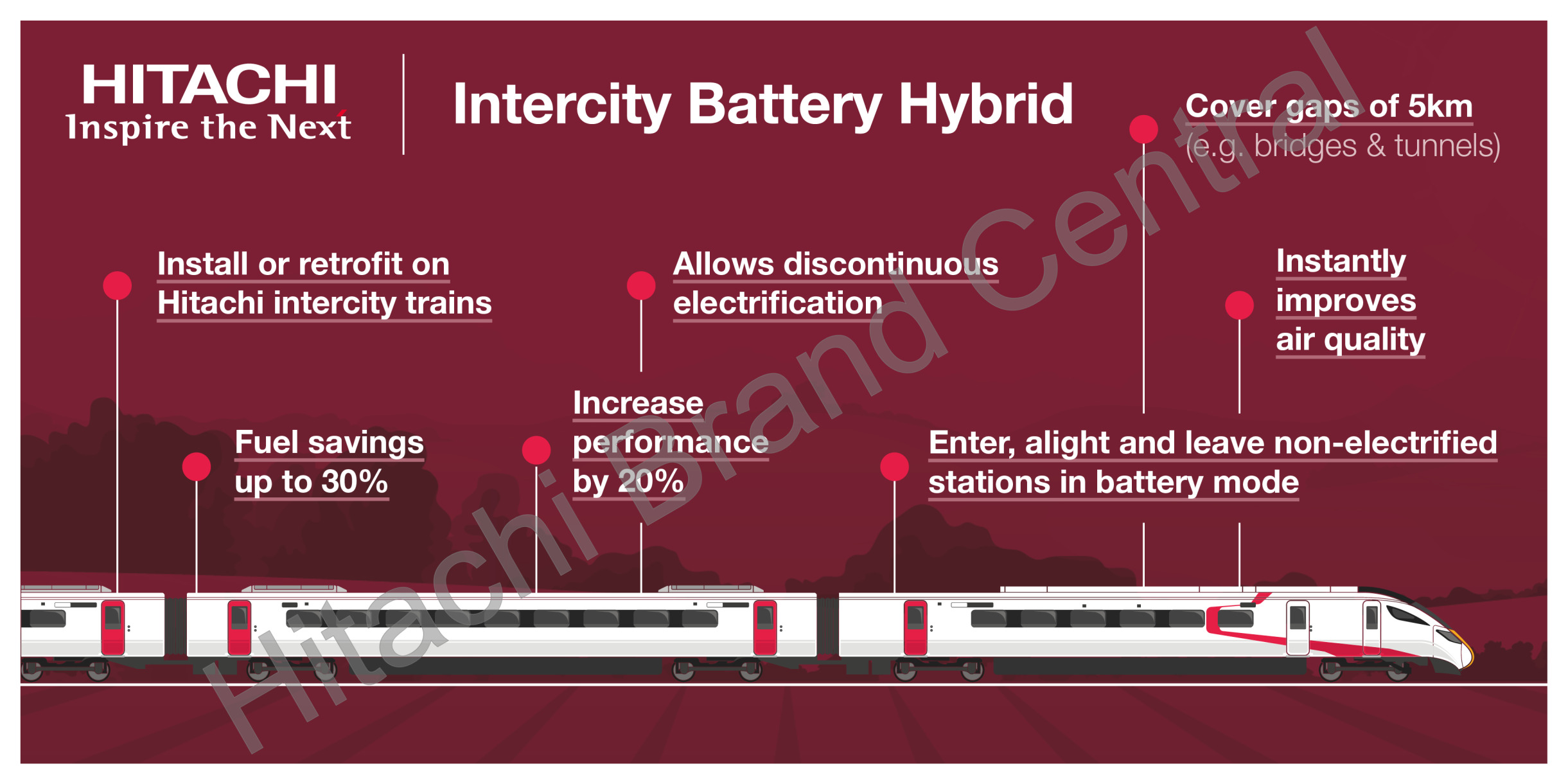
But Hitachi have already said that they are developing the Hitachi Intercity Battery Hybrid Train, which is described in this infographic.
This page on the Hitachi Rail web site gives this description of the Hybrid Battery Train.
A quick and easy application of battery technology is to install it on existing or future Hitachi intercity trains. A retrofit programme would involve removing diesel engines and replace with batteries.
Hitachi Rail’s modular design means this can be done without the need to re-engineer or rebuild the train, this ensures trains can be returned to service as quickly as possible for passengers. Adding a battery reduces fuel costs up to 30% or increase performance.
These trains will be able to enter, alight and leave non–electrified stations in battery mode reducing diesel emissions and minimising noise – helping to improve air quality and make train stations a cleaner environment for passengers.
Our battery solution complements electrification, connecting gaps and minimising potential infrastructure costs and disruption to service.
It looks to me, that Hitachi are playing an old Electrical/Electronic Engineer’s trick.
As a sixteen-year-old, I spent a Summer in a rolling mills, building replacement transistorised control units for the old electronic valve units. They had been designed, so they were plug-compatible and performed identically.
It appears, that Hitachi’s battery supplier; Hyperdrive Innovation of Sunderland has just designed a battery pack, that appears to the train to be a diesel engine.
In the Technical Outline, this is said.
- Train Configuration: 5 – 12 car
- Nominal Vehicle Length: 26m
- Power Supply: Battery
The AT-300 trains generally have twenty-six metre cars.
In How Much Power Is Needed To Run A Train At 125 Or 100 mph?, I calculated that a Class 801 train uses 3.42 kWh per vehicle mile, at 125 mph.
- This means that a five-car train will use 1710 kWh to do 100 miles at 125 mph.
- The train has three diesel engines, so three batteries of 570 kWh would be needed.
- Alternatively, if a battery was put in each car, 342 kWh batteries would be needed.
- In the Wikipedia entry for battery-electric multiple unit, there are two examples of trains with 360 kWh batteries.
I believe building 570 kWh batteries for fitting under the train is possible.
What would be the maximum range for this train at 100 mph?
- I will assume that five batteries are fitted.
- As drag is proportional to the square of the speed, I’ll use a figure of 2.07 kWh per vehicle mile, at 100 mph.
This is a table of ranges with different size batteries in all cars.
- 50 kWh – 24.1 miles
- 100 kWh – 48.3 miles
- 200 kWh – 96.6 miles
- 300 kWh – 145 miles
- 400 kWh – 193.2 miles
- 500 kWh – 241.5 miles
They are certainly useful ranges.
LNER Will Be Ordering Ten New Bi-Mode Trains
In LNER Seeks 10 More Bi-Modes, I discussed LNER’s need for ten new bi-mode trains, which started like this.
The title of this post, is the same as that of an article in the December 2020 Edition of Modern Railways.
This is the opening paragraph.
LNER has launched the procurement of at least 10 new trains to supplement its Azuma fleet on East Coast Main Line services.
Some other points from the article.
- It appears that LNER would like to eliminate diesel traction if possible.
- On-board energy storage is mentioned.
- No form of power appears to be ruled out, including hydrogen.
- LNER have all 65 of their Azumas in service.
I believe that ten trains would be enough to handle LNER’s services on lines without electrification to the North of Scotland.
- London and Aberdeen has 130 miles without wires.
- London and Inverness has 146 miles without wires.
- Electrification plans are progressing North to Perth and to Thornton Junction.
I suspect both routes could be upgraded to under a hundred miles without wires.
I believe, that if Hyperdrive Innovation pull out every trick in the book to save power in their batteries that a five-car Azuma with a 300 kWh battery in each car, will have sufficient range with reserves to go between Edinburgh and Inverness or Aberdeen at 100 mph.
A Battery-Electric High Speed Two Classic-Compatible Train
Consider.
- I am a great believer in regenerative breaking to batteries on the train, as my experience says it the most efficient and also gives advantages, when the catenary fails.
- Stadler’s approach with the Class 777 train, where all trains have a small battery for depot movements, is likely to be increasingly copied by other train manufacturers.
- Hitachi have also designed the Class 803 trains for Lumo with emergency batteries for hotel power.
I could envisage provision for batteries being designed into a High Speed Two Classic-Compatible Train.
Suppose it was wanted to run High Speed Two Classic-Compatible Trains between Crewe and Holyhead.
- The train has eight cars.
- The route is 105.5 miles.
- I will assume an average speed of 100 mph.
- A Class 801 train uses 3.42 kWh per vehicle mile, at 125 mph.
- As drag is proportional to the square of the speed, I’ll use a figure of 2.07 kWh per vehicle mile, at 100 mph.
- This means that an eight-car train will use 1747.08 kWh to do 105.5 miles at 100 mph.
- I would put a traction battery in each car, to distribute the weight easily.
Each battery would need to be 218.4 kWh, which is totally feasible.
How far would the train travel on 300 kWh batteries at 100 mph?
- Total battery capacity is 2400 kWh.
- One mile will use 16.56 kWh.
- I am assuming the train is using regenerative braking to the battery at each stop.
The train will travel 145 miles before needing a recharge.
On the Crewe and Holyhead route, there would be a reserve of around 40 miles or nearly 500 kWh.
Conclusion
I am convinced that Hitachi and their highly regarded partner; Hyperdrive Innovation, have developed a battery pack, that gives enough power to match the performance of Class 800/802/805/810 trains on diesel and give a range of upwards of a hundred miles on battery power at 100 mph, if you put a 300 kWh battery pack in all cars.
- But then Stadler have run an Akku for 115 miles and a Class 777 for 84 miles on battery power alone.
- I think the key is to put a battery in each car and harvest all the electricity you can from braking.
- Remember too that Hitachi can raise and lower their pantographs with all the alacrity of a whore’s drawers, so strategic lengths of overhead electrification can also be erected.
Hitachi and Hyperdrive Innovation appear to have invented the High Speed Battery Train.
We’ll know soon, when the order for the LNER bi-modes is announced.
Whatever works on LNER, should work on High Speed Two.
A Rare Site – Two 141 Buses
I took this picture, this afternoon of a rare site these days – two 141 buses running in convoy.
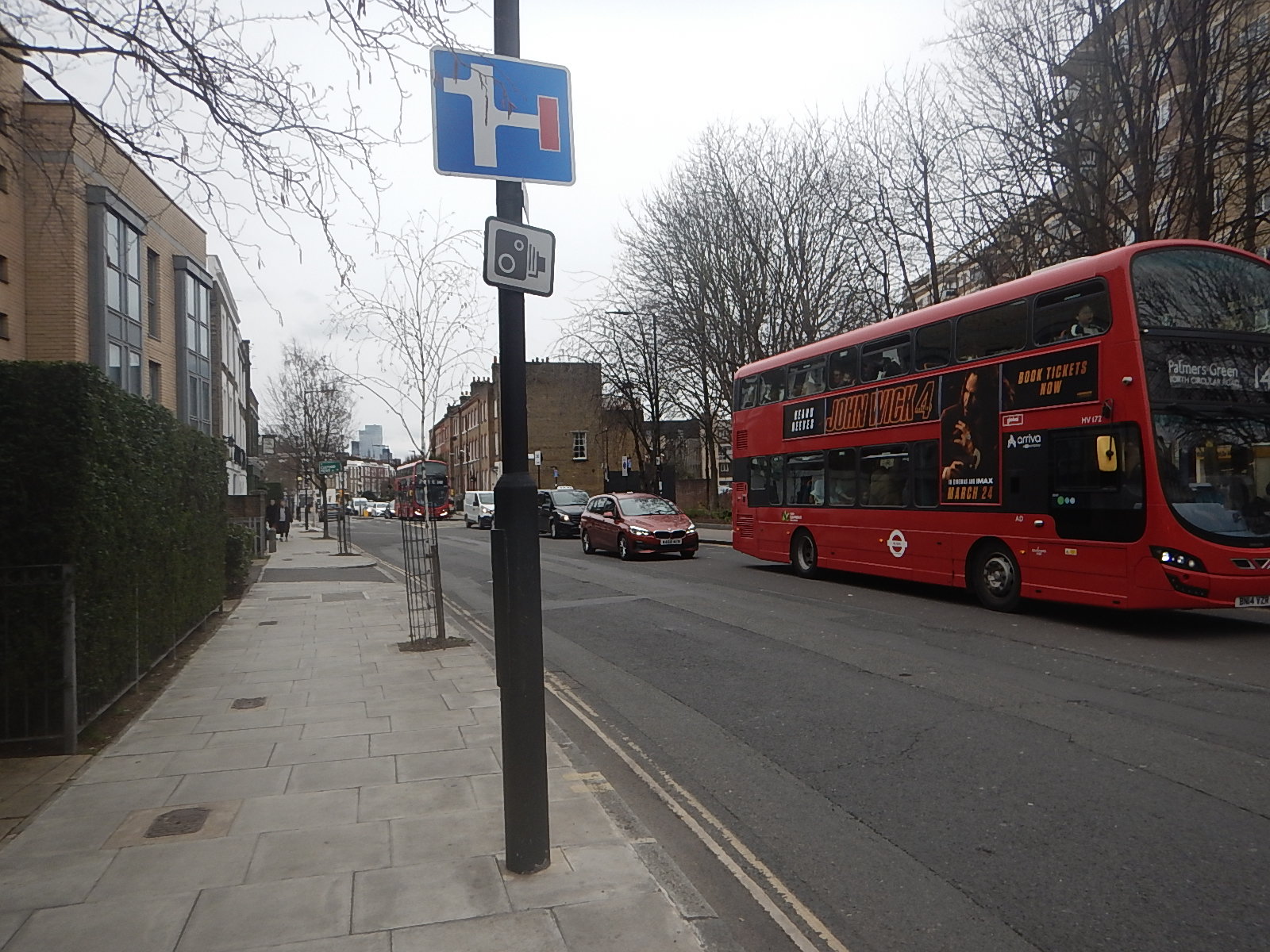
Nothing seems to be improving and passengers are regularly waiting 15-20 minutes for a 141 bus, when the timetable says it should be 4-8 minutes.
World’s First Offshore Vessel Charging System Completes Harbour Trials
The title of this post, is the same as that of this article on offshoreWIND.biz.
This is the sub-heading.
MJR Power and Automation, together with Blackfish Engineering and Tidal Transit, have completed the harbour trials of the company’s platform-mounted automated offshore power and charging system.
Reading the article, this appears to be a very comprehensive system, that allows electric or hybrid wind farm servicing vessels to top up their batteries efficiently before returning to base.
Surely, it is better to do it this way by developing the charging network before bringing the battery and hybrid vessels into service.
On The Loose In North London: Flying Gazebo Causes Train Delays
The title of this post, is the same as that of this news item on Network Rail.
These paragraphs outline the story.
Residents are being urged to keep garden objects tied down and away from the railway after a flying gazebo caused 60 trains to be delayed or cancelled on Friday.
Passengers on London Overground trains running between Gospel Oak and Barking experienced disruption for around three hours. Freight trains were also affected.
The gazebo was reported to be blocking the line between Upper Holloway and Crouch Hill stations at around 0945 and trains had to be stopped while it was recovered by a Network Rail response unit.
In total, the incident caused 15 full train cancellations, 8 part cancellations and delays to 37 trains.
There is also this picture of the remains of the errant gazebo.
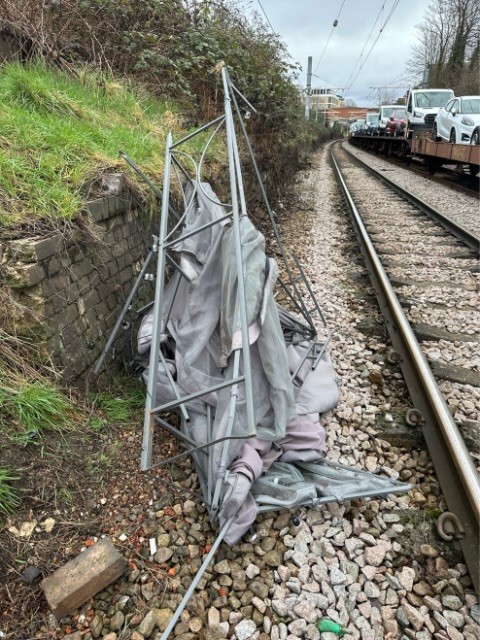
At least it appears, that the gazebo didn’t bring the wires down.
Scottish Hydrogen Fuel Tank – SHyFT
The title of this post, is the same as that of this page on the Innovatus Technologies web site.
This is the sub-heading.
Advanced Flexible Form Factor and Lightweight Multi-Chamber Type IV & V Hydrogen Storage Vessel
These paragraphs outline the product.
SHyFT is a unique Type IV or V composite high-pressure vessel unlike conventional large, heavyweight cylindrical vessels. The unique multi-chamber composite design, aided by patented composite technology and recyclable materials, allows for SHyFT to conform to any form factor specific to our customers needs.
SHyFT’s largest model boasts the worlds highest Gravimetric Storage Density of 10%, allowing 5.4 KG of hydrogen storage. This is a significant 10% increase on current market leaders in composite storage of gaseous substances.
The core composite technology drives a 25%+ weight and 20%+ cost reduction, whilst providing superior quality and technical performance for a more efficient and economical product. With SHyFT, various market applications such as commercial, personal and industrial transport, Marine and UAV, can be easily dominated creating a higher value proposition for our customers.
As with other companies in the past, like Pilkingtons, Rolls-Royce and Skeleton Technologies, who have developed a unique product, I suspect that the key is a special purpose machine that makes the tanks. I have two friends in Cambridge, who specialise in making unusual manufacturing machines and they are very busy.
I first came across this company as they are named in the Wikipedia entry for Project Fresson, which is a part-Scottish project to create a hydrogen-powered Islander aircraft.

Innovatus Technologies are building the composite hydrogen fuel tanks. Two, which are coloured green, appear to be mounted below the wings and there could be others inside the fuselage.
This company could solve one the major problems with hydrogen applications – How to cram in enough of the gas to make the application possible!
Conclusion
I predict a big future for this company, unless the Chinese or other idea-stealers ruin the market.
 The Anonymous Widower