Conservatives Would Scrap Stamp Duty, Badenoch Announces
The title of this post, is the same as that of this article on the BBC.
This is the sub-heading.
The next Conservative government would abolish stamp duty on the purchase of main homes, Kemi Badenoch has said, in a surprise announcement at the end of her first conference speech as party leader.
These two introductory paragraphs add more detail.
Badenoch received a standing ovation from Tory activists in Manchester as she declared: “That is how we will help achieve the dream of home ownership for millions.”
She said scrapping stamp duty – a tax paid by home buyers in England and Northern Ireland – will “unlock a fairer and more aspirational society” and help people of all ages.
Note.
- I have a degree in Control Engineering at Liverpool University and graduated in 1968.
- Badenoch has a degree in Systems Engineering at Sussex University and graduated much recently.
Our degrees are both very mathematically-based and probably surprisingly similar.
My feeling as a Control Engineer, is that to selectively remove stamp duty could be a good idea, as you are affecting the derivatives rather than the rates.
Only time will tell, but some thorough mathematical modelling will probably show the validity of the idea.
It is unlikely that I will move, but given the state of the buses, there is a small chance that I might.
- My current house is probably worth about a million.
- If I bought a similarly-priced house, I would pay tax of £43,750.
- But, if I bought a house at double the price, I would pay tax of £153,750.
Given the progressive nature of the tax, I think I’ll be staying put, occupying a three-bedroom family house with a garage, all by myself.
If the tax is removed, I would be more likely to move into a house, that suited me better!
Official Quits After Dispute Over Trump’s Eisenhower Sword Gift To King Charles
The title of this post, is the same as that of this article on the BBC.
This is the sub-heading.
The director of the Dwight D Eisenhower Presidential Library has stepped down after a dispute with the Trump administration over gifting a sword in its collection to King Charles, according to the BBC’s US partner, CBS News.
These three paragraphs add more detail to the story.
Todd Arrington, the head of the library in Kansas, resigned on Monday after declining to remove an original sword from the library’s collection to give to the King during President Donald Trump’s visit to the United Kingdom last month, CBS reported, citing anonymous sources.
Charles was instead gifted a replica during Trump’s UK visit, Buckingham Palace said at the time.
In an interview with CBS News, Arrington said he was told to “Resign – or be fired”.
Trump had better watch himself, as the United States has armies of lawyers and I’m sure that the unfortunate Mr. Arrington will have some legal offers, he will find great advantage in accepting.
The Garden At 120 – 27th September 2025
The Wikipedia entry for Fen Court has this section, which has a brief description of The Garden At 120.
In 2019, a mixed use building of 15 storeys built by Generali Real Estate with Eric Parry Architects, called One Fen Court or 120 Fenchurch Street, opened alongside the east side of Fen Court. The building has a publicly accessible roof garden named The Garden at 120, and is 69 metres (226 ft) high. A pedestrian route parallel to Fen Court runs through an undercroft in One Fen Court, with a ceiling-mounted public artwork.
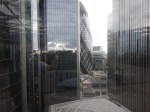
As the helpful man on the entrance to the Garden at 120, said that I could see the tower of All Hallows Staining, I went back today and took these pictures.



































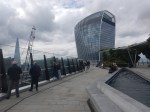






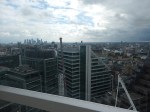
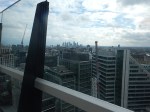












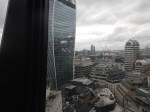










Note.
- The Shard, Guerkin and Walkie-Talkie can be easily identified.
- Canary Wharf, St. Paul’s Cathedral and the River Thames can be seen in the distance.
- Pictures 16-21 give views of the tower of All Hallows Staining.
I shall be taking more pictures as Fifty Fenchurch Street grows.
Historic Church Tower Suspended On Stilts To Make Way For London Skyscraper
The title of this post, is the same as that of this article in The Times.
This is the sub-heading.
The remaining part of the 700-year-old All Hallows Staining, off Fenchurch Street, will be the centrepiece of the public square below Axa’s £1 billion office
These three paragraphs add more details.
A700-year-old church tower is being suspended on 45ft stilts while developers clear the ground beneath to make way for the City of London’s newest skyscraper.
The tower, which is all that remains of All Hallows Staining close to Fenchurch Street station, is being preserved and will be the centrepiece of the public square at the base of 50 Fenchurch Street — the £1 billion office tower being built by the investment arm of Axa, the French insurer.
More than 125,000 tonnes of earth has been cleared from underneath and around the church — which survived the Great Fire of London in 1666 — into which the foundations will be laid and a basement level built.
The Wikipedia entry for All Hallows Staining, starts with this paragraph.
All Hallows Staining was a Church of England church located at the junction of Mark Lane and Dunster Court in the north-eastern corner of Langbourn ward in the City of London, England, close to Fenchurch Street railway station. All that remains of the church is the tower, built around AD 1320 as part of the second church on the site. Use of the grounds around the church is the subject of the Allhallows Staining Church Act 2010 (c. v).
Note.
- The Wikipedia entry gives a lot of history and other details about the tower.
- It was named “Staining”, which means stone, to distinguish it from the other churches of All Hallows in the City of London, which were wooden.
- The old church survived the Great Fire of London in 1666 but collapsed five years later in 1671.
- The church appears to have been cheaply rebuilt in 1674.
- In 1870 the parish of All Hallows Staining was combined with that of St Olave Hart Street and All Hallows was demolished, leaving only the tower.
- All Hallows Staining seems to have survived World War Two, but St Olave Hart Street suffered serious damage.
- Between 1948 and 1954, when the restored St Olave’s was reopened, a prefabricated church stood on the site of All Hallows Staining. The tower of All Hallows Staining was used as the chancel of the temporary church.
- The remains of All Hallows Staining were designated a Grade I listed building on 4 January 1950.
The tower of All Hallows Staining seems to have a very strong survival instinct.
This web page gives more details of Fifty Fenchurch Street,
This morning, I went to take some pictures of the tower and the construction site.




















Note.
- I walked around the site from the forecourt of Fenchurch Street station.
- The last three pictures were taken from the top deck of a Westbound 25 bus.
- There appears to be no accessible bar or roof-top from which you can look down on the site.
So for the present time, the 25 bus seems to give the best views.
This afternoon, I took a train to Fenchurch Street station and looked at the Eastern and Northern sides of the site.
















Note.
- The first picture was taken through the upper windows of the front of Fenchurch Street station.
- I think I might have got a better view out of the window of Fenchurch Street station, if Great Socialist Railways had cleaned the windows.
- In pictures three to nine, the “Walkie-Talkie” towers over All Hallows Staining.
- Some pictures were better than those I took in the morning, as the truck had moved.
- The last picture shows the sign for the Garden at 120.
The area isn’t short of geometric shapes to photograph.
How Will The UK Power All These Proposed Data Centres?
On Wednesday, a cardiologist friend asked me if we have enough power to do Trump’s UK AI, so I felt this post might be a good idea.
Artificial Intelligence Gave This Answer
I first asked Google AI, the title of this post and received this reply.
The UK will power proposed data centres using a mix of grid-supplied low-carbon electricity from sources like offshore wind and through on-site renewable generation, such as rooftop solar panels. Data centre operators are also exploring behind-the-meter options, including battery storage and potential future nuclear power, to meet their significant and growing energy demands. However, the UK’s grid infrastructure and high energy prices present challenges, with industry calls for grid reform and inclusion in energy-intensive industry support schemes to facilitate sustainable growth.
Google also pointed me at the article on the BBC, which is entitled Data Centres To Be Expanded Across UK As Concerns Mount.
This is the sub-heading.
The number of data centres in the UK is set to increase by almost a fifth, according to figures shared with BBC News.
These are the first three paragraphs.
Data centres are giant warehouses full of powerful computers used to run digital services from movie streaming to online banking – there are currently an estimated 477 of them in the UK.
Construction researchers Barbour ABI have analysed planning documents and say that number is set to jump by almost 100, as the growth in artificial intelligence (AI) increases the need for processing power.
The majority are due to be built in the next five years. However, there are concerns about the huge amount of energy and water the new data centres will consume.
Where Are The Data Centres To Be Built?
The BBC article gives this summary of the locations.
More than half of the new data centres would be in London and neighbouring counties.
Many are privately funded by US tech giants such as Google and Microsoft and major investment firms.
A further nine are planned in Wales, one in Scotland, five in Greater Manchester and a handful in other parts of the UK, the data shows.
While the new data centres are mostly due for completion by 2030, the biggest single one planned would come later – a £10bn AI data centre in Blyth, near Newcastle, for the American private investment and wealth management company Blackstone Group.
It would involve building 10 giant buildings covering 540,000 square metres – the size of several large shopping centres – on the site of the former Blyth Power Station.
Work is set to begin in 2031 and last for more than three years.
Microsoft is planning four new data centres in the UK at a total cost of £330m, with an estimated completion between 2027 and 2029 – two in the Leeds area, one near Newport in Wales, and a five-storey site in Acton, north-west London.
And Google is building a data centre in Hertfordshire, an investment worth £740m, which it says will use air to cool its servers rather than water.
There is a map of the UK, with dots showing data centres everywhere.
One will certainly be coming to a suitable space near you.
Concerns Over Energy Needs
These three paragraphs from the BBC article, talk about the concerns about energy needs.
According to the National Energy System Operator, NESO, the projected growth of data centres in Great Britain could “add up to 71 TWh of electricity demand” in the next 25 years, which it says redoubles the need for clean power – such as offshore wind.
Bruce Owen, regional president of data centre operator Equinix, said the UK’s high energy costs, as well as concerns around lengthy planning processes, were prompting some operators to consider building elsewhere.
“If I want to build a new data centre here within the UK, we’re talking five to seven years before I even have planning permission or access to power in order to do that,” he told BBC Radio 4’s Today programme.
But in Renewable Power By 2030 In The UK, I calculated that by 2030 we will add these yearly additions of offshore wind power.
- 2025 – 1,235 MW
- 2026 – 4,807 MW
- 2027 – 5,350 MW
- 2028 – 4,998 MW
- 2029 – 9,631 MW
- 2030 – 15,263 MW
Note.
- I have used pessimistic dates.
- There are likely to be more announcements of offshore wind power in the sea around the UK, in the coming months.
- As an example in Cerulean Winds Submits 1 GW Aspen Offshore Wind Project In Scotland (UK), I talk about 3 GW of offshore wind, that is not included in my yearly totals.
- The yearly totals add up to a total of 58,897 MW.
For solar power, I just asked Google AI and received this answer.
The UK government aims to have between 45 and 47 gigawatts (GW) of solar power capacity by 2030. This goal is set out in the Solar Roadmap and aims to reduce energy bills and support the UK’s clean power objectives. The roadmap includes measures like installing solar on new homes and buildings, exploring solar carports, and improving access to rooftop solar for renters.
Let’s assume that we only achieve the lowest value of 45 GW.
But that will still give us at least 100 GW of renewable zero-carbon power.
What will happen if the wind doesn’t blow and the sun doesn’t shine?
I have also written about nuclear developments, that were announced during Trump’s visit.
- Centrica And X-energy Agree To Deploy UK’s First Advanced Modular Reactors
- Is Last Energy The Artemis Of Energy?
- National Grid And Emerald AI Announce Strategic Partnership To Demonstrate AI Power Flexibility In The UK
- Nuclear Plan For Decommissioned Coal Power Station
- Raft Of US-UK Nuclear Deals Ahead Of Trump Visit
- Rolls-Royce Welcomes Action From UK And US Governments To Usher In New ‘Golden Age’ Of Nuclear Energy
This is an impressive array of nuclear power, that should be able to fill in most of the weather-induced gaps.
In Renewable Power By 2030 In The UK, I also summarise energy storage.
For pumped storage hydro, I asked Google AI and received this answer.
The UK’s pumped storage hydro (PSH) capacity is projected to more than double by 2030, with six projects in Scotland, including Coire Glas and Cruachan 2, potentially increasing capacity to around 7.7 GW from the current approximately 3 GW. This would be a significant step towards meeting the National Grid’s required 13 GW of new energy storage by 2030, though achieving this depends on policy support and investment.
There will also be smaller lithium-ion batteries and long duration energy storage from companies like Highview Power.
But I believe there will be another source of energy that will ensure that the UK achieves energy security.
SSE’s Next Generation Power Stations
So far two of these power stations have been proposed.
Note.
- Both power stations are being designed so they can run on natural gas, 100 % hydrogen or a blend of natural gas and hydrogen.
- Keadby will share a site with three natural gas-powered power stations and be connected to the hydrogen storage at Aldbrough, so both fuels will be available.
- Ferrybridge will be the first gas/hydrogen power station on the Ferrybridge site and will have its own natural gas connection.
- How Ferrybridge will receive hydrogen has still to be decided.
- In Hydrogen Milestone: UK’s First Hydrogen-to-Power Trial At Brigg Energy Park, I describe how Centrica tested Brigg gas-fired power station on a hydrogen blend.
- The power stations will initially run on natural gas and then gradually switch over to lower carbon fuels, once delivery of the hydrogen has been solved for each site.
On Thursday, I went to see SSE’s consultation at Knottingley for the Ferrybridge power station, which I wrote about in Visiting The Consultation For Ferrybridge Next Generation Power Station At Knottingley.
In the related post, I proposed using special trains to deliver the hydrogen from where it is produced to where it is needed.
Could HiiROC Be Used At Ferrybridge?
Consider.
- HiiROC use a process called thermal plasma electrolysis to split any hydrocarbon gas into hydrogen and carbon black.
- Typical input gases are chemical plant off gas, biomethane and natural gas.
- Carbon black has uses in manufacturing and agriculture.
- HiiROC uses less energy than traditional electrolysis.
- There is an independent power source at Ferrybridge from burning waste, which could be used to ower a HiiROC system to generate the hydrogen.
It might be possible to not have a separate hydrogen feed and still get worthwhile carbon emission savings.
Conclusion
I believe we will have enough electricity to power all the data centres, that will be built in the next few years in the UK.
Some of the new power stations, that are proposed to be built, like some of the SMRs and SSE’s Next Generation power stations could even be co-located with data centres or other high energy users.
In Nuclear Plan For Decommissioned Coal Power Station, I describe how at the former site of Cottam coal-fired power station, it is proposed that two Holtec SMR-300 SMRs will be installed to power advanced data centres. If the locals are objecting to nuclear stations, I’m sure that an SSE Next Generation power station, that was burning clean hydrogen, would be more acceptable.
Gatwick Second Runway Plan Approved By Transport Secretary
The title of this post is the same as that of this article on the BBC.
This is the sub-heading.
Transport Secretary Heidi Alexander has approved plans for a second runway at London Gatwick Airport, as the government looks for economic growth opportunities.
These four introductory paragraphs add some detail.
The £2.2bn privately-financed project involves in effect moving the current Northern Runway 12 metres to bring it into regular use, as well as other developments, including extending the size of terminals.
The airport says its plans will bring jobs and boost the local economy. But there has long been opposition from campaigners and groups worried about the impact on the surrounding area.
Gatwick currently handles about 280,000 flights a year. It says the plan would enable that number to rise to around 389,000 by the late 2030s.
A government source has described the plans as a “no-brainer for growth,” adding that “it is possible that planes could be taking off from a new full runway at Gatwick before the next general election.”
Over the last fifty years, I’ve been involved in many large projects, as I used to write project management software and at one period in the 1980s, half of all the world’s major projects, were being managed by the Artemis software, that I wrote in a Suffolk attic.
I am starting this post by asking Google AI, when Gatwick’s Northern Runway was built. This was the answer I received.
Gatwick’s Northern Runway was built in 1979 by widening an existing taxiway to serve as an emergency runway. While the main runway is known as 08R/26L, the standby or emergency runway is designated as 08L/26R and is located just to the north of the main runway.
Note.
- 08 means that the runway is aligned at 080 degrees, which is almost due East.
- 26 means that the runway is aligned at 260 degrees, which is almost due West.
- Normally, when landing and taking off at Gatwick, your aircraft will use the Southern runway, which points to the West or Runway 26L.
This Google Map shows the layout of the airport.

Note.
- The longer Southern 08R/26L runway.
- The shorter Northern 08L/26R runway.
- The station in the North-East corner of the map is Horley.
- The station to the East of the runways is Gatwick Airport station.
- Both stations are on the Brighton Main Line, which runs North-South past the Airport.
- As when it was built, the Airport envisaged that the Northern runway would be turned into a runway that would meet all standards, I doubt there will be any problems rebuilding the Northern Runway, the required twelve metres to the North.
It was a cunning plan, when it was executed in the late 1970s and worthy of Baldrick at his best.
I do wonder, if it had been developed using Artemis!
Yesterday In Whitehall And The Battle Of Cable Street Compared
I asked Google AI “How many Tommy Robinson supporters were in Whitehall yesterday and received this answer.
London’s Metropolitan Police said the march, organised by anti-immigrant activist Tommy Robinson, drew an estimated 110,000 to 150,000 people, far surpassing expectations.
The Times has a similar figure.
Sky News says this about the counter protest.
An anti-racism counter-protest, attended by about 5,000 campaigners, also took place.
This is backed by other reports.
The Times also said this paragraph about the Police.
More than 1,600 officers were deployed to deal with the demonstrations as well as several football fixtures in the capital. At least 500 police had been drafted in from forces outside London, including the Merseyside, Humberside and Avon & Somerset forces.
So what was it like in the 1930s, when Oswald Mosley and his Blackshirts tried to march through the East End of London?
Google AI gives this account of the numbers.
At the Battle of Cable Street in 1936, there were approximately 3,000-5,000 fascists attempting to march, protected by 6,000-7,000 police officers, who were met by a larger, determined counter-protest of tens of thousands of locals, with estimates for the anti-fascist crowd ranging from over 100,000 to as many as 300,000 people.
My father, who was proud of his part-Jewish heritage and very much an anti-Fascist was there.
It looks like numbers were more the other way yesterday. I don’t think that’s a good thing.
Farage Faces Questions Over Who Funded £885,000 Clacton Constituency Home
The title of this post, is the same as that as this article on the BBC.
This is the sub-heading.
Reform UK leader Nigel Farage faces pressure to account for how his partner paid for a £885,000 home after a BBC investigation raised further questions about his previous explanation.
These two introductory paragraphs, give more details.
The Clacton MP has denied avoiding more than £44,000 in additional stamp duty on the purchase of the constituency home by putting it in his partner Laure Ferrari’s name, saying that she bought it with her own funds.
He suggested that she was able to afford to buy the four-bedroom home, which was bought without a mortgage, because she comes from a wealthy French family.
The BBC appears to have fully investigated the deal and doubt the veracity of some of the tale, that Farage told.
I notice, that the house in question is in Frinton.
My late wife was a barrister and once acted for the Co-op to get an off-licence in the town.
- Up until this action the town had been dry.
- C told me, that the Co-op had appointed a charming Asian gentleman as a manager.
- She used all her legal charm to get the action through.
- She also joked afterwards about hate mail, but I don’t think it was serious.
It appears that you can still buy alcohol in Frinton.
Starmer Appoints Octopus Energy Tycoon As Cabinet Adviser
The title of this post, is the same as that of this article on The Telegraph.
This is the sub-heading.
Greg Jackson Will Help Modernise Whitehall In PM’s Efficiency Drive
These are the three introductory paragraphs.
The founder of Octopus Energy has been appointed to an influential role advising the Government, weeks after Ed Miliband rejected his recommendations on energy pricing.
Greg Jackson will become one of three non-executive members of the Cabinet Office board, providing him with a platform from which to challenge the thinking of ministers and officials.
The entrepreneur said he intended to press departments to embrace the kinds of technology central to Octopus’s success in order to implement policies more rapidly and efficiently.
I certainly, agree with the last paragraph, but I feel that steering the supertanker of government, might need quieter rules on the tiller.
Trump Wants National Guard To Dump Homeless ‘Far From Washington’
The title of this post is the same as that of this article on The Times.
On reading that title, I asked Google, what Adolf Hitler did with the homeless.
Wikipedia gave this answer.
In 1933, the Nazi Party passed a Law “against Habitual and Dangerous Criminals”, which allowed for the relocation of beggars, homeless, and the unemployed to concentration camps.
I know Trump has German ancestry, but!
 The Anonymous Widower