A Class 319 Train, But Not As We Know It!
This article on Rail Advent is entitled COP26 To Showcase Britain’s Sustainable Trains Of The Future Thanks To Network Rail And Porterbrook Partnership.
The article talks about and shows pictures of Porterbrook’s HydroFLEX or Class 799 train, which has been developed by the University of Birmingham, fitted out for COP26.
I have downloaded this picture of the interior from Network Rail’s media centre.

Who’d have thought a Class 319 train could look so grand?
But then some Class 319 trains used by commuters don’t look their age of over thirty years.





These pictures were taken on the Abbey Line in 2018.
There’s also this BBC Profile and video of the technology behind the HydroFLEX train.
Conclusion
It looks like Network Rail and Porterbrook are doing their best to showcase the best that Britain and Scotland can offer.
I am reminded of a tale, that I heard from a former GEC manager.
He was involved in selling one of GEC’s Air Traffic Control radars to a Middle Eastern country.
The only working installation of the radar was at Prestwick in Scotland, so he arranged that the dignitaries and the sales team would be flown to Prestwick in GEC’s HS 125 business jet.
As they disembarked at Prestwick and walked to the terminal, the pilot called the GEC Manager over.
The pilot told him “The Scottish Highlands at this time of the year, are one of the most beautiful places in the world! Would you and your guests like a low-level tour on the way back? I can arrange it, if you say so!”
Despite knowing GEC’s draconian attitude to cost control he said yes.
The sale was clinched!
Are Network Rail, Porterbrook, the UK and Scottish Governments, setting up the same Scottish treatment to all the delegates to COP26?
Heidelberg Plans Net-Zero Cement Plant For Sweden
The title of this post, is the same as that of this article on The Times.
Making cement creates about ten percent of man-made carbon emissions. See Wikipedia for CO2 Emissions From Cement.
Making cement needs a lot of energy and I suspect most comes from natural gas these days.
But I suspect there are ways to simply cut the carbon emissions.
- Making cement is a continuous process and I suspect adding carbon capture would be easier than with other industrial processes like steelmaking.
- Hydrogen rather than natural gas could be used to provide energy.
There also may be other ways of making cement. See Ecological Cement on Wikipedia.
The Two Problems With Israeli Politics
I liked the comment on the Radio Five Live from an Israeli political commentator.
There are only two problems with Israeli politics; Benjamin and Netanyahu.
Israeli politics is certainly different.
Starter Homes At Cockfosters
This would seem to be the final failure of a 1960s office development at Cockfosters.
It must have been about 1962, when I remember my mother telling me about the topping-out ceremony of these blocks by Cockfosters station.








They probably will satisfy a need, but it wouldn’t be my place to choose to live.
- You may have the Piccadilly Line to Central London, but it is a long way. It takes 43 minutes to Leicester Square.
- Cockfosters shopping centre hasn’t improved much since the 1960s.
- I doubt that the development will have lots of parking.
But then on top of the hill with all the wind blowing from the East in the winter, it will be a bitterly cold place to live!
There are perhaps two good points.
- The development is close to Trent Park for walking.
- The buildings do seem to be structurally fairly sound.
But they’ll need to be, with all that cold wind!
Bang Goes My Holiday!
There are various things I want to visit in Germany and I felt that the best thing to do would be go for a few days,
But the BBC are reporting these facts about travel to Germany.
- From Sunday, people travelling from the UK will not be allowed to enter Germany
- The decision is down to a rise in cases of the Indian variant in the UK
- German citizens and residents, plus people with an exceptional reason, can still enter – but face a two-week quarantine
So bang goes my holiday!
I particularly wanted to go to Hamburg to take a few pictures of the Siemens Gamesa ETES trial installation in the city.
However I’ve been able to locate the installation on Google Maps.
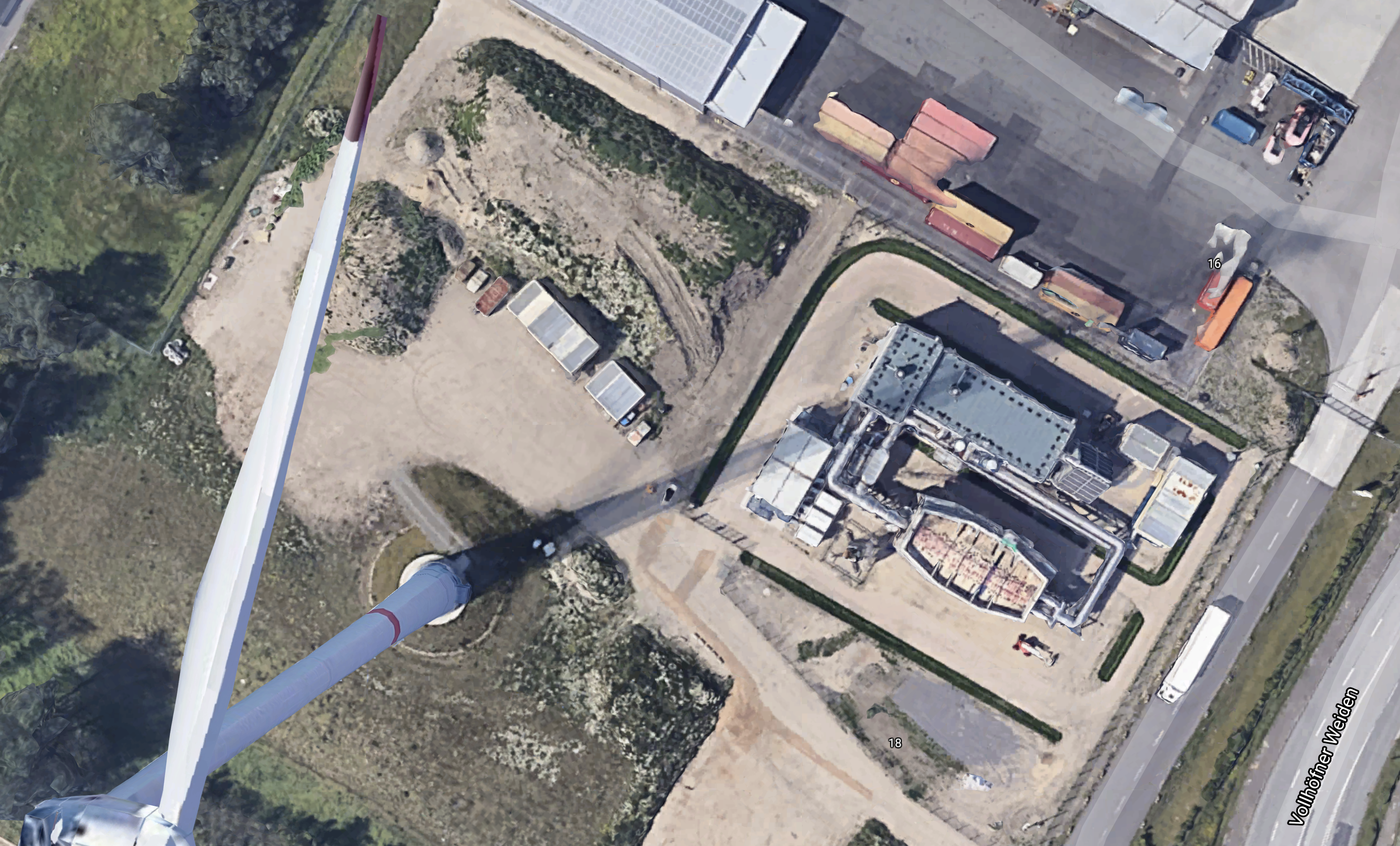
Note.
- The wind-turbine towards the South-West corner of the map.
- Siemens Gamesa ETES trial installation is the prominent odd shaped building towards the South-East corner of the map, just below the shadow of the turbine.
- The installation seems to have lots of pipes connected to it.
This second map shows the installation from an angle.
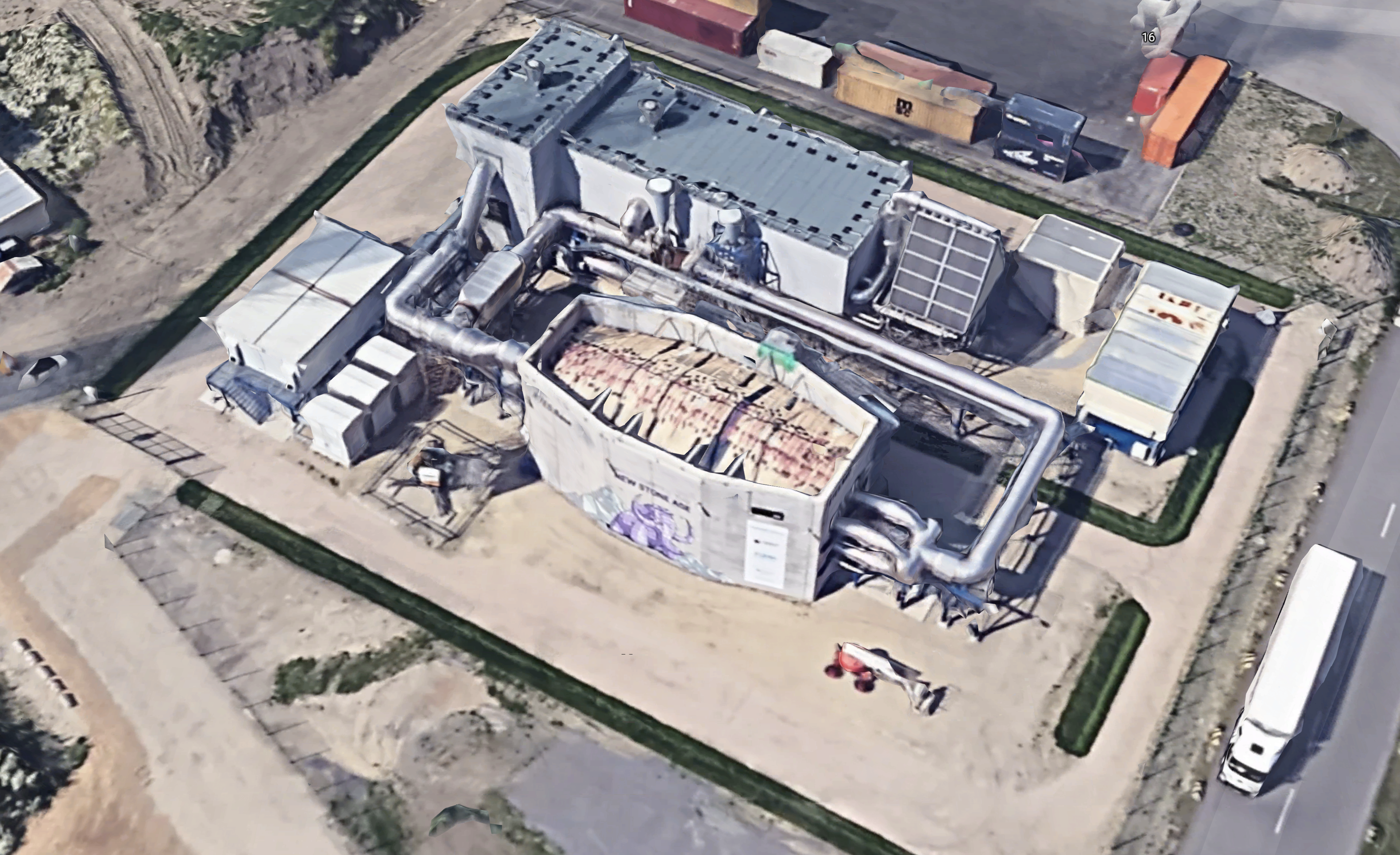
This document on the Siemens Gamesa web site describes the installation.
- The nominal power is 30 MW.
- The capacity is 130 MWh.
- 80 % of the technology is off the shelf.
The picture on the front says “Welcome To The New Stone Age”.
If anybody should find themselves in Hamburg with some time to waste, I’d be very grateful for a copyright-free image.
The installation appears to be just off the VollHöfner Weiden.
New Hydrogen Engine Design Unveiled To Overcome Reliance On Fuel Cells
The title of this post, is the same as that of this article on Hydrogen Fuel News.
The article describes an innovative hydrogen-powered engine developed by an Israeli company called Aquarius Engines.
This is the sub-heading, that gives a little bit more information.
Aquarius Engines has developed a small 10kg emission-free unit operating entirely on H2.
It appears to be based on the company’s patented single-piston-linear-engine.
This page on the Aquarius web site describes the combustion technology in a short video.
Wikipedia also has an entry on the free-piston engine.
The power output of the Aquarius engine is not given.
Conclusion
I have a hunch, that Aquarius Engines might be on to something!
Light weight is so important in many applications.
An Elegant Way To Cope With Roof Leaks
I took these pictures at St. Pancras station.




Note.
- The full wording is “I catch rain, not rubbish”
- The green grass is something like Astroturf.
- There were three of them!
- They appear to be fitted with castors.
I’m surprised, I’ve not seen this idea used before.
BECCS Beats Hydrogen For Decarbonizing Steel In Europe: ArcelorMittal
The title of this post, is the same as that of this article on S & P Global Platts.
This is the first paragraph.
Bioenergy with carbon capture and storage (BECCS) offers a more cost-effective, readily available solution for decarbonizing the steel industry in Europe than clean hydrogen, steel producer ArcelorMittal’s head of strategy David Clarke said May 17.
So what do they mean by bioenergy?
To make iron from iron ore, you need a reducing agent like carbon or hydrogen.
Iron ore is rich in oxides of iron.
The carbon is usually some form of coal, which produces large amounts of carbon dioxide with the oxygen from the iron oxides.
Hydrogen produces lots of water with the oxygen.
David Clarke of ArcelorMittal explains the process in the article.
“We know biomass worked as a replacement for coal,” he said. “We’ve been using it in our operations in Brazil and other places for many, many years. We have a project in Belgium that we’ll be starting up next year using waste wood, using that to make bio-coal,” with a project to take the emissions from the bio-coal to produce bioethanol.
Is this a case of Back-To-The-Future? If I remember my history, didn’t Iron Age men use charcoal to smelt iron and other metal ores?
If those scientists from Velocys can make Sustainable Aviation Fuel and biodiesel from household waste and used disposable nappies, can they apply their magic to make bio-coal?
I see great cost advantages with this process, as surely it would enable existing blast furnaces to be used, provided they were fitted with carbon capture and storage.
Skills And Post-16 Education Bill
On this page of The Times, there is an outline of the bills that the government will bring forward.
The title of this post is the name of one of the proposed bills.
This is said about the proposed contents of the bill.
A right to government-funded training for all adults lacking A-levels or the equivalent. The bill will also extend the student loan system to those who want to study at local further education colleges. All adults will be entitled to four years’ worth of loans for training or education that can be taken at any point in their life.
I know one person, who will be overjoyed, if he is still alive; John Eardley, who was my Personnel Officer at ICI Runcorn around 1970.
I can remember a story he told.
After a meeting with several union representatives, one of them asked if he could have a personal chat with John. The guy was a foreman in their vehicle maintenance department for ICI’s specialist chemical transport.
He told John how his last daughter had got married at the weekend and he perhaps needed to do something more challenging.
John found him an interesting position. He became a volunteer for Voluntary Services Overseas.
His job was part of a small team, who went to Zambia to sort out the elderly buses in Lusaka.
John was an excellent Personnel Officer and his guidance on personnel matters certainly stuck with this twenty year-old graduate, as I then was.
The Skills And Post-16 Education Bill appears to be what John really needed in the 1970s for the many employees he developed.
I can certainly see members of my own family, who would have been empowered by such a Bill since the Second World War! These include my father, mother and sister for a start.
It should be noted, that I am the first of my family to go to University.
Conclusion
I am totally in favour of this proposed Bill.
H2 And NH3 – The Perfect Marriage In A Carbon-Free Society
The title of this post, is the same as that of this article on The Chemical Engineer.
It is an article, which explains in detail, how we can use hydrogen and ammonia in the future.
 The Anonymous Widower