Three Players Pursuing Floating Offshore Wind Opportunities At Barents Sea Oil Field
The title of this post, is the same as that of this article on offshoreWIND.biz.
This is the sub-heading.
Norwegian oil and gas company Vår Energi has entered into a collaboration with a consortium consisting of Odfjell Oceanwind and Source Galileo to explore opportunities for floating offshore wind through a pilot project at a field located in the Barents Sea off Norway.
The article mentions the Goliat oil field, which is located 85 kilometres (53 mi) northwest of Hammerfest.
This Google Map shows the location of Hammerfest.

Note.
- Hammerfest is marked by the red arrow.
- Hammerfest is the northernmost town in the world with more than 10,000 inhabitants.
- The furthest North, I’ve been in Europe is to Trondheim, which is in the South-West corner of the map.
- To the East of Hammerfest Norway and Russia have a common border and beyond that is the Russian port of Murmansk.
Many years ago, my first visits to Ipswich Town were courtesy of the Official Receiver for Ipswich; John Richardson, who was my parents’ next door neighbour in Felixstowe.
John was an interesting guy, who during the Second World War had been on the Arctic convoys to Murmansk and Archangel. The Wikipedia entry for Arctic Convoys Of World War Two, gives some details.
His descriptions of the weather in the area were horrendous and it makes me wonder why the Norwegians want to extract oil in those conditions. And now generate wind power.
This is the first sentence of the article.
Vår Energi disclosed the deal on Wednesday, 26 April 2023, explaining that the project, called GoliatVind, was a pilot project to demonstrate new, Norwegian offshore wind technology.
So is it all about new technology?
Would Zero-Carbon Trucks Have Better Fuel Security?
There’s just been a story on the BBC, about the need for better truck stops.
One truck owner, said that a truck can carry up to fifteen hundred pounds of diesel and they are always being targeted by thieves.
So would zero-carbon trucks be less of a target for thieves?
I’ve never seen this mentioned in the discussion of zero-carbon vehicles.
Ultra Safe Nuclear, Hyundai Engineering, SK Ecoplant Sign MOU For Clean Hydrogen Production
The title of this post, is the same as that of this press release from Ultra Safe Nuclear Corporation.
These are the first two paragraphs.
Ultra Safe Nuclear Corporation, the U.S.-based global leader in the deployment of fourth-generation gas-cooled microreactors, Hyundai Engineering (Representative Director Hong Hyun-sung) and SK ecoplant (Representative Director Park Kyung-il) are teaming up to conduct research and development for carbon-free hydrogen production. The three companies signed an MOU on Thursday, April 20th for the construction of a “Hydrogen Micro Hub” at the SK ecoplant headquarters in Seoul’s Jongno-gu.
The “Hydrogen Micro Hub” is a facility that produces hydrogen by applying a high-temperature electrolysis process of solid oxide electrolysis cells (SOEC) to the electricity and high-temperature steam generated by USNC’s Micro-Modular™ Reactor (MMR®). This is a carbon-free hydrogen production method that extracts hydrogen by decomposing water with electricity generated from nuclear power.
Ultra Safe Nuclear Corporation has a web site.
- Ultra Safe Nuclear Corporation, is a U.S. corporation headquartered in Seattle.
- Canada appears to be deeply involved.
- Innovate UK appears to have dished out a grant.
- They appear to have sold five of their MMRs.
The company could be a serious competitor in the market for small modular nuclear reactors.
Hail The Hercules
The title of this post was used on the front page to indicate an article in the Meccano Magazine about the arrival of the Lockheed Hercules in the mid-1950s.
The Wikipedia entry for the Hercules, starts with this sentence.
The Lockheed C-130 Hercules is an American four-engine turboprop military transport aircraft designed and built by Lockheed (now Lockheed Martin). Capable of using unprepared runways for takeoffs and landings, the C-130 was originally designed as a troop, medevac, and cargo transport aircraft.
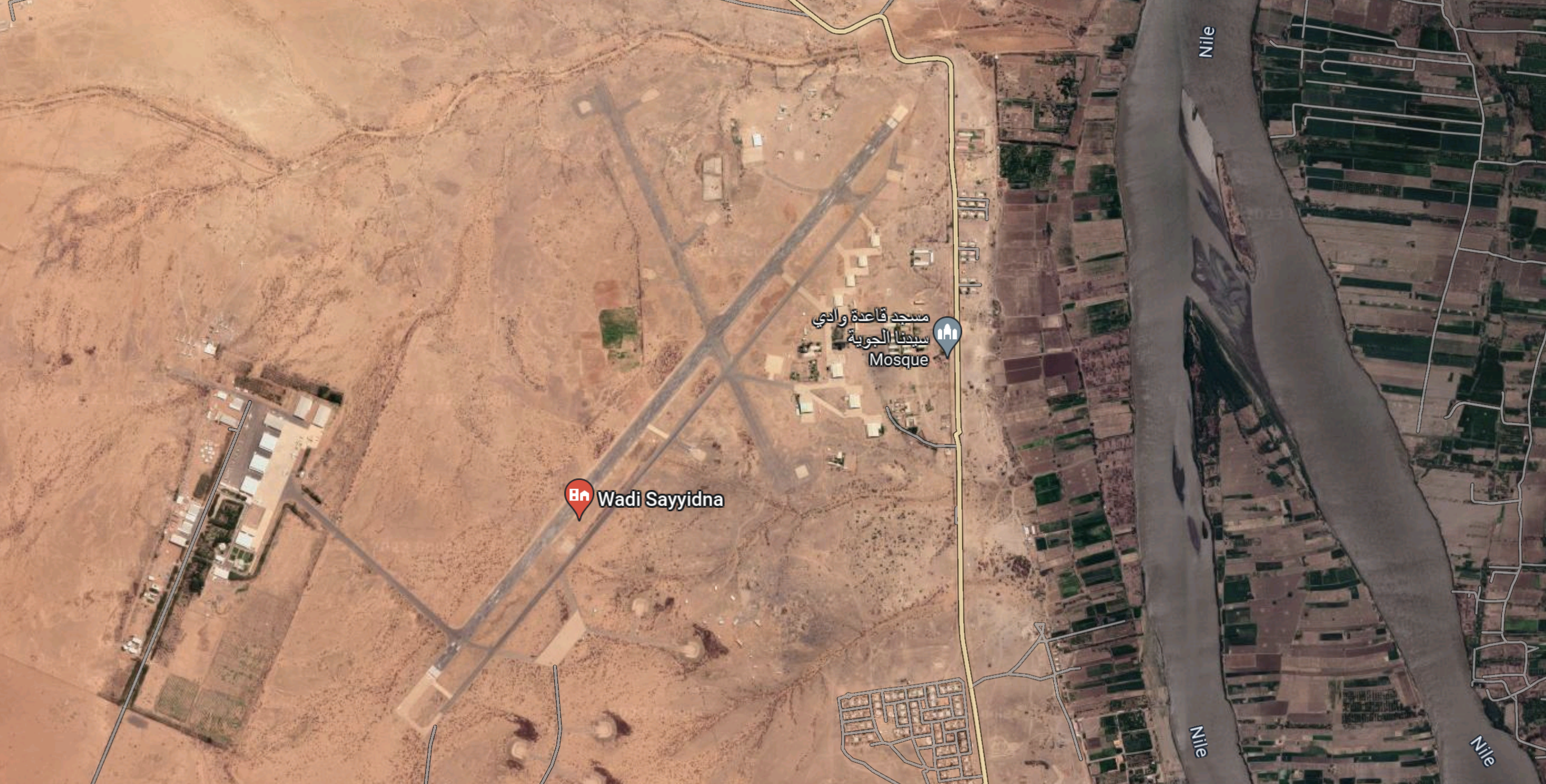
The aircraft first flew in 1954 and nearly seventy years later they are still doing the same operations, they were designed for, with various reports of Hercules flying to the remote Wadi Seidna airstrip in Sudan.
This Google Map shows the airstrip.
Note.
- There appears to be two runways and some form of operational building or terminal.
- The River Nile is at the East of the map.
It looks like an airfield, where Hercules are intended to be used, even in circumstances, where severe damage has been inflicted to the runway.
When Metier Management Systems and Artemis were sold to Lockheed, I had several conversations with senior people and the company was and probably still is rightly proud of its long-lived design.
EU Co-Legislators Agree On SAF Blend Targets For Aviation
The title of this post, is the same as that of this article on Renewables Now.
These are the first two paragraphs.
The European Council and the Parliament on Tuesday reached a provisional political agreement on the ReFuelEU Aviation proposal, which will set new rules requiring fuel suppliers to blend sustainable aviation fuels (SAF) with kerosene in increasing amounts from 2025.
The European Commission, which made the proposal, welcomed this outcome on Wednesday and noted that the measure is expected to reduce aircraft carbon dioxide (CO2) emissions by about two-thirds by 2050 versus a “no action” scenario. The ReFuelEU Aviation initiative is part of the “Fit for 55” package.
Measures include.
- Aviation fuel companies to make sure that at least 2% of the fuel they supply at EU airports in 2025 is SAF.
- This share is supposed to gradually increase and reach 70% in 2050.
- A minimum share of synthetic fuels will be required from 2030.
- Aircraft operators departing from EU airports will be required to carry only the volume of fuel they need for a particular flight in order to avoid further emissions associated with extra weight or carbon leakage caused by tankering practices.
- Airports to ensure that their fuelling infrastructure is fit for SAF distribution.
Note.
- I can see some airlines complaining about some of these measures.
- I can also see the fourth measure about tankering having negative effects on airline costs and ticket prices.
Michael O’Leary’s comments will be interesting.
Gazelle Wind Power Unveils Third Generation Floating Offshore Wind Platform Technology
The title of this post, is the same as that, of this press release from Gazelle Wind Power.
There is a visualisation in the press release and it looks very different.
This is the first paragraph.
Gazelle Wind Power (Gazelle), the developer of a modular floating offshore wind platform, is unveiling third generation technology this week at WindEurope 2023 in Copenhagen, Denmark. The company’s enhanced design further refines Gazelle’s solution to address the primary challenges facing the offshore wind industry—such as cost, supply chain bottlenecks, and sustainability—by providing a lightweight, cheaper design that minimizes the impact on fragile marine environments while using existing port infrastructure.
It looks like they’ve set themselves a tough set of objectives.
These are a few points from the press release.
- A one-gigawatt offshore wind farm using Gazelle’s solution would save 71 kt of steel and reduce emissions of approximately 100 kt of carbon dioxide.
- The company’s platform can be quickly and simply installed at project sites because it requires no specialist cranes or vessels.
- The platform’s unique geometry provides reduced draft in port, which means it floats higher in the water enabling the use of shallow ports.
- Through industrial innovation, the platform components can be adjusted to accommodate all forecasted offshore wind turbine sizes, including the current 15MW or greater capacities.
- Our platform can be produced anywhere in the world, supporting job creation through regionalized manufacturing.
When I look back on how offshore oil and gas platforms changed in the North Sea over a couple of decades, I’m not surprised to see this innovative design.
I wish the company the best of luck. But I don’t think they’ll need it!
Oceans of Energy To Build Offshore Solar Array At Hollandse Kust Noord Offshore Wind Park
The title of this post, is the same as that of this article on offshoreWIND.biz.
This is the sub-heading.
Oceans of Energy has been awarded the contract for installing and operating offshore solar farm inside the Hollandse Kust Noord offshore wind park being developed by CrossWind, a joint venture between Shell and Eneco.
This is the first paragraph.
This is set to be the first offshore solar farm in the world to be connected, installed, and operated within a wind farm in high wave conditions. The offshore solar farm will be realized in 2025, while the wind park will be operational by the end of 2023, according to Oceans of Energy.
These are some other points from the article.
- It looks like the solar will be floating.
- The wind/solar farm will have offshore battery storage.
- Green hydrogen will be generated offshore.
This wind/solar farm will be all things to all men and women.
Moray West First UK Round 4 Offshore Wind Project To Reach Financial Close
The title of this post, is the same as that of this article on offshoreWIND.biz.
This is the sub-heading.
Moray West Offshore Wind Farm, owned by Ocean Winds and minority shareholder Ignitis Group, has secured GBP 2 billion of non-recourse project finance and reached financial close, the developers announced on 21 April and said this was the first project from the UK’s Contract for Difference (CfD) Allocation Round 4 to reach this milestone.
This is the first paragraph.
The construction work for the wind farm has already started, with this phase of the project set to create 1,000 direct jobs in the UK. With financial close in place, the project will now move to secure the remaining elements of supply chain activity in preparation for offshore installation works later this year which will be fully completed by 2025, when the 882 MW Moray West is scheduled to be fully operational.
That sounds good for Scotland and electricity users in the UK.
But this paragraph is probably the most important.
According to its developers, the 882 MW offshore wind farm is the first in the UK to rely in majority on corporate power purchase agreements (CPPAs) for the commercialisation of its output. CPPAs were signed with long-term strategic partners, for more than 50 per cent of the project’s output, enabling the rapid progress of the project. The vital CPPAs were originated in partnership with ENGIE and represent the largest contracts of their kind implemented in the UK market to date, Ocean Winds said in a press release.
There’s not much point in making something that nobody wants to buy at the price you need for a profitable sale.
But with all those CPPAs, one of which is with Google, Moray West wind farm appears to be on his way.
Thor Offshore Wind Farm To Feature Siemens Gamesa’s Newly Launched GreenerTowers
The title of this post, is the same as that of this article on offshoreWIND.biz.
This is the sub-heading.
Siemens Gamesa has revealed its GreenerTower, a wind turbine tower made of more sustainable steel. The company already closed its first order with RWE to feature 36 of the GreenerTower units at the 1 GW Thor offshore wind project in Denmark.
This is the first paragraph.
Today, tower production accounts for more than one-third of all wind-turbine-related CO2 emissions, according to Siemens Gamesa.
Siemens Gamesa’s new GreenerTower will ensure a CO2 reduction of at least 63 per cent in the tower steel plates compared to conventional steel.
Siemens Gamesa also claim this.
If all towers installed by the company in one year were exchanged with GreenerTowers, it would be the same as removing more than 466,000 cars from the roads in Europe for a year.
The first supplier to be qualified is Salzgitter AG.
- I wrote about Salzgitter’s green steelmaking in WindH2 Hydrogen Project Commissioned In Germany.
- Only a maximum of 0.7 tonnes of CO2-equivalent emissions are permitted per tonne of steel while maintaining the same steel properties and quality.
- Salzgitter’s electric furnaces will be fed with green electricity produced by renewable energy sources.
- Salzgitter AG have recently signed a Power Purchase Agreement (PPA) with Iberdrola.
- It looks like Salzgitter AG are going both the electric and hydrogen route to green steel.
I suspect over the next few years, we’ll be seeing more steel products made with green steel.
In this case, I suspect that Siemens Gamesa could use the same production process with very little modification, which is a great advantage.
World’s Largest-Of-Its-Kind Power Line To Deliver Clean Power To 1.8m UK Homes And Boost Energy Security
The title of this post, is the same as that as this press release from the UK Government.
These are the three bullet points of the press release.
- LionLink power line between UK and Netherlands will deliver enough electricity to power more homes than Manchester and Birmingham combined.
- Agreement made as Grant Shapps leads delegation of leading businesses to key North Sea Summit.
- Part of renewed Government drive to work with business to help grow the economy.
These three paragraphs outline the project.
The world’s largest multi-use electricity power line will be built under the North Sea, boosting UK energy supplies with enough to power 1.8 million homes – more than Birmingham and Manchester combined.
The new LionLink will connect the UK and the Netherlands with offshore wind farms, providing clean affordable and secure energy to Britain which will help cut household bills and drive Putin’s Russia further out of the energy market.
The cross-border electricity line will be only the second of its kind in the world, with the first having been built by Germany and Denmark. However, it will be able to carry more than four times the amount of electricity as its predecessor – making it the largest of its kind in terms of capacity anywhere in the world.
Note.
- I suspect the LionLink will go via the Dogger Bank, where Danish, Dutch, German and UK territorial waters meet an we are already building 8 GW of fixed foundation offshore wind. The other countries are also active in the area.
- The press release doesn’t mention, where the LionLink will make landfall in the UK.
- Much of the connection will probably use the cables being laid for the Dogger Bank wind farms.
- There is also no mention of the North Sea Wind Power Hub, which could be an artificial island on the Dogger Bank.
There is also a press release on the National Grid web site, which is entitled National Grid And TenneT Collaborate On Proposed First-Of-A-Kind Anglo-Dutch Electricity Link, which gives more details.
- The capacity is stated to be 2 GW.
- Like the current BritNed interconnector, the project will be a cooperation between National Grid And TenneT.
- TenneT is a limited liability company owned by the Dutch government, that is a transmission system operator in the Netherlands and in a large part of Germany.
There is also a diagram, showing how the LionLink will work, which includes these components.
- On the Dutch side, there is an offshore AC>DC Converter Station, which is connected to the Dutch electricity grid and one or more offshore wind farms.
- Across the border between the Dutch and UK Exclusive Economic Zones, there will be a HVDC cable.
- The HVDC cable will terminate in an onshore DC>AC Converter Station in the UK, which will be connected to the UK electricity grid.
No details of the two landfalls have been given.
More information is given in this article on offshoreWIND.biz, which is entitled UK And Netherlands Unveil Multi-Purpose Interconnector Plans.
- This shows a map of the North Sea with an interconnector running in a straight line between possibly Rotterdam and Bacton in Norfolk.
- A wind farm is shown connected to this interconnector.
This paragraph describes the windfarm and the interconnector.
LionLink, a multi-purpose interconnector that was announced today at the North Sea summit, could connect a Dutch offshore wind farm with a capacity of 2 GW to both countries via subsea interconnectors.
If the wind farm has a capacity of 2 GW, I would assume it can supply up to 2 GW to the UK and The Netherlands.
This is a classic system, that can be optimised by the application of sound principles.
All electricity generated by the wind farm must be used, stored or converted into green hydrogen.
Electricity will be distributed as to need.
Energy storage or electrolysers could be sited at either end or even in the wind farm.
I would suspect that more wind farms could be connected to the interconnector.
The team, that write the control system for the grid will have a lot of fun!
BritNed
I have a feeling that National Grid and TenneT have taken a long hard commercial look at the electrical and financial performance of BritNed over the last year and decided, that a second connection would be to the mutual benefit of both companies, their customers and the UK and The Netherlands in general.
It would also be twice as difficult for terrorists sponsored by Putin to cut two cables.
Conclusion
This is a great leap forward for wind power in the North Sea and Europe.
 The Anonymous Widower