TfL Advances Plans For DLR And Overground Extensions
The title of this post, is the same as that of this article on New Civil Engineer.
This is the first paragraph.
Transport for London (TfL) has confirmed that it is moving ahead with plans to extend the Docklands Light Railway (DLR) and the West London Orbital (WLO), part of the London Overground.
So it appears that despite all their financial problems, some progress is being made.
The Docklands Light Railway Extension To Thamesmead
I first wrote about this project in TfL Considering Extending DLR As Far As Abbey Wood.
Now it appears that TfL has been working with Homes England and the Department for Levelling Up, Housing and Communities on a feasibility study for the extension.
I would like to see this extension incorporation the following.
- A signature bridge over the Thames with good views of the river.
- A station with a convenient connection to Crossness, which could become one of major London’s tourist attractions with better transport links.
- A connection to the Elizabeth Line at Abbey Wood station.
It could help to level up Thamesmead, whose main claim to fame is that it was where the violent film Clockwork Orange was made.
The West London Orbital Railway
I have written extensively about this railway and you can see my posts here.
This map from the Mayor’s Transport Strategy shows the route.
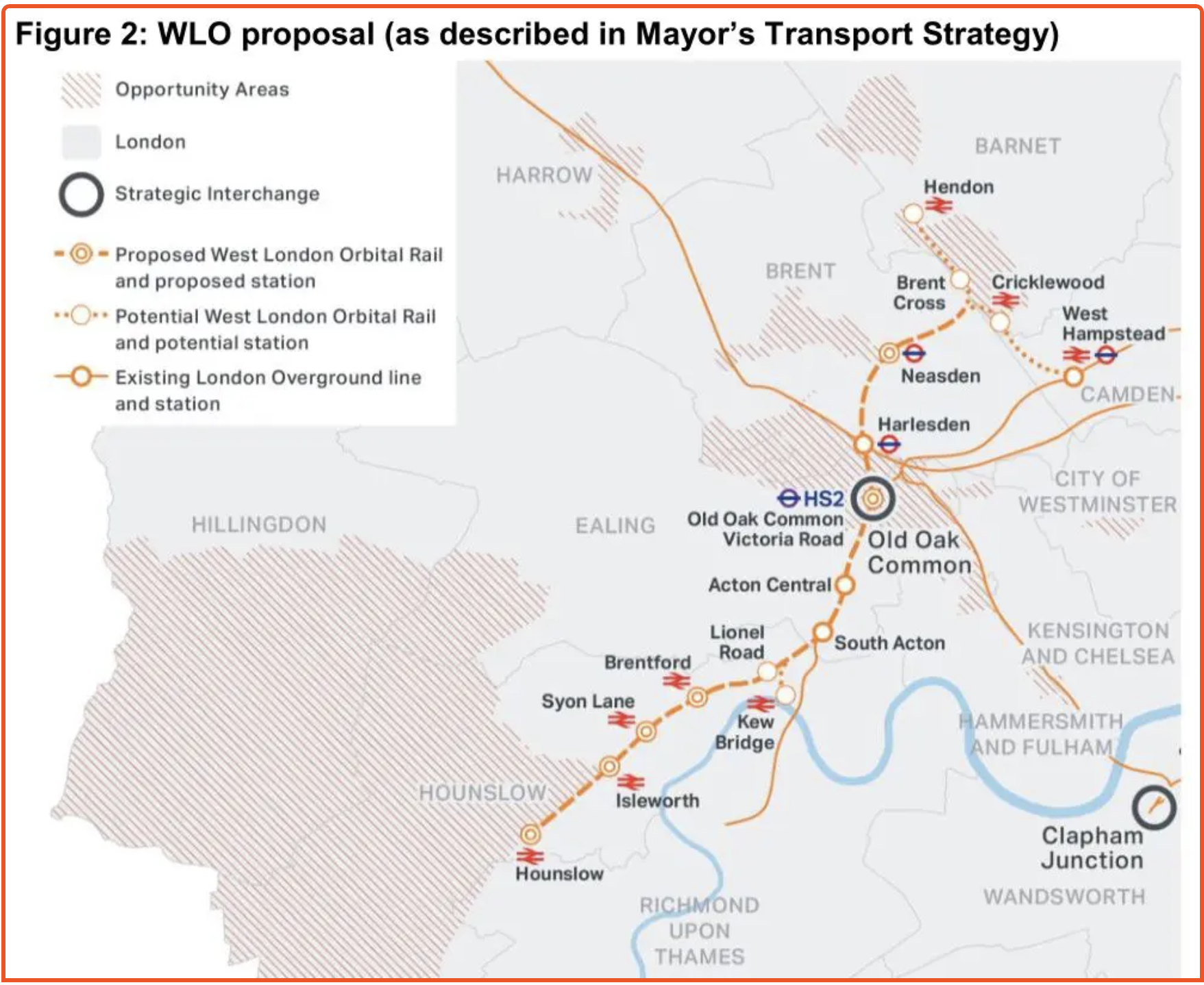
I believe this railway could do the following.
- Level-up much of North-West London.
- Provide better access to Heathrow.
- Link West London to High Speed Two and the Elizabeth Line.
It would also provide better links to Brentford’s new stadium.
The New Civil Engineer says this about funding.
TfL now confirms that the West London Alliance has commissioned feasibility work for the scheme. Meanwhile, TfL is considering options for a Borough Community Infrastructure Levy to help pay for it and has been investigating development opportunities on the route that could unlock funds via Section 106 planning obligations and Carbon Offset funding.
Conclusion
It does appear there are ways and means to fund these schemes, without expecting the rest of the UK to fund London’s transport network.
Intriguing “Frozen Air” Energy Storage In Vermont Gets Canned
The title of this post, is the same as that of this article on the Concord Monitor.
This is the first paragraph.
Alas, the company Highview Power has given up on a plan I wrote about in 2019 to develop a long-term energy storage project in northern Vermont that freezes and unfreezes air.
The author had asked Highview Power for an update and received this statement.
As a UK-based company our primary focus right now is on our Carrington project in the North of England. This will be our first commercial plant in the wider development of a 45GWh, £10 billion programme in the UK. While the Vermont project no longer remains in our current plans, we are developing a longer-term portfolio of projects in Spain, Australia, and the U.S and we look forward to pushing forward with these after we achieve our primary UK projects.
It sounds to me that the new CEO; Rupert Pearce, is simplifying the company’s operations and aiming to get the important Carrington plant working as a priority.
Green Hydrogen Magnate Forrest Sanctioned By Russia After Calling Putin A ‘Murderer’
The title of this post, is the same as that of this article on Recharge.
Andrew Forest’s reply or the part that can be printed included.
You’re not worth talking to unless you’ve been sanctioned
I think that to many experts, Forrest’s plans for green hydrogen are one of the biggest threats to Russia’s oil industry.
Wheelchair Provision On Elizabeth Line Trains And Platforms
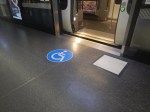
These pictures show the provision for wheelchairs on trains and platforms of the Elizabeth Line.











Note.
- The generous spaces for a wheelchair. There are four spaces in the middle carriage of the nine-car trains.
- There is a blue wheelchair symbol, that marks where wheelchair entry to the trains is easiest.
- There are blue wheelchair symbols on the floor at doors closest to the wheelchair spaces.
- There are a lot of wheelchair signposts on all platforms.
- There are no steps to negotiate taking a wheelchair in or out of the train.
- At Canary Wharf there was a small screen showing the next five trains in each direction, which appeared to be positioned at the right height for a self-propelled wheelchair user.
Whilst I was coming back from Canary Wharf, the wheelchair space opposite was occupied by a very elderly lady in a wheelchair, who was accompanied, by a couple I took to be her daughter and son-in-law.
Judging by the smiles and compliments all round, they all seemed well satisfied with the provision.
Elizabeth Line To Northern Line At Moorgate Station
In Elizabeth Line – Moorgate Station – 27th May 2022, I took the recommended step-free route at Moorgate station between the Northern Line and the new entrance to the station.
It is a rather underwhelming and long route and this was my conclusion.
The rat-up-the-drainpipe route is acceptable to me, but I don’t feel the step-free route via the long tunnel will be acceptable for all those, who need to use it.
It’s just too long to walk for many!
Perhaps the addition of seats for a rest would help.
I wrote about the rat-up-the-drainpipe route to the surface, in Up From The Depths At Moorgate Station and in my view, if you can manage an escalator it is a better route between the Northern and Elizabeth Lines. Once at the surface, there are lifts and stairs to the new entrance, where there are escalators and a lift to the Elizabeth Line.
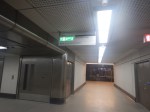
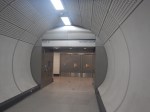
This morning, I was coming the other way, as I’d just off an Elizabeth Line train from Canary Wharf. These pictures show my route to the Northern Line.














Note.
- The signing at the start of the route, which is shown in the first picture is dreadful.
- I suspect, it leads to some of those in wheel-chairs ending up at the main escalators to Moorgate.
- The main route to the Northern Line includes a double set of stairs, but there is a by-pass lift.
- The connecting tunnel is overly long.
- At the end of the tunnel, there is a choice of a lift or long stairs.
- At least the tunnel is fully air-conditioned.
I took the lift and then used the escalator to the Northern City Line opposite.
Step-Free Access To The Northern City Line
It hasn’t been added.
Conclusion
Routes between the Northern and Elizabeth Lines at Moorgate need to be improved.
Moorgate Station’s Facade At The New Entrance – 17th June 2022
These pictures show, the new facade of the Moorgate station’s new entrance.
This entrance is in addition to the original entrance on Moorgate and it has stairs and lifts to the Circle, Hammersmith & City and Metropolitan Lines and a giant escalator and a lift to the Elizabeth Line.
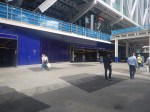
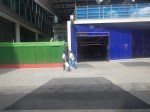
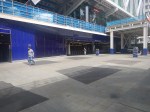
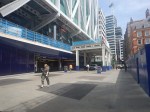
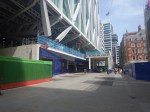
It does look as though, the construction of the offices on top of the entrance is coming to a completion. Two escalators will be fitted in the space guarded by the green hoarding to give access to the offices and the walkways, that will lead to the Barbican.
London Now Has A Large Communal Cool Room For The Elderly And Disabled
I would suspect that most elderly and disabled people, who live in the London boroughs have a Freedom Pass entitling them to free public transport.
London’s new cool room is large and fully air-conditioned, and stretches eight miles right across the city between Paddington and Canary Wharf.
It is officially called the Elizabeth Line, but others call it Crossrail or the Lizzie Line.
Perhaps, the seats in the stations are hard, to discourage overstaying in the well-controlled cool atmosphere.




These seats are used on most stations.
I wonder how many passengers will choose the Elizabeth Line in this heat?
I certainly will!
Nuclear-Enabled Hydrogen – How It Helps To Reach Net Zero
The title of this post, is the same as that of this article on Power Engineering.
These are the first two paragraphs.
Nuclear enabled hydrogen is zero carbon, has low cost energy input, is large scale and offers co-location synergy and energy system connectivity.
With the revival of interest in nuclear energy, interest is growing in the potential for nuclear-enabled hydrogen, otherwise sometimes known as ‘pink’ hydrogen, to meet the anticipated demand for hydrogen at scale.
The article is certainly a must-read.
Topics covered include.
- Co-location of pink hydrogen production with industrial clusters, where heat can also be provided.
- The production of hydrogen on a large scale.
- The use of high temperature electrolysis, using steam from the nuclear plant.
I particularly like the idea of combining a small modular nuclear reactor with high temperature electrolysis to generate hydrogen for local industry like a steelworks or chemical plant.
Canary Wharf Boosts Its Science Ambitions
The title of this post, is the same as that of this article on The Times.
This are the introductory paragraphs.
Genomics England is to move its headquarters to Canary Wharf in east London this year as the financial quarter aims to become a life sciences hub.
The government-run DNA sequencing group will move in the autumn into One Canada Place, where its neighbours will include Brookfield, a Canadian property fund, and Reach, publisher of the Daily Express and OK! magazine.
Owned by the Department of Health and Social Care, Genomics England sequences the genomes of people with rare diseases and cancers to help doctors to treat them more effectively. With consent, some of that data is passed to researchers trying to develop new drugs and treatments.
If you type “Canary Wharf Science Hub into Google”, you find some serious articles.
This article in the FT is entitled Canary Wharf Proposes £500mn Lab Project To Reinvent Financial Hub.
This is a good idea, as scientist friends are always complaining about a lack of lab space in Cambridge and Oxford. Because of the Elizabeth Line, both these cities are not much more than an hour from Canary Wharf.
It should also fill the cafes and shops with scientists and engineers, who would replace some of those working from home because of the pandemic.
I wonder whether this model will work elsewhere?
Vast Australian Renewable Energy Site Powers BP’s Ambitions
The title of this post, is the same as that of this article on The Times.
These are the first two paragraphs.
BP is to lead the development of a $36 billion wind, solar and hydrogen project in Western Australia in its latest foray into green energy.
The oil company has bought a 40.5 per cent stake in the Asian Renewable Energy Hub in the eastern Pilbara region and will become operator of the project, one of the biggest such developments globally.
The Wikipedia entry for the Asian Renewable Energy Hub, starts like this.
The Asian Renewable Energy Hub (AREH) is a proposal to create one of the world’s largest renewable energy plant in the Pilbara region of Western Australia. It was first proposed in 2014, with plans for the project concept changing several times since then. As of November 2020, the project developers Intercontinental Energy, CWP Global, Vestas and Pathway Investments were planning to build a mixture of wind power and solar energy power generators which would generate up to 26 gigawatts of power.
Up to 1,743 wind turbines of 290 metres (950 ft) in height would be accommodated in 668,100 hectares (1,651,000 acres) of land, and 18 arrays of solar panels each generating 600 megawatts would cover 1,418 hectares (3,500 acres). It is to be located in the Shire of East Pilbara, about 30 km (19 mi) inland from 80 Mile Beach, with the nearest settlement on the map being Mandora Station. The total size of the scheme would be about 666,030 ha (1,645,800 acres).
It is a gigantic project and this Google Map of Western Australia shows its location.
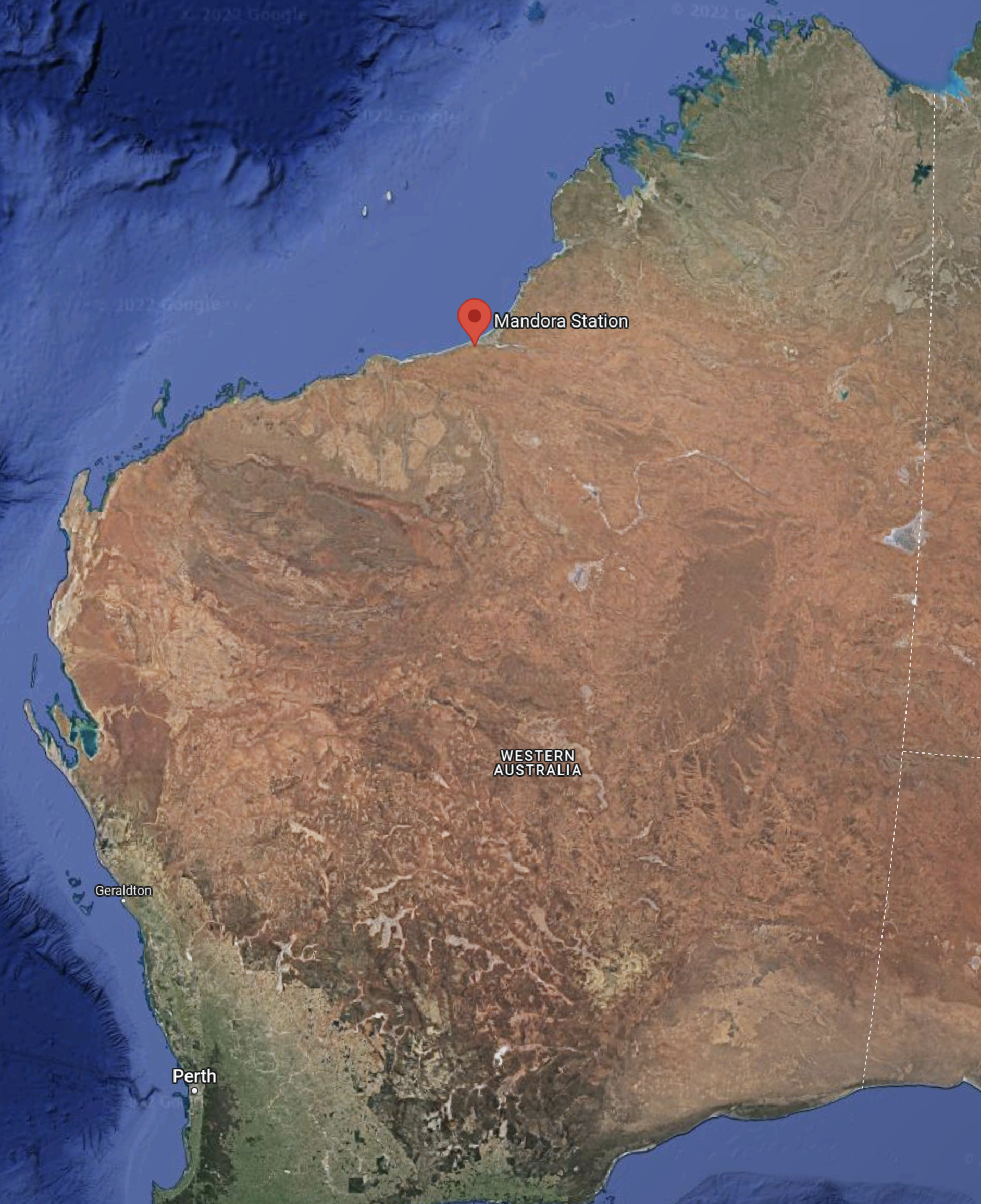
It is no more than a pimple on the huge area of Western Australia.
I have my thoughts about BP getting involved with this project.
The Power Of Research
Around 1970, I spent four years in ICI applying mathematical methods to some of their processes, that were in research or development. I also worked for a time on their hydrogen plants. Some of the projects I heard about, were pretty wacky and some of these appear to have never been commercialised.
When I left ICI, I built a few mathematical models for other research organisations.
So I do wonder, if BP have found something, that will enable the process of making hydrogen from water a lot more efficient. There is an American startup called Bloom Energy, who have teamed up with Westinghouse to use steam from the nuclear reactor to do electrolysis more efficiently at a high temperature.
I wrote about this partnership in Westinghouse And Bloom Energy To Team Up For Pink Hydrogen, where Bloom Energy Vice President of Hydrogen Business Rick Beuttel, is quoted as saying this.
We are proud Westinghouse has turned to Bloom and our solid oxide technology to supercharge the clean hydrogen economy. Solid oxide technology is well suited for nuclear applications, efficiently harnessing steam to further improve the economics of hydrogen production. High temperature electrolysis is already garnering attention and accolades as a cost-effective and viable solution to create low-cost, clean hydrogen, which is critical to meeting aggressive decarbonization goals.
It sounds that by integrating the nuclear power station and the electrolyser, there are cost savings to be made.
Why not use solar power to create steam, which is called solar thermal energy and is used in various hot places in the world and then use high temperature electrolysis?
I suspect that BP are up to something, that is very similar to Fortescue Future Industries in the Australian company’s back yard.
So will they be selling the hydrogen to FFI, so they can market it together all over the world?
This BP deal is one to watch.
 The Anonymous Widower