Screening For Coeliac Disease
People ask me if they should be screened for coeliac disease.
This page on Coeliac UK is entitled Screening For Coeliac Disease.
They quote this advice from NICE.
NICE has advised that people with close relatives (for example father, mother, son, daughter, brother, sister) are at increased risk of coeliac disease and so should be considered for screening. This would involve having a blood test in the first instance.
That sounds fairly sensible to me.
A Ride In A Dynamo Electric Taxi
I came out of Marks and Spencer on Finsbury Pavement and an unusual black taxi was sitting on the rank opposite.
So I had to take a ride.




It was a Dynamo Electric Taxi based on a Nissan e-NV200 Evalia MPV.
These are my thoughts.
The Two Major Complaints About The LEVC TX Cab From Drivers
There are two major complaints about the LEVC TX from drivers.
- It is too expensive to buy.
- The range on battery power is not far enough.
I’ve also had several conversations about hydrogen power
My Taxi Use
As I have a Freedom Pass, I only travel in taxis about twice a month. Usually this is when I’m coming home from a railway station like Euston, Liverpool Street or Kings Cross in the evening and I want to get home quickly, or I am coming home with shopping, as I was today. Only occasionally, do I use a taxi with somebody else.
I’d be interested to know, the average number of passengers in a black cab.
Dynamo Has Developed A Vehicle To Sell
I feel that Dynamo have developed a vehicle that will sell.
- The driver said that it is £20,000 cheaper than the LEVC TX.
- The web site says that the battery range is at least twice that of the LEVC TX.
- The capacity is one less than the lEVC TX, which is probably not a large disadvantage.
- The cab includes four different charging methods.
- It can even be charged from a 13-amp socket.
- It can carry one person in a wheelchair.
- Roomy enough for taller drivers.
- Dynamo claimed to have talked to the drivers. As they have addressed, their two major complaints, that seems about right.
- It has a glass roof, as does the LEV TX, which is a good feature for a cab,
- It is 100 % electric and zero carbon.
Overall, it seems to have been designed to have a low cost of ownership. Being based on a standard vehicle must help.
Would It Appeal To Drivers In Smaller Towns And Cities?
After my stroke, I used a lot of taxis to go between my house and the local bus station in Haverhill, which was a distance of about four miles.
Haverhill is a town of 27,000 people without a railway station.
- The nearest railway station at Dullingham is 10 miles away.
- Cambridge is 18 miles away.
- Bury St. Edmunds is 19 miles away.
I feel that the range could be sufficient to run a taxi service in a town like Haverhill.
So could the Dynamo taxi, bring black cabs to more areas?
Ride Quality
Ride quality was what I would expect from a modern vehicle.
Comfort And Space
Comfort was very similar to that of an LEVC TX, but there was a little bit less space. But that wouldn’t bother me.
Would I Use One Again?
I can’t see any reason not to!
I might even choose one in preference to an LEVC TX or a Mercedes Vito, as my road can sometimes be congested and a smaller vehicle might be an advantage.
Conclusion
The Dynamo Black Cab looks to be a serious alternative to the LEVC TX. Especially, as the design has addressed the two major complaints of drovers; cost and range and the vehicle is 100 % electric.
In my lifetime, there have been alternative black cabs, like the Winchester, the Mercedes Vito and the Metrocab.
I can see others joining the market.
A Last Ride On A Class 315 Train Between Upminster And Romford?
This morning I went to Upminster and took the Class 315 train to Romford.

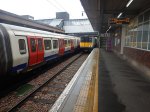
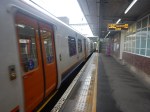

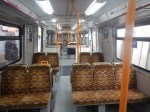
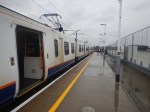
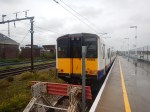
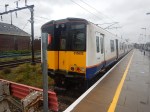
I added the question mark, as when I passed East Ham depot, there were two new Class 710 trains sitting there, covered in graffiti.
Could The Romford And Upminster Line Be Improved?
I see two possible simple improvements
Four Trains Per Hour
London Overground likes to run four trains per hour (tph).
Could this frequency be run on the Romford and Upminster Line?
Three years ago I wrote Could The Romford To Upminster Line Handle Four Trains Per Hour?, and came to this conclusion.
A seven minute trip would mean the train could perform the required four trips per hour.
It would still be tight.
I also investigated an automated shuttle train on the route in An Automated Shuttle Train Between Romford And Upminster, which I felt would be possible, to run a four tph service.
Extension Of The Service
There are various reasons, why the service could be extended from Upminster station, in the Grays direction.
- It would give travellers from South Essex much better access to Crossrail.
- It could give a shuttle between Romford and Grays via the Lakeside Shopping Centre
- Tilbury Riverside station could be a possibility.
- It could open up possibilities for more housing in the area.
- If the route were to be extended to a new station at London Gateway, it could make it easier for people to travel to work at the large port.
Obviously, it would have to be viable for the operator, but the big beasts of Crossrail, Lakeside Shopping Centre and London Gateway might make it possible.
Planning the route wouldn’t be that easy.
Consider.
- The connections to Romford and Grays are on different sides of the District Line, so a flyover or dive-under might be needed.
- Upminster and Grays is a single-track line with a passing loop at the two-platform Ockenden station.
- Upminster and Grays used to be worked by a shuttle service.
- The signalling appears to be able to handle four tph in both directions.
- The current service between Grays and Upminster is two tph in both directions.
- There is a bay platform 1A, at Upminster, which faces towards Grays.
It can certainly be said, that the extension of the service can’t be run at four tph.
I also think, that the current track layout at Upminster looks like one of British Rail efforts to stop any expansion of the railway.
This Google Map shows the layout of Upminster station.

Note.
- The platforms are numbered 1 to 6 from South to North.
- Platform 1A is the Southernmost platform, which is slightly at an angle.
- The main station footbridge is at the Western ends of the platforms.
- The station isn’t fully step-free.
Is an alternative approach possible?
Suppose the following were to be arranged.
- A four tph endless shuttle between Romford and Upminster stations.
- Full step-free access at Romford station is currently being installed.
- Full step-free access at Upminster station.
- A two tph shuttle between Platform 1a and Grays, London Gateway or wherever most passengers want. This service would be arranged to give four tph between Upminster and Grays, when combined with the current services.
- The two four tph services would be timed to give a convenient interchange at Upminster.
Could it be made to work?
It would only need improvements to Upminster station.
These pictures show Upminster station.





Note.
- Platform 1a is fully-electrified and long enough for a Class 710 train.
- The bridge at the Eastern end of the station is not step-free but could be updated.
- It might be possible to extend this bridge to Platform 6.
Platform 1a could certainly be used to operate a shuttle service to Grays to create a new service across South Essex.
Coronavirus: Can I Be Infected By Touching Surfaces?
The title of this post is the same as that of an article on The Sunday Times.
The article is worth reading.
These two paragraphs some up the latest thoughts on infection from surfaces.
Monica Gandhi, a professor of medicine at the University of California, San Francisco, told the US science website Nautilus that there had been “a lot of fear” at the beginning of the pandemic about transmission of the virus if people touched their faces after contact with metal, plastic or other contaminated surfaces, collectively known to scientists as fomites.
Yet the evidence suggests that the virus on most surfaces is not strong enough to make people ill. “It’s not through surfaces,” she added. “It’s from being close to someone spewing virus from their nose and mouth, without in most cases knowing they are doing so.”
I travel around the Underground a lot and I’m always masked, when I enter stations and usually use the hand-sanitisers, at least once on a trip. Most in London, seem to be acting similarly.
There has been no scares about using the Underground because of high-rates of the covids in recent months, that I can find.
More importantly, under a sub-title of Why Are Young Women The Targets Now?, this is the first paragraph.
The disease that ravaged care homes and turned the elderly into hermits for much of the spring has taken aim at different targets this autumn. Public Health England’s most recent statistics show that the 20-29 age group has had the most new cases since the end of June, followed closely by the 30-39 age group. In both those groups, more women are being infected than men.
This is paragraph is from the NHS web site.
Reported cases of coeliac disease are around 3 times higher in women than men. It can develop at any age, although symptoms are most likely to develop: during early childhood – between 8 and 12 months old, although it may take several years before a correct diagnosis is made.
Could this paragraph partly explain, the fact that women in their twenties and thirties are suffering from the covids?
Coeliac disease affects one in fifty of the population.
As a coeliac, it’s no hard task to stick to a gluten-free diet.
And I get the bonus of being 25 % less likely to suffer from cancer, according to peer-reviewed research from Nottingham University.
A Curious Link Between Pancreatic Cancer And COVID-19
i am involved in fund raising for pancreatic cancer research at Liverpool University, because my youngest son died of the awful disease, at just thirty-seven, leaving a widow and an eight-year-old daughter.
I am also a passionate analyser of data and databases.
For a few weeks now, I have had a feeling that there is a connection between pancreatic cancer and the old Austro-Hungarian Empire.
I found this simple description of the Austro-Hungarian Empire on this page on the Internet.
The former Austro-Hungarian Empire was spread over a large part of Central Europe, it comprises present Austria and Hungary as well as the Czech Republic, Slovakia, Slovenia, Bosnia, Croatia and parts of present Poland, Romania, Italy, Ukraine, Moldova, Serbia and Montenegro.
I had been looking at pancreatic cancer data on the World Life Expectancy database, which is based on World Health Organisation data.
I have built this table, which shows the top twenty countries for a death rate from pancreatic cancer.
These are the columns.
- Country
- Rate of pancreatic cancer deaths per 100,000 of the population.
- Quarantine or Travel Corridor based on this page of the Government web site.
- Member of the Austro-Hungarian Empire.
These are the top twenty countries.
- Hungary – 11.35 – Quarantine – AHE
- Uruguay – 10.72 – Quarantine
- Armenia – 10.34 – Quarantine
- Malta – 10.01 – Quarantine
- Czech Republic – 9.89 – Quarantine – AHE
- Estonia – 9.26 – Travel Corridor
- Iceland – 9.21 – Quarantine
- Israel – 9.18 – Quarantine
- Slovakia – 9.17 – Quarantine – AHE
- Austria – 9.13 – Quarantine – AHE
- Finland – 8.78 – Travel Corridor
- Japan – 8.74 – Travel Corridor
- Latvia – 8.72 – Travel Corridor
- Germany – 8.68 – Travel Corridor
- Slovenia – 8.55 – Quarantine – AHE
- Denmark – 8.51 – Quarantine
- Netherlands – 8.38 – Quarantine
- Croatia – 8.30 – Quarantine – AHE
- Lithuania – 8.21 – Travel Corridor
- Luxembourg – 8.15 – Quarantine
Note.
- I would hope that the Government’s Travel Corridor list has been devised in a scientifically-correct manner.
- Am I right to assume that the Travel Corridor list is a good measure of the level of Covid-19 in the country?
- The pancreatic cancer data is from 2018.
Of the countries I mentioned earlier, as being partly in the Austro-Hungarian Empire, only Montenegro is in the top thirty countries for pancreatic cancer deaths.
My Thoughts On The Data
These are my thoughts on the data.
The Significance Of The Austro-Hungarian Empire
Consider.
- All the countries that were fully or partly in the Austro-Hungarian Empire are on the Government Quarantine List, with the exception of Italy.
- Many will argue, including myself, that Italy, has too high a Covid-19 rate for a visit.
- Austria, Croatia, the Czech Republic, Hungary, Slovakia and Slovenia are in the top twenty countries for pancreatic cancer deaths.
It looks to me, that there is a correlation in there somewhere.
Germany And Japan Are The Odd Ones Out
The list of countries with high levels of pancreatic cancer, where there is no quarantine are.
- Estonia
- Finland
- Japan
- Latvia
- Germany
- Lithuania
If you eliminate the Baltic States and Finland from the worse countries for pancreatic cancer, you’re left with Germany and Japan.
Is There A Jewish Dimension?
I ask this question for these reasons.
- Israel is eighth on the pancreatic cancer list and has high levels of Covid-19 according to various news reports, like this one on the BBC, which is entitled Coronavirus: Israel Tightens Second Lockdown Amid Acrimony.
- I am not Jewish, but my great-great-great-grandfather from Konigsberg probably was and it looks like I inherited my coeliac disease from him and gave it to my son, who died from pancreatic cancer.
- The Baltic States and Finland, don’t seem to have large Jewish populations for various reasons and they have high levels of pancreatic cancer, but low levels of Covid-19.
- Germany has the third largest Jewish population in Europe, but seems to have done well in fighting Covid-19. Is that because their well-funded healthcare system has worked?
- Wikipedia states that, the Austro-Hungarian Empire was favourable to the Jews and even a sizeable numbers of its Army officers in Word War One were Jewish.
- According to reports locally and my observations, it appears that the Jewish community in Hackney, where I live has been badly hit by Covid-19.
I need an appropriate historian to give me answers.
Conclusion
I believe the correlation between pancreatic cancer and Covid-19 could be rather strong. More research needs to be done, as to why.
But I do wonder, if undiagnosed coeliac disease, as in my son, could be the alligator in the swamp.
Undiagnosed coeliacs seem to have poor immune systems, which makes them more susceptible to everything, that’s going around.
The more I learn about coeliac disease and its myriad effects on health, the more I’m convinced that it should be one of the diseases checked for in all young children.
It would certainly have changed my miserable always-ill childhood for the better.
All Aboard The Bamford Hydrogen Bus Revolution
The title of this post, is the same as that of this article on Air Quality News.
This is the introductory paragraph.
Air Quality News editor Jamie Hailstone talks to JCB heir and hydrogen advocate, Jo Bamford, about why it is the fuel of the future for buses.
It is a good read, as Jo Bamford details his vision to change public transport with thousands of hydrogen-powered buses.
He talks in a common-sense manner, about the economics and practicalities of zero emission buses, of which this paragraph is typical.
‘I have a bus manufacturing business,’ he adds. ‘We make a diesel bus, a battery double-decker and a hydrogen double-decker. A battery double-decker will do 60% of the distance of a diesel bus and take 4.5 hours to charge. A hydrogen bus will do the same distance as a diesel bus and take seven minutes to fill up. If you are running a bus for 22 hours a day, you can’t afford to charge them up for 4.5 hours a day.
Jo Bamford finishes with.
I think hydrogen is a sexy, cool thing to be looking at.
I agree with him and we should get started on lots of hydrogen buses and their hydrogen supply network.
As I wrote in Daimler Trucks Presents Technology Strategy For Electrification – World Premiere Of Mercedes-Benz Fuel-Cell Concept Truck, Mercedes are going the hydrogen route with big trucks and these trucks will need a hydrogen supply network to be built in the UK.
So surely, we should look at decarbonisation of buses and heavy trucks in an holistic way, by creating that hydrogen supply network in the UK.
Ryze have now obtained planning permission for their first big electrolyser at Herne Bay and it now has its own web site, which includes this video, explaining Ryze Hydrogen’s philosophy.
Let’s hope that this first electrolyser, grows into the network the country needs.
Dutch Province To Introduce Regular Hydrogen Services
The title of this post, is the same as that of this article on the International Railway Journal.
This is the introductory paragraph.
The regional transport authority in the Dutch province of Groningen has announced plans to introduce hydrogen trains for its regional concession following a successful test earlier this year.
In March 2019, I went to Groningen and explored the railways in the area, where Stadler GTW trains are used for the train services.


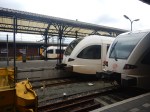

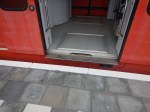

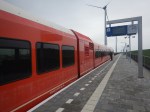
These trains are a smaller version of Greater Anglia’s Class 755 trains.
In The Train Station At The Northern End Of The Netherlands, I describe a visit to Eemshaven station to the North of Groningen.
I said this.
At the turnround at Eemshaven with the driver, he indicated that there had been speculation about battery and hydrogen trains in the North of The Netherlands.
It appears the driver was right.
The Bridge Over The Ems
The article also indicates that the bridge over the River Ems, that I wrote about in From Groningen To Leer By Train, could be opening soon.
This video shows what the new bridge will look like.
And this Google Map shows the current state of the bridge.

I’m not sure of the date of the picture, but there still appears a lot of work to do.
Daimler Unveils Electric Bus With 441 kWh Solid-State Battery Pack
The title of this post, is the same as that of this article on electrek.
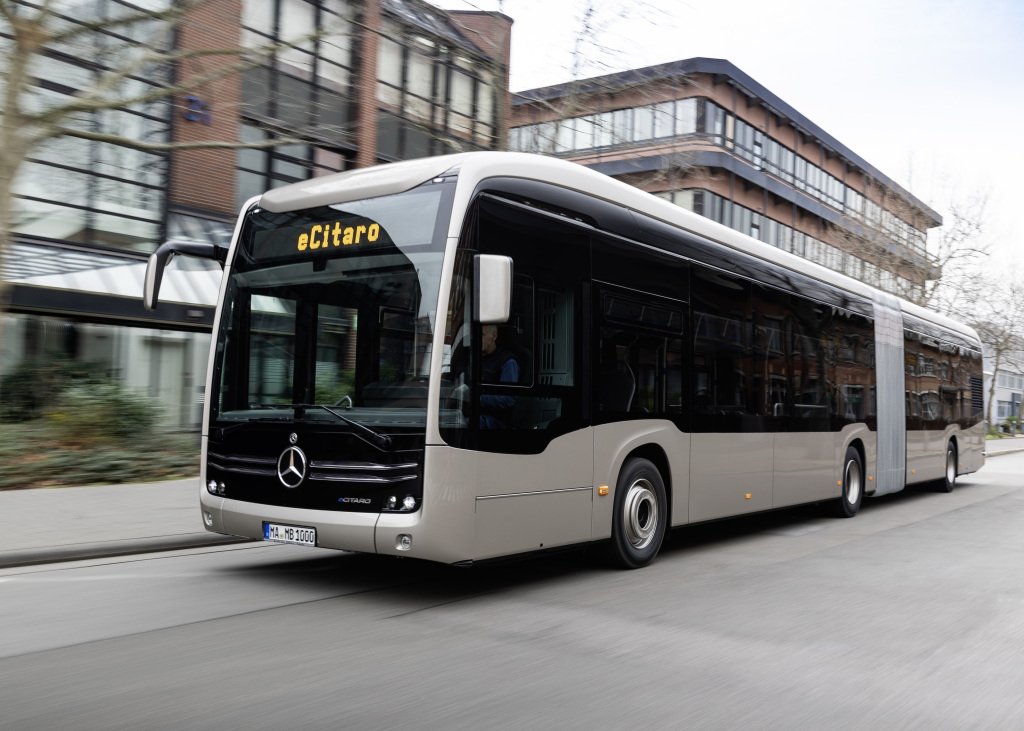
This is the introductory paragraph.
Daimler has unveiled an electric bus equipped with a solid-state battery pack — probably becoming the first planned production EV with a solid-state battery.
What is meant by solid-state battery, is not stated.
But at 441 kWh it is not a small battery!
This article on the Daimler Global Media Site gives these extra details.
In general, vehicles with solid-state batteries as standard were not expected until the middle of this decade. Mercedes-Benz is faster: the new eCitaro G is the first series production city bus in its category anywhere in the world to be equipped with solid-state batteries. They have a very high energy density which is around 25 percent greater than the coming generation of traditional lithium-ion batteries with liquid electrolyte. The result is an impressive energy content of 441 kWh for the new eCitaro G. This battery technology is also free of the chemical element cobalt and therefore especially environmentally friendly in the manufacture of the components.
The long life of the solid-state batteries is particularly striking. Therefore, when purchasing an eCitaro with solid-state batteries, a basic guarantee for the high-voltage battery for up to 10 years or up to 280 MWh energy throughput per battery pack is standard.
They sound impressive.
Daimler Trucks Presents Technology Strategy For Electrification – World Premiere Of Mercedes-Benz Fuel-Cell Concept Truck
This title of this post, is the same as that of this article on the Daimler Global Media Site.
These are the opening bullet points.
- Mercedes-Benz GenH2 Truck, a fuel-cell truck with a range of up to 1,000 kilometers and more for flexible and demanding long-haul transport – customer trials in 2023, start of series production in second half of this decade.
- Mercedes-Benz eActros LongHaul, a battery-electric truck with a range of about 500 kilometers for energy-efficient transport on plannable long-haul routes – projected to be ready for series production in 2024.
- Mercedes-Benz eActros, a battery-electric truck with a range of well over 200 kilometers for heavy urban distribution to go into series production in 2021.
- ePowertrain global platform architecture offers synergies and economies of scale.
Judging by the spelling, this media copy, is from the bad spellers of Trumpland.
It looks to be a case of Daimler have called up the heavy brigade.
The best way to learn more is to search for “Mercedes-Benz GenH2 Truck”
There’s some good YouTube videos.
From this video, I ascertained the following.
- The truck has a stainless steel tank for liquid hydrogen on either side between the front and rear wheels.
- There are two 150 kW fuel cells, which appear to be of an inhouse Mercedes design.
- There is a 70 kWh battery between the two liquid hydrogen tanks low down in the middle of the truck.
- The battery can supply 400 kW, if needed.
This screen capture shows a cutaway from the video.
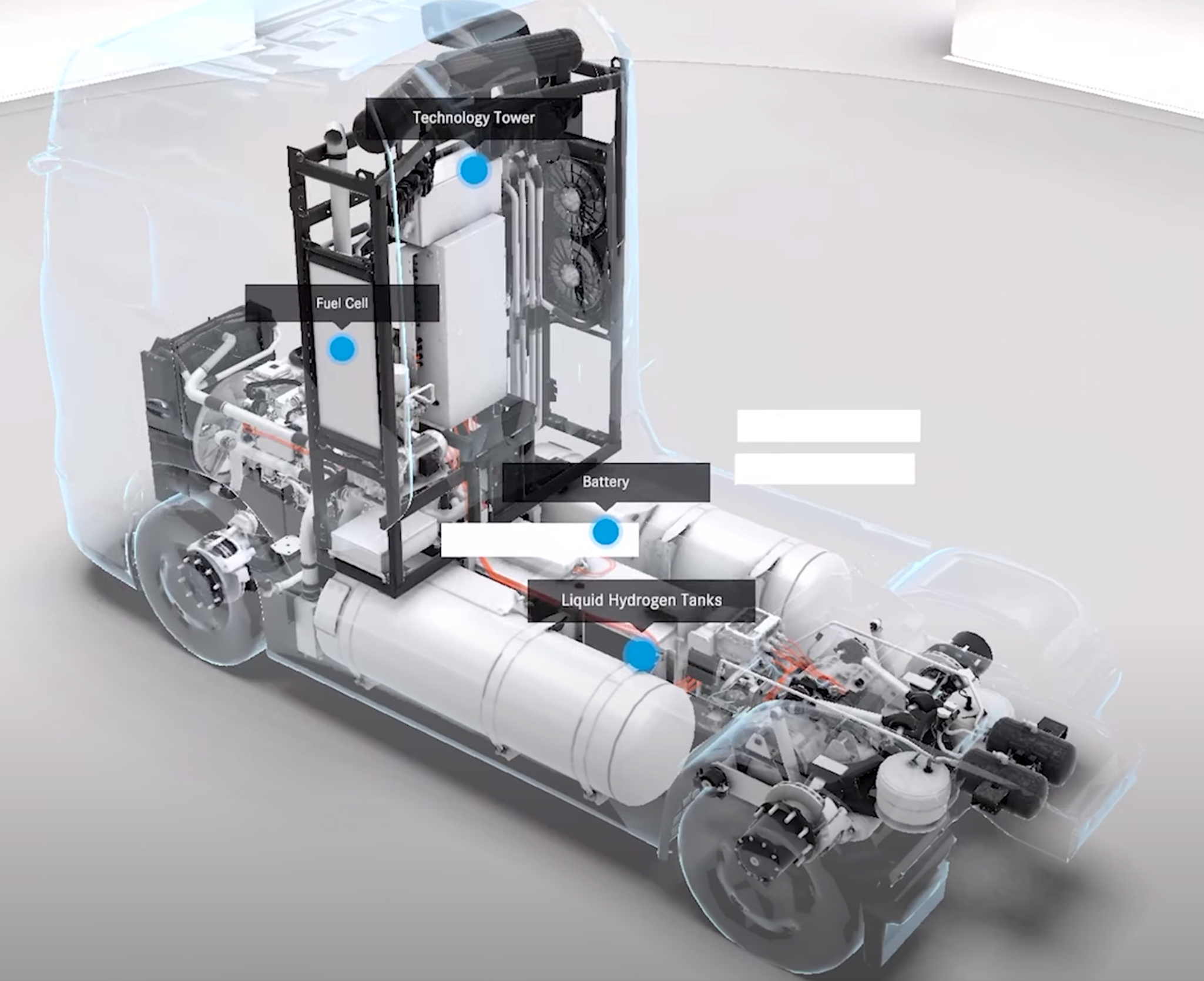
I am impressed by the design.
- Everything is fitted neatly in the small space.
- The design doesn’t seem to intrude into the load space, so I would assume, it would work with all existing trailers and bodies.
- The battery position must help stability and driveability.
- It looks like a design, that would be friendly to cyclists, as the hydrogen tanks act as a round safety barrier.
I shall look at the operation.
Consider.
- The current Actros trucks have engines with a power of up to 500 HP or 400 kW.
- The 70 kWh battery can provide 400 kW for about 10 minutes.
- Regenerative braking to the battery must be possible.
- There’s probably a well-programmed computer between the driver and the electric transmission.
I wouldn’t be surprised that the truck is more of a battery-hydrogen hybrid, than a pure hydrogen truck.
Suppose, it was hauling a heavy load from Felixstowe to Manchester.
- Will the truck charge the battery before it leaves Felixstowe? It could use the fuel cells or be plugged in to a high-performance charger. 70 kWh, is not the biggest of batteries compared to say those on a train.
- Once on the A45 (Sorry! A14), it would accelerate quickly to the cruising speed, probably using mostly battery power.
- It would then cruise mainly using hydrogen and the fuel cells to the destination. The truck would be optimised for an economic cruise.
- During any deceleration, regenerative braking to the battery would be used.
- Battery power might be called upon on any inclines or after a stop.
Intriguingly, a range of 1000 kilometres or 620 miles would allow many out-and-bank journeys in the UK, France, Germany or Italy to be performed without refuelling.
Leeds, Liverpool, Manchester and Newcastle are all under 300 miles from the Suffolk port.
Conclusion
I used to part-own a company, that financed trucks, moving loads into and out of Felixstowe in the 1980s.
From what I learned then of the heavy truck market, hydrogen-powered heavy trucks are going to be a winner, especially, if most journeys are out-and-back from one end.
The Small Sign That Means So Much To A Coeliac
I’ve bought Marks & Spencer’s mackerel pate for any years.

It’s the first time, I’ve noticed the packaging has the gluten-free symbol.
More please! My eyesight needs glasses to read the allergies!
 The Anonymous Widower