OVO Energy To Lead Major Zero-Carbon Heat Trial
The title of this post, is the same as that of this article on Current News.
These initial three paragraphs explain the project.
OVO Energy is to lead one of the UK’s largest ever zero-carbon heating trails, thanks to a £4.2 million grant from the government.
Kaluza, Sunamp, Retrofit Works and Parity Projects will work together with OVO Energy to install and operate zero-carbon heating systems worth up to £15,000 in 250 homes.
Mitusbishi’s Ecodan air source heat pump and Sunamp’s thermal batteries will be installed in the homes, creating electric, zero-carbon heating systems. Additionally, the homes involved will have up to £5,000 worth of energy efficiency improvements made.
That sounds like a sensible project to me, as we need to be zero-carbon in everything we do and heating is the largest source of emissions in the UK with twenty percent.
Think Zinc: Another Metal That Can Transform The Energy Storage Sector
The title of this post, is the same as that of this article on Stockhouse.
This is the introductory paragraph.
Mines worldwide extract more than 11.9 million metric tons of zinc annually. There are zinc mines in over 50 countries around the world, and while the metal plays a key role in the steel industry, few people understand its transformative role in the energy storage sector. When most people think of the metals that power today’s energy storage systems, vanadium and lithium are at front of mind.
Wikipedia has an entry called Zinc Mining. This extract, sums up the availability of zinc from mining.
Global zinc mine production in 2019 was estimated to be 12.9 million tonnes. The largest producers were China (34%), Peru (11%), Australia (10%), United States (6.1%), India (5.5%), and Mexico (5.4%), with Australia having the largest reserves.
The world’s largest zinc mine is the Red Dog open-pit zinc-lead-silver mine in Alaska, with 4.2% of world production. Major zinc mine operators include Vedanta Resources, Glencore, BHP, Teck Resources, Sumitomo, Nexa Resources, Boliden AB, and China Minmetals.
The paragraph is accompanied by a photograph from the Zinkgruvan mine in Sweden.
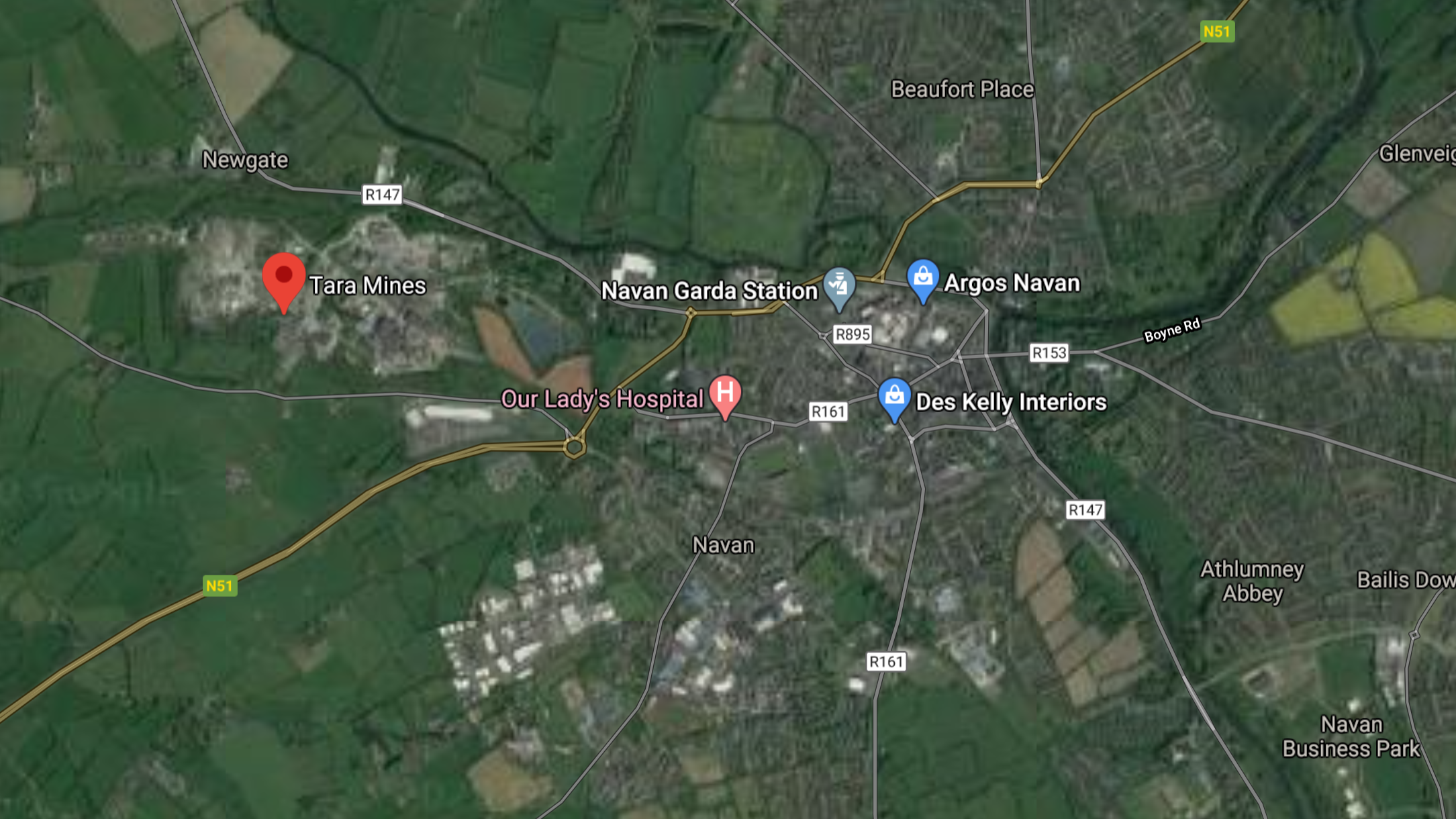
Closer to home, in 2009, Ireland mined 385,670 tonnes of zinc and was the tenth largest producer in the world. Tara Mine is at Navan in County Meath.
This Google Map shows its location to the West of Navan.
So if the Irish build more wind turbines, they have the zinc for their own zinc-air batteries.
The Stockhouse article is written by Ron MacDonald, who is President and CEO of Zinc8 Energy Solutions. He says this.
To give one example: Our company Zinc8 Energy Solutions has won a recent contract award and project collaboration with the New York Power Authority (NYPA) and private sector deployment agreement with Digital Energy supported by New York State Energy Research and Development Authority (Nyserda). We will deploy a 100kW/1.5MWh zinc-air system capable of storing energy for 15 hours.
Everybody, who worries about our future energy supplies should read the full article.
Coeliac Disease: Can We Avert The Impending Epidemic In India?
The title of this post, is the same as that of this peer-reviewed paper on the Indian Journal Of Research Medicine.
With the high levels of COVID-19 in Leicester and people with an Indian heritage making up 28.3 % of the population of the city, I was searching the internet to see if there was any connection between those of Indian heritage and coeliac disease.
I know you should not try to prove a theory. But as a coeliac, I’m very interested to see how the millions of diagnosed coeliacs on a gluten-free diet like me, are faring in this pandemic.
These are some extracts from the paper.
Prevalence Of Coeliac Disease In Northern India
Coeliac disease was recognized in northern India, primarily in children, since the 1960s. A community-based study in Ludhiana that involved a step-wise approach to case detection and diagnosis estimated that celiac disease prevalence in this city was at least 1 in 310 individuals. Hospital-based studies examining a general paediatric patient population suggest a prevalence of 1 per cent.
One per cent is a high figure.
Diet And Coeliac Disease
The other variable is that cereal consumption patterns are very different between north and south India, although there has been a recent change in these patterns particularly in urban areas. In south India, rice is the primary cereal consumed in the diet. In the Indian sub-continent, wheat consumption is high in Pakistan and in the States of north India, which also constitute the coeliac belt of India.
It’s fascinating how two parts of the same country can be so different.
Introducing Babies To Gluten
The time of first exposure to wheat influences the development of celiac disease. In countries such as Finland, Estonia, and Denmark, characterized by low gluten consumption in infancy, celiac disease prevalence is much lower than in Sweden where gluten consumption is high in infancy. A natural experiment occurred in Sweden about two decades ago when national recommendations were made to introduce wheat into the diet after cessation of breast feeding at six months. This change was coupled with increased wheat gluten consumption through infant feeds. Together these measures resulted in a two-fold increase in incidence of celiac disease in Sweden, which was attributed to introduction of wheat into the diet after cessation of breast feeding. In 1996 this recommendation was changed to introduce gluten in gradually increasing amounts while the infant was still being breast fed. This led to a dramatic decrease in celiac disease incidence.
We used a Baby Mouli with our three and they all got what we ate, through a sieve.
All Wheats Are Not Equal
The other dimension to this problem is that not all wheat is alike when it comes to inducing celiac disease. The ancient or diploid wheats (e.g. Triticum monococcum) are poorly antigenic, while the modern hexaploid wheats e.g. Triticum aestivum) have highly antigenic glutens, more capable of inducing celiac disease in India, for centuries, grew diploid and later tetraploid wheat which is less antigenic, while hexaploid wheat used in making bread is recently introduced. Thus a change back to older varieties of wheat may have public health consequences.
I’ve read somewhere before that high-gluten wheats could have been the reason that bubonic plague came back.
Public Health Recommendations
Public health authorities may well want to examine both these avenues, i.e. infant feeding recommendations and wheat varieties cultivated in the country, for opportunities to avert the epidemic of celiac disease which is impending in our country.
I’ll agree with that! And the recommendations should be carried forward in the UK.
Conclusion
I have found this medical paper fascinating.
I can’t resist looking up the rates of confirmed cases of COVID-19 in the countries mentioned.
- Denmark 12751 – 6.80 million – 187.5
- Estonia – 1947 – 1.32 million – 147.3
- Finland – 7190 – 5.52 million – 130.2
- Sweden – 65137 – 10.3 million – 632.4
- United Kingdom – 311965 – 66.5 million – 469.1
- United States – 2593169 – 326.7 million – 793
Note.
- The first figure is the number of lab confirmed cases from Wikipedia
- The second figure is the population.
- The third figure is the rate of lab-confirmed cases per 100.000 of the population
I have left India out as their number of tests seems extremely low.
Note how the three countries, that have fed their children on a low-gluten diet are top of the table, with the lowest rates of lab-confirmed cases.
I have said it before and I’ll say it until I’m blue in the face. Undiagnosed coeliac disease may have something to do with this pandemic and someone should investigate it properly.
Thoughts On The Outbreak In Leicester
I have heard reports that those found positive in Leicester live in a poor area and they tend to be younger.
Could it be that in their new country, they were introduced to gluten too early, because it’s easier to give gluten than proper food? Especially, where some roads in this country, are lined with scores of fast food shops selling gluten-rich junk food.
What do I know? I’m just an engineer and a coeliac who has a good nose for problems!
But please someone! Research the connection between undiagnosed coeliac disease and COVID-19!
My son; George was an undiagnosed coeliac with a gluten-rich and smokey lifestyle. He died at just 37 from pancreatic cancer.
Did he have a poor immune system, which meant he couldn’t fight the cancer? One expert on cancer from Liverpool University said, “Yes!”
Bucks Council Supports New Internet Lines
The title of this post, is the same as that of this article on Mix96.
Buckinghamshire County Council are proposing to use the construction of the new East West Railway, as a route for extra Internet connectivity.
How sensible!
Are East West Railway and Buckinghamshire County Council talking to Hive Composites, about their next generation composite poles for a 5G-enabled railway, that won funding in the latest round of first-of-a-kind funding from Innovate UK?
Will other councils and companies be using other rail construction to advantage?
How Leeds Bradford Airport Can Be Catalyst For Green Aviation
The title of this post, is the same as that of this article on the Yorkshire Post.
The article was written by a geography student from Yorkshire, who is studying at Cambridge University.
He makes some interesting points.
- Leeds Airport is not a good customer experience.
- Manchester Airport will take passengers away from Leeds.
- Leeds is the biggest financial centre in the UK outside London.
- Leeds Airport should be improved to the highest environmental standards.
- Aviation biofuels should be provided.
- Short haul flights should be replaced by a train journey if possible.
- By 2030, a lot of short haul flights will be replaced by electric aircraft.
I agree with a lot of what he says.
There will still be a need to fly and we must make it as environmentally-friendly as possible.
If we don’t find ways of making flying carbon-neutral, we’ll hurt the economy.
Highview Power On The Good News Network
If the Good News Network, is what it says on the tin, then I’m pleased that they’ve written this article, which is entitled World’s Biggest Liquid-Air Battery – ‘The Climate-Emission Killer’ – Is Now Under Construction In England.
The article, appears to be a rehash of what appeared in the Guardian, slanted for American readers.
It has the usual American fault of mixing up England with the UK, but surely the fact that it’s on the site, is good news for Highview Power.
How To Get Rid Of The “Microsoft Account Problem” Notification
I get the occasional one of these notifications on my new Windows 10 computer. I just ignore them, like I do all notifications, as this is a load of rubbish, that I didn’t have to put up with on my previous Windows 7 computer, that is sadly on its last legs.
I searched the internet and found this good explanation of what to do with them. If you want the one-word answer it’s Ignore!!!
The Debate Over Burning Dead Trees To Create Biomass Energy
The title of this post, is the same as that of this article on Wired.
This is the sub-title.
Critics worry about the risks of overcutting and wood smoke. But supporters say the practice will prevent megafires—which release even more carbon dioxide.
For those who worry about the ethics of biomass, it is a must-read.
Birmingham-Black Country-Shrewsbury
On the Midlands Connect web site, they have a page, which is entitled Birmingham-Black Country-Shrewsbury.
This is the introductory paragraph.
We’re examining the case to increase services from three to four per hour, made possible by capacity released post-HS2.
They then give the outline of their plans, which can be summed up as follows.
- Services on the corridor are slow and unreliable.
- Network Rail say the service is in danger of acute overcrowding.
- Services will be increased from three trains per hour (tph) to four.
- A direct hourly service from Shrewsbury, Wellington and Telford to London will be introduced.
- Services to Birmingham International will be doubled.
- The economic case will be examined for speeding up services between Shrewsbury and Birmingham from 56 to 45 minutes, via track upgrades and possible electrification.
It seems a safe, and not overly ambitious plan.
These are my thoughts.
Shrewsbury’s Unique Position
These are distances and times from important stations.
- Birmingham International – 51 miles and 83 minutes
- Birmingham New Street – 42.5 miles and 71 minutes
- Chester – 42.5 miles and 53 minutes
- Crewe – 33 miles and 53 minutes
- Hereford – 51 miles and 59 minutes
- Telford – 14 miles and 21 minutes
- Wellington – 10 miles and 13 minutes
- Welshpool – 20 miles and 25 minutes
- Wolverhampton – 30 miles and 50 minutes
In Sparking A Revolution, I quoted this Hitachi-specification for a battery-electric train.
- Range – 55-65 miles
- Performance – 90-100 mph
- Recharge – 10 minutes when static
- Routes – Suburban near electrified lines
- Battery Life – 8-10 years
I can’t see any problem, for a train with this specification being able to reach Shrewsbury from Birmingham International, Birmingham New Street and Crewe on battery power.
In Hitachi Trains For Avanti, I quote an article with the same title in the January 2020 Edition of Modern Railways as saying this.
Hitachi told Modern Railways it was unable to confirm the rating of the diesel engines on the bi-modes, but said these would be replaceable by batteries in future if specified.
I wouldn’t be surprised to see Shrewsbury served from Birmingham and Crewe by fast electric trains, that used battery power. Avanti West Coast certainly seem to have that thought in mind.
Zero Carbon Trains Between Shrewsbury And Wales
It will be a formidable challenge to run battery trains from Shrewsbury to the Welsh destinations.
- Aberystwyth – 81.5 miles
- Cardiff – 107 miles
- Carmarthen – 185 miles
- Holyhead – 133 miles
- Milford Haven – 225 miles
- Swansea – 121.5 miles
Note.
- These are challenging distances for battery-electric trains.
- South Wales destinations served via Newport and Cardiff could use the electrification on the South Wales Main Line.
- Many of these services start from East of Shrewsbury and can use the electrified lines that connects to Birmingham New Street and Manchester Piccadilly.
Unless someone like Riding Sunbeams, makes a breakthrough, I can’t see battery-electric trains running to Welsh destinations from Shrewsbury.
Transport for Wales New Trains
Transport for Wales have ordered seventy-seven new Class 197 trains, and these diesel trains will be used for services through Shrewsbury, mainly on services to Birmingham New Street and Birmingham International stations.
- If these trains are similar to Northern’s Class 195 trains, they will be diesel multiple units with a noisy mechanical transmission.
- I was surprised in these days of global warming that Transport for Wales didn’t buy something more eco-friendly, as they have for South Wales and the services around Chester.
- The transmission of the Class 197 trains has not been disclosed.
Perhaps, CAF are going to do something innovative.
- The CAF Civity is a modular train, with either electric or diesel power options.
- The diesel-powered options use MTU engines.
- A logical development would be to use an MTU Hybrid PowerPack to reduce diesel consumption and emissions.
- This PowerPack would also reduce noise, as it has an electric transmission.
- I wonder, if CAF can raid their parts bin and fit a pantograph, so where 25 KVAC overhead electrification is available, it can be used.
- If CAF can convert a bog standard diesel multiple unit into a hybrid diesel-electric-battery multiple unit, by performing a heart transplant, it is a neat way of keeping new diesel Civities running until a later date.
- Remember that Northern and West Modlands Trains have another seventy-four similar new diesel Civities in operation or on order. With trains having a forty year life, they don’t fit with an early phasing out of diesel.
I have no idea, what is actually happening, but my engineer’s nose tells me to expect a surprise from CAF.
Increasing Birmingham And Shrewsbury Services From Three Trains Per Hour To Four
Four trains per hour or one train every fifteen minutes seems to be a preferred frequency on several UK suburban lines.
These services seem to provide four tph or better on most, if not all of their routes.
- Birmingham Cross-City Line
- London Overground
- Merseyrail
- Tyne and Wear Metro
Four tph seems to be a very handy Turn-Up-And-Go frequency that encourages people to use rail services.
So I am not surprised to see Midlands Connect wanting four tph between Birmingham and Shrewsbury.
Currently, the following services seem to operate between Shrewsbury and Birmingham.
- Avanti West Coast – 2 trains per day (tpd) – Shrewsbury and London Euston via Birmingham New Street and Birmingham International.
- Trains for Wales – 1 train per two hours (tp2h) – Holyhead and Birmingham International via Birmingham New Street.
- Trains for Wales 1 tph – Aberystwyth/Pwllheli and Birmingham International via Birmingham New Street
- West Midlands Trains – 2 tph – Shrewsbury and Birmingham New Street – One semi-fast and one stopper.
Note.
- All services call at Wolverhampton, Telford and Wellington.
- Shrewsbury and Birmingham New Street is a 3.5 tph service.
- Shrewsbury and Birmingham International is a 1.5 tph service.
It relies heavily on services from Trains for Wales, who probably don’t put Shrewsbury and Birmingham services at the top of their priorities.
I remember, when local services in the North-East of London were run by Greater Anglia from Norwich. Moving some services to Transport for London, brought about a large improvement
Quite frankly, the current service is best described as pathetic.
Should Trains for Wales Services Terminate As Shrewsbury?
I suspect some local politicians in Shrewsbury and Birmingham, think it would be best to adopt this sort of strategy.
- All Welsh services terminate at Shrewsbury.
- Birmingham and Shrewsbury mandate West Midlands Trains and Avanti West Coast to provide a frequent service between Shrewsbury and Birmingham.
It might be the way to go, but many travellers from the Marches, would probably want direct connections to Birmingham, Birmingham Airport and in the future High Speed Two.
Introducing A Direct Hourly Service From Shrewsbury, Wellington And Telford To London
On the face of it, it looks like a much needed service to and from Shrewsbury.
- It will be hourly.
- Initially it will use Class 221 diesel multiple units, but these will be replaced with bi-mode Class 805 trains.
- The current infrequent service calls at Watford Junction, Rugby, Coventry, Birmingham International, Birmingham New Street, Sandwell and Dudley, Wolverhampton, Telford Central and Wellington.
- There are also six other stations between Shrewsbury and Wolverhampton, which might like an improved service.
- The service will be run by Avanti West Coast.
There might also be the possibility of using battery power between Wolverhampton and Shrewsbury, which is only thirty miles each way.
But there are other collateral benefits.
- The service increases the frequency between Shrewsbury and Birmingham New Street stations by one tph to 4.5 tph
- The service increases the frequency between Shrewsbury and Birmingham International by one tph to 2.5 tph.
- The service increases the frequency between Wolverhampton and London Euston by one tph.
- The service increases the frequency between Sandwell and Dudley and London Euston by one tph
- The service increases the frequency between Birmingham New Street and London Euston by one tph.
- The service increases the frequency between Birmingham International and London Euston by one tph.
- The new service will provide an hourly quality connection to High Speed Two at Birmingham International for stations between Shrewsbury and Coventry.
- It appears that the Class 390 trains to Birmingham New Street and being replaced by new Class 807 trains, so Birmingham will have three out of four tph, run by new trains.
- The new Shrewsbury service , has a similar calling pattern to that of the current Scottish service through Birmingham. Will it replace that service, when High Speed Two opens?
Note.
- Midlands Connect’s objective of four tph between Shrewsbury and Birmingham has been met.
- Several stations get a better direct service to London.
- Connectivity to High Speed Two is improved.
- Birmingham New Street and London is now a Turn-Up-And-Go frequency of four tph.
- The Class 805 train will also mean that Avanti West Coast could be zero-carbon in Birmingham. Especially, if it used battery power between Wolverhampton and Shrewsbury stations.
The hourly direct service between Shrewsbury and London will make a lot of difference to train services between Shrewsbury and Birmingham.
Avanti’s London Euston and Birmingham New Street Service
Consider.
- There are two tph that terminate in Birmingham New Street station, that take 88-89 minutes, from London Euston
- There is one tph that goes through Birmingham New Street station to Edinburgh, Glasgow, Preston, or Shrewsbury, that takes 82-84 minutes, from London Euston.
- Currently, the two terminating trains are Class 390 trains, whereas the through train can be a Class 221 train as well.
- Through trains are allowed 5-10 minutes to pass through Birmingham New Street.
- Trains that terminate at Birmingham New Street station are allowed 20-30 minutes to arrive and leave.
- Avanti West Coast have said, that they will be running Class 807 trains between London and Birmingham New Street.
It doesn’t seem to be the best use of scarce platform resources in a busy station to park a train there for half-an-hour.
In Will Avanti West Coast’s New Trains Be Able To Achieve London Euston and Liverpool Lime Street In Two Hours?, I came to the conclusion that the Class 807 trains have been designed as simple, fast, lightweight all-electric trains with no heavy batteries, diesel engines or tilt mechanism.
- I think they’ll be able to shave a few minutes on the timings between London Euston and Birmingham New Street station.
- I would suspect that they will match the 82-84 minutes of the through trains
- The ultimate would be if they could do a round trip between London Euston and Birmingham New Street in three hours.
- Two tph run by what would effectively be a London-Birmingham shuttle would need just six trains.
It might mean new methods of manning the trains, to reduce turnround times.
Doubling Of Services Between Shrewsbury And Birmingham International
The hourly direct London and Shrewsbury Avanti West Coast service will raise the current 1.5 tph service between Shrewsbury and Birmingham International to 2.5 tph, so will be a good start.
- Perhaps Trains for Wales could find the missing 0.5 tph.
- West Midlands Trains might be able to squeeze in another train.
But I suspect that the crowded line between Birmingham New Street and Birmingham International is the problem.
Shrewsbury And Birmingham In Forty-Five Minutes
This is the last objective and saving eleven minutes on this route would suggest that the best way would surely be to fully electrify the route.
- Between Wolverhampton and Birmingham International stations is fully electrified.
- Electric trains have faster acceleration and deceleration, so would probably achieve the required savings if they stopped more than five times.
- From my virtual helicopter it doesn’t appear to be the most challenging of routes to electrify.
- Only about thirty miles of double track would need to be electrified between Wolverhampton and Shrewsbury stations.
- Both Trains for Wales and West Midlands Trains would have to obtain new electric trains.
- Avanti West Coast have already got bi-mode Class 805 trains, that could use the electrification.
But will Trains for Wales go along with Midlands Connect, when they tell them to get electric or bi-mode trains to work between Shrewsbury and Birmingham International stations?
It is because of dilemmas like this, that I feel that electric trains using battery or hydrogen power, when away from electrification can be a very good alternative.
- There is no major disruption raising bridges for the electrification.
- Stations don’t need to be closed for electrification.
- The trains have all the comfort and performance of electric trains.
- Costs and timescales can be reduced.
- When running on battery or hydrogen power, these trains are very quiet, as there is no pantograph noise.
To run battery-electric trains between Shrewsbury and Wolverhampton, the only infrastructure needed would be a method of charging the train at Shrewsbury station.
This Google Map shows the Southern end of Shrewsbury station.

Note.
- The platforms are built over the River Severn.
- The five-car Class 221 train in Virgin livery sitting in Platform 5.
- When this train leaves it will turn left or to the East for Wolverhampton and Birmingham.
- Trains can turn right for Wales.
It is a very unusual station layout.
- Platform 5 is one of a pair of bay platforms; 5 & 6, that can access either Wales or Birmingham.
- Outside of the bay platforms are a pair of through platforms; 4 & 7, that can also access Wales or Birmingham, but they can also access Chester by going through the station.
- The 115 metre long Class 221 train fits easily in the bay platform 5.
- The 130 metre long Class 805 train would probably need to use Platform 4 or 7.
But with well-planned electrification, it would be ideal for charging electric trains as they pass through or turned back!
Once the train reaches Wolverhampton, it will connect to electrification again.
Shrewsbury And High Speed Two
Currently, Shrewsbury has three connections to stations, where it would be convenient to take a High Speed Two train.
- Birmingham International, which is 51 miles and 83 minutes away. Plus a ride on a people mover for High Speed Two.
- Birmingham New Street, which is 42.5 miles and 71 minutes away. Plus a walk to Birmingham Curzon Street for High Speed Two.
- Crewe, which is 33 miles and 55 minutes away.
Passengers will make their own choice.
Could Shrewsbury Have A Classic-Compatible High Speed Two Service To Manchester Piccadilly?
London To Shrewsbury, Now And Post-High Speed Two
Travel On Monday
If I want to go to Shrewsbury next Monday, one fast journey is taking the 09:10 from Euston and changing at Crewe, which gives a journey time of two hours and thirty-two minutes.
I can also get a train with a change at Birmingham International that takes seven minutes longer.
Travel On High Speed Two
After High Speed Two opens to Birmingham Curzon Street and Interchange in Phase 1 what sort of times to Shrewsbury can be expected?
I estimate the following.
- Travelling via Birmingham Curzon Street could produce a time of around one hour and fifty minutes, if you’re lucky with the trains.
- Travelling via Crewe could produce a time of one hour and thirty minutes, if you’re lucky with the trains.
- Travelling via Interchange could produce a time of around one hour and fifty-five minutes. or forty-four minutes faster.
If I was going to Shrewsbury after High Speed Two has opened, I would probably change at Birmingham Curzon Street, if the walk to New Street station was still within my capabilities, as there will be a Turn-Up-And-Go frequency of four tph between Birmingham New Street and Shrewsbury stations.
Looking at the Midlands Connect objectives, these help with linking Shrewsbury with London.
- Increasing services between Birmingham and Shrewsbury to four tph, as it’s Turn-Up-And-Go!
- The direct hourly service to London from Shrewsbury, Wellington and Telford might be the quickest way to London by changing at Birmingham New Street/Curzon Street or Interchange.
- Doubling the service between Shrewsbury and Birmingham International, may be a good move, as Interchange, which will be connected to Birmingham International by a high capacity people mover, will have five tph between London Euston and Old Oak Common stations.
- Saving eleven minutes between Shrewsbury and Birmingham will certainly help.
Travelling between London and Telford, Wellington and Shrewsbury will be much improved.
UK’s Pivot Power Sees First Battery On Line By 2021
The title of this post, is the same as that of this article on Argus Media.
The article is a review of what is happening in the UK and this is the introductory paragraph.
UK firm Pivot Power is now targeting a 2021 start for its first two 50MW lithium-ion battery storage projects, while a 50MW liquid air energy storage project and another 50MW battery recently announced they were targeting completion by 2022.
The article gives several pieces of information about Pivot Power.
- Their two batteries are at Kemsley and Cowley.
- The two batteries appear to be running late.
- The company has a portfolio of forty projects with s total size of 2 GW.
- The Cowley battery will be co-located with a 2MW/5MWh Vanadium flow battery operated by storage firm redT.
- Pivot Power is owned by EdF.
Good to see redT involved, although they seemed to have merged with Avalon Battery to form Invinity Energy Systems. The new web site describes them as the world’s leading vanadian-flow battery company.
This page on the web site is the Press Release about the merger.
This paragraph from the Press Release, describes where vanadium flow batteries fit in the market.
Vanadium flow batteries are a form of heavy-duty, stationary energy storage, used primarily in high-utilisation applications such as being coupled with industrial scale solar generation for distributed, low-carbon energy projects. This sort of application requires daily, heavy use and is well suited to flow battery technology, which is expected to become a £3.5bn market by 2028.
I don’t know much about vanadium-flow technology, but this company could probably be added to a list of companies, who might make it.
 The Anonymous Widower