Access To Toton – Scheme 6 – Trowell Curve
In £2.7bn East Midlands Plan Unveiled For HS2 Links, a series of schemes are given, which improve access to the High Speed Two East Midlands Hub station.
Scheme 6 is defined like this.
The implementation of a minimum of four direct rail services per hour linking the HS2 East Midlands Hub station to Derby, Nottingham and Leicester stations, as well as Loughborough, Matlock, Mansfield, Newark, Alfreton and Grantham, made possible by the building of a new piece of infrastructure, the Trowell Curve, which will link to the Midland Mainline. These additional connections will also create direct links to Stoke-on-Trent, Crewe, Newark and Lincoln, by extending services on existing routes.
That is a comprehensive set of connections.
The Trowell Curve
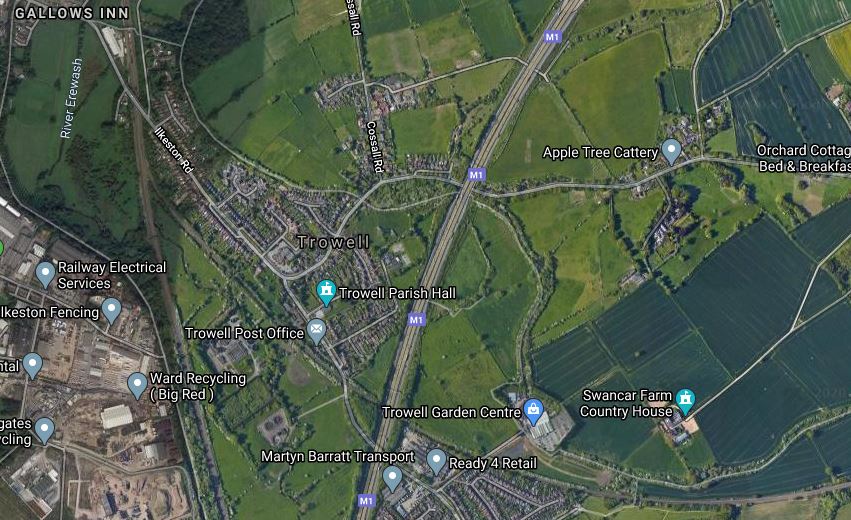
This Google Map shows the location of the village of Trowell.
Note.
- The M1 Motorway running North-South up the map.
- The village of Trowell on the Western side of the motorway.
- Many people will have stopped at Trowell services on the motorway, which are just to the North of the top edge of the map.
- The North-South railway line to the West of the village is the Erewash Valley Line, that runs North from the East Midlands Hub station at Toton to Ilkeston, Langley Mill, Alfreton, Clay Cross North Junction, Chesterfield and Sheffield.
There is also another railway line, that runs on the South Western side of the village and across the bottom of the map, that connects the Erewash Valley Line to Nottingham station.
Trains can go between Nottingham and the North, but there is no connection to go between Nottingham and the South.
It looks like the proposed Trowell Curve will add extra connectivity to the junction, so that all these directions are possible.
- Nottingham to Ilkeston and the North.
- Ilkeston and the North to Nottingham.
- Nottingham to East Midlands Hub Station and the South.
- East Midlands Hub Station and the South to Nottingham
The Trowell Chord will be double-track or bi-directional and must certainly improve connectivity.
East Midlands Hub Station
The East Midlands Hub station will link various bus, tram and train services to High Speed Two.
According to the latest reports in the June 2020 Edition of Modern Railways there will be nine high-speed trains per hour (tph) through the station of which seven tph will stop.
Destinations served would be.
- Birmingham Interchange – 1 tph
- Birmingham Curzon Street – 3 tph
- Chesterfield – 1 tph
- Darlington – 1 tph
- Durham – 1 tph
- Leeds – 5 tph
- London Euston – 4 tph
- Newcastle – 1 tph
- Old Oak Common – 4 tph
- Sheffield – 2 tph
- York – 2 tph
As the capacity of High Speed Two has been said to be 18 tph, there must be the possibility for extra services to run on this leg of High Speed Two.
As four tph is considered by many to be a good Turn-Up-And-Go frequency and two tph a sensible minimum frequency, I can see another train between Birmingham Curzon Street and Newcastle with stops at East Midlands Hub, Leeds, Darlington and Durham.
The design has certainly left enough capacity for those that follow us!
Especially, as Wikipedia says that the new East Midlands Hub station will have eight platforms.
- It would need a minimum of two through platforms for High Speed Two services
- Would it need a terminating platform for High Speed Two services? Not for the currently proposed timetable.
- It would need a minimum of two through platforms for East Midlands Railway’s Inter-City services.
- Would it need a terminating platform for East Midlands Railway’s Inter-City services? Not for the currently proposed timetable.
- There would probably be a need for two through platforms for local services.
On this crude look, eight platforms would appear to be more than enough.
Current Services Through The Area
In Railway Lines Through East Midlands Hub Station, I detailed where the new East Midlands Hub station is to be built and the rail services in the area.
After listing all the services I said this.
Note.
- Not one service goes past the site of the new East Midlands Hub station.
- Most services to and from Nottingham seem to use the Attenborough and Beeston route
- Services between Derby and Nottingham go via the Long Eaton, Attenborough and Derby route.
- Services from the North use the Erewash Valley Line and turn East at Trowell for Nottingham.
It is fairly obvious that there needs to be a sort-out of services to fit in with the location of the new East Midlands Parkway station.
So will the new Trowell Curve give the new station, the rail access it needs?
The Splitting Of The Norwich and Liverpool Service
I wrote about this in Abellio’s Plans For Norwich And Liverpool, where I said this about the basic plan.
Early in the new franchise the Liverpool – Nottingham section will transfer to another operator, which will enable the two halves of the service to better meet the needs of customers.
It will become two services.
- Norwich and Derby via Nottingham, Trowell Curve, East Midland Hub and Long Eaton.
- Nottingham and Crewe via Trowell Curve, East Midland Hub, Long Eaton and Derby.
The second service will go to another operator.
I said earlier, this change is for the needs of customers.
It will also have other effects.
- It will add an extra service between Nottingham and Derby
- It will remove the Norwich and Liverpool service from the Erewash Valley Line.
Has this change being driven by the need to provide good connections to High Speed Two?
Train Services To East Midlands Hub Station
The following sub-sections detail the service between various stations and the East Midlands Hub station.
Alfreton Station
Alfreton station on the Erewash Valley Line, is going through major changes to train services.
Currently, there are these two hourly services.
- East Midlands Railway’s Liverpool and Norwich service.
- Northern’s Leeds and Nottingham service.
Neither service currently goes through the site of East Midlands Hub station and East Midlands Railway will split the Liverpool and Norwich service, so it won’t go anywhere near Alfreton.
Consider.
- Alfreton station probably needs at least a two tph service to East Midlands Hub station.
- The Northern service might be able to go via East Midlands Hub station.
- Both Alfreton and the East Midlands Hub station are on the Erewash Valley Line.
- Trains could run between Alfreton and Nottingham via Langley Mill, Ilkeston, East Midlands Hub, Attenborough and Beeston.
- Trains could run between Alfreton and Derby via Langley Mill, Ilkeston, East Midlands Hub, Long Eaton and Spndon.
Or would it be best to put in a bay platform at Alfreton station and run a shuttle service between Alfreton and the East Midlands Hub stations?
- The minimum frequency would be two tph.
- Up to four tph could probably be easily run.
- Trains would call at all stations.
- Extra stations could be added.
- The distance between Alfreton and East Midlands Hub stations is around twenty miles, so a battery-electric train could be possible.
This Google Map shows Alfreton station.
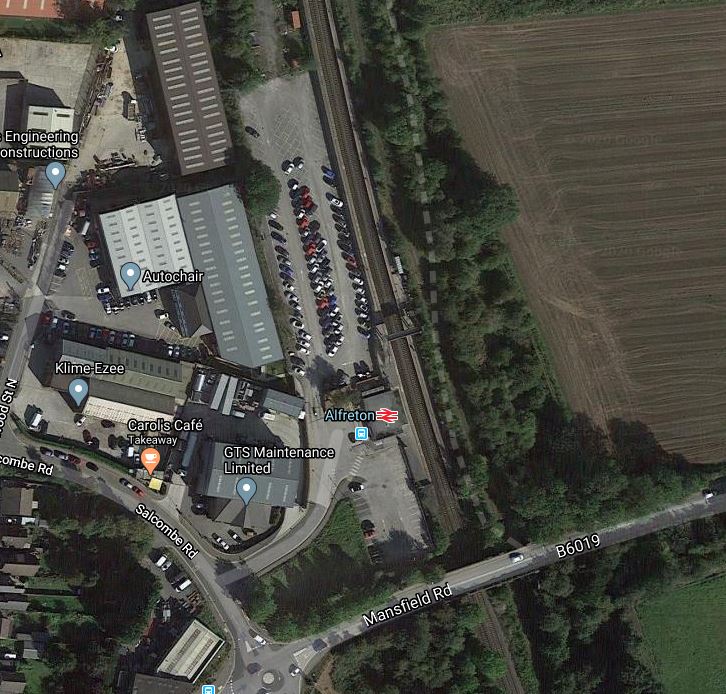
I suspect a bay platform could be added. Or failing that, there could be a turnback siding to the North of the station.
Surely, a local train solution would be a spur to development in the area, especially if it connected to High Speed Two at East Midlands Hub station for High Speed Two.
Derby Station
Consider.
- The current half-hourly East Midlands Railway services between St. Pancras and Sheffield, could not call at both the East Midlands Hub and Derby stations, unless it performed a reverse at East Midlands Hub station.
- Two hourly CrossCountry services, that call at both Derby and Nottingham could use a route via Long Eaton, East Midlands Hub and Trowell Curve.
- An hourly East Midlands Railway service between Newark Castle and Matlock could use a route via Long Eaton, East Midlands Hub and Trowell Curve
- The split service between Liverpool and Norwich would run two tph between Nottingham and Derby, via Long Eaton, East Midlands Hub and Trowell Curve, in both directions.
Six tph can be provided by existing services calling at the new East Midlands Hub station.
Grantham Station
Consider.
- The current hourly East Midlands Railway service between Norwich and Liverpool, calls at Grantham station and could call at the East Midlands Hub, if it used the Trowell Curve route.
- After the service has been split, the two sections will probably both go between Nottingham and Derby via long Eaton, East Midlands Hub and Trowell Curve.
- The current hourly East Midlands Railway service between Nottingham and Skegness calls at Grantham station, but doesn’t pass the site of the East Midlands Hub station.
- This service could be extended to the East Midlands Hub station using the Trowell Curve or the Beeston/Attenborough route, where it would terminate.
It appears relatively easy to give Grantham a two tph service to the East Midlands Hub station.
Ilkeston Station
Ilkeston station would be a stop on all services between the East Midlands Hub and Alfreton and Mansfield stations, so would have a frequent service to the East Midlands Hub station.
Langley Mill Station
Langley Mill station would be a stop on all services between the East Midlands Hub and Alfreton and Mansfield stations, so would have a frequent service to the East Midlands Hub station.
Leicester Station
Consider.
- The current half-hourly East Midlands Railway services between St, Pancras and Nottingham, could call at both the East Midlands Hub and Leicester stations, if the trains used the Trowell Curve.
- Any Ivanhoe Line services between Lincoln and Leicester, could call at both the East Midlands Hub and Leicester stations, if the trains used the Towell Curve.
Leicester would get a frequent train service from the East Midlands Hub station.
Lincoln Station
Lincoln is the Eastern terminal of Ivanhoe Line services. Currently, they run as far as Leicester, but by the time the East Midlands Hub station opens, the services will probably terminate at Burton-on-Trent. I wrote about this project, which is being promoted by the Restoring Your Railway Fund in Reinstatement Of The Ivanhoe Line.
I can see two tph between Lincoln and Burton-on-Trent.
- Stations served could be Newark, Nottingham, East Midlands Hub, East Midlands Parkway, Loughborough, Leicester, Coalville and Ashby-de-la-Zouch.
- The services would use the proposed Trowell Curve.
- Services could be extended to Grimsby and Cleethorpes at the Lincoln end of the service.
- Services would co-ordinate with East Midlands Railway’s Inter-City services to and from London with easy interchange at Leicester and or East Midlands Hub stations.
- Trains could be five-car Class 810 trains to take full advantage of the 125+ mph running between Leicester and Trowell.
- These trains have a shorter dwell time than many and timings could benefit.
Effectively, East Midlands Railway would have a second main line.
Loughborough Station
Consider.
- East Midlands Railway currently has two Inter-City and one Ivanhoe Line service, that stop in Loughborough station and could stop at the East Midlands Hub station.
With another service, Loughborough could have four tph to and from the East Midlands Hub station.
Mansfield Station
This is where Maid Marion flashes her lashes and gets the engineers to reopen her line for passenger trains between North of the former Pye Corner station on the Erewash Valley Line and Kirkby-in-Ashfield station on the Robin Hood Line.
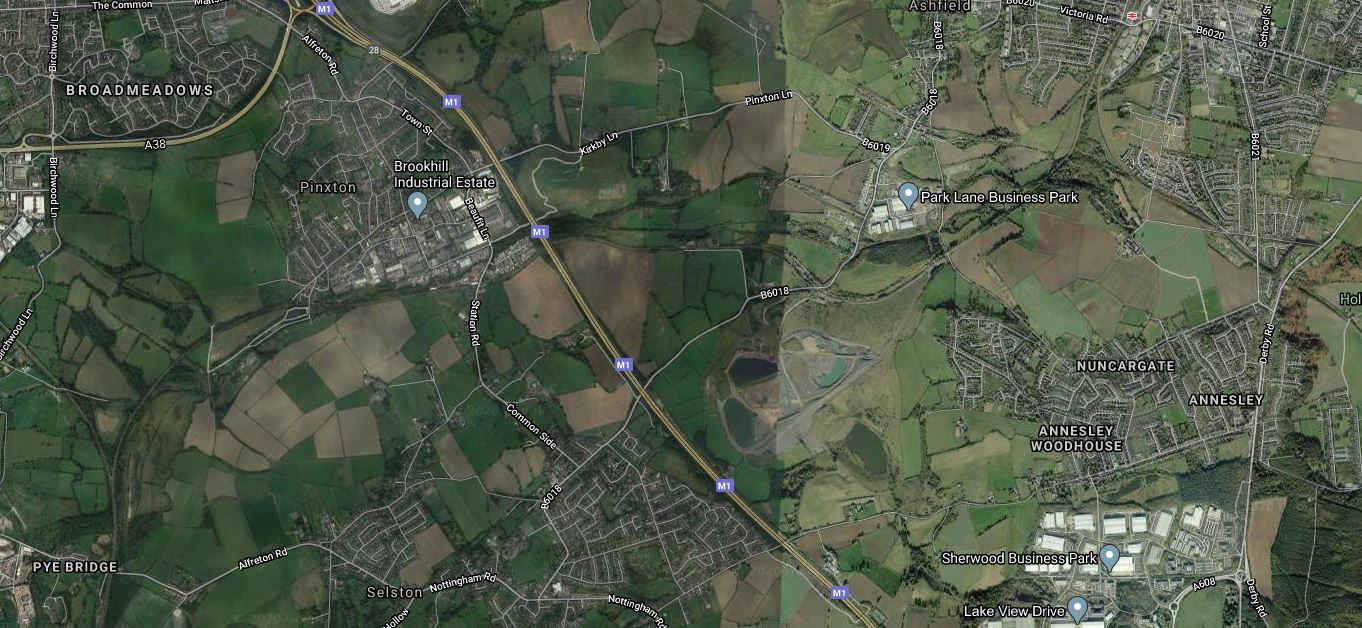
This Google Map shows the route.
Note.
- The M1 Motorway crossing the map from North-West to South-East.
- Pye Corner is in the South-West corner of the map.
- The Erewash Valley Line runs North-South through Pye Corner.
- Kirkby-in-Ashfield is the urban area in the North-East corner of the map.
- Kirkby-in-Ashfield station is shown by the usual red symbol.
- The Robin Hood Line runs North-South through Kirkby-in-Ashfeld station.
On a high-resolution screen, it’s possible to pick out the freight line, that will become the Maid Marian Line.
- The Maid Marian Line is double-track.
- According to Real Time Trains, the distance between Kirkby-in-Ashfield and Langley Mill stations is around nine miles.
- A freight train took twenty-two minutes between the two stations.
- As there are two tph on the Robin Hood Line, I think it would be reasonable to have a similar frequency on the Maid Marian Line.
- Trains between the East Midlands Hub and Mansfield stations would pass Ilkeston, Langley Mill, Kirkby-in-Ashfield and Sutton Parkway stations.
- Trains could terminate at Nottingham using the Attenborough route.
- Trains could terminate at Derby using the Long Eaton route.
The Maid Marian Line could improve services from Derby, Mansfield, Nottingham and Worksop stations to the new East Midlands Hub station.
Matlock Station
Consider.
- Matlock is currently served by an hourly service between Matlock and Newark Castle via Derby, Spondon, Long Eaton, Attenborough, Beeston, Nottingham and several other smaller stations, which is a service that goes past the site of the East Midlands Hub station.
If this service were to call at the East Midlands Hub station and be doubled in frequency, it would be a very valuable connecting service to and from the East Midlands Hub station.
To call at East Midlands Hub station, it would need to use the Trowell Curve.
Newark Station
Consider.
- Newark is a calling point on the Ivanhoe Line service between Lincoln and Leicester.
- Newark is currently served by an hourly service between Matlock and Newark Castle via Derby, Spondon, Long Eaton, Attenborough, Beeston, Nottingham and several other smaller stations, which is a service that goes past the site of the East Midlands Hub station.
Both services could be increased to two tph, so Newark might end up with a four tph service to Nottingham and East Midlands Hub stations with a two tph service to Derby and Lincoln.
Nottingham Station
Consider.
- The current half-hourly East Midlands Railway services between St. Pancras and Nottingham could use the Trowell Chord route, as this would allow a call at the East Midlands Hub station.
- Ivanhoe Line services between Lincoln and Leicester could also use the Trowell Chord route, which with a change at the hub station, would give Lincolnshire a faster service to and from London and Birmingham.
- In Reinstatement Of The Ivanhoe Line, I wrote about plans to extend the Ivanhoe Line to Burton on Trent.
- The split service between Liverpool and Norwich would run two tph between Nottingham and Derby, via Long Eaton and East Midlands Hub stations, in both directions.
- If the Nottingham and Skegness service, were to be extended to East Midlands Hub, this would add extra services between Nottingham and East Midlands Hub stations.
The required four tph between the East Midlands Hub and Nottingham station could be provided by the diversion of existing services to call at the East Midlands Hub station and using the Trowell Curve.
Stoke-on-Trent And Crewe Stations
Consider.
- Currently, there is an hourly East Midlands Railway service between Crewe and Derby, that calls at nine stations including Kidsgrove, Stoke-on-Trent and Uttoxeter.
- There are also plans to split the Liverpool and Norwich service into two, with the Western half possibly becoming a Crewe and Nottingham service via Derby, East Midlands Hub and Long Eaton.
These two services could be arranged to give a two tph service between Nottingham, Long Eaton, East Midlands Hub and Derby in the South and Stoke-on-Trent and Crewe in the North.
Back-To-Back Services At East Midlands Hub Station
Running services through a station is always more efficient as terminating services in a station will need a bay platform or turnback facility of some sort.
In my analysis, I have proposed that these services might terminate at East Midlands Hub Station.
- A possible shuttle service between East Midlands Hub and Alfreton stations.
- The Maid Marian Line service between East Midlands Hub and Mansfield and Worksop stations.
- The Nottingham and Skegness service could be extended to East Midlands Hub station.
- The Crewe and Derby service could be extended to Nottingham via East Midlands Hub station.
Note.
- The splitting of the Liverpool and Norwich service will result in an overlap between Nottingham and Derby.
- Matlock and Newark services already run back-to-back through the area.
So would it be logical to join some services back-to-back through East Midlands Hub station?
s an example, the Maid Marian Line and Skegness services could be joined into one service.
Other services could follow the precedent of the splitting of the Liverpool and Norwich service.
- Trains coming and going from the East terminate at Derby.
- Trains coming and going from the West terminate at Nottingham.
If the following were arranged.
- Grantham and Mansfield were back-to-back.
- Alfreton and Crewe services terminated at Nottingham.
- Norwich services terminated at Derby.
There would be seven tph between Nottingham and Derby via Long Eaton and East Midlands Hub stations.
Battery-Electric Operation
Consider.
- Hitachi are claiming, that the battery-electric versions of their AT-300 trains, like the Class 810 trains will have a battery range of 55-65 miles and take ten minutes to recharge.
- Nottingham and Derby are sixteen miles away and trains between the two cities, take as long as thirty minutes for the trip.
- There will be high quality electrification at East Midlands Hub station.
In addition, station distances from the East Midlands Hub station are as follows.
- Alfreton – 17 miles
- Crewe – 55 miles – 35 miles without electrification (Derby and Stoke Junction)
- Derby – 6 miles
- Grantham – 20 miles
- Ilkeston – 7 miles
- Langley Mill – 10 miles
- Lincoln – 43 miles
- Mansfield – 23 miles
- Matlock – 23 miles
- Newark Castle – 26 miles
- Nottingham – 10 miles
- Skegness – 80 miles
- Stoke-on-Trent – 42 miles – 35 miles without electrification (Derby and Stoke Junction)
I think the following would be possible on battery power.
- Return journeys to Alfreton, Grantham, Ilkeston, Langley Mill, Mansfield, Matlock and Newark Castle.
- Return journeys to Lincoln with a charge at the destination.
- Return journeys to Crewe and Stoke using the electrification between Stoke Junction and Crewe.
Running battery-electric trains between East Midlands Hub and Skegness station would need a bit of ingenuity.
The building of the Allington Chord in 2005, may have opened up a way for battery-electric trains to be able to run between Nottingham and Skegness.
Consider.
- Bottesford station is the station nearest to Grantham on the Western side of the East Coast Main Line and it is 15.3 miles from Nottingham.
- Ancaster station is the station nearest to Grantham on the Eastern side of the East Coast Main Line and it is 28 miles from Nottingham.
- The original route between Bottesford and Ancaster station caused delays on the main line, so it was replaced by two routes.
- A modified version of the original route allows trains to call at Grantham station, where they reverse before continuing. The distance is 18.7 miles and typically takes 33 minutes
- A double-track short cut under the East Coast Main Line is about 12.7 miles and typically takes 17 minutes.
- The distance between Ancaster and Skegness is 46.7 miles.
- The East Coast Main Line is electrified.
I wonder, if it were possibly to electrify the following tracks.
- The direct double track between Ancaster and Bottesford stations.
- The access lines from the Allington Chord into Grantham station.
Hopefully, as the tracks, were built in 2005, they shouldn’t be too challenging to electrify.
This would enable a train from East Midlands Hub to Skegness to use the following procedure.
- Use the electrified line between East Midlands Hub and Nottingham stations, charging the battery en route.
- Call at Nottingham station and lower the pantograph.
- Leave Nottingham with a full battery.
- Run between Nottingham and Bottesford stations on battery power.
- Call at Bottesford station and raise the pantograph.
- Use either of the electrified routes between Bottesford and Ancaster stations, charging the battery en route.
- Call at Ancaster station and lower the paragraph.
- Run between Ancaster and Skegness stations on battery power.
After charging the train at Skegness, the return would use the following procedure.
- Leave Skegness with a full battery.
- Run between Skegness and Ancaster on battery power.
- Call at Ancaster and raise the paragraph.
- Use either of the electrified routes between Ancaster and Bottesford stations, charging the battery en route.
- Call at Bottesford station and lower the pantograph.
- Run between Bottesford and Nottingham on battery power.
- Call at Nottingham station and raise the pantograph.
- Use the electrified line between Nottingham and East Midlands Hub stations, charging the battery en route.
It’s almost as if, the Allington Chord was designed for battery-electric trains.
Conclusion
The Trowell Curve with a little bit of help from a few friends can create a battery-electric network of local lines based on the three important stations of Nottingham, East Midlands Hub and Derby.
I
UK Energy Production
This web site, seems to ask a lot of my questions about UK Energy Production.
Hydrogen Power Plant Bid In Herne Bay Set For Green Light From Canterbury City Council
The title of this post, is the same as that of this article on Kent Online.
These are the introductory paragraphs.
Controversial plans to build a hydrogen fuel plant on a rundown plot of land look set to be given the green light – despite more than 160 objections from concerned residents.
Canterbury City Council was inundated with letters from locals – with one even worried about a Fukushima-style disaster – after a bid to construct the plant in Westbrook Lane, Herne Bay, was revealed in January.
The article said, that the project would create twenty jobs.
This Google Map shows the proposed site for the electrolyser.

Note.
- The Railway running East-West at the top of the map.
- The A2990 Thanet Way running East-West at the bottom of the map.
From a visualisation on the Kent Online article, it appears that the electrolyser will be built to the West of the Recycling Centre.
I suspect that given the closeness of the railway, it might even be possible to despatch hydrogen to users by specially-designed trains.
The electrolyser will need large quantities of electricity and I can’t see any wires around the site.
This Google Map shows the wider area around the site.

Note.
- The Recycling Centre indicated my a blue arrow, just to the right of top-centre of the map.
- The A2990 running East-West across the top of the map.
- The 18 MW Molehill Solar Farm between the old and new Thanet Ways, in the middle of the map.
- The 51.9 MW Owls Hatch Solar Farm, in the South East corner of the map.
- For full production, the electrolyser needs 23 MW!
These two solar farms, mean, that there must be a high-quality electricity connection in the area.
With all the offshore wind in Kent and these solar farms on the doorstep, the Herne Bay electrolyser, will not have much difficulty obtaining genuine renewable electricity.
Conclusion
As someone, who once worked, in a hydrogen factory, I would be happy to live near to the site.
Are Ryze Hydrogen planning to put a filling station for hydrogen vehicles on the A2990?
Joint Venture With Linde AG And £38M Strategic Investment
The title of this post, is the same as that as this Press Release from ITM Power.
This is the first paragraph.
ITM Power plc is pleased to announce its intention to raise at least £52.0 million (before expenses) through (i) a strategic investment of £38.0 million at 40 pence per share by Linde UK Holdings No. 2 Limited, a member of the Linde AG group (Linde) (the Share Subscription); and (ii) a conditional placing of £14.0 million at 40 pence per share (the Firm Placed Shares) with certain existing and new institutional investors (the Firm Placing). The Group has also entered into a 50/50 joint venture with Linde (the Joint Venture) which will focus on delivering green hydrogen to large scale industrial projects, principally those with an installed electrolyser capacity of 10 Megawatts (“MW”) and above.
There is all the usual financial stuff and these sentences.
The net proceeds of the fundraising will be used principally to enhance the manufacturing capabilities of the Group, particularly for the development and production of large scale 5MW electrolysers, to facilitate product standardisation and manufacturing cost reduction.
The Joint Venture will focus on delivering green hydrogen to large scale industrial projects (generally being opportunities with installed electrolyser capacities of 10 Megawatts and above)
As ITM Power are constructing the largest electrolyser factory in the world, at Bessemer park in Sheffield, it appears to me that ITM Power are going for the larger scale hydrogen market.
Recently, I wrote these three posts.
- Funding Award to Supply An 8MW Electrolyser
- Surplus Electricity From Wind Farms To Make Hydrogen For Cars And Buses
- H2OzBus Project: Deploying Hydrogen Fuel Cell Bus Fleets For Public Transport Across Australia
News stories generated about the company or the production of hydrogen seem to require large electrolysers in excess of 5 MW.
It looks like ITM Power are setting themselves up to tap this market substantially.
How Much Hydrogen Would A 5 MW Electrolyser Create In A Day?
I found the key to the answer to this question on this page of the Clean Energy Partnership web site.
To produce hydrogen by electrolysis directly at the filling station, the CEP currently requires about 55 kWh/kg H2 of electricity at an assumed rate of efficiency of > 60 percent.
To produce 1 kg of hydrogen, nine times the amount of water is necessary, i.e. nine litres.
I will use that figure in the calculation.
- A 5MW electrolyser will consume 120 MWh in twenty-four hours.
- This amount of electricity will produce 2,182 Kg or 2.182 tonnes of hydrogen.
- It will also consume 19.64 tonnes of water.
In Surplus Electricity From Wind Farms To Make Hydrogen For Cars And Buses, I described how Jo Bamford and his company; Ryze Hydrogen, have applied for planning permission to build the UK’s largest electrolyser at Herne Bay in Kent.
- It will produce ten tonnes of hydrogen a day.
- The hydrogen will be sent by road to London to power buses.
So could the electrolyser be a 25 MW unit built of five 5 MW modular electrolysers?
Linde and their UK subsidiary; BOC, must have a lot of knowledge in transporting tonnes of hydrogen by road. I can remember seeing BOC’s trucks behind ICI’s Castner-Kellner works in the 1970s, where they collected hydrogen to see to other companies.
Zopa Seems To Have Deconstipated
In early March, I wrote Is The COVID-19 Having An Affect On Lending At Zopa?, where I said this.
I lend money on Zopa and at the moment no-one seems to be borrowing any money.
I put some of my pension in my lending pot into the peer-to-peer lender each month and it’s still there sitting safely in the queue for a borrower.
Perhaps everybody is being cautious because of the COVID-19 alert.
At the time of writing this new post, everything seems to be back to normal. Or at least money, that I put in my lending account yesterday, has now been allocated to borrowers and is awaiting the final checks.
Eight years ago, I wrote Stability in Financial Systems, where I put forward my belief that Zopa is a stable system, that adjusts itself to the conditions it encounters.
Has the peer-to-peer lender just demonstrated, that my thoughts are correct, by sailing untroubled through the COVID-19 crisis, with just a small adjustment on the tiller here and there, just as it survived the Banking Crisis of 2008?
MagniX and AeroTEC Put All-Electric Cessna Airplane Into The Air For First Time
The title of this post is the same as that of this article on GeekWire.
This is the introductory paragraph.
An all-electric version of one of the world’s best-known small utility airplanes hummed through its first flight today at Moses Lake in central Washington state.
This is a picture of another Cessna Caravan, that I took, as I boarded it in Kenya for a flight to the Maasai Mara.
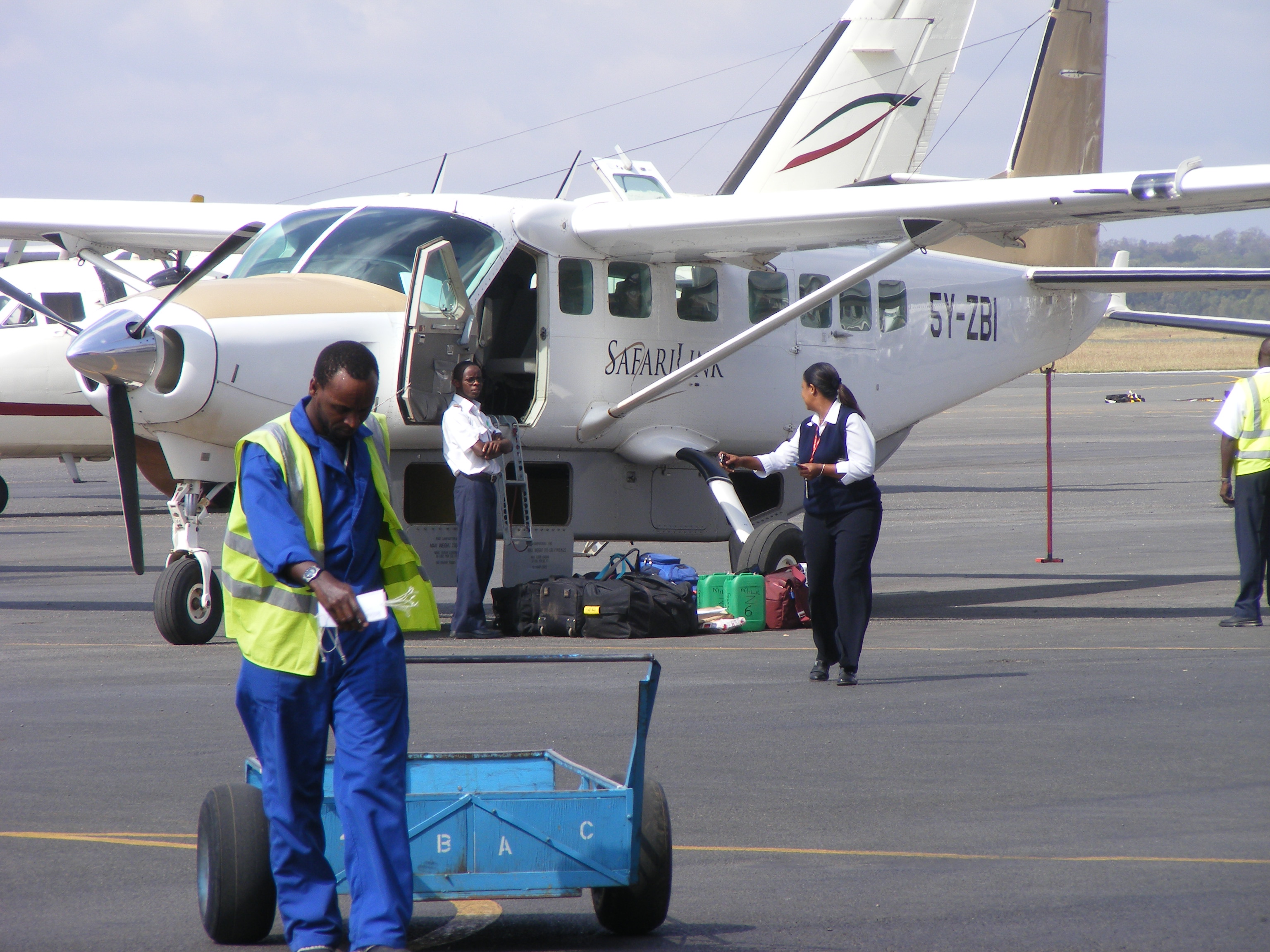
The aircraft are very much a Ford Transit or Mercedes Vito of the skies.
- 2,600 have been built.
- It is still in production.
- The passenger version can carry nine passengers.
- Total flight hours are over twenty million.
- FedEx operates 239 of the type.
It must surely, be an ideal aircraft to convert to electric power.
This is a video of the first flight on YouTube.
The guy behind the project;Roei Ganzarski has just given a very optimistic interview on BBC Breakfast.
He emphasised the various environmental and financial advantages of the aircraft and if you can catch it on the iPlayer, it outlines a possible future for aviation.
I can see electric Cessna Caravans flying around the UK within the next couple of years.
Designing And Building An Electric Aircraft
Three of the designs for commercial electric aircraft under development are conversions of existing designs.
- Roei Ganzarski’s conversion of a Cessna Caravan.
- Harbour Air’s conversion of a DHC-2 Beaver.
- Cranfield University’s conversion of a Britten-Norman Islander.
This must make certification of the aircraft simpler, as you’ve just replaced one type of engine with a battery and electric motor of similar size.
The difficult parts of the design; the aerodynamics and structure are probably almost unchanged.
As MagniX are involved in the first two of these projects, I would suspect that they have come up with an electric motor, that fits what is needed for aviation very well.
But then electric motor design is changing, probably driven by the needs of electric transport from bicycles through cars and vans to buses, planes, ships, trains and trucks.
It should also be noted, that the Beaver, Caravan and Islander are all simple aircraft, with a long history of successful operation and a vast knowledge base amongst pilots, engineers and operators of how to use these aircraft safely and in a financially viable way.
Will we see other aircraft conversions from to electric power in the next few years?
This page on Flying Magazine discusses conversion of Cessna 172 to electric power.
£2.7bn East Midlands Plan Unveiled For HS2 Links
The title of this post, is the same as that of this article on Rail News.
This is the first two paragraphs.
A bold plan costed at £2.7 billion for the area around the HS2 hub in the East Midlands has been published by a group of councils, transport bodies and East Midlands Airport.
The core of the scheme is the future East Midlands Hub at Toton, and the plan proposes direct access to the Hub from more than 20 cities, towns and villages in the East Midlands.
If you want to read the original report by Midlands Connect, there’s a download link on this page of their web site.
The project is in three phases.
Phase One
Phase One is to be operational within ten years.
- Scheme 1 – The extension of the Nottingham tram system (Nottingham Express Transit or NET light rail system) from the Toton Lane Park and Ride site to Long Eaton via two new stops at the planned Innovation Campus development and HS2 East Midlands Hub station.
- Scheme 2 – New bus services between the HS2 East Midlands Hub and Amber Valley, West Bridgford and Clifton.
- Scheme 3 – Bus Rapid Transit between the HS2 East Midlands Hub and Derby city centre via Pride Park and Derby railway station.
- Scheme 4 – Extension of the HS2 East Midlands Hub A52 highway access route to the A6005 Derby Road in Long Eaton.
- Scheme 5 – Capacity enhancements to M1 Junction 25, increasing road capacity and improving access to the HS2 East Midlands Hub station and Innovation Campus site.
- Scheme 6 – The implementation of a minimum of four direct rail services per hour linking the HS2 East Midlands Hub station to Derby, Nottingham and Leicester stations, as well as Loughborough, Matlock, Mansfield, Newark, Alfreton and Grantham, made possible by the building of a new piece of infrastructure, the Trowell Curve, which will link to the Midland Mainline.
- Scheme 7 – New rail service between Mansfield, Derby and Leicester with stops at Ilkeston, Langley Mill, Kirkby in Ashfield, Sutton Parkway and HS2 East Midlands Hub via the Kirkby Freight Line (Maid Marian line).
Note.
- These schemes will be built before the HS2 East Midlands Hub station opens.
- I discussed Scheme 7 – The Maid Marian Line in After The Robin Hood Line Will Nottingham See The Maid Marian Line?.
The most important part of Phase One is that all these seven schemes will be built before High Speed Two reaches the East Midlands. So hopefully, there will be a continuous stream of improvements in the East Midlands.
Phase Two
Phase Two will be operational within twenty years.
- Scheme 8 – Extension of the NET light rail system or enhanced Bus Rapid Transit from the HS2 East Midlands Hub station to Derby.
- Scheme 9 – The construction of a railway station at East Midlands Airport, connected to the Midland Mainline via a spur to the south of Kegworth village, allowing new direct rail services to the airport from Derby, Nottingham, Leicester and Mansfield as well as some intermediate stations including HS2 East Midlands Hub and East Midlands Parkway. This intervention will vastly improve public transport access to East Midlands Airport for passengers and staff.
Phase Three
Phase Three will be operational within twenty-five years.
- Scheme 10 – A new rail line between East Midlands Airport (opened during Phase 2) and Derby via the South Derby Growth Zone residential and employment developments and the Rolls Royce site, designed to support local housing and employment growth.
- Scheme 11 – A tram-train service connecting into the NET light rail network (Phase 1) to a proposed development site (11,000 houses and other associated development) to the west of East Midlands Airport. This scheme would also serve stops within the Ratcliffeon-Soar power station development site and could also serve Kegworth village and the East Midlands Gateway Logistics Park.
It is comprehensive project and I will discuss the various schemes in separate posts.
Syon Lane Station – 26th May 2020
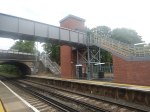
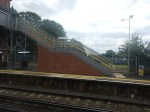
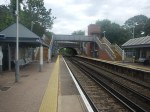
These pictures show the current state of Syon Lane station.





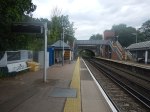

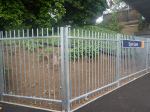
A few questions.
Is The Station Complete?
The stairs are blocked off, but most appears complete. Perhaps, serious testing of the lifts are needed.
Has the testing been held up by COVID-19?
Will There Be A Second Lift Tower?
As the walkway is still closed off, I couldn’t check at the top, but it does look there is space for a second lift tower on the London-bound platform.
What Is Happening Behind The London-Bound Platform?
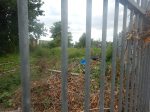
Behind the London-bound platform is a patch of waste land and some scruffy garages.
Is the site being cleared? And to what purpose?
Hydrogen Gas From Biogas
The title of this post, is the same as that of this article on Finance News Network.
This is the introductory paragraph.
Managing Director and CEO Geoff Ward talks about the Hazer process for low emissions hydrogen gas and high purity graphite production from biogas, CAPEX approval to proceed with the company’s commercial demonstration plant and offtake discussions.
The process doesn’t create any CO2, as it extracts the carbon as a crystalline graphite. So are there two worthwhile products from the biogas?
According to this page on Graphene Info, the graphite can be made to create graphene.
Bamboo Sleepers Aimed At Middle Eastern Railways
The title of this post, is the same as that on this article on the Railway Gazette.
Sounds surprising, but the company founder and CEO, gives these advantages.
Avraham says that bamboo sleepers bring advantages in railway construction and renewal because the material does not require additional after-treatment with substances such as creosote in order to provide long term protection. It is also naturally impervious to insect infestation. This means the risk of soil and groundwater contamination from chemicals is minimised compared to alternative materials.
They are going to launch production with 50,000 tonnes of raw bamboo.
 The Anonymous Widower