Does Dropping Barometric Pressure Make Your Nose Run?
I’m asking this question as my nose is running and the pressure is dropping for tomorrow’s rain.
Google AI told me this.
Yes, a drop in barometric pressure can make your nose run, as it can cause sensitive nerve endings in your nasal passages to react, leading to swelling of the blood vessels. This can result in congestion, a runny nose, and post-nasal drip.
How it happens: When the atmospheric pressure changes, the pressure in your sinuses no longer matches the pressure outside your body. This difference can trigger a reaction in the nasal passages.
Nasal response: The nasal tissues may swell and sinus drainage ducts can become blocked in an attempt to equalize the pressure. This irritation can lead to symptoms like a runny or stuffy nose.
Other factors: This reaction is often more pronounced when barometric pressure changes are sudden or combined with other weather changes, such as rapid shifts in temperature or humidity.
My left eye is also painful.
I also should note, that a very experiences eye surgeon once told me, that I had the driest eyes he’d ever seen.
Stopping The Irresponsible Parking Of Hire Bikes
This sort of parking of bicycles is becoming a real curse in London.

I have problems outside my house and this morning a hire bike was blocking my entrance for my Ocado delivery.
I believe that as each hire of a bike is known in detail by the hire companies, so they can charge riders, illegal parking of these bikes could be easily enforced.
We would need a law that could be enforced.
Each bike would need to have a clearly-marked serial number and/or QR-Code.
If you see a bike illegally parked, anybody can take a photograph and note the bike’s serial number, which they can then send to a central office by text message, e-mail or even an app.
The central office would then assess if any offence had been committed and if it had, would inform the hire company.
The hire company would charge the hirer, if an offence had been committed and charge them a fee.
The fee could even be split three ways to the hire company, the local authority and the person, who reported the offence.
Iberdrola Looking To Sell 49 Pct Stake In UK Offshore Wind Farm – Report
The title of this post, is the same as that of this article on offshoreWIND.biz.
This is the sub-heading.
Iberdrola has begun exploring the sale of 49 per cent of its East Anglia Two offshore wind farm project in the UK, according to a report by the Spanish media outlet Cinco Días citing unnamed sources.
These four paragraphs give more details.
The renewable energy developer has already engaged Bank of America and BBVA as financial advisors to assist with the potential transaction, Cinco Días writes.
Iberdrola’s interest in selling a nearly half stake in East Anglia Two mirrors previous deals in the East Anglia portfolio, where the company has brought in financial partners in two other phases, East Anglia One and East Anglia Three.
The 714 MW East Anglia One offshore wind farm is owned by Iberdrola’s UK arm ScottishPower Renewables and Macquarie’s Green Investment Group (GIG), with Octopus Energy having acquired a 10 per cent stake from GIG this April. East Agnlia One has been in operation since 2021.
In July this year, Iberdrola and UAE clean energy company Masdar announced what the companies said was the largest offshore wind transaction of the decade as they signed an agreement to co-invest in the 1.4 GW East Anglia Three project, currently under construction.
But then being bought and sold is the way of life for an offshore wind farm.
In 2018, I wrote World’s Largest Wind Farm Attracts Huge Backing From Insurance Giant, which contains this extract from the Times says this about the funding of wind farms.
Wind farms throw off “long-term boring, stable cashflows”, Mr. Murphy said, which was perfect to match Aviva policyholders and annuitants, the ultimate backers of the project. Aviva has bought fixed-rate and inflation-linked bonds, issued by the project. While the coupon paid on the 15-year bonds, has not been disclosed, similar risk projects typically pay an interest rate of about 3 per cent pm their bonds. Projects typically are structured at about 30 per cent equity and 70 per cent debt.
Darryl Murphy is Aviva’s head of infrastructure debt. The article also says, that Aviva will have a billion pounds invested in wind farms by the end of the year.
I wonder how long it will be before individual investors can fund their pensions, with a direct investment in a wind farm?
- The wind farm would surely be a better investment if it had an integrated battery to supply power, when the wind didn’t blow.
- It would probably also be a safer investment, if it had been generating electricity for some years.
After all, at the present time, you can invest in batteries through companies like Gresham House and Gore Street.
Is It illegal To Read Your Phone While Cycling In London
I was just trying to cross the road and saw a young lady about twenty, riding towards me on a bicycle reading her mobile phone which was held in one hand and balanced on the handlebars. She was wearing a helmet and steering with one hand.
I asked Google AI, the question in the title of this post and received this answer.
No, it’s not explicitly illegal to read your phone while cycling in London, as the specific law prohibiting phone use while driving doesn’t apply to bicycles. However, it is very dangerous and you can still be prosecuted for the offense of careless cycling if your actions endanger yourself or others, with potential fines of up to £2,500.
In the past, I’ve used mobile phones, in ways that might become illegal.
- Several times, I’ve exercised a horse with a Nokia 6310i phone in my pocket, so that, if I fell off, I could call for help. I must admit, that I have received and made a few calls from the back of a horse. But in all cases, it was a well-behaved horse, that would stand quietly in a safe place.
- I once with prior arrangement of UK Air Traffic Control requested an Airways Join on a mobile phone at Ipswich Airport. But my second pilot that day, was a fully-qualified airline pilot.
I used to enjoy flying light aircraft and I do wonder sometimes, if I could still do it, after a gap of thirty years and a serious stroke? Obviously, I’d make it legal with an instructor in the right-hand seat.
UK Offshore Wind Farm Now Equipped With Scour Protection Doubling As Marine Life Habitat
The title of this post, is the same as that of this article on offshoreWIND.biz.
This is the sub-heading.
RWE has installed around 75,000 reef cubes developed by the nature-inclusive technology designer ARC marine at the Rampion offshore wind farm in the UK, in what the Rampion owner says is a “global first”. The cubes are a specially eco-engineered scour protection solution for wind turbine foundations, and this represents their first full-scale deployment at an offshore wind farm.
These four paragraphs add more details.
The solution is designed to protect the energy infrastructure from strong currents in the subsea environment, while creating new and extending existing living marine habitats, RWE says.
The reef cubes, ranging in size from 15 to 35 centimetres, were installed over the last few days at the base of one of the Rampion turbines by the project’s contractor Rohde Nielsen. It is the first real-world deployment of ARC marine’s patented Reef cubes as scour protection at an operational wind farm, according to RWE.
The developer says that at just one of the Rampion turbines, the reef cubes are providing a habitat surface area of 25,000 square metres.
The deployment is part of the Reef Enhancement for Scour Protection (RESP) pilot that RWE and ARC marine announced in July this year.
ARC marine’s reef cubes have their own comprehensive web site, which show all aspects of this fascinating technology.
Better Than A Kick In The Teeth – As C Would Say!
I’ve just had an e-mail from OVO Energy, who have been my energy supplier for at least eight years, that they are going to reduce my Direct Debit by £26 per month.
OVO didn’t give a reason, but then it dawned on me.
In I’m Getting A New Hydrogen-Ready Boiler, I laid out my reasoning for getting a new boiler, as the pump had failed.
It’s only been one billing period, but I suspect other factors have kicked in.
I asked Google AI, if the the efficiency of gas boilers increased in the last ten years, and received this reply.
Yes, gas boiler efficiency has significantly increased in the last ten years, with new models achieving efficiencies over \(90\%\) compared to older ones that could be as low as \(60\%\). This is primarily due to the mandatory use of condensing technology in new boilers, which recovers and reuses heat from exhaust gases to preheat water.
As far as we know, Google are not in the gas boiler business, so I’m sure their answer is unbiased.
It looks like I shall be saving £312 per year, because of the new boiler.
Thus, if it lasts ten years, which is the guarantee period, then it has paid a substantial part of the cost of the new boiler.
As my late wife, C, would often say, that is better than a kick in the teeth.
Should You Get A New Boiler?
I am not qualified to answer that, but I’m you know a man or woman who is!
Canal Water To Heat Some Of Liverpool’s Most Famous Buildings In Hi-Tech Carbon-Cutting Scheme
The title of this post is the same as that of this press release from Liverpool City Region.
These five bullet-points act as subheadings.
- Energy generated from Leeds and Liverpool canal by one of the UK’s largest water source heat pumps
- Announcement comes as Mersey Heat Energy Centre officially opens
- Scheme to connect Georges Dock, Cunard and the Museum of Liverpool buildings to Mersey Heat Network
- Joint project between Combined Authority, Liverpool City Council and National Museums Liverpool
- Key part of Combined Authority plan to reach net zero by 2035
These introductory paragraphs add more detail.
Three major public buildings on Liverpool’s waterfront are to slash carbon emissions by joining a heat network driven by energy from canal water.
Under the plan, an extended pipeline will connect Georges Dock building, the Cunard building, and the Museum of Liverpool, part of National Museums Liverpool (NML), to the Mersey Heat network.
The newly opened Mersey Heat Energy Centre is already supplying the Liverpool Waters site, the Titanic Hotel and the Tobacco Warehouse apartments.
It uses one of the UK’s largest water source heat pumps to extract energy from the Leeds and Liverpool Canal to power a network of heating pipes.
The project is the latest in the Liverpool City Region’s five-year carbon action plan and journey to reach net zero. The Combined Authority has recently secured an additional £35m to decarbonise dozens of other public buildings from the Department of Energy Security and Net Zero.
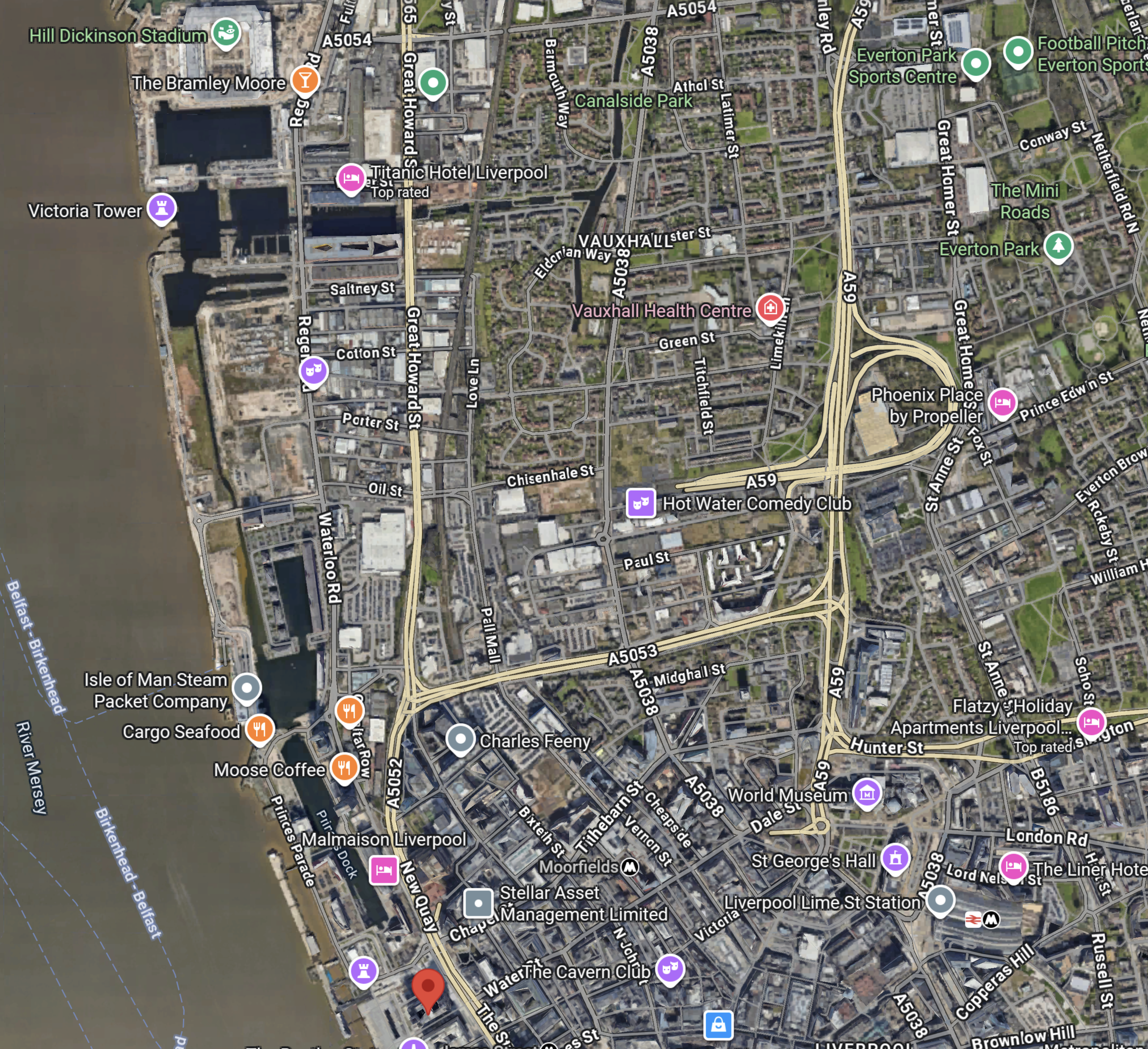
This map of the Liverpool Waterfront shows the canal and some of the buildings mentioned.
Note.
- In the top-left corner is Everton’s new Hill-Dickenson Stadium, which at the time of this map was under construction.
- The pink arrow to its right indicates the Titantic Hotel.
- The Leeds and Liverpool canal passes on the South side of the hotel.
- On the other bank of the canal is the Tobacco Warehouse.
- The canal goes East and then turns North before going all the way to Leeds. The Wikipedia entry gives full details of the canal.
- From the Titanic Hotel, the Leeds and Liverpool Canal also turns South and boats can go along Liverpool’s famous Waterfront to Canning Dock, in front of the Tate Liverpool.
- The red arrow marks the Liver Building.
- Georges Dock building, the Cunard building, and the Museum of Liverpool are just to the South the Liver Building.
- To the East of the Liver building, there is Liverpool City Centre, with beyond it Liverpool Lime Street station, with another collection of important buildings including St. George’s Hall, the Picton Library, World Museum and the Walker Art Gallery.
The Combined Authority will not have a shortage of buildings to decarbonise with the £35m from the Department of Energy Security and Net Zero.
These are my thoughts.
What Is A Water Source Heat Pump?
I asked Google AI this question and received this answer.
A water source heat pump (WSHP) is a highly efficient, low-carbon renewable energy system that extracts heat from a nearby water source like a lake, river, or canal to provide heating and hot water for a building, and can also be used for cooling. It works by using electricity to transfer this thermal energy into the building’s heating system, offering a more efficient alternative to traditional boilers and reducing energy bills. There are two main types: closed-loop systems, which circulate a fluid through pipes submerged in the water, and open-loop systems, which directly pump and then discharge the water.
Is Mersey Heat Energy Centre A Closed Or Open-Loop Water Source Heat Pump?
I asked Google AI this question and received this answer.
The Mersey Energy Heat Centre uses an open-loop water source heat pump system. It abstracts water from the Leeds and Liverpool Canal, extracts heat from it, and then returns the water back to the dock system.
As the Leeds and Liverpool Canal is 127 miles long, and there appears from the map to be a lot of water in the docks at the Liverpool end, I would expect that Liverpool will have more than enough water to extract heat from.
Where Exactly Is The Mersey Heat Energy Centre?
In this article on Place North West, which is entitled Work Begins On Peel’s Mersey Heat Energy Centre, has this image, which is labelled as the Mersey Heat Energy Centre.
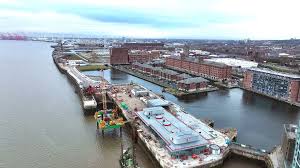
Note the large building in the foreground with the circular objects on the roof. Could these be fans or vents?
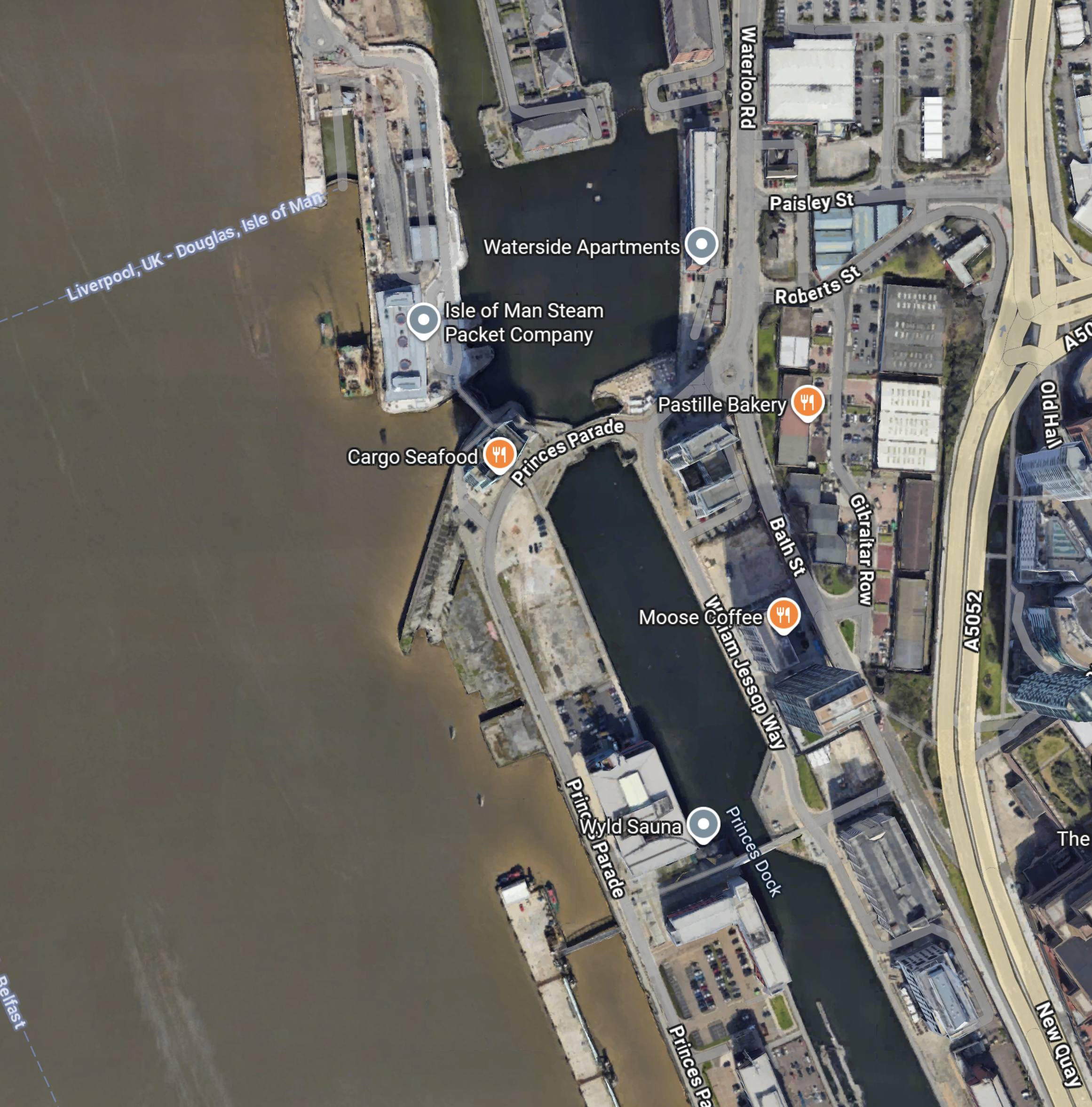
This Google Map shows the area.
Note.
- The two docks at the top of the map can be picked out in the image.
- The main breakwater on the left, which is marked Isle of Man Steam Packet Company, looks very similar to the one shown in the image.
- The bridge between the two docks on the left appears to be the same in both map and image.
I am fairly sure, that the large building on the breakwater with the three circles on the roof, is the Mersey Heat Energy Centre.
It certainly looks to be a building, that could provide a substantial amount of heat and power .
What Is The Output Of The Mersey Heat And Energy Centre?
I asked Google AI this question and received this answer.
The Mersey Heat and Energy Centre produces low-carbon heat for up to 6,700 homes and 1.3 million square feet of commercial space, aiming to deliver around 20GWh of heat per year. The project is also planned to expand to supply around 45GWh annually. This heat is delivered to buildings for their heating and hot water needs through the Mersey Heat network.
This article on Place North West, also has this similar answer.
Led by district heat network specialist Ener-Vate, the Mersey Heat Energy Centre will feature two 3MW water source heat pumps that would work on an ‘open loop’ system to take heat from water from the Leeds-Liverpool canal. This heat would be used to warm surrounding homes and businesses within six kilometres.
Plans form the first phase of Peel NRE’s Mersey Heat network. The initial project could supply 20GWh of heat every year, with planning permission secured to expand to supply around 45GWh – the equivalent of supplying heating and hot water to 17,000 homes.
It looks like we’re getting similar answers from different sources.
Does the Merseyside Area Have Enough Green Electricity To Power A Large Water Source Heat Pump?
In Could Liverpool Develop A Massive Zero-Carbon Data Centre?, I calculated the operational and planned offshore wind power in Liverpool Bay and got these results.
- 2509 MW has been commissioned.
- 3980 MW is being planned.
That is a total of 6489 MW or about twice the output of Hinckley Point C nuclear power station.
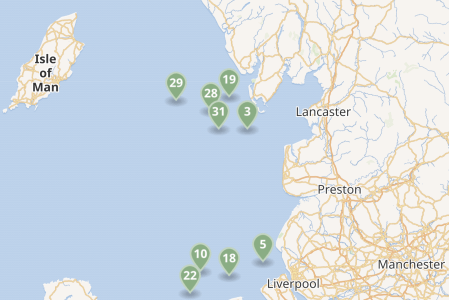
This map shows the existing wind farms in the sea between Liverpool, Lancashire and the Isle of Man.
Note.
- Each green arrow is a wind farm.
- There is the 2452 MW Heysham nuclear power complex near Lancaster.
- The Western HVDC Link is a 2250 MW connection between Hunterston in Western Scotland near Glasgow and Connah’s Quay on the Wirral.
- I also suspect more space in Liverpool Bay could be developed with wind farms.
Spinal Tap turned the power up to 11, Liverpool, being Liverpool, they have enough power to go to at least sixteen.
Will Merseyside Have Lots Of Data Centres?
Consider.
- It has the power.
- It has the water.
- The locals speak a form of English.
- Merseyside will be two hours from London by train.
- There are two Premier League football teams.
- The golf courses are good.
- It is a city that is famous all over the world.
I am sure the number of data centres will grow.
45 schools Benefit From Rail Safety Resources Supported By Lumo And Hull Trains
The title of this post, is the same as that of this article on The Shields Gazette.
This is the sub-heading.
The UK’s leading open access rail operators, Lumo and Hull Trains, are celebrating supporting the delivery of vital rail safety resources to 45 schools across the UK over the past year.
These three paragraphs add more detail.
In association with the Rail Safe Friendly Programme, the operators’ involvement has led to a social value impact of over £724,000, directly educating thousands of young people.
The programme is dedicated to spreading the vital message of rail safety among young people, educators and parents in schools across the UK. Lumo and Hull Trains have supported the important initiative for the past two years, with their support renewed for a third.
As part of the partnership, Lumo took over the Metrocentre’s ‘mini express train’ to highlight the issue of rail safety to families and children visiting the shopping centre during the school holidays in 2024. The project secured industry recognition at the recent Corporate Engagement Awards.
It’s not just in the UK, that this type of excellent engagement is being setup.
This train is the world’s first hydrogen-powered train to enter passenger service, between Hamburg and Cuxhaven in Germany.
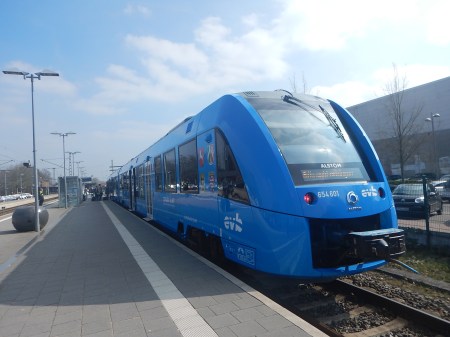
When I rode the train, a German schoolboy told me, that their school had given them safety lessons about hydrogen.
Mega Airport Costing £24billion In Europe To Rival Heathrow And Dubai
The title of this post is the same as that of this article in the Daily Express.
A new mega airport is being built in Europe, and it is set to rival the likes of Dubai and London Heathrow in terms of size and capacity for passengers and planes alike
These three paragraphs add more details.
A plush new airport could be touching down in Europe, set to rival London’s Heathrow and even the esteemed Dubai International, as it aims to link the entire continent in unprecedented ways.
The Centralny Port Komunikacyjny, a proposed $32.5 billion project, is a fresh aviation gateway in Warsaw that carries the burden of Poland’s ambitious mega airport aspirations. However, the concept is swiftly progressing, with the official approval and handover of the passenger terminal design marking a significant leap forward.
This suggests the colossal airport is officially moving into its next phase of development. The question remains, will this new progression challenge the supremacy of the Middle East, home to both the world’s largest airport, King Fahd International Airport in Saudi Arabia, and the busiest, Dubai International Airport?
Note.
- In English, Centralny Port Komunikacyjny means Central Communications Port.
- CPK’s forecasted passenger capacity makes it a formidable contender as the new hub for Europe.
- Dubai is on course to handle 100 million passengers by the end of next year, thanks to its strategic geographical position with other continents, while the Polish project will eventually accommodate up to 44 million.
- n 2024, Heathrow Airport welcomed a record 83.9 million passengers, a 6% increase from the previous year.
Even the busiest airports in Europe handle far fewer passengers than Dubai.
Central Communications Port has a Wikipedia entry, which has this first paragraph.
The Central Transport Hub is a planned major infrastructure project in Poland aimed at the construction of a new international airport and the development of a nationwide integrated transport network. The airport is planned to be located approximately 40 kilometres (25 mi) southwest of Warsaw, connected to a new high-speed rail network and controlled-access highway system linking it with much of the rest of the country.
Note.
- The airport will be designed by Foster + Partners in collaboration with Buro Happold.
- Initially the airport is planned to have two runways, but will eventually be expanded to four.
- The combined airport and railway station is planned to serve 40 million passengers per year, double the size of Berlin Brandenburg Airport.
- The long-term goal is about 100 million passengers per year.
These are my thoughts.
The Airport’s Location
The Wikipedia entry for the airport has a section called Location, which has this first paragraph.
The airport’s planned site is about 40 km west of Warsaw, next to the village Stanisławów which is part of Gmina Baranów in Grodzisk Mazowiecki County. The Baranow commune occupies a significant part of the Grodzisk County and, despite its rural character, has an extensive road infrastructure. The A2 autostrada and railway lines run in the immediate vicinity of the potential construction site, and Wrocław (Expressway S8) and Poznań (National road 92) is nearby.
It sounds to me, that a British equivalent airport, would be a four-runway airport at Birmingham Airport with connections to the M1, M6, HS2 and the West Coast Main Line.
Rail Connections
The Wikipedia entry says this about rail connections.
Planned train connections from the CPK will take 15 minutes to Warsaw Central railway station, 25 minutes to Łódź Fabryczna railway station, and 2 hours to most other major Polish cities, such as Kraków, Wrocław, Poznań and Gdańsk. The construction of a high-speed train to Frankfurt (Oder) is also planned, which is to shorten the travel time on the Berlin-CPK route to under 3.5 hours
I suspect that Rail Baltica’s trains between Berlin and Helsinki via Warsaw, Kaunus, Riga, Bialystok and Tallinn will also stop at the airport.
The Airport Will Become A Gateway To North-East Europe
I wouldn’t be surprised to see Central Communications Port become a low-cost gateway to the surrounding countries., like Belarus, Estonia, Finland, Latvia, Lithuania and hopefully Ukraine.
Polish Hospitality
Consider.
- Most Poles speak English better, than what I does!
- There are several large Polish cities that are worth a visit.
- The food is excellent, as the local basic ingredients are of high quality.
- I have spent about a month in Poland and I’ve stayed in all levels of accommodation from the lowest to the highest and have never felt need to complain.
- They handle my gluten-free diet with no problem.
My experience of Belarus was also similar.

