Four Western TfL Rail Stations Now Have Step Free Access!
The title of this post is the same as that of this article on Rail Advent.
This is the introductory paragraph.
Transport for London has announced that passengers using Hanwell, Iver, Langley and Taplow can now benefit from step-free access from street to platform for the first time.
I shall be adding pictures to this post, when I find out how to add them using this terrible new Microsoft Surface computer.
COV-19 Isn’t Good For Chuggers
Outside Marks & Spencer on Dalston Kingsland Road this morning, I was accosted by a chugger.
I told him that because of the coronavirus, that I wouldn’t be stopping.
He gave a knowing look and allowed me to walk on!
He didn’t look pleased and I suspect, I wasn’t the first to give him that excuse.
My Past Is Worrying Me!
It must have been in the early 1970s, when I was acting as a mathematical-modelling consultant.
I was asked to do some modelling by a major drug company of the propagation of a virus through the UK population.
Their aim was to show how serious these pandemics could be and they wanted to get substantial grants from the Government to fund various lines of research.
With their data and the model I built, we were able to show how a dangerous pandemic could evolve.
But I never found out how successful they were in obtaining the money needed to start the research!
It does look like this pandemic could be the one that researchers at the company were predicting nearly fifty years ago.
Is A Microsoft Surface Pro, Windows 10 and OneDrive A Toxic Combination For This WordPress User?
I have now got a brand-new Microsoft Surface Pro and quite frankly except for the large screen, it is a load of old crap!
I run Office 365 and store my files on OneDrive and I have done for nearly a year, but the combination seems to lock me out of my Excel files on the OneDrive all the time.
- I can’t seem to Autosave like I used to, as it says that I am blocked.
- It also keeps showing me non-responsive login buttons to OneDrive.
- It tells me I am required to sign in to save the file, but won’t let me sign in.
Knickers and twist come to mind!
And then there’s WordPress.
I am trying to change a picture, which I want to upload into a post.
I get the Select File page, but it is totally unresponsive.
Luckily, I could change the picture using a Windows 7 laptop.
Plans For Second Entrance At Hackney Central Station Move Ahead
The title of this post is the same as that of this article on the Hackney Citizen.
This is the introductory paragraph.
Plans to alleviate overcrowding at Hackney Central station are now moving ahead, with a decision by the Town Hall to provide a second entrance on council-owned land on Graham Road.
The article also makes the following points.
- Things should be moving on the new entrance on the North side of the station.
- Usage of the Overground went up 160 percent between 2007 and 2013,
- Usage is expected to rise 40 % in the next ten years.
- The original 1980s building was designed with a twenty year life.
Read the whole article, as it looks like the politics of the new entrance is all very complicated, but badly needed. Especially, by this traveller!
Cambridge South Station To Be Developed
To me, this was one of the highlights of the 2020 Budget today.
As I lived near Cambridge for over a dozen years and regularly played real tennis at the University, I know the scientific heartbeat of the City better than most.
I have discussed the problems of running a business in the City, with many, who are associated with some of the City’s most successful businesses. I have also funded several ventures in the area.
The same basic problems keep arising.
- Lack of premises, offices and workshops, of all sizes and qualities.
- Lack of staff to work in the ventures.
- Lack of suitable housing, where staff moving to the City can live.
- Staff are being forced to live further out and the roads, railways and other pubic transport systems don’t have the capacity.
- Inadequate connections to Stansted Airport.
In the last few years, the transport has improved.
- A sophisticated and award-winning Park-and-Ride running to five large car parks ringing the City has been developed.
- The Park-and-Ride also caters for cyclists.
- Cambridge North station has been opened close to the Cambridge Science Park and the A14 Cambridge Northern By-Pass, with a 450-space car-park and space for a thousand bikes.
- The Cambridge Guided Busway has been developed across the City from Huntingdon station to Trumpington via Cambridge Science Park, Cambridge North station, Cambridge City Centre, Cambridge bus station, Cambridge station and Addenbrooke’s Hospital.
- Addwnbrooke’s Hospital is a Major Trauma Centre.
- The forecourts of Cambridge and Cambridge North stations have been developed to create good interchanges and meeting points.
- Great Northern now has two fast and two stopping trains per hour (tph) between London Kings Cross and Cambridge and/or Cambridge North stations, with trains continuing alternatively half-hourly to Ely or Kings Lynn.
- Thameslink has two tph between Brighton and Cambridge.
- Thameslink also has two tph between Cambridge and London Kings Cross, which will be extended to Maidstone East station, within a couple of years.
- Greater Anglia run an hourly service between Norwich and Stansted Airport via Ely, Cambridge North and Cambridge stations.
- Greater Anglia run two tph between London Liverpool Street and Cambridge North stations.
- Greater Anglia run an hourly service between Ipswich and Cambridge via Bury St. Edmunds and Newmarket stations.
- All Greater Anglia trains are being replaced with new and much larger Class 755 or Class 720 trains.
- CrossCountry run an hourly service between Birmingham New Street and Stansted Airport via Peterborough, March, Ely, Cambridge North and Cambridge stations.
- The A14 and A428 roads are being improved between Cambridge and the A1.
- The East West Railway between Reading and Cambridge via Oxford, Milton Keynes and Bedford is being developed and should open before the end of the decade.
But Cambridge still needs better links to the surrounding countryside and further.
- Connections to Peterborough could be doubled to hourly.
- Cnnections to Haverhill and Wisbech are poor.
- East West Railway have ideas about improving connections to both East and West of Cambridge.
- Better connections are needed at Addenbrooke’s to connect the rail system to the hospital and the Cambridge Biomedical Campus.
Cambridge South station would be the icing on the cake.
- It could be the Southern terminus of a Wisbech service.
- It could be on a service of at least four tph between Ely and Cambridge South stations via Waterbeach, Cambridge North and Cambridge stations.
- It would bring Addenbrooke’s and the Cambridge Biomedical Campus within easy commuting of London.
- It would be well-connected to Bedford, London, Milton Keynes, Oxford, Reading, Stansted Airport and Stevenage.
- There have also been rumours, that the station could be connected to the Cambridge Autonomous Metro, which would be developed from the Cambridgeshire Guided Busway and the Park-and-Ride.
Cambridge South station would be the hub, that ties all the various routes together,
The station could be a fairly simple station to build, by just building platforms and buildings alongside the existing electrified line.
This Google Map shows the hospital. and the West Anglia Main Line running North-South to the West of the hospital.
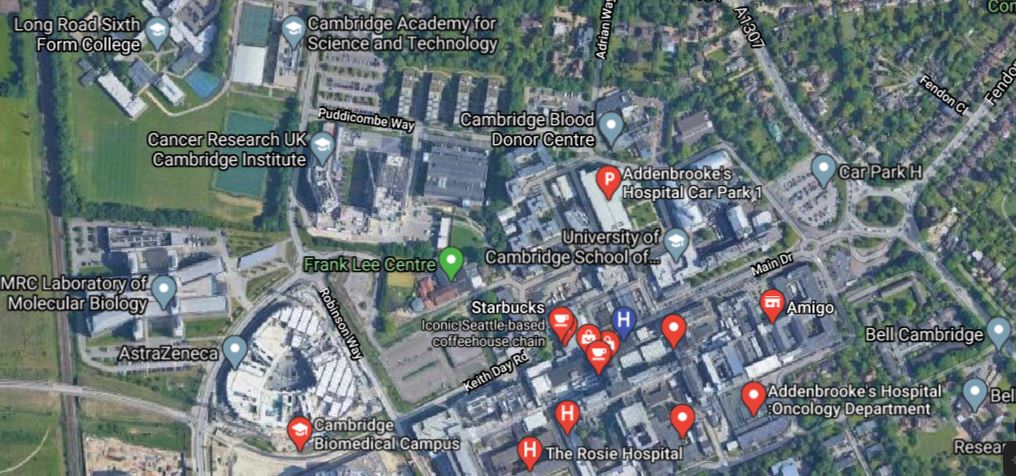
Note the West Anglia Main Line running North-South to the West of the hospital.
Station Design
This page on the Network Rail web site gives a basic design.
- Four platforms with step-free access via a footbridge and lifts;
- Platforms with seating and shelter for waiting passengers;
- A ticket office and ticket machines, along with automatic ticket gates;
- Taxi and passenger drop off facilities:
- Facilities such as a retail/catering unit, a waiting room and toilets;
- Blue badge parking; and
- Cycle parking.
The page then gives various location options.
Services
These are my take on the initial services, based on the current ones and those proposed by the East West Railway.
- 1 tph – CrossCountry – Birmingham New Street and Stansted Airport, via Coleshill Parkway, Nuneaton, Leicester, Melton Mowbray, Oakham, Stamford, Peterborough, March, Ely, Cambridge North, Cambridge, Cambridge South and Audley End.
- 1 tph – Greater Anglia – Norwich and Stansted Airport, via Wymondham, Attleborough, Thetford, Brandon, Lakenheath, Ely, Cambridge North, Cambridge, Cambridge South, Whittlesford Parkway and Audley End.
- 1 tph – Greater Anglia – Ipswich and Cambridge South via Needham Market, Stowmarket, Bury St. Edmunds, A14 Parkway, Newmarket and Cambridge.
- 2 tph – Greater Anglia – Cambridge North and London Liverpool Street via Cambridge, Cambridge South, Audley End, Bishops Stortford, Harlow, Broxbourne and Cheshunt.
- 1 tph – Greater Anglia – Wisbech and Cambridge South via March, Ely, Cambridge North and Cambridge.
- 2 tph – Thameslink – Cambridge and Brighton via Stevenage, London St. Pancras, East Croydon and Gatwick Airport.
- 2 tph – Thameslink – Cambridge and Maidstone East via Stevenage, London St. Pancras and Blackfriars
- 2 tph – Great Northern – Ely/Kings Lynn and London Kings Cross via Stevenage.
- 1 tph – East West Railway – Norwich and Reading or Oxford, via Ely, Cambridge North, Cambridge, Cambridge South, Bedford and Milton Keynes.
- 1 tph – East West Railway – Manningtree and Reading or Oxford, via Ipswich, Needham Market, Stowmarket, Bury St. Edmunds, A14 Parkway, Newmarket, Cambridge, Cambridge South, Bedford and Milton Keynes
Note.
- I have left out a few less important stations.
- I have extended the current Ipswich and Cambridge service to Cambridge South.
- I have added East West Rail’s proposed A14 Parkway station.
- I have added a Wisbech and Cambridge South service.
This simple service gives the following frequencies.
- 6 tph – Ely and Cambridge North
- 8 tph – Cambridge North and Cambridge
- 10 tph – Cambridge and Cambridge South
- 2 tph – Cambridge/Cambridge South and Stansted Airport
- 1 tph – Cambridge North/Cambridge/Cambridge South and Kings Lynn
- 8 tph – Cambridge/Cambridge South and London
- 2 tph – Cambridge/Cambridge South and Ipswich.
- 2 tph – Cambridge North/Cambridge/Cambridge South and Norwich.
- 1 tph – Cambridge North/Cambridge/Cambridge South and Peterborough.
- 6 tph – Cambridge/Cambridge South and Stevenage.
I feel strongly about the following.
- If six tph is thought to be ideal between Cambridge/Cambridge South and Stevenage, then surely more services are needed between Cambridge and Ipswich, Kings Lynn, Norwich. Peterborough and Stansted Airport. Perhaps as many as four tph are needed to give a Turn-Up-And-Go service.
- The frequency through Ely, Cambridge North, Cambridge and Cambridge should be as high as possible. With digital signalling ten tph must be possible.
At least Greater Anglia have plenty of Class 755 trains.
Conclusion
Rishi Sunak is right to build Cambridge South station.
You might even be able to argue, that the work done on the Cambridge Biomedical Campus could be key in fighting diseases like the coronavirus.
Thoughts On The Actual Battery Size In Class 756 Trains And Class 398 Tram-Trains
A Freedom of Information Request was sent to Transport for Wales, which said.
Please confirm the battery capacity and maximum distance possible under battery power for the Tram/Train, 3 & 4 Car Flirts.
The reply was as follows.
The batteries on the new fleets will have the following capacities: –
- Class 756 (3-car) Flirt – 480 kWh
- Class 756 (4-car) Flirt – 600 kWh
- Class 398 tram-trains – 128 kWh
I will now have thoughts on both vehicles separately.
Class 756 Trains
In More On Tri-Mode Stadler Flirts, I speculated about the capacity of the batteries in the tri-mode Stadler Flirts, which are now called Class 756 trains, I said this.
I wonder how much energy storage you get for the weight of a V8 diesel, as used on a bi-mode Flirt?
The V8 16 litre diesel engines are made by Deutz and from their web site, it looks like they weigh about 1.3 tonnes.
How much energy could a 1.3 tonne battery store?
The best traction batteries can probably store 0.1 kWh per kilogram. Assuming that the usable battery weight is 1.2 tonnes, then each battery module could store 120 kWh or 360 kWh if there are three of them.
I also quoted this from the July 2018 Edition of Modern Railways.
The units will be able to run for 40 miles between charging, thanks to their three large batteries.
Since I wrote More On Tri-Mode Stadler Flirts in June 2018, a lot more information on the bi-mode Stadler Class 755 Flirt has become available and they have entered service with Greater Anglia.
Four-car trains weigh around 114 tonnes, with three-car trains around a hundred. I can also calculate kinetic energies.
How Good Was My Battery Size Estimate?
These are my estimate and the actual values for the three batteries in Class 756 trains
- My estimate for Class 756 (3- & 4-car) – 120 kWh
- Class 756 (3-car) Flirt – 160 kWh
- Class 756 (4-car) Flirt – 200 kWh
So have Stadler’s battery manufacturer learned how to squeeze more kWh into the same weight of battery?
In Sparking A Revolution, I talked about Hitachi’s bullish plans for battery-powered trains, in a section called Costs and Power.
In that section, I used Hitachi’s quoted figures, that predicted a five tonne battery could hold a massive 15 MWh in fifteen years time.
If Stadler can get the same energy density in a battery as Hitachi, then their battery trains will have long enough ranges for many applications.
Class 398 Tram-Trains
In Sheffield Region Transport Plan 2019 – Tram-Trains Between Sheffield And Doncaster-Sheffield Airport, I showed this map of the route the trams would take.
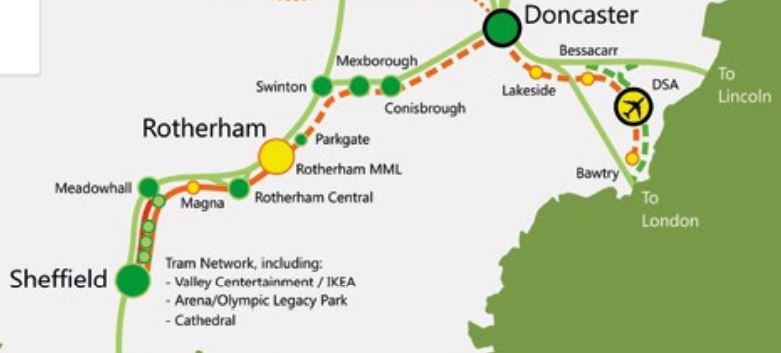
I also said this about the tram-trains.
The distance between Rotherham Parkgate and Doncaster is under twelve miles and has full electrification at both ends.
The Class 399 tram-trains being built with a battery capability for the South Wales Metro to be delivered in 2023, should be able to reach Doncaster.
But there are probably other good reasons to fully electrify between Doncaster and Sheffield, via Meadowhall, Rotherham Central and Rotherham Parkgate.
The major work would probably be to update Rotherham Parkgate to a through station with two platforms and a step-free footbridge.
Currently, trains take twenty-three minutes between Rotherham Central and Doncaster. This is a time, that the tram-trains would probably match.
If you adopt the normal energy consumption of between three and five kWh per vehicle mile on the section without electrification between Rotherham Parkgate and Doncaster, you get a battery size of between 108 and 180 kWh.
It looks to me, that on a quick look, a 128 kWh battery could provide a useful range for one of Stadler’s Class 398/399 tram-trains.
Class 398 Tram-Trains Between Cardiff Bay and Cardiff Queen Street Stations
The distance between these two stations is six chains over a mile,
Adding the extra bit to the flourish might make a round trip between Cardiff Queen Street and The Flourish stations perhaps four miles.
Applying the normal energy consumption of between three and five kWh per vehicle mile on the section without electrification between Cardiff Queen Street and The Flourish, would need a battery size of between 36 and 60 kWh.
Conclusion
The battery sizes seem to fit the routes well.
EU Announces ‘Clean Hydrogen Alliance’ For Launch In The Summer
The total of this post is the same as this article on Euractiv.
The title is probably fairly clear, but the article is well worth a read.
I Need Help To Get This Surface Pro Computer Working
I was always a software man and this computer is showing that up.
Any offers of help, paif for or free in the London N1 area gratefully accepted.
My First Ride In A Class 710/1 Train
I got on the Class 710/1 train at Liverpool Street station and took it as far as Bush Hill Park station, before catching it at the same station on its return from Enfield Town station.
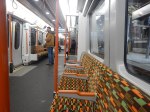
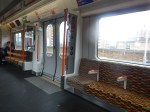
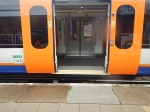
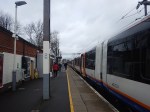
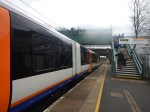
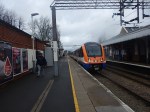

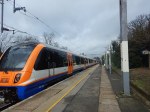


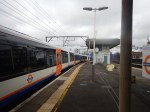

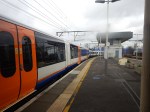

I took it as far as Hackney Downs station, from where I got a 56 bus home.
Door Control Detail
These pictures show the comprehensiveness layout of the door controls on the Class 710 train.


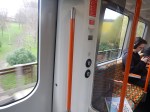

Note that there are the following controls.
- Opening and closing buttons on both sides of the door inside the cars.
- An opening button in the middle of the pair of doors, on the inside of each car.
- An opening button in the middle of the pair of doors, on the outside of each car.
All these buttons must make entry and exit through the doors faster.
 The Anonymous Widower