The Irony Of Brexit
According to Wikipedia, the third of Newton’s Laws of Motion, states this.
When one body exerts a force on a second body, the second body simultaneously exerts a force equal in magnitude and opposite in direction on the first body.
It doesn’t just apply to mechanics, but to life in general.
If a Government introduces a policy that the electorate don’t like, then the electorate reacts.
We have had marches against the Poll Tax, the War in Iraq and Universal Credit in recent decades.
At least in the UK, protests don’t get as violent as they do in some countries like France.
Over the last few weeks, we have seen a number of illegal immigrants arrive in this country in small boats sailing across the English Channel.
People aren’t stupid and these mainly Iranian nationals, are thinking that after the March 2019, it will be more or less impossible to get into the UK.
So their reaction is to cross the Channel now!
The smugglers react in the obvious way, by buying boats capable of making the journey.
In The Times today, there is an news story about an English smuggler buying a boat from a Frenchman called Pierre.
- All the legal details are carried out.
- Money changed hands (probably literally!)
- The Englishman removed the boat.
The Englishman also said he’d come back later for the trailer, but never did. Surprise Surprise! He wouldn’t need it would he!
We have the irony, that the electorate of the UK voted for Brexit partly to keep foreigners and especially those not like them out of the UK.
But because of the laws of action and reaction, they will actually increase the number of immigrants, as we’re seeing in the Channel.
Dwell Times And End Doors
Chris Stokes finishes his column in the January 2019 Edition of Modern Railways, with this paragraph.
Dwell times remain critical too. The new TransPennine units provide more seats, but have single end doors. For an operation with high numbers joining and alighting at many stops, dwell times are going to increase significantly at stations such as Manchester Victoria, Huddersfield, Leeds, Boltonand Preston, chewing up any savings in running times, and exacerbating the problems at platforms 13 and 14 at Manchester Piccadilly.
I haven’t seen a TransPennine Mark 5A coach in the flesh yet, but I’ve seen several pictures, which show each coach has single end doors.
This picture of the 100 mph Class 755 train shows the door layout is totally different.
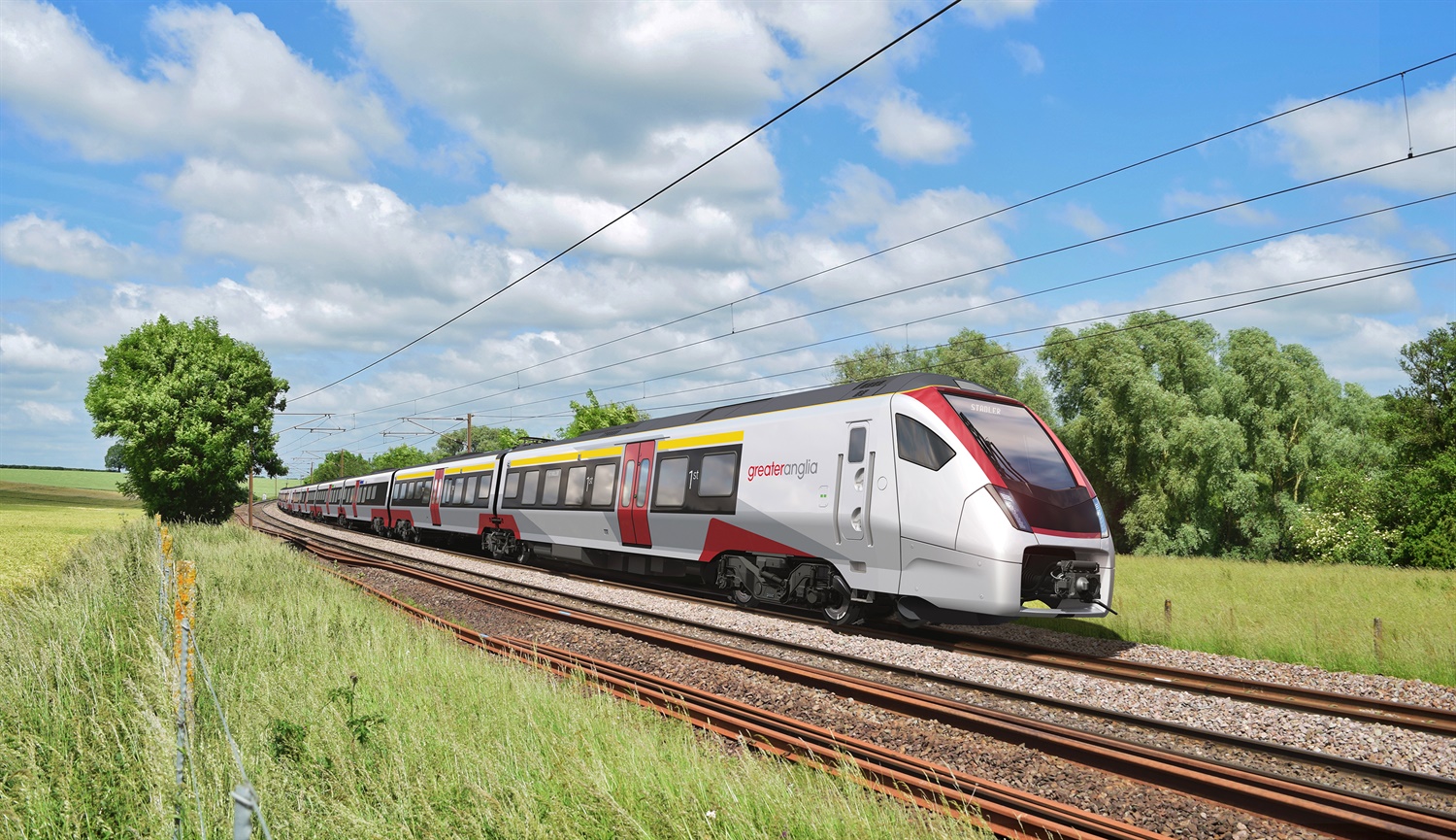
It looks like it has a single double door on each coach.
It appears that the electric Class 745 trains have more doors.
If you look at a typical Bombardier Aventra or Electrostar, Stadler Flirt or Siemens Desiro City, there are generally no end doors.
Have CAF commited a design crime of the highest order?
Or is it TransPennine’s fault?
Parking Fees Rise At Many Hospitals In 2017-18, Analysis Finds
The title of this post is the same as that of this article on the BBC.
This is the first paragraph.
Four in 10 NHS hospitals in England have increased car parking prices in the last year, new data suggests.
I don’t drive, so it doesn’t effect me and the only hospitals I’ve visited in the last few years; Addenbrooke’s, Homerton, Royal London and University College have been easily accessible by public transport.
The real scandal is that so many hospitals are not easily accessible using fully-accessible public transport.
- Addenbrooke’s has a large bus interchange, which has connections to Cambridge City Centre and at least one of the City’s large Park-and-Ride sites.
- Nottingham’s Queen’s Medical Centre has a tram connection to the large Park-and-Ride sites.
But I can think of several hospitals, where the only public transport is an expensive taxi.
I also remember a hospital administrator in London telling me, that the largest number of complaints they received was about car parking.
Iceland Crash: Three British People Including Child Killed
The title of this post is the same as this article on the BBC.
I’ve been to Iceland and thoroughly enjoyed it.
But I did all the exploring in organised tour parties, as I was advised by the tour company, that this was safer. Although, they didn’t know I couldn’t drive!
We went everywhere in large 4×4 vehicles.
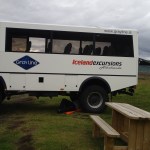
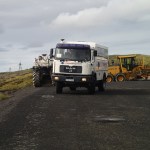
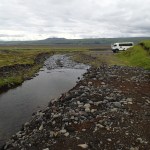


So was the party involved in the tragedy in a suitable vehicle?
Axed Rail Routes May Be Reopened Under New Department for Transport Plans
The title of this post is the same as that on this article on Sky News.
This is the first two paragraphs.
The Department for Transport has confirmed it is actively working with a number of groups to explore the possibility of reopening old rail routes, axed under the so-called Beeching cuts of the 1960s.
It follows a call by Transport Secretary Chris Grayling a year ago, encouraging those in the public and private sector to submit proposals for potential projects to regenerate old lines.
It also quotes a Department of Transport spokesman.
This is on top of exploring reopening the Northumberland Line for passenger use, supporting the reinstatement of stations on the Camp Hill Line, developing new rail links to Heathrow and a new station at Cambridge South
He apparently, didn’t say more because of confidentiality.
The article then talks about the success of the Borders Railway in Scotland.
So is this just a good news story for Christmas or is there a plan to reopen old railway lines?
I feel that a several factors are coming together, that make the reopening of railway lines and the creation of new ones more likely.
Digital Signalling
Signalling is expensive, but where you have rolling stock to a high modern standard, with digital in-cab signalling, does this mean that new or reopened rail lines can be built without conventional signalling?
In addition, installing digital signalling on some routes, would probably make it easier to add a new station. Surely, it must just be a reprogramming of the route!
It could be a problem that, I would expect that on a digitally-signalled line, all trains must be capable of using it. But in many areas of the country, like East Anglia, these routes will be run by new trains.
Digital signalling must also make it easier to design more efficient single-track railways, with perhaps a passing loop to allow higher frequencies.
More Efficient Track Construction
Network Rail and their contractors and suppliers are getting better and more efficient at building track and bridges through difficult terrain and places, judging by some of their construction in recent years, such as the Acton Dive-Under and the Ordsall Chord. They have also overseen some notable successes in the refurbishment of viaducts and tunnels.
It should also be noted that the reopening of the Borders Railway was a successful project in terms of the engineering and was completed on budget and on time.
According to Wikipedia, though there was criticism of the infrastructure.
This is said.
The line’s construction has been described as resembling a “basic railway” built to a tight budget and incorporating a number of cost-saving features, such as using elderly two-carriage diesel trains and running the line as single track.
But looking back on the line from over three years since it opened, it has certainly been judged by many to be an undoubted success.
Would it have had the same level of success, if it had been built as a double-track electrified railway?
Single-Track Lines
The Borders Railway is a good example of an efficient single-track railway, that runs a half-hourly service.
Other routes like the East Suffolk Line and the Felixstowe Branch Line, show how good design can handle more than the most basic levels of traffic, with perhaps selective double track or a well-placed passing loop.
They may be dismissed by rail purists as basic railways, but when well-designed, they are able to provide the service that is needed along the route, for a construction cost that is affordable.
I would though advocate, that if a new single-track railway is built, that provision is made where possible to be able to add the second track. But not at too great an expense or to provide a service level that will never be needed.
I believe that good design of a new railway can cut the construction cost by a fair amount.
Single-Platform Stations
Several of the new stations built in recent years have been stations with only a single-platform.
- Cranbrook – A station in Devon on the West of England Main Line to serve a new housing development.
- Ebbw Vale Parkway – A parkway station in Ebbw Vale.
- Galashiels – A station, that handled 356,000 passengers last year. It is a unique station on a narrow site, that shares facilities with a large bus station on the other side of the road. It is a very functional transport interchange.
- James Cook – A basic but practical station, that serves the hospital in Middlesbrough. – It cost just over £2million in 2014.
- Newcourt – A £4million station handling over 100,000 passengers per year.
- Pye Corner – A basic station in Newport handling nearly 100,000 passengers per year.
The stations have several common characteristics.
- They can all handle at least a four-car train.
- The single-platform is used for services in both directions.
- Disabled access is either level or by a gently-sloping ramp.
Only James Cook station has a footbridge over the track.
These single-platform stations must cost less, as for instance a footbridge with lifts costs upwards of a million pounds.
Note that of the nine stations on the Borders Railway only three have two platforms.
Single-Platform Terminal Stations
There are also several terminal stations in the UK with only one platform.
- Aberdare – Handling over 500,000 passengers per year.
- Aberystwyth – Handling around 300,000 passengers per year.
- Alloa – Handling around 400,000 passengers per year.
- Aylesbury Vale Parkway – Handling over 100,000 passengers per year.
- Blackpool South – Handling over 100,000 passengers per year.
- Exmouth – Handling nearly a million passengers per year.
- Felixstowe – Handling around 200,000 passengers per year.
- Henley-on-Thames – Handling around 800,000 passengers per year.
- Marlow – Handling nearly 300,000 passengers per year.
- Merthyr Tydfil – Handling around 500,000 passengers per year.
- North Berwick – Handling around 600,000 passengers per year.
- Redditch– Handling over a million passengers per year.
- Seaford – Handling over 500,000 passengers per year.
- Shepperton – Handling around 400,000 passengers per year.
- Sheringham – Handling around 200,000 passengers per year.
- Walton-on-the-Naze – Handing around 130,000 passengers per year
- Windsor & Eton Central – Handling nearly two million passengers per year.
Many of these stations have only a single hourly train. whereas Redditch and Windsor & Eton Central stations have three trains per hour (tph).
As a single terminal platform can probably handle four tph, I suspect that most terminals for branch lines could be built with just a single platform.
No Electrification
Chris Grayling has said that the East West Rail Link will be built without electrification.
I wasn’t surprised.
- Network Rail has a very poor performance in installing electrification.
- There have been complaints about the visual intrusion of the overhead gantries.
- Electrification can cause major disruption to road traffic during installation, as bridges over the railway have to be raised.
In addition, I’ve been following alternative forms of low- or zero-carbon forms of train and feel they could offer a viable alternative
Bi-Mode, Hydrogen And Battery-Electric Trains
When the Borders Railway was reopened, unless the line had been electrified, it had to be run using diesel trains.
But in the intervening three years, rolling stock has developed and now a new or reopened railway doesn’t have to be electrified to be substantially served by electric trains.
- Bi-Mode trains are able to run on both diesel and electric power and Hitachi’s Class 800 trains are successfully in service. They will be shortly joined by Porterbrook’s innovative Class 769 trains.
- Hydrogen-powered trains have already entered service in Germany and they are being developed for the UK.
- Battery-electric trains have already been successfully demonstrated in the UK and will enter service in the next few years.
All of these types of train, will be able to run on a new railway line without electrification.
Bi-mode trains are only low-carbon on non-electrified lines, whereas the other trains are zero-carbon.
The trains on the Borders Railway must be prime candidates for replacement with hydrogen-powered or battery-electric trains.
Adding It All Up
Adding up the factors I have covered in this section leads me to conclude that rail developments over the last few years have made it possible to create a new railway line with the following characteristics.
- An efficient mainly single-track layout.
- Single-platform stations.
- A single-platform terminal station capable of handling well upwards of a million passengers per year.
- Service levels of up to four trains per hour.
- Zero-carbon operation without electrification.
- Low levels of visual and noise intrusion.
The new railway will also be delivered at a lower cost and without major disruption to surrounding road and rail routes.
The Need For More Housing And Other Developments
There is a very large demand for new housing and other developments all over the UK.
Several proposed rail projects are about connecting new developments with the rail network.
In London Overground Extension To Barking Riverside Gets Go Ahead, I listed a few developments in London, where developers and their financial backers, were prepared to put up around £20,000 for each house to fund decent rail-based transport links.
Obviously, developments in London are expensive, but with all the new developments, that have been built close to stations in the last few years, I suspect that infrastructure financiers. like Legal and General and Aviva, know how much being by a rail station is worth.
Conclusion
Both public and private infrastructure financiers will take advantage of the good railway and rolling stock engineering, which will mean the necessary rail links to new developments will be more affordable and zero-carbon.
I Don’t Wrap Christmas Presents Traditionally!
I don’t give many presents, as I only have three relatives, who I’m in contact with.
These are the presents all lined up on Christmas Day, before taking them to Christmas lunch!

The drawstring bags are bought on-line from The Clever Baggers.
The larger pink ones are just £0.72, which is probably cheaper than traditional wrapping paper.
Putting the presents into a bag and pulling the string is probably a lot easier, especially if you have a gammy hand, as I sometimes do!
They would also be ideal in a family with lots of children, as each could have their own colour.
As I nearly ran out of bags this Christmas, I have just placed an order to replenish my stock.
Plastic Bag Fee ‘To Double To 10p’ And Include Every Shop
The title of this post is the same as that of this article on the BBC.
This is the guts of the story.
The 5p fee for plastic carrier bags in England will be doubled to 10p, and extended to all shops, under plans set out by the environment secretary.
The change is contained in a government consultation aimed at further reducing the plastic used by consumers and could come into effect in January 2020.
Smaller retailers, who are exempt from the current levy, supply an estimated 3.6 billion single-use bags annually.
I’m all for this, if it cuts down the amount of plastic, that blows around the country, before ending up in the seas.
This is the bag I use.

Note.
- It folds up, so that it first into my man-bag.
- It easily holds two days of my food shopping.
- The handles re very comfortable, even when carrying eight bottles of beer.
- I’ve had it over a year now and it is finally showing the odd sign of wear.
- It is big enough to hold a copy of the Sunday Times without folding.
It did cost be five pounds from M & S, but how much have I saved on five pence bags?
It is not a perfect bag, but it is a good start.
Other things, in the same vein, that I’d like to see.
- A charge on takeaway food, especially pizza boxes, which seem to end up in front of my house.
- A fine for piling household and commercial waste around litter bins, which is very prevalent in this area, despite council camnpaigns to stop it.
- Remove the foxes back to the countryside, so they don’t spread the rubbish all over the street.
As to the latter, foxes seem to have eaten most of the cats, hedgehogs and birds, so it is their only way to get food.
The Concept Of Hybrid Banking
I have been writing about hybrid trains and locomotives recently.
In Hybrid Power On The Railways, I summarised the current state of development, with brief descriptions of the current hybrid trains and locomotives.
This was my conclusion.
Just as hybrid cars are becoming more numerous, I suspect we’ll be seeing more hybrid trains in the future.
So can hybrid principles be applied to other industries and processes?
A Standard Hybrid Process
In my opinion, one of the best hybrid systems is the transmission of London’s New Routemaster bus. This description of the drive-train is from Wikipedia.
The bus is a hybrid diesel-electric driven by a battery-powered electric motor, charged by a diesel fuelled generator and recovering energy during braking by regenerative braking.
It is a classic serial hybrid vehicle.
Energy is collected in the battery from the diesel generator and regenerative braking and the battery powers the bus.
Hybrid Banking
Could a bank account be designed on similar principles?
- Money would be collected and stored in a deposit account, where it would earn interest.
- There would be a wallet or current account, where sufficient money is available to pay bills expected.
I also believe that just as in the bus, there would be a clever control algorithm, that made sure money was in the right place.
- To pay bills.
- Earn maximum interest payments.
- Avoid charges for going overdrawn.
Many would believe, I’m asking for the impossible.
But!
Zopa Or Another Peer-To-Peer Lender As A High Interest Deposit Account
I use Zopa to store my excess cash.
I just add money, when I have spare.
Zopa’s computer decides, who I lend it to, so it’s effectively deposit-and-forget.
Since, I started investing I have earned returns of around five per cent before tax.
Any irrecoverable debts are now allowed against earnings.
But the unique property of Zopa and probably some other peer-to-peer lenders, is that each month a certain amount of money becomes available for reinvestment or withdrawal.
These figures show the percentage of money, I’ve had available in the last few months.
- May 2018 – 7.5%
- April 2019 – 6.0%
- March 2019 – 5.7%
- February 2019 – 5.6%
- January 2019 – 6.1%
- December 2018 – 4.7%
- November 2018 – 6.9%
- October 2018 – 7.1%
- September 2018 – 6.7%
- August 2018 – 7.5%
- July 2018 – 6.8%
So it looks like for a mature Zopa portfolio, around 6-7 percent is available for reinvestment or withdrawal.
If like me, you have tax bills to pay at various times of the year, you might sometimes take the latter option, as I do!
But if you do withdraw money, your ratio will change.
It should also be noted that a high proportion of Zopa contracts make payments on or around the first of the month. So lenders can get a sizeable payment in the first few days of a month. All very handy!
Nationwide Or Any Other Bank Account As A Wallet
I use Nationwide as my bank current account, transferring money between Nationwide and Zopa as required.
I also have a sensible agreed overdraft limit, which gives me an extra amount of flexibility. I think it’s only been used twice in the last couple of years at tax payment time.
As the overdraft limit is lower than the minimum amount of money, I’ll be able to withdraw from Zopa in a month, I know that if I use the overdraft, I should be able to repay it quickly.
The Control Philosophy
I don’t use a computer to work through the control philosophy, but I can use the brain I was born with.
By about the twentieth of the month, I can see the state of my finances and generally know, whether my pension will cover my expenses for the next month or so, or if I need some help.
So when the Zopa payments kick in around the turn of the month, I withdraw what I think I’ll need.
If I draw out too much, then around the twelth or so, I put any surplus back into Zopa.
A Hybrid System
I believe that what I have described works in a similar way, as a typical hybrid drive system for a bus, train or car.
- Zopa backs up the bank account and provides extra finance when needed. This is a similar function to the traction battery in a hybrid vehicle
- The agreed overdraft facility is there if any extra short term finance is needed. It has a function similar to capacitors in a hybrid vehicle, where they are used to provide a fast smoothing response.
Imagine an on-line banking system, which used artificial intelligence to calculate how much extra money is needed each month and transfer money to and from Zopa accordingly.
Crossrail’s Latest Issues Begs The Question, How Do We Judge Success In Transport Megaprojects?
The title of this post is the same as this article on Forbes.
The article makes some interesting points about transport megaprojects. It is definitely a must-read.
As an example of a megaproject that went wrong, it cites the Channel Tunnel, which exceeded its budget by 80%, required refinancing and then Eurostar only carried a third of forecast traffic.
This article on the BBC, which is entitled How Eurotunnel Went So Wrong, gives the full story of the Channel Tunnel finances.
So should it now be closed? Obviously not, as the alternatives of driving and flying would create a lot more unwanted carbon dioxide and would need more motorways and airports.
The benefits of building Crossrail, such as increasing the capacity of London’s transport system, reducing congestion in Central London and giving better access to Canary Wharf, East London, Heathrow, The City and West London will just come in a year or so later.
The article also says that according to Oxford professor; Bent Flyvbjerg, Crossrail is suffering a 7% cost overrun, where the average for rail projects is 45%.
In my view Crossrail has suffered from a number of problems that together have caused the cost and time overruns.
- Not enough time was built into the schedule to test the sophisticated trains with their three signalling systems.
- No dedicated Crossrail test track was created, so the trains could be fully tested.
- An unfortunate transformer explosion, was a big cause of delay in testing systems.
- There were not enough workers to finish the project.
- Central London is awash with large projects, some of which became viable because of Crossrail, that are sucking up masses of workers.
- Brexit uncertainty has meant that a lot of EU workers have gone back to Europe to build projects nearer their homes.
Where was the European project supremo, who added up all the needs of these European megaprojects, to make sure, we had enough resources to build all of them on time?
 The Anonymous Widower