How Many Direct Trains Should There Be Between London Paddington And Newquay?
The Mid-Cornwall Metro will see the following improvements on the Atlantic Coast Line between Newquay and Par stations.
- A second platform built at Newquay station.
- There will be a passing loop across Treegoss Moor.
- There will be a step-free bridge at Par station.
This will allow the current service on the line to be increased from two-hourly to hourly.
FirstGroup’s services in the UK, include several services, where a service is extended to a terminus away from the main line.
- Avanti West Coast – two trains per day (tpd) to Blackpool
- Great Western Railway – six tpd to Carmarthen
- Hull Trains – five tpd to Hull.
- Hull Trains – two tpd to Beverley.
- Hull Trains (proposed) – two tpd to Worksop and Sheffield.
Given that there will only be an hourly local service on the Atlantic Coast Line, I suspect that FirstGroup will be able to run up to six tpd to Newquay to satisfy the traffic needs of the London and Newquay service.
How Will Great Western Railway Run A Service To Newquay?
Last weekend, when I went to Ebbw Vale, I wrote My Train To Wales Today Divided At Swansea.
My train, that day was a ten-car train formed of a pair of Class 800 trains.
- The front train was signed as going to Swansea.
- The rear train was signed as going to Carmarthen.
- At Swansea the trains split into two.
- The front train finished its journey.
- The rear train reversed out and continued to Carmarthen.
Returning to London Paddington, trains join at Swansea.
Will Great Western Railway use a similar operation with Newquay services.
The train would be a ten-car train formed of a pair of Class 802 trains.
- One train would be going to Plymouth and the other train to Newquay.
- At Plymouth the trains split into two.
- One train finishes its journey at Plymouth.
- The other train continues to Newquay.
As Bodmin General station, has a second platform, that was recently built with financial help from Great Western Railway, could this be another destination served by splitting a train at Plymouth?
I discuss the implications of the second platform at Bodmin General station in Beeching Reversal – Increased Service Provision Bodmin General-Bodmin Parkway
How Long Would A Round Trip Take Between Plymouth And Newquay?
Current timings are as follows.
- Plymouth to Par – 34.7 miles – 50 minutes
- Par to Newquay – 20.8 miles – 51 minutes
- Turnround at Newquay – 5 minutes
- Newquay to Par – 20.8 miles – 51 minutes
- Par to Plymouth – 34.7 miles – 50 minutes
Note.
- Times are from Class 802 trains between Par to Plymouth.
- Times are for Class 150 trains between Par and Newquay.
Total time is 207 minutes or three hours and twenty-seven minutes.
My Train To Wales Today Divided At Swansea
According to the Wikipedia entry for Great Western Railway, seven of their hourly services to Swansea now continue to Carmarthen station.
- My train was such a train, although I got off at Newport station.
- The service was formed of two five-car Class 800 trains; 800026 and 800027.
- I would assume that at Swansea, the trains will have split and the rear train will reverse and continue to Carmarthen.
- The lead train would stay in Swansea.
- I have traced the Carmarthen train on Real Time Trains and it clearly shows that the train picked up another train at Swansea as it came back to London.
All the trains involved in the splitting and joining were Class 800 trains.
The splitting and joining at Swansea means the following.
- There is a ten-car train between London and Swansea, which will give maximum capacity to and from the rugby at Cardiff.
- There is a five-car train between Swansea and Carmarthen, which doesn’t need the capacity of a ten-car train.
This is probably a more efficient use of trains and it maximises capacity to and from Cardiff, in both directions.
Is this splitting and joining at Swansea, the first regular use of the technique in service with Class 800 trains?
This YouTube video shows the station displays at Reding, when a Swansea/Carmarthen pair go through.
FirstGroup Applies To Run New London To Sheffield Rail Service
The title of this post, is the same as that of this press release from First Group.
These four paragraphs outline FirstGroup’s initial plans.
FirstGroup plc, the leading private sector transport operator, has today submitted the first phase of an application for a new open access rail service between London and Sheffield to the Office of Rail and Road (ORR).
FirstGroup plans to expand its open access rail operations as part of its award-winning Hull Trains business, building on their successful existing service which has transformed long-distance connectivity between Hull and London.
FirstGroup’s new proposals comprise two return journeys a day from London King’s Cross, calling at Retford, Worksop, Woodhouse and Sheffield, and the company aims to provide a faster link between London and Sheffield than alternative services. Almost three quarters of trips between London and Sheffield are currently made by car, with a further 9% of trips made by coach, and a competitively priced new rail offering will help stimulate a shift in transport mode of choice from road to rail.
The new proposed route will give Sheffield the first regular service from London King’s Cross since 1968 and will also give Worksop in Nottinghamshire the first regular direct London trains in decades. FirstGroup estimates there are 350,000 people in the Worksop and Woodhouse catchment areas who will have direct rail access to London because of these proposals. A sizeable number of rail users in these areas currently drive to Doncaster station to pick up faster services to London rather than travelling via Sheffield, and a convenient rail offering from local stations will also help to reduce the number of these car journeys.
Note.
- The press release says this is only the first phase.
- It appears to be an extension of Hull Trains.
- Comments on a news story based on the press release in The Times, have been generally positive.
These are my thoughts.
The Two Routes Are Similar
Consider.
- Beverley is 44.3 miles from the electrified East Coast Main Line at Temple Hirst Junction.
- Hull is 36.1 miles from the electrified East Coast Main Line at Temple Hirst Junction.
- Sheffield is 23.5 miles from the electrified East Coast Main Line at Retford station.
- There is no electrification at Beverley, Hull or Sheffield.
Note.
- Trains must be capable of having a range sufficient to go from the East Coast Main Line to the destination and back again.
- It is slightly surprising that Sheffield station is closest to the electrification of the East Coast Main Line.
- Hull Train’s electro-diesel Class 802 trains regularly handle the 88.6 miles to Beverley and back.
It does look like an appropriate number of Class 802 trains could handle Hull Trains current and future services to Beverley, Hull and Sheffield.
Hull Trains Need Ten-Car Trains
Consider.
- In Ten-Car Hull Trains, I show some details of Hull Trains using a pair of five-car trains.
- I’ve since seen ten-car Hull Trains regularly.
- There were two ten-car services on the 29th December 2023 between London King’s Cross and Hull.
Hull Trains must procure enough trains for all possible scenarios.
Intermediate Stations Of The Two Routes
Intermediate stations are.
- Going North from London King’s Cross to Hull, trains call at Stevenage (limited), Grantham, Retford, Doncaster, Selby, Howden and Brough.
- Going North from London King’s Cross to Sheffield, trains call at Retford, Worksop and Woodhouse.
There are only a small number of stops on the Sheffield service. Is this to reduce the journey time as much as possible?
What Will Be The Time Of The London King’s Cross And Sheffield Service?
Consider.
- Non-stop trains take 82 minutes between London King’s Cross and Retford, which is 138.6 miles, so it’s an average speed of 101.4 mph.
- Woolmer Green and Retford are 111.7 miles and will in a couple of years, be digitally signalled.
- Non-stop trains take 66 minutes between Woolmer Green and Retford, which is an average speed of 112 mph.
- I have found a direct Retford and Sheffield train, that takes 31 minutes for the 23.5 miles with six stops, which is an average speed of 45 mph.
- The Retford and Sheffield section has a mostly 60 mph maximum speed.
I can now build a table of times between King’s Cross and Retford based on the average speed North of Woolmer Green.
- 125 mph – 72 minutes
- 130 mph – 70 minutes
- 135 mph – 68 minutes
- 140 mph – 66 minutes
Note.
- Getting a high average speed using the power of digital signalling can save several minutes.
- I have measured an InterCity 125 averaging 125 mph on that section.
I can now build a table of times between Retford and Sheffield based on the average speed.
- 45 mph – 31 minutes
- 50 mph – 28 minutes
- 60 mph – 24 minutes
- 70 mph – 20 minutes
- 80 mph – 18 minutes
Note.
- The planned service is expected to stop only twice after Retford, so if we take off two minutes for each of the four stops not taken, this could reduce the time between Retford and Sheffield by 8 minutes.
- There will be a couple of minutes to add for the stop at Retford.
- I feel a typical journey with 125 mph to Retford, 50 mph to Sheffield, could take 94 minutes
- Currently, the fastest London St. Pancras to Sheffield take around 116-118 minutes.
Hull Trains new service could save 22-24 minutes on the current service.
I also feel a fast journey could involve 130 mph to Retford, 60 mph to Sheffield, could take 88 minutes.
Hull Trains new service could save a few minutes over half-an-hour.
Could The Time Of The London King’s Cross And Sheffield Service Be Under 90 Minutes?
I reckon the following is possible.
- After the digital signalling is completed between King’s Cross and Retford, I suspect that a 135 mph average speed can be maintained between Woolmer Green and Retford. This would mean that a King’s Cross and Retford time of 68 minutes would be possible.
- If Network Rail improve the track between Retford and Sheffield, I believe that a 70 mph average could be achieved on the Retford and Sheffield section. This would mean that a Retford and Sheffield time of 20 minutes would be possible.
- I would expect at least six minutes would be saved by missing stops.
This gives a time of 82 minutes between London King’s Cross and Sheffield.
In Anxiety Over HS2 Eastern Leg Future, I said that High Speed Two’s promised London and Sheffield time via a dedicated track would be 87 minutes.
It looks to me that running under full digital signalling on the East Coast Main Line, Hull Trains can beat the HS2 time.
Could Hitachi’s Battery-Electric Trains Handle The Routes?
This page on the Hitachi web site is entitled Intercity Battery Trains.
This is the sub-heading
Accelerate the decarbonisation of intercity rail with batteries.
These paragraphs outline the philosophy of the design of the trains.
A quick and easy application of battery technology is to install it on existing or future Hitachi intercity trains. Hitachi Rail’s modular design means this can be done without the need to re-engineer or rebuild the train and return them to service as quickly as possible for passengers.
Replacing one diesel engine with just one battery reduces emissions by more than 20% and offers cost savings of 20-30%. Our intercity battery powered trains can cover 70km on non-electrified routes, operating at intercity speeds at the same or increased performance.
Wouldn’t it be great, if we could take the diesel engine out of our cars and replace it with an electric power pack?
Paul Daniels would’ve classed it as engineering magic.
But it’s an old engineer’s trick.
As a fifteen year old, I spent time in a rolling mill, building and fitting replacement control systems on large machines. Transistors were used to replace electronic valves and relays.
It’s certainly possible to create a battery pack, that is plug-compatible with an existing diesel generator, that responds to the same control inputs and gives the same outputs.
At the extreme end of this technology, there would be no need to change any of the train’s software.
In The Data Sheet For Hitachi Battery Electric Trains, these were my conclusions for the performance.
- The battery pack has a capacity of 750 kWh.
- A five-car train needs three battery-packs to travel 100 miles.
- A nine-car train needs five battery-packs to travel 100 miles.
- The maximum range of a five-car train with three batteries is 117 miles.
- The maximum range of a nine-car train with five batteries is 121 miles.
As the East Coast Main Line to Beverley is a round trip is 88.6 miles, I suspect that Hull Trains’s five-car Class 802 trains will need to be fitted with a full-complement of three batteries.
Will Hull Trains Have An Identical Fleet Of Trains?
An identical fleet must have advantages for train staff, maintenance staff and above all passengers.
I believe FirstGroup have two choices.
- They buy an appropriately-sized batch of identical Class 802 trains.
- They convert their current fleet to battery-electric operation and buy an appropriately-sized batch of identical new trains.
Note.
- The second option means that they fully-decarbonise Hull Trains.
- Neither option would need any new infrastructure.
- I feel this means that this order is more likely to go to Hitachi.
It’ll probably all come down to the accountants.
Retford Station
This OpenRailwayMap shows the tracks around Retford station.
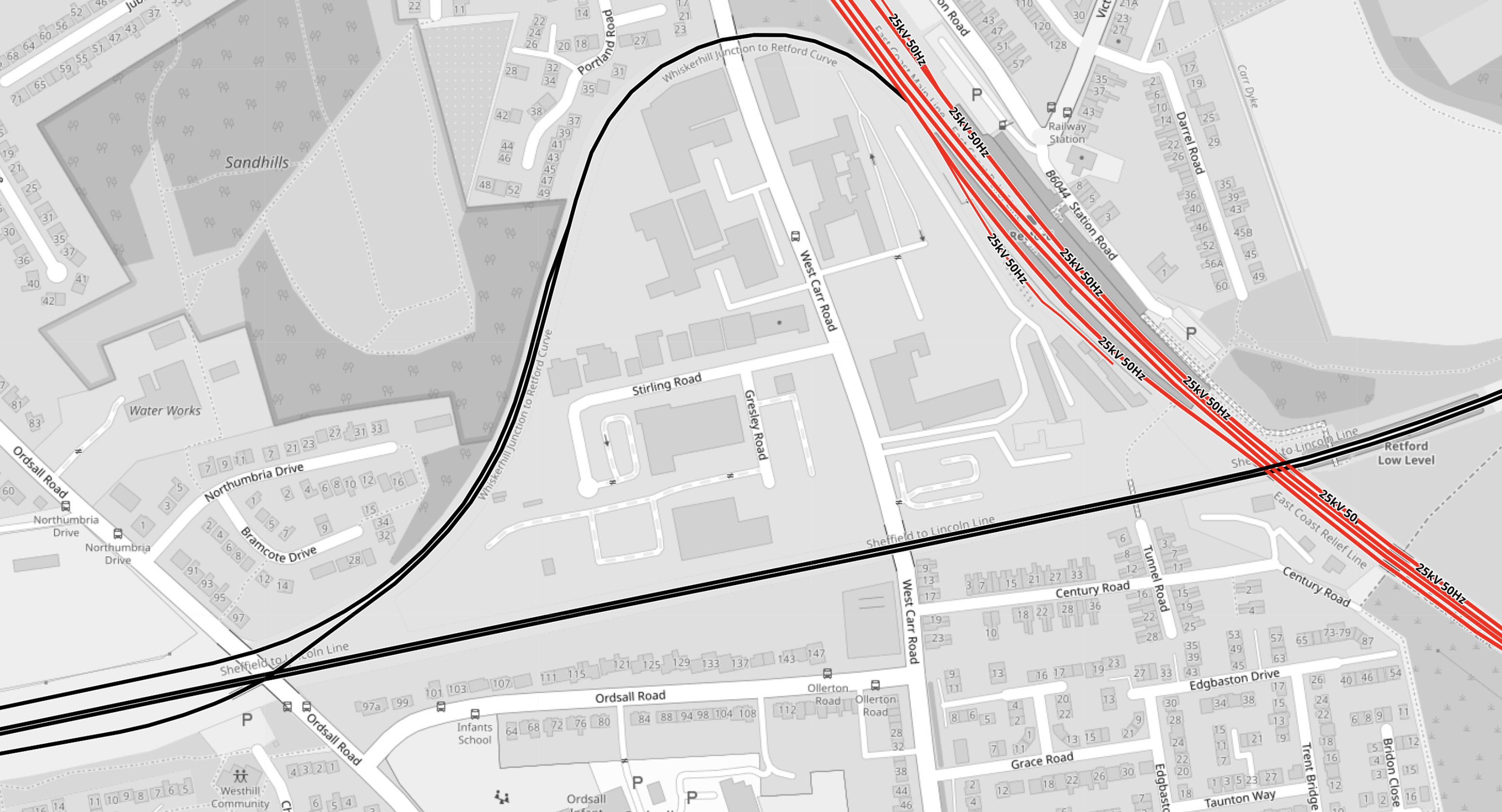
Note.
- The red tracks are electrified and are the East Coast Main Line.
- The black ones aren’t electrified.
- Doncaster is to the North.
- The black line to the East goes to Lincoln
- The black line to the West goes to Sheffield
- The red line going South-East goes to Peterborough and London.
The unusual loop allows trains to connect from one direction to another.
This second OpenRailwayMap shows the tracks in more detail.
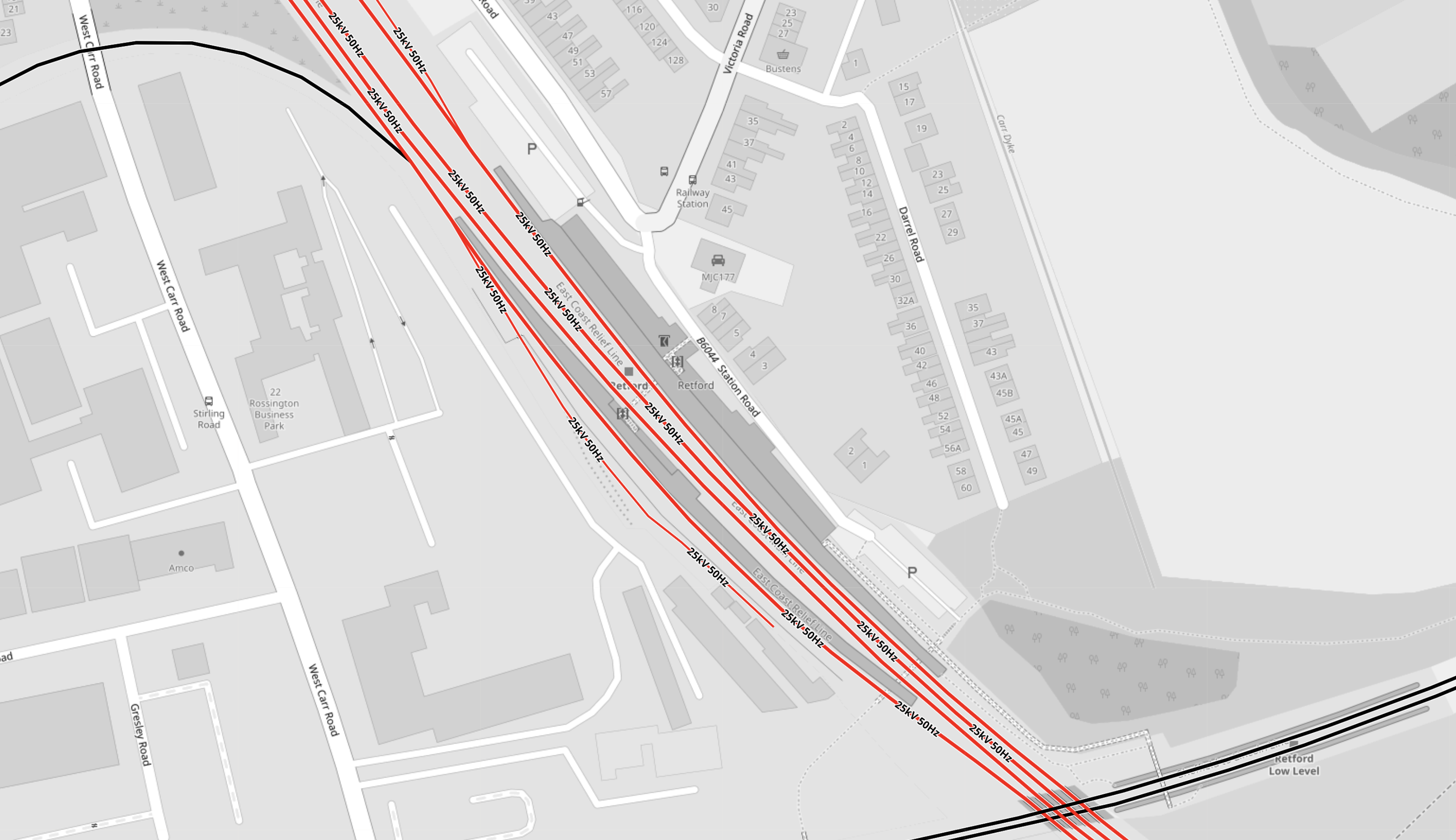
Note.
- As before red lines are electrified and black ones aren’t
- Platforms 1 and 2 are on the East Coast Main Line.
- Platforms 3 and 4 are on the Sheffield and Lincoln Line.
This third OpenRailwayMap shows the platforms in more detail.

Note.
- The yellow tracks are the 125 mph fast lines of the East Coast Main Line.
- The light blue tracks are the 40 mph relief lines of the East Coast Main Line.
- Northbound tracks are to the left of each pair of lines.
- The dark blue track is the 10 mph chord that connects the Northbound relief line of the East Coast Main Line to the Sheffield and Lincoln Line.
- Platform 1 is on the Southbound relief line.
- Platform 2 is on the Northbound relief line.
- Unusually, both platforms are on the same side of the line.
- In The Lengths Of Hitachi Class 800/801/802 Trains, I state that the full length of an InterCity 225 train is 245.2 metres.
- I suspect that both platforms can accommodate a full length InterCity 225, as the trains have been calling at Retford since the 1980s.
I doubt Retford station has any problem accommodating a pair of Class 802 trains, which it does regularly.
How Do Northbound Trains Go To Sheffield From Retford Station?
This OpenRailwayMap shows the tracks to the South of Retford station in detail.
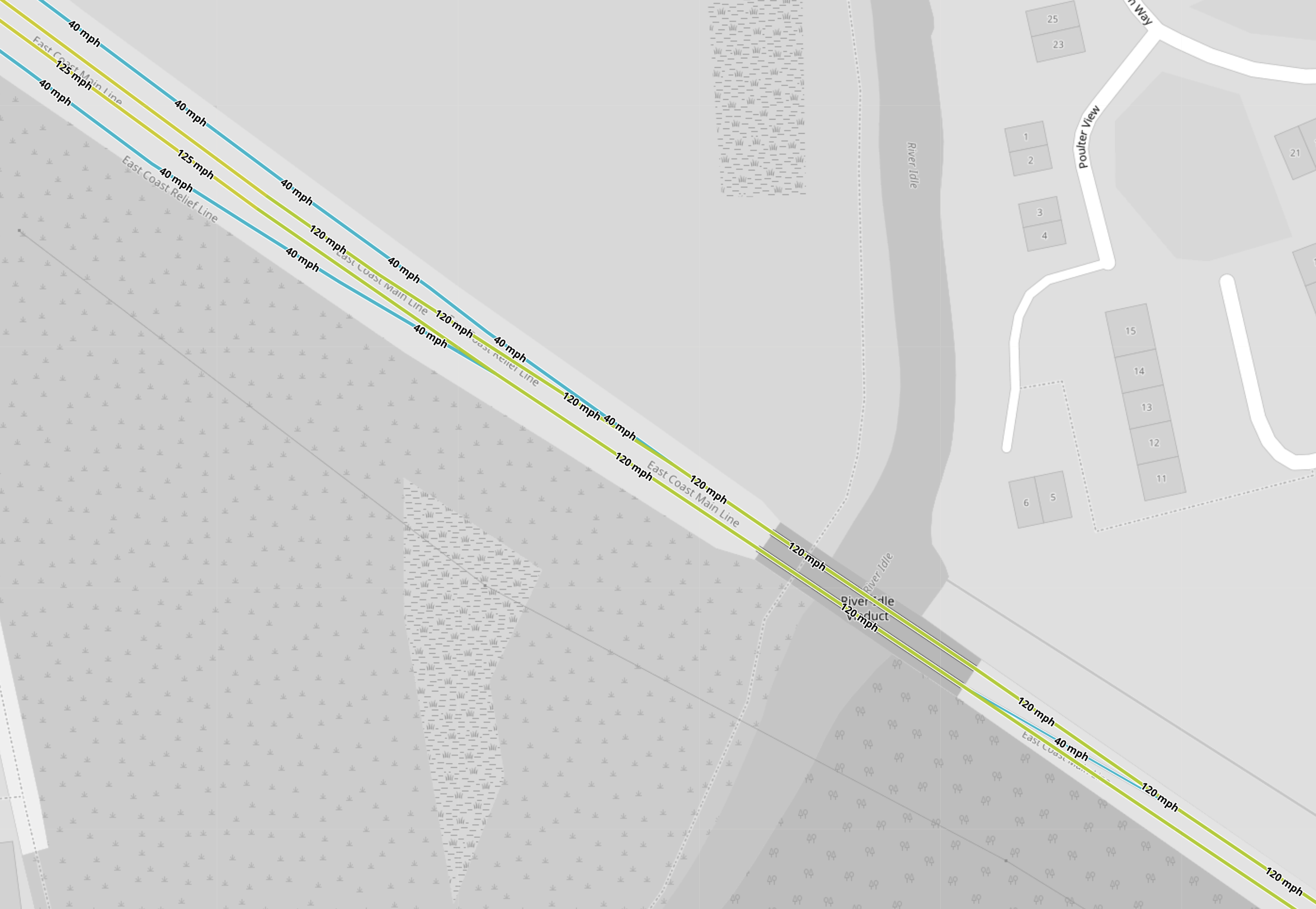
Note.
- The yellow tracks are the 125 mph fast lines of the East Coast Main Line.
- The light blue tracks are the 40 mph relief lines of the East Coast Main Line.
- Northbound tracks are to the left of each pair of lines.
Trains needing to stop in Retford station will need to cross to the Northbound relief line to enter Platform 2 at Retford station.
This OpenRailwayMap shows the curve that connects Platform 2 at Retford station to the Sheffield and Lincoln Line to Sheffield.

Note.
- The green tracks are the 60 mph Sheffield and Lincoln Line.
- Sheffield is to the West.
- The blue tracks are the curve that connects Platform 2 in Retford station to the Sheffield and Lincoln Line.
- There appears to be a grade-separated junction, where the two lines join to the West of Retford station.
A Northbound train to Sheffield will take curve and then join the line to Sheffield.
How Do Southbound Trains Go From Sheffield Through Retford Station?
I suspect trains do the opposite from a train going to Sheffield.
The train takes the curve and then stops in Platform 2 facing South.
This OpenRailwayMap shows the tracks to the South of Retford station in detail.
When the train is cleared by the signals to go South, it will leave Retford station going South on the Northbound relief line.
Note that on the map there are two crossovers, which the train will take to get on the Southbound fast line for Newark and London.
As a Control Engineer, I suspect this is the sort of manoeuvre, that modern digital signalling will make slicker and safer.
How Do Northbound Trains Go To Hull From Retford Station?
On leaving the station, the train will continue along the relief line until it merges with the Northbound fast line for Doncaster.
This is exactly as any Northbound train stopping at Retford does now.
How Do Southbound Trains Go From Hull Through Retford Station?
Currently, trains from Hull stop in Platform 1 on their way to London.
- Trains needing to stop in Retford station will need to cross to the Southbound relief line to enter Platform 1 at Retford station.
- When the train is cleared by the signals to go South, it will leave Retford station going South on the Southbound relief line.
- The Southbound relief line joins the Southbound fast line to the South of the station.
This is exactly as any Southbound train stopping at Retford does now.
Could A Hull And A Sheffield Service Run As A Pair And Split And Join At Retford Station?
Consider.
- Class 802 trains, as used by Hull Trains are designed to be run as a pair of trains, with easy coupling and uncoupling between the two trains.
- Hull Trains regularly run services as a pair of Class 802 trains.
- A pair of trains could leave King’s Cross. They would then split at a convenient station, after which the two trains go to different destinations.
- There are advantages with respect to infrastructure charges.
I feel that Hull Trains two services to Sheffield and Hull/Beverley could work as a pair.
- A pair of trains could leave King’s Cross.
- At Retford station they would split, with one train going to Hull and the other to Sheffield.
Coming South they would join at Retford.
How Would Splitting Of A Hull And Sheffield Service Be Performed At Retford Station?
The procedure would be something like this.
- As the pair of train is stopping in Retford station, it would use the relief line to enter Platform 2.
- It would stop in Platform 2.
- The trains would be uncoupled.
- The front train would go to its destination.
- The rear train would go to its destination.
Note.
- As the track to Doncaster and Hull is faster, the front train should probably be for Hull.
- Platform 2 is electrified, so the Sheffield train could top up its batteries .
- The Sheffield train could lower its pantograph.
Uncoupling takes about two minutes.
How Would Joining Of A Hull And Sheffield Service Be Performed At Retford Station?
Consider.
- Joining would have to be performed in Platform 2, as there is no route for a train from Sheffield to access Platform 1.
- North of Retford station there are two convenient crossovers, to allow a train to cross to the Northbound relief line. There are also a couple of loops, where trains could wait.
- As this is coal-mining country, perhaps, they were part of a freight route between Sheffield and Doncaster?
But this infrastructure would allow, a train from Hull to access Platform 2 at Retford station.
As the Sheffield train can easily access Platform 2, the two trains could meet in Platform 2 and then be joined together for a run to London.
Is There A Problem With Splitting And Joining Of the Hull And Sheffield Services?
Earlier, I said these were the stops of the two services.
- Going North from London King’s Cross to Hull, trains call at Stevenage (limited), Grantham, Retford, Doncaster, Selby, Howden and Brough.
- Going North from London King’s Cross to Sheffield, trains call at Retford, Worksop and Woodhouse.
Surely, if the trains were travelling as a pair, they would need to stop at the same stations to the South of Retford.
But modern digital signalling will allow trains to run closer together, so perhaps this would be the procedure going North.
- The two trains start in the same platform at King’s Cross, with the Sheffield train in front of the Hull train.
- The two trains leave King’s Cross a safe number of minutes apart.
- At its Stevenage and Grantham stops, the Hull train will tend to increase the distance between the two trains.
- The Sheffield train would stop in Platform 2 at Retford station, so that space is left for the Hull train.
- The Hull train will stop behind the Sheffield train in Platform 2 at Retford station.
- The Sheffield train will leave when ready.
- The Hull train will leave when ready.
And this would be the procedure going South.
- The train from Sheffield would line up in Platform 2 at Retford station.
- The train from Hull would line up in Platform 1 at Retford station.
- The train from Sheffield would leave when everything is ready and the train is cleared by the signalling system.
- The train from Hull would leave a safe number of minutes behind the train from Sheffield.
- At its Grantham and Stevenage stops, the Hull train will tend to increase the distance between the two trains.
- The trains could share a platform at King’s Cross.
The digital signalling and the driver’s Mark 1 eyeballs will keep the Hull train, a safe distance behind the faster Sheffield train.
The Capacity Of The Lincoln And Sheffield Line
Looking at the Sheffield and Lincoln Line, it has only an hourly train, that calls at Darnall, Woodhouse, Kiverton Park, Kiverton Bridge, Shireoaks and Worksop between Retford and Sheffield.
- I would suspect that there is enough spare capacity for Hull Trains to run a one train per two hours (tp2h) service between London King’s Cross and Sheffield.
- If LNER feel that a 1 tp2h frequency is viable for Harrogate, Lincoln and other places, surely Hull and East Sheffield could support a similar service from King’s Cross.
If the services could be run by battery-electric trains, capable of running at 140 mph on the East Coast Main Line and giving times of ninety minutes to Sheffield, this could be a success.
Could Woodhouse Station Become A Transport Hub?
This Google Map shows Woodhouse station.
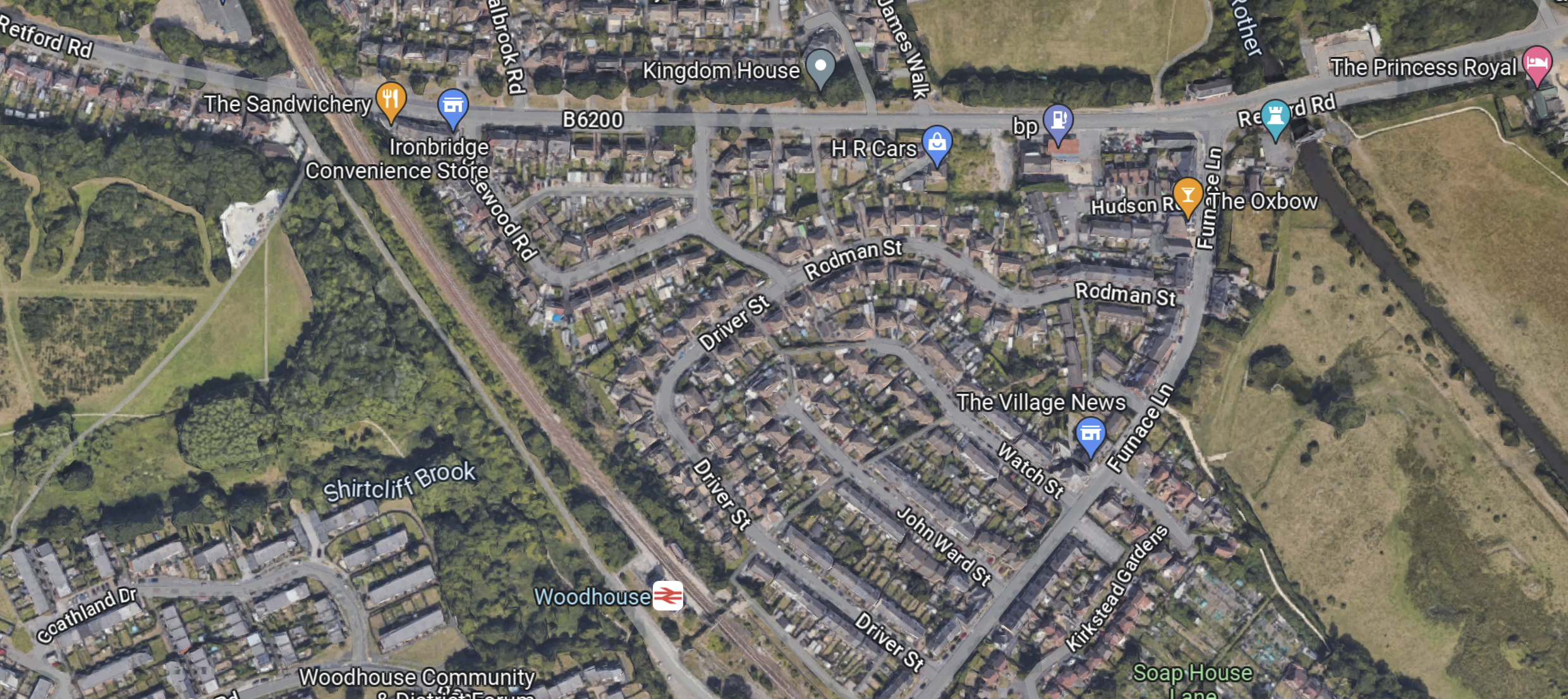
Note.
- It is certainly surrounded by a lot of houses.
- Could it be provided with car-parking?
Although, as this picture shows it is not blessed with lots of facilities.
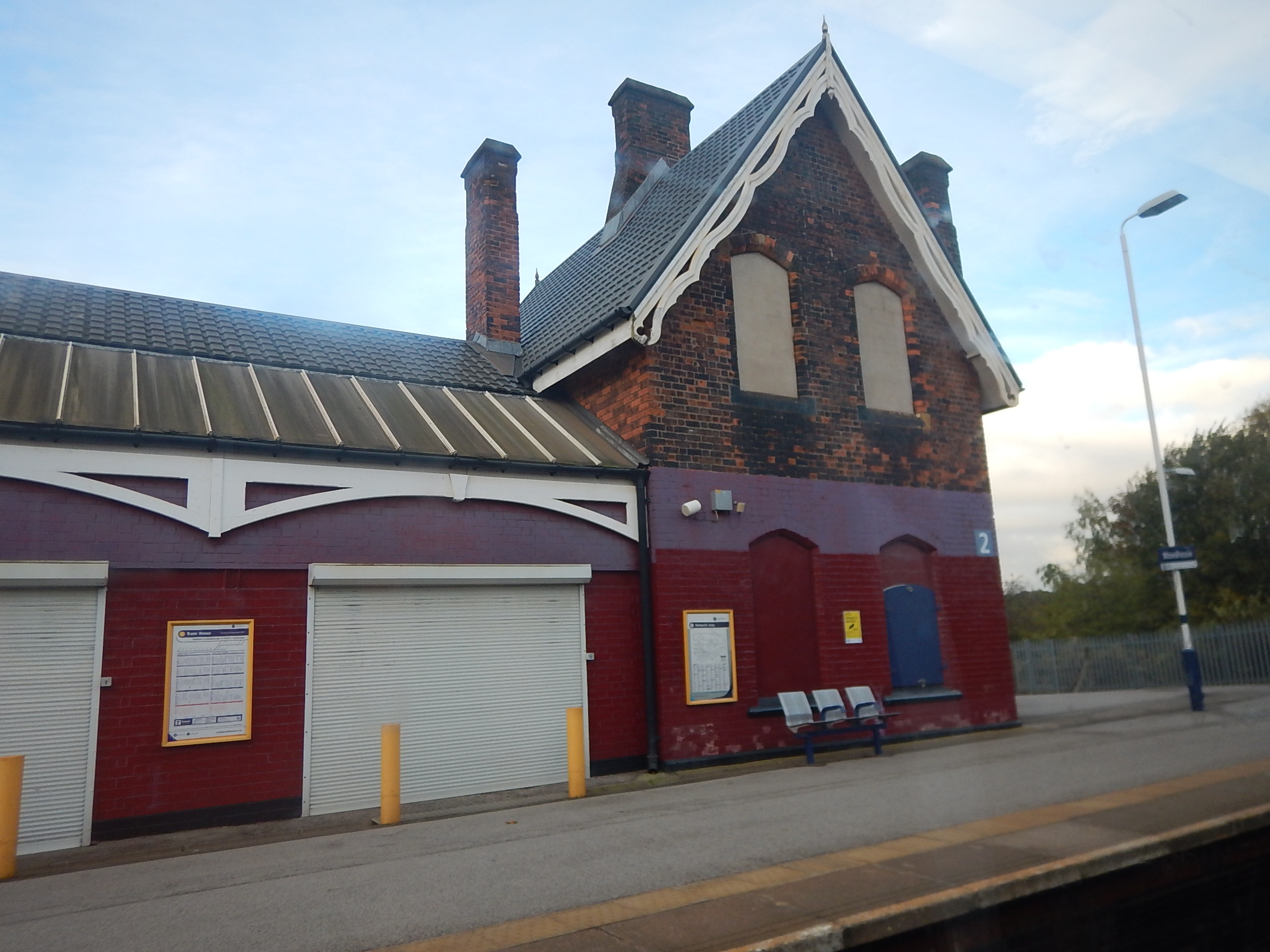
But.
- The station is in an area, which Sheffield want to develop.
- The Advanced Manufacturing Centre is nearby.
- There are aspirations to run a tram-train between Sheffield and Chesterfield via Darnall, Woodhouse and Barrow Hill stations.
- The station could be on the tram-train route to Stocksbridge, that I wrote about in Reopening The Don Valley Section Of The Former Woodhead Line Between Stocksbridge and Sheffield Victoria To Passenger Services.
Woodhouse station could be an interchange or it could become something bigger like a hub station.
How Many Sheffield Services Per Day Could Be Run?
If the Hull and Sheffield trains run as a flight under control of the digital signalling, this will mean that every Hull train can be paired with a Sheffield train.
- There are five trains per day (tpd) to and from Hull and two to and from Beverley.
- It seems a maximum of one tpd in both directions can be a ten-car train.
- Two five-car trains could fit in a platform at King’s Cross.
I suspect that the maximum number of trains per day to and from Sheffield is the same as for Hull. i.e. seven tpd.
But there is no reason, if they have enough trains and paths are available, that Hull Trains couldn’t add extra services to both destinations.
Onward From Sheffield
Several of those, who have commented on the new service have suggested that the service could go further than Sheffield, with Manchester and Leeds being given specific mentions.
This OpenRailwayMap shows the platforms at the Northern end of Sheffield station.
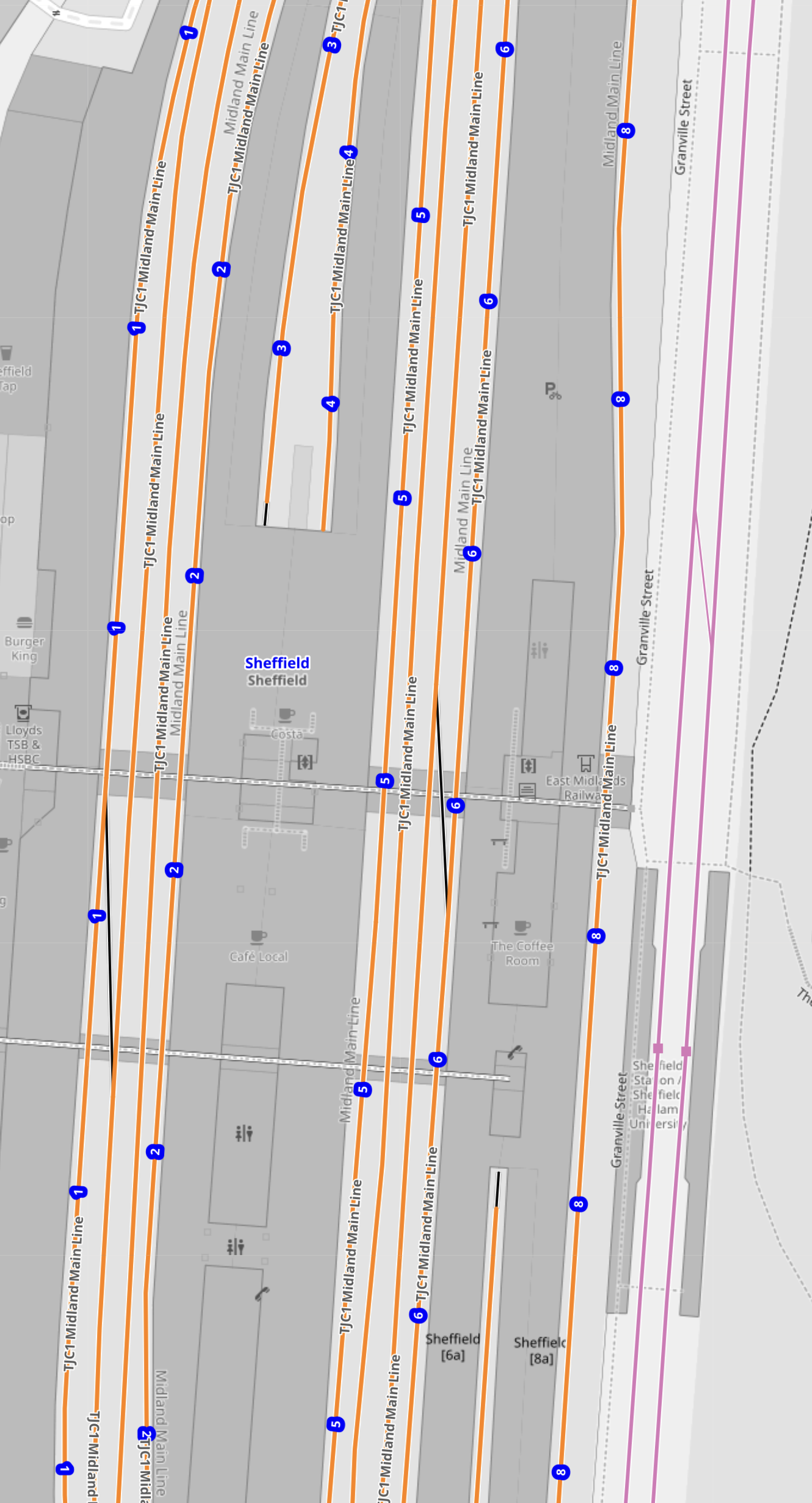
Note.
- The pink tracks at the East are the Sheffield Supertram.
- Trains to and from Barnsley, Huddersfield, Hull, Leeds, Lincoln and Retford access the station from the Northern end.
- Trains to and from Chesterfield, Derby, London, Manchester and Stockport access the station from the Southern end.
- The tracks in Sheffield station are numbered 1 to 8 from the West.
- There are five through platforms. 1, 2, 5, 6 and 8 and two bay platforms at either end.
- An extension of the service to Manchester via the Hope Valley Line, could go straight through the station.
- An extension of the service to Barnsley, Huddersfield or Leeds, would mean the train reversing at Sheffield.
It looks like an extension to Manchester Piccadilly over the recently upgraded Hope Valley Line would be the easiest extension. But would Avanti West Coast, who have FirstGroup as a shareholder want the competition?
Recently, it has been announced that the Penistone Line to Barnsley and Huddersfield will be upgraded to accept two trains per hour (tph) and allow faster running.
Because Sheffield could be around eighty minutes from London, there could be some smart times to and from the capital.
- Meadowhall in 90 minutes
- Barnsley in 112 minutes.
- Huddersfield in 140 minutes.
Huddersfield could be almost twenty minutes faster than the route via Leeds.
Comments From The Times
These are some readers comments from The Times.
- Hope the prices are competitive with LNER. I rarely go to London from Chesterfield with EMR as they’re so expensive. LNER from Newark is much cheaper but a service from Worksop for me would be perfect.
- Excellent News in so many ways. I hope it really takes off which could help ease the congestion on the M1 and also thin out overcrowding on busy LNER services. It really does deserve to succeed.
- This is excellent news. The Lumo service has been a game changer for me and those living in the north east.
The public seem in favour.
Conclusion
I really like this proposal from FirstGroup.
- It has the possibility to provide Sheffield with a fast train link to London.
- It could run about six trains per day.
- It will be faster than High Speed Two was proposed.
It could be the first service of High Speed Yorkshire.
Improving Trains Between London And Bradford
Current Services Between London And Bradford
LNER services run between Kings Cross and Bradford Forster Square stations.
- Two trains per day (tpd) run between Bradford and London in the early morning.
- Two tpd run between London and Bradford in the evening.
- Trains take two and three-quarter hours.
- Stops are at Shipley, Leeds, Wakefield Westgate, Doncaster, Retford Grantham and Stevenage.
- Trains seem to be generally a pair of five-car Class 801 trains.
Note.
- Trains reverse at Leeds.
- The timetable seems a bit lopsided, as there is no early morning train to Bradford or an evening one to London.
- Harrogate gets a one train per two hours (tp2h) service to and from London.
The timetable could do with an improvement.
Grand Central services run between Kings Cross and Bradford Interchange stations.
- Four tpd run between Bradford and London.
- Four tpd run between London and Bradford.
- Trains take three and a quarter hours.
- Stops are at Pontefract Monkhill, Wakefield Kirkgate, Mirfield, Brighouse, Halifax and Low Moor
- Trains are five-car Class 180 trains, which have seen better days.
Note.
- The timetable seems a bit lopsided, as there is no early morning train to Bradford or an evening one to London.
The timetable and the trains could do with an improvement.
LNER’s New Ticketing And Nine-Ten Car Trains
LNER have introduced the selling of Advanced Tickets from machines or the Booking Office as late as five minutes before the train leaves.
- My last three trips from Leeds to London cost me £33.55, £33.75 and £33.55 with my Senior Railcard.
- All were bought less than ten minutes before the train left.
- In two of the journeys, I spread out in two seats
- Trains were either a pair of five-car Class 801 trains or a nine-car InterCity 225.
I took these pictures after my last return from Leeds on Tuesday.

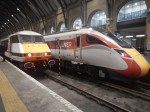
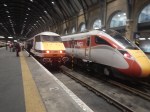
Note.
- Two of the three trains I’ve taken lately have arrived 3-4 minutes early.
- Not a great increase, but I do wonder if LNER are seeing what is possible with the new digital signalling.
- The British Rail era; InterCity 225 seems to hold its own against the new Hitachi train.
I wouldn’t be surprised that LNER intend to both run high-capacity trains between London and Leeds and fill them by competitive pricing.
A Grand Central Train Failure On Tuesday
This was my journey to Bradford on Tuesday,
- I was supposed to take the 1057 Grand Central service to Bradford Interchange, where it was timed to arrive at 1400.
- But the train didn’t run and we were all advised to get on the 1103 to Leeds and change at Doncaster.
- We arrived at Doncaster in Platform 4, a minute late at 1240 and got straight on a Grand Central train in the opposite Platform 6.
- We left Doncaster at 1251, which was sixteen minutes late.
- But we arrived in Bradford Interchange more or less on time at 1401.
Despite leaving six minutes late from Kings Cross and changing trains at Doncaster, we arrived at Bradford on time.
Battery-Electric Trains Between London and Bradford Interchange
I feel that my journey on Tuesday indicated.
- Electric trains between London and Doncaster can easily meet the current timetable.
- The Grand Central train went between Doncaster and Bradford Interchange was sixteen minutes faster than the timetable.
I wouldn’t be surprised that London and Bradford Interchange could be a few minutes under three hours.
Consider.
- It has been said that between Bradford Interchange and Leeds will be electrified.
- Bradford Interchange and Doncaster does not have electrification, but is only 52 miles.
- Electrification of Bradford Interchange station, will allow battery-electric trains to be charged in around 10-12 minutes.
- Most inter-city battery-electric trains have a battery range of at least eighty miles.
- Digital signalling is being installed between London and Doncaster to allow 140 mph running and more trains in the timetable.
I believe that a battery-electric train with sufficient range, charging South of Doncaster and at Bradford Interchange could go between London and Bradford Interchange in 5-10 minutes under three hours.
Bradford Interchange and all the other stations North of Doncaster on the route could probably also have a one tp2h service to and from London and the South.
Splitting And Joining Of Trains
Consider.
- Pairs of the Hitachi Class 801 trains have the ability to split and join en route, during a station stop extended by a few minutes.
- Platforms are long enough to handle splitting and joining at Doncaster, Leeds and York.
- Currently, three services to and from London go past Leeds; Bradford Forster Square, Harrogate and Skipton. All these services reverse in Leeds station, when they pass through.
- The reversing in Leeds station takes about 8-9 minutes.
- The track between Leeds and Bradford Forster Square is electrified.
- Leeds and Harrogate is not electrified and is 19.3 miles.
- The track between Leeds and Skipton is electrified.
- Bradford Forster Square has a service of two tpd.
- Harrogate has a service of one tp2h.
- Skipton has a service of one tpd.
In the Wikipedia entry for LNER, this is said.
From December 2019, LNER introduced a Harrogate to London service six times a day. LNER expected to introduce two-hourly services to Bradford and a daily service to Huddersfield by May 2020 when more Azuma trains had been introduced, however the latter has not yet been introduced.
Note.
- The Huddersfield service would have to reverse in Leeds station, like those to Bradford Forster Square, Harrogate and Skipton.
- Leeds and Huddersfield is not electrified and is 17.1 miles.
- Leeds and Huddersfield is being electrified.
Could LNER’s plan be to give Bradford Forster Square, Harrogate, Huddersfield and Skipton stations a two-hourly service , as the Wikipedia extract indicated, they intend to do for Bradford?
- All trains enter and leave Leeds to and from the West.
- Pairs of five-car trains would split and join at Leeds.
- Bradford Forster Square and Skipton services would be served by electric trains.
- Harrogate and Huddersfield services would be served by bi-mode or battery-electric trains.
- Horsforth, Keighley and Shipley could also get a one tp2h service to London.
It looks like services via Leeds could be much improved.
In a two-hour period the Leeds area will have the following trains to and from London Kings Cross.
- Two trains between London and Leeds via Peterborough, Doncaster and Wakefield Westgate
- One train between London and Bradford Forster Square via Stevenage, Grantham, Retford (Bradford-bound only), Doncaster, Wakefield Westgate, Leeds and Shipley.
- One train between London and Harrogate via Stevenage, Grantham, Doncaster, Wakefield Westgate, Leeds and Horsforth
- One train between London and Huddersfield via Stevenage, Grantham, Doncaster, Wakefield Westgate and Leeds
- One train between London and Skipton via Peterborough, Newark Northgate, Doncaster, Wakefield Westgate, Leeds, Shipley (London-bound only) and Keighley.
Note.
- Stops between London and Leeds would be adjusted to satisfy passenger numbers.
- Currently, there are a total of four trains in a two hour period.
- Six trains will be fitted in by having two London and Leeds trains and two pairs of five-car trains, that joined and split at Leeds.
There is still only four train paths needed in a two hour period between London and Leeds.
Digital Signalling Between London And Doncaster
The East Coast Digital Programme has its own web site, which gives this introduction to the programme.
The East Coast Digital Programme is delivering the next generation of train travel – creating a better performing East Coast Main Line for passengers and everyone else who uses and depends on it.
As part of the programme, traditional lineside signals will be removed and replaced with state-of the art digital signalling to improve the reliability of the train service.
The new technology continuously communicates with each train, providing signalling information directly to a computer screen in the driver’s cab. It boosts reliability, reduces carbon emissions and provides a more punctual service for customers.
In the first stage, digital signalling will be introduced on the Northern City Line, between Finsbury Park and Moorgate. It will then be progressively rolled out on the southern section of the East Coast Main Line (between London King’s Cross and the Stoke Tunnels, near Grantham).
It is expected that the first trains to operate on the East Coast Main Line using digital signalling technology will run in 2025, with all improvements expected to be completed by the end of the decade.
As a result of this programme, the East Coast Main Line will be GB’s first intercity mainline to be upgraded to digital. It lays the foundation for further improvements across the network, creating a more efficient railway fit for the future.
There is also a video.
Benefits of digital signalling will include.
- 140 mph running instead of 125 mph.
- An increase in the number of train paths.
- Trains will be able to be run closer together.
As a Graduate Control Engineer, I also believe that digital signalling will enable better control of trains through bottlenecks.
- Could ERTMS And ETCS Solve The Newark Crossing Problem?
- Is There An ERTMS-based Solution To The Digswell Viaduct?
A computer solution would surely be more affordable than some massive civil engineering.
What Will Be The Fastest Times Possible Between London King’s Cross And Leeds?
I put my thoughts in What Will Be The Fastest Times Possible Between London King’s Cross And Leeds?.
Conclusion
The original High Speed Two specification gave a time of one hour and twenty-one minutes between Euston and Leeds.
I suspect that time will be approached before 2040.
Should There Be Five-Car High Speed Two Classic-Compatible Trains?
The High Speed Two Classic-Compatible Trains have the following characteristics.
- Eight cars.
- 200 metres long.
- 550 passengers.
- Two can be coupled together to make a 16-car train, that is 400 metres long.
- Trains can join and split en route.
This graphic shows the preliminary schedule.
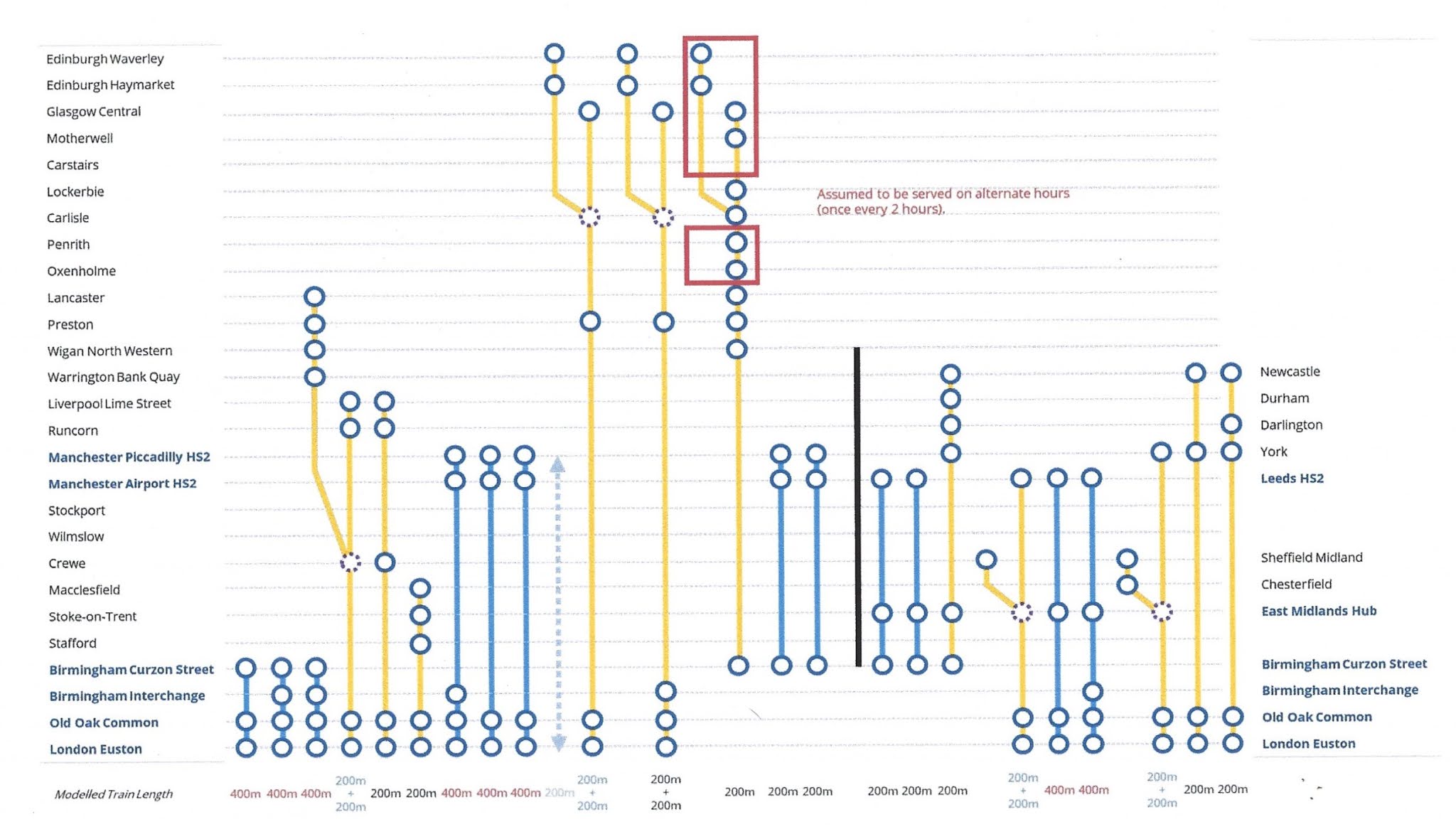
Note that Train 4, starts as a pair of trains, before splitting at Crewe, with one train going to Lancaster and the other to Liverpool Lime Street.
I wonder, if some trains were to be five-cars, would this give the operator more flexibility, by allowing three trains to be coupled together to serve three destinations.
This could be a simple example.
- A three train formation could leave Euston.
- At Crewe one train would detach and go to Liverpool Lime Street, with stops at Runcorn and Liverpool South Parkway.
- At Preston, the two remaining trains would split, with one train going to Lancaster and the other going to Blackpool with appropriate stops.
Three trains might give the operators more flexibility in providing appropriate capacity to various destinations.
Other Applications
I believe these trains would have other applications.
These are a few thoughts.
Battery-Electric High Speed Train
Battery technology is improving and I believe that a train could be designed with the following specification.
- Five cars
- High-Speed Two Classic-Compatible performance.
- A battery pack in each car.
- Up to maximum operating speed of digitally-signalled high speed lines.
- 140 mph on digitally-signalled classic high speed lines, like the East and West Coast Main Lines. the Midland Main Line and the Great Western Railway.
- Range on battery of around 120 miles at 100 mph.
- Ability to work with fully-electric versions.
Note.
- I suspect that like current Hitachi AT-300s and Bombardier Aventras, the onboard computer would know what cars have been coupled together and what the train can do.
- A battery in each car would distribute the extra weight of the batteries equally and not affect the handling too much.
- These trains would allow High Speed Two services to be extended onto non-electrified lines.
I suspect that an eight car battery-electric High-Speed Two Classic-Compatible train would also be possible for working with the standard length trains.
To Middlesbrough By LNER
Today, I took the new LNER service to Middlesbrough.
It left at 15:25 and should have arrived in just under three hours. But it was eighteen minutes late.
I took these pictures of our arrival in Middlesbrough.
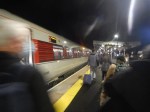
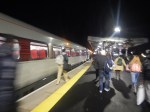
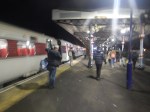
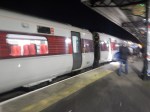

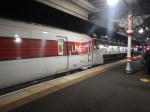
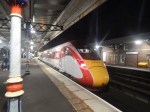
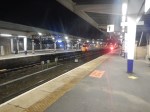
Note.
- The train wasn’t full at Middlesbrough.
- Quite a few passengers left and joined at York.
- There were also a good number of leavers at Thornaby.
- The train was five cars.
As it is only the third day of the new service, passenger numbers seem to me to be on-line with what I’ve seen for other new services.
I have a few thoughts.
Is A London and Middlesbrough Service Needed?
In the 1970s, when I worked at ICI, I would regularly travel to Middlesbrough from London for a day’s work at their Wilton site.
In those days there was no direct train and you had to change at Darlington.
Since then I’ve also travelled to Middlesbrough to see football matches and visit the local countryside.
I suspect I’ve done well over fifty trips between the town and London, but today’s trip was my first one that was direct.
Will More Services Be Added?
If you look at LNER’s service patterns to Harrogate and Lincoln, they started with a single service and have quietly grown to between five and seven trains per day (tpd) in both directions.
I suspect that an early and a late train are essential to allow a full day in London or Middlesbrough.
Could This Route Be Run By A Nine-Car Train?
I suspect normally, a five-car train would be sufficient, but suppose one of the big London football clubs was playing Middlesbrough in an FA Cup quarter final, LNER might like to add capacity for the match.
King’s Cross and York stations regularly handle nine-car Azuma trains and from my pictures, it looks like Middlesbrough can too! The only other stop is Thornaby station, which is shown in this Google Map.
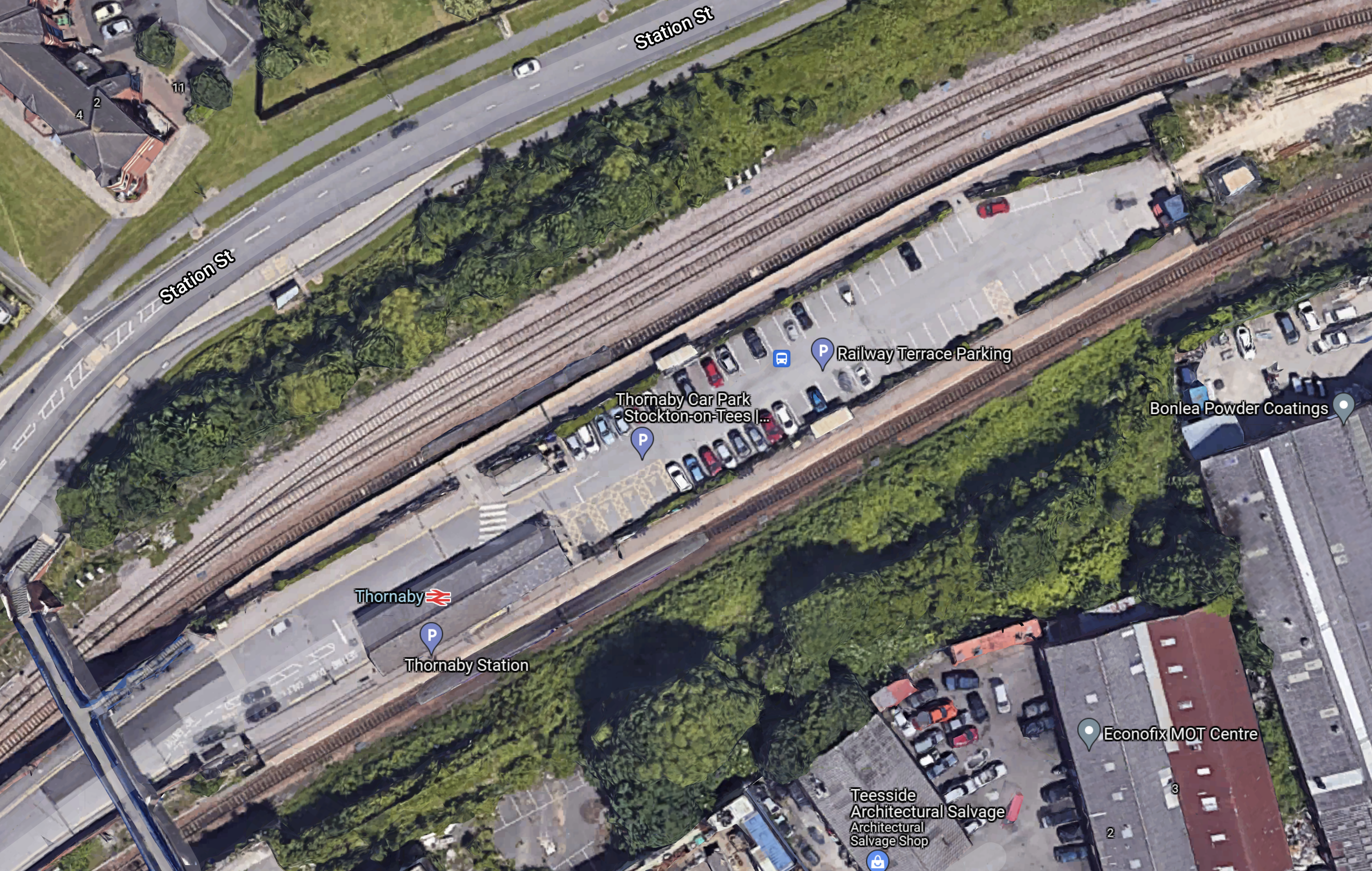
I suspect that it might just be possible, if Thornaby passengers were told to get in the first six cars.
Could This Route Be Run By A Battery-Electric Train?
Consider.
- The trains run on diesel power North of Longlands junction, where they leave and join the East Coast Main Line.
- It is a distance of only 22.2 miles.
With some form of charging at Middlesbrough, I think that within a few years, this could be an all-electric service.
It would be very handy for Hitachi, as any possible customers for battery-electric trains could be given a demo to or from London.
I Think The Stop At York Is A Good Idea
It could be argued that LNER’s King’s Cross and Middlesbrough service is two services in one.
- A direct service between London King’s Cross and Thornaby and Middlesbrough.
- A fast non-stop service between London King’s Cross and York, that takes several minutes under two hours.
Hence my view, that the York stop is a good idea.
Could The Middlesbrough Service Split And Join With Another Service At York?
The Middlesbrough service takes five minutes for the stop at York, but other services only take three minutes.
Has the longer stop been inserted into the timetable, so that the Middlesbrough timetable can be split to serve two separate destinations?
- Secondary destinations would have to be North of York or York station itself.
- These could include Bishops Auckland, Edinburgh, Newcastle, Scarborough and Sunderland.
- Given the arguments, there have been over the new timetable not calling at smaller stations, could these be served by a train to Newcastle?
There are quite a few sensible possibilities.
An alternative could be to split and join at Thornaby to serve both Middlesbrough and Sunderland.
Are Grand Central Going To Order Some Hitachi Intercity Battery Hybrid Trains?
I ask this question because I’ve just looked at the Hitachi infographic for the Hitachi Intercity Battery Hybrid Train, that I wrote about in Hitachi Rail And Angel Trains To Create Intercity Battery Hybrid Train On TransPennine Express
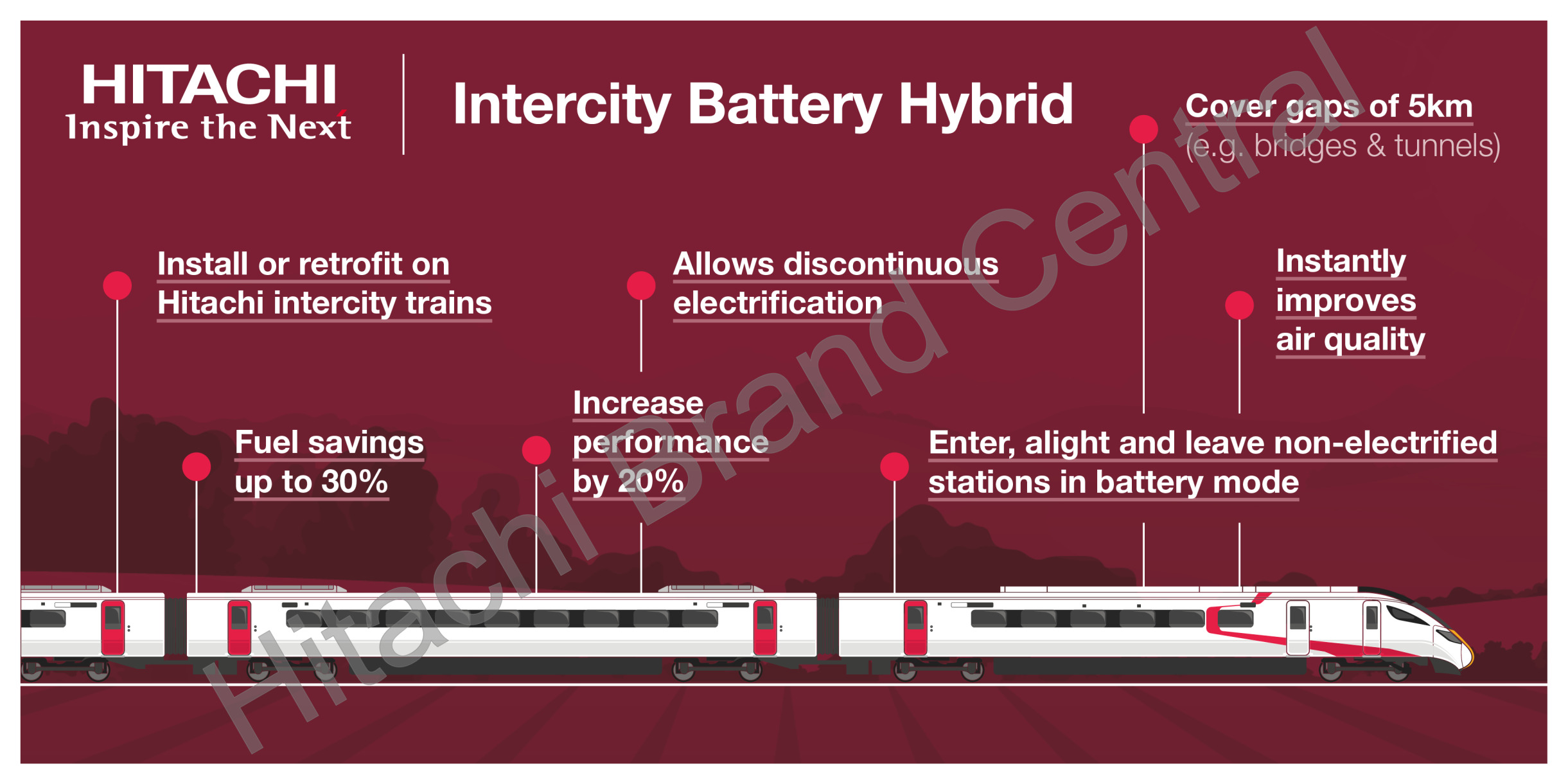
Note that in the background of the image Hitachi Grand Central can be seen.
Looking at Grand Central‘s routes I can say the following.
- The Sunderland service uses the fully-electrified East Coast Main Line to the South of Northallerton.
- The Bradford service uses the East Coast Main Line to the South of Shaftholme Junction.
- The Sunderland service runs for 47.4 miles on lines without electrification.
- The Bradford service runs for 47.8 miles on lines without electrification.
- The trains run at 125 mph on East Coast Main Line.
- Each service has around half-a-dozen stops, most of which are on lines without electrification.
Grand Central run the services using Class 180 diesel trains.
I think there are two possibilities for new trains.
Hitachi Intercity Battery Hybrid Train
This train would be similar to the Hitachi Intercity Battery Hybrid Train shown in the infographic.
- It would be designed to run efficiently on diesel.
- The train could run at 140 mph on electricity and with a signalling update.
- The claimed extra performance could speed up the services.
- Batteries would be used in stations.
There would be a worthwhile saving in fuel and less carbon emissions.
Hitachi Intercity Battery Hybrid Train With A Larger Battery
This would be similar to the standard train, but with a larger battery.
- Battery range would be sufficient to cover the lines without electrification.
- Charging would need to be installed at Bradford Interchange and Sunderland stations.
- The other two diesel engines might be replaced with batteries.
- No diesel would be used.
- The train could run at 140 mph on electricity and with a signalling update.
- The claimed extra performance could speed up the services.
- Batteries would be used in stations.
There would be no fuel costs and zero emissions.
In Grand Central Opts For Split And Join, I wrote about Grand Central’s application to run more services that had been reported in the April 2018 Edition of Modern Railways in an article that is entitled Grand Central Applies For Extra Services.
If Grand Central are still interested in expanding and splitting and joining, then the Hitachi trains, which have a proven ability in this area would fit the requirement.
In
Would A North-East And South West Sleeper Service Be A Good Idea?
I ask this question as in the October 2021, there is an article entitled A New Sleeper, which has this explanatory sub-title.
Des Bradley describes his concept for a North-East to South-West Overnight Service
Paraphrasing his resume from the article, Des Bradley is probably best described as a rail enthusiast, who has travelled all over Europe by train, especially on sleeper trains. He has also worked recently with ScotRail, where he led their integrated travel activities.
I regularly use the Caledonian Sleeper on my trips to Scotland, often taking a sleeper one way and a day time train the other. Towards the end of next month, I have tickets booked for a low-cost Lumo train to Edinburgh and a sleeper back to London in the evening.
In this blog, I have regularly written about the sleeper trains being introduced across Europe and this summer I had intended to go via Eurostar and NightJet to Vienna. But the pandemic has kept me in England for two years.
An Edinburgh And Plymouth Sleeper
Des Bradley is proposing a sleeper train between Edinburgh and Plymouth.
- A typical daytime trip on this route takes eight hours and forty-five minutes.
- Intermediate stops would be Berwick-upon-Tweed, Newcastle, Durham, Darlington, York, Leeds, Sheffield, Derby, Birmingham New Street, Cheltenham Spa, Bristol Parkway, Bristol Temple Meads, Taunton, Exeter St. David’s and Newton Abbot.
- Journey time would be just over twelve hours.
- By comparison a sleeper between London and Edinburgh takes about seven hours and thirty minutes.
He calls the service the NESW Sleeper.
I have some thoughts on the proposal.
A Spine Route Between Edinburgh And Penzance
The route is effectively a spine between Edinburgh and Plymouth on which other services can be built.
Unlike the Caledonian Sleeper, Des Bradley doesn’t feel the train should split and join as it travels up and down the country.
But I do think that the NESW Sleeper can be timed to fit in with high-quality connecting services to extend the coverage.
An Innovative Timetable
Des Bradley’s timetable is innovative.
- Trains leave Edinburgh and Plymouth around 21:00.
- Trains arrive at their destination around 09:00.
- Trains stop for about two hours at Derby.
- After resting at Derby, the trains are effectively early morning trains.
Note.
- The wait at Derby, adds extra time, that can be used to make up for engineering diversions, which often happen at night!
- The trains could be used by non-sleeper passengers to get to Plymouth or Edinburgh early.
The consequence of the second point, is that the trains will have to offer some Standard Class seats.
Should The Train Serve Penzance?
The Great Western Railway’s Night Riviera sleeper train calls at Liskeard, Bodmin Parkway, Lostwithiel, St.Austell, Truro, Redruth, Cambourne, Hoyle and St. Erth between Plymouth and Penzance.
According to a proposed NESW timetable, the Night Riviera has long gone, before the NESW Sleeper arrives in Plymouth at 08:58.
But I’m sure Great Western Railway could arrange for a convenient service between Plymouth and Penzance to pick up passengers in the morning and deliver them in the evening. This picture taken at Plymouth, indicates that cross-platform interchange may be possible.
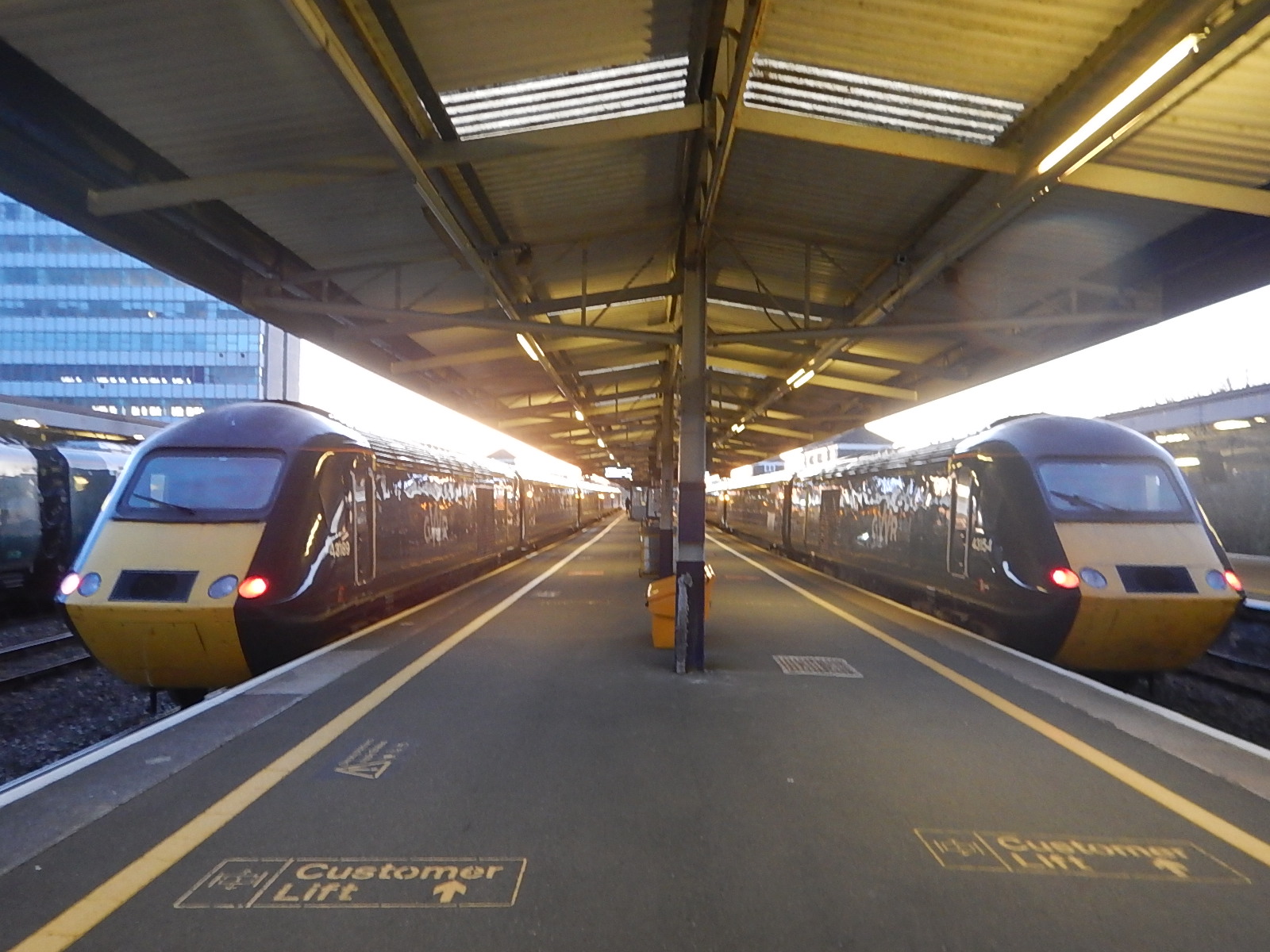
This picture shows a pair of GWR Castles, which regularly work additional services between Plymouth and Penzance.
What About Wales?
I suspect that Cardiff, Swansea and other towns and cities in South Wales, can be served in a similar way, by connecting with GWR services at Bristol Parkway station.
Other Connecting Services
Birmingham New Street, Derby, Leeds and Newcastle are important interchange stations and I can see services being timed to bring passengers to and from the NESW Sleeper.
Rolling Stock
The author offers choices for the trains, based on what is used currently in the UK and adding multiple units. But he is definitely tending towards fixed formations.
I feel that the trains should meet the following criteria.
They should be of similar standard as the Caledonian Sleeper.
They would need an independently-powered capability for sections without electrification.
They should be zero-carbon.
They should offer a range of accommodation including Standard Class seats to cater the early birds and budget travellers.
The possibility to run at 100 mph or faster might be useful to catch up time on some sections of the route.
I think that two trains could be possible.
- A rake of coaches hauled by a hydrogen-electric locomotive.
- A battery-electric Sleeper Multiple-Unit with a range of perhaps eighty miles on batteries.
This is a sentence from the article.
The concept of ‘Sleeper Multiple-Units’ has also emerged in recent years, and this idea could be attractive; although it has some inherent inflexibility, it could in the future allow multi-portion or experimental new routes to be tagged onto the core service.
Sleeper Multiple Units might enable a South Wales and Edinburgh service, that used the same train path between Edinburgh and Bristol Parkway, where the two trains would split and join.
Conclusion
I like this proposal and definitely think it is a good idea.
Open Access Operators And The Lumo Model
In the UK, there are only three established Open Access operators, who run UK train services.
- Grand Central
- Heathrow Express
- Hull Trains
From the 25th of October, they will be joined by Lumo.
We probably don’t think of Heathrow Express as an Open Access operator and as it is effectively a short distance special service with new trains between Heathrow and Paddington, it has its own business model, that may or may not survive.
But how will Lumo and their bold new business model affect Grand Central, Hull Trains and any future Open Access operators?
Grand Central Trains
Grand Central is a well-established Open Access operator.
- They run services between London King’s Cross and Bradford Interchange, Sunderland and several other convenient en-route stations.
- They are owned by Deutsche Bahn.
- They also regularly seem to apply for new routes and extra services.
But they have a big problem fast catching up on them; they have a diesel-only fleet and need to decarbonise.
I also think that all express passenger services on the East Coast Main Line will at some date need to be run by 140 mph trains capable of running with full digital signalling and a degree of Automatic Train Operation.
In Lumo: Why Won’t The New Train Service Stop At Yorkshire Stations?, I said that to continue to be successful, they probably need to embrace the Lumo model and acquire new trains.
I will repeat what I said in the related post.
This would entail.
- The ten diesel Class 180 trains would be replaced by new electric trains.
- The trains would need a 140 mph capability under digital signalling to fit in with the plans of Network Rail, LNER and Lumo to create a top-class high-speed high-capacity East Coast Main Line.
- The trains would need a battery capability as Grand Central’s routes are not fully electrified.
- They could copy Lumo’s green marketing philosophy, ticketing and catering offering.
As to the trains, I’m sure that Hitachi could offer a version of their Intercity Tri-Mode Battery Train, the specification of which is shown in this Hitachi infographic.

The trains would need a range of fifty miles on battery-power.
I have some other thoughts.
Financing
If you look at the finances of decarbonising Grand Central, they would need a new fleet of ten trains, which as Lumo’s fleet of five trains are reported to be costing £100 million, so that figure can be at least doubled.
There would also be costs for the two charging systems at Bradford Interchange and Sunderland. But at least there are several possible solutions for charging systems, so the price will probably not be more than a few million, if that.
Will Deutsche Bahn be prepared to stump up the extra finance?
A Service To Cleethorpes
In the Wikipedia entry for Grand Central, there is a section which is entitled London Kings Cross to Cleethorpes, which outlines a proposed service.
- It would split and join with the London King’s Cross and Bradford service at Doncaster.
- It would call at Crowle, Scunthorpe, Barnetby, Habrough and Grimsby.
- Doncaster and Cleethorpes is 52.1 miles and should be in range of a Battery-electric train with a charging system at Cleethorpes.
Using current times from LNER and TransPennine Express, I estimate that Hitachi Intercity Tri-Mode Battery Trains could travel between London and Cleethorpes in around two hours and twenty minutes.
With digital signalling on the East Coast Main Line to the South of Doncaster, the overall time could be much closer to two hours.
This could be a very viable service with battery-electric trains capable of running at 140 mph on the East Coast Main Line and for sixty miles at 100 mph on battery power.
Maximising The Use Use Of Train Paths By The Use Of Splitting And Joining
The proposed service to Cleethorpes is a classic use of splitting and joining, which enables two separate services to run a large part of their routes together.
- On the East Coast Main Line, it means that maximum use can be made of the paths available.
- Splitting and joining is part of the specification for the Hitachi trains and they do it automatically in under two minutes.
- LNER are already talking about using the technique to serve various destinations from Leeds.
I wouldn’t rule out Grand Central’s two services working as a pair between London King’s Cross and Doncaster, where they would split and join.
Conclusion On Grand Central Trains
Decarbonisation with high-speed battery-electric trains could ensure the future of Grand Central Trains.
Hull Trains
Hull Trains is another well-established Open Access operator.
- They run services between London King’s Cross and Hull and Beverley.
- They have a fleet of five bi-mode Class 802 trains.
- The company is part of First Group.
Hull Trains don’t have the decarbonisation problem of Grand Central Trains, as I suspect Hitachi will come up with a solution to turn Class 802 trains into a battery-electric train with a range of perhaps seventy miles on battery power.
- Beverley and Temple Hirst junction is a distance of 44.3 miles and is the only section of the route without electrification.
- Charging of the batteries will be needed at the Eastern end and probably would be best handled by a short length of electrification in Hull station or between Hull and Brough stations.
The Class 802 trains are also ready for updating to run under the new digital signalling of the East Coast Main Line.
First Harrogate Trains
First Harrogate Trains was a subsidiary of Hull Trains, which hoped to run the following services.
- London King’s Cross and Harrogate via York
- London King’s Cross and Cleethorpes via Peterborough, Spalding and Lincoln
Both these services could be run in conjunction with the current service with an appropriate split and join.
Conclusion On Hull Trains
As both Hull Trains and Lumo share London King’s Cross and are both owned by First Group, I would expect that both train operators would share some services, methods and ideas.
There may be advantages if Hull Trains’s Class 802 trains and Lumo’s Class 803 trains could run each other’s services.
Grand Union
Grand Union is a prospective open access operator who are proposing to operate train services from England to Wales and Scotland.
They are proposing two services.
London Paddington and Cardiff Central via Reading, Bristol Parkway, Severn Tunnel Junction, Newport and Cardiff Parkway, with a possible extension later to Swansea andLlanelli or Carmarthen.
London Euston and Stirling via Milton Keynes Central, Nuneaton, Crewe, Preston, Carlisle, Lockerbie, Motherwell, Whifflet, Greenfaulds and Larbert.
Note.
- London Paddington and Cardiff Central is fully electrified, but there is no electrification West of Cardiff Central.
- Cardiff Central and Swansea are 45.7 miles apart.
- London Euston and Stirling is fully electrified.
Currently, the rolling stock for both services is proposed to be a tri-mode Class 93 locomotive hauling a rake of Mark 4 coaches and a driving van trailer.
The locomotive should be capable of handling the routes to Stirling and Cardiff using the electrification alone.
When the Cardiff route is extended, Grand Union would intend to use Class 802 trains, which could be fitted with batteries to serve Swansea, where the batteries would be charged.
There is no sign as yet, that the Office of Rail and Road have approved any of their possible services, but both services might be improved with some Lumo-style thinking.
Alliance Rail Holdings
Alliance Rail Holdings, which is a sister company to Grand Central, is ultimately owned by Deutsche Bahn, seems to have several ideas for new services, but only seems to have got approval to one.
They were given approval some years ago to run a service between London Euston and Blackpool North.
- Calls would be made at Poulton-le-Fylde, Kirkham and Wesham, Preston, Nuneaton and Milton Keynes Central.
- There will be six trains per day.
- Trains would be InterCity 225 trains.
- The approval is for seven years from 2018.
But because of the pandemic it hasn’t run.
Conclusion
The Lumo model will affect all these services.
Why Does Birmingham Interchange Station On High Speed Two Need Four Long Platforms?
This page on the High Speed Two web site describes the design and construction at Birmingham Interchange station.
This paragraph talks about the overall design philosophy of the station.
The Interchange Station itself will be made up of two 415 metre long island platforms, offering 4 platform faces, as well as 2 central high speed through lines for non-stopping services. The station will be linked to the NEC, Birmingham International Station and Birmingham Airport via an automated people mover carrying up to 2,100 passengers per hour in each direction. In addition to the APM, the station will be fully integrated with other local buses, taxis and private vehicle options.
Note.
- There would appear to be six tracks through the station.
- The four platforms will accept the longest High Speed Two trains.
- The automated people mover appears to be very comprehensive.
Birmingham Interchange certainly seems to have been designed as a very high capacity station.
This table gives the a list of the trains that will call at Birmingham Interchange station.
- Train 2 – London Euston and Birmingham Curzon Street – 400 metre Full-Size
- Train 3 – London Euston and Birmingham Curzon Street – 400 metre Full-Size
- Train 7 – London Euston and Manchester – 400 metre Full-Size
- Train 11 – London Euston and Edinburgh – Classic Compatible
- Train 11 – London Euston and Glasgow – Classic Compatible
- Train 14 – London Euston and Leeds – 400 metre Full-Size
Note.
- 400 metre Full-Size trains will be a pair of 200 metre trains.
- Train 11 is a pair of 200 metre long Classic-Compatible trains, that split and join at Carlisle.
Only five 400 metre trains call at Birmingham Interchange.
I have some thoughts.
Stations Served From Birmingham Interchange
These destinations are served from Birmingham Interchange.
- Two tph – Birmingham Curzon Street
- One tph – Carlisle
- One tph – East Midlands Hub
- One tph – Edinburgh Haymarket
- One tph – Edinburgh Waverley
- One tph – Glasgow Central
- One tph – Leeds
- Five tph – London Euston
- One tph – Manchester Airport
- One tph – Manchester Piccadilly
- One tph – Motherwell
- One tph – Preston
I suspect as the service develops more services will stop at Birmingham Interchange, to reduce the number of passenger journeys where a change is necessary.
Surely Liverpool needs a service from Birmingham Interchange, as it doesn’t have one from Birmingham Curzon Street.
Perhaps, the Liverpool/Lancaster service should stop at Birmingham Interchange?
Splitting And Joining At Birmingham Interchange
Consider.
- The position of Birmingham Interchange to the South of the junction where the Western and Eastern legs, surely makes it an ideal place for splitting and joining a pair of trains, one of which serves the Western leg and the other serves the Eastern.
- The Liverpool/Lancaster service could split and join at Birmingham Interchange to give better connectivity between the North West and the West Midlands.
Intelligent use of splitting and joining at Birmingham Interchange could make better use of paths to and from Euston.
Splitting And Joining Of Full-Size Trains At Birmingham Interchange
According to the currently proposed timetable Birmingham Curzon Street, Manchester Airport and Manchester Piccadilly will all get three Full-Size tph to and from London Euston, with East Midlands Hub and Leeds getting two Full-Size tph.
This may be a right decision, but if four Full-Size tph is the frequency needed on some routes, then splitting and joining of Full-Size trains can be used at Birmingham Interchange to increase frequencies.
Suppose it was decided that the Leeds and Manchester services needed to be four Full-Size tph.
- The London and Manchester service that stops at Birmingham Interchange would split into two trains at the station, with one train going to Manchester and the other going to Leeds.
- The London and Leeds service that stops at Birmingham Interchange would split into two trains at the station, with one train going to Manchester and the other going to Leeds.
Coming South the two services would join at Birmingham Interchange.
I can almost envisage Full-Size pairs of trains leaving London Euston every ten minutes, which then split and join at Birmingham Interchange to give Leeds and Manchester a core service of six Full-Size tph.
There are a large number of possibilities.
Down One Leg Up T’Other
Birmingham Interchange can be used as an interchange station for journeys where you come South on one leg and then go North on the other.
It might even be possible to arrange some changes with an interchange across one of the island platforms at Birmingham Interchange.
Turning Back Trains
There is a worry about late trains delaying everything.
But because it has four platforms, it could be the station, where trains are turned back, when they are running very late.
It could be better to turnback a train at Birmingham Interchange, rather than let it run all the way to Euston and create havoc.
Perhaps, simulation has shown, that two extra platforms at Birmingham Interchange enable the optimal working of ten platforms t Euston?
Line Blocked Or Blockaded Between Birmingham And Euston
Events happen and there may be reasons why services can’t run through to London.
It could easily be turned into a mini-terminus for services to the North and linked to London by either the West Coast Main Line or a Rail Replacement Bus.
Conclusion
Because of its position in the middle of the country, I suspect there are many reasons for the four long platforms at Birmingham Interchange station.
 The Anonymous Widower